Home Blog Page 6326

DTI proposes zero-tariff EV imports to encourage electric transport growth
REUTERS

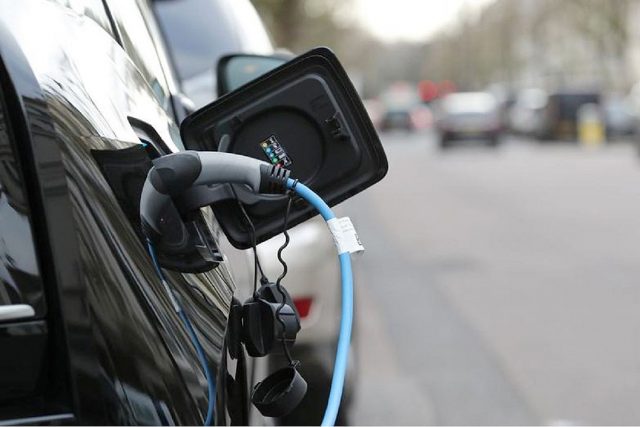
THE Department of Trade and Industry (DTI) is proposing a zero-tariff regime for imports of electric vehicles (EVs), which it pitched as a measure to accelerate their adoption.  

Trade Secretary Ramon M. Lopez said during the virtual Kapihan sa Manila Bay forum on Wednesday that the DTI is proposing zero tariffs for EVs in lieu of the current 30% rate.   

“One thing we are proposing is to adjust the tariff rate from 30% to zero” to provide a boost to EV adoption, Mr. Lopez said.

“We need to promote EVs and the way to promote it is to encourage their use. How will you encourage the use of EVs if they are expensive? This is one of the immediate ways that we think can be done,” he added.

According to Mr. Lopez, the proposal seeks to provide options for consumers and encourage them to try EVs instead of vehicles powered by internal combustion, in the process helping protect the environment.   

Mr. Lopez said zero tariffs will encourage more dealers to begin importing EVs into the country.

“Once we implement the zero tariff, EV dealers will begin importing. So, towards the second half of the year, if ever, we might be able to see more EVs,” Mr. Lopez said.

Mr. Lopez said more charging stations will be installed to encourage EV adoption.

“There were project proposals submitted to the DTI regarding plans to encourage EVs, import the units, and put up charging stations so that the industry will grow,” Mr. Lopez said.

“The DTI, together with the Committee on Tariff Related Matters, with the National Economic and Development Authority (NEDA) as co-chair, will push this proposal,” he added.

Separately Mr. Lopez described trade with Russia and Ukraine in 2021 as minimal, accounting for only 0.49% of the total.

In 2021, he said trade with Ukraine was valued at $131.4 million, while trade with Russia amounted to $816.7 million.

Mr. Lopez said the effects of the conflict will be indirect, mainly in the form of high commodity prices due to the disruption of the global supply chain. — Revin Mikhael D. Ochave  
Japan’s J-Trec-Sumitomo JV bags new trainset contract for gov’t railways

JICA

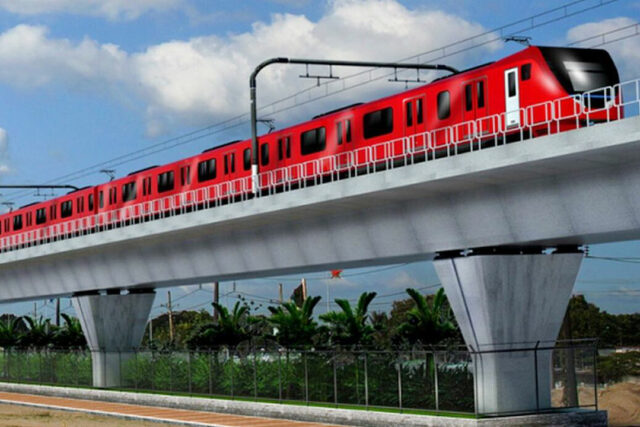
THE Japan Transport Engineering Co. and Sumitomo Corp. Joint Venture (J-Trec & SC JV), which previously won a contract to supply trainsets for the Metro Manila Subway, has bagged a similar contract for the Malolos-Clark Railway Project and the North-South Railway Project-South Line.

Transportation Undersecretary for Legal Affairs Reinier Paul R. Yebra issued the notice of award to the group on Jan. 14, according to a copy of the document obtained from the Philippine Government Electronic Procurement System.

“Your bid dated Feb. 8, 2021… in the accepted contract amount of the equivalent of P1.36 billion and 69.56 billion yen, inclusive of provisional sums and value-added tax (VAT), as corrected and modified in accordance with the instructions to Bidders, is hereby accepted by our agency,” Mr. Yebra said in his letter to the group.

The contract package is for the commuter trainsets of Malolos-Clark Railway Project and North South Railway Project-South Line.

The contract is funded from proceeds of a loan provided by the Japan International Cooperation Agency.

The work involves designing, manufacturing, supplying, delivering, installing, testing, commissioning, integrating, and providing technical support for 38 eight-car train sets.

The department said bidding procedures complied with the Japanese official development assistance loan guidelines for procurement exercises.

The joint venture also signed a rolling stock contract package with the Department of Transportation for the Metro Manila Subway Project – Phase I in 2020.

The department said the subway rolling stock contract involves the design, supply, installation, construction, testing, and commissioning of 240 subway train cars. — Arjay L. Balinbin

MRT-3 testing four-car configuration to expand capacity

PHILSTAR

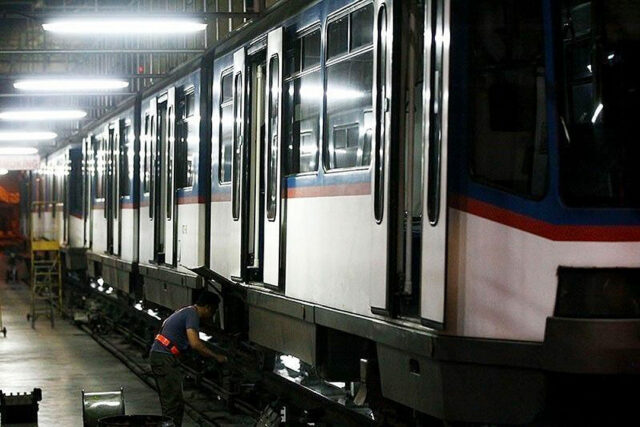
THE Transportation department is hoping to expand the capacity​ of Metro Rail Transit Line 3 (MRT-3) and is conducting trials on a train configuration of four cars instead of three.

“The MRT-3 trains in a first-ever four-car configuration are currently undergoing dynamic testing,” the department said in a statement.

The four-car scheme has been contemplated as early as 2010; in a bid document for an MRT-3 capacity expansion project posted on the department’s website, the department said it would work “to increase the line capacity and train capacity of MRT-3 by increasing the train configuration from three-car train configuration to four-car train configuration running at improved headway of not more than 150 seconds during peak hours.”

Completed in July 2000, the MRT-3 carries around 600,000 passengers daily.

It was built by a private consortium, Metro Rail Transit Corp., which was awarded a build, lease and transfer deal in effect for 25 years.

The department is also working on the general overhaul of the MRT-3’s light rail vehicles (LRVs), which is expected to be completed by early next year.

The department has said the general overhaul of the MRT-3 train cars is part of the comprehensive rehabilitation of the rail line along Metro Manila’s main ring road, known as EDSA. It aims to restore the MRT-3 to high-grade design condition.

MRT-3 service providers Sumitomo Corp., Mitsubishi Heavy Industries Engineering, Ltd., and TES Philippines, Inc. have been contracted to overhaul all 72 LRVs.

They were also tasked with replacing mainline tracks, rehabilitate power and overhead catenary systems, upgrade signaling, communications and CCTV systems, and repair all escalators and elevators.

The MRT-3 rehabilitation project has reduced travel time from the North Avenue Station to the Taft Avenue Station to 45 minutes from the previous one hour and 15 minutes, the department noted. — Arjay L. Balinbin

ADB sees possible decline in output if peso valuation subjected to ‘shock’

BW FILE PHOTO

A SHOCK that exposes the peso and other regional currencies as overvalued could dent output for the Philippines, Singapore and Thailand, the Asian Development Bank (ADB) said in a report.

Overvaluation of the real exchange rate (RER) for the Philippine currency could lead to substantially lower goods and services produced, the report concluded.

“For Southeast Asian economies such as Indonesia, the Philippines, Singapore, and Thailand, (a real exchange rate) overvaluation shock may lead to a substantial decline in output relative to trend.”

The RER is measured by the nominal exchange rate multiplied by the ratio of prices between two currencies. It compares the value of a country’s goods to that of others.

The ADB report, Real Exchange Rate Misalignment and Business Cycle Fluctuations in Asia and the Pacific, assessed the relationship between inflation and the output gap to RER misalignment.

The report found that overvaluation may lead to lower inflation and short-term interest rates.

“We also find that Asia and the Pacific is highly heterogeneous wherein the output gaps of some economies, particularly those in Southeast Asia, are more susceptible to RER

misalignment shocks,” ADB said.

In several Southeast Asian economies, including the Philippines, overvaluation leads to increasingly low output versus the trend over three to six quarters.

After an overvaluation shock, it takes the Philippines and Singapore about 10 quarters before stabilizing their RER, the report said.

The Philippines, along with Singapore, Thailand, and Vietnam, had stable RER from 1990 to 2018, the report said.

RER overvaluation dampens exports and leads to slower economic growth, the report said.

“Importantly, as the region is becoming more open, one might be concerned that RER shocks may themselves be a source of business cycle fluctuations.” — Jenina P. Ibañez

The high price of (not) properly dealing with MAGA

There has been a decade-long attempt to revise the Build-Operate-and-Transfer (BOT) Law and transform it into a Public-Private Partnership (PPP) Law. The recent attempts to do so (i.e., Senate Bill No. 2074 or the proposed PPP Act and the proposed PPP Rationalization Act in the House of Representatives) have yet to move significantly forward.

In November, the National Economic and Development Authority (NEDA) announced that it was tasked to further amend the BOT Law’s implementing rules and regulations (IRR) to “facilitate the development of well-structured PPPs that deliver high-quality services to the people.” According to the agency, one of the objectives of the proposed amendments is to protect the government and the public from excessive payments, undue guarantees, unnecessary fiscal risk, and onerous contractual obligations arising from PPP projects.

Further amendment of the BOT IRR cannot come at a more opportune time, given the recent ratification by Congress of the Revised Public Service Act, and could serve to at least make some headway in updating the rules of the game sans the revision of the BOT Law. Section 13.3 of the current BOT IRR allows the government to provide any form of support or contribution to solicited projects such as, but not limited to: cost sharing, credit enhancements, direct government subsidy, direct government equity, performance undertaking, legal assistance, and/or security assistance. However, the total government undertakings must not exceed 50% of the total project cost. A hot topic on government undertakings is government liabilities arising from Material Adverse Government Action (MAGA). According to the World Bank’s Guidance on PPP Contractual Provisions (2019), MAGA may be defined as “any act or omission by the government contracting authority (GCA) or any relevant public authority, which occurs during the term of the PPP Contract and which directly causes the private sector partner (PSP) to be unable to comply with all or some of its obligations under the PPP Contract and/or has a material adverse effect on its costs or revenues.”

MAGA events are also referred to as political risk or political force majeure. The purpose of including a MAGA clause in a PPP Contract is to allocate political risk to the GCA, address the consequences of such risks occurring, and provide the PSP with appropriate relief and compensation. Since the PSP has little to no control over MAGA events, transferring any MAGA risk to the PSP (by unreasonably limiting the amount of compensation thereof) is likely to result in either a high-priced premium that would make the project unaffordable or an unbankable project that would fail to generate any interested bidders.

One question to ask is: would the government’s payment for MAGA be considered a government undertaking as defined under Section 13.3 of the BOT IRR? Section 13.3 makes it clear that its enumeration is by no means exhaustive. Technically, MAGA may take the form of a Performance Undertaking (Section 13.3 subsection [e]), which seems to cover a nearly similar situation, i.e., instances where another branch of government (often the Department of Finance) assumes the responsibility of performing the GCA’s obligations in the PPP Contract, including payment of monetary obligations, in case of default. Following this, MAGA may be recognized as an undertaking by the government to assure the PSP, as would a Performance Undertaking, that it will be compensated if such risk arises.

If the above view is adopted, however, two consequences arise. First, MAGA becomes a form of support or contribution that may only be extended to solicited projects. This means that original proponents of unsolicited proposals cannot be compensated for MAGA events. Second, MAGA can at most only cover liabilities up to 50% of the total project cost, since it is merely an additional form of “support” along with other government undertakings in the project (if any). Perhaps a different view may be adopted. Section 13.3 covers various forms of support or contribution to the project, which a MAGA clause is not. Instead, it is more akin to a form of compensation by way of damages arising from a contractual breach (committed by the government), where such payment is meant to indemnify the injured party (i.e., the PSP) for the damage or loss caused by the breach. As such, MAGA is more a form of penalty on government, and not an undertaking by it, for failure to abide by its obligations under the PPP contract.

This is consistent with the internationally accepted principle of MAGA compensation, which is typically required by PSPs when dealing with governments in less established markets where there is an actual or perceived increased likelihood of MAGA events or where there is a lack of track record in administering long-term contracts free from any political interference.

MAGA becomes even more of a concern for PPPs at the local government unit (LGU) level, where regime changes are much more frequent, where there’s less capacity to manage PPP contracts, and little to no funds to cover contingent liabilities. Oftentimes, PSPs in municipal PPPs are often left holding an empty bag in case the project is halted due to a regime change.

Hopefully, the implementation of the Mandanas Ruling, which increased the internal revenue allotment of LGUs, could also provide LGUs an allocation or a pool of funds that may answer for MAGA-related liabilities. The recently circulated draft proposed amendments to the BOT IRR by the PPP Center provides a definition of MAGA as well as additional provisions which classify MAGA as a government contingent liability, with the manner of compensation (including a cap) determined on a per-project basis.

Perhaps a provision that categorically indicates that MAGA clauses should not be considered a form of government undertaking would put the issue to rest. The inclusion of rules on the treatment of MAGA in the BOT IRR is as tricky as it is necessary. It must be approached with due care, otherwise we could all be paying a high price. After all, who would want to bear the consequences of the government’s failure to get its act together?

The views or opinions expressed in this article are solely those of the author and do not necessarily represent those of Isla Lipana & Co. The content is for general information purposes only and should not be used as a substitute for specific advice.


Jose Patrick S. Rosales is a lawyer and an Infrastructure & Tax director at the Tax Services Department of Isla Lipana & Co., the Philippine member firm of the PwC network.

jose.patrick.s.rosales@pwc.com

More than 100 Pinoys refuse to leave Ukraine

WIKIMEDIA

By Alyssa Nicole O. Tan, Reporter

MORE than a hundred Filipinos refused to come home from Ukraine after the Philippines imposed mandatory evacuation amid Russia’s devastating invasion, according to the Department of Foreign Affairs (DFA).

Sixty-three migrant Filipino workers from the Eastern European nation have returned, while 136 were awaiting repatriation, Foreign Affairs Undersecretary Sarah Lou Y. Arriola told an online news briefing on Wednesday. “We are happy that 199 Filipinos are out of harm’s way.”

Philippine officials were pleading with the remaining Filipinos in Ukraine to come home, she said. Most of them were staying in Kyiv and Lviv. Those with Ukrainian husbands found it difficult to leave with their kids, while domestic helpers chose to stay with their employers.

The United Nations on Wednesday said about two million people have already left Ukraine since Russia invaded it on Feb. 24. As many as four million may leave the country, or a tenth of its 44 million population.

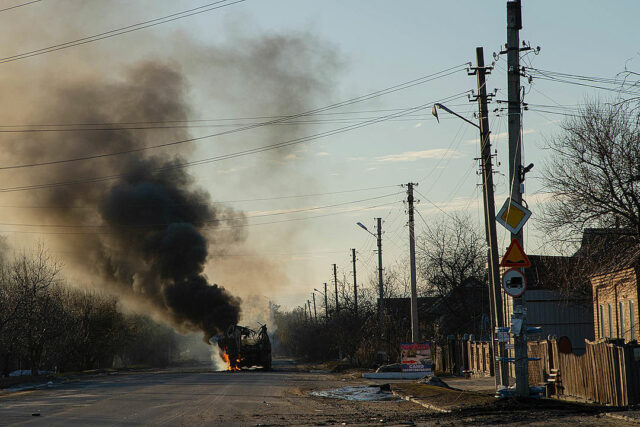
Russia has launched a devastating attack by air, land, and sea on Ukraine. President Vladimir Putin denied for months he would invade his neighbor, but then tore up a peace deal and sent forces across borders in Ukraine’s north, east and south.

The Philippine Overseas Employment Administration was checking how many sea-based migrant Filipinos have been stranded in their vessels, Ms. Arriola said. Most seafarers were aboard merchant ships in the Black Sea.

Many of them could not leave the ships because of the heavy fighting, she said, adding that they had been advised to lay low and take cover while waiting for the storm to calm.

A missile struck the MV Banglar Samriddhi on Wednesday afternoon, killing one crew member and leaving several others with serious burns, according to the Wall Street Journal. It was the fifth merchant ship to be hit by artillery off Ukraine’s coast since the Russian invasion.

The fighting in the Black Sea has led to broad consequences for international transport and global supply chains, the newspaper said. Dozens of cargo ships were stranded at the Ukrainian port of Mykolaiv, it added, citing shipping trackers.

About 3,500 sailors have been stuck on about 200 ships at Ukrainian ports, according to London-based shipping tracker Windward Ltd. More ships were stranded around the globe than at any point since World War II, maritime historians have said.

“We are doing everything we can to extract and evacuate them,” Ms. Arriola said. “Our honorary consul in Moldova is helping out to make sure they cross the border. Usually, seafarers have enough food and supplies but the problem is the worsening security situation in their area.”

On Tuesday, 21 seafarers of MV S-Breeze, a bulk carrier, arrived as the first group of seafarers repatriated from Ukraine. Seven others from MV Joseph Schulte came home that evening, while seafarers of MV Star Helena, MV Global Aglaia, MV Key Knight, and MV Pavlina were on their way to Manila from Bucharest.

“We’re expecting more to arrive today and the following days,” Ms. Arriola said.

Meanwhile, Foreign Affairs Secretary Teodoro L. Locsin, Jr. has ordered the agency to stop allocating passport appointment slots to recruiters after several people and groups were found selling these slots online.

“Recruiters will no longer be given passport slots,” he tweeted on Tuesday. “They will have to go online like everyone else. This won’t affect overseas Filipino workers (OFW).”

OFWs may walk in with supporting documents starting March 14, Mr. Locsin said. “This should make passport appointments easier and as it should be, absolutely free for all.”

Foreign Affairs Undersecretary Brigido J. Dulay has asked the police and the cyber-crime units of the National Bureau of Investigation (NBI) to investigate the matter.

The Philippines has voted yes to a United Nations (UN) General Assembly resolution condemning the Russian invasion of Ukraine. It sought an end to the fighting and appealed for the protection of civilians and civilian infrastructure.

Investigate missing online cockfighters, Duterte tells police

PRESIDENT Rodrigo R. Duterte has ordered law enforcers to investigate the disappearance of almost three-dozen small-time online cockfighters, according to his executive secretary.

Executive Secretary Salvador C. Medialdea signed a memo on March 8 allowing online cockfighting  operations while authorities were investigating irregularities in so-called e-sabong agreements. 

Mr. Duterte also ordered the country’s gaming regulator to investigate violations by online cockfighting licensees and ensure that operators were complying with security requirements, particularly the installation of CCTV systems at gaming sites.

“Unless otherwise directed, the operations of e-sabong licensees shall remain unaffected, pending the result of the above investigations,” according to the memo.

The palace issued the memo after senators signed a resolution urging it to suspend online cockfighting operations while authorities were investigating the cases of missing cockfighting aficionados.

Philippine Amusement and Gaming Corp. chief Andrea D. Domingo told senators at a hearing last week the suspension would affect government revenue.

Revenue from online cockfighting averaged P400 million monthly last year and P640 million a month since January. — Kyle Aristophere T. Atienza

Case delays could erode public trust — ex-election chief

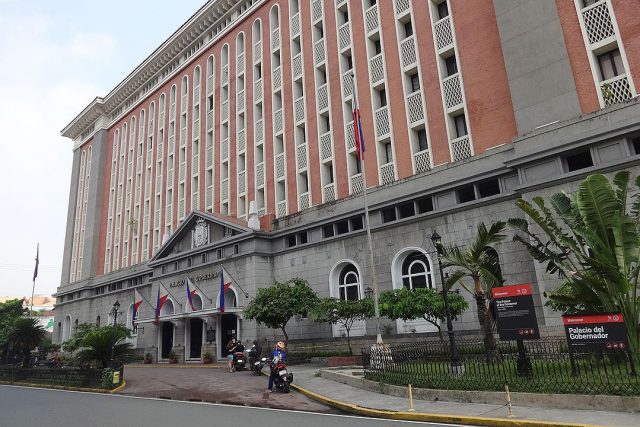
PALACIO del Gobernador, where the Comelec holds office — PATRICK ROQUE

DELAYS in lawsuits seeking to disqualify the son and namesake of the late dictator’s son Ferdinand E. Marcos from the presidential race could add to public distrust of the country’s election body, according to its former chief.

“They should know that when they drag their feet on an urgent issue like this, they lose credibility,” former Commission on Elections (Comelec) Chairman Christian S. Monsod told the ABS-CBN News Channel on Wednesday.

Last week, a group of martial law victims led by Mr. Monsod asked Comelec to resolve a pending case seeking to bar former Senator Ferdinand “Bongbong” R. Marcos, Jr. from the presidential race after he was convicted for tax evasion in the 1990s.

They said delaying the case could lead to complications, especially with the May 9 elections approaching.

The plaintiffs also cited a Comelec order issued on Feb. 23, which says that it must resolve pending cases within 45 days after a commissioner retires.

“We are worried that the people will still be anxious to find out what exactly is the situation of candidate Bongbong Marcos, and the Supreme Court may not have time because of the delay,” Mr. Monsod said.

Election Commissioner Socorro B. Inting earlier said all cases would be resolved before May 9.

“The statement of the Comelec was that they will make the decision before elections,” Mr. Monsod said. “That is terrible for them to take that long to make a decision on an urgent case involving the qualifications of a candidate.”

The Comelec Second Division dismissed a similar lawsuit in January, as it ruled Mr. Marcos did not mislead the public when he said in his certificate of candidacy that he was eligible to run for president. The case is on appeal with the Comelec en banc.

The First Division last month rejected three consolidated lawsuits seeking to disqualify Mr. Marcos from running for president this year, saying his failure to file tax returns in the 1980s did not involve wicked, deviant behavior. The case is also on appeal with the Comelec en banc.

Mr. Monsod said people should give newly appointed commissioners a chance. “It’s too early to judge them. I believe that the Comelec bureaucracy will deliver fair and credible elections.”

Meanwhile newly appointed Comelec Chairman Saidamen B. Pangarungan on Wednesday vowed to be a “defender of democracy.”

“The sanctity of the vote shall be our guiding principle and I am confident my fellow commissioners will work with me in elevating the level of integrity of this commission,” he said at a welcome ceremony streamed live on Facebook.

Also on Wednesday, Senator Imee R. Marcos cited “major electoral security threats” that surfaced during a Senate hearing, “which magnified fears cheating would take place in the May elections.”

“Government agencies involved in the coming elections diverged from or could no longer implement electoral security checks that had been agreed on,” the senator, who presided over the hearing, said in a statement.

Marcos Jr.’s sister said Comelec had prohibited political party representatives, nongovernmental groups and the public from monitoring the configuration of SD cards at the technical hub in Santa Rosa, Laguna.

“The Comelec has already configured all the SD cards for Mindanao to Region 4, in total absence of witnesses,” she said. Only the SD cards for three regions remained to be processed.

“We all know that SD cards have been the rabbit pulled out of the cheating hat in past elections,” she added.

She also cited the same lack of transparency at the National Printing Office, which printed 66% of the ballots for the May elections without being monitored. “All this in deep, dark secrecy? There’s a law being violated here,” she said.  John Victor D. Ordoñez and Alyssa Nicole O. Tan

Marcos-Duterte tandem to push nuclear power 

FACEBOOK.COM/BONGBONGMARCOS

PHILIPPINE presidential frontrunner Ferdinand “Bongbong” R. Marcos, Jr. and his running mate Sara Duterte-Carpio have vowed to push nuclear power if they win this year’s elections. 

The pro-administration tandem issued the statement after President Rodrigo R. Duterte signed an executive order allowing the country to tap nuclear power as an alternative energy source. 

In a statement on Tuesday evening, the tandem said incorporating nuclear power in the country’s energy mix would lower electricity rates and help secure a steady power source. 

“Our vision for the country is to have at least one nuclear power plant so we can finally produce cheap energy and for us to lower our electricity rates,” they said. Mr. Duterte’s order is a “good springboard” for the next administration to pursue its nuclear energy objectives. 

Under the executive order, a Nuclear Energy Program Inter-Agency Committee will study the use and viability of the mothballed Bataan Nuclear Power Plant (BNPP) and the establishment of other nuclear facilities. 

The $2.2-billion BNPP was completed in 1984 but was mothballed in 1986 after the ouster of the late dictator Ferdinand E. Marcos, Marcos Jr.’s father. — Kyle Aristophere T. Atienza

Almost 140M COVID vaccines injected

PHILIPPINE STAR/ MICHAEL VARCAS

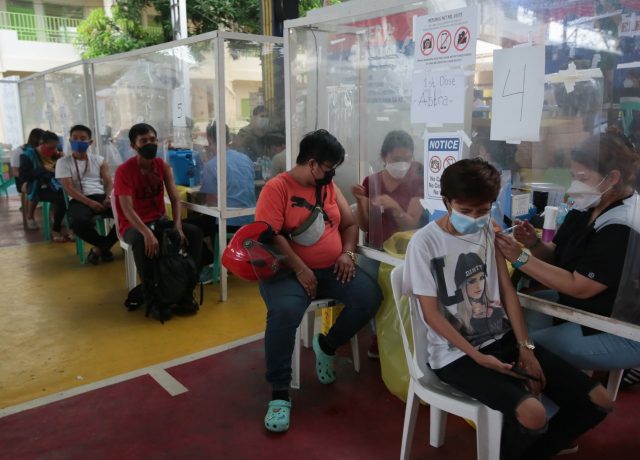
THE PHILIPPINES had injected 137.35 million coronavirus vaccines as of March 9, according to the Department of Health (DoH). 

The government had fully vaccinated 63.99 million people, while 62.68 million have received their first dose, based on the agency’s vaccination tracker. About 10.68 million booster shots have been injected. 

Earlier this week, the Philippines took delivery of almost 5.2 million doses of the coronavirus vaccine made by Pfizer, Inc. 

The government will have a major vaccination drive on March 10 to 12 as it targets to inoculate 1.8 million people. — K.A.T. Atienza 

Senator warns vs fuel hoarding, profiteering

PHILIPPINE STAR/ MICHAEL VARCAS

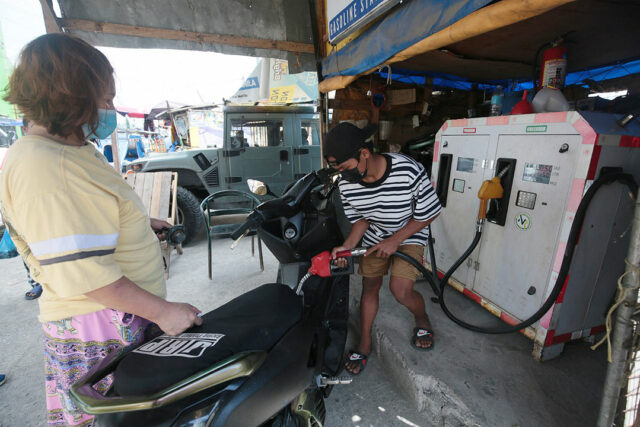
A SENATOR on Wednesday warned against hoarding and overpricing of fuel in the absence of a price ceiling imposition amid skyrocketing prices.

“It is illegal to take advantage of the situation when everyone is practically struggling to recoup whatever losses in savings and income they have incurred in the past two years amid the COVID-19 (coronavirus disease 2019) pandemic,” Senate Energy Committee Chair Sherwin T. Gatchalian said in a statement on Monday. 

The senator cited reports of retailers already selling gasoline at P90 to P100 per liter (/L), particularly fuel stations in the provinces. 

Mr. Gatchalian stressed that price manipulation of basic commodities is a violation of Republic Act 7581 or the Price Act, a crime punishable by at least 15 years of imprisonment and a fine of P5,000 to P2 million. 

For the week March 8-14, pump prices are around P64-83/L for gasoline and P58-68/L for diesel, according to the Energy department. Since the start of the year, gasoline, diesel, and kerosene per liter prices have risen by P13.25, P17.50, and P14.40, respectively. 

Energy Secretary Alfredo G. Cusi in a virtual press briefing on Tuesday said fuel should not cost P100/L for now, but it may reach that level depending on world market price.

“It depends on how much it will go up in the world market. Because the Dubai price now is already at $125 dollars per barrel. But the retail and pump price is already breaching P70,” he said.

Meanwhile, consumer group Laban Konsyumer, Inc. President Victorio Mario A. Dimagiba said “the arms of the law should be visible” especially in times of crisis.

“(Authorities) should catch and prosecute profiteers immediately, including petrol service station that close or stop selling ahead of their usual business hours. Catch also hoarders [and even] the oil company brand owner in the case,” he said in a Viber message.

SUBSIDY
Meanwhile, Marikina Rep. Stella Luz A. Quimbo on Wednesday recommended the suspension of taxes on petroleum products commonly used by low-income classes like liquefied petroleum gas (LPG), kerosene and diesel while partially maintaining tax for gasoline, which is used by those who are more affluent. 

“There is a suspension (of tax) on petroleum products, at the same time, we will also provide a subsidy to those affected by the suspension. So, there is a mix of policy tools,” she said in an interview with DZRH.

Ms. Quimbo also welcomed the administration’s plan to increase the fuel subsidy allocation in this year’s budget to about P6 billion from the approved P2.5 billion. 

“The budget as of now, according to the hearing two days ago, is only P2.5 billion. But that’s only enough for around 377,000 PUV (public utility vehicle) drivers,” she said in Filipino. 

“That will only be enough for buses and jeepneys. I think there are more than four million tricycles. So, public motorcycles are not part of that. The budget is insufficient. But as of yesterday, I think they (executive branch) said they’ll increase it, up to P6 billion.” — Marielle C. Lucenio and Jaspearl Emerald G. Tan

Veteran legislator Drilon says next president needs expertise to handle ‘perfect economic storm’

THE NEXT president will need economic expertise to tackle the country’s ballooning debt, a record-high budget deficit, and high fuel prices, said Senate Minority Leader Franklin M. Drilon, a veteran legislator who is retiring from politics.

“This is a perfect economic storm that we could face in the second half of this year,” he said in a statement on Wednesday. 

“The next president must have the credibility, political will, and competence to address the economic situations that we are confronted with. It is a very difficult situation.” 

The Philippine government’s outstanding debt has reached P11.7 trillion at end-December, up by a fifth from a year ago, according to the Bureau of the Treasury, breaching the ideal 60% debt-to-gross domestic product ratio. 

The country’s budget deficit has expanded by 22% to P1.67 trillion in 2021 from P1.37 trillion in 2020 as 8.6% of the country’s economic output suffered from the pandemic.

These considerations, Mr. Drilon said, are the reasons why incumbent economic managers are opposing the suspension of excise taxes on fuel products. 

However, he said, they should “take the bull by its horns” as more adverse effects may come should there be a prolonged war between Russia and Ukraine. 

The Filipino people should consider these serious economic problems in casting their votes come May 9, said Mr. Drilon. 

‘BUSINESS-FRIENDLY’
On the campaign trail of presidential candidates, Manila Mayor Francisco “Isko” M. Domagoso said Wednesday that if elected, his government will be business-friendly and support the Information Technology and Business Process Management (IT-BPM) sector. 

“As an ally in creating jobs for more Filipinos and in nation-building, I assure you that my administration’s policies will be business friendly and consistent to induce foreign investors and enable sustained growth for the IT-BPM industry,” Mr. Domagoso said in a meeting with the IT and Business Process Association of the Philippines. 

The standard-bearer of Aksyon Demokratiko also said that he will continue to provide food boxes containing local farm products.

“If I become president, like I said before, the food pack relief under the Food Security Program by the city government will be implemented in the whole country so that the people will be assured,” he said in Filipino in a statement.

Aksyon Demokratiko held a proclamation rally in Tarlac late Tuesday, where Tarlac Governor Susan A. Yap endorsed the Manila mayor and his senatorial candidates.

SENIOR CITIZENS
Another presidential bet, Senator Emmanuel “Manny” D. Pacquiao, Sr. pushed for the speedy passage of a bill that seeks to increase cash incentives for senior citizens, including a P1-million grant for Filipinos who reach the age of 101.

“I hope Senate will have time to either fast-track final reading approval of the bill or simply adopt the House version when session resumes in May,” he said in a statement on Wednesday.

Senate Bill 1270 seeks to amend Section 2 of Republic Act 10868 or the Centenarians Act of 2016. The bill has passed first reading. 

The counterpart bill in the House of Representatives, which has been approved on third reading, provides the release of P25,000 to a senior citizen upon reaching the age of 80, 85, 90, and 95. 

Mr. Pacquiao also called on the Department of Social Welfare and Development (DSWD) to review applications on the availment of P100,000 cash benefit for centenarians, as mandated by law. 

“I beg the DSWD to ease the assessment of the cases of our centenarians who want to receive government assistance. Many of our grandfathers and grandmothers experience double the suffering because they have no means to buy medicines for their diseases,” he said. 

Philippine Statistics Authority data show there were 12.3 million Filipinos aged 60 years old and above as of May 2020. Senior citizens comprise 11% of the 109 million total Philippine population. — Alyssa Nicole O. Tan and Jaspearl Emerald G. Tan