Home Blog Page 6299

Kim Soo Hyun on style and acting

SOUTH KOREAN actor Kim Soo Hyun _ FACEBOOK.COM/BENCHTMOFFICIAL

KOREAN actor Kim Soo Hyun wore a white Bench round neck shirt last week upon arrival at the airport.

Five years since his first visit to the country, Mr. Kim arrived in Manila for “One Extraordinary Day” — a meet-and-greet event on June 10 hosted by the Filipino clothing brand, Bench. Mr. Kim joined the roster of its brand ambassadors in July 2021.

The 34-year-old actor recently starred in It’s Okay to Not Be Okay — the sole Asian nominee for Best TV Movie or Miniseries at the International Emmy Awards in 2021). His performance as Moon Gang-tae earned him a Best Actor nomination at the 2021 Baeksang Arts Awards. Mr. Kim is best known for his roles in TV series like My Love from the Star (2013), Moon Embracing the Sun (2012), Dream High (2011); and films such as Secretly, Greatly (2013), and The Thieves (2012).

A day prior the fan meet and greet at the SM Mall of Asia Arena, a press conference was held at the Peninsula Manila where the actor talked about his personal style and future projects.

Mr. Kim appeared dressed in a casual all-black ensemble and white sneakers which he said he put together himself.

He talked about his personal style and how it aligns with the brand.

“Bench brand is a very friendly and popular brand,” Mr. Kim said in Korean, speaking through an interpreter. “In my personal time I prefer wearing casual and comfortable clothes. I also prefer all-black [clothing].”

KIMSOOHYUNxBENCH
In line with the actor’s ambassadorship to the local retail brand, Bench released the KIMSOOHYUNxBENCH collection last year. Items in the collection include the “Everything Will Be Okay” shirt (P399.75), the “Good Vibes With Me” Ringer shirt (P399.75), the “FINE” Crew Neck Tee (P399.75), the “Heal Your Soul” shirt (P399.75), a mesh cap (P349), denim pants (P899), and a denim jacket with brown accents (P1,299).

As for style advice, Mr. Kim said, jokingly: “[On my way] from the airport… I was seeing billboards of Bench. If you dress exactly the same as the billboards, I guess you will look great.”

Mr. Kim took his time to think before answering questions about his future goals as an actor.

“I want to try a lot of things as I age… As I take more projects, I would like to ask for your support as I try my best to be a better actor,” Mr. Kim said.

As for future projects, Mr. Kim is currently looking at scripts, but nothing is certain at the moment.

The KIMSOOHYUNxBENCH collection is available in stores nationwide and online at Lazada, Shopee, and Zalora. — Michelle Anne P. Soliman

Alsons readies 2 more hydro projects after Siguil

ALSONS Consolidated Resources, Inc. (ACR) has lined up two run-of-river hydroelectric power plant projects as the follow-up to the Siguil hydro development that recently secured financing.

Philip Edward B. Sagun, ACR deputy chief financial officer, said the Siayan hydro project in Zamboanga del Norte and the Bago hydro project in Negros Occidental “are the next two projects in the pipeline.”

“Securing and finalizing financing is dependent on the progress of the ongoing project development stages and various permitting from relevant agencies,” he said in an e-mailed response to questions.

The 21-megawatt (MW) hydropower plant in Zamboanga del Norte is being developed by ACR’s Sindangan Zambo-River Power Corp.; and the 42-MW Bago river hydroelectric power plant in Negros Occidental will be the company’s first power project outside of Mindanao.

On Friday, ACR said its unit Siguil Hydro Power Corp. had signed a P3.3-billion omnibus loan and security agreement for the 14.5-MW plant with state-led bank Development Bank of the Philippines (DBP).

Mr. Sagun said the loan deal comprises 75% of the total project cost of the Siguil hydro plant.

“Equity will shoulder the rest of the cost,” he said.

ACR Chairman and President Nicasio I. Alcantara said, “eventually,” renewable energy sources would comprise at least half of ACR’s long-term energy mix.

“We share a common mission of bridging development gaps to improve the well-being of the people in the communities we are active in, doing so in a sustainable manner, and protecting the environment,” said ACR Chairman and President Nicasio I. Alcantara about the partnership with DBP.

“We hope DBP will be involved in those future projects as well,” he added

The Siguil hydro run-of-river hydroelectric power plant is currently under construction in Maasim, Sarangani province.

The project is ACR’s first renewable energy development. It is expected to begin commercial operations in the second quarter of 2023. Once operational, the plant will be a source of renewable power to key areas of Mindanao.

ACR, which is said to be Mindanao’s first private sector power generator, plans to develop at least seven more run-of-river hydro power facilities in Mindanao and other parts of the southern Philippines.

At present, the group operates four power facilities in Mindanao with a total generating capacity of 468 MW. The plants serve more than eight million people in 14 cities and 11 provinces in the country’s second-largest island.

In 2021, the company’s attributable net income rose 24.4% to P404.56 million from P325.11 million while consolidated revenues increased by 6.2% to P10.05 billion from P9.46 billion.

ACR said that its 210-MW Sarangani Energy Corp. baseload power plant was a key revenue and income driver, producing 974 gigawatt-hours last year from 952 gigawatt-hours in 2020.

On Friday, shares in the company climbed by 2% or two centavos to close at P1.02 apiece at the stock exchange. — Victor V. Saulon

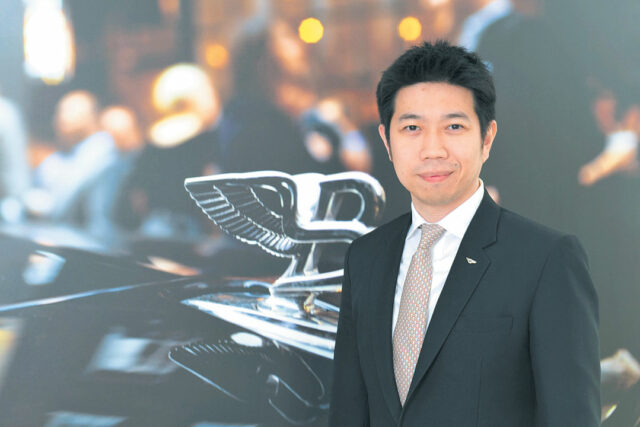
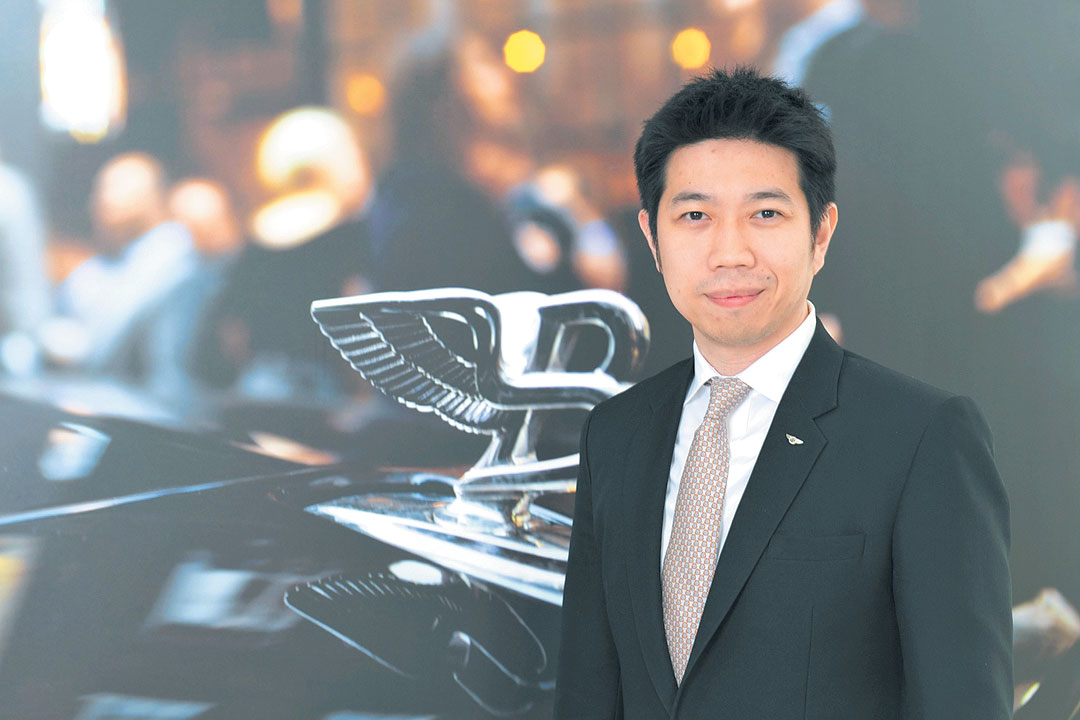
The Velocity Q&A: Christopher Chan (PGA Cars Planning Director)

Mr. Chan is also concurrently managing director for Audi and Bentley in the Philippines.

Interview by Kap Maceda Aguila

IT MAY be a little hard to believe, but the first hybrid vehicle formally made its way into the country more than decade ago. And while the idea then of a traditional internal combustion engine supplemented by an electric motor wasn’t really a box-office hit, it surely managed to open some eyes on the long-term practicality — and inevitability — of electric mobility.

That’s what electrification in the mobility sector is: inevitable. Today, most car makers have articulated their desire to be carbon-neutral or to dispense with fossil-fuel-powered engines by a fixed year in a bid not just to adhere to ever-tightening international fuel economy and emissions standards, but to earnestly make a transition to cleaner transportation to assure a healthy, viable planet for those who will come after us.

And what was novel then is certainly more widely accepted now. Electrified vehicles from hybrids to plug-in hybrids to full electrics have made their way into the country — in no small part due to the laudable efforts of both public and private sectors (take a bow, Electric Vehicle Association of the Philippines). Legislators and other open-minded officials have also plugged into the program to aspire to an electrified future.

Still, there’s quite a bit of resistance, and work, left before we convincingly open the EV floodgates. What’s clear to someone who has been covering the auto beat is this: the private sector (notably OEMs and distributors) can’t be sitting on their thumbs in anticipation of the state to roll out the red carpet for the industry. Rather, the smart money should be on the dichotomous leap of calculated faith. Good things happen to those who wait, but those who grab the bull by its horns can get their reward, too, and now.

That’s precisely what the folks at PGA Cars appear to be doing. Established in 1996 by Robert Coyiuto, Jr., the company is the country’s steward for a prestigious set of brands in Audi, Bentley, Lamborghini, and Porsche.

You can say that the brand is championing the local premium auto sector’s push for electromobility. It’s not all motherhood statements, either. Through its “FutureNow” program, PGA Cars has sunk in more than P300 million to ready itself and its people for the “unique requirements and safety standards of electric vehicles.”

On the ground, the company is also engaging in discussions with relevant stakeholders “like mall owners, property developers and fuel companies which have set up (or have plans to set up) public charging stations,” according to a release. “Plus, all PGA Cars showrooms and service centers are equipped with charging facilities, which Porsche and Audi owners use for free.”

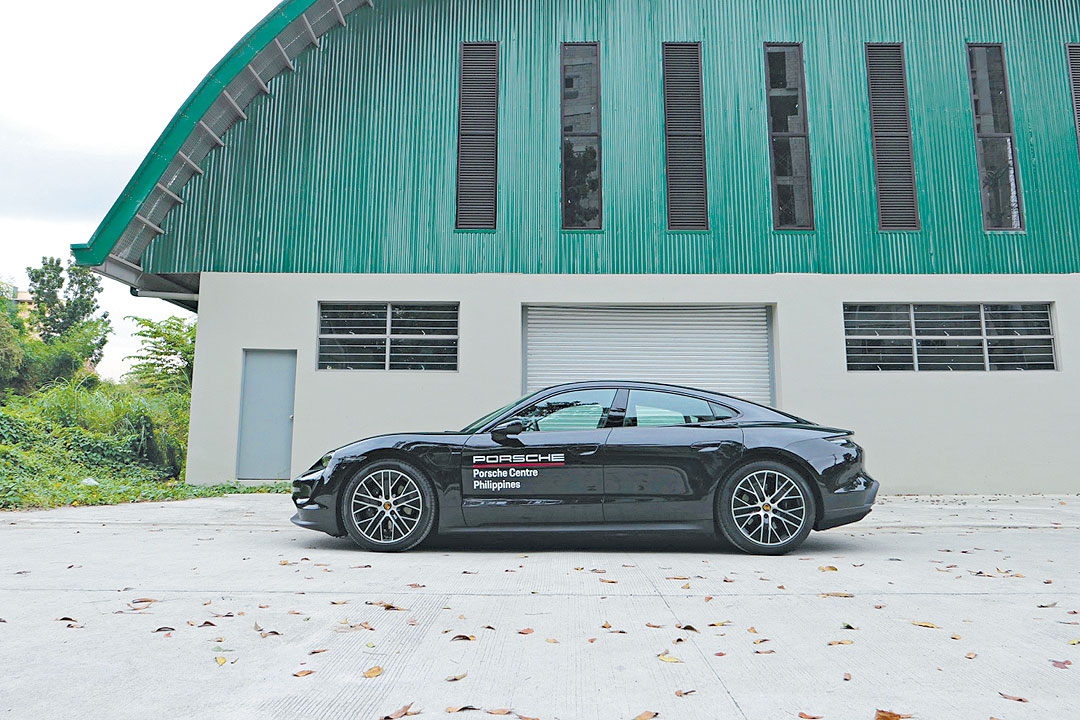
Even as the Porsche Taycan (launched here in 2020) and the Audi e-tron SUV and e-tron GT (unveiled just last February) embody PGA Cars’ electric dreams for the moment, the Bentley and Lamborghini brands will enter the picture sooner than later.

“Bentley has already launched the Bentayga Hybrid and the Flying Spur Hybrid worldwide, and we can expect our first few cars within the year as well,” said PGA Cars Planning Director Christopher Chan. “Lamborghini has this in its plans as well. Hybridization is a win-win. You don’t only get more power, you get power delivery at low RPMs compared to more traditional engines. It just adds to what Lamborghini is, and to what Bentley is — effortless power for Bentley at lower engine speeds, and for Lamborghini it’s really about high performance.”

Here are more excerpts of our talk with Mr. Chan about how PGA Cars is making the premium electric car, well, more commonplace.

VELOCITY: So what does FutureNow mean for PGA Cars?

CHRISTOPHER CHAN: It’s not only a mantra, but basically how we move forward with everything. It’s our statement for electric vehicles, because electric vehicles shouldn’t be an afterthought in the industry. They were probably thinking, okay, electric cars will be coming in maybe three years, five years from now. But what we’re seeing is that they’re here, they’re here now. The future is here now, and you can drive it today. And you can own it today.

We learned that quite a number of your buyers of the Audi e-tron and Porsche Taycan are actually first-time buyers into these brands. Were you surprised by that? What do you think explains it?

It was surprising at first, but once we analyzed the data a bit more, it made sense. These cars are mainly Audis and Porsches — just with a different power drive. From gasoline to diesel to hybrid, it’s still an Audi, it’s still a Porsche — and drive like them. It’s the same experience that you get just from a different power plant. At the same time, the curiosity for EVs is really there, and you really see this sustainability trend. It’s really the new luxury for a lot of people, and, when they see brands like Audi and Porsche they would want to know and see the cars that are being built as sustainable vehicles. It’s so easy to shift.

A lot of people in the industry have also been talking about a reluctance to bring in fully electric vehicles because they see the challenges — specifically the lack of charging infrastructure. So what was the point when you guys decided to pull the trigger and say, okay, the e-tron and Taycan are here and the Philippine market is ready for them?

We started off with that same problem as well. We were thinking okay, charging infrastructure is not here yet. But talking more and more with our principals, we found out that 90% of charging basically happens at home. So given that, given that very strong number, we talked to our customers, we did some initial surveys, and got very good feedback in terms of the demand for the EVs. So with that, we took the jump and went into the electric vehicle market, head first.

There’s a lot of good news coming through legislation and policies that are making things a little more conducive for the industry like the EVIDA Law. As far as government support is concerned, are you guys happy at PGA Cars? What do you think still needs to happen to get us to that tipping point for more people to get into electrics?

I think we’re in the right direction when it comes to the measures of government. There’s a push on parking spaces and other benefits for EV owners. But of course, we’d like to see more on the importation side of things, that government helps out in term of duties. But again, it’s really more of the infrastructure that they can really help out with, because from what we’ve seen in other countries, the infrastructure was really set up by the government or heavily subsidized by the government — so from petrol stations to office buildings and schools and public parking areas. There would be government-funded or government-supported infrastructure to help make things easier because of course, as we know, in the Philippines not everybody would easily have a ready parking space or even parking spaces near their homes. So it would be easier for the industry to move forward with full government support in these aspects.

What sort of concerns or worries do some people have about electric vehicles? Of course, one of them would be range, right? What are you seeing from your end?

It is a concern for some, but not really a major one. It’s a different market for people with, say, one cars, two cars versus people with three or four cars. So they would have an alternate for longer journeys. But with that said, we’ve tried to go on long distances with the e-tron SUV. We went to La Union with over 24% left in the battery. So that’s some 300 kilometers and it’s not really concerning. And the driver wasn’t even doing eco-driving or anything. It was just normal driving. So I wouldn’t think it’s such a big hurdle for most people. It’s part of the lifestyle; part of getting into an EV you usually are more conscious about how you use the vehicle; how you use the energy in the vehicle. Living a more sustainable lifestyle is part of how the transition to EVs is looking like.

Electric cars have far less moving parts, which means, one would guess, they would cost less to maintain right now. If we’re talking about ownership cost, over the long term, how would EVs stack up against ICE-powered cars?

Less moving parts mean maintenance is definitely much, much easier. You don’t have oil going into these things, and the brakes pretty much last forever. So it’s really, really easy; much more cost-effective to run these cars in the long run, and the batteries last a good eight to 10 years. That’s it; everything’s modular and easily replaceable.

What’s the PMS schedule?

It’s one year or 10,000 kilometers but, of course, most of the first year and let’s say the third year would be more of inspections, checking on the coolant — minor things.

Where will the P300 million that PGA Cars earmarked for FutureNow actually go to?

It is a sizable amount, and it keeps on growing as we go along. New models, new tools and training, new facilities. At the same time, we push forward in terms of charging points. So we’re also doing our own groundwork and, of course, not waiting for the apple to fall from the tree and get all this support from the government. For the training of the people, as I mentioned, it’s something new, it’s not an engine that just changes from generation to generation with some minor tweaks; it’s an electric motor. It’s a whole battery with multiple cells. Our people need to learn how to do it and then that’s what we’re really investing in. It’s not just about selling it. How do we service it properly in Metro Manila, in Cebu, in Davao? We’re preparing for all that in the coming years as well.


Kimono fashion unfurls in New York exhibition

Kyōgen Suit (Suō) with Rabbits Jumping over Waves — PHOTO FROM METMUSEUM.ORG

NEW YORK — Kimonos, covered with polka dots, Cubist patterns, and big-eyed animé characters, are on display in New York’s Metropolitan Museum of Art, showing how East and West influenced each other to transform the traditional Japanese garment.

“Usually when you think of fashion, you think of big brands made in the Western world. But the kimono also had a fashion system going back to the 17th century,” said Monika Bincsik, Diane and Arthur Abbey Associate Curator for Japanese Decorative Arts at the museum.

More than 60 kimonos are on display alongside Western dresses in the first show co-hosted by the Met’s Japanese Gallery and Costume Institute.

“The Japanese kimono had a big influence on Western fashion going back to the early 20th century,” Ms. Bincsik said.

For example, French couturier Paul Poiret created a kimono coat, while Western abstract art inspired the bold geometric patterned “Meisen” kimonos of the early 1900s.

The exhibit runs through Feb. 20, 2023. — Reuters

Dottie Ardina at joint 14th after three rounds of LPGA Classic

DOTTIE ARDINA — REUTERS

THE Philippines’ Dottie Ardina shot an even-par 71 on Saturday and slipped to joint 14th after three rounds of the Shoprite Ladies

Professional Golf Association (LPGA) Classic at the Seaview Hotel and Golf Club in Galloway, New Jersey.

Unable to sustain her hot start of 67, Ms. Ardina shot two birdies against two bogeys in a 36-35 round to drop 11 places with her tally of four-under 138.

From two down, the 28-year-old found herself facing a five-stroke deficit against Sweden’s Frida Kinhult (9-under 133 after a 67) going to the final round.

Compatriot Bianca Pagdanganan submitted a 70 in the second round but ultimately failed to make the cut with a 5-over 147 aggregate.

Ms. Pagdanganan’s bid was set back by her opening 77.

Ms. Ardina hit 12 of 14 fairways and 15 of 18 greens but needed 33 putts, reaching the turn at one-under after stroking birdies on the par-5 third and ninth holes to offset a bogey on the second hole. She dropped a stroke on the 14th  heading home. — Olmin Leyba

PLDT Global, OneQode partner to strengthen eSports

BW FILE PHOTO

PLDT Global Corp. announced that it signed a memorandum of understanding with OneQode, a gaming infrastructure provider, that aims to strengthen and internationalize the gaming experience of the local esports community.

“We are thrilled for this partnership to come into fruition and further elevate the gaming experience for over 43 million active players in the Philippines,” PLDT Global President and Chief Executive Albert V. Villa-Real said in a statement.

Under the partnership, OneQode will establish its gaming network infrastructure in the country to boost its operating capability.

“The Philippines is in a very strategic location for OneQode, which ensures that gamers using PLDT in the Philippines get the best latency to APAC Central,” OneQode Co-Founder and Chief Architect Ben Cooper said.

Through its global gaming infrastructure, OneQode uses a “unique server location” to allow for cross-regional gameplay.

“By working with PLDT, we can put Filipino gamers on the world stage. This is an incredibly exciting time for the region,” OneQode chief executive Matt Shearing said.

OneQode is a global Infrastructure-as-a-service (IaaS) company based in Australia, operating a latency-optimized international carrier network and a high-performance cloud platform.

“Teaming up with OneQode to deliver unmatched gameplay interactivity and further drive gamer engagement in the region, including the Philippines, through our resilient data center facility and advanced digital solutions, is an exciting moment for us,” PLDT Global Asia-Pacific Regional Head Jefferson Mendoza added.

Hastings Holdings, Inc., a unit of PLDT Beneficial Trust Fund subsidiary MediaQuest Holdings, Inc., has a stake in BusinessWorld through the Philippine Star Group, which it controls. — Luisa Maria Jacinta C. Jocson

Father’s Day loot from Lexus

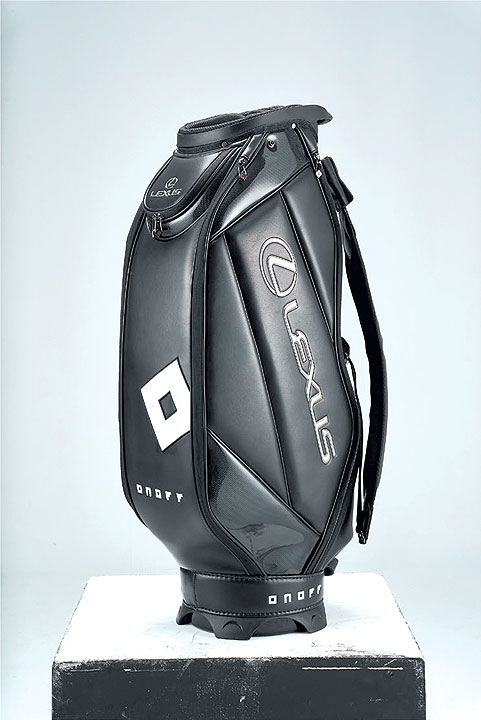
LEXUS PHILIPPINES suggests some merchandise for the man of the house as Father’s Day approaches (June 19, to be precise). For traveling dads and fairway fathers, Lexus presents branded bags — from backpacks, click packs, duffle bags, to Samsonite Lexus luggage. Meanwhile, fashionable dads can wear quality apparel made by Ping.

Aforementioned golfers can choose from caddy bags, clutches, exclusive Mizuno Lexus duffle bags, golf gloves, arm sleeves, ball markers, and other golf accessories. Small leather goods in fine nappa or nubuck such as keychains, coin purses, wallets, and card holders can be had, as well as baseball caps in a variety of colors, sleek tumblers, and practical umbrellas.

Scale models of some Lexus nameplates are available as well, such as the LC, UX, and even a remote-controlled LC500 toy car. Official and genuine Lexus merchandise are available at the Lexus Manila showroom in Taguig.

For more information, visit the Lexus website at lexus.com.ph or the company’s social media pages on Facebook and Instagram @lexusmanila.

Gov’t securities seen to climb on planned rate hike, inflation

BW FILE PHOTO

RATES of government securities are expected to rise this week ahead of the central bank’s planned rate hike and the recent inflation data that prompted investors to seek higher returns.

The Bureau of the Treasury (BTr) will offer P15 billion in Treasury bills (T-bills) on Monday, broken down into P5 billion each in 91-, 182- and 364-day debt papers.

On Tuesday, the BTr will auction off reissued seven-year Treasury bonds (T-bonds) with a remaining life of six years and 11 months.

A trader in a Viber message said that the recent inflation data and the upcoming central bank meeting, which is expected to produce a rate hike, were returning themes this week.

“Those two are usually bearish themes for bonds thus prices become relatively cheaper as yields rise,” the trader said, adding that investors remained cautious amid expectations of a looming rate hike by the central bank.

The first trader expects the rates of T-bills to go up 5-10 basis points (bps), while the reissued seven-year bonds up for offer to range between 6.540% and 6.550%.

Rizal Commercial Banking Corp. Chief Economist Michael L. Ricafort sees rates of T-bills moving sideways with a slight upward bias, comparable with yields at the secondary market, which rose after recent inflation data.

He said that the latest increase in yields at the secondary market was “also due to higher transport costs and jeepney minimum fare that could add to inflation.”

The implementation of a daily minimum wage hike in 14 regions and a P1 increase to a minimum of P10 in fares for public utility jeepneys in Metro Manila, Central Luzon, Calabarzon and Mimaropa this month will likely add to inflationary pressures.

Bangko Sentral ng Pilipinas (BSP) Governor Benjamin E. Diokno last month said that the central bank would likely raise the key interest rate by another 25 bps at the next Monetary Board meeting on June 23, following the hike during the May 19 meeting to curb growing inflationary pressures.

Last week, Monetary Board member and incoming BSP chief Felipe M. Medalla said in a Bloomberg interview that policy makers were “almost” sure to hike rates at the upcoming meeting, while a “90% chance” looms of another increase at their subsequent review on Aug. 18.

Headline inflation for May was recorded at 5.4%, above the BSP’s 2-4% target band, and matching the median inflation forecast by economists in a recent BusinessWorld poll. A bulk of the inflation came from soaring commodity and fuel prices.

May’s headline print was also the fastest since the 6.1% seen in November 2018.

Year to date, inflation has averaged 4.1%, lower than the central bank’s 4.6% forecast but above its 2-4% target for the year.

Meanwhile, a second trader also sees rates moving sideways with a slight upward bias, as the market stays cautious amid the upcoming Federal Open Market Committee (FOMC) meeting on June 14-15, where its members are expected to hike rates by another 50 bps.

At the secondary market on Friday, the 91- 182- and 364-day T-bills were quoted at 1.4863%, 1.8785%, and 2.1071%, respectively, based on the PHP Bloomberg Valuation Reference Rates published on the Philippine Dealing System’s website.

Meanwhile, the seven-year bond fetched a yield of 6.4506%.

Last week, the BTr raised just P13.924 billion from its offer of T-bills, despite total bids reaching P42.654 billion, nearly triple the P15 billion on offer.

Broken down, the government fully awarded the 91-day debt papers, raising P5 billion as programmed as the tenor attracted P20.790 billion in bids. The average yield on the three-month tenor was at 1.44%, 21.5 bps lower than the 1.46% seen previously.

The BTr also raised P5 billion as programmed from the 182-day T-bills, with total tenders reaching P15.02 billion. The average rate of the six-month debt papers went up by 2.2 bps to 1.834% from the 1.812% fetched at the previous auction.

Lastly, the Treasury partially awarded its offer of one-year securities, raising just P3.924 billion against its P5-billion program, even as bids reached P6.84 billion. The average rate of the one-year T-bill increased by 36.4 bps to 2.297% from the 1.933% quoted for the tenor’s last successful award on May 2.

Meanwhile, the last time the government offered the reissued seven-year bonds to be auctioned off on Tuesday was on May 17, when it raised just P20.10 billion. The bonds carry a coupon rate of 6.5%, with the BTr capping bids at 6.6%.

The BTr wants to raise P250 billion from the domestic market in June, or P75 billion through T-bills and P175 billion from T-bonds.

The government borrows from local and external sources to help plug a budget deficit capped at 7.7% of gross domestic product this year. — Tobias Jared Tomas

Cosmetics maker Revlon nears bankruptcy filing — WSJ

COSMETICS maker Revlon, Inc. is preparing to file for chapter 11 protection as soon as next week, the Wall Street Journal (WSJ)reported on Friday, citing people familiar with the matter.

Revlon, whose shares declined 46%, did not immediately respond to a Reuters request for comment.

The lipstick maker began talks with lenders ahead of looming debt maturities to try to steer the business clear of bankruptcy, the WSJ reported last week.

Revlon had long-term debt of $3.31 billion, as of end-March.

Demand for makeup products has bounced back in recent months as people across the world venture out more often. But Revlon, which faces stiff competition from digital-native upstart brands, said in March it faced supply chain constraints that hurt its ability to service demand.

Reorg Research first reported Revlon was planning to file for bankruptcy. — Reuters

SSC keen to end women’s volleyball title drought

SYNERGY/GMA NETWORK, INC.

SAN SEBASTIAN College (SSC) has a volleyball tradition that remains unchallenged to this day — 23 National Collegiate Athletic Association (NCAA) women’s championships.

But for 12 years, the legendary championship machine that is the Lady Stags has produced nothing but heartbreak and frustration.

Enter fabled coach Roger Gorayeb, who vowed to do everything to end the long title drought.

“I have a good feeling this year,” said the mercurial coach who owns all but two of those titles including 11 straight from 1986 to 1996, after a quick, merciless 25-11, 25-13, 25-16 victory over Emilio Aguinaldo College in NCAA Season 97 at the Paco Arena on Sunday.

Mr. Gorayeb liked what he saw including the strong debuts of his three rookies Katherine Santos, Kristine Dionisio and Christina Marasigan, who combined for 27 points.

“I’m happy with our team’s performance including our three rookies. We also started training on May 2 so I’m really satisfied with our performance despite these factors,” he said.

The last time SSC won a women’s crown was in 2010. It has had three chances to reclaim lost glory the last decade only to fall short in the end.

This could be the year the Lady Stags could hoist that dream trophy again. — Joey Villar

Government bank opens P1-billion loan program for rural banks going digital

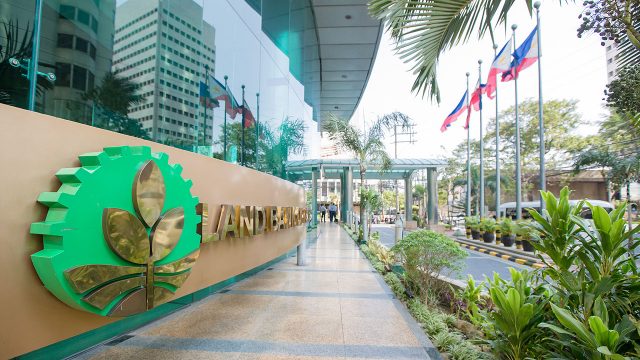
LAND BANK of the Philippines (LANDBANK) has launched a P1-billion lending program to digitalize the banking operations of countryside financial institutions in order to reach more unbanked Filipinos.

This will be done through its Digitalization of Countryside Financial Institutions lending program, where the bank will finance digitalization projects, including paying for subscription or licensing fees for commercial software or outsource information systems (IT).

The state-run bank can also finance the purchase of computer equipment and the purchasing or development of software, including maintenance and support.

“LANDBANK aims to boost the capacity of rural banks to contribute to the digitalization wave. The possibilities for growth are endless, with the end goal of promoting financial inclusion and providing innovative and responsive digital financial services,” said Cecilia C. Borromeo, the bank’s president and chief executive officer, in a press release.

Rural, thrift, and cooperative banks may borrow up to 80% of the total cost of the digitalization project, with an interest rate of 5% per year for a term loan, which is fixed for the first year and can be re-priced later. The loan is payable for up to five years.

For a short-term loan, the bank’s prevailing rate when the loan was availed applies, but not less than 5% per year, and is payable for up to one year via a six-month promissory note.

As of the end of April, the state-run bank’s loans to 88 rural banks had reached P9.66 billion.

From January to March of this year, the bank also facilitated a total of 39.14 million transactions worth P567.61 billion through its major digital banking channels.

For the first quarter, the bank’s income reached P13.2 billion, 141% higher than the P5.48 billion a year prior. This translates to a return on equity of 14.27%.

Its first-quarter performance was attributed to higher interest income from loans and investments, as well as one-time gains from its merger with the United Coconut Planters Bank. — Tobias Jared Tomas

SEC retains highest CoA audit mark for fourth consecutive year

THE Securities and Exchange Commission (SEC) has received an “unmodified opinion” from the Commission on Audit (CoA) for the fourth consecutive year due to its “transparent and sound management of public funds,” the regulator said.

State Auditor Concepcion C. Reyes rendered an “unmodified opinion,” also known as an “unqualified opinion” on the fairness of the presentation of the commission’s 2021 financial statements in an independent auditor’s report dated May 31.

“In our opinion, the accompanying financial statements present fairly, in all material respects, the financial position of the SEC as at Dec. 31, 2021, and its financial performance, changes in net assets/equity, cash flows, comparison of budget and actual amounts for the year then ended, and notes to financial statements, in accordance with the International Public Sector Accounting Standards (IPSAS),” according to the report.

An unqualified or unmodified opinion is given when auditors conclude that the financial statements as a whole are free from material misstatements, which could arise from either error or fraud, according to the IPSAS.

The SEC also received an unqualified opinion on the fairness of presentation of its financial statements for 2018, 2019, and 2020.

“We take pride in the four-year streak of unqualified opinions we have obtained from CoA, which serves as a concrete proof of our adherence to transparency, accountability, and good governance,” SEC Chairperson Emilio B. Aquino said.

“This testament to the honest, sound, and prudent use of public funds, is especially important for the SEC, which is mandated to oversee the country’s corporate sector and should thereby serve as a model for the highest standards of transparency and accountability in the industry,” he added.

In March, the regulator received the ISO 9001:2015 Certification anew for its management system covering all core services across its main and extension offices.

The certification covers procedures related to the provision of registration of partnerships and corporations in the SEC Extension Offices in Baguio, Tarlac, Legazpi, Cebu, Bacolod, Iloilo, Davao, Cagayan de Oro, and Zamboanga. — Luisa Maria Jacinta C. Jocson

ADVERTISEMENT
ADVERTISEMENT