Home Blog Page 6280

Starting a smart education business opportunity

Kumon Philippines, Inc. (KPI), one of the leading education franchises in the country and abroad, provides a rewarding career and profitable business to its Franchisee-Instructors.

The global business arena has seen strong franchises make their mark in their respective industries. As these enterprises show steady growth and expand overseas, they appeal to discerning local entrepreneurs who are on the lookout for profitable and worthwhile franchise opportunities. 

In the field of education franchising, one of the most well-established franchises in the Philippines and across the world is Kumon. Kumon was able to establish its name in the franchise arena as they have provided and continue to provide top-notch and consistent support needed to build a rewarding career and profitable education business.

A leading franchise 

Before being one of the top global education franchises, Kumon began with its founder, Toru Kumon, a gifted math teacher, who hoped to improve his son’s math abilities, devising what is now distinctively known as the Kumon Method of Learning. He eventually sought to develop the potential of more children in a similar way, leading him to establish the first Kumon Center in Osaka, Japan, in 1958. 

Since then, the Kumon Method has evolved and grown with millions of Franchisee-Instructors in different regions of the world. The Kumon franchise now extends to 65 countries, including Australia, India, United Arab Emirates, Singapore, South Africa, Switzerland, Canada, Mexico, and more. Kumon reached the Philippines in 1996, where its franchise has grown with over 300 Kumon Centers across the country.

The Kumon Franchise advantage

Kumon Franchisee-Instructors are guaranteed support even before the start of operations, to the setting up of the business, until Centers are operational, and beyond.

Helping assure that franchisees can earn from their education business, Kumon provides a well-researched List of Open Areas, showing ideal locations with growth potential.

Would-be Kumon Franchisee-Instructors undergo hands-on training under Kumon Philippines, Inc.’s (KPI) Franchise arm to maintain the top-notch quality of the Kumon Method of Learning. The online training also includes business strategies for owning and operating a Kumon Center. The training is conducted online for the safety and convenience of prospective franchisees.

Thriving amidst the pandemic, KPI ensures the safety of its Franchisee-Instructors by providing hands-on online training on center management, instruction, and other continuous online learning opportunities.

Further ensuring the steady growth of Centers, Kumon Associates and Area Development Managers also provide consistent support in administering the Kumon Programs and managing the Centers. 

While Kumon Franchisees can capitalize on Kumon being a successful global brand and a household name in the education business, KPI couples this by providing consistent and aggressive communication and marketing support.

The uniqueness of the Kumon Method itself makes the franchise a promising opportunity. Unlike competitors, whose services are seasonal, the demand for Kumon and its enrollment is year-round, and its programs are long-term. Students stay long-term as they improve and work through the program levels. This uniqueness poses financial stability, builds strong customer loyalty, and stirs a sense of fulfillment for the Franchisee-Instructor. 

As a franchisor placing the highest respect for Kumon Instructors, the Kumon group enhances franchisees’ personal and professional growth and development by exposing them to different learning opportunities in the Philippines and abroad. They are given the opportunity to join continuing training, meetings, and seminars and build a network with Kumon franchisees from all over the globe.

Kumon continues to establish itself as the leading afterschool program and education franchise in the Philippines and abroad. The company’s steady growth can be attributed to its reputation in the industry and solid partnership with stakeholders, particularly its current and potential Franchisee-Instructors.

Franchising with Kumon provides support and an opportunity to be part and grow with a renowned global brand — all while helping children discover and develop their potential, which could empower them to reach their dreams and goals. 

Build a profitable and fulfilling education business venture with Kumon now: https://ph.kumonglobal.com/franchise-enquiry/


Spotlight is BusinessWorld’s sponsored section that allows advertisers to amplify their brand and connect with BusinessWorld’s audience by enabling them to publish their stories directly on the BusinessWorld Web site. For more information, send an email to online@bworldonline.com.

Join us on Viber to get more updates from BusinessWorld: https://bit.ly/3hv6bLA.
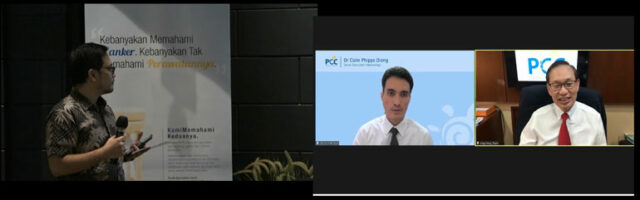
PCC hematologists share advancements in blood cancer treatments

Singapore faces a stable increase in blood cancer patients. Promisingly, a chance of better treatment for such incidents emerges from the developments in cancer research and technology.

In a virtual open dialogue, senior consultants specializing in hematology at Parkway Cancer Centre (PCC) in Singapore highlighted the progress in blood cancer treatments, particularly the possibilities of making them individualized.

Most blood cancer patients during the mid-1960s to mid-1990s experienced poor outcomes with the treatments. But from the mid-1990s up to now, “there’s been a lot of exciting and revolutionary advances,” said Dr. Teo Cheng Peng.

Dr. Colin Phipps Diong talked about leukemia and introduced the Chimeric Antigen Receptor T-cell (CAR T-cell) therapy which involves taking a patient’s T-cells and modifying the cells in the laboratory to make them recognize certain targets on certain cancers. Those cells would be given back to the patient through an infusion.

While effective, such a therapy is expensive. Early clinical trials also saw the therapy “killed so many leukemia cells all at once; when [the leukemia cells] died in the body, they release a lot of the toxic stuff inside the cells, and that overwhelmed certain patients,” Dr. Diong said.

“Thankfully, we now know how to deal with these complications, and how to preemptively — or you can say preventively — treat so that these severe complications that cause death are minimized,” he said.

Moreover, CAR T-cell is a targeted therapy which means it cannot be used for all cancer types.

“The two approved indications for CAR T-cell therapy in Singapore at this point [are] against the B-cell acute lymphoblastic leukemia and large B-cell lymphoma,” Dr. Diong said.

“As yet, we do not know what is the best way to target acute myeloid leukemia or T-cell lymphoma with CAR T-cells. There is still a lot of development that needs to happen in the CAR T-cell therapy,” he added.

Dr. Dawn Mya discussed multiple myeloma, a cancer originating from plasma cells. Since multiple myeloma remains incurable, she said that they concentrate on achieving remission with treatment.

“Our treatment is mainly focusing on symptom control, at the same time trying to improve the quality of life; together with prolonged remission as much as possible while trying to delay the time to relapse,” said Dr. Mya.

She divided the treatment into definitive treatment (usually combination therapy) and supportive care.

Dr. Mya also shared new advancements in multiple myeloma treatments like several classes of drugs for medical therapy. There are also immunotherapy and other specific therapies such as bispecific T-cell engagers and cell therapy like the CAR T-cells, which are in clinical trials and may be available soon.

As for lymphoma or the type of blood cancer involving the lymphatic system, Dr. Lee Yuh Shan said that its various subtypes have a different treatment approach.

Developments on lymphoma treatments are also on the horizon, said Dr. Shan. These are immunochemotherapy and BCL-2 inhibitor, new bispecific antibody, and the CAR T-cells.

“Treatment outcomes [are] improving over the years with the new agents, which are more effective,” Dr. Shan observed.

“Personalized treatment is very important,” he added. “We have to take into consideration the tumor type, the disease status, the mutation of the tumor, as well as the fitness of the patient to improve the outcome of this patient with lymphoma.”

For inquiries, please contact Parkway Hospitals Singapore – Manila office located at G/F-B, Marco Polo Hotel, Meralco Avenue and Sapphire Street, Ortigas Center, Pasig City 1600; email
manila.ph@parkwaypantai.com; or call 0917-526-7576. Visit parkwaycancercentre.com/ph/home and CanHope Manila’s Facebook page for more information.


Spotlight is BusinessWorld’s sponsored section that allows advertisers to amplify their brand and connect with BusinessWorld’s audience by enabling them to publish their stories directly on the BusinessWorld Web site. For more information, send an email to online@bworldonline.com.

Join us on Viber to get more updates from BusinessWorld: https://bit.ly/3hv6bLA.

9 essential power tools in building your home

When constructing a home, every builder knows that efficiency and precision is vital in establishing a sturdy and stable structure. Aside from the structure, every homeowner and builder must also pay attention to the details of furnishing to achieve the home’s complete and refined look. Get the best home building partner using power tools from Hills!

Hills power tools are equipped with suppression capacitors that suppress interferences that enter the device from the outside and protect the device. Hills power tools are also designed with efficient ventilation and cooling to guarantee that heat is effectively dissipated, extending the machine’s service life. Check out these 9 handy power tools from Wilcon Depot to help you get the job quicker and safer:

1. Orbital Sander

Orbital sanders are often used to polish rough surfaces of wood, remove rust and paint on metal, and create a smooth, fine finish on plastic. This handy power tool can be effectively used in making furniture, re-doing your car paint, or refining hardwood floors. Use this square-shaped sander to smoothen corners and edges and capture every inch of the surface project.

2. Jigsaw

Jigsaws are a DIY-er’s must-have tool. This power tool offers precision and efficiency in cutting intricate shapes of wood. It is perfect for handling curved edges that require a fine cut for a more professional-looking project. This portable tool comes with a hex wrench, blade adjust block, jigsaw blade, and carbon brushes.

3. Drills

Depending on the amount of work needed to complete the task, drills are an essential tool in cutting the work time in half. Hills carries a variety of drills to meet your home building and renovating needs. For smaller and quicker projects, you may opt for cordless drills for better portability. In addition, if you’re on a tight schedule, you can trust impact drills to get the job done in no time. However, if precision is a must, stick to your regular drills for better handling. 

4. Electric Planer

If you’re looking for a tool that will provide a smooth and seamless finish for your wooden DIY project, then get yourself an electric planer. This hand tool shaves off excess wood and flattens the material allowing it to have a much better form. It is easy to navigate through with its ergonomic handle and adjustable power.

5. Electric Mixer 

This electric mixer is the ultimate time and energy saver. Whether you’re mixing paint, cement, plaster, adhesive, grout, or even large amounts of food, you can trust this electric mixer to get the job done, no sweat! It comes with an ergonomic double handle that serves as a steering wheel-like shape for easier control.

6. Electric Blower

Ideal for a quicker clean-up job, this electric blower is a useful tool for deeper cleaning at home and construction areas. This electric tool can blow away dust and unwanted particles from every corner of your home with its dynamic air pressure while handling it conveniently with its easy grip handle.

7. Demolition Hammer

The demolition hammer is specifically designed for faster structure demolition, like concrete walls and tiled flooring. It is a multifunctional power tool for heavy-duty tasks including rilling, hammer drilling, and chiseling. It comes with a durable and long-lasting cellular battery pack structure for longer service life.

8. Electric and Manual Sprayer

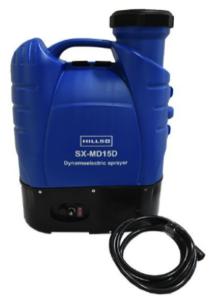
These large-capacity sprayers are built with a handy hose and spray nozzle, ideal for keeping your garden space fresh. You can get these handy sprayers in three varieties; electric, manual, and electric-manual–a top-notch everyday tool at home.

9. Safety Helmet

When doing home building and repair, it is essential to wear complete and proper gear to remain safe and avoid unwanted accidents. Prioritize your safety and wear a sturdy helmet to protect your head, neck, and face from injuries caused by falling debris and electrical exposure. Made from high-grade material with an adjustable lock to secure it in place, ensuring better safety in the workplace.

Cut your working time in half and double the efficiency and precision with power tools from Hills, the newest addition to the high-quality house brands at Wilcon Depot. Shop now at any Wilcon store nationwide or shop conveniently at Wilcon Online Store by visiting shop.wilcon.com.ph.

Wilcon Depot has been serving Filipino homeowners and builders nationwide with high-quality home building and improvement needs and excellent customer experience over the years now. Celebrate 45 years of building big ideas with Wilcon Depot and explore their limitless product selections ranging from Tiles, Sanitarywares, Plumbing, Furniture, Home Interior, Building Materials, Hardware, Electrical, Appliances, and other DIY items. 

For more information about Wilcon, you can log on to www.wilcon.com.ph or follow their social media accounts on Facebook, Instagram, and Tiktok. Subscribe and connect with them on Viber Community, LinkedIn, and YouTube.


Spotlight is BusinessWorld’s sponsored section that allows advertisers to amplify their brand and connect with BusinessWorld’s audience by enabling them to publish their stories directly on the BusinessWorld Web site. For more information, send an email to online@bworldonline.com.

Join us on Viber to get more updates from BusinessWorld: https://bit.ly/3hv6bLA.

P&A Grant Thornton holds 23rd Search for Outstanding Accounting Students of the Philippines competition

SOASP Top 25 Finalists with Panel of Judges and P&A Grant Thornton Partners

Aspiring certified public accountants showcased their knowledge and skills in accounting once more during the 23rd Search for Outstanding Accounting Students of the Philippines (SOASP), an annual competition which aims to shine the spotlight on the country’s top accountancy students through qualifying examinations and interviews.

The nationwide competition, organized by P&A Foundation Inc., Philippine Institute of Certified Public Accountants (PICPA), and the Association of Certified Public Accountants in Commerce and Industry (ACPACI), was held virtually on May 28, 2022.

SOASP Top 25 finalists

Two hundred fifty-four (254) accountancy students, hailing from sixty-eight (68) universities and colleges across the country, and who are candidates for graduation by the end of academic year 2022, went head-to-head in a battle of knowledge, skills, and wits, all with one goal in mind – to be named this year’s SOASP Champion.

Questions and exams were based on different subjects including auditing, management advisory, taxation, and regulatory frameworks for business transactions. An essay exam was conducted as part of the competition.

During the event, participants hurdled a series of exams during the qualifying round, where 25 finalists were chosen to proceed to the next stage of the competition. The Top 25 battled it out during the Quiz Bee round. Only five participants then advanced to the final interview round.

For her solid mastery and application of topics and principles in accounting, Kyra Shane Buhia from the University of San Carlos took home the crown and was named the 2022 SOASP Champion. Tailing closely were Jenzel John Longno, Rica Mae Albiso, Leonelle Lambo, and Filna Quiňo who placed second, third, fourth, and fifth, respectively.

Kyra received a plaque of recognition and P50,000. The Top 25 each received plaques and cash prizes, while the Top 5 were given additional cash prizes as part of their awards.

Present during the competition were Managing Partner and COO and Trustee of P&A Foundation Leonardo D. Cuaresma, Jr., Practice Leader for Business Process Solutions/Outsourcing and Treasurer of P&A Foundation Ma. Paz V. Malubay, Partner for Business Process Solutions/Outsourcing and Chairperson of ACPACI for SOASP Elano C. Marcelo, and Partner for Tax Advisory and Compliance and SOASP Project Head Edward D. Roguel. Meg Punay, Partner and Head of the P&A Davao Office, hosted the auspicious event.

Board of Accountancy Chairman Noe Quiñanola gave an inspirational talk during the event. The panel of judges were P&A Grant Thornton Principal for Tax Advisory and Compliance and Corporate Secretary of P&A Foundation Atty. Lea Roque, National President for ACPACI Teodoro Josephat Martinez, and PICPA Sectoral Director for Education Asser Tamayo.

Former SOASP winners also graced the program, including Vhinson Jay Garcia (17th SOASP 1st Placer) who delivered a short message, and Francis Matthew Obligacion (22nd SOASP 2nd Placer) who led the invocation.

This year’s SOASP competition marked the second time that the event was held virtually since the onset of the COVID-19 pandemic.


Spotlight is BusinessWorld’s sponsored section that allows advertisers to amplify their brand and connect with BusinessWorld’s audience by enabling them to publish their stories directly on the BusinessWorld Web site. For more information, send an email to online@bworldonline.com.

Join us on Viber to get more updates from BusinessWorld: https://bit.ly/3hv6bLA.

Stagflation not a risk to economy — BSP

A gasoline attendant fills up a motorcycle with gasoline at a gas station in Delpan, Tondo, Manila, June 13. — PHILIPPINE STAR/KRIZ JOHN ROSALES

“STAGFLATION” is unlikely to pose an immediate risk to the Philippine economy, Bangko Sentral ng Pilipinas (BSP) Governor Benjamin E. Diokno said.

“The BSP does not view ‘stagflation’ — an economic condition characterized by slow growth, high unemployment, and rising inflation — as an immediate risk to the Philippine economy,” he said in a statement on Thursday.

The central bank is optimistic the Philippine economy’s recovery will be sustained, Mr. Diokno said, citing the 8.3% gross domestic product (GDP) growth in the first quarter.

He noted the steady rise in credit activity, ample domestic liquidity, improved jobs market, and higher foreign direct investments will help boost the economy’s rebound.

Economic managers are targeting a 7-8% GDP growth this year.

However, inflation quickened to 5.4% in May, the highest in three and a half years and above the BSP’s 2-4% target range.

The BSP last month raised its average inflation estimate to 4.6% this year, higher than the previous estimate of 4.3%.

“While domestic inflation is seen to remain elevated in the near term, as a result of supply-side factors linked to volatile global commodity prices, inflation is expected to revert to the government’s target range of 2-4% by 2023. In the meantime, the balance of risks to the inflation outlook now leans toward the upside for both 2022 and 2023,” Mr. Diokno said.

The central bank repeated its support for “urgent and coordinated efforts” of government agencies to ensure there is enough domestic food supply, as well as direct and targeted interventions for vulnerable sectors.

“The BSP will remain vigilant over emerging price and output conditions and will undertake necessary action to ensure that monetary policy settings remain appropriately calibrated, consistent with the BSP’s price and financial stability mandates,” Mr. Diokno said.

The BSP has already signaled another policy rate hike at its June 23 policy meeting.

The Monetary Board kicked off its tightening cycle by raising the policy rate, the yield on the BSP’s overnight reverse repurchase facility, by 25 basis points (bps) to 2.25% during its May 19 meeting to temper rising inflation. Interest rates on the overnight deposit and lending facilities were also hiked to 1.75% and 2.75%, respectively.

This was the first increase in borrowing costs since 2018 and followed cuts worth 200 bps in 2020 as the BSP moved to support the economy amid the coronavirus pandemic.

The World Bank earlier this month warned of the rising risk of stagflation, an economic condition characterized by weak growth and high inflation that was last seen in the 1970s.

“Just over two years after COVID-19 (coronavirus disease 2019) caused the deepest global recession since World War II, the world economy is again in danger,” World Bank Group President David Malpass said in the Global Economic Prospects report released earlier this month.

“This time it is facing high inflation and slow growth at the same time. Even if a global recession is averted, the pain of stagflation could persist for several years — unless major supply increases are set in motion.”

Mr. Malpass noted that global growth will likely be subdued throughout the decade due to weak investment, and there is a risk that inflation will remain higher for longer than anticipated.

The World Bank estimated global growth at 2.1% in 2022 and 1.5% in 2023, reflecting the impact of the pandemic and the Russia-Ukraine war. 

The multilateral lender expects the Philippine economy to grow by 5.7% for 2022, and 5.6% on average in 2023 and 2024.

BSP may raise rates by 50 bps next week

BW FILE PHOTO

THE UNITED STATES Federal Reserve’s aggressive tightening will put more pressure on the Bangko Sentral ng Pilipinas (BSP) to consider a bigger rate hike at its meeting next week.

The Federal Reserve on Wednesday raised interest rates by 75 basis points (bps), the largest hike since 1994, to curb soaring inflation. Fed Chair Jerome H. Powell also signaled a steep increase in their next meeting.

“Such a more substantial monetary tightening by the US Fed could affect the BSP’s announced stance of gradual normalization of monetary policy,” former BSP Deputy Governor Diwa C. Guinigundo said in a Viber message on Thursday.

The BSP is poised to raise its key interest rate at its next two meetings to address inflation, incoming BSP Governor Felipe M. Medalla said during a virtual roundtable discussion with BusinessWorld editors on Tuesday.

However, Mr. Medalla, a current Monetary Board (MB) member, signaled that the pace of subsequent tightening will be gradual as he ruled out hikes higher than 25 bps.

“While it’s true that signaling such contractionary stance should provide some forward guidance on the BSP’s policy intent and therefore inflation expectation, the size of the Fed’s adjustment could somehow enlarge the expectation by the market of the BSP’s future move,” Mr. Guinigundo said.

Rizal Commercial Banking Corp. (RCBC) Chief Economist Michael L. Ricafort said higher Fed rates may lead to further upward adjustments in the local policy rate from the current 2.25%.

“Thus, there is a chance of a local policy rate hike of +0.50 on the next rate-setting meeting on June 23, 2022 and more local policy rate hikes for the rest of the year, partly to maintain a comfortable interest rate differential with the US, to account for the comfortable spreads/interest rate differentials/risk premium — a dilemma faced by many other countries/central banks around the world,” Mr. Ricafort said in a note.

Bank of the Philippine Islands (BPI) in a press release said it now anticipates a 50-bp hike at the next MB meeting.

“We now expect a 50-bp hike from the BSP at its June meeting given the latest move of the Fed. Hiking the policy rate gradually in contrast to what the Fed is doing may exacerbate the headwinds affecting the Philippine economy,” BPI said.

“A very narrow gap between US and local interest rates will likely exert more pressure on the peso, which will eventually translate to more inflation.”

The peso weakened by 3.5 centavos on Thursday as it closed at P53.47 versus the dollar from its P53.435 finish on Wednesday

Incoming Socioeconomic Secretary Arsenio M. Balisacan said the country has to adjust to global policy tightening, and be more mindful of any shocks.

“If interest rates are rising outside of our country, we have to adjust to that because if you don’t, capital will move out of the country,” he said during a roundtable with BusinessWorld editors on Thursday.

“I think we don’t think macroeconomic fundamentals are that bad compared to other countries. We can withstand these shocks. We have to be mindful, always alert, adjusting to the shocks. Failure to do so will be damaging to the economy.”

MORE SELLING?
Meanwhile, the benchmark Philippine Stock Exchange index (PSEi) rose by 73.59 points or 1.16% to close at 6,393.01 on Thursday, recovering from Wednesday’s bloodbath.

Philippine Stock Exchange, Inc. President and Chief Executive Officer Ramon S. Monzon told ANC that the Wednesday’s drop was “in anticipation of what kind of rates the Fed will impose.”

“We’ve been in worse situations and we’ve bounce back to a higher level. I have no doubts what is happening is temporary,” he said.

In a Viber message, AAA Southeast Equities, Inc. President William M. Cabangon said the Fed’s tightening cycle is pulling down global markets, including the PSE.

“I expect selling to continue over the next few months as valuations continue to readjust lower in line with rising interest rates. Although stocks are cheap relative to past earnings, the uncertainty over future earnings due to inflation and slowdown concerns do not make forward-looking valuations very attractive,” Mr. Cabangon said. — with reports from Keisha B. Ta-asan and Luisa Maria Jacinta C. Jocson

Philippine tourism’s share to economy inches up in 2021

Tourists enjoy kayaking in El Nido, Palawan on April 8. — PHILIPPINE STAR/KRIZ JOHN ROSALES

By Abigail Marie P. Yraola, Researcher

THE SHARE of the tourism industry to the Philippines’ economic output inched up in 2021, as domestic travel restrictions eased alongside the increase in coronavirus disease 2019 (COVID-19) vaccination rates.

Preliminary data compiled by the Philippine Statistics Authority (PSA) showed that tourism’s direct gross value added (TDGVA) accounted for 5.2% of gross domestic product (GDP) in 2021, slightly higher than the revised 20-year low 5.1% of GDP in 2020.

Measuring the tourism-related value created by various industries, the country’s TDGVA was estimated at P1 trillion at current prices, up by 9.2% from the revised P917.20 billion in 2020.

Tourism’s share to GDP slightly improves in 2021

The TDGVA indicator is based on the results of the Philippine Tourism Satellite Accounts report, which the PSA compiles from the Department of Tourism (DoT).

Asian Institute of Management’s Dr. Andrew L. Tan Center for Tourism Associate Director John Paolo R. Rivera attributed the growth in tourism’s contribution to the reopening of tourism activities.

“This is also driven mostly by domestic tourists, who eagerly want to travel after being cooped up in their homes during the lockdowns,” Mr. Rivera said in an e-mail interview.

The government loosened mobility restrictions in the Philippine capital and nearby areas late last year, as COVID-19 infections dropped and the vaccination rate increased. This allowed many hotels, resorts, restaurants and other tourism-related facilities to reopen, albeit at lower capacity last year.

Mr. Rivera said tourism sector’s growth can further improve this year once more foreigners visit the country for tourism.

The Philippines began accepting foreign tourists from visa-free countries in February this year. This was further expanded in April to include vaccinated tourists from all countries in a bid to help in the recovery of the tourism sector and the overall economy. 

In a separate e-mail interview, University of Asia and the Pacific Senior Economist Cid L. Terosa said the more relaxed mobility restrictions helped drive the tourism sector’s slightly better performance last year.

“Tourism-related activities that were choked by the pandemic in 2020 started to regain their vim and vigor in 2021,” he said.

Domestic tourism expenditures, which cover spending of resident visitors within the country either as a domestic trip or part of an international trip, surged by a record 38.7% year on year to P782.51 billion in 2021. However, this was still significantly lower than the P3.14 trillion seen in 2019.

Tourism expenditures by non-residents, on the other hand, declined by 79.2% to P27.62 billion from 2020’s P132.59 billion, as foreign tourists were still not allowed to enter the country.

The share of inbound tourism expenditure to total exports dipped to a record low of 0.6% in 2021 versus the 2.9% share in 2020.

Meanwhile, employment in the tourism industries for the year 2021 was estimated at 4.90 million, which is 11.1% of the total employment. This was higher than the 4.68 million employed in the tourism sector in 2020 or 11.9% of the total jobs.

Mr. Terosa believes that the tourism sector will continue to perform better this year, as long as mobility restrictions and alert levels remain at their most lenient.

“Revenge travel or vacation vengeance will continue to gradually gain momentum this year. Inflationary pressures, however, threaten to curb further rise in tourism demand,” he said. “Given the current situation, however, the tourism sector will probably have a clearer chance to exceed pre-pandemic levels in 2023 and 2024.”

Chicken output set to decline as cost of feed rises

BW FILE PHOTO

THE PHILIPPINES will likely produce fewer chickens in the coming months with numbers reduced by pricier, lower-quality feed and poor weather, an industry leader said — a slowdown that could drive food costs higher.

Raising poultry will be “very challenging” in the coming months, said United Broiler Raisers’ Association President Elias Jose Inciong, as producers in the Southeast Asian nation compete with the rest of the world for chicken feed, as the war in Ukraine disrupts supplies.

Across Southeast Asia, food costs are rising, hitting domestic supplies and exports. Malaysia recently banned chicken exports due to rising local prices and that hit poultry supplies in neighboring Singapore.

In the Philippines, the cost issue is compounded by high humidity that’s unfavorable to growing chickens, as rainy season came earlier this year. “Normally, the answer to high humidity would be very good nutrition. The problem is it’s now more difficult to get good-quality feeds because of the high cost of raw materials,” Mr. Inciong said in a phone interview on Thursday.

Whole chicken prices in Manila have risen by 25% to P200 ($3.75) since the start of the year, Agriculture department data showed. Meat price increases quickened by 5.4% in May, boosting overall inflation to its fastest since November 2018.

Higher chicken prices could, however, ultimately boost production, Agriculture Assistant Secretary Noel Reyes told The Philippine Star. The Philippines’ total chicken output fell by 3.6% last year to 1.7 million metric tons. — Bloomberg

Alliance Global increases capital spending to P60B

TAN-LED Alliance Global Group, Inc. (AGI) announced on Thursday that it is hiking its capital spending to P60 billion this year, 33% higher than the previous year as it “strengthens and expands existing businesses to achieve and surpass pre-pandemic levels.”

“We are a conglomerate in motion. We believe that with the sectors we are in, we will very much benefit from pent-up spending resulting from the further reopening of the economy,” AGI Chief Executive Officer Kevin L. Tan said.

Of the total spending, P50 billion will be allocated for real estate arm Megaworld Corp.’s development and investment activities. AGI announced that Megaworld will be launching 14 new projects valued at P30 billion this year.

“The company also intends to launch about four townships during the year, covering some 500 hectares of land in Metro Manila, Calabarzon and Mindanao, which will provide the fresh source of revenue for the company moving forward,” it added.

The balance of the capital expenditure will be distributed to its other businesses, namely: Travellers International Hotel Group, Inc., Emperador, Inc., and Golden Arches Development Corp.

Approximately P4 billion will be designated for Travellers International’s ongoing expansion projects, primarily in leisure and entertainment.

The firm said that its entire Newport City complex is now open to MICE (meetings, incentives, conferences, and exhibitions) activities and its hotels — Marriott Manila, Sheraton Manila, Hilton Manila, and Hotel Okura Manila — are continuing to accept more guests as mobility restrictions ease.

On the other hand, around P3 billion will be set aside for Emperador’s ongoing expansion projects overseas.

“Since the pandemic, Emperador continued to grow from strength to strength, driven by its international operations through Whyte and Mackay for whisky, and Bodegas Fundador for brandy,” AGI said.

The remaining P3 billion will be spent by Golden Arches, which holds the exclusive franchise to operate restaurants in the Philippines under the McDonald’s brand. It is planning to further expand its store network by launching 45 stores this year.

“Our group anchored itself on stability and recovery over the last two years of grappling with the impact of the pandemic. We have since focused on renewal and revitalization — both pointing to our upbeat, more confident view of the future. This shift in mindset would not have been possible without the insights and innovations derived from such challenging times, and the affirmation that our businesses continued to stand on strong ground,” Mr. Tan added.

In the first quarter, AGI reported its net income to owners jumped by 52% to P3.9 billion. Consolidated revenues likewise grew by 18% to P37.5 billion.

At the stock exchange on Thursday, AGI shares dropped by 3.68% or 36 centavos to P9.43. — Luisa Maria Jacinta C. Jocson

Vivant to invest P25B for water, power projects

VIVANT Corp. has earmarked P25 billion for infrastructure and power development projects starting this year until 2027 as the Cebu-based holding firm aims to diversify its businesses and expand its reach.

“It’s P25 billion for the group. That will bring us to 2025, 2026, [and] possibly 2027,” said Vivant Chief Executive Officer Arlo A.G. Sarmiento in a media briefing after the company’s annual stockholders meeting on Thursday.

The P25 billion will be spent to build power facilities of which 196 megawatts (MW) will come from wind energy, 212 MW from solar, and 62 MW from a hybrid of solar and battery storage. Another 129 MW will come from solar rooftop installations.

As of 2021, the company had a total installed capacity of 382 MW. The capacity is targeted to reach 500 MW next year, ahead of hitting the 1,000-MW goal by 2030.

Mr. Sarmiento said the company is looking at project financing for its capital expenditure for 70-80% of the budget, with internally generated funds accounting for the rest.

“But some of these projects may not be financed the same way, depending on the kind of off-take we can get,” he said. “We may have to look at other forms of financing for these types of projects.”

Vivant’s projected capital spending for the next five years comes as the company aspires to develop more renewable energy projects.

By 2030, it targets to install a total of 1,000 megawatts (MW), of which 30% will be from renewable energy (RE) sources.

Minuel Carmela N. Franco, Vivant’s executive vice-president, said the company is still under-leveraged and plans to tap the debt market.

“Whether to fund it (capital expenditure) by a green bond… that’s one of the options that we’re looking at. Other options would be either issuance of a corporate note or a syndicated loan,” she said.

“Most of the RE will be developed solely by Vivant. There may be one or two projects that we’ll be looking at partnerships, especially the wind projects we’re looking at since these are more technically challenging,” said Vivant President Emil Andre M. Garcia in the same briefing.

“For most of our solar projects, we’re looking at something that would be 100%-owned by the company,” Mr. Garcia said.

By the end of the decade, Vivant will still be driven by its energy subsidiary, Mr. Sarmiento said, referring to the company’s electricity generation business.

“We will still be primarily a power company… or most of our revenues will be generated by power,” he said, adding that by then, the group hopes that the infrastructure business would have increased contributions.

“Personally, I would like to see a number close to about 80-20 if that’s possible, 80% power, 20% infra — primarily water — in 2030,” he said.

Vivant, through its subsidiaries and affiliates, also has interests in various companies engaged in power distribution and retail electricity supply. In 2019, it put up a water-industry arm that is intended to invest in and manage a diversified water portfolio in bulk water supply, wastewater treatment, and water distribution.

Through a subsidiary, the group is building a utility-scale seawater desalination plant in Cebu at a cost of about P1.8 billion that will deliver 20,000 cubic meters per day of treated and potable water.

“For infra, most of our initiatives right now are concentrated in water,” said Jess Anthony N. Garcia, Vivant’s senior vice-president for infrastructure.

“For water, we’d like to be present in the different segments of the industry, namely bulk water supply, water distribution, wastewater, and water engineering,” he said. “Although we don’t have a specific breakdown internally yet, most of our initiatives are concentrated on bulk water supply and what was mentioned earlier, our utility-scale desalination plant here in Cebu.”

He said the desalination plant is expected to start commercial operation in the first or second quarter of next year.

“We will see if we can replicate the same in other provinces, but is probably a few years down the road,” he added.

In a press release distributed after the stockholders meeting, Vivant said it is seeing an opportunity for growth of its retail energy business “amid growing demand for adaptable energy solutions that include rooftop solar.”

Last year, Vivant subsidiary Corenergy Inc. posted a net income after tax of P47.7 million, surging from P2.04 million in 2020.

“This remarkable increase is attributed to Corenergy’s growing customers for energy engineering services and solar solutions. We expect growth in the sector as industries adapt to the changed landscape and see the value of the adaptable energy solutions that Corenergy provides,” said the company’s president, Mr. Garcia.

Vivant reported a net income of P1.8 billion in 2021, up 23% from the previous year. It attributed the increase to the improved performance of its subsidiaries, particularly in power, due to “better generation output and increased business activities.”

The company said it expects increased demand for energy solutions, particularly rooftop solar, “as more consumers see the need to better manage their energy-related costs.” — Victor V. Saulon

NLEX Corp. to spend P1.2B on technology systems this year

NLEX Corp. announced on Thursday that it has allocated P1.2 billion for this year’s capital expenditures to improve customer experience.

“The tollway company sets out various initiatives to upgrade its infrastructure, toll collection system, and account management system,” NLEX Corp. said in an e-mailed statement.

These projects, which comprise, among other things, the upgrading of the North Luzon Expressway’s (NLEX) core system and equipment, are anticipated to enhance the processing of lane transactions.

Radio frequency identification (RFID) users, who make up 70% of expressway motorists, can expect speedier recording of passages, balances, and reloads, as well as better tracking of individual and corporate accounts, the company said.

“Aside from conducting software upgrade and system migration, NLEX Corp. will also replace its toll system equipment within the year,” it added.

At the same time, the company said that nearly 100 toll system equipment along the expressway will be upgraded. The project will cover its toll plazas in Balintawak, Karuhatan, Paso de Blas, Meycauayan, Marilao, Bocaue, Balagtas, Tabang, Sta. Rita, Pulilan, San Simon, San Fernando, Mexico, and Angeles.

The company intends to upgrade the expressway’s toll fare indicators, lane status indicators, traffic control gates, automatic vehicle classification devices, and loop detectors, among others.

“The new equipment will boost operational efficiency as these will enable faster and more accurate transactions and guide motorists better at the plazas,” it said.

“In line with this progress, RFID users are constantly being reminded to be responsible motorists by maintaining sufficient balance in their account before traveling since the tollway company had observed that a number of motorists repeatedly pass the RFID lanes without load or without enough load to cover their trips.”

NLEX Corp. is part of Metro Pacific Tollways Corp., the tollway unit of Metro Pacific Investments Corp. (MPIC).

MPIC is one of three key Philippine units of Hong Kong-based First Pacific Co. Ltd., the others being Philex Mining Corp. and PLDT, Inc.

Hastings Holdings, Inc., a unit of PLDT Beneficial Trust Fund subsidiary MediaQuest Holdings, Inc., has a majority stake in BusinessWorld through the Philippine Star Group, which it controls. — Arjay L. Balinbin

K-pop pioneers BTS’ time-out leaves fans tearful, investors irate

PHOTO FROM FACEBOOK.COM/BANGTAN.OFFICIAL

SEOUL — K-pop pioneers BTS faced tears and sympathy from fans but anger from shareholders in their management company on Wednesday, a day after the band, pleading exhaustion, announced a break from group musical activities to pursue solo projects.

Many in South Korea reacted with shock and dismay at Tuesday’s news that, with some of its seven members approaching military service age, also triggered speculation about the future of a band whose upbeat hits and messages of youth empowerment have turned them into global stars.

“I could relate to them as they shed tears and honestly told us how they felt,” fan Nini Lee told Reuters from a café in Seoul where she had gathered with other fans.

“Their voice gave me huge strength when I had tough times, and I’m no longer afraid of such headwinds …Now I want to give my voice of courage to them.”

Kim Young-sun, who runs the cafe, said she felt sorry that she as a fan had only wanted more from BTS at a time when they were struggling, wishing them a well-deserved break to recharge their batteries.

BTS Leader and rapper RM, in a tearful video released on Tuesday on the ninth anniversary of a group that last year became the first Asian band to win artist of the year at the American Music Awards, said he had “felt guilty and afraid” to ask for the rest that he desperately needed.

Singer Jimin said they were struggling to find their identity in what he called an “exhausting process,” while RM also lamented that the K-pop industry could not provide young artists with “time to mature.”

On social media, some other fans blamed BTS’ management group HYBE for relentlessly pushing for new albums and other moneymaking opportunities.

The company did not immediately respond to a request for comment.

“The K-pop and idol industry had long been running on a profit-making system where the stars cannot take a rest even when they burned themselves out,” said Jung Duk-hyun, a South Korean cultural critic.

SHAREHOLDER ‘DYNAMITE’
Tuesday’s unexpected announcement fueled anger among investors in HYBE, which went public two years ago and whose shares plunged 25% on Wednesday, wiping nearly 2 trillion won ($1.55 billion) off its market value.

“They’ve planted ‘dynamite’ in the hearts of shareholders,” one wrote on a Samsung Securities stock trading platform, referring to one of the group’s hit songs.

HYBE shares had performed relatively poorly in recent months, and the company’s chief executive and some BTS members unloaded stock totaling 10 billion won ($7.75 million) in December.

All able-bodied South Korean men are subject to about two years of military service, and the oldest member of BTS, Jin, is required to begin his duty next year.

A bill pushing for providing military exemptions to globally renowned artists is pending in parliament, amid prolonged debate over whether BTS deserves similar benefits that sport athletes enjoy.

Lee Ki-hoon, an analyst at Hana Financial Investment Co. Ltd., wrote in a report that BTS’ lack of public activity including the impact of military service could result in a 750 billion won revenue loss in 2023. — Reuters

ADVERTISEMENT
ADVERTISEMENT