Home Blog Page 6192

China envoy sees ‘golden era’ in ties with Manila

CHINESE State Councilor and Foreign Minister Wang Yi on Wednesday said he expects relations between China and the Philippines to reach a “golden era” under the Marcos administration.

“I’m confident that with both sides working together, we can surely open up a new golden era for the bilateral relationship,” he said in Chinese during a meeting with Philippine envoys in Pasay City near the capital, a voice recording of which was sent to reporters by the Department of Foreign Affairs (DFA).

The Chinese state councilor was the first foreign counterpart to be received by newly appointed Foreign Affairs Secretary Enrique A. Manalo, who used to be the country’s permanent representative to the United Nations, when he arrived in the Philippines on Wednesday.

Mr. Wang said he appreciates Philippine President Ferdinand R. Marcos, Jr., who called China the country’s “strongest partner.”

“He hopes to deepen and build an even stronger relationship with China, so we are ready to work towards that same direction with the Philippines and to plan for our cooperation moving forward, in all areas of our comprehensive strategic partnership,” he said.

Mr. Marcos has called China the Philippines’ strongest partner in pandemic recovery efforts. In an earlier event, he said the Philippine-China relationship is “very important” and “advantageous to both countries.”

As the political, economic and sociocultural landscapes shift, regional security has become more complex, Mr. Manalo said at the meeting. “We also find ourselves rebuilding after the pandemic, which has ravaged our economies as well as our efforts to reach development goals.”

He added that he expects exchanges with China to benefit both nations, noting that China has been a good friend and close partner of the Philippines in recovery efforts.

“We have stood shoulder to shoulder in times of great difficulty, helping one another so that we may both bring progress to our respective nations,” he said.

“Given the current circumstances, in particular as you have mentioned, the uncertain, unstable and complex regional and international dynamics, it is even more important for China and the Philippines, as two close neighbors, to join hands to further enhance mutual trust, expand mutually beneficial cooperation,” Mr. Wang said.

“This will not only serve the common interest of the two countries and the two peoples, but will also be an important contribution to the peace and stability of our region,” he added.

He noted that under the leadership of former President Rodrigo R. Duterte, Philippine-China relations overcame all sorts of difficulties, achieved a turnaround and grew stronger.

‘GOOD PARTNERS’
Mr. Duterte led a pivot away from the United States toward China when he became president in 2016 by seeking closer trade investment ties with its neighbor.

The cooperation, which Mr. Wang said has become more dynamic, brought tangible benefits to both the Chinese and Filipino people.

“I hope that our two sides can work together to add new relevance to this relationship of comprehensive strategic cooperation in the new era and build this relationship into one that is capitalized by good neighbors, good relatives and good partners,” he said.

Mr. Marcos on Tuesday said he would meet with Mr. Wang to discuss ways to strengthen ties with China and find ways to resolve their sea dispute. “Let’s do other things too that will normalize our relationship,” he added.

Mr. Manalo and Mr. Wang witnessed the signing of a memorandum of understanding to promote cooperation between the Stock Exchanges of the Philippines and China, the DFA tweeted separately.

Philippine Stock Exchange President and Chief Executive Officer Ramon S. Monzon and Deng Jun, country head of Bank of China’s Manila branch, signed the deal that seeks to promote bilateral investment and trade through capital market linkages between the two nations.  

The South China Sea, a key global shipping route, is subject to overlapping territorial claims involving China, Brunei, Malaysia, the Philippines, Taiwan and Vietnam.

The Philippines in May filed a diplomatic protest against China for its unilateral imposition of a three-and-half-month fishing ban in some areas of the South China Sea.

The Philippines has “sovereignty, sovereign rights and jurisdiction” over the disputed areas of the waterway, the DFA said in a diplomatic note dated May 30, citing the country’s 2016 arbitral award by a United Nations (UN)-backed tribunal that invalidated China’s claim to more than 80% of the sea.

China has ignored the ruling.

The fishing ban is expected to last until Aug. 16.

DFA had also summoned a senior Chinese Embassy official as it accused Beijing of harassing a research vessel near the Second Thomas Shoal in the South China Sea.

The shoal, which the Philippines calls Ayungin, forms part of its exclusive economic zone and continental shelf, DFA said. — Alyssa Nicole O. Tan

Ex-general guilty of bribery and money laundering

THE PHILIPPINES’ anti-graft court has convicted a retired general of bribery and facilitating money laundering after he amassed at least P303 million from illegal commissions, gifts and other schemes during his military tenure.

In an eight-page decision dated July 5, the Sandiganbayan Second Division ruled ex-military Major General Carlos F. Garcia’s crimes had resulted in an undue advantage at the expense of the Filipino people.

It added that the former military official had made “malicious and felonious” transactions with several banks.

Mr. Garcia was initially charged with plunder and money laundering but had entered a plea bargain deal for the lesser offenses of direct bribery and facilitating money laundering in 2010.

As part of the deal, he would surrender P135.43 million worth of cash and real estate properties that he and his family owned to the government.

In its ruling, the anti-graft court sentenced him to as long as 14 years in prison and fined him more than P400 million for both crimes.

Under the country’s law penalizing plunder, a public official who is found guilty of acquiring ill-gotten wealth of at least P50 million may face life imprisonment and permanent disqualification from holding public office.

In 2013, The Office of the Solicitor General appealed the plea bargain.

The Supreme Court last year lifted a temporary restraining order on the retired major general’s case, as it ruled the chief government lawyer had no personality to meddle in the plunder lawsuit.

It said the Sandiganbayan did not abuse its discretion in approving the plea deal because the government prosecutors had failed to prove Mr. Garcia’s guilt for plunder and money laundering beyond reasonable doubt.

The High Court added that the plea deal was “purely upon the discretion of the prosecutor, while its approval is subject to the judicial discretion of the court trying the facts.“ — John Victor D. Ordoñez

Marcos declares July 9 a holiday for Eid’l Adha

A BOY reads the Koran at the Golden Mosque in Quiapo, Manila on the eve of Ramadan. — PHILIPPINE STAR/ RUSSEL PALMA

PRESIDENT Ferdinand R. Marcos, Jr. has declared July 9 as a regular holiday in observance of Eid’l Adha or the Muslim Feast of Sacrifice, according to his office.

The National Commission on Muslim Filipinos recommended the holiday, the president said in Proclamation No. 2, which was signed on July 5.

“The observance of Eid’l Adha shall be subject to the public health measures of the National Government,” Mr. Marcos said in the proclamation.

Muslims make up about 6.01% of the Philippines’ total population, according to a 2017 report by the local statistics agency. — Kyle Aristophere T. Atienza

Group seeks state action vs reported abuses at local high school

THE CHILD Rights Network (CRN) has called for government action on the alleged sexual abuse, harassment, and other forms of violence suffered by students at the Philippine High School for the Arts (PHSA) in Los Baños, Laguna.

The group cited an in-depth feature article published by VICE World News at the end of June which revealed the government’s alleged “slapdash approach” in addressing the issue, “enabling the continuation of these horrid abuses.”

“The reported crimes against children are crimes of power, with power relations between teachers and house parents in the boarding school tilted against their victims,” CRN, an alliance of organizations and agencies pushing for children’s rights legislation in the Philippines, said in a statement on Wednesday.

The state-owned PHSA has called VICE’s portrayal “unfair,” and denied accusations that it is a “haven for abuse.”

“PHSA, just like any other institution, is not perfect,” it said in a statement posted on its Facebook page on Wednesday. “But please be assured all our school personnel are working hand-in-hand towards providing our students a safe learning environment, whether online or in Makiling.”

The institution’s management said they sympathized with their alumni who reported the past abuses and have informed them to file formal complaints with the proper forum and the school’s designated committees.

CRN said a national review of procedures on child protection in educational institutions is needed to know if this issue also persists in other schools across the country, and what immediate actions can be taken.

“No renowned artist can and should hide under the shadow of artistic pursuits to justify sexual abuse, harassment, and toxic treatment of their students,” it said.

“Schools should be safe spaces, not places where abuse and harassment thrive,” it added. — Alyssa Nicole O. Tan

Power outage leaves Panay, Guimaras in darkness

THE National Grid Corp. of the Philippines (NGCP) said an unscheduled power interruption completely blacked out the islands of Panay and Guimaras beginning early Wednesday.

The NGCP said in an advisory sent via Viber that the power interruption affected all distribution utilities in Panay and Guimaras starting 6:56 a.m. No further details were provided.

The outage in the Western Visayas comes on the heels of a three-day blackout in Occidental Mindoro starting June 25. The blackout was attributed to Occidental Mindoro Consolidated Power Corp.’s (OMCPC) decision to stop supplying electricity to Occidental Mindoro Electric Cooperative, Inc. (OMECO) after the expiration of their power supply agreement (PSA).

Senator Sherwin T. Gatchalian called for a Senate investigation after the Mindoro outage.

Mr. Gatchalian said in a statement that he plans to “file a resolution to have the Senate direct the appropriate committee to conduct an inquiry in aid of legislation on the matter, highlighting the need for a supply reliability and power quality and to protect consumers from losses attributed to power outages.”

Power supply resumed on Monday after Energy Regulatory Commission provisionally approved a new PSA for OMECO and OMCPC.

Mr. Gatchalian said that if issues are not addressed, provinces like Occidental Mindoro will be left behind.

Kung hindi sapat ang mga umiiral na batas para tugunan ang problema sa suplay at kalidad ng kuryente sa Occidental Mindoro o kahit saan pa mang lugar o probinsiya, maaari tayong magbalangkas ng mga bagong batas o reporma sa mga kasalukuyang batas (If the prevailing laws are not sufficient to address problems of power supply and quality in Occidental Mindoro or in any other places, we may draft new laws or reform current laws),” Mr. Gatchalian added.

OMECO’s Occidental Mindoro franchise services 240,887 households. — Justine Irish D. Tabile

Tech upgrades seen required to close 40% yellow corn supply-demand gap

REUTERS

THE yellow corn industry is in need of technology upgrades in order to bridge the supply-demand gap, according to a roadmap for the industry issued by the Department of Agriculture (DA).

“Bridging the current 40% supply gap will need yield-increasing technologies particularly among small growers, adequate post harvest machinery and facilities, streamlined marketing systems, enhanced support services, and enabling policy environment,” according to the plan.

Yellow corn is mainly used for animal feed, and has a follow-on effect on meat and poultry prices if corn is expensive.

“The domestic corn sector has grown four-fold since the mid-1990s serving the markets for feed, food, other industries, as well as home consumption. In 2020, the country achieved only 57% sufficiency in yellow corn for feed use; thus, is a net importer of yellow corn, feed wheat, and soya meal from Indonesia, Myanmar, the United States, and Ukraine, among others,” according to the report.

To increase the harvest, the DA said the government must invest in technology upgrades, postharvest infrastructure and information and R&D support systems. It must also intervene to head off market inefficiencies in the corn market.

The roadmap contemplates the expansion of corn farming in Cagayan, Isabela, Tarlac, Quezon, Rizal, Occidental Mindoro, Zamboanga Sibugay, Misamis Oriental, Sarangani and Agusan del Sur.

According to the report, corn is the number two Philippine staple and accounts for 9.67% of the land planted to crops.

“It is widely grown by small farmers in resource-poor environments; thus, contributing to food and nutrient security, and (is critical for) community resilience. With such significance and value to offer to the country, the corn sector remains a strategic commodity that requires a detailed roadmap and plan to fully realize the potential benefits the sector has to offer,” the DA said.

Former Agriculture Secretary William D. Dar said policymakers must consider the forces driving performance in the corn industry.

“The corn industry has been challenged not only by natural causes but by a host of factors such as low farm technology adoption, poor or absence of mechanization and postharvest facilities, failings in market and support services, and inadequacies in governance,” he added. — Luisa Maria Jacinta C. Jocson

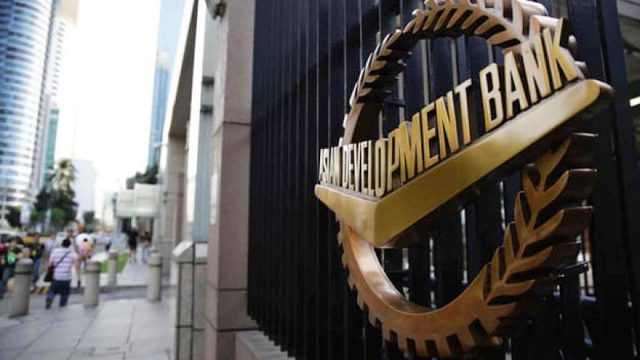
ADB says green recovery critical for Philippines amid climate challenges

BW FILE PHOTO

THE Asian Development Bank (ADB) said the Philippines must ensure that its recovery is sufficiently green in light of the challenges posed by climate change and declining biodiversity.

The ADB, in a statement, noted that the Philippines is considered one of the top five countries most impacted by climate change, making the sustainability of its post-pandemic recovery measures crucial.

Specifically, the ADB cited issues with Philippine reefs, heavy reliance on marine ecosystems, and the large populations of smallholder fishermen depending on these resources for livelihood and sustenance.

The ADB took note of action taken by the Philippines to address such concerns, including a 2020 moratorium on the development of new coal-fired power plants, and a plan to incentivize private sector investment in renewables such as large-scale geothermal projects.

The ADB also noted the Philippines’ work with the bank on a catalytic financing mechanism under the Green Climate Fund (GCF) to facilitate recovery from the pandemic.

The government’s commitment to fast-tracking its transition to renewable energy from coal is reflected in its target to increase renewables’ share of the energy mix to at least 30% by 2030, the ADB said.

And while some Philippine industries like food processing and construction have specific initiatives, the country still does not have an integrated circular economy plan governing the re-use of minerals, fossil fuels, metals, and biomass.

“While several countries in the region have begun to support a green recovery, more needs to be done. We must encourage additional green stimulus, design carbon pricing schemes, reduce dependence on fossil-fuel intensive power, and attract private sector investors to large-scale renewable energy, sustainable transport, and clean urban projects,” ADB Director General for Southeast Asia Ramesh Subramaniam said in a webinar.

The ADB supports a green-recovery approach for Cambodia, Indonesia, Myanmar, Thailand, and the Philippines.

It estimates that if climate change issues are not addressed, it could cost ASEAN economies an estimated 11% of their combined GDP by 2100.

The ADB identified five focus areas with potential for effecting a green recovery: productive and regenerative agriculture, healthy and productive oceans, sustainable urban development and transport, circular economy models, and renewable and efficient energy.

The ADB said that “if leveraged fully, the five green growth opportunities would require approximately $172 billion in capital investment and can create 30 million jobs in Southeast Asia by 2030.” — Justine Irish D. Tabile

Philippines working with Italy on minerals needed by EV industry

REUTERS

THE PHILIPPINES is exploring collaboration with Italy in strategic minerals required by the electric vehicle industry, the Department of Trade and Industry said. 

Trade Secretary Alfredo E. Pascual said in a speech delivered at the Association of Southeast Asian Nations (ASEAN)-Italy economic dialogue on Wednesday that the Philippines can be Italy’s source of “green” metals such as nickel, cobalt, and copper.  

“Our country can be Italy’s strategic partner in supplying critical minerals needed for Italian electric vehicles (EVs) and battery production,” Mr. Pascual said.  

“We have nickel, cobalt, and copper in abundance. The Philippines is also a dominant supplier of nickel ore, not only in Asia but in the world. It accounts for 31% of global exports. But, of course, we now want to have greater value addition locally for our mineral resources,” he added.

Mr. Pascual said Italian EV manufacturers can take advantage of the zero tariffs on imported EVs in the Philippines. The Tariff Commission recommended zero tariffs to encourage greater take up of EVs.

He added that the Philippines is opening up its EV market to develop an ecosystem that can support local production.

“Our Tariff Commission has recommended eliminating tariffs on EVs. Approval of this recommendation will put Italian EV makers on a level playing field alongside our free trade agreement partners,” Mr. Pascual said.  

Mr. Pascual also said that the Philippines can collaborate with Italy on energy technology, specifically “digitally supported grids for dealing with intermittent power. We need such solutions for our small island grids, our off-grid communities, and our priorities on a national scale.”

“In the case of the Philippines, we are on the verge of massive adoption of renewables for energy security. But renewable energy is characterized by an intermittent power supply. Thus, our legacy baseload grid needs to adapt to more intermittent power sources,” he added.  

Mr. Pascual said that Italy and ASEAN can collaborate on manufacturing, and also encourage smart farming and agricultural technology to boost food security.  

“With Agriculture 4.0 also taking root in Southeast Asia, Italy and ASEAN may work together to promote smart farming and agricultural technology that can contribute to onshore food security,” Mr. Pascual said.

“ASEAN and Italy may also consider collaboration in aerospace parts manufacturing; aircraft maintenance, repair, and overhaul; and aerospace research and development,” he added. — Revin Mikhael D. Ochave

Beauty and taxes

Beauty is a concept Filipinos are intimately familiar with, because it’s all around us in our landscape. culture, and people. The origin story of our people, Si Malakas at Si Maganda (the Strong Man and the Beautiful Woman) suggest how much we take pride in beautiful things. Our tourism industry is especially proud of our pristine blue waters and unspoiled beaches. Our passion for beauty pageants is such that being crowned is deemed the equivalent of boxer Manny Pacquiao’s championship belts.

But the obsession with physical beauty does not stop there. A small V-shaped face, tantalizing large eyes, pouty lips, white skin, and a slim body are only a few of the beauty standards prevalent in our society. Some of us are gifted with natural personal beauty. Thanks to science, the general public can now aspire to these standards through cosmetic medical procedures. With the growing popularity of such procedures, increasing market demand, and the proliferation of service providers, the government cannot simply ignore the revenue potential of this industry.

TAX ON COSMETIC PROCEDURES
Section 150-A of the Tax Code imposes a tax of 5% on the gross receipts derived from the performance of services, net of excise tax and value-added tax (VAT), covering invasive cosmetic procedures, surgeries, and body enhancements directed solely towards improving, altering, or enhancing the patient’s appearance and do not meaningfully promote the proper function of the body or prevent or treat illness or disease.

POSSIBLE GRAY AREAS
Based on Section 2.4 of Revenue Regulations (RR) 2-2019, an invasive cosmetic procedure refers to a “cosmetic surgery that is carried out by entering the body through the skin or through a body cavity or anatomical opening, but with the smallest damage possible to these structures.” These include, but are not limited to, the following: liposuction, mammoplasty, breast lift, buccal fat removal, buttocks augmentation, chin augmentation, facelift and neck lift, thread lift, embedded protein threads, hair restoration/transplantation, eyelid surgery, vaginal plastic surgery, abdominoplasty or tummy tuck, auto grafting, rhinoplasty/alar trimming, and otoplasty.

However, the 5% excise tax does not apply to actual medical procedures, specifically, those necessary “to ameliorate a deformity arising from, or directly related to, a congenital or developmental defect or abnormality, a personal injury resulting from an accident or trauma, or disfiguring disease, tumor, virus, or infection.” In addition, cases and treatments covered by the National Health Insurance Program or PhilHealth are not subject to this tax. Non-invasive cosmetic procedures (e.g., facial, peeling, laser treatment, etc.) are likewise exempt.

Do bear in mind that the list is not exclusive. Thus, though instructive, the RR does not address the issue of who should determine whether or not an invasive procedure is excisable. What should be the evaluator’s professional qualifications, and what are the acceptable valid supporting documents to prove such claims? With the reopening of aesthetic clinics post-pandemic, the Bureau of Internal Revenue (BIR) should clarify these matters soon.

THE VAT BASE
As clearly stated in the law and in the implementing RR, the 5% excise tax is based on the gross receipts derived from the performance of services, net of excise tax and VAT.

In determining the VAT base, however, the government’s position is that the gross receipts are inclusive of the 5% excise tax.

I beg to disagree.

The VAT base for the sale of services is gross receipts. Under Section 108 (A) of the Tax Code, it is defined as “the total amount of money, actually or constructively received for services performed.” Given this definition, only amounts received for services rendered are subject to VAT. The law does not specify that excise tax forms part of gross receipts.

The value charged to the patient for an invasive cosmetic procedure does not include the 5% excise tax. It is thus only collected by the service provider and remitted to the government and recorded as a balance sheet item.

This is in contrast to the VAT base for the sale of goods or properties where gross selling price is inclusive of excise tax. Under Section 106 (A) of the Tax Code, gross selling price means the total amount of money which the purchaser pays to the seller in consideration of the sale of the goods. The law specifically states that “Excise tax, if any, on such goods shall form part of the gross selling price.” Similarly, the VAT base for imports of goods includes excise tax.

The TRAIN Law did not adjust the definition of “gross receipts” for the sale of services; thus, it cannot be amended unilaterally through the issuance of an administrative regulation.

Although taxes are the lifeblood of the nation, the government should not only focus on raising collections but also promoting promising industries. With the opening of borders for travel, for example, tourism is set to register growth. Because medical tourism to countries where medical procedures cost less is becoming more mainstream, the government should also consider the potential of medical services to help drive the recovery.

The views or opinions expressed in this article are solely those of the author and do not necessarily represent those of Isla Lipana & Co. The content is for general information purposes only, and should not be used as a substitute for specific advice.


Renz Daniel Ermitanio is a manager of the Tax – Client Accounting Services group of Isla Lipana & Co., the Philippine member firm of the PwC global network.

renz.p.ermitanio@pwc.com

Senators refile SIM card registration bill 

STOCK PHOTO | Image by terimakasih0 from Pixabay

SEVERAL senators have refiled the SIM Card Registration Act previously vetoed by former President Rodrigo R. Duterte due to its social media provision, which he said needs a more thorough study.”  

Senator Mary Grace S. Poe-Llamanzares, the primary sponsor of the bill in the last Congress, refiled the bicameral copy of the bill ahead of the 19th Congressopening on June 25. 

She said the passage of the bill into law is necessary to stop fraud perpetrated using mobile phones and the internet, which has victimized millions of Filipinos. 

“We must not turn a blind eye to the untold misery of millions of our people who are further mired in debts and sunk in poverty after falling prey to these unceasing text scams,” the senator said in a statement on Wednesday.  

The proposed measure would require the registration of SIM cards prior to their activation in the Philippines, which has more than 120 million mobile subscribers. It would also require social media users to register their legal identities and phone numbers when creating new accounts.   

Ms. Poe said she is open to discussing with her colleagues in the new Congress the provision on social media account registration, noting that it can be incorporated in the bill or as a subject of another legislation.   

Senator Juan Miguel F. Zubiri, the presumptive Senate President, on the other hand, told reporters in a Viber message that the bill he filed will be without the social media provision. 

In vetoing the bill, Mr. Dutertes spokesperson then cited the potential for dangerous state intrusion and surveillance threatening many constitutionally protected rights.Alyssa Nicole O. Tan 

Farmers’ group asks Marcos to suspend agricultural land conversion for 2 years 

BW FILE PHOTO

A FARMERSgroup on Wednesday called on President Ferdinand R. Marcos, Jr. to declare a moratorium for at least two years on agricultural land conversion to protect production areas and ensure stable food supply.  

To increase the yield and production of rice and corn, the government must first protect our agricultural lands,the Kilusang Magbubukid ng Pilipinas (KMP) said in a statement. 

Former agrarian reform secretary and KMP member Rafael V. Mariano said the Department of Agrarian Reform (DAR) has identified shrinking agricultural land as among the challenges faced by the sector.” 

Issuing an executive order prohibiting land-use conversion for at least two years will effectively protect more than 4.84 hectares of agricultural lands awarded to farmer-beneficiaries,” he said. 

The proposed ban covers all awarded lands under the Comprehensive Agrarian Reform Program, agricultural lands with Notices of Coverage issued by DAR, irrigated and irrigable lands, prime agricultural lands, privately-owned lands with farmer-tenants, and agricultural lands being cultivated by farmers, individually or collectively.  

OWNERSHIP
Meanwhile, a party-list lawmaker has filed a bill limiting agricultural land ownership to a maximum of five hectares per holder, a proposal that an alliance of farmers called well-meaning but unfeasible. 

House Bill 1161 or the Genuine Agrarian Reform Bill (GARB) filed by Gabriela Party-list Rep. Arlene D. Brosas, seeks to mandate the government to acquire all public and private agricultural lands exceeding five hectares and distribute these at no cost to farmers.  

The bill states that its purpose is “foremost to achieve social justice for our landless farmers through free land distribution” and to “reorient our agriculture to put it on fundamentally sound footing and make it more responsive to the needs of our people and the countrys requirements for industrialization.”  

Federation of Free Farmers National Manager Raul Q. Montemayor, however, said it would be better for the government to first settle the huge backlogin the existing agrarian reform program before venturing into new programs.”  

Secondly, food security and sovereignty will not arise from mere redistribution of lands, as we have seen with the current agrarian reform program where beneficiaries have remained poor due to the lack of support services,he told BusinessWorld in a Viber message.  

Thirdly, this will result in an implementation nightmare and stiff opposition from landowners having more than five hectares, not to mention agribusiness companies owning large areas,Mr. Montemayor added.   

Ms. Brosas said the proposed law will finally liberate domestic agriculture from the shackles of landlords and corporate agriculture, as she called on members of Congress to consider the measure. 

The farmersgroup leader said the bill has good intention but unrealistic and problematic.”  

The same bill was filed in 2007 by the late labor leader Crispin B. Beltran, who was then representative for Anakpawis. Luisa Maria Jacinta C. Jocson and Alyssa Nicole O. Tan 

Cua appointed PCSO head; ambassadors to US, UN named 

FORMER lawmaker Junie E. Cua took his oath as chair of the Philippine Charity Sweepstakes Office (PCSO) on Tuesday, according to the presidential palace. 

He was among the appointees who were sworn in by President Ferdinand R. Marcos, Jr. on Tuesday, Malacañang said in a statement. 

He will lead an agency that raises funds for health services and charities of national character through sweepstakes and lottery games, which need to compete with emerging games that the previous administration had accommodated.  

Mr. Cua, who represented the lone district of Quirino province in the previous Congress, will also need to digitize the agencys gaming operations to maximize online sales and ensure that revenues are accounted for. 

The agency has been marred by corruption, with state auditors flagging irregularities in its operations. 

Others who took their oath of office on Tuesday were: Mark T. Lapid, who was reappointed as chief operating officer of the Tourism Infrastructure and Enterprise Zone Authority; Abdulghani Salapuddin as administrator of the Southern Philippines Development Authority; Romeo Lumagui, Jr as deputy commissioner for operations of the Bureau of Internal Revenue;  Amenah Pangandaman as secretary of the Department of Budget; and Jose Arnulfo A. Veloso as president and general manager of the Government Service Insurance System.  

Antonio Manuel R. Lagdameo, the new permanent representative of the Philippines to the United Nations, and Jose Manuel D. Romualdez, who will maintain his post as ambassador of the Philippines to the United States, also took their oaths.  

Tirso S. Cruz III is the new chairperson and chief executive of the Film Development Council while Juan Revilla was sworn in as a new board member at the Movie and Television Review and Classification Board.  

At the Bureau of Immigration, Regulation Division Chief  Rogelio D. Gevero, Jr. has been designated as officer-in-charge by Justice Secretary Jesus Crispin C. Remulla.  

Mr. Gevero will have authority over the bureau until July 31 or until a replacement has been appointed or designated, according to July 4 order signed by Mr. Remulla. Kyle Aristophere T. Atienza and John Victor D. Ordonez 

ADVERTISEMENT
ADVERTISEMENT