Home Blog Page 6164

EU accepts Croatia as 20th euro zone member

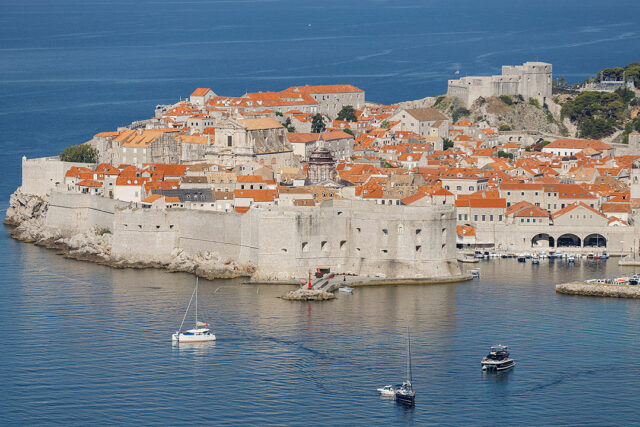
GENERAL VIEW of the Old City of Dubrovnik, Croatia, July 29, 2020. — REUTERS

BRUSSELS — European Union (EU) finance ministers on Tuesday formally approved Croatia becoming the 20th member of the euro common currency at the start of 2023, a move hailed as the culmination of an “amazing journey” for a Balkan nation once at war.

European Commission Vice President Valdis Dombrovskis said Croatia’s accession confirmed that the euro remained an “attractive, resilient and successful global currency” and a symbol of strength and unity.

“This is particularly important at such a challenging time when Russia’s aggression against Ukraine continues to send shock waves around the world,” Mr. Dombrovskis told a ceremony to mark Croatia’s accession, the euro zone’s first expansion since 2015.

The European Council, the grouping of 27 EU governments, adopted three legal acts required to allow Croatia — an EU member state since 2013 — to introduce the euro on Jan. 1.

One of those acts set the conversion rate for entry at one euro to 7.53450 Croatian kuna, with Croatia now having a few months to prepare the practicalities for the currency switch.

Croatia, in southeastern Europe, has been a independent country since 1991 when it left then-federal Yugoslavia, which, along with Bosnia’s secession a year later, triggering years of devastating war with Serbia.

Neighboring Slovenia, also a former Yugoslav republic and now EU member, adopted the euro in 2007. Nineteen countries are currently in the euro zone.

Croatia was led by nationalist strongman Franjo Tudjman until his death in 1999 and to qualify as an EU member took steps to fight corruption and improve governance, which included the conviction of Ivo Sanader, prime minister from 2003 to 2009.

Croatian Finance Minister Zdravko Maric described the EU’s green light to adopt the euro as a “big historical day” for his country, whose stunning Adriatic coast is a major tourist destination.

EU Economy Commissioner Paulo Gentiloni hailed Croatia’s imminent entry into the euro zone as an “extraordinary result.”

“What an amazing journey it was for Croatia. For my generation, Croatia experienced the first (European) war after the end of the World War (II),” he said, referring to the 1990s Yugoslav conflict.

To adopt the euro, Croatia had to fulfil criteria of price and exchange rate stability, sound public finances and moderate long-term interest rates, all measured against EU benchmarks. — Reuters

WHO says COVID-19 remains a global health emergency

LONDON — The World Health Organization (WHO) said on Tuesday that coronavirus disease 2019 (COVID-19) remains a global emergency, nearly 2-1/2 years after it was first declared.

The Emergency Committee, made up of independent experts, said in a statement that rising cases, ongoing viral evolution and pressure on health services in a number of countries meant that the situation was still an emergency.

Cases reported to WHO had risen by 30% in the last fortnight, although increased population immunity, largely from vaccines, had seen a “decoupling” of cases from hospitalizations and deaths, the committee’s statement said.

“COVID-19 is nowhere near over,” WHO Director-General Tedros Adhanom Ghebreyesus told a virtual press conference from Geneva after the announcement. “As the virus pushes at us, we must push back.”

The U.N. health agency first declared the highest level of alert, known as a Public Health Emergency of International Concern, for COVID-19 on Jan. 30, 2020. Such a determination can help accelerate research, funding and international public health measures to contain a disease. — Reuters

NASA draws back curtain on Webb space telescope’s first full-color images

THIS IMAGE shows the Cosmic Cliffs, the edge of a nearby, young, star-forming region NGC 3324 in the Carina Nebula, 7,600 lightyears away. This was captured in infrared light by the Near-Infrared Camera on NASA’s James Webb Space Telescope, and released on July 12. — NASA, ESA, CSA, STSCI

GREENBELT, Md. — NASA on Tuesday drew back the curtain on billions of years of cosmic evolution with the inaugural batch of photos from the largest, most powerful observatory ever launched to space, saying the luminous imagery showed the telescope exceeds expectations.

The first full-color, high-resolution pictures from the James Webb Space Telescope, designed to peer farther than before with greater clarity to the dawn of the universe, were hailed by NASA as milestone marking a new era of astronomical exploration.

Nearly two decades in the making and built under contract for NASA by aerospace giant Northrop Grumman Corp., the $9-billion infrared telescope was launched on Dec. 25, 2021. It reached its destination in solar orbit nearly 1 million miles from Earth a month later.

With Webb finely tuned after months spent remotely aligning its mirrors and calibrating its instruments, scientists will embark on a competitively selected agenda exploring the evolution of galaxies, life cycle of stars, atmospheres of distant exoplanets, and moons of our outer solar system.

“All of us are just blown away,” Amber Straughn, Webb deputy project scientist at NASA’s Goddard Space Flight Center in Maryland, said among a panel of experts who briefed reporters following the big reveal.

Whoops and hollers from a sprightly “cheer team” welcomed some 300 scientists, telescope engineers, politicians and senior officials from NASA and its international partners into a packed auditorium at Goddard for the official unveiling.

“I didn’t know I was coming to a pep rally,” NASA Administrator James Nelson said from the stage, enthusing that Webb’s “every image is a discovery.”

The event was simulcast to watch parties of astronomy enthusiasts worldwide, from Bhopal, India, to Vancouver, British Columbia.

The first photos, which took weeks to render from raw telescope data, were selected by NASA to show off Webb’s capabilities and foreshadow science missions ahead.

The crowning debut image, previewed on Monday by US President Joseph R. Biden but displayed with greater fanfare on Tuesday, was a “deep field” photo of a distant galaxy cluster, SMACS 0723, revealing the most detailed glimpse of the early universe recorded to date.

At least one faint galaxy measured among the thousands in the image is nearly 95% as old as the Big Bang, the theoretical flashpoint that set the expansion of the known universe in motion some 13.8 billion years ago, NASA said.

Among the four other Webb subjects getting their closeups on Tuesday were two enormous clouds of gas and dust blasted into space by stellar explosions to form incubators for new stars — the Carina Nebula and the Southern Ring Nebula, each thousands of light years away from Earth.

The collection also included fresh images of another galaxy cluster known as Stephan’s Quintet, first discovered in 1877, which encompasses several galaxies NASA described as “locked in a cosmic dance of repeated close encounters.”

Apart from the imagery, NASA presented Webb’s first spectrographic analysis of a Jupiter-sized exoplanet more than 1,100 light years away – revealing the molecular signatures of filtered light passing through its atmosphere, including the presence of water vapor. Scientists have raised the possibility of eventually detecting water on the surface of smaller, rockier Earth-like exoplanets in the future.

‘PIECE OF ART’
Built to view its subjects chiefly in the infrared spectrum, Webb is about 100 times more sensitive than its 30-year-old predecessor, the Hubble Space Telescope, which operates mainly at optical and ultraviolet wavelengths.

The much larger light-collecting surface of Webb’s primary mirror – an array of 18 hexagonal segments of gold-coated beryllium metal – enables it to observe objects at greater distances, thus further back in time, than any other telescope. Its infrared optics allow Webb to detect a wider range of celestial objects and see through clouds of dust and gas that obscure light in the visible spectrum.

All five of Webb’s introductory targets were previously known to scientists, but NASA officials said Webb’s early imagery proved it works as designed, better than expected, while literally capturing its subjects in an entirely new light.

The image of Southern Ring Nebula, for instance, clearly showed the dying stellar object at its center was a binary pair of stars closely orbiting one another. The new Carina Nebula photos exposed contours of its massive clouds never seen before.

“This is an art piece that has been revealed by this telescope,” Rene Doyon, principal investigator for the observatory’s Canadian-built near-infrared camera and spectrograph. “It goes beyond my scientific mind.”

The SMACS 0723 image showed a 4.6 billion-year-old galaxy cluster whose combined mass acts as a “gravitational lens,” distorting space to greatly magnify light coming from more distant galaxies behind it.

One of the older galaxies appearing in the “background” of the photo — a composite of images of different wavelengths of light — dates back about 13.1 billion years.

The bejeweled-like photo, according to NASA, offers the “most detailed view of the early universe” as well as the “deepest and sharpest infrared image of the distant cosmos” yet taken.

Underscoring the vastness of the universe, the thousands of galaxies appearing in the SMACS 0723 image appear in a tiny patch of sky roughly the size of a sand grain held at arm’s length by someone standing on Earth.

The Webb telescope is an international collaboration led by NASA in partnership with the European and Canadian space agencies. — Reuters


US Treasury seeks input on cryptocurrency risks, benefits

PIXABAY

THE US TREASURY on Tuesday said it was seeking comment on the on the risks and opportunities posed by digital assets as it seeks to prepare a report for President Joseph R. Biden on the implications of developments such as cryptocurrencies.

The official query builds on an executive order Mr. Biden signed in March, which directed government agencies to study cryptocurrencies and other digital asset products, including central bank digital currencies.

“For consumers, digital assets may present potential benefits, such as faster payments, as well as potential risks, including risks related to frauds and scams, Treasury Under Secretary for Domestic Finance Nellie Liang said in a statement.

The crypto market, including bitcoin and other products, has rapidly grown in popularity in recent years, despite concerns from regulators and some policymakers that the market lacks sufficient oversight, transparency and consumer protections.

The crypto market has been wracked by turmoil in recent weeks, with a number of high-profile firms and tokens collapsing or refusing to allow customers to withdraw funds in a bid to stabilize themselves.

The Treasury’s query is far-ranging, asking for input on a host of questions, including how businesses are using cryptocurrency, where consumers may not be sufficiently protected, and how the nation’s poorest could benefit or face risk from broader cryptocurrency adoption.

The Treasury is accepting comments until Aug. 8. — Reuters

MSMEs should create ‘product dependency,’ start small — PTTC 

PIXABAY

Knowing the right product to sell to the right market will help ensure the success of one’s business and products, according to a lecture presented at a July 13 training event organized by the Department of Trade and Industry’s Philippine Trade Training Center-Global MSME Academy (PTTC-GMEA).  

Talking to a group of microentrepreneurs, Gary B. Sta. Cruz, a PTTC-GMEA research and training design specialist, noted how food fads such as Heinz’s green ketchup failed to endure a few years after being introduced to the market, despite making an initial splash.  

It demonstrates that you need to know the right product to sell, he said, referring to the marketing mix of product, promotion, place, and price. 

“We want our customers to be loyal to our products — although for me, there’s one level higher than product loyalty, and that’s product dependency,” he added in the vernacular. “That’s our goal.”  

Online commerce has turned the old business model of creating a product then bringing it to market on its head. Today’s entrepreneurs should make products that satisfy the needs of the market.

“If they want soap, what type are they looking for? Do they want something for sensitive skin? Do they want something with bleaching properties? Create a product based on their need,” he said. 

While segmenting consumers into subgroups based on shared factors — age, geographic location, opinions — is an efficient way of marketing, a brand should take care to remain consistent in its messaging.  

“When you stay true to your positioning, customers… have a clear picture of who you are versus your competitors,” said Jem Perez-Chua, Century Pacific Foods, Inc. marketing manager.    

Aside from positioning, businesses have to consider pricing and location (both in the physical and digital sense).

Even if proximity remains an advantage, hybrid setups allow, say, an electronics shop in Divisoria, Manila, to serve customers through its Facebook page. “You don’t even need a huge storefront for this type of setup anymore,” said Mr. Sta. Cruz. “Bodega lang siya [Their place is just a storeroom].”  

Microbusinesses writing a marketing plan need to consider: 1) one’s business situation; 2) one’s target audience; 3) one’s objectives, budget, and timeline; 4) the implementation of the best suited marketing strategy; and 5) evaluation and adjustment of the same.  

If you’re offering a discount but realize your bottom line can’t cover this promo, recalibrate, Mr. Sta. Cruz said. If you’re offering free delivery but realize your customers have cars and prefer to pick up their orders, recalibrate. 

If you have a canteen and plan to scale it up into a restaurant in five years, be cognizant of the initiatives you need to take — investing in modern equipment, sampling new recipes, joining online platforms — to drive that growth, he added.  

Mr. Sta. Cruz shared the Indonesian proverb: “Sedikit-sedikit lama lama menjadi bukit,” which means small acts add up to big results. (Its rough literal translation is “little by little, with time, it becomes a hill.”) 

“Don’t be embarrassed to start small. All the training seminars you attend, all the orders you [negotiate with] your suppliers: these are all small steps that can yield big results,” he said. — Patricia B. Mirasol

Sun Life maintains positive outlook for the remainder of 2022

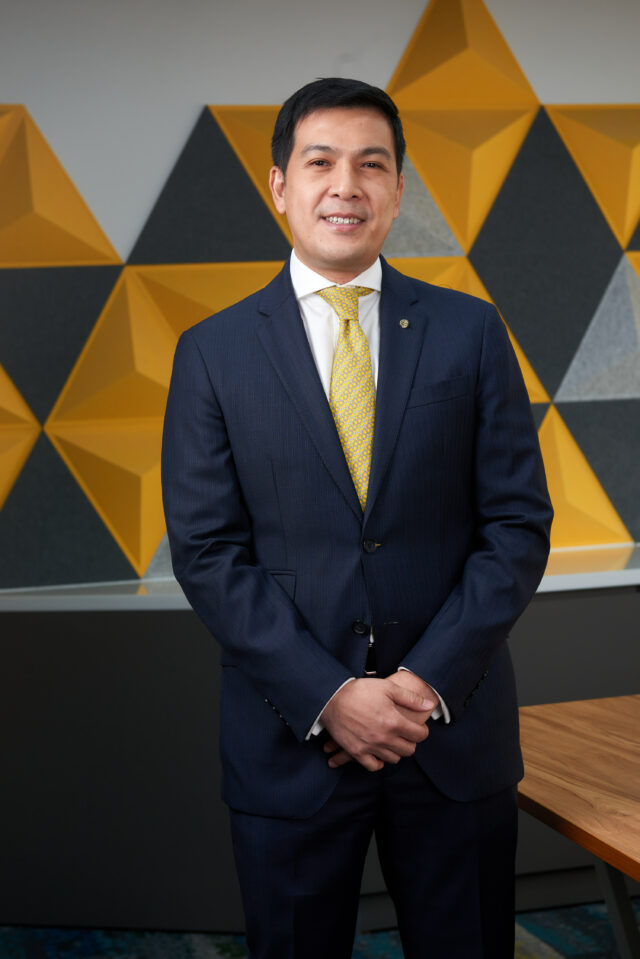
SLIMTC President & Chief Investment Officer Mike Enriquez

Amid the headwinds being experienced by the local and global economies, Sun Life Investment Management and Trust Corporation (SLIMTC) continues to maintain a positive outlook for the Philippines.

This was the tone set by SLIMTC President and Chief Investment Officer Michael Enriquez during a recent media conference.

Enriquez acknowledged the various factors affecting the economy, including rising fuel prices brought about by prolonged Russia-Ukraine war, increasing interest rates, and prevailing negative sentiment in financial markets.

“We remain confident about the prospects of the Philippines given the reopening of the economy since the first quarter of 2022,” Enriquez said, projecting a GDP 8.2% this 2022. “The expected growth in GDP is driven primarily by domestic consumption, as more Filipinos have been going out and spending. In fact, mall traffic is now back at pre-pandemic levels. With this, the forecasted GDP growth was higher than developed markets.”

However, several downside risks are also anticipated as inflation continues to be elevated. The ongoing Russia-Ukraine tensions remain a critical factor, with the elevating global inflation, driving further increases in interest rates. Other risks include a resurgence of COVID-19 also infections which can tighten mobility restrictions.

“Despite all these, we still see opportunities in both global and local equities moving forward,” Enriquez said. “Sustained consumer demand and confidence contribute to the continued growth of corporate earnings. And with the Philippine Stock Exchange trading below its five year average PE multiple, there are certainly opportunities for long-term equity investing.”


Spotlight is BusinessWorld’s sponsored section that allows advertisers to amplify their brand and connect with BusinessWorld’s audience by enabling them to publish their stories directly on the BusinessWorld Web site. For more information, send an email to online@bworldonline.com.

Join us on Viber to get more updates from BusinessWorld: https://bit.ly/3hv6bLA.

Chinese cities break heat records, weather extremes to persist

A VIEW of the city skyline in Shanghai, China, Feb. 24, 2022. — REUTERS

 – Several Chinese cities broke new records for high temperatures on Tuesday as scorching heat and contrasting relentless rains wreaked havoc, with local forecasters expecting the weather extremes to linger for days.

Red alerts, the highest in a three-tier warning system, were dispersed throughout the country on Tuesday and cities took measures to protect citizens from the scorching heat, which broke records for the month of July in parts of eastern Jiangsu province and the neighboring city of Shanghai.

Temperatures in the city of Yixing in Jiangsu rose as high as 41.3 degrees Celsius (106.3 Fahrenheit) on Tuesday, a new historic peak, the China Meteorological Administration said on Wednesday.

The hashtag #Heatstroke was trending on social media with 2.45 million views on the Weibo social platform of discussions ranging from people being admitted to hospital and the detrimental effects of long-term heat exposure.

“This year’s weather is really hot and abnormal, it has been more than 30 degrees Celsius for two months!”, wrote a Weibo user.

Experts blame global climate change for the unusual weather.

On Tuesday, maximum temperatures soared to 37-39 degrees Celsius in parts of Sichuan, Jiangsu, Zhejiang, Fujian, Jiangxi, Hubei and Anhui provinces, and the cities of Chongqing and Shanghai.

In particular, the cities of Luzhou and Yibin in Sichuan and Zhaotong in Yunnan, as well as Shaoxing, Ningbo, Jiaxing and Huzhou in Zhejiang, and Changzhou and Wuxi in Jiangsu, hit temperatures around 40 to 42 degrees Celsius.

Meanwhile, heavy rain battered parts of Gansu, Shaanxi, Shanxi, Shandong, Hebei, Liaoning, Jilin, Heilongjiang provinces and Inner Mongolia region.

Forecasters expect the intense heat and rain to continue over the next several days. – Reuters

Pacific island leaders welcome US pledge to triple funding for region

 – Pacific island leaders welcomed a pledge by the United States to triple aid to the region to combat illegal fishing, enhance maritime security and tackle climate change, after decades of stagnant US funding.

US Vice President Kamala Harris, in a video address to the Pacific Islands Forum in Suva on Wednesday, said US funding for Pacific islands would be tripled to $60 million a year for a decade, subject to approval by Congress.

Some Pacific leaders are seeking to balance China’s ambitions for trade and security ties in the region.

Harris called for nations to “stand united” as bad actors seek to undermine the international rules-based order, without naming them.

“We recognize that in recent years that Pacific islands may not have received the diplomatic attention and support that you deserved,” she said.

Pacific leaders gathering for the four-day forum see climate change as the region‘s major security issue, but tensions between China and the United States, and the surprise withdrawal of Kiribati from the forum, are also being discussed.

“It really shows the US are back and want to play an active role,” said Palau President Surangel Whipps Jr. after Harris’s speech.

“Sometimes because of our remoteness we get forgotten, so this was important,” he told Reuters.

The forum will discuss a bid by China to sign a trade and security agreement with 10 nations that have ties to China, that is opposed by some members.

Palau has a defense relationship with the United States, diplomatic ties with Taiwan and an economic relationship with China.

“The sky is the limit with the opportunity with China. That competition creates, sometimes, concerns about security. We lived through World War Two and we don’t want to see that again,” he said.

The United States is concluding negotiations on a renewed fishing treaty with Pacific island nations that has allowed US vessels to fish in exclusive economic zones for decades, and is offering greater support for maritime surveillance in the Pacific.

Fiji’s Prime Minister Frank Bainimarama said the fishing treaty offered the United States a platform to “balance” strategic weaknesses in the Pacific.

Australia’s Prime Minister Anthony Albanese said it was important the United States was increasing support, including new embassies in Kiribati and Tonga.

“We very much welcome the Biden administration’s increased presence in the region,” he said, adding strategic competition was a backdrop to the conference.

Solomon Islands, which is party to the US fishing treaty with the Pacific, recently struck a security deal with China prompting concern from the United States and its allies, although Honiara said it won’t allow a navy base.

Palau’s fisheries minister, Steven Victor, said tourism and fisheries were the nation’s only revenue sources, and U.S. funding had remained stagnant for 20 years.

Kiribati, also reliant on fishing, struck fisheries deals with China after switching diplomatic ties from Taiwan to Beijing in 2019, a month after the forum last met in person.

A Chinese foreign ministry spokesperson told a news briefing on Monday that “China has enjoyed good cooperation with the Pacific Island Forum for many years.” – Reuters

South Korea’s PM warns of COVID surge as cases hit two-month high

COMPUTER-GENERATED representation of COVID-19 virions via Felipe Esquivel Reed / CC BY-SA

 – Daily COVID-19 infections in South Korea have jumped above 40,000 for the first time in two months, with the government warning of a potential five-fold surge in the coming months.

“Daily infections could soar to as many as 200,000 between mid-August and late September,” Prime Minister Han Duck-soo told a government COVID response meeting, citing the view of the Korea Disease Control and Prevention Agency (KDCA) and experts.

The figure of 40,266 announced on Wednesday represents an 8% jump over the previous day and is the highest level since 43,908 on May 11.

Levels of 200,000 per day were last seen in April.

Han said people in their 50s and those with underlying diseases will become eligible for a second booster shot.

Until now, only people aged 60 or above were eligible. The take-up rate has been low, however, with just 32% opting to receive a fourth shot.

South Korea in May ditched most of its pandemic-related restrictions, including an outdoor mask mandate, as cases slowed after peaking at more than 600,000 per day in mid-March. Read full story

The government has no immediate plans to bring back restrictions but does not rule them out if there is a “critical change” in the COVID situation, Han said.

A seven-day quarantine requirement for those with COVID remains in place, he added. – Reuters

Malaysia’s Petronas to fight seizure of Luxembourg assets

Malaysian state oil company Petronas said on Tuesday it would defend its legal position after two of its subsidiaries were seized in Luxembourg.

The units were seized by the descendants of a late sultan, escalating a $15 billion legal dispute linked to an agreement signed 144 years ago, the Financial Times reported earlier, citing lawyers.

The company said its Petronas Azerbaijan (Shah Deniz) and Petronas South Caucasus units were on Monday served with “Saisie-arret”, essentially a seize order by court bailiffs in Luxembourg.

Petronas said the action taken against it was “baseless”. It added that the units had previously divested their assets in Azerbajian with the proceeds already repatriated.

The seizure follows a French arbitration court ruling in February ordering Malaysia to pay $14.9 billion to the heirs of the last sultan of Sulu, to honor a deal he signed in 1848 with a British trading company over the use of his territory, now known as the Malaysian state of Sabah.

Malaysia took over the arrangement after independence from Britain, paying a token sum to the heirs annually.

But the payments were stopped in 2013, with Malaysia arguing that no one else had a right over Sabah, which was part of its territory.

Malaysian Prime Minister Ismail Sabri Yaakob in March vowed to fight the French court ruling, saying his government would not entertain anyone else’s claim over the state. – Reuters

Germany to stop buying Russian coal on Aug 1, oil on Dec 31, says deputy fin min

UNSPLASH

 – Germany will completely stop buying Russian coal on Aug. 1 and Russian oil on Dec. 31, marking a major shift in the source of the country’s energy supply, deputy finance minister Joerg Kukies said at a conference in Sydney.

The key challenge ahead will be filling the huge gap that will be left when the European Union weans itself off the 158 billion cubic meters (bcm) per year of gas that Russia supplies, Mr. Kukies said.

“We will be off Russian coal in a few weeks,” he told the Sydney Energy Forum, co-hosted by the Australian government and the International Energy Agency.

Russian previously supplied 40% of Germany‘s coal and 40% of its oil, he said.

“Anyone who knows the history of the Druzhba pipeline, which was already a tool of the Soviet empire over eastern Europe, ridding yourself of that dependence is not a trivial matter, but it is one that we will achieve in a few months,” Mr. Kukies said.

Germany is rapidly developing liquefied natural gas (LNG) import terminals to help fill the gas supply gap, but he highlighted that while the United States and Qatar could together supply around 30 bcm of gas in LNG form to Europe, that still left a huge gap.

“We can’t just imagine this problem away,” Mr. Kukies said.

He said while Germany was focused on the transition to net zero emissions and had recently put in place legislation to accelerate the development of renewable energy projects, gas would be essential to the shift. – Reuters

Shopping for ‘Green Finds’ made easier at SM Store

SM Retail, Inc. launches SM Green Finds to make shopping for sustainable products easier for consumers.

Consumers have been increasingly considering the sustainable practices of brands and their products. From the materials used, the production process, to the packaging, many consumers are becoming conscious of sustainability as they shop and make a purchase.

As the country’s leading retailer, SM Retail, Inc. makes shopping for sustainable products easier for consumers with the launch of SM Green Finds.

“The Green Finds initiative is about bringing together our suppliers, our partners in green living, and the consumers so that we make green and eco-friendly products more accessible,” said Catherine Ileto, vice-president for corporate communications at SM Retail.

Catherine Ileto, vice-president for corporate communications at SM Retail

By having the Green Finds badge on eco-friendly products, shoppers can easily see the sustainable choices, which are made using natural ingredients or green technology, and support local communities.

Green Finds is SM Retail’s contribution to the SM Green Movement, said Ms. Ileto. “This is really all about advocating for a greener lifestyle and finding opportunities to push sustainability to our consumers, even through our retail affiliates like Watsons, Ace Hardware, Body Shop, and Kultura. Currently, as we launch the SM Green Finds, we already have 3,000 SKUs that are considered eco-friendly, and are sustainably sourced,” she said.

SM offers various green finds through its Home, Fashion, and Beauty departments, such as kitchenware made from high-quality bamboo or tableware from acacia wood, fashion pieces from recycled materials, and clean beauty products free from harmful chemicals.

Its retail affiliates also offer eco-friendly options, made of natural ingredients or produced by social enterprises. Kultura, for instance, is known for its handcrafted products made by artisans and social enterprises that use locally sourced materials such as abaca, bamboo, and rattan.

Currently, customers can look for the Green Finds badge at the SM Store in SM Mall of Asia until August 26. But very soon SM will roll out this initiative in more SM Stores across the country.

Ms. Ileto said, “The intention is to embed Green Finds within the individual selling pads and even across the retail affiliates.”

By making sustainable and eco-friendly products accessible to shoppers through Green Finds, SM wants to support customers to take first steps towards greener lifestyle choices. And at the same time, through this initiative, SM hopes to encourage its suppliers to employ greener means of production.

Sustainability at SM

Aside from supporting sustainability through the products displayed in its stores, SM also builds sustainability within the workplace.

In fact, the SM Retail Headquarters itself is designed with sustainability in mind.

The SM Retail Headquarters is designed with sustainability in mind.

The two-tower, 14-storey office features sustainable and healthy workspaces. The building has facilities that support collaboration among employees, as well as a space for meditation, a gym, nap room, chapel, and a sky garden teeming with varieties of trees and plants.

The office building has also received its WELL Health-Safety Rating, from International WELL Building Institute, for facility operations for cleaning and sanitization procedures, air and water quality management, emergency preparedness programs, and innovation.

Furthermore, SM Retail’s new office is made energy-efficient, utilizing an automated lighting systems for a lower power consumption, use of Insulating Glass Unit (IGU) to keep the building cooler and lessen noise transmission. It also has water recycling plant and proper waste management facilities.

It commits to ensuring that more than half the energy used in its properties comes from renewable sources, as well as developing efficient LEED (Leadership in Energy and Environmental Design) buildings.

“We built the SM Retail Headquarters compliant with international standards for sustainable development because the well-being of our employees and customers inside the building is of utmost importance,” said Architect Luis Lava, Workplace and Administration head of SMRI.

Wherever it can, SM endeavors to act as an advocate of sustainability. Koleen Palaganas, vice-president and group head for Sustainability, said, “SM also supports sustainable practices through its ongoing programs that involve planting trees and mangroves, and protecting marine species and birds. It also seeks to share knowledge about sustainability, educating our employees by running the largest sustainability school in the country, and hosting sustainability conferences with other leading companies, government and nongovernment agencies.”


Spotlight is BusinessWorld’s sponsored section that allows advertisers to amplify their brand and connect with BusinessWorld’s audience by enabling them to publish their stories directly on the BusinessWorld Web site. For more information, send an email to online@bworldonline.com.

Join us on Viber to get more updates from BusinessWorld: https://bit.ly/3hv6bLA.

ADVERTISEMENT
ADVERTISEMENT