Home Blog Page 6141

Yields on term deposits rise as US inflation hits 40-year high
BW FILE PHOTO
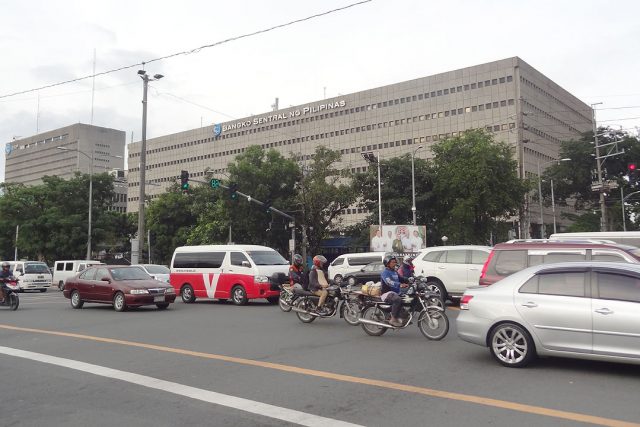
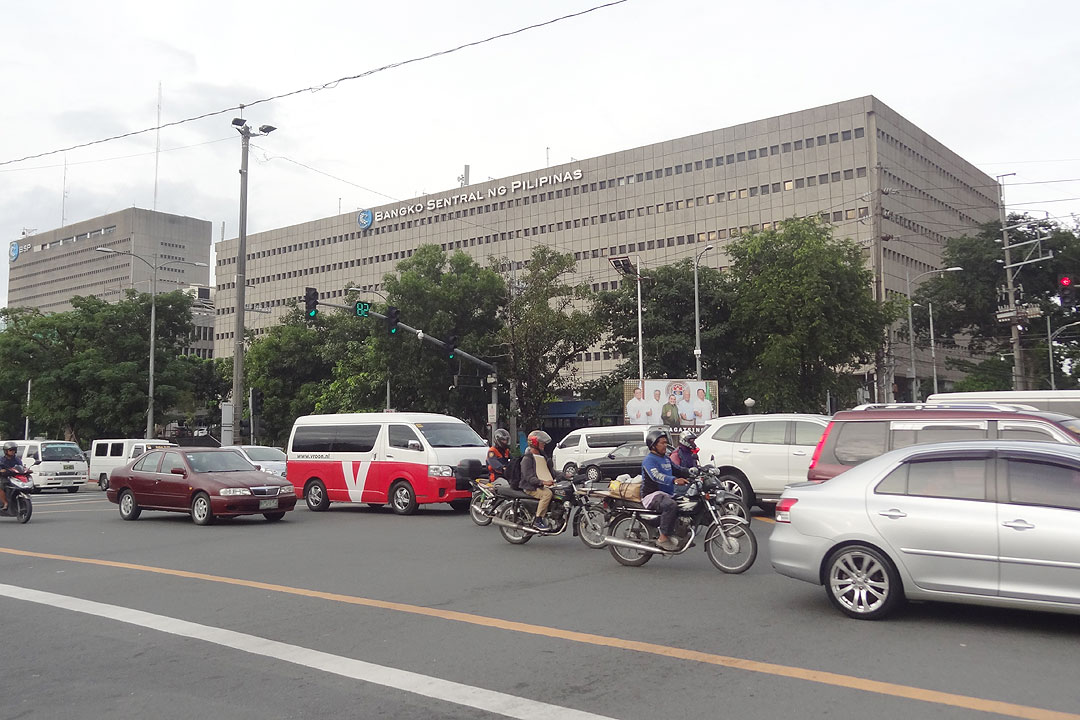
YIELDS on the central bank’s term deposits went up on Wednesday as US inflation hit a 40-year high. — BW FILE PHOTO

YIELDS on the central bank’s term deposits inched higher on Wednesday as inflation in the US quickened further, strengthening the case for a rate hike by the Federal Reserve.

Demand for the term deposit facility (TDF)of the Bangko Sentral ng Pilipinas (BSP) reached P446.48 billion on Wednesday, higher than the P380-billion offer and also beating the P417.154 billion in bids seen a week earlier.

Broken down, the seven-day deposits fetched bids amounting to P185.754 billion, well above the P150-billion auctioned off by the BSP as well as the P161.403 billion seen last week.

Lenders asked for yields ranging from 1.7% to 2.1%, a narrower band than the 1.662% to 2.384% seen the previous week. This caused the average rate of the one-week paper to rise by 0.78 basis point (bp) to 1.9603% from 1.9525% previously.

Meanwhile, bids for the 14-day papers amounted to P260.726 billion, surpassing the P230-billion offering as well as the P255.751 billion in tenders a week ago.

Accepted rates were from 1.8% to 2.21%, narrower than the 1.706% to 2.384% range logged on March 9. With this, the average rate of the two-week term deposit increased by 2.54 bps to 2.0905% from 2.0651% in the prior auction.

The central bank has not offered 28-day term deposits for more than a year to give way to its weekly auction of securities with the same tenor.

The term deposits and the 28-day bills are used by the BSP to mop up excess liquidity in the financial system and to better guide market rates.

“The results of the auction reflect the normalization of market conditions following the issuance of retail Treasury bonds (RTBs) amid investor concerns over global developments. Nevertheless, TDF rates remain low, supported by ample liquidity in the financial system,” BSP Deputy Governor Francisco G. Dakila, Jr. said in a statement.

The government raised P457.8 billion through its offering of five-year RTBs that were offered until early this month.

Meanwhile, Rizal Commercial Banking Corp. Chief Economist Michael L. Ricafort in a Viber message said the TDF fetched higher yields due to the four-decade high inflation in the US.

Reuters reported that the US consumer price index rose by 7.9% in February, mainly due to the faster increase in the prices of rent, food, and gasoline, based on data from the Labor department. This is the quickest pace since January 1982 and is nearly four times the 2% target by the US Federal Reserve.

Meanwhile, the US producer price index rose by 10% for the second straight month in February, data released on Wednesday showed.

The Federal Open Market Committee is meeting from Wednesday to Thursday and is expected to increase interest rates from near zero for the first time since the pandemic began in order to quell rising inflation. — Luz Wendy T. Noble with Reuters


BioPrime to set up nano-fertilizer production hubs

BIOPRIME Agri Industries, Inc. announced that it is planning to develop nano-fertilizer facilities in the Philippines to ramp up fertilizer production and expand to global markets.

“The production facility will have a targeted capacity of 48 tons per year, employing more than 100 Filipinos in this high-technology agri initiative. Our product provides an avenue for the Philippines to implement an effective balanced fertilization program and planned production volumes can supply more than 3 million hectares of rice lands targeted to produce at least 22.4 million metric tons (MT) of rice per year,” BioPrime Chairman Ben Mead said in a statement.

“Our vision is to see the Philippines again meet its domestic rice consumption requirements and in fact become the next exporter of rice to the world,” Mr. Mead added.

According to BioPrime, balanced fertilization is the use of conventional synthetic fertilizers together with other fertilization techniques such as organic or nano fertilizers.

“This approach has been shown to increase yields, improve soil health, reduce chemical use, and most importantly to improve farmer earnings. With synthetic fertilizer costs up almost 300% in recent times, balanced fertilization presents a solution for farmers to both save money and increase yields,” it added.

BioPrime said it is working out the details on production capacity, domestic and export capacity, Board of Investment initiatives and other government support.

“We have been able to show in repeated trials that a farmer can reduce their synthetic fertilizer use by up to 50% and still increase yield which produces a net saving on input costs and also improves their revenue,” Mr. Mead said.

The project aims to improve bioremediation and soil redemption, reduce the use pesticides, insecticides, and synthetic fertilizers, lower carbon emissions, and improve milling characteristics.

“We have been on the clinical and field demonstration trials for over two years working with the Philippine Rice Research Institute, farmer organizations, and agricultural colleges such as Isabela State University, among others, to establish the efficacy of our technology. The impact of the product is compelling and we felt it was critical to have independent professional trials overseen by PhilRice to demonstrate its value proposition for the Filipino farmers,” Mr. Mead said.

The project has been in the works for two years, in collaboration between BioPrime, the Department of Agriculture, and the Philippine Rice Research Institute.

BioPrime said it is also seeking to have a public listing in the Philippine Stock Exchange by 2024. — Luisa Maria Jacinta C. Jocson

Ancient sarcophagus found under Notre Dame cathedral in Paris

PHOTO FROM NOTREDAMECATHEDRALPARIS.COM/

PARIS —  Archaeologists have found an ancient lead sarcophagus under Notre-Dame cathedral along with fragments of a rood screen, offering a new insight into the history of the building which is currently under reconstruction after a devastating fire in 2019.

Notre-Dame, which dates back to the 12th century, commissioned the excavation works inside the cathedral as a precautionary measure before the installation of scaffolding needed to restore a 100-meter high wooden roof ridge.

“The floor of the transept crossing has revealed remains of remarkable scientific quality,” France’s Culture Minister Roselyne Bachelot said, adding that excavation works have been extended until March 25.

The excavation site lies under a stony layer that dates from the 18th century, but some lower levels go back as far as the 14th, and some even the early 13th century, the Culture Ministry said.

Christophe Besnier from France’s National Archaeological Institute said: “We were able to send a small camera inside which showed cloth remains, organic matter such as hair and plant remains.”

“The fact that these plants are still there indicates that the contents have been very well preserved.”

Archaeologists said the lead sarcophagus probably belonged to a high dignitary and said it could date back to the 14th century, which — if confirmed — would make it a spectacular find.

The excavation also revealed a pit immediately below the cathedral floor, which was likely to have been made around 1230, when Notre-Dame, one of the oldest examples of French Gothic, was under construction.

The Notre Dame fire shocked France, with tearful Parisians and stunned tourists watching in disbelief as the blaze sent the cathedral’s spire crashing down. — Reuters

Batang Pier’s Bolick leads race for Best Player of the Conference

ROBERT BOLICK — PBA IMAGES

NORTHPORT’S Robert Bolick took pole position in the race for the Best Player of the Conference (BPC) plum of the Season 46 Philippine Basketball Association (PBA) Governors’ Cup.

Mr. Bolick, who’s been on a tear since returning from an ACL injury in the last Philippine Cup, compiled 39.9 statistical points (SPs) to zoom ahead of the field at the conclusion of the elimination round.

The 26-year-old ace posted league-best averages of 21.8 points, 8.8 assists and 2.2 steals plus 7.1 rebounds en route to grabbing the pace against Phoenix’s Matthew Wright (34.9 SPs), TnT’s Mikey Williams (33.9 SPs), NLEX’s Kevin Alas (33.55 SPs) and veteran teammate Arwind Santos (33.50 SPs).

Rounding out the Top 10 were Barangay Ginebra’s Scottie Thompson (33.3), San Miguel Beer’s (SMB) June Mar Fajardo (32.5), Magnolia’s Paul Lee (30.9) and Mark Barroca (30.05), and NorthPort rookie Jamie Malonzo (29.8).

The exit of the Batang Pier from the playoffs, however, may hurt Mr. Bolick’s bid for his first BPC plum in the end.

Mr. Wright and the Fuel Masters clinched the eighth and last ticket to the quarterfinals at NorthPort’s expense while Mr. Williams, the Philippine Cup Finals MVP, and Mr. Alas enjoy twice-to-beat advantages in the Final-8 with the No. 3 Tropang Giga and No. 2 Road Warriors, respectively.

Meanwhile, SMB’s fancied reinforcement Shabazz Muhammad led NLEX’ KJ McDaniels and Magnolia’s Mike Harris in the Best Import stats derby.

Mr. Muhammad, whose 39-point, 19-rebound averages were league highs, normed 61 SPs in just three outings with the No. 5 Beermen. Mr. McDaniels posted 52.9 SPs in  steering NLEX to second seed while Mr. Harris had 52.4 SPs for top-ranked Magnolia. Mr. McDaniels had ended his stint and was replaced by Cameron Clark. — Olmin Leyba

Roxas Holdings cuts loss on better refinery operations

ROXAS Holdings, Inc. reported that it brought down its net loss to P939 million for its fiscal year 2021 from P2.36 billion in the previous year due to improved refinery operations and higher yields.

“This was achieved despite the problems besetting the local sugar industry and the prolonged La Niña phenomenon affecting most of crop year 2021, which have adversely impacted the yields of sugarcanes particularly in the Batangas area,” Roxas Holdings President and Chief Executive Officer Celso T. Dimarucut said in a virtual meeting on Wednesday.

“The dwindling cane supply and number of able-bodied farm workers that were already affecting the industry in the previous years, continue to persist as an issue for the industry,” he added.

Mr. Dimarucut said that the company’s sugar unit encountered difficulty in sourcing canes in the Batangas area, having lost market share over the years due to stiff competition.

To address this issue, he said the company re-trained its sights and focused on its capacity-building efforts for the sugar refinery.

“The Nasugbu refinery plant embarked on an effort to de-couple the mill and the refinery operations with the conversion of one of the refinery boilers to a multi-fuel fired boiler. This move would enable the refinery boiler to operate using alternative cheaper fuel sources and augment the dwindling supply of internally generated bagasse from the mill operations,” Mr. Dimarucut said.

He said the company’s goal is to increase production of refined sugar to five to seven million bags, once operations of the new equipment have stabilized. It was started in early 2021 and was completed in January 2022, in time for the peak of refinery operations for the next crop year.

Improved performance was driven by the “change in the strategic direction” of the ethanol unit, San Carlos Bioenergy, Inc. (SCBI).

SCBI has alternately been using sugar syrup from its milling operations or external molasses, as primary raw material, depending on supply and demand conditions.

“Our management, through the agri-business unit, has actively and successfully engaged the planters in San Carlos to source more canes, enabling SCBI to produce more fuel ethanol. This helped manage the cost of feedstock and fuel for SCBI, resulting in better feedstock margins and higher production volumes,” Mr. Dimarucut said.

Chairman Pedro O. Roxas said: “Roxas Holdings actively engages the Southern Luzon planters, in tandem with the Sugar Regulatory Administration and the University of the Philippines, and other stakeholders, to adopt programs to stifle the damage and the pernicious effects of some farming methods, such as the burning of canes, and produce more quality high-yielding variety of canes.”

Mr. Roxas said company was able to cushion the effects of last year’s challenges with its improved refinery operations, “due to combined factors of higher refining yields and lower fuel costs for the refinery, enabling us to reduce our losses.”

“Along with that, the ethanol business unit’s operations have seen marked improvements as it increased the use of sugar cane syrup while maintaining the flexibility to use molasses in the production of ethanol, as the opportunity arises. We have likewise started to reap the benefits of de-risking the business after completion of the South Negros asset sale and terming-out majority of its short-term loans in September 2021,” he added.

At the stock exchange, Roxas Holdings shares fell by P0.09 or 6.92% to P1.21 apiece. — Luisa Maria Jacinta C. Jocson

PNB net income rebounds in 2021

BW FILE PHOTO

PHILIPPINE NATIONAL Bank (PNB) booked a higher net profit last year, backed by gains from the sale of properties and higher fee earnings, which offset the decline in its interest income.

The Tan-led lender’s net earnings reached P31.69 billion in 2021, more than 12 times the P2.625 billion recorded in 2020, based on its audited financial statement filed with the local bourse on Wednesday.

This translated to a return on equity of 19.98%, up from 1.69% a year earlier. Return on assets also improved to 2.62% from 0.22%.

Net interest income for the year declined by 2.7% to P34.844 billion from P35.82 billion in 2020.

PNB’s interest income from loans and receivables decreased by 8.6% to P34.157 billion, while interest expenses went down by nearly a third to P7.557 billion.

On the other hand, net earnings from service fees and commissions increased by 42.9% to P5.288 billion from P3.701 billion.

Meanwhile, the bank’s foreign exchange gains dropped by 19% to P743.549 million, while trading and investment gains fell by 78% to P731.572 million.

PNB’s operating income climbed by 70% to P76.996 billion from P45.308 billion.

“The bank’s core operating income is complemented by a P33.4-billion gain from the properties-for-share swap completed during the year with PNB Holdings Corp. This is part of a series of transactions which aim to monetize the value of the bank’s low-earnings assets,” PNB said in a statement.

Meanwhile, operating expenses dropped by 12.81% to P39.025 billion from P44.759 billion. The decline was mainly due to its lower loan loss provisions, which went down by 23.7% to P12.879 billion in 2021.

Meanwhile, PNB’s loan portfolio inched up by 1% to P607 billion as of end-2021. Its total assets stood at P1.19 trillion.

“As part of its continuing strategy to trim down its nonperforming loans (NPLs), the bank sold certain NPLs in 2021 with gross carrying amounts prior to sale of P5.5 billion, resulting in gain on sale of P767 million,” the bank said.

Its gross NPL ratio stood at 10.07% as of end-2021.

On the funding side, the bank’s total deposits increased by 0.5% to P894.9 billion at the end of 2021.

PNB’s capital adequacy ratio was at 13.66%, while its common equity Tier 1 ratio stood at 12.96%. Both are above the minimum required by the central bank.

The lender’s shares closed at P19 apiece on Wednesday, up by 24 centavos or 1.28%. — Luz Wendy T. Noble

Screaming pope painting by Francis Bacon goes on display for first time

Francis Bacon, Landscape with Pope/Dictator, c. 1946, oil on canvas, 55 1/8 × 43 1/4 inches (140 × 110 cm) — © THE ESTATE OF FRANCIS BACON. ALL RIGHTS RESERVED. DACS 2022

LONDON — A dark Francis Bacon painting of a screaming pope, said to be the earliest in his series of papal depictions, went on display in London on Tuesday, the first time the artwork has been exhibited publicly.

The Dublin-born artist created the canvas, known as Landscape with Pope/Dictator, in 1946 while living in Monaco.

It depicts a blurred, open-mouthed figure in a biretta, a traditional cap worn by Catholic clergy and wearing a politician’s usual attire of a shirt and tie. A microphone stands in front of him and beneath are flowers.

Art gallery Gagosian, which is showing the work in its London Davies Street gallery, said it was “Bacon’s first treatment of the papal image.”

“Here you’ve got this sort of hybrid figure of a kind of papal clerical figure but at the same time, dressed in an ordinary secular suit and tie,” Richard Calvocoressi, director and curator at the Gagosian gallery, said.

“So fusing these two figures of authority… on the one hand the pope, on the other hand, the dictator, the authoritarian figure is something that he pursued and carried on… for another 20 years, coming back to this idea.”

The painting was recently discovered when British art historian and curator Martin Harrison compiled a catalogue of Mr. Bacon’s work. The listing was published in 2016.

“It’s never been in an exhibition. It went into a private collection in Italy in 1967 and really, this is its first public appearance since then,” Mr. Calvocoressi said.

The painting is on show until April 23. — Reuters

PHL beach volleyball team training in Australia

THE Philippine beach volleyball team arrived in Brisbane, Australia on Wednesday to shore up its preparations for a gold medal bid in the 31st Southeast Asian (SEA) Games in Hanoi, Vietnam in May.

Composed of 12 players from both men’s and women’s teams, the Nationals will train for two weeks in the Land Down Under including stints in a couple of pocket tournaments according to the Philippine National Volleyball Federation (PNVF).

Bannering the delegation are Sisi Rondina, Bernadeth Pons, Dij Rodriguez, Jude Garcia, James Buytrago and Jaron Requinton, who led the country to a pair of bronze medals in the 2019 SEA Games.

Jovelyn Gonzaga, Nene Bautista, Gen Eslapor are also in the women’s team with Ranran Abdilla, Krung Arbasto and Pemie Bagalay completing the men’s team.

Paul Doloiras and Rhovyl Verayo will mentor the women’s and men’s squads, respectively, with a mission of delivering the gold medal this time.

“We’re hoping to replicate our achievement in 2019 but our real goal is a gold medal for the beach volleyball team,” said Mr. Verayo in a send-off press conference by PNVF and national team backer Rebisco represented by Business Unit Head Noric Ng.

The Philippine volleyball indoor squads are also set for overseas training with the men’s team off to Qatar on March 20 and women’s team to Brazil on April 12 after the Premier Volleyball League.

“This foreign training is of paramount importance as it gives our national teams a lot of exposure,” said PNVF president Tats Suzara.

The men’s indoor team seeks to surpass its silver-medal finish in 2019 while the women’s team is hoping to end a 17-year medal drought since winning a bronze in 2005 edition hosted by the Philippines. — John Bryan Ulanday

Xiaomi launches new flagship phones, wearables

XIAOMI 12 SERIES KV

XIAOMI this week launched new flagship Xiaomi 12 Series mobile phones with improved processing power, videography and entertainment features, as well as a new smartwatches and earbuds.

The company said in a statement that the new devices in the flagship line are the Xiaomi 12 Pro, Xiaomi 12 and Xiaomi 12X.

“Designed to empower users around the world with a cutting-edge videography studio and entertainment powerhouse, Xiaomi 12 Series delivers impressive advancements in Xiaomi’s AI algorithm, flagship processing power, and an all-round elevated experience,” it said.

The Xiaomi 12 Pro and Xiaomi 12 have a Snapdragon 8 Gen 1 processor, Qualcomm’s most advanced mobile platform. Meanwhile, the Xiaomi 12X is powered by the flagship 5G processor, Snapdragon 870.

All three devices feature an AMOLED Dot Display that supports Dolby Vision. Their screens are made of scratch-resistant Corning Gorilla Glass Victus. The Xiaomi 12 Pro has a 6.73-inch display while the 12 and 12X have 6.28-inch screens.

The Xiaomi 12 Pro has a triple 50-megapixel (MP) array with a Sony IMX707 ultra-large main sensor that can capture more light and focus faster. Meanwhile, the Xiaomi 12 and Xiaomi 12X have a 13MP ultra-wide angle camera, along with a 5MP telemacro camera.

“Xiaomi 12 Series enables users to record studio-quality shots no matter the scenario, be it challenging lighting conditions or moving objects. All three phones boast a pro-grade triple camera array for versatile shooting, starring a massive 50MP main wide-angle camera, with 8K recording capabilities on both Xiaomi 12 Pro and Xiaomi 12,” Xiaomi said.

The Xiaomi 12 Pro has a 4,600mAh battery that supports 120W Xiaomi HyperCharge. Meanwhile, the Xiaomi 12 and Xiaomi 12X have 4,500mAh batteries that support 67W wired turbo charging. The Xiaomi 12 Pro and Xiaomi 12 also support 50W wireless charging and 10W reverse charging.

All three devices are available in the colors gray, purple and blue. The Xiaomi 12 Pro comes in two variants, 8GB RAM + 256GB storage and 12GB+256GB, and its price will start at $999. Meanwhile, the Xiaomi 12 has three variants — 8GB+128GB, 8GB+256GB and 12GB+256GB — and will be priced starting at $749. Lastly, the 12X will have 8GB ram and two storage options: 128GB and 256GB. Its price will start at $649.

WEARABLES
Meanwhile, the company also announced the new Xiaomi Watch S1 Series and Xiaomi Buds 3T Pro on Tuesday.

“We are seeing more and more consumers viewing wearables as everyday essentials for a variety of use cases, such as health and wellness, convenience and connection, or even personal style,“ said Steven Shi, Artificial Intelligence of Things Deputy Manager of Xiaomi International.

“As a leading wearables brand, Xiaomi will focus on delivering more high-end wearable products in 2022, products that not only enhance the premium smartphone experience, but also offer entirely new possibilities in a connected lifestyle.”

The Xiaomi Watch S1 Series features two smartwatches: the S1 and the S1 Active.

The Xiaomi Watch S1 has a 1.43-inch AMOLED display housed by a stainless-steel. Strap options include classic leather or fluororubber in various colors.

On the other hand, the Xiaomi Watch S1 Active has an always-on 1.43-inch AMOLED display with a metal bezel, offering lightweight durability. The watch frame has three color options and six choices of straps will be offered.

Both watches have 117 fitness modes, including 19 professional modes. They are compatible with Strava and Apple Health apps and feature enhanced health tracking, including blood oxygen saturation, female health and sleep monitoring.

The watches also support Bluetooth calls, payments via Mastercard NFC3, and Amazon’s Alexa voice assistant.

The Xiaomi Watch S1 has a recommended retail price of $269, while the S1 Active will cost $199.

Meanwhile, the Xiaomi Buds 3T Pro has a 10mm dual-magnet dynamic driver with sectional DLC coating and support for LHDC 4.0 audio codec. The earphones also offer up to 40dB hybrid active noise cancellation with three modes.

They have a Dimensional audio feature that “creates a 360-degree soundscape, reproducing a next-generation audio experience similar to theaters.”

The earbuds’ batteries can power up to six hours of playback on one charge.

The Xiaomi Buds 3T Pro will be priced at about $199. — BVR

Homebuying startup Knock scraps plans to go public, lays off half of its staff

HOMEBUYING startup Knock is scrapping plans to go public and laying off nearly half its staff after a tumultuous year for property technology companies.

Knock, which pioneered a type of financing that gives homebuyers a leg-up in competitive markets, was on the verge of going public through a merger with a special purpose acquisition company last year, Chief Executive Officer Sean Black said in an interview on Tuesday.

Waning investor interest in blank-check companies pushed Knock to pursue a private fund-raising round tapping some of the institutions that had expressed interest in a potential SPAC deal, said Mr. Black, who detailed the challenges in a blog post. The effort was also frustrated by the pandemic and the high-profile collapse of Zillow Group, Inc.’s home-flipping operation.

Knock, which had hoped to go public at a $2-billion valuation, was left to lower its ambitions. The company is raising $70 million in a round led by Foundry Group, according to a statement on Tuesday. Existing investors First American Financial and RRE Ventures joined the round, as did real estate executive Mauricio Umansky and filmmaker M. Night Shyamalan. Knock also raised $150 million in new debt.

Mr. Black declined to say how the new round values Knock, but said it wasn’t lower than the company’s last fund raising.

“The business is doing great, but we built to be a public company, and there’s no IPO market right now,” Mr. Black said. “It does feel like money has gotten very scarce and very expensive.”

The blank-check company that planned to merge with Knock was InterPrivate II Acquisition Corp., according to people with knowledge of the matter. Representatives for Knock and InterPrivate II declined to comment.

Mr. Black was an early executive at the online real estate platform Trulia, which was acquired by Zillow in 2015. He co-founded Knock that same year with Jamie Glenn and Karan Sakhuja and focused on building products that improve the homebuying experience. Its main product, Home Swap, lends customers money to make no-contingency offers, helping them win bidding wars in hot markets and allowing them to buy their new home before selling their old one.

A handful of companies, including Orchard, FlyHomes and Ribbon, are plying similar models. It’s a different approach than the so-called iBuying model that pushed Zillow to take a $405-million write-down, but the collapse made it harder for Knock to raise capital. In December, Knock was approached by a potential strategic acquirer but couldn’t reach an agreement, according to Mr. Black’s blog post.

Now Knock is focused on achieving profitability, which Mr. Black says could come later this year. The company was operating in 70 markets at the end of last year, up from 14 at the start of 2021. Its transaction volume and revenue are also growing rapidly, Mr. Black said. Even so, the company is cutting 46% of its current 250 workers in a push to lower expenses.

“If the story for companies last year was growth at any costs,” he said, “this year is going to be profit at any cost.” — Bloomberg

Rural banks call for more efficient processing of loan guarantee claims

THE RURAL Bankers Association of the Philippines (RBAP) supports the central bank’s policy directive to boost guaranteed loans, but said the government should work on the backlog of claims for these schemes.

“Guaranteed lending definitely serves as an incentive for RBs (rural banks) to lend and expand their loan portfolios to cover sectors, which most rural banks would normally classify as risky and limit exposure to. This is a better option than mandated lending,” RBAP President Albert Concha said in an e-mail.

However, Mr. Concha said that guaranteed lending depends on the operational efficiency of the PhilGuarantee to properly process claims.

“Where claims for government backed loans are left pending, rural banks are left with no choice but to suspend lending to these sectors as well,” Mr. Concha said.

“So far, there have been backlogs on existing claims by rural banks though we have been assured that they are working on it,” he added.

Bangko Sentral ng Pilipinas (BSP) Governor Benjamin E. Diokno said they will continue to work with the Philippine Guarantee Corp. (PhilGuarantee) for the expansion of credit guarantee programs for small businesses and the agriculture sector.

He said the BSP will include guaranteed mechanisms as part of their priority financial inclusion policies in the next six years.

Aside from guaranteed loans, Mr. Concha said mandated lending through the likes of the Agri-Agra Reform Credit Act of 2009 is also a good policy to boost financial inclusion.

A Bicameral Conference Committee is set to reconcile conflicting provisions of the amendments for the law approved by the House of Representatives and Senate. Among key provisions is the inclusion of the larger production chain process in agriculture as qualified lending.

The BSP hopes Congress, which is on a break for the upcoming elections, will prioritize changes to the Agri-Agra law in its remaining session days. — Luz Wendy T. Noble

Nissan Philippines names new president

REUTERS

NISSAN PHILIPPINES, Inc. introduced Juan Manuel Hoyos as its new president effective on April 1, replacing Atsushi Najima.

The automotive company said in a statement on Wednesday that Mr. Hoyos will be based in Manila and will report to Isao Sekiguchi, Nissan ASEAN regional vice-president for marketing and sales.

Meanwhile, outgoing president Mr. Najima will continue as the chief financial officer of Nissan India after stepping down on April 1.

“With his extensive experience in the automotive industry across different regions, I am confident that Juan will continue to sustain the growth that Nissan Philippines has shown and established under Atsushi Najima,” Mr. Sekiguchi said.

According to Nissan Philippines, Mr. Hoyos joined the company in 2019 as marketing director for the Latin America region, then assumed the role as general manager for global engagement brand based in the global headquarters and later on as the division general manager for global brand execution and engagement division. He also held management positions in Renault and General Motors.

“Under the strong leadership of Atsushi Najima, Nissan Philippines has navigated the company through the impacts of the pandemic ensuring business continuity. In fiscal year 2021, Atsushi Najima has brought back the company to its third spot in the industry, having a strong performance for its core models, Navara, Terra, and Urvan,” Mr. Sekiguchi said.

Overall vehicle sales in the country dropped 7.3% to 24,304 units in February from 26,230 units sold in the same period last year, according to a report recently released by the Chamber of Automotive Manufacturers of the Philippines, Inc. and Truck Manufacturers Association.

Based on the report, Nissan Philippines clinched the third highest market share among manufacturers, at 7.85% or 3,538 sold units during the first two months of 2022. The automotive firm was only behind Mitsubishi Motors Philippines Corp. at 14.33% market share or 6,458 sold units and Toyota Motor Philippines Corp. at 49.08% or 22,120 units sold. — Revin Mikhael D. Ochave