Home Blog Page 6072

West could trigger nuclear war over Ukraine — Russia

UNSPLASH

UNITED NATIONS — The conflict in Ukraine does not warrant Russia’s use of nuclear weapons, but Moscow could decide to use its nuclear arsenal in response to “direct aggression” by NATO countries over the invasion, Russia said on Tuesday at the United Nations.

At a nuclear nonproliferation conference, Russian diplomat Alexander Trofimov rejected “utterly unfounded, detached from reality and unacceptable speculations that Russia allegedly threatens to use nuclear weapons, particularly in Ukraine.”

Within days of Russia’s Feb. 24 invasion, Mr. Putin put the country’s deterrence forces — which include nuclear arms — on high alert, citing what he called aggressive statements by NATO leaders and Western economic sanctions against Moscow.

Mr. Trofimov, a senior diplomat in the non-proliferation and arms control department of Russia’s foreign ministry, said Moscow would only use nuclear weapons in response to weapons of mass destruction or a conventional weapons attack that threatened the existence of the Russian state.

“None of these two hypothetical scenarios is relevant to the situation in Ukraine,” Mr. Trofimov told the U.N. conference to review the Treaty on the Non-Proliferation of Nuclear Weapons.

However, he accused NATO countries of a “fierce hybrid confrontation” against Russia that now “dangerously balances on the edge of open military clash.”

“Such a move would be able to trigger one of the two emergency scenarios described in our doctrine,” Mr. Trofimov said. “We obviously stand for preventing this, but if Western countries try to test our resolve, Russia will not back down.” — Reuters

ASEAN to rethink peace plan if Myanmar executes more prisoners

PHNOM PENH — The Association of Southeast Asian Nations (ASEAN) will be forced to reconsider a peace plan agreed with Myanmar if the country’s military rulers conduct more executions of prisoners, Cambodian Prime Minister Hun Sen said on Wednesday.

The 10-nation bloc had been pushing for Myanmar to adhere to a five-point peace “consensus” it agreed to last year and has condemned the recent execution of four democracy activists by the junta.

“If more prisoners are executed, we will be forced to rethink…our role vis-a-vis is ASEAN’s five-point consensus,” said Hun Sen, who is the current chair of ASEAN and was speaking at the start of a meeting of the group’s foreign ministers.

Mr. Hun Sen said that ASEAN’s unity had been challenged by the political and security implications of the crisis in Myanmar, which has spiraled into an economic and humanitarian crisis.

The prime minister said that while the five-point consensus had “not advanced to everyone’s wishes” there had been some progress including in providing humanitarian aid.

But he went on to say the current situation had “changed dramatically” and could be seen as even worse than before the peace agreement because of the junta’s execution of the activists.

Cambodia along with other ASEAN member states “are deeply disappointed and disturbed by the execution of those opposition activists, despite the appeals from me and others for the death sentences to be reconsidered,” said Mr. Hun Sen.

Myanmar’s military last week defended the execution of the activists as “justice for the people,” brushing off a deluge of international condemnation including by its closest neighbors.

The military said it had executed the activists for aiding “terror acts” by a civilian resistance movement, Myanmar’s first executions in decades.

Myanmar will not be represented at this week’s meeting, a spokesperson for the ASEAN chair said on Monday, after its military rulers declined a proposal to send a non-junta representative instead.

ASEAN has since late last year barred the Myanmar junta from joining its meetings due to its lack of progress in implementing the peace plan.

Some other members of ASEAN, which has a tradition of non-interference in each other’s internal affairs, have been increasingly strident in their criticism of the generals.

Malaysian Foreign Minister Saifuddin Abdullah has described the executions as a crime against humanity and appearing to make “a mockery” of the ASEAN peace plan.

The head of Myanmar’s junta Min Aung Hlaing on Monday blamed instability related to the pandemic and internal violence for stalling efforts to implement the peace plan.

The junta also extended a state of emergency put in place after seizing power from the elected government of Aung San Suu Kyi in February last year.

Myanmar has been in chaos since then, with conflict spreading after the army crushed mostly peaceful protests in towns and cities. — Reuters

Mexico probes former president Pena Nieto for money laundering

MEXICO’s President Enrique Pena Nieto arrives in a traditional Philippine ‘barong’ shirt for a welcome dinner during the Asia-Pacific Economic Cooperation (APEC) summit in the capital city of Manila, Philippines, Nov. 18, 2015. — REUTERS/EDGAR SU

MEXICO CITY — Mexico’s attorney general’s office is investigating former President Enrique Pena Nieto for alleged money laundering, illicit enrichment, and illegal international transfers, two sources familiar with the matter told Reuters on Tuesday.

The sources said Mr. Pena Nieto, who was president from 2012 to 2016, is the person identified as “Enrique P” in a statement from the attorney general’s office (FGR) on Tuesday.

Reuters was not able to immediately contact Mr. Pena Nieto for comment. He previously denied any wrongdoing when reports of an investigation by Mexico’s anti-money laundering unit emerged last month.

Mr. Pena Nieto has not been charged with a crime.

The Tuesday statement said the FGR was “developing investigation procedures” into various federal crimes. In the statement, the FGR said it was investigating crimes related to Spanish construction company OHL.

OHL did not immediately respond to a request for comment outside business hours.

In 2016, the Mexican unit of OHL was fined over inadequacies in its financial reporting. The company said then that there was no evidence of fraud.

At the time, OHL Mexico had been hit by corruption allegations over leaked recordings in which its executives appeared to be discussing overcharging the government for a highway concession.

The FGR said the investigations into money laundering and illegal international transfers stemmed from complaints by tax authorities.

In July, Mexico’s anti-money laundering unit asked the FGR to investigate millions of dollars’ worth of money transfers abroad addressed to Mr. Pena Nieto.

Mr. Pena Nieto addressed the accusations in a series of tweets at the time, saying, “I am certain that before the competent authorities I will be allowed to clarify any question about my assets and demonstrate their legality.” — Reuters

Risks mount from China drills near Taiwan during Pelosi visit — analyst

REUTERS

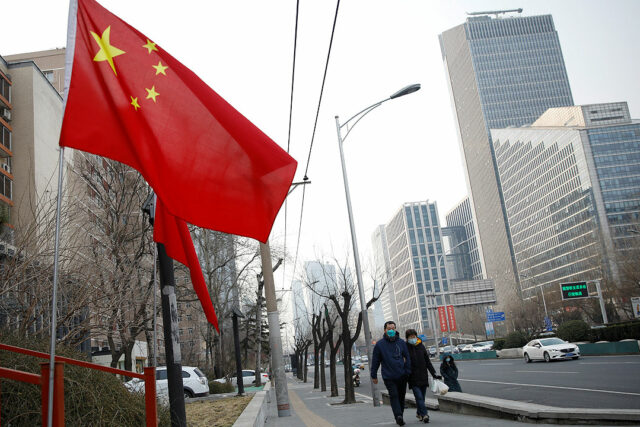
HONG KONG — As China embarks on an unprecedented six days of military drills surrounding Taiwan, security analysts are warning of mounting risks of escalation even if Beijing seeks to avoid its protests over Nancy Pelosi’s visit from sparking full blown conflict.

China announced drills in six locations surrounding Taiwan soon after House Speaker Ms. Pelosi — a veteran China critic and the third most senior US politician — landed in Taipei on Tuesday night.

Taiwan officials said the live fire drills violate United Nations rules, invade Taiwan’s territorial space and are a direct challenge to free air and sea navigation.

China’s Eastern Theatre Command said a multi-force exercise involving the Navy, Air Force, Rocket Force, Strategic Support Force and Joint Logistics Support Force, took place in the air and sea to the north, southwest and southeast of Taiwan on Wednesday.

Chinese military practiced operations including seal and control, assault at sea and strike on land.

Analysts spoken to by Reuters say it remains unclear if China will fire cruise or ballistic missiles directly over the island, or attempt a blockade for the first time.

Song Zhongping, a Hong Kong-based military commentator, said it appeared the People’s Liberation Army wanted to practice blockading the island if it had to in a later war.

“The goal of these exercises, to put it bluntly, is to prepare for the military fight with Taiwan.”

Unusually, the drills were announced with a locator map circulated by the official Xinhua news agency — a factor that for some analysts and scholars shows the need to play to both domestic and foreign audiences.

“We can see China’s ambition: to make the Taiwan Strait non-international waters, as well as making the entire area west of the first island chain in the western pacific its sphere of influence,” said a senior Taiwanese official familiar with its security planning.

If China got what it wanted, the official said, the impact would “be fatal for the safety and stability of regional countries, as well as for the regional economy.”

Singapore-based security scholar Collin Koh said the Pelosi visit had trapped China between having to show a resolute and sweeping response while avoiding a full-blown conflict.

“Even if they want to avoid that outcome, there are still significant possibilities for an accidental escalation,” said Mr. Koh, of the of the S. Rajaratnam School of International Studies.

Maps of the drills produced by China show they go far beyond the missile firings in the straits in 1996 when Beijing protested the island’s first direct presidential election in what became known as the Third Taiwan Strait Crisis.

Significantly, in the north, east and south, the proposed exercise areas bisect Taiwan’s claimed 12 nautical miles of territorial waters — something Taiwanese officials say challenges the international order and amount to a blockade of its sea and air space.

In 1996, the United States navy dispatched two aircraft carriers close to the straits to effectively end the crisis — a move many analysts consider more challenging now given China’s military growth, including a vastly more capable missile inventory.

A US Navy official confirmed to Reuters on Tuesday that the 7th Fleet had deployed the USS Ronald Reagan carrier and four other warships, including a guided missile cruiser, in the Philippine Sea east of Taiwan as part of a “routine deployment”.

The Indo-Pacific Command in Hawaii did not immediately respond to Reuters’ questions on the Chinese drills on Wednesday.

Mr. Koh said advanced US and Taiwanese reconnaissance aircraft would see the drills as an opportunity to probe Chinese military systems and communications, potentially adding to risks if Chinese planes responded. — Reuters

FEU offers data science and business analytics courses

Far Eastern University (FEU) Institute of Technology will offer specializations in data science, business analytics, and innovation and business starting this school year.  

The courses are BS Computer Science with specialization in Data Science, BS Information Technology with specialization in Innovation and Business, and BS Information Technology with specialization in Business Analytics. 

This year, FEU Tech schools, composed of FEU Alabang, FEU Diliman, and the FEU Institute of Technology, were recognized among the World’s Universities with Real Impact (WURI) Top Global Innovative Universities, which ranks science-and-technology programs based on societal impact.  

“All fields will be needing data science,” said Hadji J. Tejuco, an instructor of the college of computer studies and multimedia arts at FEU Tech. “It’s the only way to process the data to provide solutions for complex problems,” he added in an August 2 event by FEU Tech. “Data fed into the system can help us make future projections [too].”  

Data science — the collection, preparation, and analysis of data — is linked with artificial intelligence (AI), which is the technology for machines to understand and make intelligent decisions, and machine learning, which are algorithms that help machines improve through supervised and unsupervised learning.  

These three are the force behind applications such as the speech recognition abilities of virtual assistants, the web storefronts personalized for each shopper, and the health monitoring of patients via wearable devices.  

“The entire idea is to perform result-driven calculations on the data to get insights for business and research,” Mr. Tejuco said.  

“Data is your bread and butter,” added Geliza Marie I. Alcober, a fellow FEU Tech instructor at the college of computer studies and multimedia arts.  

Disneyland, she pointed out, uses business analytics to give them an idea who a customer’s favorite Disney character is. 

“This allows them to ensure your favorite Disney character interacts with you in Disneyland,” she said. “You don’t need magic to create something magical.”  

According to Rolan Marco U. Garcia, FEU Tech Group’s chief innovation officer and director for new ventures, the school “puts its money where its mouth is” and invests in the startup ideas of its students with an internal fund.  

“We look at the problems these startups want to solve. All innovation starts with that,” he said. “[Then] we look for validity and scalability.” 

Students that struggle with the math necessary to study data science can seek help from iCare, FEU’s free tutorial system.  

The Philippines placed second-lowest in mathematics among 79 economies that participated in the Program for International Student Assessment, a global study conducted in 2018 by the Organisation for Economic Co-operation and Development that examined students’ knowledge in reading, math, and science.

Indian state bets big on oil palm to cut $19 billion vegoil imports

STOCK PHOTO | Image by Pexels from Pixabay

 – Pullarao Daravathu and thousands of fellow farmers from Telangana in India’s south are busy planting oil palms as their home state aims to add more area under the controversial crop within four years than the entire country has in decades.

Telangana is targeting 2 million additional acres under oil palm cultivation in the next four years, and is going to great lengths to achieve this goal – from building large dams and irrigation canals to importing millions of germinated sprouts.

Generous government subsidies and bumper profit potential compared to other crops are also encouraging farmers like Daravathu to shift to oil palms.

Oil palm is giving more than 200,000 Indian rupees ($2,536) per acre return to farmers who planted the crop some years back. In rice, I am struggling to earn 40,000 rupees even after putting in lots of effort,” said Daravathu, who was planting oil palm on his 5-acre farm at Sathupally, nearly 300 km (186 miles) east of Hyderabad, the state capital.

The recent rally in palm oil prices has more than doubled prices of fresh fruit bunches, which farmers sell to oil mills.

For years, price volatility, water scarcity and a gestation period of nearly four years limited oil palm plantation in India to less than 1 million acres, mostly in coastal Andhra Pradesh, the state that Telangana was carved out of in 2014.

But Telangana, which occupies an inland region on the Deccan Plateau, is now keen to emerge as India’s main palm oil hub, with an area target that would place the state as the fifth largest oil palm grower globally – from a negligible base currently.

The drive could reduce India’s mammoth vegetable oil imports, which cost the country a record $18.9 billion a year ago and widened the national trade deficit.

India fulfils two-thirds of its vegetable oil demand through imports of around 14 million tons annually, including around 8.5 million tons of palm oil.

The federal government is keen to increase palm oil output to slash those expensive imports, which lifted inflation this year to multi-year highs after top supplier Indonesia abruptly halted exports.

“In the next four years, most of the palm planting would be done, and after 7-8 years Telangana could be producing 4 million tons of palm oil,” L Venkatram Reddy, director of Horticulture at the state government told Reuters.

India currently produces less than 300,000 tons of palm oil and relies on imports from Indonesia, Malaysia and Thailand to fulfil its requirements.

Even if Telangana manages to grow oil palm on only 1 million acres and produces 2 million tons of palm oil, it would be a huge achievement, said Chava Venkateswara Rao of Godrej Agrovet Ltd, the country’s biggest palm oil producer.

Until last year, the country was adding around 35,000 acres under oil palm every year.


WATER FIRST

Some areas in Telangana have sufficient water for thirsty oil palms thanks to the rivers such as the Godavari, Krishna and Bhima. But many pockets lacked sufficient water to cater to the oil palm‘s need of up to 265 liters per tree per day.

To overcome that, the state has built massive lift irrigation projects and a canal network that is now allowing farmers to plant oil palms across most of the state.

“We used to face water scarcity in summer season. Now, with the Kaleshwaram lift irrigation project, we have ample water for oil palm,” said farmer Bollampalli Venkateshwar Rao, who planted oil palms on 12 acres.

The Kaleshwaram irrigation project, which is nearly complete, cost the state 1.15 trillion rupees ($14.44 billion).

Authorities are giving permission to cultivate oil palms only after farmers install water-conserving micro irrigation systems, said Reddy, adding “The central and state government’s subsidies are covering almost the entire cost of drip irrigation system.”

The shift towards oil palm from paddy rice and other crops could help the state to bring down annual paddy procurement by around 2.5 million tons, and trim the electricity bill for lift irrigation projects by 15 billion rupees as drip-fed oil palms need less water than paddy, Reddy said.

Ravi Mathur, who heads the Indian Institute of Oil Palm Research (IIOPR), a government-backed body spearheading the oil palm push, said the lift irrigation project has made oil palm planting feasible in areas previously unsuitable for the crop because of water scarcity.


PLANTING MATERIAL SCARCITY

While thousands of farmers are keen to shift to oil palm, the availability of seedlings is limited, and preparing them is a lengthy process which takes almost a year.

Companies operating in Telangana imported 12.5 million sprouts last year and made seedlings for around 200,000 acres this year, said an official with the state-run TS Oilfed, the country’s biggest importer of germinated sprouts

The state is aiming to import 15 million sprouts this year – mainly sourced from Indonesia, Malaysia, Thailand and Costa Rica – and 50 million next year to achieve the target, he said.

But only handful of companies are supplying germinated sprouts.

“There is sudden surge in demand following a rally in palm oil prices. Companies are not able to supply as much we need this year,” said Sougata Niyogi, a top official at Godrej Agrovet. “The supply situation would become more comfortable next year.” – Reuters

After unexpected hurdles, military toxic burn pits bill passes US Senate

STOCK PHOTO | Image by Joan Greenman from Pixabay

 – A bill expanding healthcare coverage for veterans sickened by gases from military toxic burn pits passed the U.S. Senate on Tuesday night after unexpectedly getting held up by opposition from Republicans last week.

The US military used burn pits to dispose of waste on foreign bases until the mid-2010s. Fumes from burning everything from rubber, chemical waste, ammunitions and human feces have caused rare cancers and respiratory illnesses in veterans. Read full story

The bill initially passed the 100-member Senate with the support of 34 Republicans and all 50 Democrats, but got held up by a technical error the House swiftly corrected.

The Senate‘s final approval last week was expected to be a routine vote, but after Democrats announced a deal within their caucus on an unrelated climate and tax bill that would not require bipartisan support, a group of Republican senators abruptly changed their positions and voted against the corrected bill.

Many saw the Republican senators’ move, which took place just hours after the Democrats’ announcement, as retribution for continuing negotiations on the climate and tax bill that most in Congress thought were dead.

On Tuesday, Democratic Senator Chuck Schumer said he had reached a deal with Republican Senator Pat Toomey to hold a vote on an amendment that would change how money was allocated within the burn pits bill, clearing the way for a final vote on passage on Tuesday evening.

Mr. Toomey’s amendment was defeated before the Senate approved the legislation by a vote of 86-11.

Veterans who have pushed for the bill have camped on the Capitol steps since Thursday evening when the bill last came to the floor. US President Joe Biden called the veterans on Saturday and said he stood in solidarity with them, according to Rosie Torres, a veterans’ advocate.

Ms. Torres believes the Republican senators who changed their vote treated veterans like “political pawns.”

“It shouldn’t be about politics,” Ms. Torres said. “People are dying.”

Veterans and their advocates – including comedian Jon Stewart, an outspoken supporter of the bill – packed the galleries of the Senate chamber to watch the final vote on Tuesday night.

Mr. Biden said in a statement he looks forward to signing the bill into law “so that veterans and their families and caregivers impacted by toxic exposures finally get the benefits and comprehensive health care they earned and deserve.” – Reuters

Yemen’s warring parties agree only to renew two-month truce, UN says

Yemen’s warring sides agreed to renew a twomonth truce expiring on Tuesday, the United Nations envoy said, despite international pressure for an extended and expanded deal that would build on the longest stretch of relative calm in over seven years.

“This truce extension includes a commitment from the parties to intensify negotiations to reach an expanded truce agreement as soon as possible,” special envoy for Yemen Hans Grundberg said in a statement.

Mr. Grundberg had been pushing for a six-month truce with additional measures, sources had told Reuters, but both sides have had grievances about implementation of the existing truce deal and mistrust runs deep. Read full story

US and Omani officials had also been engaging with parties to back Mr. Grundberg’s proposal following a visit by President Joe Biden to Saudi Arabia last month, where he announced following bilateral talks an agreement to “deepen and extend” the truce.

Mr. Biden welcomed the renewal of the truce, but said in a statement that while it was an important step and essential to saving lives it “is not enough in the long run.”

“We urge the Yemeni parties to seize this opportunity to work constructively under UN auspices to reach an inclusive, comprehensive agreement that includes steps to improve freedom of movement and expanded salary payments and that paves the way for a durable, Yemeni-led resolution to the conflict,” he said.

Joe Buccino, spokesman for US Central Command, which oversees US military forces in the Middle East, welcomed the extension and said it would provide continued relief for millions of Yemenis.

The conflict pitting a coalition led by Saudi Arabia against the Iran-aligned Houthis, de facto authorities in north Yemen, has killed tens of thousands and caused millions to go hungry.

Riyadh has been trying to exit a costly war that has been a point of tension with the Biden administration, which halted support for offensive coalition operations. The conflict is widely seen as a proxy war between Saudi Arabia and Iran. Read full story

The warring sides have both been frustrated over truce implementation. The Saudi-backed government blamed the Houthis for not reopening main roads in disputed Taiz, while the group accused the coalition of not delivering the agreed number of fuel ships into Hodeidah and flights from the capital Sanaa, both held by the group.

Mr. Grundberg said he would intensify engagement with the parties in coming weeks to ensure full implementation.

An expanded truce, he said, would offer a mechanism to pay public sector salaries, the opening of roads, expanded flights from Sanaa and regular flow of fuel to Hodeidah. The UN is also pushing for a permanent ceasefire to enable the resumption of talks for a sustainable political resolution.

Sanaa resident Sufian al-Thawr said that without further measures to address economic woes and secure broader negotiations the truce would be “merely a warrior’s break” and that hostilities would return.

Since 2015, when the coalition intervened against the Houthis, Yemen’s economy and basic services have collapsed, leaving 80% of the population of around 30 million needing help.

Soaring food prices risk tipping more people into hunger as funding shortages have forced the U.N. to cut food rations. Read full story

“We want a truce that improves our standard of living,” said school teacher Elham Abdullah who lives in Aden, where the internationally recognized government is based after being ousted from Sanaa by the Houthis in late 2014.

University student Tah Abdul-Kareem said more was needed but “still, it is better than a return to war.” – Reuters

Race for PM’s job raises questions about UK climate leadership

REUTERS

 – The two contenders to become Britain’s next prime minister, Rishi Sunak and Liz Truss, have clashed over tax cuts and spending in fiery TV debates. But one issue has received little airtime in the race for Downing Street – climate change.

As Conservative party members start voting, some climate campaigners fear the ambitious emissions-cutting strategy planned by outgoing PM Boris Johnson could falter under his successor – though both Sunak and Truss say they back net zero.

In a letter to the BBC after the broadcaster’s head-to-head debate last week, climate campaigners and organizations said it was “unacceptable” for the issue to be “skimmed over in just 2-3 minutes”.

“Whoever leads the next government … must show global leadership on this issue and prove they’re serious about delivering on commitments for climate and nature,” said Katie White, campaigns director at green group WWF, who co-signed the letter.

Under Mr. Johnson in 2019, the Conservatives won a majority “on the back of their greenest manifesto ever”, so candidates should explain how they will deliver on those promises, she told the Thomson Reuters Foundation in an email.

Last November, Britain hosted the COP26 talks in Glasgow, two years after becoming the first member of the Group of Seven (G7) wealthy nations to pass a law committing to reaching net zero greenhouse gas emissions by 2050.

But experts are concerned that the country’s global leadership on climate could be weakening at a crucial time, as the difficult work of implementing policies begins.

That could have implications for action on climate risks globally if a country seen as a leader pulls back on its commitments, leaving diplomatic room for others to do so as well.


RACE TO THE BOTTOM’?

Both Mr. Sunak and Ms. Truss committed in July to the government’s net zero target by signing an environment pledge from the Conservative Environment Network (CEN) – a green forum backed by more than 130 Tory MPs.

But their limited announcements so far have left some climate experts and campaigners feeling nervous.

Truss wants to suspend green levies added to energy bills, while Sunak has said he would fund energy efficiency measures by taking money from heat pump subsidies, and would not relax a ban on onshore wind farms in England.

The debate appears to be a “race to the bottom” framed by a backlash against green spending by a small group of Conservative MPs called the Net Zero Scrutiny Group, said Chris Venables, head of politics at the Green Alliance think-tank.

“That does send signals globally about the UK‘s credibility on this issue,” he said.

Whoever takes over as prime minister in September will have to answer to the broader electorate and not just Tory members, who number about 200,000.

Several polls have demonstrated strong public support for climate action, and a recent survey by center-right think-tank Onward found it could be critical for winning seats at the next election.

The new leader will also inherit a comprehensive roadmap to reach net zero.

“Unlike almost every other country in the world, the UK now does have a strategy for almost every sector of the economy to decarbonize,” said Chris Stark, chief executive of Britain’s independent Climate Change Committee (CCC).

The CCC warned in its recent progress report that despite a strong strategy and bold targets, implementation of climate policies has been lagging far behind.

“We now have a secondary question of: well, are they actually going to be delivered?” Mr. Stark added.


‘SOFT POWER’

Mr. Johnson’s successor will also take over at a fragile time for international climate diplomacy, as the Ukraine war disrupts global energy supplies.

“Since COP26 … the global situation has, in general, become more complicated,” said Bernice Lee, a research director at Chatham House, a think-tank.

“Energy security has become more front and center,” she said, adding that the matter would be a priority at the next round of U.N. climate negotiations, November’s COP27 in the Egyptian resort of Sharm el-Sheikh.

Tensions between developed and developing nations could intensify as wealthy countries fail to provide adequate financial support, Ms. Lee said.

Rich nations are falling well short of delivering on their $100 billion promise to help developing nations deal with climate change, the Organization for Economic Co-operation and Development (OECD) said last week.

COP27 will be a “reckoning” for Britain as its first without hosting duties or as part of the European Union, said Rachel Kyte, dean of The Fletcher School at Tufts University.

Since COP26, she said the country’s climate diplomacy has become a “one-man diplomatic effort” by COP President Alok Sharma, a former business minister under Johnson who will step down at November’s talks.

She said Britain needs to be agile and utilize its significant “soft power” to lead from the front, such as London’s green finance leadership, strong civil society organizations, and leading academics.

“If the UK wants to be a global leader in climate, that’s what it’s going to have to do,” Ms. Kyte said.

“And that will require more than Alok Sharma’s air miles.” – Reuters

Smart delivers Best Mobile Coverage in the Philippines, according to new Ookla® report 

PLDT mobile services arm Smart Communications, Inc. (Smart) delivers the Best Mobile Coverage in the Philippines according to the latest independent report by Ookla*, the global leader in mobile and broadband network intelligence.

Based on user-generated tests and scans in 2.3 million devices across 671,510 locations in the country, Ookla declared Smart as winner of the Best Mobile Coverage category for Q1-Q2 2022 after it achieved a Coverage Score of 794, surpassing its closest competitor’s Coverage Score of 732.

The Coverage Score captures both the number of locations in which an operator offers service (its footprint) and the quality of service in each location, explained Ookla in its report.

Ookla added that of the scans from Smart subscribers, a total of 99 percent had general service, while 90.8 percent had 4G Service.

Reinforcing Smart’s network superiority

“This new citation not only reinforces Smart’s network superiority but also reflects our strong commitment to continuously improve our network so we can deliver a world-class mobile experience to our customers,” said Francis E. Flores, SVP and Head of Consumer Business Group – Individual.

“Having the Best Mobile Coverage means our subscribers nationwide can truly rely on Smart to connect online and achieve more in our fast-paced, hyperconnected world – whether for work, school, e-commerce, social media, or entertainment,” he added.

Value-packed data offers to empower subscribers

Smart’s Best Mobile Coverage citation comes on the heels of its newly launched value-packed offers meant to empower subscribers especially at a time when many are scrimping due to the rising prices of basic goods.

Smart Prepaid recently introduced Power All 99, which comes with 8 GB open access data, Unli TikTok, and Unli Texts to All Networks, valid for 7 days, for only Php99.  On the other hand, Smart’s value brand TNT has launched Sulit Affordaloads, a line-up of budget-friendly data offers which enables subscribers to connect online for as low as Php10.

To support the constant growth of mobile data traffic, Smart increased its base stations to 76,600 as of March 2022. These base stations, which include around 7,300 5G base stations, cover the connectivity needs of customers from Batanes to Tawi-Tawi.

Prior to earning the Best Mobile Coverage citation from Ookla, Smart also dominated the April 2022 Mobile Network Experience Report by independent mobile analytics firm Opensignal**, covering the essential aspects of service, especially speed and experience.


*Best Mobile Coverage : Based on analysis by Ookla® of Speedtest Intelligence® data for Q1–Q2 2022. Ookla trademarks used under license and reprinted with permission. 

**Opensignal Awards – Philippines: Mobile Network Experience Report April 2022, based on independent analysis of mobile measurements recorded during the period January 1 – March 31, 2022 © 2022 Opensignal Limited.


Spotlight is BusinessWorld’s sponsored section that allows advertisers to amplify their brand and connect with BusinessWorld’s audience by enabling them to publish their stories directly on the BusinessWorld Web site. For more information, send an email to online@bworldonline.com.

Join us on Viber to get more updates from BusinessWorld: https://bit.ly/3hv6bLA.

Pelosi arrives in Taiwan vowing US commitment; China enraged

TAIWAN Foreign Minister Joseph Wu welcomes US House of Representatives Speaker Nancy Pelosi at Taipei Songshan Airport in Taipei, Taiwan, Aug. 2. — TAIWAN MINISTRY OF FOREIGN AFFAIRS/HANDOUT VIA REUTERS

TAIPEI – U.S. House of Representatives Speaker Nancy Pelosi arrived in Taiwan late on Tuesday on a trip she said shows an unwavering American commitment to the Chinese-claimed self-ruled island, but China condemned the highest-level U.S. visit in 25 years as a threat to peace and stability in the Taiwan Strait.

Pelosi and the rest of her delegation disembarked from a U.S. Air Force transport plane at Songshan Airport in downtown Taipei after the nighttime landing on a flight from Malaysia to begin a visit that risks pushing U.S.-Chinese relations to a new low. They were greeted by Taiwan’s foreign minister, Joseph Wu, and Sandra Oudkirk, the top U.S. representative in Taiwan.

Her arrival prompted a furious response from China at a time when international tensions already are elevated by Russia’s invasion of Ukraine. China considers Taiwan part of its territory and has never renounced using force to bring it under its control. The United States warned China against using the visit as a pretext for military action against Taiwan.

“Our congressional delegation’s visit to Taiwan honors America’s unwavering commitment to supporting Taiwan’s vibrant democracy,” Pelosi said in a statement shortly after landing. “America’s solidarity with the 23 million people of Taiwan is more important today than ever, as the world faces a choice between autocracy and democracy.”

Pelosi, second in the line of succession to the U.S. presidency, is a long-time China critic.

Taiwan’s President Tsai Ing-wen will meet with Pelosi on Wednesday morning and then have lunch together, the presidential office said. Pelosi, travelling with six other American lawmakers, became the most-senior U.S. political leader to visit Taiwan since 1997.

China’s foreign ministry said it lodged a strong protest with the United States, saying Pelosi’s visit seriously damages peace and stability in the Taiwan Strait, “has a severe impact on the political foundation of China-U.S. relations, and seriously infringes upon China’s sovereignty and territorial integrity.”

Chinese warplanes buzzed the line dividing the Taiwan Strait before her arrival. The Chinese military has been put on high alert and will launch “targeted military operations” in response to Pelosi’s visit, the defense ministry said.

The Chinese military announced joint air and sea drills near Taiwan starting on Tuesday night and test launches of conventional missiles in the sea east of Taiwan, with Chinese state news agency Xinhua describing live-fire drills and other exercises around Taiwan from Thursday to Sunday.

Pelosi is on an Asia tour that includes announced visits to Singapore, Malaysia, South Korea and Japan. Her Taiwan visit was unannounced but widely anticipated.

In a Washington Post opinion piece released after landing, Pelosi explained her visit, praising Taiwan’s commitment to democratic government while criticizing China as having dramatically increased tensions with Taiwan in recent years.

“We cannot stand by as the CCP proceeds to threaten Taiwan – and democracy itself,” Pelosi said, referring to the Chinese Communist Party.

Pelosi also cited China’s “brutal crackdown” on political dissent in Hong Kong and its treatment of Muslim Uyghurs and other minorities, which the United States has deemed genocide.

As Pelosi’s motorcade approached her hotel, escorted by police cars with flashing red and blue lights, scores of supporters cheered and ran toward the black vehicles with their arms outstretched and phone cameras on. The motorcade drove straight into the hotel’s parking lot.

On Tuesday night, Taiwan’s tallest building, Taipei 101, lit up with messages including: “Welcome to Taiwan”, “Speaker Pelosi” and “Taiwan (heart) USA”.

WHITE HOUSE REACTS

White House national security spokesman John Kirby said after Pelosi’s arrival that the United States “is not going to be intimidated” by China’s threats or bellicose rhetoric and that there is no reason her visit should precipitate a crisis or conflict.

“We will continue to support Taiwan, defend a free and open Indo-Pacific and seek to maintain communication with Beijing,” Kirby told a later White House briefing, adding that the United States “will not engage in sabre-rattling.”

Kirby said China might engage in “economic coercion” toward Taiwan, adding that the impact on American-Chinese relations will depend on Beijing’s actions in the coming days and weeks.

Pelosi, 82, is a close ally of U.S. President Joe Biden, both being members of the Democratic Party, and has helped guide his legislative agenda through Congress.

Four sources said Pelosi is also scheduled on Wednesday to meet activists outspoken about China’s human rights record.

The United States has no official diplomatic relations with Taiwan but is bound by American law to provide it with the means to defend itself. China views visits by U.S. officials to Taiwan as sending an encouraging signal to the pro-independence camp on the island. Taiwan rejects China’s sovereignty claims, saying only the Taiwanese people can decide the island’s future.

Several Chinese warplanes flew close to the median line dividing the Taiwan Strait on Tuesday morning before leaving later in the day, a source told Reuters. Several Chinese warships also sailed near the unofficial dividing line since Monday and remained there, the source said.

Taiwan’s defence ministry said 21 Chinese aircraft entered its air defence identification zone on Tuesday, and that China was attempting to threaten key ports and cities with drills around the island. Taiwan’s armed forces have “reinforced” their alertness level, it added.

Taylor Fravel, a Massachusetts Institute of Technology expert on China’s military, said China’s planned exercises appear as though they may be greater in scope than during a Taiwan Strait crisis in 1995 and 1996.

“Taiwan will face military exercises and missile tests from its north, south, east and west. This is unprecedented,” Fravel said.

Four U.S. warships, including the aircraft carrier USS Ronald Reagan, were positioned in waters east of Taiwan on what the U.S. Navy called routine deployments.

Russia, locked in confrontation with the West over its Ukraine invasion, condemned Pelosi’s visit. Foreign ministry spokeswoman Maria Zakharova called the United States “a state provocateur.” — Reuters


Higher rates won’t kill growth — BSP

BW FILE PHOTO

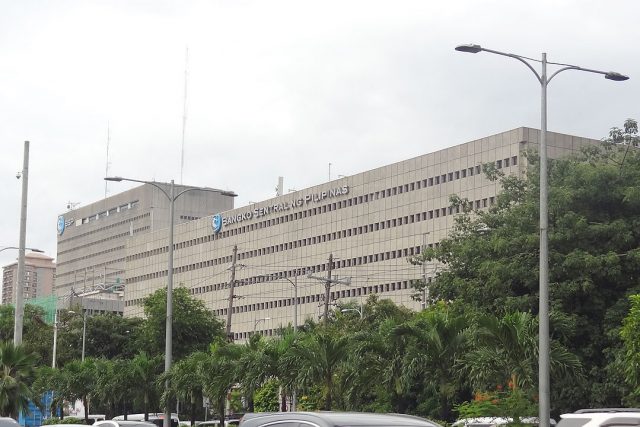
THE BANGKO Sentral ng Pilipinas (BSP) has room to further hike interest rates without “killing” economic recovery, according to its governor.

“Our policy rates are still accommodative. The policy rate as it goes up is not even keeping up with the inflation rate. As the inflation rate goes down, the real policy rate becomes less negative,” BSP Governor Felipe M. Medalla said during a Financial Executives Institute of the Philippines membership meeting on Tuesday.

“The policy rate is still negative in real terms. So, we can afford to step on the brakes without killing our nascent economic growth,” he added.

The economy expanded by a stronger-than-expected 8.3% in the first quarter. Economic managers are targeting 6.5-7.5% gross domestic product (GDP) growth this year.

Mr. Medalla said the central bank can continue to support the economy even with the planned policy rate hike of 25 or 50 basis points (bps) at its next meeting on Aug. 18.

“We’re still providing support for the recovery even with the increase in August and maybe with the rest of the year,” he said.

The Monetary Board last month raised the benchmark interest rates by 75 bps in an off-cycle move, as it sought to contain broadening inflationary pressures. It has raised rates by 125 bps since May.

The reverse repurchase facility rate is currently at 3.25%, while the rates on the BSP’s overnight deposit and lending facilities are at 2.75% and 3.75%, respectively.

In an ambush interview with reporters, Mr. Medalla said it’s too early to tell if the central bank will consider a pause in rate hikes.

“With regards to anything beyond August, it’s very data dependent. Don’t rule out anything. It will be rate hikes after August or it will be no rate hikes after August. It’s too early to tell,” he said.

Mr. Medalla said the central bank “stands ready to employ all necessary policy actions to bring inflation towards the target consistent path over the medium term.”

“In other words, we’ll try very hard to hit (the target) by next year,” he said.

Inflation accelerated to 6.1% in June, as prices of oil, food and other commodities continued to rise. June was the third straight month that inflation exceeded the BSP’s 2-4% target band.

The Monetary Board in June raised its average inflation forecast for 2022 to 5%, from 4.6% previously. It also hiked the 2023 average inflation forecast to 4.2%, from 3.9% previously. For 2024, BSP expects inflation to average 3.3%.

Meanwhile, Mr. Medalla said the central bank will continue to provide an enabling environment for its supervised financial institutions.

“We are very keen on reducing the reserve requirements because those that we do not regulate don’t have reserve requirements. The last thing we want to do is handicap those that we regulate,” Mr. Medalla added.   

The BSP is planning to lower the banks’ reserve requirement ratio (RRR) before the end of the year.

The RRR for big banks is currently at 12%, one of the highest in the region. Reserve requirements for thrift and rural lenders are at 3% and 2%, respectively.

The BSP earlier committed to bringing down the RRR of big banks to single digits by 2023. — Keisha B. Ta-asan

ADVERTISEMENT
ADVERTISEMENT