Home Blog Page 6044

Ending filariasis and neglected tropical diseases
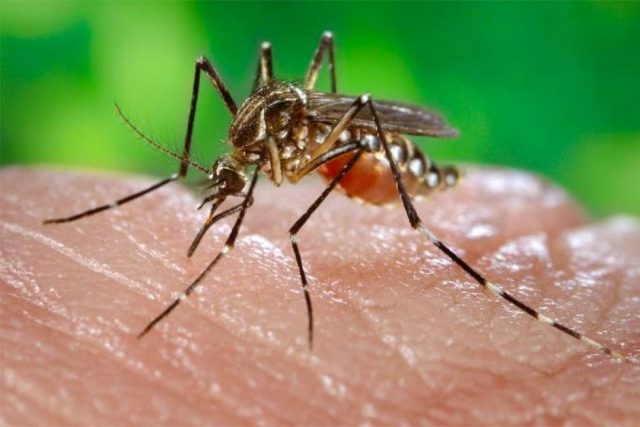
Public Health Image Library/US Centers Disease for Control and Prevention 

Lymphatic filariasis (LF) is a neglected tropical disease (NTD) commonly known as elephantiasis. It is caused by parasitic worms and transmitted to humans by different types of mosquitoes. Infection is usually acquired in childhood causing hidden damage to the lymphatic system. The disease affects mostly the poorest municipalities in the country, the Department of Health (DoH) noted. 

The painful and profoundly disfiguring visible manifestations of the disease — lymphoedema, elephantiasis (gross enlargement and swelling of an area of the body because of the accumulation of fluid, often the arms and legs), and scrotal swelling — occur later in life and can lead to permanent disability according to the World Health Organization (WHO). On top of being physically disabled, patients suffer mental, social and financial losses contributing to stigma and poverty, it added. 

The US Centers for Disease Control and Prevention (CDC) said that filarial infection can also cause tropical pulmonary eosinophilia syndrome. Symptoms include cough, shortness of breath, and wheezing. 

Lymphatic filariasis can be eliminated by stopping the spread of infection through preventive chemotherapy with safe medicine combinations repeated annually. An essential, recommended package of care can alleviate suffering and prevent further disability among people living with disease caused by LF. 

The WHO said that an estimated 7 million Filipinos from six provinces are still at risk of LF. This is why the DoH National Filariasis Elimination Program (NFEP) is conducting annual mass drug administration in these remaining provinces while the 40 provinces under elimination status are under continuous monitoring. In spite of the coronavirus disease 2019 (COVID-19) pandemic, the DoH NFEP continued its mass drug administration campaign and delivery of routine services for LF. 

One billion people worldwide — or one person in seven — suffer from NTDs. These illnesses primarily affect poor people in tropical and subtropical areas of the world. Nine NTDs represent more than 90% of the global NTD burden. These are LF, human African trypanosomiasis, Chagas disease, soil-transmitted helminthiases (STH), onchocerciasis, schistosomiasis (SCH), leprosy, fascioliasis, and blinding trachoma, said the International Federation of Pharmaceutical Manufacturers and Associations (IFPMA). 

NTDs kill or disable millions of people every year. At such a level of impact, NTDs cannot be ignored. These illnesses affect both children and adults for life, often lead to stigmatization, and can prevent children from developing to their fullest potential. As long as NTDs continue to be endemic in poor countries, they will remain a contributor to a vicious cycle of poverty in these regions. 

The research-based pharmaceutical industry fights NTDs in several ways. Firstly, through cutting-edge research and development (R&D). IFPMA members are working on 82 projects either independently or in product development partnerships (PDPs). As a partner in public health, it partners to implement capacity-building efforts in developing countries. These efforts are complemented by medicine donation programs, several of which date back decades. 

In the Philippines, these efforts included the projected donation of 261 million albendazole tablets by GlaxoSmithKline (GSK) in support of its goal to help eliminate LF. GSK has also donated at least 8 billion tablets of albendazole to help eliminate this disabling disease globally. 

Since 2000, Novartis has also been providing multiple drug therapy (MDT) medications for free to leprosy patients through the WHO. The DoH and Novartis Foundation also signed a Memorandum of Understanding and formed a task force to help develop innovative approaches to leprosy control. One of its key outputs is the Leprosy Alert and Response Network System (LEARNS), the country’s first mobile phone-based leprosy teleconsultation system. 

Globally, a paper published on behalf of the Royal Society of Tropical Medicine and Hygiene identified the pharmaceutical industry’s major partnerships to NTD programs. 

MSD and Eisai, for example, have provided medicines for free to achieve elimination of LF worldwide. Pfizer, on the other hand, committed to the elimination of trachoma as a public health threat through medicine donation. Meanwhile, Sanofi donated medicines for the treatment of Human African trypanosomiasis (HAT), while Bayer provided medicines for HAT and Chagas disease also for free. Johnson & Johnson donated medicines for STH while Merck KGaA committed to the elimination of SCH. 

For more than three decades, the research-based pharmaceutical industry has demonstrated its resolve to collaborate in addressing the burden of NTDs in the Philippines and worldwide. 


Teodoro B. Padilla is the executive director of Pharmaceutical and Healthcare Association of the Philippines (PHAP), which represents the biopharmaceutical medicines and vaccines industry in the country. Its members are at the forefront of research and development efforts for COVID-19 and other diseases that affect Filipinos. 
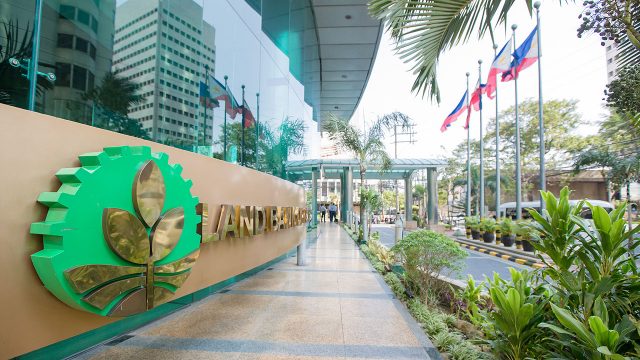
LANDBANK agri loans up 15.5% to P257.7B

LAND BANK of the Philippines (LANDBANK) reported that its loans to the agriculture sector climbed to P257.7 billion as of end-June, or a 15.5% increase from the same period in the previous year.

“LANDBANK stands ready to extend accessible credit to all agri players to boost the country’s food production and supply. We will continue ramping up our lending activities in full support of the new administration’s agricultural modernization agenda,” LANDBANK President and Chief Executive Cecilia C. Borromeo said in a statement.

Of the total outstanding loans, P163.1 billion was allocated to small, medium, and large agribusiness enterprises.

A total of P57 billion went to agri-aqua related projects of local government units and government-owned and -controlled corporations.

The remaining P37.5 billion was distributed to small farmers and fishers, including those channeled through cooperatives, farmers’ associations, and rural financial institutions.

The loans were used to finance livestock, crops and fisheries production and agri-processing and trading of rice, corn, and sugarcane, among others.

It also funded the construction and improvement of agriculture infrastructure, including public markets, farm-to-market roads, warehouses, cold storages, irrigation systems, and slaughterhouses.

The state-run bank is also currently offering an agri-mechanization financing program as part of the administration’s long-term goal to modernize agricultural production.

“The program is designed to promote mechanization of production and post-production processes, from planting to harvesting and processing, thereby increasing efficiency, reducing post-harvest losses and lowering production costs,” LANDBANK said.

As of end-June, the program has supported 53 micro and small enterprises and cooperatives with cumulative loan releases worth P681.5 million.

It has also extended a total of P13.3 billion to 247,591 borrowers under its collaboration with the Department of Agriculture.

LANDBANK said it is “committed to servicing the development requirements of small farmers, fishers, and other key players in the agri-business value chain.” — Luisa Maria Jacinta C. Jocson

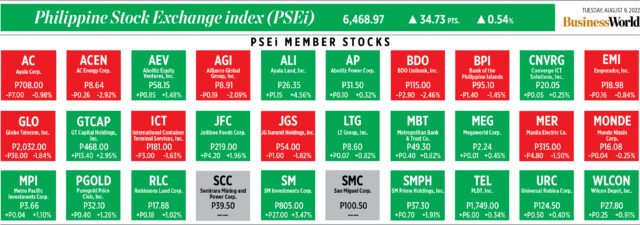
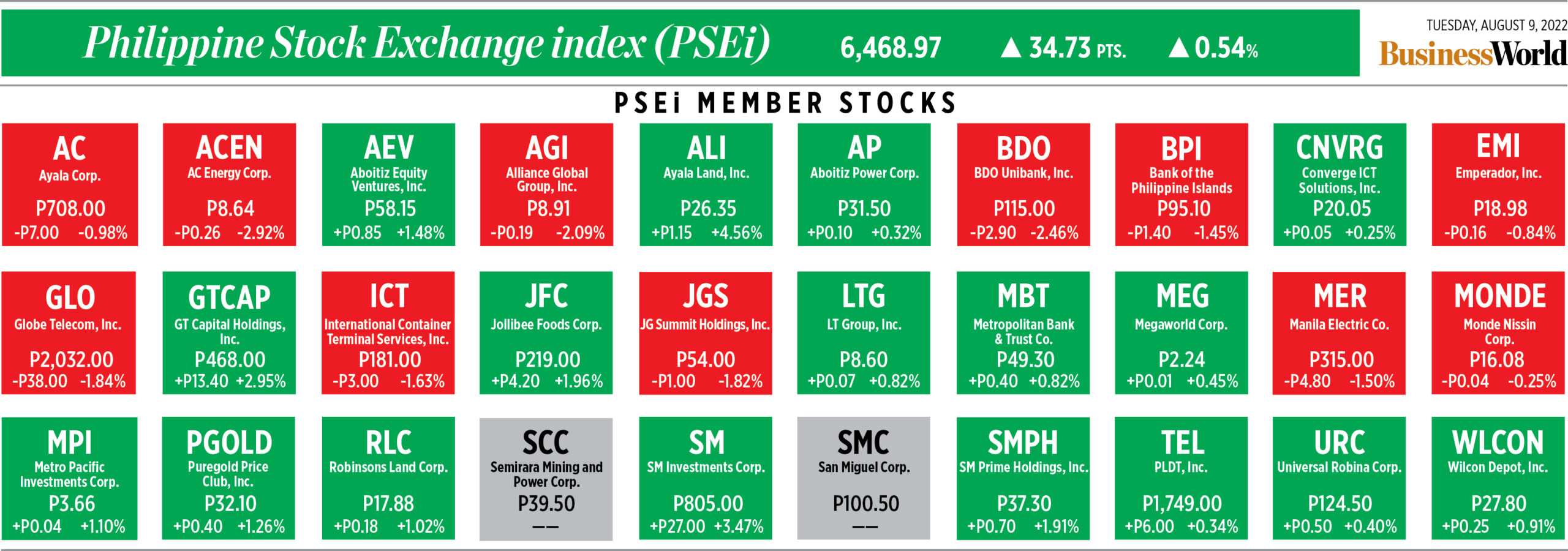
How PSEi member stocks performed — August 9, 2022

Here’s a quick glance at how PSEi stocks fared on Tuesday, August 9, 2022.


Court affirms protection for spouse of drug victim

PHILIPPINE STAR/ MICHAEL VARCAS

THE PHILIPPINE Supreme Court has affirmed an appellate court ruling that sought to protect the spouse of a victim of a drug-related killing by police officers.

In a statement on Monday, the tribunal said its Second Division had seen the death of Christina M. Gonzales’s husband Joselito as an extralegal killing by rogue cops.

“After examining the totality of the evidence, the Supreme Court found that threats to the life of Christina were indeed present, and that the Court of Appeals’ issuance of the writ of amparo was proper,” it said.

The Writ of Amparo is a legal remedy available to anyone whose right to life, liberty, and security is violated by a public official or worker.

Data from the Philippine government released in June 2021 showed that at least 6,117 suspected drug dealers had been killed in police operations as of April 2021. Human rights groups estimate that as many as 30,000 suspects died.

The policemen had asked the High Court to reverse the appellate court’s decision, which they accused of gravely abusing its authority.

In 2015, Antipolo City cops arrested the couple for alleged drug trafficking, but they were eventually released after paying P50,000 demanded by arresting officers. A year later, Mr. Gonzales was shot and killed during an encounter with a policeman.

The tribunal had yet to post a copy of the decision written by Justice Jhosep Y. Lopez on its website.

“The fact that the respondent (Christina) and Joselito were previously arrested for selling illegal drugs is beside the point,” it said, citing the ruling.

“As stated earlier, even if the respondent committed a crime, the petitioners, as law enforcement agents, are not at liberty to disregard the respondent’s constitutionally guaranteed rights to life, liberty, and security,” it added.

Last week, the Department of Justice (DoJ) said government prosecutors had dismissed for a lack of witnesses six of 52 cases against cops embroiled in drug raid killings.

The agency had only brought five cases involving 150 police officers to court since it started its own investigation last year.

President Ferdinand R. Marcos, Jr. on Monday said the Philippine National Police (PNP), which human rights groups have accused of executing drug suspects, should be accountable when enforcing the law to ensure public rapport and support.

“The use of force must always be reasonable, justifiable and only undertaken when necessary,” he said at a ceremony marking 121 years of police service.

The International Coalition for Human Rights in the Philippines last week urged the International Criminal Court (ICC) to pursue its investigation of the Philippine government’s deadly war on drugs after Mr. Marcos’ decision not to rejoin the international tribunal.

In a statement, the group said the president’s decision shields his predecessor, former President Rodrigo R. Duterte and his agents from prosecution and showed intent to continue the crimes.

“The International Coalition for Human Rights in the Philippines (ICHRP) is extremely disappointed but not surprised by the new Marcos administration’s decision to keep the Philippines outside the jurisdiction of the International Criminal Court,” Chairman Peter Murphy said. “This is part of the continued and ongoing state cover-up of crimes against humanity.”

The group said the ICC would be impartial in case it continues its probe of Mr. Duterte’s anti-illegal drug campaign that has killed thousands.

The ICC should probe the Duterte administration for alleged crimes against humanity so that justice may be served and impunity ended.

The Hague-based tribunal on July 14 gave the Philippines until Sept. 8 to comment on the ICC Office of the Prosecutor’s request to resume the probe into alleged crimes against humanity by Mr. Duterte and his officials. It also allowed victims to make written submissions through their lawyers.

Mr. Marcos, a close political ally of the Dutertes, has said the Philippines would not rejoin the ICC. Mr. Duterte canceled Philippine membership in the international court in 2018.

Former national police chief Ronald M. dela Rosa, the main enforcer of the drug war and now a senator, said the probe is an insult to the Philippine Justice system. He said he would not cooperate with the investigation.

The ICC, which tries people charged with crimes against humanity, genocide, war crimes and aggression, suspended its probe of the anti-illegal drug campaign last year upon the Philippine government’s request.

In a 53-page request to the international court’s pre-trial chamber, ICC Prosecutor Karim Ahmad A. Khan said the Philippines had failed to show it investigated crimes related to the campaign.

He said the chamber should issue an order on an “expedited basis.” It should “receive any further observations it considers appropriate from victims and the government of the Philippines,” he added.

Several human rights groups have urged Mr. Marcos to rejoin the ICC and to work closely with the tribunal in its probe of Mr. Duterte’s anti-illegal drug campaign. — John Victor D. Ordoñez

Philippines still at low risk from COVID, says DoH

PHILIPPINE STAR/ MICHAEL VARCAS

THE PHILIPPINES remains at low risk from the coronavirus despite rising infections, health authorities said on Tuesday.

The average daily attack rate was 3.42 cases per 100,000 population, with national and all regions showing increased infections, Health officer-in-charge Maria Rosario S. Vergeire told a virtual news briefing Filipino.

“The National Capital Region (NCR) and Cordillera Administrative Region (CAR) are at a moderate risk case classification, with an average daily attack rate of 9.15 for NCR and 7.29 for CAR,” she added. Other areas remained at low-risk.

The use of intensive care units (ICU) in the country has steadily increased since the start of July, Ms. Vergeire said. There were 772 severe and critical admissions or 19.3% of the total, almost as high as the level in March.

ICU use in the Bangsamoro region was at moderate risk, while four other regions— Calabarzon, Western Visayas, Zamboanga Peninsula and Davao — were near the threshold at more than 40%.

“The national weekly positivity rate has risen to 18.6% from 16.7% last week,” Ms. Vergeire said.

The Department of Health (DoH) also reported 906 more infections involving the Omicron subvariant BA.5, with 814 patients have recovered and 49 still in isolation. This brought the total to 4,013 cases.

Eleven more patients have been infected with the BA.4 subvariant, all of whom have recovered. This brought the total to 115 cases.

There were also seven more BA.2.12.1 patients, bringing the total to 181. All of them have recovered, DoH said.

Ms. Vergeire reiterated projections that the coronavirus infections in the capital region could hit 11,000 by the end of August.

Cases are expected to rise for the rest of the year if booster uptake remained low, people don’t comply with health standards and are allowed to move more freely, and more Omicron subvariants enter the country.

“These projections may happen, but hopefully not because we have control over two of these assumptions and that would be the uptake of boosters and the compliance to public health standards,” she said.  

“I am calling for our people to help each other so that we do not reach this increase in cases in our country,” Ms. Vergeire said. “Let us get vaccinated and continue to comply with minimum public health standards.”

Almost 72 million Filipinos had been fully vaccinated against the coronavirus as of Aug. 8. More than 9.7 million adolescents, more than 4.2 million children and almost 6.8 million seniors have received their first dose, the agency said. More than 16.6 million people have received their first booster and 1.5 million their second booster.

“These vaccines are safe, effective and freely given by our government,” Ms. Vergeire said, urging people to get vaccinated to protect themselves from the virus. — Alyssa Nicole O. Tan

Ombudsman clears de Lima of bribery charges 

PHILIPPINE STAR/ MICHAEL VARCAS

The Office of the Ombudsman has dismissed bribery charges against former Senator Leila M. de Lima, who has been in jail since Feb. 2017 for drug trafficking. 

Also cleared was Ronnie Dayan, her former aide. 

In a nine-page resolution dated Jan. 5 and made public on Tuesday, the Ombudsman said it found no probable cause to indict the former lawmaker for bribery. 

“The inconsistencies in the testimonies of the complainant’s witnesses can’t be brushed aside as trivial or inconsequential,” according to the decision written by Ombudsman prosecutor Daniel Von Evan O. Panelo. 

Ombudsman investigators earlier filed a complaint against the former senator and her aide accusing them of conspiracy to extort money from self-proclaimed drug lord Kerwin Espinosa. 

“The testimonies the complainant had presented failed to provide a clear, accurate and consistent narration of facts crucial in determining the elements of direct bribery and indirect bribery,” he added. 

Mr. Espinosa earlier testified that Ms. de Lima through her aide received P8 million in bribe money that she allegedly used to fund her 2016 senatorial run. 

At least four witnesses have taken back their allegations of Ms. de Lima’s involvement in the illegal drug trade. — John Victor D. Ordoñez 

Local shares rise as GDP data boost sentiment

BW FILE PHOTO

STOCKS rose on Tuesday as the country recorded a strong gross domestic product (GDP) growth in the first half and amid good second-quarter reports of listed companies.

The 30-member Philippine Stock Exchange index (PSEi) went up by 34.73 points or 0.54% to close at 6,468.97 on Tuesday, while the broader all shares index increased by 7.71 points or 0.22% to 3,456.44.

“Market [finished] higher on optimism about growth prospects toward second half of 2022 given strong first half GDP average growth of 7.8%, on track with government’s 6.5-7.5% target forecast this year,” First Metro Investment Corp. Head of Research Cristina S. Ulang said in a Viber message.

“This was also helped by strong corporate earnings that mostly “beat” and “in line” with consensus estimates,” Ms. Ulang added.

“Philippine shares climbed in the afternoon session on heavy trading as investors welcomed the second-quarter GDP figure,” Timson Securities, Inc. Head of Online Trading Marc Kebinson L. Lood said in a Viber message.

Preliminary data released by the Philippine Statistics Authority on Tuesday showed GDP grew by 7.4% year on year in the April to June period, easing from the downward-revised 8.2% reading for the first quarter and the 12.1% expansion in the same period in 2021.

This brought the first semester average to 7.8%, faster than the 3.9% growth seen in the same period last year and well above the government’s 6.5-7.5% target for the year.

Socioeconomic Planning Secretary Arsenio M. Balisacan on Tuesday said he is confident the economy can expand by 5.3% to 7.2% in the second half to reach the government’s GDP growth target.

The majority of sectoral indices ended in the red on Tuesday except for property, which rose by 67.98 points or 2.39% to 2,904.96, and holding firms, which went up by 73.94 points or 1.21% to 6,179.80.

Meanwhile, financials declined by 17.60 points or 1.14% to 1,519.91; services dropped by 6.81 points or 0.40% to 1,681.54; industrials went down by 17.59 points or 0.18% to 9,667.45; and mining and oil lost 10.62 points or 0.09% to end at 11,226.80.

Advancers outnumbered decliners, 112 versus 82, while 42 names closed unchanged.

Value turnover jumped to P12.19 billion on Tuesday with 965.57 million shares changing hands from P7.91 billion with 591.40 million issues seen the previous trading day.

Foreigners turned sellers anew with P5.64 billion in net selling on Tuesday versus the P518.79 million in net buying seen the previous trading day.

Timson Securities’ Mr. Lood said local investors will be monitoring the July US consumer price index data due to be released on Wednesday. He placed PSEi’s support at 5,900 level and resistance at the 6,800 area.

Meanwhile, First Metro Investment’s Ms. Ulang placed the index’s support at the 6,300 level and resistance at 6,500. — J.I.D. Tabile

Peso drops vs dollar on GDP, trade reports

BW FILE PHOTO

THE PESO weakened versus the greenback on Tuesday after the country recorded a slower economic growth in the second quarter and a wider trade deficit in June. 

The local unit closed at P55.595 per dollar on Tuesday, inching down by 4.5 centavos from its P55.55 finish on Monday, based on data from the Bankers Association of the Philippines.

The peso opened Tuesday’s session at P55.45 per dollar. Its weakest showing was at P55.66, while its intraday best was at P55.40 versus the greenback.

Dollars exchanged went up to $1.36 billion on Tuesday from $886.9 million on Monday.

“The peso weakened after the weaker second-quarter Philippine GDP report released [on Tuesday],” a trader said in an e-mail.

Preliminary data released by the Philippine Statistics Authority showed gross domestic product (GDP) grew by 7.4% year on year in the April to June period, slower than the 12.1% expansion in the same period last year and the revised 8.2% growth in the first quarter.

This brought the first-half print to 7.8%, above the government’s 6.5-7.5% target this year.

The peso also dropped due to data showing a wider trade deficit in June, Rizal Commercial Banking Corp. Chief Economist Michael L. Ricafort said.

The country’s trade deficit stood at $5.843 billion in June, 75.4% wider than the $3.331 billion logged a year earlier, the Philippine Statistics Authority reported on Tuesday.

Year to date, the trade balance ballooned to a $29.793-billion deficit from $17.953-billion gap a year ago.

“The local currency might depreciate anew ahead of the US consumer inflation report [on Wednesday],” the trader said. 

For Wednesday, both the trader and Mr. Ricafort gave a forecast range of P55.50 to P55.70 per dollar.  K.B. Ta-asan

DPWH hears private-sector concerns about BOT Law IRR

By Arjay L. Balinbin, Senior Reporter

THE Department of Public Works and Highways (DPWH) said on Tuesday that it will convey to the President issues raised by the private sector about the risk-sharing provisions of the revised implementing rules and regulations (IRR) of the Build-Operate-Transfer (BOT) Law.

In a statement, the DPWH said Public Works Secretary Manuel M. Bonoan met with Makati Business Club (MBC) officials who paid him a call on Monday at the DPWH in Manila.

“Secretary Bonoan hopes to strengthen relations with MBC as he affirmed his commitment to spearhead discussion of the reported concerns to the Cabinet infrastructure cluster meeting and with the President,” the department said.

In a statement issued following a BusinessWorld query about the meeting, MBC Executive Director Francisco Alcuaz, Jr. asserted the MBC’s position, which cited the “need to cancel or defer the implementation of the recently revised IRR for the BOT Law.”

Mr. Alcuaz attended the DPWH meeting along with Ayala Corp. chairman Jaime Augusto Zobel de Ayala and Aboitiz InfraCapital, Inc. President and CEO Cosette V. Canilao.

“The new IRR takes the ‘partnership’ out of public-private partnership by putting all the risk with (the private sector) and taking away provisions that would allow (for) a fair, predictable return,” he said in his statement.

Ateneo de Manila University Economics Professor Leonardo A. Lanzona said in May that the revised IRR raises the risk for companies participating in joint projects by relieving the government of any responsibility for delays and increased costs.

“An efficient contract should be one that distributes the risks between the principal (government) and the agent (private contractor),” he told BusinessWorld.

Another concern raised by the MBC was the “need to reduce duplication of submissions and approvals between the national government (NG) and the local government units (LGUs), (as well as the need to) limit new or additional requirements that are not in the original list of requirements,” Mr. Alcuaz said.

“You have to submit to NG, then submit the same to the LGU, usually in a different format, then when you think you’re done, they add new requirements. So many hoops, when all the private sector wants to do is help the government build the infra our people need.”

“There is also a need to further improve right-of-way (RoW) acquisition, which holds up projects even as costs rise,” Mr. Alcuaz noted.

The government, the MBC said, should acquire RoW before bidding out or awarding the project, or the law can be revised so RoW funds can be released at least a year earlier.

Mr. Alcuaz said the MBC also welcomed Mr. Bonoan’s interest in more rail projects to bring down freight costs, which the department secretary said are “the highest” in Southeast Asia.

“The President and his cabinet have generated a lot of excitement with their plans to make the Philippines an investment destination and revitalize PPPs. Local and foreign players await more signs — and bids — that will prove business is welcome again as a partner in boosting jobs, infrastructure, and quality of life,” Mr. Alcuaz added.

The MBC put forward proposals to help protect both the government and contractors from sharp rises in steel, cement, and other material costs,, Mr. Alcuaz said.

Manufacturing output up by 2.4% in June on economic reopening

REUTERS

FACTORY output was up 2.4% year on year in June, rising for a second straight month as the economy reopened further with most mobility restrictions being lifted.

The growth was reflected in the preliminary result of the Monthly Integrated Survey of Selected Industries (MISSI) issued by the Philippine Statistics Authority (PSA) on Tuesday. The specific indicator tracking manufacturing output growth is known as the volume of production index (VoPI).

Growth accelerated from the revised 0.9% posted in May. The last decline was in April, when the indicator was revised to minus 0.2%.

In the six months to June, factory output rose 29.7% year on year.

In a phone interview, Philippine Chamber of Commerce and Industry Honorary Chairman Sergio R. Ortiz-Luis, Jr. said the recovery in manufacturing in June was due to the continued relaxation of quarantine alert levels, which govern the operating capacity of most establishments.

John Paolo R. Rivera, an economist at the Asian Institute of Management, said the reopening served to stimulate consumer demand.

Starting March, Metro Manila and other key regions were placed under Alert Level 1, the most permissive of the five quarantine alert settings.

However, Mr. Rivera said high inflation negatively affected manufacturing output due to the rising cost of raw materials.

“Currency depreciation also negatively affects manufacturers dependent on imported raw materials due to relatively lower purchasing power,” Mr. Rivera said in an e-mail.

Thirteen product categories drove VoPI higher in June, led by machinery and equipment except electrical, which grew 45.3% against 52.1% in May, followed by fabricated metal products, except machinery and equipment (31.4% from 30.7%), and wood, bamboo, cane, rattan articles, and related products (31% from 24.7%).

Nine categories reported contractions, led by print and reproduction of recorded media (minus 25.1% from minus 11.9% in May), basic metals (minus 8.5% from minus 26.1%), and basic pharmaceutical products and pharmaceutical preparations (minus 16.1% from minus 10%).

The manufacturing purchasing managers’ index (PMI) in June came in at 53.8, slowing down from the 54.1 reading in May. A reading of the PMI above 50 indicates an improvement in raw material orders which will be converted into goods. The PMI is considered a leading indicator for manufacturing activity because orders placed by purchasing managers reflect their best estimate of future demand levels.

Capacity utilization in manufacturing averaged 71.1% in June, higher than May’s 70.9%. Of the 22 product categories, 20 reported utilization rates of at least 60%.

Over the remainder of the year, manufacturing is expected to increase, though growth rates could ease with inflation and a weak currency posing downside risks, Mr. Rivera said.

Headline inflation in July was near a four-year high at 6.4% amid rising food and transport costs. Inflation accelerated from the 6.1% posted in June and the 3.7% reported a year earlier.

Inflation exceeded the central bank’s 2-4% target range for the year for a fourth consecutive month in July.

“(Manufacturing output) will increase,” said Mr. Ortiz-Luis, who also sits as the president of Philippine Exporters Confederation, Inc. “Basically, at the same rate, continuous ‘yun (The rise will be continuous). I think it is a trend already.” — Kyanna Angela Bulan

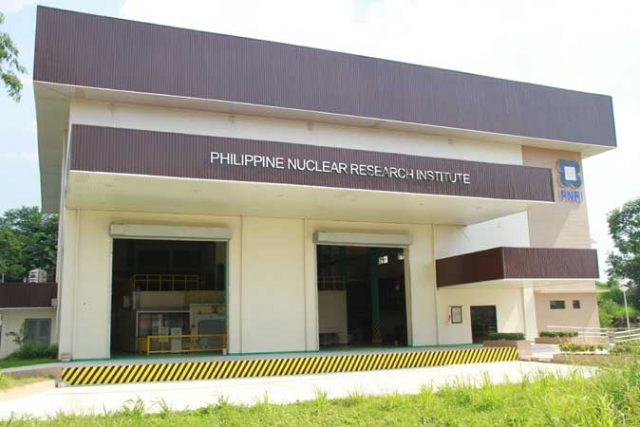
DoE worried about agency’s dual role as nuclear regulator, industry promoter

PNRI.DOST.GOV.PH

THE Department of Energy (DoE) said the nuclear power regulatory regime must resolve potential issues regarding the Philippine Nuclear Research Institute’s (PNRI’s) dual role in regulating and developing the industry.

“Right now, the PNRI is both the regulator and promoter of nuclear power and that’s a no-no. You cannot be promoting something and saying that you are regulating it at the same time. These are the kind of things that we need to address,” Energy (DoE) Secretary Raphael P.M. Lotilla said in a briefing. 

Mr. Lotilla added that the government must also reassure communities hosting nuclear facilities.

“We would have to strengthen the trust and confidence of people in the ability of government to regulate safely and to (comply with) necessary standards,” he said.

Mr. Lotilla said the total cost of going nuclear must be considered, and while nuclear power has the potential to deliver low-cost power, any analysis of life cycle cost must also incorporate the size of the upfront investment as well as costs like waste disposal and unexpected maintenance.

He proposed that the Association of Southeast Asian Nations (ASEAN) consider collective standards for nuclear power.

“If Vietnam, Indonesia, Singapore and Malaysia are thinking of putting up nuclear power plants, why can’t ASEAN look at this as a region and then leverage collective resources to put up a common regulatory and training system, and a common disaster response system,” he added.

Mr. Lotilla said the DoE will seek to reduce Philippine dependence on imported energy by developing  indigenous power resources. He said 56.8% of power demand is serviced by imported fuel.

Meanwhile, Mr. Lotilla said that he will direct the Philippine National Oil Company-Exploration Corp. (PNOC-EC) to come to a determination on

Whether MEXP Holding Pte. Ltd (MEXP) can sell its operating stake in the Malampaya gas-to-power project.

“It would be premature for me to speak on this particular subject,” he added.

On July 29, Prime Infrastructure Capital said that its subsidiary, Prime Exploration Pte. Ltd., signed an agreement to acquire MEXP from a subsidiary of Udenna Corp.

MEXP has signed a deal to purchase Shell Philippines Exploration B.V. (SPEx), but the government, through PNOC-EC withheld its consent on the sale of the 45% interest held by SPEx in Malampaya to MEXP.

PNOC-EC has a 10% stake in the Malampaya gas-to-power project and must give its consent before partners in the consortium can divest from the gas field venture. — Ashley Erika O. Jose

Budget dep’t releases additional P2B for DSWD crisis assistance program

PHILIPPINE STAR/EDD GUMBAN

THE Department of Budget and Management (DBM) released an additional P2 billion for a Department of Social Welfare and Development (DSWD) financial assistance program supporting its protective services.

Budget Secretary Amenah F. Pangandaman approved the Special Allotment Release Order (SARO) on Monday for the DSWD’s Assistance to Individuals in Crisis Situation (AICS), according to a DBM statement.

AICS is a component of the DBM’s Protective Services for Individuals and Families in Difficult Circumstances (PSIFDC) initiative.

“AICS is a provision of integrated services, which include financial assistance for transportation, medical, burial, food and other support services, which are given to individuals and families in crisis situations,” the DBM said.

Initially for 1.4 million beneficiaries, support was disbursed to 1.5 million as of June 30, 2022. An estimated 642,348 recipients are projected for 2022.

“The release of this fund is a big help to our kababayans (compatriots) who are caught in difficult situations. Maganda ang timing ng karagdagang pondong ito. Gusto nating tulungan ang DSWD para makapagbigay ng tulong at proteksyon sa mga pamilyang nangangailangan (The additional funding is well-timed. We’d like to assist the DSWD in giving aid and protection to families in need),” Ms. Pangandaman said.

Earlier in the month, the DBM also released a Special Allotment Release Order amounting to P4.13 billion to the DSWD for the second tranche of the Targeted Cash Transfer (TCT) program.

The TCT was intended to address the impact of rising prices on vulnerable households. — Diego Gabriel C. Robles

ADVERTISEMENT
ADVERTISEMENT