Home Blog Page 6043

More than half of human infectious diseases can be worsened by climate change
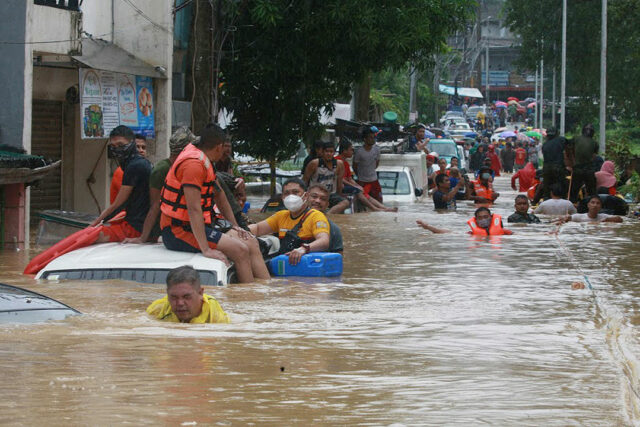
PHILIPPINE STAR/ MICHAEL VARCAS

By Tristan McKenzie, Camilo Mora,
and Hannah von Hammerstein 

Climate change can exacerbate a full 58% of the infectious diseases that humans come in contact with worldwide, from common waterborne viruses to deadly diseases like plague, our new research shows. 

Our team of environment and health scientists reviewed decades of scientific papers on all known pathogenic disease pathogens to create a map of the human risks aggravated by climate-related hazards. 

The numbers were jarring. Of 375 human diseases, we found that 218 of them, well over half, can be affected by climate change. 

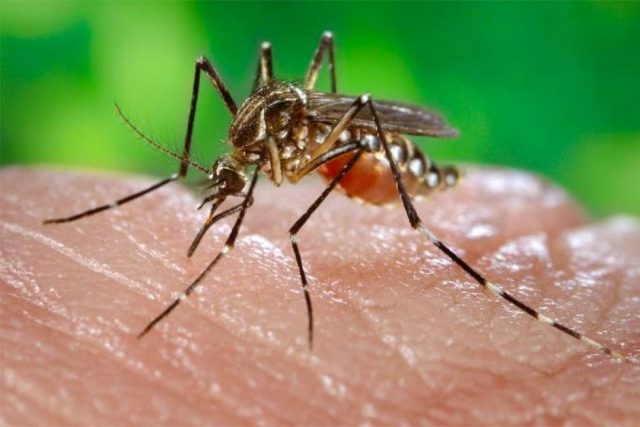
Flooding, for example, can spread hepatitis. Rising temperatures can expand the life of mosquitoes carrying malaria. Droughts can bring rodents infected with hantavirus into communities as they search for food. 

With climate change influencing more than 1,000 transmission pathways like those and climate hazards increasingly globally, we concluded that expecting societies to successfully adapt to all of them isn’t a realistic option. The world will need to reduce the greenhouse gas emissions that are driving climate change to reduce these risks. 

To be able to prevent global health crises, humanity needs a comprehensive understanding of the pathways and the magnitude with which climate change might affect pathogenic diseases. 

We focused on 10 climate-related hazards linked to rising greenhouse gas emissions: atmospheric warming, heat waves, drought, wildfires, heavy precipitation, flooding, storms, sea-level rise, ocean warming and land cover change. Then we looked for studies discussing specific and quantifiable observations of human disease occurrences linked to those hazards. 

In total, we reviewed over 77,000 scientific papers. Of those, 830 papers had a climatic hazard affecting a specific disease in an explicit place and/or time, allowing us to create a database of climatic hazards, transmission pathways, pathogens and diseases. An interactive map of every pathway between hazard and pathogen is available online. 

The largest number of diseases aggravated by climate change involved vector-borne transmission, such as those spread by mosquitoes, bats or rodents. Looking at the type of climate hazard, the majority were associated with atmospheric warming (160 diseases), heavy precipitation (122) and flooding (121). 

We found four key ways climatic hazards interact with pathogens and humans: 

1) Climate-related hazards bring pathogens closer to people. 

In some cases, climate-related hazards are shifting the ranges of animals and organisms that can act as vectors for dangerous pathogenic diseases. 

For example, warming or changes in precipitation patterns can alter the distribution of mosquitoes, which are vectors of numerous human pathogenic diseases. In recent decades, geographic changes in outbreaks of mosquito-borne diseases such as malaria and dengue have been linked to these climatic hazards. 

2) Climate-related hazards bring people closer to pathogens. 

Climate disasters can also alter human behavior patterns in ways that increase their chances of being exposed to pathogens. For example, during heat waves, people often spend more time in water, which can lead to an increase in waterborne disease outbreaks. 

Notably, Vibrio-associated infections increased substantially in Sweden and Finland following a heat wave in northern Scandinavia in 2014. 

3) Climate-related hazards enhance pathogens. 

In some cases, climate-related hazards have led to either environmental conditions that can increase opportunities for pathogens to interact with vectors or increase the ability of pathogens to cause severe illness in humans. 

For example, standing water left by heavy precipitation and flooding can provide breeding grounds for mosquitoes, leading to increased transmission of diseases such as yellow fever, dengue, malaria, West Nile fever and leishmaniasis. 

Studies have shown that rising temperatures may also help viruses become more resistant to heat, resulting in increased disease severity as pathogens become better able to adapt to fever in the human body. 

For instance, studies have suggested that rising global temperatures are leading to increased heat tolerance of fungal pathogens. The sudden appearance on multiple continents of treatment-resistant human infections of Candida auris, a fungus that was previously nonpathogenic to humans, has been associated with increasing global temperatures.  Similarly, fungi in urban environments have been shown to be more heat tolerant than those in rural areas, which tend to be cooler. 

4) Climate-related hazards weaken the body’s ability to cope with pathogens. 

Climate-related hazards can affect the human body’s ability to cope with pathogens in two key ways. They can force people into hazardous conditions, such as when disaster damage leads to people living in crowded conditions that might lack good sanitation or increase their exposure to pathogens. 

Hazards can also reduce the body’s capacity to fight off pathogens, through malnutrition, for example. Living through climatic hazards may also induce increased cortisol production from stress, leading to a reduction in the human body’s immune response.  

Climate change presents a significant threat to human lives, health and socioeconomic well-being. Our map shows just how extensive that threat can be. In our view, to dial back the risk, humanity will have to put the brakes on the human-caused greenhouse gas emissions fueling global warming.   

Tristan McKenzie is a postdoctoral researcher in Marine Science at the University of Gothenburg. 

Camilo Mora is an associate professor of biology at the University of Hawaii. 

Hannah von Hammerstein is a Ph.D. candidate in geography and environmental science at the University of Hawaii. 


This article is republished from The Conversation under a Creative Commons license. 

Treasury fully awards reissued bonds

BW FILE PHOTO

THE GOVERNMENT fully awarded the reissued 10-year Treasury bonds (T-bonds) it auctioned off on Tuesday at a lower average rate amid robust demand, which led it to open its tap facility.

The Bureau of the Treasury (BTr) raised P35 billion as planned from its offer of reissued 10-year securities that have a remaining life of six years and five months on Tuesday. Total bids reached P105.72 billion or more than thrice the amount on the auction block.

Rates awarded on Tuesday ranged from 5.7% to 5.874%, bringing the average yield for the bonds on offer to 5.791%, lower by 108.4 basis points (bps) than the 6.875% coupon fetched for the series when it was first offered on Jan. 8, 2019.

The average rate was also 6.2 bps below the 5.853% yield on the seven-year bonds, the closest tenor to the remaining life of the papers on offer,  but 1.3 bps above the 5.778% quoted for the issue at the secondary market before Tuesday’s auction, based on PHP Bloomberg Valuation Reference Rates data provided by the BTr.

To accommodate the strong demand seen for Tuesday’s offering, the Treasury opened its tap facility to raise P10 billion more via the bonds for a yield-to-maturity of 5.791%.

National Treasurer Rosalia V. de Leon said in a Viber message to reporters that it was “another well received auction” as bids reached over thrice as much as the offering and with rates seen lower than secondary market levels.

The first trader said that it was “another strong auction, possibly supported by weaker-than-expected GDP (gross domestic product) numbers.”

“The demand was quite similar to the three prior auctions, which also shows that end-users are still extending duration for yield pickup,” the first trader added.

The second trader said the auction result was in line with expectations.

“We know it’s going to be a robust auction given the market’s preference for belly to long-end bonds due to their relatively attractive yields offered,” the second trader said.

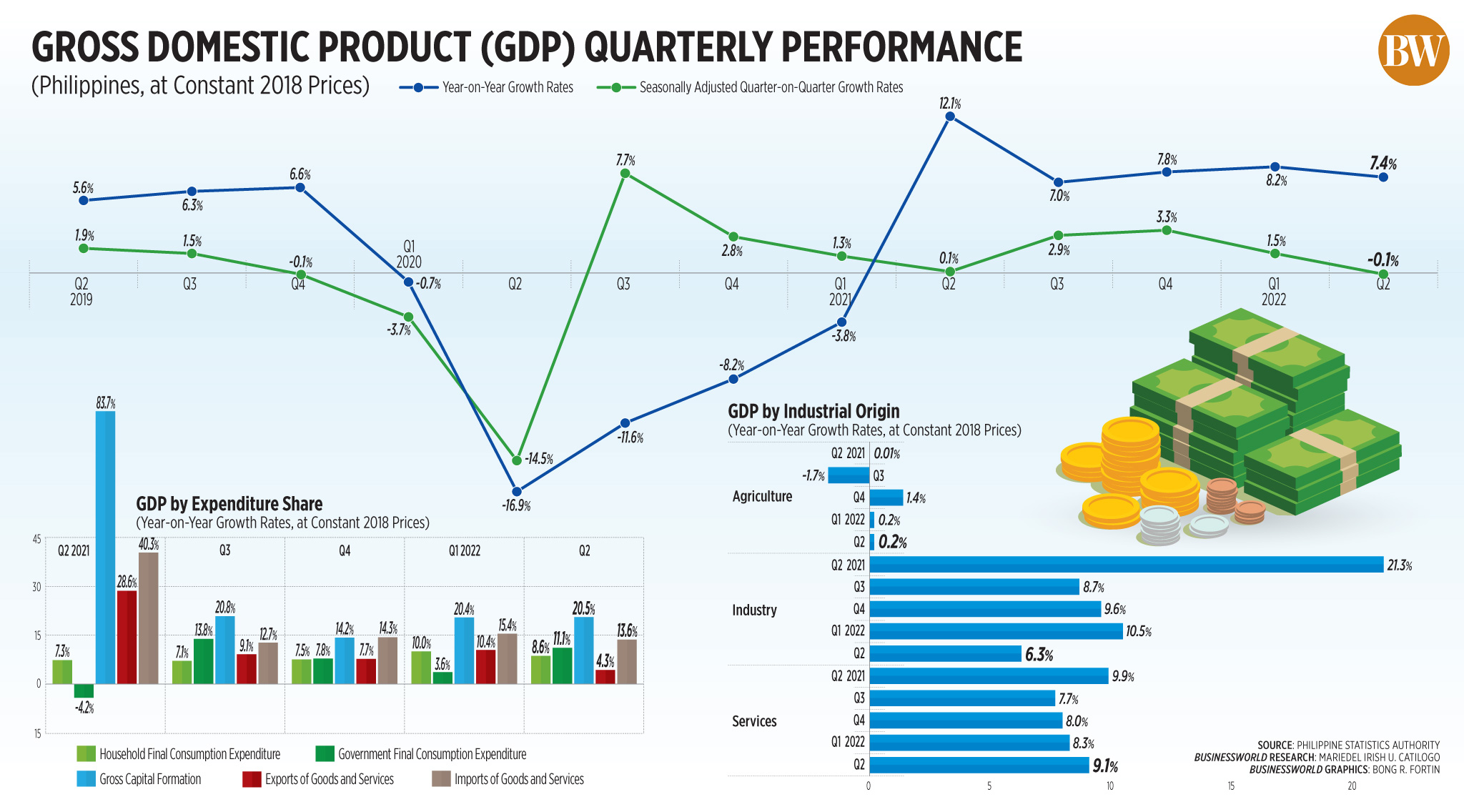
Preliminary data released by the Philippine Statistics Authority on Tuesday showed GDP grew by 7.4% year on year in the April to June period, easing from the downward-revised 8.2% reading for the first quarter and the 12.1% expansion in the same period in 2021.

This brought the first semester average to 7.8%, faster than the 3.9% growth seen in the same period last year and well above the government’s 6.5-7.5% target for the year.

Meanwhile, investors have shown strong demand for longer tenors, with the Treasury making full awards of all its T-bond offerings since last month as the market is looking for higher yields amid expectations of higher interest rates due to sustained inflationary pressures.

Headline inflation quickened to 6.4% year on year in July, its fastest pace since October 2018, mainly due to soaring prices of food and higher transport costs.

For the first seven months, inflation averaged 4.7%, faster than the 4% seen in the same period a year ago and the central bank’s 5% inflation forecast, but higher than its 2-4% target for the year.

BSP Governor Felipe M. Medalla last week said the central bank may hike rates by 50 bps at the Monetary Board’s Aug. 18 meeting after headline inflation accelerated further in July.

The Monetary Board last month raised the benchmark interest rates by 75 bps in an off-cycle move, as it sought to contain inflationary pressures. It has raised rates by 125 bps so far since May.

The BTr wants to raise P215 billion from the domestic market this month, or P75 billion through Treasury bills and P140 billion via T-bonds.

The government borrows from local and external sources to help fund a budget deficit capped at 7.6% of GDP this year. — Diego Gabriel C. Robles

Pulitzer Prize-winning author David McCullough, 89

AWARD-winning author and historian David McCullough — PHOTOGRAPH BY WILLIAM B. MCCULLOUGH VIA SIMONANDSCHUSTER.COM

DAVID McCullough, best-selling author and renowned historian who won Pulitzer Prizes for his biographies of presidents John Adams and Harry Truman, has died at the age of 89, his publisher said on Monday.

Mr. McCullough died on Sunday at his home in Hingham, Massachusetts, surrounded by his five children, according to a Facebook page maintained by his publisher, Simon and Schuster.

Mr. McCullough was known for writing several deeply researched and popular works about important American figures and points in history such as the building of the Brooklyn Bridge and the first flight by the Wright Brothers.

“As an historian, he paints with words, giving us pictures of the American people that live, breathe, and above all, confront the fundamental issues of courage, achievement, and moral character,” the citation for his honorary degree from Yale University read, according to his biography on the Simon and Schuster website.

Mr. McCullough won a Pulitzer Prize in 1993 for Truman, a biography about the 33rd president of the United States and another Prize in 2002 for John Adams, a biography about the 2nd US president.

Mr. McCullough also earned National Book Awards for The Path Between the Seas: The Creation of the Panama Canal and Mornings on Horseback.

In 2016, Mr. McCullough was awarded the Presidential Medal of Freedom, the nation’s highest civilian award.

Mr. McCullough was born in Pittsburgh in 1933. He attended Yale University where he earned an English literature degree. After school, he moved to New York City and got a job with Sports Illustrated.

He married Rosalee Barnes in 1954 and the couple had five children. Rosalee Barnes McCullough died in June at the age of 89. — Reuters

SPNEC board clears name change

SOLAR Philippines Nueva Ecija Corp. (SPNEC) announced on Tuesday that its board of directors approved to change its corporate name to SP New Energy Corp. subject to stockholder and regulatory approval.

“SPNEC signaled that it would be reintroducing its business to the market over the coming weeks, including sharing new details on its portfolio, as well as advancing the assumption of certain projects ahead of the share swap,” SPNEC said in a media release.

It said the move to rename the company is meant to reflect its expansion from a single project in Nueva Ecija to a portfolio that includes other projects and developments.

The company aims to complete the development of 10 gigawatts (GW) by 2025.

SPNEC also said that its asset-for-share swap with Solar Philippines Power Project Holdings, Inc. is moving forward, as its public float is to be increased from its stock rights offering, with an offer period scheduled from Aug. 30 to Sept. 5.

After the completion of the swap deal, SPNEC would gain a portfolio of projects, including 400 megawatts of operating projects or under construction; the 3.5-GW solar and 4.5-GW-hours battery project of Terra Solar Philippines, Inc., which plans to supply mid-merit power to Manila Electric Co. for around 12 hours per day; and 1.8 GW of projects contracted under the Department of Energy’s Green Energy Auction.

On Tuesday, shares in the company inched up by 1.16% or P0.20 to finish at P1.74 apiece on the stock exchange. — Ashley Erika O. Jose

Gross domestic product (GDP) quarterly performance

THE Philippine economy expanded by 7.4% in the second quarter — slower than expected — as rising inflation weighed on consumer spending. Read the full story.

Gross domestic product (GDP) quarterly performance

Why am I so tired and when is it time to see the doctor about it?

UNSPLASH

By Natasha Yates 

Everyone feels tired sometimes. But how do you know whether your tiredness is a problem worth seeing a doctor about? And with all the mental and emotional strain we have been under from the pandemic, isn’t it just normal to feel tired? 

Tiredness is subjective; what’s normal for one person won’t be for the next. Many people see their general practitioners (GPs) reporting tiredness (a recent study in Ireland found that it was present in 25% of patients). 

As a GP, my first question to someone who feels tired is: “how well can you function?” 

If tiredness is interfering with your everyday life and your ability to do what you like to do, it should be explored further. 

Poor sleep is an obvious and very common cause of tiredness. Often patients tell me “Oh, lack of sleep is not the cause, I sleep fine, possibly too much!” But on questioning they admit they don’t wake up feeling refreshed. 

That’s a bit of a giveaway because it means their sleep quality is poor, even if the quantity seems enough. They could be suffering from sleep apnea, where breathing stops and starts while a person is asleep. Apnea can lead to serious long-term health problems, so it’s worth investigating. 

Alcohol can also wreak havoc on a person’s sleep quality and they wake feeling unrefreshed. 

Another common cause of tiredness is depression — and don’t forget, someone can be depressed without feeling they have low mood. For example, they may feel irritable or frustrated, or struggle to concentrate. This is concerning, because such patients may fly under the radar and not realize this is actually depression. Unexplained tiredness may be the predominant symptom of depression, with other symptoms only coming to light with careful questioning. 

Myalgic encephalomyelitis/chronic fatigue syndrome (ME/CFS) is a serious long-term illness that, among other symptoms, causes people to feel extreme fatigue — well beyond the range of “normal” tiredness. It can begin with patients noticing a degree or type of tiredness different from their past experience, and can be difficult to diagnose in the early stages. 

There are other potential causes of tiredness — problems such as low iron, thyroid disease, diabetes, kidney disease, heart disease and many more. Treatment for these can alleviate the tiredness too. 

Tiredness also accompanies many illnesses, but should not persist after recovery. 

The take-home message is this: if tiredness is interfering with your life, there are many possible causes and it’s worth speaking to a GP about it. 

Screening tools for a concerning level of tiredness include the Epworth Sleepiness Scale and the STOP-BANG score. You can do both tests at home and take the results to your GP. 

But even if you have normal scores, your tiredness is worth investigating if you: 

  • feel too tired to exercise (this can be a vicious cycle because regular exercise can actually give you more energy — however, it can be risky for people with ME/CFS to exercise, so caution is required for these patients) 
  • feel too tired to go out, see friends or do activities you once enjoyed 
  • hit the alarm snooze button a lot because you don’t wake feeling refreshed 
  • doze off in front of the TV regularly
  • spend the whole day wishing you could go back to bed. 

If, along with tiredness, you also have any of the following “red flags,” it is vital you see a GP sooner rather than later: unexplained weight loss, shortness of breath, recurrent fevers, bleeding from your bowels or gums, swollen and sore joints, or other new symptoms concerning you. 

I sometimes get asked if wanting an afternoon nap is a red flag. That’s a tricky one; a late afternoon energy slump is pretty normal physiologically (we have whole cultures built around the idea of a siesta, and I often wish Australia was more open to the idea!). 

And, of course, many of us lead busy lives and are subject to crushing expectations around work, study and parenting. Tiredness may not always be a sign of a physical health problem, but rather that the balance between work and rest is not right. 

Talk to your doctor. What happens next depends on the individual and unique factors at play. 

Some people need investigating immediately if possible serious underlying causes are suspected. 

However, there are often obvious ways to address lifestyle factors, and we’d start there. Is alcohol or caffeine interfering with your sleep? Do you have good sleep hygiene habits? Is your exercise level appropriate and your diet not too high in sugar? 

After we’ve tackled lifestyle factors, we can look at whether to investigate for health conditions that might be contributing to the tiredness. 

As I have written before, fatigue is about more than feeling just tired: Tiredness can get better with enough rest, while fatigue persists even if someone is sleeping and resting more than ever. 

If you’re especially concerned about fatigue after recovering from coronavirus disease 2019 (COVID-19) and are worried about long COVID, definitely talk to a doctor. 

The factors at play are complex and unique to the individual, so a good doctor can help you work out when tiredness has crossed over into true fatigue. 

Natasha Yates is an assistant professor of general practice at Bond University in Australia. 


This article is republished from The Conversation under a Creative Commons license.

BSP proposes guidelines for addressing consumer complaints

BW FILE PHOTO

THE CENTRAL BANK is proposing rules of procedure for its consumer assistance mechanism (CAM), mediation and adjudication of cases, a draft circular showed.

The draft rules posted on the Bangko Sentral ng Pilipinas’ (BSP) website are in accordance with Republic Act No. 11765 or the Financial Products and Services Consumer Protection Act (FCPA), which strengthens the rights of consumers to equitable and fair treatment and the timely handling and redress of complaints.

The law authorizes the BSP, Securities and Exchange Commission (SEC) and Insurance Commission (IC) to enforce the law’s provisions and craft their own standards and rules for specific products or services within their jurisdiction, guided by internationally-accepted standards and practices.

Stakeholders are given until Aug. 22 to give their feedback on the proposed circular. The rules will not apply to concerns involving ongoing court cases, closed banks, and those not covered by banking laws or BSP rules, among others.

According to the draft, a BSP-supervised financial institution’s (BSFI) Financial Consumer Protection Assistance Mechanism (FCPAM) will be the first-level recourse mechanism for consumers who are not satisfied with a financial product or service. 

Complainants will first need to report their concerns to the BSFI involved. If dissatisfied with the BSFI’s handling of their complaints, inquiries, or requests within a reasonable period, consumers may bring their concerns to the BSP-CAM, the second level recourse mechanism.

“The BSP-CAM is primarily facilitative in nature and is aimed at clarifying financial consumer issues by allowing the parties to communicate with each other through the BSP,” the central bank said in the draft circular.

The central bank said complaints filed with the BSP must contain information and supporting documents showing the complainant has previously availed the BSFI’s FCPAM.

Financial consumers must use the BSP-CAM by submitting their concerns to the central bank’s Consumer Protection and Market Conduct Office or through electronic means. Complaints may also be filed at the nearest BSP regional office or branch.

The BSFI involved shall be directed to provide its answer to the complainant within 10 days after the BSP acknowledges the filed complaint.

The BSP-CAM will be terminated if the involved BSFI does not answer the complaint within the specified period, if the complainant withdraws their concern, if there is a voluntary agreement between the complainant and the BSFI to proceed to mediation, or if the complainant remains dissatisfied with the BSFI’s response and requests for mediation and/or adjudication.

“Mediation is an intervention by which the BSP, through its appointed or designated mediation officers, facilitates communication and negotiation between the parties, and assists them in arriving at a workable settlement which is acceptable to both parties. It is voluntary in nature and is a strictly confidential process,” the central bank said.

The mediation proceedings may be conducted in person or through online video conferencing and must be done within 30 days, without extension.

If the mediation is successful, the parties involved will sign a settlement agreement, which is final and executory.

“The settlement agreement may be enforced by a writ of execution duly served by the BSP Sheriff within a reasonable period but not exceeding one year from the date of the settlement. After the lapse of said period, the agreement may be enforced by an action filed before the regular courts,” the central bank said.

Meanwhile, if the parties are unable to settle their dispute, the mediator shall declare a failure of mediation and terminate the proceedings by issuing a notice.

On the other hand, adjudication will cover financial consumer complaints related to transactions that are purely civil in nature with claims for reimbursement not exceeding P10 million. Concerns must have gone through the BSP-CAM before adjudication.

“The quantum of evidence necessary for a finding of liability in cases for adjudication filed with the BSP is substantial evidence or such relevant evidence as a reasonable mind may accept as adequate to support a conclusion,” the central bank said.

A complainant may not file more than one adjudication complaint for a single cause of action, it added.

The adjudicator shall render a decision within 60 days from the date the case is deemed submitted for resolution. The decision shall be final and executory after 10 days from receipt by the parties, unless a motion for reconsideration is filed. — Keisha B. Ta-asan

The iron throne up for grabs again in Game of Thrones prequel series

EMMA D’Arcy and Matt Smith in a scene from House of the Dragon.

LOS ANGELES — It’s been three years since HBO’s juggernaut show Game of Thrones came to a close.

Now, the history of the throne is being examined in the prequel House of the Dragon, which charters how the House of Targaryen falls into civil war. The series debuts on HBO on Aug. 21. The show starts with King Viserys Targaryen (Paddy Considine) having to choose an heir, either his dutiful daughter, Princess Rhaenyra, or his wayward and violent brother, Prince Daemon.

“There’s so much that Daemon gets away with because his brother is the king,” Mr. Considine said in an interview with Reuters. “It’s not until he breaks my heart with his words that I do act,” Mr. Considine added.

The show is based on passages of George R.R. Martin’s 2018 novel Fire & Blood, which gave a brief history of the Targaryen family 200 years before Game of Thrones. The crux of the show lies with the relationship between two women, Alicent Hightower and Princess Rhaenyra. The two are close until Rhaenyra’s mother dies and Alicent marries King Viserys and becomes the queen, demanding that her children become the heirs to the throne.

“You’re going there from the (point of view) of two women for the first time,” said Emma D’Arcy, who plays the older Princess Rhaenyra in the generation-spanning story. “It’s a show that interrogates patriarchy, misogyny, and power.”

Some fans complained about the finale of the original Game of Thrones series. House of the Dragon co-creator Ryan Condal said the ending of the new series is already planned.

“We do have a plan out in front of us, but the main idea is to tell as much story as the book gives us and instead of overstaying your welcome, to get out and leave them wanting a little bit more,” Mr. Condal said. — Reuters

Kia opens 42nd dealership

KIA Philippines opened its 42nd dealership in the Philippines as part of expansion efforts and to bring the company’s products closer to customers.

The car manufacturer said in a statement on Tuesday that the new dealership is located at Centennial Road, Brgy. Batong Dalig in Kawit, Cavite. It opened Kia Kawit on July 28, offering sales, parts, and services.

The new dealership will accommodate the “Southern Tagalog region’s growing requirement for motor vehicles,” it said.

“Kia Kawit is the fifth dealership to sport Kia’s refreshed look, following in the footsteps of Kia Alabang in Muntinlupa, Kia Sto. Tomas in Batangas, Kia BGC in Taguig, and Kia Ortigas in Cainta,” the company said.

Kia Philippines President Emmanuel A. Aligada said the opening of the new dealership is a “momentous occasion for the brand.”

“Our growing nationwide network of dealerships would not be possible without the commitment shown by our dealer partners to deliver the best possible car-buying experience to our legions of loyal customers,” he said.

Kia Philippines previously announced that it is targeting to reach 50 dealership network and appointments by the end of 2022.

Tito Solomon, 1Dynamix Automotive, Inc. chief operating officer, said he is confident that the new dealership will grow on the back of the country’s economic recovery. 1Dynamix Automotive is the dealer group managing Kia Kawit.

“With the sales of commercial and passenger vehicles increasing due to the gradual recovery of our economy from the pandemic, there cannot be a timing more perfect than this. With various infrastructure developments happening now in Kawit, from real estate, public roads, highways, and transport terminals, we are confident that the Kia business will grow right here,” Mr. Solomon said. — Revin Mikhael D. Ochave

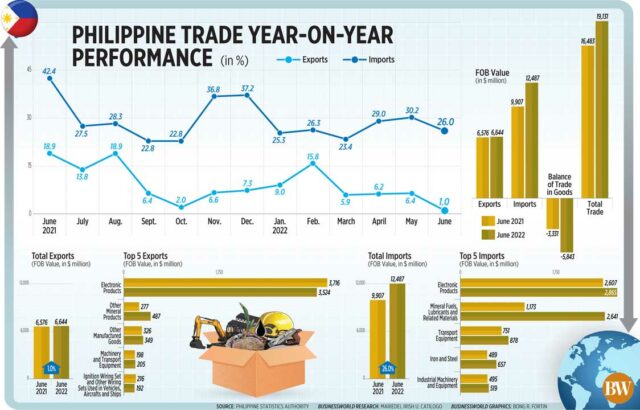
Philippine trade year-on-year performance

THE Philippines’ merchandise trade deficit hit another record in June as imports continued to outpace exports despite a year-on-year slowdown. Read the full story.

Philippine trade year-on-year performance

Shopee to remove products with high levels of mercury in listings 

SHOPEE.PH
SHOPEE.PH

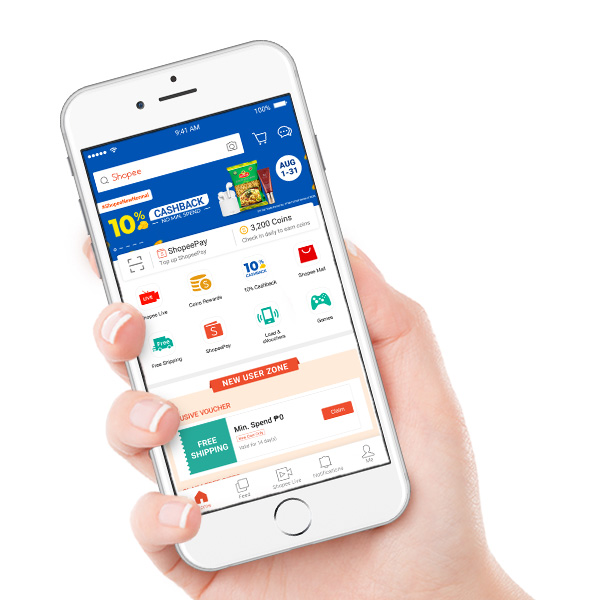
SHOPEE Philippines vowed to remove products that have been flagged by the government for containing high levels of mercury to make shopping safer for customers.

In an e-mailed statement to BusinessWorld, the e-commerce platform said that listings with regulatory violations will be removed from the website.

“We take preemptive measures to intercept offending products from being listed on the platform, and we cooperate with local governments and health authorities to take down listings of products that are flagged as containing high levels of mercury,” Shopee said.

“We require sellers to comply with both local regulations and our own prohibited items policies. Listings found to have regulatory violations or other violations of our terms of use will be removed,” it added.

Shopee issued the statement after environmental group EcoWaste Coalition claimed that it saw skin care products flagged or banned by the Food and Drug Administration (FDA) being sold by third-party sellers on e-commerce platforms Lazada and Shopee. The products were flagged for having mercury or lacking market authorization.

“In time for the 8.8 online shopping sale, our (group) carefully monitored these hugely popular online shopping sites from August 1 to 6. Much to our disappointment, hundreds of FDA-banned or flagged skin care products, especially skin lightening facial creams, are being advertised and sold as if these products are legal and safe,” EcoWaste Coalition National Coordinator Aileen Lucero said in a statement on Aug. 8.

EcoWaste Coalition said the limit for the composition of mercury as a heavy metal contaminant in cosmetics is one part per million (ppm), as provided under the ASEAN Cosmetic Directive.

“Among those found widely sold online are Goree Beauty Cream with Lycopene and Goree Day & Night Beauty Cream from Pakistan. To recall, the FDA through Advisory No. 2017-289 advised consumers not to purchase and use these products, which the agency tested and found to contain mercury in excess of 1 ppm,” the group said.

Meanwhile, Shopee said that it is taking a zero-tolerance approach to the sale of prohibited items on its platform, adding that it is committed to providing customers with a safe and reliable shopping experience.

“We would also like to encourage users to reach out to Shopee if they encounter similar listings on our platform. Users can reach out to us via the menu circle at the top right-hand corner of any product listing and click on the Report this Product option,” Shopee said. — Revin Mikhael D. Ochave 

Ending filariasis and neglected tropical diseases

Public Health Image Library/US Centers Disease for Control and Prevention 

Lymphatic filariasis (LF) is a neglected tropical disease (NTD) commonly known as elephantiasis. It is caused by parasitic worms and transmitted to humans by different types of mosquitoes. Infection is usually acquired in childhood causing hidden damage to the lymphatic system. The disease affects mostly the poorest municipalities in the country, the Department of Health (DoH) noted. 

The painful and profoundly disfiguring visible manifestations of the disease — lymphoedema, elephantiasis (gross enlargement and swelling of an area of the body because of the accumulation of fluid, often the arms and legs), and scrotal swelling — occur later in life and can lead to permanent disability according to the World Health Organization (WHO). On top of being physically disabled, patients suffer mental, social and financial losses contributing to stigma and poverty, it added. 

The US Centers for Disease Control and Prevention (CDC) said that filarial infection can also cause tropical pulmonary eosinophilia syndrome. Symptoms include cough, shortness of breath, and wheezing. 

Lymphatic filariasis can be eliminated by stopping the spread of infection through preventive chemotherapy with safe medicine combinations repeated annually. An essential, recommended package of care can alleviate suffering and prevent further disability among people living with disease caused by LF. 

The WHO said that an estimated 7 million Filipinos from six provinces are still at risk of LF. This is why the DoH National Filariasis Elimination Program (NFEP) is conducting annual mass drug administration in these remaining provinces while the 40 provinces under elimination status are under continuous monitoring. In spite of the coronavirus disease 2019 (COVID-19) pandemic, the DoH NFEP continued its mass drug administration campaign and delivery of routine services for LF. 

One billion people worldwide — or one person in seven — suffer from NTDs. These illnesses primarily affect poor people in tropical and subtropical areas of the world. Nine NTDs represent more than 90% of the global NTD burden. These are LF, human African trypanosomiasis, Chagas disease, soil-transmitted helminthiases (STH), onchocerciasis, schistosomiasis (SCH), leprosy, fascioliasis, and blinding trachoma, said the International Federation of Pharmaceutical Manufacturers and Associations (IFPMA). 

NTDs kill or disable millions of people every year. At such a level of impact, NTDs cannot be ignored. These illnesses affect both children and adults for life, often lead to stigmatization, and can prevent children from developing to their fullest potential. As long as NTDs continue to be endemic in poor countries, they will remain a contributor to a vicious cycle of poverty in these regions. 

The research-based pharmaceutical industry fights NTDs in several ways. Firstly, through cutting-edge research and development (R&D). IFPMA members are working on 82 projects either independently or in product development partnerships (PDPs). As a partner in public health, it partners to implement capacity-building efforts in developing countries. These efforts are complemented by medicine donation programs, several of which date back decades. 

In the Philippines, these efforts included the projected donation of 261 million albendazole tablets by GlaxoSmithKline (GSK) in support of its goal to help eliminate LF. GSK has also donated at least 8 billion tablets of albendazole to help eliminate this disabling disease globally. 

Since 2000, Novartis has also been providing multiple drug therapy (MDT) medications for free to leprosy patients through the WHO. The DoH and Novartis Foundation also signed a Memorandum of Understanding and formed a task force to help develop innovative approaches to leprosy control. One of its key outputs is the Leprosy Alert and Response Network System (LEARNS), the country’s first mobile phone-based leprosy teleconsultation system. 

Globally, a paper published on behalf of the Royal Society of Tropical Medicine and Hygiene identified the pharmaceutical industry’s major partnerships to NTD programs. 

MSD and Eisai, for example, have provided medicines for free to achieve elimination of LF worldwide. Pfizer, on the other hand, committed to the elimination of trachoma as a public health threat through medicine donation. Meanwhile, Sanofi donated medicines for the treatment of Human African trypanosomiasis (HAT), while Bayer provided medicines for HAT and Chagas disease also for free. Johnson & Johnson donated medicines for STH while Merck KGaA committed to the elimination of SCH. 

For more than three decades, the research-based pharmaceutical industry has demonstrated its resolve to collaborate in addressing the burden of NTDs in the Philippines and worldwide. 


Teodoro B. Padilla is the executive director of Pharmaceutical and Healthcare Association of the Philippines (PHAP), which represents the biopharmaceutical medicines and vaccines industry in the country. Its members are at the forefront of research and development efforts for COVID-19 and other diseases that affect Filipinos. 

ADVERTISEMENT
ADVERTISEMENT