Home Blog Page 6041

Art News: Philosophy of Bruce Lee; antiquities returned to Cambodia, Benin


A BRASS neck ornament. — HORNIMAN.AC.UK

SEATTLE/NEW YORK/LONDON — After a pandemic-induced delay, a permanent exhibition focused on Bruce Lee’s philosophy is opening at the Wing Luke Museum of the Asian Pacific American Experience in Seattle, with support of the Bruce Lee Foundation.

His daughter Shannon Lee, who oversees the foundation, told Reuters that the exhibit, “Be Water, My Friend,” was as an immersive extension of her research into her father’s life as a philosopher.

“I didn’t feel like everybody was getting the full picture of the human being. And it’s really part of my mission for people to understand actually what level of philosopher he really was,” Ms. Lee said of the project, which is housed in an unassuming historic building in the city’s Chinatown-International District.

She said she remembers little glimpses of life with her father before he died when she was four: him holding her on his lap and playing, visiting him on set at Golden Harvest Studios, and their home in Hong Kong.

“They’re very meaningful moments to me, but they’re just brief little touch points,” Ms. Lee recalls of those early memories. “But the unlimited part of my memory is that I have a real sense of him, him energetically, him, the way he made me feel, the way I felt in his presence. His energy, his love, his adoration, his sense of safety, being with him.”

Her father’s collection of 2,800 books —  spanning martial arts theory, filmmaking, and philosophy —  will remain at the museum permanently, along with other keepsakes in a separate exhibit.

Seattle is rich with the legacy of Bruce Lee: Ruby Chow restaurant where he once worked, the University of Washington, where he studied philosophy and met his wife, Linda Lee Cadwell, and ultimately where he was buried in 1973 at Lake View Cemetery in the Capitol Hill neighborhood.

LOOTED ANTIQUITIES RETURNED TO CAMBODIA
The United States will return to Cambodia 30 looted antiquities, including bronze and stone statues of Buddhist and Hindu deities carved more than 1,000 years ago, US officials said on Monday.

The Southeast Asian country’s archaeological sites — including Koh Ker, a capital of the ancient Khmer empire —  suffered widespread looting in civil conflicts between the 1960s and 1990s. Cambodia’s government has since sought to repatriate stolen antiquities sold on the international market.

Damian Williams, the top federal prosecutor in Manhattan, said the items being returned were sold to Western buyers by Douglas Latchford, a Bangkok dealer who created fake documents to conceal that the items had been looted and smuggled.

Mr. Williams said the antiquities, including a 10th century sandstone statue depicting the Hindu god of war Skanda riding on a peacock, were voluntarily relinquished by US museums and private collectors after his office filed civil forfeiture claims.

“These statues and artifacts … are of extraordinary cultural value to the Cambodian people,” Mr. Williams said at a ceremony in Manhattan announcing the return of the antiquities.

US prosecutors in 2019 charged Mr. Latchford, a dual citizen of Thailand and the United States, with wire fraud and smuggling over the alleged looting. He died in Thailand in 2020.

The antiquities will be displayed at the National Museum of Cambodia in Phnom Penh, Cambodia’s US ambassador Keo Chhea told Reuters at the ceremony.

In 2014, federal prosecutors returned the Duryodhana, a looted 10th-century sandstone sculpture, to Cambodia after settling with auction house Sotheby’s, Inc., which had acquired it. Last year, the Manhattan district attorney’s office returned 27 looted antiquities to Cambodia.

LONDON MUSEUM TO RETURN BENIN BRONZES
London’s Horniman Museum said on Sunday it would return 72 artefacts, including 12 brass plaques known as Benin Bronzes, looted from Benin City by British soldiers in 1897 to the Nigerian government.

Created from brass and bronze in the once mighty Kingdom of Benin in what is now southwestern Nigeria from at least the 16th century onwards, the Benin Bronzes are among Africa’s most culturally significant artefacts.

They were seized, along with thousands of other items, in a British military incursion, and ended up in museums in Europe and the United States.

African countries have battled for years to recover works pillaged by explorers and colonizers, while Western institutions are grappling with the cultural legacies of colonialism.

German authorities last month returned the first of more than 1,100 priceless sculptures to Nigeria, following examples set by Jesus College at Cambridge University and the Quai Branly museum in Paris last year.

The Horniman said Nigeria’s National Commission for Museums and Monuments (NCMM) had requested the return of the artefacts at the beginning of the year.

“The evidence is very clear that these objects were acquired through force, and external consultation supported our view that it is both moral and appropriate to return their ownership to Nigeria,” said Eve Salomon, chair of the trustees of the Horniman Museum and Gardens.

“The Horniman is pleased to be able to take this step and we look forward to working with the NCMM to secure longer term care for these precious artefacts.”

NCMM Director-General Abba Tijani welcomed the decision, saying he looked forward to discussing loan agreements and collaborations with the Horniman.

The returns are likely to increase pressure on the British Museum in London, which holds by far the largest and most significant collection of Benin Bronzes. — Reuters

AirAsia Philippines targets up to five more domestic destinations

NEWSROOM.AIRASIA.COM

LOW-COST carrier Philippines AirAsia, Inc. (AirAsia Philippines) said on Tuesday that it plans to expand its domestic network to three to five more destinations by the second quarter of 2023.

AirAsia Philippines also plans to add more international routes in other regions, as the airline reinforces its services for overseas Filipino workers, it said in a statement.

“We are set to achieve our domestic pre-pandemic capacity by end-year and our international by Q2 (second quarter) next year,” AirAsia Philippines Chief Executive Officer Ricardo P. Isla said.

“Consequently, this marks the onset of our full recovery, which will fuel our vigorous expansion plans in the coming years,” he added.

On Monday, the airline’s officials met with Transportation Secretary Jaime J. Bautista to reiterate their support of the Department of Transportation’s vision and plans for the country’s aviation industry.

“Secretary Bautista, cognizant of the rebound of travel, aims to further develop the aviation sector on four key fronts: safety, affordability, accessibility, and convenience — the same principles on which AirAsia has been built,” the low-cost carrier noted.

The administration plans to upgrade and build new international airports, President Ferdinand R. Marcos, Jr. said in his first address to the nation.

“We will first and foremost make basic developments such as road improvements for easier access to tourism spots. We will also upgrade our airports and create more international airports to help decongest the bottleneck at the Manila airport,” he said.

The government, he also said, will make it more convenient for travelers to go around the country, even to remote areas to help promote undiscovered tourist spots.

“This program will be led by the Department of Tourism together with the Department of Public Works and Highways,” Mr. Marcos said. — Arjay L. Balinbin

Arts & Culture (08/10/22)

Library collections of magazine covers on view

AN EXHIBITION of magazine covers and articles from the collections of the Lopez Museum and Library and the Ortigas Foundation Library will go on view on Aug. 13, 4:30 p.m. at the BenCab Museum in Baguio. The exhibit, “THIS WEEK, Manila Chronicle Sunday Magazine Covers and Content, 1954 – 1955,” will be on view until Sept. 13 at the Sepia Gallery of the BenCab Museum. For more information, contact the museum at 074-442-7165, or the Ortigas Foundation Library at 0977-728-5130.

Joseph the Dreamer adds more shows

MORE performances of Trumpets, Inc.’s popular musical Joseph the Dreamer have been added on Aug. 19 and 20, at the Globe Auditorium, Maybank Performing Arts Theater, BGC, Taguig City. The musical tells the Biblical story of Joseph, who brought the Jews into Egypt. Written by Freddie Santos, it is based on Cam Floria’s cantata entitled Dreamer: What Really Happened to Joseph. This production is a re-imagined version directed by Paolo Valenciano, featuring updated musical arrangements by Myke Salomon as well as an updated script. For tickets reservations, contact Jenny Bonto at 0915-969-2416. For more information, visit www.facebook.com/trumpetsinc.

Art Lounge presents ‘Pag-ibig at Lumbay’ 

ARTIST Janos Delacruz’s exhibit, “Pagibig at Lumbay (Love and Solitude), is a collection of works that tackle a journey of adoration and unrequited love between artist and his muse amidst the reality of a global pandemic. The paintings, sculptures, drawings, and fineprint are used as vehicles to capture the frantic search for both meaning and creation. “Pag-ibig at Lumbay runs until Aug. 16 at Art Lounge Manila at the Podium in Ortigas Center. For more information, visit the Art Lounge Manila website at www.artloungemanila.com. 

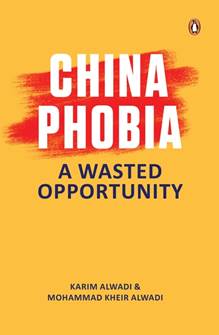
Penguin SEA releases ChinaPhobia: A Wasted Opportunity

PENGUIN Randomhouse SEA has launched Karim Alwadi and Mohammed Kheir Alwadi’s ChinaPhobia: A Wasted Opportunity, which is written in the form of a conversation between a father-a former journalist and senior diplomat-and his businessman son. Both academics, they present the facts combined with insights gained from years of observations of China. Without a timely response, they say inflating “China Phobia” could become the biggest threat to global peace, economic growth, and stability, poisoning international relations in the coming years. The authors also discuss the means of mitigation at home and abroad. For more information, visit https://penguin.sg/book/chinaphobia/.

Portrait exhibit honors BenCab

A TRIBUTE to BenCab from Artists and Photographers, an exhibit of portraits of National Artist Benedicto “BenCab” Cabrera from the 1960s to the present, will open on Aug. 13 at the BenCab Museum in Baguio. The Exhibition will be on view until Oct. 9. The portraits document various stages of a remarkable career that spans almost six decades in Manila, London and other parts of Europe, then back to Manila and Baguio, where he put down roots upon returning home in 1985. The photographic portraits were taken by Romy Vitug, Franco Patriarca, Dennis Calma, Neal Oshima, Wig Tysmans, Butch Baluyut, Patrick de Koenigswarter, and Mary Ellen Mark, also photographed BenCab on an assignment in Baguio in 1996. The paintings likewise run the gamut from Anita Magsaysay-Ho to Winner Jumalon and Nona Garcia of the present day.  De La Salle University Publishing House will soon issue BenCab@80: Homage to National Artist Benedicto Cabrera, a tribute to the national artist on his 80th birth year. Edited by David Bayot, the book will include portraits of the artist by photographers and painters, many of which are included in the exhibition.

Tetra Pak sees growth opportunities in sari-sari stores

PACKAGING firm Tetra Pak sees potential growth for its Philippine business in sari-sari or small family-owned stores as part of efforts to boost its footprint in the country.

“There’s a lot of potential to grow and expand the business [locally],” Tetra Pak Malaysia, Singapore, Philippines and Indonesia Marketing Director Jose Mari A. Jose said during a media round table in Taguig City on Tuesday.

He said that although the company has a presence in sari-sari stores, it remains “very limited.”

“One of the things we are really looking at is how we can make the product more available, more accessible to the sari-sari stores, to the lower social income classes,” he added.

According to Mr. Jose, the challenge is to find a certain price point in the sari-sari store level that would be profitable for manufacturers in terms of volume.

“The challenge for us is finding that product that we can sell at P10, P15, or P20 in the sari-sari stores. It is coming up with a product that is sustainable in terms of profitability, to be able to sell at these price points,” he said.

“Ultimately, it’s our customers (manufacturers) who will sell to the consumers, who will deliver the products and make [them] available in sari-sari stores,” he added.

Mr. Jose said a category that can help Tetra Pak’s goal of expanding its reach to sari-sari stores is milk-based items.

“I think a milk-based product would be very interesting because we offer nutrition. It could be a combination of a milk product in a smaller package format to be able to address the price. These ideas are something that we see in similar markets already, where there is a huge population in the lower socio-income classes,” Mr. Jose said.

Separately, Mr. Jose said that he expects Tetra Pak’s business to receive a boost once school starts on August 22, and resume face-to-face classes by November.

“Definitely, once the kids are back in school, we will see a pickup in terms of the business,” Mr. Jose said.

“A lot of [our] products are towards kids, and for school consumption. As we have yet to see kids being physically back to school, it’s a bit [challenging] this year on those products. On the other hand, the white milk one-liter packs continue to be a growing business for us, because people are still at home. So, it varies on the product,” he added.

Meanwhile, Tetra Pak said that it is actively supporting the circular economy in the country via collaborations with collection and recycling partners as well as consumers.

“Tetra Pak continues to partner with social enterprise organizations including Basic Environmental Systems & Technologies, Green Antz, and the Plastic Flamingo,” the company said.

“Through these partnerships, the number of recycling drop-off points all over Metro Manila has increased significantly. In partnership with Nestlé Philippines and DMCI Homes, Tetra Pak also launched a community awareness and carton collection campaign called ‘Project ReBins,’” it added. — Revin Mikhael D. Ochave

Monkeypox ‘unlikely’ to become pandemic but experts advise caution

UNSPLASH

By Brontë H. Lacsamana, Reporter 

BECAUSE monkeypox is not airborne and isn’t infectious before symptoms appear, it’s unlikely that it will become a global pandemic like coronavirus disease 2019 (COVID-19). Still, everyone must remain cautious and observe minimum public health standards, according to infectious disease specialists.  

“Patients with skin lesions can be isolated more effectively,” said Dr. Franco A. Felizarta, a US-based infectious disease expert, at a virtual talk organized by the University of the Philippines (UP) on Aug. 5. “Monkeypox’s infectious nature is from the time of symptoms until the scabs fall off.”  

Transmission occurs via close or direct skin contact, respiratory droplets from prolonged face-to-face interactions, and contaminated fomites. These are all avoidable with hand washing, mask wearing, distancing, and regular sanitization of surfaces, he added.  

Meanwhile, the Philippine Society for Microbiology and Infectious Disease released a monkeypox screening and detection briefer for healthcare providers.  

“It’s very important for our responses to be on an institutional, individual, and collective level because we don’t want to lose our patients. We want them to come to us and be diagnosed as efficiently as possible,” said Dr. Regina P. Berba, chair of the infection control unit at UP-Philippine General Hospital. 

The briefer details that a monkeypox isolation area has to be its own isolation space with health workers wearing personal protective equipment when handling suspected cases, similar to COVID-19.  

Suspected cases typically present with fever or headaches along with the characteristic rashes and lesions.  

While the Philippine Food and Drug Administration hasn’t approved treatments specifically for monkeypox, Dr. Felizarta said that there are available options, including the drug tecovirimat, which is traditionally used for smallpox.  

On Aug. 5, the Philippines’ first monkeypox case was deemed officially recovered after spending 21 days in isolation, according to a report by the Department of Health on Monday. However, the patient’s 10 close contacts are still in quarantine.  

Dr. Berba shared basic tips to take care of oneself in case of a monkeypox infection, which is usually mild: take care of the rashes, take care of your mental health, and avoid being in the same room as someone else.  

The specialists also warned the public not to attach any social stigma to the disease. “Infectious pathogens don’t care about race, gender, or sexual orientation,” Dr. Felizarta said. “Don’t underestimate monkeypox. Everybody can be infected with this virus.” 

Prosecutor clears Okada of false documents charges

THE Office of the City Prosecutor of Makati has dismissed falsification of public documents, use of falsified documents, and other deceit charges against Japanese billionaire Kazuo Okada filed by Tiger Resort Leisure and Entertainment, Inc. (TRLEI) board member Hajime Tokuda.

In a 12-page resolution, Assistant Makati City Prosecutor Kristina Carmela G. So-Reyes said the evidence submitted by Mr. Tokuda did not show probable cause to charge Mr. Okada, who was removed from TRLEI as a shareholder and company chairman due to alleged mismanagement.

“Based on the evidence on record, this Office finds no probable cause to charge the respondents (Mr. Okada’s group) with the crime of falsification of public document under Article 172 of the Revised Penal Code,” she added. 

TRLEI is the company that operates the casino resort Okada Manila.

Mr. Tokuda alleged in his complaint that Mr. Okada and his group were deceitful when they informed BDO Unibank, Inc. that there were newly appointed signatories to the TRLEI bank accounts.

BDO then froze all bank accounts owned and maintained by TRLEI due to the controversy.

The camp of Mr. Okada issued a statement last month citing a Philippine Supreme Court ruling ordering a status quo ante order (SQAO) identifying him as the lone representative of Tiger Resort Asia Ltd. (TRAL), TRLEI’s parent company, which is registered in Hong Kong.

The group argued that the SQAO allowed Mr. Okada to fill vacancies on the board, and his actions were done in good faith to ensure that the casino resort was effectively managed.

In a statement, Okada Manila said the resolution issued by the Makati City prosecutor “is a testament that the Okada Group has done nothing illegal with respect to its recovery of Okada Manila.”

In the same statement, Mr. Okada said the decision showed that “the Justice system in the Philippines works and that justice will be served to those who always work within the bounds of the country’s legal system.”

TRLEI’s Legal Counsel Estrella C. Elamparo did not immediately respond when sought for comment. — John Victor D. Ordoñez

Cinemalaya competition films on view at SM and Ayala Malls cinemas

THE CULTURAL Center of the Philippines (CCP) and Cinemalaya Foundation have partnered with Ayala Malls Cinemas and SM Cinema to present special screenings of the Cinemalaya 18 competition films from Aug. 10 to 16.

The participating Ayala Malls Cinemas are those in Glorietta, TriNoma, Manila Bay, Capitol Central Bacolod, and CDO Centrio. The theater chain under SM Cinema includes SM Megamall, SM City Baguio, SM City Clark, SM City Dasmariñas, and SM City Legazpi.

With this year’s theme “Breaking Through The Noise,” the 2022 Cinemalaya offers a diverse lineup in both the full-length and short film categories.

The 11 full-length films are: Angkas (The Backride) by Rainerio C. Yamson II; Bakit ‘Di Mo Sabihin? (Tell Her) by Real S. Florido; Batsoy by Ronald Espinosa Batallones; Blue Room by Ma-an L. Asuncion-Dagñalan; Bula sa Langit (Trigger) by Sheenly Gener; Ginhawa (Solace) by Christian Paolo Lat; Kaluskos (Rustles) by Roman S. Perez, Jr.; Kargo (Cargo) by TM Malones; Retirada (The Retiree) by Milo Alto Paz and Cynthia Cruz-Paz; The Baseball Player by Carlo Obispo; and 12 Weeks by Anna Isabelle Matutina.

Meanwhile, the 12 short films are split into two sets. Shorts A consists of six films: Roundtrip to Happiness by Claudia Fernando; Mata Kang Busay (Vision of The Falls) by Niño B. Maldecir, Ampangabagat Nin Talakba Ha Likol (It’s Raining Frogs Outside) by Maria Estela Paiso, Kwits (Quits) by Raz de la Torre, Mga Handum Nga Nasulat sa Baras (The Dreams That Are Written On The Sand) by Arlie Sweet Sumagsay and Richard Jeroui Salvadico, and City of Flowers by Xeph Suarez.

Shorts B, on the other hand, is composed of: Si Oddie by Maria Kydlee Torato, Duwa-Duwa (The Play) by Nena Jane Achacoso, Distance by Dexter Paul De Jesus, Dikit by Gabriela Serrano, See You, George! by Mark Moneda, and Black Rainbow by Zig Dulay.

Screenings on Aug. 10 will be followed by talkbacks for the films Ginhawa and Kargo at SM Megamall and Glorietta, respectively.  The talkback for Retirada is set to take place at TriNoma on Aug. 11.  The Cinemalaya Talkback Sessions are designed for audience members to interact with the filmmakers, cast, creative and production teams face-to-face by giving their feedback on the film or asking questions about it.

For more information, visit the CCP (www.culturalcenter.gov.ph) and Cinemalaya (https://cinemalaya.org/) websites.  For ticket inquiries, call the CCP Box Office at 8832-3704 or SM tickets 8470-2222.

AstraZeneca nixes variant-specific COVID vaccines, eyes annual shots 

There is little value in developing vaccines that target specific coronavirus variants, according to Bruce Mungall, Asia area medical director of vaccines and infectious diseases at AstraZeneca, a multinational pharmaceutical company.  

“In terms of whether there’s value in chasing a new updated vaccine for a specific variant, I think there’s very limited incremental value in doing that,” he said. “I’m relatively confident that the current vaccines will continue to provide very high levels of protection against serious outcomes.” 

Unlike Pfizer and BioNTech, which announced this June that they were evaluating Omicron-adapted COVID-19 vaccine candidates, AstraZeneca hopes to move to “more sustainable approaches” such as annual shots, Mr. Mungall said at a roundtable discussion on Aug. 5.  

He pointed out that on the logistics side, manufacturing millions of variant-specific doses is a “very difficult and time-consuming process,” in light of how quickly the Omicron coronavirus subvariant spreads.   

“To do that fast enough to react to a new variant is very challenging and expensive,” he said. “Every time a company gives you a new vaccine, I can guarantee you: it’s not going to be cheaper than the previous [one]. You’re going to pay an incremental cost every time there’s a new vaccine.”  

Mr. Mungall said that current vaccines are effective in preventing hospitalization and death.  

On Monday, the Department of Health (DoH) reported that there were 27,331 additional COVID-19 cases from Aug. 1 to Aug. 7, a 13% increase from a week before.  

A 2022 study in Thailand that assessed the effectiveness of a mixed (heterologous) four-dose COVID-19 vaccine schedule found that a fourth dose of any of the COVID-19 vaccines studied, including AstraZeneca’s, were 75% effective in preventing Omicron infection.  

The vaccine effectiveness of the AstraZeneca vaccine (73%) was similar to that of mRNA vaccines (71%).  

“In Thailand, they use different vaccines for their third and fourth doses,” Mr. Mungall said. “The broader message is that any vaccine you have available for boosters is good for you.”  

Across the age groups studied, data showed that a three-dose mixed schedule provided 98% protection against severe infection or COVID-19-related death.  

A single death in a person with comorbidities was observed following a fourth dose booster, according to a preprint published June 28 in Research Square.  

Meanwhile, researchers at Airfinity, a London-based predictive health analytics firm, took the Imperial College London’s research on deaths averted per country, and examined which vaccines were administered in each of these countries.  

Using this methodology, it reported in July that AstraZeneca and Pfizer/BioNTech saved 6.3 million and 5.9 million lives, respectively. Sinovac, furthermore, saved 2 million lives; Moderna, 1.7 million lives.  

More than 71 million individuals, or 92.06% of the target population in the Philippines, have been vaccinated against COVID-19 as of Aug. 7. Over 16 million individuals have had their booster shots.  

In an Omicron world, a third dose is probably necessary, Mr. Mungall said.  

“A booster dose will probably be necessary — either a third or a fourth — depending on your risk status,” he said. “There is a very similar effectiveness of all vaccines as booster doses.” — Patricia B. Mirasol 

Director Lars von Trier diagnosed with Parkinson’s disease

COPENHAGEN — Danish director Lars von Trier, 66, has been diagnosed with Parkinson’s disease and will do limited promotion for his upcoming supernatural TV series Kingdom Exodus, his production company said on Monday.

Mr. Von Trier, often referred to as the “enfant terrible” of contemporary cinema, was in “good spirits” and is being treated for his symptoms, Zentropa said in a statement.

The Kingdom Exodus is the third and final installment in Mr. Von Trier’s 1990s cult TV show The Kingdom. The series premieres at the Venice Film Festival later this month as a five-hour film. It will be launched in five episodes on Viaplay’s platform and Danish broadcaster DR later this year.

“The illness means that Lars will only take part in interviews to a limited extent until the premiere later this year,” Zentropa said.

In 2011, Mr. Von Trier was banned from the Cannes Film Festival after he joked he was a Nazi at a news conference to promote his film Melancholia, an unusual disaster movie starring Kirsten Dunst and Charlotte Gainsbourg.

His other works include sexually graphic films such as Antichrist and Nymphomaniac, and the harrowing melodrama Dancer in the Dark, starring Icelandic singer Bjork and Catherine Deneuve, for which he won the Golden Palm for best movie at Cannes in 2000. —  Reuters

Monde Nissin signs up for EDC ‘green’ power

CONSUMER goods maker Monde Nissin Corp. and other companies in the group have signed up for nearly 16 megawatts (MW) of renewable energy from Energy Development Corp. (EDC).

The group, composed of Monde Nissin, Monde M.Y. San Corp., and Sarimonde Foods Corp., started last month its power supply agreement with the First Gen Corp. subsidiary.

In a press release, EDC said the deal will power the food brands’ nine facilities in the Philippines, a move that is expected to cut their operations’ carbon footprint as part of their sustainability commitment.

Five facilities started running on ‘green’ power last month, while two others will start getting their supply in December this year and two more next year.

“The message is clear and consistent. We should embrace sustainability and look into more ways of incorporating sustainable practices in our businesses. What Monde Nissin and First Gen made possible is just a fraction of what the world needs. Let us hope that more companies move in this direction for the sake of the planet and future generations,” said Monde Nissin Chief Sustainability Officer Marivic N. Cajucom-Uy.

Monde Nissin’s five-year power supply comes from EDC’s Unified Leyte geothermal power plant complex, one of the company’s largest facilities.

EDC said geothermal energy is considered the “Holy Grail” of renewable energy (RE) technologies as it can provide uninterrupted, year-round baseload power, rain or shine — or what it calls Geo 24/7.

Carlos Lorenzo L. Vega, vice-president at First Gen and head of its power marketing, trading and economics, described the partnership as “heartening” for the commitment to addressing society’s present needs “without harming the ability of future generations to meet theirs.”

“And our new partners do this by making a conscious decision of creating a more positive impact on its consumers and on the environment through shifting to RE,” he added.

EDC has more than 1,480-MW installed energy capacity, which it said accounts for 20% of the country’s total installed RE capacity. It added that its 1,185.40-MW geothermal portfolio accounts for 62% of the country’s total installed geothermal capacity.

More than half of human infectious diseases can be worsened by climate change

PHILIPPINE STAR/ MICHAEL VARCAS

By Tristan McKenzie, Camilo Mora,
and Hannah von Hammerstein 

Climate change can exacerbate a full 58% of the infectious diseases that humans come in contact with worldwide, from common waterborne viruses to deadly diseases like plague, our new research shows. 

Our team of environment and health scientists reviewed decades of scientific papers on all known pathogenic disease pathogens to create a map of the human risks aggravated by climate-related hazards. 

The numbers were jarring. Of 375 human diseases, we found that 218 of them, well over half, can be affected by climate change. 

Flooding, for example, can spread hepatitis. Rising temperatures can expand the life of mosquitoes carrying malaria. Droughts can bring rodents infected with hantavirus into communities as they search for food. 

With climate change influencing more than 1,000 transmission pathways like those and climate hazards increasingly globally, we concluded that expecting societies to successfully adapt to all of them isn’t a realistic option. The world will need to reduce the greenhouse gas emissions that are driving climate change to reduce these risks. 

To be able to prevent global health crises, humanity needs a comprehensive understanding of the pathways and the magnitude with which climate change might affect pathogenic diseases. 

We focused on 10 climate-related hazards linked to rising greenhouse gas emissions: atmospheric warming, heat waves, drought, wildfires, heavy precipitation, flooding, storms, sea-level rise, ocean warming and land cover change. Then we looked for studies discussing specific and quantifiable observations of human disease occurrences linked to those hazards. 

In total, we reviewed over 77,000 scientific papers. Of those, 830 papers had a climatic hazard affecting a specific disease in an explicit place and/or time, allowing us to create a database of climatic hazards, transmission pathways, pathogens and diseases. An interactive map of every pathway between hazard and pathogen is available online. 

The largest number of diseases aggravated by climate change involved vector-borne transmission, such as those spread by mosquitoes, bats or rodents. Looking at the type of climate hazard, the majority were associated with atmospheric warming (160 diseases), heavy precipitation (122) and flooding (121). 

We found four key ways climatic hazards interact with pathogens and humans: 

1) Climate-related hazards bring pathogens closer to people. 

In some cases, climate-related hazards are shifting the ranges of animals and organisms that can act as vectors for dangerous pathogenic diseases. 

For example, warming or changes in precipitation patterns can alter the distribution of mosquitoes, which are vectors of numerous human pathogenic diseases. In recent decades, geographic changes in outbreaks of mosquito-borne diseases such as malaria and dengue have been linked to these climatic hazards. 

2) Climate-related hazards bring people closer to pathogens. 

Climate disasters can also alter human behavior patterns in ways that increase their chances of being exposed to pathogens. For example, during heat waves, people often spend more time in water, which can lead to an increase in waterborne disease outbreaks. 

Notably, Vibrio-associated infections increased substantially in Sweden and Finland following a heat wave in northern Scandinavia in 2014. 

3) Climate-related hazards enhance pathogens. 

In some cases, climate-related hazards have led to either environmental conditions that can increase opportunities for pathogens to interact with vectors or increase the ability of pathogens to cause severe illness in humans. 

For example, standing water left by heavy precipitation and flooding can provide breeding grounds for mosquitoes, leading to increased transmission of diseases such as yellow fever, dengue, malaria, West Nile fever and leishmaniasis. 

Studies have shown that rising temperatures may also help viruses become more resistant to heat, resulting in increased disease severity as pathogens become better able to adapt to fever in the human body. 

For instance, studies have suggested that rising global temperatures are leading to increased heat tolerance of fungal pathogens. The sudden appearance on multiple continents of treatment-resistant human infections of Candida auris, a fungus that was previously nonpathogenic to humans, has been associated with increasing global temperatures.  Similarly, fungi in urban environments have been shown to be more heat tolerant than those in rural areas, which tend to be cooler. 

4) Climate-related hazards weaken the body’s ability to cope with pathogens. 

Climate-related hazards can affect the human body’s ability to cope with pathogens in two key ways. They can force people into hazardous conditions, such as when disaster damage leads to people living in crowded conditions that might lack good sanitation or increase their exposure to pathogens. 

Hazards can also reduce the body’s capacity to fight off pathogens, through malnutrition, for example. Living through climatic hazards may also induce increased cortisol production from stress, leading to a reduction in the human body’s immune response.  

Climate change presents a significant threat to human lives, health and socioeconomic well-being. Our map shows just how extensive that threat can be. In our view, to dial back the risk, humanity will have to put the brakes on the human-caused greenhouse gas emissions fueling global warming.   

Tristan McKenzie is a postdoctoral researcher in Marine Science at the University of Gothenburg. 

Camilo Mora is an associate professor of biology at the University of Hawaii. 

Hannah von Hammerstein is a Ph.D. candidate in geography and environmental science at the University of Hawaii. 


This article is republished from The Conversation under a Creative Commons license. 

Treasury fully awards reissued bonds

BW FILE PHOTO

THE GOVERNMENT fully awarded the reissued 10-year Treasury bonds (T-bonds) it auctioned off on Tuesday at a lower average rate amid robust demand, which led it to open its tap facility.

The Bureau of the Treasury (BTr) raised P35 billion as planned from its offer of reissued 10-year securities that have a remaining life of six years and five months on Tuesday. Total bids reached P105.72 billion or more than thrice the amount on the auction block.

Rates awarded on Tuesday ranged from 5.7% to 5.874%, bringing the average yield for the bonds on offer to 5.791%, lower by 108.4 basis points (bps) than the 6.875% coupon fetched for the series when it was first offered on Jan. 8, 2019.

The average rate was also 6.2 bps below the 5.853% yield on the seven-year bonds, the closest tenor to the remaining life of the papers on offer,  but 1.3 bps above the 5.778% quoted for the issue at the secondary market before Tuesday’s auction, based on PHP Bloomberg Valuation Reference Rates data provided by the BTr.

To accommodate the strong demand seen for Tuesday’s offering, the Treasury opened its tap facility to raise P10 billion more via the bonds for a yield-to-maturity of 5.791%.

National Treasurer Rosalia V. de Leon said in a Viber message to reporters that it was “another well received auction” as bids reached over thrice as much as the offering and with rates seen lower than secondary market levels.

The first trader said that it was “another strong auction, possibly supported by weaker-than-expected GDP (gross domestic product) numbers.”

“The demand was quite similar to the three prior auctions, which also shows that end-users are still extending duration for yield pickup,” the first trader added.

The second trader said the auction result was in line with expectations.

“We know it’s going to be a robust auction given the market’s preference for belly to long-end bonds due to their relatively attractive yields offered,” the second trader said.

Preliminary data released by the Philippine Statistics Authority on Tuesday showed GDP grew by 7.4% year on year in the April to June period, easing from the downward-revised 8.2% reading for the first quarter and the 12.1% expansion in the same period in 2021.

This brought the first semester average to 7.8%, faster than the 3.9% growth seen in the same period last year and well above the government’s 6.5-7.5% target for the year.

Meanwhile, investors have shown strong demand for longer tenors, with the Treasury making full awards of all its T-bond offerings since last month as the market is looking for higher yields amid expectations of higher interest rates due to sustained inflationary pressures.

Headline inflation quickened to 6.4% year on year in July, its fastest pace since October 2018, mainly due to soaring prices of food and higher transport costs.

For the first seven months, inflation averaged 4.7%, faster than the 4% seen in the same period a year ago and the central bank’s 5% inflation forecast, but higher than its 2-4% target for the year.

BSP Governor Felipe M. Medalla last week said the central bank may hike rates by 50 bps at the Monetary Board’s Aug. 18 meeting after headline inflation accelerated further in July.

The Monetary Board last month raised the benchmark interest rates by 75 bps in an off-cycle move, as it sought to contain inflationary pressures. It has raised rates by 125 bps so far since May.

The BTr wants to raise P215 billion from the domestic market this month, or P75 billion through Treasury bills and P140 billion via T-bonds.

The government borrows from local and external sources to help fund a budget deficit capped at 7.6% of GDP this year. — Diego Gabriel C. Robles