Home Blog Page 603

Farm extension services need 20,000 more agriculturists — DA

ATI2.DA.GOV.PH

By Vonn Andrei E. Villamiel

THE Department of Agriculture (DA) said it needs around 20,000 more agriculturists to adequately staff its extension system and improve support for farmers.

The DA released its assessment after the Professional Regulation Commission announced the results of the November Agriculturists Licensure Examination, which 6,678 passed out of an examinee pool of 9,742.

Agriculture Secretary Francisco P. Tiu Laurel, Jr. said the ideal ratio is one agriculturist for every 25 to 50 hectares of farmland.

Mr. Laurel said the DA is working with the Commission on Higher Education to align agriculture-related curricula with industry demand and ensure sufficient graduate output.

He added that agriculture programs in state universities and colleges should be reinstated, along with veterinary courses to support the newly signed Animal Industry Act.

“Once we have extension workers on the ground, our information will be real-time and more accurate, with the Philippine Statistics Authority (PSA) mainly validating collected data,” Mr. Laurel said.

He said a more robust extension workforce would improve feedback on field conditions, including delays in the distribution of seed and fertilizer and the monitoring of palay (unmilled rice) prices.

Mr. Laurel added that proper compensation and strong support from the administration could draw more licensed professionals to government service.

“Field work is very attractive, especially if you’re paid well and properly, helping our farmers and fisherfolk,” he said.

Under Republic Act No. 12215, or the Philippine Agriculturists Act of 2025, the minimum base pay of registered agriculturists working in the National Government may not fall below Salary Grade 13 or P34,421 per month, based on the latest salary scheme.

Local government units are also encouraged under the law to bump up the salary grade of their agriculturists, consistent with the Local Government Code and their respective financial capacity.

Agricultural workers’ share of the workforce continued to contract in 2025 as climate-related disruptions and persistent productivity challenges pushed more rural workers into the services sector, the Philippine Institute for Development Studies (PIDS) said.

In a report issued on Wednesday, the government think tank said agricultural employment fell by about 10% between 2023 and 2024. The industry’s share of total employment dropped to 18.2% in 2024 from 20.2% in 2023.

PIDS said in early 2025, the share of agricultural workers further dipped to a record low of 17.6%, equivalent to 9.9 million workers. This represents a sustained drop from around a 37% share of total employment two decades ago, according to the International Labour Organization.

PIDS reported that climate events, including typhoons and El Niño-driven drought, have disrupted rural livelihoods, accelerating the displacement of workers into informal service and construction jobs in urban and peri-urban areas.

The PIDS report also cited limited mechanization and insufficient extension services, which continue to weaken agriculture’s capacity to retain its workforce.

“The erosion of agricultural employment poses a long-term risk to food security, rural incomes, and inclusive growth, especially if not matched by productivity-enhancing interventions,” PIDS said.

PIDS said that while the services sector absorbed agricultural workers, many of the jobs gained were informal and low-value.

“The continuing decline of agricultural employment, without a commensurate rise in high-productivity industry jobs, suggests a risk of premature de-industrialization, where labor shifts to low-value services rather than high-value manufacturing,” it said.

Asked to comment, IBON Foundation Executive Director Jose Enrique A. Africa said the contraction in the share of agricultural workers “should be a major cause for concern.”

“The shift isn’t driven by productivity gains in agriculture and abundant affordable food but by climate shocks and the lack of productive investment. Agricultural workers are just making the rational choice to leave the low earnings from informal, low-value and precarious rural work,” Mr. Africa said.

He added that without genuine government action, rural impoverishment and food insecurity will worsen even as headline gross domestic product grows.

To address the contraction in agricultural workers, PIDS said agricultural productivity and infrastructure should be boosted.

“Addressing these imbalances will require targeted sectoral strategies, including enhancing rural and agri-business productivity through mechanization, climate-resilient infrastructure, and digital agriculture,” it said.

Mr. Africa concurred, saying: “A proactive response would be serious about completing free land distribution, raising farm productivity with public investment in small-scale irrigation and post-harvest facilities, more extensive agricultural research and extension services, and protecting from cheap subsidized imports,” he said.

ADB, WB to jointly support 20 projects across region

The World Bank logo is seen at the 2023 Spring Meetings of the World Bank Group and the International Monetary Fund in Washington, US, April 13, 2023. — REUTERS/ELIZABETH FRANTZ

THE Asian Development Bank (ADB) and the World Bank (WB) will jointly support more than 20 projects in partner countries, with the first two projects to benefit Tonga and Fiji.

The joint Full Mutual Reliance Framework (FMRF) as yet has no confirmed projects for the Philippines, they said in a briefing.

“There are these two projects (for Tonga and Fiji) now but we’ve got 20 more in the pipeline across infrastructure, energy, agribusiness, healthcare and social protection, and most of our clients are very interested in this which means it tells you why it’s worth doing,” World Bank Group President Ajay Bang said in a briefing at ADB Headquarters on Thursday.

The FMRF seeks to streamline processes and reduce duplication between the two banks, which will speed up project implementation and lower transaction costs.

It will allow countries to work with a single lead lender, either the ADB or the World Bank, guiding all aspects of project design, preparation, supervision, and evaluation.

“Our goal is to make development finance simpler, faster, and more effective,” ADB President Masato Kanda said.

“With this approach, we respond to client needs to solve complex challenges together, from disaster resilience to better connectivity, while supporting their long-term vision for prosperity.”

The ADB said the gross domestic product growth will not be a factor in selecting the countries joining the framework.

The first two projects were Fiji’s $236.5-million Pacific Healthy Islands Transformation project, which aims to tackle non-communicable diseases, and the $120-million Sustainable Economic Corridors and Urban Resilience project in Tonga. — Aubrey Rose A. Inosante

Rice farmers expect irrigation delays to be costly

UPRIIS.NIA.GOV

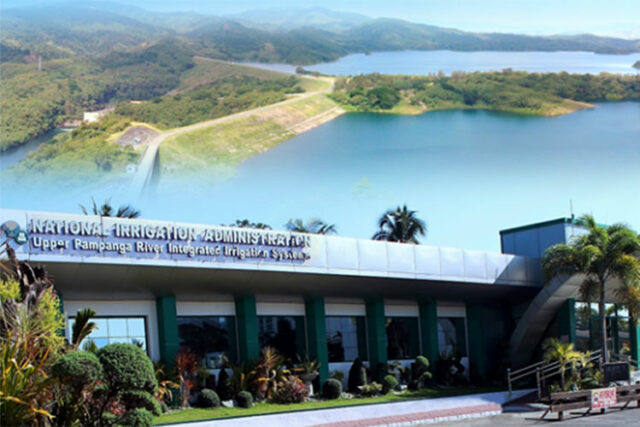
A DECISION by the National Irrigation Administration’s Upper Pampanga River Integrated Irrigation System (UPRIIS) to postpone the release of irrigation water to March 2026 threatens the livelihoods of thousands of rice growers in Nueva Ecija and Tarlac, farmers said.

In a statement on Thursday, the Kilusang Magbubukid ng Pilipinas (KMP) said the delay will affect nearly 40,000 hectares of rice land and about 25,000 farmers, who have seedlings ready for the December 2025 cropping season.

UPRIIS has said that irrigation water distribution will be suspended to allow repairs on the Talavera River Phase 1 siphon barrel, part of the CASECNAN Super Diversion Canal.

The canal supplies water to farms in San Jose City, Science City of Muñoz, Guimba, Rizal, Llanera, Lucban, Talugtog, Cuyapo, and Nampicuan, Nueva Ecija, as well as Victoria, Anao and Ramos, Tarlac.

The affected cities and municipalities are among the top producing areas in the region.

The KMP said the advisory, issued on Nov. 26, came too late, noting farmers had already spent on seed, inputs and land preparation.

The late notice will force farmers to absorb losses from the canceled cropping, the KMP said.

In the statement, KMP Chairman Danilo Ramos called the delay “gross incompetence disguised as rehabilitation,” saying structural issues in the siphon barrel had been observed as early as 2022.

“UPRIIS must provide immediate compensation, seed support, and emergency water access. And most importantly, the repairs must be fast-tracked to allow farmers to salvage the second cropping of palay (unmilled rice),” Mr. Ramos said.

He also urged the agency to provide compensation, seed support, and emergency water access while repairs are underway.

Carling Castro of the Ugnayan Para sa Libreng Patubig at Serbisyo was quoted in a statement as saying the siphon’s deterioration stemmed from incomplete protective works.

He said UPRIIS failed to finish installing gabion structures meant to protect the barrel from erosion.

“If only the UPRIIS completed the installation of gabion along the siphon barrel, the structure would not have weakened,” Ms. Castro said.

The KMP said farmers in affected areas are seeking immediate assistance for alternative crops, fuel subsidies for pump irrigation, and regular updates on the repair timeline. 

The KMP said it will also ask Congress to investigate the delayed repairs and the impact of the irrigation suspension on rice production in the affected provinces. — Vonn Andrei E. Villamiel

Transport dep’t to set up services at Clark airport targeting manufacturers

CLARK INTERNATIONAL AIRPORT

THE Department of Transportation (DoTr) said it signed an agreement with the Bases Conversion and Development Authority (BCDA) to enhance services for Industrial, Manufacturing, Transport (IMT) users of Clark International Airport.

“This will foster market access and opportunities in Central Luzon. But more than anything, there will be new economic activities,” Transportation Acting Secretary Giovanni Z. Lopez said in a statement on Thursday.

The Department of Transportation (DoTr) said the agreement will advance the air transport and logistics services industry.

Mr. Lopez said the agreement is critical for Central Luzon’s aviation and aerospace industries.

“President Ferdinand R. Marcos, Jr. directed the DoTr and BCDA to explore ways to foster market access opportunities and facilitate efficient passenger movement at Clark,” the DoTr said.

“This will bring in more manufacturing activity and more transport enterprises linked to Clark International Airport. It also means a bigger economic contribution from Clark. Our role at BCDA is to make sure the right infrastructure is in place so the airport can expand, and logistics and transport firms can operate here with ease,” BCDA President and Chief Executive Officer Joshua M. Bingcang said.

The agreement was signed by the BCDA, the DoTr and Clark International Airport operator LIPAD Corp.

The partners will explore the feasibility of implementing incentive programs to attract and establish IMT businesses and related services. — Ashley Erika O. Jose

Laguna data center expected to boost cloud, AI investments

AYALALAND.COM

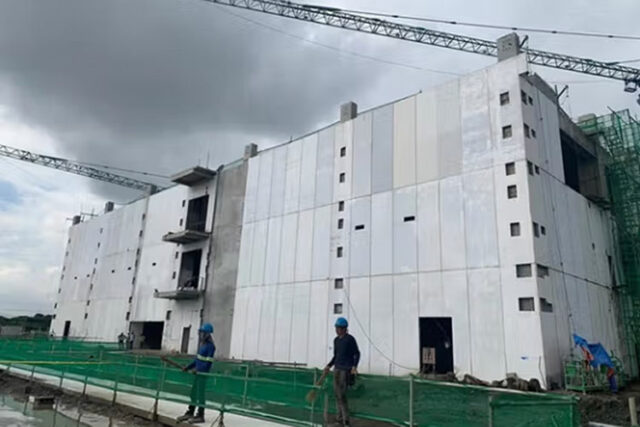
THE Department of Trade and Industry (DTI) said the opening in Laguna of the ML1 Data Center will help service the country’s growing digital demand.

“This is essential for… improving service reliability, and fostering an ecosystem that encourages high-value investments,” the DTI said in a statement on Thursday.

Developed by a FLOW Digital Infrastructure and AyalaLand Logistics Holdings Corp. joint venture, the project is expected to enhance the Philippines’ capacity to support cloud services, artificial intelligence (AI), enterprise digitalization, and other data-driven technologies.

“We welcome the first phase of this modern facility, which begins with six megawatts of information technology load and can expand to 36 megawatts,” Trade Secretary Ma. Cristina A. Roque said.

“This data center strengthens the digital backbone that supports industries, businesses, and communities in Calabarzon,” she added.

The project was approved by the Board of Investments (BoI) Management Committee on Nov. 18 for registration and grant of incentives.

“The BoI recognizes the critical role of data centers in strengthening the nation’s digital infrastructure, and facilities like ML1 provide the foundation needed for innovation-driven industries to succeed,” the BoI said.

BoI Infrastructure and Services Industries Service Director Mary Anne E. Raganit said the project signals the country’s readiness “to compete in an increasingly digital global economy.”

Upon full buildout, the data center will have 36 megawatts of capacity to service cloud providers, technology firms, financial institutions, and enterprises transitioning to digital-first operations. — Justine Irish D. Tabile

SEC’s Lim sees stable regulation as key to closing investment gap

FRANCISCO ED. LIM — THE SECURITIES AND EXCHANGE COMMISSION/BW FILE PHOTO

SECURITIES and Exchange Commission (SEC) Chairman Francisco Ed. Lim said he considers stable regulation, continuity of operations, and upholding ESG (environmental, social, and governance) standards to hold the key to closing the Philippines’ investment deficit relative to its ASEAN (Association of Southeast Asian Nations) neighbors.

Speaking at the European Chamber of Commerce of the Philippines’ Philippine Economic Outlook conference on Thursday, Mr. Lim said foreign investors are no longer just chasing lower costs.

As such, the Philippines could face serious problems in 2026 if it fails to rebuild investor confidence in the market, he said.

“Integrity for us is the invisible currency of investor confidence. Without it, businesses will not commit capital, and markets simply will not grow,” Mr. Lim said during a fireside chat at the conference.

He said rebuilding integrity and allowing the market to grow is possible with strong political will and consistent effort from regulators.

Mr. Lim touted SEC programs like the proposed amendments to real estate investment trust (REIT) rules as helping make the business environment more open and predictable.

Ease of doing business is another sticking point, he said. “The cost of doing business is quite high in the Philippines. I’m not only referring to the formal cost, but also to the legal cost of doing business,” he said.

He called for a rethink of regulatory approaches to favor openness and adaptability. “We should liberalize our rules. Because it’s like a race where the competitors are only 10 kilometers ahead of us… And if we keep doing the same thing every day, we’ll never pass them,” he said.

Mr. Lim backed the cautious introduction of artificial intelligence (AI) tools in regulatory processes.

“I prefer an AI system that’s home-generated… it’s a reality that we have to wrestle with. I’ve been telling our people, don’t be afraid because we can do it for you. There are things that AI can easily do as long as you have the right people.”

The SEC intends to employ AI to handle the large volume of documents and enforcement tasks that can’t be managed effectively by traditional means. — Alexandria Grace C. Magno

Shrinking export industry points to need for more gov’t support, Philexport says

THE declining number of exporters reflects the need for more financial and technical support, the Philippine Exporters Confederation, Inc. (Philexport) said.

“We have always been praying for the government to look at export as an investment, not as an expense,” Philexport President Sergio R. Ortiz-Luis, Jr. said on the sidelines of the National Export Congress on Thursday.

“The Department of Trade and Industry (DTI), which is supposed to be in charge of export, wala halos budget (has hardly any funding) compared to other departments. And compared to our neighbors, pathetic,” he added.

In its midterm report, the DTI Export Marketing Bureau (EMB) tallied about 4,000 export enterprises.

“That is actually nearly half of what it was more than a decade ago,” said EMB Director Bianca Pearl R. Sykimte said.

“It could be that they do not want to do direct exporting anymore. We have seen a growing number of consolidators,” she said.

“Exporting can be a daunting process, so for a smaller company, it would make sense, especially for those that have smaller starting capital, to work with a consolidator,” she added.

She said that the declining number might also reflect enterprises’ shift to a domestic-market orientation.

She said that the department will be implementing firm-level support initiatives.

“We have programs with other governments that are focused on firm development, and we are also working with the World Bank,” she said.

The World Bank is funding a program aimed at helping small and medium-sized enterprises (SMEs) expand their reach in global markets.

In a project briefer, the World Bank said that the Department of Finance is seeking funding for the Philippines COMPETE Plus for SMEs project.

It is expected to cost $373 million, with the government providing $23 million. It is expected to be approved on Feb. 25, 2027. — Justine Irish D. Tabile

ICI remains credible but stronger support needed against corruption

PEDESTRIANS walk on a makeshift pathway along P. Burgos Street in Manila on Sept. 6. — PHILIPPINE STAR/NOEL B. PABALATE

By Erika Mae P. Sinaking and Chloe Mari A. Hufana, Reporter

THE RESIGNATION of former Public Works Secretary Rogelio “Babes” L. Singson from the Independent Commission for Infrastructure (ICI) did not put a dent in the anti-graft body’s credibility, officials said on Thursday.

In a press briefing, Mr. Singson rejected claims that the ICI would be “dead” without him but noted the independent body in its current form remains limited.

“The burden of this problem cannot rely solely on ICI. We need strong support from the Office of the President and from both houses of Congress. Without the necessary powers, the commission will not move as fast as we want to,” the outgoing commissioner said.

ICI Chairman Andres B. Reyes, Jr. confirmed Mr. Singson’s resignation on Wednesday, citing health and security concerns. Some lawmakers described the exit as a serious blow to the commission’s investigative and technical capabilities, noting Mr. Singson’s extensive public works expertise.

Malacañang reassured the public over the stability of the ICI, likewise, rejecting claims that the former Public Works official’s resignation — and earlier, Baguio Mayor Benjamin B. Magalong — had weakened the body’s credibility.

Palace Press Officer Clarissa A. Castro said over DZMM that the Palace “respects” Mr. Singson’s resignation.

The 77-year-old Mr. Singson said he tendered his irrevocable resignation, which will take effect on Dec. 15, “because of the stress, my 77-year-old body cannot take it anymore.”

He said he had been in and out of the hospital and experienced a decline in his health, citing new maintenance medications for high blood pressure, cholesterol, heart concerns, and elevated creatinine, and that everything in his body is “red flagged.”

“I hope, and I wish that people will understand the reason for my resignation. I feel that I’ve done what I have to do for ICI, but I have to also answer to the needs of my family, family concerns, and my own personal life. I want to get back my privacy.”

REFORMS NEEDED
Mr. Singson pressed lawmakers to expedite approval of measures that would establish a more powerful anti-corruption body.

“I am appealing to members of Congress, both the House and the Senate,” Mr. Singson told a press briefing. “Pass the IPC [Independent People’s Commission] at the Senate level, and the ICAIC [Independent Commission Against Infrastructure Corruption], which is the lower house version.”

He noted that lawmakers had committed to approving the measures before yearend, creating “a much stronger independent commission with proper powers and authorities that ICI does not have.”

The proposed anti-corruption measures include House Bill No. 4453 and Senate Bill No. 1215, which will institutionalize and strengthen the body by granting it contempt, subpoena and freeze order powers.

In an interview with BusinessWorld in early November, the commissioner said that despite the Office of the President’s approval of its P41-million budget for the remainder of 2025, the ICI had yet to receive its funds. “Our capital outlay is one million. How many computers is that?” he quipped.

Mr. Singson reiterated this in an interview with One Balita Pilipinas on Thursday, noting that the commission continues to operate without funding.

“The ICI is also frustrated because we have not received any funds; even our printer is borrowed,” he said in Filipino. “We lack personnel and have no funds for salaries. Until now, our staff at the ICI are still volunteers.”

“I have to ask the private sector to lend us printers and bring our own laptops. If there’s a will, things can move quickly.”

Mr. Singson also stressed that other agencies must act on corruption linked to the alleged flood control scam.

“The burden looks at ICI. We have to look at other remedies, like the DILG (Department of the Interior and Local Government) and BI (Bureau of Immigration),” he said, adding that contractor income-understatement issues are now being discussed by the commission’s technical working group.

He clarified that he has not received any salary from the ICI, covering only out-of-pocket expenses such as gasoline and security. He added that his successor should ideally be a “lawyer-CPA, not an engineer.”

Despite ICI’s active role in fighting corruption, nearly two out of five Filipinos remain unaware of the ICI and while 63% have heard of the independent body, only about 19% said they are well-informed, a WR Numero survey found.

Additionally, trust among Filipinos aware of the ICI is divided, with 37% saying they trust the ICI to conduct an impartial investigation into alleged corruption in flood control projects against 32% saying they don’t and 31% saying they are unsure.

Political alignments strongly shape perceptions: 67% of Marcos supporters trust the body, compared with 50% distrust among Duterte supporters. Trust is fragmented among opposition supporters and is weakest among political independents.

Still, support for the ICI’s core recommendation — filing charges against officials allegedly involved in irregularities, including Senators Emmanuel Joel J. Villanueva and Jose P. “Jinggoy” Estrada — is high.

Nearly seven in 10 Filipinos aware of the ICI, or 69%, agree with pursuing prosecutions. Only 12% disagree.   

The survey was conducted from Nov. 21-28 with 1,412 respondents and has a ±3 percentage point national margin of error.

LIKE EXCISING CANCER
Meanwhile, President Ferdinand R. Marcos, Jr. said his administration will continue with what he described as painful but necessary “major surgery” to root out corruption and systemic abuses in government — admitting the campaign has caused disruption and public frustration but insisting the long-term payoff will outweigh the hardship.

Speaking at a fellowship night on Wednesday, Mr. Marcos likened the reforms to “excising a cancer” from a complex system, saying the process was always bound to inflict economic and political costs.

“We may be bleeding now, but we will also heal very quickly,” he said, adding that the government is “not lost” and has a clear plan to stabilize the situation.

The remarks come as the administration faces slowing economic momentum, heightened scrutiny over public works anomalies and increasingly polarized public discourse, placing pressure on Mr. Marcos to reassure investors and citizens that his reform agenda remains on track despite short-term political and economic costs.

He added that he expected resistance to the crackdown, which has triggered high-profile investigations and exposed abuses that he claimed have persisted for “the last three decades.”

The corruption scandal has weighed on the Philippines’ third-quarter growth, which slumped to its lowest in over four years at 4%.

This is also below the government’s target of 5.5% to 6.5% growth for the full year, but Mr. Marcos earlier said he is counting on boosted government spending for the fourth quarter to reach the growth goal.

The Budget department earlier said it is expecting boosted holiday spending to help with economic rebound.

The Organisation for Economic Co‑operation and Development (OECD) on Wednesday expected the Philippines to miss its economic growth targets through 2027, warning that the fallout from a public works corruption scandal has weakened infrastructure spending and dragged down overall activity.

In its latest outlook, the OECD cut its 2025 growth forecast to 4.7%, well below the government’s 5.5% to 6.5% target and sees only a mild pickup to 5.1% in 2026 and 5.8% in 2027, still short of the state’s 6%-7% goal.

The OECD said growth could recover if infrastructure projects resume and reforms draw in more private capital, but it cautioned that risks remain tilted to the downside amid weak global demand, export pressures, and uncertainty over the pace of government spending.

Presidential son Sandro Marcos testifies before ICI in closed-door session

ILOCOS NORTE Rep. Ferdinand Alexander “Sandro” A. Marcos III arrived at the Independent Commission for Infrastructure’s Taguig office, where he voluntarily appeared to address allegations of budget insertions. — PHILIPPINE STAR/RYAN BALDEMOR

HOUSE Majority Leader Ferdinand Alexander “Sandro” A. Marcos III, the president’s son, voluntarily appeared before the Independent Commission for Infrastructure (ICI) and testified in an executive session.

“I came here on a voluntary basis so I could help the ICI with their investigation,” Mr. Marcos told reporters at the ICI. “I am not served with a subpoena. I am not subject to any investigation. However, I’m willing to give and tell the ICI anything that may further the investigation.”

The lawmaker was implicated in the ongoing infrastructure corruption scandal after former House Committee on Appropriations Chairman Elizaldy “Zaldy” S. Co released videos alleging that Mr. Marcos orchestrated the insertion of at least P50 billion worth of public works projects into the national budget over the past three years.

The alleged insertions reportedly occurred during the final stages of budget deliberations, particularly at the bicameral conference committee level. Mr. Marcos has denied the allegations.

His legal counsel, Michelle Lazaro, said a closed-door session was requested to protect critical information that could compromise the commission’s investigation

“I’m here to lend anything that I know that will aid the ICI,” Mr. Marcos told reporters. “I am not hiding anything and am happy to assist in any way.” He added the commission can release the video of his testimony if they deem it safe.

When asked about Mr. Co’s claims, the Ilocos Norte lawmaker called them a political ploy aimed at destabilizing the government. “Honestly, to my knowledge, no, it’s not possible… the allegations are untrue. I did not do any such thing,” he said.

“It’s pure fabrication and pure lies. It’s a move that reeks of desperation. It’s a political ploy. And I’ve already attributed it to attempts at destabilization of the government.”

Asked whether the ICI should investigate his father, he said, “I don’t want to speak on behalf of the ICI.”

Outgoing ICI Commissioner Rogelio “Babes” L. Singson said in a separate briefing on Thursday that not all sessions could be livestreamed. “Our principle is to follow the evidence. We cannot livestream all hearings because we need to verify information. Families will be harmed if there is no sufficient evidence,” he explained. — Erika Mae P. Sinaking

SC approves OSG’s move to re-enter case linked to Duterte’s ICC arrest

BW FILE PHOTO

THE Supreme Court (SC) en banc has approved the Office of the Solicitor General’s (OSG) request to resume representing government respondents in the consolidated case involving former President Rodrigo R. Duterte, Senator Ronald M. Dela Rosa, and the Philippines’ cooperation with the International Criminal Court (ICC).

In a press briefer, the high court said that during its Dec. 3 session, the high court granted the OSG’s Manifestation with Entry of Appearance. The office, led by Solicitor General Darlene Marie Berberabe, had formally notified the Court on Dec. 1 of its intent to re-enter the proceedings and requested copies of all related court issuances to ensure full participation.

The case originated from a Petition for Certiorari and Prohibition filed by Mr. Duterte and Mr. Dela Rosa, which challenged the legality of the former president’s March 11 arrest and transfer to The Hague, Netherlands, where he faces allegations of crimes against humanity linked to the government’s anti-drug campaign.

The petition also questioned the government’s role in cooperating with the ICC and in surrendering Mr. Duterte to international authorities.

The SC previously denied request for a temporary restraining order (TRO) to halt the transfer, instead directing respondents to file their comments on the petition.

Subsequently, Mr. Duterte’s children filed separate petitions seeking to compel the government to return their father to the Philippines.

The OSG will represent key government officials involved in Mr. Duterte’s arrest and transfer, including former Executive Secretary Lucas Bersamin, Interior and Local Government Secretary Jonvic Remulla, former Foreign Affairs Secretary Enrique Manalo, Armed Forces of the Philippines Chief Gen. Romeo Brawner, Jr., former Philippine National Police (PNP) Chief Gen. Rommel Francisco Marbil, and former PNP-CIDG Director Gen. Nicolas Torre III.

The OSG’s re-entry reverses the previous position of former Solicitor General Menardo I. Guevarra, who had maintained that the Philippines had no obligation to cooperate with ICC proceedings following its withdrawal from the Rome Statute in 2019.

In a statement on Thursday, Davao-based lawyer Israelito P. Torreon, counsel for the Duterte camp, said, “We acknowledge the Press Briefer issued by the Supreme Court Office of the Spokesperson confirming that the Office of the Solicitor General has been allowed to resume its role as counsel for the respondents.”

Mr. Torreon added that the petitioners had filed a comprehensive reply on Dec. 3, addressing the OSG’s comments. “The Reply responds to all arguments raised, including the OSG’s positions on ripeness, justiciability, the propriety of the petitioners’ Very Urgent Manifestation with Reiterative Prayer for TRO and injunctive reliefs, the existence of supervening events, and the OSG’s sudden re-entry into the case after previously withdrawing with leave of the Supreme Court,” he said. — Erika Mae P. Sinaking

Safeguards sought for classroom construction bill vs conflict of interest

BW FILE PHOTO

A MEASURE that will authorize local government units and civil society organizations (CSO) to undertake classroom construction projects should include safeguards against potential corruption, a senator said.

Senator Panfilo M. Lacson said the involvement of nongovernment organizations (NGO), particularly in bidding and monitoring classroom projects, may create “conflict of interest.”

“Probably (we can include a) caveat, that provided they will not monitor themselves,” he said during his interpellation of Senate Bill No. 1482, “Classroom-building Acceleration Program (CAP) Act,” on Wednesday evening.

“At the proper time maybe, we can use the proper language to clarify that particular issue. But I have no objection to allowing NGOs to be active partners in the school building program of the government.”

Citing Republic Act No. 12009, the “Government Procurement Act of 2024,” Mr. Lacson said NGOs’ role in the procurement process are limited to mere observers to avoid a conflict of interest.

“There goes the problem. If we involve CSOs in the construction of buildings, one way or another, directly or indirectly, and the definition of NGOs and CSOs are interchanged, we might have a Napoles situation. How do we resolve this issue?” he said.

Mr. Lacson was referring to Janet Lim Napoles, the so-called pork barrel queen, who is at the center of the scam that allowed lawmakers to fund small-scale projects in their districts that fell outside the national infrastructure program. This was voided by the Supreme Court in 2013 for being illegal.

The chamber was tackling Senate Bill No. 1482, in substitution of Senator Paolo Benigno Aquino IV’s Senate Bill No. 121, for second reading approval.

Mr. Aquino pushed for the passage of the measure to address the classroom shortage in the country.

“Previously, the Department of Public Works and Highways (DPWH) was the only one making classrooms, and that led to only 60 classrooms being finished for this year,” Mr. Aquino said in a statement.

He added that the Public Works department’s classroom output for the year was “unacceptable,” noting mismanagement in the classroom construction program.

The DPWH said earlier that it had only constructed about 60 classrooms this year out of its 1,700 classrooms.

The country currently has a backlog of 165,000 classrooms, which the Education department estimates would take 55 years to complete.

The measure is expected to help expedite the construction of classrooms. It also seeks to decentralize the construction of local classrooms by expanding the mandate beyond the DPWH.

“Let’s try that and then let’s monitor it. Every year, when we see what works, that’s what we’ll fund,” Mr. Aquino added.

A study by the Philippine Institute for Development Studies said that the country needs to build at least 7,000 classrooms annually to address the classroom backlog.

The Second Congressional Commission on Education (EDCOM II) has also urged Department of Education to factor in population growth, building deterioration, disaster vulnerabilities, and the capacity of private schools when mapping out long-term classroom needs. — Adrian H. Halili

Paolo Duterte declines ICI invite

FLOODING along E. Rodriguez Avenue in Quezon City brought by torrential rains from Typhoon Carina and the southwest monsoon on July 24, 2024. — PHILIPPINE STAR/MIGUEL DE GUZMAN

DAVAO CITY Rep. Paolo “Pulong” Z. Duterte on Thursday declined the Independent Commission for Infrastructure’s (ICI) request for him to attend its hearing on anomalous flood control projects.

“I am a sitting member of Congress. Considering that ICI is a creation of President Marcos, Jr. per Executive Order. No. 94, the ICI appears without power nor jurisdiction over me,” Mr. Duterte said in a letter sent to reporters.

The lawmaker also accused the investigative body of issuing a “vague and ambiguous” invitation that lacked factual and legal basis.

“Absent any particulars or details of matters in the possession of ICI, it is part of due process, fairness and respect,” he added.

Davao City allegedly has P4.44 billion worth of anomalous flood control projects from 2019 to 2022, prompting an invitation from the ICI.

Mr. Duterte also argued that he was not part of the House Appropriations Committee from 2019 and 2022 and would be “incompetent to answer” questions on anomalous flood control projects.

He also accused the Marcos administration of using the independent body as a “political weapon” to divert attention away from its own controversies by targeting him and his sister Vice-President (VP) Sara Duterte-Carpio.

“To use me and my sister VP Sara to divert the truth is highly unacceptable and deplorable,” he added. “It is a continuing political propaganda and harassment against our family.” — Adrian H. Halili

ADVERTISEMENT
ADVERTISEMENT