Home Blog Page 6002

Meralco Bolts stalwarts shift focus to national team

CHRIS NEWSOME — PBA MEDIA

MERALCO’S Chris Newsome, Allein Maliksi and Raymond Almazan shift their focus to national team duties after the Bolts’ failed bid in the Philippine Basketball Association (PBA).

The Bolts’ stalwarts are among the 24 players coach Chot Reyes called up for Gilas Pilipinas’ preliminary pool for the International Basketball Federation (FIBA) World Cup Asian Qualifiers fourth window games against Lebanon and Saudi Arabia on Aug. 25 and 29, respectively.

Among the three, the Fil-Am Mr. Newsome is the most excited.

Although he previously suited up for the gold-winning Gilas 3×3 team in the 2019 Southeast Asian Games, this, if ever, would be his first in a FIBA tournament after getting declared eligible to play as a “local” by the basketball body.

“I look forward to that and kind of take that moment that I haven’t done here. I’m excited to finally wear that jersey for 5-on-5,” Mr. Newsome said.

“Hopefully, I make that final roster. I think it will be a great experience for me, for a lot of guys who have never donned the uniform. It’s for the country and I take the utmost honor and respect to serve my country,” he added.

It will be a comeback of sorts for both Messrs. Maliksi and Almazan, who had previous tours with Gilas.

The Meralco boys are set to join a jacked-up Gilas crew led by NBA player Jordan Clarkson and NBA prospect Kai Sotto that’s preparing for the matches against FIBA Asia Cup runner-up Lebanon in Beirut and the Saudis at the MOA Arena next week. — Olmin Leyba

Chery Tiggo Crossover out to reclaim PVL old glory

PVL

THE Chery Tiggo Crossovers own the distinction as the first champions of the Premier Volleyball League’s (PVL) first season as a professional in Bacarra, Ilocos Norte last year.

But after some missteps the last two conferences, the proud franchise has vowed to reclaim its old glory.

Recently, Chery Tiggo had undergone a major revamp and released seven players headed by veteran Maika Ortiz.

Also dropped were Rachel Austero, Joy Dacoron, Elaine Kasilag, Justine Dorog, Ariane Layug and Julia Angeles.

A few months ago, the team has tapped Clarence Esteban as its new head coach, replacing Aaron Velez, who was promoted to team manager.

Left in the squad were Dindin Manabat, May Luna, Jasmine Nabor, Mylene Paat, EJ Laure, Shaya Adorador, Buding Duremdes and Cza Carandang.

The franchise also owns the rights to Jaja Santiago, who is currently plying her trade as an import in Japan.

And expect more reshuffling soon as the team, which finished eighth in the Open and Reinforced Conferences this year, prepares for the season-closing Reinforced Conference in October.

“From coaches and players to staff and management, a comprehensive team rebuilding is coming to Chery Tiggo in the next few months,” the team said in a statement.

“This is a required course of action in strengthening the overall team composition, enhancing the chemistry among the coaches, players, and staff and developing new techniques and strategies in winning that championship again,” it added.

While going through these massive changes, Chery Tiggo pleaded to their fans to exercise patience and keep the faith.

“In the meantime, a great deal of understanding, patience, strong belief, and constant words of encouragement to the team is highly appreciated as the team gears toward a fiercer comeback on the court,” it said. — Joey Villar

Staying put

As significant as yesterday’s story about LeBron James signing an extension with the Lakers may be, there’s hardly anything surprising about the development. The 18-time All-Star had always been pegged to affix his Hancock on a contract with the purple and gold, and not simply because alternative opportunities have dried up. For all the dysfunction he has experienced on and off the court since he took his talents to La-La Land in 2018, he understands that his varied interests are best served by staying put.

True, James isn’t as wanted in the market as in his heyday, not with him turning 38 in a little over four months, and not when his body has become increasingly susceptible to injury. On the other hand, there can be no discounting his gravitas even at his advanced age; he just came off a season in which he normed 30.3 points per contest off his highest field-goal percentage in four years. He may need more help to move the Lakers forward, but it’s clear to all and sundry that he dictates the direction for them, and that their prognosis depends largely on how far he can take them.

There is also the dichotomy that those potentially angling for James would need to understand. He can play with anybody, but he’s way beyond just getting along with others on the floor. He wants proximity to the hardware, which necessitates him leaning hard on the front office for personnel changes. And, as the ill-fated acquisition of former Most Valuable Player awardee Russell Westbrook last year underscores, not all of the moves he advocates work out.

And therein lies the rub. Because James requires — for lack of a better term — high maintenance, he’s no longer worth the risk for most other franchises at this stage in his career; they would need to upend their current roster to accommodate him even as he prepares for his inevitable exit from the sport’s grandest stage. And this reality prevents him from engaging in wanderlust anew. Not that he’s so inclined, especially with the Lakers affirming their commitment to lean on him until he retires.

For all intents, the two-year maximum contract James inked is the best he could have been offered by any interested party. Its end coincides with that of all-world partner Anthony Davis, and its option for a third year dovetails with the possible entry of his son Bronny to the pro ranks. Never mind that the $97.1 million he stands to earn throughout the period installs him as the highest career earner in league history. That mark will most certainly be broken given the ever-rising compensation figures.

In any case, it’s clear that James will remain in the headlines for some time to come. Until when, however, is another matter altogether.


Anthony L. Cuaycong has been writing Courtside since BusinessWorld introduced a Sports section in 1994. He is a consultant on strategic planning, operations and Human Resources management, corporate communications, and business development.

Singapore, Mindanao boost food, halal goods trade after PHL delegation visit

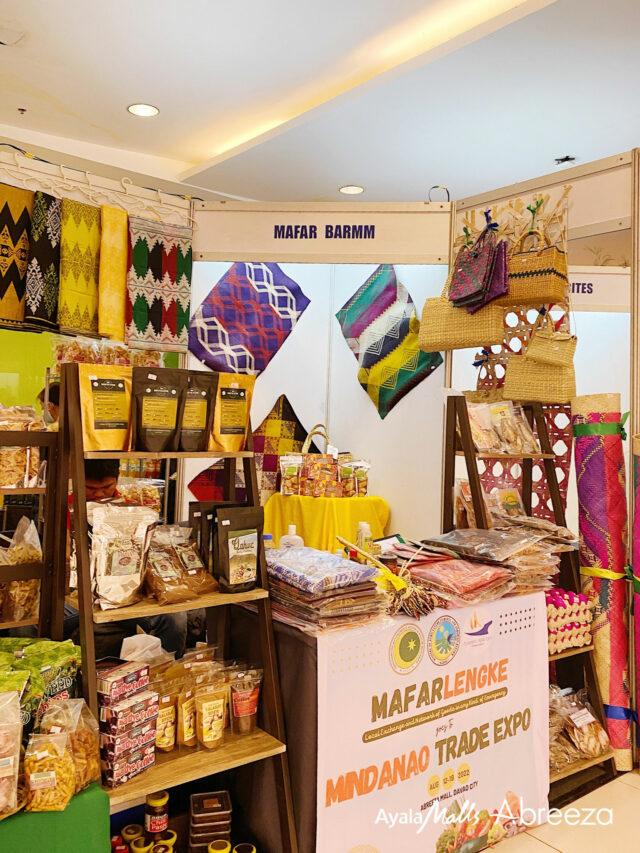
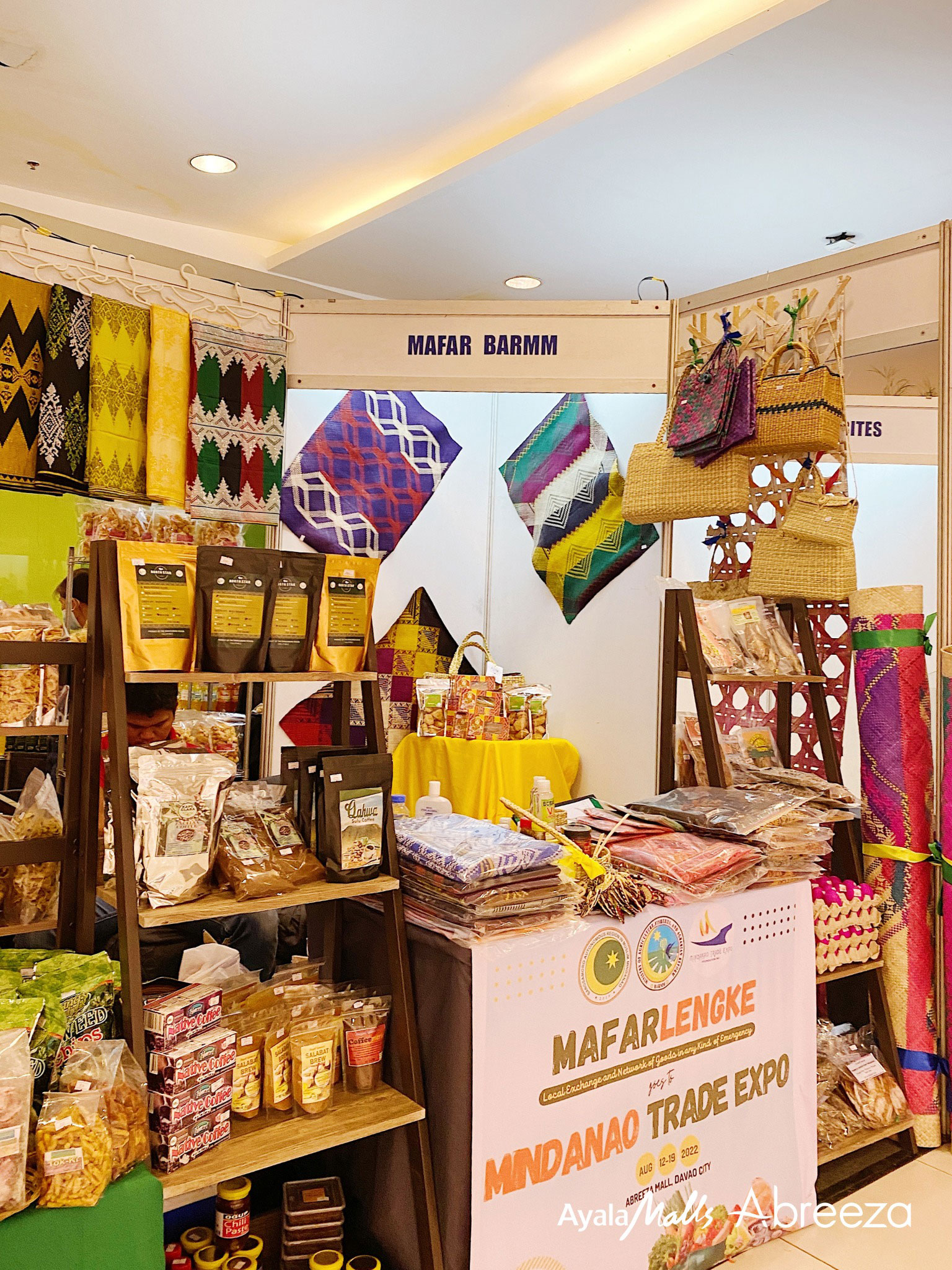
FOOD and other products from the Bangsamoro region on display at the Mindanao Trade Expo from Aug. 12-21, 2022 at the Ayala Abreeza Mall in Davao City. — AYALA MALLS ABREEZA FB PAGE

SINGAPORE and the Philippinessouthern islands Mindanao are boosting food trade, including halal products, following a recent visit by a delegation from the latter, a business leader said.  

Arturo M. Milan, Philippine Chamber of Commerce and Industry area vice president for Mindanao, said their business mission last week to Singapore spearheaded by the Mindanao Development Authority included representatives from private companies, non-government national government agencies, and local governments.   

There was a lot of interest generated because for the first time we brought in samples,Mr. Milan said during the Habi at Kape media forum.  

You know Singapore is very strict on bringing samples, what we did was we coursed it through the Philippine embassy to Singapore.”  

He said they were able to present products from micro and small entrepreneurs as well as sell a 40-footer container of pineapple and one 40-footer container of papaya.  

Singapore buyers expressed interest in other fruits such as mango and banana, coffee, and cacao, among other crops.   

Singapore buys 96% of their food requirement through imports. Right now, there is a shortage of chicken worldwide because of bird flu scare so there is a big demand from the Singaporean market for food. That is an opening (opportunity) for us, Mr. Milan said.   

The delegation also included representatives from the Bangsamoro Autonomous Region in Muslim Mindanao (BARMM), who were able to network with halal product suppliers in Singapore.  

Because that’s the issue with our Muslim tourists, they don’t come to Mindanao because they have problems on where to eat at halal registered restaurants. There was a lot of discussions about Halal products that can be sourced in Singapore,Mr. Milan said.  

Our representatives coming from the BARMM areas are happy that they can look at now sourcing halal products from Singapore,he added. 

Singapore Airlines and its low-cost subsidiary Scoot have several regular flights between Singapore and Davao City in Mindanao. Maya M. Padillo 

Indigent students to receive cash aid from gov’t

PHILIPPINE STAR/KRIZ JOHN ROSALES

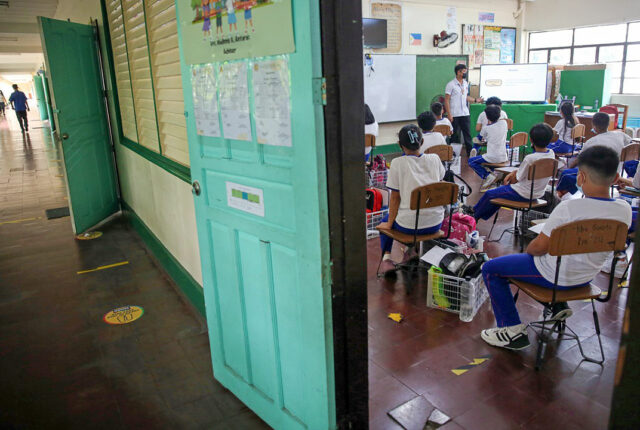
THE GOVERNMENT will distribute P500 million in cash assistance to indigent Filipino students, the Department of Social Welfare and Development head announced on Thursday.    

Social Welfare Secretary Erwin T. Tulfo told a news briefing that the one-time cash assistance would benefit 24,000 students.  

The cash aid would be P1,000 for elementary students, P2,000 for junior high school, P3,000 for senior high school, and P4,000 for college or vocational students. 

The program is intended as a stop-gap mechanism to help people in a crisis situation, Mr. Tulfo said. 

Students can use the money to pay for their tuition or school supplies.

Meanwhile, the Department of Trade and Industry (DTI) said it is collaborating with manufacturers of school supplies to ensure availability in the market ahead of the opening of classes. 

The DTI is closely coordinating with the manufacturers of school supplies to ensure reasonableness of prices and the availability of supply in the market,DTI Consumer Policy and Advocacy Bureau Director M. Marcus N. Valdez II said in a statement on Thursday. 

The DTI issued the statement days after it released a suggested retail price bulletin for school supplies on Aug. 12. 

Under Republic Act No. 7581 or the Price Act, school supplies are classified as prime commodities.

Under the recently issued bulletin, the price of notebook ranges from P17.50 to P36.75, while Grades 1-4 pad paper prices vary from P6.50 to P24.00. The price of intermediate pad paper ranges from P22.50 to P30.00. 

Prices of writing materials such as pencils and ballpoint pens range from P8.25 to P13.25, and from P4.75 to P19.00, respectively.

It added that the price of a box of crayons with eight colors ranges from P18.00 to P24.00, while a 12-color pack costs P32.00, and the price of a 16-color pack varies from P33.75 to P44.00. 

The bulletin also showed that an eraser at small, medium and large sizes, has a price range from P8.75 to P17.00, while the price of sharpeners and rulers are priced at P19.00 to 32.00 and P13.00 to P39.00, respectively.

Although some have increased in prices due to the movement of global fuel prices, consumers can save money by purchasing school supplies sold in bundles or promotional packs,Trade Undersecretary Ruth B. Castelo said. Kyle Aristophere T. Atienza and Revin Mikhael D. Ochave

Amnesty program opened for members of rebel groups 

FORMER members of the New People’s Army, also referred to as communist terrorist group by the government, attend an orientation activity in Nueva Ecija as part of the reintegration program for rebel returnees. — OPAPRU/PEACE.GOV.PH

THOUSANDS of rebels from various groups are expected to avail themselves of the governments amnesty offer, a peace agency said on Thursday.  

The Office of the Presidential Adviser on Peace, Reconciliation and Unity expects as many as 10,000 members of the Moro National Liberation Front, Moro Islamic Liberation Front, Revolutionary Proletarian Army, and Cordillera People’s Liberation Army to surrender to the government.  

About 1,500 members of the Maoist New Peoples Army (NPA), the armed wing of the Communist Party of the Philippines (CPP), are also expected to apply for amnesty, the agency said in a message to BusinessWorld  

The National Security Council claimed last month that the number of Maoist rebels across the country had decreased to 2,000.  

Former President Rodrigo R. Duterte revived peace talks with the CPP along with its political arm National Democratic Front of the Philippines in 2016, but the process failed over ceasefire protocols. A localized peace talks strategy was later launched focusing on NPA clusters.  

President Ferdinand R. Marcos, Jr.s national security adviser has said the current administration would continue with the localized peace talks.  

The NPA gained significant force during the Martial Law regime of Mr. Marcosfather, the late dictator Ferdinand E. Marcos. The older Marcos was toppled through a popular uprising in 1986. Kyle Aristophere T. Atienza 

Gabriela seeks House probe on cases of missing women 

GABRIELA Party-list Rep. Arlene D. Brosas filed a resolution calling on the House panels on women and public order to investigate measures being undertaken by authorities on a series of cases of missing women.   

Its the responsibility of the government to make sure that women are safe especially now that the cases of violence against women and children are rising,Ms. Brosas, also assistant minority leader, said in a press briefing.   

House Resolution No. 284 cites the murders of Princess Dianne Dayor, Princess Marie Conde Dumantay, and Josie Bonifacio; and the case of Jovelyn Galleno, who has been missing since August 5.   

In 2021, the Commission on Population and Development disclosed the results of a survey conducted by Social Weather Station, which revealed 25% of Filipino adults consider harmful acts in various forms to be one of the most pressing issues women face today. The commission also cited an increase in the number of gender-based violence.  

Ms. Brosas said it is important to investigate these cases to stop incidents of gender-based violence in the country. Matthew Carl L. Montecillo 

Religious group denounces terrorist financing raps against its members 

THE RURAL Missionaries of the Philippines (RMP) on Thursday condemned the indictment of several of its members for alleged terrorist financing. 

“The government of President Ferdinand R. Marcos, Jr. is using the same playbook by predecessor Rodrigo R. Duterte by demonizing legal democratic organizations such as Rural Missionaries of the Philippines, which provide much-needed services to the people and putting its members in direct harms way,” it said in a statement.  

The group added the indictment showed the continuation of red-tagging, impunity for human rights violations, and the “weaponization of the law” by the government. 

The Department of Justice (DoJ) on Monday said government prosecutors indicted 16 members of the church-based group for allegedly financing activities of the Communist Party of the Philippines (CPP) and its armed wing, the New Peoples Army (NPA). The agency noted the charges were based on testimonies of former rebels.  

The members failed to answer the charges during a preliminary investigation, the DoJ noted. “No defense on the part of the respondents was received by the prosecuting panel,” it said in a statement.  

RMP claimed that one of the ex-rebels who implicated its members gave a “spurious” or false testimony in exchange for the release of her mother. 

RMP is a church-based group made up of Catholic priests and lay people. The group supports farmers, fisherfolk and indigenous groups and educates them about their rights, according to its website.  

The religious group’s website, along with 25 other alleged CPP-NPA supporters, was ordered blocked in June by the National Telecommunications Commission upon the request of former National Security Adviser Hermogenes C. Esperon, Jr.   

The Anti-Terrorism Council has labeled the communist party as a terrorist group.  

In April, the Supreme Court rejected an appeal seeking to reverse its decision upholding the validity of the Anti-Terrorism law, which was signed in 2020. 

The Anti-Money Laundering Council has said the law would help it counter so-called dirty money. John Victor D. Ordoñez 

Sugartime is anytime?*

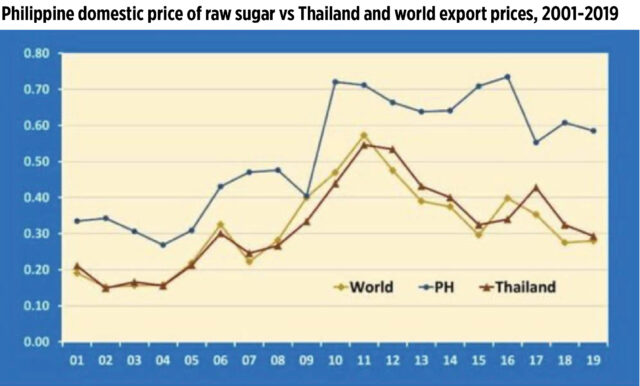
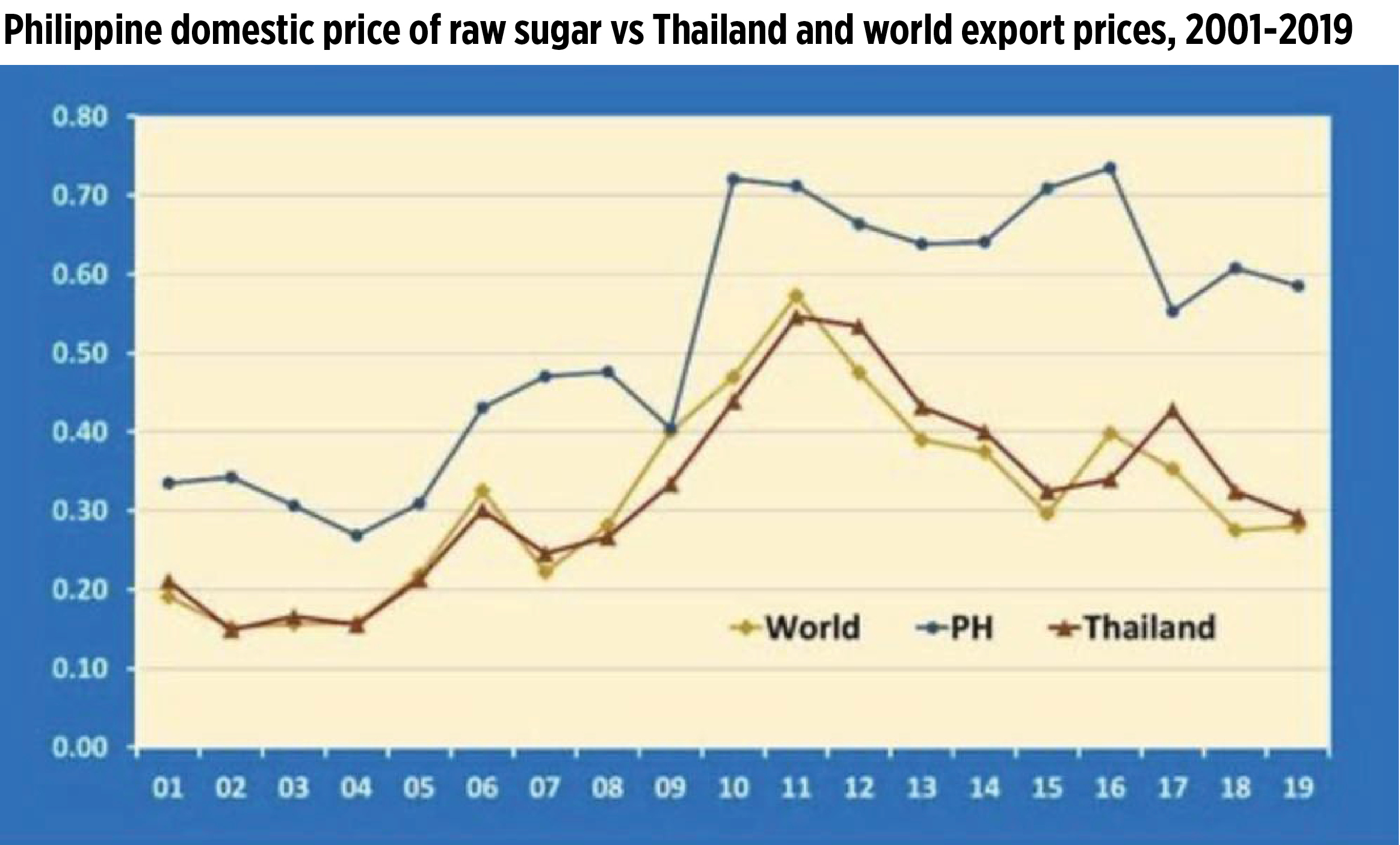
If there’s one chart that captures what ails the Philippine economy today, it must be this one from the National Economic and Development Authority’s (NEDA) “An Assessment of Reform Directions for the Philippine Sugar Industry” published in 2021.

Unlike sugar prices in Thailand which mimic world sugar prices, sugar prices in the Philippines have been phenomenally higher in the last 20 years — an outlier. Note that Thailand is now the second largest sugar producer next to Brazil, but in the Philippines, it’s more talk than anything else. For instance, in 2020, the Sugar Regulatory Administration (SRA) announced it would conduct a benchmarking analysis in Thailand to enable it to extract the most appropriate processes for local application. At most, a committee was formed to push the competitiveness and advancement of the local sugarcane industry.

But four years earlier, in 2016, the SRA also announced that it was “looking at adopting technological advancements in agriculture from Thailand to boost sugarcane productivity in the Philippines.” A technical team from SRA was sent to Bangkok to do “technology and policy scoping and benchmarking analysis.” The team met with agricultural academics and practitioners to discuss agricultural feed stocks for energy production and waste water management, and checked feedback from farmers who bought Thai farm machinery and equipment for possible use in the Philippines.

Whatever happened to these brave attempts escapes us because until recently, the Philippines continued to suffer from low sugar yield, estimated a couple of years ago at 5.1 tons sugar per hectare, something that pales in comparison with other sugar-producing countries like Columbia with a yield that is 2.38 times higher; Australia, 2.15 times; and Thailand, 1.22 times. In terms of sugar recovery, Brazil, Australia, and Thailand all surpassed the Philippines’ performance.

Therefore, sugar prices in the Philippines could only be much higher, as captured by the NEDA’s chart.

Annette M. Tobias of the Philippine Council for Agriculture, Aquatic and Natural Resources Research and Development also wrote as much in her earlier research, “Initiatives and Implications of Philippine Sugar Liberalization,” published in March 2020. She made that point by citing that as of November 2019, retail prices of raw sugar in the Philippines were anywhere between $0.08-$1.10 per kilo while the World Bank reported that world market prices averaged only $0.27 per kilo.

Tobias concluded: “Given the wide disparities in prices, even including transport and marketing costs, sugar in the world market could still be drastically cheaper compared domestically.” By this criterion alone, liberalizing sugar imports makes for a sensible policy.

Through good non-partisan public policy and no-nonsense implementation that defies cartels and smugglers, we should be able to address the long-term problems of the sugar industry. The SRA that controls trade and domestic supply and prices of sugar could be restructured along the reforms of the National Food Authority. Liberalization of the sugar trade will allow the importation of cheaper sugar from more efficient and higher sugar-yielding countries like Australia, Brazil, and Thailand.

True, about half of domestic sugar production is consumed by industrial users and only about a third by households, but industrial production is also oriented to domestic consumption. Cheaper sugar should benefit consumers while any proceeds from tariffication could be used to modernize the sugar industry.

Production issues are just awesome. Issues involving planting materials, soil fertility, irrigation, and effects of higher temperatures could be addressed through improvement in the varieties of planting materials, establishment of nurseries, enhanced use of fertilizer, and more efficient irrigation systems.

We don’t lack legislation either. We have the 2015 Sugarcane Industry Development Act (SIDA) mandating funding support to the industry to block farms for sugar, socialized credit, capacity building, and infrastructure support programs.

Unfortunately, as Tobias admitted in her research, “the SIDA law, though enacted in 2015, is still in its infancy stage.” Her recommendation? Fully implement the SIDA law!

But some quarters would not have any of that.

In 2019, the SRA, headed by former Agriculture Secretary Manny Piñol, insisted that SRA was the sole agency tasked “to regulate the release of imported sugar in the domestic market.” It was good that then-Budget Secretary Ben Diokno reiterated the new policy of liberalizing the sugar industry but subject to 30-40% tariff rates. Liberalizing sugar imports would reduce sugar prices while the tariff would afford some protection to the local sugar producers.

Today, we are still at it, debating whether there is sugar shortage and whether we should import from higher-yielding economies. This is not surprising because within the SRA itself, we observed some quarters subscribing to the view that “importation is just a quick fix to the problem.” Some argued against the leveling off of sugar prices to the benefit of the consumers on the ground by noting that industrial and institutional use dominate domestic consumption. Some people don’t seem to realize that the products of both industrial and institutional users are also consumed by households like bread, biscuits, and other food commodities.

Thus, the deviation of retail sugar prices from farm-gate sugar prices simply reflects the structural problems in the sugar industry. As Philippine Star columnist Jarius Bondoc wrote the other day, “sugar prices… soured consumer tastes.” Compared to its level in June 2022, refined sugar now retails at P108 a kilo, about 42% higher.

NEDA’s chart, therefore, is not just about disparate prices of sugar. It’s what makes those prices disparate.

Decades of protection accorded to the sugar industry through favored prices in the US market, for instance, disincentivized modernization and technological innovations to achieve competitiveness. Restricted importation has kept sugar prices high. We have remained a low sugar-yielding producer while the hectarage planted to sugar has also shrunk over the years, giving way to residential villages, memorial parks, and sprawling malls. Sugar milling remains limited considering that it requires huge fixed investment to service all the sugar planters in various regions.

The chart is also about politics and vested interest.

For 20 years, and even longer, we have nurtured this inflationary story to the detriment of the ordinary consumers and the cause of economic welfare. The Government should not only enable but also empower domestic industries. It’s not enough that we have been extending subsidies after subsidies, incentives after incentives to key industries even as sugar has been one of our key exports in the last 100 years. Reversing the situation is not possible if the Government is not decisive, or is too incompetent to insist on science rather than be swayed by vested interest.

It’s not good for Government to be left behind by the news. Does it need to be forced by the broadsheets’ report that local carbonated drink manufacturers Coca Cola, Pepsi Cola, and ARC (the maker of RC Cola, among others) were having difficult times with a sugar shortage before considering the last resort of importation? Yet a week earlier, no less than the President himself and his Malacañang staff denied the need for outside shipment of the sweet commodity.

The forthcoming Senate query seems to be ill advised, too. The whole issue is SRA Order No. 4 authorizing the importation of 300,000 metric tons of sugar but this was based on one, the expected shortage of sugar as early as last month; two, the authority extended to Agriculture Undersecretary Leocadio Sebastian to sign contracts, agreements, and administrative issuances; and, three, the President was reportedly agreeable to sugar importation when he was briefed by Sebastian and other DA officials, based on Philippine Star columnist Boo Chanco’s quoted source. While the Government should protect the interests of the sugar industry and the farmers, the broader interest of the consumers and manufacturers should weigh in, too.

This brings us back to the NEDA chart. Replace sugar prices with those of rice, onion, garlic, ginger, pepper, or even salt; global prices of the commodity; and commodity prices in any leading producing country, and we would have a fairly good picture of agriculture and the food industry in this country.

It should surprise no one if agriculture continues to shrink in its share of GDP. It should surprise no one either if yesterday, the Monetary Board sustained its monetary tightening mode by 50 basis points.

Inflation is the direct casualty of all this drama. Yes, sugartime is not anytime, anymore.

* With apologies to the McGuire Sisters’ “Sugartime” lyrics written by Charlie Phillips and Odis Echols in 1958.


Diwa C. Guinigundo is the former deputy governor for the Monetary and Economics Sector, the Bangko Sentral ng Pilipinas (BSP). He served the BSP for 41 years. In 2001-2003, he was alternate executive director at the International Monetary Fund in Washington, DC. He is the senior pastor of the Fullness of Christ International Ministries in Mandaluyong.

Divisive and counterproductive

GAELLE MARCEL-UNSPLASH

The Komisyon ng Wikang Filipino (KWF or the Filipino Language Commission) has joined the Duterte era’s campaign of denying Filipinos access to reading materials with supposedly “subversive” content.

KWF commissioners have ordered the withdrawal from library shelves of at least seven books by Filipino authors that the agency itself had published. Some of the writers who were “red-tagged” had cited the works of others who have themselves been labeled “subversive.”

The KWF order was apparently in response to the labeling of those books as “subversive,” and “anti-government” by one of the spokespersons of the National Task Force to End Local Communist Armed Conflict’s (NTF-ELCAC) in a video aired by the Sonshine (sic) Media Network International (SMNI) of former President Rodrigo Duterte’s “spiritual adviser.”

But KWF Chair Arthur Casanova refused to sign the order, and drew the ire of his fellow commissioners, who condemned his non-agreement with them in a resolution. He had pointed out that labeling books as “subversive” is “a dangerous accusation that may already be stepping on the boundaries of free expression and academic freedom.”

He also reminded everyone that those books went through a vetting process to evaluate their worth before they were published. His fellow commissioners would now render that process meaningless by surrendering to the presumptuously better judgment of the NTF-ELCAC. Their doing so created a precedent that could allow the latter to override KWF’s own decisions and to decide which books by which authors the Commission may publish, just as it can name which books may not be in the libraries of those schools that last year purged their bookshelves of “subversive” titles.

But the claim that citing a particular source in one’s book makes the author a follower of the same beliefs is patently absurd. If someone were writing on the policies of Adolf Hitler’s Nazi regime on “the Jewish question,” for example, he or she would have to cite the minutes of a 1942 meeting of German officialdom known as the Wannsee Protocol, in which the deportation and murder of European Jews was decided. It would not make one a Nazi — only a credible researcher.

However, even if one had Nazi leanings, that alone would not make one a legitimate target for repression through legal or other means. Believing in something is everyone’s right in supposedly democratic Philippines, but acting upon it by taking up arms is not. As former Justice Secretary Menardo Guevarra pointed out in 2021, everyone is free to believe in this or that cause. One can be prosecuted and charged with a crime only if one engages in rebellion or breaks any other law.

But the Task Force, as everyone should know by now, has not been making that distinction. In 2021 it “convinced” some Northern Luzon colleges to purge their libraries of certain books, in addition to labeling activists, journalists, academics, human rights defenders, and legal organizations as members or “fronts” of the Communist Party of the Philippines (CPP), the New People’s Army (NPA), and/or the National Democratic Front of the Philippines (NDFP).

NTF-ELCAC spokespersons have denied that those claims can lead to the targeted persons’ and groups’ being harmed, or worse. But some of those so labeled have been harassed, arrested on fabricated charges, and even murdered without anyone being held accountable. At least two book stores have also been tagged as “terrorists” for having “subversive books” in their inventories.

The use of the term “subversive” to describe individuals, organizations, and reading materials one does not agree with is a throwback to the 1950s and the Marcos Sr. martial law regime when the Anti-Subversion Law (Republic Act 1700) was in force.

RA 1700 had long been criticized for being a bill of attainder because it punished without trial, and as an ex post facto law for penalizing as crimes acts that were not illegal prior to its passage. Congress repealed it in 1992 during the term of the late President Fidel V. Ramos.

A thinking military man, Ramos realized that outlawing the old Partido Komunista ng Pilipinas (PKP) did not prevent the founding of its successor, the CPP, in 1968, and that it might even have helped fan the fires of rebellion by excluding reform-minded individuals from free public discourse and participation in government. It could have forced some of them to take up arms in the belief that it is impossible to achieve change through peaceful means.

In signing the bill repealing RA 1700, Ramos thus explained that it was part of his administration’s “efforts to attain enduring peace,” and pledged to address “the roots of rebellion rather than its symptoms.”

Ramos’ sophisticated approach to addressing the conflicts in Philippine society made his term a period of relative peace and economic growth. In contrast, not only have “red-tagging,” censorship, and attacks on free expression and press and academic freedom incited conflict and social instability, those tactics also provoked enough disaffection with government among the most valuable and most creative sectors of the population — academics, writers, artists, and journalists among others — to transform them into its critics. By inviting outrage and resistance, repression is both self-defeating and counterproductive.

In addition is the harm repression does to public discourse and Philippine culture. The KWF is charged with the development of the Filipino language, which is at least partly helped by how the country’s writers use it. Language is the vehicle of culture, and every essay, short story, novel, or play written in the Filipino language also contributes to readers’ understanding and appreciation of their own ideas and values as well as those of the communities that constitute the multi-cultural Philippines.

No culture can remain unchanged, and has to respond to the evolution of the social, political, and economic environments that shape the lives of nations. What makes censorship so destructive is that it wrongly assumes — and impossibly demands — the permanence of whatever values and ideas are dominant in society at a given time.

During his campaign for the Presidency, then candidate Ferdinand Marcos, Jr. told the military that he would not abolish the NTF-ELCAC but would even increase its budget. He could very well do that now that he is President. But he could also re-orient its leadership, appoint less combative personalities to speak for it, and institute other changes to make its stated aim of ending armed conflict realizable.

He could, in short, re-invent it by putting an end to its counter-productive “red-tagging” and use of unconstitutional tactics against free expression, academic and press freedom, and other rights, and by transforming it into a protector of the people as the Constitution declares the military should be.

Supporting and encouraging the exercise of those rights and affirming everyone’s entitlement to their enjoyment could convince the disaffected that the political system works, contrary to what the divisive politics of repression of the Duterte regime had been demonstrating during its six years in office.

Government openness to reasoned debate and discussion rather than instilling fear and compelling silence can in fact make it even stronger. But there is another benefit the country could gain from the re-invention of the NTF-ELCAC. It would not only contribute to the stability of Philippine society and help unite the country, but the widening of the democratic space that would follow the adoption of a less primitive approach to ending conflict would also encourage the reflowering of Philippine culture. The intellect and creative imagination after all thrive best in those conditions of individual and social freedoms the Constitution wisely protects.


Luis V. Teodoro is on Facebook and Twitter (@luisteodoro).

www.luisteodoro.com

COVID, the CDC, and the CHED’s continuing discrimination against the unvaccinated

PHILIPPINE STAR/ WALTER BOLLOZOS

The big news about the US Center for Disease Control’s “Summary of Guidance for Minimizing the Impact of COVID-19 on Individual Persons, Communities, and Health Care Systems,” released on Aug. 11, was actually about how subdued the reporting it got from mainstream news sources.

The CDC changes tune, media downplays it.

In sum, what the CDC now decrees is that:

• Those exposed to COVID no longer need to quarantine;

• Students can stay in class even after exposure to COVID;

• There is no longer a need to give a COVID test to the asymptomatic;

• The unvaccinated and vaccinated are now subject to the same rules and guidelines.

It did get a bit of space from CNN, albeit a tad grudgingly: “The US Centers for Disease Control and Prevention says the nation should move away from restrictive measures such as quarantines and social distancing and focus on reducing severe disease from COVID-19. In new guidelines … the agency no longer recommends staying at least six feet away from other people to reduce the risk of exposure — a shift from guidance that had been in place since the early days of the pandemic.”

Even then, the news media couldn’t help massaging its preferred narrative: “The shift is a sign of how much has changed since the beginning of the pandemic more than two years ago. Nearly the entire US population has at least some immunity through vaccination, previous infection or, in some cases, both. ‘The current conditions of this pandemic are very different from those of the last two years,’ Greta Massetti, who leads the Field Epidemiology and Prevention Branch at the CDC,” said.

DENIED YESTERDAY, TRUTHS TODAY
The simple fact is: nothing has changed. Doubts regarding the efficacy of mandatory vaccination, masking, distancing, and lockdowns have all been expressed from the beginning, only to be duly suppressed by medical “experts” and news media.

Experts urging a re-focus on the “Delta variant” in mid-July 2021 is illustrative of this. Stating that it reportedly causes “more severe illness than earlier variants and spreads as easily as chickenpox,” yet, even then, the admitted point was to “to persuade the public to embrace vaccination and prevention measures, including mask-wearing.” (The Washington Post, “‘The war has changed’: Internal CDC document urges new messaging, warns Delta infections likely more severe,” July 2021)

There’s, of course, monkeypox, which health officials messaged as a general public health concern even though every cogent finding shows that the disease overwhelmingly affects (almost at 98% level) a specific demographic of the population.

Indeed, data have ultimately proven the skeptics right. Japan, Australia, and New Zealand, despite high vaccination rates and oftentimes utterly restrictive COVID measures, are seeing record topping COVID cases and COVID-related deaths. US COVID cases and deaths, on the other hand, have basically taken a cyclical pattern.

And seemingly being brushed under the rug are reported cases after cases of healthy young adults suddenly dropping dead, all from heart or blood related issues, and of countries seeing this year drastically dropping birth rates.

There’s also this new Icelandic study, albeit with stated limitations, showing increased COVID reinfection rates relative to rise in vaccine doses. For most age groups, those who received two doses or more were likelier to be reinfected than those unvaccinated or had only one dose. (“Rate of SARS-CoV-2 Reinfection During an Omicron Wave in Iceland,” Elias Eythorsson, et al., August 2022)

RETURN TO SANITY
If anything, the change came in the form of acceptance of alternative forms of treatment rather than relying exclusively on vaccines, the lessening of COVID’s severity (as was predicted would happen whenever a disease mutates into newer strains), and — most gratifyingly — a begrudging recognition of the role of natural immunity. This even the CDC had to admit:

“High levels of immunity and availability of effective COVID-19 prevention and management tools have reduced the risk for medically significant illness and death.”

And, as mentioned above, the CDC’s new guidelines finally declared that its “prevention recommendations no longer differentiate based on a person’s vaccination status because breakthrough infections occur, though they are generally mild, and persons who have had COVID-19 but are not vaccinated have some degree of protection against severe illness from their previous infection.” (Boldface supplied.)

GET KIDS BACK TO SCHOOL, VACCINATED OR UNVACCINATED
However, it is with regard to schools that the CDC’s new guidelines find utter significance. As The Guardian elucidates: “The CDC recommendations apply to everyone in the US, but the changes could be particularly important for schools, which resume classes this month in many parts of the country.

“Perhaps the biggest education-related change is the end of the recommendation that schools do routine daily testing, although that practice can be reinstated in certain situations during a surge in infections, officials said.

“The CDC also dropped a ‘test-to-stay’ recommendation, which said students exposed to COVID-19 could regularly test instead of quarantining at home to keep attending school. With no quarantine recommendation, the testing option disappeared too.

“Masks continue to be recommended only in areas where community transmission is deemed high, or if a person is considered at high risk of severe illness.” (“CDC ends social distancing and contact quarantining COVID recommendations,” The Guardian, Aug. 11, 2022)

All the foregoing makes the intransigence of the Commission on Higher Education (CHED) and the Department of Health (DoH) even more bizarre. Ignoring Vice-President/Department of Education Secretary Sara Duterte’s indisputably correct call to remove any discriminatory treatment between the vaccinated and unvaccinated, the CHED-DoH Joint Memorandum Circular No. 2021-04 (issued December 2021) still demands that “only fully vaccinated teaching and non-teaching personnel” and “only fully vaccinated students” shall “be allowed to join limited face-to-face classes,” while the Supplemental Guidelines issued by the CHED Regional Director (March 2022) allows only the vaccinated inside school premises and that the “unvaccinated or partially unvaccinated shall continue under flexible learning modalities.”

The Joint Memorandum eccentrically relies on RA 7722 (which makes no mention of mandatory vaccination) and the IATF (which is not authorized to demand mandatory vaccination). Invariably, the Joint Memorandum goes against RA 11525 (“COVID-19 Vaccination Program Act of 2021”), which makes it clear that COVID vaccination cannot be made a requirement for government or business transactions and even points out that vaccinated individuals shall “not be considered immune from COVID-19.”

A NEED FOR ACCOUNTABILITY
As it stands, because of this continued refusal to recognize the rights of unvaccinated students, faculty, and non-teaching personnel, then (as provided for under RA 11525) they or on behalf of any person “inoculated through the COVID-19 Vaccination Program” may want to seek compensation for any “severe adverse effects” arising from the said COVID vaccination, including “death, permanent disability or hospital confinement.” The law itself set aside P500 million for this purpose.

Furthermore, it is not true (as is widely reported in media) that “public officials and employees, contractors, manufacturers, volunteers, and representatives of duly authorized private entities” are absolutely immune from suit in relation to the “administration or use of a COVID-19 vaccine.” RA 11525 actually provides that they can be sued and held liable if they acted with “willful misconduct and gross negligence.” Unreasonably demanding vaccination knowing that such goes against the Constitution and an actual act of Congress should constitute “willful misconduct.”

On top of that, public or private officials, individuals, or entities can also be sued for damages for violation of the Civil Code and other special laws, particularly those that protect constitutional rights (e.g., right to education, privacy, employment, contract) or by causing injury to a person’s reputation or health through negligence, misconduct, or bad faith.

Accordingly, anyone (or family members) that had their rights violated or suffered serious adverse effects arising from COVID vaccination are strongly encouraged to document their experiences. And as allowed by law, claim compensation under RA 11525, as well as sue for damages those that forced anyone into taking vaccines.


Jemy Gatdula is a senior fellow of the Philippine Council for Foreign Relations and a Philippine Judicial Academy law lecturer for constitutional philosophy and jurisprudence

www.facebook.com/jigatdula/

Twitter @jemygatdula

From the Rhine to the Tigris, rivers are warnings

THE RHINE RIVER at Boppard with the Bopparder Hamm — CAROLE RADDATO-FLICKER

YOU CAN’T STEP into the same river twice, the philosopher Heraclitus said in a different context. If he were alive in the era of anthropogenic climate change, he might add that you may no longer even have that river to step into. And even if you do, you might not want to, because its fluids could scorch the skin off your feet.

Just look at Germany this summer. Two of its most symbolic and iconic rivers — the Oder in the east and the Rhine in the west — are crying out in distress.

The Oder, stretches of which mark the Polish-German border, has turned toxic. Dead fish are floating where bathers once swam. The immediate cause remains unclear — Germany and Poland are investigating chemical spills. But scientists say that drought invariably exacerbates the concentrations of nasty stuff and disrupts the water’s oxygen levels.

The Rhine, meanwhile, has dropped so low that barges are barely able to carry their cargo up and down the river. At a time of other supply shortages — of gas from Russia, grain from Ukraine — everything from coal and steel to chemicals and manufactures is suddenly getting harder to move through Europe’s industrial heartland. The aorta connecting the Alps to the North Sea, and Swiss and German workshops to Dutch ports, is drying up.

The ultimate cause of these symptoms — climate change — sounds inappropriately neutral as a phrase. But global warming — “warming” also sounds so gentle — manifests in many ways, all of them catastrophic. It disturbs the jet and gulf streams that used to reliably circulate our atmosphere and oceans. It thaws permafrost. It thrusts species into contact with new organisms, causing “zoonotic spillover” — that is, new plagues and pandemics.

Sometimes climate change shows up as heat domes, other times as cold snaps. It causes infernal fires here, Biblical floods there. If it so pleases, it visits several scourges on the same place. A year ago, a tributary of the now-desiccated Rhine deluged entire valleys and towns, killing hundreds and upending the lives of tens of thousands.

There’s something particularly eerie about the way global warming depletes our lakes and rivers. These streams were at one point arteries that nourished entire societies and archived their detritus. Now they’re yielding up those histories. In Italy, the Tiber has fallen low enough to reveal a bridge built by Nero. The Po has brought German ships from World War II to the surface.

In Iraq, a shrinking reservoir along the Tigris has uncovered cuneiform tablets and ceramic pottery from what was a Bronze Age city. In the US, Lake Mead — where the Hoover Dam blocks whatever remains of the Colorado River — is drying into a puddle and displaying everything from sunken boats to dead bodies.

The Rhine, as it bears all, has many tales to tell. It once marked the border region between Roman and Germanic Europe, between a world of wine and olive oil and one of beer and butter. In the Middle Ages, it was the setting of the Nibelung epic (much later staged by Richard Wagner). To this day, the faithful are searching for the hoard of gold sunk at a secret spot in the Rhine by Hagen, the slayer of Siegfried.

The Romantics of the 19th century discovered the poetic potential of a stream lined by castles and cliffs. At one spot, Lorelei, inspired by Homer’s sirens, was said to sit on a rock, combing her golden hair and singing until rapt sailors met their wet death.

For generations, the river separated France and Germany in mutual enmity — the Prussians who marched to Paris in 1870 were singing “The Watch on the Rhine.” Then it united the two nations as part of a new peace project, nowadays called the European Union. Today, the Rhine and its tributaries — the Neckar, Main, Ruhr, and others — lubricate the vaunted Mittelstand firms at the core of Germany’s manufacturing prowess.

As these rivers, from the Yangtze to the Colorado, slowly evaporate — their water molecules destined to inundate islets or coastlines elsewhere in the world — the emphasis among scientists and policymakers is shifting to “adaptation.” We’ll certainly need a lot of that.

But as we get busy adapting, it’s also worth pausing every now and then to listen to the gurgles of the shrinking streams. This is no longer Lorelei singing to us. It sounds more like mewling, or even weeping. Maybe it’s the sound of her long dead sailors, trying to send a message.

BLOOMBERG OPINION

ADVERTISEMENT
ADVERTISEMENT