Home Blog Page 5941

Suntory eyes US canned cocktail push as young Japanese shun booze

MINUS196.COM.AU

TOKYO — Japanese drinks giant Suntory Inc. last year debuted a strong, lemony brew in Australia that quickly became the top seller in the canned cocktail market there. 

Now the company is aiming to replicate that success in North America, critical to its aim in becoming the global leader in the fastest growing alcoholic drinks segment. 

Expanding overseas is also a matter of survival for Japanese drinks companies facing an aging market at home and a shift away from alcohol among younger people. 

“Australia is a very important test market for the global strategy,” said Makoto Kitaura, a senior general manager at Suntory. 

“If we have a success in Australia, then other Western countries like the US, the UK may have an interest to try a new brand. And we can see huge growth potential with the US market.” 

The company tapped a localization team to adapt its Japanese best seller Strong Zero for the Australian market: The lemony tang was tweaked, and the alcohol was dialed down from a hefty 9% to a more drinkable 6%. 

It also branded the canned cocktail -196 Double Lemon in Australia, highlighting the extreme cold that Suntory claims it uses to extract flavors from fresh fruit. 

“It sold out almost immediately after launching,” said Alana House, the editor of Sydney-based Drink Digest

The drink, price at about A$4.50 ($3.10) for an 11 oz can, had the advantage of being seen as a “cult” Japanese product, with a strong flavor profile and higher alcohol by volume (ABV) content, 6% versus 4.5% for a typical beer in the country, she added. 

The global canned cocktail market, which Japanese beverage makers created some 40 years ago with drinks known locally as “chu-his”, is now the fastest growing alcoholic drink segment, as pandemic restrictions prompted more people to imbibe at home and cut higher calorie drinks like beer. 

The market, known in the industry as ready-to-drink (RTD), saw double-digit sales growth during the pandemic, and Suntory believes global canned cocktail sales will double again from 2020 levels to more than $60 billion in 2030. 

TOUGH US MARKET
The next and most important hurdle in Suntory’s worldwide ambition is tackling the massive US market. The company already has a foothold following its 2014 takeover of Beam Inc., maker of Jim Beam whiskey. The company opened a global canned cocktail division in March and its American-based team came to Tokyo in June to collaborate on strategy. 

Hard seltzers dominate the US sector, with top brands White Claw and Truly drawing about $10.8 billion in sales in the five years through 2021, market research provider, Euromonitor International said. 

Suntory has made small inroads into the US market via its Sauza cocktail collaboration with Boston Beer Co., which makes Truly. 

The company did not say which canned cocktails from its expansive catalogue it hopes to bring to US shores. But Double Lemon would start at a disadvantage to entrenched competitor Mike’s Hard Lemonade, which costs about $2.50 for a 12 oz can. Mike’s became a runway hit after its debut 20 years ago, with marketing that some critics said appealed to young underage drinkers. 

But logistics and taxes remain the bigger challenges. Suntory’s historic strength is in spirits and US distribution networks for spirits are narrower than those for beer and other malt-based drinks. 

Meanwhile, canned cocktails that use hard liquor like vodka or gin are taxed at about 45 cents a can, compared with about 8 cents for the seltzers that use malt liquor. Double Lemon, for example, uses shochu, a traditional Japanese liquor distilled usually from sweet potatoes. 

Also complicating the strategy, the canned cocktail market is highly fragmented and finely tailored to local tastes, with differences in alcohol bases, flavors, and drinking habits. 

Yogurt-based drinks are popular in China, for example, while cider-like versions sell in South Africa. The US market has taken to light, berry-flavored brews. 

“What works in one market may not always work in another,” said Brandy Rand, an analyst at IWSR Drinks Market Analysis. “It’s a much harder category to translate to across borders. It’s not like selling a Chardonnay or a vodka, categories that are known internationally.” — Reuters

China’s Shenzhen to adopt tiered COVID measures; Chengdu extends lockdown

REUTERS

BEIJING/SHANGHAI — China’s southern tech hub of Shenzhen said it will adopt tiered anti-virus restriction measures starting on Monday, while the southwestern metropolis of Chengdu announced an extension of lockdown curbs, as the country grapples with fresh outbreaks.

Shenzhen, which went into a weekend lockdown on Saturday, announced a new round of coronavirus disease 2019 (COVID-19) testing, and vowed to “marshal all available resources, mobilize all forces, and take all possible measures” to stamp out the pandemic.

Separately, Chengdu, which placed its 21 million people under lockdown on Thursday, said the city will keep curbs in place for most of the city, and will conduct more mass testing from Monday to Wednesday.

China is sticking to its stringent zero-COVID policy, even as most other countries have relaxed restrictions and chosen to live with virus. As a result, fresh outbreaks have become a major risk to the world’s second-biggest economy.

Currently, 33 cities are under partial or full lockdowns, affecting more than 65 million residents, according to an estimate by Chinese financial magazine Caixin.

In Shenzen, a city of 18 million people, an official said the risks were still considerable.

“Currently, the city’s COVID situation is severe and complex. The number of new infections remains relatively high and community transmission risk still exists,” Lin Hancheng, a Shenzhen public health official, told a news conference late on Sunday.

The city reported 89 new locally transmitted COVID infections for Sept 3, compared with 87 a day earlier.

THREE-TIER MANAGEMENT 

Based on the results of the weekend testing, Shenzhen will classify its areas into three categories, reflecting low, medium, and high risk of infection, Lin said.

In areas deemed low risk, the city will remove restrictions that confined much of its population to residential compounds over the weekend, though lockdowns will remain in place in “high” and “medium” risk neighborhoods.

In areas where infections were found, temporary restrictions would be prolonged for three days.

Major districts of Futian, Nanshan and Longhua said that entertainment centers like cinemas and KTVS would remain closed, and restaurants would allow dining in at half capacity.

The Nanyuan neighborhood of the Futian District will continue to be treated as a medium-risk area due to the relatively high number of positive cases detected, Lin said.

Separately, Chengdu, the capital city of Sichuan Province, said it will continue to impose COVID lockdown curbs in most of the city.

Even in two areas where life is allowed to come back to normal — Xinjin District and Qionglai City — indoor dining will continued to be banned, while public activities such as conferences and performances will be strictly restricted. — Reuters

[EXPLAINER | The Philippine Constitution] Federalism, parliamentarism, and regional autonomy

The idea of changing the type of government of the Philippines has been brought up for so many years across different administrations and congress. In this video, former National Defense Secretary and National Security Adviser Norberto B. Gonzales explains federalism, parliamentarism, and the need for regional autonomy.

Listen to the related B-Side podcast episode.

[B-SIDE Podcast] Federalism, parliamentarism, and regional autonomy

Follow us on Spotify BusinessWorld B-Side

In this B-Side episode, former presidential candidate Norberto B. Gonzales talks to Businessworld reporter Patricia B. Mirasol about federalism, parliamentarism, and regional autonomy.

TAKEAWAYS

Regional autonomy will pave the way for federalism.

“Every region [must be able to] economically survive … Let’s go with regional autonomy first, and then, later on, let the people decide if they want to become a state,” Mr. Gonzales said. 

Instead of directing infrastructure development toward Metro Manila, a decentralized government can focus on establishing economic centers in every region and connecting these hubs to each other.

In the face of international conflict, neutrality is no longer an option.

With the the growing rift between the United States and China and tension in the West Philippine Sea, Mr. Gonzales floated the idea of making the Association of Southeast Asian Nations (ASEAN) a federal state.

“Can you imagine the Federal State of Southeast Asia?” he said. All the agreements in preparation towards federalism in the ASEAN region are almost there, save one: a defense agreement.  

The Southeast Asia Treaty Organization (SEATO) can always be revived, he added. 

Pinagkakaguluhan tayo ng mga superpowers [The superpowers are fighting over us]. The small guys should get together … We are entering a new world. Hindi na tayo puwede neutral [We can no longer be neutral.]”  

A parliamentary system provides the necessary checks and balances, opportunities for real discussion. 

Sectors that cannot produce national constituencies can be represented in parliament, Mr. Gonzales pointed out, which is crucial for their self-deteremination.

“I am biased for the parliamentary system because every major issue is discussed,” he said. 

Mr. Gonzales, who is also in favor of a unicameral legislature, said there aren’t any checks and balances between the executive and legislative chambers at present. 

“It’s just one family rotating and transferring from the executive and legislative,” he said. “In a parliamentary system, the judiciary … has the necessary power to check the ones running the government.” 

Recorded in the BusinessWorld Studio in New Manila, Quezon City, in Aug. 2022. 

Follow us on Spotify BusinessWorld B-Side

ISOG holds last leg of ISOG Metaverse forum and launches ISOG I AM SECURE Cybersecurity Excellence Awards

The Information Security Officers Group (ISOG), the leading information security professional organization in the Philippines, successfully held the last of the four installments of its 2022 METAVERSE I AM SECURE forum series on September 1. The online event brought together over 500 C-level executives, local and international decision-makers, experts, and cyber leaders who shared the latest and most engaging solutions to gain significant advantage in the Metaverse.

Carrying the overall theme Traversing Beyond the Realm of Cyberspace, the last forum focused on the opportunities and risks of providing public services in the Metaverse, as well as preparation strategies for strengthening the country’s cybersecurity in this unpredictable user engagement environment.

“As information security professionals, we need to be at the forefront of the developments in the Metaverse so we can provide guidance and support to our public sector as it will eventually explore this uncharted waters,” said ISOG President and Land Bank of the Philippines Chief Information Technology Security Officer Archie Tolentino.

Department of Information & Communications Technology (DICT) Secretary Atty. Ivan John Uy empowered cybersecurity professionals through his keynote speech about DICT’s efforts to boost Philippine e-governance and strengthen the nation’s cybersecurity. Likewise, forum participants also gained insights from guest speaker Jan Martin Encina, the Associate Director and Head of Information Security Governance & Operations of Maya.

The roster of speakers for the last Metaverse forum included Uujwal Kumar, Emerging Tech Leader of Microsoft; Sanket Bhasin, Senior Product Manager of Crowdstrike through ITSDI; Valerian Rossigneux, Sales Engineering Director of Crowdstrike who joined the panel; LTC Roland Javines Ong, INF (GSC) MNSA PA(R), Head Sytems Engineering, Asean Operations of Trellix through VST-ECS; Kiat jiong Soh, Head of Sales Engineering Asia Region of Rubrik through Exclusive Networks; and Ian Farquhar, Global Field CTO and Director of the Security Architecture of Gigamon through Westcon Comstor.

Another highlight of the online forum were two panel discussions which allowed industry experts to answer the forum attendees’ questions related to ensuring the public sector’s cybersecurity in the Metaverse. The first panel discussion, with the theme The Metaverse – A New Era of Governance, was participated by ISOG President Archie Tolentino and moderated by SQrity Consulting CEO & President Ric Singson Que. The second panel, which discussed about Experiential Journey and Challenges in the Metaverse, was participated by forum chairman and ISOG VP Chito Jacinto and moderated by Pineda Cybersecurity Proprietor Justine Pineda.

“ISOG is one with the government in administering and securing the Philippines’ digital landscape beyond cyberspace, the Metaverse. Our organization is keen on working towards a more robust economy founded on updated and reliable IT defenses and measures to counter criminals lurking online,” said Chito Jacinto, ISOG Vice President, and Forum and Awards Chairman.

Organized by XMS, the Metaverse 2022 Forum Series is one of the cybersecurity awareness programs of ISOG in partnership with Banko Sentral ng Pilipinas, Bankers Association of the Philippines, National Privacy Commission, and the Department of Information and Communications Technology. Media partners for this event are the Philippine Daily Inquirer, Business World, DIGI.PH, and Backend News. View the forum summary at this link: https://youtu.be/GmumHCfk-u0

Ongoing Nomination for first ISOG Cybersecurity Excellence Awards

Another way for ISOG to strengthen cybersecurity in the country is by giving recognition to exceptional Filipino cybersecurity experts who have made notable contributions to the domestic and worldwide security arena. ISOG will hold its first Cybersecurity Excellence Awards on October 27 at Shangri-La at the Fort.

Nomination for the awards is until September 8, 2022. ISOG encourages its members to nominate a deserving cyber leader in any of four categories from different industries: Best CISO/ISO, Best CRO/RMO, Best CTO/ISO/IT Head, and DPO of the Year. Every confirmed and accepted nomination will receive a premium portable security lock box. To know more about it, visit Nominate a Cyberleader at the 1st ISOG I AM SECURE Cybersecurity Awards (mailchi.mp) or send an email to isogcybersec@gmail.com.

Since 2015, ISOG has been organizing programs and events to strengthen cybersecurity awareness and secure network infrastructure in the Philippines. For more details about ISOG and its campaigns, visit ISOG’s official website at www.isog-org.ph and socials at LinkedIn: ISOG (Information Security Officers Group), Facebook: ISOGPH, YouTube Channel: ISOG SUMMIT.


Spotlight is BusinessWorld’s sponsored section that allows advertisers to amplify their brand and connect with BusinessWorld’s audience by enabling them to publish their stories directly on the BusinessWorld Web site. For more information, send an email to online@bworldonline.com.

Join us on Viber to get more updates from BusinessWorld: https://bit.ly/3hv6bLA.

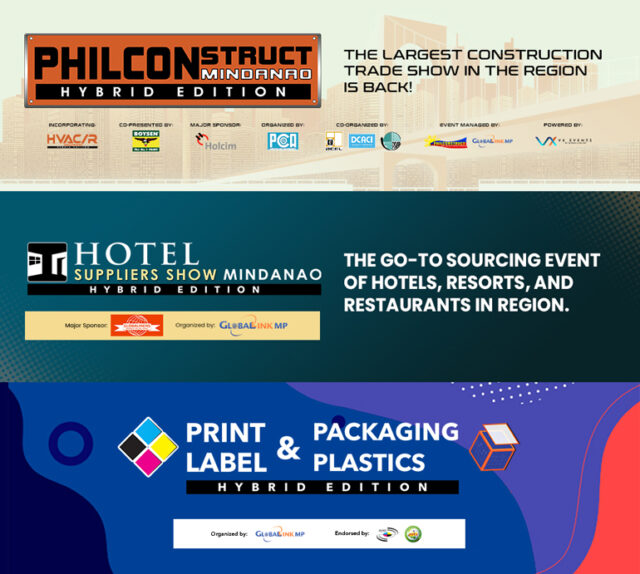
Hotel Suppliers Show returns to Davao this September for another hybrid edition

Two trade shows for the hospitality and manufacturing industries are all set for their simultaneous, back-to-back expos in Mindanao. Events and marketing agency Global-Link MP, a subsidiary of Singapore’s MP International Pte. Ltd and part of award-winning global activation agency Pico Group, brings the Hotel Suppliers Show Mindanao 2022 and the Print & Label, Packaging & Plastics Mindanao 2022 on Sept. 8 to 10, 2022 in Davao City.

Hotel Suppliers Show Mindanao 2022

Hotels, resorts, restaurants, and leisure establishments from across Mindanao are set to gather in a physical venue once again this time in Mindanao. The industry trade show will be in a hybrid format — on-ground and online to reach more stakeholders and to bring about more opportunities for everyone. The first-ever hybrid edition of Hotel Suppliers Show since its debut in 2010 will pave the way for technology to change and improve the way industry players do business.

The exhibit will showcase necessary items like coffee machines, coffee beans, and capsules; lighting fixtures; linens, mattresses, and foams; specialty papers; and software solutions and hardware products. Several brands are present on this prestigious event for visitors to look forward to such as Global Linens, Concept Specialist, Landlite, International Fine Paper Exchange and many more! The Hotel Suppliers Show Mindanao is sponsored by Global Linens Worldwide, Inc.

Register for free for the Hotel Suppliers Show Mindanao 2022 here: event.hotelsuppliersshow.com. For inquiries and other concerns, send an email to info@hotelsuppliersshow.com.

Print & Label, Packaging & Plastics Mindanao 2022

The most comprehensive packaging, printing, and plastics trade show, now on-ground and online, returns to Mindanao. Print & Label, Packaging & Plastics Mindanao 2022 is set to highlight technologies and innovations in the industry through exhibitions by the country’s leading suppliers and manufacturers.

Some of the biggest brands in the manufacturing industry will be present on this event such as Big Pix Graphics Systems, Touchart Trading Enterprises, Trans World Trading, Kelin Graphics System, and many more. Visit the event to see all the latest technologies in the industry!

Print & Label, Packaging & Plastics Mindanao 2022 taps partner organizations to make this annual gathering more worthwhile. Those are the Philippine Center for Print Excellence Foundation, Inc. (PCPEF) and the Philippine Plastics Industry Association (PPIA). The trade show will also facilitate informative sessions — a presentation by Trans World and the Evalene Plus Launch by JG Summit.

Register for free for the Print & Label, Packaging & Plastics Mindanao 2022 through these links: event.printandlabelphilippines.com or event.packplasphilippines.com. For inquiries and other concerns, send an email to info@printandlabelphilippines.com or info@packplasphilippines.com. You may also send an SMS or call 0917-706-8134.

The Hotel Suppliers Show Mindanao 2022 and the Print & Label, Packaging & Plastics Mindanao 2022 will be held simultaneously and in the same venue with the PHILCONSTRUCT Mindanao 2022 from Sept. 8 to 10, 2022 at the SMX Convention Center Davao in SM Lanang Premier. All three trade shows can also be accessed online and real-time through the VX Events Platform. The three-day shows will span from 10 a.m. to 6 p.m.


Spotlight is BusinessWorld’s sponsored section that allows advertisers to amplify their brand and connect with BusinessWorld’s audience by enabling them to publish their stories directly on the BusinessWorld Web site. For more information, send an email to online@bworldonline.com.

Join us on Viber to get more updates from BusinessWorld: https://bit.ly/3hv6bLA.

#TruthInAction: Globe partners with Internews to support quality journalism, fight fake news

Globe and global non-profit Internews sign a contract on Ads for News, a pioneering effort that aims to support carefully vetted local media organizations via programmatic advertising. Present at the signing held August 30, 2022 at the Globe Tower were (L-R) Ads for News Director Chris Hajecki, Internews Philippines Country Director Greg Kehailia, Globe Chief Sustainability and Corporate Communications Officer Yoly Crisanto, and Globe PR & Communications Strategy Director Liza Reyes.

Globe has partnered with global non-profit Internews in a pioneering effort to raise quality journalism above the disinformation clutter and promote authenticity through support for carefully vetted local media organizations via programmatic advertising.

Through Ads for News, Globe is now the first and only telco and digital solutions platform in the Philippines to take part in such an effort, aligned with its long-running programs that aim to protect the public against online threats, including false information.

With the partnership, Globe has committed to direct ad spending to online news sites verified by Internews, including small and independent outlets that would otherwise have limited access to media investments from a major enterprise.

“This partnership is aligned with our advocacy to promote responsible online behavior. We are proud to be the first in the industry to partner with Internews in this noble initiative,” said Yoly Crisanto, Globe Chief Sustainability and Corporate Communications Officer.

“Our goal is to bring to the fore what journalism ought to be: a chronicle of truth and a source of quality and useful information that could help communities realize their full potential,” she said.

Internews cited Globe’s commitment to Ads for News, calling it a valued partner in advancing responsible media investing and improving access to quality information.

“Responsible media investment today will have a meaningful positive impact on communities and society tomorrow. Globe’s partnership with Internews is significant because of Globe’s leading commitment to investing in advertising on trusted local news. In doing so publicly, Globe also sets a noble example for other major companies to follow,” said Chris Hajecki, Ads for News Director.

Ads for News is a global program led by Internews, with support from the World Economic Forum and GroupM, which aims to provide crucial ad support for local media organizations as they face financial woes. It also hopes to prevent the use of advertising funds on websites linked to fake news.

In the Philippines, Ads for News partnered with the Asian Center for Journalism to vet independent news websites using global journalism standards and the GARM Brand Safety and Suitability Standards. The Makati Business Club is also a partner in the advocacy among leading companies in the private sector.

Globe will, in turn, make use of its funding commitment to place advertisements on a chosen selection of trusted local news websites.

The company’s partnership with Internews is another major step towards its goal of promoting a safe online environment and quality information access for all.

Globe’s efforts to promote a safer online environment and access to quality information is part of its commitment to the United Nations Sustainable Development Goals, particularly UN SDG No. 9, which highlights the roles of infrastructure and innovation as crucial drivers of economic growth and development, and UN SDG No. 17, which highlights the value of partnerships in achieving the sustainable development goals.

Its long-running #MakeITSafePH campaign is geared towards protecting children from online abuse. It has so far invested $2.7 million in content filtering systems. Globe’s Digital Thumbprint Program, meanwhile, teaches children responsible digital citizenship through public education modules and workshops.

To know more about Globe, visit www.globe.com.ph.


Spotlight is BusinessWorld’s sponsored section that allows advertisers to amplify their brand and connect with BusinessWorld’s audience by enabling them to publish their stories directly on the BusinessWorld Web site. For more information, send an email to online@bworldonline.com.

Join us on Viber to get more updates from BusinessWorld: https://bit.ly/3hv6bLA.

Metrobank: Empowering Filipino customers and businesses for 60 years

As Metropolitan Bank & Trust Co. (Metrobank) celebrates its 60th year, it looks to further boost the reviving economy by leveraging on its full suite of financial products and services that bridge its retail, corporate, treasury and investment banking as well as leasing and bancassurance activities.

“For the past six decades, our customers have always been at the front and center of everything we do. As we mark our 60th year, we will continue to evolve with our customers and strive to deliver more convenient and relevant banking products and services to meet their needs, which in turn helps fuel our country’s economic growth,” said Metrobank President Fabian S. Dee.

Demonstrating strength and reliability for 60 years

Through the years, Metrobank has generated stable and diversified revenue streams and developed innovative financial solutions to cater to different customers. It has built both offline and online channels to strike a balance between digital innovation and the human touch across all its touchpoints.

To date, the Bank has over 940 consolidated branches nationwide, more than 30 foreign branches, and over 2,300 combined ATMs. It also provides accountholders with online banking platforms, allowing them to conduct their financial transactions anytime and wherever they may be.

“Our goal has always been to enrich the lives of all our stakeholders so we continuously evolve and innovate to retain our status as a strong and reliable bank for them. Even before the pandemic, we have adopted innovations in the digital space to address the shift in consumer behavior, while cementing relationships with those who still prefer in-person transactions,” said Dee.

The bank further proved strength and stability after reporting a 33% rise in net income to PHP 15.6 billion in the first six months of the year. The strong earnings performance shows that even amid the ongoing pandemic, Metrobank’s loan portfolio expanded, interest margin improved, and fee income growth remained robust while operating costs stayed put. Its consolidated assets and total equity reached PHP 2.7 trillion and PHP 303.4 billion, respectively. Metrobank’s balance sheet remained one of the strongest in the industry with its capital adequacy ratio standing at 17.6%, while its common equity Tier 1 was at 16.8%— both well-above the central bank’s minimum requirement.

Banking as a social business

Metrobank’s DNA is ingrained with doing good, helping people, and helping the nation. The bank endeavors this through financial education and social activities by its philanthropic arm, Metrobank Foundation Inc.

Since day one, Metrobank has committed to empower the larger Filipino community with knowledge that will boost their confidence and enable them to make smart financial decisions. In line with its promise to always put stakeholders in ‘good hands,’ Metrobank launched free and accessible financial education content and platforms to teach clients and the public personal finance, investing, and other finance principles.

“Our customers are people and not just account numbers. We want to be the bank that educates and helps them to live life to the fullest by equipping them with financial education so they can make smart financial decisions and achieve their goals,” said Dee.

Most recently, Metrobank introduced Wealth Insights— a website where high net worth individuals can get timely market news, valuable insights, and expert advice to make meaningful investment decisions. The bank also launched Earnest, a financial education and investing platform for starting investors. Tara Invest is also an initiative composed of a video series intended for first-time investors. On personal finance, Metrobank launched MoneyBasics, a collection of simple and creative articles and social media posts to help people build their savings habit. Meanwhile, to educate Filipinos about the dangers of financial fraud and how to prevent it, Metrobank teamed up with Philippine Savings Bank and other local banks to roll out the Scam Proof campaign— a series of online content focused on fraud prevention.

Meanwhile, as its means to pay it forward, Metrobank regularly rechannels its successes through Metrobank Foundation, which funnels its grants and in-kind donations towards programs that support outstanding Filipinos, education, and disaster response, rebuilding of livelihood, among others.

Its flagship programs include the Metrobank Foundation Outstanding Filipinos; Metrobank Art & Design Excellence; Metrobank Scholarship Program; Metrobank MTAP-DepEd Math Challenge; George S.K. Ty Grants Turnover, Disaster Response, National Teachers’ Month celebration, and the Metrobank Foundation Professorial Chair Lectures.

“We are not all about the numbers. Our Founder, Dr. George S.K. Ty, has instilled among Metrobankers that we have the responsibility to do good and pay it forward to society. That is why we have always ensured that we are able to give back to different communities through the Foundation,” said Dee.

In its 60th year, leading global financial publications abroad have recognized Metrobank’s strength and initiatives for customers, businesses, and communities. It was named the Philippines’ Best Bank by Euromoney; the Strongest Bank by the Asian Banker; the Best Domestic Bank and Best Domestic Private Bank by AsiaMoney; and the Top Banking Employer in the country by LinkedIn.

“I am proud that Metrobank has come this far. Today, after 60 years, it remains strong as ever and I am excited to see what more we can do to better serve Filipinos and ensure that they are in good hands for the next 60 years and beyond,” Dee said.

To know more about Metrobank, visit ingoodhands.metrobank.com.ph/.


Spotlight is BusinessWorld’s sponsored section that allows advertisers to amplify their brand and connect with BusinessWorld’s audience by enabling them to publish their stories directly on the BusinessWorld Web site. For more information, send an email to online@bworldonline.com.

Join us on Viber to get more updates from BusinessWorld: https://bit.ly/3hv6bLA.

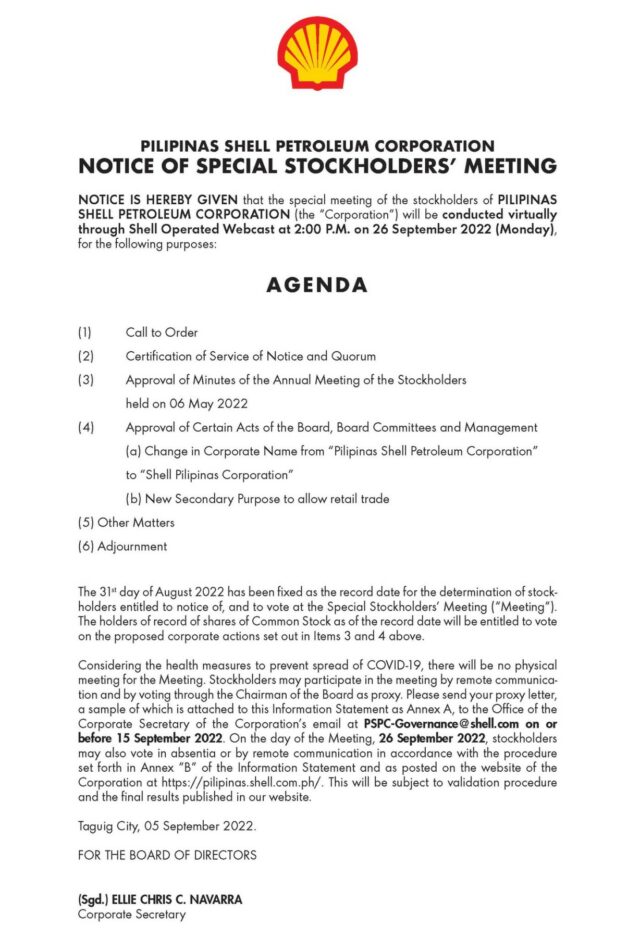
Pilipinas Shell Petroleum Corp. to hold special stockholders’ meeting virtually on Sept. 26


Spotlight is BusinessWorld’s sponsored section that allows advertisers to amplify their brand and connect with BusinessWorld’s audience by enabling them to publish their stories directly on the BusinessWorld Web site. For more information, send an email to online@bworldonline.com.

Join us on Viber to get more updates from BusinessWorld: https://bit.ly/3hv6bLA.

PHINMA Education commits to serving over 120K students in SY 22-23

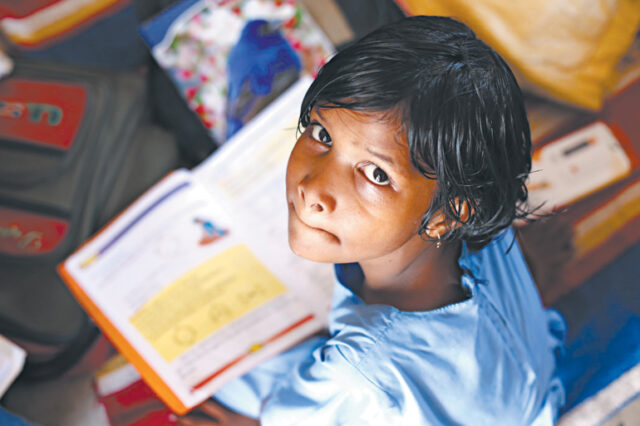
PHINMA Education opens SY 22-23 with over 120,000 students, a significant increase from their SY 21-22 count of 95,000. About 61,000 are new students, with 42,000 freshmen. The network, with its mission of making lives better through education, credits its growing population to its learning strategies customized to the needs of the underserved market.

A majority of the network’s students come from low-income families, most of whom are the first in their families to enter college. For freshmen, nine out of 10 enter college with reading and math levels below what is required for college work. However, PHINMA Education is able to bridge learning gaps and empower them to attain gainful employment through financial, academic, and psychological support.

PHINMA Education also offers the Hawak Kamay (HK) Scholarship Program. With this, students may get as much as 75% scholarship depending on their family’s financial status. About 6 in 10 students currently benefit from the program.

The network offers a wide variety of programs that encompass the entire education chain. Among its popular ones are Nursing, Education, Criminology, Accountancy, Business Administration, and Engineering.

By training teachers in the Active Learning method, students learn critical thinking, problem solving, and decision making throughout the curriculum. The network also collaborates with industry partners to ensure curriculum relevance and equips students with Core Work Skills that they need to succeed in any industry.

Supplementing these financial and academic interventions is the Student Success Program (SSP) which underscores the three mindsets, “I want, I can, and I belong.” The program has proved vital in guiding students through college and towards their first jobs.

The network boasts a 75% board exam passing rate for first-time takers. To date, it has produced 122 board top-notchers and over 26,000 professionals.

In the May 2022 Nursing Licensure Examination, PHINMA Education had a 97% first-time takers passing rate, compared to the national average of 68%. It had six top-notchers, and PHINMA University of Pangasinan (UPang) was hailed as the top 2 nursing school.

In the August 2022 Mechanical Engineer Licensure Examination, PHINMA Cagayan de Oro College (COC) and PHINMA University of Pangasinan (UPang) garnered an overall passing rate of 92.68%. Meanwhile, in the recent Medical Technologist Board Exam, PHINMA UPang, Southwestern University (SWU) PHINMA in Cebu City, and PHINMA Saint Jude College (SJC) in Manila scored a 47.67% overall passing rate.

The network has a strong track record in acquiring and turning around schools, of which there are nine in the Philippines and one in Indonesia. In SY 21-22, PHINMA Education served 95,503 students, a 31% increase from 72,746 students in SY 20-21. This resulted in consolidated revenues of P3.79 billion, a 79% increase year on year.

PHINMA Education Holdings, Inc., under the conglomerate PHINMA Corp., started investing in the education services sector in 2004 through the acquisition of PHINMA Araullo University in Nueva Ecija. It has since expanded its presence across the country with its network of schools namely: PHINMA Cagayan de Oro College, PHINMA University of Pangasinan, PHINMA University of Iloilo, Southwestern University PHINMA in Cebu City, PHINMA Saint Jude College in Manila, PHINMA Republican College in Quezon City, PHINMA Rizal College of Laguna, and PHINMA Union College of Laguna. It also aims to expand across Southeast Asia beginning with Horizon Education in Indonesia.


Spotlight is BusinessWorld’s sponsored section that allows advertisers to amplify their brand and connect with BusinessWorld’s audience by enabling them to publish their stories directly on the BusinessWorld Web site. For more information, send an email to online@bworldonline.com.

Join us on Viber to get more updates from BusinessWorld: https://bit.ly/3hv6bLA.

Addressing the Philippines’ learning crisis

By Adrian Paul B. Conoza, Special Features Assistant Editor

Business leaders and education experts have largely recognized that education in the Philippines has been facing a lot of difficulties, and the coronavirus pandemic has exacerbated such difficulties as schools adopted distanced or ‘blended’ learning in the past two years. The consensus has been that the Philippines — and the world in general — has been facing a “learning crisis,” and it is hoped that the new administration will exert great effort in resolving this another crisis in the country as face-to-face classes have resumed.

To recall, the most recent results of the Program for International Student Assessment (PISA) conducted by the Organization for Economic Cooperation and Development (OECD) showed that 15-year-old students in the Philippines scored lower in reading, mathematics, and science than those in most of the countries and economies that participated in the survey back in 2018.

The Philippines scored the lowest in reading comprehension with a mean score of 340 points, below the survey average of 487 points; while it was the second-lowest in Science at 357 and in Math at 353, below the average of 489 points in both subjects.

Interpreting the findings in context, OECD notes that expenditure per student in the Philippines was the lowest amongst all PISA-participating countries, and the expenditure was 90% lower than the OECD average.

“By comparison, expenditure per student in Indonesia was 83% lower than the OECD average and students there outperformed students in the Philippines, although their scores were still lower than those of students in between 66 and 70 other countries/economies,” the PISA report added.

Fast-forward to the past two years, when the pandemic forced schools to continue their classes virtually and even some to halt their operations, the difficulties in the country’s education system have been found to be much deeper.

A report by the World Bank (WB) last year highlighted that the Philippines’ learning poverty — defined as the share of 10-year-old children who cannot read and understand a simple story — was estimated at 69.5% in 2019, based on Trends in International Mathematics and Science Study 2003 outcomes.

On the other hand, based on Southeast Asia Primary Learning Metrics from 2019, as published in United Nations Children’s Fund’s (UNICEF) report on the State of Learning Poverty, the country’s learning poverty is at 90.9%.

According to WB, school closures and learning loss during the pandemic can have a long-term negative impact on the current cohort of school children, and these two factors are likely to affect the children’s economic potential and productivity in adulthood.

WB estimated that due to learning losses, an average annual earning per student will decrease by $893 to $1,137, or a loss of present value of individual lifetime earnings by $16,287 to $20,752.

Further on the pandemic’s impacts, WB observed that an additional 1.6 million students were out of school in 2021 as overall basic education enrollment was 6% lower than in 2020. Enrolled children, meanwhile, faced many challenges to effective learning under a distance learning modality; and such challenges have been found greater for lower-income households who have limited resources for better access. This likely explains the high demand for returning to in-person classes, highly driven by lower-income households and women.

Cited by advocacy group Philippine Business for Education (PBEd) in a statement, a survey by Samahan ng Nagkakaisang Pamilya ng Pantawid of more than 9,000 parents revealed that they spent 40% more because of distance learning compared to 2020; while a Pulse Asia survey said that one out of four parents think their children are not learning in the remote setup.

More recently, according to UNICEF’s report, jointly published in partnership with United Nations Educational, Scientific and Cultural Organization (UNESCO) and WB last March, nearly six out of every 10 10-year-olds in low- and middle-income countries suffering from learning poverty. Translated to the Philippine context, less than 15% of Filipino children are found to be capable of reading a simple text at age 10 — placing the country’s learning poverty somewhere around 85%.

Another highlight of the report confirmed that the Philippines has the longest duration of school closures, as of last February. Year 2020 figures cited by PBEd showed that private school closures reached a total of 1,179.

Strongly recognizing the struggles the country’s education system has been through, especially amid the pandemic, PBEd sees the need to immediately resolve the difficulties.



“Clearly, we need to stop the learning crisis. All sectors of society need to take part in solving this crisis, with the government taking the lead. We must demand for better education, for quality education enables individuals to enjoy strongly rooted and secure lives as reflected in Ambisyon Natin 2040,” PBEd Chairman Ramon del Rosario, Jr. said in a statement.

Sharing in a compilation of insights published on BusinessWorld’s anniversary report last July, Mr. del Rosario noted that the longstanding education crisis is what currently hurdles the country from reaching its goal of slashing Philippine poverty to a single digit, as shared by the current President in his trust state of the nation address.

“We cannot address our learning losses without sufficient resources. Historically, only 3% of our GDP (gross domestic product) has been allotted for the education sector. While the proposed budget for basic education now is at 4.3%, we still do not meet the global standard of 6%. We should spend as much for education as we do for physical infrastructure,” the PBEd chairman continued.

PBEd, together with Philippine Business for Social Progress, Makati Business Club, and Management Association of the Philippines, proposes the following policy directions for improving the country’s education system: (1) bringing all children to quality pre-Kindergarten to Grade 3 education and developmental programs; (2) improving the quality of instruction and teachers with the target that all learners meet basic skills based on international standards; (3) using the lens of lifelong learning in workforce development; (4) fully leveraging private education to better complement delivery of services; and (5) strengthening autonomy, coupled with accountability, of school leaders and local governments.

RLC moves forward with modern and fully-equipped offices located in Metro Manila and in key cities of Bacolod, Iloilo, and Cebu

Artist’s perspective: GBF Center 1, RLC’s prime office development, is poised to be the most iconic structure along the C5-Libis IT corridor.

The future of work is reimagined to be about flexibility. But how could companies assure that their employees have access to the right facilities to be productive wherever they are?

Robinsons Land Corporation (RLC), a leading real estate developer and a pioneer in providing office spaces in the country, offers workspaces within and beyond the capital. These office developments are built with reliable equipment and sustainable features designed to cater to new customer demands.

Businesses looking to have a progressive, efficient, and sustainable office in the metro can find a workspace in the recently topped-off GBF Center 1, RLC’s most prime office development to date.

The 30-storey building is a modern office with a striking façade made of full-curtain glass walls, posing a vibrant visual dynamic for the C5 skyline. It is touted as the most iconic structure along the C5-Libis IT corridor.

Matching the elegant architecture of its facade is its functionality within. GBF Center 1 showcases well-designed center-core office spaces with large floor plates of about 2,500 sq.m. Both traditional and BPO companies will appreciate its column-free design, which allows users to maximize the use of its already efficient floor plate. It will also be interconnected with GBF Center 2 through the basement and podium parking floors, ground floor retail, and 9th floor common deck for the two towers.

The building is equipped to support efficient business operations with 100% backup power N+1 configuration for the gensets. Furthermore, it is built with various contactless features such as hands-free toilet fixtures and QR-activated turnstiles and elevators.

Companies are also given added layers of safety and convenience inside the premises with the installed turnstiles seamlessly integrated with destination control elevators, a digital visitor management system, professionally managed security systems, and round-the-clock CCTV monitoring.

Through GBF Center 1, RLC pursued its sustainability goals by reducing the building’s environmental impact. The office is equipped with LED lights, a rainwater collection facility, and an electric charging station, which promotes a sustainable lifestyle. It is aiming for LEED (Leadership in Energy and Environmental Design) Gold Certification.

GBF Center 1 stands at the entrance of RLC’s Bridgetowne Destination Estate, where one could experience the live-work-play-inspire lifestyle. Businesses that locate at the GBF Center 1 would be in the midst of best-in-class residential condominiums, a luxury lifestyle center, and a premium hotel. The 30.6-hectare Bridgetowne spans the border of Quezon City and Pasig City.

Working beyond the metro

Artist’s perspective: RLC’s Cybergate Bacolod 2 is a 9-storey premium-grade office development sufficiently equipped with safety and green features to provide a better work environment.

RLC also offers office spaces for companies that want to tap into the rich labor pool offered in the provinces, specifically in Bacolod, Iloilo, and Cebu.

In Bacolod, Cybergate Bacolod 2 and 3 are built with 9-storey each and large office floor plates of around 2,500 sq.m. Both their ground floors will house retail and dining options that employees could enjoy round the clock. These office are also equipped with 100% backup power with N+1 utility; FDAS, re sprinklers, and smoke detectors; and 24/7 CCTV surveillance for efficiency, safety, and business continuity.

Cybergate Bacolod 2 and 3 are located within the Robinsons Bacolod complex located along Lacson Street in Bacolod City.

RLC’s commitment to sustainability also extends to Cybergate Bacolod 2. The green features that will be incorporated in the building include LED lighting, a rainwater recycling system, water-efficient plumbing fixtures, and double-glazed glass. This office building aspires to secure LEED certification.

With a 60% lease-out rate, Cybergate Bacolod 2 is slated for completion by the fourth quarter of this year. Cybergate Bacolod 3, on the other hand, will be completed by the end of 2023.

Meanwhile, Cybergate Iloilo Towers, located within the heart of Iloilo in Robinsons Place Pavia complex, is fast becoming the preferred office development for companies seeking modern and functional workspaces.

RLC’s newly completed Cybergate Iloilo Tower 1 is comprised of seven levels with around 2,400 sq.m. floor plate each. While Tower 2, targeted to be completed by the fourth quarter of 2022, is a 10-storey office building that also has around 2,400 sq.m. floor plates. Tower 3 is yet to be constructed.

Safety and sustainability are the topmost considerations in building the Cybergate Iloilo Towers to provide businesses with a better work environment.

RLC also offers workspaces at its 14-storey prime office development Cybergate Galleria located within the Robinsons Galleria Cebu complex in Cebu City.

Cybergate Galleria consists of nine office floors with floor plates measuring around 2,100 sq.m. The building has one level for commercial establishments, including retail, service, and dining options. Currently over 20% leased, this office building also promotes sustainability.

RLC is a leading provider of office spaces for Business Process Outsourcing (BPO) companies in the Philippines. Recognizing the increased need of infrastructure to support the new digital economy, RLC now supports data centers within its master-planned communities.

Artist’s perspective: RLC’s Campus One is dubbed as the Philippines’ largest telco neutral data center.

Bridgetowne houses Campus One, which hosts the largest telco- neutral data center in the country and serves as RLC’s first data center lease. 15 minutes from Bridgetowne is Sierra Valley, its 18-hectare mixed- use destination estate, which has lots provisioned for data centers. Meanwhile, its 216-hectare mixed-use green destination estate Montclair in Porac, Pampanga is only five minutes away from the Clark Freeport Zone.

Apart from workspaces and mixed-use developments, RLC continues to develop commercial centers, hotels and resorts, and residences nationwide.

Visit http://robinsonsoffices.com to know more about RLC’s office developments or email offices@robinsonsland.com for leasing inquiries.


Spotlight is BusinessWorld’s sponsored section that allows advertisers to amplify their brand and connect with BusinessWorld’s audience by enabling them to publish their stories directly on the BusinessWorld Web site. For more information, send an email to online@bworldonline.com.

Join us on Viber to get more updates from BusinessWorld: https://bit.ly/3hv6bLA.