Home Blog Page 5942

How digital technology is revolutionizing education

Out of adversity comes opportunity, Benjamin Franklin once said. Indeed, humanity’s greatest innovations and triumphs are borne of a time of great upheaval and change. One doesn’t even need to look far back in history for an example, as the COVID-19 pandemic is proof enough.

The pandemic, one of the most wide-reaching global crises in recent memory, has become the catalyst to the complete integration of the digital world to our physical one. Now, all aspects of daily life — be it banking, entertainment, socialization, healthcare, or even dining — can be accessed through the digital realm.

Out of them all, education is one that shows the most promise for meaningful change. The digital transformation of education has become critically important after the COVID-19 pandemic closed down classrooms across the world.

Edtech, or educational technology, since then has aimed to utilize digital technology to address accessibility, not only to circumvent pandemic-related restrictions, but for pupils with learning difficulties or disabilities as well.

“Educational technology — or “edtech” — entered public consciousness over the past year as the COVID-19 pandemic moved learners young and old out of the classroom and into the virtual world of remote education,” the World Economic Forum wrote in an article as part of the Davos Agenda mobilization initiative.

“One of its key benefits is improved accessibility to education — both in terms of helping pupils with learning difficulties or disabilities and in making learning less location-dependent.”

The World Economic Forum cited three key technologies that present the most potential to enhance education accessibility across the world: namely, augmented and virtual technology, artificial intelligence, and wireless technology.

Augmented and virtual technologies have become the go-to for schools and universities around the world as virtual classrooms and interactive learning materials aimed to create new learning environments for students regardless of location.

The World Economic Forum pointed out the innovative Virtuali-tee by Curiscope, a t-shirt and app package that enables users to learn about the human body. It works by allowing the AR smartphone app to virtually reveal — and explore — the various layers inside the body.

“The technology can also have benefits for neurodiverse learners. Floreo is a telehealth platform that uses VR headsets to deliver social and behavioral therapy in schools and other settings,” the organization noted.

Artificial intelligence helps learners outside the classroom through the use of virtual feedback, and customized learning material. This is primarily a boon for teachers, as AI can provide them with statistics and curriculum support powered by machine learning.

UK-based Sparx Maths does this, providing a four-hour programme every week on average that can increase a pupil’s GCSE maths exam result by a grade. Sparx can also help disadvantaged children progress at the same rate as their more advantaged counterparts, reducing the attainment gap.

Something like KidSense.AI, meanwhile, uses deep learning technology to offer a sophisticated automatic speech recognition system for children. Trained using children’s voice samples, KidSense powers the Roybi Robot — an AI-driven smart toy that teaches languages and basic skills in science, technology, engineering and math.

Finally, wireless technology can empower learners in communities and regions with limited or no internet access. The World Economic Forum pointed out Zaya’s ClassCloud as an example, a plug-and-play device that can support up to 40 laptops or tablets in the classroom over Wi-Fi and provides the same standard of user experience whether it is connected to the internet or not. ClassCloud has been used to improve access to high-quality education in rural locations in India.

Other offline learning apps like Kolibri can be seeded onto devices in areas where there is an internet connection — such as a school or a factory — and be shared over an offline local network.

“Edtech’s greatest promise is to widen access to education for everyone, no matter where they are in the world — something which has become an increasing priority during the pandemic,” the World Economic Forum said.

“Entrepreneurs and innovators who want to have an impact in areas such as education are invited to submit their solutions to have a chance to work with leading organizations via the World Economic Forum’s UpLink initiative — an open digital platform that aims to accelerate concrete progress in meeting the United Nations’ Sustainable Development Goals.” — Bjorn Biel M. Beltran
Inflation likely held steady at 6.4% in August – poll

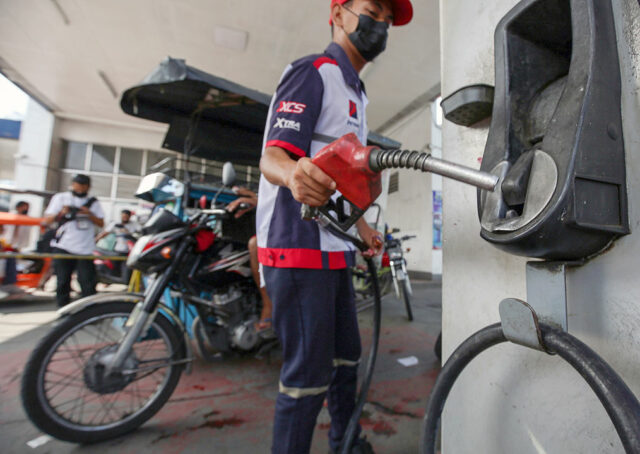
A gasoline attendant fills up a motorcycle with gasoline at a gas station in Delpan, Tondo, Manila on Monday, June 13. — PHILIPPINE STAR/KRIZ JOHN ROSALES

By Keisha B. Ta-asan

INFLATION likely held steady in August, but still above the Philippine central bank’s target band for a fifth straight month as lower pump prices and power rates offset higher food costs, a BusinessWorld poll showed.

A BusinessWorld poll of 13 analysts yielded a median estimate of 6.4% for August inflation, well within the 5.9-6.7% forecast of the Bangko Sentral ng Pilipinas (BSP).

If realized, August inflation would be unchanged from the 6.4% print seen in July which was the highest in 45 months or since the 6.9% print in October 2018.

Headline inflation rates in the Philippines (Aug. 2022)

Inflation stood at 4.4% in August 2021.

August inflation would also likely exceed the central bank’s annual 2-4% target range for a fifth straight month.

The Philippine Statistics Authority (PSA) is scheduled to release the latest consumer price index (CPI) data on Sept. 6 (Tuesday).

Analysts noted that food prices remain elevated and likely drove the faster year-on-year inflation in August.

“The higher prices of key food items are due to supply constraints and the higher suggested retail price issued by the DTI (Department of Trade and Industry),” Philippine National Bank economist Alvin Joseph A. Arogo said.    

The DTI released on Aug. 12 the suggested retail price (SRP) bulletin for some basic and prime commodities, which reflected increases of between 3% and 10%. 

“The food basket is estimated to have contributed approximately 2.3%, remaining the prime inflationary factor especially with [storm] Florita’s damage to food output, on top of the prolonged sugar shortage,” Robert Dan J. Roces, chief economist at Security Bank Corp., said in an e-mail.

The Department of Agriculture reported P1.13 billion worth of damage to agriculture due to severe tropical storm Florita last month.

Sugar prices reached over P100 per kilo due to the shortage in supply, but several large supermarkets have agreed to sell sugar at P70 per kilo. 

LOWER OIL PRICES
“Offsetting (inflation) is lower global oil prices and lower cost of other food stuff. Price growth remains mostly cost-push driven amid some demand-side recovery. Upside risks coming from global factors remain significant,” Mr. Roces said.

Global oil prices fell for a third straight month in August over concerns that monetary tightening will hurt economic growth.

As of Aug. 23, pump price adjustments for the month stood at a net decrease of P0.75 a liter, diesel by P1.25, and kerosene by P0.95.

“We estimate August inflation to be slightly lower than the previous month at 6.3% due to declines in pump prices in the first three weeks of the month. Electricity for Meralco-serviced areas and LPG (liquefied petroleum gas) also posted lower rates for the month,” Domini S. Velasquez, chief economist at China Banking Corp., said in an e-mail.

Manila Electric Co. (Meralco) said the overall rate for a typical household went down by P0.2087 to P9.5458 per kilowatt-hour (kWh) in August.

Meanwhile, Bank of the Philippine Islands Lead Economist Emilio S. Neri, Jr. said inflation can put a damper on economic growth, more than rising interest rates.

“We have observed a slowdown in spending on discretionary items and services like restaurants dragged by rapid inflation and peso depreciation,” Mr. Neri said.

The local unit closed at an all-time low of P56.77 on Friday, weakening by 35 centavos from its P56.42 finish on Thursday, data from the Bankers Association of the Philippines showed.

For the year so far, the peso has weakened by P5.77 or 11.31% from its Dec. 31, 2021 close of P51 per dollar. The currency is the third worst performer in Asia in 2022, after the Japanese yen and South Korean won.

“We are concerned about the effects of the exchange rate on inflation,” BSP Governor Felipe M. Medalla said during the virtual Reuters NEXT Newsmaker event on Friday.

The central bank has increased borrowing costs by 175 basis points since May as it seeks to bring inflation back within target.

“If only the midpoint of our forecast is the basis for decision, we are already on the right path. But personally, I want a little bit more room for comfort,” Mr. Medalla said.

“I will not say whether my preference function is above (75 bps), below that, or on that…I don’t want to make my colleagues feel that I’m trying to pressure them to do what I like,” he added. 

At its August meeting, the BSP’s inflation forecast for 2023 was lowered to 4% from 4.2%, as well as the 2024 outlook to 3.2% from 3.3%

“So far, despite the cumulative 175 bps policy rate hike, BPI has not increased charges on credit cards which somewhat indicates that consumer demand has not been constrained by monetary tightening yet,” Mr. Neri said.

“As domestic inflation continues to rise, therefore, recovery to pre-COVID growth consumer demand has not been constrained by monetary tightening yet,” he added.

The Monetary Board will have its next policy-setting meeting on Sept. 22.

Concern grows as NG debt hits new record

BW FILE PHOTO

THE NATIONAL Government (NG) debt hit another record as of end-July, but economists expressed concern whether the government can generate enough revenues for the eventual repayment of the large borrowings incurred during the pandemic.

The NG outstanding debt rose by 0.8% or P96.09 billion to a record-high P12.89 trillion at the end of July, beating the previous high of P12.79 trillion as of end-June, due to additional domestic and local borrowings, as well as a weaker peso.

The Bureau of the Treasury (BTr) said the debt pile jumped by 9.9% since the year started, after the government borrowed P1.16 trillion more. Year on year, the debt stock jumped by 11% from P11.61 trillion.

National Government outstanding debt“Outstanding National Government debt may have continued to increase on a month-on-month basis but the figure is still nearly half the average monthly increase of about P165 billion from 2020 to June 2022, or P2 trillion per year from 2020 to 2021 when there were hard lockdowns,” Rizal Commercial Banking Corp. Chief Economist Michael L. Ricafort said in a Viber message.

“This reflects the narrowing of the budget deficit in terms of the faster growth in government tax revenue collections and the slower growth in government expenditures amid recent measures to further reopen the economy towards greater normalcy,” he added.

In the first seven months of 2022, the budget deficit narrowed by 9.11% to P761 billion.

To address the over P5 trillion in debt incurred since the pandemic began, Mr. Ricafort said that the Marcos administration still needs to intensify revenue collections, implement fiscal reforms and anti-corruption efforts.

“[These] would help narrow the budget deficit and, in turn, slow the growth or increment in the National Government’s outstanding debt, as well as better prepare for the eventual payment of the large borrowings incurred during the pandemic,” Mr. Ricafort said.

Ateneo de Manila University economics professor Leonardo A. Lanzona said the slower rise in debt can mean the government is “becoming more prudent with our resources or it can mean that we are now losing ground in terms of our ability to borrow.”

“It is alright to borrow if the growth rate is higher than the cost of borrowing,” he said.

Economist John Paolo R. Rivera from the Asian Institute of Management (AIM) said the government is not significantly adding debt compared to the height of the pandemic.

“The concern should be more of whether we are generating enough income to do debt payments while [we] continue providing social services,” he said.

As of end-July, outstanding local borrowings reached P8.83 trillion, 0.7% up from the end-June level. The BTr attributed the increase to the net issuance of government securities amounting to P64.33 billion and the P750-million impact of the peso’s depreciation against the US dollar.

Domestic debt was 8.8% higher than the P8.12 trillion a year earlier, and 8.1% higher than the end-December 2021 level of P8.17 trillion.

Most of the domestic debt stock still came from government securities with P8.83 trillion in July, up by 16.5% year on year, and 0.7% month on month.

Meanwhile, outstanding external debt jumped by 16.2% year on year to P4.06 trillion as of end-July. It inched up by 0.8% month on month, and increased by 14% from the end-December 2021 level.

Broken down, it consisted of P1.82 trillion in foreign loans and P2.24 trillion in global bonds.

“The increment in the level of external debt was attributed to the impact of local currency depreciation against the (US dollar) amounting to P25.77 billion and net availment of external financing amounting to P6 billion,” the Treasury said. 

AIM’s Mr. Rivera said that the incremental increase of the debt was expected seeing how the Philippine peso breached the P56-to-a-dollar level.

The peso closed at a new record low against the dollar on Friday at P56.77, accounting for an 11.31% depreciation against the greenback in the year to date ending Sept. 2.

The government expects the peso to settle between P51 and P55 in 2023.

“If inflation is not arrested, it would also be challenging to manage forex to P51 to P55 but this can be achieved with the right monetary policy and meeting target economic growth,” Mr. Rivera said.

Meanwhile, overall guaranteed debt decreased month on month by 1.4% to P408 billion as of end-July. It was also 8.2% lower than the P444.31 billion as of July 2021.

This was attributed to P8.56 billion in net repayment of domestic guarantees and the net repayment of external guarantees amounting to P190 million.

“However, currency adjustments on both local and third currency-denominated guarantees were able to offset P1.4 billion and P1.43 billion, respectively,” the BTr said.

Outstanding debt is expected to rise to P13.43 trillion by the end of 2022.

Mr. Lanzona said the limited fiscal resources should instead be focused on social assistance and strategically located infrastructure projects.

“Not all infrastructure is inefficient. But if the infrastructure is going to be placed in the urban areas and is not going to improve productivity, this will be inefficient and will not benefit everyone, especially the poor. While it is true that returns from infrastructure exist, there are other investments such as education and health that have greater social returns,” he said in an e-mail.

Of the outstanding debt in July, the bulk or 68.53% was obtained domestically, while the rest was from foreign creditors.

Finance Secretary Benjamin E. Diokno said that the government is pursuing a borrowing mix of 75-25 this year in favor of domestic lenders. Eventually, the government will try to increase it to 80-20 to minimize foreign exchange risks.

“Tax reform and other fiscal reform measures, alongside faster economic growth, for the coming months would help ease the National Government’s debt-to-GDP ratio to below the international threshold of 60% and would help support the country’s relatively favorable credit ratings of 1-3 notched above the minimum investment grade rating,” Mr. Ricafort said.

The country’s debt level reached 62.1% of GDP at the end of the second quarter, from 54.6% as of end-2020 and 39.6% as of-end 2019. It is expected to steadily drop to 61.8% by end-2022, and to 52.5% by 2028.

Fitch Ratings in February maintained the Philippines’ investment-grade “BBB” rating, but retained a “negative” outlook, flagging uncertainties surrounding medium-term growth and hurdles to bringing down debt. A negative outlook means a downgrade is possible within the next 12 to 18 months.

S&P Global Ratings last affirmed the Philippines’ “BBB+” rating with a “stable” outlook in May 2021. Meanwhile, Moody’s last affirmed its “Baa2” credit rating with a stable outlook for the Philippines in July 2020.

The government borrows from local and external sources to help fund a budget deficit capped at P1.65 trillion this year, equivalent to 7.6% of gross domestic product.  Diego Gabriel C. Robles

Gov’t eyes insurance firms’ investments for infrastructure

The construction of a railway is seen in Balagtas, Bulacan, June 14, 2021. — PHILIPPINE STAR/ MICHAEL VARCAS

By Diego Gabriel C. Robles

THE MARCOS administration is eyeing investments from public and private insurance companies to support its ambitious infrastructure program amid a fiscal crunch, the country’s finance chief said.

Finance Secretary Benjamin E. Diokno said the government has to ramp up infrastructure spending in the next 20 years, particularly in the energy and transport sectors as the Philippines remains a laggard in Southeast Asia.

“We will maximize the use of long-term money for quality infrastructure… for example, [if] the return on infrastructure would be 20% and [insurance companies] will pay at least 12% — against investment that yields just 5-6% — it’s a win-win situation,” he told reporters at a Bangko Sentral ng Pilipinas (BSP) event on Friday.

Last July, the Government Service Insurance System (GSIS) already signaled its intent to continue investing in state and private infrastructure projects.

“Public sector or private sector, we will look at it. What’s important is the safety of our members’ money and the return that these investments would yield,” GSIS President and General Manager Jose Arnulfo A. Veloso previously said. “We want to ramp up our funds while helping the country.”

Aside from the GSIS, Mr. Diokno said that the administration is also looking to attract the Philippine Health Insurance Corp., Home Development Mutual Fund (Pag-IBIG Fund), and the Social Security System into investing in infrastructure projects.

“We will not mandate. But we will give them the option. It’s up to the individual boards to make a decision,” Mr. Diokno said.

In 2018, the Insurance Commission (IC) issued Circular Letter No. 2018-74 which set guidelines for insurance and reinsurance firms to “invest in debt and/or equity security instrument for the infrastructure projects under Philippine Development Plan” in order to help them “comply with the minimum net worth requirement” set by the regulator.

The circular said that insurers are required to submit the financial statements of the infrastructure projects so that the IC can determine the risk impact on the insurer’s capital.

“We’ll fix that. There’s a bill pending in Congress right now,” Mr. Diokno said, referring to House Bill No. 1787 and Senate Bill No. 425, both of which aim to reorganize the IC.

“I think the composition of the commission will be expanded. Because right now, it seems like it’s not a commission. It will be placed under the central bank or [will get] closer supervision. Maybe its mandate will also be changed,” he added.

The Marcos administration targets infrastructure spending to be at 5-6% of gross domestic product (GDP) by 2028.

“With higher interest rates, entering the bond market to fund public infrastructure projects may be attractive to both state and private insurance companies,” said Terry L. Ridon, a public investment analyst and convenor of think tank InfraWatch PH.

“But the government must temper this appetite to incur more loans with higher interest rates given our limited fiscal space and our actual debt load climbing faster to P13 trillion,” he added in an e-mail.

The government’s outstanding debt rose to a record-high P12.89 trillion at the end of July. It is expected to rise to P13.43 trillion by the end of the year.

“The IC has been very responsive in allowing its regulated entities to diversify their portfolio, which now includes foreign currency-denominated instruments, and without restriction, whether debt or equity securities,” Mr. Ridon said.

“As such, there should be no obstacle for infrastructure projects to be funded under the current regulatory environment for insurance companies, or through other funding modes.”

INFRASTRUCTURE SPENDING
In the first half, infrastructure and capital outlays spending reached P477.9 billion, up by 12% from P426.7 billion spent in the same period last year, recent data from the Department of Budget and Management showed.

This was attributed to payments made for completed and partially completed infrastructure projects of the Department of Public Works and Highways (DPWH), the settlement of accounts payables for the procurement of farm equipment and machineries under the Rice Competitiveness Enhancement Fund and the Department of Education’s Basic Education Facilities (BEF), and the implementation of capital outlay projects under the Revised Armed Forces of the Philippines Modernization Program (RAFPMP).

Despite the increase, the six-month figure is below the P529.3-billion program because of the election ban on certain government spending and public works.

For the month of June, infrastructure spending picked up by 51.9% to P143.4 billion from P94.4 billion year on year, due to the disbursements of the DPWH for its completed infrastructure projects. The June figure is also 78.2% higher than the P80.5 billion spent for infrastructure in May.

NATIONAL ID
Meanwhile, Mr. Diokno said that identification cards for insurance memberships such as the GSIS and the SSS will eventually be integrated into the National Identification System as part of the government’s initiatives towards digitalization.

“The national ID will be required for all, and then maybe eventually there would only be three IDs — your national ID, driver’s license, and passport. So [the national ID] will be your senior ID, voter’s ID, SSS, etc.,” Mr. Diokno said in a mix of Filipino and English.

He also envisions the pairing the national ID with the use of artificial intelligence to collect and disseminate data on a person’s income liability in a bid to reduce leakages and redundancies, particularly with the distribution of cash aid and taxpayer identification numbers respectively.

However, Mr. Diokno criticized the Philippine Postal Corp. (Philpost) for its inefficiency in distributing the national ID.

“They (Philpost) are slow. It’s funny how the cost of delivery is more expensive than the cost of printing per ID. We print it at the BSP… It shouldn’t be like that. For efficiency, you should just pick it up where you registered,” Mr. Diokno said.

“I don’t know why the Philippine Statistics Authority still entered into a contract with Philpost.” — with Keisha B. Ta-asan

Pandemic or no pandemic, Beauty Addicts get their fix

ALMOST 10 years in the industry has got to mean something. Last week, Rustan’s Beauty Addict, the loyalty program for Rustan’s The Beauty Source (the source of luxury beauty brands like La Mer, Chanel, and Tom Ford in the country) celebrated almost 10 years of beauty since its founding in 2013 in an event at the Shangri-la Plaza Rustan’s branch with games at beauty counters to win prizes.

The various Rustan’s Beauty Addict Events “adopted various themes to communicate different aspects about beauty,” said a company statement, including Beauty Neon and So Surreal in 2015 and 2016, Beautiful You in 2017, Beauty Before Time in 2018, and The GLOW Beauty and Beats in 2019, “which recognized music as an essential means for self-expression, beauty and freedom.”

Jackie Avecilla, Marketing Head for Rustan’s Beauty told BusinessWorld, “It actually started, I think like a campaign; an event.” For the original Beauty Addicts campaign, they had a temporary membership card, but guests and shoppers alike gamely signed up for it.

Elaborating on the reasons for building a separate loyalty program from its Frequent Shopper Program (FSP), she said, “The Rustan’s team saw that there’s really a big opportunity for the beauty shoppers. We noticed at the time that a lot of the customers come and just shop for beauty (products),” she said.

The COVID-19 pandemic changed things and like many other companies, Rustan’s made the swivel towards online, including holding their popular beauty event in the virtual world.

“Rustan’s Beauty Addict Event held its very first online celebration in 2020 to continue the yearly gathering of enthusiasts despite the challenges present at the time,” the company statement said. The theme of that year’s run was Face Forward, which “called everyone to tackle the times ahead with beauty innovations that help face the future fearlessly.” In 2021, it held another online event with the theme “Transcend.” “In addition to self-care, it highlighted another aspect of beauty — which is love and care for others,” said the statement.

“Buying skincare has never stopped, even during the pandemic,” said Ms. Avecilla on their performance during a time when many people were locked in at home. “That was what we saw in terms of sales and all. People were still buying — I guess they really wanted to take care of their skin, right?”

Now that the world has mostly reopened, makeup sales have gone up as face-to-face interactions have gone back nearly to normal (masks are still on in many circles, though). “Talking to some of the girls in the counters, that’s what they said. People still really want to use makeup, even if they’re wearing masks,” said Ms. Avecilla. “We’re seeing a bounce back of our makeup brands. I’m always in masks, but I still want to wear a lipstick under that, or foundation, powder.”

She has observed the changing behavior of the beauty customer since the loyalty program began in 2013. “A lot has changed in terms of the sophistication of the customer, especially with the rise of the internet and social media. They see a lot of brands, options, and styling tips. Not like before, you don’t really get that,” she said. “Now, because of that, they look, and then they want to look for that product. So, they come to our stores.

“We’re happy, because I think it’s all about self-care and self-love. We all went through a lot during the pandemic, right?,” she said. “They want to take care of themselves. Part of that is really also looking good inside and out.”

As part of the Beauty Addict celebration, from Sept. 1 to Nov. 30, every purchase of P2,500 entitles Beauty Addict Members to one raffle entry for a chance to win four days and three nights for two at the Peninsula Hotel in New York City. Members can double their chances of winning and get two raffle entries for every purchase of P2,500 when they use their HSBC card at Rustan’s the Beauty Source.

“I heard there’s travel revenge the same way that there’s shopping revenge,” said Ms. Avecilla.

Other month-long promos include a complimentary Rory and Sloan Mini Croft bag for a minimum single-receipt purchase of P20,000 when customers shop in-store or on-call from Sept. 1 to Oct. 31. For more information on promos, check out the website https://rustans-thebeautysource.com/en/BAE-2022. — JLG

Local skincare products that will give you great skin days without breaking the bank

By Zsarlene B. Chua

SKINCARE has always been a very important part of my daily routine because I believe that feeling beautiful starts with feeling good about yourself. Yes, I’m a believer of the good ‘ol “skincare is self-care” adage.

I’m also a sucker for all the trending skincare products and routines — from the 10-step Korean skincare routine, to the daily facial mask routine and layering on so many toners, hyaluronic everything, to name a few.

But as I continued on my skincare journey, I realized that I needed to craft a routine that would not only suit my skin but also take into consideration the amount of time and money I’m willing to spend on my products.

I became more purposeful in my skincare choices by trying newer, more affordable brands. This led me to gravitate towards local skincare brands which — in my opinion — are having a moment right now by putting out amazing products at amazing prices.

If you’re on the hunt for affordable and local skincare finds, here are some of my favorites:

(NOTE: My skin is currently dry-to-normal.)

SUNGLOW BY FRESH CREME TINTED SUNSCREEN SPF 50 PA+++ FAIR (P329/50ML)
Fresh PH is a local skincare brand that offers “Korean-value skin and personal care products that are affordable yet high quality.” It is not to be confused with the Fresh beauty brand under LVMH.

The brand, according to its website, believes that “looking your best is achievable without having to spend on high value treatments,” something I wholeheartedly agree with. It’s no wonder why Fresh PH is one of my favorite brands right now.

One of the products that has become a staple in my routine is their Sunglow Tinted Sunscreen. I’ve always been a fan of multi-purpose skincare products — especially those that can simplify my makeup routine — that’s why I’ve always used tinted sunscreen in place of foundation or BB creams.

Tinted sunscreens are great if you need light-to-medium coverage or if you’re going for that “clean girl” or no-makeup-makeup aesthetic.

The Sunglow Tinted Sunscreen offers SPF50 PA+++which means it offers broad spectrum protection against the UVA rays that cause skin aging and the UVB rays that cause sunburn. The product also contains Centella Asiatica (which has great anti-inflammatory and hydrating properties), Niacinamide (also anti-inflammatory), and sunflower oil (which has anti-aging and anti-inflammatory properties), making it perfect for people who have sensitive or acne-prone skin.

At only P329 per 50ml squeeze bottle, it’s a great price for all the benefits it offers. It also comes in three shades: Fair, Medium, and Deep. The texture is smooth, though because my skin tends to be a bit dry, I need to mix in a bit of moisturizer to make it glide on better. I think this texture is perfect for people with oily or combination skin though. A little pump goes a long way for coverage, but since I use this as my main sunscreen, I do two pumps for my entire face and let it set for a bit before putting on my makeup.

While I still have a special place in my heart for the Belo Sunexpert Perfecting Shield Tinted Sunscreen, this Sunglow sunscreen is currently the main character of my skincare drawer.

Sunglow by Fresh Creme Tinted Sunscreen is available on Fresh.ph, Lazada, Shopee, and Watsons stores.

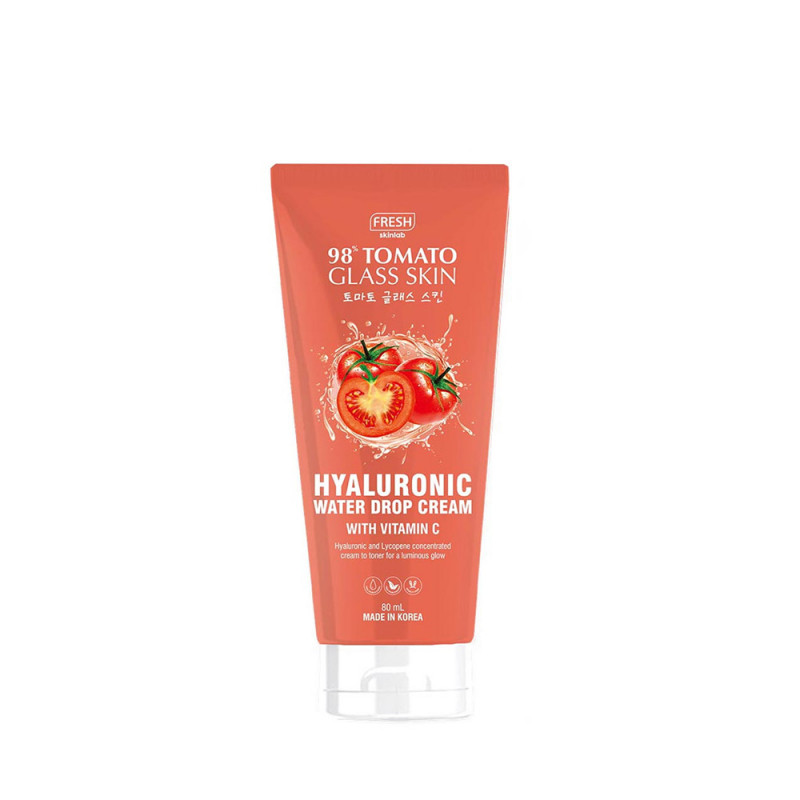
FRESH SKINLAB TOMATO GLASS SKIN HYALURONIC WATERDROP CREAM (P239/80ML)
As a dry-to-normal skin girl, moisturizer is something I always have to have in my life. While there are a ton of options out there, I do tend to have very specific requirements for my moisturizers. In the mornings, I prefer lighter moisturizers that will layer underneath makeup, while at night, I prefer heavier moisturizers that will keep my skin moisturized until I wake up.

One of my most recent finds is the Fresh Skinlab Tomato Glass Skin Hyaluronic Waterdrop Cream that I bought on a whim because we were leaving for Boracay the next day and I had run out of my travel-sized Hada Labo moisturizer.

And I loved it. It has that super light “water” texture that sinks into the skin upon application (great for oily to combo people!) but still keeps the skin moisturized all day. Since it has tomato extract, it has anti-aging properties while promising that dewy, juicy glow. It also has Ethylhexyl Methoxycinnamate, a sunscreen agent (though please still use sunscreen!), Hyaluronic Acid (to hydrate the skin), arbutin and Vitamin C (for lightening dark spots).

I put a layer on after my serum in the morning and I add a little bit more to my tinted sunscreen to make it apply smoothly. If you’re looking for a lightweight moisturizer, this is a product you should consider.

Fresh Skinlab Tomato Glass Skin Hyaluronic Waterdrop Cream is available on Fresh.ph, Lazada, Shopee, and Watsons stores.

HUMAN HEART NATURE SUNFLOWER EYE CREAM (P325/15ML)
Human Heart Nature (or Human Nature) is a Filipino vegan and cruelty-free personal, home, and beauty care brand known for using sunflower oil and all natural ingredients in their products.

In the past, I’ve loved their moisturizers and their Sunflower beauty oil still remains one of the top beauty oils I use for my face, hair, and all over my body. Sunflower oil has great anti-inflammatory properties alongside combatting dark spots and moisturizing the skin. This is why I’m happy to have discovered the Sunflower Eye Cream.

Eye creams are one of those types of skincare products that I consider add-ons: they’re not super important like moisturizers and sunscreens and you can certainly live without it, but if you want a little something for your eyes, it’s a product to consider adding to your routine.

I haven’t always used eye creams but now that I’m entering my late-20s, I felt that it was time to step up my anti-aging game and eye creams is one way to do it. The Human Heart Nature Eye Cream promises to improve suppleness and helps relax tired puffy eyes — something you’ll need if you’re like me and prone to staying up late.

I use this in the morning and at night after moisturizing, and a very small dot does more than enough for both eyes so the 15ml squeeze bottle goes a long, long way (I’ve been using mine for more than two months). I love this product because it does moisturize my undereye area and softens my dark circles, plus, it has this very smooth texture that makes it easy to apply.

Human Heart Nature Sunflower Eye Cream is available on HumanHeartNature.com, Lazada, Shopee, and physical stores nationwide.

HUMAN HEART NATURE NATURAL SHAMPOO BAR ZESTY VANILLA DELIGHT (P144.75/35G)
I’m currently on a journey to take better care of my hair and to address issues like hair fall and frizz. I have thin wavy hair that tends to be oily up top and dry at the bottom. I’ve tried the trendy methods like skipping shampoo altogether and using conditioner only, to no avail. It just gives me dandruff and more hair falls. No, thank you, I’ll keep shampooing every day.

So, instead of the no-poo (no shampoo) method, I decided to look for other shampoo brands and that’s what led me to the Human Heart Nature Natural Shampoo Bar. This shampoo bar is not only environmentally friendly as it is plastic-bottle free and contains no harmful chemicals, it also contains nice ingredients like Cocoa seed butter, Vitamin E, and Avocado oil that keeps the hair healthy and smooth.

I was new to this shampoo bar game and it took me a little bit of time to get used to it, but once I got the hang of it, I started to really enjoy the product. Like regular soap bars, you’ll need to wet the shampoo bar and lather it on your hands before applying it to your scalp. As a person with an oily scalp, I only put shampoo on my scalp and condition my mid-length and ends.

The Human Heart Nature shampoo bar is great because it keeps my hair soft, even without conditioner, and the Zesty Vanilla Delight variant smells amazing — it has that refreshing citrusy-vanilla scent. I love smelling my hair with this product. It also keeps major oiliness at bay, so it’s a major plus.

One thing I had to learn to do was to keep it in a dry place to make it last longer. In my first forays, my shampoo bar melted too fast, but now I put it in its very own case and keep it away from water after using it —  I’m on my second month of use now.

I also feel good about making better choices for the environment because using a shampoo bar means one less plastic bottle.

Human Heart Nature Natural Shampoo Bar Zesty Vanilla Delight is available on HumanHeartNature.com, Lazada, Shopee, and physical stores nationwide.


Zsarlene Chua is a former BusinessWorld reporter who is now a fledgling PR girl. She’s all about skincare, makeup, and video games. None of the brands reviewed are her clients.

After MCIA, Aboitiz Group sets sights on more regional airports

Megawide eyes data centers, transport terminals from sale of shares

By Arjay L. Balinbin, Senior Reporter

ABOITIZ InfraCapital, Inc. (AIC) continues to work towards its goal to enter the airport business, with its eventual takeover of the Mactan-Cebu International Airport (MCIA) seen strengthening its proposals for other provinces.

“We continue to discuss our remaining unsolicited proposals with the government for other regional airports and hope to move forward with them soon,” AIC said in a statement to BusinessWorld on Saturday.

“We are still waiting for the approval of the National Economic and Development Authority (NEDA),” AIC said.

The company has proposed to develop and operate the New Bohol International Airport in Panglao, Bohol, as well as upgrade and operate the Laguindingan International Airport in Laguindingan, Misamis Oriental.

Civil Aviation Authority of the Philippines (CAAP) Deputy Director-General for Administration Danjun G. Lucas said AIC’s submissions, including the Laguindingan proposal, were “returned by NEDA due to some findings.”

“All unsolicited proposals are under further evaluation,” he said in a phone message.

He noted that CAAP is awaiting the revised implementing rules and regulations (IRR) of the Build-Operate-Transfer (BOT) Law from the NEDA.

Groups have questioned the BOT Law’s new IRR, as private proponents would shoulder more risks while the government is relieved of responsibility for delayed deliverables. The NEDA is reviewing the provisions of the IRR and is expected to release the revised rules this month.

AIC recently entered into a landmark deal with Megawide Construction Corp. and GMR Airports International, B.V. (GAIBV) for Aboitiz company to acquire all their shares in GMR Megawide Cebu Airport Corp. (GMCAC), the developer and operator of MCIA, for P25 billion.

AIC will pay P9.5 billion to own 33.3% minus one share in GMCAC. Closing of the transaction is expected in November or December, according to Megawide.

Megawide and GAIBV will then issue exchangeable notes that mature in October 2024 to AIC for P15.5 billion. These notes will be exchanged by the Aboitiz company for the remaining shares in the MCIA operator.

“The more logical justification for AIC’s [investment in MCIA] is to bolster its entry into other regional airports,” Rene S. Santiago, former president of the Transportation Science Society of the Philippines, said in a phone message on Friday.

“The bragging rights over MCIA should strengthen [AIC’s] cards versus potential challengers,” he added.

Terry L. Ridon, a public investment analyst and convenor of think tank InfraWatch PH, said in a phone message that the deal “should prove beneficial in developing other airports as well, particularly the scuttled rehabilitation of the Ninoy Aquino International Airport (NAIA), and the other bundled airports around the country.”

“It should nonetheless be noted that airports remain a public service, and airport operators should ensure that airport fees and services should remain competitive and affordable to the public,” Mr. Ridon noted.

He added that AIC’s investment in MCIA “should strengthen its stake” in other airport project proposals.

Aboitiz, through a consortium, and Megawide both proposed to rehabilitate NAIA during the previous administration.

“They (Aboitiz Group) don’t have any experience yet, but they have always wanted to get into the airport business, and that’s why this is also a good strategy — like an alliance where they come in as the owner of one-third of the shares, and then we can still partner for other airport projects, whether it’s NAIA or another,” Megawide Chairman and Chief Executive Edgar B. Saavedra said in a briefing on Friday.

“By having this kind of business, it will really help in AIC’s portfolio if they want to get the Bohol and Laguindingan airports,” Mr. Saavedra noted.

Megawide is confident that AIC will already have the technical know-how to run MCIA when it assumes full control of the airport by 2024.

“We were able to build a strong Filipino workforce for the airport and we have a two-year transition period, which means that AIC will get to learn from us how to run the airport,” said Manuel Louie B. Ferrer, GMCAC president and Megawide’s executive director for infrastructure development.

CONFIDENCE IN TRAVEL SECTOR
AIC said its investment in MCIA is a “vote of confidence for the travel sector, which has been steadily improving in the past few months.”

Citing MCIA statistics, the company said the airport welcomed more than two million passengers in the first half of 2022, a 350% increase versus the 470,000 passengers in the same period last year.

Mr. Saavedra said the Cebu airport, which accounts for 30% of Megawide’s revenues, “dragged us in terms of our financials in the last two years due to the pandemic.”

“But right now, we are already operating above the water,” he added.

For his part, Megawide Chief Financial Officer Ramon H. Diaz said: “If you look at the situation now, we are not generating any dividends from the airport because of the pandemic; we will not be generating in the next two years, at least.”

“So, we’re getting the solution already today, which opens up a lot of opportunities to replace the airport dividends,” he added.

On the transaction’s impact on Megawide’s balance sheet, Jez G. Dela Cruz, the company’s vice-president for corporate finance and financial planning, said: “It will have a deconsolidated impact.”

“That means the full debt of GMCAC right now which is around P25 billion will be taken out from the balance sheet of Megawide, so it will be reported as an investment in equity,” he noted.

“On the profit and loss, instead of line-by-line consolidation, it would just be the net operating profit or loss for the period that would be recognized based on the remaining share of Megawide, which should be closed this coming November or December,” Mr. Dela Cruz added.

Proceeds from the transaction will be used to fund Megawide’s “pandemic-resilient” projects.

“It’s going to be a mix of that. At the same time, liability management is something that we are also looking at to further strengthen the balance sheet of Megawide, so that we can be opportunistic. In case there are big projects that will be coming up, then we can aggressively bid for those projects and participate,” Mr. Dela Cruz said.

The projects that Megawide will be focusing on in the next three to five years include public markets, transportation infrastructure such as land transport terminals, affordable housing, hospitals, and digital infrastructure, specifically a data center.

“We’re trying an investment [in a data center] this year,” said Jaime Raphael C. Feliciano, Megawide’s chief business development officer.

“We have a partner already in place. In fact, we have signed preliminary documents. It’s just that we can’t really disclose at this point,” he added.

According to Mr. Dela Cruz, part of Megawide’s business model is “about capital deployment and efficiency.”

“Now, we’re able to have this opportunity to crystalize the value,” he said. “It’s not that we’re letting go of the future earnings of the airport. In fact, we have projected those future cashflows and were able to upfront the value for this transaction.”

After 4 years, PIMS is back on track

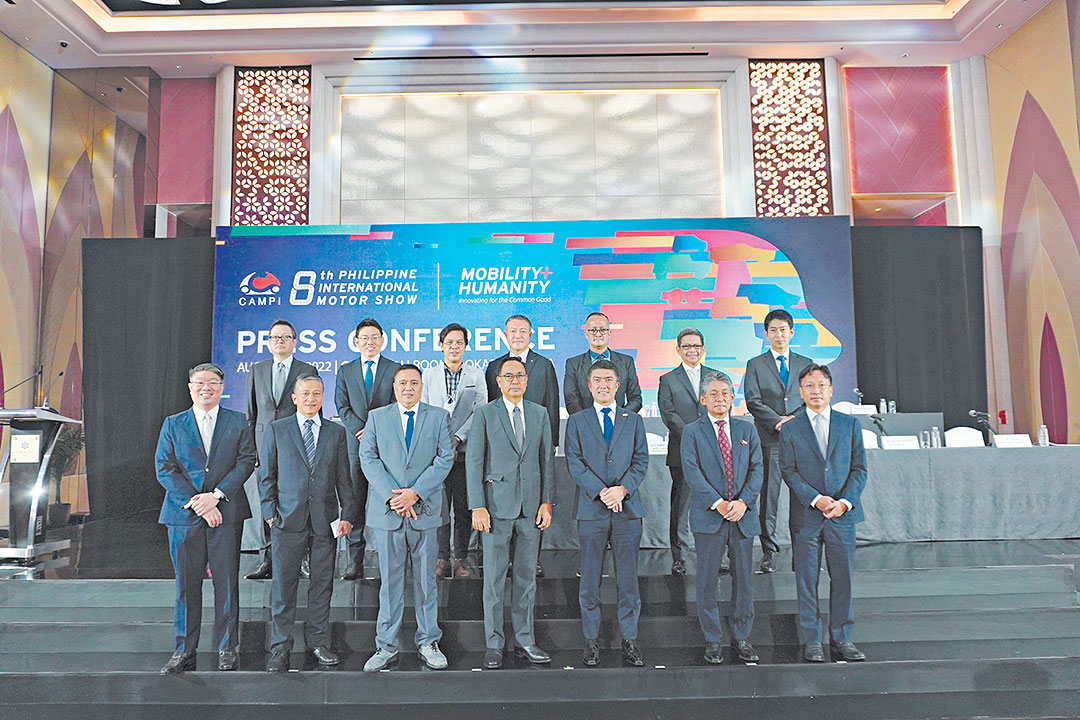
At the 8th Philippine International Motor Show press conference are (standing from left, front row): SMC Asia Car Distributor Corp. (BMW Philippines) President Spencer Yu; United Asia Automotive Group, Inc. (Chery Auto Philippines) Chairman Rommel Sytin; Foton Motor Philippines, Inc. President Erroll Dueñas; CAMPI President Atty. Rommel Gutierrez; Sojitz G Auto Philippines, Inc. (Geely Philippines) President and CEO Yujo Kiyofuji, Honda Cars Philippines, Inc. President Masahiko Nakamura; and Hyundai Motor Philippines, Inc. President Lee Dong Wook. In the second row (from left) are: Toyota Motor Philippines Corp. President Atsuhiro Okamoto; Suzuki Philippines, Inc. General Manager for Automobile Norihide Takei; Nissan Philippines, Inc. General Manager for Communications Dax Avenido; Mitsubishi Motors Philippines Corp. President and CEO Takeshi Hara; Bermaz Auto Philippines, Inc. (Mazda Philippines) Sales and Marketing Manager Saul Babas; KP Motors Corp. (Kia Philippines) President Manny Aligada; and Isuzu Philippines Corp. President Noboru Murakami. — PHOTO FROM CAMPI

CAMPI to hold 8th PHL International Motor Show from Sept. 15 to 18

By Revin Mikhael D. Ochave  

THE CHAMBER of Automotive Manufacturers of the Philippines, Inc. (CAMPI) is set to hold its 8th Philippine International Motor Show (PIMS), marking the event’s return after a four-year hiatus.

CAMPI President Atty. Rommel R. Gutierrez said in a press conference that the PIMS, which has a theme of “Mobility + Humanity: Innovating for the Common Good” will be held from Sept. 15 to 18 at the World Trade Center in Pasay City.

“In line with our road to recovery, we are happy to bring back the much-awaited PIMS. Through this comeback, we want to highlight the industry’s role not only as an engine for economic growth and development but also its higher purpose of moving humanity forward through innovations for the common good,” Mr. Gutierrez said.

The PIMS will feature 13 automotive brands: BMW, Chery, Foton, Geely, Honda, Hyundai, Isuzu, Kia, Mazda, Mitsubishi, Nissan, Suzuki, and Toyota.

“With this year’s theme, we aim to unite and drive our collective efforts towards the shared mission of building a better and more sustainable future for Filipinos through mobility,” Mr. Gutierrez said.

“We will accomplish this by coming together to showcase the positive impact of sustainable and future-ready innovations in our day-to-day lives. We at CAMPI remain committed to embracing smart and sustainable mobility as we adapt to the ever-changing and unique needs of Filipinos,” he added.

Meanwhile, Mr. Gutierrez said that the supply issue affecting car brands has not deterred CAMPI’s decision to hold the 8th PIMS, adding that there are many models to be showcased during the event.

“The limitation in supply has not hindered our plans to push through with the PIMS. It’s been four years now and the board decided that we have to push through with this. We are ready with this and we have more than enough models to showcase,” Mr. Gutierrez said.

“The show must go on regardless of supply limitations. We think it is temporary. It is not a reason for us not to proceed with the PIMS. The industry has to show its vibrancy. Like any other industry, we have to show our resiliency in terms of adapting to the changes the environment has brought us,” he added.

The Bank of the Philippine Islands will be the exclusive auto financing partner and diamond sponsor of the motor show, while Foton will provide three modernized jeepneys to serve as shuttles heading to the event.

“From 10 a.m. to 7 p.m., the shuttles will ferry guests free of charge between two pickup points, World Trade Center and SMX Convention Center,” the CAMPI said.

Tickets for the 8th PIMS are priced at P200 each and can be purchased at the venue. The first 1,000 ticket buyers will enjoy a 50% discount every show day. Gates will be open from 10 a.m. to 8 p.m.

The guys’ turn: online marketplace focuses on men’s skincare

PHOTO FROM DOPPKIT.CO

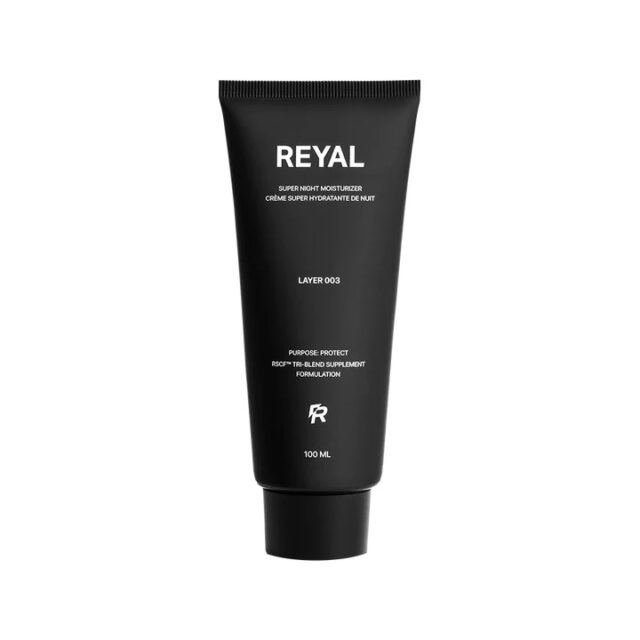
FRIENDS Burt Chua, Kenneth Toh, and Richmond Chong started an online marketplace for men’s grooming last year. Doppkit (doppkit.co), the online store they founded brings cult skincare lines like Anthony, Reyal, and Groomed Man Co.’s all in one place.

Anthony has been featured on men’s lifestyle bibles like GQ and Esquire, as well as on Forbes and Vogue. Anthony’s Glycolid Facial Cleanser (at P1,850 at 237 mL) claims to gently exfoliate, eliminate dirt, pollution, oil and impurities, and works as a pre-shave softener. It’s powered by 4.2% glycolic acid.

Reyal, a skincare brand, meanwhile, offers a Super Night Moisturizer (P1,730) with restorative active ingredients like hyaluronic acid and retinol to promote cellular regeneration while men rest.

“Male skincare products are developed with the male skincare anatomy in mind —  guys typically have thicker and oilier skin, they sweat more, they contain more collagen, and they age differently than women’s,” said Messrs. Chua, Chong, and Toh in an e-mail to BusinessWorld.

“Those familiar with similar retailers that carry multiple brands of their girlfriend’s or wife’s favorite skincare and makeup would have an easier time getting to know Doppkit,” said Mr. Chua in a statement. “For men, Doppkit offers the same convenience of being able to research about and buy all the products they need on just one site.”

“It’s easy to be intimidated by the range of choices out there, especially if you don’t know where to look or start,” said Mr. Toh in a statement. “We want to narrow those down to the best options, so men can begin to invest in their routines in a no-fuss manner.”

Since the beauty industry usually caters to women, the men told us about the market for male skincare.

“We believe the market is still growing, and still holds a lot of potential. The stigma is still there, but we feel that it is slowly withering away, as self-care becomes more accepted and actually becomes a priority for most, including men,” they said. “We want to push the message that self-care should come first, and for men, self-care can actually improve performance in other aspects of their lives (relationships, career, health). Other brands are also recognizing this movement, and have been catering more and more towards men.”

The men also gave tips on what kind of marketing campaigns in beauty work for men like them. “We believe, from personal experience, that we are more attracted to simple and direct messaging, clearly seeing benefits, and convenience and accessibility.”

“We also tend to rely on word of mouth, and highly value recommendations from close friends and family,” they said. They added a disclaimer: “Of course, these are anecdotal, and from general observation and experience only.”

It’s not every day that we see beauty products over P1,000 geared towards men, but perhaps the ongoing pandemic had a hand in getting men to take care of themselves (and quite expensively too). They said, “We think the pandemic gave a lot of people time to slow down and re-evaluate priorities.

“We don’t consider it as a wave, but more so a catalyst to a more balanced lifestyle. We hope that the focus on health and well-being is not temporary, but becomes a way of life.” — Joseph L. Garcia

Vires Energy’s LNG project seen operational by 2026

VIRES Energy Corp., a subsidiary of A Brown Co., said that its 450-megawatt floating liquefied natural gas (LNG) power plant in Batangas is expected to begin operations by mid-2026.

“Vires Energy is currently seeking baseload power off-take agreements and is in a position to be in commercial operations by mid-2026,” Allan Ace R. Magdaluyo, senior finance manager and compliance officer of A Brown, said via an e-mail on Aug. 31.

Mr. Magdaluyo said that the onshore facilities and floating power barge for the LNG terminals had been completed.

“The property will be developed to include the power barge mooring area, a jetty, switchyard, onshore facilities, and other balance of plant infrastructure,” he added.

In an earlier e-mail, A Brown Chairman Walter W. Brown said that the company saw LNG as the most viable source of new baseload power as renewable energy capacity is scaled up from solar, wind, batteries, and other new technologies.

According to the Department of Energy’s (DoE) accomplishment report, Vires Energy’s floating storage and regasification unit has a total capacity of three million tons per annum (MTPA) and a total construction cost of P6.15 billion.

The DoE said that it has approved six proposed LNG terminal projects, citing the depletion of the Malampaya gas field as the reason for the approval.

The Energy department noted that the six proposed LNG terminals have a combined capacity of 21.7 MTPA and a total estimated investment of P51.2 billion.

In the second quarter, A Brown’s attributable net income increased more than four times to P232.95 million from P53.89 million in the same period last year. Year to date, the company’s net profit increased by 68.8% to P381.21 million from P225.87 million. — Ashley Erika O. Jose

Lamborghini looks back at the Diablo

PHOTO FROM LAMBORGHINI

THIS YEAR, Lamborghini is celebrating its iconic V12 engine that has powered its most memorable models for almost 60 years. This power plant was featured in the equally historic Diablo, the first Lamborghini super sports car offered in a four-wheel drive version.

The company reported in a release that when the Diablo debuted in January 1990 during Lamborghini Day at the Sporting in Monte Carlo, it “was so ahead of its time that it was identified as a series production hypercar.”

The 12-cylinder engine initially boasted a displacement of 5.7 liters, then 6.0 liters — with a maximum output of 600hp in the road versions and 655hp in the GT1 Stradale model for the racetrack, of which only two units were made.

The “pure” V12 combustion engine in its final form will go out of production before the end of the year, when the last Aventador Ultimae is made. From 2023, the heir to the Aventador will be fitted with a new plug-in hybrid version of the V12.

Automobili Lamborghini said that the Diablo was the model that propelled it into the modern era. Project 132 — as it was called inside the company — arrived in 1985 to replace the Countach, so “it had to convey the full power of the Sant’Agata-based automaker: appear sporty and muscular yet always appealing; deliver the aesthetics Lamborghini has always been renowned for; and be future-proof, to remain the world’s fastest production car for years to come.”

Development work on the way it handled the road was successfully achieved with the involvement of former Rally World Champion Sandro Munari. During the course of its commercial life, which lasted until 2001, the Diablo also demonstrated its ability to transform itself and adapt to market demands and the expectation of its customers. With 2,903 units made during the 11 years it was in production, the Diablo was considered a huge success.

The technical cornerstone of the Diablo remains the 60° V12 engine, which was directly derived from the 1963 3.5-liter engine, increased to 5.7 liters over the years. The latter configuration, the rear longitudinal position with catalytic converter, generated a maximum power of 492hp at 6800rpm and torque value of 580Nm at 5200rpm. It also featured a Lamborghini-Weber Marelli LIE electronic fuel injection. In 1999, first with the Diablo GT and later with the Diablo 6.0 SE, the engine size was increased to 6.0 liters. This, along with improved fuel injection calibration, allowed it to muster an output of 525hp and 605Nm.

The turning point for Lamborghini came in 1998, when Audi bought the company. The automaker finally had enough resources to develop a more refined industrial plan, while gaining access to new components and technology. The new owners also saw the Diablo as a product worth keeping and further developed. This led to the birth of the second series of the Diablo, designed in the brand’s new Centro Stile. Even faster and more powerful than ever thanks to the bigger V12 6.0-liter engine, it also showcased more luxurious finishes and increased reliability during daily driving, resulting from rigorous quality control during design, testing, and production.

The mechanics of the Diablo, though refined, were originally still considered traditional. The setup consisted of a rear longitudinal engine with four chain-driven camshafts, electronic fuel injection, rear-wheel drive and mechanical transmission. Power steering arrived only in 1993 and the electronics were there only to manage the engine. The Diablo VT, Lamborghini’s first four-wheel drive super sports car, was presented in 1993 to become the benchmark in terms of roadholding and driving safety in any condition.

VT stands for Viscous Traction, where the torque transfer from the rear axle to the forecarriage is done via viscous coupling. With this system, the VT is normally a rear-wheel drive vehicle with up to 20% transfer to the front wheels only if the rear wheels slip via a viscous coupling and a propeller shaft connected to the front differential. The VT also introduced another innovation for Lamborghini: electronically controlled suspension, with five preset operation programs to choose from.

In December 1995, the Diablo Roadster arrived as the first 12-cylinder open-top Lamborghini. This emboldened the brand to start a tradition in this format. The Diablo Roadster made its debut sporting a carbon fiber Targa top housed over the engine cover when down.

Lamborghini returned to racing with the Diablo through the Super Sport Trophy — later the Super Trofeo — racing championship, where it made its debut in a side race during the 24 Hours of Le Mans in 1996. Thirty-four 550hp Diablo SV-Rs were made for gentlemen drivers competing in one-hour races.

The Diablo also made it to the big screen. One of the most memorable scenes is from the American film Dumb & Dumber starring Jim Carrey, Jeff Daniels, and a red Diablo.

The Lamborghini also appeared in the 2001’s Exit Wounds directed by Andrzej Bartkowiak, with “DMX” Earl Simmons and Anthony Anderson. A 1999 Diablo VT Roadster steals the show in the car showroom scene, bought in cash after an exhilarating engine “rev up.”

The Lamborghini Diablo SV also made it to a popular video game, “Need for Speed III: Hot Pursuit.”

Serena’s style changed the game in fashion, business

SCREENSHOT FROM VOGUE.COM

NEW YORK —  From glossy magazine covers to generation-defining on-court styles, Serena Williams took a bow at the US Open on Friday, having rewritten the fashion playbook for female athletes while building an empire of her own.

The 23-time Grand Slam winner chose the bible of women’s fashion, Vogue, to announce she was “evolving away from tennis,” before taking to the court in her bedazzling Nike sneakers at the US Open this week under the watchful eyes of the magazine’s grand dame, Anna Wintour.

The fiercely competitive queen of Queens put on a gritty performance in what is widely expected to be her final tournament, losing in the third round 7-5 6-7 (4) 6-1 to Ajla Tomljanovic with her legacy as a cultural icon firmly in place.

“Style and sport have always been closely intertwined, but no athlete embraced the power of fashion like Serena Williams,” Katie Abel, executive editor of Footwear News, told Reuters.

“She’s never shied away from boundary-breaking looks, on or off the court, and always knows how to send a message, even if it’s controversial.”

She famously competed in Flushing Meadows in a denim skirt in 2004 and ruffled feathers at Roland-Garros in 2018, when she wore a black catsuit to keep her circulation going after developing blood clots in the days after giving birth.

After organizers said they would ban the catsuit from their clay courts, Ms. Williams’ supporters cried foul. Ms. Williams quipped to the Associated Press: “When it comes to fashion, you don’t want to be a repeat offender.”

The moment was an instant classic and showed she could harness fashion to disrupt the status quo, said Katie Lebel, a researcher of gender equity in sport and assistant professor at University of Guelph.

“Sexism has been pretty pervasive when it comes to women’s clothing… The expectations around what women athletes should look like that been particularly steeped in that,” she said.  

“Enter Serena and she pushed back against all this. I think she really rethought (the) uniform standards for women in tennis.”

Serena and her sister Venus brought Black style to the overwhelmingly white sport when they first took the court as professionals in the 1990s, facing criticism for wearing beaded braids in competition.

Ms. Williams wore the style when she won her inaugural Grand Slam in New York. Photos of daughter Olympia in identical plaits in the stands at Flushing Meadows this year were an instant sensation.

“From the moment Serena and her sister Venus stepped onto the court in their signature braids… they have been role models for Black women and aspiring female athletes everywhere,” said Ms. Abel.

‘GLAM SLAM’
Ms. Williams’ friendship with late Louis Vuitton artistic director Virgil Abloh resulted in one of her most memorable US Open ensembles, a ballerina-inspired Nike kit in 2018, when she got tantalizingly close to clinching a record-equalling 24th major title but came up short in the final.

While her run at the US Open is over, her work in New York has just begun, with a “Glam Slam” preview of new looks from her S by Serena brand planned for Sept. 12 to coincide with New York Fashion Week.

And her retirement from competitive sport is expected to have little to no impact on her brand value — with Nike planning to continue its partnership with the 40-year-old.

“Williams may be retiring from tennis, but I’m guessing her influence on fashion is just getting started. Without her grueling training schedule, I’d think she would have even more time and energy to focus on this category,” said W Magazine Fashion Director Nora Milch.

A bona fide fashion tycoon off the court, Serena was named to the board of shopping app Poshmark in 2019, opening her own closet alongside pieces from Olympia to customers on the fashion marketplace.

Manish Chandra, founder and CEO at Poshmark, said Ms. Williams has inspired several other female entrepreneurs to sell on the app by way of her unique voice and perspective.

“As a champion of female empowerment, Serena always leads with love and helps to ensure that our Poshmark community is front and center in everything we do,” Mr. Chandra told Reuters.

“Her achievements and vision across the worlds of business, fashion and entrepreneurship made her a perfect fit for our board… She leads with humility, kindness and authenticity.” — Reuters