Home Blog Page 5931

Should your buses, trams and trains be free?
ELIJAH G-UNSPLASH

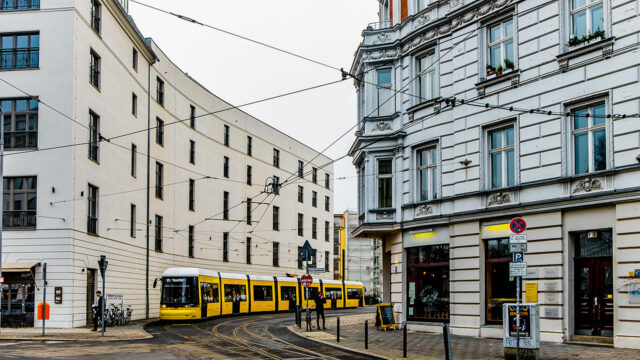
LIKE EVERYBODY I know in Germany, I bought the so-called €9 ticket this summer. Three, in fact — one each for June, July, and August. I put the QR codes in my cell phone’s digital wallet, and was free to hop on and off all buses, trams, local and regional trains nationwide. In a country that specializes in making things complicated, getting around was suddenly simple.

This all-you-can-ride ticket — for about €9 — was a huge experiment that deserves a look from other countries groping for policies against climate change. The impetus was this year’s surge in inflation and, in particular, the energy shock. In response, the German government passed a raft of measures meant to soften the blow to people’s finances. The €9 ticket was one.

The most popular one, in fact. The deal expired last week, and everybody’s already talking about how and when to bring it back. So, the question — for Germany and other countries — is whether and under what circumstances it’s a good idea to subsidize public transport enough to make it extremely cheap or even free.

The numbers are intriguing. People bought some 52 million €9 tickets, and another 10 million who had previously bought an annual subscription got them automatically. I almost wonder about the Germans who didn’t avail themselves of the offer. Presumably, they include babies and people living in deep forests with no bus stops.

If early estimates prove correct, moreover, about 10% of buyers used the ticket to drop at least one of their daily car trips. This saved them a packet in gasoline expenses. It also kept big clouds of carbon dioxide out of the atmosphere — about 1.8 million metric tons. That — after just three months — is equivalent to the emissions from powering 350,000 homes for one whole year, or the savings that can be expected in one year if Germany introduces a speed limit on its autobahns

This comes as a shock. Cities from Santiago, Chile, to Salt Lake City, Utah, and Tallinn, Estonia, have also experimented with making public transport free. So has the entire small nation of Luxembourg. But they all found that their subsidies didn’t noticeably reduce car trips — either because the people who took more trams, buses, and trains were too poor to own cars and would otherwise have walked or cycled; or because public transport was still too inconvenient relative to driving for price to make much difference.

This points to a general problem with subsidies. Unlike price signals coming from markets, they usually distort rather than correct a sector of the economy. Making public transport free or cheap, for example, boosts demand for it but doesn’t do anything to also increase the quantity or quality of supply.

Operators of bus and rail lines, whether they’re in the private or public sector, can’t easily add capacity. In Germany, too, many frustrated €9 passengers were left on the platforms as their overcrowded trains departed without them. Nor were people much better off who live in places where the bus comes once a week, if at all.

In reality, therefore, public-transport subsidies are usually an answer to the problem of inequality, not climate change. The well-off keep driving, no matter how much gasoline costs. And they pay more in taxes to enable the cash-strapped to ride at little or no charge. In this case, a lot more: Germany’s subsidy, just for these three summer months, is estimated to cost the federal government — and thus the taxpayer — €2.5 billion.

The €9 ticket, however, suggests that a well-designed subsidy could yet make more people leave their car at home at least some of the time, thereby mitigating greenhouse-gas emissions as well as inequality. But for that, the subsidy would have to be combined with other policies.

First, governments must also provide more — rather than just cheaper — alternatives to driving, or design incentives for companies to do so. This is fiendishly difficult. Even in Germany, where mainstream politics is allegedly “pro-rail,” trains are best known for running late or not at all. And whenever somebody tries to build a shiny new station, the locals (very much including those labeling themselves “green”) protest.

Second, governments must deliberately make driving less and less affordable. The cost of gasoline or diesel must stay uncomfortably high long beyond the current energy crisis — in fact, forever. And the best way to ensure that is to put a high and rising price on carbon, as cap-and-trade regimes seek to do.

This is why demands from Poland and other countries to ditch the European Union’s emissions-trading system, the world’s largest cap-and-trade market, are misguided. Instead of sacrificing the ETS to temporarily dampen energy prices, Europe should instead strengthen and expand the system, and other countries should follow.

For now, even classical liberals like me must admit that transportation is an area of the economy that’s jammed by market failures, and bears much of the blame for climate change. This suggests that government should intervene with better policies. The €9 ticket doesn’t offer the whole answer — but a first glimpse.

BLOOMBERG OPINION

Singapore hotel prices hit 10-year high as city roars back to life

STORM CLOUDS gather over the Marina Bay Sands casino and resort in Singapore, April 5, 2021. — REUTERS

HOTEL ROOMS in Singapore are now the most expensive in almost a decade as the city-state seeks to position itself as the tourism and business destination in Asia with a slew of high-profile events lined up for the coming months.

At S$259 ($184) a night, the average hotel room rate in July rose nearly 70% year-on-year to the highest since Sept. 2012, as visitor arrivals continue to accelerate amid easing COVID-19 restrictions, the latest data from the Singapore Tourism Board showed.

Even as prices climb, luxurious stays in the Southeast Asian nation are still cheaper than in some of its big-city peers.

A five-star hotel in Singapore charges an average of S$344 per night, compared with S$387 in Hong Kong, S$522 in Tokyo and S$584 in London, according to data from Trip.com. Meanwhile, a five-star hotel costs S$318 per night in Sydney and S$256 in Seoul.

Visitor arrivals in Singapore rose for the sixth straight month in July to 726,601, up from 543,733 in June, according to the tourism board. This growth is likely to hold as the country plays host to a growing number of international business and sporting events.

Preparation is in the works for the Formula One Grand Prix from Sept. 30-Oct. 2 after a two-year hiatus. This year’s night race is set to see its biggest turnout since the inaugural event in 2008, with tickets expected to sell out, Singapore’s transport minister S Iswaran told local media at a community event in August.

Away from the track, the entertainment lineup includes performances by Westlife and Green Day. Other big names in entertainment coming to Singapore later this year include Justin Bieber, Maroon Five and Guns N’ Roses.

Singapore will also host the Milken Institute Asia Summit, Forbes Global CEO Conference and several crypto events in September, followed by gamescom asia in October.

The reopening comes as regional travel hub rival Hong Kong continues to require three days of hotel quarantine for incoming visitors.

In the first three months of 2022, Singapore hosted more than 150 local and international events attended by over 37,000 people, according to the tourism board.

About 4 million to 6 million visitors are expected in 2022. The nation saw 1.5 million visitor arrivals in the first half of 2022, nearly 12 times more compared to the same period last year, the board said.

Indonesia, India, Malaysia, Australia and the Philippines were the top five visitor markets, accounting for 56% of Singapore’s total visitor arrivals in the first half. — Bloomberg

Jailed Malaysian ex-PM Najib seeks royal pardon

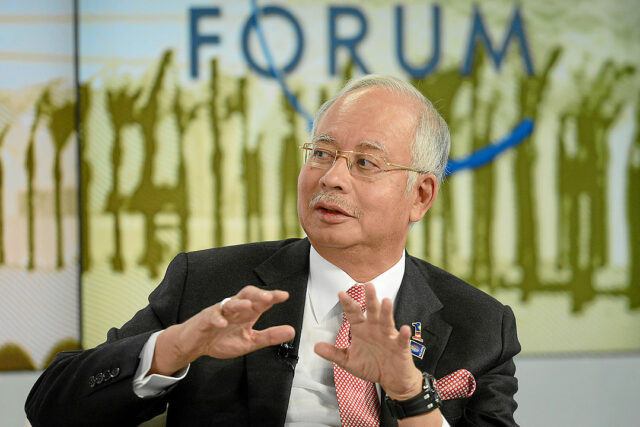
Najib Razak — WORLD ECONOMIC FORUM/WIKIPEDIA

KUALA LUMPUR — Former Malaysian Prime Minister Najib Razak has applied for a royal pardon, the speaker of parliament said on Monday, less than two weeks after he was sent to jail for 12 years for corruption.

Malaysia’s top court on Aug. 23 had rejected an appeal by Mr. Najib, 69, to set aside his conviction on graft and money laundering charges in a case linked to a multibillion-dollar scandal at state fund 1Malaysia Development Berhad (1MDB).

Mr. Najib, who has also been fined nearly $50 million, has consistently denied wrongdoing.

According to Malaysia’s constitution, any lawmaker sentenced to more than a year in prison will automatically lose their seat in parliament, unless they apply for a pardon from the monarch within 14 days.

Parliament Speaker Azhar Azizan Harun said on Monday Mr. Najib will remain a legislator until his petition for a pardon, filed on Friday, was decided on.

Mr. Najib would lose his seat “only if the petition was rejected” Azhar said in a statement.

A lawyer for Mr. Najib confirmed the petition had been filed but declined to provide further details.

The petition is expected to be reviewed by a pardons board headed by the king, which could also consider advice from the prime minister.

A son of Malay nobility, Mr. Najib is believed to be close to some of Malaysia’s sultans — the country’s traditional rulers who take turns to be the monarch in a unique rotational system.

A full pardon would allow him to return to active politics and even make a comeback as premier, as some of his supporters have called for.

Mr. Najib, however, still faces four other cases, all of which carry jail terms and heavy financial penalties.

Mr. Najib was hospitalized on Sunday but local media said he was back in court on Monday.

He was stable and undergoing routine medical checks, his aide told Reuters on Sunday, without elaborating on why he was admitted. — Reuters

Retailer’s CFO plunges to death at NYC’s Jenga tower

RHODODENDRITES/ WIKIMEDIA COMMONS

BED BATH & BEYOND, Inc.’s chief financial officer (CFO) fell to his death from New York’s Tribeca skyscraper known as the “Jenga” tower on Friday afternoon, police said on Sunday, days after the struggling retailer announced it was closing stores and laying off workers.

Gustavo Arnal, 52, joined Bed Bath & Beyond in 2020. He previously worked as CFO for cosmetics brand Avon in London and had a 20-year stint with Procter & Gamble,  according to his LinkedIn profile.

On Friday at 12:30 p.m. ET (1630 GMT), police responded to a 911 call and found a 52-year-old man dead near the building who suffered injuries from a fall. Police identified the man as Gustavo Arnal.

The police statement did not provide further details on the circumstances leading to Mr. Arnal’s death and said the New York City Medical Examiner’s Office would determine the cause of death. Bed Bath & Beyond confirmed his death in a press statement on Sunday but gave no details.

The big-box chain — once considered a so-called “category killer” in home and bath goods — has seen its fortunes falter after an attempt to sell more of its own brand, or private-label goods.

Last week, Bed Bath & Beyond said it would close 150 stores, cut jobs and overhaul its merchandising strategy in an attempt to turn around its money-losing business.

It forecast a bigger-than-expected 26% slump in same-store sales for the second quarter and said it would retain its Buy Buy Baby business, which it had put up for sale.

Mr. Arnal sold 55,013 shares in Bed Bath & Beyond in multiple transactions on Aug. 16-17, Reuters’ calculations showed based on SEC filings. The sales amounted to about $1.4 million, and Mr. Arnal still had almost 255,400 shares remaining.

On Aug. 23, the company, Mr. Arnal and major shareholder Ryan Cohen were sued over accusations of artificially inflating the firm’s stock price in a “pump and dump” scheme, with the lawsuit alleging Mr. Arnal sold off his shares at a higher price after the scheme.

The class action lawsuit listed Mr. Arnal as one of the defendants and was brought by a group of shareholders who claimed they lost around $1.2 billion.

The filing in the US District Court for the District of Columbia alleged that Mr. Arnal “agreed to regulate all insider sales by BBBY’s officers and directors to ensure that the market would not be inundated with a large number of BBBY shares at a given time.”

The lawsuit also alleged that he issued materially misleading statements to investors.

The company said it was “in the early stages of evaluating the complaint, but based on current knowledge the company believes the claims are without merit.”

Shares in Bed Bath & Beyond have been highly volatile in recent months, being viewed as a so-called “meme” stock, which trade more on social media sentiment than economic fundamentals.

Cohen, a billionaire investor, disclosed a stake of nearly 10% in early March. Cohen’s RC Ventures disclosed plans to sell its stake on Aug. 17. — Reuters

Special presidential envoy asks pope to ‘pray for Taiwan’

ANNETT KLINGNER-PIXABAY

TAIPEI — Taiwan President Tsai Ing-wen’s special envoy met Pope Francis on Sunday and asked him to “pray for Taiwan,” on a trip the Taipei government has cast as a demonstration of their close relations even as the Holy See courts China.

The Vatican is Chinese-claimed Taiwan’s sole European diplomatic ally, and Taipei has watched with concern as Pope Francis has moved to improve relations with China. The democratically governed island has formal ties with only 14 countries, largely due to Chinese pressure.

Former Taiwan Vice President Chen Chien-jen, a devout Catholic visiting the Vatican for the beatification of former Pope John Paul I, wrote on his Facebook page late Sunday that he was “specially received” by Pope Francis before the ceremony.

“I conveyed President Tsai’s greetings to the pope and asked the pope to pray for the people of Taiwan. The pope responded with a smile and (said he) looked forward to praying for world peace together,” Mr. Chen added.

Taiwan’s presidential office says the nine-day visit “demonstrates the close friendship between the two countries”.

Mr. Chen went to the Vatican three times while in office, in 2016, 2018 and 2019, including attending the canonization ceremony of Mother Teresa.

Pope Francis told Reuters in July that while the Vatican’s secret and contested agreement with China on the appointment of Roman Catholic bishops is not ideal, he hoped it could be renewed in October because the Church takes the long view.

The deal, which was struck in 2018 and comes up for renewal every two years, was a bid to ease a longstanding divide across mainland China between an underground flock loyal to the pope and a state-backed official church.

Both sides now recognize the pope as supreme leader of the Catholic Church.

China’s constitution guarantees religious freedom, but in recent years the government has tightened restrictions on religions seen as a challenge to the authority of the ruling Communist Party.

Taiwan puts no restrictions on freedom of faith and has a thriving religious community that includes Christians, Buddhists and Muslims. — Reuters

Making time, vulnerability are dating green flags for Gen Z — Tinder 

Ivan Radic/Flickr/CC BY 2.0

A 2022 survey of Gen Z Filipinos on the dating app Tinder found that 73% of respondents prefer knowing how their date feels about them, while 70% said they would like their date to prioritize making time for them. 

Respondents value those who “let their guard down and speak from the heart,” with 61% saying they prefer to be open and upfront when it comes to talking about their feelings. 

“By keeping an eye out for these ‘green flags,’ you can get a read of where it’s all going. Green flags are the healthy and promising signs a match gives to indicate they are a legitimately good person,” said dating expert Alita Brydon in official statement. 

She listed the green flags that were corroborated by the survey conducted by Tinder and marketing research company OnePoll:

  • They ask for your opinion.
  • They make time for you.
  • They’re respectful to their exes.
  • They’re comfortable talking about their feelings.
  • They’re fair with money.
  • They respect your boundaries. 

Other green flags include how a match treats their exes and financial compatibility.

“While an ex might be someone your date would rather forget, they still need to be treated with respect. Watch how your match speaks about their former flames: is it with good manners and consideration? It’s a sign they’ll also treat you with dignity and care,” said Ms. Brydon. 

Meanwhile, fairness with money ensures that the date budget is balanced and/or acceptable for both parties. 

“Meeting up should be more fun than a financial burden — and making sure the date budget is balanced is a major green flag,” she said.

To help potential matches get to know each other, Tinder rolled out a video chat feature in 2020 to allow users to meet digitally and better assess chemistry before meeting face to face. 

At the same time, the Tinder Safety Centre includes a “Does This Bother You?” tool that detects harmful language and gives members an avenue to report untoward behavior. 

The survey by Tinder and One Poll was conducted online among Gen Z Filipinos using the app in April 2022. — Brontë H. Lacsamana

Where’s the beef? Brazil balances barbecues and forest protection

Dalma Food AB/CC BY 3.0/WIKIMEDIA COMMONS

RIO DE JANEIRO — Among a raft of more conventional presidential campaign promises, Brazil’s former leader Luiz Inacio Lula da Silva —  who aims to unseat President Jair Bolsonaro in October polls — has included an unusual pledge: to give Brazilians back their beef. 

With inflation soaring and incomes shrinking, beef has become dearer in Brazil and access to food — including the juicy cuts long a staple of Brazilian barbecues — has become a key theme in the race. 

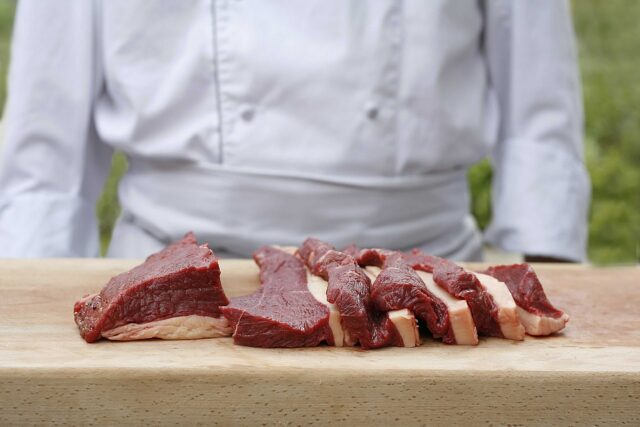
“The people will go back to eating a picanha (a popular beef cut), a rib  … (and) have their barbecue again,” Lula said on Twitter in May, a vow he has since repeated several times on the campaign trail. 

But with Brazil’s cattle herds increasingly fed on pastures recently deforested in the Amazon, some see the leftist challenger’s pledge as at odds with another key campaign promise to stop deforestation of the South American country’s fast-vanishing rainforest, a crucial bulwark against climate change. 

The answer to fulfilling both campaign promises, agricultural and environmental experts say, is ensuring land dedicated to raising cattle becomes much more productive and that buying beef linked to deforestation becomes much harder. 

“Cattle ranching is so inefficient in Brazil that it ends up expanding mainly in places where land is less expensive, such as the Amazon,” said Ciniro Costa Junior of CGIAR, an international consortium of agricultural research centers. 

But “if you raise productivity, you could reduce (beef) prices,” making it more affordable, he told the Thomson Reuters Foundation in a telephone interview. 

Cutting how much beef people eat globally is seen as a key way to stem climate change, with production of the meat churning out far more climate-changing emissions than many other foods. 

But in Brazil — with a beef-focused culture similar to Argentina’s — environmental pleas to step away from the barbecue are only recently gaining traction. 

About 14% of Brazilians interviewed by the Brazilian Institute of Public Opinion and Statistics in 2018 said they considered themselves totally or partially vegetarian, a significant boost from 8% in 2012. 

But 66% of the 2,000 people polled said they “totally disagreed” they were vegetarian in any way. 

“The biggest difficulty is social heritage,” with barbecue “characteristic of Brazilian culture,” said Ricardo Laurino, president of the Brazilian Vegetarian Society. 

WHERE’S THE BEEF?
Brazilian government data shows that beef consumption is expected this year to hit its lowest level since 1996, when tracking first began, with people eating on average about 25 kilos a year as prices keep rising. 

That’s well below US beef consumption, at about 38 kilos per person in 2019, though more than double the global average of about 9 kilos, according to the UN Food and Agriculture Organization. 

Brazil’s beef intake has been affected by factors such as record exports as Chinese demand rises — Brazil is the world’s second-largest beef exporter — and worsening poverty as the country struggles with a cost-of-living crisis. 

A national food insecurity survey of more than 12,000 households between November 2021 and April 2022 found that almost 40% hadn’t bought any meat in the last three months. 

“With what we earn you cannot eat picanha — no way,” said Walace Alves, who works in a toilet paper factory, as he left a butcher’s shop in Madureira, a neighborhood in Rio de Janeiro. 

DEFORESTATION FOR PROFIT
Amazonian states account for 94% of the increase in Brazil’s cattle herd over the last two decades, and the region now is home to 93 million of the country’s total herd of 218 million animals, according to data from the Brazilian Institute of Geography and Statistics (IBGE). 

“Over the last 30 years, the main front of pasture expansion has been the Amazon,” said Laerte Ferreira, a professor at Goiás Federal University. 

Yet Amazon ranching is plagued by poor productivity, with many farmers doing little to protect or boost the productivity of their pastures. 

Instead, new forest areas are constantly being cleared to rear cattle, contributing to the Amazon deforestation that has soared under right-wing president Bolsonaro, researchers said. 

The Brazilian National Space and Research Institute (INPE) said this week that the number of fire hotspots in the Amazon — the most common way of clearing land for pasture — reached their highest level in a dozen years in August, despite a federal ban on burning. 

While Brazil’s cattle herd is 2.4 times the size of the United States’, its beef production amounted to just 60% of that in the United States last year, data from the two governments showed. 

Average beef productivity in Brazilian pastures nationwide is about a third of its potential, while in the Amazon the figure stood at an even lower 30%, research institute Imazon said last year. 

This is largely due to ranching practices that widely avoid the use of fertilizer and techniques such as rotating animals with crops to improve soil fertility, experts say. The result is pastures that quickly become unproductive for cattle. 

“Instead of maintaining quality of pastures or renovating degraded pastures, farmers (or their descendants) deforest new areas,” Imazon said in its 2021 study. 

Analysis from Imazon based on data from the nonprofit MapBiomas shows 86% of areas deforested in Brazil’s Amazon between 1985 and 2020 became pastures. 

Activists in the Amazon say most of this deforestation is illegal, citing numerous reports of cattle ranchers who clear more land on their properties than is legally permitted. 

As well, grileiros — or land grabbers — target public land to seize and deforest, ultimately selling it on to soy farmers and cattle ranchers after requesting private titles, partially on the basis that the land now being “productively” used. 

Several federal and state laws enable retroactive official privatization of illegally seized public land in the Amazon. 

A study co-authored by the World Wildlife Fund (WWF) found that 94% of deforestation between 2008 and 2020 in the Amazon, as well as in part of the Cerrado savanna region, was illegal. 

But running a few cattle on newly deforested land “is not production, it is a subterfuge to have that area recognized as legitimate, which is a crime,” said Fabiana Villa Alves, director of sustainable production and irrigation at the Ministry of Agriculture. 

PRODUCTIVITY OVER EXPANSION
Due to the Amazon’s low cattle productivity, between 634,000 and 1 million hectares would have to be deforested annually and used for ranching until 2030 to keep up with the government’s beef production projections, according to an estimate by Imazon. 

But production targets could be met instead by restoring and using as pasture between 170,000 and 290,000 hectares of degraded areas annually — less than 1% of Amazon pastures, it estimated. 

Tereza Campello Certo, a former minister who is supporting Lula’s campaign, said pasture recovery through the government’s ABC+ program — which grants subsidies for low-carbon projects — could boost domestic beef supplies and reduce prices. 

The program restored 27 million hectares of pastures nationwide from 2010 to 2020 and made them more nutritive, the government said. 

The data is based on research from Goiás Federal University, which shows, however, that most of this improved land was situated outside of the Amazon. 

Marcelo Stabile, a researcher at the nonprofit IPAM Amazonia, said that in addition to boosting productivity the government should enact policies to ensure that pasture for cattle does not expand at the expense of the Amazon rainforest. 

He said more firms should vow not to buy cattle or beef from illegally deforested areas, and that the state should designate how it wants more than 56 million hectares of currently undesignated public land, mostly in the Amazon, used. 

That could help limit farm expansion into those areas, boost land prices and “make elevating productivity more interesting than expanding to other areas,” he said. — Thomson Reuters Foundation

Chile overwhelmingly rejects progressive new constitution

WIKIMEDIA COMMONS

SANTIAGO — Chileans overwhelmingly voted against a proposed new constitution on Sunday, rejecting what would have been one of the world’s most progressive charters. 

While nearly 80% of Chileans voted to draft a new constitution in 2020, nearly 62% of voters rejected the new text with 99.74 percent of ballot boxes counted. 

Karol Cariola, spokeswoman for the approval campaign, conceded defeat late on Sunday night in downtown Santiago but said the mandate to draft a new text remains in force. 

“We are committed to creating conditions to channel that popular will and the path that leads us to a new constitution,” Ms. Cariola said. 

President Gabriel Boric, whose government is largely tied to the new text, said cabinet changes were coming and the government would work to draft another constitution. 

“We have to listen to the voice of the people. Not just today, but the last intense years we’ve lived through,” Mr. Boric said. “That anger is latent, and we can’t ignore it.” 

The president said he would work with congress and different sectors of society to draft another text with lessons from Sunday’s rejection. 

Center-left and right wing parties that promoted the reject campaign, have also agreed to negotiate to prepare a new text. 

“I think there are two things that explain what has just happened. One is a rejection of the Boric government,” political analyst Cristobal Bellolio told Reuters, adding that the other was identity politics in regards to indigenous and other issues. 

The proposed text that voters rejected was a response to widespread violent protests that gripped the nation in late 2019 and focused on social rights, the environment, gender parity and indigenous rights, a sharp shift from its market-friendly constitution dating back to the Augusto Pinochet dictatorship. 

MASSIVE TURNOUT IN MANDATORY VOTE
Nearly 13 million of 15 million Chileans and residents who were eligible to vote cast ballots across more than 3,000 voting centers. These included the national stadium in Santiago, where Rosemarie Williamson, 54, and her mother, 85, voted to reject the new constitution. 

Ms. Williamson, who had voted “yes” in 2020, cited worries over several proposals. 

“The main one is (indigenous) plurinationality and then pension funds,” she said. “I’ve worked my whole life and I’m not willing to share that.” 

Diego Uribe, 35, a father of two who does not normally vote because he has lost faith in political parties, voted “yes” in Puente Alto, a lower-income region in southern Santiago. 

“This one is different,” Mr. Uribe said, noting he would have voted even if it was not mandatory. “Approval is real change for the future, free education, dignified healthcare and more rights.” 

The latest polls before a two-week blackout showed rejectors ahead at 47%, compared with 38% for “yes” and 17% undecided, but Sunday’s result beat polls by a wide margin. — Reuters

California temperatures soar to new records, adding strain to power grid

PXHERE

Record high temperatures were expected in California’s Central Valley from Sacramento to outside of Los Angeles on Sunday, with officials warning that the dangerous heat wave could afflict the state through the end of the week and test the limits of the electric grid. 

State officials on Sunday were urging residents to limit their power usage for the fifth day in a row as energy demand spiked and temperatures were still on the rise. 

The worst of the heat was concentrated in the Central Valley on Sunday. The thermometer could hit 46 degrees Celsius by midweek, the National Weather Service said, warning residents to stay indoors to avoid heat-related illness. 

“The heat wave begins in earnest today with dangerous temperatures now forecast to extend through the end of the week,” National Weather Service Sacramento wrote on Twitter on Sunday. 

The Southern California city of San Diego, which set a record temperature on Saturday of 35°C, could set another record on Sunday, National Weather Service forecaster Tony Fracasso said, although a chance of afternoon thunderstorms could offer some relief. 

The California Independent System Operator (ISO), which oversees the state’s electric grid, extended a “flex alert” to a fifth day, asking state residents to set their thermostats to 25.6°C or higher, avoid using major appliances, and turn off lights in order to conserve energy. 

“Sunday, Monday, and Tuesday in particular are shaping up to be the most difficult of this heat wave,” the agency said in a news release. 

It added that the state’s ongoing wildfires and potential new blazes could further strain the power grid by crippling lines and generators. More than two decades of drought and rising temperatures, exacerbated by climate change, have made California more vulnerable than ever to wildfires. 

In Northern California’s Siskiyou County, where firefighters were battling the fast-moving Mill Fire that prompted thousands to evacuate their homes, the high temperature forecast for Sunday was 35°C. 

Two people died in the fire, Siskiyou County Sheriff Jeremiah LaRue told a community meeting on Sunday, according to a video that his office shared on social media. 

Temperatures were expected to top 37.8°C in the coming days. The fire had burned more than 4,000 acres and was 25% contained as of Sunday morning, according to the California Department of Forestry and Fire Protection. — Reuters

Suntory eyes US canned cocktail push as young Japanese shun booze

MINUS196.COM.AU

TOKYO — Japanese drinks giant Suntory Inc. last year debuted a strong, lemony brew in Australia that quickly became the top seller in the canned cocktail market there. 

Now the company is aiming to replicate that success in North America, critical to its aim in becoming the global leader in the fastest growing alcoholic drinks segment. 

Expanding overseas is also a matter of survival for Japanese drinks companies facing an aging market at home and a shift away from alcohol among younger people. 

“Australia is a very important test market for the global strategy,” said Makoto Kitaura, a senior general manager at Suntory. 

“If we have a success in Australia, then other Western countries like the US, the UK may have an interest to try a new brand. And we can see huge growth potential with the US market.” 

The company tapped a localization team to adapt its Japanese best seller Strong Zero for the Australian market: The lemony tang was tweaked, and the alcohol was dialed down from a hefty 9% to a more drinkable 6%. 

It also branded the canned cocktail -196 Double Lemon in Australia, highlighting the extreme cold that Suntory claims it uses to extract flavors from fresh fruit. 

“It sold out almost immediately after launching,” said Alana House, the editor of Sydney-based Drink Digest

The drink, price at about A$4.50 ($3.10) for an 11 oz can, had the advantage of being seen as a “cult” Japanese product, with a strong flavor profile and higher alcohol by volume (ABV) content, 6% versus 4.5% for a typical beer in the country, she added. 

The global canned cocktail market, which Japanese beverage makers created some 40 years ago with drinks known locally as “chu-his”, is now the fastest growing alcoholic drink segment, as pandemic restrictions prompted more people to imbibe at home and cut higher calorie drinks like beer. 

The market, known in the industry as ready-to-drink (RTD), saw double-digit sales growth during the pandemic, and Suntory believes global canned cocktail sales will double again from 2020 levels to more than $60 billion in 2030. 

TOUGH US MARKET
The next and most important hurdle in Suntory’s worldwide ambition is tackling the massive US market. The company already has a foothold following its 2014 takeover of Beam Inc., maker of Jim Beam whiskey. The company opened a global canned cocktail division in March and its American-based team came to Tokyo in June to collaborate on strategy. 

Hard seltzers dominate the US sector, with top brands White Claw and Truly drawing about $10.8 billion in sales in the five years through 2021, market research provider, Euromonitor International said. 

Suntory has made small inroads into the US market via its Sauza cocktail collaboration with Boston Beer Co., which makes Truly. 

The company did not say which canned cocktails from its expansive catalogue it hopes to bring to US shores. But Double Lemon would start at a disadvantage to entrenched competitor Mike’s Hard Lemonade, which costs about $2.50 for a 12 oz can. Mike’s became a runway hit after its debut 20 years ago, with marketing that some critics said appealed to young underage drinkers. 

But logistics and taxes remain the bigger challenges. Suntory’s historic strength is in spirits and US distribution networks for spirits are narrower than those for beer and other malt-based drinks. 

Meanwhile, canned cocktails that use hard liquor like vodka or gin are taxed at about 45 cents a can, compared with about 8 cents for the seltzers that use malt liquor. Double Lemon, for example, uses shochu, a traditional Japanese liquor distilled usually from sweet potatoes. 

Also complicating the strategy, the canned cocktail market is highly fragmented and finely tailored to local tastes, with differences in alcohol bases, flavors, and drinking habits. 

Yogurt-based drinks are popular in China, for example, while cider-like versions sell in South Africa. The US market has taken to light, berry-flavored brews. 

“What works in one market may not always work in another,” said Brandy Rand, an analyst at IWSR Drinks Market Analysis. “It’s a much harder category to translate to across borders. It’s not like selling a Chardonnay or a vodka, categories that are known internationally.” — Reuters

China’s Shenzhen to adopt tiered COVID measures; Chengdu extends lockdown

REUTERS

BEIJING/SHANGHAI — China’s southern tech hub of Shenzhen said it will adopt tiered anti-virus restriction measures starting on Monday, while the southwestern metropolis of Chengdu announced an extension of lockdown curbs, as the country grapples with fresh outbreaks.

Shenzhen, which went into a weekend lockdown on Saturday, announced a new round of coronavirus disease 2019 (COVID-19) testing, and vowed to “marshal all available resources, mobilize all forces, and take all possible measures” to stamp out the pandemic.

Separately, Chengdu, which placed its 21 million people under lockdown on Thursday, said the city will keep curbs in place for most of the city, and will conduct more mass testing from Monday to Wednesday.

China is sticking to its stringent zero-COVID policy, even as most other countries have relaxed restrictions and chosen to live with virus. As a result, fresh outbreaks have become a major risk to the world’s second-biggest economy.

Currently, 33 cities are under partial or full lockdowns, affecting more than 65 million residents, according to an estimate by Chinese financial magazine Caixin.

In Shenzen, a city of 18 million people, an official said the risks were still considerable.

“Currently, the city’s COVID situation is severe and complex. The number of new infections remains relatively high and community transmission risk still exists,” Lin Hancheng, a Shenzhen public health official, told a news conference late on Sunday.

The city reported 89 new locally transmitted COVID infections for Sept 3, compared with 87 a day earlier.

THREE-TIER MANAGEMENT 

Based on the results of the weekend testing, Shenzhen will classify its areas into three categories, reflecting low, medium, and high risk of infection, Lin said.

In areas deemed low risk, the city will remove restrictions that confined much of its population to residential compounds over the weekend, though lockdowns will remain in place in “high” and “medium” risk neighborhoods.

In areas where infections were found, temporary restrictions would be prolonged for three days.

Major districts of Futian, Nanshan and Longhua said that entertainment centers like cinemas and KTVS would remain closed, and restaurants would allow dining in at half capacity.

The Nanyuan neighborhood of the Futian District will continue to be treated as a medium-risk area due to the relatively high number of positive cases detected, Lin said.

Separately, Chengdu, the capital city of Sichuan Province, said it will continue to impose COVID lockdown curbs in most of the city.

Even in two areas where life is allowed to come back to normal — Xinjin District and Qionglai City — indoor dining will continued to be banned, while public activities such as conferences and performances will be strictly restricted. — Reuters

[EXPLAINER | The Philippine Constitution] Federalism, parliamentarism, and regional autonomy

The idea of changing the type of government of the Philippines has been brought up for so many years across different administrations and congress. In this video, former National Defense Secretary and National Security Adviser Norberto B. Gonzales explains federalism, parliamentarism, and the need for regional autonomy.

Listen to the related B-Side podcast episode.

ADVERTISEMENT
ADVERTISEMENT