Home Blog Page 5929

DTI inspects stores for SRP 

PHILIPPINE STAR/EDD GUMBAN

THE DEPARTMENT of Trade and Industry (DTI) on Tuesday said it had inspected two supermarkets and two bookstores in Caloocan City as part of efforts to monitor compliance with suggested retail prices (SRP) for basic goods, including school supplies.   

In a statement, DTI said its Fair Trade Enforcement Bureau visited the four stores on Aug. 19, with one store getting a letter of inquiry for a school supply item that was priced higher than SRP.   

“The store has to submit a written explanation within 72 hours from receipt of the letter,” it said.   

One of the supermarkets did not carry any of the 16 stock keeping units of canned sardines included in the SRP bulletin, while the inspection deemed that all brands complied with suggested retail prices.   

“Even if the noncompliant firms expressed their commitment to comply, they will still be issued a letter of inquiry,” Trade Assistant Secretary Ann Claire C. Cabochan said in the statement.   

The DTI issued separate SRP bulletins for basic goods and school supplies on Aug. 12 to protect consumers from unscrupulous sellers. — Revin Mikhael D. Ochave 

DILG favors bigger education fund 

PHILIPPINE STAR/KRIZ JOHN ROSALES

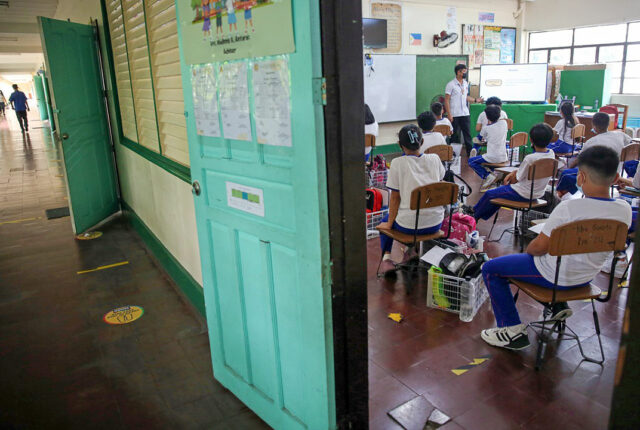
THE DEPARTMENT of Interior and Local Government (DILG) on Tuesday said it favors a proposal to increase the annual real property tax by 1 percentage point to cover a special fund for education, with reservations.  

The special education fund given to public schools should be used to improve learning quality, such as building school infrastructure and buying books, instead of uniforms and bags, DILG representative and lawyer Keith B. Mengullo told a House of Representatives hearing. 

She said school uniforms and accessories such as bags and shoes are unlikely to improve the quality of education, adding that more important items should be prioritized. 

Ms. Mengullo said the agency had supported a similar bill in the past Congress. 

Several bills have been filed seeking to expand the coverage of the special education fund. One of the measures, House Bill 558, also increases the real property tax imposed by local government to 2%. 

The Local Government of Code of 1991 mandates an additional 1% tax on real property collected by local governments that goes to public schools. 

The law limits the allocation to the operation, maintenance, construction and repair of these schools, as well as the purchase of books and sports development. 

Ms. Mengullo said Congress should also review the provision on contractual employment for teaching staff. — Matthew Carl L. Montecillo 

Fisherfolk seek bigger budget for fuel 

BW FILE PHOTO

THE FISHING sector needs a bigger budget for fuel subsidies amid spiraling oil prices, according to a fishers’ group.  

“No one is exempted from the oil price increases, so we are calling on the department to increase the budget for fuel assistance and other stimulus programs to boost agriculture and fisheries production,” Pamalakaya National Chairman Fernando L. Hicap said.  

The Department of Agriculture (DA) proposed a P6.2-billion budget for the Bureau of Fisheries and Aquatic Resources, an attached agency. Its fuel assistance budget for fishermen is P489.6 million. — Luisa Maria Jacinta C. Jocson 

Health workers demand unpaid allowances 

PHILIPPINE STAR/MICHAEL VARCAS

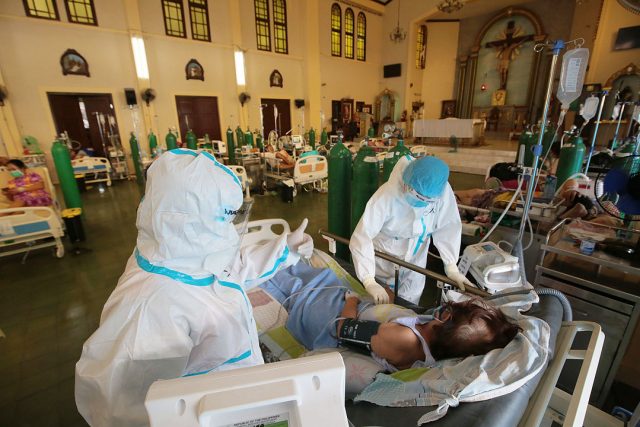
FILIPINO health workers on Tuesday stormed the Department of Health headquarters in Manila to demand their unpaid allowances related to the coronavirus pandemic. 

They slammed the government for allegedly failing to allot enough funds for healthcare. 

The benefits include two allowance packages, one of which was expected to be released from January to June this year, the Alliance of Health Workers (AHW) said in a statement.  

The state had yet to fully pay workers their coronavirus allowance for January to June, as well as their retroactive emergency allowance for July to December last year,  Sally Ejes, acting president of the Philippine Heart Center Employees Association-AHW, said in the statement. 

The health workers hit the Budget and Health departments for the delay. 

The Budget department last week said the release of the P63-billion coronavirus allowance was awaiting documentary requirements that should be prepared by the Health department. In February, it released P7.92 billion to the DoH for the allowance. 

Overworked and underpaid nurses and other health workers threatened to quit their jobs amid a major breakdown of the country’s healthcare system last year as coronavirus infections surged. 

“Two years of pandemic and yet nothing has changed with regard to our appalling condition,” alliance President Robert T. Mendoza said in the same statement. “The benefits are always delayed and not provided, the salary remains low and far from the living wage we desire.” — Kyle Aristophere T. Atienza 

Peso ends at P57:$1 on oil output cut

BW FILE PHOTO

THE PESO slipped to a new record low versus the dollar on Tuesday on renewed global inflation concerns after petroleum exporting countries said they would cut oil production.

The local unit closed at a fresh all-time low of P57 per dollar on Tuesday, inching down by less than a centavo from its P56.999 finish on Monday, Bankers Association of the Philippines data showed. Year to date, the peso has weakened by 11.76% or P6 from its P51-per-dollar close on Dec. 31, 2021.

The local unit opened Tuesday’s trading session at P56.888 against the dollar. The peso’s weakest showing was its close of P57, while the intraday best was at P56.86 against the greenback.

Dollars exchanged declined to $812.19 million on Tuesday from $976.45 million on Monday.

“The peso settled at the P57 level today amid renewed global inflation concerns after the OPEC+ (Organization of Petroleum Exporting Countries and allies led by Russia) decided to reduce its daily production target by 100,000 barrels this month,” a trader said in an e-mail.

OPEC+ said the cut will help boost prices that have slid on expectations of a global economic slowdown.

Benchmark Brent crude oil has dropped to about $95 a barrel from $120 in June on fears of an economic slowdown and recession in the United States.

On Tuesday, Brent crude futures fell 0.7% to $95.07 a barrel. US crude futures, however, were still up 2.12% at $88.71 a barrel.

Meanwhile, Rizal Commercial Banking Corp. Chief Economist Michael L. Ricafort said in a Viber message that the peso moved sideways on Tuesday after the slower-than-expected inflation rate in August.

Headline inflation slowed to 6.3% in August from the near four-year high of 6.4% seen in July, the Philippine Statistics Authority (PSA) reported on Tuesday.

While the result was within the Bangko Sentral ng Pilipinas’ (BSP) 5.9-6.7% forecast for the month and below the 6.4% median estimate in a BusinessWorld poll of analysts, it was the fifth consecutive month inflation went beyond the central bank’s 2-4% target. It was also faster than the 4.4% headline print logged in August 2021.

Month on month, inflation picked up by 0.4%.

For the first eight months, inflation averaged 4.9%, faster than 4% in the same period a year prior but below the BSP’s 5.4% forecast for 2022.

The peso was also mostly steady following the latest rollback in local fuel pump prices, Mr. Ricafort added. Petroleum firms announced a P1.55 per liter price decrease for diesel and P2.60 per liter on gasoline following a big-time price hike last week.

For Wednesday, the trader said the peso may rebound ahead of a potentially weaker US non-manufacturing report.

The trader expects the peso to move between P56.90 and P57.10 against the dollar, while Mr. Ricafort gave a forecast range of P56.85 to P57.05. — K.B. Ta-asan

PHL stocks rebound as inflation eases in August

BW FILE PHOTO

STOCKS climbed on Tuesday as August inflation came in better than expected, which could indicate that prices are moderating.

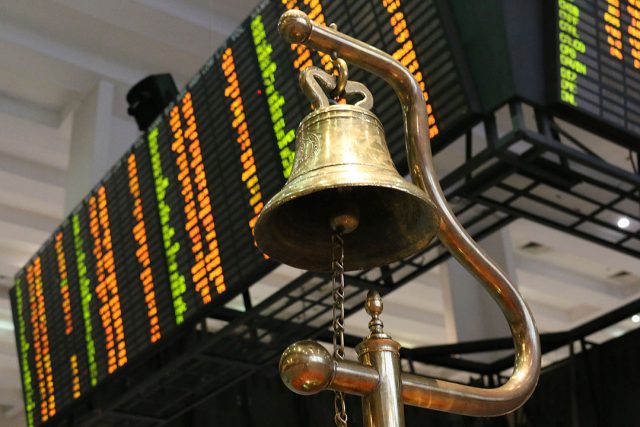
The bellwether Philippine Stock Exchange index (PSEi) went up by 33.56 points or 0.50% to close at 6,709.60 on Tuesday, while the broader all shares index rose by 9.24 points or 0.26% to 3,550.95.

“Philippine shares edged higher as the latest PH CPI (consumer price index) print showed that the overall cost of goods seemed to be moderating, while major US stock indices are poised to resume later this evening,” Regina Capital Development Corp. Head of Sales Luis A. Limlingan said in a Viber message on Tuesday.

“The PSEi inched up by 0.5% today to close at 6,709.60 as the market was greeted by the release of the August inflation print, which eased to 6.3% from the 6.4% in July, also coming out slightly better than estimates,” Unicapital Securities, Inc. Equity Research Analyst Ralph Jonathan B. Fausto said in a Viber message on Tuesday.

Headline inflation slowed to 6.3% in August from the near four-year high of 6.4% seen in July, the Philippine Statistics Authority (PSA) reported on Tuesday.

While the result was within the Bangko Sentral ng Pilipinas’ (BSP) 5.9-6.7% forecast for the month and below the 6.4% median estimate in a BusinessWorld poll of analysts, it was the fifth consecutive month inflation went beyond the central bank’s 2-4% target. It was also faster than the 4.4% headline print logged in August 2021.

Month on month, inflation picked up by 0.4%.

PSA data showed food and transport costs eased. The rise in prices of heavily-weighted food and beverages slowed to 6.3% year on year in August from 6.4% in July. Transport likewise eased to 14.6% from 18.1%.

For the first eight months, inflation averaged 4.9%, faster than 4% in the same period a year prior but below the BSP’s 5.4% forecast for 2022.

The majority of sectoral indices closed higher on Tuesday, except for industrials, which declined by 43.34 points or 0.43% to close at 9,855.60, and financials, which went down by 2.79 points or 0.17% to 1,627.28.

Meanwhile, mining and oil climbed by 288.14 points or 2.49% to 11,847.99; property went up by 36.01 points or 1.21% to 2,999.13; holding firms increased by 58.05 points or 0.90% to 6,479.16; and services added 8.63 points or 0.51% to close at 1,702.32.

Advancers outnumbered decliners, 95 against 89, while 50 names closed unchanged on Tuesday.

Value turnover went up to P4.69 billion with 562.76 shares changing hands from the P4.19 billion with 822.65 million issues seen the previous trading day.

Net foreign buying rose to P526.37 million on Tuesday from the P61.43 million seen on Monday.

Unicapital Securities’ Mr. Fausto put the PSEi’s support at 6,580 and its immediate resistance at the 6,850 level. — J.I.D. Tabile


Bill to hike teachers’ allowance 

PHILIPPINE STAR/ WALTER BOLLOZOS

A BILL that seeks to increase the yearly allowance of public school teachers has been filed at the House of Representatives. 

House Bill 4383 aims to provide educators with an annual allowance of P10,000 for classroom supplies. 

“If enacted, this will help eliminate, or at least, minimize the out-of-pocket expenses of teachers to repair or beautify their classrooms, for printing and even buying laptops,” Party-list Rep. France L. Castro said in a statement. 

Cash allowances for the teaching expenses of public school teachers are given based available budget. This year, the cash allowance was P5,000. 

ACT-Teachers Chairman Vladimir A. Quetua said at a rally on Monday overworked, underpaid and undersupported teachers are a major roadblock to education recovery. 

“If the government wants the learning gaps to be addressed, it needs to alleviate us from this terrible situation,” he said. 

Ms. Castro noted that “aside from pushing for higher salaries for teachers, this is our way of uplifting the lives of our educators so that they would continue serving our country.” — Matthew Carl L. Montecillo 

Energy outlook for 2023 under review amid volatile gas market

BW FILE PHOTO

THE PHILIPPINES will have sufficient power until December, though the outlook for 2023 will need to be reviewed because of volatility in the gas market, Energy Secretary Raphael P.M. Lotilla said.

Addressing the Senate Energy committee on Tuesday, Mr. Lotilla said “we have enough power supply only up until the end of this year. But we are reviewing the outlook because we have lost the fuel (for) Ilijan.”

In July, the Ilijan gas-fired power plant in Batangas shut down in the absence of fuel from the soon-to-be-depleted Malampaya gas field.

“We are very exposed to the volatility of fuel prices.  There are issues involving generation, transmission, and distribution as well,” Mr. Lotilla added.

“The reason we are here is the continuous power outages in some areas. The DoE said we have enough power supply, the consumers are sick and tired of the situation,” Senator Rafael T. Tulfo said during the hearing.

The hearing, presided over by Mr. Tulfo, was called to address recurring power outages and rotational blackouts, particularly in Mindoro. The provinces of Occidental and Oriental Mindoro are undergoing up to 14 hours of power outages per day.

“There is more than one player in the energy supply chain, it is not only the electric cooperative that is causing the interruption, there is also the generation, and transmission sector,” Janeene D. Colingan, the executive director and general manager of the Philippine Rural Electric Cooperatives Association, Inc., said.

Mr. Lotilla said he has tasked Assistant Secretary Mario C. Marasigan in organizing a response with the various agencies involved. — Ashley Erika O. Jose

Agency budget briefings nearing halfway mark

MARIKINA REP. STELLA QUIMBO FACEBOOK PAGE

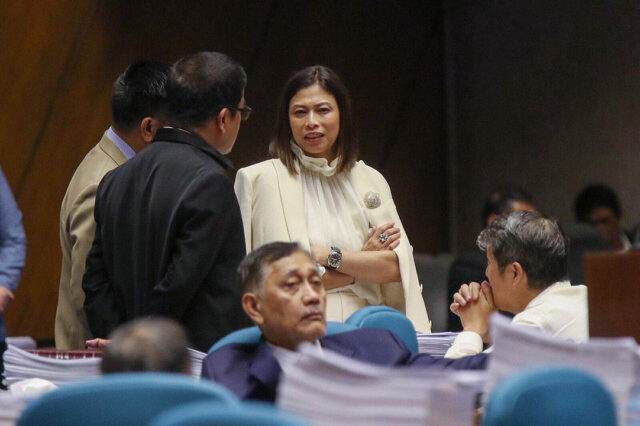
BUDGET BRIEFINGS at the House of Representatives have been conducted by nearly half of the government agencies scheduled to go before the chamber, a senior legislator said.

Marikina Rep. Stella Luz A. Quimbo said at a news conference on Tuesday that “As of yesterday (Monday), 14 out of 34 agencies have briefed Congress regarding their respective budget proposals.”

The progress made in the budget briefings puts the House on track to complete its budget bill by around the Sept. 30 recess, she added.

Agencies that have presented their budget proposals include the Development Budget Coordination Committee, Department of Agriculture (DA), and the Department of Energy (DoE).

Ms. Quimbo said discussions with the DA and DoE have revolved around the Agriculture and Fisheries Modernization Program and the Total Electrification Program, as well as other priority items for 2023 that concern the two departments.

 “Almost all (agencies) asked for consideration for the budget proposals they submitted to the (Department of Budget and Management),” she said. “Even if many congressmen support (these proposals), it isn’t clear what programs the budget increases will come from.” 

Ms. Quimbo said that the budget ceiling of P5.268 trillion serves as a hard cap on ambitious funding proposals.

“The absorptive (capacity) of the agencies is a perennial challenge which is why we have to pay close attention to the execution of the budget,” she added, noting low budget utilization rates for some agencies.

She said devolution has emerged as a common thread in the proceedings, with “lawmakers (showing) concern regarding the capacity of (local government units) to be able to absorb the devolved functions from national agencies, especially with a smaller (National Tax Allotment) compared with last year.”

She was referring to the 40% share of National Government revenue that LGUs are allocated, known as the National Tax Allotment (NTA). The NTA is based on the National Government revenue collected three years prior, which means the 2023 NTA will be based on the National Government Revenue from 2020, the first year of the pandemic.

“Congress still stands by its goal of the swift passage of the (General Appropriations Bill) to allow sufficient time for it to exercise its oversight functions,” Ms. Quimbo said.

“This way, we can ensure that the agencies will not only use their respective budgets for programs in alignment with the new administration’s 8-point socioeconomic agenda but will also be genuinely felt by the Filipino people who will benefit from their programs.” — Matthew Carl L. Montecillo

Bill creating council to address labor issues referred to appropriations panel

COMMISSION ON HIGHER EDUCATION FACEBOOK PAGE

THE House Committee on Higher and Technical Education referred a measure on Tuesday creating a council to address the skills mismatch in the workforce, underemployment, and unemployment to the Appropriations committee to verify that the resulting initiative can be funded.

House Bill 979, filed by Baguio Rep. Mark O. Go, tasks the council with setting policy and developing programs to address gaps in the labor market.

The council, which will be attached to the Commission on Higher Education (CHED), is composed of government, academic, and industry representatives.

Economists have blamed the shortage of in-demand skills for the expected rise in unemployment next year.

“There is no question that job skills mismatch, underemployment, and unemployment are a continuing problem,” CHED Chairman Prospero E. De Vera II said at the committee hearing.

He said, however, that CHED may not have the resources to support such a council because of its broad mandate which is not budgeted for.

He said various laws aimed at promoting education are not backed with budgets in the General Appropriations Act.

Cavite Rep. Elpidio Barzaga, Jr. asked CHED to propose a budget for the council.

The Committee on Appropriations will rule on the bill’s funding provisions. — Kyanna Angela Bulan

PCCI satellite connectivity project close to launch

MATTHIJS VAN HEERIKHUIZE-UNSPLASH

THE Philippine Chamber of Commerce and Industry (PCCI) said it will soon launch the first phase of its satellite connectivity project serving remote areas of the Philippines.

In a statement on Tuesday, the PCCI said Perry A. Ferrer, its director for Innovation and Digital Economy and Science and Technology briefed Information and Communications Secretary Ivan John E. Uy on Aug. 12 that the project hopes to establish proof of concept for satellite connectivity.

The PCCI did not specify a date for the actual launch.

“Phase 1 of the proof of concept project will set up internet via satellite in six geographically isolated and disadvantaged areas (GIDAs), divided equally among the three main islands of Luzon, Visayas, and Mindanao,” the PCCI said.

The six pilot areas were not disclosed.

Phase two will involve the tasking of a satellite specifically for the Philippines.

Mr. Uy said the current fiber backbone is only good for urban areas, but is inefficient in the islands.

Mr. Uy touted the benefits of connectivity for education, adding that the Department of Information and Communications Technology is working with the Department of Education to develop online learning modules.

Mr. Uy cited the need to promote online banking for rural areas, and to set up online marketplaces servicing small businesses.

PCCI President George T. Barcelon said the organization is “looking at enabling satellite connectivity to ensure that government services and social services such as education, healthcare and skills training will effectively reach the unserved and underserved areas, while also facilitating economic activity in these areas.” — Revin Mikhael D. Ochave

Senate wants wildlife trade kept in check

PHILSTAR FILE PHOTO/ GERRY LEE GORIT

SENATORS said the penalties for wildlife trafficking are currently not strong enough to deter the growing trade in wild animal species.

“Penalties have become outdated and mere slaps on the wrist when compared to the severity of wildlife trafficking,” Senator Cynthia A. Villar said at a hearing on Tuesday.

“The emergence of the COVID-19 pandemic made us realize the importance of strengthening the conservation of wildlife. It is the constant exploitation of the wild that raises the risk of zoonotic disease transmissions,” she added.

The joint hearing of the committees on Environment, Natural Resources and Climate Change; Finance, Sustainable Development Goals, Innovation and Futures Thinking, and Ways and Means, was called to draft the Implementing Rules and Regulations of Republic Act No. 11898 or the Extended Producer Responsibility Act.

The law contains guidelines on wildlife conservation and protection.

Environment Secretary Maria Antonia Y. Loyzaga said that the current law discouraged wildlife-related crimes to some extent but failed to deter wildlife traffickers “who take advantage of the gaps in the legislation.”

“The potential value of wildlife has captured the interest of large organized criminal syndicates. Globalization has created a new platform and deceptive means for illegal wildlife trade at the expense of our country’s wildlife resources. This has led to the need to enhance our laws,” she said.

Ms. Loyzaga said that the government should pass more stringent laws and increase penalties for criminals.

“The Philippines has suffered a loss of P50 billion due to the illegal wildlife trade… it has become a destination and shipping point,” she added.

She proposed amendments to the law, including penalizing the crime of wildlife trafficking as a separate offense and classifying it as a transnational offense. She also proposed that crimes committed by two or more persons be treated as organized crime.

“It’s high time to add the threats to biodiversity like overexploitation. It’s also time to make the health of our ecosystem as a priority (around which to) center all our plans and policies,” she said.

ASEAN Center for Biodiversity Director Alvin C. Diesmos said controlling the illegal wildlife trade will help mitigate the risk of pandemics.

“We appreciate this timely effort in response to the growing threat of wildlife trade in the region (and) the importance of protecting our wildlife resources to reduce risks of future pandemics,” he said.

“Southeast Asia is both a source and transit point for illegally traded wildlife. The Philippines can take the lead in working with ASEAN neighbors,” he added.

Forest Management Bureau legal officer Ray Thomas F. Kabigting added that more wildlife protection officers are needed to cover not only animals, but also endangered plants. — Luisa Maria Jacinta C. Jocson

ADVERTISEMENT
ADVERTISEMENT