Home Blog Page 5910

Sojitz opens 33rd local dealership

THE local distributor of Geely vehicles opened a new dealership in Palawan on Thursday as part of its expansion efforts.

Sojitz G Auto Philippines Corp. (SGAP), Geely’s authorized distributor in the Philippines, said the inauguration of Geely Palawan marked its 33rd dealership nationwide.

The 1,113-square-meter facility features four to six unit-car displays and six service bays.

Geely Palawan targets both locals and tourists, SGAP President and Chief Executive Officer Yugo Kiyofuji said in a statement.

“We are truly delighted to have gained another business partner, Auto Artist, Inc., whose owners share the passion and confidence in bringing and representing the Geely brand in Palawan,” he said.

“As we are just celebrating our 3rd anniversary this month, we are currently above and beyond what we had expected.”

The new dealership is located along North National Highway, Brgy. San Jose, Puerto Princesa City, Palawan, and is open seven days a week from 8 a.m. to 5 p.m.

“With the opening of Geely Palawan, Geely holds firm to its commitment to reach out to more Filipino customers and experience the advanced and exciting vehicles it has to offer,” the company said.

“(Geely) has sold 10,000 vehicles in less than 3 years and Geely sales accumulated to 6,199 units during the last 8 months that has already exceeded the annual sales in 2021,” it added. — Revin Mikhael D. Ochave

What to see This Week (09/09/22)

Spider-Man: No Way Home

Spider-Man: No Way Home

ALL THREE Peter Parkers — played by Tom Holland, Andrew Garfield, and Tobey Maguire — are swinging back into theaters this week. Spider-Man: No Way Home will feature extended scenes and 11 minutes of never-before-seen footage. The return engagement comes in celebration of 60 years of the Spider-Man comic book character, in addition to the last two decades of Spider-Man films gracing the big screen. The movie’s first release back in January saw theaters with limited seating capacity and children still not allowed outside their homes due to the COVID-19 pandemic. Directed by Jon Watts, the film also stars Zandeya, Jacob Batalon, Benedict Cumberbatch, Jon Favreau, and Benedict Wong. Brian Tallerico of www.rogerebert.com writes: “So many modern superhero movies have confronted what it means to be a superhero, but this is the first time it’s really been foregrounded in the current run of Peter Parker, which turns No Way Home into something of a graduation story. It’s the one in which Parker has to grow up and deal with not just the fame that comes with Spider-Man but how his decisions will have more impact than most kids planning to go to college.” Rotten Tomatoes Tomatometer gives the film a score of 93%, and an audience score of 98%.

MTRCB Rating: PG


Fanny: The Right to Rock

THIS is the true story of a Filipina-American garage band that morphed into the ferocious rock group Fanny, the first all-woman band to release an LP with a major record label. Despite recording a handful of albums and amassing a dedicated fan base that included music legend David Bowie, the band disappeared from the records of music history. This documentary tells the story of the band’s rocking past, and also documents the band’s new chapter with the recording of a new album. Written and directed by Bobbi Jo Heart, it stars Jean Millington, June Millington, Nickey Barclay, Alice de Buhr, Brie Howard-Darling, and Patti Quatro. Variety’s Dennis Harvey writes, “Fanny: The Right to Rock remains thoroughly engaging thanks to the demonstrable talent and brassy forthrightness of its central personalities.” Rotten Tomatoes Tomatometer gives the film a score of 100%, and an audience score of 79%.

MTRCB Rating: PG


Jane 

WHILE struggling with grief after her friend’s death, high school senior Olivia gets deferred from her dream college. She then pursues a social media-fueled rampage against everyone standing in her way. Directed by Sabrina Jaglom, the film stars Madelaine Petsch, Chloe Bailey, Melissa Leo, Nina Bloomgarden, and Kerri Medders. Todd Jorgenson of Cinemalogue writes: “Although it admirably tackles cyberbullying, identity theft, mental health, and affirmative action, this coming-of-age drama lacks the subtlety or surprise to make a deeper impact.”  Film review aggregate Rotten Tomatoes’ Tomatometer gives the film a score of 60% and an audience score of 90%.

MTRCB Rating: R-13

Grab Philippines’ acquisition of MOVE IT challenged by 4 groups

FOUR GROUPS are asking the Land Transportation Franchising and Regulatory Board (LTFRB) to review Grab Philippines’ acquisition of motorcycle taxi firm MOVE IT.

Lawyers for Commuters Safety and Protection, National Public Transport Coalition, ARANGKADA Riders Alliance, and Digital Pinoys signed a petition on Thursday calling on the LTFRB to review the transaction.

Ariel E. Inton, founder of Lawyers for Commuters Safety and Protection, said Grab’s acquisition of MOVE IT should not grant it “instant accreditation” to be part of the pilot test of motorcycle taxi services.

“It should not mean that when an … accredited company withdraws or shows that it is no longer interested in operating a motorcycle taxi service, very much like the planned sale of MOVE IT to Grab, the accreditation is automatically transferred,” Mr. Inton said.

Grab Philippines has said it aims to expand MOVE IT’s existing motorcycle taxi fleet and improve the efficiency of its platform to service more commuters and onboard at least 6,000 driver-partners within three months.

Grab’s MOVE IT said in a separate statement that it “remains as one of the three motorcycle (MC) operators, and its accreditation remains its own and does not transfer to Grab.”

“Regardless of its ownership, MOVE IT maintains its own corporate identity and branding under the leadership of its Chairman Mr. Francis Juan. Given the transition of government, we prudently and proactively informed all relevant government agencies — based on our rigorous legal due diligence,” it added.

The company also said the allegations are “an attempt to keep MOVE IT so small that it would not pose any competition to the two other operators.” — Arjay L. Balinbin

PHL banking sector’s NPL ratio drops to 22-month low in July

BW FILE PHOTO
BAD LOANS of banks continued to decline as of July. — BW FILE PHOTO

THE BANKING INDUSTRY’S nonperforming loan (NPL) ratio fell for a fifth straight month in July to its lowest in almost two years as bad debt continued to decline despite lenders’ bigger loan book.

Latest data from the Bangko Sentral ng Pilipinas (BSP) showed the Philippine banking sector’s gross NPL ratio inched down to 3.57% at end-July from 3.6% in June and 4.51% in the same month last year.

The July ratio was the lowest in 22 months or since 3.51% in September 2020.     

Bad loans dropped by 13.7% to P420.255 billion as of July from P487.005 billion a year earlier. This was also 0.25% lower than the P421.311 billion seen at end-June.

Loans are considered nonperforming once they remain unpaid for at least 90 days after the due date. They are deemed as risk assets given borrowers are unlikely to settle such loans.

Meanwhile, banks’ total loan portfolio grew to P11.77 trillion as of July from P11.72 trillion at end-June and P10.8 trillion a year prior.

“The sustained reopening of the economy has helped improve cash flow and overall business activity, helping borrowers service borrowings on time,” ING Bank N.V. Manila Senior Economist Nicholas Antonio T. Mapa said in an e-mail.

“We expect this development to continue, although we could see a slower pace of improvement in the medium term after the BSP continues to hike aggressively,” Mr. Mapa said. “Higher rates could make it more difficult for borrowers to service debt, but we don’t expect the recent trend of declines in NPL to reverse altogether.”

Asian Institute of Management economist John Paolo R. Rivera said in a Viber message that the decline in soured loans shows borrowers are able to settle their obligations on time.

“This is due to the resumption of normal working/business operations that somehow ensures a steadier cash flow than before. Indeed, the business/economy is recovering,” Mr. Rivera said.

Since March, Metro Manila and some provinces have been under the least strict alert level amid declining coronavirus infections.

Meanwhile, the central bank has hiked benchmark interest rates by 175 basis points since May to curb rising prices.

BSP Governor Felipe M. Medalla on Wednesday said the central bank is likely to continue raising borrowing costs this year as inflation remains high, with the peso’s recent depreciation also being a key risk.

BSP data showed banks’ past due loans dropped by 14.3% to P491.289 billion from P573.785 billion a year ago. This brought its share in total loans to 4.17% from 5.31% a year ago.

Restructured loans climbed by 3.5% to P341.973 billion from P330.164 billion in the same month in 2021. These accounted for 2.9% of the banking system’s loan portfolio.

Meanwhile, banks continued to boost their loan loss reserves to P416.732 billion in July from P401.503 billion a year ago. This brought the ratio to 3.54% from 3.72% a year earlier.

The industry’s NPL coverage ratio also improved to 99.16% from 82.44% the year before.

The central bank has said the NPL ratio of Philippine banks might peak at 8.2% this year. The ratio stood at 3.99% as of end-December 2021. — K.B. Ta-asan

Rings of Power calls out racism against cast members of color

Ismael Cruz Cordova plays Arondir, an elf.

AFTER an inundation of racist attacks, Amazon Prime Video’s Lord of the Rings: Rings of Power has released a statement on Twitter expressing that they refuse to ignore or tolerate the “racism, threats, harassment, and abuse” that some of their castmates of color face daily.

When black and brown cast members on Rings of Power were announced earlier this year, they were met with immediate backlash based on the color of their skin. Claiming that the series is a misrepresentation of author J.R.R. Tolkien’s Middle-earth, comments have emerged across social media rejecting the show’s diversity.

After receiving many negative comments following the show’s premiere, Amazon Prime disabled the option for audiences to comment due to review bombing suspicions.

The statement reads: “We, the cast of Rings of Power, stand together in absolute solidarity and against the relentless racism, threats, harassment, and abuse some of our castmates of color are being subject to on a daily basis,” it reads.

“We refuse to ignore it or tolerate it. JRR Tolkien created a world which, by definition, is multi-cultural. A world in which free peoples from different races and cultures join together, in fellowship, to defeat the forces of evil. Rings of Power reflects that. Our world has never been all white, fantasy has never been all white. Middle-earth is not all white. BIPOC belong in middle-earth and they are here to stay.”

It goes on to say, “Finally, all our love and fellowship go out to the fans supporting us, especially fans of color who are themselves being attacked simply for existing in this fandom. We see you, your bravery, and endless creativity. Your cosplays, fancams, fan art, and insights make this community a richer place and remind us of our purpose. You are valid, you are loved, and you belong. You are an integral part of the LORT family — thanks for having our backs.”

Closing with the elvish word “Namárië,” meaning “farewell,” the post has been met with mixed responses. Some Twitter commenters have thanked the show for condemning racism while others suggest that Rings of Power harassment is about the show’s poor quality, not its characters of color.

This racially charged harassment mimics similar 2022 incidents of abuse targeting talent of color cast in sci-fi roles, including Moses Ingram in Star Wars’ Obi-Wan Kenobi and Leah Jeffries in the upcoming Percy Jackson series. — Reuters

PHL startup Shipmates raises P125M to improve shipping platform

PHILIPPINE-based startup Shipmates said it has raised $2.2 million (P125 million) for the improvement of its shipping platform that assists online small and medium businesses.

In a statement on Thursday, Shipmates said it was able to raise the fund through a seed funding round participated by Cathexis Ventures, Wavemaker Partners, Taurus Ventures, Capital X, Sketchnote Partners, and other investors.

“The company plans to scale its platform to be the preferred shipping tool of all the merchants in the Philippines and improve the country’s shipping infrastructure by helping both online businesses and shipping companies,” Shipmates said.

Prior to the recent seed funding round, Shipmates was able to raise $500,000 (P25 million) in seed funding from United States-based startup incubator Y Combinator.

“When talking to online sellers, their biggest pain point has always been how manual shipping still is in our country. We built Shipmates to automate this, we built Shipmates for them and we are very glad to be joined by our amazing investors in making this vision a reality,” Shipmates Chief Executive Officer Josh Supan said.

“Instead of shippers booking couriers manually on their phones or physically dropping off packages, their orders feed straight into Shipmates, and they can pick a courier for shipping from there,” he added.

Further, Mr. Supan said that nine courier companies are currently integrated into the platform, adding that Shipmates is the only aggregator that has on-demand and standard couriers in the Philippines.

“Before Shipmates, it took merchants one whole day to send out their orders. Now they can do it in less than 10 minutes with Shipmates. Key features such as automated waybills, address validations, and multiple couriers in one platform give online merchants more time for their business rather than stressing on deliveries,” Mr. Supan said.

“We target small and medium businesses who primarily sell online. Their basket sizes range from $20 to $50. We solve the nightmare of shipping manually in the Philippines,” he added.

Founded in July 2021, Shipmates helps e-commerce businesses grow by allowing online business owners to book standard or multiple orders. It also compares the shipping rates among different couriers.

“In 2021, the e-commerce market was the leading contributor to the internet economy in the Philippines, with an estimated gross merchandise value of $12 billion — a 132% increase from 2020. This is expected to hit $26 billion by 2025,” Shipmates said. — Revin Mikhael D. Ochave

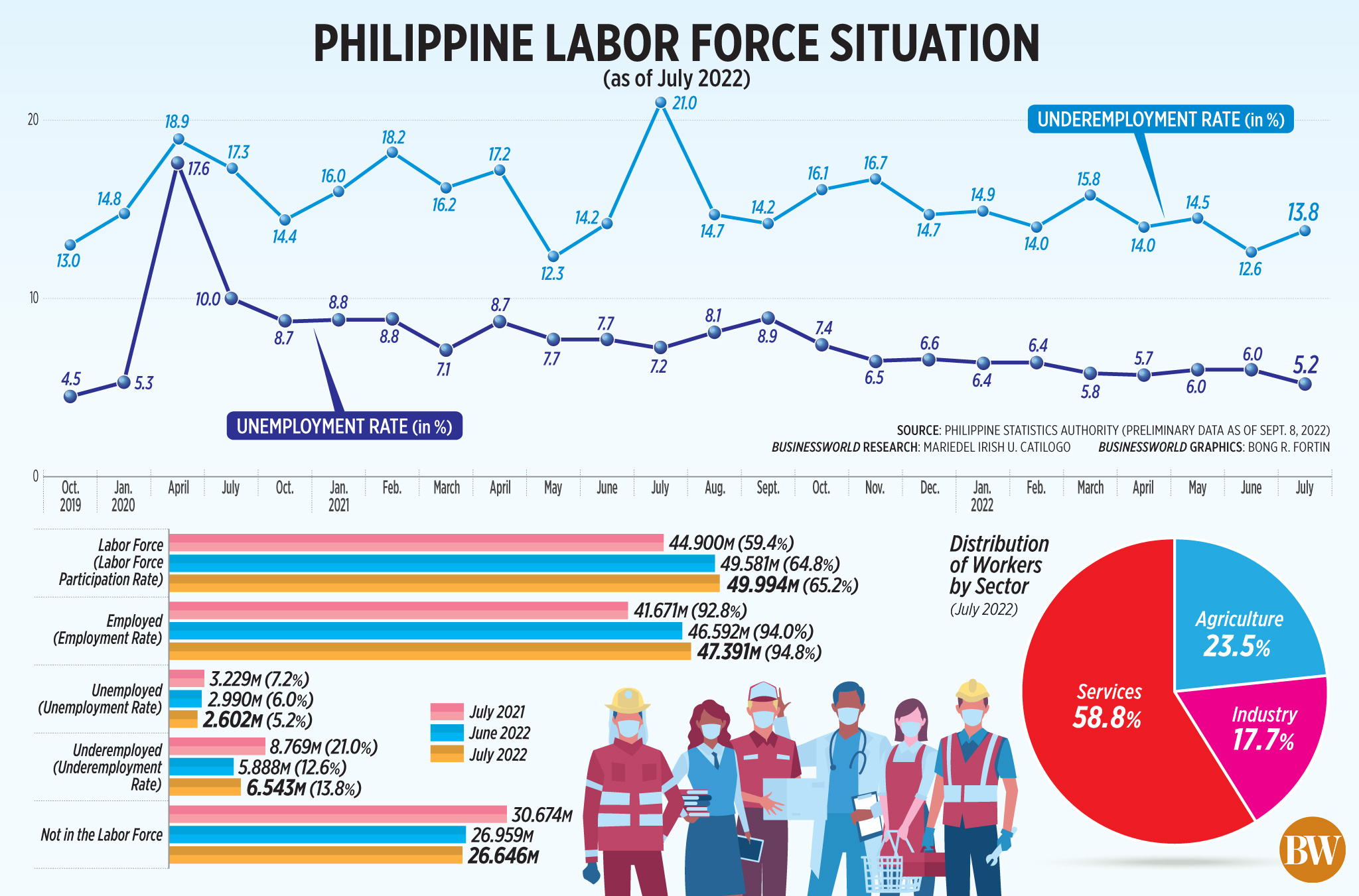
Philippine labor force situation

THE PHILIPPINES’ unemployment rate in July dropped to its lowest since the onset of the coronavirus disease 2019 (COVID-19) pandemic. Read the full story.

Philippine labor force situation

Insurance industry books higher assets, net worth and payouts in the 1st quarter

THE INSURANCE SECTOR’S total assets, net worth, and benefit payouts grew in the first quarter, the Insurance Commission (IC) reported on Thursday.

The IC said in a statement that data from 129 out of 135 licensed life and nonlife insurers and mutual benefit associations (MBAs) showed their total assets increased by 12.21% year on year, while their total net worth and total benefits paid likewise grew by 24.27% and 19.48%, respectively

In real terms, total assets, net worth, and benefits paid of these three sectors stood at P2.12 trillion, P392.51 billion, and P33.32 billion, respectively, in end-March.

Total invested assets also grew by 9.94% to P1.84 trillion, while total paid-up capital and guaranty fund increased by 9.75% to P75.9 billion.

“Life and nonlife insurers and MBAs are steadily recovering from the adverse economic effects of the pandemic, as evidenced by these numbers for Q1 2022. Moreover, the year-on-year increase in total benefits paid during the same quarter highlighted the continuing commitment and responsiveness of our insurers and MBAs to the needs of the insuring public despite the challenges posed by the pandemic,” Insurance Commissioner Dennis B. Funa was quoted as saying.

The life insurance sector’s assets grew by 10.94% to P1.65 trillion, which was attributed to the “increase in its segregated fund assets by 22.37%, which comprised more than half or 55.05% of the sector’s total assets.”

While total liabilities of the life insurance sector rose by 7.77% in the first quarter, its total net worth grew by 37.26% on the back of a 130.71% increase in its reserve accounts.

The total paid-up capital of the sector also expanded by 2.74% year on year to P26.6 billion.

Invested assets of the life insurance sector increased by 10.19% to P1.59 trillion on the back of investments in financial assets at fair value through profit or loss, as well as investment property, which recorded growths of 27.99% and 14.54%, respectively.

However, the industry’s total premium income contracted by 5.51% to P78.61 billion in the first quarter, driven by a 19.78% decline in single premium variable insurance products and a 19.86% drop in single premium traditional life insurance products.

Premiums from variable life insurance policies, which comprised 75.17% of life insurers’ total premium income, decreased by 9.80% over the previous year’s sales. This was offset by a 10.38% increase in premiums from traditional life insurance policies.

New business annual premium equivalent also saw a decrease of 1.21%.

The total net income of the life insurance sector also declined by 20.85% quarter on quarter, primarily due to a 5.51% decrease in total premium income and a 27.18% increase in benefit payments.

The total number of policies rose by 7.6%, while total estimated insured lives went up by 11.08% in the first three months of 2022.

NONLIFE
On the other hand, total assets of the nonlife insurance sector rose by 21.31% to P343.46, with 56.42% of it belonging to the top 10 nonlife insurance companies.

Total liabilities increased by 26.38% to P222.37, bringing the sector’s cumulative net worth to P121.09, accounting for a 12.35% increase against the same period last year.

Total invested assets in the nonlife insurance sector jumped by 9.16% to P138.89 billion in the first quarter, attributed to “the growth in values of the sector’s time deposits, debt securities (bonds) in government, equity securities, investments in property, UITF, and other investments, which accounted for 84.72% of the total invested assets.”

Net premiums written (NPW) also recorded an expansion of 15.45% to P15.59 billion in the first quarter.

“The Fire Insurance line of business saw a huge gain in Q1 2022, rising from P2.45 billion in Q1 2021 to P3.63 billion in Q1 2022, or by 48.03%. The Motor Car line of business, which contributes the most to the total NPW per line of business with 41.32% share increased the sector’s NPW to P6.44 billion in Q1 2022 from P6.14 billion in Q1 2021,” the IC said. “The Aviation line of business is now gradually recovering from a negative P74.10 million in Q1 2021 to P7.70 million in Q1 2022, rising by 110.38%.”

“Except for the Health and Passenger Personal Accident Insurance lines of business, almost all other business lines experienced growth in Q1 2022,” it added.

However, net premiums written of nonlife companies’ health insurance business dropped to just P610 million from P1.10 billion year on year as one firm posted a 56.59% decline.

The total net income of nonlife insurers decreased by 9.88% to P1.07 billion  in the first quarter as 16 companies reported net losses amounting to P420 billion.

MBAs
Meanwhile, MBAs’ total assets increased by 6.33% to P125.66 billion in the first quarter, with four MBAs accounting for 80% of the industry’s total assets.

Total invested assets amounted to P111.85 billion, which is 7.42% higher year on year. The figure is also equivalent to 89% of MBAs’ total assets.

“As in Q1 2021, most of the MBAs’ investments were placed in long-term investments, which stood at P49.27 billion and in loans at P34.08 billion, increasing by 12.05% and 2.80% year on year, respectively,” the IC said.

Total liabilities of MBAs jumped by 5.58% to P74.58 billion due to “the year-on-year increase in their optional benefit reserve from P22.15 billion to P24.38 billion, which comprises 32.69% of the sector’s total liabilities.”

The sector’s total fund balance likewise increased by 7.43% as equity grew to P51.08 billion from P47.54 billion year on year.

MBAs’ total premium income, or contributions from their members, stood at P3.28 billion in the first quarter, with the top two MBAs contributing 74% to the total.

The sector’s aggregated net surplus rose by 13% year on year to P1.39 billion, which the IC said “can be attributed to an 18.53% increase in members’ contributions collected, an increase in net returns from investment by 4.57%, and the decrease in benefit expense by 20.70%, year on year.” — D.G.C. Robles


Two worker-focused departments seen as underfunded in 2023

PHILIPPINE STAR/ XAVE GREGORIO

THE Kilusang Mayo Uno (KMU) labor union said legislators need to increase 2023 funding for the Department of Labor and Employment (DoLE) and the Department of Migrant Workers (DMW) to ensure the availability of resources for protecting workers’ rights, welfare and social services. 

The KMU outlined its program in a march to the Batasang Pambansa in Quezon City, where the House of Representatives is located. 

The Budget department allocated DoLE P25.90 billion in the 2023 National Expenditure Program (NEP), down 29.9% from 2022. The DMW, a new agency, has a proposed budget of P15.21 billion, When combined, the KMU said, funding for worker-focused frontline agencies amounted to only 0.78% of the National Government’s budget proposal, known as the NEP. 

Party-list Representative Raymond Democrito C. Mendoza said the DoLE “cannot perform its functions if its budget is limited.”

Labor Secretary Bienvenido E. Laguesma took no position on the issue of appropriate funding levels for his department, saying: “I defer to the wisdom of the appropriations committee of the House.”

Cagayan De Oro Rep. Rufus B. Rodriguez said he supports a funding increase of P1.5 billion for the agency, with P500 million each going to the Government Internship program, the Sustainable Livelihood program, and the Tulong Panghanapbuhay sa Ating Disadvantaged/Displaced Workers program.  

Party-list Rep. Arlene D. Brosas described the DMW budget as limited relative to the impact on the economy of overseas Filipino workers (OFWs), whose remittances are equivalent to 8.9% of gross domestic product. 

The Bangko Sentral ng Pilipinas said OFW cash remittances sent through banks amounted to $2.75 billion in June, the highest since December. 

The DMW budget includes P3.40 billion for the Office of the Secretary  and P11.70 billion for the Overseas Workers Welfare Administration. 

Migrant Workers Undersecretary Maria Anthonette C. Velasco-Allones said that DMW welcomes the possibility of a budget increase if Congress supports it. 

Quezon City Rep. David C. Suarez also expressed support for a budget increase to ensure adequate funding to maintain the OFW Hospital in Pampanga, which offers free medical care to OFWs and their families.

Land for the hospital was donated by Pampanga province, while construction was funded by Bloomberry Cultural Foundation, Inc. Equipment acquisition was funded by the Philippine Amusement and Gaming Corp. — Kyanna Angela Bulan

Hugh Jackman reveals winning pitch to be dad in The Son

Hugh Jackman in The Son

VENICE — Australian actor Hugh Jackman revealed on Thursday that he was so anxious to play the father in a film called The Son that he sent an e-mail to the director-writer Florian Zeller asking for the part.

Stars like Mr. Jackman, who featured in the X-Men series, normally get bombarded with requests to take on new roles, but he said he felt he had to take the initiative when he read the script of Mr. Zeller’s The Son, which was originally a stage play.

“I said ‘I don’t know if you are dancing with anyone else. I am not the kind of person to cut in on a dance, but if you are not, I would love to play the part’,” Mr. Jackman told reporters ahead of the movie’s world premiere at the Venice Film Festival.

“When I read The Son it was a feeling like a fire in my gut. It was a compulsion,” he added.

Mr. Zeller, a French playwright and novelist who wowed the film world with his 2020 feature debut The Father, said he was “touched” by Mr. Jackman’s humility and organized an initial Zoom call with him during the COVID lockdown.

“I was not planning to make any decision and after eight minutes I offered him the part,” he said.

The film shows divorced parents, played by Mr. Jackman and Laura Dern, desperately struggling to deal with the mental breakdown of their 17-year-old son, played by newcomer Zen McGrath.

“Every parent can relate to being terrified about what the hell to do,” said Mr. Jackman, who has two children.

“Since this movie I have changed my approach. I share my vulnerabilities more with my 17- and 22-year-olds. I see their relief when I do,” he said.

Thinking they are doing the best for their son, the mother and father make matters much worse for him, highlighting how many families are incapable of dealing with the growing scourge of mental health problems.

Research has shown how the COVID emergency has accelerated an already serious problem, with the prolonged lockdown weighing heavily on the stability of adolescents around the world.

One recent survey found more than a third of high school students surveyed in the United States experienced stress, anxiety or depression, and nearly a fifth said they seriously considered suicide during the pandemic.

“This mental health issue is a crisis everywhere in the world. No one is immune to it,” said Mr. Jackman. “This is something that we need to talk about and come together on,” he said.

The Son is one of 23 films competing for the main Golden Lion award which will be handed out on Sept. 10. — Reuters

GCash starts ‘anonymizing’ names to protect customers

INSTAGRAM.COM/GCASHOFFICIAL

E-WALLET giant GCash will now cover customers’ names when sending money as part of its commitment to protect users’ information.

“In the past, the name of the person was seen as an added measure of convenience and helped verify that the recipient was correct,” GCash said in a statement.

“We need to strike a balance between customer experience and strengthening measures to keep user information safe from unscrupulous individuals. The feature that shows the full names of recipients was intended to help users verify if they are sending to the right person and avoid being scammed,” said Mark Frogoso, chief information officer of GCash.

Meanwhile, Globe Telecom, Inc. said it has partnered with the Bankers Association of the Philippines to create a framework for intelligence and data sharing, as part of its intensified efforts against cybercrime.

“Rapid detection and action against illicit activity on Globe’s network have been made possible by the ground-breaking information exchange frameworks with banks. These enhance the overall efficiency of fraud investigation and prevention,” Globe Chief Information Security Officer Anton Reynaldo M. Bonifacio said.

From January to August this year, nearly 36.7 million bank-related spam and scam attempts were blocked through collaboration and data-sharing with partner banks, Globe said.

“Aside from blocking millions of scam and spam messages, Globe has also deactivated 14,058 scam-linked mobile numbers and blacklisted 8,973 more from January to July this year,” it added. — Ashley Erika O. Jose

DBP’s net profit surges by 131% in the first semester

COURTESY OF DBP FACEBOOK PAGE

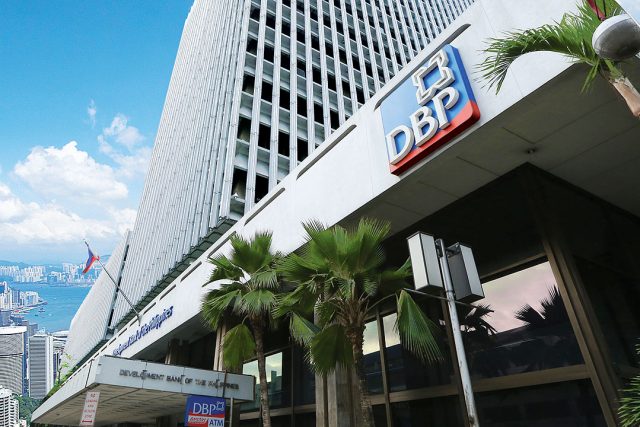
DEVELOPMENT Bank of the Philippines (DBP) recorded a net income of P2.76 billion in the first half, surging by 131% from the P1.19 billion it earned in the same period last year, keeping it on track to meet its profit target.

The state-owned bank attributed the rise to an increase in loan volume and interest income and lower cost of funds as it ramped up its lending activities in support of the National Government’s economic recovery program.

“DBP reaffirmed its commitment to help hasten the economic recovery of the country by intensifying its development lending activities,” DBP President and Chief Executive Officer Emmanuel G. Herbosa said in a statement on Thursday.

“Its solid financial performance in the first half of the year puts it in a prime position to bolster its support to the various priority programs of the National Government,” he added.

DBP Executive Vice-President for Operations Fe Susan Z. Prado also attributed the growth in DBP’s net profit in the first half to a 29% increase in gross margin to P3.09 billion.

This, despite being weighed down by provisions for credit losses totaling P2.8 billion. Net income before provisions stood at P6.41 billion, up by 85% year on year, the bank said.

Ms. Prado said the country’s positive outlook due to the gradual opening of the economy will benefit DBP as the lender looks to capitalize on increased business activities in the second half of the year.

“DBP’s first-half income already represents a 72% realization rate of its P3.85-billion readjusted target for the year and the bank is on track to keep its position as one of the most financially stable government financial institutions in the country,” Ms. Prado said.

The bank’s total loans grew by 13% to P494.15 billion as of June from the P436.02 billion recorded a year ago.

“[About] 55.33% or P273.43 billion were released to bankroll projects in the infrastructure and logistics sector, majority of which are located in the National Capital Region, Central Visayas, and Central Luzon,” Mr. Herbosa said.    

The bank provides credit support to four strategic sectors of the economy — infrastructure and logistics; micro, small and medium enterprises (MSMEs); the environment; and social services and community development.

DBP’s outstanding loans for social infrastructure and community development projects amounted to P98.49 billion as of June.

Outstanding credit for other developmental initiatives covering finance and insurance, manufacturing, wholesale and retail trade, accommodation, and food services totaled P65.20 billion in the same period.

“The bank also provided P48.69 billion in loans for the agriculture sector in support of the government’s food sufficiency program, as well as P52 billion for environment-related projects and P31.58 billion for MSME sector,” Mr. Herbosa said.

Meanwhile, the lender’s deposits reached P731.90 billion, representing 82% of its P895-billion target for the year, with low-cost deposits rising by P9 billion.

DBP is the sixth-largest lender in the country in terms of assets with P1.06 trillion at end-March, data from the central bank showed. — KBT

ADVERTISEMENT
ADVERTISEMENT