Home Blog Page 5859

Saving  grace

To argue that the Yankees have struggled for form in the second half of the 2022 campaign of Major League Baseball would be to understate the obvious. They began it with a 64-28 record, a whopping 15 games better than that of the second-running Blue Jays in the American League East. Heck, they were better than the Astros, better than the Mets, and even better than the Dodgers. And then, for one reason or another, they went on a freefall; at one point last, they posted an atrocious 3-14 slate marked by losing streaks of five, three, three, and three matches. And then, just when it seemed as if they addressed their woes to post a five-contest winning skein, they went absorbed setbacks in six of their next seven outings.

Today, the Yankees stand at 90-58, a mere handful ahead for the Division crown with 14 left on their regular season schedule. They’re fortunate to face the slumping Red Sox in the next four set-tos, which should provide them with a cushion heading into a significant series against the Blue Jays. That said, they’ve never been about hanging on. For as long as the sport has been around, pinstripes didn’t only mean success; they meant domination. And, yes, whatever impressions they may have created with their historic run prior to the All-Star break cannot but be considered a mirage.

To be sure, the Yankees weren’t given any favors by the spate of injuries they suffered. Still, there can be no excusing their inexplicably poor form on both offense and defense. There’s a reason they’re flat out bad in close contests; even a simple eye test shows how badly they have performed in the crunch with outcomes on the line. Bottom line, their decision-making skills under pressure have left much to be desired.

Under the circumstances, they should count their lucky stars Aaron Judge is in the midst of an otherworldly offensive assault — and far more than the fact that his production has kept them on the right side of competitive. He’s the reason they remain the hottest ticket in town, and, when all is said and done, he may well be the lone cause of 2022 being a remarkable year for the Bombers. Because this is what it has come down to for them: from getting the closest to the hardware to needing a saving grace.


Anthony L. Cuaycong has been writing Courtside since BusinessWorld introduced a Sports section in 1994. He is a consultant on strategic planning, operations and Human Resources management, corporate communications, and business development.

Blockchain and new trends in money

JEREMY BEZANGER-UNSPLASH

Last week, we concluded Part 1 with the observation that the most disruptive aspect of digital transformation is perhaps its implications on the concept of money. With an expanding platform, Bitcoins, Ethereum, and Ripple threaten to challenge fiat money, that which is issued by the different countries’ central banks.

Do these digital assets have what it takes to be accorded the same trust as fiat money to fully serve society?

The literature is one in saying that security and stability are important features of a money pretender, whether public or private, who should be accountable to the general public. As Agustin Carstens, Jon Frost, and Hyun Song Shin of the Bank for International Settlements (BIS) argued in IMF’s Finance and Development of September 2022, a money pretender must also be efficient and inclusive with participants having control over their data. Fraud and abuse are ringfenced. To be global, it would have to be supportive of cross-border transactions.

Carstens, Frost, and Hyun were rather categorical that “today’s monetary system is generally safe and stable, but there is room for improvement in many areas.”

To transition from what we have today to a future monetary system with stronger accountability, efficiency, inclusion, user control over data, integrity, adaptability, and openness, the so-called crypto universe may be harnessed for its adaptability and openness for cross border transactions.
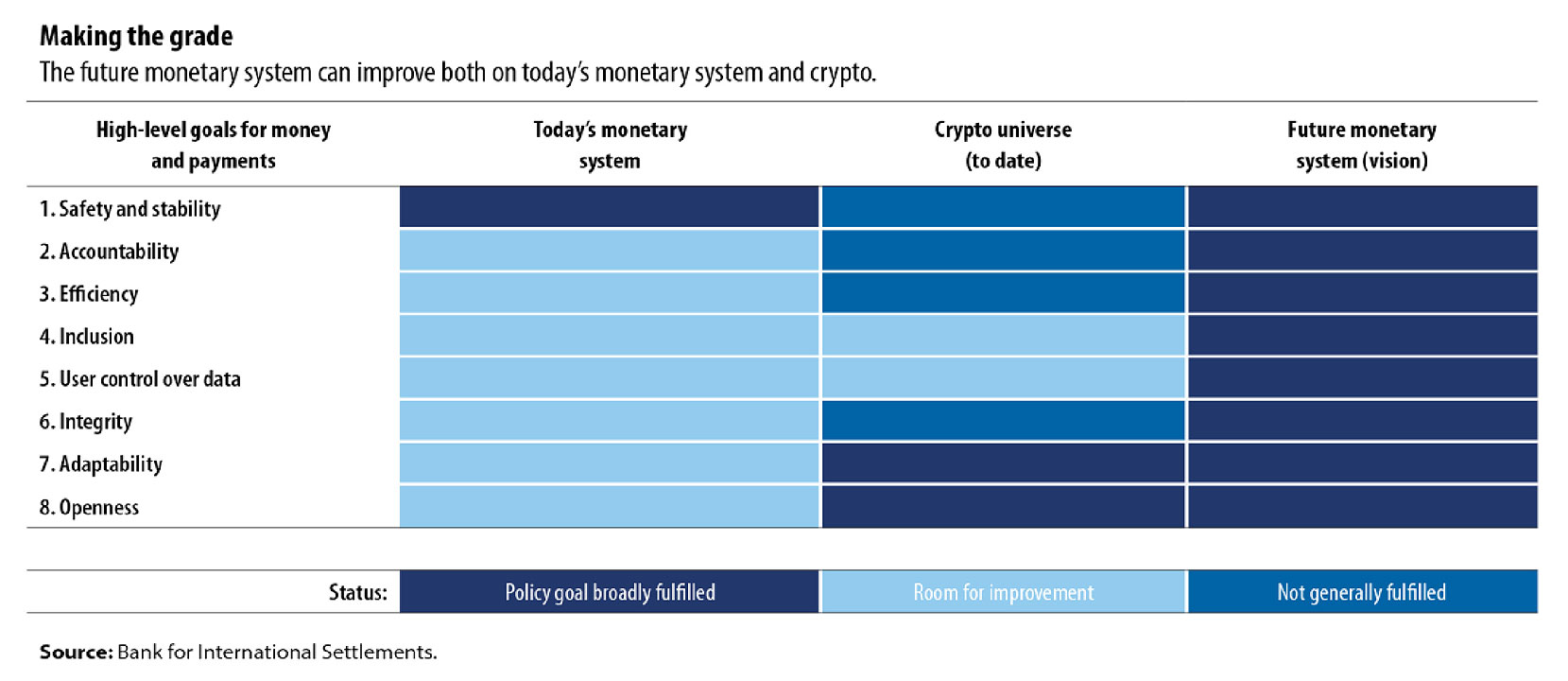
As to the rest of its functionalities, the crypto universe is claimed to be structurally flawed. The BIS argued that first, it possesses no nominal anchor as it makes use of crypto currencies and the so-called stablecoins which, in turn, piggyback on a sovereign currency such as the US dollar, or an exchange-traded commodity like precious metals. And here’s the rub from BIS: crypto currencies are not currencies while stablecoins are not stable. The BIS cited the reported implosion of TerraUSD last May while the markets continue to question the backing of the largest stablecoins, Tether.

In short, “stablecoins seek to ‘borrow’ credibility from real money issued by central banks.” BIS was fully justified to say that if central bank money did not exist, somebody would have to invent it to make crypto universe somewhat viable.

Second, the crypto system motivates fragmentation. BIS correctly pointed out that indeed money is a matter of social convention, that its wide use further propagates itself as a store of value and a medium of exchange, that this popular acceptability is hinged on the fact that its stability, safety, and finality of settlement are all guaranteed by a trusted institution like the central bank.

In the absence of such a central entity, and crypto’s decentralized nature given its reliance on anonymous transactors to confirm consummation by payment of fees and charges, congestion is unavoidable. Incentives have to be substantially scaled up, even as that could effectively disincentivize its wider use. With higher cost, nothing prevents the transactors from shifting to other blockchains resulting in fragmentation.

Therein lies crypto’s shortcoming. Its stability and efficiency may be subject to question and doubt. Unregulated, the crypto universe is driven by participants without established accountability to the general public. And in view of reported incidents of fraud, theft, and various scams in recent years, we share the BIS’s concern about market integrity.

For this reason, Monetary Authority of Singapore’s (MAS) Ravi Menon, in the same IMF publication, called for caution against any delay in facing the challenges of crypto innovations. “Central banks and regulators cannot afford to wait for clarity on how crypto-related innovations will shape the future of money and finance.” They are sweeping the financial landscape with great momentum.

MAS recognizes the great potential of digital assets in enabling more efficient payment transactions. MAS related that in the areas of cross border trade and settlement, trade finance and capital market activities, using blockchains could reduce settlement time from a few days to less than 10 minutes and trim cost from 6% to less than 1% of transfer value. In trade finance, the processing time for letters of credit has been shortened from five to 10 days to less than 24 hours. In capital market transactions, clearing and settlement of securities transactions have been reduced from two days to less than 30 minutes. In other business areas, digital transformations in Singapore have allowed automatic execution of say, coupon payout, whenever pre-set conditions are met.

However, like the BIS, MAS argued that privately issued cryptocurrencies fail as money — or as a medium of exchange, a store of value, or as a unit of account. They are no more than tokens of blockchain projects but because “they are actively traded and heavily speculated on, with prices that are divorced from any underlying economic value on the blockchain,” they could not pretend to be either tokenized currency or investment asset. To MAS, stablecoins have better potential provided they are appropriately regulated and supported by good reserves to which they are tied. But such linkage could also pose risks to stablecoins. When liquidity issues strike, stablecoins may have to sell at a loss.

Which brings us to Cornell University’s Eswar Prasad who pointed out in the same IMF publication that a payment infrastructure that is exclusively private sector-driven might be efficient and cheap, as cryptos and stablecoins, but “some parts of it could freeze up in the event of a loss of confidence during a period of financial turmoil.”

This means, if digital currencies should dominate the payments and settlements landscape, and stability and trust become an issue, it is possible for a modern economy to literally freeze. Prasad pointed out that if only to prevent this impasse, central banks should consider issuing digital forms of central bank money for retail payments, or central bank digital currencies (CBDCs). Should private money fail, central bank currency could very well offer a public payment option. It could also help promote financial inclusion as well as increase efficiency and stability of the payments system. CBDCs could prevent illegal activities like drug deals, money laundering, and terrorist financing. More and more financial activities could be flushed out from the gray market and move them to the formal economy.

CBDCs have their weaknesses as well. If the banking public decides to patronize CBDCs instead of keeping their money in regular bank accounts, the commercial banking system would be starved of their major source of loanable funds. Central banks might end up allocating credit and, in the process, discouraging digital innovation. In addition, CBDCs could lead to loss of privacy. Currency-issuing central banks would always wish to ensure that its digital currency is used only above board.

Most important, central banks should be able to formulate correct monetary policy as lending platforms continue to go digital, reducing the role of commercial banks in financial intermediation. More research is necessary to pin down how monetary policy transmission would evolve and affect even the nature of money without affecting its ability to promote price stability and sustainable economic growth.

Prasad’s concluding points are sobering: “Financial innovations will generate new and as yet unknown risks, especially if market participants and regulators put undue faith in technology.” A decentralized and fragmented payment system works well in good times when market confidence is not so much of an issue. During bad times, confidence could sink, especially when digital currencies are not backed by reserve assets.

Thus, as the BIS stressed, central banks remain indispensable in leveraging on both digital transformation and its role as monetary authority in fostering such a core of trust in the market. The markets are confident that in general, central banks would do their job as issuers of sovereign currency, providers of the ultimate payments infrastructure, and regulators and supervisors of financial services and their instrumentalities.

The Philippines’ Bangko Sentral ng Pilipinas may not find as yet the imperative of issuing CBDCs given the generally well-functioning payment systems and adherence to the broad principles of financial inclusion. What is urgent perhaps is to begin constructing a technology infrastructure that would enable the issuance of retail CBDCs should it be necessary, especially when conditions call for it.

It is not farfetched for the digital asset ecosystem to evolve as a fixture in the Philippine financial system, even alongside the regular bank intermediation system. But judicious preparatory work in developing frameworks that seek to balance risks and opportunities offered by digital transformation is the only way to a brave new digital world.* n

* For instance, MAS has launched an initiative, Project Guardian, to consider possible digital asset applications in wholesale funding markets. DBS Bank, JP Morgan, and Marketnode are leading this project that involves creating a liquidity pool of tokenized bonds and deposits locked in a series of so-called smart contracts. This is aimed at achieving seamless secured borrowing and lending of these tokenized bonds through the smart contracts.


Diwa C. Guinigundo is the former deputy governor for the Monetary and Economics Sector, the Bangko Sentral ng Pilipinas (BSP). He served the BSP for 41 years. In 2001-2003, he was alternate executive director at the International Monetary Fund in Washington, DC. He is the senior pastor of the Fullness of Christ International Ministries in Mandaluyong.


Marcos then — Marcos now

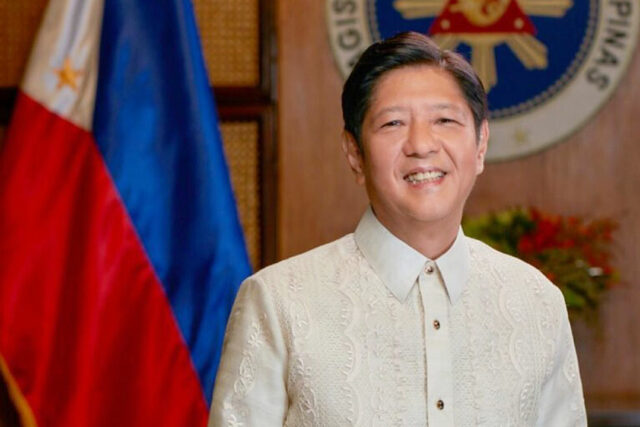
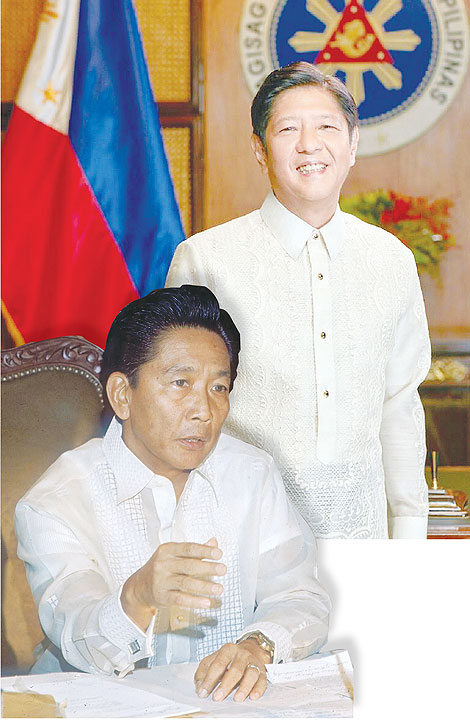
President Ferdinand Marcos, Jr. was in the United States on a six-day state visit, and was pointedly absent during the 50th commemoration of his father’s Sept. 21, 1972, Presidential Proclamation (PP) 1081 which placed the entire Philippines under martial law.

PP 1081 was implemented in the early hours of Sept. 23. Military teams arrested in their homes or work places journalists and academics; artists and writers; labor, student and farmer leaders; and members of the political opposition. They were then brought to various detention centers where they were held for indefinite periods.

Congress, newspapers and radio and television stations were shut down, and international flights and passports canceled. Filipinos awoke on the 23rd to find no newspapers on their doorsteps, only static on radio, and blank screens on their television sets.

Marcos Sr. went on government radio and television to claim that martial law was necessary “to save the Republic and reform society.” With the shutdown of Congress and the arrest of government critics, rather than save the Republic he had made himself absolute ruler on its ruins. But his pledge of reform implied that he would bring about enough changes to address such citizen concerns as unemployment and high prices.

In Today’s Revolution: Democracy, the book ghost-written for him by one of the country’s most capable writers, he had even claimed that he would wage a “revolution from the Center.” Apparently, however, he was merely attempting to appease and mislead reform-minded groups and individuals so as to counter the demands for fundamental changes that were echoing in the streets. He declared martial law to silence that clamor for the democratization of Philippine governance and society, but primarily to keep himself in power indefinitely.

Already President for six years in 1972, Marcos remained in power for 14 more years until he was overthrown in 1986 by the EDSA-1 civilian-military mutiny. But his “revolution from the Center,” as the state of the country so clearly revealed during those 14 years of one-man rule, was never more than words.

During that period the poverty rate increased rather than abated. An energy crisis raised gas and electricity prices to record highs. An acute rice crisis forced many Filipinos to mix corn with the staple as supplies dwindled and prices doubled, and by the 1980s the average protein intake of Filipinos had been reduced to less than that of the average Bangladeshi’s. Armed conflict between the government on the one hand and the Moro Islamic Liberation Front (MILF) and the New People’s Army (NPA) on the other also escalated, driven by grievances that had not been addressed for decades.

Marcos could have made good on his promise of a government-led “revolution,” given the powers at his disposal. But the human rights violations, the social inequality, and the systematic plunder of the economy that added millions more to the legions of the poor drove thousands into rebellion and opposition despite the threat of arrest, indefinite detention, torture, enforced disappearance, and/or summary execution.

He also had time enough to initiate some level of development in a country with vast natural and human resources to rival that of its neighbors Malaysia, Singapore, Thailand, and Vietnam. As those countries have demonstrated, development can be achieved despite internal dissension, ethnic differences, political upheavals, and even wars. Vietnam, for example, emerged from over 20 years of war only in 1975, but has caught up with the Philippines, and is now Southeast Asia’s biggest rice exporter. And Singapore’s volatile ethnic mix did not prevent its transformation into First World status.

His family and its partisans claim that had he not been overthrown in 1986, Marcos Sr. could have transformed the country into “another Singapore.” But they fail to mention that he had more than 20 years to do so, and that his over two decades as President included 14 years as absolute ruler.

What he did succeed in doing, said the late Singapore Prime Minister Lee Kuan Yew, was to pillage the country. In his book From Third World to First: The Singapore Story 1965-2000, Lee noted that “Only in the Philippines could a leader like Ferdinand Marcos, who pillaged his country for over 20 years, still be considered for national burial,” and “his wife and children allowed to return to engage in politics.”

Lee was the architect of Singapore’s transformation from a post-colonial malarial swamp into the most developed country in Southeast Asia, which he had pledged to do upon assuming power in 1959. He attributed to Filipino culture’s being “soft and forgiving” what to him was unthinkable for Singaporeans.

There is some truth in that observation: most Filipinos do not hold themselves, much less the people they elect, to high standards of behavior. But equally relevant in explaining the country’s seeming softness towards the Marcoses are such realities as the shared interests of the Philippine political class, which prevail over their seeming differences.

The oligarchy’s sense of common interests helps explain why then President Fidel Ramos, who was among the leading figures in EDSA 1986, allowed the Marcoses to return to the Philippines in 1992 — and why, years later, former President Rodrigo Duterte mandated the burial of Marcos Sr.’s remains in the Libingan ng mga Bayani. (Heroes’ Cemetery). More recently, Juan Ponce Enrile, who, together with Ramos led the military faction that helped remove Marcos from power in 1986, supported his son’s campaign for the Presidency and was subsequently named his Chief Legal Counsel. And most telling of all was former antagonists Gloria Macapagal-Arroyo and Joseph Estrada’s coming together to support Marcos Jr.’s candidacy, together with Rodrigo Duterte.

The consequences of all this “softness” between supposed and former political foes include not only the loss of historical memory, but also its replacement by the myth that the martial law period was a “Golden Age.” Forgotten, or never understood, is that rather than such an idyllic period, the years of the Marcos dictatorship were the darkest times in recent Philippine history.

Both illusions were nevertheless indispensable to the election of Marcos Jr., ironically on the 50th anniversary of his father’s imposition of martial rule. But even more disturbing is the mass disaffection with what the citizenry perceive to be democracy and their embracing of authoritarianism, together with the use of State violence against dissenters, government critics and “trouble-makers,” as the means of replicating that mythical past.

Democracy is a work in progress but is everywhere in retreat before the onslaught of the mercenaries of disinformation and the demagogues behind them. Ferdinand Marcos, Jr. has not placed the entire country under martial rule as his father did 50 years ago — at least not yet. But he is arguably nearly as powerful, as a consequence of, among others, the disinformed mass of the electorate’s packing both houses of Congress with his kin and allies, the judicial system’s pliability to Executive pressure, and the police and military’s unquestioned partiality to his rule.

In the coming six years after the 50th anniversary of the imposition of martial law, and with another Marcos as President, what he will do with that power needs watching. Like his father, Marcos Jr. also promised the citizenry the changes that will rescue them from the pit of perennial poverty, despair, and hopelessness. The question is, will that promise, like his father’s, be for nothing, and merely a means of gaining and keeping power for the sake of advancing his personal, familial and class interests, or will he deliver on it?


Luis V. Teodoro is on Facebook and Twitter (@luisteodoro).

www.luisteodoro.com

COVID vaccines may be harming our young

SPENCER DAVIS-UNSPLASH

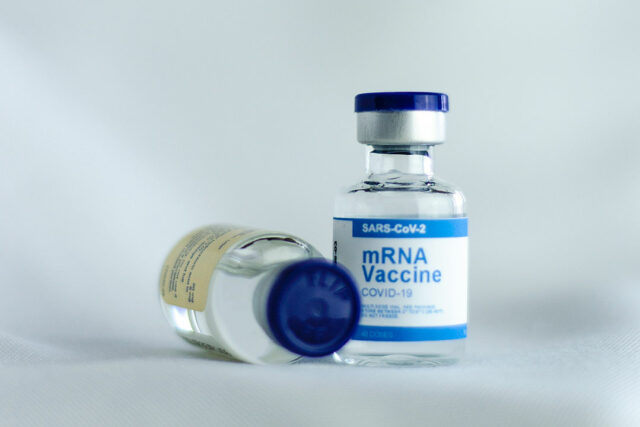
Significant studies and scientific findings have come out over the past few weeks, all not getting the appropriate airing that we deserve from news media. They have to do with the possible harmful effects of COVID vaccines.

VACCINES MORE HARMFUL THAN COVID
The most significant is a study coming from Oxford, Washington, Toronto, Harvard, and John Hopkins Universities, which looked at 18-29-year olds boosted with an mRNA vaccine. And what they found was this: “Using CDC and sponsor-reported adverse event data, we find that booster mandates may cause a net expected harm: per COVID-19 hospitalization prevented in previously uninfected young adults, we anticipate 18 to 98 serious adverse events, including 1.7 to 3.0 booster-associated myocarditis cases in males, and 1,373 to 3,234 cases of grade 3 reactogenicity which interferes with daily activities.”

To put it another way: for those below 30 years old, vaccines are more harmful than COVID by a factor of 18-98%.

The study continues: “Given the high prevalence of post-infection immunity, this risk-benefit profile is even less favorable. University booster mandates are unethical because: 1.) no formal risk-benefit assessment exists for this age group; 2.) vaccine mandates may result in a net expected harm to individual young people; 3.) mandates are not proportionate: expected harms are not outweighed by public health benefits given the modest and transient effectiveness of vaccines against transmission; 4.) US mandates violate the reciprocity principle because rare serious vaccine-related harms will not be reliably compensated due to gaps in current vaccine injury schemes; and 5.) mandates create wider social harms. We consider counter-arguments such as a desire for socialization and safety and show that such arguments lack scientific and/or ethical support.” (“COVID-19 Vaccine Boosters for Young Adults: A Risk-Benefit Assessment and Five Ethical Arguments against Mandates at Universities,” Bardosh, et. Al., September 2022”; https://bit.ly/EthicalArguments)

Take the foregoing with the context that the United States Center for Disease Control reportedly “has provided false information regarding their tracking of adverse events caused by the vaccines.” At the same time, CDC Director Rochelle Walensky “admits that there is a causal relationship between the mRNA vaccines and myocarditis.” Thus, “VAERS staff conducted assessments showing that causal associations exist between thrombosis with thrombocytopenia syndrome and Janssen’s COVID-19 vaccine and between myocarditis and mRNA COVID-19 vaccination.” Furthermore, Walensky also admitted that “the CDC did not analyze certain types of adverse event reports whatsoever in 2021, despite having previously stated that they did start this tracking in February of that year.” (“Vaccine Narrative Collapses as Harvard Study Shows Jab More Dangerous than COVID,” Jonas Vesterberg, The Florida Standard, Sept. 14, 2022, https://bit.ly/VaccineJabs)

Note that the Danish government is recommending against vaccinating people under the age of 50 years, with the justification that those “under 50 are generally not at particularly higher risk of becoming severely ill from COVID-19.” (Danish Health Authority)

THE FLU IS MORE HARMFUL THAN COVID
The foregoing are coming amidst news that the flu is now considered more dangerous than COVID. Thus, as Dr. Monica Gandhi, an infectious disease specialist at the University of California, San Francisco, rhetorically asked: “When does COVID look like influenza?,” her considered response was: “Yes, we are there.” Gandhi and her fellow researchers “argue that most people today have enough immunity — gained from vaccination, infection or both — to protect them against getting seriously ill from COVID. And this is especially so since the omicron variant doesn’t appear to make people as sick as earlier strains.” (“Scientists debate how lethal COVID is. Some say it’s now less risky than flu,” Rob Stein, NPR, Sept. 16, 2022, https://n.pr/3S2EKbS)

YET THE DOH CONTINUES ITS VACCINE PUSH
All that makes the Department of Health’s (DoH) unconditional insistence to vaccinate Filipinos, specially the younger and healthy ones, ludicrously bizarre. The DoH even went to the ridiculous extent of declaring that the COVID-19 pandemic will be considered ended “only if vaccination targets are achieved” (“DoH: End to pandemic only if vax targets met,” Philippine Daily Inquirer, Sept. 17, 2022, https://bit.ly/VaxTarget).

Which is really disconcerting considering that Filipinos under the age of 30 constitute 57% of the population, those under 50 about 90%. There is simply no justification for the government’s fanatical push to unnecessarily vaccinate the young, healthy, working Philippine population, specially without giving any caveat or caution whatsoever as to possible harmful effects, including even perhaps death, when consistent reports and reasonable questions about the vaccine’s efficacy and safety have been raised for quite some time.

VACCINES, THE PREGNANT MOTHER, AND THE UNBORN CHILD
And this is not even to mention the possible harm vaccines may cause to pregnant women and the child inside their womb:

“Sufficient reassurance of safe use of the vaccine in pregnant women cannot be provided at the present time: however, use in women of childbearing potential could be supported provided healthcare professionals are advised to rule out known or suspected pregnancy prior to vaccination. Women who are breastfeeding should also not be vaccinated.” (“Summary of the Public Assessment Report for COVID-19 Vaccine Pfizer/BioNTech,” UK Government, Aug. 16, 2022, https://bit.ly/UK-Pfizer)

THE ABUSE OF POWER AND THE RIGHT TO SUE
As this column previously pointed out, it is not true (as was reported in media) that “public officials and employees, contractors, manufacturers, volunteers, and representatives of duly authorized private entities” are free from liability and cannot be sued for actions in relation to the “administration or use of a COVID-19 vaccine.” RA 11525 actually provides that they can be sued and held liable if proven that they acted with “willful misconduct and gross negligence” in using or administering COVID vaccines.

RA 11525 even set aside P500 million as compensation for any person “inoculated through the COVID-19 Vaccination Program” and because of it suffered “severe adverse effects” including “death, permanent disability or hospital confinement.”

This also is reiterated: many of those dogmatically and exclusively pushing for vaccines were the same people that were so tragically wrong on lockdowns and masks, such that loss of livelihood, injury, or even death may have been avoided had they not been so hysterically, willfully, and irresponsibly closed minded against alternative treatments (see, for example, “Regular Use of Ivermectin as Prophylaxis for COVID-19 Led Up to a 92% Reduction in COVID-19 Mortality Rate in a Dose-Response Manner,” Cureus, Aug. 31, 2022, https://bit.ly/Ivermectin-Covid).

Filipinos (or their family members) that suffered serious adverse effects arising from COVID vaccination are strongly encouraged to document their experiences and claim government compensation, or (as provided by law) prosecute and hold accountable those that forced or misled people into taking vaccines.


Jemy Gatdula is a senior fellow of the Philippine Council for Foreign Relations and a Philippine Judicial Academy law lecturer for constitutional philosophy and jurisprudence

www.facebook.com/jigatdula/

Twitter @jemygatdula

Take Putin’s nuclear threat seriously, but not too seriously

KREMLIN.RU

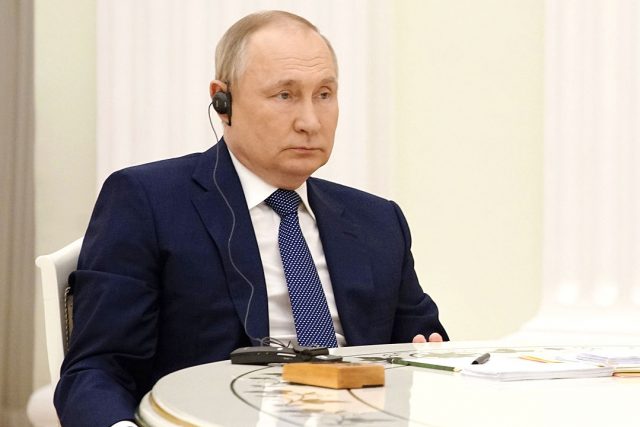
RUSSIAN President Vladimir Putin has raised anew the possibility he might use nuclear weapons against Ukraine to prevail in a conflict going sideways. The smart money says he won’t, because doing so — or otherwise expanding the conflict drastically — wouldn’t make a bad situation any better.

Yet the smart money might not have predicted the choices that set Putin down this path in the first place.

Much of Putin’s televised speech on Tuesday was a repetition of the familiar. He again blamed the US, the North Atlantic Treaty Organization, and Ukraine for the current conflict. He restated the goal of “liberating” the Donbas region. Yet Putin did say something new: That Russia is mobilizing, albeit partially, for a long war by increasing arms production and calling up 300,000 additional troops, mostly reservists. He pledged to support referendums this week that could lead to annexation of parts of eastern Ukraine.

He also accused the West of making nuclear threats against Russia and warned that “those who are using nuclear blackmail against us should know that the wind … can turn around.”

Putin finally seems to realize how badly the war is going — which his own biases and the sycophancy of his subordinates may previously have obscured. By opting for partial mobilization, he is trying to appease hard-liners who have called for all-out war without enraging a public that is mostly apathetic. His goal, presumably, is to stem the erosion of Russia’s military position, and then use the threat of escalation to impose a diplomatic solution.

Whether this would work is another matter. Throwing poorly trained, equipped, and motivated troops into the meat grinder won’t likely change the military equation. (Russia doesn’t even fully control the parts of Ukraine it is threatening to annex.) What it will do is raise the human costs of war for Russian society — and thus raise the political costs Putin would pay if he loses.

Using nuclear weapons to avert such a defeat has always been a possibility. Russian doctrine encompasses a willingness to use nuclear escalation to end a conventional conflict on acceptable terms. In his speech, Putin declared that Russia would use “all weapon systems available to us” if the war endangered the “territorial integrity of our country.”

In other words, Ukraine and the US must accept the loss of Crimea, which Russia already claims as its sovereign territory, and any lands Moscow annexes in Donbas, or risk nuclear conflict.

Would Putin carry through on the threat? In Washington and other Western capitals, there are two schools of thought.

Optimists believe Putin won’t use nuclear weapons because doing so wouldn’t really help him. So-called battlefield nuclear weapons work best against large masses of troops or tanks, but the fighting in Ukraine is fairly dispersed. Holding territory or cities that have just been hit with nuclear weapons isn’t an attractive proposition; the prospect that fallout might blow back into Russia makes nuclear use less alluring still.

Putin might still use nuclear weapons to reset the conflict psychologically — to shock Kyiv and Washington into de-escalation. Yet that could simply cause the US and its allies to double down in Ukraine, perhaps directly entering the conflict themselves, because doing otherwise would create a horrendous precedent that revisionist powers can simply nuke their way out of failed wars.

Pessimists aren’t so sure Putin is bluffing, because using nuclear weapons might not actually backfire. Some unknown portion of the international community would become desperate to end the fighting immediately, even at the cost of making concessions to Moscow. The US and its allies would have few attractive options in response.

Retaliating with limited nuclear strikes against Russian forces would risk an escalatory spiral. Entering the war with NATO conventional forces might invite additional nuclear strikes by Moscow. Non-kinetic reprisals, such as cyberattacks or more economic sanctions, would appear pathetically weak compared to the Russian offense.

Yes, using nuclear weapons would be an existential gamble for Putin. But if he was headed for a defeat that threatened his hold on power, and perhaps his life, then why not gamble big rather than end up like Moammar Al Qaddafi? And if Putin landed himself in his current position through a series of disastrous miscalculations, why should we expect his judgment to improve as he becomes more isolated and frightened?

It is sobering to realize that we are now in the gravest great-power nuclear crisis in a half-century. It is more sobering still to think that avoiding nuclear escalation may require Putin to show more prudence and caution in ending this war than he did in starting it.

BLOOMBERG OPINION

Russia and Ukraine announce major surprise prisoner exchange

KYIV/RIYADH — Russia and Ukraine carried out an unexpected prisoner swap on Wednesday, the largest since the war began and involving almost 300 people, including 10 foreigners and the commanders who led a prolonged Ukrainian defense of Mariupol earlier this year.

The foreigners released included two Britons and a Moroccan who had been sentenced to death in June after being captured fighting for Ukraine. Also freed were three other Britons, two Americans, a Croatian and a Swedish national.

The timing and magnitude of the swap came as a surprise, given Russian President Vladimir Putin had announced a partial troop mobilization earlier in the day in an apparent escalation of the conflict that began in February. Pro-Russian separatists had also said last month the Mariupol commanders would go on trial.

President Volodymyr Zelensky said the swap, which involved help from Turkey and Saudi Arabia, had been under preparation for quite a long time and involved intense haggling. Under the terms of the deal, 215 Ukrainians, most of whom were captured after the fall of Mariupol, were released.

In exchange, Ukraine sent back 55 Russians and pro-Moscow Ukrainians and Viktor Medvedchuk, the leader of a banned pro-Russian party who was facing treason charges.

“This is clearly a victory for our country, for our entire society. And the main thing is that 215 families can see their loved ones safe and at home,” Mr. Zelensky said in a video address.

“We remember all our people and try to save every Ukrainian. This is the meaning of Ukraine, our essence, this is what distinguishes us from the enemy.”

Mr. Zelensky thanked Turkish President Tayyip Erdogan for his help and said five senior Ukrainian commanders would remain in Turkey until the end of the war.

Kyiv had a long and difficult fight to secure the release of the five, he said.

They include Lieutenant Colonel Denys Prokopenko, commander of the Azov battalion that did much of the fighting, and his deputy, Svyatoslav Palamar. Also freed was Serhiy Volynsky, the commander of the 36th Marine Brigade.

The three men had helped lead a dogged weeks-long resistance from the bunkers and tunnels below Mariupol’s giant steel works before they and hundreds of Azov fighters surrendered in May to Russian-backed forces.

“We’re proud of what you’ve done for our nation, proud of each and every one of you,” Zelensky said in a video call with the five which was released by his office.

There was no immediate comment from Moscow about the deal and why it had freed men who Russian-backed separatists said would go on trial later this year.

Saudi Arabia brokered an arrangement whereby the 10 foreigners were flown to Saudi Arabia. The mediation involved Saudi Crown Prince Mohammed bin Salman, who has maintained close ties with Mr. Putin.

The freed prisoners included US citizens Alexander Drueke, 39, and Andy Huynh, 27, both from Alabama, who were captured in June while fighting in eastern Ukraine.

Also freed were Britons Aiden Aslin and Shaun Pinner and Moroccan Brahim Saadoun, who were all sentenced to death by a court in the self-proclaimed Donetsk People’s Republic.

A number of foreigners have traveled to Ukraine to fight since Russia’s Feb. 24 invasion.

The head of the UN human rights mission in Ukraine said earlier this month Russia was not allowing access to prisoners of war, adding that the UN had evidence that some had been subjected to torture and ill-treatment that could amount to war crimes.  Reuters

Satellite imagery shows N.Korea may soon launch new missile submarine

SEOUL — North Korea may be preparing to launch a new submarine believed to be capable of firing ballistic missiles, a US-based think tank reported on Thursday, citing commercial satellite imagery.

Images of the Sinpo South Shipyard, on the east coast of the country, from Sept. 18 revealed six barges and vessels gathered around the construction hall quay, said 38 North, which monitors North Korea.

“While barges and a dry dock have been occasionally observed around the submarine launch quay at the main construction hall, the presence of six vessels and barges in this area has not been observed before,” said the report, which concluded that the activity suggests preparations to launch a submarine.

The report comes as US President Joseph R. Biden accused North Korea of “blatantly violating UN sanctions” in a speech to the UN General Assembly on Wednesday, citing the country as among the reasons to strengthen international nuclear nonproliferation efforts.

Analysts first spotted signs that at least one new submarine was being built in 2016, and in 2019 state media showed North Korean leader Kim Jong Un inspecting a previously unreported submarine that was built under “his special attention” and that would be operational in the waters off the east coast.

State media at the time did not describe the submarine’s weapons systems or say where and when the inspection took place, but analysts said the apparent size of the new vessel indicated it was designed to carry missiles.

North Korea has a large submarine fleet but only one known experimental submarine capable of carrying a ballistic missile.

Analysts have debated whether the apparent new missile submarine is a new design, or whether it is based on a modified Romeo Class of submarine originally acquired from China in the 1970s before North Korea began producing them domestically.

Amid an unprecedented flurry of missile tests this year, North Korea test-fired a submarine-launched ballistic missile (SLBM) in May from near Sinpo, where North Korea keeps submarines as well as equipment for test-firing SLBMs.

Observers say North Korea has made preparations to resume nuclear testing for the first time since 2017, amid stalled denuclearization talks. — Reuters

Biden rails against Russia, says Ukraine war makes ‘blood run cold’

NEW YORK — US President Joseph R. Biden delivered a scathing broadside against Russia at the United Nations on Wednesday, saying Moscow had launched an invasion aimed at “extinguishing” Ukraine and that “horrifying evidence” of war crimes existed.

“This war is about extinguishing Ukraine’s right to exist as a state, plain and simple, and Ukraine’s right to exist as a people,” he said at the UN headquarters in New York. “Whoever you are, wherever you live, whatever you believe, that should make your blood run cold.”

Russia must be held accountable for any war crimes committed in Ukraine, Mr. Biden said, adding that Washington was working on the issue with its international partners.

Biden spent a significant amount of time talking about Russia’s “brutal, needless war” in Ukraine, which has seen Kiev notch a number of recent battlefield victories as it aims to recapture territory seized by Russia in the nearly seven-month-old conflict.

The US leader spoke just hours after Russian President Vladimir Putin ordered a partial mobilization of reservists. The Kremlin chief also gave his support for Russian-controlled areas of Ukraine to become part of the Russian Federation.

Mr. Biden told the leaders gathered at the 77th General Debate of the UN General Assembly that Moscow had “shamelessly violated” the UN charter, which outlines the organization’s fundamental principles, and that the world must be “firm and unwavering” in denouncing the war.

He also touched on the topic of nuclear threats, following Mr. Putin’s promise that Russia would use any means necessary to defend itself. “This is not a bluff,” the Russian leader said earlier on Wednesday.

“A nuclear war cannot be won and must never be fought,” Mr. Biden said.

Later, Ukrainian President Volodymyr Zelensky told the assembly that Russia is not seriously interested in peace talks as he called for “punishment for aggression.”

“Ukraine wants peace. Europe wants peace. The world wants peace. And we have seen who is the only one who wants war,” Mr. Zelensky said in a pre-recorded video, calling on the international community to punish Russia for its “crimes of aggression against our state.”

“They talk about the talks but announce a military mobilization. They talk about the talks but announce pseudo referendums in the occupied territories of Ukraine,” said Mr. Zelensky, who was allowed to address the body remotely due to the war after a motion was approved by UN member states. “Russia wants war.”

“A crime has been committed against Ukraine, and we demand just punishment,” Mr. Zelensky said, adding that Russia must be punished for the killing, torture, humiliation and disastrous turmoil it has thrown Ukraine into.

Mr. Zelensky also used his address to call for further military and financial aid.

“We can return the Ukrainian flag to our entire territory. We can do it with the force of arms. But we need time,” he said, also calling for Russia to be stripped of its vote in international institutions and UN Security Council veto.

“So long as the aggressor is a party to decision-making in the international organizations, he must be isolated from them – at least until aggression lasts. Reject the right to vote. Deprive delegation rights. Remove the right of veto – if it is a Member of the UN Security Council.”

Mr. Zelensky called for further visa restrictions for Russian citizens and for the UN to support an international compensation mechanism. “Russia should pay for this war with its assets,” he said.

The leader also warned of a potential international nuclear disaster in view of the situation at the contested Zaporizhzhya nuclear power plant.

“Russian radiation blackmail is something that should concern each and every single one of you,” Mr. Zelensky said forcefully, “because none of you will find a vaccine against radiation sickness.”

The Russian-controlled nuclear power plant, the largest in Europe, has repeatedly come under fire in recent weeks, raising international concern about a potential nuclear disaster. Moscow and Kiev have blamed each other for the attacks.

Mr. Zelensky received enthusiastic applause for his speech for nearly a minute, something that happens rarely in the General Assembly. Meanwhile Russia representatives remained seated.

UN Secretary General Antonio Guterres and Brazilian President Jair Bolsonaro were among those who gave speeches to the General Assembly on Tuesday. Over 140 heads of state and government are expected to have attended the week-long event by the time it ends next week.

Mr. Putin is not attending, however, and has sent Foreign Minister Sergei Lavrov to represent Moscow instead. — Reuters

Zelenskyy calls for punishment of Russia including loss of UN veto

Volodymyr Zelenskyy (on screens), President of Ukraine, addresses the general debate of the General Assembly’s seventy-seventh session. — UN Photo/Cia Pak

NEW YORK/KYIV — President Volodymyr Zelenskyy demanded a special United Nations (UN) tribunal impose “just punishment” on Russia for its invasion of Ukraine, including financial penalties and stripping Moscow of its veto power in the Security Council. 

Mr. Zelenskyy’s recorded address to world leaders at the UN General Assembly on Wednesday came after Russian President Vladimir Putin ordered Moscow’s first wartime mobilization since World War Two and threatened to use nuclear weapons to defend Russia in what he has cast as a defining East-West clash. 

Moscow plans to conscript some 300,000 troops in an apparent escalation of its Ukraine invasion that began in February and has left thousands dead, displaced millions and reduced towns to rubble. 

Russia’s mobilization may be the riskiest domestic political move of Putin’s two decades in power, and followed months of Kremlin promises it would do no such thing and comes at a time when Russia has been facing a string of battlefield failures. 

Concern over being conscripted saw flights out of Russia quickly sell out, and jailed opposition leader Alexei Navalny called for mass demonstrations against the mobilization. 

Independent protest monitoring group OVD-Info said nearly 1,400 people in 38 Russian cities had been detained in protests by Wednesday evening. 

Mr. Zelenskyy laid out what he said were five non-negotiable conditions for peace. These included punishment for Russian aggression, restoration of Ukraine’s security and territorial integrity, and security guarantees. 

“A crime has been committed against Ukraine, and we demand just punishment,” Mr. Zelenskyy told the UN body. 

Many delegates at the UN gave Mr. Zelenskyy a standing ovation at the end of his speech. 

Mr. Putin ordered the military draft in a televised address in which he also announced moves to annex four Ukrainian provinces and threatened to use nuclear weapons to defend Russia, declaring: “It’s not a bluff.” 

US President Joseph R. Biden, Jr., in a speech to the UN General Assembly, responded: “Again, just today, President Putin has made overt nuclear threats against Europe, in a reckless disregard for the responsibilities of the non-proliferation regime.” 

Canadian Prime Minister Justin Trudeau condemned Mr. Putin’s “irresponsible escalation of the war”, saying “Putin’s behavior only goes to show that his invasion is failing.” 

European Union foreign ministers agreed on Wednesday to prepare new sanctions on Russia and increase weapons’ deliveries to Kyiv. 

“It’s clear that Putin is trying to destroy Ukraine,” EU foreign policy chief Josep Borrell told reporters after ministers met to decide how to respond. 

Foreign ministers from the Group of Seven (G7) advanced economies confirmed in a meeting in New York on Wednesday their cooperation in extending support for Ukraine, Japanese Foreign Minister Yoshimasa Hayashi said.  

PRISON SWAP
Russia and Ukraine carried out an unexpected prisoner swap on Wednesday, the largest since the war began and involving almost 300 people, including 10 foreigners and the commanders who led a prolonged Ukrainian defense of Mariupol earlier this year. 

The foreigners released included two Britons and a Moroccan who had been sentenced to death in June after being captured fighting for Ukraine. Also freed in the deal brokered by Saudi Arabia, according to a Saudi ministry, were three other Britons, two Americans, a Croatian, and a Swedish national. 

The released Ukrainians had been captured after a long battle for the port city of Mariupol earlier this year and included top military commanders, said Andriy Yermak, the head of Mr. Zelenskyy’s office. 

Several Western military experts said drafting hundreds of thousands of new troops would take months, do little to slow Russia’s losses, and could even make matters worse by drawing resources away from the battlefield to train and equip recruits. 

The war has so far appeared to enjoy popular support in Russia where independent media have all been shut down and public criticism of the “special military operation” is banned. 

But for many ordinary Russians, especially in the urban middle classes, the prospect of being sent to fight would be the first hint of the war affecting them personally. 

On the Moscow metro, men could be seen studying call-up papers. 

“You always feel worried at moments like these. Because you have a wife and kids and you think about it,” one resident told Reuters. — Reuters

South Korea, Japan hold first bilateral talks since 2019, seek stronger ties

Thomas Classen/Flickr/CC BY 2.0

UNITED NATIONS/SEOUL — South Korean President Yoon Suk-yeol and Japanese Prime Minister Fumio Kishida held their first one-on-one talks on Wednesday and agreed on the need to improve relations dogged by historical disputes.

The meeting took place in New York on the sidelines of the UN General Assembly, the first such talks between leaders of the two countries since 2019. 

Mr. Yoon, who took office in May, has been keen to improve relations with Tokyo, which have been plagued by disputes stemming from Japan’s 1910–45 colonization of the Korean peninsula, at a time when both countries face North Korea’s evolving nuclear and missile threats. Japan has also stressed the importance of strategic cooperation. 

“The two leaders agreed on the need to improve relations by resolving pending issues, for which they agreed to accelerate diplomatic talks while continuing discussions between themselves,” Mr. Yoon’s deputy spokesperson, Lee Jae-myoung, said in a statement. 

Mr. Lee said the leaders shared serious concerns about North Korea’s nuclear program, including its recent law authorizing first use of nuclear weapons and the possibility of a resumption of nuclear testing for the first time since 2017. 

Both sides described the meeting, which lasted 30 minutes, as “informal.” 

Japan’s Foreign Ministry Press Secretary Hikariko Ono said the two leaders “shared the need to bring back the sound bilateral relationship with the resolution of various issues.” 

She said they agreed to develop relations “in a future-oriented manner based on the foundation of the friendly and cooperative relationship that both countries built since the normalization of diplomatic relations in 1965.” 

Messrs. Yoon and Kishida first met on the sidelines of the North Atlantic Treaty Organization (NATO) summit in Madrid in June, and also at a trilateral summit with US President Joseph R. Biden, Jr., but Wednesday’s meeting was the first time they had sat down for one-on-one talks. 

At stake are South Korean court orders for a seizure of assets of Japanese companies accused of not compensating some of their colonial-era laborers. 

Tokyo says the issue of compensation was settled under a 1965 treaty normalizing diplomatic ties and providing South Korea with economic assistance, and has warned of serious repercussions if the orders are enforced. 

Japan has urged South Korea to present a solution, and a Seoul official said it would devise a “realistic, feasible proposal” that can win consent from both victims and Tokyo. 

But the Yoon administration’s efforts to gather opinions from victims, lawyers and experts via a public-private panel have faced a setback with the victims’ group refusing to attend its meetings since last month. 

The testy relations were highlighted ahead of Wednesday’s meeting, with Mr. Kishida considering calling it off after being upset by an announcement from Yoon’s office of their planned summit, Japan’s Asahi Shimbun daily reported. 

An official at Mr. Yoon’s office declined to comment on the report. — Reuters


Globe Business treats enterprise clients at Enchanted Kingdom for 917 GDay Everyday

Aside from empowering its enterprise clients through reliable ICT solutions, Globe Business also wants to make them feel valued through memorable experiences that are beyond transactional.

In efforts to meet this goal, Globe Business recently took to a higher level its appreciation for its loyal clients with an exclusive event held at a well-known go-to theme park in Southern Luzon.

Last Sept. 17, the enterprise arm of Globe Telecom held its EK GDay event at Enchanted Kingdom (EK), where key customers got to enjoy exciting rides and attractions, but also interactive booths, games, food and merchandise, and hourly raffle draws prepared by Globe Business and its partners.

Booths were scattered around the theme park for guests to enjoy activities and even get prizes from Globe Business and partners Samsung, Philippine Airlines, Unilab, Pharex Health Corp., Petron Corp., Shakey’s, Nestlé, San Miguel Corp., NutriAsia, Generika, and Sodexo.

Aside from partner booths, Globe Business set up its own booth with activities for all ages, including games creatively designed to give participants a chance to have fun while learning about Globe’s solutions. The booth offered awesome amenities like a kiddie playground, ice cream station, and lounge with charging stations; as well as activities like face painting, and do-it-yourself tote bag designing.

To make the experience of attendees more exciting, Globe Business set up an event passport system using exclusive wristbands, which encouraged guests to visit booths of Globe partners and customer brands. The first 1,000 attendees who completed and visited all the booths got an exclusive 0917 cap, plus a loot bag consisting of prizes from Globe Business partners.

Attendees also got more chances to win prizes by answering mini trivias placed across different areas of EK and by posting social media pictures using the event’s hashtag for a chance to win in the hourly raffle draws.

Among the prizes offered during the hourly raffles included a 917 food bundle courtesy of Shakey’s; 9,000 miles worth of perks from Philippine Airlines; gift certificates worth P5,000 from Sodexo; and phones, tablets, and TVs from Samsung.

Aside from these activities, EK GDay also provided a way for attendees to participate in The Hapag Movement, a collective initiative of Globe together with Ayala Foundation, Caritas Philippines, Tzu Chi Foundation Philippines, and World Vision Philippines to alleviate hunger, as well as provide a livelihood to impoverished Filipinos.

Customers during the EK GDay were given the opportunity to get involved in The Hapag Movement by buying Globe 917 shirts and merchandise from event sponsors. Part of the proceeds from the sold merchandise will be donated to the Hapag Movement. Donations via QR codes distributed across the venue were also accessible to thousands of guests. Aside from that, attendees were allowed to drop off their unused Wizard Money in designated booths across the park. Attendees were given Wizard Money, which they could use to purchase food and merchandise throughout the day.

Globe Business expanded its GDay programs further with Donut Day wherein Enterprise Account Managers in Metro Manila, Visayas, and Mindanao visited key customers to give away customized donuts as a token of appreciation for their continued trust.

With these grand celebrations held for clients for the first time since the pandemic, Globe Business shows how much it values its customers and seeks to build more substantial and long-term relationships with them by further meeting their needs in business and even beyond.

Learn more about Globe Business at www.globe.com.ph/business/enterprise.


Spotlight is BusinessWorld’s sponsored section that allows advertisers to amplify their brand and connect with BusinessWorld’s audience by enabling them to publish their stories directly on the BusinessWorld Web site. For more information, send an email to online@bworldonline.com.

Join us on Viber to get more updates from BusinessWorld: https://bit.ly/3hv6bLA.

World leaders pledge billions to fight AIDS, tuberculosis, malaria on UN sidelines

Speakers from the Presidential session of the Global Fund partnership’s Seventh Replenishment Conference celebrate the announcement of $14.25 billion so far for the next three years of work to fight HIV, TB and malaria. From left: Bill Gates, Co-chair of the Bill & Melinda Gates Foundation; Fumio Kishida, Prime Minister of Japan; Emmanuel Macron, President of France; Ursula von der Leyen, President of the European Commission; Joseph R. Biden, Jr., President of the United States; Connie Mudenda, (RED) Ambassador; Yoon Suk-yeol, President of the Republic of Korea; Justin Trudeau, Prime Minister of Canada; Olaf Scholz, Chancellor of Germany; and Peter Sands, Executive Director of The Global Fund. -- The Global Fund/Tim Knox

UNITED NATIONS/NEW YORK — The Global Fund to fight AIDS (acquired immunodeficiency syndrome), tuberculosis and malaria on Wednesday reached $14.25 billion pledged as world leaders seek to fight the killer diseases after progress was knocked off course by the coronavirus disease 2019 (COVID-19) pandemic.

US President Joseph R. Biden, Jr., who hosted the conference in New York on the sidelines of the annual high-level meeting of the United Nations General Assembly, said the funding is crucial to combating the diseases.

“This is an investment that will save another 20 million lives, reduce mortality from these diseases another 64% in the next four years,” Mr. Biden said.

The United States had previously said it would pledge $6 billion for the next funding cycle.

The fund, a public/private alliance based in Geneva, is seeking $18 billion for its next three-year funding cycle from governments, civil society and the private sector. Before Wednesday’s conference, it had already raised more than a third of the total.

The Global Fund said the $14.25 billion figure is likely to increase as more donations are expected.

“For the government and people of Malawi, this is not a conference but a life saver,” Lazarus Chakwera, the president of Malawi, said earlier in the day, pledging $1 million.

According to UNAIDS, there were 990,000 adults and children in Malawi living with HIV in 2021, and USAID says that tuberculosis is a “major public health problem in Malawi.”

European Commission chief Ursula von der Leyen pledged 715 million euros ($703.63 million) to the fund, which she said was an increase of 30% from its previous pledge.

“We can cure tuberculosis. We can prevent malaria. We can fight these terrible diseases. We will end AIDS, we will end tuberculosis, we will end malaria — once and for all,” she said.

French President Emmanuel Macron pledged another 300 million euros, bringing France’s total contribution for the funding period to 1.6 billion euros.

Nigeria pledged $13.2 million, the Netherlands pledged 180 million euros and Indonesia pledged $15.5 million, alongside private sector pledges.

In its 2022 report, the fund said the reach of its treatment and prevention efforts rebounded last year after declining for the first time in almost 20 years in 2020, but the world is still not on track to defeat these diseases.

The fund estimates its work has saved around 50 million lives since its inception in 2002.

But in 2020, the numbers treated for tuberculosis fell by 19%, to 4.5 million. In 2021, this went back up by 12%, to 5.3 million — still just below the 5.5 million pre-pandemic number.

While malaria and AIDS programs did exceed 2019 levels, the pandemic’s impact means they are still off-track from ending the diseases by 2030.

The Fund has also warned the war in Ukraine and the global food crisis could exacerbate the situation. Infectious diseases are usually much deadlier for people whose bodies are weakened by malnutrition, and they also do not respond as well to treatment or prevention efforts. — Reuters

ADVERTISEMENT
ADVERTISEMENT