Home Blog Page 5851

Menstrual cramps derail Chinese teen Zheng’s French Open dream in loss to Poland’s Świątek

QINWEN Zheng of China during day nine of French Open, also known as Roland-Garros 2022, second Grand Slam tennis tournament of the season on May 30 at Roland-Garros stadium in Paris, France. — REUTERS

CHINESE teenager Qinwen Zheng suffered with menstrual cramps as she lost to Poland’s Iga Świątek in the French Open fourth round on Monday after taking a set off the world number one.

Zheng, 19, looked on track for a major upset when she claimed the opener in a tie-break before Świątek took control to win 6-7(5), 6-0, 6-2 for her 32nd straight victory.

Zheng said she had no pain during the opening set but took a medical time out at 3-0 down in the second, having her back massaged on court before going to the locker room and returning with her right thigh strapped.

“Yeah, the leg was also tough. That, compared to the stomach, was easy… I cannot play my tennis, (my) stomach was too painful,” Zheng, ranked 74 in the world, told reporters.

“It’s just girls things, you know. The first day is always so tough and then I have to do sport and I always have so much pain in the first day. And I couldn’t go against my nature.

“I wish I can be a man on court, but I cannot in that moment… I really wish I can be (a) man (so) that I don’t have to suffer from this.”

“If I don’t talk about today, I’m happy with my performance (on) this run. And to play against the number one in the world, I felt I really enjoyed (it) on the court,” she added.

“If I don’t have my stomach (pain), I think I could enjoy more, like to run better and to hit harder, to give more effort on court. It’s a pity that I couldn’t give what I want to give today.

“I just want (it so that) next time I play against her, I (am in) perfect shape.” — Reuters

Cilic downs Russian second seed Medvedev to set up Rublev clash

PARIS — Croatian Marin Cilic did not put a foot wrong as he crushed Russia’s world number two Daniil Medvedev 6-2, 6-3, 6-2 in a lopsided contest on Monday to return to the French Open quarterfinals after a gap of four years.

The 2014 US Open champion, seeded 20th, dominated proceedings from the start and finished off the contest in an hour and 45 minutes to reach the last eight stage on the Parisian clay for the third time in his career.

Medvedev came into the match having won all three previous meetings against the 33-year-old Croatian but cut a sorry figure under the lights on Court Philippe Chatrier in their first contest on clay.

“It was absolutely a fantastic match from the first point to the last,” Cilic said in his interview on court.

“I enjoyed the atmosphere, enjoyed the night session here, played incredible tennis, one of the best matches of my career from start to finish.”

Such was the Croatian’s domination that he did not face a break point and will next meet another Russian in seventh seed Andrey Rublev for a place in the semifinals.

Cilic played aggressively, pinning Medvedev behind the baseline and advancing to the net at every opportunity as the Russian failed to find any zing behind his flat groundstrokes in the cooler night conditions.

Unable to find a solution to Cilic’s pinpoint winners, Medvedev kept shaking his head and also poured out his frustration at the chair umpire over what he felt was very little time to rest during changeovers.

Medvedev’s form on the night was more reminiscent of his four consecutive first-round exits at Roland Garros before he made the quarterfinals last year.

Cilic won four consecutive games from 2-2 to bag the opening set in 31 minutes and another break in the sixth game was enough for him to take the second set.

Australian Open finalist Medvedev, who won the 2021 US Open, then took a lengthy toilet break but served a double fault on his first point after returning to court.

Another double fault in that opening game led to Medvedev getting broken.

The 26-year-old’s problems with double faults and unforced errors continued as Cilic broke him again to jump into a 4-0 third-set lead.

There was no way back for Medvedev, who briefly rose to world number one earlier this year, and Cilic converted his second match point when the Russian found the net with a backhand return.

“When I’m playing my best tennis, everything is working out, from the serve, return, movement. These last 10-15 days were great for me — great training, great matches, very consistent tennis,” Cilic added.

“Against guys like Daniil, you have to be able to sustain that high level throughout the match and if you give him a chance, he’s going to be back. So I was really focused to keep going and definitely extremely pleased with that.” — Reuters

Świątek extinguishes Zheng’s fire to reach French Open last eight

PARIS — Iga Świątek survived a big scare as she advanced to the French Open quarterfinals by beating Chinese teenager Qinwen Zheng 6-7(5), 6-0, 6-2 for her 32nd consecutive victory on Monday.

The world number one, gunning for a second title in three years at Roland Garros, showed rare signs of nerves as she let a comfortable lead slip through her hands before steamrolling her opponent after Zheng suffered a thigh problem.

Poland’s Świątek, who will next face American 11th seed Jessica Pegula, is unbeaten since last February, claiming titles on clay in Stuttgart and Rome.

The 2020 champion is bidding to become the fourth player since 2000 to lift the Suzanne Lenglen Cup multiple times after Justine Henin, Serena Williams and Maria Sharapova.

The 20-year-old is on the longest unbeaten run in the women’s tour since Serena bagged 34 victories in succession in 2013.

“She’s playing amazing tennis,” Świątek said of Zheng. “I was surprised with some of her shots so congratulations to her. It’s a tough tournament. I’m happy I could come back after a frustrating first set.

“I’m proud of myself that I’m still in the tournament.”

Świątek broke for 2-0 and kept her advantage throughout the first set although she rushed things at time.

The Pole wasted three set points at 5-3 and two more at 6-5 with Zheng forcing a tiebreak after throwing the kitchen sink at her.

Świątek moved 5-2 up in the breaker and it seemed Zheng’s resistance would finally end, only for the Chinese, nicknamed “Fire” at her tennis academy in Spain, to go for her shots and win the remaining five points to take the set.

Zheng took a medical time out at 3-0 down in the second set, having her back massaged on court before going to the locker room and coming back with her right thigh strapped.

The treatment did not seem to help much as she dropped eight games in a row.

She picked herself up to fight back in the third, but the Świątek express train was already going full speed and the Pole wrapped it up when Zheng’s backhand sailed long. — Reuters

Erik Spoelstra: Overturned 3 was shocking, but not why Heat lost

THOUGH he avoided blaming a controversial call for his team’s loss in Game 7 of the Eastern Conference finals, Miami Heat coach Erik Spoelstra admitted he was “in shock” that the National Basketball Association (NBA) replay center took three Miami points off the board during the third quarter of Sunday’s game and said it will provide a “case study” to the league.

Heat guard Max Strus knocked down a 3-pointer with 11:04 left in the third quarter of their 100-96 loss to the visiting Boston Celtics. It cut the Heat’s deficit at the time to 56-54.

But less than three minutes later in game time, the announcement came in saying the NBA’s replay center in New Jersey overturned the basket because Strus’ left foot was barely touching the sideline, making him out of bounds.

“The fact that it happened, three to four, five minutes in game time, that does change the context of how you’re playing,” Spoelstra said after the game. “We were starting to gain some momentum. You feel like it’s a seven-, eight-point game and you look up and it’s a 13-point game, and there’s no other explanation for it other than it’s gone back to the league offices.

“You feel like if it happens like that, it should happen immediately and you can adjust accordingly.”

The longtime Heat coach suggested the NBA will reexamine that decision during future league meetings.

“I’m sure they will look at that, and we’ll probably be the case study for it,” Spoelstra said. “I’m okay if it happens the way it used to. They would look at it at the next foul or break and look at it and notice it, but it was probably 10 minutes of real time — somebody check on that.

“I’m not crying or whining. Come on, we got beat. This was two competitive teams going at it. We had a crack at it at the end. Even as uneven as the game seemed, we had a crack at it. Our guys are never going to, like, not think we have a chance at it.”

Spoelstra insisted more than once that the call was “not the reason we lost,” crediting Boston for taking control early. But the momentum the Heat gained during the third quarter was slashed when they had to watch their score drop by three.

“That was so unusual for us to be grinding and then start to get some momentum, and then it was like, oh, hey, by the way, take away that 3, with no explanation,” Spoelstra said. “That’s the human side of it. That’s not the complaining side of it. Who knows if that would have changed anything, anyway.” — Reuters

Man City not done with transfer business after signing Haaland

MANCHESTER City may have signed Erling Haaland and have Julian Alvarez available from River Plate for next season but the Premier League champions are only just getting started on strengthening the team, chairman Khaldoon Al Mubarak has said.

City reached an agreement to sign Norway striker Haaland from Borussia Dortmund on July 1, with the 21-year-old having scored 86 goals in 89 games for the German side.

Argentina international Alvarez — who scored six goals for River Plate in a Copa Libertadores game last week — was signed on a 5-1/2-year deal in January and the 22-year-old will remain at the Buenos Aires side on loan until July.

“I can confirm that there will be more players coming in. We are looking to strengthen the team in the areas that we need strengthening,” Al Mubarak told the club’s website.

“As you know, every season some players leave, and then we have to continuously refresh the team. Again, we will always look at improving and strengthening.

“I think we’ve made two very important additions already, but I anticipate we’ll be doing a couple more. We’ll try to go as fast as we can, but you know how the market goes — it’s not always entirely in our control.” — Reuters

Argentina’s Di Maria to retire from international soccer after World Cup

BUENOS AIRES — Argentina’s Angel Di Maria will retire from international football after this year’s World Cup in Qatar, the former Paris Saint-Germain (PSG) and Manchester United forward said on Monday.

“After this World Cup, it will be time, there are a lot of lads who are at international level, who are getting better and little by little they are going to show that they are at this standard,” Di Maria told reporters ahead of Argentina’s match against Italy on Wednesday at Wembley.

Di Maria, 34, played 121 times for the national side and scored 24 goals.

He scored the winner last July as Argentina beat Brazil 1-0 to win the Copa America and lift their first major title in 28 years.

Di Maria will leave PSG this summer and he has yet to decide where he will play his club football next season but he said continuing at international level “would be a bit selfish after so many years and having achieved what I wanted to achieve.”

“After (Qatar) I’ll certainly be taking a step sideways.” — Reuters

Poor choice

In the wake of the Heat’s deflating loss in Game Seven of the Eastern Conference Finals, not a few quarters have seen fit to question leading scorer Jimmy Butler’s decision to go for the trey with still 16.7 seconds to go in the fourth quarter. The black and red were down just two points, and he could have pushed the ball straight to the hoop in transition for the tie instead of pull-up for an open, but still lower-percentage, attempt. And because he missed, and they lost, the second-guessing became even more pronounced, if not justified.

Certainly, it didn’t help that Butler’s career percentage from deep was far below the National Basketball Association’s norm, or that he was hitherto one of three in threes for the outing. It was a poor choice, said the naysayers; even if he had made it, there was still more than enough time for the Celtics to retaliate — the exact same scenario that supposedly made a basket closer to the rim with a lot of time on the clock an iffy proposition. Bottom line, the critics argued, you put yourself in the best position to succeed, and then prevent them from doing the same.

It goes without saying, of course, that Butler himself was comfortable taking the shot, his poor clip from beyond the arc notwithstanding. More importantly, he had the support of his teammates and Heat coach Erik Spoelstra, who thought of it as “a good, clean look, better than anything we could have designed.” At the same time, there was no doubting that he earned the right to seal their fate one way or the other; his heroic stand in Game Six and singular effort heading into the fateful moment the other day were precisely why they had a chance to steal the series in the first place.

Perhaps Butler was too tired to soldier on, having played 46 minutes in the penultimate contest and every single second in the rubber match. Perhaps he saw the weary faces of those around him as well, and thus figured the Heat could not survive another five minutes against the decidedly superior Celtics. In any case, he did what he did; after others put up the points to trim a seemingly insurmountable 13-point deficit to two, he thought it was his time to shine. And so he rose. As he disclosed in his post-mortem, “my thought process was go for the win, which I did. Missed the shot, but I’m taking that shot. My teammates like the shot that I took, so I’m living with it.” So is everybody else throughout a long offseason.


Anthony L. Cuaycong has been writing Courtside since BusinessWorld introduced a Sports section in 1994. He is a consultant on strategic planning, operations and Human Resources management, corporate communications, and business development.

China unveils stimulus policies to support economy

REUTERS

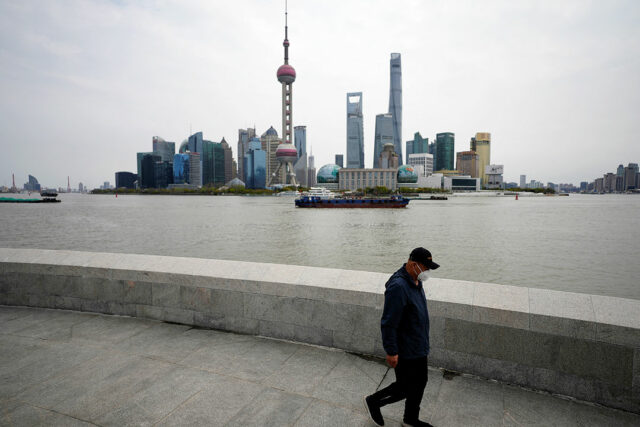
BEIJING — China’s cabinet unveiled a package of 33 measures covering fiscal, financial, investment and industrial policies on Tuesday to revive a pandemic-ravaged economy, saying it will inspect how provincial governments implement them.

The stimulus package, which was flagged by China’s State Council in a routine meeting last week, underscores Beijing’s shift toward growth, after draconian COVID-19 control measures pounded the economy and threatens Beijing’s 5.5% growth target for the year.

To revive investment and consumption, China will promote healthy development of platform companies, which are expected to play a role in stabilizing jobs, according to the measures.

Platform companies are also encouraged to make breakthroughs in areas including cloud computing, artificial intelligence and blockchain technologies, the State Council said, the latest sign that China is easing a crackdown on the sector.

China will also expand private investment, accelerate infrastructure construction and stimulate purchases of cars and home appliances to stabilize investments, according to the measures.

In terms of monetary and financial policies, China will boost financing efficiency via capital markets, by supporting domestic firms to list in Hong Kong, and promote offshore listings by qualified platform companies.

The State Council also vowed to further reduce real borrowing costs, and strengthen financial support for infrastructure and major projects.

To enhance fiscal support to the economy, China will accelerate local government special bond issuance and cash support for firms that hire college graduates.

Authorities will also provide tax credit rebates to more sectors and allow firms in industries hit hard by COVID-19 curbs to defer social security payments, the State Council said.

Other measures include policies to ensure energy and food security, and stabilize supply chains. — Reuters

Miracle fuel hydrogen can make climate change worse

A WORLD desperate for a climate-friendly fuel is pinning its hopes on hydrogen, seeing it as a way to power factories, buildings, ships and planes without pumping carbon dioxide into the sky.

But now scientists are warning that hydrogen leaked into the atmosphere can contribute to climate change much like carbon. Depending on how it’s made, distributed and used, it could even make warming worse over the next few decades, even if carbon poses the bigger long-term threat. Any future hydrogen-based economy, they say, must be designed from the start to keep leaks of the gas to a minimum, or it risks adding to the very problem it’s supposed to solve. Some ideas now being tested, like shipping hydrogen in pipelines built to hold natural gas or burning it in individual homes, could cause an unacceptable level of leaks.

“The potency is a lot stronger than people realize,” said Ilissa Ocko, a climate scientist with the Environmental Defense Fund, a non-profit group. “We’re putting this on everyone’s radar now not to say ‘no’ to hydrogen but to think about how we deploy it.”

Hydrogen doesn’t trap heat directly, the way CO₂ does. Instead, when leaked it sets off a series of chemical reactions that warm the air, acting as an indirect greenhouse gas. And though it cycles out of the atmosphere far faster than carbon dioxide (CO₂), which lingers for centuries, it can do more damage than CO₂ in the short term. Over 20 years, it has 33 times the global warming potential of an equal amount of carbon dioxide, according to a recent UK government report. Over hundreds of years, carbon is more dangerous, due to its longevity.

Hydrogen’s warming potential was never a problem before, as its use was largely limited to oil refineries and chemical or fertilizer plants. But now governments worldwide are investing billions to build a hydrogen economy, seeing the gas as one of the only options for decarbonizing many industries that can’t easily run on electricity. President Joseph R. Biden has set aside $8 billion to build at least four “hydrogen hubs” where the fuel will be produced and used, and states are gearing up to compete. US utility companies that now deliver natural gas see it as a savior, announcing more than two dozen hydrogen pilot projects in the last two years.

“Now is when decisions are being made, and money’s being spent,” Ms. Ocko said. “We can get ahead of this issue now, so it doesn’t become a problem.”

She and others sounding this alarm insist it’s no reason to give up on hydrogen. Rather, hydrogen’s heat-trapping power means any future system for producing, distributing and using the gas must be built to minimize leaks.

“There is great potential using hydrogen to save a lot of emissions of carbon dioxide, but it’s really important to keep the hydrogen leakage rates down,” said Nicola Warwick, lead author of the UK study and a National Centre for Atmospheric Science research scientist at the University of Cambridge.

The hydrogen industry acknowledges the problem, even if companies disagree on the potential scope. Dave Edwards, with industrial gas company Air Liquide, said the effects of hydrogen leaks on the atmosphere should be far less than the traditional fuels they displace. Running cars and trucks on hydrogen fuel cells would have less atmospheric impact than running them on gasoline and diesel, even if the system for making and delivering that hydrogen leaks.

“It doesn’t mean it’s not still important, it doesn’t mean we don’t need to understand more about it, but our first impression is it’s much, much smaller,” said Mr. Edwards, a director with the company and its chief hydrogen advocate in the US. Hydrogen leaks, he said, “are manageable problems to address.”

Hydrogen has big advantages as a clean fuel. Burn hydrogen in a turbine, and it will generate power without carbon dioxide. Run it through a fuel cell, and it will produce electricity with water vapor as the only exhaust. Unlike solar and wind power, it can be stored in large amounts for when it’s needed. While the vast majority of the hydrogen produced today is stripped from natural gas, in a process that releases carbon dioxide, it can also be separated from water using renewable power, with no emissions but oxygen.

But for all its benefits, hydrogen can also slip easily through equipment designed to contain larger molecules like the methane in natural gas.

Once it escapes, much of the leaked hydrogen will be absorbed by microbes in the soil. Some of what’s left in the air will react with a substance that helps remove methane from the atmosphere. That’s a problem, because methane is itself a powerful greenhouse gas, with more than 80 times the global warming potential of carbon dioxide over 20 years. The reaction between hydrogen and that substance — known as the hydroxyl radical, or OH — leaves less of the OH available to react with methane. So methane entering the atmosphere will stick around longer and do more damage than it would have if the hydrogen hadn’t been there.

Leaked hydrogen has other warming effects as well. In the troposphere, the atmospheric layer closest to the ground, triggers a chain of chemical reactions that produce more ozone, another greenhouse gas and a key component of smog. Much higher up, in the stratosphere, the hydrogen leads to an increase in water vapor, which has the overall effect of trapping more thermal energy in the atmosphere.

These reactions happen over a short time span — a handful of years. Excess carbon dioxide, in contrast, builds up atmospheric heat over centuries. But with temperatures quickly rising worldwide, scientists say short-term drivers of climate change can’t be ignored.

“These decades matter,” said Steven Hamburg, EDF’s chief scientist. His group has been trying to raise the issue of hydrogen’s warming potential with anyone who’ll listen, briefing academics, businesses and the US Department of Energy. His colleague, Ms. Ocko, estimates they’ve met with some 200 people to date. For EDF, it’s a logical extension of the group’s work trying to direct public attention to short-term climate pollutants like methane and black carbon, which often get overlooked in the focus on carbon dioxide.

Many utility companies are experimenting with blending hydrogen into their existing natural gas pipelines, sprawling networks that feed everything from power plants to household stoves. To Hamburg, that’s a recipe for leaks. He also warns that mass-producing hydrogen from fossil fuels could even lead to a short-term increase in warming, if the systems for making and transporting the hydrogen leak enough hydrogen and methane. There would still be a long-term benefit from cutting carbon dioxide emissions, but over the span of a decade or two, a leaky hydrogen system based on fossil fuels could cause more warming than business as usual. 

“Over several decades, you could be worse off — it’s very plausible,” Mr. Hamburg said.

The issue hasn’t stopped gas utilities from exploring hydrogen blending projects. But it may become one of the things those projects study. California utility PG&E Corp. in May announced plans to try different blends of hydrogen and natural gas in a dedicated pipeline system separate from the company’s usual gas transmission network, with the blends burned in a power plant south of Sacramento. PG&E spokeswoman Melissa Subbotin said the company’s “Hydrogen to Infinity” project will examine the potential for leaks.

“Extensive research needs to be done to understand the feasibility of hydrogen injection within a natural gas pipeline system,” she wrote in an email.

A hydrogen economy riddled with leaks would just undercut its own effectiveness, Hamburg said, delivering less of a blow against climate change than it could. Clean-energy advocates point to how methane leaking from natural gas wells and pipelines — leaking that turned out to be far more widespread than once believed — undermined some of the benefits of shifting power plants from coal to gas. They don’t want that to happen with hydrogen.

“We’re at risk of proceeding with the build-out of new infrastructure that’s essentially going to repeat all those past harms,” said Julie McNamara, deputy policy director for climate and energy with the Union of Concerned Scientists. “We don’t have the time or luxury to get it wrong.” — Bloomberg


UK to grant visas to graduates from the world’s best universities

REUTERS

LONDON  — Britain will offer work visas to graduates from the world’s best universities in an expansion of its post-Brexit immigration system that is designed to attract the “best and brightest” workers.

Since leaving the European Union (EU), Britain has ended the priority given to EU citizens and introduced a points-based immigration system that ranks applicants on everything from their qualifications and language skills to the type of job offered to them.

But the country has faced a tight labor market for several years — compounded by Brexit and COVID-19 — and companies in manufacturing, logistics and the food sector have urged the government to loosen the rules for entry-level jobs.

Under the scheme announced on Monday, graduates with a bachelor’s or master’s degree from the top 50 universities abroad can apply for a two-year work visa and will be allowed to bring family members with them. Those who receive doctorates can apply for a three-year visa.

Successful applicants will then be able to switch to longer-term employment visas, the government said.

Rishi Sunak, the finance minister, said it would enable Britain to grow as an international hub for innovation, creativity, and entrepreneurship.

“We want the businesses of tomorrow to be built here today — which is why I call on students to take advantage of this incredible opportunity to forge their careers here,” Mr. Sunak said.

Under the new scheme, applicants must be awarded degrees no more than five years before the date of application.

Eligible universities must appear in the top 50 rankings of at least two of the following: the Times Higher Education world university rankings, the Academic Ranking of World Universities and the Quacquarelli Symonds world university rankings.

The most recent list of eligible universities from 2021, published online by the UK government, comprises more than two dozen US universities, as well as institutions in Canada, Japan, Germany, China, Singapore, France and Sweden.

The government said candidates must pass a security and criminality check, and be able to speak, read, listen and write English to an intermediate level. — Reuters

The urgency of maritime security policy

PHILIPPINE STAR/ WALTER BOLLOZOS

The Philippines has one of the world’s longest coastlines, spanning 36,289 kilometers (22,549 miles), filled with abundant marine resources and maritime industry potential. Its strategic location, critical for trade and security, also elevates the importance of protecting national interest over the country’s territorial rights.

These economic and industrial opportunities and strategic geographical location suggest that the new government should be able to use and harness concrete methods and approaches to strongly address our maritime security concerns.

To promote and protect Philippine interests and concerns, priority must be given to establishing dependable interagency cooperation between maritime agencies and institutions.

Extant structural issues and policy gaps need to be identified in order to push forward a stronger maritime posture and facilitate the development of effective and feasible solutions to further strengthen the country’s maritime security.

Specifically, the new government’s priority actions should be able to respond to the following key challenges: 1.) implementation of policies to address the degradation of the marine environment in the West Philippine Sea; 2.) harnessing productive partnerships to improve cooperation and coordination between agencies and institutions; and, 3.) strengthening the capacity of government to respond to illegal activities and exploitation of natural resources within the country’s exclusive economic zone (EEZ) and to manage and prevent maritime problems including threats against vessels, infrastructure, and the livelihood of Filipino fisherfolk.

Maritime security, however, needs to be enveloped under a clear and future-oriented foreign and security policy. This is one of the key recommendations of the Stratbase ADR Institute book Beyond the Crisis: A Strategic Agenda for the Next President which was launched on May 20. Other important policy advice pertained to the areas of economy, social inequality, food security, climate change, and governance.

In my paper, “A Responsive and Strategic Foreign Policy Outlook in an Interconnected and Multipolar World,” there is great emphasis on a more unpredictable geopolitical environment in the Indo-Pacific region. This therefore demands that a renewed definition and understanding of international and regional cooperation among states is imperative to collectively solve existing and emerging problems, including conflicting maritime claims affecting the national sovereignty, territorial integrity, and developmental interests of the countries involved.

The new government must be able to develop “a future-oriented, responsive, and strategic Philippine foreign policy” that has learned from the shortcomings of the previous administration.

On May 26, presumptive President Ferdinand Marcos, Jr. has made it clear that, “we have a very important ruling in our favor and we will use it to continue to assert our territorial rights. It is not a claim. It is already our territorial right.” By recognizing the country’s rights over our maritime territory, the new government is better equipped and guided to establish the policies, plans and strategies over it.

More specifically, Dr. Chester Cabalza expounds in his study titled, “Philippine Civil and Maritime Security: Transforming from Archipelagic to Maritime Power,” the importance of having “a stronger civil maritime framework and a robust maritime security under the mantle of national security.”

Dr. Cabalza attributed great significance to multilateralism in dealing with a volatile regional security environment that is being influenced by the power competition between China and the United States.

The competition is further complicated by the rise of the middle powers that aim to maintain a maritime rules-based order in the Indo-Pacific region.

In conclusion, Dr. Cabalza recommends the need for “a unified and stronger messaging for the next president in handling various maritime security challenges by accelerating the use of strategic communication in the defense and security sector to realize the value of whole-of-government and whole-of-nation approaches.”

With a responsive and strategic foreign policy and a stronger civil maritime framework and a robust maritime security, our country will be able to politically and diplomatically deal with China’s expansionist agenda in the West Philippine Sea and its growing maritime capability.

The extensive maritime territory and jurisdiction of our country presents limitless economic opportunities and the exploration and engagement of the blue water economy will ultimately benefit countless Filipino fisherfolk.

Leveraging existing and new partnerships with like-minded states will serve as the balancer in the Indo-Pacific maritime order.

On May 23, Bantay Dagat or the Maritime Security Framework between the US and the Philippines was signed by the Commander UA Indo-Pacific Command, Admiral John Aquilino and the Chief of Staff of the Armed Forces of the Philippines, General Andres Centino.

The event at the US Indo-Pacific Command headquarters in Camp Smith, Hawaii demonstrated the strong cooperation between the two countries “to improve regional maritime domain awareness and confront maritime challenges together.”

“The framework is designed to enable a holistic, intergovernmental approach to maritime security through the interoperability of US and Philippine maritime forces and option to include interagency organizations, and is a testament to the strength of the US-Philippines alliance,” US Indo-Pacific Command Public Affairs added.

To further ventilate the urgency of the country’s maritime concerns, the Stratbase Albert del Rosario Institute held a virtual public forum with the theme “The Future of Philippine Foreign Policy: On Maritime Security Capability and Strategy.” This May 31 event was a gathering of thought leaders and experts in the field of maritime security and foreign policy. Aside from providing context to the current landscape of the country’s maritime security strategy, it tackled existing policies and the points of intervention at the institutional and implementational levels.


Victor Andres “Dindo” C. Manhit is the president of the Stratbase ADR Institute.

The economic status of Philippine regions: Making major cities attractive

BONIFACIO GLOBAL CITY — MEO FERNANDO-PEXELS

(Part 3)

Even before the pandemic, there were already clear signs that highly congested urban areas like the National Capital Region (NCR) and Metro Cebu were growing slower than emerging regions like Calabarzon*, Central Luzon, and Davao. The recent report by the Philippine Statistical Authority (PSA) on regional growth trends in 2021, the year that recovery from the pandemic was evident, confirmed these regional dispersal trends. The growth rate of the NCR at 4.4% was below the national average of 5.6% and way below growth rates of Calabarzon, Central Luzon, and other “urban” regions. The question now arises about what the LGU officials and the private business sector in Metro Manila and Metro Cebu should do to retain the attractiveness of their cities to investors and individual families or households so that they could limit the hallowing of their municipalities. The answers to this question may also serve as a guide to the emerging new metropolises like Iloilo, Batangas, and Pampanga so that they can avoid the disadvantages of congestion.

We can find some of the answers to this question in a highly enlightening article by Dr. Roberto de Vera, Senior Economist of the School of Economics of the University of Asia and the Pacific and specialist in urban planning, that appeared in the Urban Markets Adviser regularly published by his School of Economics. The article, entitled “Finding Opportunities in Post-Pandemic City Trends,” cites world-famous architect Norman Foster (who has an ongoing project in Makati) forecasting future trends in the way people will live during the post-pandemic era. Foster makes a case that these trends will be expressions in a smaller scale of the dictum that “the city is a powerful social and economic magnet” — a place that gives opportunities for people to meet and create wealth. He points out that these so-called post-pandemic trends were actually already discernible even before COVID-19 hit the world. These trends in how people work, shop, and chill out have just been intensified and are not really completely new in many urban areas all over the world.

Before the pandemic, there were already a good number of us in traffic-infested Metro Manila who brought work after office hours on weekdays and on weekends. Work From Home (WFH) was not a product of the pandemic. It just became more widespread and common because of the lockdowns. Even with the opening up of the economy, people continue to work from home to minimize the risk of being infected. WFH became the norm for most workers in schools, banks, fintech and other service industries where work could be done online.

A study on the future of work in the Philippines conducted by Sprout Solutions suggests that the majority of employees and human resource professionals prefer WFH to be part of the work arrangement even after the pandemic has been put under control. This preference has been especially expressed in the BPO-IT (business process outsourcing-information technology) sector which employs some 1.4 million people. The study finds that 80% of 485 professionals and 91% of 8,194 employees surveyed preferred either a remote work set-up (WFH on all workdays) or a hybrid set-up (WFH on some workdays). To cater to these preferences of workers, companies in Metro Manila and other congested cities may try renting coworking spaces located in neighborhoods close to their workers’ homes. If these rented spaces are in a residential zone, rental fees would most probably be lower than in central districts like Makati or Fort Bonifacio. The alternative could be to reimburse the employees for rents paid to use accredited co-working spaces.

Even as people would want to work from home or places closer to home, Foster observes that, like the city in a smaller scale (e.g. Lipa, Iloilo, Dumaguete, Puerto Princesa), people would want workplaces that will be “much more social” and “much more about the creative sense of community.” He sees a growing demand for “taller spaces, spaces which are healthier, naturally ventilated, fresher,” a demand that seems to have emerged when a bunch of Silicon Valley became early adopters of social, creative spaces. People may still be convinced to stay in megacities if they can work in safe and attractive workplaces. To achieve such desirable physical environments, businesses would need to retrofit their rooms so that stale air can be replaced by fresh air at a frequency supported by peer-reviewed studies. Even more important would be the scheduling of longer breaks between meetings so that workers can eat, stretch, make small talk, and check their Instagram accounts.

Another trend that was accelerated by leaps and bounce is shopping online. Because of sheer need during the pandemic, people ordered food and medicines and paid bills online during the lockdowns. Many businesses reaped and will continue to reap the windfall from this trend: mobile payments, home delivery, online retail platforms, packaging, and take-out food. Foster opines that as pandemic restrictions are lifted, we could see a “shift perhaps from the global economy to a more balanced one between what global can offer and what local can offer.” We saw this play out during the pandemic when residential subdivisions would set up a Viber group where food vendors could sell items such as bangus (milkfish), papaya, sugar, and adobo (a stew). When malls had to close during the lockdowns, sari-sari stores and neighborhood markets flourished. LGUs and private groups could work together to organize neighborhood markets similar to those that have been traditionally held in the weekends at Salcedo and Legaspi Villages in Makati.

Another trend that was highlighted during the pandemic is the urban design of compact cities. One can observe that real estate developers moving to the periphery such as Calabarzon and the Pampanga Triangle are increasingly building what are known as “mixed-use developments.” Because of their experiences during the lockdowns, people got used to what Foster calls the “neighborhood.” Another term for it is “the 15-minute city where within a comfortable 15-minute walk you can find a place of work, shopping and have the ability to dine, to learn, to enjoy leisure and to absorb culture.” We may have to reconfigure some old districts of Metro Manila so they can approximate the conveniences of the mixed-use communities. As Dr. De Vera comments on the phrase “mixed-use,” “I recall the two-story buildings in Binondo wherein the first floor would be a store, and whose owner’s home would be on the second floor. A family living in Binondo during those days could be within a 15-minute walk away from the market, a church, a restaurant.” In the Metro Manila area, a pioneer of mixed use development was Eastwood City put up by Megaworld in the 1980s and now followed by Bonifacio Global City and Nuvali.

In my own field of higher education, Dr. De Vera cites the University of Asia and the Pacific (UA&P) as a virtual participant in the mixed-use development model. He explains: “Amid the rise of cheaper, accessible internet service and user-friendly video conferencing apps, universities have the opportunity of being part of these mixed-use developments even if they are more than a 15-minute walk away from their students. For example, the UA&P School of Economics’ graduate courses taught via Zoom are being attended by professionals based in Taguig, San Juan, Makati, and other places in Metro Manila. Universities have the opportunity of expanding the yet untapped market of millennials and more mature professionals seeking to retool themselves after several years or decades of work. The pandemic jumpstarted the ability of universities ‘to flip the classroom,’ a phrase coined by Salman Khan, founder of Khan Academy, and to offer customized, self-paced learning programs to local and international students.”

Older cities such as those which are in Metro Manila and Metro Cebu could undergo an urban renewal under the strong and enlightened leadership of their respective LGU heads so that some of their areas could still be transformed into mixed use developments to retain their existing population or attract new residents.

Dr. De Vera envisions a possible reversal of the Balik Probinsiya (return to the province) movement. These mixed-use developments in the older cities of the National Capital Region could offer discounted lease rates to craft workers to open up their stores that, for example, sell pottery and offer pottery workshops similar to those conducted at Ugu Bigyan Potter (Tiaong, Quezon), Cornerstore Pottery Farm (Silang, Cavite), City Avenue (San Narciso, Zambales), and Crescent Moon Café and Studio Pottery (Brgy. Dalig, Antipolo City). This would be a way of repopulating the old cities with micro and small and medium enterprises. This type of workshop and similar ones in other industries would be a welcome respite for urban workers suffering from social media overload and Zoom fatigue.

Those who are interested in subscribing to the regular issues of Urban Markets, Industry Monitor and other economic publications of the School of Economics of UA&P may contact bec.sec@uap.asia

*A portmanteau of the names of the Southern Luzon provinces of Cavite, Laguna, Batangas, Rizal, and Quezon.


Bernardo M. Villegas has a Ph.D. in Economics from Harvard, is professor emeritus at the University of Asia and the Pacific, and a visiting professor at the IESE Business School in Barcelona, Spain. He was a member of the 1986 Constitutional Commission.

bernardo.villegas@uap.asia