Home Blog Page 5850

Meralco sales seen up in third quarter as businesses reopen

MANILA Electric Co. (Meralco) said indication of its electricity sales in the third quarter showed a 6% growth, an official of the power distributor said.

“Energy sales growth is between 6-8% per month,” Meralco Chief Commercial Officer Ferdinand O. Geluz told reporters on Friday.

He said that the main driver of the projected growth is the resumption of many businesses in August.

“This is driven by [the] commercial [segment]. Our commercial segment is bouncing back, and commercial is very important and within recovery though still below the 2019 level,” he said.

Mr. Geluz said that Meralco is also expecting its electricity sales to grow in November and to stabilize next year.

“We are seeing it to stabilize next year, and maybe to return to the 2019 level,” he added.

In the second quarter, Meralco posted P7.56 billion in net income, a 34.5% increase compared with the P5.62 billion recorded a year ago, driven by strong energy sales.

Meanwhile, Meralco’s wholly owned subsidiary MSpectrum, Inc., or Spectrum, is targeting to expand its installed capacity by yearend.

Spectrum Chief Operating Officer Patrick Henry T. Panlilio told reporters that to date, the company has installed solar panels with a total capacity of 43 megawatts (MW).

“By the end of the year, we’re hoping to reach 50 MW, at least for solar rooftop,” he said.

Mr. Panlilio said that for 2023, Spectrum is targeting to install an additional 20 MW of solar rooftop projects.

In terms of capital expenditures, he said that for every megawatt installed, the company estimates to spend around P45 million.

“The cost of a 1 MW installation usually amounts to P45 million with the current prices, maybe it could up to P50 million with foreign exchange now,” Mr. Panlilio said.

He also said that Spectrum is planning to grow the operations and maintenance side of the business.

“This is one activity or niche of ours, being a Meralco subsidiary. That’s why we are expanding this because not all of those who install solar panels are capable to maintain. Some are just doing it to sell,” Mr. Panlilio said.

Renewable energy firm Spectrum provides tailor-fit solutions for industrial, commercial, and residential customers through an in-depth understanding of energy consumption behavior. It is backed by Meralco’s energy expertise and proven safety track record.

Meralco’s controlling stakeholder, Beacon Electric Asset Holdings, Inc., is partly owned by PLDT, Inc. Hastings Holdings, Inc., a unit of PLDT Beneficial Trust Fund subsidiary MediaQuest Holdings, Inc., has an interest in BusinessWorld through the Philippine Star Group, which it controls. — Ashley Erika O. Jose

Access roads for upland farms completed in Ifugao province

PHILIPPINE STAR/ ANDY ZAPANTA, JR.

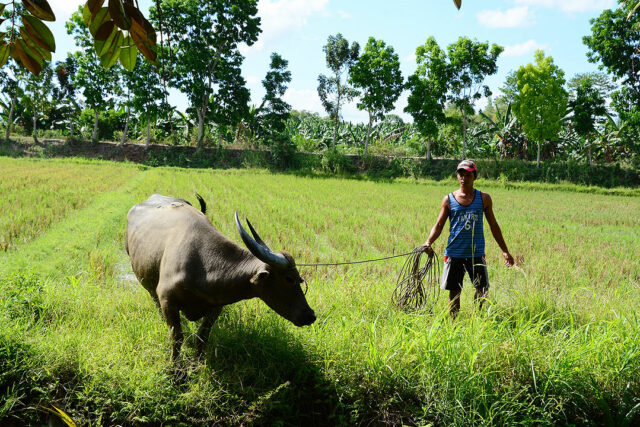
THE Japan International Cooperation Agency (JICA) and Department of Environment and Natural Resources (DENR) have completed and turned over new access roads in Banaue, Mayoyao, and Lagawe in Ifugao province to support upland farmers.

“The roads are critical to helping upland farmers transport their agroforestry goods easily, find new markets, and for people to access basic services such as hospital care and schools,” JICA and the DENR said in a statement.

The roads were funded by a P1.8-billion cooperation project targeted at building or rehabilitating agroforestry support facilities under the umbrella of the Forestland Management Project (FMP).

Since 2012, the FMP has rehabilitated over 70,000 hectares of forest land across 24 sub-watersheds in Ifugao, Quirino, Nueva Vizcaya, Nueva Ecija and Iloilo provinces.

“JICA and DENR have partnered to save critical watershed systems in the Philippines as a move to address climate change and improve the livelihood of farmers and grassroots communities dependent on forest resources,” it added.

According to the DENR, the Philippines has more than 130 watersheds supplying water for irrigation, domestic, and industrial use.

The JICA-DENR partnership also implements conservation efforts at the river basins in Upper Magat and Cagayan, Upper Pampanga, and Jalaur on Panay.

“We join the Philippine government in their self-help efforts to sustainably manage the Philippines’ natural resources for the greatest good of the greatest number of people in the long-term. Conserving vital forest resources such as watersheds is critical to mitigating climate change risks and giving Filipinos opportunities to improve their livelihood through sustainable forestland management,” JICA Philippines Chief Representative Sakamoto Takema said.

Mr. Takema said access roads help upland communities implement sustainable community-based forest management activities, protect and maintain a total of nearly twenty thousand hectares of forest in Ifugao. — Luisa Maria Jacinta C. Jocson

From Leslie to Lucy: Collaborations the focus in Bench Fashion Week

Processed with VSCO with preset

HOMEGROWN brand Bench will be back on the runway this weekend with a presentation of Suyen Corp.’s brands. From Sept. 30 to Oct. 2 at the Playground of Bench Tower, the clothing conglomerate is showing off its Holiday 2022 collections at Bench Fashion Week with its flagship brand, Bench, but also Human, Kashieca, Assembly, and Australian brand Cotton On (which they distribute in the Philippines) showing their styles.

The featured brands will also show collaborations with designers and some familiar names. Friday’s show will see a collection by Human and Jenni Contreras, as well as by Antonina Abad Amoncio. Ms. Amoncio was a winner of the Bench Design Awards. Meanwhile, in 2018, Ms. Contreras was included in Vogue Italia’s Vogue Talents List.

On Saturday, heiress and actress-turned politician Lucy Torres-Gomez is showing her collaboration with Kashieca, followed by a show by Martin Bautista, who was nominated in the Best Upcoming Fashion Designer category of the Fashion Asia Awards in 2014. He has dressed celebrities including Pia Wurtzbach, Kathryn Bernardo, Anne Curtis, Georgina Wilson, Liza Soberano, Solenn Heussaff, Bianca Gonzalez, and Janine Gutierrez.

The show series is rounded out by Europe-based Filipino designer Lesley Mobo, a recipient of the Emilio Pucci and the Diesel Award in Italy, and a red-carpet favorite with socialites and celebrities alike. His work has appeared in various editions of Vogue (from the US magazine to the editions in Portugal, Australia, and Italy, among others) and Vanity Fair. His Holiday 2022 collection is a “celebration of abundant rural life in the Philippines and its rich cultural and agricultural heritage.”

Toyota Corolla Cross 1.8 V Hybrid: Rock ‘n’ Corolla

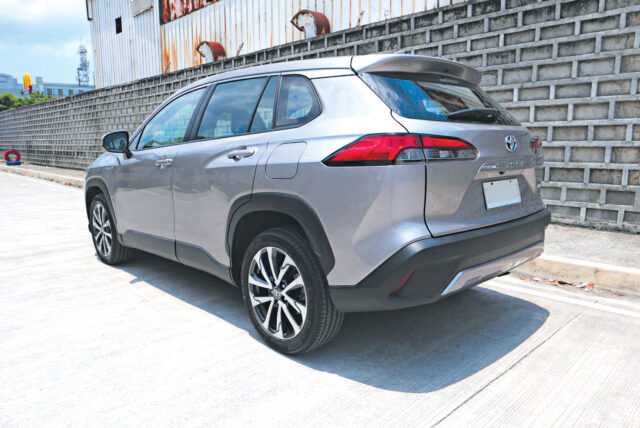
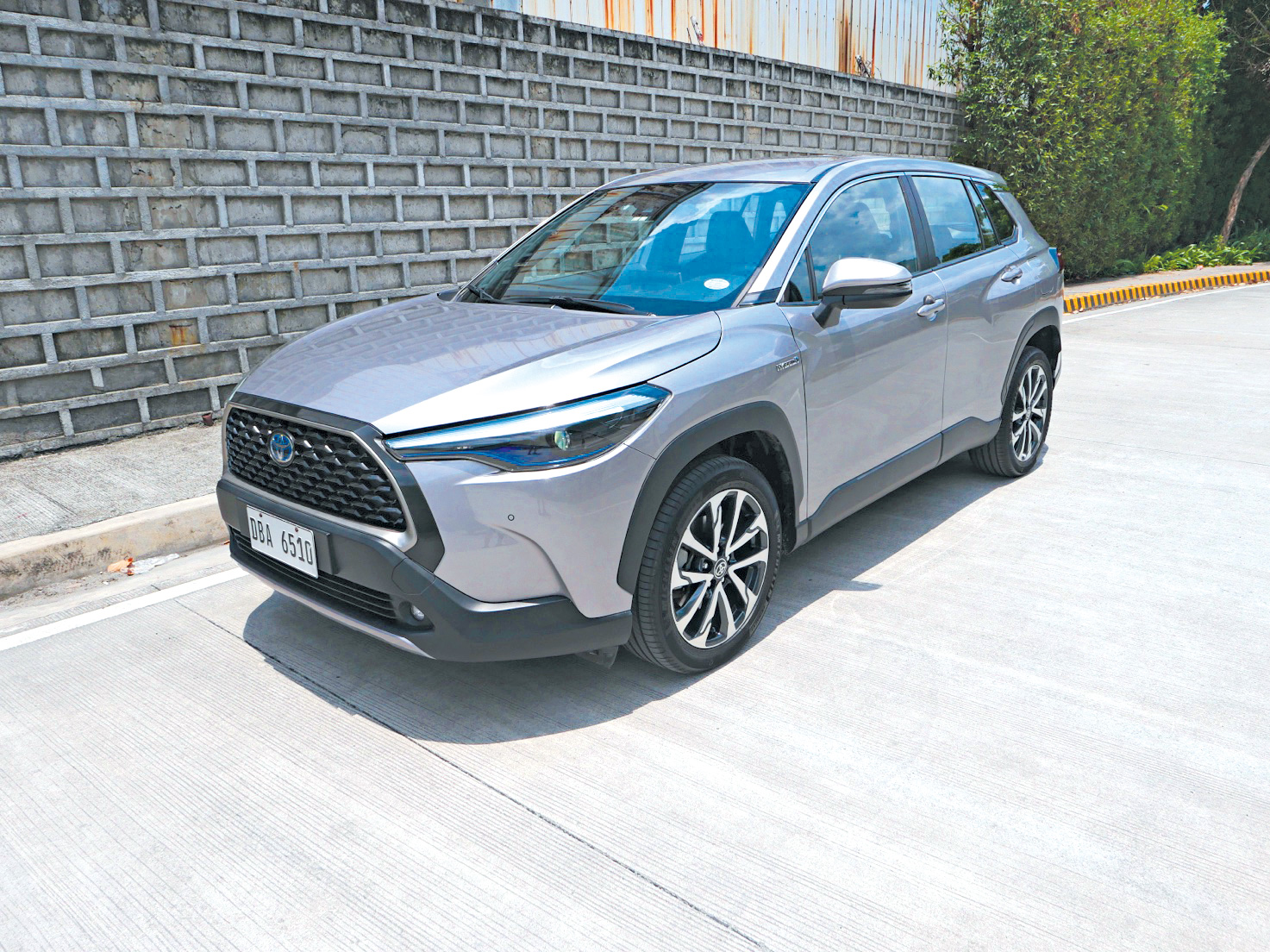
Sheetmetal creases and lines provide a sense of dynamism without going overboard. — PHOTO BY KAP MACEDA AGUILA

This child of the pandemic is a deservedly popular crossover choice

THE ONSET of the COVID-19 pandemic was not a sucker punch to humanity; with pervasive media coverage, we actually saw it coming almost in real time. That we couldn’t really stop it and curtail the rapid spread was probably the bigger news.

Having said that, life inexorably had to go on even if at times it seemed like it was impossible to see the light at the end of the tunnel. We had to “shelter in place” and figure out how to survive, be productive, and, well, live cloistered in our own homes.

And figure stuff out we did. Even auto companies, with their physical launches, exhibits, and mall tours scuttled, soon learned to hold Zoom meetings and, eventually, stage online launches. That was a supreme show of confidence and grit, especially since even dealership operations were curtailed and limited at the height of the pandemic.

Truth be told, it was an injustice for vehicles like the Toyota Corolla Cross to have to endure the indignity of an online reveal here in the country. But I digress; it was a middle finger to the virus, while respecting the fact that it was waiting to prey on the unprotected and careless.

Even from behind a laptop or desktop screen, the Corolla Cross had looked good — worthy of the iconic Corolla name; certainly worthy to take the badge into SUV (well, okay, crossover) territory. Platformed on the same TGA-C bones of the Toyota C-HR and the premium Lexus, Toyota positions the Corolla Cross as a “stylish urban vehicle,” melding its signature “QDR” (quality, durability, and reliability) with style and functionality.

But perhaps Toyota didn’t really need to do a lot of marketing speak; people truly gravitated to the new model. Despite a Q3 launch during the pandemic year, 598 units were sold by the end of 2020. In 2021, 1,539 people brought home a Corolla Cross. YTD 2022, that number is around 1,500 units. The compact crossover has clearly won a following. In fact, word has it that units are a little hard to secure these days as Toyota has also been negatively impacted by parts supply issues and the much ballyhooed chip shortage hounding not just itself but all brands to some degree.

For crossover seekers, it’s imperative to include the Corolla Cross in your consideration set. You’re doing yourself a disservice if you don’t. To be fair, I’ve realized how it may be a little polarizing with its looks. But if you like it, you’ll love it.

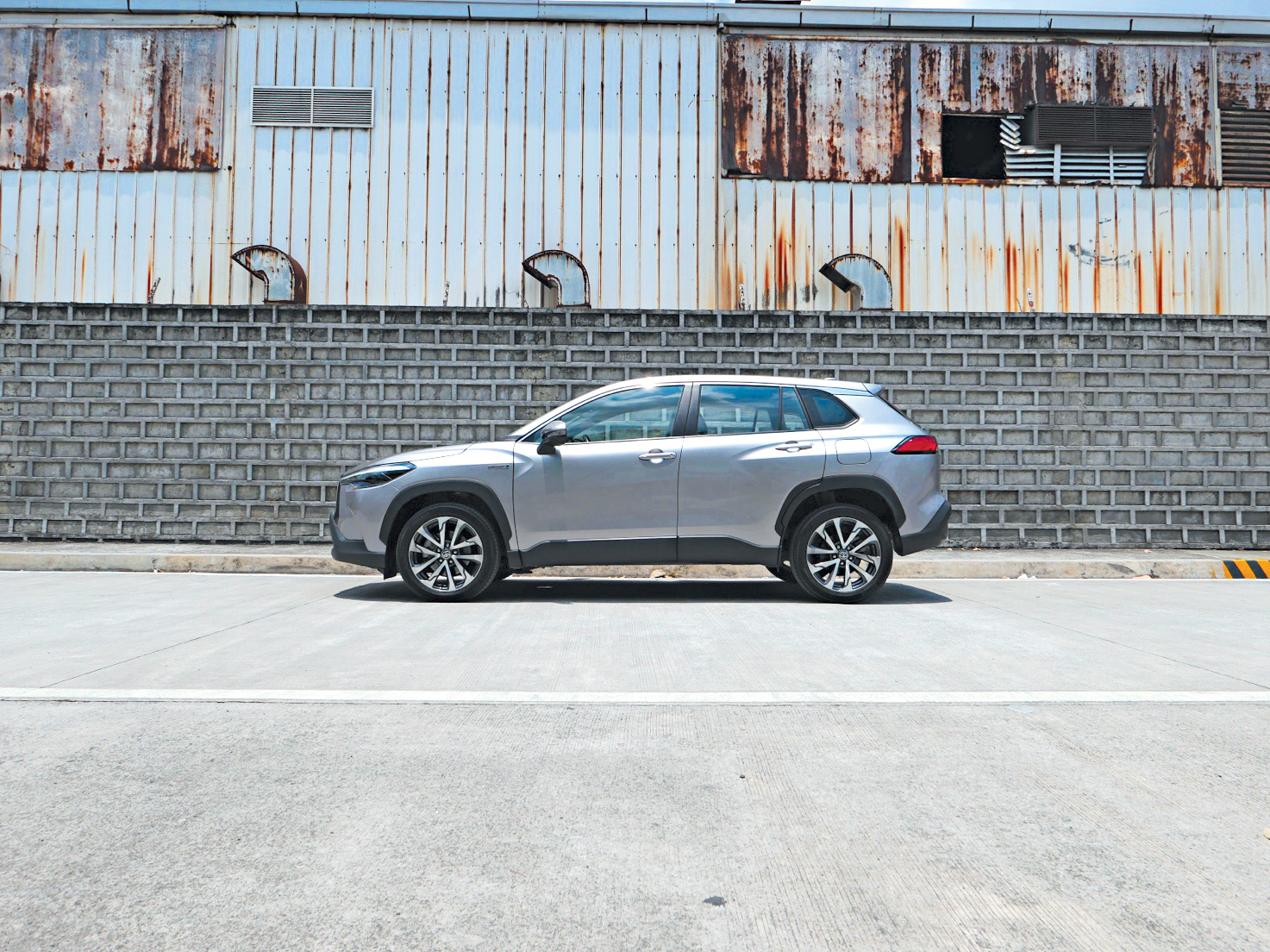
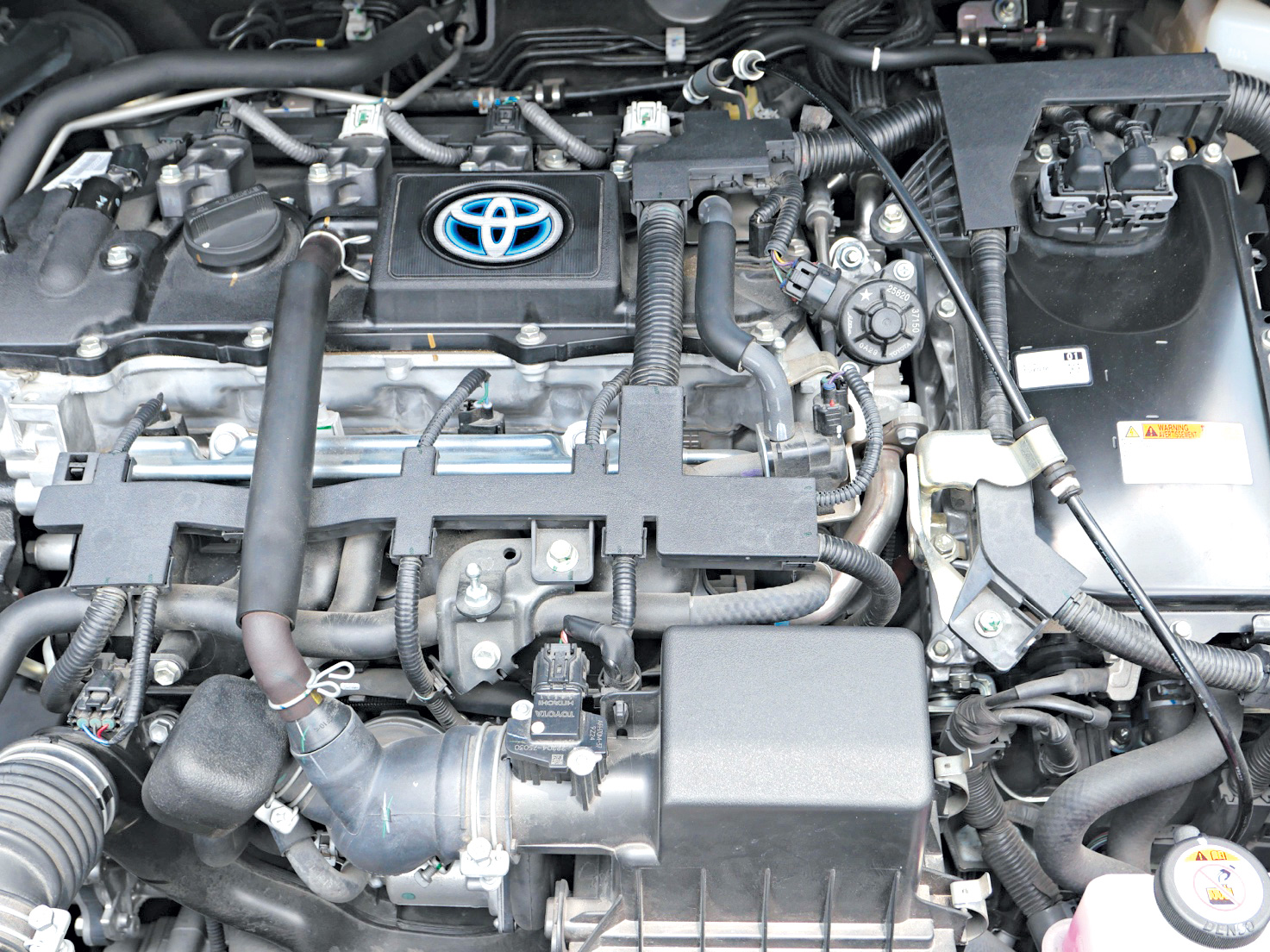
Let’s start with the double trapezoid front grille, which helps to make the vehicle appear wider than it actually is, along with giving it an almost RAV4-like countenance. The hybrid variant is easy to spot as it bears a blue hue on its Toyota logo and even the bi-beam LED headlamps — not to mention the brand on the engine cover itself. Viewed from the side, the crossover is sleek and moderately muscular with just the right amount of crimping. Black plastic cladding on the lower part of its body also serves to visually raise the automobile from the ground.

The most significant thing about this variant is, of course, the fact that it is a hybrid. The price of admission versus the non-hybrid is an additional P362,000 for a P1.665-million tag.

Under the hood of the hybrid is a 1.8-liter engine with Atkinson Cycle (delivering 142Nm at 3,600rpm, and an electric motor to bump up the total system output to 120hp). Three driving modes (Eco, Power, and EV) give drivers their druthers on response and fuel efficiency. The 1.8 G CVT, on the other hand, gets a 16-valve four-cylinder, DOHC chain drive with dual VVT-I serving up 138hp and 172Nm (at 4,000rpm).

Aside from the powertrain differences, the HEV gets 225/50 R18 alloys versus the standard 215/60 R17s on the G CVT. However, you do lose a standard spare tire in favor of a “space saver” one to accommodate the hybrid battery.

By opting for the hybrid trim, you also get, among other niceties, rain-sensing front wipers, LEDs with line guide and bulb in the rear combo lamp, a digital/analog meter cluster, seven-inch TFT multi-information display, and more functions on the steering wheel switch set. The rearview mirror is also auto-dimming, and a cabin lighting system includes illumination for the cupholder, front door trim, and center tray — as well as the basic “room lamp.”

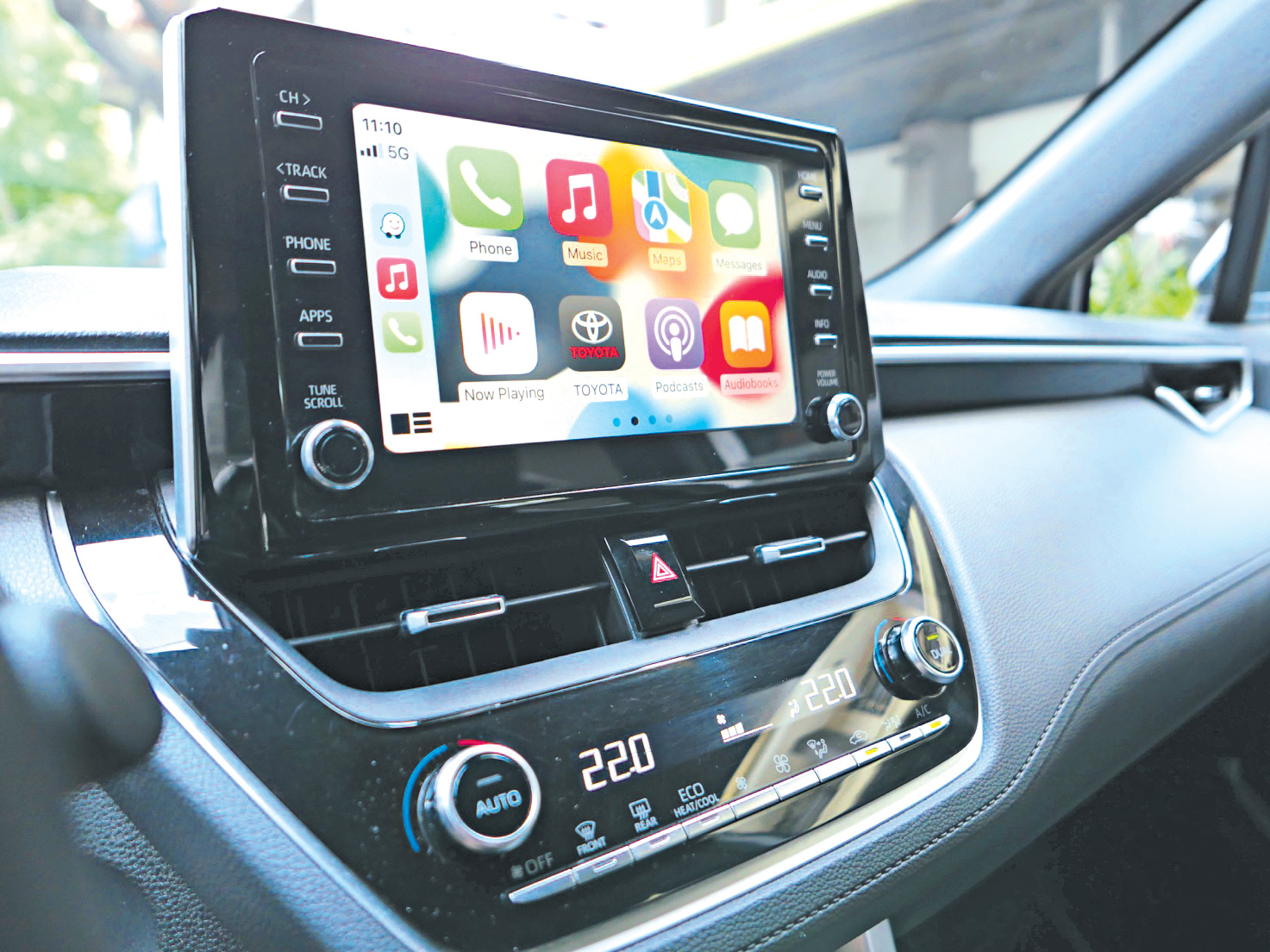
Significantly, Toyota further embraces its hybrid cred — doubling down via a hybrid trim in pursuit of realizing its “vision of sustainable mobility and makes self-charging hybrid technology more accessible to Filipinos,” according to a release. The air-conditioning system for the hybrid is also a dual-zone one. As for the infotainment display, the hybrid gets an eight-inch display versus the 6.9 inches of the exclusively petrol-powered variant.

And when you pony up the premium for a hybrid, Toyota will also throw in its suite of safety features which it calls Toyota Safety Sense. These include a pre-collision system, automatic high beam, lane tracing assist, lane departure alert, and dynamic radar cruise control. The last feature employs cameras to adjust the vehicle speed to keep a preset distance from the automobile in front. These features are added to the standard blind spot monitor, rear cross traffic alert, SRS air bags, anti-lock brakes, vehicle stability control, and hill start assist.

In a teaser ahead of its 2020 reveal, Toyota called the model “the Corolla we all know and love, now also in a new exhilarating form factor.” The vehicle is certainly that, and delivers elegant, cohesive, and tasteful styling as well. And I think that this vehicle is keenly intended for those who are still on the fence about hybrid electric vehicles, and found the poster child for hybrids (yes, the Prius) a little too funky or intimidating to the palate.

You might be a little perplexed by the left-hand circular gauge on the instrument cluster though. Despite its location and appearance, it’s not a typical rev counter. Rather than give you a real-time revolutions-per-minute report, it shows you how you’re doing in terms of extracting power and charging the hybrid battery. And because it’s a Toyota, an “eco” zone also lets you know when you’re being a conscientious, light-on-the-throttle driver.

There’s nothing bewildering or overwhelming about the Corolla Cross, powertrain-wise, and that’s a good thing. Think of it as a regular internal combustion engine (ICE)-equipped crossover with a very helpful supplemental electric motor which you absolutely won’t have to worry about because the hybrid battery charges as needed and without intervention. The result? Without even half trying, I eked out 17.5kpl from the front-wheel-driven crossover. Whenever possible, the motor engages to take some of the burden from engine.

As for the cabin, it’s a surprisingly spacious, non-descript one — with seats swathed in leather in the hybrid. The second row also provides ample leg and elbow room for occupants therein, A/C vents, and two USB-A charging sockets.

All told, the Corolla name is obviously a hallowed name for Toyota, and it’s easy to see how this engaging, well-mannered incursion into the crossover format earns the right to use that moniker. It’s solid like, you know, a rock.


CTA drops tax evasion charges vs oil firm exec

CTA.JUDICIARY.GOV.PH

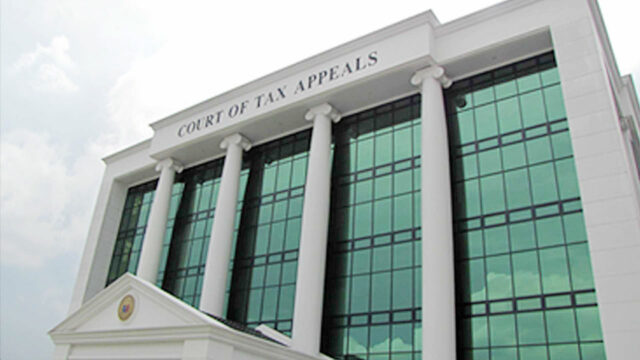
THE Court of Tax Appeals (CTA) has acquitted the president of COSCO Petroleum Co., Inc. of tax evasion charges stemming from deficiency taxes worth P23.9 million in 2008.

In a 23-page decision, the CTA First Division ruled that the tax assessment against Michael C. Cosay was void since the revenue officer who conducted the audit was not authorized through a letter of authority (LoA).

It added that an LoA with a different revenue officer named was initially issued to audit Mr. Cosay’s and the oil firm’s books of accounting.

“A tax is considered delinquent when an assessment for deficiency tax has become final, executory, and demandable, and the taxpayer has not paid the same within the period given in the notice of assessment,” Associate Justice Marian Ivy F. Reyes-Fajardo said in the ruling.

The judge noted that since the assessment was void, the taxes against the oil firm executive cannot be considered delinquency taxes.

The court ordered Mr. Cosay’s release and the cancellation of his P60,000 bail bond. The accused is the president of an oil firm based in Pili, Camarines Sur.

An LoA is a document that grants authority to a revenue officer to examine a taxpayer’s books of accounting and tax liabilities.

The tax court noted that there was no evidence that COSCO received the Bureau of Internal Revenue’s final letter of demand in 2013.

The revenue officers claimed that a certain employee received the demand letter for the oil firm.

COSCO’s lawyer argued that the person the tax officers cited was not an authorized representative of the company.

Under the country’s revenue code, a formal letter of demand calls for the payment of a taxpayer’s deficiency taxes and is issued by the internal revenue commissioner or his duly authorized representative.

The tribunal said it cannot order Mr. Cosay to pay the subject tax deficiency since the tax assessment “bears no valid fruit.”

“All these veer towards a single conclusion — COSCO or its duly authorized representative did not actually receive the formal letter of demand dated January 9, 2013, violative of its right to due process on assessment,” it added. — John Victor D. Ordoñez

Gov’t securities may fetch higher rates after policy hikes

BW FILE PHOTO

RATES of government securities (GS) on offer this week could rise amid continued monetary policy hikes from central banks in the past week and a weakened peso.

The Bureau of the Treasury (BTr) will offer P15 billion in Treasury bills (T-bills) on Monday, made up of P5 billion each in 91-, 182-, and 364-day debt papers.

On Tuesday, the BTr will auction off reissued 20-year Treasury bonds (T-bonds) with a remaining life of 16 years and four months.

Traders expect T-bill and T-bond yields to move higher at this week’s auction as central banks hiked their respective rates in the past week to combat elevated inflation.

“There was a slew of rate hikes from various central banks this week and it seems like there will be more to come; that’s why sentiment for bonds remains bearish,” a trader said.

The trader expects T-bill rates to rise by 15-20 basis points (bps) from last week’s awarded yields and sees the 20-year paper to be quoted at 7.25% to 7.50%.

A second trader said that T-bill rates should be higher by 25-50 bps on the back of the Bangko Sentral ng Pilipinas’ (BSP) latest policy move, while T-bonds might range between 7.25% and 7.50% “to test if the Bureau of the Treasury will award at those levels.”

Rizal Commercial Banking Corp. Chief Economist Michael L. Ricafort said that rates could still be higher in view of a depreciated peso.

“New record [low] for the peso exchange rate could lead to higher import prices and overall inflation, as well as increasing the odds of [a] further local policy rate hike,” said Mr. Ricafort. “A surprise [or] off-cycle local policy rate hike to help stabilize the peso cannot be ruled out.”

The Federal Reserve hiked its policy rates by another 75 bps last week while signaling larger increases to come as inflation is still way above its 2% target at 8.3% as of August. The central bank has raised key rates by 300 bps since March, including two other 75-bp moves in June and July.

At home, the BSP increased its benchmark interest rates by 50 bps to 4.25% on Thursday, as predicted by 11 of 15 analysts in a BusinessWorld poll last week. It has hiked borrowing costs by 225 bps since May to rein in rising prices.

The consumer price index climbed to 6.3% year on year in August from the nearly four-year high of 6.4% a month earlier and 4.4% a year ago. It was the fifth straight month that inflation exceeded the BSP’s 2-4% target this year.

BSP Governor Felipe M. Medalla said last month that the Fed’s aggressive tightening also poses an additional risk to domestic prices due to its effect on the peso.

The peso closed at an all-time low of P58.50 per dollar on Friday, losing one centavo from its P58.49 finish on Thursday, Bankers Association of the Philippines data showed.

The peso has weakened by 14.71% or P7.5 this year from its P51-a-dollar close last year.

“The intention is not to target a particular level for the exchange rate,” BSP Deputy Governor Francisco G. Dakila, Jr. told a news briefing after the rate hike decision. “That is not the policy objective. In deciding on the appropriate stance of monetary policy, the priority is to bring inflation back to within the target band over the medium term.”

At the secondary market on Friday, the 91-, 182-, and 364-day T-bills were quoted at 2.7762%, 3.7042%, and 3.9280%, respectively, based on the PHP Bloomberg Valuation Reference Rates published on the Philippine Dealing System’s website.

Meanwhile, the 20-year bond was quoted at 7.2329%.

Last week, the Treasury partially awarded its T-bill offer, only accepting bids for the six-month debt, even as total demand reached P16.288 billion, above its P15-billion offer.

The Treasury borrowed just P3.162 billion via the 182-day securities, even as bids reached P7.123 billion. The average rate of the tenor went up by 17.6 basis points (bps) to 3.810% and accepted rates ranged from 3.700% to 3.900%.

Meanwhile, the government rejected all bids for 91-day T-bills on Monday, even as tenders for the tenor hit P5.965 billion, above the P5-billion program. Had it been awarded, the average rate of the three-month paper would have gone up by 159.4 bps to 3.912% from the 2.318% fetched in its last successful awarding on Sept. 5.

The BTr also refused to award 364-day debt papers, with demand only reaching P3.2 billion versus the P5 billion on the auction block. Had the government accepted all bids, the debt paper’s average rate would have climbed by 110.8 bps to 4.890% from 3.782% fetched for the tenor on Aug. 22, which was the last successful award.

Meanwhile, the reissued 20-year bonds to be offered on Tuesday were last auctioned off on Nov. 26, 2019, where the BTr partially awarded the papers at P12.271 billion against a P20-billion offering.

The papers were awarded an average rate of 5.341% at that auction, lower by 140.9 bps versus the 6.75% coupon fetched for the bonds when they were offered for the first time on Jan. 22, 2019.

The BTr wants to raise P200 billion from the domestic market this month, or P60 billion through T-bills and P140 billion via T-bonds.

The government borrows from local and external sources to help fund a budget deficit capped at 7.6% of gross domestic product this year. — Diego Gabriel C. Robles

Agrarian reform beneficiaries to get aid in accessing markets

DAR.GOV.PH

THE Department of Agrarian Reform (DAR) said it is planning to strengthen the links between agrarian reform beneficiaries (ARBs) and their markets, particularly for those growing rice, corn, coconut, and livestock.

In a statement, the DAR said it also plans to digitize its land database.

“It’s about time that we further strengthen market linkage for our ARBs through the value chain so that they will be fairly compensated for their investments in farming,” Agrarian Reform Secretary Conrado M. Estrella III said.

Mr. Estrella said that helping the members of ARB organizations sell their harvests directly to the market or institutional buyers will maximize their earning potential and keep food production sustainable.

The digitalization project will cover the ARB registry, land grants, the status of land being subject to conversion, data mapping, and the profiling of the farmers’ crops.

“The improved database will serve as the repository of various information pertaining to agrarian reform program implementation where stakeholders can access official data as a reference,” the department said.

It also hopes to offer product development and standards training for agrarian reform communities to make their produce more commercially viable. — Luisa Maria Jacinta C. Jocson

Betty White’s belongings being auctioned for the public to take home

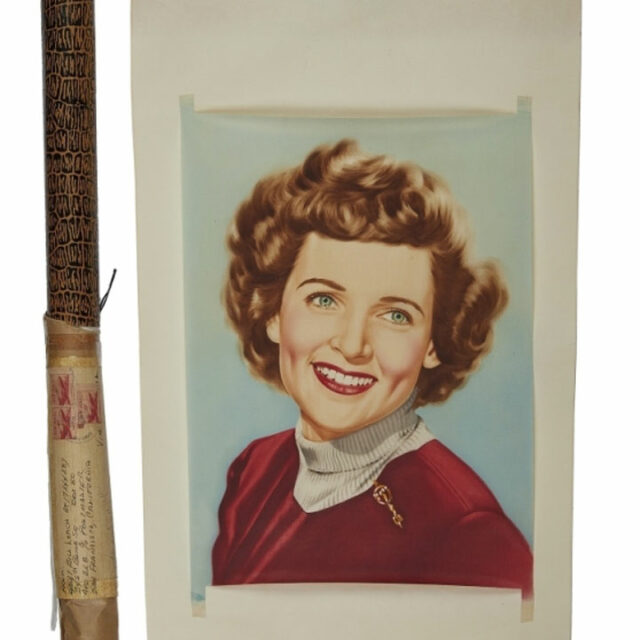
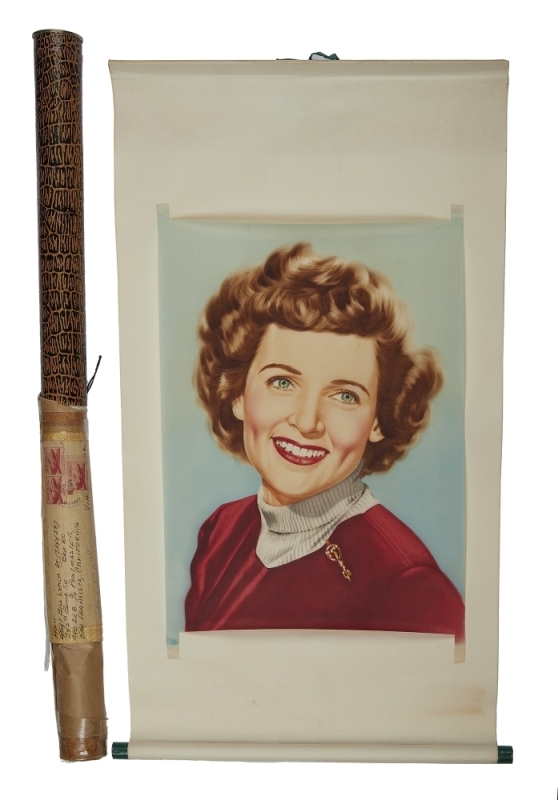
One of the items up for auction this week. — JULIENSLIVE.COM

OVER 1,600 belongings from the late American actress Betty White will be up for auction this week, from her old TV and Disney VHS collection to her Cadillac.

Taking place both online and in-person, the auction at Julien’s Auctions in Beverly Hills from Sept. 23 to Sept. 25 also includes her dining room table, a blue ceramic horse, and her leather baby shoes. The list goes on.

More personalized items include Ms. White’s oil painting of herself as a young woman, monogrammed towels, and some handwritten personal notes from famous names like Lily Tomlin and Alex Trebek.

Ms. White’s diamond wedding band and the wedding band her third and last husband, Allen Ludden, wore are standout items. Mr. Ludden was noted for having worn the band around his neck with a chain for three months to remind Ms. White about his many wedding proposals to her, and it worked. They were married until he died in 1981. Ms. White died in December 2021 at 99 after a remarkable television career that lasted over seven decades, with beloved roles on The Golden Girls, The Mary Tyler Moore Show and many more.

Not all her belongings will be sold. Many items were donated to the National Comedy Center in September and are on show at its museum in Jamestown, New York. Visiting fans can see Ms. White’s five Emmy statuettes, including one for The Golden Girls in 1986 and another for Saturday Night Live in 2010.

Visitors can also see on display her tracksuit from Hot in Cleveland, her sweater from The Golden Girls, and hand-annotated scripts. — Reuters

Lexus Philippines adds another hybrid variant to ES line

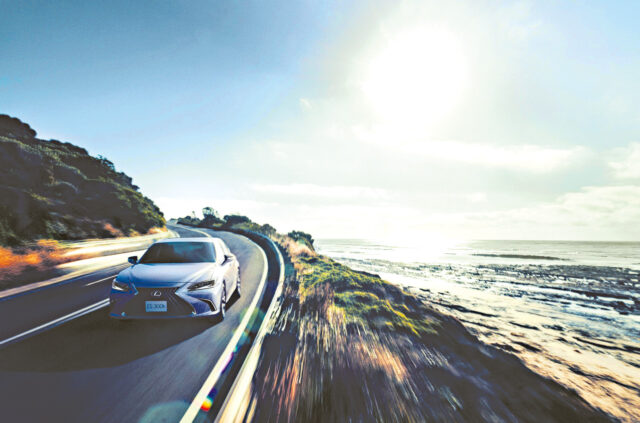
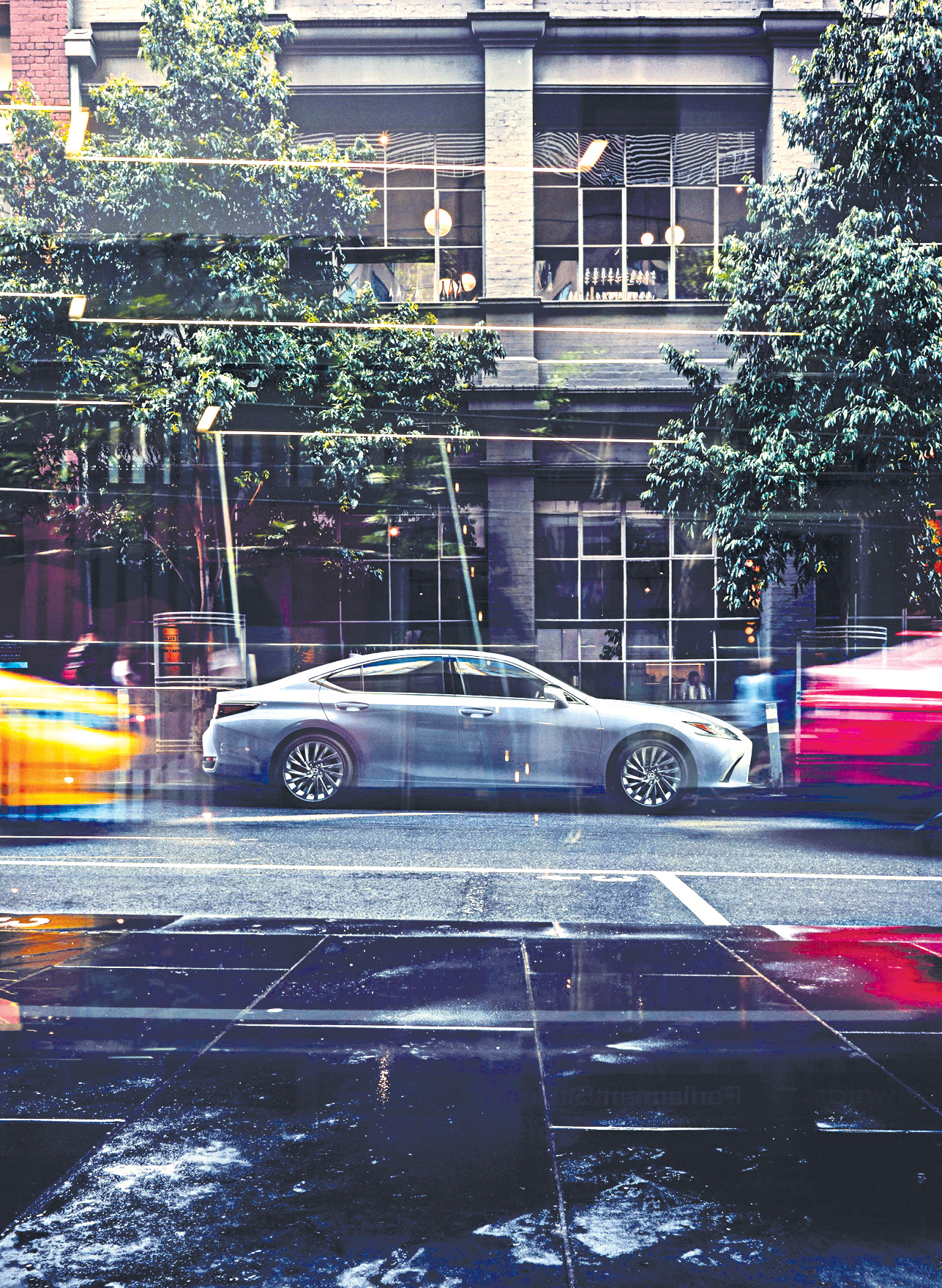
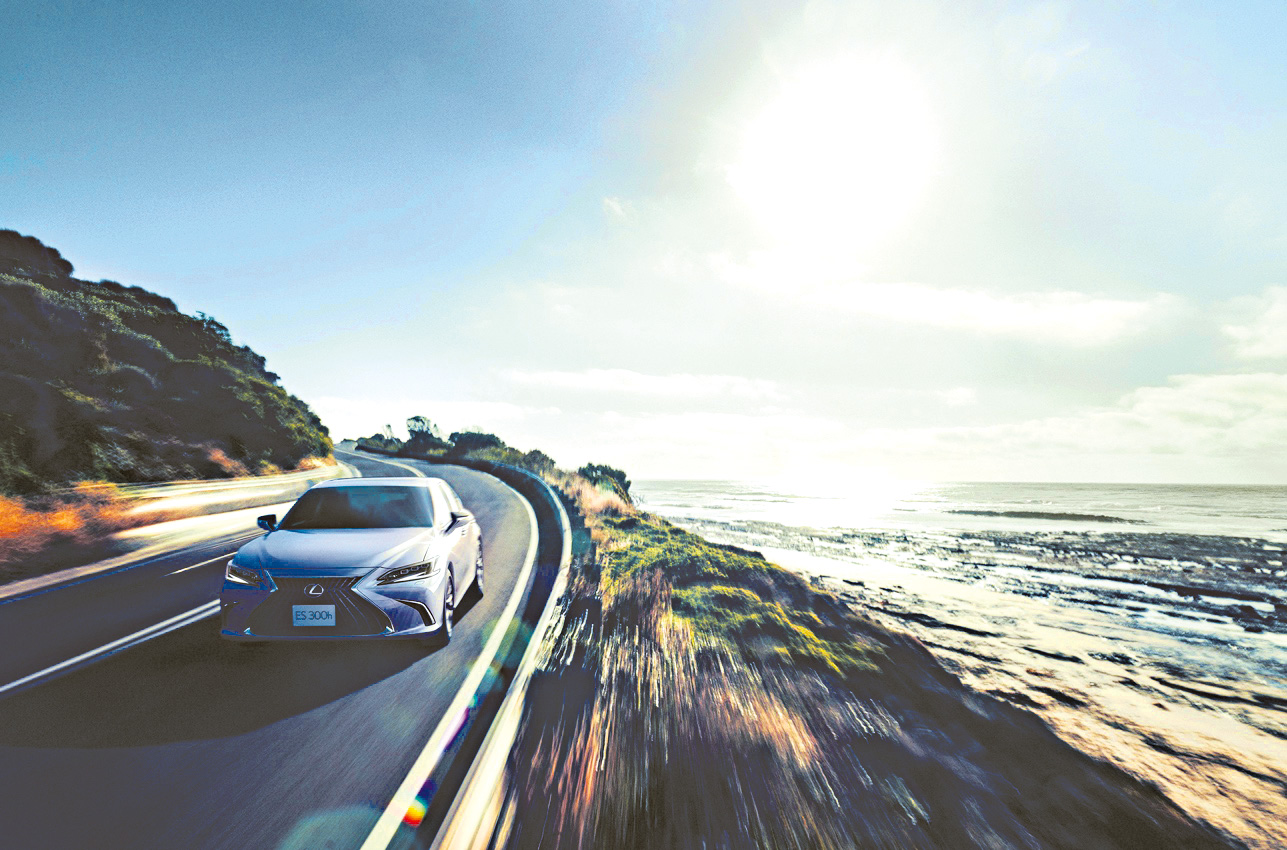
PHOTO FROM LEXUS PHILIPPINES

LEXUS PHILIPPINES is growing the number of its ES sedan offerings by one, as it introduces the hybrid electric ES 300h Luxury variant. Priced at P4.218 million, the trim takes its place in the middle of range between the ES 300h Executive (P3.838 million) and the ES 350 Premier (P4.828 million).

In a release, the company said, “Buyers will find that the current ES models are more spacious, (and are) quieter and safer than ever before, while a new generation of customers will find a saloon with sharp performance, class-leading safety technology, and a level of craftsmanship rarely found in this market segment.”

The ES banners the Lexus Driving Signature philosophy which gives it more balance while affording the driver more refined control and confidence — owing to linear steering, brake response, and optimized handling with exceptional ride quality. A rear suspension member brace further improves torsional rigidity, handling stability, and ride comfort.

Regenerative and hydraulic brake control characteristics of the electronically controlled brake system on the hybrid models enhance the pedal feeling when it is released.

On its exterior, the current ES has an updated front grille and headlamps, while the interior has adopted colors similar with the Premier variant. The ES 300h Luxury bears similarities to the range-topping ES 350 Premier, such as a 235/45R18 wheel-and-tire combination, rain-sensing wipers, smooth leather seats, 10-way power adjustment with memory for the driver’s seat, front passenger seat with eight-way power adjustment, kick sensor for the automatic trunk; and a 12.3-inch Electro Multi-Vision touch display.

The Lexus ES 300h Luxury also gets the Lexus Safety Sense (LSS) suite of advanced safety features. The list includes a pre-collision system, adaptive high beam system, automatic high beam system, lane tracing assist, lane departure alert, and dynamic radar cruise control. Aside from getting upgrades, the LSS features have also been tuned to operate in a way that feels more natural to the driver. Lexus maintained that, with this evolution, Lexus Safety System moves to the next level as a personal driving partner.

Powering the ES 300h Luxury is a 2.5-liter inline-four engine delivering 178hp and 221Nm. Together with an electric motor, the total system output is 218hp. The ICE gets laser-clad intake valve seats, which permit increased airflow into the cylinder and an intake port shape that increases the tumble-flow turbulence of incoming air and fuel for high-speed combustion. The engine also achieves superior thermal efficiency, combining robust power delivery with response to deliver heightened fuel efficiency.

The miserly fuel consumption is also due to a hybrid transaxle with improved efficient internal power flow and a higher-efficiency power control unit. The compact hybrid battery of the ES is located beneath the rear seats, contributing to ideal weight balance and low center of gravity, while enlarging cargo space.

Equipped with a fourth-generation hybrid battery, the new ES hybrid variants now come with an eight-year HEV battery warranty, along with a standard drivetrain warranty of three years or 100,000 kilometers.

IKEA considering more stores in the Philippines  

SWEDISH furniture retailer IKEA is looking to establish more stores in the Philippines to address growing local demand and as part of its expansion efforts.

Georg Platzer, IKEA Philippines store manager, said that the retailer is studying more stores in Metro Manila in addition to its first branch in the country. IKEA Philippines opened the doors to its Pasay City store on Nov. 25 last year.

“We need to have a second, and maybe even a third store in Metro Manila to cover the needs of the many consumers coming. No timing yet, no place yet but definitely on the expansion, it is on the drawing table,” Mr. Platzer said in an interview at the sidelines of a seminar in Pasay City last week.

“The Pasay City store is the beginning for IKEA in the Philippines and there’s a future of more stores to come. It is just a matter of time. Because it is a big market, it is a growing market and in one moment, this store will be even too small to host so many people,” he added.

In terms of IKEA’s expansion outside of Metro Manila, Mr. Platzer said that the idea is “far from the pipeline.”

“IKEA needs a certain amount of visitation. We live from visitation. We need a lot of visitors. Outside of Metro Manila, there [are] not enough people. And, if there [are] enough people, they need to travel a long way to come to IKEA. So, that would be a hindrance. We can think about cities like Cebu and maybe Davao, but I think that’s about it,” Mr. Platzer said.

However, Mr. Platzer said that IKEA Philippines plans to add more “fulfillment areas” to serve more consumers buying online. The areas are where customers can pick up the products they purchased online.

“We are about to stretch our fulfillment areas… In the future, we are going to serve more of the islands. Customers hopefully from Iloilo and Leyte can order online,” Mr. Platzer said.

Meanwhile, Mr. Platzer said that IKEA Philippines had raised the prices of some of its products due to the depreciation of the Philippine peso versus the US dollar. He did not provide specific figures or products that had price increases.

On Sept. 23, the peso dropped to a new all-time low of P58.50 versus the greenback.

“It’s a drama for us. The US dollar is too strong because we pay everything in dollars. We buy our goods in US dollars and that is not good,” Mr. Platzer said.

“We always try to keep the prices as low as possible, and we still do. We still believe we have the lowest possible price in the country for this quality. But the whole currency challenge globally, the war in Europe with Russia and Ukraine, all these challenges have an impact on the supply chain and the prices,” he added. — Revin Mikhael D. Ochave 

Digital banks seen to meet BSP standards

DIGITAL BANKS are likely to meet the reserve requirement ratio (RRR) of 8% and are expected to comply with the existing prudential requirements for big banks, the Bangko Sentral ng Pilipinas (BSP) said.

BSP Deputy Governor Chuchi G. Fonacier said in a Viber message that they considered digital banks’ scope of authority, capital requirement, and ability to rapidly expand operations in setting up the 8% RRR.

“The 8% reserve requirement rate (RRR) for digital banks was the result of discussions during the BSP’s consultation process taking into account RRR across banking categories,” Ms. Fonacier said.

“Moreover, the final RRR of digital banks is consistent with the BSP’s long-term goal of implementing graduated, single-digit RRRs across all banking institutions towards more market-oriented instruments for liquidity management,” she added.

BSP Circular No. 1154 set digital banks’ reserve ratio, or the percentage of deposits and deposit substitutes they must keep with the BSP, at 8%. The RRR for big banks is currently at 12%, one of the highest in the region. Reserve requirements for thrift and rural lenders are at 3% and 2%, respectively.

“Nonetheless, the BSP can adjust the RRRs of banks, including digital banks, as may be warranted, consistent with its price and financial stability objectives,” Ms. Fonacier said.

Under the same circular, digital banks must also meet the same Basel III capital, liquidity and leverage requirements covering universal and commercial banks.

The Basel III framework contains measures that aim to improve banks’ risk management so they can withstand excessive financial stress. These came in the aftermath of the 2008 Global Financial Crisis. 

“The guidelines provide, among others, that a digital bank shall be considered a ‘complex bank’ for purposes of compliance with corporate and risk governance standards in view of its wide reach and ability to rapidly expand operations,” Ms. Fonacier said.

“This policy approach ensures that digital banks operate in a safe and sound manner as they offer and promote access to innovative financial services,” she added.

In a conference hosted by The Asian Banker on Thursday, BSP Assistant Governor Lyn I. Javier said digital banks are more exposed to risks such as cybersecurity threats as well as issues about money laundering and consumer protection.

“We issued prudential regulation for digital banks just to level the playing field, recognizing digital banks as complex banks,” Ms. Javier said.

“Now, we have also issued the open finance framework and the institutionalized regulatory sandbox. I think that already provides an enabling environment for these players to continue to provide financial services and create partnerships within the industry,” she added.

Earlier this month, the BSP approved the regulatory sandbox rules formalizing the “test and learn” (T&L) approach for startups. Meanwhile, the Open Finance Framework, which was published in 2021, lays out the rules for enabling open finance in the country.

According to Ms. Fonacier, digital banks undertake a chartering process on the suitability of shareholders, adequacy of financial strength, technical expertise, and integrity of their board and senior management. They also conduct a detailed review and assessment of support information technology (IT) systems and infrastructure.

“Thus, these banks, once in operation, can meet the BSP’s prudential standards and perform in a safe and sound manner,” she said.

Ms. Fonacier said BSP Circular No. 1154 forms part of the BSP’s Digital Payments Transformation Roadmap aimed at advancing the central bank’s financial inclusion agenda while driving the adoption of digital services in the country.

When asked about the BSP’s initial observations on the operation of digital banks in the country, Ms. Fonacier said the positive response of the public is “very encouraging” based on the number of deposits recorded by these lenders.

“More than the attractive rates and ease in onboarding, the trust gained from the public knowing that these digital banks are regulated by the BSP is certainly a big factor,” Ms. Fonacier said.

“On the side of our digital banks, they have leaned towards a calculated strategy in the initial months of operations. Amid the clear public interest, most have opted to first offer their products to targeted customers just to ensure that any possible issues are readily resolved prior to fully launching to the public,” she added.

The central bank capped the number of digital banking licenses to six last year to monitor the development of the sector, ensure competition, and boost its capacity to regulate these kinds of lenders.

The six online lenders that secured licenses to operate in the country are Tonik Digital Bank, Inc.; GOtyme of the Gokongwei group and Singapore-based Tyme; Maya Bank of Voyager Innovations, Inc.; Overseas Filipino Bank, a subsidiary of Land Bank of the Philippines; UNObank of DigibankASIA Pte. Ltd.; and UnionDigital of UnionBank of the Philippines, Inc. — Keisha B. Ta-asan

India free food program for poor to cost $10 billion if extended

REUTERS

NEW DELHI — India is likely to extend its free food program for the poor by three to six months, CNBC TV18 reported, a move that could cost the government $10 billion more and make it challenging for it to meet its fiscal deficit target.

India has spent nearly $43 billion since April 2020 on its free food program known as ‘Pradhan Mantri Garib Kalyan Anna Yojana’ where it provides 5 kg of foodgrain to poor families.

A six-month increase could cost the government an additional 800 billion rupees ($10 billion), according to a government official, who did not want to be named.

A spokesperson for India’s finance ministry did not immediately reply to a message seeking comment.

Most economists expect the Indian government to miss its fiscal deficit target of 6.4% of GDP for the 2022/23 year that started on April 1 as it has taken a number of measures to fight inflation that could cost the government over $20 billion. — Reuters

ADVERTISEMENT
ADVERTISEMENT