Home Blog Page 5802

BSP warns against peso speculation

BW FILE PHOTO

THE BANGKO Sentral ng Pilipinas (BSP) on Tuesday warned currency speculators not to take “undue advantage” of the Philippine peso, which has slumped to a fresh low against the US dollar on Monday.

The Philippine peso closed at P58.65 per dollar on Tuesday, gaining 35 centavos from a record-low P59 a day earlier.

“We ask those who have the means not to take undue advantage of changing market conditions. This does not help the Philippine peso; it does not help the Philippines,” the BSP said in a statement.

“What we can do is to bring all transactions into an organized and accessible formal market that offers consumer protection,” it added.

The BSP said financial markets around the world have been disrupted by the strong US dollar, which has caused other currencies like the peso to depreciate.

Year to date, the peso has so far weakened by P7.65 or 15% from its P51 close on Dec. 31, 2021 .

“The BSP is taking steps to manage any disruption in our financial market. We look forward to servicing all legitimate dollar transactions. The USD spot market remains open and active while forwards and repos are available facilities,” the central bank said.

Nicholas Antonio T. Mapa, senior economist at ING Bank in Manila, said the BSP’s statement shows it is “recognizing the importance of legitimate transactions for commerce as this will spur economic growth.”

“What they are hoping to minimize and mitigate are speculative moves which tends to drive undue pressure and panic on the spot market,” Mr. Mapa said.

The peso opened Tuesday’s session at P58.88 versus the dollar. Its weakest showing was at P58.98. The peso recorded its intraday best at P58.64 against the greenback after BSP’s statement was released.

Dollars exchanged inched up to $779 million on Tuesday from $666 million on Monday.

“The peso appreciated amid expectations of a stronger Philippine inflation report for September 2022,” a trader said in an e-mail. “The local currency is expected to move in line with the release of the official report tomorrow.” 

A BusinessWorld poll of 13 analysts yielded a median estimate of 6.7% for September inflation, well within the 6.6-7.4% forecast of the BSP.

If realized, September inflation would be quicker from the 6.3% seen in August and the 4.2% last year. It would also mark the highest print in 45 months or since the 6.9% print in October 2018.

“While the consensus remains below 7%, should the official inflation report for September breach the 7% mark it could bolster expectations of more aggressive rate hikes from the BSP,” the trader said. 

For Wednesday, the trader gave a forecast range of P58.55 to P58.75.

UNAVOIDABLE
Meanwhile, Cielito F. Habito, former Socioeconomic Planning secretary, said the further depreciation of the peso will depend on the US Federal Reserve’s next move.

“Given impending further increases in US interest rates, unless we try to match each of those interest rate hikes point by point, then we cannot avoid further depreciation of the peso,” he said in an interview on BusinessWorld Live on One News Channel.

Mr. Habito said the BSP is closely watching if the peso depreciation is exceeding the inflation rate.

“When that happens then clearly, the exchange rate itself is actually feeding into inflation and of course the BSP is primarily focused on inflation and if the exchange rate depreciation becomes a factor for inflation, they will in fact have to act,” he said.

Since the economy continues to grow, Mr. Habito said this will give the BSP confidence to raise rates “a little bit… if only to arrest again the inflationary impact of peso depreciation.”

In a research note dated Sept. 27, Nomura Holdings, Inc. said the Philippine central bank should start looking for alternative ways to support the peso.

“Rollback the amount of FX that firms and individuals can buy, scrutinize local demand for FX deposits,” Nomura said, adding that the Philippines can reduce trade deficits by seeking Russia’s commodities such as oil and agriculture.  K.B.Ta-asan

Meralco vows to prevent termination of SMC deals

A contractor from Manila Electric Co. (Meralco) is seen at work in Mandaluyong City, June 1, 2021. — PHILIPPINE STAR/ MICHAEL VARCAS

MANILA ELECTRIC Co. (Meralco) said on Tuesday that it intends to comply with the order of the Energy Regulatory Commission (ERC) and exert all remedies to prevent the termination of its power supply deals with companies under San Miguel Corp. (SMC).

The company’s statement comes after the ERC, in separate orders promulgated on Sept. 29 and posted on its website on Monday night, denied the joint petitions filed by the SMC units and Meralco, saying the rate increase sought by the contracting parties is not based on a valid “change of circumstance” as called for under their power supply agreements (PSAs).

Jose Ronald V. Valles, head of Meralco’s regulatory management office, said that the power distribution utility has also “sought offers and entered into emergency power supply agreements (EPSAs) with other generation companies to ensure continuity of stable, reliable and adequate supply to Meralco customers.”

“However, in the event that SPPC (South Premiere Power Corp.) and SMEC (San Miguel Energy Corp.) will be unable to actually deliver power to Meralco for whatever reason, we are constrained to source up to 1,000 MW (megawatts) from WESM without prejudice to the resolution of whatever legal remedies Meralco may pursue against SPPC/SMEC under the PSA,” he said in a statement sent via Viber.

Ahead of the release of the ERC order, SMC President Ramon S. Ang told reporters on Monday: “Kung ayaw nila kaming bigyan ng temporary relief, tapos na. Kung bibigyan naman nila, ito yung mas makabubuti sa consumer (If they do not want to give temporary relief, it’s over. If they will give it, then it will be better for the consumer).”

At a press briefing on Tuesday, ERC Chairperson Monalisa C. Dimalanta said the petition was denied on the grounds that Meralco and SMC had a financial contract with a fixed price and that both parties did not exhaust all options before seeking a rate increase. 

“The cost of operations of a particular plant is really not that material to the fulfillment of obligation of the supplier to Meralco because they are permitted to get from another source,” she said.

Ms. Dimalanta noted Meralco’s estimate on the impact of the PSA termination is higher than the ERC estimate.   

In August, SMC said that SPPC and SMEC, the administrators of the coal power plant in Sual, Pangasinan, and natural gas-fired power plant in Ilijan, had incurred a combined loss of P15 billion.

Mr. Ang said in an earlier statement that they had absorbed P10 billion of the said loss, and were only looking to recover the P5-billion loss.

However, Ms. Dimalanta said SMEC and SPPC only submitted an unaudited financial statement to show the losses.

SMC earlier said that SPPC and SMEC have already issued termination notices to Meralco, effective on Oct. 4, if the regulatory body denied its appeal for relief.

Had the ERC approved the petition for temporary relief, it said electricity prices in Luzon would go up by 30 centavos per kilowatt-hour (kWh) over a period of six months.

However, in SMC’s previous statement it said that if ERC failed to act on its petition, electricity prices in Luzon and adjacent provinces will rise by as much as 30% starting this month.

Aaron Pedrosa, secretary-general of Sanlakas — a member organization of Power for People, urged the ERC and the Department of Energy (DoE) “to hold SMC accountable for economic sabotage should it really back out of its contract obligations to provide power to consumers.”

“In their scenario, it would force Meralco to buy from the Wholesale Electricity Spot Market (WESM), which will again push up prices for consumers. We’ve had enough of this blackmail,” he said in a statement.

For its part, the DoE said it is confident that SMC and Meralco “will be guided accordingly by the ERC Order and ensure uninterrupted power supply to our people and the country, notwithstanding the denial of their joint petition.”

Meralco’s controlling stakeholder, Beacon Electric Asset Holdings, Inc., is partly owned by PLDT, Inc. Hastings Holdings, Inc., a unit of PLDT Beneficial Trust Fund subsidiary MediaQuest Holdings, Inc., has an interest in BusinessWorld through the Philippine Star Group, which it controls. — A.E.O.Jose

Filipinos brace for ‘Carmageddon’ as students return to school

Motorists endure heavy traffic along the westbound lane of Commonwealth Avenue in Quezon City, July 28. — PHILIPPINE STAR/ MIGUEL DE GUZMAN

By Kyle Aristophere T. Atienza and Alyssa Nicole O. Tan, Reporters

KURTSON ROWEEN C. GAMBOA, 22, doesn’t look forward to more traffic jams in November, when more students are expected to be in school.

The office clerk wakes up before dawn and takes a train and jeepney to get to work in Manila. He spends much of his commute waiting in line.

“Traffic has worsened when physical classes resumed,” he said in a Facebook Messenger chat. “Commuting to work has become as tiring as ever. Going home is the same and I’ve had to rest less because of this.

Millions of Filipino students returned to classrooms for the first time in more than two years in August amid a coronavirus pandemic.

Transport problems are nothing new in the Philippines especially in the capital, which is connected to other cities by poor infrastructure.

Manila is the eighth among cities in the world with the worst traffic, according to GoShorty, a British insurance technology website.

It found that Manila, along with Tel Aviv in Israel and Tokyo in Japan, had a 43% congestion level, and citizens in these cities lose 98 hours to traffic every year.

The government failed to fix the problem during the pandemic, when it had the chance to do so, according to transport experts.

A number of transport operators had to fold up during the pandemic, when most people stayed home, transport economist Robert Y. Siy, Jr. said in a Messenger chat.

“The pandemic lockdowns and physical distancing made many public transport services financially unviable,” he said. “Many operators closed shop or went bankrupt.”

These days, when most restrictions have been eased as coronavirus infections fell, the No. 1 challenge is spiraling fuel prices.

School bus operators were among those severely affected by the pandemic, and their closure has affected the transport supply, Mr. Siy said.

“Many school bus operators have gone out of business. Two years without any income forced some operators to dispose of their vehicles,” he said.

Those who survived have increased their rates, forcing parents to opt out, said Jose Regin F. Regidor, a research fellow at the University of the Philippines’ National Center for Transportation Studies.

“This is to make up for the increase in fuel prices and vehicle maintenance as well,” he said. “The last two years when schools operated online were a backbreaker for many school services.”

Mr. Regidor expects most parents not to use a school bus service due to virus fears.

“The return to face-to-face classes this school year will perhaps help determine if the pandemic will have a long-term effect on the industry or if the trust in school bus services will return in the short term.”

The demise of school bus operations could lead to more private cars on the road, Mr. Siy said.

“Wealthier families will choose to use private motor vehicles to bring their children to school,” he said. “Government and schools should encourage such families to shift to school and shuttle buses so that the roads fronting schools won’t be severely congested during drop-off and pickup times.”

“Families from the same neighborhood can pool their resources to organize school buses/shuttles to serve all students in their community,” he added.

The state could also help school bus operators by waiving penalties for failing to register or renew their franchises during the pandemic, Mr. Siy said.

They should also streamline the process for new operators. “If an incentive or subsidy can be provided to help them restart operations, that would also be a big help.”

The country loses about P3 billion daily due to the traffic congestion in Metro Manila, according to the Japan International Cooperation Agency (JICA). This could balloon to P5.4 billion by 2035, it said.

Transport experts expect students and more workers to rely on ride-hailing services to get through traffic.

“The large deficit in public transport supply will mean more demand for ride-hailing services, though the cost could be prohibitive for most students,” Mr. Siy said.

The country needs to boost public transportation capacity to address increased demand, Mr. Regidor said.

‘ESSENTIAL SERVICE’
Calls to address the sad state of the country’s public transport system began as early as March, with civic groups pressing the government to set up infrastructure support for commuters. Reclaiming roads from private cars and encouraging more people to cycle or walk would significantly cut traffic congestion, they said.

“All roads leading to schools should have safe pathways in the form of either car-free roads or very low speed limits, with priority given at all times to pedestrians and bicycles,” Mr. Siy said. “Where needed, there should be protected bike lanes and sidewalks, even if some need to be created using traffic cones and plastic bollards.”

Schools should also provide “end-of-trip” facilities for those who walk or cycle such as bicycle parking and shower rooms, he added.

The Philippines should look at best practices in other countries, including “walking school buses” in Norway, which seek to improve students’ health by encouraging walking and to save transportation costs, Mr. Siy said.

“Parents and local governments can organize assembly points for students willing to walk or bike to school; then, with school marshals, groups of students can walk or bike together in a group,” he said. “Cycling in numbers or groups is a very good way to enhance the safety of cyclists.”

Students and teachers should also consider studying and working at a nearby school, Mr. Regidor said.

“Still, mobility is a basic human need and should be given due priority and importance. Because public transport is an essential service, it should not be allowed to deteriorate or disappear.”

He said the government should subsidize transport operators and drivers affected by the pandemic and rising fuel costs.

“If public transport services diminish, many Filipinos will not be able to get to their schools, clinics or other public services,” he said. “The school year is a crucial challenge for our government.”

Xander Xeballos, a student from Manila whose university has yet to enforce face-to-face classes, is worried about his commute next month, when daily physical classes will have been enforced.

“It would be better to limit in-person classes and spare us the hassle of daily commutes,” he said. “Blended learning is still the way to go.”

PHL improves in anti-money laundering index

A Philippines peso note is seen in this picture illustration on June 2, 2017. — REUTERS

THE Philippines improved eight spots in an annual global index measuring an economy’s risk of money laundering and terrorist financing, and their ability to counter these.

In Switzerland-based International Centre for Asset Recovery’s (ICAR) 2022 Basel Anti-Money Laundering Index, the Philippines ranked 45th out of 128 countries, an improvement from 37th spot last year.

With its overall score of 5.68 out of 10, the Philippines is deemed at medium high-risk to money laundering and terrorist financing (ML/TF).

Philippines 45<sup>th</sup> most at risk in money laundering list

The higher a country scores on the index, the more “dirty money” risks it faces.

Based on the index, Democratic Republic of the Congo is most at risk with a score of 8.3, while Finland has the least with a score of 2.88.

According to the AML Index, the Philippines scored 5.91 out of 10 in its risk analysis for the country’s AML/CFT framework, 6.53 in dealing with corruption and bribery, 4.07 and 4.10 in financial and public transparency, and 5.70 in political & legal risk.   

“When it comes to tackling dirty money, most countries are taking one step forward and four steps back — and remaining too many steps behind criminals seeking to launder illicit funds,” the report said. “Progress in anti-money laundering and counter terrorism financing (AML/CFT) remains paralyzed.”

According to this year’s index, the average global money laundering risk is stuck at 5.25 out of 10, in which 10 is the maximum level.   

The Basel AML index uses a methodology based on 18 indicators relevant to evaluating ML/TF risk at the jurisdiction level. These are categorized by five domains; quality of AML/CTF framework (65%), corruption risk (10%), financial transparency and standards (10%), public transparency and accountability (5%), and legal and political risk (10%).   

The Philippines remained on the Financial Action Task Force’s (FATF) “gray list” of jurisdictions subjected to increased monitoring for dirty money risks.

Officials are hoping that the Philippines will be removed from the FATF’s gray list by January 2023. — KBT

Foreign outflows from emerging market Asian equities exceed 2008 outgo

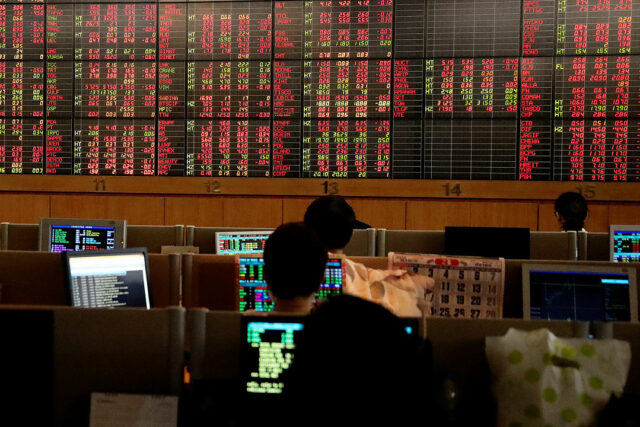
Traders are seen in front of a screen with trading figures in red at Thailand Stock Exchange building in Bangkok, Thailand, March 13, 2020. — REUTERS

FOREIGNERS resumed selling in Asian equities ex-China stocks in September as investors were deterred by US interest rate hikes, a firmer greenback and a weaker regional growth outlook.

Data from stock exchanges in South Korea, India, Taiwan, the Philippines, Vietnam, Indonesia, and Thailand showed that foreigners sold equities worth a net $8.83 billion last month — their first monthly selling since June.

The regional equities have so far faced total outflows of $69.7 billion in the first three quarters of the year, a massive jump in outflows of $47.63 billion faced in 2008, when the global financial crisis occurred.

Last month, the US Federal Reserve raised its benchmark interest rate by 75 basis points, marking the third such hike in a row. Analysts expect the US central bank to keep hiking rates to tame rising inflationary pressures.

The region grapples with mounting inflationary pressures, interest rate hikes, and slowing economic growth, said Mark Haefele, chief investment officer, UBS Global Wealth Management, and added that aggressive US rate hikes have also hurt the region’s currencies and its export markets.

Goldman Sachs cut the region’s 2022 and 2023 EPS growth by 2 percentage points (ppts) and 3 ppts respectively at the end of last month, citing the negative impact of rising rates, a stronger dollar, and slower growth on earnings.

Outflows from tech-reliant South Korea and Taiwan last month jumped to a three-month high of $1.8 billion and $5.3 billion, respectively.

India and Thailand witnessed outflows worth $903 million and $653 million, respectively, after each seeing inflows in the previous two months.

Foreigners were also net sellers of equities in the Philippines and Vietnam markets last month. On the other hand, Indonesian equities gained small inflows of $209 million.

“The cloudy outlook on economic conditions and firm policy stance from the Fed, risk sentiments may still lean towards some caution, which may lead to a lukewarm inflow for Asian equities in the near term at best,” said Yeap Jun Rong, a market strategist at IG. — Reuters

Rep gives Carousel a post-modern approach

LORENZ MARTINEZ and Mikkie Bradshaw-Volante in Carousel

THE CAST of Repertory Philippines’ production of Carousel was three weeks into rehearsals when the world shut down due to the coronavirus pandemic in 2020. After two years, they are finally able to step out and perform it on stage.

Rep will premiere Carousel in a new venue — the Tanghalang Ignacio Gimenez within the Cultural Center of the Philippines complex — on Nov. 26, and it will run until Dec. 18.

Created by Richard Rodgers (music) and Oscar Hammerstein II (book and lyrics), Carousel collected a slew of accolades from critics and audiences after its Broadway debut in 1945. This production won the New York Drama Critics’ Circle Award for Best Musical and was ultimately hailed by Time Magazine as the greatest musical of the 20th century. Its subsequent revivals also won Tony, Olivier, and Drama Desk Awards.

“When I included it in the season, it was [in a way] my homage to our founders. It was a homage to our legacy, and to Carmen ‘Baby’ Johnson Barredo with Zeneida ‘Bibot’ Amador, to their choices, and to their artistry,” Rep Artistic director Liesl Batucan said in a press conference on Oct. 3 at the Makati Garden Club. “But now the challenge is how to build upon that and how to bring it forward to the young generation and a new generation of theater goers.”

Rep first staged Carousel in 1996 under the direction of co-founder Ms. Barredo.

Carousel follows the story of carnival barker Billy Bigelow who falls in love with and marries the sweet yet naïve millworker Julie Jordan. After learning Julie is pregnant, desperate for money, Billy is forced to participate in a robbery that ends in tragedy. He is then given a second chance to make things right. Carousel features musical theater classics like “If I Loved You,” “June is Bustin’ Out All Over,” and “You’ll Never Walk Alone.”

Christopher “Toff” De Venecia makes his Rep directorial debut in this production.

UPDATING FOR A NEW CENTURY
For Mr. De Venecia, the pandemic’s pause was a welcome opportunity for introspection that has further helped the venerable theater company’s transition to more progressive, dynamic, and culturally relevant narratives.

In a post “Me Too” movement society and its changing world views on violence and misogyny, it was clear for Mr. De Venecia that they had “to address all of these landmines that are in the show.”

“I am in a liminal state — navigating the romanticism of the best musical of the 20th century and the landmines in the text, reading it from a contemporary 21st century perspective. We had a radical proposition during the 2020 staging, and possibly even a more radical proposition now which we’re excited to explore further in rehearsals,” Mr. De Venecia said.

This production is navigating the story into post-pandemic realities and contexts.

“It’s a postmodern take on a classical material,” Mr. De Venecia said of his directing approach to the material without having to change the text. “You’re going see all these postmodern, post pandemic experiences somehow being layered to the text.”

“Through staging and intention, we’re going to be pushing against these boxes and see how we can go out of it or be outside of it,” he said.

DOWNSIZED PRODUCTION
From the original cast of 30, the current production was downsized to 14 actors.

Rep’s production will be led by Gian Magdangal as Billy Bigelow and Karylle Tatlonghari as Julie Jordan in their debut Rep production, Joining the two leads are Mikkie Bradshaw-Volante as Carrie Pipperidge, Julie’s best friend, and Lorenz Martinez as Mr. Enoch Snow, Carrie’s love interest.

Also in the cast are Red Nuestro, Roxy Aldiosa, Julio Laforteza, Gia Gequinto, Noel Rayos, Mia Bolaño, Roby Mallubay, Paula Paguio, Steven Hotchkiss, Cara Barredo, Czar Decena, and  Kyla Rivera-Soong (who is also the show’s Assistant Director).

Through a venue grant from the CCP, the musical joins the inaugural production lineup of the newly opened Black Box Theater or Tanghalang Ignacio B. Gimenez at the CCP Complex.

TWO PIANOS
Aside from the cast, one could say that the music was also downsized as this production will use a two-piano musical orchestration — a departure from the musical’s regular orchestration which is performed by a 24- to 30-piece orchestra.

“Apparently, there is a license from the Rodgers and Hammerstein company for two-piano [accompaniment] but in concerto style. Imagine all those 24 instruments being inserted into two pianos! So, it’s quite difficult,” musical director and pianist Ejay Yatco said, describing the rehearsals for the musical arrangement like training for the Olympics.

Mr. Yatco is joined on piano by Jed Balsamo with whom he had previously collaborated with for the piano accompaniment in Himala: Isang Musikal.

Tickets for Carousel are available through the CCP Box Office, TicketWorld, and SM Tickets. Ticket prices range from P1,000 to P3,000. For updates, visit www.repertoryphilippines.ph, like and follow Repertory Philippines on Facebook and Instagram. Educators and school representatives who are interested in the show can e-mail sales@repphil.org. — Michelle Anne P. Soliman

Ballet Manila returns with Rise

BALLET Manila’s La Traviata in 2020 — BALLET MANILA

JUST over two years since the COVID-19 pandemic shut down live events and nearly three years after a fire ravaged its home theater, Ballet Manila has returned to live performance with a special show, Rise!, a double bill featuring all the elements of the performing arts such as opera, popular, OPM, and orchestral music.

The new show captures the essence of rising from adversity after a fire razed the Aliw Theater in 2019. Rise! will have performances at the rebuilt Aliw Theater at the CCP Complex in Pasay City on Oct. 7 (8 p.m.) and Oct. 9 (5 p.m.).

After the fire, Ballet Manila closed their 24th performance season with a performance of the same title at the Samsung Hall in SM Aura in Taguig City in January 2020.

The new version of Rise! is a double bill that will begin with a pop program entitled Ballet & Ballads and a retelling in ballet of the opera La Traviata as choreographed by Ballet Manila artistic director and CEO Lisa Macuja-Elizalde.

BALLET & BALLADS & OPERA
The first part of the program will feature inspirational music and songs.

“It will be a mixed of English and Filipino songs,” Ms. Macuja-Elizalde said during a press conference in Aliw Theater on Sept. 27.

The numbers were choreographed by Gerardo Francisco, Jr., Tony Fabella, Martin Lawrence, and Ms. Macuja-Elizalde.

The second half part of the program will feature a ballet adaptation of Guiseppe Verdi’s La Traviata which will run for 50 minutes instead of the opera’s original three-hour running time.

It will include a 12-person opera ensemble with soloists including award-winning opera singer Jade Riccio as Violeta, and a 60-piece orchestra.

“It is a dream come true for me to choreograph to the music of Guiseppe Verdi. La Traviata has always been my favorite opera of all time,” Ms. Macuja-Elizalde said. With Gerard Salonga as musical director and orchestra conductor, the show also features pop singer Bituin Escalante, and singer Ivan Nery. The creative team is led by Ms. Macuja-Elizalde as overall artistic director, and includes Michael Williams as the stage director, and Luna Inocian as scriptwriter.

Tickets are available exclusively through Ticketworld, via www.ticketworld.com.ph and 8891-9999. — MAPS

Arts & Culture (10/05/22)


CCP Library temporarily closes until June 2023

THE CULTURAL Center of the Philippines (CCP) Library and Archives will be closed from October 2022 to June 2023 in view of the impending renovation of the CCP Main Building and the relocation of the CCP offices by the end of the year. Library services will resume by the third quarter of 2023.


Film series highlights structural racism

A COLLECTION of award-winning and critically acclaimed psychological horror thrillers on structural racism will be screened for free every Wednesday of October. The films aim to raise awareness on the prejudice, discrimination and antagonism directed against people of color, as well as the systemic form of injustice embedded in society. The series starts on Oct. 5 with the screening of Candyman (2021), co-written and directed by American filmmaker Nia DaCosta, is a contemporary take on the blood-chilling urban legend. This will be followed on Oct. 12 by Antebellum (2020) by Gerard Bush and Christopher Renz and follows a successful author who suddenly found herself trapped in a Southern slave plantation; on Oct. 19 with Black Box (2020) by Emmanuel Osei-Kuffour about a single father who lost his wife and memory in a tragic car accident and opts for an experimental recovery treatment which leads to strange visions and nightmares; and on Oct. 26, Get Out (2017), written and directed by Jordan Peele, a psychological thriller about an African-American out on a weekend visit to his white girlfriend’s parents. Curated by the Museum of Contemporary Art and Design (MCAD) of the De La Salle-College of Saint Benilde, the free and public online screenings will be conducted via Zoom at noon on the scheduled dates. To register, e-mail mcad@benilde.edu.ph.


PHL-Korea show projected on CCP bldg.

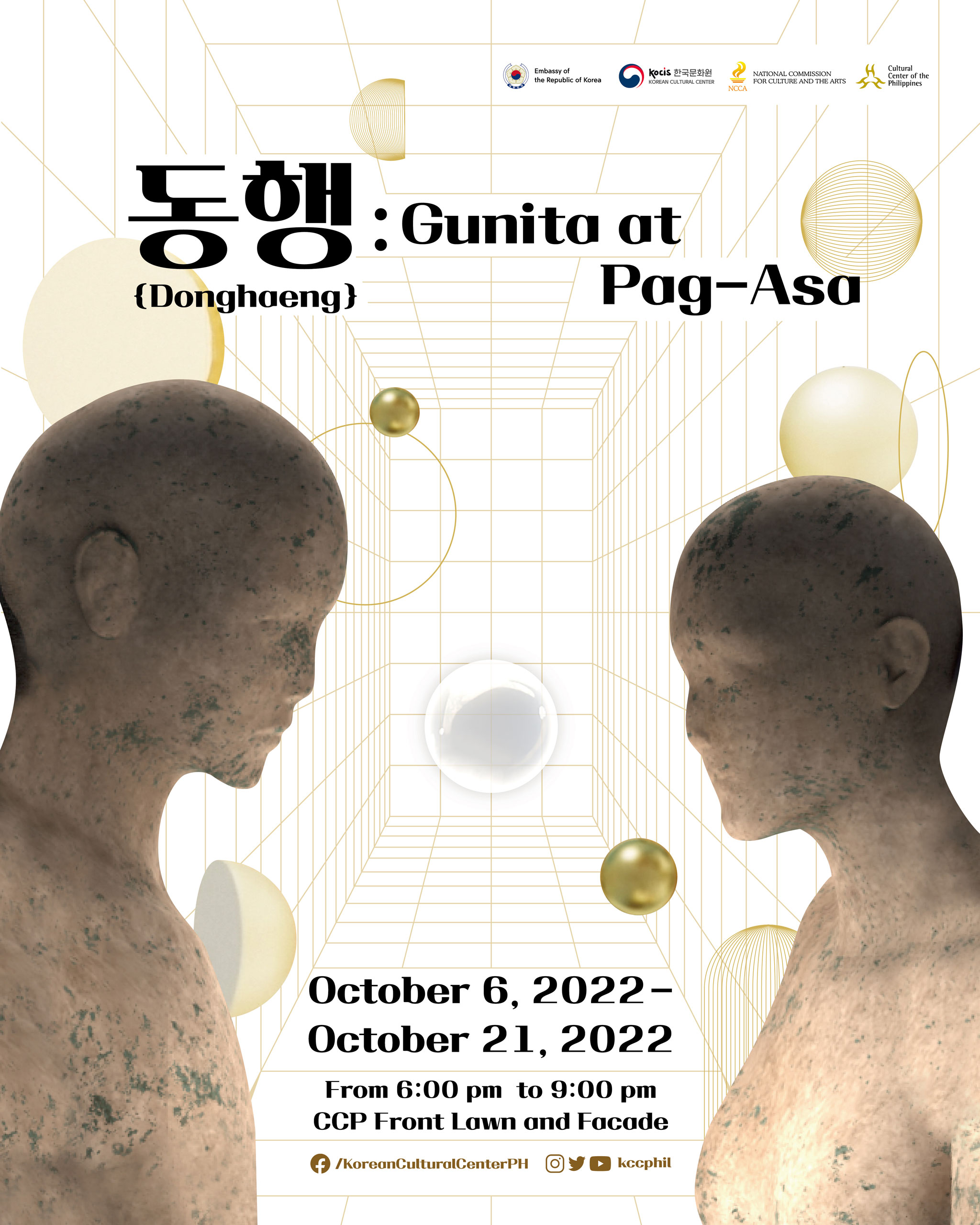
THE CULTURAL Center of the Philippines (CCP) joins the Korean Embassy in the Philippines, the Korean Cultural Center in the Philippines (KCC), and National Commission for Culture and the Arts (NCCA) as they present a media art show billed as “Donghaeng: Gunita at Pag-asa” from Oct. 6 to 21, 6 to 9 p.m., at the CCP Front Lawn. The media art show is part of the celebration of the 73-year friendship of the Philippines and Korea. The eight-minute-long spectacle will be projected onto the CCP Main Building façade and will be shown to the public for free.  Guests can also have the chance to win different prizes when visiting by joining contests in KCC’s official social media accounts. The KCC prepared this media art show so that Filipinos can experience Korea even here in the Philippines. Media art shows are public displays of art projected on the exterior of buildings using them as large screens. The media art show is divided into three parts: the cultural origins and growth, the communication of both rich cultures and, lastly, the celebration and harmony of friendship between the Philippines and Korea. Filipino and Korean dancers were recorded through motion capture and AI technology. They perform traditional dances such as Pandanggo and Buchaechum (Korean fan dance) with an ethnic score.  At the end of the show, there is a festive collaboration of the traditional dances of each country. “Donghaeng: Gunita at Pag-asa” is an event under the theme “Kita Kita Korea” where Filipinos can experience Korean culture in the Philippines without traveling to Korea. Other KCC events include the Philippine-Korean Hats Exhibition with The M on Oct. 21.


Galeria Paloma holds panel on crypto art collecting

GALERIA Paloma will be hosting a panel discussion on crypto art, “Perspectives: Collecting Crypto Art,” on Oct. 7, 3-4:30 p.m., at Cinema 7 of the Power Plant Mall in Makati. The panel discussion will address frequently asked questions about crypto art, how to start collecting, and what the blockchain offers to collectors in terms of investability, authenticity, and security. The panelists are: Fatmire Bekiri, Head of Tokenization, Sygnum Bank Zurich; Gareth Fletcher, Program Director for Art Logistics, Sotheby’s Institute of Art, London; Kenneth Stern, General Manager, Binance Philippines; and lawyer Regie Tongol, a collector of physical and crypto art. Bekiri and Fletcher will join the panel via Zoom. This is a live, face-to-face, and free event, but registration is required as seats are limited, via tinyurl.com/gpcryptoart.


Gateway Gallery holds art fair

IN CELEBRATION of Museums and Galleries Month this October, the Gateway Gallery will hold the Gateway Art Fair from Oct. 7-9 at the Gateway Mall Activity Area, Araneta City. The three-day art fair will gather 11 art groups from Metro Manila and nearby provinces who will show 200 works. Apart from exhibits and art demonstrations, Gateway Art Fair will also have local artists who will be selling their artworks, and other creative services.


PPO concert features violinist Owen Romanban

VIOLINIST Vincent Owen Romanban will be the featured soloist of the second Philippine Philharmonic Orchestra (PPO) concert for the season, on Oct. 7, 8 p.m., at the Cultural Center of the Philippines’ Main Theater. The 20-year-old violinist will perform Felix Mendelssohn’s Violin Concerto, Op. 64, E minor. Other works to be performed in the concert are Lucio San Pedro’s Lahing Kayumanggi, Peter Ilich Tchaikovsky’s Romeo and Juliet Fantasy Overture, and Igor Stravinsky’s Firebird Suite (1919). Mr. Romanban is a member of the UST Symphony Orchestra under Herminigildo Ranera. He is currently pursuing a Bachelor of Music degree in Violin Performance under Noel Martin at the UST. The concert is the second offering in the orchestra’s 38th concert season entitled “Metamorphosis” and continues the PPO search for its new Music Director and Principal Conductor. “Metamorphosis” features eight conductors, five of whom are shortlisted for the Music Director position. Guest conductor Grzegorz Nowak, who is on the shortlist, conducts the PPO for this concert. For more information, visit the CCP (www.culturalcenter.gov.ph) and follow the official CCP social media accounts on Facebook, Twitter and Instagram for the latest updates.


Mo_Space opens two exhibits

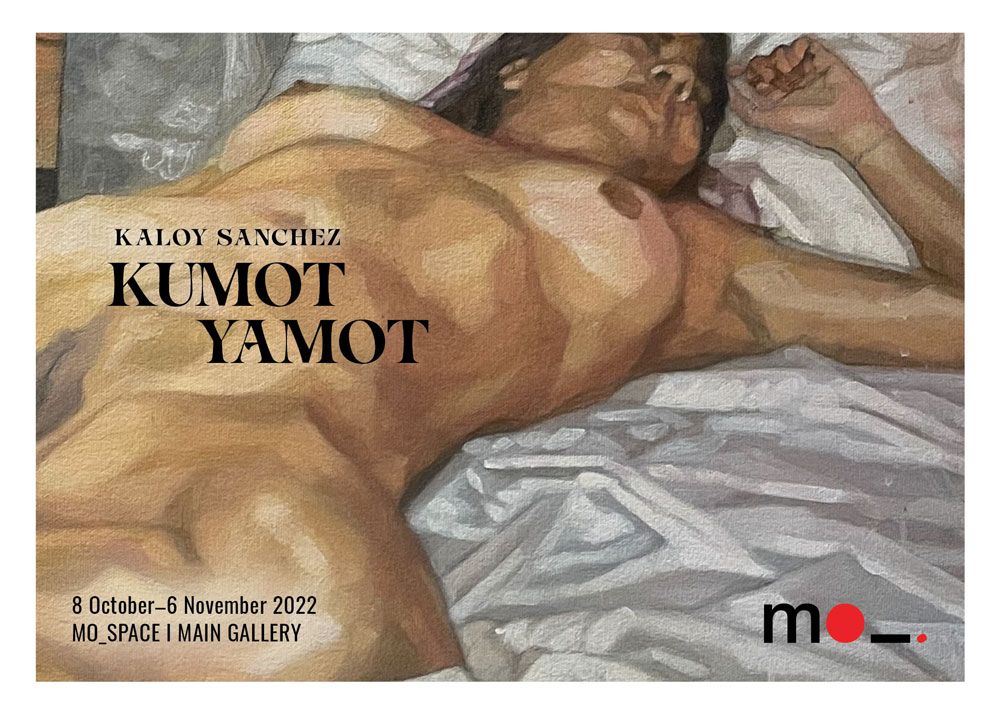
THE MO_SPACE gallery will open two exhibits — Kaloy Sanchez’ “Kumot Yamot” at the Main Gallery and Robert Langenegger’s “Populist Perversion” at Gallery 2 — on Oct. 8. Both exhibits will run until Nov. 6. “Kumot Yamot” features paintings of nudes while “Populist Perversion” is a series of paintings of seeming behind-the-scene tableaus of construction workers in tasks enacted beyond their designation. The gallery, located at the 3rd level, MOs Design, B2 Bonifacio High Street, Bonifacio Global City, Taguig, is open daily from 10 a.m. to 7 p.m.


Gavel&Block’s art+design online auction

SALCEDO Auctions’ subsidiary Gavel&Block quickly follows the recently concluded The Well-Appointed Life auction with the final 2022 edition of its signature online art+design auction on Oct. 8, 11 a.m., featuring over 500 lots of fine art, furniture, décor, and collectibles. The online auction will be hosted by salcedoauctions.com. The sale will have a special curated section titled “Objects as Convergence” showcasing the works of leading contemporary Filipino artists Robert Langenegger, Garapata, Doktor Karayom, Marionne Contreras and Juan Alcazaren, who were invited to respond to the art and design theme by creating object-based works. There will also be a capsule event, “art+design meets gin+tonic,” a bidding party co-hosted by premium gin brand Hendricks. Buyers are invited to come to NEX Tower on auction day so they can bid in real time on their devices while enjoying drinks. Gavel&Block “art+design” takes place at salcedoauctions.com on Oct. 8, 11 a.m. Register to bid and browse the catalog at the website. The auction preview is ongoing at Salcedo Auctions (NEX Tower, 6786 Ayala Ave., Makati City) daily from 9 a.m. to 5 p.m. For inquiries, e-mail info@salcedoauctions.com or contact 8 823-0956, 0917-591-2191.


ArtistSpace exhibit honors women

ARTISTSPACE presents the exhibitTribute to Filipino Women,” a solo exhibition of Maryrose Gisbert which will run from Oct. 6 to 19. The Filipino woman is the inspiration for the body of work that Ms. Gisbert is presenting. Set against brightly colored and richly textured canvases, with moods ranging from serious to playful, her subjects possess huge eyes that express a wealth of emotions. Ms. Gisbert is an active member of The Saturday Group of Artists, participating in the group’s regular exhibitions, as well as in selectively curated shows. Her artworks are on display and on sale in a Paris-based online gallery, Singulart Gallery. She runs her home-studio-turned-art classroom called the Creative Hands Art Workshop, where she is the main instructor. For queries on the exhibition, contact Rafael Manaay at 0921-271-9612. ArtistSpace, an art gallery established in 2004, is dedicated to the promotion of contemporary visual arts featuring a wide range of styles and media from local and foreign artists in two-week exhibitions. The gallery, located at the Ground Level, Ayala Museum Annex, Makati Ave. corner De La Rosa St. Greenbelt Park, Makati City, is open daily from 11 a.m. to 8 p.m. Admission is free.


Songs become art installations

VISUAL ARTIST Kristine Lim interprets the songs of OPM songwriter and producer Jonathan Manalo as a series of artwork and art installations for the multi-venue and multi-country art exhibition and book, “Kuwento Ng Alon (As Told By The Waves)”. The artworks also pay tribute to the singers who sang Mr. Manalo’s songs. The art exhibit is ongoing at Art Lounge Manila and Molito Alabang until Oct. 11, and will move to Newport World Resorts from Oct. 15 to 20. Meanwhile, the Kuwento Ng Alon Art Book features Lim’s art as well as her essays and those of Mr. Manalo, ABS-CBN’s Real Talk Pastor Monique Lopez- Ong, Art Lounge Manila manager Cindel Tiausas, art critic Cid Reyes, and National Artist for Music Ryan Cayabyab. The exhibit and book launch will be held at several other venues in the Philippines, and then in Australia, Singapore, Malaysia, China, Japan, London, France, the USA, Canada, and Dubai until to October 2023. The project is for the benefit of the ABS-CBN Foundation, Inc., Artists on a Mission Workshops, Operations Mobilization Philippines, and Sustainable PH. For more information, visit www.kuwentongalon.com, or follow KuwentoNgAlon on Facebook and Instagram


NAMCYA announces the solo semifinal schedules, concert

YOUNG Filipino talents will have the chance to showcase their mastery and expertise in various musical genres as they vie for a slot in the finals of the National Music Competitions for Young Artists (NAMCYA). The initial semifinal rounds took place in various venues all over the Philippines. On Oct. 8, 5 p.m., the concert of the Orchestra of the Filipino Youth will take place at the Tanghalang Nicanor Abelardo of the Cultural Center of the Philippines (CCP). The Orchestra of the Filipino Youth (OFY) is composed of members and mentors, some of whom are previous NAMCYA winners and participants from various categories. Celebrating its 10th anniversary, the OFY is a non-profit organization founded in 2012 that supports musically talented, less-privileged Filipino youths by providing programs which focus on orchestral training and instrument support. Meanwhile, the concluding solo semifinal round in the following categories will be held at Manila Pianos at the Ronac Lifestyle Center, Paseo de Magallanes, Makati City: Junior Strings (Oct. 11, 9 a.m.); Junior Voice (Oct. 12, 9 a.m.); Junior Piano (Oct. 12, 1 p.m.); Open Brass (Oct. 14, 9 a.m.); and Senior Guitar (Oct. 13, 1 p.m.). The National Finals Competition of NAMCYA 2022, entitled “Maglayog” (Lumipad) will be held from Nov. 15 to 20 at the CCP’s Tanghalang Nicanor Abelardo.


Vitra Design Museum pieces exhibited in PHL

MINIATURE versions of the most iconic furniture will be showcased in “62 Icons: Milestones in Furniture Design from the Vitra Design Museum,” an exhibit at the De La Salle-College of Saint Benilde (DLS-CSB) Design and Arts Campus, to begin on Oct. 14. The selection came from the world-renowned Vitra Miniatures Collection of the Vitra Design Museum in Wheil am Rhein, Germany. At one-sixth scale of the originals, the replicas encompass the rich history of the craft from Historicism and Art Nouveau, Bauhaus and New Objectivity, Radical Design and Postmodernism, up to the most contemporary design innovations. Masterpieces of notable legendary names in the architecture and industrial design are part of the exhibition, including Mies van der Rohe and The Barcelona Chair, Marcel Breuer and The Wassily, Charles and Ray Eames and The Lounge and Ottoman, George Nelson and The Marshmallow Sofa, and Gaetano Pesce and his La Mamma. Fred Yuson-led CWC Interiors, the exclusive distributor of the Vitra brand in the Philippines, likewise chose select versions of furniture to be displayed alongside the minis for the duration of the show. The company also partnered with the DLS-CSB animation program, whose students were tasked to animate the stories of the chairs. The videos will be screened inside the gallery plus on social media platforms. The exhibit will be open Mondays to Fridays from 10 a.m. to 6 p.m. at the DLS-CSB Design and Arts Campus from Oct. 14 to Dec. 17. Due to prevailing health and safety protocols, advance registration is mandatory. Visitors may fill out the appointment form here: http://tinyurl.com/62Icons.


13th of September goes to Germany

AFTER its celebrated run in the 9th Festival International de Théâtre De Mont-Laurier in Quebec, Canada, BOGT Philippines’ production of 13th of September is set to go to the Theaterwelten 2022, with a performance on Oct. 15 at the Cultural Center Dieselstrasse in Esslingen, Germany. With the support of the Philippine and German government, National Commission for Culture and Arts, and Bund Deutscher Amateurtheater, this trip fulfills one of the goals of BOGT Philippines — a team of professional theater and film practitioners based in Manila — which is to create and produce shows for international theater festivals. The play is a reimagination of Lanie Robertson’s The Insanity of Mary Girard, written and translated by playwright Eljay Castro Deldoc, directed by Riki Benedicto, with actors Marco Calilao, Norman Peñaflorida, and Lao Rodriguez. Theaterwelten is both a festival and an international theater encounter which is held every two years. This year’s festival will be held from Oct. 13 – 16 with participation from eight countries: Philippines, Ukraine, Chile, Mexico, Zimbabwe, Lebanon, Germany, and Israel. An accompanying symposium will examine the topic of “Theater and Safe Spaces” from local and global perspectives. The Insanity of Mary Girard follows Mary Girard (1758–1815) who was committed to an asylum in 1790 where her husband declared her legally insane. While preparing for her last night in the asylum after more than two decades, she relives the moments of lies and betrayal that have never been proven.


Trombonist Poonin holds solo recital in CCP

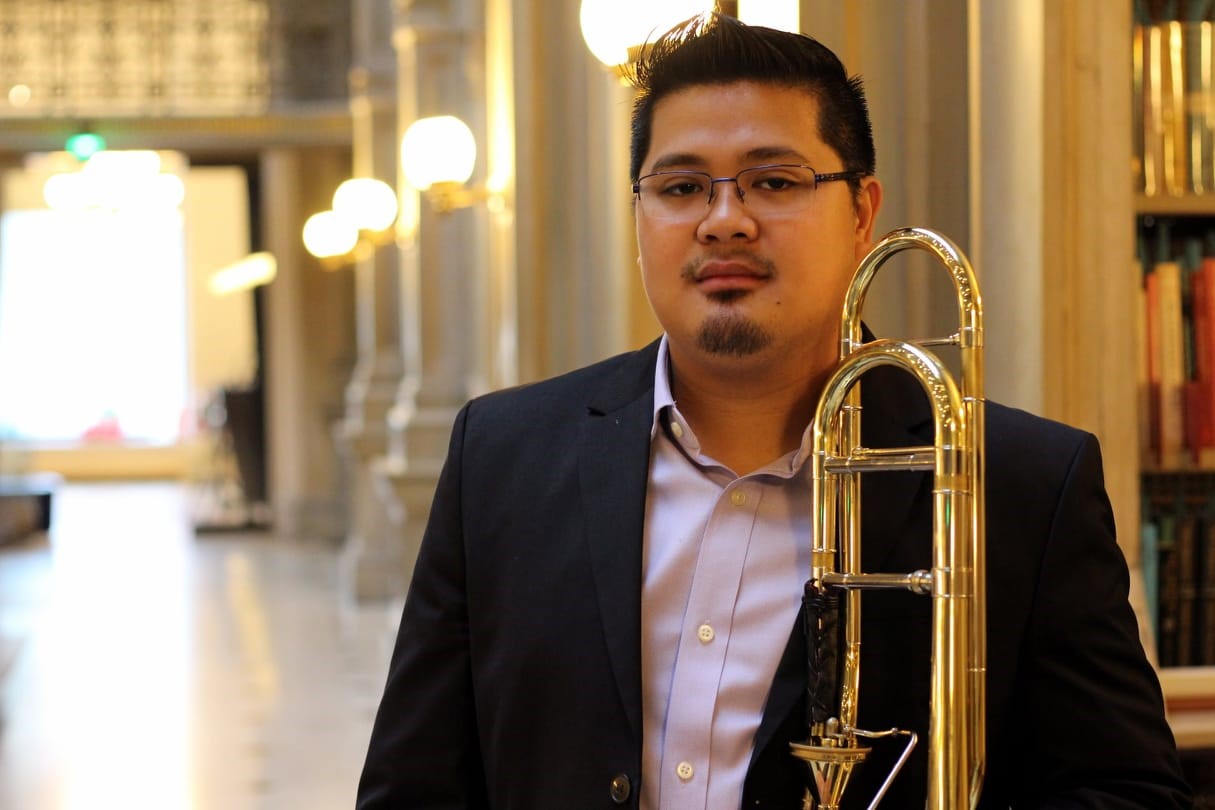
TROMBONIST Ricson Poonin will be the second featured artist of the Cultural Center of the Philippines (CCP) Special Concert Series on Oct. 20, 7:30 p.m., at the CCP Tanghalang Ignacio Gimenez (Black Box Theater). For his solo concert, he will be rendering “The Casterede Sonatine” which he described as challenging to play because of its 20th century syncopated rhythms; “Milagros,” a showpiece Filipino music presented with piano accompaniment; and the Pandemic Concert Piece for Trombone and Piano. Composed by Mr. Poonin’s long-term mentor Herminigildo Ranera, The Pandemic Concert Piece is a new trombone composition which Mr. Poonin himself requested from Mr. Ranera to create especially for this recital. During the pandemic years, together with his colleagues, Mr. Poonin gathered different Filipino trombonists who lived in the Philippines and overseas and had practice sessions, lectures, open fora, and virtual videos featuring multiple trombonists playing together in the first-ever Philippine Trombone Festival held virtually. Currently, Mr. Poonin is a trombone teacher at St. Scholastica’s College and at the University of Santo Tomas. Applications are currently being accepted for the Ricson Poonin Trombone Masterclass which will be held on Oct. 19, 2-6 p.m., at the CCP Tanghalang Ignacio Gimenez. For inquiries on the Ricson Poonin Trombone Masterclass, e-mail artist.training@culturalcenter.gov.ph or call at 8832-1125 local 1605.


Veterans Bank donates funds to save Death March markers

ON ITS 30th Anniversary, the Philippine Veterans Bank raised funds for the maintenance of Bataan Death March historical markers that had been destroyed, uprooted, and neglected due to drainage and other road projects. The “Ride for Valor,” a non-competitive 160 kilometers long bike ride raised close to P50,000 and monetary pledges for the Filipino-American Memorial Endowment (FAME) to save the historical markers. The funds will be turned over to FAME, a non-government organization that maintains the kilometer markers of the Bataan Death March from Mariveles, Bataan to Capas, Tarlac. “We would like to thank all the bikers, sponsors, private corporations and LGU partners for their invaluable support to the recently concluded Ride for Valor. Special thanks to DPWH Region 3 led by Regional Director Roseller Tolentino for their quick action and clarification about the Death March Markers along national roads that will be affected by road repairs,” said Mike Villa-Real, PVB first vice-president. “Philippine Veterans Bank is committed to keeping the memory of our heroes alive in the hearts and minds of Filipinos, so that we may always remember their sacrifices for our country and our freedom,” added Mr. Villa-Real. The Death March markers serve as a reminder of the route taken by Filipino soldiers who defended the country against Japanese forces during World War II.  Around 80,000 Filipino and American soldiers and prisoners of war were forced by the Japanese military to march 69 miles from Bataan to Tarlac during World War II. Only some 54,000 persons reached the camp, where around 20,000 died due to starvation, dehydration, diseases, and the brutality of Japanese captors. For more information, visit www.veteransbank.com.ph.


Descendants of victims, activists release Martial Law ebook

IN COMMEMORATION of the 50th Anniversary of the Declaration of Martial Law, Rekindled: Children’s Narratives, an e-book which features stories of the children of Martial Law activists and victims, was launched at the Bantayog ng mga Bayani in Quezon City. The 47-page e-book aims to provide another window into the life under Martial Law and a glimpse into one of the darkest chapters in the history of the Philippines through the lenses of affected family members. Among the stories are “I was Born in Prison” by Issa Manalo Lopez, daughter of Manjette Manalo and Ted Lopez; “Pagiging Makatao ba ay Komunista?” by Dr. Sibyl Jade Pena, daughter of Rolly Pena and Ninotchka Rosca; and “I Saw Him Only Once” by Joyette Jopson, the second child of Edgar Jopson and Gloria Asuncion. Other stories are “Bakit Hindi Paksaing Filipino?” by Silay Maria Mendiola Lumbera, the youngest of Bien and Shay Lumbera; “The Stories We Tell Ourselves” by Laraine Dela Torre, daughter of Edicio dela Torre and Girlie Villariba; “Unbothered” by Ronald Emmanuel de Vera, son of Adora Faye de Vera; “What Nanay Taught Me” by Antonio Luna Malay Ocampo, son of Satur Ocampo and Bobi Malay; “My Father Was Tortured” by Crisanto Malaya Lacaba, son of Jose F. Lacaba and Marra PL Lanot; and “The Movement Raised Me” by June Taguiwalo, daughter of Judy Taguiwalo. It also includes “Political Detainees” by Nicolas Isberto, son of Ramon and Ester Isberto, as well as “The Break of Dawn at Stonehenge, England” by Liwayway Arce-Rodriguez, daughter of Merardo Arce. De La Salle-College of Saint Benilde (DLS-CSB) Arts Management student Maegan Ellyse Lacson, the granddaughter of Ramon and Ester Isberto, shared an essay entitled “Peace, Like War, Must Be Waged.” In her foreword addressed to the youth, Bantayog ng mga Bayani Foundation, Inc. (BBFI) Vice-Chairperson Carolina Malay expressed how the featured stories serve as painful reminders of the past. She stressed that it was through the Marcos dictatorship that the generation of parents and grandparents became aware of the importance of human rights and international solidarity. The project was produced by the Center for Social Action (CSA) of the DLS-CSB and the BBFI, a non-profit corporation that aims to recognize and memorialize the Martial Law heroes and martyrs. Rekindled: Children’s Narratives was designed and illustrated by the National Service Training Program 02 students from the Benilde Multimedia Arts and Animation Programs under the guidance of their professor Melvin Lebria. For more information, visit the official Facebook pages of BBFI (https://www.facebook.com/bantayogngmgabayani) and Benilde CSA (https://www.facebook.com/centerforsocialaction).


Live opera returns to CCP in December

AFTER more than two years, live opera returns at the Cultural Center of the Philippines (CCP) main theater with Puccini’s monumental opera, Turandot. The Puccini opera’s gala night will be on Dec. 9, with a matinee on Dec. 11, at 3 p.m. Zenaida “Nedy” Tantoco, one of the producers representing Rustan’s Group of Companies, said she decided to tie up with the CCP in time for the celebration of the 60th year of the Philippine-Italian Association (PIA). “Presenting Turandot by Puccini would be an appropriate way to further promote Italian arts and culture in the Philippines and in the process raise funds for PIA,” she said in a statement. Italian Director Maestro Vincenzo Grisostomi Travaglini, who also directed Donizetti’s Lucia di Lammermoor at the CCP in 2020, will arrive early November to direct. Three Korean singers lead the cast namely tenor James Lee as Calaf, soprano Lilla Lee as Princess Turandot and bass Jinsu Lee as Timur, the exiled Tartar king. Soprano Rachelle Gerodias sings the role of Liu, Byeong In Park plays Ping the Grand Chancellor, with tenor Ivan Nery as Pong, the Grand Intendant. Also in the cast are tenor Nomher Nival as Emperor Altoum and baritone Greg de Leon as Mandarino. Valentino Favoino will lead the Philippine Philharmonic Orchestra along with choral ensembles of the Viva Voce Voice Lab. Members of the opera dance ensembles will come from the ranks of Alice Reyes Dance Philippines. Ticket prices range from P1,500 to P6,000. For ticket reservation and inquiries contact Lulu Casas at 0917-570-8301 or lgcasas@rgoc.com.ph; Maricar Alamodin at 0917-538-4508 or esalamodin@rgoc.com.ph; Rustan’s Makati at 8813-3739 loc. 280; Rustan’s Shangri-la at 8633-4636 loc. 400; Rustan’s Alabang at 8850-5592; Rustan’s Gateway at 8931-2460; the CCP Box Office at 8832-3704; TicketWorld at 8891-9999; and SM Tickets at 8470-2222 or 0917-870-2222.


Flu shots advised as cases rise

STUDENTS in Manila braved the rains after classes were suspended later on Tuesday. — PHILIPPINE STAR/EDD GUMBAN

By Brontë H. Lacsamana, Reporter 

FLU SEASON is far from over, with on-and-off rains continuing until November. Basic hygiene habits like hand washing and physical distancing can protect individuals against the influenza virus, doctors said.  

“Much like other infectious diseases, the flu is highly preventable through strict compliance with public health and safety regulations and the practice of basic hygiene habits whether in school or the office,” said Dr. Gyneth Lourdes G. Bibera, country medical director of GlaxoSmithKline Philippines, Inc., in an e-mail interview with BusinessWorld.  

“Other than those, I would say that getting vaccinated is probably one of the most effective steps in preventing the spread of influenza viruses,” she added.  

According to the Department of Health (DoH), there were 57,083 influenza-like cases reported Jan.Aug., a 15% increase from the same period last year.  

Getting a proper diagnosis from a physician is advised since flu symptoms are similar to those of coronavirus disease 2019 (COVID-19): fever, cough, sore throat, runny or stuffy nose, body aches, headache, chills, and fatigue.  

Influenza can be managed at home through guidelines provided by the DoH:  

  • Use of antiviral agents within the first two days (best to consult a physician);  
  • Paracetamol for fever (but no aspirin for children); 
  • Antibiotics to be given only to complications of influenza such as pneumonia;  
  • Adequate rest; and  
  • Increased intake of fluids and nutritious foods.  

“The safest and most fool-proof way to treat influenza is to consult your physician for medical guidance,” said Dr. Bibera.  

The US Centers for Disease Control and Prevention recommended annual flu vaccination due to viruses varying from season to season.   

“Every year, flu vaccines are formulated to protect against the viruses that research suggests will be most common,” said Dr. Bibera. “Ideally, people should be getting their flu vaccines from February to May before the flu season starts.”  

In September, the Philippine College of Geriatric Medicine released a statement asking the government to improve flu vaccination for senior citizens, who are most vulnerable to life-threatening circumstances when exposed to the illness.  

A 2020 study on flu in the Philippines determined that flu season in the country lasts from June to November, with a peak in August. It also found that the cost of hospitalization from being gravely ill from the flu can range from P10,000 to P30,000 per episode. 

“By getting vaccinated now, we can ensure our and our families’ protection as early as possible,” Dr. Bibera said.  

She added that since viral diseases usually start with flu-like symptoms, being protected can help dispel unwarranted anxiety and unnecessary costs.

USAID, partner aim to help boost PHL cybersecurity 

RAWPIXEL.COM-FREEPIK

By Arjay L. Balinbin, Senior Reporter

THE United States Agency for International Development (USAID) and global cybersecurity company Palo Alto Networks recently signed a partnership deal to help the Philippines strengthen its cybersecurity posture.

The alliance is expected to boost e-commerce and other digital services in the country by increasing customer confidence, Palo Alto Networks officials said during a briefing in Mandaluyong City on Tuesday.

USAID and Palo Alto Networks hope to achieve the goal by increasing customer confidence through awareness and promotion of safe computing practices, as well as the adoption of international standards.

“Governments are modernizing their networks to take advantage of digital innovations and improve the way they communicate with citizens,” said Oscar Visaya, Palo Alto Networks country manager for the Philippines.

“As they modernize their IT infrastructure, their cybersecurity must keep pace with these developments,” he added.

The company said that it will work with USAID to develop programs and activities and provide technical assistance and expert advisory to help realize the vision.

They envision an efficient, robust, and secure digital ecosystem to support the country’s digital transformation.

They hope to speed up the adoption and implementation of a “zero trust framework,” an approach to cybersecurity that helps “secure an organization by eliminating implicit trust and continuously validating every stage of digital interaction,” Palo Alto Networks said.

Government data showed 37% of online users in the country reported cyberattacks in 2020.

At least 73% of consumer data from micro-, small-, and medium-sized enterprises were lost to attackers, greater than the 56% figure in the Asia-Pacific region.

According to cybersecurity firm Sophos, the Philippines placed third in worldwide ransomware payments in 2021, with local organizations paying an average of $1.6 million, doubling the country’s average of $820,000 in 2020.

“The MoU (memorandum of understanding) that was signed, a lot of it focuses on capacity development side and individual levels, so we’ve heard about some of the training programs with Palo Alto, cybersafety programs, and professional development … and there are good practice frameworks and standards that we are also working with our partners,” said John Garrity, chief of party of USAID’s Better Access and Connectivity project.

“There are ways to come together to address these challenges through a multistakeholder approach from capacity building for organizations and individuals,” he added.

Mary Rose E. Magsaysay, deputy executive director at the Cybercrime Investigation and Coordinating Center, noted that the costs of cybersecurity capacity development are generally “unreachable.”

At the same time, she confirmed that foreign crime syndicates are responsible for the recent text scams.

She added that text scams have cost victims in the Philippines “millions of dollars.”

The government and the country’s telecommunications companies need more smishing and phishing alerts, she noted.

Meanwhile, the Department of Information and Communications Technology (DICT) announced on Tuesday that the Philippines was recently re-elected to the International Telecommunications Union (ITU) Council in Bucharest, Romania.

It said 193 member states of the ITU selected 48 states to lead the council.

“The Philippines is among the 13 states selected from Region E (Asia and Australia), along with Australia, Bahrain, China, India, Indonesia, Japan, Korea, Kuwait, Malaysia, Saudi Arabia, Thailand, and the United Arab Emirates,” the DICT said in a statement.

“The country commits to work towards the fulfillment of the ITU’s mandate to make the digital future inclusive and more accessible for everyone, especially in developing countries,” it added.

The department also said that it is expected to lead the country’s involvement in discussions and decision-making that will “significantly affect” the member states’ digital agenda.

“The department also enjoins the support and collaboration of government agencies to achieve its goals as a council member,” it noted.

Swedish geneticist wins Nobel medicine prize for decoding ancient DNA

Svante Paabo. — Frank Vinken/Max Planck Institute for Evolutionary Anthropology

STOCKHOLM/LONDON — Swedish geneticist Svante Paabo won the 2022 Nobel Prize in Physiology or Medicine on Monday for discoveries that underpin our understanding of how modern-day people evolved from extinct ancestors at the dawn of human history.  

Mr. Paabo’s work demonstrated practical implications during the coronavirus disease 2019 (COVID-19) pandemic when he found that people infected with the virus who carry a gene variant inherited from Neanderthals are more at risk of severe illness than those who do not.  

Mr. Paabo, director at the Max Planck Institute for Evolutionary Anthropology in Leipzig, Germany, won the prize for “discoveries concerning the genomes of extinct hominins and human evolution,” the Award committee said.  

“The thing that’s amazing to me is that you now have some ability to go back in time and actually follow genetic history and genetic changes over time,” Mr. Paabo told a news conference at the Max Planck Institute. “It’s a possibility to begin to actually look on evolution in real time, if you like.”  

Mr. Paabo, 67, said he thought the call from Sweden was a prank or something to do with his summer house there.  

“So I was just gulping down the last cup of tea to go and pick up my daughter at her nanny where she has had an overnight stay,” Mr. Paabo said in a recording posted on the Nobel website.  

“And then I got this call from Sweden and I of course thought it had something to do with our little summer house … I thought the lawn mower had broken down or something.”  

Asked if he thought he would get the award, he said: “No, I have received a couple of prizes before but I somehow did not think that this really would qualify for a Nobel Prize.”  

Mr. Paabo, son of a Nobel Prize-winning biochemist, has been credited with transforming the study of human origins after developing ways to allow for the examination of DNA sequences from archaeological and paleontological remains.  

Not only did he help uncover the existence of a previously unknown human species called the Denisovans, from a 40,000-year-old fragment of a finger bone discovered in Siberia, his crowning achievement is considered to be the methods developed to allow for the sequencing of an entire Neanderthal genome.  

‘GENETIC DIFFERENCES’ 
This research, which showed that certain genes of Neanderthal origin are preserved in the genomes of people today, was once considered impossible, given that Neanderthal DNA on bones has shriveled up over thousands of years into short fragments that have to be assembled like a gigantic puzzle, and are also heavily contaminated with microbial DNA.  

“This ancient flow of genes to present-day humans has physiological relevance today, for example affecting how our immune system reacts to infections,” the Nobel Committee said.  

The prize, among the most prestigious in the scientific world, is awarded by the Nobel Assembly of Sweden’s Karolinska Institute and is worth 10 million Swedish crowns ($900,357).  

It is the first of this year’s batch of prizes.  

Born in Stockholm, Mr. Paabo studied medicine and biochemistry at Uppsala University before creating a scientific discipline called “paleogenomics,” which helped show genetic differences that distinguish living humans from extinct hominins.  

“His discoveries provide the basis for exploring what makes us uniquely human,” the Committee said.  

The COVID-19 pandemic has placed medical research center stage, with many expecting that the development of the vaccines that have allowed the world to regain some sense of normality may eventually be rewarded.  

Still, it typically takes many years for any given research to be honored, with the committees charged with picking the winners looking to determine its full value with some certainty amongst what is always a packed field of contenders.  

PANDEMIC
When asked why the prize did not go to advances in combating COVID, Thomas Perlmann, secretary for the Nobel Committee for Physiology or Medicine, said the committee would only talk about prize winners, not those who had not won, or had not yet won.  

However, Mr. Paabo’s ancient forensics work did offer insight on why some people are at higher risk of severe COVID.  

In 2020, a report from Mr. Paabo and colleagues found that a gene variant inherited by modern humans from Neanderthals when they interbred some 60,000 years ago made those that carry the variant more likely to require artificial ventilation if infected by the COVID-causing virus.  

“We can make an average gauge of the number of the extra deaths we have had in the pandemic due to the contribution from the Neanderthals. It is quite substantial, it’s more than one million extra individuals who have died due to this Neanderthal variant that they carry,” Mr. Paabo said in a 2022 lecture.  

Mr. Paabo’s most cited paper in the Web of Science was published in 1989, with 4,077 citations, said David Pendlebury, from UK-based scientific data analytics provider Clarivate.  

“Only some 2,000 papers out of 55 million published since 1970 have been cited this many times,” he said.  

“It is, however, not an award for a discovery relevant to clinical medicine, which many anticipated this year after a Nobel Prize focusing on physiology last year.”  

Past winners in the field include a string of famous researchers, notably Alexander Fleming, who shared the 1945 prize for the discovery of penicillin, and Robert Koch, who won already in 1905 for his investigations of tuberculosis. — Reuters 

Cultural ministers pledge more action to return priceless artifacts

EVEN as Mexico demands the return of Montezuma’s Headdress from the Welt Museum in Vienna, experts say it is too fragile to move. — KHM-MUSEUMSVERBAND/ WELTMUSEUMWIEN.AT

MEXICO CITY — Cultural ministers and representatives from 150 countries committed to expanding efforts to return historical artifacts to their countries of origin, according to a declaration released last Friday, following a UNESCO conference in Mexico City.

Major museums, auction houses, and private collectors have faced growing pressure in recent years to repatriate priceless works of art and other antiquities from Latin American and African nations, among others, which argue the goods were often taken unethically or illegally.

The declaration from the United Nations’ cultural arm called for open, inclusive international dialogue on illegally acquired artifacts and concrete measures to battle the illicit trade in antiquities.

The declaration deems culture a “global public good” that should be included in the UN development goals.

Restitution of cultural artifacts is often politically sensitive and raises questions over the transport and care of often delicate antiquities.

The death of Queen Elizabeth II has renewed calls in India for the return of one of the world’s largest uncut diamonds from Britain’s crown jewels, while Chile has for years demanded the return of a Moai statue from the British Museum.

Mexico’s government has previously called for the return of a 500-year-old Aztec crest known as Montezuma’s headdress from a Vienna museum, but experts have deemed its centuries-old iridescent quetzal feathers, dotted with golden pendants, too fragile for transport.

During the conference, ministers also discussed how to protect heritage from wars and climate change.

Ernesto Ottone, a senior UNESCO official, expressed hope that old attitudes are shifting in an interview on the sidelines of the conference.

“In the last three years there has been a change, a turning point, on how restitution can be made,” he said, pointing to recent bilateral deals that have led to the return of artifacts. “Today, doors are opening for us.” — Reuters

ADVERTISEMENT
ADVERTISEMENT