Home Blog Page 5752

Eagles snuff Cowboys’ comeback, improve to 6-0

THE UNBEATEN Eagles capped an electric sports weekend in Philadelphia with a 26-17 home victory against the rival Dallas Cowboys on Sunday night.

The Eagles (6-0) soared to a 20-0 lead late in the first half and held on to snap the Cowboys’ four-game winning streak. Dallas (4-2) slipped to third place in the NFC East behind the New York Giants (5-1).

Across the street, the Philadelphia Phillies defeated the defending World Series champion Atlanta Braves on Friday and Saturday to advance to the National League Championship Series.

Jalen Hurts passed for 155 yards and two touchdowns as the Eagles matched the 1981 team for the second-best start in franchise history. Philadelphia started 7-0 in 2004 and went to the Super Bowl.

Mr. Hurts’ 7-yard touchdown pass to DeVonta Smith with 7:02 remaining capped the scoring and helped to thwart a Cowboys comeback bid. The clutch drive covered 75 yards in 13 plays and chewed 7:37 off the clock.

Cooper Rush, likely making his last start for Dallas before Dak Prescott returns from a broken thumb, threw three interceptions — two by C.J. Gardner-Johnson — and lost for the first time in six career starts. Mr. Rush finished with 181 yards and a touchdown on 18-of-38 passing.

After a scoreless first quarter, Philadelphia took control. Miles Sanders scored on a 5-yard run on the first play of the second quarter.

Mr. Rush turned it over on the next offensive play, with Mr. Gardner-Johnson picking off a deflected pass. Philadelphia capitalized with Mr. Hurts’ 15-yard scoring pass to A.J. Brown for a 14-0 lead.

The Cowboys failed on fourth-and-inches on their own 34 on their next possession. The Eagles capitalized on Jake Elliott’s 51-yard field goal to make it 17-0.

Mr. Elliott’s 34-yarder pushed it to 20-0 following Rush’s second interception, this one by Darius Slay.

Brett Maher’s 30-yard field goal finally put Dallas on the board with 29 seconds left in the first half.

Momentum shifted as the Cowboys got within 20-10 on Ezekiel Elliott’s 14-yard run, the only points of the third quarter.

Mr. Rush’s 7-yard touchdown pass to Jake Ferguson trimmed the Dallas deficit to 20-17 with 14:39 left in the game. — Reuters

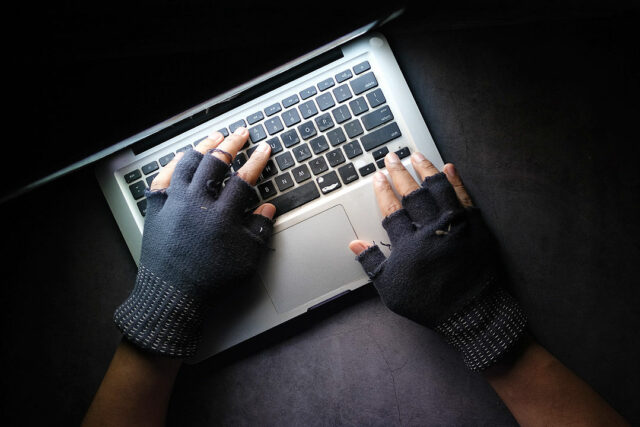
Nip cybercrime in the bud through policy reforms

TOWFIQU BARBHUIYA-UNSPLASH

Banking has greatly evolved over the years. Changes in the way that we live, such as mobility restrictions due to COVID-19 and the rise of more advanced technologies, have allowed banks to offer services that no longer require customers to physically go to branches to transact. Through digital platforms, bank clients can now do their transactions on the go and even in the comfort of their own homes.

However, banks are not the only ones that have adapted to the increasing shift toward digital technology. Cybercriminals have also taken advantage of digital banking through social engineering schemes and other types of scams. Now it is in the face of these new challenges that banks are stepping up their efforts to empower customers to guard against scammers and, ultimately, contribute to nation-building.

INDUSTRY-WIDE RESPONSE TO FINANCIAL-RELATED CYBERCRIMES
Considering the ingenuity of scammers and other malicious actors, banks continue to strengthen their defenses by setting up cybersecurity measures and by constantly informing clients about ways that they can protect themselves from scams and other similar crimes. To complement these efforts, it has become essential for the banking industry and the government to work together for the enactment of much-needed policies that will help reduce the number of scam incidents in the country. Below are some policy reforms that will ultimately protect the general banking public and prevent the proliferation of financial-related cybercrimes, if implemented.

FINANCIAL CONSUMER PROTECTION ACT
Towards the end of his administration, former President Rodrigo R. Duterte signed RA No. 11765 or the Financial Products and Services Consumer Protection Act (FCPA) into law. The said law aims to strengthen consumer protection mechanisms and authorizes regulators, i.e., the Bangko Sentral ng Pilipinas (BSP) and the Securities Exchange Commission (SEC), to enforce the law on banks and financial institutions. For banks, one of the key provisions that shall help customers victimized by cybercrimes is the creation of a Financial Consumer Protection Assistance Mechanism (FCPAM) for each BSP-supervised financial institution (BSFI).

The mechanism provides more efficient and faster avenues to redress issues, especially for matters that involve financial loss from scams. Customers go through a long and difficult process when they decide to pursue a case against cybercriminals. Thus, having a mechanism that will allow banks to offer accessible, affordable, and fair means of resolving complaints can help strengthen bank customers’ trust in the industry’s systems. The BSP has one year from the effectivity of the law to work with BSFIs and other stakeholders in the crafting of the implementing rules and regulations (IRR) to ensure that there are clear guidelines for its implementation and that its objectives will be met accordingly.

FINANCIAL ACCOUNTS REGULATION ACT
Apart from protecting customers and preventing them from losing their confidence in financial systems, the banking industry is also advocating for policies that nip cybercrimes in the bud. During the 18th Congress, the Bankers Association of the Philippines (BAP) pushed for a policy that aims to criminalize money mules and social engineering schemes, as well as to regulate the use of financial accounts and e-wallets (electronic wallets).

Money mules are individuals who help facilitate illegal funds transfer for someone else’s behalf. Their emergence is a perfect example of how criminals have used digitalization to find new ways to operate. The proposed policy aims to deter this new form of crime from further proliferating by imposing the appropriate punishment on individuals who are proven to be money mules.

Moreover, the policy addresses the ever-changing nature of social engineering schemes. Most of us are familiar with phishing (via e-mail), smishing (via SMS), and vishing (via voice calls), but, recently, cybercriminals have also resorted to quishing (via QR code). The latter occurs when victims are tricked into scanning QR codes that direct them to fake websites where they will be asked to provide their personal data. Cybercriminals can then acquire information that can be used to access bank accounts or e-wallets.

The House version of the bill (HB 10689) was approved at the committee level in January 2022, while its Senate counterpart (SB 2380) passed the first reading in September 2021. This 19th Congress, several members of the House of Representatives have already refiled the bill, acknowledging that with the increased use of e-commerce and digital banking, there is a need to update our cybersecurity policies and strengthen law enforcement against the rapidly evolving financial-related cybercrimes. Once passed into law, this legislative measure will protect the public from the unauthorized or illegal use of bank accounts and e-wallets.

SIM REGISTRATION ACT
One major policy that has the potential to address scams at the root of their operations is the SIM Registration Act. After getting vetoed last Congress over a contentious social media provision, the bill finally saw the light of day when it was signed into law on Oct. 10, now known as RA No. 11934 or the Subscriber Identity Module (SIM) Registration Act. This law can help eradicate mobile phone or electronic communication-aided criminal activities by making it possible for law enforcement agencies to identify cybercriminals who use prepaid SIM cards for phishing, vishing, and other text scams.

The impact of this landmark legislation is yet to be seen as concerned government agencies craft the law’s IRR in the next 60 days. Of course, just like in all other policy initiatives, this new law requires a balancing of interests between preventing SIM-aided crimes and protecting the privacy of the public. The IRR must be clear in terms of the registration process and the proper storage of data to safeguard these interests.

CUSTOMERS AT THE CORE OF BANKING
One of the core values we have at BPI is customer obsession. We define it as the ability of the bank and all of our employees to anticipate our customers’ needs, to innovate and provide them with the best financial advice, and to make it easy for our customers to save and grow their finances. While the primary role of the banking industry is to maintain an efficient and stable financial system that contributes to the country’s economic growth, it is equally important for us to protect the core of our operations: the customers.

This is the reason why banks are committed to assisting the government in crafting and implementing policies that will strengthen consumer protection and will contribute to the fight against cybercrimes — not just in responding to specific incidents, but also in preventing future crimes from occurring. The government and the private sector, particularly the banking industry, have a shared goal of protecting banking customers, and providing the best and safest services for them to achieve financial freedom.

We have been in the business for 171 years now. Together with the nation and the Filipino people, we have experienced milestones and have overcome many challenges. It is true that the banking landscape is evolving and will continue to evolve in the coming years, but as we face numerous changes, we remain committed to support necessary measures that aim to protect our customers, by collaborating with the government and the rest of the banking industry to ensure that these policies are implemented.

This article reflects the personal opinion of the author and does not reflect the official stand of the Management Association of the Philippines or MAP.


Ramon “Mon” L. Jocson is EVP and COO of BPI. This article is written as part of the bank’s initiative to celebrate the 2022 Cybersecurity Awareness Month with the theme “See Yourself in Cyber.”

map@map.org.ph

rljocson@bpi.com.ph

Education recovery beyond face-to-face resumption

PHILIPPINE STAR/ MIGUEL DE GUZMAN

“Literacy is a bridge from misery to hope.”
— Kofi Annan, former Secretary-General of the United Nations

This article comes out a bit later than the global celebration of International Literacy Day which is celebrated worldwide in September. The theme for this year was “Transforming Literacy Learning Spaces,” a timely reminder of what needs to be done as the world continues to navigate a safe return to schools for learners of varying age after more than two years of disrupted learning.

Students lost basic numeracy and literacy skills due to the prolonged period of learning outside the classroom where such skills could have been acquired and this loss is too significant to be dismissed. According to UNICEF, learning losses due to school closures in low- and middle-income countries were up by 17% from its pre-pandemic status. From 53% before the onset of COVID-19, the percentage of 10-year-olds who are unable to read and write is now at 70%. This defines the very concept of learning poverty, an indicator introduced by the UNESCO Institute for Statistics to refer to the lack of proficiency in reading and understanding simple texts at age 10. Resolving it involves a retooling of academic policies fit for post-pandemic normalcy and a serious rethinking of the role of literacy in today’s society.

In the Philippines, the outlook towards this crisis is met with concern, a bit of defiance, but overall treated as a matter of national urgency. This is not without reason. Based on a recently released and updated version of the World Bank’s State of Global Learning Poverty (2022), the country’s learning poverty ranks among the highest in the Asian region. With learning poverty at 90.9%, the Philippines outranked all its ASEAN neighbors with the exception of Lao PDR (97.7%) and Brunei (no assessment included). Outranking does not mean the country fares well. On the contrary, the scoring is such that, the higher the number is, the poorer the performance is. Singapore, a small country with population that is just a fraction of the Philippines’, performed better at 2.8%. Indonesia, though more than double the Philippines’ population, likewise scored better at 52.8%.

THE NEED FOR AN EDUCATION PRESIDENT
The dismal report on the country’s state of education was not lost on key stakeholders. Thus, it was not surprising that this became an integral part of critical conversations leading to the May 2022 national elections. The Philippine Business for Education, an advocacy group led by leaders in the business sector, expressed the need for the Filipino people to choose government leaders who are focused on education, emphasizing that literacy is an elections concern.

This sentiment was echoed by other organizations, such as Education Nation, particularly on the need to elect leaders who will prioritize reforms in the education sector. Experts from Education Nation and Philippine Business for Education, in search of an education president, released a scorecard giving former Vice-President and presidential candidate Leni Robredo a perfect score of 10/10 vis-à-vis her strategies and evidence-based solutions to address the learning crisis. Then presidential candidate Ferdinand “Bongbong” Marcos, Jr. received a 5/10.

MARCOS’ FIRST 100 DAYS
Three months into the presidency, Mr. Marcos Jr.’s focus was on putting “together a government which is functional” (Cupin, 2022). A lot of premium was and continues to be directed towards livelihood and economic recovery as seen with the administration’s efforts to secure investment pledges, among other agreements, through bilateral deals such as the ones closed during the president’s recent trips to Singapore and Indonesia (CNN, 2022).

Aside from livelihood and economic recovery, a quick rundown of Marcos’ top policy measures during his first 100 days includes public health and peace initiatives. Partnerships with the private sector have also been actively sought out in order to advance the country’s agriculture, infrastructure, water, health, and tourism sectors (PNA, 2022). After 100 days it seems all is set in motion to “get things done” for what the administration sees as the country’s most pressing concerns, controversies and issues aside.

While assessment of an executive leader’s first months into the job rests on a lot tentative variables, it does provide a picture of how the next few years will unfold. To this end, it begs to be asked: Where does post-pandemic education recovery lie in President Marcos Jr.’s priority measures?

THE ROAD TO POST-PANDEMIC RECOVERY MUST INCLUDE EDUCATION RECOVERY
It goes without saying that it will take more than 100 days to recover the learning losses incurred in the past two years of the COVID-19 pandemic. But 100 days is a good start to establish where the government stands with regard to addressing the said loss. The call for an education president who will also prioritize addressing the Philippines’ state of learning poverty is valid and must be heeded.

Students, especially in the basic level and those who are marginalized, need intensive and active support from the government to recover education lost due to school closures, aggravated by economic, personal, and social circumstances. There is a need, too, “to rebuild their mental and physical health, social development and nutrition” (UNICEF, 2022), which requires more than a return to face-to-face modality of learning. In President Marcos Jr.’s SONA (state of the nation address), references to the education sector included the students’ return to face-to-face classes, the appointment of Vice-President Sara Duterte as Education Secretary, putting an end to the poor quality of educational materials given to schools, the importance of connectivity and appropriate tools for digital education, and the reinstitution of ROTC (Reserve Officers Training Corps). Would these pronouncements suffice?

The window is narrow in terms of recovering basic literacy skills impacted by learning disruptions borne out of the COVID-19 pandemic. A more explicit expression of political will prioritizing literacy and education recovery, alongside other pressing concerns, is needed to accelerate said recovery and address the country’s high learning poverty rate in a sustained manner. Senate Minority Floor Leader Franklin Drilon’s recent statement echoed the importance of political will in focusing on urgent issues such as “inadequate healthcare and poor education” (Yang, 2022).

But then again, political will is just one thing, having a catch-up plan beyond returning to school is another. The current leadership must undertake a needs assessment in order to identify learning gaps and develop appropriate short- and long-term interventions. Merely returning to face-to-face modality in the delivery of classes might not be sufficient enough as there could be other factors at play including poor nutrition of the students or the state of school facilities. Finding out what these other factors are is critical.

Ultimately, the challenge at hand is to close the learning gap and lower the country’s learning poverty rate. Political will is needed to ensure that the role of literacy today and in the future is kept alive.


Pilar Preciousa Pajayon-Berse, PhD is an assistant professor at the Department of Political Science, Ateneo de Manila University.

Today’s topics: Economic briefing in Washington DC, PPP Center, Tariff Commission, and agencies with no secretaries

On Oct. 7, I was interviewed on the BusinessWorld Live program of One News, Cignal TV which is hosted by very articulate broadcasters Danie Laurel and Jes delos Santos. The topic was about the impact of the OPEC+ decision to cut their combined oil production by 2 million barrels per day (mbpd), from 43.8 mbpd until this October to 41.8 mbpd by November. Projected global oil demand is 100 mbpd.

Towards the end, they asked me for my assessment of President Ferdinand Marcos, Jr.’s first 100 days, I said that on a scale of one to 10, 10 being the highest, I would give him a seven overall. I would add now that if we focus on economic policies, I would give him an 8.5. For three reasons.

One, the quick formation of the administration’s economic team — Bangko Sentral ng Pilipinas (BSP) Governor Felipe Medalla, Finance Secretary Benjamin Diokno, Economic Planning Secretary Arsenio Balisacan, Budget Secretary Amenah Pangandaman — high caliber economic minds and public officials, as early as May 30 or just three weeks after the May 9 elections. The President wanted to send a clear signal to investors and the public that his economic team are mainly technocrats and the choice was not based on political patronage.

Two, the prudent management of inflation, the main concern of many people. The 6.9% inflation rate in September was indeed high but it was only a four-year high, at the same level as 6.9% in October 2018. Compare that with Germany’s 10% which is a 70-year high (the highest since 1952), the Netherlands’ 51-year high, the US, UK, and Canada’s 40-year high, and so on. The discontinuation of geographical lockdowns by the previous administration was a big factor for more production and transportation of goods and services leading to controlled inflation.

Three, the three Philippine Economic Briefing (PEB) events abroad, a series of investment promotion campaigns telling global investors that the country is ready and prepared to welcome them. The President, the economic team, and infrastructure team, about nine Cabinet Secretaries plus the BSP Governor, telling investors face to face to come to the country. The PEB in Jakarta and Singapore on Sept. 6-7 resulted in about $14.4 billion in investment pledges, and the PEB in New York on Sept. 22 saw about $4 billion investment plans.

I cannot say the economic policies are near-perfect (a score of nine to 10) because of one big burden — the continued huge borrowings and high interest payments yearly are a big pulldown. The government’s outstanding public debt rose from P8.22 trillion (actual + guaranteed) in 2019 to P12.15 trillion in 2021 and P13.41 trillion as of August 2022. It is projected to reach P14.0 trillion by the end of this year. The net financing (gross borrowings minus principal amortization) rose from P0.88 trillion in 2019 to P2.37 trillion a year average for 2020-2021.

These numbers I explained today during an interview by veteran host Cito Beltran on his program Agenda on One News, Cignal TV. Thanks for the opportunity to discuss these economic numbers and their implications, Cito.

PEB IN WASHINGTON DC
Last Saturday, Oct. 15, another PEB was held in Washington DC. BSP Governor Medalla, Secretaries Diokno and Pangandaman, and National Economic and Development Authority (NEDA) Assistant Secretary Sarah Lynn Daway-Ducanes spoke to the assembled investors and some US federal officials, and reiterated the optimistic condition in the country — that we have institutionalized and legislated a conducive regulatory and investment environment.

Also last week, the International Monetary Fund (IMF) released the October update of the World Economic Outlook (WEO). The Philippines is the 39th largest economy in the world, tailing No. 38 Singapore by just $3 billion.

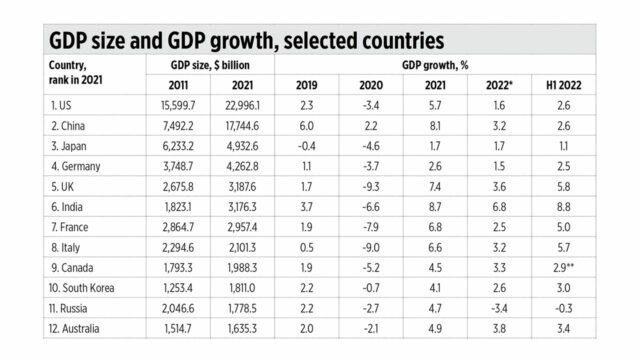
The latest projections of the three multilaterals — the Asian Development Bank or ADB, the World Bank or WB, and the IMF — put the Philippines’ 2022 GDP growth at 6.5%. If true, that should be the 4th fastest growth in the world’s top 50 largest economies, trailing Bangladesh’s 7.2%, Vietnam’s 7%, and India’s 6.8% (see table).
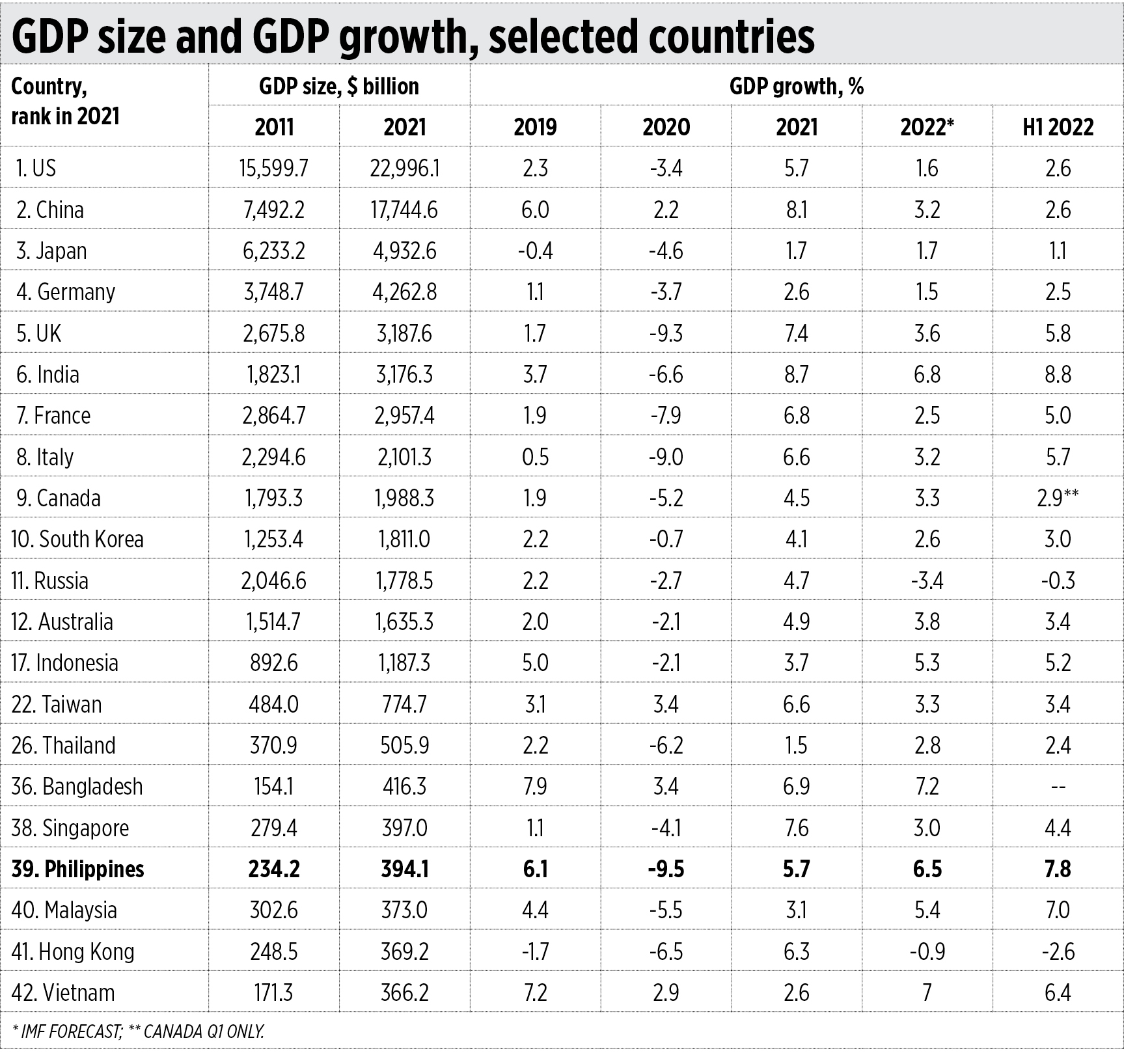
I think the multilaterals’ assessment of the Philippines is not realistic enough. In the first half (H1), or quarters 1 and 2, our growth was already 7.8%. This implies that they project H2 growth only at 5.2% to have a full year growth of 6.5%.

Using the power and electricity demand for July-September of about 6-7% (the Luzon-Visayas grids) as a proxy for GDP growth, I see growth of 7-7.5% in Q3 and this will likely be sustained in Q4. So, the full year 2022 growth would be around 7.5%, not the 6.5% projection of the multilaterals.

And from anecdotal data that I see both in Metro Manila and some provinces, there is high and fast recovery this year given the muted and slow growth in 2021.

Investors who attended the four PEB in four big cities abroad should be assured that they are entering a dynamic economy with a big consumer base.

PPP CENTER AND TARIFF COMMISSION
Last week at the Economic Journalists Association of the Philippines (EJAP) forum, the new Public-Private Partnership (PPP) Center Executive Secretary Cynthia Hernandez identified the emerging PPP sectors — health, water and sanitation, transportation, solid waste management, and ecozones, among others — as priorities for development on top of traditional PPP sectors like toll roads, seaports, airports, and power.

Given the huge annual budget deficit and net borrowings that started in 2020, many projects should be taken out of an “all taxpayers pay” scheme and be put under “only users pay” scheme. The PPP projects embody this principle and Ms. Hernandez — an engineer, economist, and financial advisor, a three-in-one brain — has the will and expertise to make this pivot of unburdening taxpayers while having big infrastructure projects.

Also last week, the Tariff Commission (TC) ruled on two different cases on cement tariffs. First, that the safeguard measure against cement imports cannot be extended beyond October 2022 because the requirements of the law (RA 8800) were not met. And second, the imposition of anti-dumping (AD) duties against imports of cement from Vietnam — that there will be no AD duties for exporters with de minimis or negative dumping margins (DMs), and have AD duties on exporters which have non-de minimis positive DMs.

A legal technicality for me, but as I understand it that the TC overall has ruled in favor of free trade in cement. Congratulations to the commission, headed by Chairperson Marilou Mendoza. My free trade mind actually supports dumping. If Vietnam will burden its taxpayers to subsidize cheap cement exports to the Philippines, so be it. The biggest protection against strong storms, floods, and earthquakes is not more politics. It is strong houses and buildings. People should use more cement and steel to live and work in strong structures.

DEPARTMENTS WITH NO SECRETARIES YET
The Office of Press Secretary (OPS) and Department of Health (DoH) are among the departments and agencies with Acting or Officer in Charge (OIC) leaders only.

I think a Press Secretary/Presidential Spokesperson is someone with at least four characteristics. One, they are savvy in the law because many Presidential pronouncements have legal implications. Two, they have past or current media and public relations experience, preferably both in broadcast/TV and print media. Three, they have a deep corporate background to augment and better appreciate the economic team’s big push to attract more investments into the country. And four, they must have good looks, and a mature and charismatic personality.

I can think of one person who fits this shoe — Michael “Mike” Toledo.

For Health Secretary, I think that the previous and current leadership of the DoH and their consultants were responsible for the very strict lockdown policies in 2020 — leading to the Philippines having the worst economic contraction in Asia, also the worst contraction in Philippine history since post-World War 2. They seem to plan for an endless health emergency situation, and they do not seem to mind if public borrowings remain at P2+ trillion yearly for many years so long as their yearly budget and vaccine procurement remain high.

Two doctors would be good as the next DoH Secretary. One is Dr. Godofreda “Jody” Vergeire-Dalmacion, an epidemiologist and retired professor from the Department of Pharmacology, University of the Philippines (UP) College of Medicine. The other is Dr. Benigno “Iggy” Agbayani, Jr., also a product of the UP College of Medicine and former President of Concerned Doctors and Citizens of the Philippines (CDC PH). Both physicians have high credibility and independence, they opposed the lockdown, and advocated focused protection via cheap, proven, and off-patent medicines.

I hope President Ferdinand “Bongbong” Marcos, Jr. will consider Mike Toledo, Dr. Jody Vergeire-Dalmacion or Dr. Iggy Agbayani for those positions.


Bienvenido S. Oplas, Jr. is the president of Minimal Government Thinkers.

minimalgovernment@gmail.com

EPR law: A good start but not enough

CHRISTOPHER VEGA-UNSPLASH

The Philippines is in a conundrum when dealing with plastics — it wants to reduce plastic consumption, but the economy cannot live without it. So, policy makers are in a quandary on how to balance competing interests in a classical dilemma of, to plastic or not to plastic.

Recently, a proposed measure requiring enterprises with total assets over P1 billion to recover some portion of their plastic packaging wastes or suffer a fine. This is the Extended Producer Responsibility (EPR) Act of 2022, or Republic Act No. 11898 which neither former president Rodrigo Duterte nor President Ferdinand Marcos, Jr. signed 30 days after receipt from Congress.

Touted as a “solution” to the ever-growing volume of plastic waste in the Philippines, the law was also supposed to enhance the image of the country which was tarnished by an unwanted recognition as one of the top plastic polluters in the world. Many legislators hailed the enactment as a breakthrough in the country’s fight against solid wastes which is currently governed by the two-decade-old Ecological Solid Waste Management Act of 2000. Not a few said this is the way forward to address plastic garbage that has gone unchecked for decades.

And the law looks like it has major merits especially in managing the problem from the producer’s vantage point as the law places the responsibility of ensuring that the materials and waste they produce do not end up in landfills. Instead, these wastes should be reused, recycled, or allowed to biodegrade in an ecologically sound manner. Largely adopted from the framework established by the Organization for Economic Cooperation and Development (OECD), EPR is an environmental policy approach in which a producer’s responsibility for a product is extended to the post-consumer stage of a product’s life-cycle.

According to the new law, the following plastic products are included:

Sachets, labels, laminates, and other flexible plastic packaging products, whether single-layer or multi-layered with plastics or other materials.

Rigid plastic packaging products, whether layered with other materials, which include containers for beverages, food, household goods, personal care and cosmetic products, including their coverings, caps, or lids and other necessities or promotional items such as cutlery, plates, drinking straws, or sticks, tarps, signage, or labels.

Plastic bags, which include single-use plastic bags, for carrying or transporting of goods, and provided or utilized at the point of sale.

At this point, it should be made clear that the law’s emphasis is only waste recovery which includes, among others, buying back material or waste from consumers; putting up collection points where the material or waste can be dropped off after consumption then collected for reuse or recycling; cleaning up of waste from coastal areas, public roads, other places; and establishing recycling, compositing, thermal treatment, and other waste diversion or disposal facilities.

And this is the contentious issue that has so far doused optimism about this law. Cause-oriented groups said the absence of more “teeth” in the law worries them. The inability of the law to penalize plastic producing companies from continuing to produce and use plastics makes the law weak and downright inutile in the fight to reduce plastic waste in the country. Instead of merely recovering waste, environmental groups called for a nationwide ban on single-use plastics. They also raised a howl on the exclusion of other enterprises that also use plastics as the law only applies to large enterprises. Without a ban, they argued, the problem of plastic waste will not be resolved.

According to a World Bank report, the plastic waste problem has been steadily worsening due to the growth of municipal solid waste (MSW) in the Philippines. It estimated that 14.6 million tons of MSW was generated in the Philippines in 2016. By 2019, MSW generation grew to 15.8 million tons. By 2030, the World Bank forecasts MSW generation to reach 20 million tons in the Philippines, 37% growth compared to 2016.

Surely legislators may have had some reasons why they focused their attention only on waste recovery and not a total ban. I can only surmise that they looked at the contribution of the plastic industry to the national economy, which was estimated to be $2.3 billion in 2018. Moreover, they probably took into consideration the country’s “sachet economy” — lower income families’ overly high dependence on single-use plastics, such as multilayer sachets and pouches.

But studies have shown that single-use disposable plastic is the greatest obstacle to sound waste management. Inadequate waste management systems and human negligence may have appeared to be some of the main contributors to plastic waste leakage and yet brand audit data by independent organizations show that it is the unfettered production of disposable plastics that is the culprit.

Indeed, for as long as the mass production of disposable plastics continues unabated, countries of the world will find it harder and harder to cope. Put simply, disposable plastic is a pollution problem, and the only way to prevent it is to stop it at its source or to find sustainable alternatives to disposable containers.

A fairly recent report by the NGO Mother Earth Foundation disclosed the following disturbing data:

1. The average Filipino uses 591 sachets, 174 shopping bags, and 163 plastic labo bags (thin, semi-transparent plastic bags), yearly.

2. Every day, almost 48 million shopping bags are used throughout the Philippines, or roughly 17.5 billion pieces a year.

3. Plastic labo bag use throughout the Philippines is at 45.2 million pieces per day, or 16.5 billion pieces a year.

4. Around three million diapers are discarded in the Philippines daily, or 1.1 billion diapers annually.

The sheer volume of the plastic waste generated daily is simply too much for the national and local government units to handle and manage. The problem indeed lies in the production and use of single-use plastic and not how the waste is being managed.

Based on the experiences in GAIA’s Zero Waste Cities project, by implementing zero waste strategies such as establishing working materials recovery facilities or MRFs, conducting door to door segregated collection, composting organics, and maximizing recycling of high-value materials among others, the government can only achieve a maximum of 70-80% waste diversion. Cities, municipalities, and barangays are still left stinking with 20% of the waste that they cannot manage. Thus, zero waste is simply a dream without solving the problem at its source.

From the looks of its, the Extended Producer Responsibility Act of 2022 is a valiant attempt at addressing the plastic menace in the country. Unfortunately, it was designed to tackle only the symptoms of the crisis, not the cause — the production of virgin single-use plastic. There is no law, standard, or formal safeguard to prevent companies from producing more and more plastic and plastic waste.

As one lady Senator said, the new law is a good start. But, dare I say, it is not enough.


Ron F. Jabal, APR, is the chairman and CEO of PAGEONE Group www.pageonegroup.ph and founder of Advocacy Partners Asia

www.advocacy.ph

Soaring dollar leaves food piled up in ports as world hunger grows

SHALITHA DISSANAYAKA-UNSPLASH

FOOD IMPORTERS from Africa to Asia are scrambling for dollars to pay their bills as a surge in the US currency drives prices even higher for countries already facing a historic global food crisis.

In Ghana, importers are warning about shortages in the run up to Christmas. Thousands of containers loaded with food recently piled up at ports in Pakistan, while private bakers in Egypt raised bread prices after some flour mills ran out of wheat because it was stranded at customs.

Around the world, countries that rely on food imports are grappling with a destructive combination of high interest rates, a soaring dollar and elevated commodity prices, eroding their power to pay for goods that are typically priced in the greenback. Dwindling foreign-currency reserves in many cases has reduced access to dollars, and banks are slow in releasing payments.

“They cannot afford it, they cannot pay for these commodities,” said Alex Sanfeliu, world trading head for crop giant Cargill, Inc. “It’s happening in many parts of the world.”

The problem isn’t a new one for many of the countries — nor is it limited to agricultural commodities — but the reduced purchasing power and dollar shortages are compounding wider strains across global food systems following Russia’s invasion of Ukraine.

The International Monetary Fund (IMF) has warned of a catastrophe at least as severe as the food emergency in 2007-08, US Treasury Secretary Janet Yellen called for more food aid for the most vulnerable, while the World Food Programme says the globe is facing its largest food crisis in modern history.

On the ground, many importers are struggling with rising costs, shrinking capital and difficulty in obtaining dollars to ensure their shipments are released from customs on time. That means cargoes get stuck at ports or may even be diverted to other destinations.

“There was always a historical strain on making these payments, but at the moment it’s unbearable pressure,” said Tedd George, a consultant specializing in Africa and commodities markets.

In Ghana, where the cedi has lost about 44% this year against the dollar — making it the second-worst-performing currency in the world — there are already worries about supplies ahead of Christmas.

“We think there is going to be a shortage of some food items,” said Samson Asaki Awingobit, executive secretary of Ghana’s importers and exporters association which includes buyers of grains, flour and rice. “The dollar is swallowing our cedi and we are in a hopeless situation.”

To be sure, some countries may be cushioned by their purchases in other currencies like euros, while energy-exporting nations will profit from overseas revenues. Global food-commodity costs have also fallen for six straight months, giving hopes for a relief to consumers.

But the soaring dollar threatens to erode some of that benefit, according to Monika Tothova, an economist at the United Nations’ Food and Agriculture Organization, which sees this year’s global food import bill at a record high.

The situation is still fragile. Concerns are mounting anew over supplies out of the Black Sea region as the war in Ukraine escalates and there are questions over the future of the deal to ship grains out of Ukrainian ports. Weather shocks have driven volatility in recent months, stocks are low and soaring fertilizer and energy prices are boosting food production costs.

FOOD INFLATION
As the Federal Reserve continues to tighten monetary policy, the dollar’s strength versus currencies in emerging and developing markets will add to inflation and debt pressures, the IMF said in its global outlook this week.

In flood-ravaged Pakistan, government moves to prevent foreign-exchange outflows meant that containers holding food like chickpeas and other pulses piled up at ports last month, sending prices surging, according to Muzzammil Rauf Chappal, the chairman of the Cereal Association of Pakistan.

The situation eased after the appointment of new finance minister who pledged to clear pending transactions for businesses that have been delayed because of a dollar shortage in its interbank market.

“The situation was quite dangerous,” said Mr. Chappal, whose company is the country’s biggest private sector wheat importer. “We were expecting the country to face a serious grain crisis.”

In Egypt, one of the world’s top wheat importers, shortages have plagued private sector mills that supply flour for bread that isn’t part of the country’s subsidy program.

Cargill’s Sanfeliu said he expects global wheat trade flow to shrink by as much as 6% in the upcoming months, with corn and soybean meal flows dropping by as much as 3%, as developing countries struggle to pay for food and animal feed.

In Bangladesh, business conglomerate Meghna Group of Industries may have to cut the amount of wheat it had planned to import before the war broke out amid at least a 20% jump in wheat import costs due to the stronger dollar, said Taslim Shahriar, the company’s procurement official.

“Currency fluctuations are creating huge losses for the company,” said Shahriar. “We have never seen this before.” — Bloomberg

Argentina workers to get income tax relief in Nov.

REUTERS

BUENOS AIRES — Argentina’s Economy Minister Sergio Massa said on Sunday the government will give workers tax relief from November by raising the threshold at which income tax is charged, as the country battles with soaring inflation.

“It will take effect from Nov. 1, it will be above 330,000 pesos ($2,176),” Mr. Massa said in an interview with Radio Rivadavia, referring to monthly income. The move should help alleviate the burden faced by workers, he added.

Argentine annual inflation hit 83% in September, and is forecast to climb as high as 100% by the end of the year, piling pressure on households and the peso currency, and feeding social discontent in the major grain-producing nation.

Mr. Massa said he was eager to bring about a sustained decrease in price pressures, saying “inflation is the worst punishment that any worker, any retiree in Argentina can have.”

The minister said the government is negotiating a new plan aimed at containing the cost of food staples, which he hoped would help Argentina’s neediest by the end of the year.

“We’ve been working with companies of mass consumption,” said Mr. Massa, saying the plan was to implement a broader and longer price program than the current one. “There are 20 or 25 that represent 65% of what we Argentines consume.”

When asked about the different dollar-peso exchange rates that operate in the Argentine economy, Mr. Massa said his goal was “to find a macroeconomic balance”. — Reuters

Japan PM orders probe into Unification Church linked to ruling party lawmakers

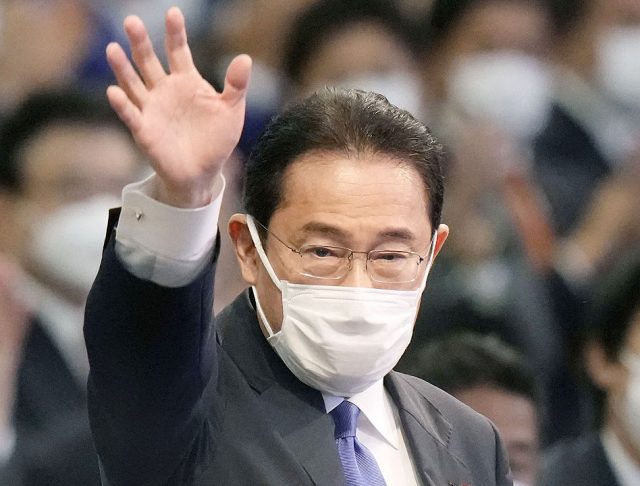
Japanese Prime Minister Fumio Kishida — KYODO/VIA REUTERS

TOKYO — Japanese Prime Minister (PM) Fumio Kishida ordered an investigation on Monday into Unification Church, after the assassination of former premier Shinzo Abe in July revealed close ties between it and the ruling party lawmakers.

Support for Mr. Kishida’s government has tumbled to its lowest level since he took office on growing anger about the Liberal Democratic Party (LDP) lawmakers not fully disclosing their ties to the church, known for its mass weddings.

Mr. Abe was shot during an election rally and the suspected killer said his mother was bankrupted by the church, which critics call a cult, and blamed Mr. Abe for promoting it.

Mr. Kishida instructed the culture minister to prepare an investigation into the church under the Religious Corporations Act.

Speaking to parliament, Mr. Kishida apologized that many of his LDP members had ties to the church, which he said undermined public trust in the government. The premier said he was “taking seriously” allegations that the church left many followers impoverished and disrupted their families.

He said he had no personal relationship with the church, although early half of the LDP’s lawmakers have disclosed connections since Mr. Abe’s assassination. The party says there is no organizational link to the church.

Mr. Kishida said the government had received more than 1700 requests for help over financial trouble and mental health problems related to the church. He vowed to expand support for victims.

The government’s panel of experts said in a proposal issued on Monday that dissolution of the church should be an option considered by investigators.

The Unification Church was founded in South Korea in 1954 by Sun Myung Moon, an anti-communist and self-declared messiah.

It built ties with politicians to attract followers and gain legitimacy, according to Hiroshi Yamaguchi, a lawyer who has worked on cases against it. Politicians gained access to church members for help with campaigns, he said

The church says it has been vilified and members have faced death threats since Mr. Abe’s murder. — Reuters

Goldman Sachs sees deeper UK recession after tax U-turn

The British union flag flutters on the Victoria Tower at the Houses of Parliamen, in London, Britain Dec. 30, 2020. — REUTERS/TOBY MELVILLE

GOLDMAN SACHS analysts have downgraded Britain’s economic outlook after Prime Minister Liz Truss removed Kwasi Kwarteng as chancellor and reversed a freeze in corporation tax, Bloomberg News reported on Sunday.

“Folding in weaker growth momentum, significantly tighter financial conditions, and the higher corporation tax from next April, we downgrade our UK growth outlook further and now expect a more significant recession,” Bloomberg cited the investment bank’s report as saying.

Goldman revised its 2023 UK economic output forecast to a 1% contraction from an earlier forecast for a 0.4% output drop, with core inflation seen at 3.1% at the end of 2023, down from 3.3% previously, Bloomberg said.

On Friday, Ms. Truss said Britain will go ahead with corporation tax rise to 25% next year, making an U-turn on a pledge to freeze it at 19%.

Goldman Sachs did not immediately respond to a Reuters request for comment. — Reuters

Retail tech startup wins Philippine leg of 2023 Startup World Cup 

Packworks, a startup that provides a business-to-business platform for sari-sari (neighborhood sundry) store owners, won at Ignite 2022’s Startup World Cup (SWC) x Wildfire Pitch competition on Oct. 14. The retail tech startup will represent the Philippines — and compete for the $1 million prize — in the 2023 SWC Grand Finale of Pegasus Tech Ventures, a Silicon Valley-based global venture capital firm. 

The common comment among all the judges was how much the quality of Philippine startups has grown, said Sophia “Phoebe” C. Fontanilla, investment associate at TechShake, a startup ecosystem builder and co-organizer of the Ignite 2022 event, where the competition was held. 

“As the representative of the Philippines in the largest startup competition in the world, they had to choose a winner based on scalability and replicability,” she said in an Oct. 17 e-mail. Although the other entries also had the potential to scale, “Packworks’ business model and market traction were what clearly made it stand out.”  

“It had the experience to scale and easily replicate its model to help SMEs [small and medium enterprises] in regions both within and outside the Philippines,” Ms. Fontanilla added.  

Judging the winners of the competition’s Philippine leg were leaders from SOSV/MOX, Plug and Play, Quest Ventures, Integra Partners, RISE, Unfold Ventures, and QBO Innovation Hub.  

Packworks bested nine other early-stage startups, all of whom received at least a prize each from sponsors that included Amazon Web Services and Microsoft Philippines. Sharing the podium were runners-up Smile API, a digital platform that fast tracks financial application processes, and ALLCARE.io, which provides worker benefits like healthcare to freelancers and solopreneurs.  

The company told BusinessWorld in an earlier, Oct. 5 e-mail that it one of its recent initiatives is the rollout of loyalty programs as a way for megastores to incentivize micro-stores within their network. This allows megastores to offer exclusive discounts to micro-stores, which encourages the latter to continue ordering from the former through the app.  

Sari-sari store usage grew when the pandemic hit in 2020, the company also said. Its platform users grew to 130,000 that same year, and to 170,000 by September 2022. Packworks likewise closed a seed round in 2022 led by Fast Logistics and CVC, and participated in by investors such as ADB Ventures, Techstars, Arise Fund, and IdeaSpace QBO.  

The 2022 winner of the SWC Grand Finale is SRTX, a Canadian startup that develops durable fabrics and clothing using new materials and smart production systems. — Patricia Mirasol

BTS members to serve military duty — HYBE

BTS danced its way through the United Nations — SCREENSHOT FROM YOUTUBE.COM/UNITEDNATIONS

SEOUL — K-pop boy band BTS will go off on mandatory military service, starting shortly with oldest member Jin, their agency said on Monday.

Jin, 29, has put off his service for as long as he can and faces the imminent prospect of a full stint – meaning nearly two years out of the public eye – when he turns 30 in December.

Since their 2013 debut, BTS have became a worldwide sensation with their upbeat hits and social campaigns aimed at empowering youth.

“Jin will cancel the request to delay enlistment in late October 2022 and follow the Military Manpower Administration’s relevant procedures for enlistment,” the seven-member band’s management group HYBE said in a regulatory filing.

All other members will also serve the mandatory military duty according to their respective plans, it added.

“Both the company and the members of BTS are looking forward to reconvening as a group again around 2025 following their service commitment,” HYBE-owned Bighit Music, which manages BTS, said in a separate statement.

All able-bodied men in South Korea aged between 18 and 28 must serve in the military for between 18 and 21 months as part of efforts to defend against nuclear-armed North Korea. Some categories, however, have won exemptions, or served shorter terms, including Olympics and Asian Games medal winners and classical musicians and dancers who win top prizes at certain competitions. Some lawmakers had called for BTS to be exempted.

BTS announced a break in June from group musical activities to pursue solo projects, raising questions about the band’s future.

They reunited to perform a free concert on Saturday in the city of Busan in support of South Korea’s bid to host the World Expo 2030 in the port city.  — Reuters

Kenaf Venture Global to put up $100M investment in PHL as the company expands in Southeast Asia

Jazman Shahar Abdollah, group chief executive officer and co-founder of KVG, Malaysia

Kenaf Global Venture Sdn. Bhd. Bhd. (KVG), a leading private kenaf planter in Malaysia with kenaf plantation as well as a fibre and core processing line, has committed $100 million to a project in the Philippines that will provide 300 local jobs while also having a positive impact on society and the international community. As Malaysia’s largest private kenaf planter, the company ensures that their produce is of the highest quality. KVG quickly enters our area of expertise, aided by the group of companies.

KVG is more than a business; it is a social enterprise with the goal of positively impacting society and the global nation as well as the economy. As such, kenaf is a crop that has the potential to provide a solution to the universal concern of sustainability. Its adaptability includes its ability to function in the circular economy practice as well as its incorporation into various sectors. Nonetheless, kenaf has many more advantages than those listed. As a result, KVG is convinced that kenaf should be cultivated for more than its harvest – the values that it can instill in the global nation.

Kenaf, the new sustainability rock star

Climate change and global warming have resulted from the overexploitation of natural resources required for economic growth and development. Unfortunately, overexploitation has reduced the availability and cost of these resources.

Growing the Kenaf plant has proven to be a successful means of achieving sustainability and alleviating forest cover shortages in Malaysia. The Kenaf plant, scientifically known as Hibiscus cannabinus L, is used to produce a variety of eco-friendly materials that most of us are already using unknowingly.

Kenaf is grown for its fibre in India, Bangladesh, the United States of America, Indonesia, Malaysia, South Africa, Viet Nam, Thailand, parts of Africa, and, to a lesser extent, southeast Europe, and will soon be seen in Philippine farmlands. The stems produce two types of fibre: bast fibre in the outer layer and finer fibre in the core. Ropes are made from bast fibres.

Apart from its tensile strength, kenaf is also recognised for its short period for maturity – approximately 100 days. Hence, kenaf is practical to produce at least 2 cycles per year which promises constant supply throughout the year. Another distinctive characteristic that is exclusive to kenaf is that it is able to grow in a high-density carbon cultivation area and converts it to oxygen through the process of photosynthesis. Subsequently, it contributes to the reduction of carbon footprint in the cultivation area and a healthier environment with increased oxygen level.

From paper to furniture, biofuel and textiles, Kenaf has been grown for over 3,000 years and can be harvested in just four to five months, alleviating the shortage of forest based raw materials and countering deforestation.

Leading the local kenaf market into the global spotlight headed by its CEO and Co-Founder Jazman Shahar Abdollah

Currently, Kenaf is fast becoming Malaysia’s third industrial crop next to palm oil and rubber, and this green revolution is being spearheaded by Kenaf Venture Global (KVG).  KVG is a private firm headed by its CEO and Co-Founder Jazman Shahar Abdollah and is supported by the Malaysian government.

According to Jazman, they have already identified the location of the kenaf plantation they’ll be growing and cultivate the crops, as part of their exploration and expansion across Southeast Asia, including the Philippines.

KVG initiative to develop kenaf to be a future global commodity through the employment of advanced machinery, concurrently an initiative in moving towards Industrial Revolution for agriculture; producing kenaf on a large scale to answer to the demand.

“We are resilient in venturing and exploring an uncharted future commodity to serve the nation and the environment,” said Jazman.

KVG is now progressively working on producing kenaf on greater mass to also offer economic and environmental growth through carbon trading – business can still operate despite its nature in causing pollution to the environment, KVG is ready to offer carbon credit to ensure the economic growth is up and running, simultaneously ensuring the carbon footprint level is observed. Kenaf is known for its versatility in its application in various different industries, so the demand is on rise and unaffected by any political climate.

Jazman also stated that the Philippines was chosen due to common factors such as vision and mission when it comes to environmental and sustainability goals, as well as the rich soil ideal for kenaf cultivation.

An awardee for CSR undertaken by his company for their work with the United Nations Office for Disaster and Risk Reduction to rehabilitate refugees made homeless by war in their homelands, Jazman is a humble man, a thorough businessman heralding the era of a crop so utilitarian and sustainable that it has the potential to change the way we think about housing, real estate, and much more. What distinguishes him is his worldview and sensibility, which represent a new breed of leaders and entrepreneurs who look beyond the transactional.

Beyond business, KVG is looking to expand its operations and create more job opportunities, giving more people the opportunity to live a better life. Furthermore, they aspire to be the nucleus of Malaysia’s national economic income in the near future.

Kenaf and Technology

Following the significant tensile strength that kenaf possesses, the fibre has been put forward for technology incorporation to further utilise the potential. Today, kenaf fibre is recognised as the best natural fibre for biocomposite material besides a source for nanocellulose from its bast. The technological advancement has allowed the discovery and application of kenaf in a wide spectrum of sectors, namely automotive, pulp and paper, building and construction, and more. Another notable feature of kenaf is its ability in insulating heat and this has made kenaf available as thermal insulator in automotive products and as a building material, replacing non-renewable materials.

The Future of Kenaf Industry

Kenaf is gaining a steadily rising demand from the globe and Malaysia is one of the countries that has a vast potential in bridging the gap of demand and supply. Its versatility in diverse sectors and industries is the key to its growing demand. The kenaf industry in Malaysia is well-supported by the local government, elevated by the private sector and stakeholders.

KVG’s footprint in the Philippines

Noting that there is also a massive requirement for shelters and urban development in the Philippines, Jazman said he was keen to bring over the technology to the country.

“We began to have talks with some parties, starting with the Ambassador of Malaysia to introduce KVG. We clearly stated our intention to bring in KVG’s platform on sustainable materials and technologies,” he said adding that he has also met with a group of developer to further his cause.

However, before he can bring in the technology, Jazman said he had three requirements. First, he needed the government’s support and assistance in creating policies and programs related to sustainable programs.

Secondly, he will also need support for continuing research and development so that the country can realize economic and environmental benefits of this wonder plant. Once these two requirements are in place, Jazman said he can start implementing his program.

Using Kenaf would mean replacing all building materials that cause carbon emissions. It is time we take our part to altogether preserve our beloved earth. Let us go green, the right way to saving humankind,” he added.


Spotlight is BusinessWorld’s sponsored section that allows advertisers to amplify their brand and connect with BusinessWorld’s audience by enabling them to publish their stories directly on the BusinessWorld Web site. For more information, send an email to online@bworldonline.com.

Join us on Viber to get more updates from BusinessWorld: https://bit.ly/3hv6bLA.

ADVERTISEMENT
ADVERTISEMENT