Home Blog Page 5685

Appeals court rules regional judge has authority to grant plea deal in drug case

PHILSTAR FILE PHOTO

THE COURT of Appeals (CA) has ruled in favor of a trial court judge against a petition seeking to nullify his order granting a plea bargain deal for a man convicted of illegal drug possession.  

In an 11-page decision on Oct. 26, the CA 14th Division said Tabaco City Regional Trial Court Branch 15 Presiding Judge Alben C. Rabe did not abuse his discretion when he approved the plea bargaining for a lesser offense by the respondent.  

“Plea bargaining is a vital component of restorative justice,” CA Associate Justice Mary Charlene V. Hernandez-Azura said in the ruling.  

“The mechanism affords speedy disposal and cost efficiency which significantly contribute to the restorative justice process,” the magistrate added.  

Government prosecutors argued that Mr. Rabe abused his discretion when it granted the individual’s proposal without their consent.  

The judge disagreed, saying in his comment in the case that plea-bargaining was within the authority of a magistrate.  

The man convicted of drug possession initially pleaded not guilty and then agreed to plead guilty for a lesser offense.  

Under the country’s law on illegal drug use and possession, a person found guilty is liable to six to 12 years in prison and a fine of P50,000 to P200,000.  

The appellate court noted that plea bargaining enhances the “rehabilitative and redeeming characteristic of the offender.”  

“All told, it is without a doubt that the private respondents plea bargain and consequent plea of guilty to the crimes for which he was convicted were all valid as the same was made well within the Supreme Courts Plea Bargain Framework and its Clarificatory Framework,” said the CA. John Victor D. Ordoñez

Senate bill seeks online database on deaths to counter fraud 

SENATE.GOV.PH

A SENATOR has filed a bill seeking to establish an online death verification system to halt the fraudulent use of a deceased individuals identity.  

“On many occasions, it has been proven in the many investigations conducted by the Senate that the names of the deceased are being used in fraudulent payment claims, election fraud and various types of fraud,Senator Jose JinggoyE. Estrada said in Filipino in a statement on Wednesday. It is time to solve this matter.  

Under the proposed Online Death Verification System Act, a centralized electronic database will be set up using information from local civil registry offices.   

The system will be managed by the Philippine Statistics Authority.  

Mr. Estrada said criminals and syndicates often exploit the lack of immediate access to death data in carrying out fraudulent activities and corrupt practices.   

He cited an incident in 2019 where multibillion-peso bogus claims were paid by the Philippine Health Insurance Corp. to dialysis centers.  

Those funds that were intended for the poor and in actual need of medical assistance ended up in the hands of owners of private dialysis centers,he said.   

The senator said the system can also be used to remove those who are deceased from the official list of registered voters.  

The bill also provides penalties of up to P4 million and imprisonment for violations. Alyssa Nicole O. Tan

Solon recommends creation of food security cluster 

PHILIPPINE STAR/ MIGUEL DE GUZMAN

PRESIDENT Ferdinand R. Marcos, Jr. should compose a food security cluster within his Cabinet to address hunger risks in the country, a lawmaker said on Wednesday.  

There are areas with food security that are beyond the mandate of the Department of Agriculture, which President Marcos heads,” Albay Rep. Jose Maria Clemente S. Salceda said in a statement. 

Mr. Salceda said hunger rate will remain high due to food inflation, agricultural damage due to Tropical Storm Nalgae, locally known as Paeng, and the ongoing conflict between Russia and Ukraine.   

As long as hunger numbers do not see major improvements, and given global conditions, food security should be atop PBBMs priorities, with agriculture and food trade being the most important concerns,he said, citing the latest Social Weather Stations (SWS) survey on hunger.   

Filipino families that experienced hunger in July to September, the first three months of the Marcos administration, slightly fell to 11.3% from 11.6% in June, though this was equivalent to 2.9 million people, the same number recorded a quarter earlier, according to the SWS survey.   

Mr. Salceda said several government agencies can deal with issues on food security and hunger in a more holistic, whole-of-government way.”   

Whether we like it or not, for example, some 20-25% of our food is imported. So, the Bureau of Customs, the Department of Transportation, and the Philippine Ports Authority play a key role in getting food where it is needed,he said. Matthew Carl L. Montecillo

Isuzu Philippines relaunches Pagbilao dealership

ISUZUPHIL.COM
ISUZUPHIL.COM

ISUZU Philippines Corp. and MBT Autoworx Corp. relaunched the car dealership in Pagbilao, Quezon on Oct. 28 as part of improving service to customers.    

The completed first phase of renovation for the 11,000 square meter Isuzu Pagbilao features a revamped showroom and service fascia, tower signage, and sales reception area that conforms to the Isuzu Outlet Standard (IOS).   

According to Isuzu Philippines, the IOS seeks to give customers an experience of smooth business flow and pleasant atmosphere.      

Phase 2 of Isuzu Pagbilaos IOS renovation, which includes the interior of the dealership, is expected to be done by the second quarter of 2023.    

With around 11,000 sqm lot area, Isuzu Pagbilao boasts a generous front parking area, large showroom area that can house both trucks and light-commercial vehicle display units, and an equally spacious service center that can cater all service requirements of customers,Isuzu Philippines said.    

Isuzu Philippines President Noboru Murakami said the Pagbilao dealership is seen to further expand the companys market share in Quezon, a province about 185 kilometers southeast of the capital.  

With their year-on-year sales growth, it is just fitting that we bring this good performance to the next level by introducing that new innovative and conducive IOS environment,Mr. Murakami said. Revin Mikhael D. Ochave

Fighting Maroons firm up grip on No. 1 spot by routing Falcons

MALICK Diouf ran roughshod over the Soaring Falcons with a career-high 20 points. — PHILIPPINE STAR/ RUSSELL PALMA

Games On Saturday
(Smart Araneta Coliseum)
11 a.m. — UE vs UP
1 p.m. — UST vs AdU
3 p.m. — NU vs FEU
6:30 p.m. — ADMU vs DLSU

REIGNING champion and breakaway leader University of the Philippines (UP) trounced Adamson, 91-70, and widened its gap from the pack in the UAAP Season 85 men’s basketball tournament second round yesterday at the Mall of Asia Arena.

Malick Diouf ran roughshod over the Soaring Falcons with a career-high 20 points, eight rebounds and five steals as the Fighting Maroons notched their fifth win in a row to firm up grip on No. 1 spot at 8-1.

Mr. Diouf tallied a superb efficiency of +30 on 63-percent accuracy and only one error with Carl Tamayo (18), Zavier Lucero (14) and Terrence Fortea (12) having their own way in a scattered attack.

The Fighting Maroons, whose lone loss came in the first round, are now at least two games ahead of their closest suitors in a back-to-back title defense bid.

But coach Goldwin Monteverde is far from being satisfied as UP, despite steady composure and steely resolve, continued to embark on slow starts.

“We didn’t have the start that we wanted once again. We need to improve on that as the season progresses, especially on defense. So, we’re not thinking about whatever standing we have. It’s all about consistency,” said coach Goldwin Monteverde.

The Fighting Maroons figured in a back-and-forth rally in the first half but turned it up early in the third with an 11-0 blitz to turn a slim 51-49 cushion into a comfortable 62-49 lead.

UP went on to lead as many as 22 points en route to a repeat win over Adamson after a closer 87-78 victory via overtime in the first round.

In the first game, CJ Payawal (17) and Luis Villegas (16) led the way as University of the East  (UE) put the clamps down on Santo Tomas with an 81-51 blowout win to snap its three-game skid and stay in the tight Final Four race at 4-5.

Jerom Lastimosa, who went down with an ankle injury in the fourth, had 19 for Adamson (3-5) while Adama Faye’s 23 points and 18 rebounds went for naught in the seventh straight loss of the Growling Tigers (1-7). — John Bryan Ulanday

The Scores:

First Game

UE 81 — Payawal 17, Villegas 16, Tulabut 8, Sawat 6, Antiporda 6, N. Paranada 6, Remogat 5, K. Paranada 4, Stevens 4, Pagsanjan 3, Beltran 3, Guevarra 3, Abatayo 0, Langit 0.

UST 51 — Faye 23, Pangilinan 8, Cabanero 7, Manalang 4, Manaytay 4, Escobido 2, Lazarte 2, Valentin 1, Calimag 0, Garing 0, Gesalem 0, Duremdes 0.

Quarterscores: 25-14, 45-23, 60-36, 81-51.

Second Game

UP 91 — Diouf 20, Tamayo 18, Lucero 14, Fortea 12, Alarcon 9, Cagulangan 8, Galinato 8,  Spencer 1, Calimag 1, Gonzales 0, Abadiano 0, Ramos 0.

Adamson 70 — Lastimosa 19, Manzano 10, Sabandal 9, Douanga 8, V. Magbuhos 8, Yerro 7, Hanapi 5, Colonia 3, Barcelona 1, Flowers 0, Jaymalin 0, Torres 0, Barasi 0, Fuentebella 0, W. Magbuhos 0.

Quarterscores: 28-25, 50-45, 69-57, 91-70.

San Beda keeps final four slot by beating AU, 76-63

JAMES Kwekuteye leads San Beda with game-high 16 points. — NCAA/SYNERGY-GMA

Games Tomorrow
(Filoil EcoOil Centre)
12 p.m. — JRU vs EAC
3 p.m. — AU vs SSC-R

James Kwekuteye came through with a clutch performance that made up from his lethargic efforts the past couple of games as San Beda flattened Arellano University (AU), 76-63, yesterday to stay at No. 3 in NCAA Season 98 at the Filoil EcoOil Centre.

Mr. Kwekuteye went from firing bricks to hitting big ones as he sizzled for a game-high 16 points including half in the third quarter when the Lions unleashed a 29-14 run to rip the Chiefs apart.

It was a run that turned a slim three-point lead at the break to 63-45 going into the final period.

It was so decisive that San Beda never really needed Mr. Kwekuteye in the fourth canto to put on the finishes touches as it improved to 8-4, or just behind College of St. Benilde (9-2) and Letran (10-3).

“I’m feeling much better compared to the last two games, I wasn’t the same James (Kwekuteye) before but I just told myself I used to make shots and If I’m open, I should make it with confidence,” said Mr. Kwekuteye.

“It was falling today (yesterday),” he added.

While it was Mr. Kwekuteye who did the scoring, JB Bahio took care of the heavy lifting and finished with 10 points and 14 rebounds.

The Chiefs, however, were in the running in the first half with Lars Sunga spearheading the charge.

But Mr. Kwekuteye stepped in to zap AU’s last hope.

AU slipped to 5-6.

The Scores:

First Game

San Beda 76 — Kwekuteye 16, Bahio 10, Sanchez 10, Cortez 7, Alfaro 6, Payosing 6, Cuntapay 6, Tagala 5, Andrada 4, Ynot 2, Visser 2, Jopia 1, Cometa 1, Alloso 0, Tagle 0

AU 63 — Doromal 12, Oftana 11, Sunga 10, Mallari 9, Mantua 8, Advincula 5, Oliva 3, Talampas 3, Tan 2, Domingo 0, Tolentino 0, Antonio 0, Ongotan 0, Menina 0

Quarterscores: 15-13; 34-31; 63-45; 76-63

Choco Mucho eyes magic four as it collides with Akari Chargers

TEAM Choco Mucho — PVL

Games Today
(Filoil EcoOil Centre)
2:30 p.m. — Army vs Cignal
5:30 p.m. — Choco Mucho vs Akari

Choco Mucho eyes to solidify its place in the magic four as it clashes with a desperate Akari that is fighting for dear life today in the Premier Volleyball League Reinforced Conference at the Filoil EcoOil Centre.

The Flying Titans kept their place in the top four despite falling to the pace-setting Chery Tiggo Crossovers, 29-27, 18-25, 25-16, 25-20, last Oct. 25 for the former’s second defeat in as many wins.

Coach Oliver Almadro’s charges could keep their place there if they could hurdle the Chargers, who are in dire need of a win following a 1-4 slate, in their encounter at 5:30 p.m.

Choco Mucho has been blowing hot and cold and its fate purely hangs on how its setters would perform as Mr. Almadro has been splitting minutes between Deanna Wong and Jem Ferrer.

Meanwhile, Cignal (1-2) and United Auctioneers Army (0-4) are out for nothing less than a win that should breathe life to their dying campaigns.

They face off at 2:30 p.m.

Both were coming off a stinging loss with the HD Spikers succumbing to the Creamline Cool Smashers, 25-18, 22-25, 25-22, 25-12, last Oct. 22 in Sta. Rosa, Laguna, and the Lady Troopers absorbing a heartbreaking 22-25, 25-18, 25-27, 25-18, 15-12 setback to the Crossovers Thursday at the PhilSports Arena. — Joey Villar

Phillies tie World Series record with 5 homers to win Game 3 vs Astros

PHILADELPHIA Phillies starting pitcher Ranger Suarez (55) pitches against the Houston Astros during the fifth inning in game three of the 2022 World Series at Citizens Bank Park. — BILL STREICHER-USA TODAY SPORTS

PHILADELPHIA — Bryce Harper homered in the first inning, the Phillies added four more long balls and Ranger Suarez tossed five scoreless innings as Philadelphia blitzed the Houston Astros 7-0 in Game 3 of the World Series on Tuesday.

Alec Bohm, Brandon Marsh, Kyle Schwarber and Rhys Hoskins also homered to help the Phillies grab a 2-1 lead in the best-of-seven series. The Phillies tied a World Series record with five home runs.

Game 4 will be held Wednesday in Philadelphia.

Suarez (2-0) gave up three hits and a walk while striking out four. Connor Brogdon, Kyle Gibson, Nick Nelson and Andrew Bellatti each threw one inning apiece to complete the shutout.

The Astros compiled five hits, all singles by five different players.

Houston starter Lance McCullers, Jr. (0-1) lasted only 4 1/3 innings and allowed seven runs on six hits and one walk with five strikeouts. He gave up five homers, the most ever by a pitcher in a single postseason game.

The Phillies went ahead 2-0 in the bottom of the first inning when Harper launched a two-run shot to right field with two outs. It was Harper’s sixth homer of the postseason — and the fourth to put his team ahead.

The Astros had runners on first and third with two outs in the second, but Chas McCormick was called out on strikes to end the frame.

Bohm and Marsh each hit a solo homer in the bottom of the second for a 4-0 lead. The Phillies became the first team in World Series history to hit three homers in the first two innings of a game.

Houston’s Jose Altuve popped out in foul ground with runners on first and second to end a scoring threat in the fifth.

Philadelphia took a 6-0 advantage in the bottom of the fifth when Schwarber blasted a two-run homer to center. Hoskins followed with a solo shot to left for a seven-run lead.

Jeremy Pena and Alex Bregman each walked for the Astros in the eighth, but with two outs, Kyle Tucker flied out to the warning track in left.

Bellatti set the Astros down in order in the ninth. — Reuters

Butler, Heat pull away late to top Warriors

JIMMY BUTLER put up 23 points, eight assists and six rebounds, leading the host Miami Heat to a 116-109 win over the Golden State Warriors on Tuesday night.

Golden State’s Stephen Curry produced his 10th career triple-double with 23 points, 13 assists and 13 rebounds.

The Warriors fell to 0-4 on the road in part because they couldn’t stop Butler in a couple of crucial situations. Butler made the go-ahead three-point play with 1:48 left, drawing a foul on Andrew Wiggins for a 112-109 lead. Butler also made a mid-range jumper with 9.5 seconds left, giving Miami a 114-109 lead.

Heat guard Tyler Herro, who entered the game averaging 19.9 points, was accidentally poked in his left eye by Golden State’s Moses Moody with 6:01 left in the second quarter. Herro suffered a contusion and did not return, finishing with just two points in 10 minutes.

Miami was also led by reserve guard Max Strus, who scored a game-high 24 points. The Heat also got 19 points from Bam Adebayo, 17 points from Duncan Robinson and 13 points and nine assists from Kyle Lowry. — Reuters

Quiet quitting: A new name for an old flame

PRISCILLA DU PREEZ-UNSPLASH

“My engagement is no longer there, and I am just doing the bare minimum,” complained the director. “I disassociated myself. They do not listen.”

Acting your wage or quiet quitting, the behavior of employees to do the bare minimum at work based on their job description, is nothing new. William A. Kahn, the father of employee engagement, defined personal disengagement as employees detaching themselves while doing their work: physically, cognitively, or emotionally. Gallup’s State of the Workplace 2022 Report indicated that 60% of employees worldwide are disengaged. Sadly, organizations need to avoid getting burned as disengagement can result in lower employee morale, reduced productivity, lack of company commitment, and higher intention to quit, as reported by Alan Saks, an expert on organizational behavior and human resources.

There are several reasons for quiet quitting. COVID-19 has blurred the boundaries of work and life and increased employee stress, worry, and burnout. As reported by Gallup, one out of two employees in the Philippines is stressed while one out of three is worried. Also, the World Economic Forum shared that Gen Z and millennials are reassessing what is important and are engaged in the passion economy — where people pursue their personal goals and seek meaning in their careers.

Quiet quitting can be catastrophic to companies. It is not rocket science that disengagement could result in lower productivity as employees hold back their efforts. Moreover, the lack of commitment may indicate an impending turnover. Furthermore, disengaged employees can dampen the performance and morale of other employees.

In my experience in helping corporations manage transformational changes, dealing with major human capital issues rarely requires the involvement of just the HR practitioners. Rather, it requires an all-hands-on-deck approach from all levels of the company.

First, senior leaders need to incorporate employee engagement in their culture and strategy. Often, companies use annual engagement surveys, create action plans, execute, and finally forget about engagement until the next survey. Engagement just becomes a checklist that needs to be ticked. But enduring and real engagement requires consistently collecting employee ideas and insights through constant feedback loops, and then taking action based on these. This virtuous cycle promotes corporate intimacy and loyalty, accelerates human capital growth, and increases overall productivity.

Second, excellent leaders talk and listen to their employees regularly. They realize the mental, physical, and emotional toll generated by the pandemic.

“I was anxious, lonely, and depressed,” narrated Tin. “I usually focus on work discussions during my one-on-one meetings, but at that time, I needed to vent. I knew I could trust my boss to listen and not judge me.”

During the early days of the pandemic, discussions on mental health were taboo. Some people even believed that the younger generations had weaker mental capacities! Such bias and apathy can result in employee disengagement. After all, why care about a leader who does not care about you? If leaders think of employees as mere units of production, then employees start to think of companies as cows that should be milked until the last drop. Disastrously, “people issues” have butchered some companies into oblivion.

Finally, quiet quitters need to think long and hard about their situations. Employees do not want their lives to be exhausted just focusing on work. According to Aristotle, our purpose in life is to maximize our full potential in all aspects; in other words, flourishing. Growth requires abandoning mediocrity and consistently going out of our comfort zones. It is difficult to bring out your best self if you keep holding back.

“I was happy doing my job as it is, and I did not want stress in my life,” recounted Angela, an executive in the pharmaceutical industry, as she recalls her days as a frontline employee. “But my managers convinced me to take on additional tasks so that I could develop my career. They saw potential in me. Now, as I look back at that moment 22 years ago, I am happy I agreed to take on stretch roles.”

For it to improve, an organization needs malasakit (care) from all stakeholders. Such malasakit should include the creation of systems to make engagement activities enduring, to have leaders listen without judging, and to encourage employees to work to achieve mutual growth.


Hannibal George A. Marchan is a Ph.D. in Business student of De La Salle University, where he also teaches Human Resources. The names of the persons mentioned in the article have been changed for anonymity.

hannibal_marchan@dlsu.edu.ph

Better safe than sorry

PHILIPPINE STAR/ WALTER BOLLOZOS

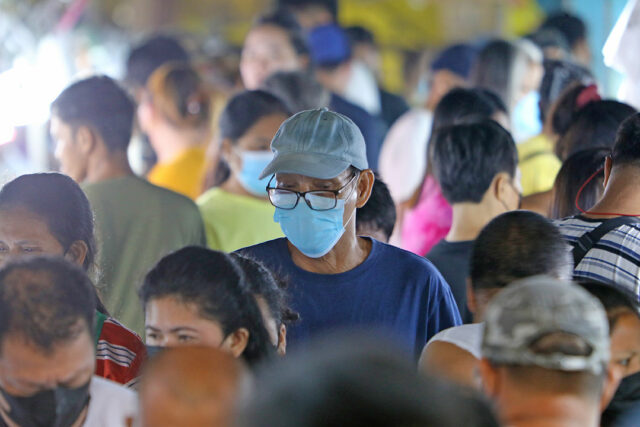
At this point in the COVID-19 pandemic locally, can people afford not to wear masks indoors? This is considering the present rate of infection, the number of cases, the number of vaccinated people, the waning efficacy of vaccines over time, and the emergence of new variants. Also, if many countries have already dropped the mask mandate, should we also do the same?

The government seems to think so. Otherwise, it would not have issued Executive Order No. 7 that makes the wearing of masks indoors purely voluntary, except in health care facilities, while on medical transport, or when using public transportation. Previously, the government also issued an order for the voluntary wearing of masks outdoors.

EO No. 7 rationalizes the decision to remove the mask mandate by stating that “a policy of voluntary wearing of face masks in both indoor and outdoor settings is a positive step towards normalization, and a welcome development that would encourage activities and boost efforts toward the full reopening of the economy.”

Meantime, the Department of Education (DepEd) has also required public schools to resume face-to-face classes full time at all levels starting this November. In addition, DepEd announced that students are now free to choose whether they would use face masks while in school. This is in line with EO No. 7 removing the mask requirement.

With all these, it seems that growing the economy takes priority over protecting public health, with the government implying that the economy — or businesses — cannot thrive or fully “reopen” while people are still required to wear masks. But, if this is this truly the case, then why are masks still “encouraged” for the elderly, those with comorbidities or immunocompromised, and for those pregnant or unvaccinated or symptomatic?

Couple this with the Department of Health’s own warning, as reported in media, that optional indoor masking could result in up to 18,000 new infections per day by late 2022. DoH officer-in-charge Maria Rosario Vergeire cited projections by scientists that daily COVID-19 cases may range from 2,500 to as high as 18,000 before the end of the year because of new mask rules.

She also said, “There’s this agreement with [the Inter-Agency Task Force for the Management of Emerging Infectious Diseases] that we will still have unified messaging wherein we still highly encourage wearing of masks, especially in high-risk areas like public transport, health facilities, and for the vulnerable like the elderly, pregnant women, the unvaccinated”.

Time and time again, the DoH has cautioned against easing masking rules, with Vergeire noting this could be aggravated by the emergence of new COVID Omicron subvariants and increased mobility of the public. “Cases are going to increase,” she was quoted as telling media. “What we need to preserve would be our health care capacity.”

Active COVID cases as of Nov. 1 total over 19,000. A news report noted that in the past two weeks, the National Capital Region recorded the highest number of COVID cases with 5,106, followed by Calabarzon with 3,170, Central Luzon with 1,855, Western Visayas with 1,713, and the Davao Region with 1,186. In Makati City, based on local tracking, there were 66 active cases as of Nov. 1, way down from a peak of 3,298 cases on Sept. 9, 2021.

So, with 19,000 active cases nationwide to date, should people already start unmasking? Perhaps so, if seen in relation to a total population of over 100 million people and with over four million people only, or about 4% of the population, having gotten sick with COVID since the pandemic started. Deaths totaled over 64,000 so far.

But the thing is, experience shows us that COVID cases have peaks and valleys. Since 2021, the pandemic has had four surges: April 2021, September 2021, January 2022, and August 2022. This is not counting the initial stages of the pandemic in 2020, which was tempered mainly by prolonged lockdowns.

The timing of the easing of masking rules is a concern considering the emergence of new Omicron subvariants, the waning effect of vaccines, the low uptake of vaccine boosters, as well as the increased mobility during the Christmas season. In Makati City, for instance, there were only 16 active COVID cases on Dec. 21, 2021. But this count surged to 2,435 by Jan. 30, 2022, after five weeks of the Christmas holidays.

Also, a concern is that once masking rules are lifted, the masking mandate will be difficult to reimplement as soon as another surge starts. With people getting unmasked starting this month, can they still be made to put their masks back on later? At what point or threshold will mask mandates resume, if at all?

Masks, obviously, are the final line of defense not only against COVID-19 but also against other airborne viruses. Even the DoH itself feels uneasy about easing masks rules, knowing fully well that even with vaccines, people are far more vulnerable to getting COVID if they don’t wear masks, particularly while indoors with other people.

My only consolation is that the public seems to know better than to insist on EO No. 7. Having been out on errands almost daily since Friday last week, despite the easing of masking rules, I noticed that most people still kept their masks on particularly indoors, except when dining. In fact, even outdoors, most kept their masks on. A quick trip outside Metro Manila on Tuesday revealed the same thing. In this line, I think even students will continue to opt to wear masks while in school.

I hope people will continue to be considerate. It is obvious that the pandemic is far from over. And I suppose they also realize that at the end of the day, it is not up to the government but to themselves to ensure their safety. Having gotten used to wearing a mask since March 2020, keeping it on meantime is a small price to pay for continued protection. Better safe than sorry.


Marvin Tort is a former managing editor of BusinessWorld, an  a former chairman of the Philippine Press Council

matort@yahoo.com

Gobbledygook in international sports

FIFA.COM

The 2022 FIFA World Cup in Doha, Qatar on Nov. 20, is just about 17 days away. And yet the host country, Qatar, and the host organization, FIFA, are still facing pressure from various quarters on a variety of labor rights issues and alleged exploitative migrant worker policies. The FIFA World Cup was called “the once every four years most-watched and most lucrative event in sports” by Minky Worden, Director Of Global Initiatives, Human Rights Watch, in an opinion piece that appeared in Newsweek. FIFA is also reportedly the most cash-rich international sports federation.

The characters and principals involved in this sporting event, especially the impoverished migrant workers, make for a drama that features what Worden calls a case of “the haves and the have nots.”

The moment FIFA awarded the 2022 World Cup to Qatar, its huge population of migrant workers in the construction industry — from India, Pakistan, Nepal, Bangladesh, Kenya, Ghana, and the Philippines — became the focus of concern. Qatar has a population of about three million, a big number of whom are non-Qataris.

Qatar worked hard to get the right to host the FIFA World Cup. It is part of an ongoing campaign to project Qatar as a tourism and sports tourism destination to diversify its national revenues which come mainly from petroleum and natural gas. Its Gross Domestic Product (GDP) is estimated at $220 billion, 60% of which comes from petroleum and natural gas. Qatar had reputedly the world’s third largest proven natural gas reserves and is the second-largest exporter of natural gas.

The Qataris knew what they were getting into even before they won the right to host the 2022 World Cup in 2010, or 12 years before kickoff. They knew that they were to build seven stadiums, World Cup-related facilities like rail and highways systems to the eight venues, upgrade its airport and hotels, and other infrastructure projects required by FIFA for the convenience of the few Qataris, millions of football fans, national teams and other stakeholders. Unfortunately, neither Qatar nor FIFA anticipated the human cost of the Cup. As Worden pointed out, several thousand people who migrated from some of the poorest countries to work as laborers preparing for the World Cup have died.

#PayUpFIFA states that with migrant workers making up more than 90% of the country’s workforce, it was clear that the weight of delivering these projects would rest overwhelmingly on the shoulders of all those who traveled to Qatar in the hope of securing a better livelihood.

Worden says it is impossible to know exactly how many workers have died in the course of constructing Qatar’s World Cup-related facilities. Official Qatari statistics show that 15,021 non-Qataris died in the country between 2010 and 2019, per Worden’s article of August 2022. The US and France have called on FIFA “to set up as soon as possible a minimum fund of $440 million (about P25 billion), known as the Compensation and Remedy Fund, in order to be able to compensate all workers or their families who participated in the preparation of the 2022 World Cup and whose fundamental rights were violated.” FIFA, on the other hand, said “only” 37 have died. In the meantime, seven national football federations taking part in the Qatar tournament and four key sponsors have urged FIFA to set up the Fund and pay compensation.

The Qataris have gone on the offensive. The Associated Press reports that the Emir of Qatar on Oct. 25 lashed out at criticism of his country over its hosting of the 2020 FIFA World Cup, describing it as an “unprecedented campaign targeting the first Arab nation to hold the tournament.”

In a televised speech before the emirate’s legislative body (all of whom are appointed by the government), Sheikh Tamim bin Hamad Al Thani said, “Qatar has seen an unprecedented campaign that no host country has ever faced.” The Emir stated, the “campaign tends to continue and expand to include fabrications and double standards that were so ferocious that it has unfortunately prompted many people to question the real reasons and motives.”

People may question reasons and motives but at the end of the day, facts have been presented and have to be answered with facts too. This microscopic scrutiny of Qatar was to be expected given its labor rights record. The fact that the country welcomed an event that is one of the most televised in the world was an invitation for the whole world to take a look at what was happening in Qatar. The Qataris really wanted the World Cup to be held in Doha, and so did FIFA — so much so that it was willing to revise the European football calendar to hold the Cup in the “winter months of November and December” so that players and fans would not have to endure 120* F temperatures during the months of July and August. Former FIFA president Sepp Blatter said in 2014 that “it was a mistake” giving the hosting rights to Qatar.

Adding fuel to the already smoldering fire, The Guardian reports that the Qatar World Cup is failing to live up to promises on reducing its carbon footprint, creating still another problem for the tournament.

The Guardian reports that organizers had claimed that the 32-team showpiece would be the first “carbon neutral” World Cup, meaning any emission would be limited and offset. However, Carbon Market Watch (CMW), a non-profit organization which works closely with the European Union, has examined the organizers’ plans and says projected emissions have likely been underreported, with the footprint created from the building of seven stadiums of particular concern. These carbon emissions come from activity generated by the importation by air of construction materials and even tons of seeds of turf for the field of play.

But probably the most disturbing latest development is a Reuters report that “thousands of workers evicted in Qatar capital ahead of World Cup.”

Andrew Mills for Reuters reported that Qatar has emptied apartment blocks housing thousands of foreign (Asian and African) workers in the same areas in the center of Doha where visiting soccer fans will stay during the World Cup. In short, workers were evicted from their homes.

Qatari government officials said the evictions are unrelated to the World Cup and were designed “in line with ongoing comprehensive long-term plans to re-organize Doha.” FIFA did not respond to a request for comment and World Cup organizers directed inquiries to government, reported Reuters.

Those of us who have dealt with different international sports federations over the years and their sub units at the continental level are just too familiar with such gobbledygook, evasion, and downright insincerity from some sectors of that otherwise honorable community. That’s probably how a sector of the international sports community behaves. And that’s probably how that sector thrives and “prospers.”


Philip Ella Juico’s areas of interest include the protection and promotion of democracy, free markets, sustainable development, social responsibility and sports as a tool for social development. He obtained his doctorate in business at De La Salle University. Dr. Juico served as secretary of Agrarian Reform during the Corazon C. Aquino administration.

ADVERTISEMENT
ADVERTISEMENT