Home Blog Page 5621

Doctors urge mask wearing as mandates dropped

UNSPLASH

By Brontë H. Lacsamana, Reporter   

A DECREASE in coronavirus disease 2019 (COVID-19) cases all over the world has made it safer for the Philippines to lift the masking mandate. Individuals must now make conscious choices about wearing masks (or not) by assessing the risk in every situation, said health experts.  

“The wearing of your mask is an informed choice. Since it’s now voluntary, you need to empower yourself to assess the risk for every activity you’re going to do and every place you’re going to visit,” said Dr. Marissa M. Alejandria, director of the Institute of Clinical Epidemiology at University of the Philippines (UP) Manila, at a Nov. 11 webinar.  

According to the ¾ rule, individuals who are fully vaccinated against COVID-19, physically distanced, and in an outdoor or ventilated space can forgo masking.   

“We still highly recommend everyone to continue masking as it is a simple, practical, and effective way to prevent the transmission of COVID-19,” she said.  

On Friday, the Philippines posted 1,227 new coronavirus cases, bringing the total to 4.01 million. Of these, only 17,188 are still active.  

BA.5, the predominant variant under Omicron, currently has descendants like XBB, XBC, and BQ.1, whose emergence prove that transmission of the virus is still ongoing.   

Dr. Alejandria reminded that masking has two roles: it is a source control that blocks the wearer from emitting droplets, and a filter that keeps the wearer from inhaling droplets.  

“The benefit increases with increasing numbers of people using masks correctly and consistently,” she said. “There is both a community benefit and an individual benefit.”  

Maria Rosario S. Vergeire, officer-in-charge of the Department of Health (DoH), reiterated in a media briefing on Friday that the public should always make informed decisions to prevent transmission of the virus, regardless of what the restrictions are.  

In November, the Philippine Pediatric Society and the Pediatric Infectious Diseases Society of the Philippines released a statement saying that masking, alongside ventilation and distancing, remain vital in preventing COVID-19 transmission in schools.  

The primary vaccination rate in the Philippines is about 70%, but the booster coverage is under 50%, which adds to the importance of masking as a precautionary measure, said Dr. Alejandria.  

Face masks are also effective in protecting people from other respiratory infections, according to Dr. Ralph Elvi Villalobos, consultant at the division of pulmonary medicine at UP Philippine General Hospital.  

“Aside from COVID-19, using face masks can protect from other respiratory infectious illnesses like influenza and pneumonia,” he said. “It will also help patients who have to deal with air pollution, asthma, and emphysema triggers.”

Comedian Jay Leno suffers burns in car fire in his LA garage

COMEDIAN Jay Leno was taken to Grossman Burn Center after his face was burned in his Los Angeles garage when one of his cars burst into flames.

The left side of the former The Tonight Show host’s face was burned, but Mr. Leno’s eye and ear were not severely damaged. Mr. Leno confirmed the news to Variety, saying in a statement, “I got some serious burns from a gasoline fire. I am ok. Just need a week or two to get back on my feet.” The website Deadline confirmed the gasoline fire.

He had been scheduled to attend a Las Vegas financial conference on Sunday, but plans were canceled following his burn injuries, which were not shared publicly at the time.

Mr. Leno, 72, was one of America’s most-watched late night TV hosts, attracting around 4.8 million viewers to his five nights-a-week show. In 2009, he left the show and was replaced by Conan O’Brien.

Since leaving The Tonight Show, Mr. Leno began his own CNBC series called Jay Leno’s Garage in 2015 and started hosting the You Bet Your Life revival in 2021. — Reuters

Premiere Island’s REIT IPO gets SEC’s nod

THE Securities and Exchange Commission has approved the initial public offering (IPO) of Premiere Island Holding Corp., which is expected to raise up to P3.09 billion from its market debut.

The company is envisioned to become the power and infrastructure real estate investment trust (REIT) of Villar-led Prime Asset Ventures, Inc. Its name will be changed to Premiere Island Power REIT (PREIT).

In a press release, the SEC said that the commission en banc rendered effective the registration statement of PREIT during a meeting on Nov. 10. The company registered around 3.29 billion common shares subject to its compliance with some requirements.

The IPO shares will be sold by the company’s sponsors — S.I. Power Corp. and Camotes Island Power Generation Corp. — and will include 1.4 billion common shares priced at P2.00 each.

PREIT expects proceeds from the offering to reach P3.09 billion should the over-allotment option of up to P210 million common shares be fully exercised.

“The selling shareholders will receive the full amount of the proceeds, which shall be reinvested in the Philippines,” the SEC said, referring to provisions under the Revised Implementing Rules and Regulations of Republic Act No. 9856 or the REIT Act of 2019.

PREIT’s IPO is set to be conducted from Nov. 25 to Dec. 2 with its stock market debut slated on Dec. 12. China Bank Capital Corp. will be the sole issue manager, underwriter, and book-runner, while RCBC Capital Corp. will serve as a participating underwriter.

PREIT tapped VFund Management, Inc. as its fund manager and VProperty Management, Inc. as its property manager.

PREIT’s initial portfolio will comprise land and power plant assets in the power generation projects of S.I. Power and Camotes Island Power with a combined capacity of 21.2 megawatts.

“As mandated by law, PREIT shall distribute at least 90% of its annual distributable income as dividends,” SEC said.

Distributable income is the company’s adjusted net income for unrealized gains and losses and impairment losses. It does not include proceeds from the sale of the REIT’s assets that are reinvested in the REIT. — Justine Irish D. Tabile

RH advocate receives international lifetime achievement award

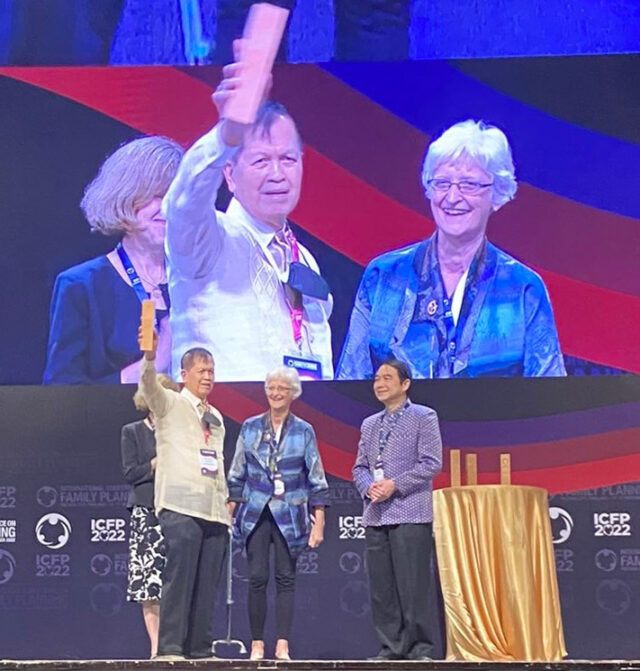
Benjamin D. De Leon, whose long career and advocacy helped pave the way for crucial reforms and policies on reproductive health in the Philippines, this week received a Lifetime Achievement Award in Family Planning and Reproductive Health at the 2022 International Conference on Family Planning (ICFP). 

From 1992 to 1998, Mr. De Leon held the rank of undersecretary while acting as presidential assistant for social development to former President Fidel V. Ramos. Drawing on decades of experience as a champion of family planning, he gave advice on how to advance the cause of reproductive health in the Philippines.   

Jose G. Rimon II, Director at the Bill & Melinda Gates Institute for Population and Reproductive Health and chair of the core organizing group for the sixth ICFP held in Pattaya, Thailand, this week, said that Mr. De Leon, “with (his) national and international experience, (was) able to leave behind historical legacies in the Philippines, including playing a major role in passing and implementing the landmark Responsible Parenthood and Reproductive Health (RH) bill in the Philippines in 2012 after languishing in the Congress for 14 years.” 

Mr. Rimon, in a letter to Mr. De Leon, noted that “this groundbreaking law guarantees universal access to nearly all modern contraceptives for all citizens, including impoverished communities, at government health centers. We are honored to award you this recognition in addition to your previously awarded Presidential Medal of Merit in ‘recognition of his distinguished and exemplary service rendered to the Republic of the Philippines.’” 

Mr. Rimon said: “Lifetime Achievement Award honorees are distinctive in that they have provided exemplary leadership throughout a significant portion of their professional lives and become known as role models as a result of their exceptional accomplishments in increasing access to family planning information, services, and/or supplies. Moreover, honorees have inspired others to take action on these pressing issues; and created lasting positive change for women, families, communities, and countries around the world, symbolizing the lifelong returns on investment that family planning provides at many levels and in many sectors of society.” 

Mr. De Leon earned his Bachelor and Master of Arts Degrees at the University of the Philippines in 1957 and 1961 respectively. A social worker by profession, he devoted himself to social development work, especially in the field of population and family planning, since 1971. 

He was Deputy Executive Director and Executive Director of the Commission on Population and Development (POPCOM) from 1971–1980. He was involved in the implementation of population and family planning programs and projects in coordination with relevant government agencies such as the National Economic and Development Authority (NEDA), the Department of Health (DoH) and NGOs. One of the highlights of the program then was the Total Integrated Development Approach (TIDA) which incorporated family planning as part of development. This contributed to a broader knowledge of the Local Government Executives (LGE) composed of Provincial Governors, City and Municipal Mayors of family planning as a dimension of development. 

From 1980 to 1987, he was executive director of the Jakarta-based ASEAN Population Coordination Unit whose responsibility it was to coordinate the ASEAN Population Program. He returned to the Philippines to become Chief of Staff (CoS) of former Senator Leticia R. Shahani, for whom he helped draft legislation on population, reproductive health, family planning, and gender rights and welfare. From 1988 to 1989 he was the founding Executive Director of the Philippine Legislators Committee on Population and Development (PLCPD). 

With support coming from UNFPA and UNICEF, PLCPD embarked on a project that oriented provincial governors, city, and municipal mayors on the importance of population and children in development programs.

From 1992 to 1998, former President Ramos appointed him as his Presidential Assistant for Social Development directly under his office with the rank of Undersecretary.

Retiring from the government in 2004 he founded The Forum for Family Planning and Development Inc. (The Forum) of which he is President from its inception in 2004 to date.

During this time a bill was introduced in both Houses of Congress establishing a national population policy on responsible parenthood and reproductive health. This bill met stiff resistance from the Catholic Church but the members of the civil society like The Forum stood pat ensuring its passage. Mr. De Leon brought his learnings and insights to various countries and continents.  He attended the Executive Program for Senior Managers in Government at the John F. Kennedy School of Government, Harvard University in 1998, and the Leadership Communication Course on Reproductive Health and Family Planning, Center for Communications Program, Johns Hopkins University. 

In 1998 he received the Presidential Medal of Merit in “recognition of his distinguished and exemplary service rendered to the Republic of the Philippines,” and in that same year was the Outstanding Professional Awardee in the field of Public Administration (Government Service), as recognized by the UP Alumni Association.

Singer Roberta Flack can no longer sing after ALS diagnosis

ROBERTA Flack at the 62nd Annual GRAMMY Awards held at Staples Center on January 26, 2020 in Los Angeles, California, US. — XAVIER COLLIN/NURPHOTO VIA REUTERS

LOS ANGELES — Grammy-winning musician Roberta Flack, whose hits include “Killing Me Softly with His Song,” has been diagnosed with ALS, also known as Lou Gehrig’s disease, and can no longer sing, her representatives said on Monday.

Amyotrophic lateral sclerosis, a progressive disease, “has made it impossible to sing and not easy to speak,” a statement from her publicists said. “But it will take a lot more than ALS to silence this icon.”

A documentary about Ms. Flack’s life is set to debut at a film festival in New York next week. It will air on PBS television in the United States in January. Ms. Flack, 85, also is releasing a children’s book in January.

ALS breaks down nerve cells in the brain and spinal cord that make muscles work, leading to progressive paralysis and death.

Ms. Flack had several No. 1 hits in the 1970s and produced 20 studio albums. She won four Grammys and was honored with a lifetime achievement award in 2020.

The singer also was the first artist to win two consecutive record of the year trophies in 1973 for “First Time I Ever Saw Your Face” and in 1974 for “Killing Me Softly with His Song.” — Reuters

Megaworld Corp. launches P2.2-B condominium in Bulacan

9 Central Park within the 85-hectare Northwin Global City township that spans across Marilao and Bocaue.

MEGAWORLD Corp. is building a 23-storey high-rise residential condominium in its township in Bulacan from which it expects P2.2 billion in sales.

Called 9 Central Park, it will be inside the company’s 85-hectare Northwin Global City township that spans across Marilao and Bocaue. It is expected to be turned over by 2027.

“Our first residential development inside Northwin Global City signals our commitment to build a complete array of offerings inside this new ‘global city’ of Bulacan,” Megaworld Executive Vice-President for Sales and Marketing Noli D. Hernandez said in a press release.

“We look forward to this expansive township taking shape in the next few years,” he added.

9 Central Park will offer 478 units with the smallest unit having a 35.5-square-meter (sq.m.) space and the largest unit with 100 sq.m.

The condominium will also offer units that are linked together called “TwinFlex” units. The smallest of these will have 127.5 sq.m. while the largest TwinFlex unit will have 139.5 sq.m.

Units at the condominium will come with a wireless smart home system that will allow residents to control several features of their homes through a dedicated phone application.

9 Central Park will have a 25-meter lap pool, children’s pool, outdoor fitness area, outdoor lounge, and a daycare facility, among others.

The tower will have two floors of parking with an integrated bike storage facility. It will also have occupancy sensors that will help conserve energy, rainwater harvesting, a reuse facility, and its own material recovery facility.

Northwin Global City is a P98-billion township that Megaworld positioned to be Bulacan’s global business district. It will have hotels, malls, mixed-use commercial buildings, educational institutions, and office towers.

It will be hosting one of the stations of the Manila-Clark railway project which will give access to Clark International Airport and New Manila International Airport. — Justine Irish D. Tabile

Vaccination seen to improve workplace productivity 

PHILIPPINE STAR/ WALTER BOLLOZOS

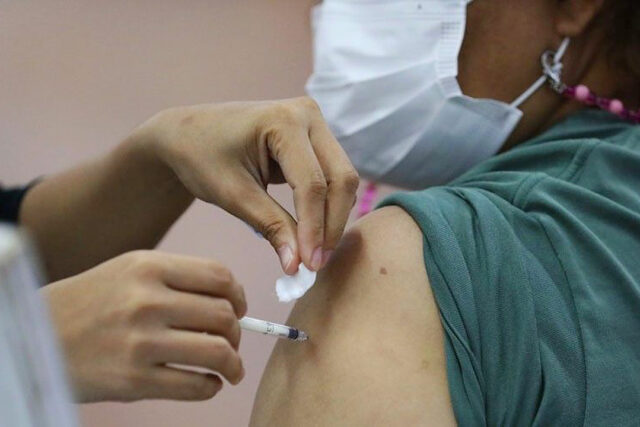
EMPLOYERS will benefit from promoting vaccination as it boosts worker productivity and contributes to economic well-being by reducing the risk of vaccine-preventable diseases, an occupational medicine expert said. 

“It’s really up to each workplace to try to engage the employees with regard to accepting that vaccination has its benefits — not just for the workforce, but for communities, households, and families,” said Dr. Anna Sofia Victoria S. Fajardo, national president of the Philippine College of Occupational Medicine, Inc., at a Nov. 9 event organized by the American Chamber of Commerce and Pfizer.  

“This vaccination program … is worth investing in not just for the economic development and growth of your own companies, but also for our communities and our country,” she added.  

Reducing out-of-pocket costs for vaccination, sending reminders, and making employees aware of the benefits of vaccination will increase uptake in the workplace, said Dr. Fajardo. 

Workplace vaccination, according to the US Centers for Disease Control and Prevention (CDC), reduces cost by reducing absences due to illness, resulting in improved productivity. It also improves morale among employees.  

PNEUMONIA
Vaccination against pneumonia, in particular, can help mitigate the incidence of one of the 10 leading causes of morbidity and mortality in the Philippines.  

According to Philippine Health Insurance Corp., pneumonia topped the claims count at 190,831 cases, followed by hypertensive emergencies at 107,978 and dengue fever at 101,777. The coronavirus disease 2019 (COVID-19) pneumonia package placed 10th at 46,871 claims. 

Pneumonia is an inflammation and infection of the lung and commonly affects the very young (less than two years old) and the very old (65 years old and above). There are different types of pneumonia, including viral pneumonia, which is responsible for a third of all pneumonia cases.  

The US CDC recommends pneumococcal vaccination for those aged 65 and above and those 5 and below. The centers also recommend it for those between 2 to 64 who have medical conditions such as immune deficiencies.  

As there are two types of adult pneumococcal vaccines listed in the clinical guidelines for adult immunization by the Philippine Society for Microbiology and Infectious Diseases, Inc., individuals are advised to consult their doctor as to the specific dose and sequence they need.   

“As the average age of the population rises, the issue of vaccinations for adults is becoming more important,” said Dr. Imee M. Mateo, president of the Philippine College of Chest Physicians, who noted that one in five people will be over 60 by 2050

“Especially us in the workforce, we cannot afford to get sick,” she added.  

Nov. 12 is World Pneumonia Day. — Patricia B. Mirasol

Gov’t makes full award of reissued 25-year bonds

BW FILE PHOTO

THE GOVERNMENT fully awarded the reissued 25-year Treasury bonds (T-bonds) it offered on Tuesday as investors asked for higher yields ahead of the Bangko Sentral ng Pilipinas’ (BSP) rate hike this week.

The Bureau of the Treasury (BTr) raised P35 billion as planned from its offer of 25-year papers on Tuesday as total bids reached P80.953 billion.

The bonds, which have a remaining life of 11 years and 11 months, were awarded at an average rate of 8.168%, 91.2 basis points (bps) lower than the 9.08% average quoted for the bond when it was first offered on Nov. 3, 2009 and 108.2 bps below the 9.25% coupon for the issue.

However, the average rate for the bond was higher than secondary market yields. It was 29.25 bps above the 7.8755% quoted for the bond series and 47.51 bps higher than the 7.6929% yield seen for the 10-year tenor prior to the auction, based on PHP Bloomberg Valuation Service Reference Rates data provided by the BTr.

To accommodate the strong demand seen for Tuesday’s offering, the Treasury opened its tap facility to raise P5 billion more via the bonds for a yield-to-maturity of 8.168%.

National Treasurer Rosalia V. de Leon said in a Viber message to reporters that the BTr made a full award of its T-bond offer even with the average rate for the issue above secondary market yields as the increase was reasonable due to the BSP’s expected tightening on Thursday.

The first trader said in a phone interview that the Treasury fully awarded its offer amid strong demand from the market.

The second trader added that the auction result was within market expectations.

“Investors continue to demand higher yields as the policy rate is expected to trend higher. The award just shows that BTr seems comfortable awarding at these levels given that the tenor is favorable,” the second trader added in a text message.

Rizal Commercial Banking Corp. Chief Economist Michael L. Ricafort likewise said in a text message that the Treasury made a full award as demand for the offering was significantly higher ahead of the BSP’s anticipated rate hike.

He noted that the full award was made even as the yield was higher compared with the rate of the 12-year paper at the secondary market, which was at 7.74% as of Nov. 14.

The BSP is set to raise benchmark interest rates by 75 bps at its policy meeting on Thursday to keep in step with the US Federal Reserve as it seeks to stabilize prices and support the peso.

Since May, the BSP has hiked borrowing costs by 225 bps to tame rising inflation, bringing the policy rate to 4.25%.

October inflation accelerated to 7.7%, its fastest pace in 14 years, driven by rising food costs. For the first 10 months, inflation averaged 5.4%, higher than the central bank’s 2-4% target but lower than its 5.6% full-year forecast.

Meanwhile, the Fed this month delivered a fourth-straight 75-bp increase. It has raised borrowing costs by 375 bps since March, bringing the federal funds rate between 3.75-4%.

The BTr wants to raise P215 billion from the domestic market this month, or P75 billion through Treasury bills and P140 billion from T-bonds.

The government borrows from local and external sources to help finance a budget deficit capped at 7.6% of gross domestic product this year. — Luisa Maria Jacinta C. Jocson

Adele returns to Las Vegas for delayed concerts

NEW YORK — Music star Adele begins her Las Vegas residence on Friday, 10 months after she cancelled the shows at the last minute citing COVID-19 delays. The British singer-songwriter faced online backlash in January for the announcement’s short notice as some fans were already traveling to Nevada for the concerts, called Weekends with Adele.

US actor Dominic Crisonino was at a New York airport when he heard the news but traveled to Las Vegas anyway. He ended up speaking to the “Hello” singer via FaceTime. Now he is going back this weekend to finally watch Adele finally perform at Caesars’ Palace hotel.

“I was honestly over it within a couple of hours because I always think the most of every situation and so I was just finding the positive and things happen,” he said.

“Now it’s that redemption of finally having the opportunity to go and see her so we’re very much looking forward to actually being in that space and hearing her voice and seeing this concert that we’ve waited for.” — Reuters

To mask or not to mask? G20 gathers nations with divergent COVID rules 

FREEPIK

NUSA DUA, Indonesia — Nearly three years into the coronavirus disease 2019 (COVID-19) pandemic, leaders of G20 countries are gathering on the Indonesian resort island of Bali with strict testing and masking requirements, even though such measures have been largely dropped in some member countries.  

It is Chinese President Xi Jinping’s first G20 summit — and only his second trip abroad — since the start of the pandemic as his country continues its zero-COVID policy of lockdowns and quarantine that are among the world’s strictest.  

Other G20 nations have varying measures in place and different social conventions for the coronavirus, which has so far infected 631 million people worldwide and killed nearly 6.6 million, though vaccines have significantly slowed the death rate.  

Below is a look at summit protocols and some of the divergent approaches to COVID-19 among G20 nations.  

WHAT ARE THE SUMMIT’S COVID POLICIES? 
Indonesia, which holds the G20 presidency, has strict protocols in place, including mask mandates, body temperature checks, antigen, and PCR (polymerase chain reaction) swab tests, to prevent the risk of virus spread.  

The Nusa Dua district is hosting the summit and has been under lockdown since Nov. 11 and will remain so until Nov. 17.  

Four mini-intensive care units, 23 clinics and 13 “medical mobile teams,” will be deployed during the summit, including more than 400 medical staff.  

Seven hospitals, with a total of 1,350 beds, were designated to accommodate summit participants who might need to be isolated for COVID-19. Navy vessel KRI Wahidin Sudirohusodo will also be deployed off Nusa Dua as a “floating hospital.”  

CHINA 
China maintains among the world’s most stringent COVID restrictions but on Friday eased some measures, including shortening quarantines for close contacts of infected people and for inbound travelers and removing a penalty for airlines for bringing in too many cases.  

Under the new rules, quarantine times at centralized sites for close contacts and travelers from abroad are shortened from seven to five days.  

China will also stop trying to identify “secondary” contacts while still identifying close contacts.  

JAPAN 
In Japan, most people on the streets continue to wear face masks, despite the government advising that they can discontinue doing so outside. Most public venues and transportation still ask people to wear a face mask  

The country lifted in March quasi-emergency curbs imposed on Tokyo and 17 other prefectures centered on limiting hours for eateries and other businesses since new infections had dropped substantially.  

Japan, which has some of the strictest pandemic border measures among major economies, said in August it may lift requirements for pre-departure COVID-19 tests for travelers and raise daily caps on entrants.  

UNITED STATES 
Nearly all COVID rules in the United States have been relaxed and recommendations by the US Centers for Disease Control (CDC) have eased suggested measures. US states and major cities no longer require masks to be worn in transit hubs. There are few requirements remaining for people to show proof of vaccination or negative tests but with some exceptions for schools, universities and healthcare workers.  

The CDC recommends people on public transport and at transport hubs wear masks, but it is no longer required by airlines or in federal buildings. In June it rescinded a requirement for people arriving in the country by air to test negative for COVID-19. But most foreign visitors arriving by airplane must still show proof of COVID vaccination.  

GERMANY 
All major restrictions, including work from home requirements, expired on March 20, though wearing medical-grade masks on public transportation and long-distance trains is still required.  

Germany eased COVID-19 curbs in stages, starting by allowing private indoor meetings for those vaccinated or recovered from the virus in February, and ending checks at non-essential stores for a proof of vaccination or a negative test.  

From March, it increased the maximum permitted size for outdoor events to 25,000 people, and nightclubs reopened for recipients of three vaccine doses or two doses of vaccine plus a negative COVID test.  

ARGENTINA 
Argentina, among the countries with the most deaths per capita in the world, along with its Latin American neighbors, has loosened strict border controls, allowed more commercial activities and lifted outdoor mask mandate, although it recommends their use in indoor settings.  

SOUTH AFRICA 
South Africa which has recorded the most coronavirus cases and deaths on the African continent, said it June it has repealed COVID-19 rules that made masks mandatory in indoor public spaces, limited the size of gatherings and imposed entry requirements at its borders.  

INDIA
India began easing movement restrictions in the middle of last year to allow more businesses to operate. International travel arrangements are now largely at the pre-pandemic level.  

India relaxed its rules on testing, quarantine and hospital admissions in January to free up resources for its neediest people, but still recommends social distancing, hand washing and mask wearing. Rules on masks vary between states.  

Mandatory testing for contacts of confirmed cases were dropped earlier this year unless they were old or battling other conditions, and the isolation period was halved to a week. Hospitals were advised to care only for the seriously ill.  

TURKEY
Turkey eased the majority of its coronavirus curbs in March, almost two years after its first case was identified, and lifted its longtime indoor mask mandate in May.  

Health officials in March said the fight against the disease will be at an individual level rather than society-wide and people without symptoms would not be tested. — Reuters


Philippines’ state of inclusion for women and children deteriorates

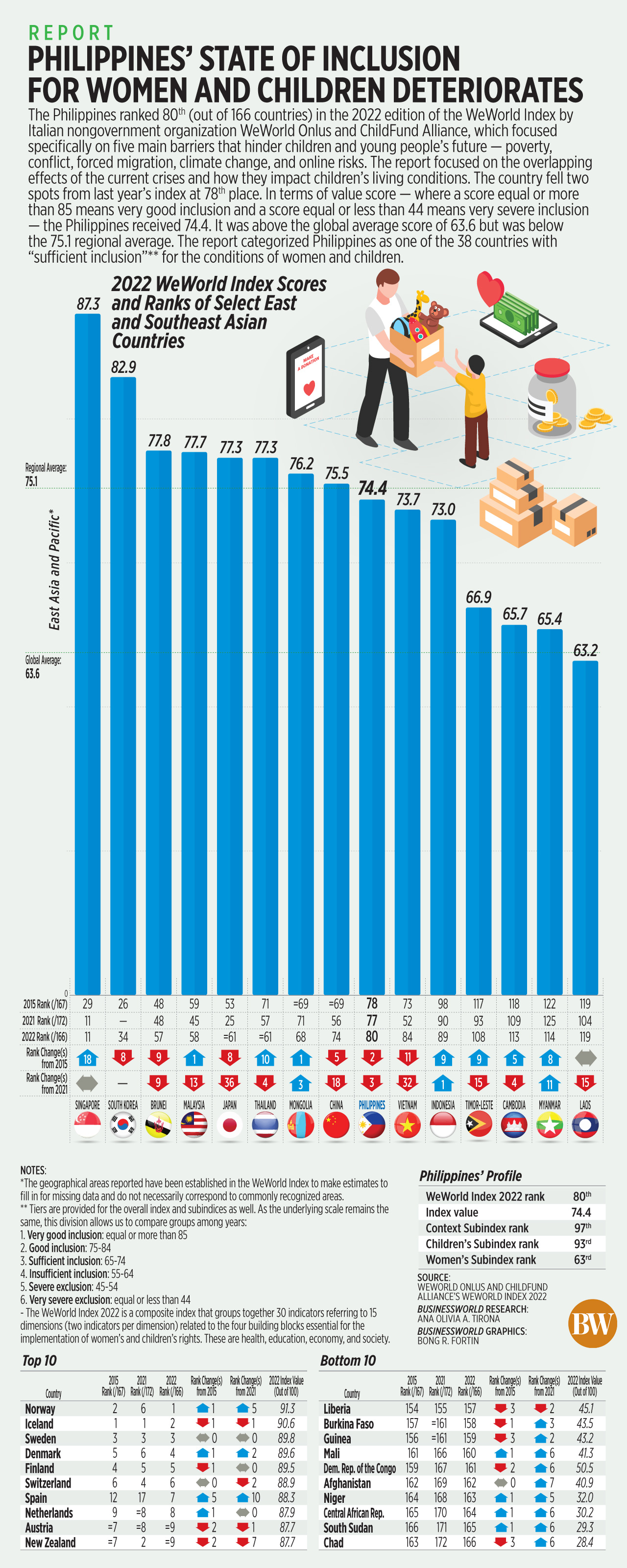
The Philippines ranked 80th (out of 166 countries) in the 2022 edition of the WeWorld Index by Italian nongovernment organization WeWorld Onlus and ChildFund Alliance, which focused specifically on five main barriers that hinder children and young people’s future — poverty, conflict, forced migration, climate change, and online risks. The report focused on the overlapping effects of the current crises and how they impact children’s living conditions. The country fell two spots from last year’s index at 78th place. In terms of value score — where a score equal or more than 85 means very good inclusion and a score equal or less than 44 means very severe inclusion — the Philippines received 74.4. It was above the global average score of 63.6 but was below the 75.1 regional average. The report categorized Philippines as one of the 38 countries with “sufficient inclusion”** for the conditions of women and children.

Philippines’ state of inclusion for women and children deteriorates

PetroEnergy income up nearly 25% on strong energy sales

PETROENERGY Resources Corp. reported a third-quarter net income of P111.03 million, up by 24.7% from the P89.01 million recorded a year ago, on strong energy sales from its renewable energy units.

In its regulatory filing, PetroEnergy recorded revenues of P649.92 million for three months to September, 8.9% higher than the P596.93 million logged in the same period last year. Its gross expense increased by 10.4% to P467.39 million from P423.27 million.

For the nine-month period, its net income increased by 44.1% to P466.22 million from the P323.46 million recorded in the corresponding period last year.

From January to September, the energy firm saw its revenues rise by 9.2% to P2.01 billion from P1.83 billion. PetroEnergy said its revenues were lifted by energy sales from its renewable energy unit PetroGreen Energy Corp.

Energy sales came from the 32-megawatts (MW) Maibarara geothermal project of Maibarara Geothermal, Inc.; the 70-MW Tarlac solar project of PetroSolar Corp.; and the 36-MW Nabas-1 wind project of PetroWind Energy, Inc.

Meanwhile, PetroEnergy said oil revenues from its minority stake in the Etame oil concession in offshore Gabon, West Africa provided the balance of steady earnings for the company.

It said revenues were lifted by higher global crude oil prices and higher offtake rates for PetroSolar’s Tarlac-2 solar power plant.

Last month, PetroEnergy announced that Kyuden International Corp. (KIC) has completed the initial closing requirements for its acquisition of a 25% stake in PetroGreen.

KIC, a subsidiary of Japan’s Kyushu Electric Power Co., Inc., is the overseas investment arm of Kyushu Electric, the power provider and distributor in Kyushu Island in Japan. — Ashley Erika O. Jose

ADVERTISEMENT
ADVERTISEMENT