Home Blog Page 5610

Peso inches lower vs the dollar


BW FILE PHOTO
THE PESO moved sideways against the dollar on Thursday after the central bank delivered an aggressive rate increase to rein in rising inflation. — BW FILE PHOTO

THE PESO moved sideways against the dollar on Thursday as the Bangko Sentral ng Pilipinas (BSP) delivered a widely expected 75-basis-point (bp) rate increase to fight inflation.

The local unit closed at P57.36 per dollar on Thursday, inching down by a centavo from its P57.35 finish on Wednesday, based on Bankers Association of the Philippines data.

The peso opened Thursday’s session weaker at P57.45 per dollar. Its worst showing was at P57.53, while its intraday best was at P57.35 against the greenback.

Dollars exchanged decreased to $661.88 million on Thursday from $1.02 billion on Wednesday.

The peso was little changed on Thursday following the BSP’s policy decision, Rizal Commercial Banking Corp. Chief Economist Michael L. Ricafort said in a Viber message. 

The central bank on Thursday raised key interest rates for a sixth time this year to rein in rising inflation.

As expected, the Monetary Board increased the overnight reverse repurchase or policy rate by 75 bps to 5%. The rates on the overnight deposit and lending facilities were also increased to 4.5% and 5.5%, respectively.

With this, the central bank has now raised rates by a total of 300 bps so far since March.

Mr. Ricafort said the peso inched lower as the central bank gave higher inflation forecasts for this year and next amid strong upside risks to prices.

The BSP on Thursday raised its inflation outlook for 2022 to 5.8% from 5.4% previously, beyond its 2-4% target band. The central bank also hiked the 2023 projection to 4.3% from 4.1% and the 2024 forecast to 3.1% from 3% previously.

“The peso weakened slightly after the BSP Governor [Felipe M.] Medalla hinted at potentially softer rate hikes in future meetings,” a trader said in an e-mail.

Asked if the BSP will continue to match the Fed’s tightening in the coming months, Mr. Medalla said in a briefing that their future policy actions will be data-dependent.

“The Fed rate now is not the highest, but the four 75-bp (rate increases) have been the (fastest) for a long time and I think that’s over. Therefore, we are slowly going back to a more normal global interest rate environment,” he said. 

“We will probably do less of the, the two recent unusual actions the BSP did, namely the off-cycle 75 (bps) and this 75 (bp) that was announced two weeks earlier,” Mr. Medalla added.

Still, the peso remained stable after S&P Global Ratings affirmed the Philippines’ credit rating, Mr. Ricafort noted.

S&P maintained its “BBB+” rating on the Philippines and assigned a “stable” outlook on expectations of “healthy” growth.

For Friday, the trader said the peso may strengthen on a potentially strong euro zone inflation report.

The trader sees the peso moving between P57.20 and P57.45 on Friday, while Mr. Ricafort gave a slightly wider forecast range of P57.30 to P57.50 per dollar. — K.B. Ta-asan


Stocks rise as investors get bullish on economy

REUTERS

PHILIPPINE STOCKS inched higher on Thursday as investors were optimistic that the economy can absorb monetary tightening after the central bank delivered another large rate hike.

The Philippine Stock Exchange index (PSEi) went up by 11.65 points or 0.18% to 6,403.74 on Thursday, while the broader all shares index rose by 12.30 points or 0.36% to 3,388.60.

First Metro Investment Corp. Head of Research Cristina S. Ulang said the market ended higher as investors remain bullish on the country’s growth prospects.

“The PSEi closed in positive territory after the downswing in early trade largely, on emerging bets that the strong nine-month GDP (gross domestic product) growth of 7.8% will enable the domestic economy to absorb the aggressive interest rate hiking by the BSP (Bangko Sentral ng Pilipinas) with great resiliency,” Ms. Ulang said in an e-mail on Thursday.

A strong economy will also help companies achieve full financial recovery by next year, she added.

Philippine GDP expanded by 7.6% in the third quarter, slightly faster than the 7.5% in the second quarter. This brought the nine-month average to 7.8%, already higher than the government’s 6.5-7.5% target for the year.

Meanwhile, the BSP on Thursday fired off an aggressive 75-basis-point (bp) rate hike, matching the US Federal Reserve’s latest move, as it seeks to stabilize prices and support the peso.

The central bank has now raised borrowing costs by 300 bps since May.

“Philippine shares bucked the trend ahead of the BSP meeting, while US markets tumbled yesterday in response to a weak outlook from retail chain target, as inflation pinches shoppers heading into the holiday season,” Regina Capital Development Corp. Head of Sales Luis A. Limlingan said in a Viber message on Thursday.

Philstocks Financial, Inc. Research Analyst Claire T. Alviar said shares went up as the geopolitical tensions between Russia and the North Atlantic Treaty Organization eased. 

“Investors also anticipated the 75-bp interest rate hike of the BSP,” Ms. Alviar added.

Sectoral indices were split on Thursday. Industrials gained 92.33 points or 0.99% to end at 9,421.77; property rose by 14.36 points or 0.51% to 2,823.79; and holding firms went up by 5.94 points or 0.09% to 6,101.77.

Meanwhile, financials declined by 3.62 points or 0.22% to 1,601.86; services went down by 2.66 points or 0.16% to 1,646.88; and mining and oil lost 12.66 points or 0.12% to end at 9,837.12.

Value turnover inched up to P7.3 billion on Thursday with 582.73 million shares changing hands from P7.23 billion with 968.99 million issues traded on Wednesday.

Advancers outnumbered decliners, 95 versus 83, while 48 names closed unchanged.

Net foreign selling stood at P1.23 billion on Thursday, a reversal of the P1.09 billion in net buying seen on Wednesday. — AEOJ

Philippines accepts 200 UN suggestions on human rights

PHILIPPINE STAR/ MIGUEL DE GUZMAN

By John Victor D. Ordoñez, Reporter

THE PHILIPPINES has accepted 200 recommendations from the United Nations Human Rights Council, including investigating extralegal killings and protecting journalists.

“We do so because these are important areas and issues in which the government is already working, and in many cases, even going beyond the accepted recommendations,” Justice Secretary Jesus Crispin C. Remulla told the council in Geneva on Wednesday.

“They fall within the scope of and bolster the Philippine government’s ongoing human rights policies, programs and initiatives,” he said in a speech, a copy of which was sent to reporters on Wednesday evening.

The Philippines also agreed to combat gender discrimination and violence, protect human rights defenders, avoid reinstating capital punishment and comply with a UN program on accountability measures and data gathering on police abuses, among other things.

The Philippines will respond to the remaining 89 recommendations “in due course,” Mr. Remulla said.

More than 30 member-states of the UN Human Rights Council this week urged the Philippine government to do something about extralegal killings and human rights abuses in extralegal killings in connection with ex-President Rodrigo R. Duterte’s anti-illegal drug campaign.

Representatives from various countries also questioned the Philippines’ withdrawal from the International Criminal Court (ICC), which could resume its probe on the government’s deadly drug war.

Mr. Remulla said the government does not sanction attacks, harassment or intimidation of human rights defenders, lawyers and journalists.

“The Philippines is a vibrant democracy where freedom of expression, including the right to hold dissenting opinions, and the right of peaceful assembly are protected,” the Justice chief added.

During the UN session on Monday, the United States urged the Philippines to hold those behind human rights abuses during the drug war accountable. It added that state officials should stop tagging people as communists.

France and Canada said the Marcos government should act on extralegal killings and the prosecution of erring officials to give victims justice.

On Monday, Mr. Remulla told the UN Human Rights Council the government would “dispel the mistaken notion that there is a culture of impunity in the country.” The state also aims to prosecute more police officers responsible for wrongful deaths in the drug war.

At least 25 policemen have been charged with murder in connection with the government’s drug campaign, he added.

Maria Ela L. Atienza, who teaches political science at the University of the Philippines, said accepting these recommendations is a good sign for the government of President Ferdinand R. Marcos, Jr.

“These are formal commitments and all international and domestic stakeholders should follow through with these commitments if they will really be acted upon by the Philippine government,” she said in a Viber message.

Ms. Atienza said the state should also look at cases of harassment and violence against human rights defenders, lawyers and journalists to avoid raising doubts.

Philippine Universal Periodic Review (UPR) Watch on Tuesday said the Philippine delegation in Geneva had brought “empty words and vague promises” during the UN periodic review of the country’s human rights situation.

“Behind polite words in which the recommendations were given by more than a hundred countries in the review, they clearly mean that the Philippines has a long way to go in ensuring that human rights are respected and upheld in the country,” it said.

The presidential palace said the Marcos government was working with religious groups to persuade drug suspects to surrender.

In September, Human Rights Watch said drug war killings were still common and impunity for human rights violations continue under the Marcos administration.

The UN Rights Committee has said the Philippines should comply with international human rights mechanisms and cooperate with the ICC’s drug war probe.

At least 6,117 suspected drug dealers had been killed in police operations, according to data released by the Philippine government in June last year. Human rights groups estimate that as many as 30,000 suspects died.

“We will continue to cooperate with civil society, and together bring about the peace and progress that the Filipino people richly deserve,” Mr. Remulla said.

Marina budget raised to boost seaman training

EN.WIKIPEDIA.ORG
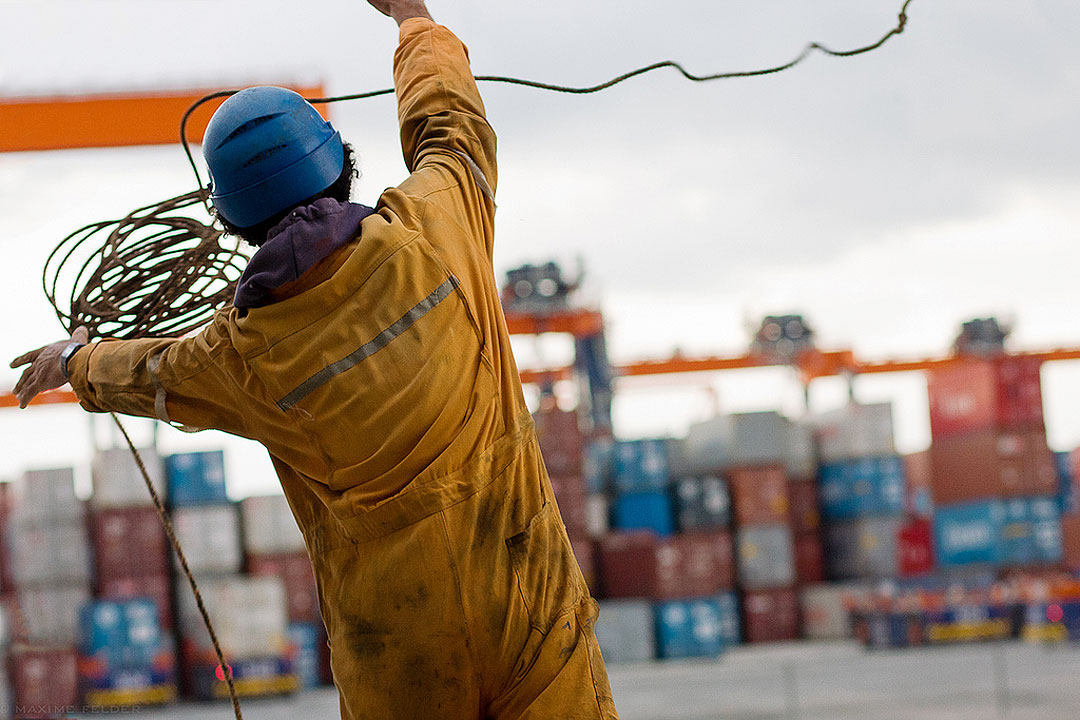
THE EUROPEAN Union (EU) has asked the Philippines to enhance compliance with the Standards of Training, Certification and Watchkeeping for Seafarers Convention, warning that failure to meet requirements could lead to seafarers being barred from working on its vessels. — MAXIME FELDER

A SENATOR who sought to quadruple the Philippine Maritime Industry Authority’s (Marina) 2023 budget to P80.69 million on Thursday said this should ensure compliance with international maritime standards.

Government failure to continue improving its standard could jeopardize the jobs of almost 600,000 Filipino seafarers, Senator Mary Grace S. Poe-Llamanzares said in a statement. “We are still accredited but we need to work on this.”

The European Union (EU) has asked the Philippines to enhance compliance with the Standards of Training, Certification and Watchkeeping for Seafarers Convention, warning that failure to meet requirements could lead to seafarers being barred from working on its vessels.

Marina and the Commission on Higher Education (CHEd) had failed to ensure that all training and assessment activities were administered, conducted, monitored and evaluated as required by the seafarer convention, the European Maritime Safety Agency (EMSA) said in 2020.

After the EMSA inspection, the European Commission notified the Philippines of a number of deficiencies in Filipino seafarers’ education, training and certification system.

Ms. Poe-Llamanzares said the country should quickly address deficiencies identified by the EU. “The mere fact that they have been accommodating and have not given us a definitive timeline, I know they appreciate the process we are undertaking at the moment.”

“What is important for the EU is that they see an effort to comply and it is an ongoing process,” she added.

Filipino seamen sent home $6.5 billion in remittances in 2021, she said, citing the Philippine central bank.

The senator cited data from the Bangko Sentral ng Pilipinas which revealed that Filipino sea-based workers have sent a total of $6.5 billion in remittances to their families in 2021. Remittances from January to September rose by 1.8% from a year earlier to $4.92 billion.

“Without being too presumptuous or arrogant about this, without the Filipino seafarers, I don’t think the maritime industry will be able to function properly,” Ms. Poe-Llamanzares said. “If we are not at the top, we are probably at the top three of those supplying seafarers.”

The United Nations Conference on Trade and Development’s 2021 maritime transport report showed that the Philippines was the No. 1 global provider of seafarers, followed by Indonesia, China and India. Together, these countries supplied 44% of the global seafarer workforce.

The Philippines was the largest source of seafarers with about 700,000 of them deployed to domestic and foreign-flagged vessels. — Alyssa Nicole O. Tan

Marcos to raise sea dispute in meeting with China’s Xi in Bangkok

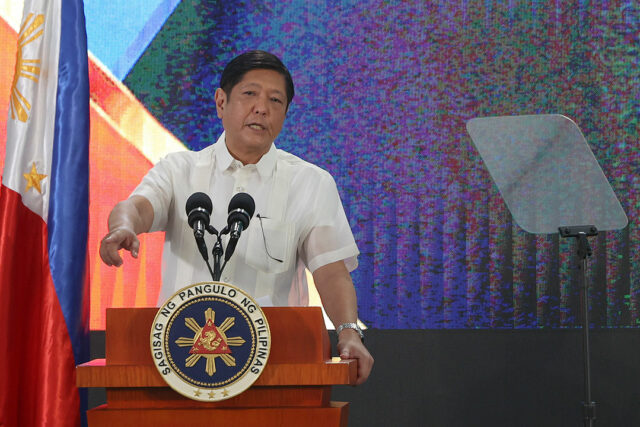
PRESIDENT FERDINAND R. MARCOS, JR. — PHILIPPINE STAR/KRIZ JOHN ROSALES

PHILIPPINE President Ferdinand R. Marcos, Jr. would bring up the country’s sea dispute with China in a bilateral meeting with Chinese President Xi Jinping, according to the presidential palace.

“The chief executive said that it’s impossible for him to talk to China without mentioning the West Philippine Sea issue,” it said in a statement on Thursday, referring areas of the South China Sea within the Philippines’ exclusive economic zone.

The Philippine president last week said “the West Philippine Sea will be one of the top agenda if he meets with the Chinese president,” the Office of the Press Secretary said.

Mr. Marcos pushed the approval of a code of conduct in the South China Sea during the 25th Association of Southeast Asian Nations (ASEAN)-China Summit in Cambodia last week.

In 2002, ASEAN and China signed a nonbinding agreement where 11 countries agreed that a South China Sea code of conduct was needed.

The palace earlier said Mr. Marcos had accepted Mr. Xi’s invitation to visit China in January.

His predecessor, Rodrigo R. Duterte, led a foreign policy pivot toward China and away from the US, the Philippines’ oldest security ally.

Mr. Marcos, who took office in June, has vowed to make the Philippines a “friend to all” and “an enemy to none.”

Last month, the US announced $100 million in additional funding for the Philippine military.

At the ASEAN-US Summit, Mr. Marcos recognized the role of a quadrilateral alliance among the US, Australia, India and Japan in keeping regional security.

China, an important Philippine trade partner, has viewed the Quad as a US attempt to counter its influence in the region. Wang Yi, China’s foreign minister, has called the US-led informal grouping an “Indo-Pacific NATO.” — Kyle Aristophere T. Atienza

Kamala Harris, Marcos to discuss Taiwan — envoy

REUTERS/CAROLINE CHIA

TENSIONS over Taiwan are expected to be on the agenda when US Vice- President Kamala Harris meets Philippine President Ferdinand Marcos, Jr. next week, Manila’s ambassador to Washington said on Thursday. 

“I’m sure they will touch on the Taiwan situation,” Ambassador Jose Manuel Romualdez told Reuters by telephone, adding that the Philippines wants to play a role in peaceful co-existence between the United States and China.  

Ms. Harris is likely to give Marcos a “fairly good briefing” on the three-hour meeting between US President Joseph R. Biden and Chinese President Xi Jinping on the sidelines of this weeks summit of the G20 group of countries in Indonesia, Romualdez said.  

Beijing has long said it would bring the self-governed island of Taiwan, which it views as an inalienable part of China, under its control and has not ruled out the use of force to do so. It has frequently accused the United States in recent years of encouraging Taiwan independence.  

“What happens in Taiwan, it will affect the entire ASEAN region. If there is a conflict that happens in Taiwan, nobody is going to be spared,” Mr. Romualdez said. “The Philippines is part of this whole equation”.  

Ms. Harris’ trip marks her second to Asia in three months and the first to the Philippines.  

It will include a stop on the islands of Palawan on the edge of the disputed South China Sea, in a move that may be interpreted by Beijing as a rebuke.  

Beijing claims some territories in the waters off Palawan and much of the South China Sea, citing their own historical maps. A 2016 international arbitration ruling, however, said the Chinese claims had no legal basis, in a victory for Manila that has yet to be enforced.  

Ms. Harris is the highest-ranking US official to visit the Southeast Asian nation since it elected Mr. Marcos, the son of the late strongman who Washington helped to flee into exile in Hawaii during a February 1986 “People Power” uprising.  

In August, Secretary of State Antony Blinken met with Mr. Marcos to affirm US commitment to the defense of the Philippines, its long-time treaty ally.  

“All of these visits are clearly an indication of how serious they see our relationship with the United States as more important than ever because of what’s happening in this side of the world,” Mr. Romualdez said.Karen Lema/Reuters

Ejercito appeals to restore slashed budget for 2 rail transport projects  

JICA

SENATOR Joseph Victor JVG. Ejercito has asked Congress to restore the slashed allocation in the 2023 budget for the North-South Commuter Railway System and the first phase of the Metro Manila Subway System, noting that the funds are necessary for right-of-way acquisition and value-added tax payments.  

“If ever there are budget cuts, definitely, the right of way acquisition will be affected that means, if there are delays in the right of way and relocation of utilities, definitely, the construction and civil works will also stop,” the senator said in a mix of English and Filipino in a statement on Thursday.  

“I appeal to my colleagues to restore the budget that was cut almost half,he added.  

Mr. Ejercito noted that under the Senates version of the budget bill, around P69 billion was removed from the unprogrammed appropriations, initially allocated to pay for ongoing contracts of the railway system and subway systems contractors. 

The House of Representativescounterpart bill, on the other hand, cut the proposed budget for the commuter railway system by around P40 billion, while about P10 billion was slashed from the subway system. 

The senator noted that the decrease will likely affect scheduling and increase financial charges.   

The North-South Commuter Railway System is co-financed by the Japan International Cooperation Agency (JICA) and the Asian Development Bank. The Metro Manila Subway System phase 1 is also under Japans official development assistance loans through JICA.   

Senator Mary Grace S. Poe-Llamanzares, during an earlier session, agreed with Mr. Ejercito, noting that the budget reduction may delay the countrys railway projects by about a year.   

We keep doing this for all of our projects. This is not new. We need to be able to see what the priorities are and hopefully, this is one of them,she said. Alyssa Nicole O. Tan 

Marcos tells APEC leaders: All global threats redound to food insecurity

OFFICE OF THE PRESS SECRETARY

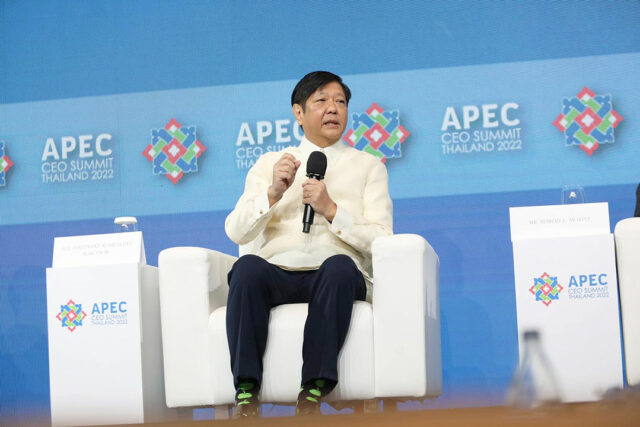
PHILIPPINE President Ferdinand R. Marcos, Jr. told world leaders on Thursday that global threats such as climate change and conflicts redound to the fundamental concern of ensuring sufficient and sustainable food supply.   

First, food security is a serious global problem. This is felt by every household, by every family, by everyone,Mr. Marcos said in a speech at the Asia-Pacific Economic Cooperation (APEC) CEO Summit in Bangkok.  

The issues that the world faces now from climate change, to inflation, to war are viewed by the ordinary Filipino through the lens of food security, he said.   

The Philippine leader said climate change and food insecurity are very closely interconnected,noting that there have been steep declinesin agricultural output and productivity due to changing weather patterns.  

Food security must be a top priority for all governments and developing economies must have the policy flexibility needed to ensure an increased domestic food production and diversification and to improve the local agricultural supply and value chain,he added.  

Mr. Marcos, 65, took the helm of the Philippine agriculture agency in June, vowing to boost local food production. 

Second, we must continue to reinforce global health systems, not only against new and emerging variants of COVID, but also against other infectious diseases that may emerge,he said.   

Mr. Marcos said the global economy simply cannot affordanother series of lockdowns and travel bans that deflate consumer confidence, dampen tourism recovery, and derail the stability of global markets. 

Governments must continue to invest in pandemic preparedness and in ensuring the resilience of the global health system,he said. Adopting the One-Health approach and strengthening health surveillance systems for emerging and re-emerging infectious diseases, from the human-animal-environment interface, can be part of the solution. 

The Philippine leader said in his first address to Congress in June that the country will no longer enforce lockdowns amid the pandemic.  

Mr. Marcos also rallied Asia-Pacific leaders to do more to address the impacts of climate change, which he said is the most pressing existential challenge of our time.  

He said global agreements that seek multilateral solutions to the climate crisis, particularly the United Nations Framework Convention on Climate Change (UNFCC) and the Paris Agreement, have been in force but not enough progress has actually been made as emissions continue to rise.  

The Conference of the Parties to the UNFCCC (COP 27) is in full swing, but stronger climate action is required,he added. As the energy demands of the modern global economy continue to expand rapidly, diversification into renewables and other sources is imperative.  

The Philippine leader touted the governments target for a higher share of renewable energy in the power generation mix at 35% by 2030 and 50% by 2040. Kyle Aristophere T. Atienza

No typhoon but several Davao, Soccsksargen towns suspend classes due to rain, flooding, landslides

THE ALABEL local government, through its disaster management office, tapped a Philippine Army truck to provide transport service to commuters stranded at the border between Alabel and General Santos City. — ALABEL INFORMATION OFFICE

CLASSES for elementary and high school students were suspended on Thursday in several localities in the neighboring regions of Davao and Soccsksargen due to rains since Wednesday that caused flooding in some areas.

Segments of the national highway between Digos City in Davao del Sur and General Santos City and in Davao Occidental were impassable due to a landslide, local authorities reported.     

Local governments that called off classes include: General Santos City; Malungon in Sarangani;  Sulop, Magsaysay, and Hagonoy in Davao del Sur; and Jose Abad Santos and Sta. Maria in Davao Occidental.   

The Koronadal City government, capital of South Cotabato, also suspended classes in all levels.   

Weather bureau PAGASA warned on Thursday morning that the intertropical convergence zone and a low pressure area would bring moderate to heavy rains in several parts of the country, including southern portions of Mindanao where Davao and Soccsksargen are located.   

Under these conditions, flooding and rain-induced landslides are likely,PAGASA said in its Thursday weather advisory.   

In Alabel, capital of Sarangani province, disaster management teams and vehicles were deployed to transport people at the boundary with General Santos City as the road was flooded.     

More than 100 people living near the towns Buayan River were also evacuated.  

The Alabel local government said members of the Municipal Disaster Risk Reduction and Management Office (MDRRMO) continue to monitor the water level of rivers, streams, and creeks.   

Rescuers of the Alabel MDRRMO have been deployed to monitor the situation…  people living near streams and creeks have been advised to stay safe and alert,the municipal information office said in a statement in Visayan.  

Davao Region is composed of five provinces and the independent city of Davao. Soccsksargen covers the provinces of South Cotabato, Cotabato, Sultan Kudarat, and Sarangani, and General Santos City. MSJ

Scientists call out senators for cracking jokes during discussion on alarming reclamation projects

PHILIPPINE STAR/ WALTER BOLLOZOS

THE ADVOCATES of Science and Technology for the People (AGHAM), a group of Filipino scientists, has admonished senators for making jokes during a discussion on reclamation projects, which it said pose very serious threats to the countrys marine ecosystems.   

Reclamation is one of the biggest threats to our seas,AGHAM Public Information Officer and Resident Marine Scientist Jerwin G. Baure said in a statement on Thursday. Currently, there are at least 187 reclamation projects at different stages of development nationwide.” 

Several senators, during the deliberations on the proposed 2023 budget of the Department of Environment and Natural Resources on Wednesday, made light of possible impacts of reclamation such as adding even more islands to the countrys more than 7,000 and blocking the Manila sunset view.    

These projects threaten the integrity of important coastal ecosystems such as coral reefs, seagrass beds and mangrove forests,Mr. Baure said.   

He called it frustratingthat the government has not taken serious steps against reclamation despite urgent calls from environmentalists, fisherfolk and coastal residents.  

Climate crisis is happening now, and we cant wait for years before the government takes action,he said, adding that the AGHAM would like lawmakers to investigate all reclamation projects in the country. Alyssa Nicole O. Tan

Bill seeks stiffer penalties for hospitals rejecting emergency cases 

PHILIPPINE STAR/ MICHAEL VARCAS

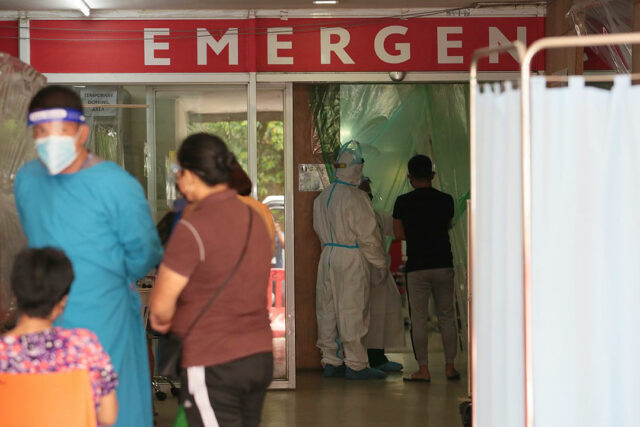
A LAWMAKER on Thursday pushed for a measure that seeks to further increase penalties for hospitals and medical practitioners who refuse to treat emergency cases.   

House Bill 3046 proposes to amend Republic Act 10932, which strengthened the anti-hospital deposit law in 2017.   

Under the measure, any medical practitioner who violates the provisions of the law could face fines of up to P1 million and at least four years of imprisonment, up from the current P100,000 to P300,000.     

It also states that if the violation is part of the established policy of the medical institution, the director or officer could face up to 12 years in prison and fines of no less than P2 million.   

The bill also calls for the establishment of a 24/7 hotline where violations can be reported.  

The bill seeks to strengthen the measures corresponding the Anti-Hospital Deposit Law through an increase in the penal sanctions,Davao Rep. Paolo Z. Duterte, one of the bills authors, said in the explanatory note. Matthew Carl L. Montecillo 

Thailand’s Charoen Pokphand weighing more PHL investments

CPF-PHIL.COM

THAILAND’s Charoen Pokphand Group Co. Ltd. (CP Group) has expressed interest in investing in Philippine aquaculture and hog production, the Office of the President said in a statement.

The approach was made in a meeting in Bangkok between President Ferdinand R. Marcos, Jr. and the company, which is already a major investor in Philippine agriculture.

The Thai firm also expressed interest in projects developing the Philippine value chain to better link food production to consumers, the Palace added.

Mr. Marcos met with officials of CP Group officials on the sidelines of the Asia-Pacific Economic Cooperation Summit late Wednesday.

CP Group is Thailand’s largest private company with $2 billion worth of investment in the Philippines.

“The largest and the most significant Thai investment in Philippine Agriculture is Charoen Pokphand Foods Philippines Corp. (CPFPC), a subsidiary of Charoen Pokphand Foods Public Co. Ltd. (CPF),” the Palace said. 

CPFPC started operations in the Philippines in 2010 with a rented feed mill in Guiguinto, Bulacan.

Aside from shrimp and fish hatcheries, CPFPC has built one of the most modern aquaculture feed mills in the country, the Palace said. The feed mill produces feed for tilapia, catfish, milkfish, and shrimp.

The company made additional investments in 2012, it added.

Mr. Marcos pledged to improve the aquaculture industry, which he deems critical for achieving food security, according to the Palace statement.

Separately, Mr. Marcos touted his push for more public-private partnerships (PPPs) in meeting with Thai business executives, the Palace said.

“The centerpiece (program) is our private and public partnerships… this is something we feel we will need to encourage for the simple reason that it cannot be done just by the government,” Mr. Marcos was quoted as saying. “It’s something that we need to encourage to gain that synergy that we are all looking for as we find our way in the new economy.”

As of August, the government tallies 74 PPP projects in the pipeline, worth a combined P2.25 trillion. — Kyle Aristophere T. Atienza

ADVERTISEMENT
ADVERTISEMENT