Home Blog Page 5610

Five-star Sweden advances to quarters as set pieces sink Portugal

LEIGH, England — Sweden finished their women’s European Championship group campaign with a statement 5-0 drubbing of Portugal on Sunday to top Group C ahead of the Netherlands and advance to the quarterfinals.

Sweden, who will meet the runner-up of Group D in the last-eight, topped the group on goal difference after the Netherlands beat Switzerland 4-1 to join them on seven points.

The Scandinavian side needed just a draw to advance but they showed signs of peaking at the right time and were ruthless when presented with opportunities to score, with the first four goals all coming from set pieces.

“It feels really good to have a good game with a lot of goals and that we are top of the group,” Sweden’s Nathalie Bjorn said.

“We know that we are good offensively and today, we showed that we should not be counted out. We have only just started.”

Filippa Angeldal scored twice in the opening half, first pouncing on a weak clearance from a corner to guide the ball into the net before the unmarked midfielder curled home a first-time effort from the edge of the box after a short free kick.

Goalkeeper Patricia Morais made a couple of decent saves to keep Portugal in the game but Sweden were relentless.

Another corner just before half time had Portugal defender Carole Costa turn the ball into her own net under pressure from Sweden’s Amanda Ilestedt.

Sweden continued to dominate proceedings after the break and a penalty for a handball in the box allowed Kosovare Asllani to score from the spot past a diving Morais who guessed the right way.

Another effort from a well-worked free kick was ruled out by VAR for offside, but Sweden finally scored from open play when Stina Blackstenius finished a flowing move in injury time by curling her shot into the top corner. — Reuters

Smith rides back-nine charge to win the British Open

ST. ANDREWS, Scotland — Cameron Smith staged one of the greatest back-nine charges ever witnessed at a major championship, coming from four shots behind to win the 150th British Open on Sunday as Rory McIlroy saw another major slip through his fingers.

Smith, winner of golf’s unofficial fifth major, The Players Championship, earlier this year, carded a sensational final round eight-under 64 that included a spectacular run of five consecutive birdies from the turn to become the first Australian to hoist the Claret Jug since Greg Norman in 1993.

The 28-year-old Queenslander also became the first Australian man to claim one of golf’s four majors since Jason Day’s victory at the 2015 PGA Championship.

“All the names on there, every player that’s been at the top of their game has won this championship,” said Smith, adding he had no plans to get rid of his famous mullet hairstyle. “It’s pretty cool to be on there.

“It really hasn’t sunk in yet. I don’t think it will for a few weeks.”

Smith’s winning total of 20-under 268 was one better than playing partner American Cameron Young, who eagled the last for a 65 to finish alone in second while McIlroy, the betting favourite coming into St. Andrews, faltered at the finish to settle for third.

McIlroy started the final round tied for the lead with Viktor Hovland four strokes clear of the pack and an end to his eight-year major drought looked in sight as he moved two shots ahead alone in first.

The four-time major winner’s conservative game plan had appeared to work to perfection as he carded an error free two-under 70.

But in the end, fortune favored the brave as Smith’s go-for-broke approach ended with him being crowned Champion Golfer of the Year.

It was another cruel near miss for McIlroy who now has top-10 finishes in all four of this season’s majors, adding a third place at St. Andrews to a runner-up result at the Masters and a fifth-placed finish at the US Open.

“I felt like I didn’t do much wrong today, but I didn’t do much right either,” summed up McIlroy. “It’s just one of those days where I played a really controlled round of golf.

“I did what I felt like I needed to. At the end of the day, it’s not life or death.

“It’s one that I feel like I let slip away, but there will be other opportunities.”

LOW SCORES
As McIlroy and Hovland set out under overcast skies, they no doubt noticed the low scores put up by early starters like Sadom Kaewkanjana of Thailand and Mexico’s Abraham Ancer who were in the clubhouse with seven-under 65s.

For Smith and Young, the message was received — the Claret Jug was still within reach.

The world number two had preached patience the entire week and was doing just that as he reached the turn without a bogey, a single birdie good enough to keep him two shots ahead of a trio of challengers — Hovland, Smith and Young.

Yet while McIlroy was practicing patience, Smith was mounting a devastating all-out attack, firing five straight birdies to start the back nine, knocking McIlroy from the top of the leaderboard.

“I sometimes think that being behind on certain golf courses and in certain situations is maybe a good thing,” said Smith. “I think it’s very easy to get defensive out there and keep hitting it to 60, 70 feet, and you can make pars all day, but you’re not going to make birdies.

“I think it was a good thing that I was definitely behind.

“I think my mindset would have been a touch different coming in, especially on that back nine, if I was ahead.”

One more birdie at the 18th and all that was left for Smith to do was to wait and see if McIlroy, playing the pair behind him, could eagle the last to force a playoff.

Smith was not celebrating just yet, knowing anything was possible having watched Young roll in a 15-foot eagle putt at the 18th to join him momentarily on 19-under, until he drained his short birdie to clinch the Jug.

The 28-year-old earned $2.5 million for his win but that could be only a small fraction of the fortune awaiting him if media reports are true that he is about to sign on with the big-money Saudi-backed LIV Golf Invitational Series.

LIV Golf has poached several top golfers away from the PGA Tour, luring them to the rebel circuit with multi-million dollar guaranteed contracts.

Smith batted away questions about joining them saying he leaves that business to his team.

“I don’t know, mate. My team around me worries about all that stuff,” said Smith. “I’m here to win golf tournaments.” — Reuters

US trade mission seeks enhanced agricultural sector collaboration with PHL

MMSU.EDU.PH

THE UNITED States is looking to expand agricultural trade and food security joint initiatives with the Philippines as a delegation led by US Department of Agriculture (USDA) Foreign Agricultural Service Administrator Daniel Whitley arrived in Manila on Monday.   

The USDA Philippines trade mission will offer an abundance of opportunities for both the United States and the Philippines,said Mr. Whitley said in a statement on Monday.   

The trade mission contingent includes representatives from US state departments of agriculture, agribusinesses and farm organizations, according to the US Embassy.  

Im confident the next few days will produce mutually beneficial results to help expand trade, increase collaboration on key issues impacting agriculture in both our countries, and ultimately strengthen Philippine food security,Mr. Whitley said. 

Business meetings will be held this week between US trade mission delegates and Philippine companies seeking to import American food and farm products.  

There will also be a signing of three memorandum of agreements, which will officially launch a US-funded program to combat the African Swine Fever in the Philippines, formalize deeper trade ties between Batangas province and US departments of agriculture, and strengthen relations between the Mariano Marcos State University and the US Grains Council to support biofuel solutions and climate smart practices.  

We have a diverse group of US agribusinesses and industry officials joining us in Manila who can provide reliable, high-quality, and sustainably produced US food and farm products to local buyers,the US agriculture administrator said.  

Were looking forward to increasing sales and meeting the growing demand from Filipino consumers for US foods,he added.  

The Philippines is the USeighth largest export market for food and agricultural products, averaging $3.1 billion (P174.8 billion) annually in the last five years. Alyssa Nicole O. Tan

CSC assures gov’t workers of consultations in rightsizing plan

PRESIDENT Ferdinand R. Marcos, Jr.s plan to deflate the bureaucracy will undergo multi-sectoral consultations, the Civil Service Commission (CSC) assured on Monday. 

There must be a consultation with different agencies, associations, and rank-and-file workers,Civil Service Commissioner Lourdes A. Lizada told a televised news briefing.

Ms. Lizada said the independent commission would ensure that the rights and welfareof government personnel are upheld and protected in any plan to rightsize the bureaucracy.  

The CSC would also ensure that rank-and-file employees and other concerned sectors would be able to present their counter proposals, she added.   

We will have an open dialogue.”  

In a statement released earlier this week, the commission vowed that it will thoroughly study any proposed legislation on rightsizing the bureaucracy,”   

The agency said it will provide inputs with the welfare of civil servants and the effective delivery of service to the public as its primordial considerations.”  

Ms. Lizada said at the same briefing that the government must consider the law that protects the security of tenure of state workers in the implementation of government reorganization.”   

Public sector labor unions have expressed opposition to the plan. These include the Kawani Laban sa Kontraktwalisasyon, Confederation for Unity Recognition and Advancement of Government Employees (COURAGE), and Tanggol Trabaho, National President of Social Welfare Employees of the Philippines (SWEAP). Kyle Aristophere T. Atienza 

Survey indicates growing dissatisfaction with K-12 education program

K-TO-12 STUDENTS at a high school in Marikina City during their in-person graduation ceremony on July 2, 2022. — PHILIPPINE STAR FILE PHOTO/WALTER BOLLOZOS

A SURVEY commissioned by a senator indicates a growing dissatisfaction with the K to 12 education program, which was adopted in the Philippines 10 years ago.    

“It is clear from the voices of our countrymen that they are not satisfied with the K to 12 program,Senator Sherwin T. Gatchalian, who commissioned the survey conducted from June 24-27, said in Filipino in a statement on Monday.  

The Pulse Asia survey showed that 44% of 1,200 respondents are unhappy with the current system. This is 16 percentage points higher compared to the results of a similar survey done in September 2019.  

This is because its promises are not being fulfilled and it has only become an additional burden on our parents and students,said Mr. Gatchalian, who will likely chair the Senate Committee on Basic Education, Arts and Culture Committee.  

The K-12 curriculum covers mandatory kindergarten, six years of primary education, four years of Junior High School, and two years of Senior High School.   

“We must carefully review the implementation of the K to 12 program to ensure that it fulfills the goal of delivering quality education and promoting the competitiveness of our youth,” he said.   

The senator has filed Senate Resolution 5 seeking to investigate the implementation of Republic Act 10533 or the K to 12 law.  

Another survey that Mr. Gatchalian commissioned in December 2019 revealed that dissatisfaction with senior high school was mostly due to the additional financial burden.  

While the K to 12 program promised to boost employability among senior high school graduates, only a little over 20% were able to enter the labor force while 70% continued with their education, according to the Philippine Institute for Development Studies.  

Those aged 15 to 24 have the lowest rates in terms of labor force participation in the Association of Southeast Asian Nations region, it added.  

Vice-President Sara Z. Duterte-Carpio, the concurrent Education secretary, has said that President Ferdinand R. Marcos, Jr. asked her to review the countrys K-12 educational system. Alyssa Nicole O. Tan

Senator refiles bill to set up tertiary care hospitals in every region  

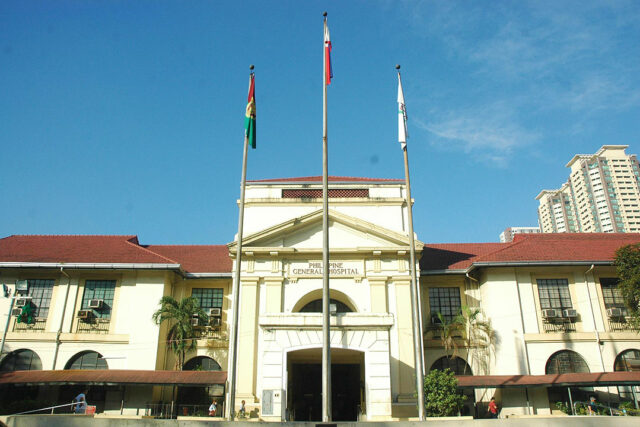
THE PHILIPPINE General Hospital in Manila is one of the 66 Department of Health-managed hospitals in the country. — PHILIPPINE GENERAL HOSPITAL FB PAGE

A SENATOR has refiled a bill that will establish tertiary level hospitals in the 17 regions within five years to improve the Philippines health care service.   

The pandemic we are facing today is a big blow to our government and our people, but it is also an opportunity for us to see the huge shortcomings in our medical facilities,Senator Manuel LitoM. Lapid said in Filipino in a statement on Monday.  

A tertiary care hospital, as defined by the Department of Health (DoH), is equipped with facilities and manpower to support medical specialists.   

My bill aims to build quality tertiary hospitals in all regions of our country to help ensure that our countrymen have hospitals to run to when they get sick not only with COVID-19 (coronavirus 2019), but also other illnesses,Mr. Lapid said.  

Under the bill, regions that do not have any regional hospital of whatever classification lower than tertiary care will be prioritized. Provinces that are geographically isolated from the regions tertiary care hospital will also get priority.   

Areas that already have existing regional hospitals will be expanded and upgraded to tertiary level.    

As of 2019, there were 66 DoH-run hospitals across the country, with at least one in every region. This total does not include medical facilities managed by local governments and four specialty hospitals in Metro Manila that operate as government-owned and controlled corporations.    

Of the 66 DoH hospitals, the National Capital Region had the most number of tertiary care facilities with 16, while other regions had at most three.  

Areas with no level 3 hospitals include the island provinces of Mindoro Oriental and Occidental, Marinduque, Romblon, and Palawan as well as the Eastern Visayas region, based on the 2019 DoH Hospitals Profile report.   

Through this bill, I also aim to help our sick compatriots so that they do not have to go to Metro Manila or distant places just to receive the services of a tertiary hospital. In this way, the expenses of Filipinos, especially those with chronic diseases, will be greatly reduced,the senator said.   

The previously filed bill was left pending at the committee level in the 18th Congress. Alyssa Nicole O. Tan

8 out of 10 Filipinos believe May elections were credible — Pulse Asia survey 

PHILIPPINE STAR/MIGUEL DE GUZMAN

EIGHT out of 10 Filipinos or 82% believe the results of the May 9 national and local elections were accurate and credible, according to a survey conducted by Pulse Asia Research, Inc. 

Majority of Filipinos or 89% were also satisfied with the automated election system and want to continue automated voting, based on the survey results released on Monday.   

“Almost every Filipino adult who reported voting in the recent elections (95%) found it very easy/easy to use the vote counting machines,” Pulse Asia said in a statement.  

The pollster interviewed 1,200 adults from June 24 to 27. The survey results have an error margin of ±2.8 points.  

Only 4% of the respondents expressed distrust in the election results and were dissatisfied with the automated voting system.  

President Ferdinand R. Marcos Jr. won in the first landslide victory in four decades, securing over 31 million votes out of 65.75 million registered voters.  

“While the 2022 national and local elections were far from being perfect, the situations on the ground on election day reflect a generally successful conduct of the polls save from a few isolated incidents,” Acting Chairperson of the Commission on Elections (Comelec) Socorro B. Inting said in an online forum that discussed the poll’s findings.  

“However, your Comelec is not oblivious to malfunctions of vote-counting machines and SD cards,she said.   

Comelec earlier said 1,867 machines encountered paper jams, rejected ballots, and faulty printing of election returns, which it said were promptly resolved.  

Ms. Inting added that it was unfair to negatively judge the election body for the “minuscule” number of malfunctions.  

In the same forum, acting Comelec Spokesperson John Rex C. Laudiangco pointed out that the May 9 elections saw fewer election-related violent incidents with 27 compared with 133 in 2016.  

On the other hand, the International Coalition for Human Rights (ICHRP) said last month its International Observer Mission (IOM) concluded that this year’s elections did not meet the standards of free, honest, and fair voting due to numerous reports of human rights violations and incidents pointing to fraud.  

The IOM was a collaboration between the international coalition, election watchdog Kontra Daya, and academics worldwide. 

ICHRP called for a revamp of the automated election system since it had reported thousands of voters being unable to vote due to technical blunders. John Victor D. Ordoñez 

PhilPost says over 14M national IDs distributed 

PHILIPPINE STAR/ MICHAEL VARCAS

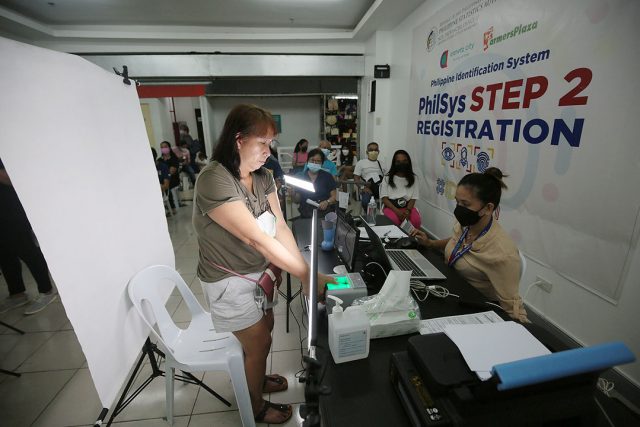
MORE than 14 million national identification cards had already been distributed, according to the Philippine Postal Corp. (PhilPost).  

PhilPost Chief Executive Officer Norman N. Fulgencio told a televised news briefing that 14.03 million out of the 14.8 million national IDs due for delivery had been released as of July 8.  

There are still more than 700,000 IDs to be distributed as of July 8, he said, although that number may have already been reduced to 50% as of the briefing.  

By tomorrow (July 19), we will get our latest update report, he added.  

The government has been criticized for delays in the distribution of the national ID cards.  

Our job is to deliver them,Mr. Fulgencio said. Once we receive them, we need to deliver them.”   

As of June 1, about 67 million individuals have already registered for the national ID, based on data from the Philippine Statistics Authority.   

The government is targeting to have 92 million registered by the end of the year, according to National Economic and Development Authority Director-General Arsenio M. Balisacan.  

President Ferdinand R. Marcos, Jr. ordered Mr. Balisacan last week to speed up the printing and distribution of more than 50 million national ID cards so these can be used by early 2023. Kyle Aristophere T. Atienza 

Scions of fallen heads of state also rise… and fall

GR STOCKS-UNSPLASH

The ouster of Gotabaya Rajapaksa as executive president of Sri Lanka by people power drew from observers of Philippine politics the joke that some 30 years from now a scion of Rajapaksa would be elected president of Sri Lanka by an overwhelming majority. The remark is a satirical reference to the recent landslide victory of Bongbong Marcos whose father, President Ferdinand Marcos, Sr., was overthrown by people power 36 years ago.

The remark that a scion of a deposed head of state eventually also rises to power may not entirely be one of flippancy. The case of Bongbong Marcos has many precedents. There have been heads of state whose rule was cut short by people power or by extermination but whose scion also became head of the same state.

There are the Parks, father and daughter, of South Korea. Park Chung Hee was general and president of South Korea from 1963 to 1979. His rule brought about rapid economic growth, but at the cost of human rights and political freedom.

He imposed restrictions on personal freedoms, suppressed the press and political dissent. He controlled the judiciary and academe. He organized the Korean Central Intelligence Agency (KCIA) for the purpose of monitoring closely the activities of the political opposition. He claimed that all his measures were necessary to fight communism. On Oct. 17, 1972, Park declared martial law. A month later he put in place a new constitution, which gave him sweeping powers.

He became more virulent towards his political enemies. When, in 1979, he dismissed the leader of the opposition party from the National Assembly, the Koreans erupted in violent protests. Park was assassinated by the head of the intelligence agency he himself formed, the KCIA.

Thirty-four years later, Park Chung Hee’s daughter, Geun-hye, was elected president of South Korea. Before her presidency, Geun-hye was leader of the conservative Grand National Party from 2004 to 2006 and leader of the Liberty Korean Party from 2011 to 2012. She was also a member of the National Assembly serving four consecutive parliamentary terms between 1998 and 2012.

In July 2012, she formally announced her presidential bid. In this event, she emphasized the right to pursue happiness, a democratic economy, and customized welfare services for the Korean people. She was elected president in 2013.

Then there are the Bhuttos, father and daughter, of Pakistan. Zulfikar Ali Bhutto became president, army commander-in-chief as well as the first civilian chief martial law administrator on Dec. 20, 1970. He served as prime minister from 1973 to 1977.

On Jan. 2, 1972, Bhutto announced the nationalization of all major industries. He adopted a labor policy that increased workers’ rights and the power of trade unions. He instituted land reforms, limiting land ownership. The government took over a million acres of land for distribution to landless peasants.

He dismissed more than 2,000 civil servants on charges of corruption. Subsequently he dismissed the military chiefs for refusing orders to suppress a major police strike. He convened the National Assembly, lifted martial law, and charged the legislators with writing a new constitution.

Bhutto began to draw criticism as his term progressed. An estimated 100,000 troops were deployed to suppress protests. The troops were accused of human rights abuses and of killing large numbers of civilians. Bhutto himself was accused of masterminding the murder of political opponents.

On July 5, 1977, Bhutto and members of his cabinet were arrested by troops under the order of General Zia. On March 18, 1978, the Supreme Court found Bhutto guilty of murder and sentenced him to death. On April 4, 1979, Bhutto was hanged.

Just 11 years later, his daughter Benazir Bhutto became Pakistan’s first female prime minister and the head of its first civilian government since the dissolution of Zulfikar Bhutto’s government.

Benazir was educated at Harvard University where she obtained a B.A. degree in 1973. She subsequently studied philosophy, political science, and economics at the University of Oxford, earning a B.A degree in 1976 and a master’s degree in international law in 1977.

She returned to Pakistan after completing her studies abroad. Shortly after her return, her father was deposed, which led to her becoming the titular head of her father’s party, the Pakistan People’s Party (PPP). She was placed under house arrest frequently from 1979 to 1984. She went into exile in 1984 but returned in 1986 when martial law was lifted. Benazir soon became the foremost political opponent of President Zia.

Zia died in a mysterious plane crash in August of 1988, resulting in a power vacuum in all of Pakistan. In the elections that year, Bhutto’s party won the biggest number of seats in the National Assembly. On Dec. 1, 1988, Bhutto was elected prime minister. She served two terms as prime minister, in 1988-1990 and 1993-1996.

There are also the mother and son pair, the Ghandis of India, Indira Gandhi and Rajiv Ghandi. Indira Ghandi was the first female prime minister of India, serving for three consecutive terms (1966-1977) and a fourth term from 1980 to 1984.

Shortly after her election as prime minister in 1966, Indira was charged with violating election laws in that contest. In June 1975, the High Court of Allahabad ruled her guilty. Her response was the declaration of a state of emergency throughout India. She jailed her political opponents and enacted new laws that limited personal freedoms. She also ordered large-scale sterilization to arrest the population explosion.

Disapproval of Gandhi’s two years of emergency power was widespread. She stepped down when she and her party were defeated in the parliamentary elections of 1977. But when new elections for the Lok Sabha (lower chamber of national parliament) were held in January 1980, Gandhi and her party scored decisive victories. During the early 1980s, Sikh separatists vehemently demanded autonomy. Tensions between the government and the Sikhs grew and in June 1984 Gandhi ordered the Indian army to attack and oust the separatists who occupied and fortified the Harmandir Sahib (Golden Temple) complex at Amritsar, the Sikhs’ holiest shrine. At least 450 Sikhs were killed in the incident. Five months later, she was killed by her own Sikh bodyguards.

Rajiv Gandhi rose to become the leader of the Congress (I) Party and served as prime minister of India (1984-1989) after the assassination of his mother. Rajiv attended Imperial College, London, and completed an engineering course at the University of Cambridge (1965). He was drafted into a political career by his mother. In June 1981 he was elected to the Lok Sabha and in the same month became a member of the national executive of the Indian Youth Congress (the youth wing of the Congress Party).

Rajiv was regarded as a reasonable person who consulted other party members. After his mother was killed on Oct. 31, 1984, Rajiv was sworn in as prime minister that same day and was elected leader of the Congress (I) Party a few days later. He led the Congress (I) Party to a landslide victory in elections to the Lok Sabha in December 1984. He reformed the government bureaucracy and liberalized the country’s economy. Rajiv tried to discourage separatist movements. That worked against him. When his government got involved in a number of financial scandals, he became ineffective.

There is something strikingly similar about the life stories of the scions of the fallen heads of state. Like Bongbong Marcos, who studied in Oxford and the Wharton School of Business, the others also went to the best schools in the world. Park Geun-Hye studied at Joseph Fourier University in France, Benazir Bhutto at Harvard and Oxford, and Rajiv Ghandi at Imperial College, London, and Cambridge.

They also met the same fate as their famous parents. They fell from grace. In December 2016, Park Geun-hye was impeached by the National Assembly on charges related to influence peddling. The Constitutional Court upheld the impeachment by a unanimous 8-0 ruling in March 2017, thereby removing her from office and putting her in jail.

In October 2007, Benazir Bhutto returned to Karachi after eight years of self-imposed exile. She was assassinated in December while campaigning for upcoming parliamentary elections.

Rajiv Ghandi resigned his post as prime minister in November 1989 after his party was defeated in parliamentary elections. In May 1991 Rajiv was campaigning for the next round of parliamentary elections when he was assassinated like his mother.


Oscar P. Lagman, Jr. is a retired corporate executive, business consultant, and management professor. He has been a politicized citizen since his college days in the late 1950s.

Critical and strategic priority policies for economic dynamism

PRESSFOTO-FREEPIK

This was lifted from the Inaugural Address delivered recently by the author as President of the Management Association of the Philippines (MAP) from July 1 to Dec. 31, 2022.

First, allow me to thank Secretary Fred Pascual for accepting again to serve the country, this time as DTI (Department of Trade and Industry) Secretary. And thank you for your service to MAP. I know, Secretary Fred that you will continue to serve our country well for “good men never tire of doing good.”

Thank you as well to the members of the MAP 2022 Board of Governors for their vote of confidence.

As far as I am concerned, as the saying goes, I am “a collateral damage” after Secretary Fred accepted the DTI position. Anyway, allow me to briefly say a few things about myself, to many who do not know me.

I never ran away from any challenges or meaningful assignments in my life. In fact, of all my previous assignments, the ones I enjoyed most were the non-traditional and challenging work.

For example, shortly after I graduated from UP Diliman many moons ago, as an Industrial Engineer, instead of working in a production factory, I accepted an assignment in an NGO, promoting rhythm family planning method to targeted provinces, to be responsible parents in producing babies. Come to think of it, it’s still production.

Shortly after, I was tasked to set up the management and operating systems of then newly built Development Academy of the Philippines Training Center in Tagaytay, and eventually assuming full responsibility in managing the training center as the first Resident Manager. The other assignments were similarly non-conventional. My getting actively involved in various capacities in the implementation of the Bases Conversion and Development Act of 1992, putting into full operation the conversion of the former US Military Baselands, that included Subic Bay, Clark, John Hay, and Poro Point. I was also directly involved in the privatization of the Fort Bonifacio and Villamor Air Base into the country’s premier business centers. In particular, the Bonifacio Global City which set new development standards for huge property development.

The only traditional but equally challenging assignment of late was the full six-year term as DPWH (Department of Public Works and Highways) Secretary from 2010 to 2016. But even then, I had to completely overhaul the public’s perception of DPWH, both inside the department, and outside, including the Congress. In fact, I would say, especially the members of both houses of Congress — to ensure that everyone understood our new thrust — that we adopted and will implement good governance principles, and transparent and competitive procurement, to reduce corruption and ensure the use of government’s scarce resources for the right projects, right cost, and right quality.

As the new MAP President for the next six months, I would like to seek the support of all MAP members, in their individual capacities, and as leaders of your companies and spheres of influence — to help make the voice of MAP, in what MAP boards under President Fred Pascual and previous President Gigi Montinola had prepared, a critical and strategic policy agenda for the administration of President Ferdinand Marcos, Jr.

We all agreed that there has to be a strong collaboration and partnership between the public and the private sectors, to create a more just, inclusive, and compassionate society. The public sector cannot be expected to do it alone, without meaningful engagement of the private sector, particularly the captains of industry and business – [we have] to work together for the common good.

To help in this collaboration, the MAP will be undertaking what an expert calls an “advocacy communications plan” and a lot of lobbying and engagement. We hope to get the attention of the concerned officials and agencies in government, and the private sector as well, in these particular areas, with our advocacy plan.

So let me briefly mention these critical and strategic priority policies for economic dynamism that the MAP Board has identified, with the help of many of the MAP Committee Chairmen and their members and subject experts:

1. Education: to address the country’s urgent education crisis, particularly to strengthen basic education;

2. Health: to make quality healthcare accessible to every Filipino;

3. Agriculture and agribusiness: to achieve an agriculture and agribusiness sector marked by high productivity and international competitiveness, that ensures food security for all Filipinos;

4. Trade and industry: to ensure a trade and industry policy environment that fosters level competition, lowers the cost of doing business, and encourages productivity-enhancing innovations, and to ensure Filipinos’ wide access to quality goods and services at lower and stable prices;

5. Infrastructure: to sustain the gains of the Build, Build, Build program of the past administration by prioritizing infrastructure of the greatest strategic importance, and resuming active public-private partnerships in infrastructure development;

6. Labor and employment: to institutionalize labor flexibility and welfare through executive action and legislation for quick employment generation, and recognize that labor market and employment policies are a critical ingredient in the enabling environment for investments;

7. Fiscal and financial policies: to ensure that fiscal and financial policies be supportive of business enterprises, specially MSMEs, to promote wider job generation, particularly in the countryside;

8. Finally, justice: justice and the rule of law must be upheld if business confidence is to be sustained, and the general population to live in an atmosphere of peace and security; particularly ensuring government transparency, zero tolerance for corruption, faith in government institutions, upholding civil liberties, and freedom of the press.

MAP has released to the media the details and specifics of these eight priority and strategic areas, after undergoing its 6th revised version. We hope that all of us at MAP will be engaged in advocating all or any of the priority areas that we are comfortable with.

Aside from these areas, let me share what the MAP’s Human and Management Development Committee created with expert panelists, as they recently discussed Dr. Nick Poblador’s views from his book A New Age of Capitalism in the Philippines, and MAP’s strong support for micro and small enterprises (MSEs). The consensus was, again, the need for collaboration and partnership between government and private sector, to ensure inclusive and diverse growth of our economy.

The discussion was in line with the MAP 2022 theme of “Push For Change: Towards a Better Future for All,” particularly on the main thrust of shared prosperity and sustainability. The expert panelists agreed that MAP should push its members to supporting MSEs in lifting the bottom 40%, to reduce the gap between the rich and the poor. In particular, we will advocate and practice as an organization the following policies:

1. Propose to DTI Secretary Fred Pascual and other concerned government agencies, both at the national and local levels, to substantially deregulate micro and small enterprises. Let them grow as fast as they can instead of harassing them, [so they may] contribute to the economy and employment generation. There is no need to spend scarce government resources trying to regulate them;

2. For big business and government institutions to support micro and small enterprises in their procurement of supplies and materials, and ensure timely payment to the micro and small enterprises within 30 days or shorter, to help them from predatory lenders;

3. Promote micro and small enterprises, and make room for them in government purchases and supply requirements both at the national and local levels;

4. Freeze all field tax audits of micro and small enterprises, unless an apparent crime is being committed, to avoid huge friction cost and source of harassment.

In closing, there is agreement that the captains of industry and business leaders cannot continue on using the traditional shareholders interest and financial bottom line as measures of their success, but how the enterprise contributes to the wider stakeholders, to the general public, and its contribution to nation building. In particular, measuring their contribution to the economy, to social justice, addressing the bottom 40% poor, good governance, and the protection of the environment and mother Earth.

Finally, as your MAP President, with your engagement and cooperation, I would like to offer myself as the MAP’s principal lobbyist, to push our priority and strategic policies for a more just and compassionate society, for shared prosperity and for the common good.


Rogelio L. Singson is President and CEO of Metro Pacific Water. He previously served as Secretary of the Department of Public Works and Highways.

map@map.org.ph

Rogelio.Singson@metropacwater.com

Lucky Me, bureaucracy rightsizing, electricity prices, and MPIC

There were five events last week that I want to comment on.

LUCKY ME! AND FOOD SECURITY
Scrolling through corporate news of BusinessWorld, these two reports caught my attention: “Monde Nissin ends flat after Lucky Me! noodle brand recall” (July 11), and “Monde Nissin says ethylene oxide not added in noodles” (July 8).

Lucky Me! is a famous brand and my family occasionally consumes their pancit canton and other instant noodles, so I read further and found these facts.

One, ethylene oxide (EtO) is a gas used to treat and sterilize spices and other agricultural products to control microbial growth. It leaves traces in practically all food classifications like noodles, bread, tofu, soy sauce, pizza, etc. It is also used to sterilize surgical and medical equipment like personal protective equipment (PPE).

Two, Lucky Me! products manufactured in Thailand have been subject to a recall in some countries of the European Union especially Ireland, Malta, and France over concerns of high level of EtO. The EU limits it to zero parts per million (ppm).

Three, a leftist and socialist-leaning local organization lobbied the Food and Drugs Administration (FDA) to “immediately recall the products if it genuinely determined to be contaminated.”

Four, the FDA has released a statement on July 11 saying that EtO “is present in the environment, comes from various sources including plants and the heating of cooking oils… Consumption of foods containing residual EtO does not pose an acute risk to health… The United States, Canada and Singapore have assigned… EtO range 7 ppm to 50 ppm maximum residue limit (MRL). In the Philippines, EtO is allowed for gas sterilization of certain agricultural products.”

Five, Monde Nissin, manufacturer of Lucky Me! is a Philippine-based transnational food and beverages company and exports to the world many market-leading brands like Lucky Me! instant noodles, and SkyFlakes and Fita crackers. They said that EtO is not added in noodles but there are just traces when the agricultural products were treated with this gas.

Here are the respective implications of facts one to five:

One, EtO is a useful gas and should not be considered as a contaminant or pollutant gas, the public should not be scared of it.

Two, by EU standards, the EU should also recall bread, tofu, pepper, etc. with traces of EtO in their grocery shelves and have more food insecurity.

Three, the local socialists would rather see more food insecurity here, perhaps to hurt a big capitalist food manufacturer, and see more political upheavals against the new administration.

Four, the Philippines and other countries should align their MRL with the US and Singapore to help stabilize the food supply.

I checked the BusinessWorld Top 1,000 Corporations 2021 report: Monde Nissin is ranked #32 in 2020 with a gross revenue of P54.2 billion, 6.9% higher than 2019 revenues when the top 1,000 companies’ total gross revenues suffered a decline of 13.2% over 2019 level.

Five, Monde Nissin being a big food manufacturer with rising revenues despite the pandemic and lockdowns means it is a big contributor to local food security, a big job creator, and a big taxpayer.

I also checked some components of the Philippines’ recent inflation rates — it turns out that ready-made food products like noodles have price increases that were nearly one-half of overall inflation (See Table 1). Thus, ample supply of those ready-made foods actually temper and control higher inflation.

The public and government agencies should junk the leftist lobby and ignore the EU’s zero tolerance for EtO. The FDA is starting from a good scientific argument in this case. We should have a better food supply, both of raw and manufactured food. We should have more food security and lower food inflation. And we should have more big Philippines transnational companies exporting more commodities to the world.

BUREAUCRACY RIGHTSIZING
On July 13 and 14, I saw two television/radio interviews of Department of Budget and Management (DBM) Secretary Amenah F. Pangandaman where she reiterated the DBM’s plan to “rightsize” the bureaucracy. According to Secretary Pangandaman, rightsizing is to “determine which among the 187 government agencies and government-owned and -controlled corporations (GOCCs) with more or less 2-million personnel, may be streamlined through merging, restructuring, or abolition.”

This is a good move by the Marcos Jr. economic team and I support it. There should be some spending cuts to reduce the need for more debt to pay old debts.

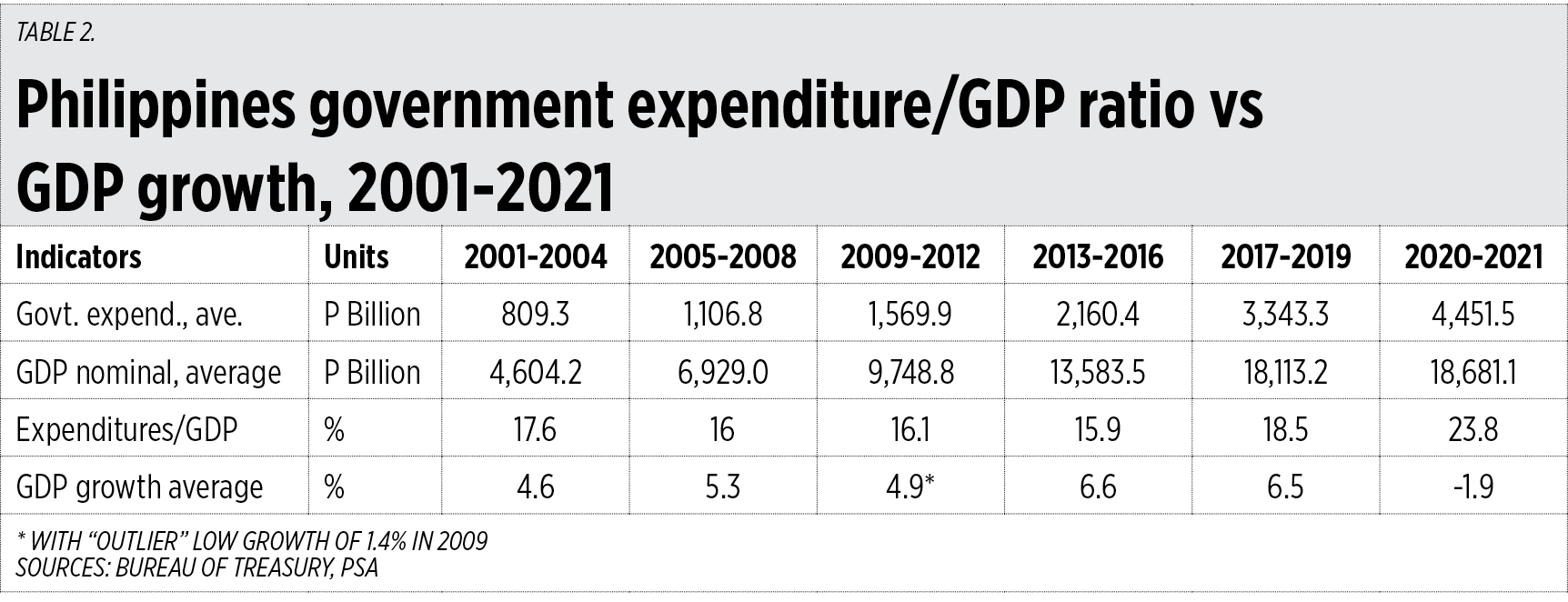
I computed the averages in government spending and GDP level every four years, computed the expenditures/GDP ratio, and compared it with average GDP growth for the same four-year period. The result seems convincing — we have faster economic growth when government spending (and borrowings) decline, and vice versa (Table 2).

Meanwhile, my friend and fellow BusinessWorld columnist Romy Bernardo wrote in his column yesterday, “A first look at the medium-term fiscal program,” that “the government’s 6.5% to 8% growth target through 2028 is rather ambitious… rather the 6-7% of the past decade pre-pandemic.”

Romy has good reasons for arguing his numbers but I think the economic team’s 6.5-8% growth targets are achievable. Partly because I believe that the US, Canada, and Europe will deteriorate economically and deindustrialize in the short and medium term, many companies there will migrate to Asia including the Philippines. It will be a supply-push investment plus demand-pull investment if we do big reforms like faster growth, reduced debt stock without resorting to high taxation, and no threats of blackouts, nor yellow and red alerts.

ELECTRICITY DEMAND AND PRICES
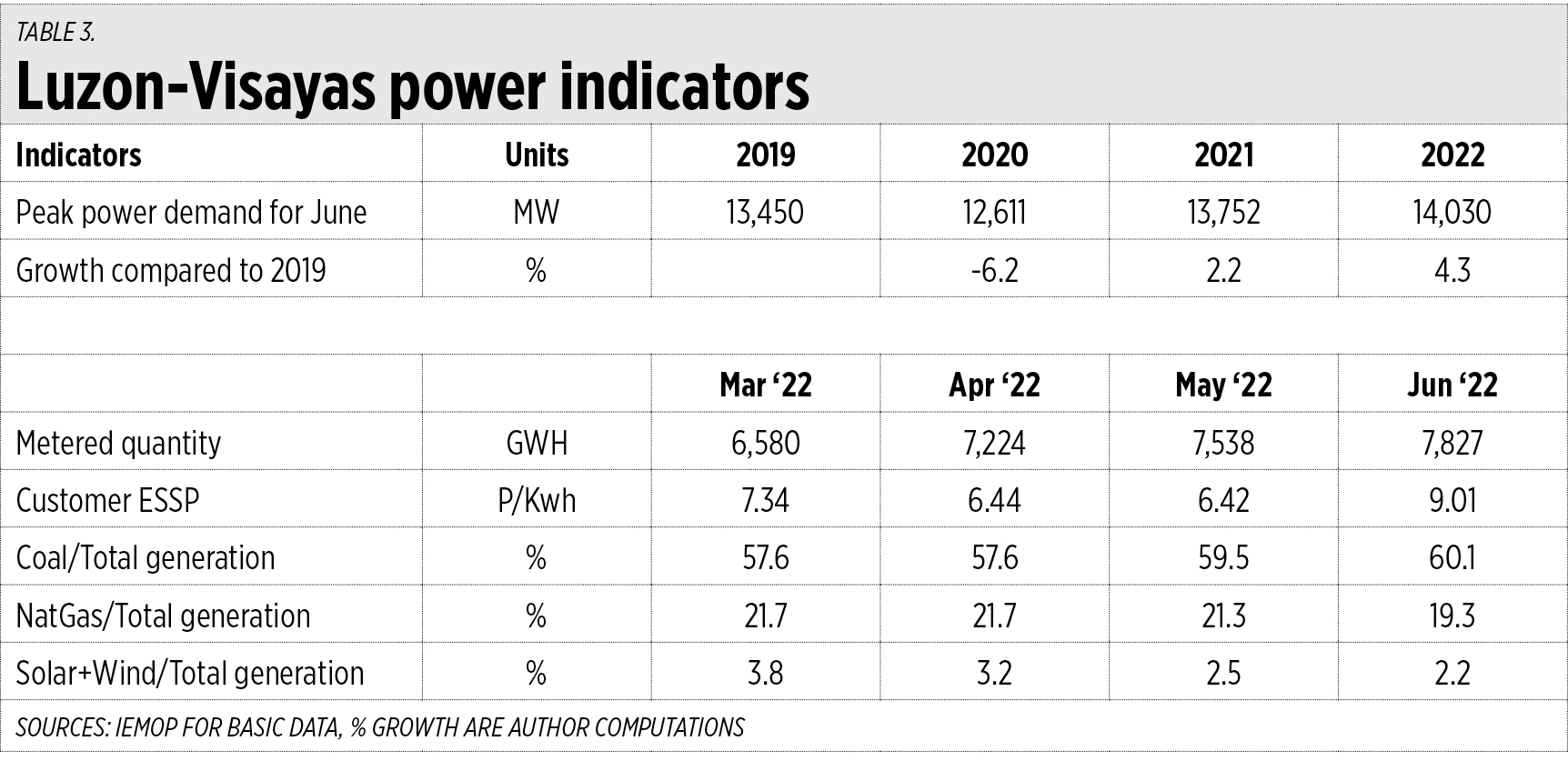
On July 13, I joined the media briefing of the Independent Electricity Market Operator of the Philippines (IEMOP). Their data show the following: 1.) based on peak power demand for June, the 2022 numbers are much higher than the pre-pandemic 2019 level and implies that economic recovery is indeed occurring; 2.) Customer effective spot settlement price (ESSP) this year declined in April-May and increased only in June; and, 3.) Coal share to total power generation has increased to 60% while the share of Malampaya natural gas has declined to 19%, and the share of solar + wind has shrunk to only 2.2% as the country experienced less-windy and more cloudy conditions recently (Table 3).

If we want fast and sustained economic growth, and attract more foreign investors, we should rely less on unstable, unreliable, intermittent solar-wind and have more thermal fossil fuel plants, plus nuclear power.

DIPLOMATIC TOUR
The Embassy of Poland in Manila invited me on July 13 to a press conference by Marcin Przydacz, Undersecretary of State in Polish Ministry of Foreign Affairs. Poland’s Ambassador to the Philippines, Jaroslaw Szczepankiewicz, was also there.

Mr. Przydacz’s tour of some ASEAN countries was meant for economic and business diplomacy, but his talk focused more on the invasion of Ukraine and why other countries like the Philippines should push back against Russia. I checked Poland’s inflation rate — it was 15.5% in June 2022, the highest since 1996 or 26 years ago.

I believe that it is the US- and EU-led economic war against Russia that has had an unlimited impact on global energy and commodity prices, and not the shooting war per se which is limited to Russia and Ukraine only. With rampaging inflation in many European economies that penalize their own citizens more and not Russia, I think Poland should focus more on business diplomacy in Asia and less on justifying politicized trade and investments.

MVP AND MPIC CONGLOMERATE
Finally, on July 14, Manuel V. Pangilinan (MVP), Chairman and President of Metro Pacific Investments Corp. (MPIC) celebrated his 76th birthday and I saw a short video clip of President Ferdinand Marcos, Jr. making a good vibes greeting to him, and a newspaper ad where key officials and business partners of MPIC gave their good wishes.

Miguel G. Belmonte, President and CEO of the PhilStar Media Group that includes BusinessWorld, said that MVP is not only his boss but also his inspiration to always give his best in his work.

Mike Toledo, Head of Government Relations and Public Affairs of MPIC, said that MVP’s commanding and purpose-driven leadership inspired the group to survive and thrive during the pandemic, and no one was left behind.

I think Mr. MVP has done a good job in further developing the Philippines’ toll roads, mining, energy, and media sectors. Consistent with my hypothesis that America and Europe will deindustrialize in the short and medium-term, Philippine conglomerates like MPIC should do more big, highly capital-intensive infrastructure projects to help attract those big companies from the west to the Philippines. Good health and more wealth, Mr. MVP.


Bienvenido S. Oplas, Jr. is the president of Minimal Government Thinkers.

minimalgovernment@gmail.com

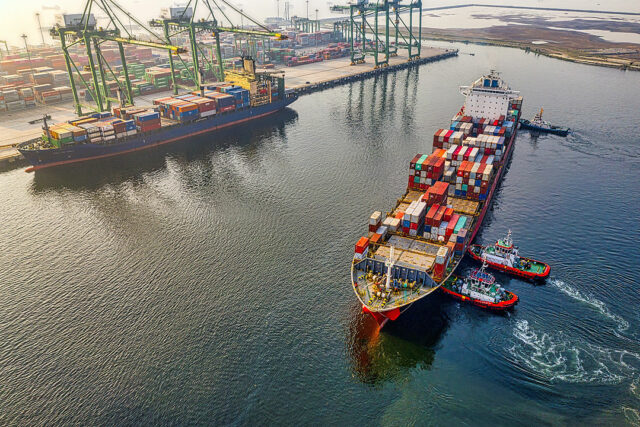
Rising seas are the next crisis for the world’s ports

WILLIAM WILLIAM-UNSPLASH

THE DELICATE choreography of ships, trains, and trucks at the world’s ports has been badly disrupted by the pandemic, and the turmoil is not likely to end soon. If a virus can have such an adverse impact on the journey of a plastic toy or automobile from Point A to Point B, consider the potential impact of something even more pervasive and powerful: water.

In the years ahead, sea level rise, more intense storm surge, and jacked-up tropical storms will be visiting many of the world’s roughly 3,800 ports. Most of those ports are coastal; roughly a third are located in a tropical band vulnerable to the most powerful effects of climate change. “If sea levels rise and storms become stronger as expected in the future due to climate change, the magnitude and costs of these disruptions are expected to grow,” states a report from the Environmental Defense Fund.

Ports cannot easily escape the influence of water. When extreme rains led to flooding in Itajai, Brazil, in 2017, the floodwaters produced currents strong enough to prevent ships from berthing. The port was closed for three weeks. Just as too much water poses a threat, so too does not enough. Extended drought along Germany’s River Rhine in 2018 lowered the water table and made it impossible for some ships to pass.

“Ports, working waterfronts, and coastal infrastructure more generally have a lot of pressures on them from a number of sides,” said Austin Becker, chair of the department of marine affairs at the University of Rhode Island. “They’re located in highly sensitive environments that are often in estuaries where riverine systems meet the ocean. They’re there because that was a nice way to get cargo from one country to another, and then get it inland through a riverine system.”

Because ports were early tenants of waterfront cities, there is no place to which they can easily retreat from rising seas. As Becker told me, cities grew up around the ports. And then the cities pushed the ports further toward the sea.

As cities have enveloped ports, so have the transportation networks that enable goods to travel from the sea inland. “They need all these other infrastructure connections that have grown around them over the years — rail systems and highway systems and pipelines and that kind of thing,” Becker said. In most prosperous, or even middling, cities, the land necessary for such systems is long spoken for. As a result, most train tracks, roadways, warehouses and other infrastructure adjacent to ports will not be moved to higher ground away from the water; they will have to be adapted to manage the rising threat.

Port infrastructure is constantly evolving, noted Philip Orton, a professor of ocean engineering at Stevens Institute of Technology. Ports are accustomed to incorporating new technologies — and the biggest ports, which have had to evolve to handle the needs of enormous, 1,300-foot-long container ships, tend to be the most flexible. But the loading and transit areas behind ports are generally less innovative and less resilient. When storm surge from Hurricane Marie hit Southern California in August 2014, damage to the Port of Long Beach caused shipping operations to halt for several days. But as a subsequent report noted, it was months before the surrounding roads and facilities were back to normal.

The seas have been rising incrementally for centuries, but the projected rise in this century is markedly different, as are the consequences. The basic formula is this: Greenhouse gas emissions produce higher temperatures. Those higher temperatures warm the water, expanding the volume of the seas. As temperatures rise, ice stored at the poles and elsewhere — including mountain glaciers — melts, further increasing water volume. It is a powerful feedback loop that will cause the rate of sea rise to increase dramatically as the 21st century progresses.

More than 200 feet of potential global sea rise is currently stored in ice. The United Nations Conference on Trade and Development says the world’s glaciers will lose between 18% and 36% of their ice mass this century. Meanwhile, the Greenland and Antarctic ice sheets are melting at a faster pace than previously expected.

Millions of years ago, before those ice sheets materialized, water covered far more of the earth than it does now. The northern rim of the Gulf of Mexico, for example, was not along the beaches of what we now call Alabama and Mississippi. It was in present-day Illinois. The Gulf will not be flooding Chicago anytime soon. But at sea level, one foot of vertical rise can produce about 100 feet of horizontal spread. In many low places, that translates to a lot of flooding.

Sea level rise will not be consistent across the globe. But according to US government projections, if the world significantly reduces greenhouse gas emissions, there may be about two feet of rise by 2100. If it doesn’t, the National Oceanic and Atmospheric Administration notes, average sea level rise for the contiguous US could be more than seven feet. Ports, like other coastal real estate and infrastructure, are very much in the flood zone.

A paper by a team of researchers at Princeton and Rutgers points to a “preparedness dilemma” in the US. “While the federal government seeks to protect citizens from natural disasters, it has limited control over efforts to do so,” the researchers write. “Both the exposure and vulnerability to a coastal hazard are largely shaped by state and local land use and building codes.”

One thing that helps to galvanize political and financial support for resilience upgrades, they say, is a whopping storm:

In one model of the policy process, floods, hurricanes, and other extreme weather events have been viewed as “focusing events,” whereby they refocus the attention of elected officials and publics on an existing problem. During a focusing event, a “policy window” of opportunity opens for a short period, and advocates emerge, racing to push their preferred solutions through before the window closes.

For the Port Authority of New York and New Jersey, Hurricane Sandy in 2012 was a focusing event. Sandy shut down most of the port for a week, which resulted in 25,000 shipping containers being diverted to other ports. Waterways had to be surveyed and cleared. Some cargo terminals and maritime support facilities were out of commission longer, due to power failures and damaged equipment. Oil terminals, for example, couldn’t offload product from tankers because they lacked power. Damages to port authority operations, which include commuter rail, reached an astonishing $2.2 billion.

The Port Authority’s resilience and sustainability efforts after the storm included complex analysis of the port’s future but also some very basic problem solving. For example, engineers realized that motors for container cranes can be raised higher off the ground to avoid being inundated.

For the most part, cranes, like electrical substations and other vital infrastructure, are not owned by the Port Authority. So upgrading — which often means elevating — requires coordinated action with various private partners. Mitigation efforts at US ports, said Austin Becker, will require disparate interests coming together.

Given the central role that ports play in global commerce, however, those interests include more than those of shipping companies and others directly engaged in port activities. All kinds of businesses and consumers, including the most landlocked, depend on ports. Yet not all of those ports will prove dependable in the face of the 21st century’s rising waters. “Thousands of small and medium ports that provide these really essential services to their local economies and local regions don’t have the resources they need and are already working with outdated infrastructure,” Becker said.

Giants such as Long Beach and the Port of New York and New Jersey have the financial power and expertise to ride out the rising seas. As the water rises, however, hundreds of smaller ports are left hoping their luck doesn’t collide with the next waterborne “focusing event.”

BLOOMBERG OPINION