Home Blog Page 5502

Harry & Meghan documentary ranks as Netflix’s biggest documentary debut

LOS ANGELES — Netflix, Inc.’s documentary series about Britain’s Prince Harry and his wife Meghan racked up more viewing time on the streaming service than any other documentary during its first week, the company said on Tuesday.

The first three episodes of Harry & Meghan recorded 81.55 million viewing hours after its debut last Thursday, Netflix said in a statement. More than 28 million households watched at least part of the series.

Harry & Meghan was the second-most watched English-language series on Netflix globally between Dec. 5 and 11, behind only Addams Family drama Wednesday. Harry & Meghan was the number one English-language series during the week in Britain.

In the first three episodes, the Duke and Duchess of Sussex made a series of disclosures, with Meghan recalling her first death threat and Harry talking about wearing disguises to their dates.

The second batch of Harry & Meghan episodes will be released on Netflix on Thursday. — Reuters

San Miguel unit completes tender offer of Eagle Cement

SANMIGUEL.COM.PH

A unit of San Miguel Corp. (SMC) now holds nearly all common shares in Eagle Cement Corp. after it completed the tender offer for the remaining 11.46% total issued and outstanding shares of the cement manufacturer.

The SMC unit, San Miguel Equity Investment, Inc. (SMEII), now owns a total of 4.998 billion or 99.96% common shares of the acquired company.

In a disclosure, Eagle Cement said that the accepted tender offer shares were crossed through the Philippine Stock Exchange (PSE) on Wednesday after getting the approval for a special block sale of the tendered shares.

On Monday, Eagle Cement was advised by the PSE that it had received a block sale application for the tendered shares to be executed on Dec. 14 and that it would implement a trading suspension on the company’s shares after the execution of the block sale.

The tendered shares — 572.78 million common shares — were purchased by SMEII at the tender offer price for a total consideration of P12.62 billion. They were all settled on Wednesday.

The tender offer price is at P22.02 per common share, which was higher than the volume-weighted average price of Eagle Cement a year ago. The total shares amount to about P97.44 billion.

In previous disclosures, both companies shared that Eagle Cement will voluntarily delist from the PSE after the completion of the tender offer.

Once done, the acquisition will consolidate the two companies led by Ramon S. Ang and will increase SMEII’s total cement production capacity by 8.6 million metric tons per annum.

The transaction started on Oct. 5 when the majority shareholders of Eagle Cement signed a share purchase agreement with SMEII for the sale of 4.425 billion shares.

On the stock exchange on Wednesday, shares in SMC slipped by 0.75 or 0.79% to P94 apiece, while shares in Eagle Cement closed unchanged at P17 each. — Justine Irish D. Tabile

TDF yields inch higher ahead of BSP meeting

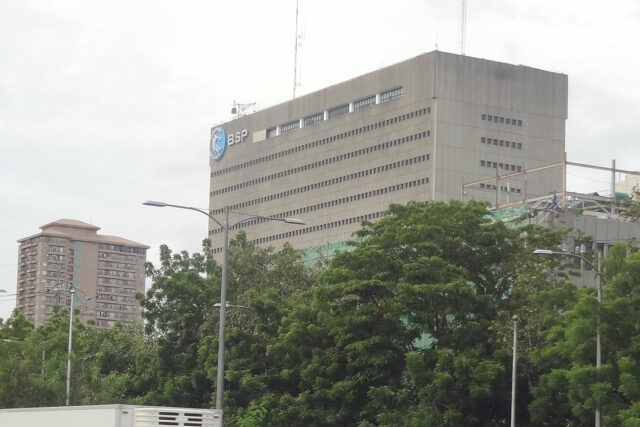
BW FILE PHOTO

YIELDS on the term deposits auctioned off by the Bangko Sentral ng Pilipinas (BSP) climbed on Wednesday, ahead of its policy meeting today (Dec. 15).

Demand for papers under the BSP’s term deposit facility (TDF) totaled P341.947 billion on Wednesday, lower than the P360 billion on the auction block. This is also below the P392.591 billion in bids logged last week for the P400 billion up for grabs.

Broken down, the seven-day deposits attracted tenders amounting to P182.994 billion, lower than the P200-billion offering as well as the P226.057 billion in bids recorded the prior week for a P220-billion offer.

Rates for the one-week papers ranged from 5.85% to 6.385%, marginally wider than the 5.7% to 6.125% range logged in the previous week. This brought the average rate for the tenor to 6.1395%, inching up by 20.49 basis points (bps) from the 5.9346% seen on Dec. 7.

For the 14-day deposits, tenders hit P158.953 billion, going below the P160-billion offering and the P166.534 billion in bids last week for the P180 billion up for grabs.

Accepted yields were seen from 5.875% to 6.55%, a higher band compared with the 5.75% to 6.35% logged the previous week. This brought the average rate of the two-week deposits to 6.2471%, up by 19.21 bps from the 6.055% logged a week ago.

The central bank has not auctioned off 28-day term deposits for more than a year to give way to its weekly offering of securities with the same tenor.

The term deposits and the 28-day bills are used by the BSP to mop up excess liquidity in the financial system and to better guide market rates.

TDF yields went higher again on Wednesday amid rate hike expectations from the BSP and the US Federal Reserve this week, Rizal Commercial Banking Corp. Chief Economist Michael L. Ricafort said in a Viber message.

The Philippine central bank is widely expected to raise benchmark interest rates by 50 bps today, as the US Federal Reserve is also likely to tighten policy overnight.

A BusinessWorld poll last week showed 14 out of 15 analysts expect the Monetary Board (MB) to continue hiking borrowing costs at its Dec. 15 meeting.

For 13 analysts, the central bank may deliver a 50-bp rate increase, while one economist sees a 25-bp hike from the BSP to tame inflation.

Headline inflation picked up to 8% in November from 7.7% in October and 3.7% in November 2021. For the 11-month period, inflation averaged 5.6%, still lower than the BSP’s 5.8% full-year forecast but well above its 2-4% target.

The BSP has hiked policy rates by 300 bps since May to keep rising prices in check, with the key rate now at 5%.

Meanwhile, the US Federal Reserve has raised borrowing costs by 375 bps since March to a range between 3.75% and 4%. It is widely expected to deliver a smaller rate hike of just 50 bps on Dec. 13-14 following four straight 75-bp increases.

US inflation stood at 7.1% in November, easing from 7.7% in October but still above the central bank’s target. — Keisha B. Ta-asan

How retailers in the Philippines can leverage 3PLs to scale deliveries during the festive season

TRUSTPAIR.COM

By Soham Chokshi

FOR the average consumer, the holiday season is a time to get together, celebrate, and, most of all, shop! Retailers in Southeast Asia should expect a more hectic holiday season this year, according to a survey from MiQ. With the e-commerce market geared to grow into a $12-billion industry by 2025, according to a report by Google and Temasek, 56% of Filipinos are increasing their spending versus last year, which has given rise to expectations for sales to remain high this festive season.

The apparent solution for retailers to tackle high order volumes would be to scale with third-party logistic (3PL) services. Outsourcing can be a great solution. However, managing high volumes across multiple vendors can be tedious and complex. Let’s look at how the right technology partner can help retailers turn this into a competitive advantage.

ENSURE DELIVERY RELIABILITY
Delayed deliveries are a cause of concern for e-commerce players, especially during the peak season. Partnering with the right 3PLs can effectively address this challenge.

3PL providers have the distribution network and expertise to dramatically reduce the odds of late deliveries during busy periods by adhering to the service-level agreements (SLAs) specific to the delivery type. Logistics service companies leverage partner networks to reduce delivery-related risks in case one fails to deliver as expected. Working with multiple carriers can also help businesses gain various advantages by streamlining delivery operations according to different regions and delivery types. Such partnerships also enable greater flexibility, allowing businesses to gauge logistics providers based on first-attempt delivery rates, on-time deliveries, delivery accuracy, and even other business-specific metrics such as a white glove or temperature-controlled deliveries.

CHOOSE THE RIGHT LOGISTICS PARTNER
Choosing the right delivery partner is the first and most critical step to success. Prioritizing data over manual biases serves as the right approach. Automation and AI-powered smart logistics management platforms automate 3PL selection after factoring in cost, serviceability, network, expertise, first-attempt success rate, customer SLAs and other metrics to execute same-day, next-day, or other fulfillment windows. Since such sophisticated tools automate decision-making and expedite allocation processes, they improve on-time deliveries by up to 24 percent.

OPTIMIZE UTILIZATION OF OWN FLEET AND 3PL
Allocating tasks between your own fleet and a 3PL provider can be a time-intensive process. Under-utilization of the fleet can be costly, as there have been instances where deliveries have been outsourced while full-time riders stay idle.

Prioritizing between an in-house fleet and logistic partners can bring greater efficiency to the business. Smart auto allocation engines consider payment type, SKU type, invoice value, weight, order volume, vehicle type, and more. Such capacity-based allocation enables advanced trip planning for retailers. It offers greater visibility into the future capacity of the retailer’s own fleet based on customer SLAs, thereby improving logistical planning.

ENSURE GREATER OPERATIONAL CONTROL
Traditionally, retail and eCommerce businesses find operational control challenging when outsourcing their logistics processes to a third party. This situation worsens when a 3PL collaborates with other logistics partners for deliveries. However, smart logistics management solutions enable businesses to manage, track and monitor multiple 3PL providers’ operations via a unified dashboard for complete visibility.

STANDARDIZE NDRS TO SIMPLIFY TRACKING
Outsourcing deliveries can help the business save time and money, but different vendors may have their own unique interfaces, making it harder to track and adapt to these solutions, for instance, having multiple terminologies against a non-delivery reason (NDR).

Logistics management tools consolidate diverse NDRs into a single subhead to simplify the problem statement for retailers. It also helps validate these NDRs from the end customer and plan accordingly.

MINIMIZE RETURN-TO-ORIGIN INSTANCES
Inaccurate addresses, delays, poor scheduling, and unavailability of customers during delivery amplify “return-to-origin” instances. It adds an extra cost burden to the business.

Real-time tracking can reduce instances of return-to-origin. The system triggers a message to the end customer once the consignment is out for delivery. The message contains a tracking link with a delivery estimated time of arrival that apprises customers of the upcoming delivery attempt and increases their chances of availability at that time, boosting the first-attempt delivery rate. Customers can also request to reschedule deliveries at their convenience. All these features improve customer experience by 64%, shrink return to origin instances by 18%, and lower logistics costs due to reattempts.

UNIFIED CUSTOMER COMMUNICATION
Partnering with multiple 3PLs may expose end customers to diverse messages from logistics partners across the parcel journey. These messages may not be positioned best to further the retailer’s interest and appear dissociated from the brand.

A smart logistics management platform offers unified and branded customer communication experiences irrespective of the 3PL. The retailer can also utilize the tracking page to market its products. Moreover, the system automatically notifies delivery stakeholders of various delivery milestones. It keeps the retailer, logistics partner, rider, and end customer on the same page throughout the delivery process.

ARRESTING FAKE DELIVERIES
Riders using mock GPS locations to fake delivery attempts is a rising concern. It jeopardizes profitability and customer experience, which is critical to customer retention.

A smart courier aggregation platform displays and tracks predefined key performance indicators. The platform eliminates fake deliveries by helping retailers verify non-delivery reasons, especially when the system-suggested route and rider location do not match. It also checks the rider’s device for mock GPS apps and bars them from accepting any orders until they disable such conflicting features.

REDUCE LOAD ON IT TEAMS
Intelligent logistics systems benefit from built-in application programming interfaces and reduce the engineering bandwidth load to integrate new carriers. It also integrates with multiple e-commerce portals, customer portals, and enterprise resource planning softwares, among others, to enable smoother business operations and faster partner on-boarding.

These features and capabilities put control back in the hands of retailers over their logistics operations so that they can reduce returns, enhance delivery profitability, and carve exceptional customer experiences for a profitable festive season.

Soham Chokshi is the CEO and Co-Founder of Shipsy.

Microsoft says it offered FTC a consent decree on ‘Call of Duty’ games

MICROSOFT President Brad Smith said on Tuesday the company had offered to sign a legally-binding consent decree with the US Federal Trade Commission (FTC) to provide “Call of Duty” games to rivals including Sony and others for a decade.

The rejected offer, Mr. Smith said, was made just before the FTC sued Microsoft last week in an attempt to block the tech giant’s $69-billion takeover bid for video game publisher Activision Blizzard, Inc.

The deal has drawn criticism from Sony, maker of the PlayStation console, citing concerns Xbox maker Microsoft would gain control of games such as the “Call of Duty” series and make them exclusive to Microsoft devices. Microsoft has rejected the concerns, saying it would not make financial sense to shut out users on competing devices.

Mr. Smith, speaking during Microsoft’s annual shareholder meeting, said he was disappointed the FTC did not take more time to consider the consent decree proposal before suing.

The FTC declined to comment on Mr. Smith’s remarks but said generally that it is always willing to consider proposals.

In a move to blunt criticism, Microsoft this month entered into a 10-year commitment to bring “Call of Duty” to Nintendo platforms. The company made the same offer to Sony.

The FTC lawsuit threw a stumbling block in front of the tech giant’s plans to rapidly expand its portfolio of popular games and catch up to bigger rivals.

The deal is also facing scrutiny outside the United States. The European Union (EU) in November opened a full-scale investigation, while the EU competition watchdog said it would decide by March 23, 2023, whether to clear or block the deal.

Britain’s antitrust regulator said in September it would launch a full-scale probe. — Reuters

Orwell’s novel of repression 1984 tops Russian bestseller lists

LONDON — George Orwell’s dystopian novel 1984, set in an imagined future where totalitarian rulers deprive their citizens of all agency in order to maintain support for senseless wars, has topped electronic bestseller lists in Russia.

The novel is the most popular fiction download of 2022 on the platform of the Russian online bookseller LitRes, and the second most popular download in any category, the state news agency Tass reported on Tuesday.

The English author’s novel was published in 1949, when Nazism had just been defeated and the West’s Cold War with its erstwhile ally Josef Stalin and the Soviet communist bloc he now led was just beginning. The book was banned in the Soviet Union until 1988.

Mr. Orwell said he had used Mr. Stalin’s dictatorship as a model for the personality cult of the all-seeing Big Brother, whose “thought police” force cowed citizens to engage in “doublethink” in order to believe that “War is peace, freedom is slavery.”

But some see contemporary echoes in the rule of Russian President Vladimir Putin, who has eradicated political opposition and critical media from the public sphere in his two decades in power, as well as rehabilitating the memory of Mr. Stalin.

His invasion of Ukraine in February prompted new laws that made it a crime to publish any information about the war that was at variance with official statements. The Kremlin shuns the very word “war,” referring instead to its “special military operation.”

Officials in Moscow continue to assert that Russia bears no malice towards Ukraine, did not attack its neighbor, and is not occupying Ukrainian territories that it has seized and annexed.

Last week, Russian opposition politician Ilya Yashin was sentenced to eight-and-a-half years in prison on charges of spreading “false information” about the army — for discussing evidence uncovered by Western journalists of Russian atrocities in Bucha, near Kyiv, which Russia said had been fabricated.

And last month the Kremlin’s spokesman said there had been no attacks on civilian targets, despite wave after wave of bombardment of Ukrainian power facilities that have left millions without heat or light in the depths of winter.

However, the Russian translator of a brand-new edition of 1984 sees the parallels to Mr. Orwell’s novel elsewhere.

“Orwell could not have dreamt in his worst nightmares that the era of ‘liberal totalitarianism’ or ‘totalitarian liberalism’ would come in the West, and that people — separate, rather isolated individuals — would behave like a raging herd,” Darya Tselovalnikova told the publishing house AST in May. — Reuters

Roxas Holdings optimistic about refinery business

Roxas Holdings, Inc. (RHI) is expecting improved refinery operations in 2023 after the sugar and ethanol producer trimmed its net loss for the past fiscal year.

“RHI’s business pivot to focus on its sugar refinery is proving to be a ‘just-in-time’ project,” Pedro E. Roxas, RHI chairman, said in a media release on Wednesday.

Mr. Roxas said that the country’s sugar industry remains one of the most vulnerable sectors to climate change, citing the heavy impact of recent typhoons.

“These unfavorable weather conditions, including La Niña, have been adversely affecting cane supply in recent years,” he said.

Despite these headwinds, the company is optimistic about its sugar refinery business: Central Azucarera Don Pedro’s (CADP) sugar mill and refinery in Batangas. It considers the unit, which has completed a stand-alone refinery project this year, as more vulnerable to calamities. RHI said the project would help the refinery to operate for a longer period.

“We feel that this will provide RHI’s stakeholders with a viable and more sustainable business, considering the continued strong demand for refined sugar,” Mr. Roxas said.

Celso T. Dimarucut, president and chief executive officer of RHI, said that for next year, the company is expected to refine 5 million 50-kilogram bags.

“Management shall continuously review and implement measures to address the major challenges experienced by its operating units particularly CADP, and these efforts will further ensure sustainable operations for the RHI Group going forward,” Mr. Dimarucut said.

Meanwhile, RHI narrowed its net loss to P790.07 million for its fiscal year ending in September from its P934.88-million net loss recorded a year ago.

Its revenues went up by 56.1% to P7.07 billion from P4.53 billion in the same period last year. — Ashley Erika O. Jose

State bank to supply DoF staff with gov’t purchase cards

STATE-LED Land Bank of the Philippines has signed a memorandum of agreement with the Finance department to supply the agency’s employees with government purchase cards (GPC) to streamline their purchases.

In a press release, the agreement authorized employees of the Department of Finance (DoF) to be provided with cards to pay eligible purchases including travel and representation expenses; miscellaneous small-value purchases; hotel and lodging; computer software, services, and digital context; and fuel, automotive parts, and services, among others.

Finance Secretary Benjamin E. Diokno said the bank’s GPC program “will serve as an important tool that will eliminate procurement lead time, reduce procurement workload, facilitate quicker payments, and reduce administrative costs and time wasted in the liquidation process.”

Cecilia C. Borromeo, the bank’s president and chief executive officer, said the program would further support the DoF in improving operational efficiency and promoting transparency in the disbursement of public funds.

“We will continue to explore ways and meaningful initiatives in accelerating the country’s digital transformation journey for improved governance,” she said.

The DoF is the second government agency to implement the GPC program after its successful pilot implementation with the Bureau of the Treasury (BTr) in 2017 and approval by the Bangko Sentral ng Pilipinas (BSP) for full implementation, the media release said.

It added that the GPC program is a joint initiative of the BTr, the Department of Budget and Management, and the bank. It aims to promote a convenient, transparent, and efficient payment process to further drive public digital financial management.

The program is said to help reduce cash handling by limiting the frequency and amount of cash advances, as well as shortening the liquidation period of obligations to suppliers of goods and services.

It also enables government agencies to develop a database of financial information derived from the transaction records of purchasing card activities that can be used to improve overall financial management.

Mr. Diokno and Ms. Borromeo led the ceremonial signing of the agreement on Dec. 6. — Aaron Michael C. Sy

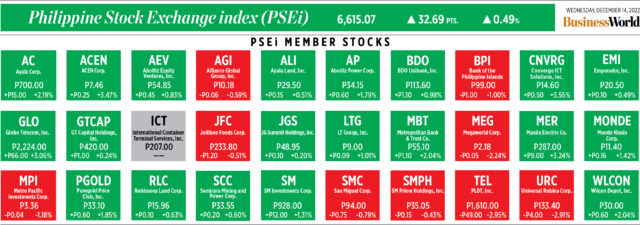
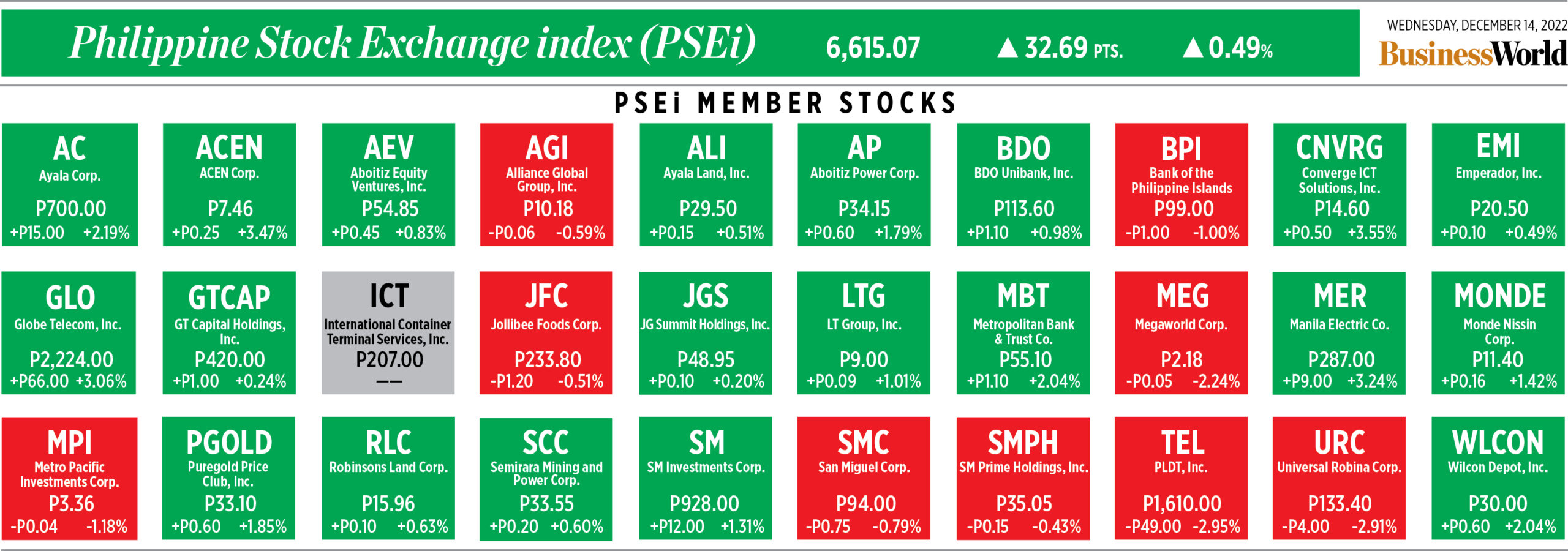
How PSEi member stocks performed — December 14, 2022

Here’s a quick glance at how PSEi stocks fared on Wednesday, December 14, 2022.


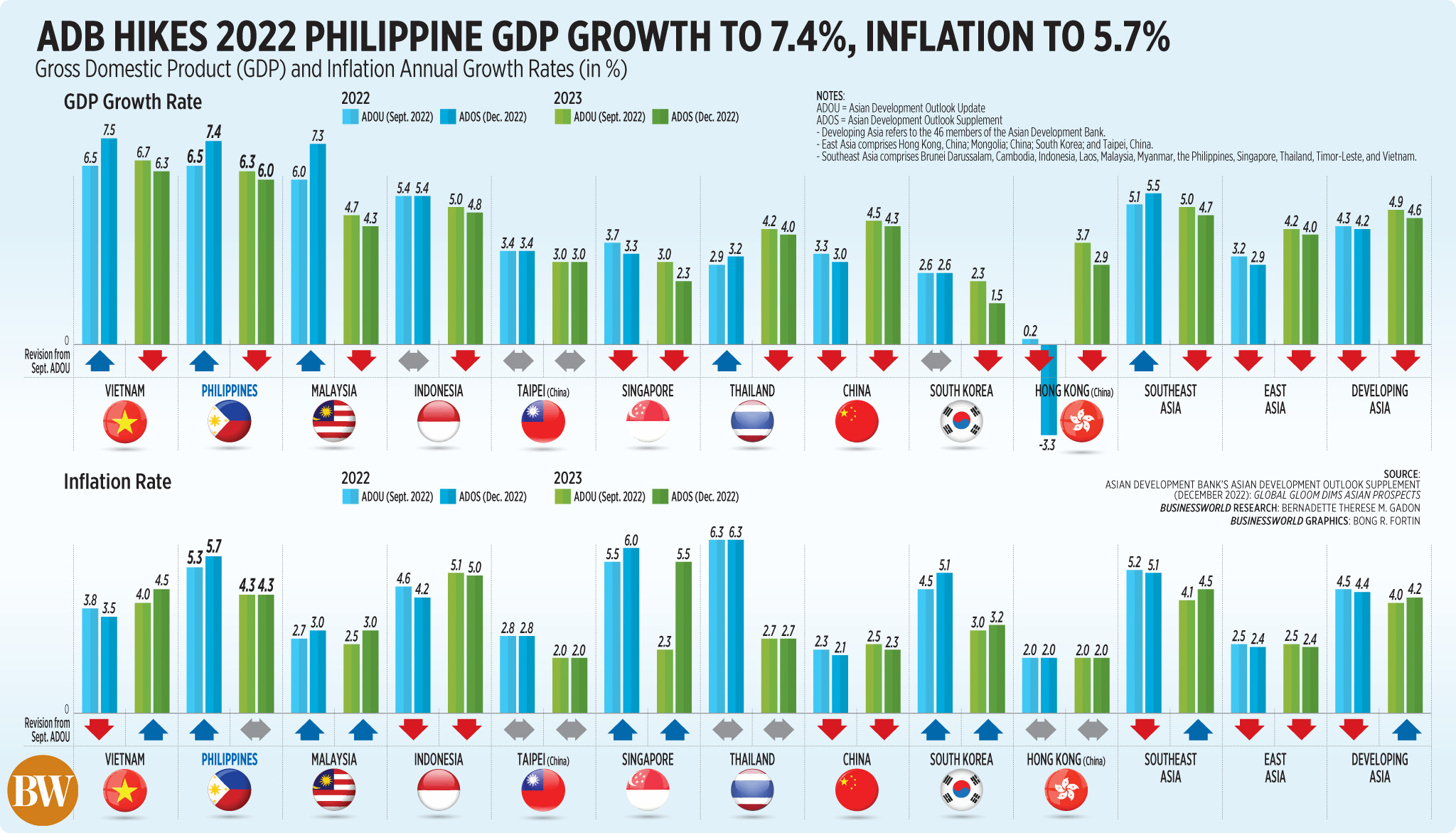
ADB hikes 2022 Philippine GDP growth to 7.4%, inflation to 5.7%

THE PHILIPPINES is expected to be the second fastest-growing economy in Southeast Asia this year and in 2023, despite global headwinds, according to the Asian Development Bank (ADB). Read the full story.

ADB hikes 2022 Philippine GDP growth to 7.4%, inflation to 5.7%

PSEi up on lower US inflation, before BSP meeting

BW FILE PHOTO

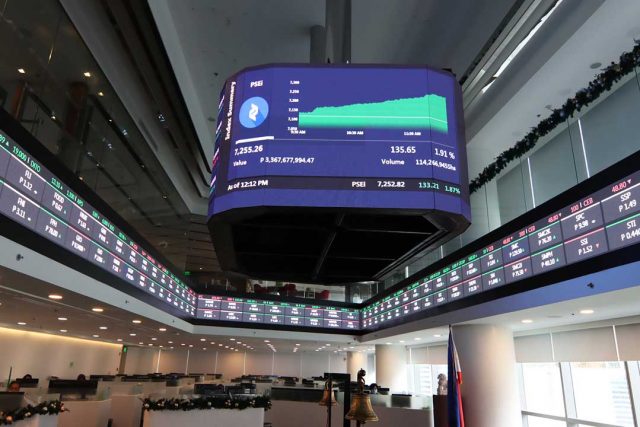
LOCAL shares closed higher on Wednesday on lower-than-expected US inflation in November ahead of more economic data releases.

The benchmark Philippine Stock Exchange index (PSEi) climbed by 32.69 points or 0.49% to close at 6,615.07 on Wednesday, while the broader all-shares index added 17.92 points or 0.52% to 3,449.57.

“Philippine shares rose once again, propped by a cooler-than-expected consumer price index (CPI) report,” Regina Capital Development Corp. Head of Sales Luis A. Limlingan said in a Viber message.

In November, US CPI recorded its smallest annual increase in nearly a year due to decreases in the costs of gasoline, healthcare, and used automobiles, Reuters reported.

In the 12 months through November, the US CPI climbed 7.1%, which was the smallest increase since December last year, and smaller than the 7.7% rise in October.

This showed a 0.1% increase last month, which is lower than the 0.4% jump in October.

“The PSEi moved sideways, closing at 6,615 points today, as investors prepare for upcoming key economic data this week,” Unicapital Securities, Inc. Equity Research Analyst Neil Andrew L. Maderaje said in a Viber message.

Mr. Maderaje said that the market will likely take cues from the press release of the US Federal Reserve, which will signal its stance moving forward.

“On the domestic front, the Bangko Sentral ng Pilipinas (BSP) will also have its Monetary Board meeting, hours after the scheduled announcement of the Fed’s rate hike decision,” Mr. Maderaje said.

Set to be released overnight, the Fed is expected to hike rates by just 50 basis points (bps) after its two-day policy meeting on Dec. 13-14, following four straight 75-bp increases.

Meanwhile, the BSP is set to hold its policy meeting on Thursday, where it is also expected to hike rates by 50 bps.

On Wednesday, most of the sectoral indices closed higher. Holding firms added 68.56 points or 1.08% to close at 6,402.91; financials increased by 7 points or 0.42% to 1,671.71; industrials rose by 32.73 points or 0.35% to 9,299.25; mining and oil went up by 30.95 points or 0.29% to 10,469.48; and services inched up by 3.58 points or 0.21% to close at 1,711.03.

Meanwhile, the property index was the sole loser, declining by 2.17 points or 0.07% to 2,880.65.

Value turnover surged to P115.96 billion on Wednesday with 5.5 billion shares changing hands from P5.42 billion with 705.24 million issues traded on Tuesday.

Advancers outnumbered decliners, 102 versus 73, while 37 names closed unchanged.

Net foreign selling went up to P688. 71 million from the P431.38 million seen the previous day.

Unicapital Securities’ Mr. Maderaje placed the PSEi’s support at 6,400 and resistance at 6,800. — Justine Irish D. Tabile

Peso strengthens after US CPI release

BW FILE PHOTO

THE PESO strengthened against the dollar on Wednesday after the recent release of positive US consumer inflation data.

The local currency ended at P55.745 against the greenback, inching up by 15.50 centavos from Tuesday’s P55.90 close, data from the Bankers Association of the Philippines’ website showed.

The peso opened the day’s session at P55.65 per dollar. Its weakest showing for the day was at P55.82, while its intraday best was at P55.60 versus the greenback.

Dollars traded jumped to $731.72 million on Wednesday from $1.12 billion on Tuesday.

A trader said in a Viber message that the dollar weakened due to the release of the US consumer price index (CPI) for November.

US consumer prices rose 0.1% last month, which was the lowest rate in 15 months after advancing 0.4% in October, according to data from the Labor department.

Year to date, the CPI climbed 7.1%, the smallest advance since December 2021.

The annual CPI last peaked at 9.1% in June, which was the biggest increase since November 1981.

Rizal Commercial Banking Corp. Chief Economist Michael L. Ricafort said in a Viber message that this could affect the aggressiveness of future Fed rate hikes.

The Fed is expected to raise rates by just 50 basis points (bps) this week following four straight 75-bp increases.

Meanwhile, the BSP is set to hold its policy meeting on Thursday, where it is also expected to hike rates by 50 bps, following the Fed’s decision.

Mr. Ricafort expects the local unit to move from P55.65 to P55.85 per dollar on Thursday, while the trader gave a wider forecast range of P55.20 to P56, as the market reacts to the Fed’s meeting results. — Aaron Michael C. Sy