Home Blog Page 5480

Medalla flags more rate hikes to tame inflation — Bloomberg TV

BW FILE PHOTO

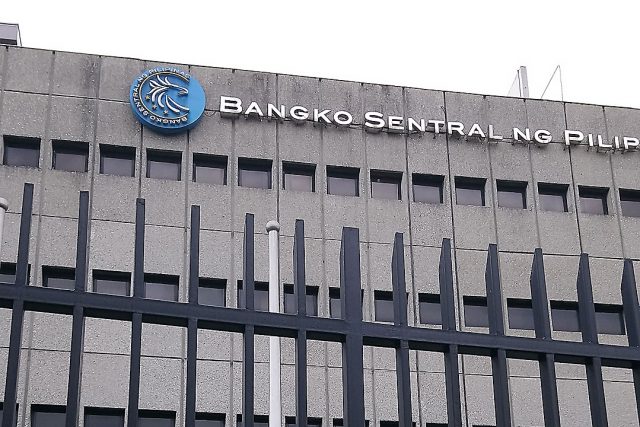
Bangko Sentral ng Pilipinas (BSP) will likely have to continue raising rates at its next two meetings to ensure inflation returns to within its 2-4% target range next year, its governor said on Friday.

BSP Governor Felipe M. Medalla said the likelihood that the central bank will not increase its policy rates at its next meetings was “extremely low.”

The central bank expects inflation, currently running at 14-year high of 8%, to be back to the 2-4% range in the second half of next year. “We have to do more to make sure that happens,” Mr. Medalla told Bloomberg TV.

The central bank on Thursday raised its overnight reverse repurchase facility rate to 5.50%, its seventh rate hike this year. It meets every six weeks. — Reuters

PLDT sells 650 towers for P9.2B to Aboitiz-backed tower company

BW FILE PHOTO

By Arjay L. Balinbin, Senior Reporter

The PLDT group announced on Friday that it is set to transfer the ownership of its 650 telecommunications towers to the Aboitiz-backed tower company Unity Digital Infrastructure, Inc., for around P9.2 billion.

PLDT subsidiaries Smart Communications, Inc., and Digitel Mobile Phils., Inc., recently signed a tower sale deal with Unity, the Pangilinan group said in an e-mailed statement.

“Closing of the transaction will be staggered based on the number of towers being transferred and subject to customary closing conditions,” the group noted. All closings are expected to be completed next year.

The agreement covers the sale and purchase of related passive infrastructure of the 650 towers that are primarily located in Visayas and Mindanao.

“Upon completion of the transaction, Smart will lease back the towers for a period of 10 years at competitive terms as the anchor tenant,” the PLDT group said.

“The sale and leaseback will be complemented by a new tower build commitment of 220 towers over the next few years enabling Smart to further expand its network and enhance customer experience,” it added.

The group is selling its tower assets as part of a transformation strategy, which is also in line with the government’s Common Tower Policy.

The policy calls for more than one telco to have access to towers, thereby increasing the number of subscribers being served by each tower. The government has been encouraging tower sharing to improve cell site density, which is believed to be one of the lowest in the region at 4,000 subscribers per tower.

The transaction brings the total number of PLDT group towers to be monetized through sale and leaseback deals to over 6,500 for more than P86 billion.

“This transaction deepens our relationship with Unity and its shareholders, while allowing PLDT to further unlock value, and providing us with additional financial and operational flexibility as we further expand across the Philippines,” PLDT Chairman Manuel V. Pangilinan said.

PLDT and Smart President and Chief Executive Officer Alfredo S. Panlilio said that the group expects further enhancements to its network quality, service excellence, and customer experience across the Visayas and Mindanao as a result of the partnership.

For his part, Aboitiz Group President and Chief Executive Officer Sabin M. Aboitiz said the transaction positions his group as a “leader in digital infrastructure.”

“We believe that, through these digital portfolio expansion initiatives, Aboitiz will be able to help address the gaps in connectivity and Internet access in the country,” he noted.

ABOITIZ COMPLETES DEAL FOR CEBU AIRPORT
In a related development, the Aboitiz group’s Aboitiz InfraCapital, Inc. (AIC) recently closed a transaction with Megawide Construction Corp. and GMR Airports International, B.V. (GAIBV) for the acquisition of shares in GMR Megawide Cebu Airport Corp. (GMCAC), the developer and operator of Mactan-Cebu International Airport.

AIC acquired 33.3% minus one share in GMCAC for P9.5 billion, Megawide said in an e-mailed statement on Friday.

Megawide and GAIBV also issued exchangeable notes that will mature in October 2024 to AIC for P15.5 billion. These notes will be exchanged by the Aboitiz company for the remaining shares in the MCIA operator.

Hastings Holdings, Inc., a unit of PLDT Beneficial Trust Fund subsidiary MediaQuest Holdings, Inc., has a stake in BusinessWorld through the Philippine Star Group, which it controls.

Globe, SM Advantage Card #UniteVsHunger join hands for the Hapag Movement

With every purchase of an SM Advantage Card (SMAC) and every checkout, shoppers can now help support a family in need.

Leading digital solutions platform Globe and SMAC, the loyalty card of retail giant SM, have come together to help put meals on the table of those in need through the Hapag Movement, Globe’s technology-driven program against involuntary hunger.

“We are excited to partner with SMAC at the most joyful time of the year so we can bring cheer to our fellow Filipinos who continue to suffer due to involuntary hunger. Now, it’s easier for shoppers to share their blessings to the needy, bring food to the table, and get assistance for decent livelihood as we mark this Christmas season post-pandemic,” said Globe Group Chief Sustainability and Corporate Communications Officer Yoly Crisanto.

“Our collaboration with Globe for the Hapag Movement is a pioneering partnership for us as it aligns with the SM brand’s goal of providing support to Filipinos every way we can. This is the time for us to rally behind this cause to help those who continue to reel from the impact of the pandemic and challenges due to rising living costs. Ibalik natin ang sarap ng Pasko,” said Jay Beltran, SMAC SAVP head of Sales and Marketing.

Through the partnership, P50.00 will be donated to the Hapag Movement and other SM Foundation programs for every purchase of a new SMAC card.

On top of this, SMAC members who will shop select items at the SM Store, SM Beauty, SM Appliance, Kultura, Surplus, Our Home, Baby Company, Crate and Barrel, Levi’s, The Body Shop, Forever21, Ecco, and Miniso will earn up to 1,000 EXTRA SMAC Points, and half of the EXTRA points they earn will be donated to the movement starting Dec. 15, 2022 until Jan. 15, 2023, in time for this season of giving.

“We celebrate the season of giving with our SMAC members with the gift of giving — letting them share blessings with our most vulnerable kababayans,” Ms. Beltran said.

Globe’s Hapag Movement leverages on technology and collaboration to help 100,000 families experiencing involuntary hunger through supplemental feeding and livelihood support.

Globe initiated the program to help Filipinos severely affected by the pandemic, with its effects still felt until today. An estimated 2.9 million individuals reported suffering from involuntary hunger as of October this year, largely unchanged from the quarter before, according to a Social Weather Stations Survey.

To learn more about the Hapag Movement, visit its official page. You may also visit smac.ph or download the SMAC app to know more.


Spotlight is BusinessWorld’s sponsored section that allows advertisers to amplify their brand and connect with BusinessWorld’s audience by enabling them to publish their stories directly on the BusinessWorld Web site. For more information, send an email to online@bworldonline.com.

Join us on Viber to get more updates from BusinessWorld: https://bit.ly/3hv6bLA.

House approves Maharlika Fund bill

A Philippines peso note is seen in this picture illustration on June 2, 2017. — REUTERS

THE HOUSE of Representatives approved on third and final reading the bill creating the Maharlika Investment Fund (MIF), just over two weeks after it was filed by Speaker Ferdinand Martin G. Romualdez.

At Thursday’s session, 279 lawmakers voted in favor of the MIF bill, while six voted against. The six lawmakers who opposed the measure are Camarines Sur Rep. Gabriel H. Bordado, Jr., Gabriela Party-list Rep. Arlene D. Brosas, ACT Teachers Party-list Rep. France L. Castro, Albay Rep. Edcel C. Lagman, Kabataan Party-list Rep. Raoul Danniel A. Manuel and Basilan Rep. Mujiv S. Hataman.

President Ferdinand R. Marcos, Jr. on Wednesday certified the MIF bill as urgent. This allowed the House to approve the measure on second and third reading on the same day before adjourning for Christmas break.

In a Dec. 14 letter to the Speaker, Mr. Marcos said immediate enactment of House Bill (HB) No. 6608 is needed “in order to establish a sustainable national investment fund as a strategic mechanism for strengthening the investment activities of top performing government financial institutions (GFIs), and thus pump-prime economic growth and social development.”

Mr. Marcos signed the letter while he was in Brussels, Belgium to attend the Association of Southeast Asian Nations-European Union (ASEAN-EU) Commemorative Summit.

Several lawmakers led by Mr. Romualdez, the President’s cousin, and Deputy Majority Leader Ferdinand Alexander Marcos, the President’s son, filed the bill seeking to create the country’s sovereign wealth fund on Nov. 28.

A consolidated version, HB No. 6608, was approved last week by the House committees on banks and financial intermediaries, appropriations, and ways and means.

Lawmakers on Thursday agreed to include a provision in the bill that would prohibit the Government Service Insurance System (GSIS) and Social Security System (SSS) from contributing to the MIF, and that 25% of Maharlika Investment Corp. (MIC) profits would be distributed as ayuda or cash subsidies for vulnerable sectors.

The proposed MIF has been heavily criticized by economists, former Cabinet officials, business groups and civil society organizations over the lack of transparency and safeguards. They also raised concern over the bill’s earlier version that required state pension funds to pour money into the MIF, which prompted lawmakers to remove this provision.

Finance Secretary Benjamin E. Diokno has urged Mr. Marcos to certify the MIF bill as urgent since this would help create more jobs, promote trade and investments, fund infrastructure projects, and achieve food and energy security.

In the six-page memo to the president through Executive Secretary Lucas P. Bersamin, Mr. Diokno said the MIF could be a catalyst in transforming the economic landscape and help the country reach its full potential.

“With professionals managing the investment of public funds, the MIC would ensure the availability of alternative high return investment platform, obtain the best absolute return for the funds, find additional sources of liquidity as the need arises, and perform better risk management, given the additional layers of checks and balances it offers,” he said.

Under the approved version, the initial funding of the MIF will come from the Land Bank of the Philippines (P50 billion), Development Bank of the Philippines (P25 billion) and Bangko Sentral ng Pilipinas (BSP). The BSP will initially put in the MIF 100% of its dividends to be declared as income.

Subsequent annual contributions will come from BSP dividends, and part of the gaming revenues of the Philippine Amusement and Gaming Corp. and other state-owned gaming operators, among others.

BSP Governor Felipe M. Medalla on Thursday said the central bank’s ability to maintain price stability “will not be negatively affected by the current version (of the MIF bill).”

“I think times like this, let’s support the president… If this fund can be used to attract foreign investors… it could be good for the country. And, therefore, given that our concerns in the central bank have been completely addressed, and the criticism on inclusion of the pension funds has been addressed as well, I support the passage of the bill,” Mr. Medalla told reporters on Thursday. — Beatriz Marie D. Cruz, John Victor D. Ordoñez with Keisha B. Ta-asan

BSP raises rates by 50 bps, signals more tightening

Families enjoy going to a mall in Antipolo, Rizal, Nov. 14. The Philippine central bank expects inflation to peak in December amid a surge in holiday spending. — PHILIPPINE STAR/ MIGUEL DE GUZMAN

THE BANGKO SENTRAL ng Pilipinas (BSP) on Thursday raised its benchmark interest rate to its highest in 14 years, and signaled more tightening albeit at a slower pace.

The Monetary Board (MB) increased its overnight borrowing rate by 50 basis points (bps) to 5.5%, as predicted by 13 of 15 analysts in a BusinessWorld poll last week. This brought the policy rate to the highest since November 2008 when it was at 6%.

The move followed the 50-bp hike by the US Federal Reserve at its Dec. 13-14 meeting, which brought its own policy rate to 4.25-4.5%.

The BSP’s rates on the overnight deposit and lending facilities were also increased to 5% and 6%, respectively.

Since May, the central bank has increased borrowing costs by a cumulative 350 bps.

“The Monetary Board arrived at its decision after noting the further uptick in headline and the sharp rise in core inflation in November amid pent-up demand,” BSP Governor Felipe M. Medalla said at a briefing after the policy meet.   

Headline inflation accelerated to a 14-year high of 8% in November, from 7.7% in October. For the January-to-November period, inflation averaged 5.6%.

Core inflation, which excludes food and fuel volatile prices, rose 6.5% in November from 5.9% in October and 2.4% in November 2021. In the eleven months to November, core inflation averaged 3.7%.

Mr. Medalla said the BSP kept its average inflation forecast for the year at 5.8%, but raised the 2023 average inflation projection to 4.5%, from 4.3% previously. These projections are still above the BSP’s 2-4% target band.

Meanwhile, the 2024 inflation forecast was lowered to 2.8% from 3.1% previously due to “the further easing in oil prices, peso appreciation, and the slightly lower domestic growth outlook resulting in part from the BSP’s cumulative policy rate adjustments.”

Mr. Medalla said upside risks to the inflation outlook are mainly from higher global food prices due to elevated fertilizer prices and supply chain disruptions.   

“On the domestic front, trade restrictions, increased prices of fruits and vegetables due to weather disturbances, higher sugar prices, pending petitions for transport fare hikes, as well as potential wage adjustments in 2023 could push inflation upwards,” Mr. Medalla said.   

The impact of a slower global economic recovery is still the major downside risk to the outlook, he added.

BSP Deputy Governor Francisco G. Dakila, Jr. said the central bank revised its inflation forecast for next year due to the faster-than-expected November inflation print and the looming impact of approved water rate hikes starting 2023.

“We are now also seeing that inflation may further go up in December, although this would be only very slightly,” Mr. Dakila said. “On the other hand, this would be partly offset by the lower crude oil price assumption as well as the strengthening of the peso.”

Mr. Medalla said the latest forecasts point to inflation peaking in December, not November as earlier expected, owing to higher food prices caused by recent typhoons, higher liquefied petroleum gas (LPG) prices and electricity rates.

The BSP chief said inflation is expected to return to the 2-4% target band by the second half of 2023, and back to the low-end of the target range by the fourth quarter of 2023 and first quarter of 2024 due to base effects.

After the BSP’s announcement, the Philippine peso closed at P55.685 versus the US dollar, up by six centavos from its P55.745 finish on Wednesday. Year to date, the peso has weakened by P4.685 or 8.4% from its P51 close on Dec. 31, 2021.

“The BSP’s main priority continues to be bringing inflation back to the target. We remain prepared to adjust our stance as necessary to safeguard price stability over the medium-term. As always, our actions will remain data-dependent and guided by latest information available,” Mr. Medalla said.   

“The more favorable inflation dynamics overseas certainly allows consideration for moderate pace of increase in the overnight reverse repurchase rate. Having said that, the impact of monetary policy also takes time to manifest fully in inflation and GDP data,” he added.

Mr. Medalla also said that the current regulatory relief measures will be only kept until December, while measures on the credit card cap will be extended and subject to review next month.   

“The majority of our pandemic-related measures will expire by the end of 2022 given that the economy has achieved sufficient growth momentum,” he said.   

The Philippine economy expanded by 7.6% in the third quarter, bringing the year-to-date average growth to 7.7%. Economic managers expect full-year GDP growth to settle within 6.5-7.5%.

SLOWER RATE HIKES IN 2023
According to the BSP, the pace of rate increases next year could slow down depending on the data.

“If I were betting my own money on whether it’s 25 or 50 basis points…more likely, it could go either way, it depends on the data,” Mr. Medalla said. “But it would be harder for me to bet that this is the last rate hike.”

The BSP chief said he sees less urgency to match the US Federal Reserve’s monetary tightening next year as bringing inflation back to the 2-4% target remains their top priority.   

Following the policy announcement, economists are expecting more rate hikes next year.  

“We think the central bank will raise interest rates again early next year, but with inflation likely to peak soon and growth slowing, the BSP’s tightening cycle is nearing an end,” Capital Economics Senior Asia Economist Gareth Leather said in a note.   

Mr. Leather said that headline inflation in the Philippines may likely peak in the coming months as the impact of supply disruptions from Typhoon Noru fades.   

“The central bank today struck a fairly dovish tone on inflation, stating that it expected [inflation] to peak in December and fall back to target in the second half of next year (a little earlier than we anticipate),” Mr. Leather said.   

He expects the BSP to raise interest rates by 25 bps early next year, and this would mark the end of the tightening cycle. 

For ING Bank N.V. Manila Senior Economist Nicholas Antonio T. Mapa, inflation would still remain elevated next year due to the persistent second-round effects.   

“With inflation expected to stay high, we believe BSP will retain its hawkish stance going into 2023, taking its cue mainly from the Fed while also monitoring the path of inflation,” he said.   

Mr. Mapa added that the BSP could bring its policy rate to as high as 6-6.25% next year.   

“We think the BSP is determined to keep the current interest rate differential with the US, amid a weak peso and elevated inflation,” Oxford Economics Assistant Economist Makoto Tsuchiya said in a note.   

Mr. Tsuchiya also expects the central bank to hike by 25 bps in the first quarter of 2023, bringing the policy rate to 5.75%.   

“Our US team expects the US Fed to raise the policy rate by 25 bps at it first meeting in 2023, and we expect the BSP to match the move, rather than outpace the Fed,” he said.   

The US Federal Reserve has raised 425 bps so far this year. — Keisha B. Ta-asan

Cash remittances rise to 3-month high in Oct.

A man accepts Philippine peso bills at a money remittance center in Makati City, Metro Manila, Philippines, Sept. 19, 2018. — REUTERS/ELOISA LOPEZ

By Keisha B. Ta-asan, Reporter

MONEY SENT HOME by overseas Filipino workers (OFWs) rose by 3.5% in October, with migrants taking advantage of the strong dollar ahead of the holiday season.   

Data from the Bangko Sentral ng Pilipinas (BSP) released on Thursday showed cash remittances through banks stood at $2.91 billion in October, higher than the $2.81 billion in the same month in 2021.

The amount of money sent by migrant workers was the highest in three months or since the $2.92 billion in July.

Overseas Filipinos’ cash remittances (Oct. 2022)Month on month, the 3.5% growth in cash remittances was weaker than the 3.8% seen in September, and marked the slowest pace in remittance growth since 2.3% in July.

“The expansion in cash remittances in October 2022 was due to the growth in receipts from land-based and sea-based workers,” the central bank said in a statement. 

Land-based OFWs sent $2.33 billion in October, up by 3.6% from $2.25 billion in the same month last year. Remittances from sea-based workers, on the other hand, rose by 3.4% to $583.803 million in October from $564.817 million a year ago.

“Remittances growth will likely remain modestly positive as we approach the holiday season, with first face-to-face celebrations. The relatively depreciated peso in October is additional impetus to send in advance remittances from abroad,” China Banking Corp. Chief Economist Domini S. Velasquez said in a Viber message. 

The peso slumped to its record low when it closed at P59 against the dollar on Oct. 17. The local unit went back to the P57 level when it finished at P57.97 on Oct. 28, causing it to strengthen by P0.655 or 1.13% from its Sept. 30 close of P58.625. 

Rizal Commercial Banking Corp. Chief Economist Michael L. Ricafort said the low, single-digit growth in cash remittances in recent months may have been due to the strong US dollar, which “somewhat helped reduced the need to send US dollars to pay the same amount in pesos, especially after taking into account the effects of higher prices/inflation.”

“The continued growth in OFW remittances may be attributed to the relatively higher prices/inflation that may have required the sending of more remittances to cope with higher prices of goods and services for OFWs and their families in the Philippines,” Mr. Ricafort said.

Headline inflation accelerated to a near 14-year high of 7.7% in October, from 6.9% in September.

For the first 10 months of the year, cash remittances increased by 3.1% year on year to $26.736 billion.

The growth in cash remittances during the January-to-October period was driven mainly by inflows from the United States, Saudi Arabia, Singapore, and Qatar. 

By country source, the United States remained the biggest source of cash remittances at 41.7%. It was followed by Singapore (7%), Saudi Arabia (5.9%), Japan (5%), United Kingdom (4.8%), United Arab Emirates (4%), Canada (3.6%), Qatar (2.8%), Taiwan (2.7%), and Korea (2.5%).   

Remittances from the top 10 countries accounted for 80% of the total during the 10-month period.

“For the last three months at least, we saw remittances from the US — the largest sender — and Asia soften. This will likely be offset by increases from sea-based workers and remittances from the middle east,” Ms. Velasquez said. 

Meanwhile, BSP data showed personal remittances increased by 3.5% to $3.227 billion in October. This brought the 10-month tally to $29.718 billion, up by 3.1% from a year ago.

The BSP said the increase in personal remittances two months ago was due to higher remittances sent by land-based workers with work contracts of less than a year or more, and sea-based workers with work contracts of less than one year.

“OFW remittances and (dollar) conversion to pesos (are) expected to seasonally increase towards the end of 2022 in view of the seasonal increase in holiday spending,” Mr. Ricafort said.   

He noted holiday spending could be higher than the levels seen in 2020 and 2021, when strict lockdowns and travel restrictions were implemented.

The central bank expects remittances to grow by 4% this year.

PHL bags P6B in investments from Unilever, European firms

REUTERS

THE PHILIPPINES has secured over P6.2-billion worth of investment pledges from four European firms, whose executives met with President Ferdinand R. Marcos, Jr. in Brussels, according to the Presidential Palace.

Mr. Marcos met with European businessmen for a roundtable discussion on the sidelines of the Southeast Asian Nations-European Union (ASEAN-EU) Commemorative Summit, Malacañang said in a statement on Wednesday evening.

“I think that we have a good opportunity with some of the policy measures that have been taken from the previous administration and some of the policy changes that we have made at the beginning of this administration,” Mr. Marcos was quoted telling Unilever officials.

Unilever, a British multinational consumer goods giant, committed to investing P4.7 billion in the country as part of its efforts to upgrade its local factories through automation and digitalization, the Palace said. Among Unilever’s brands in the Philippines include Dove, Sunsilk, Rexona, and Knorr.

French shipbuilding firm OCEA S.A. also affirmed its commitment to build a shipyard in the Philippines worth P1.5 billion during the meeting with Mr. Marcos. The firm said the project is expected to generate up to 600 direct and indirect jobs in the country.

OCEA also agreed to work with the Bureau of Fisheries and Aquatic Resources to help Filipino fisherfolk enhance their operations and to promote sustainable fishing.

SEMMARIS, another French company that manages Ringis International Market in Paris, said it was interested in developing an agro-logistics hub in New Clark City.

Benoit Juster, the firm’s executive director, told Mr. Marcos that the project would promote local production with fair prices to farmers.

“In Clark, we have carried out feasibility studies, so we have a masterplan and we have the estimation of the cost of the works. And so we can start quickly in Clark,” Mr. Juster was quoted as saying in the Palace statement.

Acciona, S.A., a Spanish multinational firm that engages in sustainable infrastructure solutions, said it would invest in developing renewable energy sources in the Philippines.

“To the extent of our possibilities… we are comfortable in your country, we find it welcoming and business-friendly, so we would like to make the Philippines one of our — if not our main hub for the Southeast Asia,” Acciona Chairman Jose Manuel Entrecanales was quoted as saying.

Calixto V. Chikiamco, Foundation for Economic Freedom (FEF) president, said the pledges from the European firms showed that investors see potential in the country.

“However, those are just pledges,” he said in a Viber message. “Foreign investors will want to see a more favorable climate backed by substance: better infrastructure, a level playing field and a rule of law, less bureaucratic hurdles, and ratification of RCEP (Regional Comprehensive Economic Partnership), which will expand the markets for goods that they produce in the Philippines.

RCEP is the largest free trade agreement (FTA) with participating countries including the 10 ASEAN members, Australia, China, Japan, South Korea and New Zealand. The Philippines and Myanmar are the last countries that have yet to finalize their participation in the trade agreement.

“The Philippines is expected to post robust growth next year and remains an important market for foreign investors given our demographic dividend,” ING Bank N.V. Manila Senior Economist Nicholas Antonio T. Mapa said in a Viber message.

“We would like to see these investment pledges translate to actual foreign direct investments (FDIs) as this would signify their actual interest in the country as an investment destination.”

FDI net inflows fell by 8% in September amid a looming global economic shutdown, the Bangko Sentral ng Pilipinas reported on Monday. — John Victor D. Ordoñez

SB19 ends the year with homecoming concert, new single

P-POP group SB19 wraps up its Where You At (WYAT) world tour with a homecoming concert on Dec 18 at the Smart Araneta Coliseum in Quezon City.

The group — the members of which go by their first names — is composed of Pablo (lead rapper and songwriter), Stell (lead dancer), Ken (lead vocals), Justin (sub-vocals), and Josh (sub-vocals). They recently finished their tour across the United States, United Arab Emirates, and Singapore.

“Before we started this tour, sobrang kinakabahan kami (We were very nervous). Hindi namin alam kung may mga manonood sa mga cities or countries na pupuntahan namin (We did not know if anyone would go and watch us in the cities and countries we were visiting),” said Pablo (real name: John Paulo Bagnas Nase), during a press conference at the Novotel Manila Araneta City on Dec. 12.

The group admitted to being overwhelmed by the warm reception they received from the fans at the concert venues abroad.

The WYAT Homecoming Concert will have a repertoire similar to the lineup of their world tour and will also have the group telling stories about their recent tour experience.

Ang mga idadagdag namin ay ang mga nais ninyong makita (We will add elements to the show that you look forward to),” lead dancer Stell (real name: Stellvester Ajero) said.

“In terms of training, we also try to elevate and give a different feeling of what we are going to perform,” Pablo said.

The concert will also be livestreamed via ticketnet.com.ph in order to reach out to local and international fans who wouldn’t be able to make it to the live year-ender showcase.

NEW SINGLE
Ahead of the WYAT Homecoming Concert, SB19 released a new single, “Nyebe,” a ballad about hopeless longing and uncertainty.

Pablo wrote the song in December 2020, inspired by how different Christmas that year was since not everyone is able to spend it with their families.

Noong time na ’yun, hindi lahat may privilege para i-enjoy nila yung pasko (At that time, not everyone had the privilege to enjoy their Christmas),” Pablo said, citing a line from the song: matutunaw rin ang nyebe (the snow will eventually melt away).

“Each of us has a different story, but the feeling is universal,” he added.

“Every time we release (a song), we try to produce a different sound,” he said. “For ‘Nyebe’ we took inspiration from gospel music which very calming and hopeful pakinggan (to listen to).”

The group confirmed that the new single will be performed at the concert.

SB19’s sub-vocalist Josh (real name: Josh Cullen Santos) said that the song was re-recorded before the world tour started.

“It was first teased publicly at our Our Zone concert in 2021. It’s exciting that we get to share another milestone with our fans,” he said.

The group, who are also the National Commission for Culture and the Arts Youth Ambassadors, realized while touring overseas that their goal is to share Filipino culture with the world.

“Hopefully, in the future, Filipino music will be better known all over the world and it will further strengthen Filipino heritage,” Pablo said in a mix of English and Filipino.

As for their plans for 2023, SB19 is set to release a new album.

Tickets to the WYAT Homecoming Concert are available via TicketNet website and outlets. The concert will also be livestreamed via ticketnet.com.ph. — Michelle Anne P. Soliman

Meralco secures needed power from Aboitiz firm

PHILSTAR FILE PHOTO

MANILA Electric Co. (Meralco) has secured a 300-megawatt (MW) emergency power supply deal with Aboitiz Power Corp. (AboitizPower) to partly replace the capacity that a unit of San Miguel Corp. (SMC) stopped supplying, but only for a short period.

In a statement on Thursday, Meralco said that the emergency power supply agreement (EPSA) is effective on Dec. 15 until Jan. 25 for a rate of P5.96 per kilowatt-hour (kWh). The power will be sourced from AboitizPower’s plant under GNPower Dinginin Ltd. Co.

Meralco said the emergency supply will mitigate the impact of higher rates as the power distributor has been sourcing from the Wholesale Electricity Spot Market (WESM) since Dec. 7.

“[The EPSA] will lessen Meralco’s exposure to WESM and in turn partly shield its customers from volatile and potentially higher generation costs,” Meralco said.

The Energy Regulatory Commission (ERC) earlier said that Meralco’s contract with a subsidiary of SMC Global Power Holdings Corp. was priced at only P4.2455 per kWh.

The unit, South Premiere Power Corp. (SPPC), terminated its power supply agreement (PSA) with Meralco on Dec. 7, prompting the latter to buy power from the spot market where the average price for November was placed by the ERC at P8.47 per kWh.

Meralco’s supply deal with SPPC covers 670 MW of capacity for 10 years.

SPPC stopped supplying power to Meralco after the ERC denied a petition jointly filed by the contracting parties for temporary relief through a rate increase. The regulator said the petition had no basis as their PSA is a fixed-rate contract.

The parties filed the petition as the SMC group claimed to have incurred losses amounting to P15 billion, of which it wanted to recover P5 billion through the rate increase. The losses, it said, were a result of extraordinary circumstances caused by commodity supply disruptions. It said the resulting surge in fuel costs was way beyond the price range and long-term outlook contemplated at the time of the PSA execution in 2019.

SPPC is the administrator of the natural gas-fired power plant in Ilijan, Batangas. SMC Global Power’s other unit San Miguel Energy Corp., the administrator of the coal power plant in Sual, Pangasinan, also sought a rate increase for a similar reason.

With the ERC’s rejection of the rate increase, SMC Global Power sought and secured a 60-day temporary restraining order (TRO) from the Court of Appeals, suspending the implementation of SPPC’s PSA with Meralco in November.

“We are hoping it will be resolved sooner because the TRO’s effectivity is 60 days, and it is a very long time. It covers at least two billing periods. We are expecting that the case will be resolved with a motion to lift the TRO filed by the OSG (Office of the Solicitor General),” ERC Chairperson and Chief Executive Officer Monalisa C. Dimalanta told reporters on Tuesday.

Meanwhile, Meralco vowed that it would “exhaust all measures to continue supplying its customers with sufficient and reliable power, while mitigating the impact of the TRO.”

Meralco’s controlling stakeholder, Beacon Electric Asset Holdings, Inc., is partly owned by PLDT, Inc. Hastings Holdings, Inc., a unit of PLDT Beneficial Trust Fund subsidiary MediaQuest Holdings, Inc., has an interest in BusinessWorld through the Philippine Star Group, which it controls. — Ashley Erika O. Jose

What are you looking for in a hoops game?

Video Game Review
NBA 2K23
Sony PlayStation 5

Resident Evil Village – Winters’ Expansion
PS5

The Valiant
Personal Computer via Steam

WITH a new season comes a new pro hoops title to enjoy, and with it all the charms and bells and whistles longtime followers of the NBA 2K series can expect from such a title. If you’re in the mood to just play some virtual ball, then NBA 2K23 delivers on that account, as it always has. The latest iteration of the beloved franchise even has a few additions to the formula that proves to be worth looking at. While little else has changed in its core design, tried-and-tested aspects combined with these new features are sure to get basketball junkies hooked.

NBA 2K23’s main career modes are where the bulk of your gameplay will fall. MyCareer lets you build your own rising superstar; you take on various different contracts with different teams and slowly hone your hoops skills with the goal of becoming one of the best in the league. You’ll be grinding out in the courts, improving your stats, and even buying some new threads for your character to wear, all with the intention of making your dream player come to life. There’s a decent amount of content in its story mode, and its virtual hub, while, a little tedious, lets NBA 2K23 show off its updated graphics and textures in all its glory. If these more personalized simulation elements don’t suit your fancy, you can always shift to MyTeam, where, instead of building your character up, you get to form your dream team from scratch, cobbling together your favorite players to create a formidable roster that few others can compete with. Both of these modes ensure hours and hours of playtime, provided you enjoy the core gameplay loop.

That said, let’s address the elephant in the room here and be honest about the progression system these modes have. While they are enjoyable, they’re held back by their own repetitive design, requiring a lot of grinding to actually make any progress. This is where the disappointing nature of NBA 2K23 rears its ugly head. While normal gameplay nets you in-game currency to spend, it’s a paltry amount compared to what you need to make any permanent progress, and when you need dozens of games to go through in order to buy a single cosmetic or to upgrade a few stat points, these modes start to overstay their welcome. This is especially egregious when real life microtransactions practically shower you with said currency, making the functional nature of NBA 2K23’s design revolve around hardcore grinding, or paying to achieve any progress. While some people may be fine with it, the lure and allure of spending money to skip its slower parts is undeniable, and has led to these career modes feeling slow and repetitive.

This sheer amount of monetization in NBA 2K23 is what hurts the pacing of what should’ve been an accessible basketball sandbox. After all, who wouldn’t want their own player avatar decked out in the latest clothes, playing for the best teams, or having their favorite basketball stars play together? This mode could’ve been so much more enjoyable had it not been dragged down by its poor progression system. As conveyed, the player experience is a total disconnect to the career modes’ intentions. It’s hurt by its own capacity for in-game revenue generation when the grind for stats and virtual clothes can last for months on end, especially in a game series with a yearly release.

The good news is that NBA 2K23 boasts other modes. Far and above the quality of MyCareer is the Jordan Challenge. With a set goal and focus in mind, the Jordan Challenge has you reliving Michael Jordan’s career by replaying the iconic games throughout his basketball career. It handpicks several important matches in his lifetime, bringing back old faces and old favorites to play with and against. It’s a refreshing fan-service element, and it’s packed with its own unique challenges to accomplish. It’s guaranteed to have you playing in certain ways without making you feel like you’re at a disadvantage.

Equally as strong is the MyNBA Eras mode. Whereas the Jordan challenge was a more of a trek down memory lane, MyNBA Eras is a far more focused blast from the past, allowing players to play using their favorite classic teams in four different eras. It not only has the line-ups of these old teams; it also simulates the look and feel of each individual era, making clever use of filters and retextured assets to bring you back to the far simpler times of the 1990s and early 2000s. It’s a perfect mode that stands apart from the more microtransaction-heavy sandbox, and it brings with it enough variety to make each new play session feel unique and interesting, with different rosters and stars to parade.

And that is where NBA 2K23 is really at its best. Divorced from the microtransactions, it’s able to bring its A-game when it’s all about the gameplay. Life-like motion capture accentuates the new graphical styles featured through the different eras, and on next-generation consoles, it makes for a thoroughly authentic basketball experience. Without the needless stat-maxing, it allows NBA 2K23 to be, well, just a game, and when it’s “just a game” (and not a job, or a grind), it is a pretty damned good one.

  At the end of the day, NBA 2K23 really depends on exactly what it is you’re looking for in your hoops titles. If you’re looking for a good basketball game and don’t mind the microtransaction career modes, then it’s definitely one to look at. While its career mode is lacking, the Jordan Challenge and MyEras make up for any shortcomings. Highly recommended.

THE GOOD

• A fair amount of game modes to play through

• Still the best basketball experience on any platform

• MyEras is a great blend of old and new concepts, with classic teams playable with modern gameplay

THE BAD

• Microtransaction-heavy career mode means a grind or pay scheme for one of its more iconic modes

• Still feels a little too similar to previous entries in the franchise

• Pay2Win aspect of career modes hurts what should’ve been a strong multiplayer sandbox experience  

RATING: 8.5/10   

POSTSCRIPT: Who isn’t a big fan of Resident Evil Village? While longtime gamers still prefer the classic survival horror tank controls formula of the older Resident Evil titles, the release of Resident Evil Village was able to bring the newer generation of button mashers to appreciate the franchise. The game was a nice blend of action and adventure, and it managed to mix the ridiculous set pieces of the more recent offerings in the series with the creepier, more mysterious aspects of its predecessors.

It comes as no surprise, then, that the Winters’ Expansion, Resident Evil Village’s newest downloadable content, exhibits more of its strengths and gives gamers exactly what they want. It brings to the table the story of Ethan’s daughter, three mercenary characters to play with, and the ability to enjoy the main campaign in third-person mode. And honestly? These are all great.

Let’s start with the actual story DLC, Shadows of Rose. Clocking in at around three to four hours of playtime, it’s a short but enjoyable romp. Highlighting Rose’s own personal experiences serves as an excuse for Resident Evil Village to do a retread of familiar locales and set pieces from the main game. This is where the true strength of the DLC lies. Shadows of Rose feels like a dark, twisted little fairytale to enjoy, rehashing the best parts of the main campaign by taking you through the familiar confines of Castle Dimitrescu and House Beneviento, and twisting them into something familiar, but different. The enemies you face are creepy and threatening and nothing like what you’d expect, and the DLC is no stranger to the gory body horror creepiness that the base game had. You’ll feel chased and pressured in every area you go into, and the DLC is not shy at thrusting you into dangerous situations with tons of enemies to fight off.

Thankfully, you are not defenseless. Your options are limited, but the few guns you have on hand are still useful at bringing your foes down. If they get too close to you, you can buy yourself some time by stunning them using Rose’s burgeoning powers, or even just running past them if you feel you can slip away. You don’t have the arsenal available in the main game of Resident Evil Village to fall back on, but this new little mechanic gives you an extra means of defense that also changes up how you can approach your fights. You’ll be balancing your ammunition with your power usage, giving you the leeway to run and fight as needed.

And as for the story? It’s a neat little tale to enjoy. Resident Evil Village’s story was a bit silly at times, but this little mini-campaign is designed to strike at the heart. Its narrative puts to rest the Winters Family arc, and serves as a satisfying conclusion to the Resident Evil 7: Biohazard and Resident Evil Village arcs.

If that’s not enough for you, the Winters’ Expansion does have a bit more stuff to offer in the form of new mercenary mode characters to enjoy, with their own unique game styles to boot. Chris Redfield is initially unlocked from the start, and he uses his campaign arsenal during his mercenaries mode gameplay. He has reliable guns to shoot his enemies with, a decent little pocket knife to use, and a laser pointer that can do tremendous amounts of damage once its explosive payload has been dropped. For more long-term fans, he also has his iconic fists, letting him pummel foes to death with his bare hands.

Apart from him, two main campaign bosses are also unlockable once you’ve scored enough points. The first is Karl Heisenberg, who can not only use his hammer to bring his foes down with its large, sweeping aoe attacks; he also has access to magnetic powers. He can throw scrap to puncture an enemy’s skull, or sawblades to chop them in half, and even bring to battle his Soldat Jet soldiers to explode on enemies. The second is Lady D herself. Using her powerful claws, she can combo her foes down and slice them to bits, or summon her daughters to help her in combat and provide backup. She tosses chairs and summons flies, and can even chokeslam any unwary foe that crosses her path.

These three new characters provide a wealth of replay value to what was originally a very simple side mode. Unlocking them does take some effort, requiring certain ranks in all stages before you can access them, but it’s a nice reason to go back and finally hit those higher ranks. While the mercenaries mode still isn’t particularly engaging long term, it’s one that finally gives you a reason to replay them and do well.

The Winters’ Expansion likewise features a third person mode to play with during the main campaign. While nothing much has changed in the campaign structure, this third-person perspective actually makes for a big change in pacing, giving you more peripheral vision, and changing how you move because of this unique vantage point. Cutscenes are still primarily in first person, but the game’s third-person mode gives some nice little advantages that the classic view didn’t have, and it’s a nice excuse to replay the main campaign.

All in all, the Winters’ Expansion proves to be a fairly enjoyable offering. Capcom has given Resident Evil Village fans a fun little story DLC to play with, and new reasons to go back and enjoy its other modes. It’s a no brainer for anyone who enjoyed the base game, and while it’s not essential to the core experience, it adds more than enough to be worth considering.

THE GOOD:

• Enjoyable retread of the base game, with its best parts fully emphasized

• Tons of new and familiar content to enjoy

• Wraps up the connected stories of the last two releases in the series nicely and neatly

THE BAD:

• Doesn’t add new content to the base game’s campaign

• Much of the content in the DLC relies on wanting to replay old content

• Might disappoint fans who are expecting a full-fledged story expansion  

RATING: 8.5/10

KITE Games’ The Valiant is what it promises to be — no more, no less. Set during the tumultuous periods of the Medieval era, the game has you taking control of knights, swordsmen, and archers to defeat your opponents on the battlefield. Whether you’re taking control of important objectives or running down your opponents using its rock-paper-scissors-esque combat mechanics, little by little, it’s your wits and your actions that decide if you win the day.

In this regard, The Valiant relies heavily on its unit counter system to really shine. Some of its mechanics are a staple of real time strategy offerings. Spears are supposed to take on horsemen, horsemen take down unsupported archers, swordsmen tank the damage and take the hits, and whatever ranged units you have rain supporting fire on the battlefield. Where it changes things up is in unit abilities. While each melee unit can charge opponents and lock them into melee combat, each unit also has its own special skills to employ. Whether it’s your knight’s devastating charge knocking your foes down, or your spearmen throwing javelins to pin enemies in place, unit micro is more than just making sure you have the right engagements. You’re constantly vying for position to use your abilities properly; else, you’ll find yourself quickly overwhelmed by your many foes. Base building is completely absent, so you’re mostly reliant on a handful of squads to really carry the day.

Thankfully, The Valiant also gives you access to heroes to really help bolster your line. Not only are they more powerful than your regular soldiers; they also have access to unique upgrades that change up how they play. Your tanky hero being able to trigger area-of-effect heals is a massive boon in slog fights, whereas taking a ranged hero into battle nets you a fragile but extremely useful damage dealer that’s almost essential in later levels. During the campaign, these heroes also level up, giving you some minor replay value as you do get some variety in what skills they can have and what abilities to customize them with.

Campaign is really where the meat of The Valiant’s experience is. There’s a decent number of missions to play through, each with different objectives to accomplish and gimmicks to change up the pace. Some are far more standardized, requiring you to hold positions or survive ambushes. The more difficult ones actively test your micromanagement skills, with some interesting, if silly, attempts at boss fights that require you to juggle units around to avoid AoE attacks and telegraphed AoE strikes. It’s silly to think about, but it’s an interesting way to make bosses an actual threat beyond just kiting them to death.

Most bosses are this way, anyway. While The Valiant is enjoyable most of the way through, the game’s final missions are more grindy than fun, with its late-game enemies shrugging off blows that cut through them the in the prior level. On top of that, the game concludes the entire experience with a particularly terrible final mission that undermines most of what it hitherto tried to do. It’s frustrating in the worst ways possible, and ends what would otherwise have been a good campaign on a very sour note.

The campaign at least features a cohesive story to enjoy, following the tale of two crusader brothers and their experience with an ancient artifact. The Valiant makes sure you get invested in this storyline, setting the stage properly with a good narrative punctuating the start and end of each mission. The various characters that join you mesh well with the drama it has set up, and each character is fully voiced, allowing for a healthy mix of different personalities. The plot is cliched, yes, and some of its events border on being silly, but it does have its moments. When characters are let loose and the build-up of the story is allowed to reach its crescendo, you can see exactly what the developers set out to accomplish.

That’s not to say The Valiant is perfect. While the game’s graphics do look good, it does let you down in some areas that might feel immersion-breaking. On one hand, the variety of locations you fight in does indicate that the story is building up to something important. On the other, minor details like the lack of lip-synching or the over-the-top kill moves might draw you out of the setting. It’s not a deal breaker at least, but it can be a little jarring if you expected The Valiant to feel grittier and more realistic.

In any case, The Valiant’s real flaws are more apparent in its skirmish and multiplayer components. While the campaign feels fleshed out, its other modes feel severely lacking by comparison. The missing base-building elements can be forgiven due to its game design, but there are no alternative factions to play with in multiplayer mode. As a result, you and your opponents really are just facing each other in a mirror match. You’ll be fighting over the same resource buildings, maneuvering with the same units, and playing on the same maps over and over again. It really kills the replay value that this title might have had, and any lasting longevity this mode could’ve offered. While its campaign is able to make up for its shortcomings with its varied objectives and narrative focus, the skirmish mode just feels tacked on as a result.

The Valiant does try to make up for its shortcomings. For instance, it boasts of a Last Stand survival game mode if you just want to mess around. Pitting you and two of your friends’ heroes against hordes of soldiers, the goal of the mode is to really just see how long you can last before you perish. It’s a simple mode that’s fun for short distractions, albeit no real substitute to a fleshed-out multiplayer experience.

Bottom line, barely anyone makes use of The Valiant’s multiplayer mode, and for good reason. When you do try to have matches, you have so poor a connection as to induce frustration. All the multiplayer games are fated to end inconclusively, with lost connections shutting off matches within minutes of their start. It’s a constant annoyance, and one that really hurts the overall experience, especially when it’s advertised to have a strong focus on its multiplayer component.

This leaves The Valiant in a strange position. On one hand, its single player component is entertaining, and shows the game at its best even with noticeable flaws. However, its multiplayer component lacks the replay value expected of strategy games. And without firm community support and rebalancing, it’s a game that doesn’t last long term. If you’re looking for a decently challenging real-time tactical game with fun set-pieces, The Valiant does its job, but little more than that.

THE GOOD:

• Interesting single player design, with good voice acting and a decent story

• Solid mechanics, featuring a healthy mix of units to play with, and lots of abilities to unlock and equipment to use in single player

• Smooth, if repetitive, gameplay, with a focus on unit abilities and unit matchups

THE BAD:

• No faction variety in multiplayer and skirmish modes, with bad multiplayer support

• Terrible final mission that sours the entire experience

• Big on spectacle, but light on mechanics and variety, ultimately leaving you wanting more  

RATING: 6.5/10   

THE LAST WORD: For gamers, there’s some good news and some bad news in regard to the much-awaited release of Returnal on the personal computer. The third-person roguelite shooter that first made its way to the PS5 during the console’s beginnings already has an active Steam page, but with a “Coming Soon” release date. Even as the development has fans salivating, there is a hitch: Required specifications for gaming rigs include 16 gigabytes of random-access memory, with a recommendation for twice that. Which, in a nutshell, compels even those with recently purchased hardware to upgrade their memory modules.


ALI sees new Bulacan estate as trade, commerce center

AYALA LAND, Inc. (ALI) has broken ground for its 49th estate development, which it targets to turn into a center for trade and commerce in Plaridel, Bulacan.

The integrated mixed-use master-planned estate named Crossroads will sit in an 83-hectare lot in the province.

ALI put a P5.2-billion initial investment in the estate to develop the first 20 hectares into a commercial node that it plans to complete within five years.

The commercial area will be the first phase of development in Crossroads. It is expected to house quick-service restaurants, a supermarket, and restaurants.

“As we complete the planning for the residential [area], you can expect that our investment will increase,” ALI Project Development Head For Crossroads John R. Estacio said on the sidelines of the groundbreaking event on Thursday.

The residential segment of the estate is expected to be launched next year and will initially include ALI brands Alveo, Avida, and Amaia.

According to Mr. Estacio, ALI will kick-start the commercial node by building retail spaces to fill the need of the surrounding residential and industrial projects.

“Everything would come in phases, so the office could come at a later date,” Mr. Estacio said.

Commercial spaces will be sold at P75,000 per square meter (sq.m.) with the lots ranging from 300 sq.m. to over 1,000 sq.m.

Also included in the first phase of the development is the transportation hub, which is planned to link the estate to different areas.

“It is part of our program to bring more people here,” Mr. Estacio said, adding that aside from the private terminal, “we will also have a public transport terminal that will link the area to the province center and Quezon City.”

Crossroads is the second estate of the company in Bulacan after the master-planned Altaraza estate in San Jose Del Monte. It will be ALI’s final launch in 2022.

Bernard Vincent O. Dy, president and chief executive officer of ALI, said that the company is planning to launch more projects in the area.

“ALI is slightly underrepresented in terms of product offering in Bulacan, so we want to be able to do more in Bulacan,” Mr. Dy said.

“We want to bring something new to the area and enrich the lives of the people here in Plaridel,” he added. — Justine Irish D. Tabile

Eddie Murphy to receive lifetime achievement award at Golden Globes

EDDIE MURPHY in a scene from the 2021 film Coming 2 America.

LOS ANGELES — Comedian Eddie Murphy will accept a lifetime achievement honor next month at the Golden Globes, the annual ceremony that is trying to restore its reputation in Hollywood after a diversity and ethics scandal.

The Hollywood Foreign Press Association (HFPA), the group that votes on the Globe winners, announced on Wednesday that Mr. Murphy would receive the Cecil B. DeMille award to celebrate his contributions to entertainment.

Mr. Murphy, 61, was a cast member on television sketch show Saturday Night Live and went on to star in films such as Beverly Hills Cop, The Nutty Professor, 48 Hours, and Dreamgirls.

Previous DeMille award recipients have included Audrey Hepburn, Oprah Winfrey, Meryl Streep, Sophia Loren, Tom Hanks, Jane Fonda, and Robert De Niro.

The honor for Mr. Murphy adds a big name to the Golden Globes telecast on Jan. 10. The ceremony has been known as a star-studded, alcohol-fueled event that kicks off Hollywood’s awards season, but it is unclear which nominees will attend the upcoming ceremony.

The Globes were tainted after a 2021 Los Angeles Times investigation probed the HFPA’s practices and revealed the organization had no Black members.

Longtime broadcaster NBC dropped the 2022 telecast, but the Comcast-owned network agreed to air the Globes again in 2023 after the organization made reforms. — Reuters