Home Blog Page 5463

SEC warns vs unlicensed cryptocurrency exchanges

JONATHAN BORBA-UNSPLASH

THE Securities and Exchange Commission (SEC) has warned the public not to engage with unregistered and unlicensed cryptocurrency exchanges after the recent collapse of a large international cryptocurrency exchange.

According to the regulator, several unregistered cryptocurrency exchanges have been targeting Filipino investors through online advertisements on social media.

“They offer different products and schemes which are high risk and sometimes fraudulent,” the SEC said.

Previously, the commission had warned the public against such entities through an advisory entitled “Advisory against dealing with non-registered foreign entities, organizations and corporations.”

The SEC said the unregistered cryptocurrency exchanges offer platforms for the sale of unregistered cryptocurrencies, cryptocurrency conversions, issuance of token offerings, and offering of crypto-loans, among others.

Cryptocurrencies are deemed as securities that must be registered according to the law.

Under Philippine laws, an entity is required to register with the SEC if it intends to conduct business in the Philippines as the regulator is the registrar and overseer of the country’s corporate sector.

Securities are not to be sold or offered for sale or distribution within the Philippines without a registration statement duly filed and approved by the SEC.

Only corporations registered in the Philippines are allowed to engage in granting loans from their own capital funds as no lending company is allowed to conduct business unless granted the authority by the SEC.

“Always remember that in case of doubt as to whether or not it is safe to transact with an online platform or entity, always #CheckWithSEC if the corporation or entity is registered or not,” the commission reiterated.

The commission’s website also provides information on company registrations, registration statements, secondary licenses, advisories, investor protection, and investments. — Justine Irish D. Tabile

Facing it

Kiehl’s deep-skin analysis tells you what you need to know

MY SKIN and I have never been close friends.

At the sidelines of a meeting with L’Oreal’s Country Managing Director in Greenbelt early this month, BusinessWorld was taken to see and test the Kiehl’s Derma-Reader Deep-Skin Analysis, using its Derma-Reader Pro. Using AI, it takes multiple pictures of one’s face and compares it to faces with otherwise perfect skin. From the data, eight skin issues are identified and addressed, after which a Kiehl’s Customer Representative (KCR) discusses the skin issues with the customer, who is then given samples that will address the skin issues.

“With the guidance of our Skin Experts, each customer will experience a comprehensive deep-skin analysis to help uncover their skin’s unique needs and to learn about the targeted treatments and usage tips that will help them achieve their individual skin goals,” said Cammie Cannella, Kiehl’s VP of Global Customer Experience & Education. “To complement this signature personalized consultation experience, we are thrilled to introduce the Derma-Reader Pro, our new advanced diagnostic tool to help customers literally change the way they see their skin.”

I did change the way I saw my skin. Prior to the test, I did joke that I used Kiehl’s products at night — I use the more expensive stuff during the evenings, to take advantage of the rest and healing that takes places during sleep. The KCR assigned to me assured me that my skin was fine, but I had doubts. Memories of my dull, boring skin while under the care of Cetaphil’s Daily Facial Moisturizer SPF 15, which I had used since high school all the way until 2014, haunted me.

Like many people, I took care of my skin during the pandemic (what else was I supposed to do in lockdown?) From years of switching products (so long as I wouldn’t have to go back to my old moisturizer, unless in an absolute emergency), I had managed to streamline my routine with a few choice products, based on the recommendations of friends. I would use Good Molecules Niacinamide Brightening Toner (P875, lasted me a good eight months), a matching niacinamide serum from Luxe Organix (P474, a bit runnier than I had hoped for, but a good enough workhorse), and Hyalure’s Moisturizing Lotion with hyaluronic acid (P450). Niacinamide helped my skin even out and brighten up (as well as reducing the appearance of my pores, if I say so myself), while the hyaluronic acid in my moisturizer helped with hydration.

At night, I used the same toner, Kiehl’s Ultra Facial Cream (P1,450) but especially Kiehl’s Midnight Recovery Concentrate (P3,250), arguably the most expensive product on my dressing table. A colleague had sworn by it, while an editor claimed it worked like a good night’s sleep. It’s formulated with lavender and evening primrose oil, and the website proclaims it as being able to reduce fine lines, refine skin texture, and boost radiance — “in just one night.”

I went for the skin test, which took less than 10 minutes. Years of vice, sleepless nights, and living in Quezon City could not have prepared me for my results.

On a scale of 100, I received scores of eight for Clogged Pores, and fives for Wrinkles and Fine Lines, Texture, UV Damage, Red Areas, and Visible Pores. These test scores placed me under the Excellent Skin category — trust me, I am just as surprised as you.

I received terrible marks for Surface Spots and Emerging Brown Spots (76 and 48, respectively). I also had a strong skin barrier with a score of 80, and a low hydration level at 78 (that was from the drinking and smoking).

The KCR explained to me that emerging brown spots happen in areas of pigment beneath the skin’s surface where melanin collects, “which may or may not rise to the surface to become visible brown spots,” according to the booklet she consulted. They occur due to overproduction of melanin in the skin, triggered by inflammation due to UV exposure and other causes. Surface spots are the emerging brown spots which had risen to the skin’s surface, also caused by UV exposure.

I felt betrayed, since I had been using Belo SunExpert Transparent Mist SPF50 and PA+++ (P520), and, aside from one bad sunburn in Coron from not reapplying after a swim, I felt that it had done a good job for the past three years of using it. The KCR said that the problems may have been caused by not applying sunscreen indoors (which was true).

The KCR gave me samples in sachets and a routine to follow: The Calendula Deep Cleansing Facial Wash (P800) and Toner (P1,050), the Clearly Corrective Dark Spot Solution (P1,975), the matching moisture treatment (P3,450), and told me to keep using the Midnight Recovery Concentrate, and their own Ultra Light Daily UV Defense — Kiehl’s PH (P3,300). The KCR said that my skin was “good enough, but you have to maintain it.”

I looked at my skin and its care before as a necessary evil: something I had to do to prevent disease and fit in. Armed with what I learned from that short session, it had occurred to me that to take care of my skin would also mean a reflection of how much I could learn to care for, and love myself.

(But let’s be honest: I wouldn’t have said that if I received worse scores.)

The Kiehl’s Derma Reader Pro service is free, and is available at three branches: SM Mall of Asia, Greenbelt, and Alabang Town Center. — Joseph L. Garcia

Alsons to issue rest of first-tranche debt next year

ALSONS Consolidated Resources, Inc. is targeting to issue next year what remains of its first-tranche short-term commercial papers, an official of the listed holding firm said.

“We have one year to issue all or some remaining from the first tranche. Our commercial paper (CP) program is valid for three years,” Philip Edward B. Sagun, Alsons’ deputy chief financial officer, said in an e-mail to BusinessWorld last week.

In its regulatory filing on Friday, the Alcantara-led company said that it listed P620 million from the first tranche of the company’s P3 billion commercial papers with the Philippine Dealing and Exchange Corp.

For its first tranche, the company is targeting to list around P1.14 billion out of the entire P3-billion debt program, the company said.

In August, Alsons’ board of directors approved the issuance of short-term commercial papers, which the company is targeting to issue in one or more tranches.

Proceeds from the issuance of the debt papers will be used for the company’s general working and capital purposes as part of its goal to expand its renewable energy portfolio by providing “clean, reliable, affordable and renewable energy” to Mindanao and certain areas in the Visayas.

“In the coming years, renewable energy will comprise at least half of Alsons’ energy portfolio. The steadfast support of partners like you has helped make all this possible, while allowing us as well to provide investors with an attractive alternative investment outlet thru our CP issuances,” Nicasio I. Alcantara, chairman and president of Alsons, said in a media release.

Alsons is targeting to expand its portfolio in five years with eight run-of-river hydroelectric power facilities in the pipeline. Its 14.5-megawatt (MW) Siguil hydropower plant is expected to begin operations in 2023.

To date, the company has four power plants in Mindanao with a combined capacity of 468 MW.

On Friday, shares in the company rose 2.56% to close at P0.80 per share. — Ashley Erika O. Jose

2023 Fashion Trends: Versatility, quality, functionality

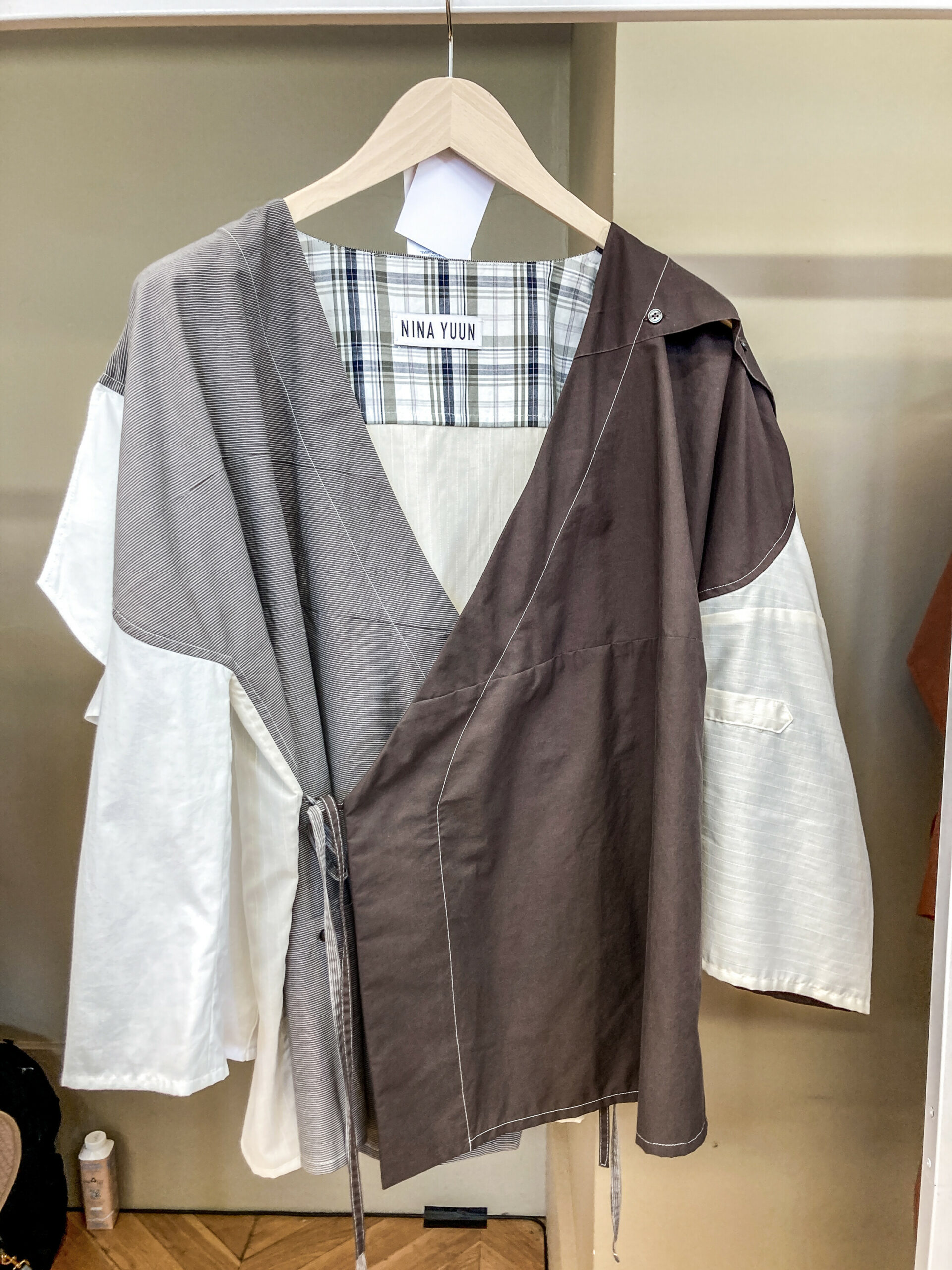
SOFT UTILITY look by Vegan Tiger.

IN 2023, fashion will be all about versatility and quality, as functional, vibrant, and innovative ensembles blend into the hybrid lifestyle post-pandemic, according to the fashion predictions of giant trend forecaster WGSN, comprised of a team of over 250 experts and data scientists that curate an immense online library of insights and inspirations in fashion, retail, and the whole lifestyle industry.

“Trends were more relaxed in 2022 as we all transitioned into the new normal. But 2023 trends are bolder, more expressive and at the same time, functional,” said fashion designer and industry expert Ionica Abrahan Lim, an educator at the De La Salle-College of Saint Benilde School of Environment and Design.

She noted that consumers are now wiser and have become more conservative with their purchases. For women’s wear, upcycled shirts and unfinished hems will be in, as they become more conscious about garment production.

“Consumers push for circularity especially with the economic recession,” Ms. Abrahan Lim explained. “Fashion will be greatly influenced by popular hacks and tutorials featured in social media. Deconstruction and upcycling will produce more sustainable and less harmful garments, not to mention a boost in creativity and self-expression.”

Next year will likewise bid adieu to above-the-keyboard dressing, which was a hit amid the height of the work-from-home set-up.

“As hybrid settings continue to emerge, pieces that are easy for casual gathering but are still suitable for business meetings will create flexibility,” Ms. Abrahan Lim said about women’s fashion. “Layering is key for transitioning from day to party.”

For this category, she advised silky pieces and subtle yet feminine details, such as gatherings and sexy cutouts. Lingerie designs, sheer garments, slip dresses and corsets with accents also provide a more interesting texture for that day-to-night look.

For a more youth-focused approach, statement biker jackets with boxy silhouettes and vibrant racer overalls make for a comfortable, gender-inclusive investment that can go from season-to-season.

Soft utility likewise goes for all, as the new year ushers in a braver approach to practical elements. For ladies, apparel with sporty silhouettes and softer materials are in. Fashion-forward cargo pants that offer roomy and detachable belt pockets provide a more futuristic look, especially when paired with modish mini bags.

The same movements apply to men, as their wardrobe gets more experimental with new masculine identities and gender-inclusive themes.

“Vacationcore” now reigns over the racks as travel goes back to normal. The women’s section is all about coordinates in more polished looks and vibrant prints that scream holiday. The menswear department joins in with smarter loungewear that can go from home to city to carefree trips.

As textile innovations focus on quality rather than quantity, elevated basics are also back with micro textures in the spotlight. With redefined and interesting fabrication and volume, tailored apparel and familiar silhouettes are made more premium.

Outdoor hats, bejeweled belts, oversized earrings, and hair claws are back on the accessory list. “Crystals and charms give a great boost to a party look – ready for celebrations,” Ms. Abrahan Lim said. “Still following last year’s joyful expression,” she said, referring to 2022, “these added elements in your wardrobe will champion mood-boosting aesthetic and nostalgia.”

Arthaland lists its P3-billion green bonds 

Real estate developer Arthaland Corp. listed P3 billion worth of ASEAN Green Bonds on the Philippine Dealing and Exchange (PDEx) to fund its future sustainable residential projects.

“We believe that this offer gives institutions and the public a chance to participate in this noble cause,” Arthaland Director Christopher T. Po said in a statement.

A substantial portion of the proceeds from the offer will fund new certified sustainable residential projects that the company will develop and launch within the next 10 years or more.

The bond offering comprises two tenors: five years at 8% per annum and seven years at 8.76% per annum. It is the second tranche of Arthaland’s P6 billion ASEAN Green Bond program, which established the first green framework by a real estate company.

“The ASEAN Green Bonds carry our commitment to use the proceeds only towards projects that meet minimum green building certifications and to be transparent in disclosing the environmental impact of these projects through energy savings and reductions in greenhouse gas emissions,” Mr. Po said.

Arthaland is a property developer with a portfolio composed entirely of sustainable projects certified under multiple global and national standards for green buildings.

It is the first real estate developer in Asia and the first signatory from the Philippines to the Net Zero Carbon Building Commitment of the World Green Building Council.

The company commits to fully decarbonize its portfolio by 2030 as part of its commitment to the global initiative for climate action.

Two of Arthaland’s largest projects — Cebu Exchange and Savya Financial Center — became operational this year. It also launched two new residential projects in the second half.

The first of the two residential projects, Una Apartments, broke ground at Sevina Park in Biñan, Laguna in September. The other, Eluria, broke ground in Legazpi Village, Makati City in November. — Justine Irish D. Tabile

Chinese EV maker launches new models, upgraded battery swaps

CHINESE electric vehicle (EV) maker Nio, Inc. unveiled two models at a glittering annual customer event on Saturday evening, expanding its lineup in a bid to grab a bigger share of the market as demand for cars in the nation slows.

At the weekend event in Hefei in central Anhui province, Shanghai-based Nio launched a revamped ES8, an iteration of the original electric sports utility vehicle it’s been selling since 2018, and a new pure electric coupe dubbed the EC7.

With a starting price of 488,000 yuan ($69,800), the coupe targets buyers who want more space as well as sporty performance. The new ES8 will start at 528,000 yuan. Deliveries are expected to kick off in May and June, respectively.

Nio Day, first held in 2017, is a gathering for corporate partners, customers and media meant to foster brand loyalty and a sense of community around the carmaker.

Nio on Saturday also presented its latest generation of battery swapping stations, which allow drivers to quickly swap out their battery for a new one instead of recharging the existing one. Each of the upgraded stations allows a maximum of 408 swaps per day, and can store as many as 21 replacement cells.

In addition, the company demonstrated a power swapping pilot for highways, with which the driver can stay inside the car and leave it all up to the vehicle to automatically plan the route for changing batteries, driving to the closest available power swap stations through intelligent navigation, completing the swap, and driving out of the service area, back onto the highway. 

About 4,000 participants from across China attended the gala, despite surging Covid cases in various cities. As many as 248 million people, or nearly 18% of China’s population, likely contracted the virus in the first 20 days of December, Bloomberg reported earlier.

In a year in which China’s major auto shows were delayed or canceled, Nio rewarded its followers not only with the new models but also with a concert featuring local pop singers, as well as short films and a charity bazaar.

Nio delivered 106,671 vehicles in 11 months this year, up almost 32% from the same period in 2021. Even so, annual deliveries are expected to miss its original target of 150,000 units given the challenges posed by the pandemic and China’s strict adherence to a Covid Zero policy for much of 2022.

The company was particularly hard hit by Shanghai’s two-month lockdown in the spring. The restrictions forced a temporary suspension of production at Nio’s plant in Hefei, and kept consumers away from showrooms.

Nio shipped only 12,098 vehicles in April and May, and by October had fallen behind on both producing and delivering thousands of vehicles due to component supply shortages and disrupted logistics caused by regional lockdowns.

The company continued to face challenges from of sick workers after China recently lifted the Covid restrictions, founder and Chief Executive Officer William Li said in an interview with BloombergTV after the show. “We and our suppliers are both affected under the latest wave,” Li said, adding that the overall supply chain “should be stabilized next March or April.”

The run of extraordinary conditions have put pressure on Nio’s progress toward turning a profit. To help mitigate spiraling costs and better control its own destiny, the company is establishing a research and development center that will concentrate on lithium-ion batteries and packing technologies. It also plans to spend around 3 billion yuan each quarter on R&D, with a focus on chips and batteries.

Li also noted panic buying of semiconductors, and called for all carmakers and suppliers to “reasonably place orders for chips.”

While China is the world’s biggest market for EVs, with almost one in every five cars sold now electric, consumer demand has been flagging. Some EV subsidies also fall away at the start of 2023 and that’s expected to make buying a cleaner car less attractive versus a gasoline model, which are still ubiquitous and affordable.

Deliveries of new-energy vehicles — pure electric and hybrid cars — to dealerships in China are expected to reach 6.5 million by the end of the year, and may touch 8.4 million in 2023, China’s Passenger Car Association said at a briefing earlier this month. But the year-on-year growth rate is slowing.

There’s also a lot more competition in China for EVs.

Warren Buffett-backed BYD Co., along with Tesla Inc., lead the market but there are scores of other companies selling electric cars. That includes SAIC-GM-Wuling Automobile Co., Zhejiang Geely Holding Group Co., Guangzhou Automobile Group Co. and Hozon New Energy Automobile Co. All told there are about 500 electric car models in China and most foreign auto brands also have an electric offering.

Nio, which has said it aims to break even in 2024, needs to expand its product lineup to better compete. Exporting its cars into Europe is also a big part of its strategy.

Following a year of modest sales in Norway, Nio will offer three models in Germany, Denmark, Sweden and the Netherlands, it said at an event in Berlin in October.

Nio’s US-listed shares are down almost 65% this year. — Bloomberg

H&M confirms it has rights to Justin Bieber merchandise

STOCKHOLM — Swedish clothes retailer H&M said on Thursday it had the rights to sell Justin Bieber merchandise it pulled from stores that week after the popstar said he had not given his approval.

“Justin’s license holder has confirmed that H&M had the right contracts in place and followed all proper approval procedures for each selected design,” H&M wrote in a statement.

On Monday last week, Mr. Bieber urged his 270 million Instagram followers not to buy the merchandise, calling it “trash” and said it was on sale without his approval. H&M pulled the items from sale.

“Out of respect for Justin, we removed the products from our site and stores, and we’re working to find the best way to make use of them,” H&M said, adding that the company had been Bieber’s merchandise partner since 2016.

H&M, the world’s second biggest fashion retailer, offered hoodies, T-shirts and sweatshirts with pictures of Mr. Bieber or quotes from his lyrics such as “I miss you more than life” from the song “Ghost.” — Reuters

A plurality for carbon neutrality

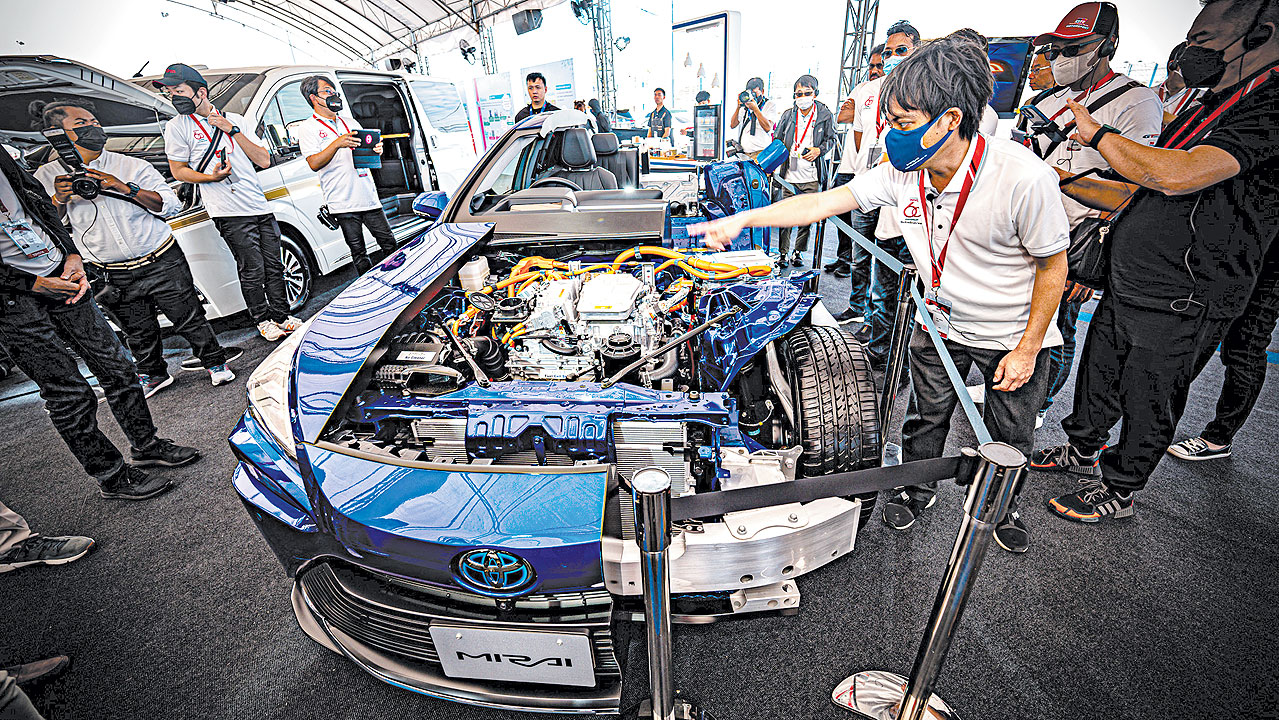
A Toyota product expert explains a Mirai cutaway at Buriram. — PHOTO BY KAP MACEDA AGUILA

Toyota insists there are many ways to get to zero

IT’S A CHILLY and windy late afternoon in Buriram.

The Thailand province, which lies about an hour by plane northeast of Bangkok, is the site of the Chang International Circuit — venue of the Idemitsu 1500 Super Endurance 2022 (or Thailand 25H Endurance Race). With participants’ cars lined up on the grid, spectators and media practitioners have descended upon the start-finish straight. It’s pretty obvious though that one car is drawing the most attention.

That’s the #S32 ORC Rookie GR Corolla concept (yes, concept) vehicle being piloted by, among other people, Toyota Motor Corp. (TMC) President and CEO Akio Toyoda. He is slated to start the grueling race (putting in a 30-minute shift) and get behind the wheel again for the finish the next day. To be clear, the hydrogen-fueled GR Corolla, along with the GR86 CNF concept (a carbon-neutral fuel vehicle) fielded with it, will not run the entire 25 hours but “the first and last few hours of the race.” The race — and others like it — are viewed as a laboratory for Mr. Toyoda (who assumes the moniker Morizo when he’s behind the wheel), along with the engineers and designers of the automaker. They’re doing earnest work on achieving a stated goal of achieving carbon neutrality by 2050.

Simply put, carbon neutrality is a state of net zero carbon where actions that redound in emissions are matched by ones to reduce or offset them. Compared to a “zero carbon” state, experts have declared that carbon neutrality is more realistic to aspire for to keep the “planet in an equilibrium.”

While most auto brands will tell you that the fullest expression of this ambition is the battery electric vehicle (and many are indeed trotting out models bearing this powertrain), Toyota politely begs to differ. The discussion is much more nuanced than we’d like to believe, the brand says.

Mr. Toyoda getting behind the wheel of a hydrogen-fueled car is just the tip of the iceberg. He’s here in the region for several other reasons: To celebrate Toyota Motor Thailand’s 60th founding anniversary, to formalize a deal with the country’s largest private conglomerate (the CP Group) which would entail working on — among other things — hydrogen-powered fuel cell transport and extracting hydrogen from biomass, and to unveil Toyota first workhorse BEV in the Hilux Revo BEV Concept and a highly modular platform called IMV 0.

The Japan-headquartered automotive giant is espousing that “multi-pathway approach” because, avers Mr. Toyoda, a specific powertrain isn’t the enemy; carbon is. And there are lots of way to get from Point A to Point B. It also makes good sense not only from a business standpoint but in terms of practicality. For while BEVs emit no carbon, a complete appraisal of electric vehicles and their impact should also examine how a grid produces the electricity in the first place. Where and while coal-fired plants remain the norm means the power produced is “dirty.”

Mr. Toyoda said in his earlier speech at the Queen Sirikit National Convention Center that Toyota will not espouse a “one-size-fits-all approach to (its) products and powertrains,” and stressed that people “need to be realistic about when society will be able to fully adopt battery electric vehicles and when… infrastructure can support them at scale.”

He added, “Just like the fully autonomous cars that we were all supposed to be driving by now, I think BEVs are just going to take longer to become mainstream than the media would like us to believe. And frankly, BEVs are not the only way to achieve the world’s carbon-neutrality goals. Personally, I would rather pursue every option, not just one, — options such as emission-free synthetic fuels and hydrogen. I still believe hydrogen is as promising a technology for our future as BEV.”

In a separate session with the press, “Velocity” asks TMC Chief Branding Officer, Lexus International President, and Gazoo Racing Company President Koji Sato about the timing of the announcements. He shares through an interpreter that the 60th anniversary of Toyota’s presence in Thailand is an important milestone for the company, and Toyota feels that there is a clear need for carbon neutrality in the country. “That’s why this is the right time to get into Thailand, if you look at the multiple pathway of Toyota… to look at viable alternatives.”

We also asked about Lexus and if there’s any plan to roll out a hydrogen vehicle as well. “Nothing has been decided yet, but the possibility is not zero.”

“Do you expect a hydrogen Lexus supercar?” Mr. Sato playfully asks me. “Yes, a hydrogen-powered LFA, please.”

But why hydrogen? For starters, it ticks the most crucial box: There’s no harmful emission. The only byproduct is water. Second, the vehicle’s range is not limited by the battery’s capacity. Testing of the hydrogen-fueled FCV Mirai in other markets has regularly yielded an eye-popping maximum of more than 1,000 kilometers on a full tank of hydrogen (the record is 1,352 kilometers, set in the US). Third, Toyota said that the technology has evolved so much that hydrogen is now extremely safe to transport, store, and use. Hydrogen can also be extracted readily from the environment — from water, from biomass (think livestock manure), and other sources. Hydrogen is simply available everywhere. “It is the Swiss army knife of energy,” according to Toyota Daihatsu Engineering and Manufacturing Co. Ltd. Executive Vice-President and Chief Information Security Officer Pras Ganesh.

Having multiple pathways to ending the dumping of carbon into the atmosphere is not a bad thing. In fact, offering customers the power of choice — whether HEV, PHEV, BEV, FCEV, HiCEV or bio-fuels — allows them to choose green more easily, as it respects the “economic circumstances, energy source, charging infrastructure readiness, industrial polices, and usage needs” wherever they may be.

That truly sounds like a win-win.

Mastercard ordered by FTC to help rivals route transactions

THE FEDERAL Trade Commission (FTC) ordered Mastercard, Inc. to start providing its competitors with customer account information they need to process debit payments, a move that could cut costs for merchants.

The enforcement action, approved in a 4-0 vote, is the culmination of a years-long investigation focused on Mastercard and Visa, Inc.’s policies prohibiting merchants from routing card transactions over alternative debit networks. At issue is whether the payment giants were violating part of the Dodd-Frank Act, which required banks to enable at least two unaffiliated networks on every debit card.

“This is a victory for consumers and the merchants who rely on debit card payments to operate their businesses,” Holly Vedova, director of the FTC’s Bureau of Competition, said in a statement Friday.

FTC Chair Lina Khan has pledged to use the agency’s full authority to crack down on corporate abuses of power. The announcement on Friday is the latest in a series of actions against large corporations, including Microsoft, Inc., which the commission is suing over its $69-billion acquisition of Activision Blizzard, Inc.

Mastercard and Visa have spent years investing in so-called tokenization technology, which swaps sensitive information such as account numbers with a unique, one-time-use set of numbers that validates a customer’s identity. The payment networks say those services were designed to reduce online card fraud and help the banks that issue credit and debit cards approve more transactions.

“While we are taking these steps to bring this matter to a close, there should be no question that tokenized transactions provide an increased level of protection to both consumers and merchants,” Seth Eisen, a spokesman for Mastercard, said in an e-mailed statement. “This focus on security guides our efforts in a highly competitive market and provides the incentive for us to continue investing in innovations that promote the peace of mind every person expects.”

But merchants have long complained about tokenization technology, especially its use in mobile payments. And the FTC said Purchase, New York-based Mastercard used its control over the tokenization process to block the use of competing card networks.

The statement didn’t say whether the FTC had reached a similar agreement with Visa. A representative for Visa didn’t immediately respond to a request for comment.

DODD-FRANK ACT
More than a decade ago, Congress passed a provision in the Dodd-Frank Act called the Durbin Amendment, which ordered banks to put two competing networks on all debit cards to give merchants more choice in how they route such transactions. The move was meant to lower card acceptance costs by improving competition among networks. Banks typically issue debit cards with either Visa or Mastercard, but there are also smaller, lesser-known networks such as Pulse, Shazam and Star. These networks often charge a lower fee.

According to the FTC, Mastercard historically wouldn’t let these alternative networks access its so-called token vault. The agency said that meant that when a debit card user chooses to pay with Apple Pay or Samsung Pay, merchants would have no choice but to route the transaction over Mastercard’s network to ensure the payment would be authorized.

With Friday’s move, the agency ordered Mastercard to provide alternative debit-card networks with customers’ personal account numbers. It also banned Mastercard from “taking any action to prevent competitors from providing their own payment token service or offer tokens on Mastercard-branded debit cards.”

Mr. Eisen said the company believes its existing routing practices “are lawful and have always provided choice to merchants,” adding that Mastercard “will continue the work to update our processes to comply with the consent order and provide even greater choice.”

Visa and Mastercard have faced a barrage of criticism from regulators and lawmakers over their debit card practices in recent years. Visa said last year that the US Department of Justice informed the company of plans to open an investigation into its US debit practices after the agency earlier blocked its proposed takeover of Plaid, Inc. due to concern that Visa would use the acquisition to dominate online debit-card transactions.

The FTC’s agreement with Mastercard will be subject to public comment. After that closes, the commission will decide whether to make the order final. — Bloomberg

Harry and Meghan dismiss Sun apology for offending column as ‘PR stunt’

LONDON — Britain’s Prince Harry and his wife Meghan on Saturday dismissed an apology by the tabloid Sun newspaper for publishing a column highly critical of Meghan as a “PR stunt” and said the newspaper had not contacted her to say sorry.

In the column, television presenter Jeremy Clarkson wrote of Meghan: “At night, I’m unable to sleep as I lie there, grinding my teeth and dreaming of the day when she is made to parade naked through the streets of every town in Britain while the crowds chant, ‘Shame!’ and throw lumps of excrement at her.”

Britain’s Independent Press Standards Organization (IPSO) regulator said on Tuesday that it had received more than 17,500 complaints, the most about any article since it was established in 2014.

“While the public absolutely deserves the publication’s regrets for their dangerous comments, we wouldn’t be in this situation if The Sun did not continue to profit off of and exploit hate, violence and misogyny,” a spokesperson for Harry and Meghan said.

“A true apology would be a shift in their coverage and ethical standards for all. Unfortunately, we’re not holding our breath.”

The Sun, in its apology, said: “We at The Sun regret the publication of this article and we are sincerely sorry,” adding that the article had been removed from its website and archives.

More than 60 lawmakers signed a letter written by Caroline Nokes, chair of parliament’s Women and Equalities Select Committee, to the editor of The Sun warning such articles contribute to a climate of hatred and violence against women.

In a statement posted on Twitter on Monday last week, Mr. Clarkson said he was “horrified to have caused so much hurt” and would be “more careful in future.”

The Duke and Duchess of Sussex, as Harry and Meghan are officially known, stepped down from royal duties in March 2020, saying they wanted to make new lives in the United States away from media harassment.

In a Netflix documentary series, Meghan spoke about how her treatment by the media had left her feeling suicidal as well as concern over whether she and her children were safe. — Reuters

Amazon looks to sell cargo space as demand cools

AMAZON.COM, Inc. is trying to sell excess space on its cargo planes, according to people familiar with the matter, its latest effort to adjust from a rapid pandemic-era expansion to a slowdown in online growth.

The e-commerce retailer, which has a fleet of about 100 planes in the US and Europe, in recent months has hired executives with experience marketing cargo space for airlines. Possibilities include filling empty jets returning from Hawaii and Alaska with pineapples and salmon, according to two of the people. An Amazon spokesperson declined to comment on the plans.

The long-term plan for Amazon Air hasn’t changed despite the current turmoil, said one of the people, who asked not to be identified as the discussions are confidential. The pressure to make money from unused space aboard its jets is increasing as the company looks to boost profits in a period of slower revenue growth, another person said.

Amazon unveiled the air cargo service in 2016, prompting speculation that it would ultimately create an overnight delivery network to rival United Parcel Service, Inc. (UPS) and FedEx Corp. Amazon Air operates out of smaller regional airports close to its warehouses around the country, helping the Seattle-based company quickly move inventory to accommodate one- and two-day delivery.

The company’s ultimate goal has befuddled industry experts, who have written conflicting reports about Amazon’s ambitions. Fast growth in its earlier years and a $1.5 billion investment in a hub at Cincinnati/Northern Kentucky International Airport fueled speculation that the company was ramping up to be an overnight parcel service. Other investors said Amazon remains far shy of larger carriers like FedEx and UPS, which have more planes and more flight connections that don’t overlap with Amazon’s core online retail business.

Demand for air cargo has cooled this year, and is expected to tail off again in 2023. IATA, an airline trade group, projects the sector will generate sales of $149.4 billion, about $52 billion less than 2022 but still $48.6 billion more than in 2019.

Amazon’s flights in September grew at their slowest pace since the start of the pandemic, according to researchers with DePaul University’s Chaddick Institute for Metropolitan Development, who have been monitoring Amazon Air flights since 2020.

Despite slowing demand, Amazon in October announced it would add 10 Airbus A330-300 freighters starting next year through a partnership with Hawaiian Airlines. Amazon plans to also trim its fleet by not renewing some leases for aircraft with Air Transport Services Group, two of the people said.

Even the largest package carriers are tightening belts as consumers resume pre-pandemic spending habits, which takes pressure off the shipping industry. FedEx on Dec. 20 unveiled plans to cut $3.7 billion in expenses next year, with the cost cuts including using digital tools to rebalance flights between company-owned jets and lifts from third-party operators.

Amazon is offering space on its planes, and charter flights, said one of the people. The effort is the latest maneuver to address slowing online sales and a fragile economy that could be on the brink of recession, including subletting excess warehouse space and eliminating an estimated 10,000 jobs. — Bloomberg

No rebound seen for Philippine farms

PHILIPPINE STAR/ MICHAEL VARCAS

By Luisa Maria Jacinta C. Jocson, Reporter

PHILIPPINE FARM output is likely to either contract or stay flat next year due to elevated input costs on faster inflation, according to analysts.

“We will be starting from a low 2022 base,” Raul Q. Montemayor, chairman of the Federation of Free Farmers, said in a Viber message. “I cannot see agriculture rebounding significantly in 2023 unless the problems of high fertilizer and fuel prices are addressed.”

Farm output value rose by 1.8% in the third quarter after declining by 0.6% a quarter earlier and by 2.6% a year ago, according to data from the local statistics agency.

For the nine-month period, agricultural output inched up by 0.3% from a year earlier. Production contracted by 2.5% in January to September last year.

Agriculture Undersecretary Mercedita A. Sombilla last week said the agriculture sector might expand by 2.3% to 2.5% in 2023 on crop, livestock and poultry growth.

The average yearly agriculture growth in the past two decades was 1.3%, former Agriculture Undersecretary Fermin D. Adriano said in a Viber message. “With lower fertilizer application, rising fuel costs, lingering African Swine Flu and avian flu virus, not to mention destructive typhoons brought by climate change, I don’t know how that growth can be achieved next year.”

Fuel and fertilizer prices have been rising amid soaring inflation, which quickened by 8% in November — the fastest in 14 years and breaching the central bank’s target for an eighth straight month — mainly driven by rising food prices.

As of Dec. 20, the prices of gasoline have risen by P13.95 a liter this year, by P27.50 for diesel and by P20.80 for kerosene.

As of Nov. 11, the average price of a bag of prilled urea fertilizer had risen by 16.5% to P2,538.27 from a year earlier.

Mr. Montemayor said the farm sector faces recurrent shortages in rice, corn, pork, fish and many vegetables. “The slack has been filled up by imports. Excessive imports including smuggling have discouraged farmers from increasing their production, making us even more susceptible to seasonal shortages and reliance on imports.”

“In the case of poultry and livestock, the unlimited import policy of the government, including the extension of the effectivity of Executive Order No. 171, will dampen the willingness of producers to step up,” he added.

President Ferdinand R. Marcos, Jr. last week approved the recommendation of the National Economic and Development Authority to extend lower tariffs for pork, corn, rice and coal until the end of next year.

Tariffs on pork for in-quota shipments will be kept at a reduced rate of 15% from 30%, while those for out-quota shipments will be kept at 25% from 40%.

Rice tariffs will be retained at a lower rate of 35% for in-quota shipments and 50% for out-quota imports. Corn tariffs will be cut to 5% for in-quota imports from 35% and to 15% from 50% for out-quota shipments.

Analysts said the government should focus on boosting its support for the agriculture sector.

“Food security and the agricultural sector should be one of the primary concerns,” Antonio A. Ligon, a law and business professor at De La Salle University, said in a Viber message. “We have big tracts of land that can be utilized for food production.”

Mr. Ligon said ensuring adequate food supply would lessen the country’s import dependence. “We need not import if we have sufficient supply of basic food commodities. The prices of basic ingredients should not have been an issue if we had good production and support for our farmers.”

The government should upgrade the skills of farm workers, John Paolo R. Rivera, an economist at the Asian Institute of Management, said in a Viber message.

“Put effort in developing agriculture from largely subsistence to more commercialized farming by equipping farmers with technical skills and business acumen,” he said. Middlemen should be eliminated as much as possible, while improving transportation and investing in technology to boost productivity, he said.

“This will alleviate food shortages and manage inflation driven by food prices.”

“We cannot see for now a clear policy direction and game plan from the Department of Agriculture,” Mr. Montemayor said. “What they are doing and planning to do is more of the same, except with a larger budget, so we cannot expect much difference in the results.”

ADVERTISEMENT
ADVERTISEMENT