Home Blog Page 5433

Taiwan to give cash payouts to citizens in ‘New Year blessing’

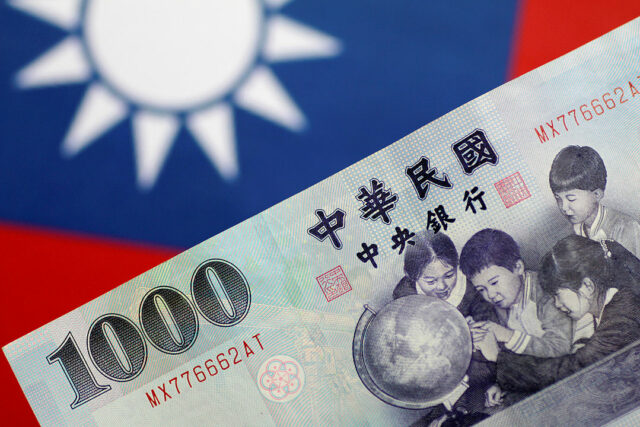
A Taiwan dollar note is seen in this illustration photo May 31, 2017. — REUTERS

TAIPEI — Taiwan plans to give cash payouts of nearly $200 to every citizen this year, Premier Su Tseng-chang announced on Wednesday, saying the island’s economic growth will be shared by everyone.

The export-reliant economy, a global tech powerhouse for products including semiconductor chips, grew 6.45% in 2021, the fastest rate since it expanded 10.25% in 2010.

While economic growth is expected to slow in 2022 and 2023, the government has made plans to plough an extra T$380 billion ($12.4 billion) in tax revenue from last year back into the economy to help protect the island from global economic shocks, including subsidies for electricity prices and labor and health insurance.

Mr. Su said a total of T$140 billion, part of the tax revenue, would be spent as cash payouts and each citizen would get T$6,000 ($195.61).

“The fruit of economic achievements will be shared by all citizens, from young to old,” Mr. Su told reporters, adding the potential payout requires approval from parliament, where the ruling Democratic Progressive Party has a majority.

“We wish to give all citizens a New Year blessing after the beginning of the Lunar New Year,” Mr. Su told reporters, referring to the week-long holiday that starts on Jan. 20.

He did not give details of how the government would deliver the payouts.

Taiwan is a major producer of semiconductors used in everything from cars and smartphones to fighter jets. Its economy continued to grow stably during the COVID-19 pandemic in recent years helped by strong chip demand for consumer electronics as more people worked from home.

Taiwan’s central bank in December cut its 2022 estimate for gross domestic product (GDP) growth to 2.91% from its previous forecast of 3.51% in September.

For 2023, it projected GDP would grow 2.53%. The economy grew 4.01% in the third quarter from a year earlier. — Reuters

Most EU nations back pre-departure COVID testing for China travelers

MARK OLSEN-UNSPLASH

BRUSSELS — Most European Union (EU) countries favor introducing pre-departure COVID testing for travelers from China, the European Commission said on Tuesday, as Beijing plans to lift travel restrictions on its citizens despite a wave of COVID infections.

The common EU approach emerged after a meeting on Tuesday of the Health Security Committee, an EU advisory body of national health experts from the EU’s 27 countries and chaired by the Commission.

“The overwhelming majority of countries are in favor of pre-departure testing,” a Commission spokesman said.

“These measures would need to be targeted at the most appropriate flights and airports and carried out in a coordinated way to ensure their effectiveness,” he said.

The Commission on Tuesday prepared a draft proposal for the talks, which included a recommendation for mask wearing on flights from China, wastewater monitoring for aircraft arriving from China, genomic surveillance at airports and increased monitoring and sequencing and increased EU vigilance on testing and vaccination.

“This will now be revised and adopted based on the input of (EU) Member States,” the Commission spokesman said, adding more talks on the measures would take place at another meeting of EU health officials on Wednesday afternoon.

The spokesman said all EU countries agreed they needed a coordinated approach to the changing situation in China and to deal with implications of increased travel from China to Europe after China lifts its stringent pandemic polices on Jan. 8.

The European Center for Disease Prevention and Control said last week it did not currently recommend measures on travelers from China.

It said the variants circulating in China were already in the European Union, that EU citizens had relatively high vaccination levels and the potential for imported infections was low compared to daily infections in the EU, with healthcare systems currently coping. — Reuters

Canada grants record permanent residency permits in 2022

A PERSON stands in front of a Canadian flag in Montreal, Quebec, Canada, Sept. 20, 2022. — REUTERS

OTTAWA — Canada set an immigration record last year by granting more than 437,000 foreigners permanent residency, the government said on Tuesday, as it ramps up immigration to fight a tight labor market.

The government had set a target to welcome 431,645 new permanent residents in 2022, and the immigration ministry said Canada has reached that target to make it the largest annual intake of people in Canadian history.

The tally for last year is about 9% higher than 2021, when Canada surpassed the previous record set in 1913, and comes as Canada seeks to bring in 1.45 million new permanent residents by 2025-end.

Immigration is a key part of the solution as Canada focuses on addressing an acute labor market shortage, the ministry said. People with permanent residency permits can typically apply for citizenship after five years.

Immigration accounts for almost 100% of Canada’s labor force growth and by 2036 immigrants will represent up to 30% of Canada’s population, up from 20.7% in 2011, the statement said.

Prime Minister Justin Trudeau’s government has relied on immigration to boost the Canadian economy and support an aging population since coming to power in 2015.

Shortage of skilled workers in industries like healthcare is acute and the most recent official data shows there were 871,300 job vacancies in October, down from a record high of over a million open roles in Canada in May.

To tackle that, Ottawa is planning targeted draws for skilled immigrants for the first time in 2023, allowing it to cherry pick applicants with the most in-demand skills for the regions of the country that most need workers.

But many immigrants still struggle to find work in their chosen field, and some advocates say supports have not grown in pace with the number of new permanent residents.

Canada has also struggled to keep up with a surge in applications after COVID-19 pandemic-related restrictions eased as the number of processed applications doubled to about 5.2 million in 2022 from the previous year, the ministry said. — Reuters

Myanmar junta hits out at critics but thanks key neighbors for help

FLOWERS hang during a nationwide flower campaign against the military coup in Yangon, Myanmar, April 2, 2021. — REUTERS

MYANMAR’s junta chief on Wednesday lashed out at countries for intervening in his country’s affairs while thanking others for “positively” cooperating, noting how it was working closely with neighbors such as China, India and Thailand.

The Southeast Asian country has faced international isolation and Western-led sanctions since the military seized power from a democratically elected government led by Nobel laureate Aung San Suu Kyi nearly two years ago.

“I want to say thank you to some international and regional countries and organizations and individuals who positively cooperated with us… in the midst of all the pressure, criticisms and attacks,” Senior General Min Aung Hlaing said in a speech to mark Myanmar’s 75th independence day.

“We are closely working with neighboring countries such as China, India, Thailand, Laos and Bangladesh. We will work together for border stability and development,” Min Aung Hlaing said in a televised speech from a national day parade in the capital Naypyitaw.

Myanmar has been in chaos since the army took power from Ms. Suu Kyi’s government on Feb. 1, 2021, detaining her and other officials and responding to pro-democracy protests and dissent with brutal force, displacing hundreds of thousands of people.

While street protests are now rare after bloody crackdowns, the military is involved in almost daily clashes with minority ethnic forces and insecurity has spread to swathes of the country as members of a so-called People’s Defense Force have taken up arms to fight for a return to democracy.

Meanwhile, Ms. Suu Kyi was convicted of five counts of corruption late last year and jailed for seven more years, wrapping up a marathon of trials condemned internationally as a sham designed to keep the junta’s biggest threat at bay amid widespread domestic resistance to its rule.

Ms. Suu Kyi is being held in a jail in Naypyitaw in solitary confinement and the military insist she has received due process by an independent court.

Authorities typically release some prisoners to mark the day when Myanmar declared independence from British rule. However, it was not immediately clear if the military would free any political detainees this time.

The United States, the European Union and countries such as Britain and Canada, have imposed sanctions on Myanmar’s military and individuals deemed to have helped the junta come to power.

In a further rebuke, the U.N. Security Council last month adopted its first resolution on Myanmar in 74 years, demanding an end to violence and for the junta to free all political detainees.

Referring to international pressure, Min Aung Hlaing hit out at what he said were “disruptions from countries and organizations who want to intervene in Myanmar’s internal affairs.”

Still, the junta has maintained some international support. The U.N. Security Council remains split over how to deal with the Myanmar crisis, with China and Russia arguing against strong action. They also both abstained from last month’s vote on a resolution, along with India.

Thailand also hosted regional talks last month to discuss the crisis, including rare international appearances by junta ministers, even as several key members of the Association of Southeast Asian Nations, vocal in their criticism of the junta, did not attend.

ASEAN is leading diplomatic peace efforts and Myanmar’s generals have been barred from the bloc’s high-profile gatherings for failing to honor promises to start talks with opponents linked to Ms. Suu Kyi’s ousted government. — Reuters

China urges ‘final victory’ over COVID as global concern mounts over spread

UNSPLASH

Global health officials tried to determine the facts of China‘s raging COVID-19 outbreak and how to prevent a further spread as the government’s mouthpiece newspaper on Wednesday rallied citizens for a “final victory” over the virus.

China‘s axing of its stringent anti-virus controls last month has unleashed COVID on a 1.4 billion population that has little natural immunity having been shielded from the virus since it emerged in its Wuhan city three years ago.

Funeral homes have reported a spike in demand for their services and international health experts predict at least one million deaths in China this year.

But officially, China has reported a small number of COVID deaths since the policy U-turn and has played down concerns about a disease that it was previously at pains to eradicate through mass lockdowns even as the rest of the world opened up.

China and the Chinese people will surely win the final victory against the epidemic,” Chinese Communist Party mouthpiece the People’s Daily said in an editorial, rebutting criticism of its tough anti-virus regime that triggered historic protests late last year.

As it now dismantles those restrictions, China has been particularly critical of decisions by some countries to impose a requirement for a COVID test on its citizens, saying they are unreasonable and lack scientific basis.

Health officials from the 27-member European Union are due to meet on Wednesday on a coordinated response to deal with implications of increased travel from China.

Most European Union countries favour pre-departure COVID testing for travellers from China, the European Commission said on Tuesday, following similar measures imposed by the United States, Britain, South Korea and others.

China, which has been largely shut off from the world since the pandemic began in late 2019, will stop requiring inbound travellers to quarantine from Jan. 8. But it will still demand that arriving passengers get tested before they begin their journeys.

Meanwhile, World Health Organization officials met Chinese scientists on Tuesday amid concerns over the accuracy of China‘s data on the spread and evolution of its outbreak.

The UN agency had invited the scientists to present detailed data on viral sequencing and to share data on hospitalizations, deaths and vaccinations.

The WHO would communicate later, probably at a Wednesday news briefing, its spokesperson said after the meeting. The spokesperson earlier said the agency expected a “detailed discussion” about circulating variants in China, and globally.

Last month, Reuters reported that the WHO had not received data from China on new COVID hospitalizations since Beijing’s policy shift, prompting some health experts to question whether it might be hiding information on the extent of its outbreak.

China reported five new COVID-19 deaths for Jan. 3, compared with three a day earlier, bringing the official death toll to 5,258, very low by global standards.

But the death toll is widely believed to be much higher. British-based health data firm Airfinity has said about 9,000 people in China are probably dying each day from COVID.


TRAVEL INTEREST

Despite some countries imposing restrictions on Chinese visitors, interest in outbound travel from the world’s most populous country is cranking up, state media reported.

Bookings for international flights from China have risen by 145% year-on-year in recent days, the government-run China Daily newspaper reported, citing data from travel booking platform Trip.com.

The number of international flights to and from China is still a fraction of pre-COVID levels. The government has said it will increase flights and make it easier for people to travel abroad.

Thailand, a major destination for Chinese tourists, is expecting at least five million Chinese arrivals this year, its tourism authority said on Tuesday.

More than 11 million Chinese tourists visited Thailand in 2019, nearly a third of its total visitors.

But there are signs that an increase in travel from China could further spread the virus abroad.

Health authorities in South Korea, which began testing travelers from China for COVID on Monday, said more than a fifth of the 2,189 arrivals had tested positive. – Reuters

South Korea’s Yoon warns of ending military pact if North violates airspace again -Yonhap

South Korean President Yoon Suk-yeol. — REUTERS

 – South Korean President Yoon Suk-yeol said on Wednesday he would consider suspending a 2018 inter-Korean military pact if North Korea violates its airspace again, Yonhap news agency reported, citing his press secretary.

Yoon made the comment after being briefed on countermeasures to North Korean drones that crossed into the South last week, calling for building an “overwhelming response capability that goes beyond proportional levels,” Yonhap said.

Inter-Korean relations have been testy for decades but have grown even more tense since Yoon took office in May pledging a tougher line against Pyongyang.

Yoon has criticized the military‘s handling of the drone incident, in part blaming the previous administration’s reliance on the 2018 pact banning hostile activities in the border areas.

He has urged the military to stand ready to retaliate.

Yoon ordered the defense minister to launch a comprehensive drone unit that performs multi-purpose missions, including surveillance, reconnaissance and electronic warfare, and to set up a system to mass-produce small drones that are difficult to detect within the year, Yonhap said, citing his press secretary, Kim Eun-hye.

“He also called for accelerating the development to produce stealth drones this year and quickly establishing a drone killer system,” Kim said, according to Yonhap. – Reuters

US FDA allows abortion pills to be sold at retail pharmacies

STOCK PHOTO | Image by aleksandarlittlewolf on Freepik

 – The US Food and Drug Administration (FDA) will allow retail pharmacies to offer abortion pills in the United States for the first time, the agency said on Tuesday, even as more states seek to ban medication abortion.

The regulatory change will potentially expand abortion access as President Joe Biden’s administration wrestles with how best to protect abortion rights after they were sharply curtailed by the Supreme Court’s decision to overturn the landmark Roe v Wade ruling and the state bans that followed.

Pharmacies can start applying for certification to distribute abortion pill mifepristone with one of the two companies that make it, and if successful they will be able to dispense it directly to patients upon receiving a prescription from a certified prescriber.

The FDA had first said it would be making those changes in December 2021 when it announced it would relax some risk evaluation and mitigation strategies, or REMS, on the pill, that had been in place since the agency approved it in 2000 and were lifted temporarily in 2021 due to the COVID-19 pandemic.

The changes included permanently removing restrictions on mail order shipping of the pills and their prescription through telehealth.

The agency finalized the changes on Tuesday after reviewing supplemental applications from Danco Laboratories and GenBioPro, the two companies that make the drug in the United States.

“Under the Mifepristone REMS Program, as modified, Mifeprex and its approved generic can be dispensed by certified pharmacies or by or under the supervision of a certified prescriber,” the agency said on its website on Tuesday.

Mifeprex is the brand name version of mifepristone which, in combination with a second drug called misoprostol that has various uses including miscarriage management, induces an abortion up to 10 weeks into a pregnancy in a process known as medication abortion.

Abortion rights activists say the pill has a long track record of being safe and effective, with no risk of overdose or addiction. In several countries, including India and Mexico, women can buy them without a prescription to induce abortion.

“Today’s news is a step in the right direction for health equity,” Planned Parenthood President Alexis McGill Johnson said in a statement.

“Being able to access your prescribed medication abortion through the mail or to pick it up in person from a pharmacy like any other prescription is a game changer for people trying to access basic health care,” Johnson added.


NO EQUAL ACCESS

The regulatory change will, however, not provide equal access to all people, GenBioPro, which makes the generic version of mifepristone, said in a statement.

Abortion bans, some targeting mifepristone, have gone into effect in more than a dozen states since the US Supreme Court overturned the constitutional right to terminating pregnancies when it scrapped the 1973 Roe v. Wade ruling last year.

Women in those states could potentially travel to other states to obtain medication abortion.

The president of anti-abortion group SBA Pro-Life America, Marjorie Dannenfelser, said the latest FDA move endangers women’s safety and the lives of unborn children.

“State lawmakers and Congress must stand as a bulwark against the Biden administration’s pro-abortion extremism,” she said in a statement.

FDA records show a small mortality case number associated with mifepristone. As of June 2021, there were reports of 26 deaths linked with the pill out of 4.9 million people estimated to have taken it since it was approved in September 2000.

Retail pharmacies will have to weigh whether or not to offer the pill given the political controversy surrounding abortion, and determine where they can do so.

A spokesperson for CVS Health said the drugstore chain owner was reviewing the updated REMS “drug safety program certification requirements for mifepristone to determine the requirements to dispense in states that do not restrict the dispensing of medications prescribed for elective termination of pregnancy.”

A spokesperson for Walgreens, one of the largest US pharmacies, said the company was also reviewing the FDA‘s regulatory change. “We will continue to enable our pharmacists to dispense medications consistent with federal and state law.” – Reuters

Microsoft aims for AI-powered version of Bing – The Information

STOCK PHOTO | Image by Gerd Altmann from Pixabay

Microsoft Corp. is in the works to launch a version of its search engine Bing using the artificial intelligence behind OpenAI-launched chatbot ChatGPT, The Information reported on Tuesday, citing two people with direct knowledge of the plans.

Microsoft could launch the new feature before the end of March, and hopes to challenge Alphabet-owned search engine Google, the San Francisco-based technology news website said in a report.

Microsoft said in a blog post last year that it planned to integrate image-generation software from OpenAI, DALL-E 2, into Bing.

OpenAI and Microsoft declined to comment.

Microsoft had in 2019 backed San Francisco-based artificial intelligence company OpenAI, offering $1 billion in funding. The two had formed a multi-year partnership to develop artificial intelligence supercomputing technologies on Microsoft’s Azure cloud computing service.

OpenAI made its latest creation ChatGPT chatbot available for free public testing on Nov. 30. The chatbot is a software application designed to mimic human-like conversation based on user prompts and can respond to a large range of questions while imitating human speaking styles. – Reuetrs

Former Colorado funeral home owner sentenced to 20 yrs for selling body parts

A former Colorado funeral home owner was sentenced to 20 years in federal prison on Tuesday for defrauding relatives of the dead by dissecting 560 corpses and selling body parts without permission.

Megan Hess, 46, pleaded guilty to fraud in July. She operated a funeral home, Sunset Mesa, and a body parts entity, Donor Services, from the same building in Montrose, Colorado. The 20-year term was the maximum allowed under law.

Her 69-year-old mother, Shirley Koch, also pleaded guilty to fraud and was sentenced to 15 years. Koch’s central role was chopping up the bodies, court records show.

“Hess and Koch used their funeral home at times to essentially steal bodies and body parts using fraudulent and forged donor forms,” prosecutor Tim Neff said in a court filing. “Hess and Koch’s conduct caused immense emotional pain for the families and next of kin.”

The federal case was triggered by a 2016-2018 Reuters investigative series about the sale of body parts in the United States, a virtually unregulated industry. Former workers told Reuters that Hess and Koch conducted unauthorized dismemberments of bodies, and a few weeks after a 2018 story was published, the FBI raided the business.

In their filing, prosecutors stressed the “macabre nature” of Hess’ scheme and described it as one of the most significant body parts cases in recent U.S. history.

“This is the most emotionally draining case I have ever experienced on the bench,” U.S. District Judge Christine M. Arguello said during Tuesday’s sentencing hearing in Grand Junction, Colorado.

“It’s concerning to the court that defendant Hess refuses to assume any responsibility for her conduct.”

The judge ordered that Hess and Koch be sent to prison immediately.

Hess’ lawyer said she has been unfairly vilified as a “witch,” a “monster” and a “ghoul,” when instead she is a “broken human being” whose conduct can be attributed to a traumatic brain injury at age 18. In court on Tuesday, Hess declined to speak to the judge.

Koch told the judge she was sorry and took responsibility for her actions.

Twenty-six victims described their horror at discovering what had happened to their loved ones.

“Our sweet mother, they dismembered her,” Erin Smith said, selling her shoulders, knees and feet for profit. “We don’t even have a name for a crime this heinous.”

Tina Shanon, whose mother was dismembered against her will, told the court, “I’ve worn many masks to cover the pain. I’ll never be OK.”

It is illegal in the United States to sell organs such as hearts, kidneys and tendons for transplant; they must be donated. But selling body parts such as heads, arms and spines – which is what Hess did – for use in research or education is not regulated by federal law.

Hess committed crimes, prosecutors said, when she defrauded relatives of the deceased by lying about cremations and by dissecting bodies and selling them without permission. The surgical-training companies and other firms which bought the arms, legs, heads and torsos from Hess did not know they had been fraudulently obtained, prosecutors said.

At her funeral home, Hess charged families up to $1,000 for cremations that never occurred, prosecutors said, and she offered others free cremations in exchange for a body donation.

Prosecutors said she lied to more than 200 families, who received cremated ashes from bins mixed with the remains of different cadavers. – Reuters

Hasbro’s Wizards of the Coast Cancels Video Game Projects

Source: https://company.wizards.com/

Hasbro Inc.’s Wizards of the Coast, best known for the Dungeons & Dragons tabletop games, has cancelled at least five video game projects as it scales back its ambitions in the industry.

Wizards of the Coast is still “committed to using digital games,” a spokesman said in a statement to Bloomberg, adding that the company has “made some changes to our long-term portfolio to focus on games which are strategically aligned with developing our existing brands and those which show promise in expanding or engaging our audience in new ways.”

Fewer than 15 people at Wizards of the Coast will lose their jobs due to the shift and will be given a chance to apply to new roles within the company, the spokesman said.

But the reorganization will land hard for several independent studios such as Boston-based Otherside Entertainment and Bellevue, Washington-based Hidden Path Entertainment, both of which were working on games for Wizards of the Coast.

The company, which also publishes the popular card game Magic: The Gathering, spent the last few years investing to make a splash in video games. It signed contracts with several game makers and built at least six of its own game studios in cities including Austin, Texas, and Montreal. So far, the results have been mixed. A 2021 game called Dungeons & Dragons: Dark Alliance was received poorly, but one of this year’s most anticipated video game titles is the Dungeons & Dragons-themed Baldur’s Gate 3, made by the Belgian developer Larian Studios. Early versions have been received well by players.

The growth at Wizards of the Coast has come alongside financial difficulties at Hasbro, whose shares fell 40% last year as higher prices led to lower toy sales.

The company also cancelled an internal project code-named Jabberwocky and two other external games that were early in development. – Bloomberg

PHL factory activity hits 6-month high in December

REUTERS

FACTORY ACTIVITY in the Philippines continued to expand in December, hitting a six-month high thanks to a rise in production and new orders, a survey by S&P Global showed on Tuesday.

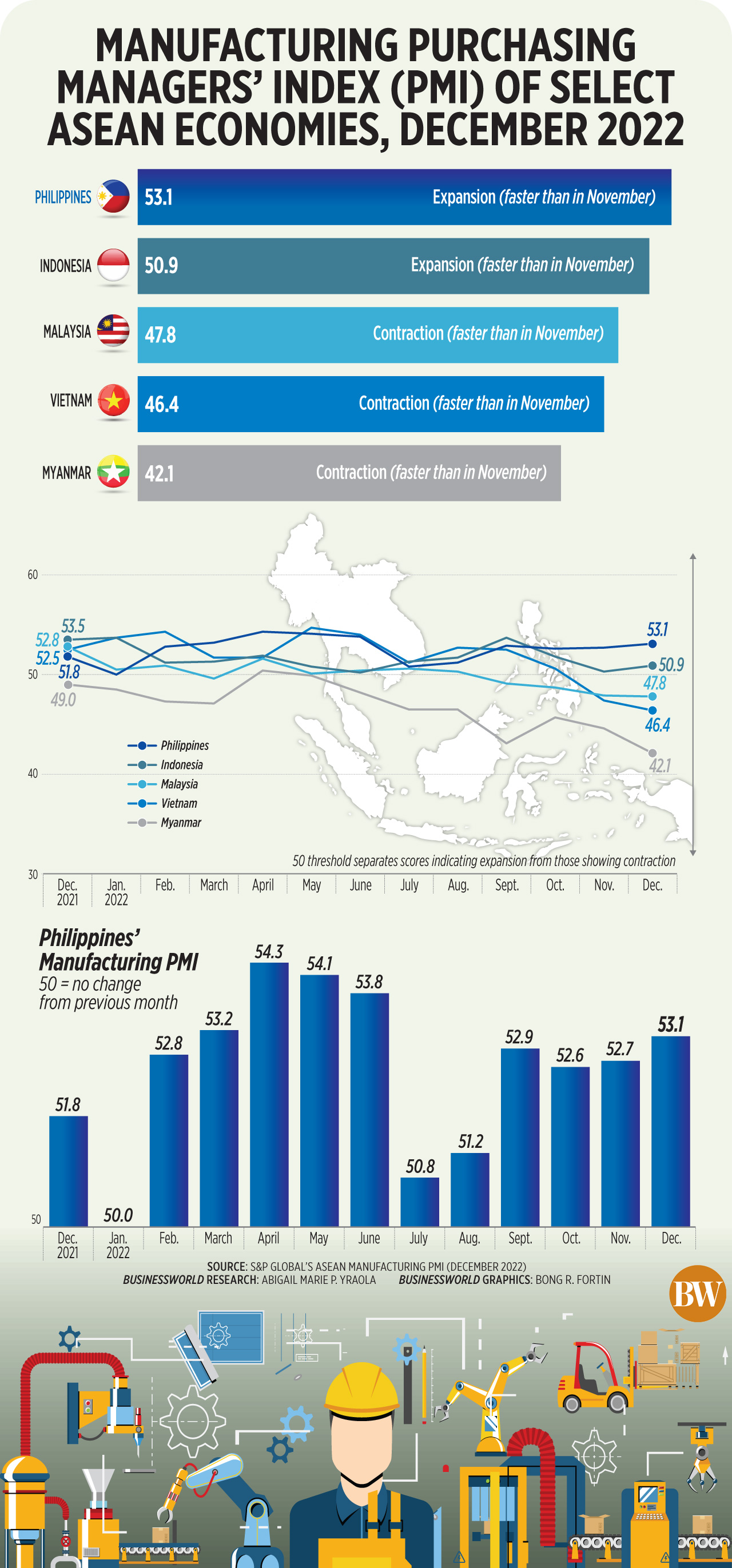
The S&P Global Philippines Manufacturing Purchasing Managers’ Index (PMI) jumped to a six-month high of 53.1 in December, from 52.7 in November, indicating a “solid improvement in the health of the Filipino manufacturing sector.”

December also marked the 11th straight month of expansion for manufacturing activity.
Manufacturing Purchasing Managers’ Index of select ASEAN economies, December 2022“The latest PMI data signaled sustained growth across the Filipino manufacturing sector. The release of pent-up demand because of the COVID pandemic continued to help the recovery of the manufacturing sector this year. The latest upturns in output and new orders were stronger than the survey averages,” Maryam Baluch, economist at S&P Global Market Intelligence, said in a report.

A PMI reading above 50 denotes improvement in operating conditions compared with the preceding month, while a reading below 50 signals deterioration.

The headline PMI measures manufacturing conditions through the weighted average of five indices: new orders (30%), output (25%), employment (20%), suppliers’ delivery times (15%) and stocks of purchases (10%).

Based on the available PMI reports, the Philippines had the highest reading among some of its Association of Southeast Asian Nations (ASEAN) neighbors for the month.

Indonesia had the second-highest PMI reading with 50.9. On the other hand, Malaysia (47.8), Vietnam (46.4), and Myanmar (42.1) all recorded contractions in December. PMI data for Thailand has not been released.

In the Philippines, S&P Global reported that both production and new orders expanded for a fourth consecutive month.

“A solid expansion in production levels was reported during December. The rate of growth quickened in the month, indicating the fastest rise in output levels since June,” it said.

New orders also entered its fourth straight month of expansion as demand conditions remained robust for Philippine-manufactured goods.

However, S&P Global noted that domestic demand drove new orders, while foreign orders shrank for a 10th month in a row.

Philippine firms started hiring new workers again in December.

“Increasing business requirements resulted in firms resuming hiring activity in December, following the first fall in headcounts in eight months during November. While the return to growth was clearly a positive indication of improvement across the Filipino manufacturing sector, the rate of job creation was only fractional overall,” S&P Global said.

However, firms were more cautious in input buying in December.

“Adjusted for seasonality, the respective index ticked down from November’s six-month high, indicating only a slight increase in the quantity of inputs purchased,” it added.

S&P Global said that inflation rates of both input price and output charges eased, with selling prices rising at the slowest pace in a year.

“Recent months have signaled some easing of price pressures but rates of inflation remain sharp and an ongoing threat to demand. The pace of increase in cost burdens was the slowest for three months, whilst firms raised their selling prices at the softest rate for a year in December amid efforts to drive sales. Firms remained optimistic in the outlook for output for the year ahead,” it added.

INFLATION A CONCERN
Ms. Baluch said supply chain disruptions and inflationary pressures remain an ongoing concern for manufacturers, and may threaten growth prospects in 2023.

“While the central bank of the Philippines has taken measures to curb inflation, global supply chain delays and material shortages remain a much more complex issue to solve. Nonetheless, goods producers remain strongly upbeat for the year ahead, banking largely on domestic demand to help maintain growth,” she added.

ING Bank N.V. Manila Senior Economist Nicholas Antonio T. Mapa said that improved business conditions and solid pickup in economic activity led to better production and higher orders.

“Furthermore, the increase in activity led to a rise in employment which bodes well for the recovery. Momentum likely to persist although we’ll be monitoring the fallout from the sustained rise in inflation and borrowing costs on the overall economy as 2023 wears on,” Mr. Mapa said in a Viber message.

China Banking Corp. Chief Economist Domini S. Velasquez said in a Viber message that factory activity was strong in December despite elevated inflation.

“On a positive note, inflation momentum is likely already slowing which would be beneficial for the manufacturing sector, especially if input prices decelerate. A return to normal, in terms of economic activities and employment, continues to provide the necessary boost to keep domestic demand high,” she said.

The Bangko Sentral ng Pilipinas (BSP) gave a 7.8-8.6% inflation forecast for December. A BusinessWorld poll of 11 analysts yielded a median estimate of 8.3% for December inflation.

Ms. Velasquez said that factory output this year will likely continue to expand as China reopens its economy.

“A faster and stronger recovery from China bodes well for manufactured export products,” she added. — Luisa Maria Jacinta C. Jocson


NG debt inches up to P13.6T as of end-Nov.

A Philippines peso note is seen in this picture illustration on June 2, 2017. — REUTERS

By Luisa Maria Jacinta C. Jocson, Reporter

THE NATIONAL Government’s (NG) outstanding debt inched up to another record high of P13.644 trillion as of end-November, the Bureau of the Treasury (BTr) said on Tuesday.

In a statement, the BTr said the end-November debt was only up by 0.02% or P3.15 billion from the end-October level of P13.641 trillion, “primarily due to the effect of local currency appreciation against the US dollar on foreign currency loans.”

National Government outstanding debtYear on year, the debt stock rose by 14.35% from P11.93 trillion.

The NG debt also jumped by 16.33% from the P11.73 trillion seen at end-December 2021.

At end-November, almost three-fourths or 69.1% of the total outstanding debt came from domestic borrowings while the rest was sourced from foreign creditors.

Domestic debt increased by 11.69% to P9.43 trillion from P8.44 trillion a year ago. Month on month, it inched up by 0.78% from the P9.36 trillion in October.

“For November, the net issuance of government securities added P75.76 billion while peso appreciation trimmed P3.03 billion from the debt stock,” the BTr said.

The peso continued to strengthen against the US dollar in November. It hit a record-low close of P59 per dollar on Oct. 17.

As of end-November, the local currency appreciated by 2.5% to P56.598 against the dollar from the P58.047 at end-October, based on figures from the BTr.

Year to date, domestic debt climbed by 15.39% from P8.17 trillion at end-December 2021.

The government prefers to borrow from domestic sources in order to mitigate foreign currency risk.

Meanwhile, external debt jumped by 20.8% to P4.22 trillion at end-November from P3.49 trillion in the previous year. However, it was lower by 1.62% from the P4.29 trillion recorded at end-October.

The BTr said this was due to the P106.98-billion impact of local currency appreciation and P13.38-billion net repayment.

“This was tempered by the net impact of third-currency fluctuations against the US dollar amounting to P50.78 billion,” it added.

Broken down, external debt consisted of P1.87 trillion in loans and P2.35 trillion in global bonds.

Year to date, external debt jumped by 18.49% from the P3.56 trillion seen as of end-December 2021.

The NG’s overall guaranteed obligations went up by 0.38% to P388 billion from P386.53 billion in the previous month. Year on year, it dropped by 7.14%.

“For November, the higher level of guaranteed debt was due to the net availment of domestic guarantees amounting to P1.03 billion and the net effect of currency fluctuations that increased the value of external guarantees by P0.44 billion,” the BTr added.

UnionBank of the Philippines, Inc. Chief Economist Ruben Carlo O. Asuncion said that NG debt may rise if the peso does not depreciate further.

“This current debt stock is already higher than expected and we may see a softer fiscal stimulus as the 2022 fiscal year ends,” he added in a Viber message.

In December alone, the peso strengthened by 0.8% or P0.465 when it closed at P55.755 on Dec. 29 from its finish of P56.22 on Dec. 1.

“It’s primarily due to movements in currency, putting us at a disadvantage. This will tend to decline as the peso starts to appreciate relative to the dollar. As far as I know, we did not incur any other significant borrowings,” John Paolo R. Rivera, an economist at the Asian Institute of Management added in a Viber message.

The government’s debt as a share to the gross domestic product (GDP) stood at 63.7% at end-September. This is still above the 60% threshold prescribed by multilateral lenders.

According to the recently released Philippine Development Plan (PDP), the government aims to bring the debt-to-GDP ratio to 60-62% in 2023, 57-61% in 2024, and to 56-59% in 2025.

Rizal Commercial Banking Corp. Chief Economist Michael L. Ricafort said that the government should intensify revenue collections and tax administration, as well as adopt a more disciplined spending to address the high debt level.

“New taxes and higher tax rates need to be fair, equitable, and progressive, especially targeted to those that can afford them or those from the higher income brackets or at least prevent adding burden to the poor, most vulnerable sectors, and those hit hard by the pandemic,” he said in a Viber message.

Mr. Ricafort added that outstanding National Government debt could still go up, especially if government borrowings are frontloaded again in the early part of 2023 to finance the budget deficit.

In the 11 months to November, the budget deficit shrank by 7.2% to P1.24 trillion.

ADVERTISEMENT
ADVERTISEMENT