Home Blog Page 543

10th ID backs DND’s peace program

COTABATO CITY — Officers and personnel of the Army’s 10th Infantry Division (ID) have assured Defense Secretary Gilberto C. Teodoro, Jr. of their commitment to the government’s Comprehensive Archipelagic Defense Operations (CADO) Program during a dialogue at their headquarters on Wednesday.

The Department of National Defense’s (DND) CADO Program is focused on enhancing the tactical and community peacebuilding initiatives of the Armed Forces.

Radio reports in Central Mindanao on Thursday stated that Mr. Teodoro, while at Camp Gen. Manuel T. Yan in Mawab town Davao de Oro, also lauded the units of the 10th ID, under Major Gen. Alvin V. Luzon, for continuously implementing, along with local government units (LGUs), a multisector community initiative that have fostered tranquility in remote areas where the now tactically dysfunctional New People’s Army (NPA) once operated with impunity.

Mr. Teodoro also talked about the CADO Program, which is focused on the strengthening of the operational capabilities of the Armed Forces.

Mr. Luzon said Mr. Teodoro was accompanied to the 10th ID’s headquarters by Major General Adonis Ariel G. Orio, commander of the Eastern Mindanao Command.

Mr. Teodoro also commended the personnel of all units under the 10th ID, scattered in towns and cities in Regions 10, 11 and 13, for their activities complementing the joint peace and security initiatives of LGUs, the indigenous communities and former members of the NPA who have returned to the fold of law.

“The visit of Defense Secretary Teodoro to our headquarters boosted our morale and inspired us to work harder in spreading peace and calm in our area of responsibility,” Mr. Luzon said on Thursday.

Different units of the 10th ID had secured the surrender of 1,323 NPA members in the past six years through backchannel dialogues supported ng LGU officials and leaders of the indigenous communities in towns and cities under its jurisdiction. — John Felix M. Unson

Recto commits to achieving PHL’s long-term socioeconomic targets

FINANCE SECRETARY RALPH G. RECTO — PHOTO FROM DEPARTMENT OF FINANCE FACEBOOK PAGE

THE GOVERNMENT is focusing on delivering on its long-term socioeconomic goals, as outlined in the Philippine Development Plan 2023-2028 and Ambisyon Natin 2040, Executive Secretary Ralph G. Recto said, in response to slowing economic growth following the infrastructure corruption scandal.

At the 90th anniversary of socioeconomic planning late on Dec. 17, Mr. Recto said the administration will prioritize funding and execution of programs that aim to cut poverty to single-digit levels by 2028, expand infrastructure and strengthen resilience against global shocks.

“Let me assure you: the Marcos, Jr. administration is fully committed to delivering the Philippine Development Plan and realizing Ambisyon 2040,” he said, according to a transcript from his office. “It is one of the few things in governance that should never be up for debate.”

The economy slowed sharply in the third quarter, expanding just 4%, the weakest reading in more than four years, and the lowest since the coronavirus pandemic.

In the first nine months, growth averaged 5%, well short of the government’s 5.5%–6.5% target range.

The downturn was caused by a slowdown in government spending and weaker investor confidence after it was revealed that public works officials, legislators, and contractors conspired to deliver substandard or non-existent flood control projects.

Fiscal pressures intensified in October, when public expenditures declined for a third consecutive month to P430.6 billion, down 7.76% from a year earlier.

Mr. Recto, the former Secretary of Finance, called for a culture of planning that transcends political cycles, stressing that sustained nation-building is essential to securing economic progress for both current and future generations.

He also noted the role of evidence-based policymaking in safeguarding development gains, highlighting the progress made in reducing poverty and the impact of inclusive, data-driven planning.

He noted that poverty has fallen from 23.5% a decade ago to 15.5% in 2023 and stressed that the government is determined to push the rate down to single digits by 2028.

“We chose to believe that our development should not be dictated by political whims but by data, direction, and discipline,” he said.

“This means that years of planning have sent millions of children to school, provided millions of families with roofs over their heads, and given millions of Filipinos greater dignity in their daily lives.”

Mr. Recto, who served briefly as socioeconomic planning secretary and director-general of the National Economic and Development Authority (NEDA) in 2008, highlighted economic planners’ pivotal role in shaping a more resilient and inclusive Philippines. — Chloe Mari A. Hufana

Three regions approve wage hikes starting early January

BW FILE PHOTO

THREE regional wage boards approved hikes in minimum pay to take effect early 2026, the National Wages and Productivity Commission (NWPC) said.

In the Caraga region, the daily minimum wage for non-agricultural workers will increase to P455 starting Jan. 3 and will further rise to P475 on May 1, up from the current rate of P435, according to the Regional Tripartite Wages and Productivity Board (RTWPB) XIII. The approval was announced in a NWPC social media post on Thursday.

For domestic workers, monthly minimum wages will also come in for adjustment. In chartered cities and first-class municipalities, pay will increase by P500 to P6,500, with other municipalities to see commensurate increases.

Workers in the Zamboanga Peninsula (Region IX) are set to receive a P25 increase in daily minimum wage under Wage Order No. RIX-24, according to the NWPC.

Non-agricultural establishments with 10 or more employees, including retail and service businesses, will see wages rise from P414 to P439 in January, with a second tranche bringing the rate to P464 in June 2026.

Agricultural establishments and businesses employing nine or fewer workers will have their daily minimum wages increased from P401 to P426 in January, and to P451 in June.

Meanwhile, employees in Mindoro, Marinduque, Romblon, and Palawan or Mimaropa (Region IV-B), including domestic workers, will benefit from new wage adjustments effective Jan. 1.

For establishments with 10 or more workers, daily wages will rise from P430 to P455, while establishments with less than 10 employees will see wages increase from P404 to P455.

With these minimum wage updates, Northern Mindanao (Region X) remains the sole region yet to implement wage adjustments for this year’s cycle. — Erika Mae P. Sinaking

Business groups cite role of dynastic politics, opaque procurement in corruption scandals

PHILIPPINE STAR/MIGUEL DE GUZMAN

FOUR business organizations said reforms are urgently needed to address corruption in infrastructure projects, citing the need to overhaul procurement process and minimize the negative influence of dynastic politics.

The groups, which include the Management Association of the Philippines, cited earlier cases of official corruption, such as the pork barrel scam, the ZTE broadband deal, and the Pharmally procurement, noting that they represent recurring irregularities in how the government spends.

“These cases reveal a troubling pattern: corruption flourishes where political patronage and dynastic influence intersect with opaque procurement processes, weak oversight, and poor accountability in the use of public funds,” they said.

“Other countries have confronted similar challenges — and many have succeeded in reducing corruption by enforcing transparency in major projects, responding quickly to red flags, and clearly assigning institutional responsibility. The Philippines can — and must — do the same,” they added.

The groups demanded full transparency across the project life cycle starting with the Department of Public Works and Highways (DPWH).

“All disbursements and variations to contracts should be made publicly accessible online and linked to the Modernized Philippine Government Electronic Procurement System (mPhilGEPS),” they said.

The groups also sought the disclosure of beneficial ownership among government contractors to raise transparency and deter money laundering.

They said that the government should interconnect Securities and Exchange Commission Cooperative Development Authority beneficial ownership data and Bureau of Internal Revenue tax records with mPhilGEPS “to enable real-time verification and automatically flag suspicious payments.”

The groups are also seeking to grant the Commission on Audit, the Department of Budget and Management, DPWH, and the Anti-Money Laundering Council the authority to initiate joint audits within 90 days after initial indications of malfeasance.

Citing the example of Hong Kong and Singapore, the groups said that acting before the funds are dissipated disrupts corruption networks.

They backed the launch of a public dashboard with secure whistleblower channels to track delays, cost overruns, and repeat contract winners.

“Citizen oversight strengthens accountability,” they said.

“We stand ready to support these reforms by sharing technical insights, participating in consultations, and assisting independent monitoring — always with full respect for institutional independence and the rule of law,” they said.

“The window for reform is open, and we should seize the momentum without delay,” they added.

The other signatories to the statement were the Institute of Corporate Directors, the Institute for Solidarity in Asia, and the Justice Reform Initiative. — Justine Irish D. Tabile

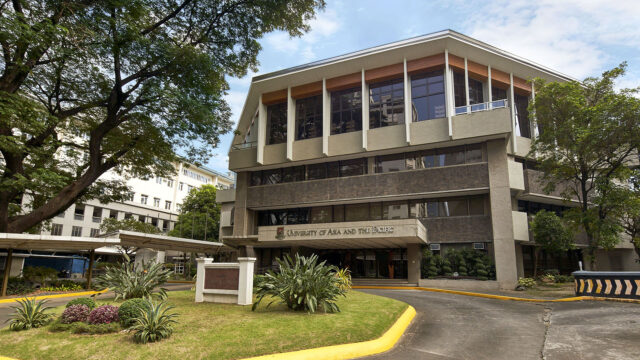
UA&P slashes Q4 growth forecast to 4.6%

UNIVERSITY OF ASIA AND THE PACIFIC

THE University of Asia and the Pacific (UA&P) cut its fourth‑quarter growth forecast to 4.6% for the Philippines from its previous view of 5.3% in November.

In The Market Call released on Thursday, UA&P said if realized, this growth level would put the government’s target for the year of 5.5-6.5% far out of reach.

Among the positive for the period were “lower inflation, increased OFW (overseas Filipino workers) remittances and exports, lower interest rates, and a rebound in government spending,” it said.

“Helping job creation, exports may continue their healthy boost into the year-end.”

A corruption scandal involving flood control projects has triggered protests, slowed economic activity, and shaken investor confidence in the country.

In the first nine month, gross domestic product (GDP) growth averaged 5%, after a 4% reading in the third quarter when government spending was largely frozen while infrastructure spending came under scrutiny.

For the first 11 months, headline inflation averaged 1.6%, slightly below the Bangko Sentral ng Pilipinas (BSP) forecast of 1.7%.

“Year-on-year growth in government spending should see consumers open their bank accounts/e-wallets more generously than in Q3,” it said.

UA&P also said it expects the peso to close near the P58.50 level, though it may depreciate further into 2026.

The peso breached the P59-a-dollar mark several times since November and sank to a record low of P59.22 on Dec. 9.

“Employment will likely rise in the last two months of 2025 to meet higher consumer demand,” he said.

The Philippine Statistics Authority reports a jobless rate of 5% in October, up from 3.8% in the previous month and 3.9% a year earlier. — Aubrey Rose A. Inosante

Air passenger fuel surcharge steady in Jan.

REUTERS

THE Civil Aeronautics Board (CAB) said it is keeping the passenger fuel surcharge unchanged at Level 4 in January, the sixth month it will be held steady.

At Level 4, the passenger fuel surcharge will range between P117 and P342 for domestic flights, and between P385.70 and P2,867.82 for international flights originating from the Philippines.

The passenger fuel surcharge has remained at Level 4 since August. For airlines collecting fuel surcharge in foreign currency, CAB said the applicable rate for January is P58.91 to a dollar.

Fuel surcharges are adjusted based on movements in jet fuel prices, using the Mean of Platts Singapore (MOPS) benchmark.

According to the International Air Transport Association, jet fuel prices declined 3% to $86.88 per barrel for the week ending Dec. 12; on a year-on-year basis, the global average jet fuel price dropped 12.3%.

In June, the trade association said airlines are projected to record a net profit of $36 billion this year, driven mainly by passenger revenue and steady jet fuel prices.

Jet fuel is expected to average $86 per barrel in 2025, below last year’s $99 average, translating to about $236 billion in fuel costs, equivalent to 25.8% of total airline operating costs. — Ashley Erika O. Jose

PHL raw sugar output seen flat at 2.09 MMT

PHILSTAR FILE PHOTO

PHILIPPINE raw sugar production will likely remain flat in marketing year (MY) 2025-2026 at 2.09 million metric tons (MMT), according to the US Department of Agriculture (USDA).

In a report, the USDA said sugar output during the MY, which runs between September 2025 and August 2026, is expected to match production levels recorded in the previous MY. The forecast represents a 12.7% increase from the USDA’s May estimate of 1.85 MMT.

The USDA also upgraded its production total for MY 2024–2025, raising it to 2.09 MMT .

Philippine production in MY 2024-2025 benefited from higher-yielding crop varieties, better soil health, and improved irrigation,” the USDA said.

Global production for the current MY is estimated to increase 4.58% to 189.26 MMT.

Meanwhile, human consumption of sugar in the Philippines is projected to rise 3.29% from the previous MY to 2.20 MMT.

Global human consumption is expected to increase 1.33% to 178.11 MMT.

The USDA also projected Philippine sugar end-of-year stocks to rise 9.7% to 1.05 MMT by the end of the current MY.

Global ending stocks are expected to hit 44.53 MMT by the end of the current MY, up 5.05%. — Vonn Andrei E. Villamiel

DA calls boost to road funding ‘game-changing’

DA.GOV.PH

THE Department of Agriculture (DA) said the increase in the proposed allocation for farm-to-market roads (FMRs) to P33 billion for 2026 would be a “game-changing investment” in farm productivity.

The spending plan approved by the bicameral conference committee will increase funding for FMRs from the P16 billion initially proposed under the 2026 National Expenditure Program.

The DA said the funding will expand road access to more farming communities and boost agricultural and countryside development.

Starting next year, the DA will take over supervision of FMR projects from the Department of Public Works and Highways (DPWH).

“The transition is meant to streamline implementation and better align road construction with the needs of farmers and agricultural producers,” the DA said in a statement.

Agriculture Secretary Francisco P. Tiu Laurel, Jr. was quoted in the statement as saying that the DA could deliver FMR projects at about 20% lower cost than the DPWH’s average of P15 million per kilometer, potentially allowing the construction of more roads.

“With a P33-billion budget, we can build about 2,750 kilometers of farm-to-market roads that will lower production and transport costs, raise farmer incomes, and help bring down food prices for consumers,” Mr. Laurel said.

The DA said it is strengthening its engineering capabilities, consulting with local government units and national agencies, and encouraging public participation to ensure projects meet technical standards and are completed on time.

It has also established a new office to oversee agriculture infrastructure projects and is rolling out a digital monitoring portal that will allow the public to track progress in real time.

Senate President Pro Tempore Panfilo M. Lacson has queried the proposed list of FMR projects, asking whether any of the expanded funding was the result of budget insertions by legislators.

The DA said it will only implement “properly vetted and justified” FMR projects.

The DA’s national FMR roadmap identifies the need for 131,000 kilometers of rural roads, more than 60,000 kilometers of which remain unbuilt. The DA said that at current budget levels, completing the network could take at least 21 years. — Vonn Andrei E. Villamiel

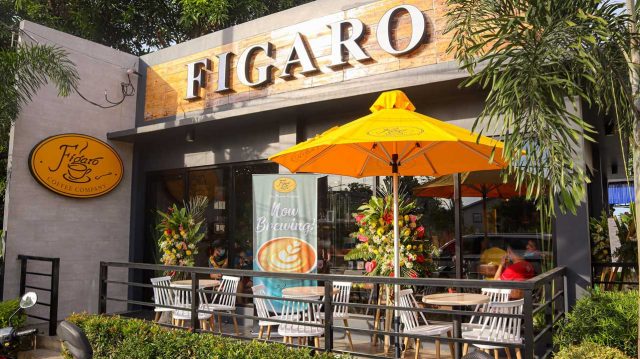
Figaro Culinary unit affirms exporter registration

BW FILE PHOTO

FIGARO Culinary Group, Inc. unit Figaro Innovation and Development, Inc. (FIDI) signed a supplemental agreement with the Philippine Economic Zone Authority (PEZA) reaffirming FIDI’s registration as an export enterprise at Laguna Technopark.

“This agreement supports Figaro Culinary Group’s broader vision of expanding its food platforms beyond retail, strengthening manufacturing, and positioning our brands for future growth,” FIDI Chief Financial Officer Jose Petronio Español said in a disclosure on Thursday.

The Supplemental Agreement extends FIDI’s current PEZA Certificate of Registration, which lists its toll manufacturing of coffee mixes and food products as export activities.

Figaro Group set up FIDI as its innovation and manufacturing unit to expand food production beyond its retail brands for domestic sales and future exports, using new food formats, better production efficiency, and quality standards that meet international needs.

At the Laguna Technopark Special Economic Zone, FIDI produces Anghel Kape and other Figaro Culinary Group foods.

Established in 2018 as a wholly-owned subsidiary of Carmetheus Holdings, Inc., FCG processes, manufactures, and packages food products while operating restaurants, coffee shops, and refreshment parlors through its subsidiary Figaro Coffee Systems, Inc. (FCSI).

FCSI manages and franchises chains like Figaro Coffee, Angel’s Pizza, Tien Ma’s, and Koobideh Kebabs. To date, the group runs 228 stores across these brands.

On Thursday, FCG shares rose 1.79% to 57 centavos. — Alexandria Grace C. Magno

John Hay property petitions dismissed by Baguio RTC

PHILSTAR FILE PHOTO

THE Bases Conversion and Development Authority (BCDA)said the Regional Trial Court (RTC) Branch 79 of Baguio City dismissed six petitions involving property disputes within the John Hay Special Economic Zone.

The petitions were for Quieting of Title, Recovery of Possession, and a Promissory Estoppel and were filed by private claimants.

“This major legal victory provides long-term stability for investors and partners,” BCDA Chairman Hilario B. Paredes said in a statement on Thursday.

“With the legal framework now clear, we can move forward to realize Camp John Hay’s full potential as a world-class mountain estate and a key growth driver in Northern Luzon.”

The BCDA is currently finalizing the master plan for Camp John Hay, which aims to make it a self-sustaining, mixed-use district that will be modeled on Bonifacio Global City in Taguig and New Clark City in Tarlac.

“We are now reinforcing Camp John Hay’s status as a premier investment destination,” BCDA President and Chief Executive Officer Joshua M. Bingcang said.

“The legal certainty achieved is a core component of this. It affirms that Camp John Hay offers not just its iconic beauty but a business environment fortified by law, designed for resilience, and positioned for world-class modernization,” he added.

In a separate statement, the BCDA said it leased a 1,500 square-meter commercial lot in Camp John Hay to Stern Real Estate and Development Corp. to expand the hospitality footprint in Camp John Hay.

Stern Real Estate will expand its investments in Baguio, which includes the Le Monet Hotel.

“The project will add at least 70 hotel rooms, nearly doubling Le Monet Hotel’s capacity,” the BCDA said.

“This expansion is expected to generate jobs, increase visitor arrivals, and boost commercial activity in the area,” it added. — Justine Irish D. Tabile

PCC rules flour industry acquisition not expected to affect competitive landscape

THE Philippine Competition Commission (PCC) said it cleared on Oct. 23 the proposed acquisition by Upper Pickering Holdings Ltd. of 50% of Interflour Private Ltd., citing no competition concerns.

The PCC said Upper Pickering will acquire the shares from Co-operative Bulk Handling Ltd., a cooperative owned by about 3,500 Western Australian grain growers engaged in grain storage, handling, trading, and shipping operations.

Upper Pickering is a newly established entity with no existing operations, while Interflour is engaged in wheat flour milling and related grain trading activities and operates in the Philippines through Mabuhay Interflour Mill, Inc.

The PCC said Upper Pickering’s acquisition will make it a joint venture partner of Interflour alongside Origold Profits Ltd., a private holding company.

The Commission said its mergers and acquisitions office found no horizontal overlaps or vertical relationships among the parties, given Upper Pickering’s lack of operations before the acquisition.

The transaction is also unlikely to result in a substantial lessening of competition in the Philippine wheat flour milling market, the PCC added. — Vonn Andrei E. Villamiel

Stocks go down on profit taking before US data

BW FILE PHOTO

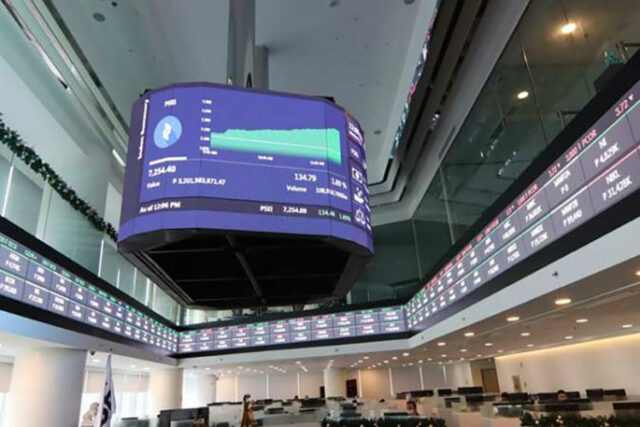
PHILIPPINE STOCKS retreated anew on Thursday as traders pocketed their profits from the market’s recent climb amid a lack of fresh leads, with investors looking ahead to key US inflation data set for release overnight.

The bellwether Philippine Stock Exchange index (PSEi) went down by 0.78% or 47.54 points to end at 6,031.48, while the broader all shares index dropped by 0.36% or 12.49 points to 3,446.96.

“The PSE ended lower as investors engaged in profit taking despite the peso’s stability against the US dollar,” Regina Capital Development Corp. Head of Sales Luis A. Limlingan said in a Viber message.

“The lack of fresh catalysts kept buying interest muted, leading to a cautious trading session. As a result, market participants opted to lock in gains following recent advances,” he added.

The market dropped to follow Wall Street’s decline on Wednesday, Philstocks Financial, Inc. Research Manager Japhet Louis O. Tantiangco said in a Viber message.

“Investors traded cautiously while waiting for the US’ November inflation data, which are expected to give clues on the Federal Reserve’s policy outlook,” he said.

Wall Street’s main indexes closed lower on Wednesday, with the S&P 500 and the tech-heavy Nasdaq sinking to three-week lows as nagging worries about the artificial intelligence trade weighed on technology stocks, Reuters reported.

The Dow Jones Industrial Average fell 228.29 points or 0.47% to 47,885.97. The S&P 500 lost 78.83 points or 1.16% to 6,721.43. The Nasdaq Composite lost 418.14 points or 1.81% to 22,693.32.

On the monetary policy front in the US, Federal Reserve Governor Christopher Waller, who is expected to be interviewed by US President Donald J. Trump as a candidate for the next Fed chair, said the central bank has room to cut interest rates amid signs of job market weakness.

Investors were also watching out for a US inflation report for November later in the day that will not include the month-on-month measure since a record government shutdown prevented data collection for October.

Forecasts are centered on an annual rise of 3% in core inflation last month.

All sectoral indices closed in the red on Thursday. Property sank by 1.61% or 36.94 points to 2,245.43; holding firms dropped by 0.91% or 43.53 points to 4,710.15; industrials fell by 0.43% or 37.83 points to 8,659.91; mining and oil went down by 0.4% or 57.97 points to 14,283.24; financials decreased by 0.33% or 6.86 points to 2,034.98; and services retreated by 0.32% or 7.82 points to 2,400.87.

Decliners narrowly beat advancers, 95 to 91, while 66 names closed unchanged.

Value turnover went up to P12.82 billion on Thursday with 1.34 billion shares traded from the P5.99 billion with 1.56 billion issues that changed hands on Wednesday.

Net foreign selling went down to P361.16 million from P706.91 million. — Alexandria Grace C. Magno with Reuters

ADVERTISEMENT
ADVERTISEMENT