Home Blog Page 5407

PCSO eyes online lotto to boost yearly revenue 

PHILSTAR FILE PHOTO

By Kyanna Angela Bulan 

THE PHILIPPINE Charity Sweepstakes Office (PCSO) on Tuesday said it is seeking to boost its revenue through online lotto operations. 

“We are embarking on digital operations,” PCSO Chairman Junie E. Cua told congressmen at a hearing. “We are installing additional terminals. We would like to go online, so that it would become more convenient to bet. We hope that going digital can increase our revenues.” 

PCSO ticket sales rose by 32.15% to P25.92 billion in the first half from a year earlier.  

Mr. Cua cited a shift from face-to-face to electronic transactions by clients. The agency is also looking at making lotto bets available to mobile and smartphones, he said. 

Cagayan de Oro City Rep. Rufus B. Rodriguez bucked the plan for online lotto, which he said would also become accessible to minors. 

“We cannot afford to make online gambling being available easily to the youth of our country,” he told the hearing. 

Manila City Rep. Bienvenido M. Abante, Jr. raised the same concern.  

“If there is a digital kind of game wherein children can bet, I think the PCSO should look out for it because we do not want our own children, as young as they would be, to bet on this digital game”, he said.   

“Online betting has serious economic and moral impacts on Filipino families and especially young people and the poor,” Antonio Gabriel M. La Viña, a human rights lawyer and former dean of the Ateneo de Manila University’s School of Government, said in a text message. “The government should not be encouraging this.” 

Also on Tuesday, the Philippine Amusement and Gaming Corp. (Pagcor) said it was monitoring illegal Philippine Offshore Gaming Operators (POGO).  

“Out of the 30 legal licensees, 27 continue to operate,” Pagcor Chairman Alejandro H. Tengco told the same congressional hearing.  

Pagcor wants the police and National Bureau of Investigation to look at the illegal operations of some operators and gaming sites, he said. The agency is also studying potential conflicts of interest that may arise given Pagcor’s dual role as a regulator and gambling operator. 

“It is best to regulate because you cannot be two agents acting as one,” Quezon City Rep. David C. Suarez said.  

Mr. La Viña said Pagcor has a schizophrenic identity. “It cannot be a regulator and operator at the same time, but it does that effectively,” he said. 

US donates P27M in books to Bicol

THE UNITED STATES has donated P27 million worth of reading materials for young students in the Bicol region, the US Embassy said in a statement on Tuesday.  

It said it handed over 540,000 early grade books to the Department of Education (DepEd) from the United States Agency for International Development (USAID) on Aug. 22.   

“We are working with DepEd so that children who are returning to school have access to age- and context-appropriate learning resources,” USAID Education Director Thomas LeBlanc said in the statement.  

The reading materials included picture books, storybooks and leveled books in English and Filipino to help students from Kindergarten to Grade 3 develop their reading skills. 

The donation is the first batch of materials that USAID is giving DepEd this school year.  — Alyssa Nicole O. Tan 

Facebook, Google told to release info on YouTube channel 

STOCK PHOTO | Image by terimakasih0 from Pixabay

A MANILA trial court on Tuesday ordered Google and Meta Platforms, Inc., Facebook’s parent company, to disclose information on a YouTube channel that allegedly promotes child sexual abuse. 

The court allowed the Philippine National Police’s anti-cybercrime group to compel YouTube and Facebook to submit data on the said channel within 72 hours, according to a copy of the warrant posted by state-run news agency People’s Television Network on Twitter. 

In July, screenshots of the channel’s videos went viral on social media that supposedly promoted sexual relationships with minors. 

The channel has since been taken down from both platforms. 

“Hoping that the news about the warrant against Meta and Google will encourage the victim-survivors to come forward,” Senator Ana Theresia “Risa” N. Hontiveros-Baraquel tweeted. 

The senator met with representatives from Meta, police and the National Bureau of Investigation to discuss measures to prevent the spread of child sexual abuse materials online. 

The senator authored the Anti-Online Sexual Abuse or Exploitation of Children bill, which was sent to the Office of the President on June 28. 

Last week, Justice Secretary Jesus Crispin C. Remulla said an inter-agency task force would use the country’s anti-money laundering mechanisms to restrict transactions related to the online exploitation of children. 

“Law enforcement agencies around the world know that the Philippines is one of the favorite places for these perverts who exploit children,” he told a press briefing. 

The Justice chief said the government would work with the US Department of Homeland Security to track down foreigners involved in child exploitation in the country. — John Victor D. Ordoñez  

Dengue death toll hits 400

Public Health Image Library/US Centers Disease for Control and Prevention

THE DEATH toll from dengue in the Philippines has hit 400 this year, or a death rate of 0.3%, the Department of Health (DoH) said on Tuesday. 

Of the reported deaths, 100 occurred in July, 74 in June, and 14 this month, it said in a statement. 

The agency said 62 dengue-related deaths were reported in May, 47 in April, 37 in March, 31 in February and 35 in January. 

There were 118,785 dengue cases from Jan. 1 to Aug. 13. “Cumulatively, cases this year are 143% higher [than] the reported cases during the same period in 2021.” 

Central Luzon accounted for 18% of the total or 21,247 dengue cases from Jan. 1 to Aug. 13, followed by Central Visayas with 10% or 11,390 and Metro Manila with 9% or 11,064. 

DoH said 19,816 dengue cases were recorded from Jul. 17 to Aug. 13, 3,457 or 17% of which were in Central Luzon. 

Metro Manila accounted for 16% or 3,131 cases in the past four weeks, followed by the Cordillera Administrative Region with 11% or 2,106 cases. 

It said six of 17 regions in the country had exceeded the epidemic threshold in the past four weeks, with the National Capital Region (NCR) “showing a sustained increasing trend from July 17 to Aug. 13.” 

The six regions were Cagayan Valley, Central Luzon, Calabarzon, Mimaropa, Cordillera and NCR. — Kyle Aristophere T. Atienza 

Sugar shortage not artificial — millers

PHILIPPINE STAR/ MICHAEL VARCAS

THE PHILIPPINE Sugar Millers Association, Inc. (PSMA) on Tuesday said the country’s sugar shortage is real and was not artificially caused by hoarding. 

“Hoarding and smuggling are symptoms of a supply deficit,” Sugar Millers Association President Pablo L. Lobregat told a Senate blue ribbon committee hearing. “They are not causes. I do not believe that it is artificial.” 

The presidential palace earlier said the huge volume of sugar seized by Customs agents in various warehouses in Luzon showed the sugar shortage is artificial and was brought about by hoarding of sugar by unscrupulous traders.  

The palace earlier accused Mr. Lobregat, who owns Crystal Sugar Co., Inc. of “widespread hoarding” after agents found more than 466,000 sacks of raw sugar in two warehouses in Cagayan de Oro last week. 

The businessman denied hoarding sugar. “We are just a warehouse at this point in time because most of that sugar there is not ours to sell. We are just holding it until people bring in the warehouse receipts so they can withdraw.” 

On the sugar fiasco, Mr. Lobregat said the industry was consulted about the plan to import 300,000 metric tons of sugar. “All stakeholders were consulted before the issuance of that order.” 

“We do not know what the other consulted parties said, but I remember the PSMA did recommend 300,000,” he said. 

Former Sugar Regulatory Administration (SRA) chief Hermenegildo R. Serafica, told senators stakeholders had agreed about the need to import 300,00 metric tons of sugar given tight supply and rising prices. 

The industry saw the estimated sugar deficit toward the end of August, he said, adding that the SRA has complete data on average demand for the past three crop years. 

“Upon seeing all of these, they recommended almost the same — 300,000 metric tons,” he added. — Alyssa Nicole O. Tan 

Gov’t told to probe disappearances 

GICJ.ORG/FILE PHOTO

THE COMMISSION on Human Rights on Tuesday urged the government to investigate cases of disappearance and end the culture of impunity. 

“We remember all those whose human rights have been gravely violated by any form of arrest, detention, abduction, or any form of deprivation of liberty by state agents or any person or group of persons acting with the authorization,” it said in a statement.  

The commission issued the statement on the International Day of the Disappeared, which draws attention to the plight of people imprisoned at places and under poor conditions unknown to their relatives. 

“No ends can ever justify carrying out such a deplorable act. Let us never cease the pursuit of genuine justice, peace and reprieve for victims and their families,” the agency said. 

Meanwhile, human rights group Karapatan said more than 1,900 people have disappeared since the late dictator Ferdinand E. Marcos declared martial law in 1972. Most of these victims were poor, Karapatan Secretary-General Cristina E. Palabay said at livestreamed ceremony in Quezon City.  

“Our countrymen will continue to seek justice for the basic right to live freely even if it will take 100 years.” 

Family members of the victims detailed their experiences during martial law.  

Ron de Vera, the son of detained martial law activist Adora Faye de Vera, said both his parents were victims of enforced disappearance under martial law. 

He also called for the release of his mother, who was arrested last week on “trumped-up” murder charges despite her being sick and frail.  

“The most important truth now comes from the stories of the families of those who disappeared,” Ms. Palabay said. — John Victor D. Ordoñez 

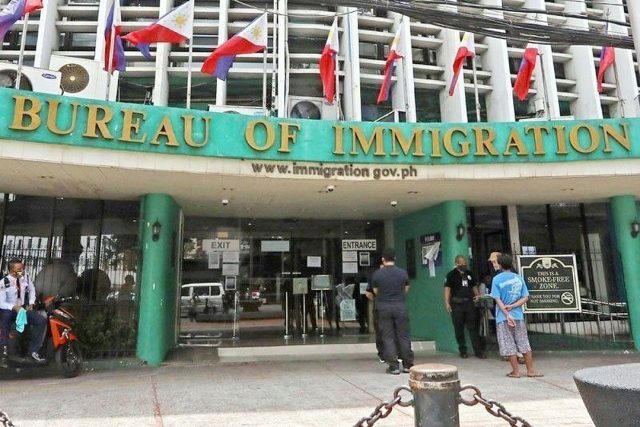
Agents probing fake appointment paper 

PHILSTAR FILE PHOTO

THE PRESIDENTIAL palace on Tuesday said authorities were investigating the release of a fake document designating a new Immigration commissioner. 

The document bearing the Philippine seal and President Ferdinand R. Marcos, Jr.’s signature was forged, Press Secretary Trixie Cruz-Angeles told a televised news briefing. 

She said the Presidential Management Staff, which works on such appointments, as well as the Office of the Executive Secretary and Office of the President have no record of the document.  

The document has been circulating on social media and was reported by some news outlets. 

Forging the seal of the government and the president’s stamp and signature is punishable by a jail term of as long as 20 years, Ms. Angeles said.  

The National Bureau of Investigation and police were investigating the case, she added. — Kyle Aristophere T. Atienza 

Changes to Universal Healthcare Act sought 

A HEALTH WORKER at the National Kidney and Transplant Institute pushes a patient in a wheelchair in this Aug. 15, 2021 photo. — PHILIPPINE STAR/ MICHAEL VARCAS

ILOILO Rep. Janette L. Garin on Tuesday said she would push changes to the Universal Health Care Act after budget deliberations, including transferring enforcement to the Health department from the Philippine Health Insurance Corp. (PhilHealth).  

She also said the Health Technology Assessment Council (HTAC) of the Department of Health (DoH) had been given too much power.  

“It is limited to what would be good in terms of economy and usable technology, but the law states that HTAC makes decisions on everything, including the programs of the DoH and PhilHealth,” she added.  

HTAC is an independent advisory body created under the Universal Health Care Act that provides guidance to the DoH and PhilHealth on the coverage of health interventions and technologies to be funded by the government.  

“We have a nice law that calls for universal health care for every Filipino family, but if you look closer there are two ropes that are tightly tied around the hands of doctors, hospitals, and the government,” Ms. Garin said. — Matthew Carl L. Montecillo 

PNP seeks upgrade 

THE PHILIPPINE National Police (PNP) on Tuesday asked the House of Representatives to pass bills that will improve its operational capabilities.  

The agency wants to upgrade its “move, shoot, communicate and investigate capability,” PNP representatives told a congressional hearing. 

Senator Ronald M. Dela Rosa had filed a bill that sought to revitalize the police in the past Congress, but it did not progress.  

The PNP’s priority measures include the National Police Clearance System, restructuring and strengthening of the organization and classifying cadets as government employees.  

It also wanted to increase the quota requirements of female officers, strengthen recruitment and set up a forensic database in the Philippines.  

Santa Rosa Rep. Dan S. Fernandez, who heads the House public order committee, expressed support for the measures. 

Representatives from the Department of Interior and Local Government, National Police Commission, Bureau of Fire Protection and Bureau of Jail Management and Penology also attended the hearing. — Matthew Carl L. Montecillo 

Cabinet tackles DENR, DoST priorities 

PHILIPPINE STAR/KRIZ JOHN ROSALES

PRIORITY programs of the Environment and Science and Technology departments were discussed during a Cabinet meeting on Tuesday, according to the presidential palace.    

Among the priorities of the Department of Science and Technology (DoST) is the creation of technology-based enterprises “for regional development,” Press Secretary Trixie Cruz-Angeles told a televised news briefing. 

Plans on food security and resilience, health security, water security and environmental protection were also tackled by DoST officials at the meeting, she added. 

Ms. Angeles said the Environment department discussed plans to enhance the natural capital accounting system, “including the valuation of ecosystem services.”  

It also talked about budget realignment and collaboration with other agencies, local governments, the private sector, academe and other stakeholders. — Kyle Aristophere T. Atienza 

Procurement agency promises reforms amid call for abolition

BW FILE PHOTO

THE Procurement Service of the Department of Budget and Management (DBM) said it will overhaul its processes amid calls to abolish the office following the alleged overpricing of laptop computers acquired for the Department of Education (DepEd).

“Procurement transformation… need not be too technical and convoluted. We will go back to the basics and execute them well to strengthen our foundation, and implement the doable,” Procurement Service Executive Director Dennis S. Santiago said in a statement on Tuesday.

Mr. Santiago said the reforms being contemplated include a focus on common-use supplies and equipment, rather than materials needed specifically by individual agencies; more realistic price canvassing; and improved supply chain management.

He also proposed greater use of electronic procurement platforms, capacity building, compliance with “green” principles in public procurement, and supplier partnerships.

“I fully understand the sentiment of some groups and even by our own esteemed and honorable legislators. We know where they are coming from as we share their clamor for zero tolerance against irregularities in government,” Mr. Santiago said.

“But, with all due respect, I think we need to strike a careful balance. I believe the calls must be tempered with the understanding that (the Procurement Service), along with its many dedicated and well-meaning employees, has ably served government for many decades,” he added.

The Procurement Service, whose primary task is to centralize procurement of common office supplies and equipment for government agencies, was flaged by the Commission on Audit (CoA) found irregularities in the purchase of laptops for public school teachers and medical supplies for the pandemic response.

The CoA report questioned the agency’s purchase of P2.4 billion worth of outdated laptops for the DepEd. Another audit report flagged P1.39 billion worth of personal protective equipment procured by the service for the Department of Health.

On Aug. 16, the Procurement Service suspended the procurement of non-common use supplies and equipment (NCSE) until further notice, and is currently focusing on common-use supplies and equipment (CSE).

“During the suspension, the Procurement Service shall not accept new requests for non-CSE procurement until further notice,” Mr. Santiago said.

Mr. Santiago said he plans to return to the Treasury over P3 billion worth of high-yield investments held with government banks, which was flagged by CoA as unauthorized.

“The amount of P3 billion is intact, and I am for the return of the money to the national treasury soon as we have properly clarified the nature of the funds with CoA,” he said.

In a management letter, CoA ordered the agency to “immediately remit the balance of the savings” to the Treasury.

CoA said the agency’s failure to return the money to the general fund of the Bureau of Treasury is in violation of Executive Order No. 431.

Mr. Santiago also said he supports Budget Secretary Amenah F. Pangandaman’s earlier call to give the Procurement Service a chance, adding that officials should allow the new administration to reform the agency.  

“We already have programs on how to fix (the Procurement Service) if you (would only) give us a chance,” Ms. Pangandaman said during the Development Budget Coordination Committee’s briefing for the House Committee on Appropriations on Friday. — Keisha B. Ta-asan

Kennon Road rehab deal seen signed next year; future toll road to be operated by private partner

THE Department of Public Works and Highways (DPWH) said it expects to sign a contract with a private partner for the P11.5-billion Kennon Road rehabilitation project in April, which will result in its modernization and reconfigure it as a commercially operated toll road.

The feasibility study was still being finalized as of July, the DPWH said on its website.

A tender for the public-private partnership (PPP) project was expected to take place between July this year and March 2023.

Kennon Road links the Luzon lowlands to Benguet Province.

“The project involves the rehabilitation, reconstruction, and improvement of Kennon Road to prevent road slope disasters such as soil collapse, rock fall, road slip, landslide, and river erosion that frequently occur along this road,” the DPWH said.

Kennon Road offers the shortest route from Rosario, La Union to Baguio City, with a total length of 33.7 kilometers.

The DPWH expects civil works to cost P11 billion, and the acquisition of right of way P550 million.

“At the end of the rehabilitation or reconstruction, the project is expected to reduce travel time from Rosario to Baguio City from one hour to only 30 minutes,” the DPWH said.

It is also expected to reduce travel time from Manila to Baguio City from four hours to three hours and 30 minutes via North Luzon Expressway, Subic-Clark-Tarlac Expressway, Tarlac-Pangasinan-La Union Expressway and Kennon Road.

At the same time, the project is expected to “contribute to the growth of the region’s tourism industry and related business activities, including their expansion to remote communities near the project area.”

The current administration has identified the Kennon Road rehabilitation as among its priority PPP projects.

Public Works Secretary Manuel M. Bonoan has said that the Marcos administration will work to attract more investors to its infrastructure program through PPPs. — Arjay L. Balinbin