Home Blog Page 5382

Global growth to bottom out this year — IMF’s Georgieva

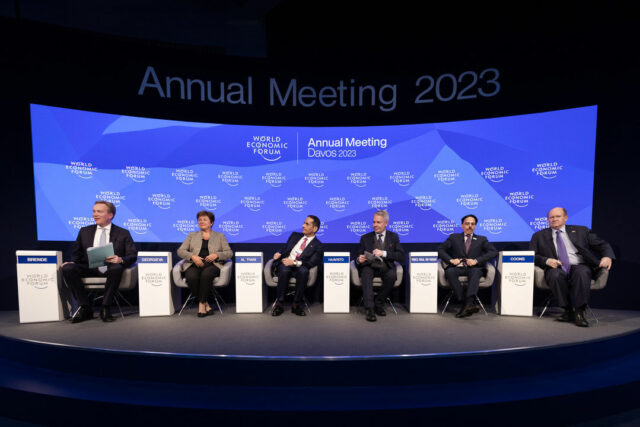
Kristalina Georgieva, International Monetary Fund (IMF) Managing Director and Member of Board of Trustees of the World Economic Forum (second from right), flanked by Børge Brende, President of the World Economic Forum; Mohammed Bin Abdulrahman Al Thani, Deputy Prime Minister and Minister of Foreign Affairs of Qatar; Pekka Haavisto, Minister for Foreign Affairs of Finland; H.H. Prince Faisal bin Farhan Al Saud, Minister of Foreign Affairs of Saudi Arabia; and Christopher A. Coons, Senator from Delaware (D), US. — World Economic Forum/Michael Calabro

DAVOS, Switzerland — International Monetary Fund (IMF) Managing Director Kristalina Georgieva said on Tuesday global economic growth was expected to bottom out in 2023 despite the continued Ukraine war and rising interest rates.

Speaking at a World Economic Forum panel in Davos, Ms. Georgieva affirmed an IMF forecast for global growth to decelerate to 2.7% this year from around 3.2% last year.

“Since the beginning of the year we do see some good news. We also expect in 2023 growth to bottom out, to start the process in which we go up rather than down,” she said.

Ms. Georgieva said the three very significant challenges were the Russia-Ukraine war, the cost-of-living crisis and interest rates at a level unseen in decades. The world must manage the adjustment to more security of supply smartly, she added.

“The context is: It is not great,” she added. — Reuters

Aqua SmartGuard: The only water dispenser in the world purified by FirewallTM Technology

Aqua SmartGuard countertop cube model

Committed to serve Filipinos with ‘Better Water, For Better Life’

We want to live in a world where everyone has access to the safest and most purified drinking water possible. Aqua SmartGuard’s commitment to innovation is the driving force towards realizing this dream. With every glass of purified drinking water served by our water dispensers, we take one step closer towards the world we envision. The water treated by Aqua SmartGuard’s water dispensers is the safest and most purified you can drink— tested and certified to the highest safety and purification performance standards.

Aqua SmartGuard adopts a patented and advanced Firewall UVC technology to guarantee to 99.99% protection against bacteria, viruses and cysts such as salmonella, E.coli and COVID-19. This water purifier features a unique quartz double helix that ensures targeted light waves reach each drop of water at the point of dispense for protection. The UVC Firewall acts as a barrier to prevent pathogens from infecting the water. Water flows up and down through the Firewall, exposing it to the UVC light and freeing it from harmful bacteria as soon as it leaves the nozzle. The purifier also uses BioCote which is for antimicrobial defense. Biocote uses silver ion technology that keeps microbial cells from growing on the cube’s external surfaces. It decreases the presence of microbes on the machine in just 15 minutes and reduces up to 99.5% of bacteria in 2 hours.

The BioCote cannot be washed or rubbed off as it is infused during the manufacturing process and is therefore chemically bonded to the material. BioCote is able to provide continuous and lasting protection throughout the product’s life span.

Clean and pure drinking water is essential for human health and well-being. Consuming contaminated water can lead to a variety of illnesses, including diarrhea, cholera, and typhoid fever. Access to clean drinking water also helps to prevent the spread of waterborne diseases, which can have a particularly severe impact on vulnerable populations such as young children, pregnant women, and the elderly. In addition to its health benefits, clean water is also essential for agricultural production, economic development, and environmental conservation. It is the foundation for human survival and development.

Aqua SmartGuard’s Water Revolution brings you a healthy, sustainable and affordable way to drink probably the best water in the world.

Aqua SmartGuard’s countertop unit is now available and is priced at a monthly subscription of P1,490 plus a one-time installation fee!


Spotlight is BusinessWorld’s sponsored section that allows advertisers to amplify their brand and connect with BusinessWorld’s audience by enabling them to publish their stories directly on the BusinessWorld Web site. For more information, send an email to online@bworldonline.com.

Join us on Viber to get more updates from BusinessWorld: https://bit.ly/3hv6bLA.

PHL seen to expand 6.5% this year

PROSPERITY FRUITS are displayed at a stall in Binondo, Manila, Jan. 17. — PHILIPPINE STAR/WALTER BOLLOZOS

By Luisa Maria Jacinta C. Jocson, Reporter

THE PHILIPPINES will likely grow by around 6.5% this year, even with a potential global economic slowdown, Finance Secretary Benjamin E. Diokno said.

“That’s still one of the highest if not the highest growth projection in the Asia-Pacific region,” Mr. Diokno said in a statement that quoted his speech at an event in Davos, Switzerland.

Economic managers are targeting 6-7% gross domestic product (GDP) growth for the Philippines in 2023.

Forecasts given by the World Bank and the ASEAN+3 Macroeconomic Research Office (AMRO) showed the Philippines may post the second-fastest GDP expansion among key Southeast Asian countries this year, after Vietnam. AMRO sees the Philippines’ GDP growing by 6.2%, while the World Bank expects 5.4% GDP expansion.

Mr. Diokno said the economy in 2022 likely expanded “much faster” than the government’s 6.5-7.5% goal.

He noted manufacturing sector growth, low unemployment levels, and a stable banking system will help the economy withstand external headwinds.

“Further, opening economic sectors to foreign equity, improving the ease of doing business and allowing for modern transformative industries to take root and grow will further sustain the economy,” he added.

Mr. Diokno said that the government is also planning to boost investments through public-private partnerships (PPPs), noting that it plans to spend at least 5-6% of GDP on infrastructure.

Due to current challenges, the Philippines is taking steps to launch the Maharlika Investment Fund (MIF), the country’s first sovereign wealth fund, Mr. Diokno said.

“The fund, which will be established in keeping with the highest standards of accountability and sound fiscal management, aims to diversify the country’s financial portfolio,” he said, adding that he would discuss the MIF during the World Economic Forum (WEF).

The House of Representatives in December approved the bill creating the wealth fund. It is currently part of the Senate’s priority bills this year.

IMPACT OF GLOBAL RECESSION
While the Philippines may be among the least affected by a potential global recession this year, analysts said it may still find it difficult to meet the government’s 6-7% growth target.

“The Philippines would be least affected by a global recession because it has the lowest export-to-GDP ratio compared to other Southeast Asian economies. This won’t mean we will remain unaffected because exports would also suffer and the trade deficit will widen, but the negative impact of a global recession won’t be as much,” Calixto V. Chikiamco, Foundation for Economic Freedom (FEF) president, said in a Viber message.

The World Bank expects global growth to decelerate sharply to 1.7% this year, reflecting worsening financial conditions, policy tightening and impact of the Russia’s invasion of Ukraine. Negative shocks, such as higher inflation, tighter policy and financial stress, may push the world economy into a recession, the World Bank said.

“Fortunately for the Philippines, it isn’t as reliant as its peers in Southeast Asia in terms of trade, so the impact of a potential global recession this year will be felt less acutely domestically,” Pantheon Chief Emerging Asia Economist Miguel Chanco said in an e-mail.

The Philippines is a net importer, with its trade balance primarily in a deficit for more than two decades. The last time the country was a net exporter was in 2000, when it had a trade surplus of $3.587 billion.

Mr. Chikiamco also noted remittances from overseas Filipino workers (OFWs) remain resilient and “can’t be dispensed with even in a recession.”

However, the Philippine economy is expected to feel this year the delayed impact of the Bangko Sentral ng Pilipinas’ (BSP) recent aggressive tightening.

“I still think that the economy will struggle to hit the government’s 6-7% target, partly because the lagged damage caused by the BSP’s overly aggressive rate hikes in the second half of last year will start to surface more noticeably in the economic data,” Mr. Chanco said.

“Moreover, the resilience exhibited by households last year will be hard to replicate, as it was down to an unsustainable surge in consumer credit growth, as well as a renewed reliance on still-thin household savings,” he added.

The BSP has not ruled out further rate hikes this year after raising the benchmark rate by a total of 350 basis points last year to tame inflation.

Mr. Chikiamco likewise said the Philippines will likely grow below the government’s target amid rising food prices and food insecurity.

Rizal Commercial Banking Corp. Chief Economist Michael L. Ricafort said that GDP growth will likely range between 6% and 6.5% amid a heightened risk of a recession in the United States.

“This would realistically lead to slower global economic growth and recovery in terms of reduced global exports, investments, employment, and other economic activities,” he said in a Viber message.

The Philippines may have performed better than expected in 2022, but growth momentum appears to have waned in the latter part of the year, Mr. Chanco said.

The economy expanded by 7.6% in the third quarter of 2022, bringing the nine-month average to 7.7%.

UnionBank of the Philippines, Inc. Chief Economist Ruben Carlo O. Asuncion said there is heightened uncertainty surrounding global economic prospects, particularly the impact of China’s reopening.

“One glaring challenge is, once the reopening moves on, China domestic demand is seen to accelerate and result to higher prices of global oil, not to mention other commodities that are connected to China’s economy like coal, rice, etc.,” he said in a Viber message.

Mr. Chanco said the government should focus on its fight against inflation, which averaged 5.8% in 2022. The BSP expects inflation to ease to an average of 4.5% for 2023, and 2.8% in 2024.

“At most, the government should continue to consider inflation-fighting measures to help cushion private consumption, including measures that may be particularly unpopular, such as lowering trade barriers on key commodities,” Mr. Chanco said, adding that allowing more imports would help ease supply shortages.

The Philippine Statistics Authority (PSA) is set to release fourth-quarter and full-year 2022 GDP data on Jan. 26.


AMRO cuts PHL growth outlook

A worker installs LED light bunnies in front of a shop in Manila on Jan. 12. — PHILIPPINE STAR/MIGUEL DE GUZMAN

THE ASEAN+3 Macroeconomic Research Office (AMRO) trimmed its growth outlook for the Philippines this year amid deteriorating global economic conditions.

In its Regional Economic Outlook Update released on Tuesday, the Philippine economy is expected to expand by 6.2% this year, slightly lower than the 6.3% projection given in October.

The AMRO’s 6.2% forecast is within the government’s 6-7% growth target this year, and the second-fastest growth in the region behind Vietnam’s 6.8%.

AMRO'S ASEAN+3 GDP growth and inflation rate forecasts

The gross domestic product (GDP) growth projection for 2023 will be much slower than last year when GDP likely expanded by 7.3% according to AMRO’s latest projection.

“The Philippines had a very strong year last year. It was very resilient and that’s why we revised up to 7.3% (from 6.9% previously). This year, we expect growth to revert back to 6.2%, so this is still a very strong growth rate, the economy has done well overall,” AMRO Chief Economist Hoe Ee Khor said at a virtual briefing.

The Philippine Statistics Authority is scheduled to release full-year GDP data on Jan. 26.

AMRO slashed its 2023 growth forecast for the ASEAN+3 region to 4.3% this year from 4.6% previously. The region is composed of the 10-member Association of Southeast Asian Nations (ASEAN), plus China, Japan and South Korea.

For the ASEAN region, AMRO also trimmed its growth projection to 4.8%, slightly lower than its earlier 4.9% estimate.

“The weakening global environment has taken the wind out of the sails of the region’s external trade momentum. The drag on economic activity from aggressive monetary policy tightening in the United States and euro area will be felt more fully this year, translating to softer export orders,” AMRO said in its report.

The think tank said that the global economy is projected to expand at a more “lackluster pace,” citing risks from a spike in energy prices, slower-than-expected recovery from China, and the possibility of more virulent coronavirus disease 2019 (COVID-19) variants.

While the risks weigh on the region’s outlook, China’s reopening may provide a counterbalance. The resumption of tourism, particularly the return of Chinese tourists, will boost the region’s growth.

“Tourist arrivals have picked up quite strongly. On a monthly basis, it has reached 40% of pre-pandemic levels and we expect it to continue to spike up with the reopening of China. Many countries depend on China for tourist arrivals,” Mr. Khor said.

INFLATION
While inflation has moderated, Mr. Khor said it still remains above target for most economies in the region.

AMRO raised its inflation forecast for ASEAN+3 this year to 4.5% from 3.4% previously. In 2022, inflation was projected to have averaged 6.3% in the region.

“Central banks in the region are very proactive in tightening. In any case, the level has already exceeded pre-pandemic levels. Central banks are very mindful of the need to anchor inflation. Because of that, they have been quite aggressive. Most of them have reached the end of the tightening cycle,” Mr. Khor said.

AMRO raised its inflation forecast for the Philippines to 4.3% this year, from 4% previously. Inflation averaged 5.8% in 2022, a 14-year high. The Bangko Sentral ng Pilipinas (BSP) expects inflation to ease to an average of 4.5% for 2023.

“Unlike other countries, the Philippines has no price subsidies to contain inflation. This is passed through commodity prices, and as a result inflation went up very quickly. The central bank has been very proactive in tightening aggressively, and because of that, now as you can see the policy rate has exceeded pre-pandemic levels,” Mr. Khor said.

The BSP raised rates by a total of 350 bps last year, bringing its policy rate to a 14-year high of 5.5%.

“Our recommendation is that once the economy has recovered strongly and growth is entrenched, then the central bank should focus on inflation and that is what the BSP has been doing,” Mr. Khor added.

The Philippines also needs to ramp up infrastructure investment.

“Infrastructure is a major weakness for the Philippines…I think the Philippines has to address the infrastructure problem to sustain its growth. We know that in tourism, there’s a lot of potential, but they need infrastructure to get tourists to come to the country. That’s one area I think they are focusing on to develop the industry,” Mr. Khor said. — Luisa Maria Jacinta C. Jocson

Flight fuel surcharge to further decline in February

Airplanes are seen on the runway at the Ninoy Aquino International Airport. — PHILIPPINE STAR/ MICHAEL VARCAS

THE CIVIL Aeronautics Board (CAB) is further lowering the fuel surcharge for domestic and international flights for February, reflecting the drop in jet fuel prices.

In an advisory, CAB said the fuel surcharge for Feb. 1-28 will be lowered to Level 6, after the average price of jet fuel stood at P38.92 per liter between Dec. 10 and Jan. 9.

The average jet fuel price during the period was 6% lower than the average of P41.50 per liter between Nov. 10 and Dec. 9, 2022, which corresponded to Level 7 in the matrix.

Under Level 6, passengers will have to pay a fuel surcharge of between P185 and P665 for domestic flights, and between P610.37 and P4,538.40 for international flights.

At the current Level 7, passengers are paying a fuel surcharge of between P219 and P739 for domestic flights and between P722.71 and P5,373.69 for international flights.

“Airlines wishing to impose or collect fuel surcharge for the same period must file their application with this office on or before the effectivity period, with fuel surcharge rates not exceeding [Level 6],” CAB Executive Director Carmelo L. Arcilla said in an advisory released on Tuesday.

Sought for comment, low-cost carrier AirAsia Philippines welcomed the CAB’s decision to lower the fuel surcharge.

“The lowering of the fuel surcharge, along with AirAsia’s regular promotions such as the ongoing a-Access which enables AirAsia guests to enjoy exclusive offers from our partner merchants in select destinations, are proven effective in sustaining the pent-up demand for air travel as reflected in the forward bookings for 0-90 days,” the airline said in a statement.

The low-cost airline also said that its load factor for the month of January is now at 85% and “still increasing.”

“We expect to sustain the momentum next month as we continue growing our fleet.”

Flag carrier Philippine Airlines said separately that it will implement the lower fuel surcharge.

“We appreciate our customers’ loyalty, and we are committed to continuing supporting the nation as its flag carrier,” Philippine Airlines Spokesperson Cielo C. Villaluna said in a phone message.

Cebu Pacific President and Chief Commercial Officer Xander Lao said this is the second consecutive month that the fuel surcharge has dropped.

“It is a very promising trend, which signals increased affordability of air travel,” he said in a statement when sought for comment.

“We hope this encourages passengers and their families and friends to travel more in 2023. Cebu Pacific is excited to offer even lower fares for EveryJuan,” he added.

The Department of Tourism is hoping to attract 4.8 million international visitors this year. The Philippines logged 2.65 million international arrivals last year 2022, beating the 1.7 million target. — Arjay L. Balinbin

Global slowdown may hurt OFW remittances

PHILIPPINE STAR/ MIGUEL DE GUZMAN

REMITTANCES from overseas Filipino workers (OFWs) will continue to rise this year, but may fall short of the central bank’s 4% growth projection amid a looming global economic slowdown, analysts said.   

In a research note on Tuesday, UnionBank of the Philippines, Inc. (UnionBank) said remittances may grow by 2.8% this year.

“We maintain our bearish year-end estimate of remittances for a 2022 growth of 2.7% while upholding our sober growth forecast of 2.8% this year. In our updated trajectory, we expect solid gains in the (first half of 2023) particularly during our summer months of April to May,” UnionBank said. 

“Growth turns lackluster in (the third quarter of 2023) perhaps consistent with the timing of offshore recession risk, before resumption of an upbeat pace in November to December during the peak remittance season,” the bank said.   

UnionBank’s forecast is below the BSP’s 4% remittance growth projection for 2022 and 2023.

For the first 11 months of 2022, cash remittances sent through banks rose 3.3% to $29.38 billion, from $28.43 billion a year earlier.   

UnionBank Chief Economist Ruben Carlo O. Asuncion estimated that remittances declined by 3.6% in December 2022 due to the higher base in the same month of 2021.

“We think that (December remittances) is still going to be robust, but the previous year is going to be a higher base. Our expectation for December 2022 is $2.88 billion, while for December 2021 it was $2.99 billion,” Mr. Asuncion said in a Viber message.

In November, cash remittances grew by 5.7% to $2.644 billion but this was the lowest amount in six months or since the $2.43 billion in May 2022.

Meanwhile, Security Bank Corp. Chief Economist Robert Dan J. Roces said remittance levels seem to be back to its pre-pandemic growth rate.

“We expect full-year 2022 (remittances) to may have grown to $32.2 billion given its resilience, which also did much to support the peso in the latter period of the year,” he said in a Viber message.

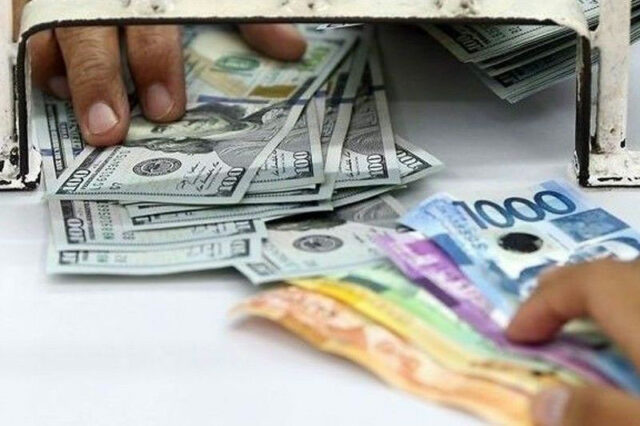
The peso has rebounded against the dollar in the fourth quarter last year, closing at P55.75 on Dec. 29, 2022, up by P3.25 or 5.8% from its record low of P59 a dollar on Oct. 17, 2022. 

“We also expect 2023 levels to improve year on year, albeit at a much slower pace on the back of a looming economic slowdown in the US and globally,” Mr. Roces said.   

The Philippines may see about $33 billion in remittance inflows in 2023, which Mr. Roces said is “slower because of headwinds, but growing nonetheless.” — K.B.Ta-asan

ACEN secures $107M for Vietnam wind farm project

ACEN CORP. and its partner BIM Group received a $107-million financing package from the Asian Development Bank (ADB) for their joint venture project — the 88-megawatt (MW) Ninh Thuan wind farm in south central Vietnam.

“This major boost on our wind farm’s financing from Asia and the Pacific’s climate bank and ACEN’s long-standing financing partner, ADB, and our other parallel lenders will help catalyze renewable energy build-up capacity by 2030,” said Patrice R. Clausse, chief executive officer of ACEN’s international operations, in a media release on Tuesday.

The 88-MW wind farm adds to ACEN’s operating wind projects in Vietnam, which have a capacity of 420 MW.

The Ayala-led listed energy firm said that the funding was arranged and syndicated by ADB as mandated lead arranger and bookrunner. The funding was also secured with the lending group comprised of ADB, Japan International Cooperation Agency, Hong Kong Mortgage Corp. Ltd., Sumitomo Mitsui Banking Corp., ING Bank, and Cathay United Bank.

The Ninh Thuan wind farm started commercial operations in 2021. It is expected to generate about 339 gigawatt-hours (GWh) of renewable energy per year, which can avoid 215,000 tons of carbon dioxide (CO2) emissions.

According to the media release, energy demand in Vietnam continues to grow and it is necessary to meet the demand with renewable energy.

The media release quoted ADB’s regional official as saying that the project is a crucial step for Vietnam’s resilience and recovery by further expanding its renewable energy mix and contributing to its net-zero targets.

“Energy demand in Vietnam has grown rapidly even during the pandemic, and it is crucial that this demand be met through clean energy that will drive sustainable economic growth,” said Jackie B. Surtani, ADB private sector operations department infrastructure finance division director for East Asia, Southeast Asia, and the Pacific.

ACEN said that ADB will also grant the Ninh Thuan wind farm an additional $5 million from the Goldman Sachs and Bloomberg Philanthropies-backed Climate Innovation and Development Fund, which will fund its environmental initiatives.

The company described BIM Group as a private conglomerate in Vietnam with activities in real estate, renewable energy, aquaculture and food, consumer and lifestyle.

The wind farm is part of ACEN’s target to expand its renewable energy capacity to 20 gigawatts by 2030.

At the local bourse on Tuesday, shares in the company closed 29 centavos or 4.12% lower to end at P6.75 apiece. — Ashley Erika O. Jose

Inchcape takes controlling stake in PHL vehicle distributor 

GLOBAL automotive distributor Inchcape Plc has agreed to enter into a joint venture with local luxury vehicle distributor CATS Group of Companies as part of its expansion efforts in the Philippines.

In a statement on Tuesday, British multinational Inchcape said the joint venture allows the company to have a controlling stake or 60% in CATS in a move aimed at expanding its global footprint and presence in Asia.

According to Inchcape, the deal is projected to close in the second half of 2023, with CATS’ founding Ang family retaining 40% of the company and represented in its board and management team.

“We are very pleased to be entering the new and strategically important market of the Philippines through the acquisition of a controlling stake in CATS’ Philippine operations,” said Ruslan Kinebas, Inchcape’s chief executive officer for the Asia-Pacific (APAC) region.

“As the leading luxury vehicle distributor in the market, CATS has excellent original equipment manufacturer (OEM) relationships, and we look forward to working with them and the Ang family to drive the business forward,” he added.

Inchcape said that it will boost CATS by bringing global scale across more than 40 markets, leadership in digital and data, and expertise in electric vehicles to the growing Philippine vehicle market.

Felix R. Ang, CATS founder, said that he is looking forward to leveraging Inchcape’s leadership in digital and data to boost the group’s market position.

“After over 30 successful years of operating independently, we believe the time is now right for CATS to take the next step in our growth journey and in Inchcape we have found the right partner to drive us forward,” Mr. Ang said.

Inchcape started in the APAC region in 1967 and has since expanded its distribution across Australia, Brunei, Hong Kong, Indonesia, Guam, Macau, New Zealand, Saipan, Singapore, and Thailand.

The company’s brand portfolio includes Toyota, Subaru, Suzuki, Jaguar Land Rover, BMW, Chevrolet, Great Wall Motor, Peugeot Citroen, Harley-Davidson, Daimler, Hino, and other commercial vehicle partners.

Inchcape APAC is headquartered in Singapore. In 2021, it opened a digital delivery center in the country, which provides digital and data analytics support and insights.

Founded in 1989, CATS is the local distributor for luxury vehicle brands such as Mercedes-Benz, Chrysler, Jeep, Dodge and Ram, Jaguar, and Land Rover. It also has dealerships for Mazda and Harley-Davidson motorcycles. — Revin Mikhael D. Ochave

SEC warns about unlicensed Lele Gold Farm, Trading Cartel

THE Securities and Exchange Commission (SEC) warned the public against the investment-taking activities of Trading Cartel and Lele Gold Farm as the entities are not registered with the regulator.

In its verification, the regulator found out that the people affiliated with Trading Cartel had been promising a return of 5%-10% monthly interest.

The SEC said that since Trading Cartel’s scheme involves the sale of securities, the entity is required to register the securities with the regulator and its agents must also have the appropriate license to sell.

Meanwhile, Lele Gold Farm is a mobile application that offers the public “the luxury of earning while playing the games.” It also uses the names Lele Gold Coin and Gold Farm.

In an advisory, the SEC said that investors of Lele Gold Farm are given six types of investment plans worth P3,840, P15,360, P36,480, P52,800, P100,800 and P288,000. Investors are promised weekly earnings ranging from P539 to P11,520 or a monthly income ranging from P2,310 to P345,600.

According to the SEC, the investment scheme propagated by the entity involves the offering and selling of securities in the form of investment contracts to the public with the investors not needing to exert any effort other than to invest money.

In its review, the regulator found out that both entities are not registered as a corporation or a partnership and operate without the necessary license or authority.

Meanwhile, the commission said that FDMS Business, a registered corporation under the SEC, has been soliciting investments without securing a license or authority.

FDMS Business offers investment plans through its “Affiliate Learning Program” wherein investors are given the choice to invest in three packages.

The packages — pre-subscription, basic subscription and pro-subscription — require a minimum investment of P3,000 to P1 million and a promised earning of 30% to 50% per month or 150% to 250% in five months.

The commission emphasized that the selling and offering of securities through the form of investment contracts using the “Ponzi scheme” is fraudulent therefore making it a non-registrable security.

“The commission will not issue a License to Sell Securities to the Public to persons or entities that are engaged in this business or scheme,” the SEC said.

The SEC also informed the public that it does not allow the registration of foreign exchange in the nature of financial futures contracts, contracts for difference, and the like. — Justine Irish D. Tabile

AboitizPower expects 17 MW more from Tiwi geothermal

ABOITIZ Power Corp. (AboitizPower) expects an additional 17 megawatts (MW) from its geothermal power plant in Tiwi, Albay when its renewables arm completes a binary project within the existing facility.

On Tuesday, AboitizPower, through its subsidiary AP Renewables Inc. (APRI), broke ground for its Tiwi binary geothermal power plant project, which is expected to be completed by yearend.

“The Tiwi binary power plant is a facility designed to extract the recoverable heat from the geothermal brine that is processed in a closed-loop system where no harmful gas or liquid is being emitted nor any waste products are discharged to the atmosphere,” said Jeffrey R. Estrella, president and chief operating officer of APRI.

The project will be built from the ground up with an entirely new binary plant system, pipes, and transmission line. It is located within the 1.5-hectare Tiwi geothermal power plant.

“The design will produce an additional 17-MW gross generated electricity, an additional source of clean energy to the Luzon grid,” Mr. Estrella said.

In December, AboitizPower announced that it signed an engineering, procurement and construction (EPC) contract with Ormat Technologies, Inc. and Desco, Inc. for the development of its binary plant.

The company also signed last year an agreement with its steam provider for the supply of brine, which will fuel the binary plant.

In a video message, James A. Villaroman, chief renewable energy (RE) officer of AboitizPower, said that additional renewables capacity will be vital for the country’s energy security.

“Our country embarks on an energy transition; we recognize we must work with others both within and outside our industry to contribute to the nation’s energy goals. The scale of the transformation of the country’s energy system requires collaboration and innovation. This project is a testament to that,” Mr. Villaroman added.

Geothermal energy, a form of renewable energy, comes from the earth’s heat and is produced by drilling production wells into the ground to tap high-temperature fluids from geothermal reservoirs.

The APRI Tiwi binary project will form part of AboitizPower’s target to grow the attributable capacity of Cleanergy, the company’s renewable energy brand, in the next 10 years.

By the end of 2030, AboitizPower is targeting to expand Cleanergy in the Philippines and abroad. It is targeting to build an additional 3,700 MW of RE, growing its capacities to 4,600 MW by 2030.

Currently, the company has 1,000 MW of RE projects. — Ashley Erika O. Jose

Tax court affirms partial refund of KEPCO’s excess VAT

CTA.JUDICIARY.GOV.PH

THE Court of Tax Appeals (CTA) has affirmed its ruling partially granting KEPCO Ilijan Corp.’s refund claim worth P23.39 million representing its excess input value-added tax (VAT) traced to its zero-rated sales of electricity to the National Power Corp. for the period covering three quarters of 2002.

In a 16-page decision dated Jan. 9 and made public on Jan 11, the CTA full court upheld its second division’s ruling that said P23.39 million out of the firm’s P74.66 million claim was backed by official receipts.

“At the outset, a tax credit or refund, like tax exemption, is strictly construed against the taxpayer,” the tribunal said. “The taxpayer claiming the tax credit or refund has the burden of proving that he is entitled to the refund or credit.”

It disqualified some transactions from zero-rated sales since KEPCO failed to write its Taxpayer Identification Number (TIN) in some receipts for the second, third and fourth quarters of 2002.

Under the law reforming the energy industry, power generation companies are entitled to zero-rated sales of electricity that do not translate to any output tax.

The country’s revenue code requires a taxpayer to indicate in its receipts that it is a VAT-registered entity. Receipts should also contain the entity’s Taxpayer Identification Number.

The term “zero-rated” must be written on its official receipts to avail of the incentive.

KEPCO manages the Ilijan gas-fired power plant, which is the largest natural gas facility in the country. It gets its fuel from the Philippines’ only indigenous gas field.

Citing Supreme Court jurisprudence, the CTA said official receipts issued in a name approved and authorized by the Securities and Exchange Commission must be considered non-compliance with regulations of the country’s tax code.

The tax tribunal also denied the commissioner of internal revenue’s (CIR) appeal to overturn the refunded amount, as it said the CTA Second Division correctly determined that the power firm successfully proved its entitlement to the reduced amount.

“The CIR failed to point out the specific invoices and official receipts which should have been disallowed,” the court said.

“Bare allegations which are not supported by any evidence, documentary or otherwise, sufficient to support a claim, fall short to satisfy the degree of proof needed.” — John Victor D. Ordoñez

It all began with a lucky coin

SOME of the artworks from the ‘Of Art and Wine: Colors of Prosperity’ exhibition featuring works by Elizabeth Anne ‘Lizanne’ C. Uychaco.

ELIZABETH Anne “Lizanne” C. Uychaco was five years old when she got sick and had to stop kindergarten. Her family consulted a feng shui master who gave her a lucky charm to help her recover and grant prosperity.

“We came to this feng shui master… who gave me this coin and told me it is a ‘magic coin’,” Ms. Uychaco recalled. “‘You would be well. You will be lucky. You will be rich.’ At that time, I didn’t know what ‘rich’ meant.”

“I wore it all my life. And I really got well. Since then, I haven’t been sickly,” she said.

The same coin later became the signature symbol of the Filipino-Chinese visual artist’s works.

The current Senior Vice-President of SM Investments Corp., Ms. Uychaco is an active artist under Art the Elements Asian Gallery. She held her first solo exhibition, “Heaven and Earth” in June 2019 at Conrad Manila’s Gallery C. Her work was first launched in 1993 when the Ayala Museum included her in a “discovery” series.

Most of her works are mixed media, owing to her lifelong training in sculpture, pottery, jewelry-making, silver craft, gold gilding, calligraphy, and painting in watercolor, oils, and acrylics.

This year, Ms. Uychaco will hold her 22nd exhibition as part of the Conrad Manila hotel’s Of Art and Wine: Colors of Prosperity series, which runs until March 18.

“We are delighted to usher in 2023 and the Year of the Rabbit with Lizanne’s vibrant Filipino-Chinese art pieces that echoes tradition, family, and positivity,” Conrad Manila’s general manager Fabio Berto said in a speech at the exhibit’s launch on Jan. 11. “Our commitment in sharing the light and warmth of hospitality through curated touches of luxury that are empowering and bold are echoed by Lizanne’s solo exhibit, her second with the hotel.”

Ms. Uychaco’s works feature a recurring symbol of an abstract coin. Originating in the Qing Dynasty (1644 to 1911), the metal coin is a symbol of luck, wealth, harmony, prosperity, and protection. Its round shape with a square void in the center represents heaven and earth, yin and yang which was the basis of the I-Ching, the circle of life, and the Zen of meditation. The coin is usually hung or displayed at the entrance of Chinese households for good fortune.

Her works are known to be minimalist and carry rich textures, with a focus on subjects that bring good luck, harmony, prosperity, wealth, and success. The 34 paintings in this exhibit, which took three years to complete, are grouped according to the elements as seen through their colors. Red represents fire, blue represents water, while the gold and silver represent metal.

Rich textures are a feature in her paintings Ancient Wisdom of Good Fortune, Long Life and Prosperity, Seals of Good Fortune, Long Life and Prosperity, and Opulence and Good Tidings.

The feng shui coin is incorporated in images of horses, money trees in different colors and settings, mountains, and sometimes a blend of Filipino and Chinese culture.

The paintings Earth’s Blessings and Eternal Flame feature the feng shui coin and miniature bulul (granary gods) which she had collected.

In her work titled Perennial Bliss, Ms. Uychaco used a purple, blue and green color story for a mountain landscape with the feng shui coin serving as the sun or moon, to depict serenity.

She said that while she travels, the landscapes she makes are not based specific locations but painted while in her studio.

“When you’re painting, you’re the boss. You choose the colors and anything you like. It’s a very good retreat,” Ms. Uychaco told members of the press during the exhibit launch.

While the original feng shui coin Ms. Uychaco received in her youth has corroded, she continues to collect them when she travels and keep the ones given to her as gifts.

“If you know that this (the artworks) is a symbol of success, you know that when you look at it it’s like you’re meditating on success,” Ms. Uychaco said.

“So, when you see positive things and things that bring good luck, it somehow it also affects your being. It brings you to that fold, you attract it,” she said.

Of Art and Wine: Colors of Prosperity by Lizanne Uychaco is on view until March 18. For inquiries on the artworks, call Conrad Manila at 8833-9999 or Art Elements Asian Gallery at 0917-957-7005 or e-mail conradmanila@conradhotels.com. The paintings’ prices range from P68,888 to P999,888. — Michelle Anne P. Soliman

ADVERTISEMENT
ADVERTISEMENT