Home Blog Page 5377

Inchcape takes controlling stake in PHL vehicle distributor 

GLOBAL automotive distributor Inchcape Plc has agreed to enter into a joint venture with local luxury vehicle distributor CATS Group of Companies as part of its expansion efforts in the Philippines.

In a statement on Tuesday, British multinational Inchcape said the joint venture allows the company to have a controlling stake or 60% in CATS in a move aimed at expanding its global footprint and presence in Asia.

According to Inchcape, the deal is projected to close in the second half of 2023, with CATS’ founding Ang family retaining 40% of the company and represented in its board and management team.

“We are very pleased to be entering the new and strategically important market of the Philippines through the acquisition of a controlling stake in CATS’ Philippine operations,” said Ruslan Kinebas, Inchcape’s chief executive officer for the Asia-Pacific (APAC) region.

“As the leading luxury vehicle distributor in the market, CATS has excellent original equipment manufacturer (OEM) relationships, and we look forward to working with them and the Ang family to drive the business forward,” he added.

Inchcape said that it will boost CATS by bringing global scale across more than 40 markets, leadership in digital and data, and expertise in electric vehicles to the growing Philippine vehicle market.

Felix R. Ang, CATS founder, said that he is looking forward to leveraging Inchcape’s leadership in digital and data to boost the group’s market position.

“After over 30 successful years of operating independently, we believe the time is now right for CATS to take the next step in our growth journey and in Inchcape we have found the right partner to drive us forward,” Mr. Ang said.

Inchcape started in the APAC region in 1967 and has since expanded its distribution across Australia, Brunei, Hong Kong, Indonesia, Guam, Macau, New Zealand, Saipan, Singapore, and Thailand.

The company’s brand portfolio includes Toyota, Subaru, Suzuki, Jaguar Land Rover, BMW, Chevrolet, Great Wall Motor, Peugeot Citroen, Harley-Davidson, Daimler, Hino, and other commercial vehicle partners.

Inchcape APAC is headquartered in Singapore. In 2021, it opened a digital delivery center in the country, which provides digital and data analytics support and insights.

Founded in 1989, CATS is the local distributor for luxury vehicle brands such as Mercedes-Benz, Chrysler, Jeep, Dodge and Ram, Jaguar, and Land Rover. It also has dealerships for Mazda and Harley-Davidson motorcycles. — Revin Mikhael D. Ochave

SEC warns about unlicensed Lele Gold Farm, Trading Cartel

THE Securities and Exchange Commission (SEC) warned the public against the investment-taking activities of Trading Cartel and Lele Gold Farm as the entities are not registered with the regulator.

In its verification, the regulator found out that the people affiliated with Trading Cartel had been promising a return of 5%-10% monthly interest.

The SEC said that since Trading Cartel’s scheme involves the sale of securities, the entity is required to register the securities with the regulator and its agents must also have the appropriate license to sell.

Meanwhile, Lele Gold Farm is a mobile application that offers the public “the luxury of earning while playing the games.” It also uses the names Lele Gold Coin and Gold Farm.

In an advisory, the SEC said that investors of Lele Gold Farm are given six types of investment plans worth P3,840, P15,360, P36,480, P52,800, P100,800 and P288,000. Investors are promised weekly earnings ranging from P539 to P11,520 or a monthly income ranging from P2,310 to P345,600.

According to the SEC, the investment scheme propagated by the entity involves the offering and selling of securities in the form of investment contracts to the public with the investors not needing to exert any effort other than to invest money.

In its review, the regulator found out that both entities are not registered as a corporation or a partnership and operate without the necessary license or authority.

Meanwhile, the commission said that FDMS Business, a registered corporation under the SEC, has been soliciting investments without securing a license or authority.

FDMS Business offers investment plans through its “Affiliate Learning Program” wherein investors are given the choice to invest in three packages.

The packages — pre-subscription, basic subscription and pro-subscription — require a minimum investment of P3,000 to P1 million and a promised earning of 30% to 50% per month or 150% to 250% in five months.

The commission emphasized that the selling and offering of securities through the form of investment contracts using the “Ponzi scheme” is fraudulent therefore making it a non-registrable security.

“The commission will not issue a License to Sell Securities to the Public to persons or entities that are engaged in this business or scheme,” the SEC said.

The SEC also informed the public that it does not allow the registration of foreign exchange in the nature of financial futures contracts, contracts for difference, and the like. — Justine Irish D. Tabile

AboitizPower expects 17 MW more from Tiwi geothermal

ABOITIZ Power Corp. (AboitizPower) expects an additional 17 megawatts (MW) from its geothermal power plant in Tiwi, Albay when its renewables arm completes a binary project within the existing facility.

On Tuesday, AboitizPower, through its subsidiary AP Renewables Inc. (APRI), broke ground for its Tiwi binary geothermal power plant project, which is expected to be completed by yearend.

“The Tiwi binary power plant is a facility designed to extract the recoverable heat from the geothermal brine that is processed in a closed-loop system where no harmful gas or liquid is being emitted nor any waste products are discharged to the atmosphere,” said Jeffrey R. Estrella, president and chief operating officer of APRI.

The project will be built from the ground up with an entirely new binary plant system, pipes, and transmission line. It is located within the 1.5-hectare Tiwi geothermal power plant.

“The design will produce an additional 17-MW gross generated electricity, an additional source of clean energy to the Luzon grid,” Mr. Estrella said.

In December, AboitizPower announced that it signed an engineering, procurement and construction (EPC) contract with Ormat Technologies, Inc. and Desco, Inc. for the development of its binary plant.

The company also signed last year an agreement with its steam provider for the supply of brine, which will fuel the binary plant.

In a video message, James A. Villaroman, chief renewable energy (RE) officer of AboitizPower, said that additional renewables capacity will be vital for the country’s energy security.

“Our country embarks on an energy transition; we recognize we must work with others both within and outside our industry to contribute to the nation’s energy goals. The scale of the transformation of the country’s energy system requires collaboration and innovation. This project is a testament to that,” Mr. Villaroman added.

Geothermal energy, a form of renewable energy, comes from the earth’s heat and is produced by drilling production wells into the ground to tap high-temperature fluids from geothermal reservoirs.

The APRI Tiwi binary project will form part of AboitizPower’s target to grow the attributable capacity of Cleanergy, the company’s renewable energy brand, in the next 10 years.

By the end of 2030, AboitizPower is targeting to expand Cleanergy in the Philippines and abroad. It is targeting to build an additional 3,700 MW of RE, growing its capacities to 4,600 MW by 2030.

Currently, the company has 1,000 MW of RE projects. — Ashley Erika O. Jose

Tax court affirms partial refund of KEPCO’s excess VAT

CTA.JUDICIARY.GOV.PH

THE Court of Tax Appeals (CTA) has affirmed its ruling partially granting KEPCO Ilijan Corp.’s refund claim worth P23.39 million representing its excess input value-added tax (VAT) traced to its zero-rated sales of electricity to the National Power Corp. for the period covering three quarters of 2002.

In a 16-page decision dated Jan. 9 and made public on Jan 11, the CTA full court upheld its second division’s ruling that said P23.39 million out of the firm’s P74.66 million claim was backed by official receipts.

“At the outset, a tax credit or refund, like tax exemption, is strictly construed against the taxpayer,” the tribunal said. “The taxpayer claiming the tax credit or refund has the burden of proving that he is entitled to the refund or credit.”

It disqualified some transactions from zero-rated sales since KEPCO failed to write its Taxpayer Identification Number (TIN) in some receipts for the second, third and fourth quarters of 2002.

Under the law reforming the energy industry, power generation companies are entitled to zero-rated sales of electricity that do not translate to any output tax.

The country’s revenue code requires a taxpayer to indicate in its receipts that it is a VAT-registered entity. Receipts should also contain the entity’s Taxpayer Identification Number.

The term “zero-rated” must be written on its official receipts to avail of the incentive.

KEPCO manages the Ilijan gas-fired power plant, which is the largest natural gas facility in the country. It gets its fuel from the Philippines’ only indigenous gas field.

Citing Supreme Court jurisprudence, the CTA said official receipts issued in a name approved and authorized by the Securities and Exchange Commission must be considered non-compliance with regulations of the country’s tax code.

The tax tribunal also denied the commissioner of internal revenue’s (CIR) appeal to overturn the refunded amount, as it said the CTA Second Division correctly determined that the power firm successfully proved its entitlement to the reduced amount.

“The CIR failed to point out the specific invoices and official receipts which should have been disallowed,” the court said.

“Bare allegations which are not supported by any evidence, documentary or otherwise, sufficient to support a claim, fall short to satisfy the degree of proof needed.” — John Victor D. Ordoñez

It all began with a lucky coin

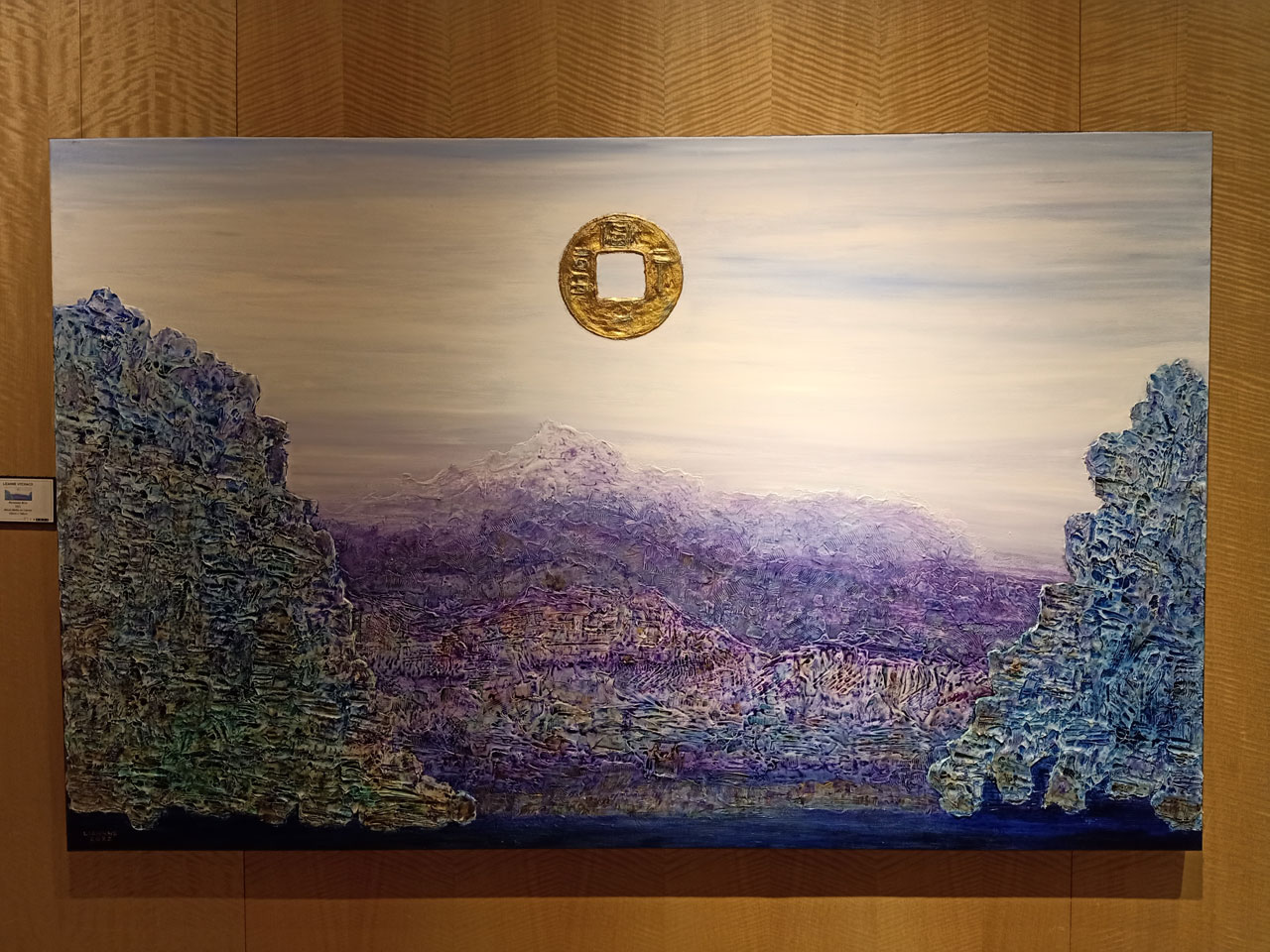
SOME of the artworks from the ‘Of Art and Wine: Colors of Prosperity’ exhibition featuring works by Elizabeth Anne ‘Lizanne’ C. Uychaco.

ELIZABETH Anne “Lizanne” C. Uychaco was five years old when she got sick and had to stop kindergarten. Her family consulted a feng shui master who gave her a lucky charm to help her recover and grant prosperity.

“We came to this feng shui master… who gave me this coin and told me it is a ‘magic coin’,” Ms. Uychaco recalled. “‘You would be well. You will be lucky. You will be rich.’ At that time, I didn’t know what ‘rich’ meant.”

“I wore it all my life. And I really got well. Since then, I haven’t been sickly,” she said.

The same coin later became the signature symbol of the Filipino-Chinese visual artist’s works.

The current Senior Vice-President of SM Investments Corp., Ms. Uychaco is an active artist under Art the Elements Asian Gallery. She held her first solo exhibition, “Heaven and Earth” in June 2019 at Conrad Manila’s Gallery C. Her work was first launched in 1993 when the Ayala Museum included her in a “discovery” series.

Most of her works are mixed media, owing to her lifelong training in sculpture, pottery, jewelry-making, silver craft, gold gilding, calligraphy, and painting in watercolor, oils, and acrylics.

This year, Ms. Uychaco will hold her 22nd exhibition as part of the Conrad Manila hotel’s Of Art and Wine: Colors of Prosperity series, which runs until March 18.

“We are delighted to usher in 2023 and the Year of the Rabbit with Lizanne’s vibrant Filipino-Chinese art pieces that echoes tradition, family, and positivity,” Conrad Manila’s general manager Fabio Berto said in a speech at the exhibit’s launch on Jan. 11. “Our commitment in sharing the light and warmth of hospitality through curated touches of luxury that are empowering and bold are echoed by Lizanne’s solo exhibit, her second with the hotel.”

Ms. Uychaco’s works feature a recurring symbol of an abstract coin. Originating in the Qing Dynasty (1644 to 1911), the metal coin is a symbol of luck, wealth, harmony, prosperity, and protection. Its round shape with a square void in the center represents heaven and earth, yin and yang which was the basis of the I-Ching, the circle of life, and the Zen of meditation. The coin is usually hung or displayed at the entrance of Chinese households for good fortune.

Her works are known to be minimalist and carry rich textures, with a focus on subjects that bring good luck, harmony, prosperity, wealth, and success. The 34 paintings in this exhibit, which took three years to complete, are grouped according to the elements as seen through their colors. Red represents fire, blue represents water, while the gold and silver represent metal.

Rich textures are a feature in her paintings Ancient Wisdom of Good Fortune, Long Life and Prosperity, Seals of Good Fortune, Long Life and Prosperity, and Opulence and Good Tidings.

The feng shui coin is incorporated in images of horses, money trees in different colors and settings, mountains, and sometimes a blend of Filipino and Chinese culture.

The paintings Earth’s Blessings and Eternal Flame feature the feng shui coin and miniature bulul (granary gods) which she had collected.

In her work titled Perennial Bliss, Ms. Uychaco used a purple, blue and green color story for a mountain landscape with the feng shui coin serving as the sun or moon, to depict serenity.

She said that while she travels, the landscapes she makes are not based specific locations but painted while in her studio.

“When you’re painting, you’re the boss. You choose the colors and anything you like. It’s a very good retreat,” Ms. Uychaco told members of the press during the exhibit launch.

While the original feng shui coin Ms. Uychaco received in her youth has corroded, she continues to collect them when she travels and keep the ones given to her as gifts.

“If you know that this (the artworks) is a symbol of success, you know that when you look at it it’s like you’re meditating on success,” Ms. Uychaco said.

“So, when you see positive things and things that bring good luck, it somehow it also affects your being. It brings you to that fold, you attract it,” she said.

Of Art and Wine: Colors of Prosperity by Lizanne Uychaco is on view until March 18. For inquiries on the artworks, call Conrad Manila at 8833-9999 or Art Elements Asian Gallery at 0917-957-7005 or e-mail conradmanila@conradhotels.com. The paintings’ prices range from P68,888 to P999,888. — Michelle Anne P. Soliman

Century Peak’s cement unit secures gov’t certification

THE construction and cement subsidiary of listed firm Century Peak Holdings Corp. (CPM) has secured quality certification from the government for its cement products ahead of its market entry.

CPM said in a stock exchange disclosure on Tuesday that its subsidiary, Century Peak Cement Manufacturing Corp., has secured quality standard certification from the Department of Trade and Industry (DTI) for its blended hydraulic (Pro) and Portland (Prime) cement products.

The DTI’s quality standard certification signifies that Century Peak Cement’s products meet or surpass the requirements set by the Bureau of Philippine Standards.

The certification is the final step before Century Peak Cement enters the market this month. It will be engaged in the production and merchandising of cement, cement products, and by-products including their derivatives and all kinds of minerals and building materials.

“Evolving to include cement manufacturing proved to be natural for the business as a sister firm operates a mining site that yields a lot of limestone which we can now translate to another revenue-generating endeavor,” Century Peak Vice President for Finance Katrina C. Keng said.

The cement manufacturing plant is located in Pinamungajan, Cebu, about two kilometers from the initial quarry site of another CPM unit, Century Peak Mineral Development Corp., which is the source of the limestone raw material used for cement production.

The plant has a capacity of 1 million tons of cement annually and provides jobs to almost 200 people with about a thousand indirect beneficiaries.

“With our own pier located near the plant, we can easily transport our cement products throughout the country in a more cost-efficient manner,” Ms. Keng said.

Meanwhile, CPM said that it expects strong demand for Century Peak Cement’s products as government programs are focused on creating affordable mass housing and road and transportation projects.

The company added that it also has a Board of Investments (BoI) incentive that grants a four-year income tax holiday from the registered start of commercial operation.

“We want to be relevant not only to the growth of our holding firm’s business but, more importantly, to the construction industry that provides lasting infrastructure necessary to realize economic progress for the country,” Ms. Keng said.

On Tuesday, shares of CPM at the local bourse dropped 0.10 points or 2.94% to close at P3.30 apiece. — Revin Mikhael D. Ochave

60,000 Filipino children die yearly due to poor public services — UN

By Kyle Aristophere T. Atienza, Reporter 

MORE THAN 60,000 Filipino children die yearly before their fifth year, according to a United Nations (UN) body, citing lack of access to maternal and child nutrition services in the Philippines.

The UN agency cited poor public services for women and children globally — a situation that could lead to the deaths of almost 59 million children and youth before 2030.  

“In the Philippines, over 60,000 children die annually before their fifth birthday because of complications of premature birth, intrapartum complications, and infectious disease,” the UN Inter-agency Group for Child Mortality Estimation (UN IGME) said in a report.  

More than 25,000 Filipino babies are stillborn every year, it added.  

The report said 60% of Filipino children who die before their fifth birthday are newborns, “pointing to a need to improve health and nutrition outcomes for both mothers and babies.”  

The Philippines, whose healthcare system is among the worst in the world, “needs to increase access to quality maternal and child health and nutrition services, achieve full vaccination of all children,” UN IGME said, adding that the government should deliver on its commitments to ensuring good health and nutrition “through the first 1,000 days of life so that children will not only survive, but thrive.”  

PREVENTABLE TRAGEDY
Globally, about five million children died before their fifth birthday and about 2.1 million people aged 5 to 24 years lost their lives in 2021, according to the report.  

It said premature birth and complications during labor are the leading causes of death for children aged 1 to 5, it added.  

Citing a separate report, the UN body said 1.9 million babies were stillborn in 2021.  

More than 40% of stillbirths occur during labor, which could be preventable when women have access to quality care throughout pregnancy and birth.  

Infectious diseases like pneumonia, diarrhea, and malaria pose the biggest threat to babies who survive past their first 28 days, according to the UN body.  

“Tragically, many of these deaths could have been prevented with equitable access and high-quality maternal, newborn, adolescent and child healthcare.”  

The government should boost investment to improve primary healthcare for women and children, Vidhya Ganesh, UNICEF director of the Division of Data Analytics, Planning and Monitoring, was quoted as saying.  

“Every day, far too many parents are facing the trauma of losing their children, sometimes even before their first breath,” she said. “Such widespread, preventable tragedy should never be accepted as inevitable. Progress is possible with stronger political will and targeted investment in equitable access to primary healthcare for every woman and child.”  

The report said there were some positive outcomes, citing a lower risk of death across all ages globally since 2000.  

“The global under-five mortality rate fell by 50% since the start of the century, while mortality rates in older children and youth dropped by 36%, and the stillbirth rate decreased by 35%,” it said. “This can be attributed to more investments in strengthening primary health systems to benefit women, children and young people.”  

Gains, however, have reduced significantly since 2010, the UN body lamented, noting that 54 countries “will fall short of meeting the Sustainable Development Goals target for under-five mortality.”  

It warned that if quick action is not taken to improve health services, almost 59 million children and youth will die before 2030, and nearly 16 million babies will be lost to stillbirth.  

“It is grossly unjust that a child’s chances of survival can be shaped just by their place of birth, and that there are such vast inequities in their access to lifesaving health services,” Anshu Banerjee, director for Maternal, Newborn, Child and Adolescent Health and Ageing at the World Health Organization, was quoted as saying.  

“Children everywhere need strong primary healthcare systems that meet their needs and those of their families, so that — no matter where they are born — they have the best start and hope for the future.”  

HIGHEST RISK OF CHILDHOOD DEATH
Sub-Saharan Africa accounted for 56% of all under-five deaths in 2021, making it the worst place for children.  

“Children born in sub-Saharan Africa are subject to the highest risk of childhood death in the world — 15 times higher than the risk for children in Europe and Northern America,” the report read.  

“Nearly half of all stillbirths happened in sub-Saharan Africa. The risk of a woman having a stillborn baby in sub-Saharan Africa is seven times more likely than in Europe and North America,” it added.  

Southern Asia came in second, accounting for 26% of all under-five deaths two years ago.  

The UN body said mothers in sub-Saharan Africa and South Asia endure the painful loss of babies to stillbirth at an exceptional rate, with 77% of all stillbirths in 2021 occurring in the two regions.  

“Access to and availability of quality healthcare continues to be a matter of life or death for children globally,” it said. “Most child deaths occur in the first five years, of which half are within the very first month of life.”  

Gina Lollobrigida: From post-war film legend to artist

ITALIAN film icon Gina Lollobrigida poses near two of her sculptures in her villa in southern Rome, Dec. 7, 2006. — REUTERS

ROME — Gina Lollobrigida, who has died at the age of 95, shot to fame in the 1950s as a sultry Mediterranean sex symbol, then became a photographer and sculptor after stepping away from the movie world.

“La Lollo” as she was affectionately known in Italy, died in a Rome clinic, her former lawyer, Giulia Citani said.

At the height of her fame in the 1950s and 1960s, Ms. Lollobrigida was an internationally recognized epitome of Italian post-war cinema, rivalled only by Sophia Loren.

Tempestuous and impulsive by nature, she made headlines again in 2006, when, at age 79, she announced that she would marry a man 34 years her junior. She later called off the wedding, blaming the media for spoiling it.

“All my life I wanted a real love, an authentic love, but I have never had one. No one has ever truly loved me. I am a cumbersome woman,” she told an interviewer when she was 80.

Born to a working-class family in a poor mountainous area east of Rome, she studied sculpture then got her break in the film world after finishing third in the 1947 Miss Italia beauty contest. (The winner that year was Lucia Bose.)

One of her earliest performances was as Gemma, the unhappy adulteress in the 1953 film by director Mario Soldati The Wayward Wife (La Provinciale).

She burst to fame in Italy with the leading roles in two Italian comedies by Luigi Comencini — Bread, Love and Dreams, and Bread, Love and Jealousy.

WORLD’S MOST BEAUTIFUL WOMAN
A role opposite Humphrey Bogart in John Huston’s 1954 film Beat the Devil, sealed her worldwide fame and in 1955 she made what became one of her signature films, The World’s Most Beautiful Woman.

She was also directed by other film luminaries such as Rene Clair and Carol Reed.

But despite playing opposite other American stars such as Humphrey Bogart, Rock Hudson, Burt Lancaster, Tony Curtis and Frank Sinatra, becoming one of the most recognizable cinema icons of the 1950s and ’60s, she never clicked with Hollywood and preferred to work closer to home, making films throughout the 1960s with directors such as Mario Bolognini.

Perhaps her last well-known movie was Buona Sera, Mrs. Campbell, a farce by director Melvin Frank which also starred Phil Silvers, Peter Lawford, and Telly Savalas. In it, she played Carla, an Italian woman who had affairs with three American soldiers during World War II and meets them all again during a squadron reunion 20 years later.

Born on July 4, 1927, Ms. Lollobrigida fled the rural area of her birth with her family during World War II and was later sent to the Academy of Fine Arts in the capital to complete her education.

She first earned her living as a model for fotoromanzi, the photographic novels avidly read in Italy, using the stage name Diana Loris.

Ms. Lollobrigida accompanied her success on the screen with a hectic, often turbulent life that provided a rich source for Italian paparazzi and gossip writers.

She tried to guard her private life, retreating to an isolated villa on Rome’s ancient Appian Way, which was decorated with her own sculptures and paintings as well art she collected on her world travels.

In 1950 she married Yugoslav emigré doctor Milko Skofic, who became her manager. They couple had one son, Milko Junior.

They separated after nearly 17 years, and Ms. Lollobrigida said later she had no intention of remarrying. “Marriages are boring and almost always like funerals, and couples so often restrict each other too much,” she said.

WANTED TO MARRY YOUNGER MAN
However in 2006, when she was 79, she announced her intention to marry Javier Rigau, a Spaniard 34 years her junior with whom she had a confidential close friendship for years.

Months later, she called off the wedding, saying that the media coverage had ruined her life with “endless attacks, slander and violence.”

She blasted the Spanish media for attacking Mr. Rigau as an opportunist.

“In a way I feel responsible that he (Rigau) suffered all this because he is linked to me,” she told Reuters in an interview. “I am more used to having falsehoods written about me.”

During a trip to the United States, she asked the American Congress to pass stricter laws protecting the privacy of people from intrusion by the media.

“The law must stop the media from continuing this absurd behavior,” she said at the time.

Last September, she failed in a bid to win a seat in the Italian parliament for a leftist political party at national elections.

A spokesperson for Sophia Loren, a superstar diva in her own right in Italy’s heady post-war years, said Ms. Loren, 88, was “very shocked and saddened” by Ms. Lollobrigida’s death.

“La Loren” and “La Lollo” had an ongoing rivalry in the 1950s and 1960, much of it encouraged, and some say even at least partly invented, by publicity agents.

“Farewell to a diva of the big screen, protagonist of more than half a century of the Italian film history. Her charm will remain immortal. Ciao Lollo,” Italian culture minister Gennaro Sangiuliano wrote on Twitter.

When she stopped making films, Ms. Lollobrigida developed new careers as a photographer and sculptor and was also a goodwill ambassador for the United Nations Children’s Fund (UNICEF), and its Food and Agriculture Organization (FAO).

Between 1972 and 1994 she published six books of her photographs, including Italia Mia (My Italy), The Philippines, and the Wonder of Innocence, photographs of and for children.

“Children with their big wide-open eyes question us. Their looks should help us to forsake selfishness that undoubtedly leaves our hearts quite bare,” she wrote in its introduction.

In 1975 she made a documentary film Portrait of Fidel Castro, and for years was surrounded by rumors that she had an affair with the Cuban leader.

One of her last appearances was a cameo in an Italian film in 2011.

In her later years she returned to her first love, sculpting, keeping a summer home in the Tuscan city of Pietrasanta, an artist’s colony where she kept a sculptor’s studio and worked with sculptors such as Bottero.

In an interview with Reuters in the Rome villa in 2006, she complained about intrusive photographers, saying they were still trying to invade her privacy.

She had a one-woman show in Pietrasanta in 2008 and dedicated it to her friend, the late opera singer Maria Callas.

Exhibitions of her marble and bronze statues were also held in Paris, Moscow, and the United States.

When asked how she felt turning 90 in 2017, she said it was feeling like “30 plus 30 plus 30.”

In 2013, when she was 85, an auction of her jewelry by Sotheby’s in Geneva fetched $4.9 million and set a record for a pair of diamond and pearl earrings, which sold for $2.37 million. The proceeds went to stem cell research.

“Jewels are meant to give pleasure and for many years I had enormous pleasure wearing mine,” she said. “Selling my jewels to help raise awareness of stem cell therapy, which can cure so many illnesses, seems to me a wonderful use to which to put them.” — Reuters


Century Properties plans to offer P3-billion retail bonds

THE board of directors of Century Properties Group, Inc. has approved a plan for the listed property developer to offer fixed-rate retail bonds worth up to P3 billion.

In a disclosure to the stock exchange on Tuesday, the company said that the board approved the offering with a principal amount of P2 billion and an oversubscription option of up to P1 billion.

The bond offer will consist of Series A, B and C due in 2026, 2028 and 2030, respectively. It is the second tranche of Century Properties’ P6-billion shelf-registered debt securities program.

In 2021, the company filed the P3-billion initial tranche of the debt program to refinance maturing debt and bankroll capital expenditures for ongoing projects.

In a special board meeting on Monday, the board also approved a decision to apply for the registration and licensing of the bonds with the Securities and Exchange Commission and the listing with the Philippine Dealing and Exchange Corp.

Century Properties’ board also approved a plan to redeem P3 billion preferred shares of the company by July 10 at P100 apiece, which upon redemption will not be considered retired and may be re-issued.

“The company shall issue a separate ‘Notice of Redemption’ by publication and by mail accordingly,” the firm said.

Century Properties has six subsidiaries, namely: Century Communities Corp., Century City Development Corp., Century Limitless Corp., Century Properties Management, Inc., Century Destinations and Lifestyle Corp., and PHirst Park Homes, Inc.

On the stock exchange on Tuesday, shares in the company climbed by 0.015 or 3.85% to P0.405 apiece. — Justine Irish D. Tabile

Arts & Culture (01/18/23)

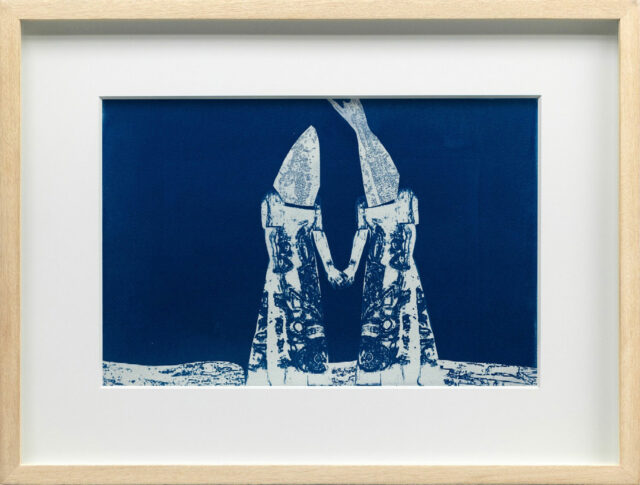
DALAWANG Madame Bukid by Corinne de San Jose — SILVERLENSGALLERIES.COM

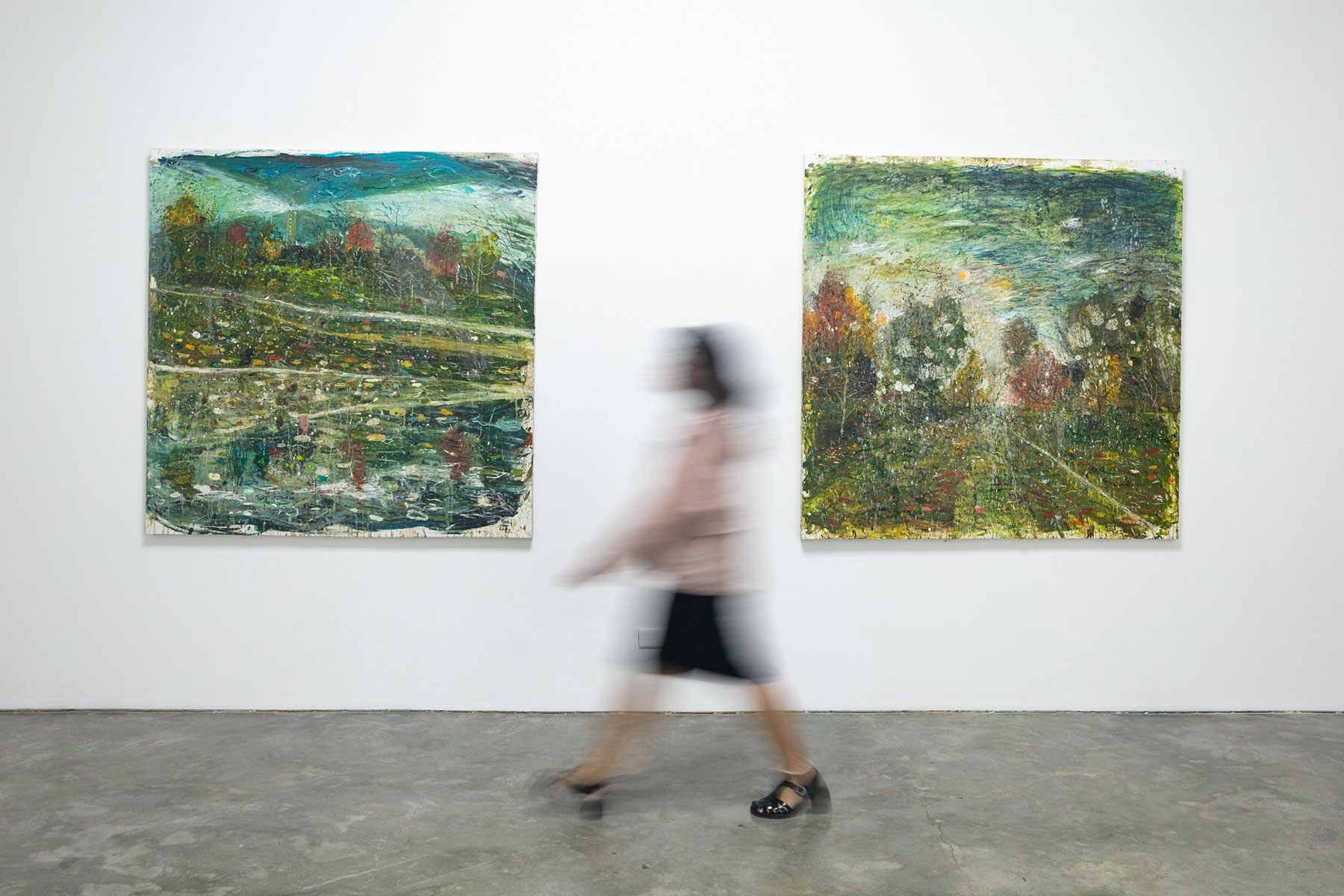
Exhibits at Silverlens Manila

TWO exhibitions are on view at Silverlens in Manila until Feb. 11. Corinne De San Jose’s “Lazy Projectors” is composed of a sound installation, outmoded audio and video systems, digital video, and cyanotypes. She transformed the main gallery space into a multi-sensorial theater to bring to life the lost silent film Dalagang Bukid, considered the first film produced and directed by a Filipino. Information about the actual film remains scarce: it follows the story of a young flower vendor, Angelita (played by Atang de la Rama), as she is forced to marry a local loan shark. It was released with subtitles in English, Filipino, and Spanish. Atang de la Rama had to sing the song “Nabasag ang Banga” in person during its theatrical run. These seemingly isolated bits and fragments of information become De San Jose’s entry points into crafting new works to create an atmospheric, immersive setting. Meanwhile, Mark Andy Garcia’s “Chasing Sunsets” is also on view until Feb. 11. Mr. Garcia is known for his layered, textured landscapes that connect geographies as places of spiritual belonging that make sense of the non-material. “Chasing Sunsets” is his second solo exhibition at Silverlens. Silverlens Manila is at 2263 Don Chino Roces Ave. Ext., Makati.


POC offers opera classes, new show

THE PHILIPPINE Opera Company (POC) will open the Young Artists’ Series (YAS) 2023-2024 season with I Love OPPA-RA! on March 11, 6 p.m., at the Opera Haus in Makati. I Love OPPA-RA! is a re-imagined show where some of the K-dramas like Penthouse and Vincenzo, to name a few, will be showcased. The YAS started in October 2012 as a soiree held every third Wednesday of the month featuring the Young Artists of Philippine Opera Company. The program is designed to nurture, train, and develop the next generation of classical singers. It provides a professional training ground for young singers in the art and craft of stage performance. For inquiries, call POC at 0917-645-2946. For more details, visit www.facebook.com/PhilippineOperaCompany. 


Korean Cultural Center marks the Lunar New Year

ON JAN. 21, from 11 a.m. to 3 p.m., the Korean Cultural Center (KCC) will be welcoming the Lunar New Year with Korean traditions, games, and food. Seollal (Lunar New Year) is one of the most important holidays in Korea where families get together. To celebrate Korean-Philippine friendship and relations, and to introduce Korean traditions of the Lunar New Year, the KCC will bring six Korean traditional games and activities for the public to enjoy, with the chance to win prizes. The event is open for everyone of all ages and interests. Visitors can try traditional Korean games such as Ddakji, a game which involves flipping another player’s card, which became famous after Gong Yoo played it in Squid Game. Meanwhile, the game Tuho involves throwing an arrow inside a pot, a game of accuracy and precision that needs concentration skills. Jegichagi is similar to the Filipino game sipa — just kick and keep the shuttlecock in the air as long as possible. And Yunnori is a traditional Korean board game. All participants will be given a stamp card at the entrance which they will use to complete and experience all the traditional Korean games. After playing all the games, participants will do a sebae, which is a traditional Korean bow during New Year to elders, which they can do while wearing a hanbok if they choose. After this, they get a chance to win prizes such as a gift certificate or Korean culture items! The prizes are on a first come and first served basis while supplies last. Visitors can then go to the Cooking Classroom for a hearty bowl of Tteokguk, a rice cake soup Koreans usually eat during the Lunar New Year. The KCC is at 59 Bayani Rd., Fort Bonifacio, Taguig City.


Tickets to the Art Fair available

TICKETS are now available for the Art Fair Philippines which will be held this year at The Link in the Ayala Center, Makati from Feb. 17 to 19, from 10 a.m. to 9 p.m. Day passes are P450 and are available at https://artfairphilippines.com/afp2023/visitorinfo.php. Concession tickets — which will only be available on site — are P350 for students with valid IDs and senior citizens and PWDs, while Makati students will valid IDs pay P200.


Andrei Solmirano exhibits at ArtTablado

ANDREI Solmirano started painting at the age of 10 during weekends, holiday breaks, and when she got home from school. From a musically inclined family, she also loved singing, and that muse overpowered the other and she pursued singing as a part-time career. Painting took a backseat as she took on various jobs in the corporate world. But in 2020, she took up the brush again.That led to the opening on Jan. 16, at Robinsons Land ARTablado in Robinsons Galleria, of Andrei Solmirano’s exhibition titled Yadah to the King: Celebration through Art and Music. For this self-taught artist from Caloocan City, art has become an expression of her faith and an “invitation for others to lift their eyes and experience God’s love and goodness.” Yadah to the King is a collection of artworks that celebrate God with images of lions (for the “Lion of the tribe of Judah to display His absolute authority and power over all creation,” abstracts, and florals. Ultimately, what Andrei Solmirano aspires for her art to be able to do is admirable.


ARDP auditions for Agnes Locsin’s Encantada

ALICE Reyes Dance Philippines (ARDP) will be holding auditions for a production of National Artist for Dance Agnes Locsin’s Encantada. The auditions will be held on Jan. 27 and 28, 2 to 6 p.m. at the Metropolitan Theater Dance Studio. Male dancers should wear a fitted black shirt and dance shorts, while female dancers should wear black leotards and black tights or fitted black shorts. Dancers are to bring their resumes, vaccination cards, water bottles, and towels. Mask-wearing is to be observed. The auditions will also serve as a masterclass under Ms. Locsin. Sign-up at https://forms.gle/vPohSg44nFFCnvXi6. For more information, visit www.facebook.com/ARDancePH


Janelle Marahay paints flowers

JANELLE MARAHAY, an aspiring lawyer, saw the need to help women even as a child. “There is a need to educate women, especially those on the margins, on what their rights are, and what protections they have under the law against abuses and discrimination.” To cope with the stress of law school, she started painting. For this self-taught artist, painting became a means of escape from the uncertainties and terrible things happening in 2020. Selling her artworks provided much-needed funds to get her through law school, and art gave her the outlet to be creative while going through the grueling process of studying law. Flowers as a subject encapsulate her aesthetic. “In reality, flowers are beautiful yet fragile. Portraying them on canvas feels like defying nature: to paint flowers that never wither,” she said in a statement. An exhibit of her works, All Abloom, opened on Jan. 16 at Robinsons Land ARTablado in Robinsons Antipolo. The show is on view until Jan. 31. In her latest pieces, the artist portrays the “complexities, the falls, the flourishings” of being a woman.


Virgilio Almario releases revised edition of poetry book

NATIONAL Artist for Literature Virgilio Almario has released a revised edition of Jose Corazon de Jesus: Mga Piling Tula. Edited by Mr. Almario and published by San Anselmo Press, the collection features over 200 pages of De Jesus’ Tagalog poems, including the popular “Ang Pagbabalik,” “Ang Pamana,” “Ang Manok Kong Bulik,” “Ang Bato,” “Barong Tagalog,” and the poem-turned-patriotic anthem “Bayan Ko,” among other works. Jose Corazon de Jesus was a writer-performer who was dubbed as the Philippines’ “poet of the 20th century,” and “first king of poetry jousts (Balagtasan).” Mr. Almario has made tweaks to the 1984 edition (e.g. spelling, choices of poems, etc.) in order to make the collection more relevant and appealing to contemporary readers. Jose Corazon de Jesus: Mga Piling Tula is available through the Facebook page of San Anselmo Publications, Inc., and through Shopee.

Megawide says P2.8-B offering proceeds used for various projects

MEGAWIDE.COM.PH

MEGAWIDE Construction Corp. on Tuesday said it has utilized P2.77 billion from the net proceeds of its 2020 preferred share offering for various infrastructure projects.

From the net offering proceeds of P4.33 billion, the company has released P2.77 billion, the listed construction company said in a regulatory filing on Tuesday.

“Balance of the offering proceeds as of Dec. 31, 2022, is P1.56 billion,” it noted.

As of Sept. 30, Megawide has utilized P77.87 million for the Mactan Cebu International Airport (MCIA) multi-use development, P133.49 million for the expansion of pre-cast and other ancillary business, P816.13 million for the expansion of MCIA under a concession agreement, P883.40 million for the development of Cebu Integrated Transport Hub, and P331.56 million for general corporate purposes.

For the quarter that ended Dec. 31, 2022, the company released P144.20 million for the expansion of pre-cast and other ancillary business and P383 million for the development of the Cebu Integrated Transport Hub.

The MCIA mixed-use development project involves the construction of a 400-room hotel, a meeting, incentives, conference, and exhibition facility, and a travel retail concept to complement the airport’s features.

Megawide also expects that the demand for pre-fabricated construction materials will rise under the new normal. Hence, the company is expanding its pre-cast plant capacity to approximately 40,000 cubic meters per month (cu/m/month), from the current 13,000 cu/m/month, in different locations in the country.

The company also has a proposal to extend its existing concession agreement in MCIA by another 25 years. It involves the takeover of the airside facility, rehabilitation of the existing runway and taxiways, construction of an additional full-length parallel taxiway, and development of additional rapid exit taxiways and runway holding positions.

At the same time, the proposal involves the construction of a second parallel and independent instrument runway, as well as the construction of Terminal 3.

Megawide is also developing a modern public market and an integrated multi-modal transport hub in Cebu.

The project involves the redevelopment of the existing public market, including the construction of a new wholesale market, new night market, and other lifestyle commercial establishments, land transport, and ferry terminals, among others. — Arjay L. Balinbin

Gov’t upsizes T-bond award amid strong demand

BW FILE PHOTO

THE GOVERNMENT upsized the volume of the Treasury bonds (T-bonds) it awarded on Tuesday amid strong demand as investors were looking for high-yielding instruments to park their cash.

The Bureau of the Treasury (BTr) raised P49 billion from the reissued 20-year papers on Tuesday, higher than the original P35-billion program, as bids for the offering reached P133.947 billion.

The bonds, which have a remaining life of 19 years and 10 months, were awarded at an average rate of 6.525%, with accepted rates ranging from 6.49% to 6.6%.

The average rate of the paper was 148.7 basis points (bps) lower than the 8.012% quoted for the series when it was last offered on Nov 22, 2022 and also 160 bps below the 8.125% coupon for the issue.

It was also 54.45 bps lower than the 7.0695% quoted for the same bond series but 10.2 bps higher than the 6.423% seen for the 10-year tenor at the secondary market prior to the auction, based on PHP Bloomberg Valuation Service Reference Rates data provided by the BTr.

“The Auction Committee decided to fully award the reissued 20-year Treasury bonds (FXTN 20-25) at today’s auction… The bonds were 3.8 times oversubscribed, attracting P134 billion in total tenders compared with the P35-billion offering, which prompted the committee to double the allocation for non-competitive bids,” the BTr said in a statement on Tuesday.

“With its decision, the Committee raised P49 billion, bringing the total outstanding volume for the series to P76.6 billion,” it added.

A trader said in a Viber message the offer was met with strong demand as the market is looking for investment outlets yielding above 6%.

“Investors tried to catch up with the recent rally… [there was] fear of losing an opportunity to invest,” the trader said.

Meanwhile, Rizal Commercial Banking Corp. Chief Economist Michael L. Ricafort said in a Viber message that demand for long-tenored government securities continued to be boosted by appetite for higher yields.

Mr. Ricafort added that the issue’s average rate eased on expectations of slower tightening by both the US Federal Reserve and the Bangko Sentral ng Pilipinas (BSP) following dovish signals from officials and slower US consumer inflation in December.

The US consumer price index (CPI) slipped by 0.1% last month, the first decline since May 2020 and coming from a 0.1% rise in November.

On an annual basis, the CPI increased 6.5%, easing from the 7.1% print seen in November 2022.

The data bolstered bets that the Fed will deliver smaller rate hikes as early as its first meeting for the year, which will be held from Jan. 31 to Feb. 1.

The Fed increased borrowing costs by 425 basis points (bps) last year.

Meanwhile, Bangko Sentral ng Pilipinas (BSP) Governor Felipe M. Medalla last week said the central bank is likely to raise benchmark rates by 25 or 50 bps at its meeting on Feb. 16 as it still needs to anchor inflation expectations.    

The BSP hiked rates by 350 bps in 2022 in its fight against inflation.

The BTr plans to raise P200 billion from the domestic market in January, or P60 billion through Treasury bills and P140 billion via T-bonds.

The government borrows from domestic and external sources to finance its budget deficit, which is capped at 6.1% of gross domestic product this year. — A.M.C. Sy

ADVERTISEMENT
ADVERTISEMENT