Home Blog Page 5323

US to test nuclear-powered spacecraft by 2027

A “selfie” of NASA’s Perseverance Mars rover, Jan. 20, 2023. — NASA/JPL-Caltech/MSSS

WASHINGTON — The United States plans to test a spacecraft engine powered by nuclear fission by 2027 as part of a long-term NASA effort to demonstrate more efficient methods of propelling astronauts to Mars in the future, the space agency’s chief said on Tuesday. 

NASA (National Aeronautics and Space Administration) will partner with the US military’s research and development agency, DARPA (Defense Advanced Research Projects Agency), to develop a nuclear thermal propulsion engine and launch it to space “as soon as 2027,” NASA administrator Bill Nelson said during a conference in National Harbor, Maryland. 

The US space agency has studied for decades the concept of nuclear thermal propulsion, which introduces heat from a nuclear fission reactor to a hydrogen propellant in order to provide a thrust believed to be far more efficient than traditional chemical-based rocket engines. 

NASA officials view nuclear thermal propulsion as crucial for sending humans beyond the moon and deeper into space. A trip to Mars from Earth using the technology could take roughly four months instead of some nine months with a conventional, chemically powered engine, engineers say. 

That would substantially reduce the time astronauts would be exposed to deep-space radiation and would also require fewer supplies, such as food and other cargo, during a trip to Mars. 

“If we have swifter trips for humans, they are safer trips,” NASA deputy administrator and former astronaut Pam Melroy said Tuesday. 

Applications that spinoff from the planned 2027 demonstration — part of an existing DARPA research program that NASA is now joining — would also fit into the US Space Force’s space mobility and logistics segment, said Tabitha Dodson, DARPA’s program manager for the test program. 

DARPA in 2021 awarded funds to General Atomics, Lockheed Martin, and Jeff Bezos’s space company Blue Origin to study designs of nuclear reactors and spacecraft. By around March, the agency will pick a company to build the nuclear spacecraft for the 2027 demonstration, Ms. Dodson said in an interview. 

The joint NASA-DARPA effort’s budget is $110 million for fiscal year 2023 and is expected to be hundreds of millions of dollars more through 2027. — Reuters

BW Insights – Smart Cities and Mobility: Building More Sustainable Cities and Transportaion

According to current projections, about 60% of the world’s population will be living in cities by 2030.

In fact, more than half already do. Cities and metropolitan areas are the chief drivers of growth in developing economies, but they also give rise to other social issues. Building smarter, more sustainable cities, coupled with sustainable and inclusive transportation, could be the key.

Watch BusinessWorld Insights as distinguished experts and executives discuss the topic “Smart Cities and Mobility: Building More Sustainable Cities and Transportation.”

This session of #BUSINESSWORLDINSIGHTS is supported by the Asia Society Philippines, French Chamber of Commerce and Industry in the Philippines, European Chamber of Commerce of the Philippines, Management Association of the Philippines, Philippine Chamber of Commerce and Industry, Philippine Franchise Association, People Management Association of the Philippines, and The Philippine STAR.

A robust year ahead for Torre Lorenzo

Torre Lorenzo will be launching Crown Residences, its first residential condominium development at Tierra Davao.

Torre Lorenzo Development Corporation (TLDC) is ushering in the new year with optimism.

In 2022, the company’s business recovery strategy along with continuous construction, innovation, and enhanced customer service have allowed it to surpass its business goals. This has led to the Company ending the year on a high note with key milestones and recognitions.

“Last year, we made sure that we were ready to ride the growth momentum that was anticipated from the reopening of the economy,” says TLDC CEO Tomas Lorenzo. “We remained bullish and focused on product delivery because we wanted to fulfill our promise to our stakeholders.”

Continuous growth

The Torre Lorenzo Malate ribbon-cutting ceremony was led by (L-R) Mr. Tomas Lorenzo, TLDC CEO; Dr. Paulo Lorenzo; Ms. Rica Lorenzo; Cathy Casares-Ko, TLDC COO; Mr. Luis Lorenzo; and Mr. Philip Barnes, Country General Manager of The Ascott Limited.

The Company inaugurated its premium residential development Torre Lorenzo Malate on Malvar Street in Manila. It also unveiled its newest model unit for a second residential tower in the integrated-use development Tierra Lorenzo Lipa in Batangas. In Davao, the company completed expansion of five-star accommodations and amenities at the Dusit Thani Lubi Plantation Resort in the Davao Gulf.

Actual photo of Tierra Lorenzo Lipa Tower 2 Model Unit

A winning year

In 2022, Torre Lorenzo’s continued work towards its vision of elevating customers’ living experiences was recognized by various award-giving bodies.

Torre Lorenzo bagged the following distinctions at PropertyGuru’s Philippines Property Awards:

  • Best Boutique Developer
  • Best Resort Development for Dusit Thani Lubi Plantation Resort
  • Highly Commended for Best Branded Residential Development for The Suites at Torre Lorenzo Malate

The Company was hailed as the Best Boutique Developer for its reputation, CSR initiatives, quality of projects, track record, innovation, and major achievements.

Torre Lorenzo was also recognized as one of HR Asia’s Best Companies to Work For in 2022. The Company was also a recipient of HR Asia’s Most Caring Companies Award 2022. Out of 185 Filipino companies that took part in HR Asia’s proprietary Total Engagement Assessment, only the top 35 companies were named as HR Asia’s Best Companies to work for in Asia 2022. From this roster, only six companies were given the Most Caring Companies Award 2022.

“Torre Lorenzo is an emergent developer, so we know that we have to work harder to attract and retain talent. Our committed work force helps us consistently design, build, and deliver products that are responsive to our customers’ needs,” says Lorenzo. “This recognition inspires us to continue our pursuit of the ideal work environment that yields positive results for our employees and stakeholders.”

Enabling communities

Torre Lorenzo’s Chief Operations Officer Cathy Casares-Ko (leftmost), together with Bobby Horrigan (rightmost), TLDC’s Hospitality Consultant, turned over the brand new and equipped ambulance to Mabini Mayor Emerson Luego (middle).

Side by side with its business growth, the Company also strengthened its community development initiatives. Torre Lorenzo donated an ambulance unit to the Municipality of Mabini in Davao de Oro in support of the local government’s efforts to provide better access to healthcare services in to the community. The Mabini town is home to Torre Lorenzo’s flagship leisure development, Dusit Thani Lubi Plantation Resort.

TLDC COO Cathy Casares-Ko shares that the Company is committed to providing opportunities to empower and support the needs of host communities. “Beyond creating investment and financial value for our stakeholders, our success is reflected on how we are able to uplift the lives of our clients and employees, how we are able to contribute to the transformation of the communities where we operate in, and how we are able to protect the environment for the generations to come,” she says.

In Manila, Torre Lorenzo partnered with the De La Salle-College of Saint Benilde (DLS-CSB) for an art competition highlighting Manila City’s historic and cultural character. Winning murals will be displayed on the walls of its newest co-living residences, lyf.

The Company has various community development programs in its host communities that focus on providing livelihood, supporting access to education and health services, and protecting the environment.

A promising year ahead

Crown Residences features elegantly designed units and a private balcony with expansive views of the Davao Gulf.

Torre Lorenzo is poised to continue its growth trajectory in 2023. As a forward-thinking developer, the Company is excited to expand its portfolio in emerging urban areas outside Metro Manila.

This year, the Company is launching Crown Residences, its first condominium development in Davao. Situated in the integrated-use development Tierra Davao, the residential condo will be in the same vicinity as Dusit Thani Residence Davao and dusitD2. Plans to develop residential, office, and commercial spaces to cater to the growing economic sector of the Davao region are also underway.

Construction will also be in high-gear for its second residential tower in Tierra Lorenzo Lipa in Batangas. Offered for pre-selling, the second tower will have spacious studio units in addition to the 1BR and 2BR units reflecting the preferences of investors in the area. It will have an open-air roof deck lounge and herb garden.

Artist’s perspective of lyf roof deck

The hip, co-living residences lyf will also open at Torre Lorenzo Malate. lyf is a one-of-a-kind accommodation to be managed by The Ascott Limited. As the first lyf property to open in Manila, its units will be complemented with IG-worthy, modern, and fresh interiors to give guests an avenue for socials, work, and creativity. Guests can indulge in innovative shared spaces for collaboration such as the connect lounge, social kitchen, laundromat, and fitness gym.

Likewise, The Suites is also slated to open this year. The upscale serviced residences will be managed by Ascott and offer a hassle-free investment opportunity with quarterly rental yields.

In Quezon City, Torre Lorenzo Loyola will be turned over on time and on spec.

“With our exciting projects and partnerships in the pipeline, we’re confident that 2023 will be an even stronger year for the Company,” says Lorenzo. “The worst of the pandemic is over. There’s a lot of economic activities in the market. While prices are still volatile, investors understand that real estate yields long-term growth and returns.”

For more information on TLDC and its portfolio of properties, visit www.torrelorenzo.com.


Spotlight is BusinessWorld’s sponsored section that allows advertisers to amplify their brand and connect with BusinessWorld’s audience by enabling them to publish their stories directly on the BusinessWorld Web site. For more information, send an email to online@bworldonline.com.

Join us on Viber to get more updates from BusinessWorld: https://bit.ly/3hv6bLA.

Updated COVID vaccines prevented illness from latest variants — CDC

REUTERS

The updated coronavirus disease 2019 (COVID-19) boosters from Pfizer Inc/BioNTech SE and Moderna helped prevent symptomatic infections against the new XBB-related subvariants, offering new evidence of how the vaccines perform against these fast-spreading strains, US officials said on Wednesday.

“Today we have additional evidence to show that these updated vaccines are protecting people against the latest COVID-19 variants,” Dr. Brendan Jackson, head of the US Centers for Disease Control and Prevention’s COVID-19 response, told reporters in a briefing.

Released last fall, the updated boosters target the BA.4 and BA.5 Omicron variants of the SARS-CoV-2 virus, which are no longer dominant. The now-dominant XBB-related subvariants are derived from the BA.2 version of Omicron.

Lab studies had suggested that vaccine protection was lower against the XBB variants compared with prior variants, raising questions about how well the vaccines worked against these rising strains of the virus, Mr. Jackson said.

For the study, researchers reviewed COVID-19 cases from Dec. 1 through Jan. 13, a period in which US circulation of XBB and XBB.1.5 increased. It showed that the updated vaccine helped prevent illness in roughly half of the people who had previously received two to four doses of the original COVID-19 vaccine, CDC said.

The CDC said the updated vaccine worked similarly against BA.5-related infections and XBB/XBB.1.5-related infections. It was 52% effective at preventing infections against BA.5 and 48% against XBB/XBB.1.5 among those aged 18-49. Effectiveness fell to 37% against BA.5 and 43% against XBB/XBB.1.5 among those aged 65 years and older.

Although not reflected in the study, Mr. Jackson said data to be released later on Wednesday shows the updated vaccine reduced the risk of death from COVID-19 by more than twofold compared with vaccinated people who had not received the updated booster. The updated shot also reduced the risk of death from COVID-19 by nearly 13-fold in people who are unvaccinated.

Study author Ruth Link-Gelles of the CDC said overall, the vaccines cut the risk of symptomatic infection by about half on a population, but individuals see a different benefit based on their risk factors.

Ms. Link-Gelles said the estimates are for symptomatic infection, which CDC defined as one or more symptoms of COVID-19. Given the findings, the CDC urged people to stay up to date on their recommended COVID-19 vaccines.

XBB.1.5 was estimated to make up nearly half of US cases in the week ended Jan. 21, government data showed.

The CDC analysis comes ahead of a meeting on Thursday at which outside experts to the US Food and Drug Administration are expected to discuss whether and how the United States should offer the COVID vaccine as an annual shot. — Reuters

UN predicts world economic growth to slow in 2023, pick up in 2024

REUTERS

Global economic growth is projected to slow to 1.9% this year from an estimated 3% in 2022, according to a United Nations (UN) report released on Wednesday that blamed the coronavirus disease 2019 (COVID-19) pandemic, Russia’s war in Ukraine, high inflation, and the climate crisis.

The World Economic Situation and Prospects report said this would mark one of the lowest growth rates in recent decades.

“Global growth is forecast to moderately pick up to 2.7 percent in 2024, if, as expected, some macroeconomic headwinds begin to subside next year,” it said. “The near-term economic outlook remains highly uncertain, however, as myriad economic, financial, geopolitical and environmental risks persist.”

The International Monetary Fund (IMF) is due to release its World Economic Outlook update later this month, but IMF head Kristalina Georgieva said last week that she saw no “dramatic improvement” in its current 2023 global growth forecast of 2.7%, down from around 3.2% last year.

In October, the IMF put a 25% probability of global growth falling below 2% next year — a phenomenon that has occurred only five times since 1970.

The UN report by the world body’s Department of Economic and Social Affairs said that weakened growth in the United States, the European Union (EU) and other developed economies had adversely affected the global economy.

It projected that US gross domestic product would only expand 0.4% in 2023, compared to an estimated growth of 1.8% in last year. The EU was forecast to grow by 0.2% in 2023, down from an estimated 3.3% in 2022.

The IMF in October forecast U.S. economic growth of 1% in 2023 and growth of 0.5% in the EU.

The report forecast economic growth in China would accelerate to 4.8% this year after the government abandoned its zero-COVID-19 policy and began easing monetary and fiscal policies. This compares to an expected 3% expansion in 2022.

“But the reopening of the economy is expected to be bumpy. Growth will likely remain well below the pre-pandemic rate of 6 to 6.5 percent,” the report said.

The IMF is forecasting Chinese growth of 4.4% for 2023, Ms. Georgieva said last week. — Reuters

Amrit Kaal of the Indian economy

Recently, India celebrated 75 years of independence. The idea of Amrit Kaal extends that forward to the next twenty-five years, to 2047, when India will celebrate 100 years of Independence. The India of 2023 is different from the India of 1947, and the India of 2047 will be different from the India of 2023 in ways few can anticipate and project today.

If one casts one’s mind back, how many would have guessed changes wrought in India in the last twenty-five years? The world is uncertain, and the long run even more so. While the future is always uncertain, the current state of the world has been permeated with an additional dose of uncertainty: COVID-19, geo-political tensions, collapse of the multilateral system and regionalism, retreat of advanced countries from globalization, and the dreaded expression of “recession” in some of those countries. These are external shocks that have been thrust on India, as they have on many emerging market economies and underline collapse of institutions that provide global public goods, Bretton Woods Institutions included. In passing, global governance has yet to accept rise of economies like India. Lord Keynes is often quoted, usually out of context. A cliched quote is, “In the long run we are all dead.” If one reads the complete text (The Tract on Monetary Reform, 1923), one will find the intention wasn’t quite what out-of-context quotes convey.

There is much that is uncertain in the present and in the long run. But there is much that is also certain. Within that band of certainty, it is impossible to dispute India’s inexorable economic rise. At one point, much was made of the Goldman Sachs report, on dreaming with BRICS and path to 2050, authored in 2003.

In that report, the average real rate of GDP growth for India was around 5.5%, the explosion in aggregate GDP and per-capita GDP by 2050 explained by the nature of the exponential function.

That report didn’t have a figure for 2047, but did have one for 2045. In 2045, India’s aggregate GDP was projected to be US$18.8 trillion and per-capita GDP of just over US$12,000.

None of the reasons behind optimistic projections have been nullified by the present uncertainty: increase in savings/investment rates as a result of demographic transition and income growth, growth drivers in more efficient land, labour and capital markets and productivity enhancement.

To use an economist’s expression, India is still within the production possibility frontier, not on it. To state it differently, aggregate growth for India is a summation of growth in States and States are within their respective frontiers, providing plenty of endogenous slack for growth. Had the external world been more benign, India might have grown at 9%. Typically, one tends to extrapolate the gloominess of the present to the future. It is by no means obvious that the external world will continue to be difficult for the next twenty-five years. But even if that were to be the case, India might not grow at 9%. What real growth rate seems reasonable?

The answer depends on the person making the projection and the assumptions. A nominal figure depends on assumptions made about inflation, which is why projections are often in real terms, in today’s dollars. A dollar figure also depends on assumptions made about the dollar/rupee exchange rate, which is why projections often assume the current exchange rate. (Goldman Sachs assumed rupee appreciation vis-à-vis the dollar.) A PPP (purchasing power parity) exercise is naturally different. With inflation and exchange rate changes out of the way, what trajectory of real growth sounds reasonable? The pessimistic forecaster will point to state of the external world and domestic inefficiencies and opt for 5.5%. The optimistic forecaster will point to empowerment through ease of living and provision of basic necessities, ease of doing business, supply-side reforms, and Union government’s capital expenditure and opt for 7.5%. That’s the rough range, with the recognition that as one grows, growth rates slow. As one moves up the development ladder, it becomes more difficult to grow as fast, with the caveat that different States are at different levels of development and there is plenty of slack. To return to the certainty of the long run, one can plug in one’s own assumptions about real growth, say something like 6.5%, between the two extremes of 5.5% and 7.5%. In 2047, India’s per-capita income will then be something like US$10,000. The total size of the economy will approach US$20 trillion. These numbers are roughly in the same range as the Goldman Sachs one. In Goldman Sachs, the role of exchange rate appreciation was relatively more. In such projections, the role of real growth is relatively more.

If reforms drive the Indian growth trajectory to higher than 6.5%, and that “Citius, Altius and Fortius” possibility cannot be ruled out, the corresponding numbers will be higher. Even with the relatively conservative numbers, this means India will be the third largest economy in the world, after United States and China and this will naturally be reflected in India’s global clout. If one does a PPP ranking, India will be the second largest, after China. The annual rate of population growth has slowed and is now less than 1%. Nevertheless, in 2047, India will be the most populous country in the world, with a population of something like 1.6 billion. Expressions like “developed country” are rarely used these days. The term no longer has a specific definition. The World Bank uses terms like middle-income. Today, India is classified as a lower middle-income economy. In 2047, India will move to the upper middle-income category. Once one approaches a per-capita income of US$13,000, the status becomes high-income. That’s when India can be said to be “developed.” In 2047, India will fall short, but the face of poverty, as we know it, will be completely transformed.

Measurement of poverty is based on the notion of a poverty line and using a multi-dimensional poverty index, UNDP has recently documented the sharp drop in number of poor people in India. As economies develop, the notion of a poverty line is of course moved up, beyond a subsistence level of consumption. However, officially, the poverty line used is still the Tendulkar poverty line. Unfortunately, consumption expenditure data, used to measure poverty, do not exist beyond 2011-12. Therefore, different people have used different assumptions to measure poverty today. If one uses PLFS (periodic labor force survey) data and the Tendulkar poverty line, the poverty ratio (percentage of population below the poverty line) is around 17% now. By 2047, this ratio will decline to around 5%. SDG (sustainable development goal) reports, among others, have documented pockets of deprivation in selected geographical regions, targeted by the government through the aspirational districts programme. India is heterogeneous and despite provision of basic necessities (physical and social infrastructure, financial inclusion, access to markets, technology, digital access) and the overall message of empowerment, there will be pockets of poverty, even in 2047. But the nature of that poverty will be very different. India will achieve universal literacy, or be pretty close to it. UNDP uses HDI (human development index), an aggregate measure, to gauge human development, moving beyond poverty ratios. Today, India is in the medium human development category, judged by HDI. In 2047, India will move to the high human development category.

There are five transitions going on and these will be even more marked in 2047. First, there is a rural to urban shift and urbanization is correlated with development. By 2047, almost 60% of India’s population will be urbanized. Delhi and Kolkata with populations of around 35 million, Mumbai with more than 40 million. The mind boggles and the government’s programs are meant to ensure that urbanization is managed better. Second, there will be grater formalization of the economy. Yet again, formalization is correlated with growth and development. Individuals will have formal job contracts. MSMEs will graduate to become legally registered. Indian companies will become larger and more efficient, integrated into global supply chains. Third, the percentage of the population that earns a living from agriculture will decline. Agriculture’s share in GDP will decline to something like 5% and the percentage of population that earns a living from agriculture will not be more than 20%. Fourth, within agriculture, there will be a shift away towards commercialization and diversification and larger farms. Fifth, there will be greater citizen participation in governance with the “sabka prayas” theme. For years, there was a colonial chip on the shoulder. But the present India is a proud India, a resilient India, an aspiring India. Amrit Kaal is about that and the country is making great strides on economic front with greater confidence and entrepreneurship.

Agricultural production dips in 2022

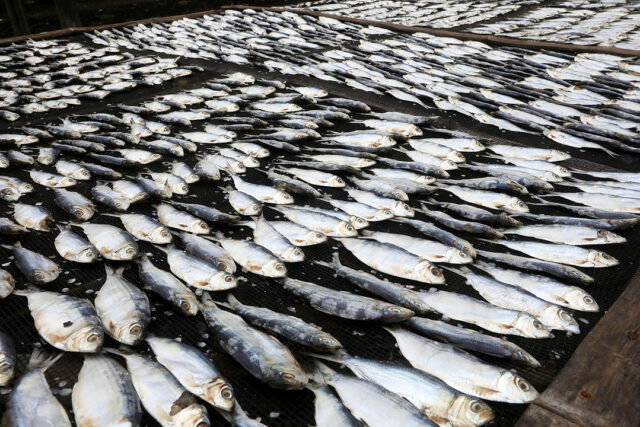
Fish are left to dry under the sun in this file photo. Agricultural output contracted anew in 2022 due to a drop in crops and fisheries production, the Philippine Statistics Authority reported. — PHILIPPINE STAR/EDD GUMBAN

By Luisa Maria Jacinta C. Jocson, Reporter

AGRICULTURAL production shrank by 0.1% in 2022, marking the third straight year of contraction, as crops and fisheries output declined, the Philippine Statistics Authority (PSA) said on Wednesday.

Data from the PSA showed the full-year value of production in agriculture and fisheries declined at a slower pace than the 1.7% contraction in 2021. It also missed the Department of Agriculture’s (DA) 1.2-1.5% full-year growth target.

Performance of Philippine agricultureFarm output has contracted for three years in a row, since the 0.3% growth in 2019.

The PSA attributed the decline to lower production in crops and fisheries, which offset the growth in poultry and livestock.

In the fourth quarter, agricultural production declined by 1%, a reversal of its 0.5% growth in the same period a year ago and the 1.6% growth in the third quarter of 2022.

At current prices, the value of production in agriculture and fisheries amounted to P611.52 billion in the fourth quarter, up 9.4% year on year.

The agriculture sector contributes around a tenth to overall gross domestic product (GDP). Fourth-quarter and full-year 2022 economic data is scheduled to be released today (Jan. 26).

“Agriculture performed better in 2022 than in 2021, although improvement is at a very low rate, because of the opening of the economy by the second half of the year and hence, mobility of people (and) goods and services in agriculture is now less constrained,” former Agriculture Undersecretary Fermin D. Adriano said in a Viber message.

However, fourth-quarter production was affected by recent typhoons that caused billions worth of agricultural damage and elevated input costs such as fertilizer and fuel.

Recent typhoons Karding (international name: Noru) and Paeng (international name: Nalgae) caused agricultural damage worth P3.12 billion and P6.4 billion, respectively.

“We were actually expecting a worse performance,” Federation of Free Farmers national manager Raul Q. Montemayor said in a Viber message.

“The minimal 1% decline in the crops subsector, including palay, is suspect, given the major increases in fertilizer, fuel and other input prices which should have led farmers to reduce their hectarage or scrimp on inputs. To some extent, the value of production could have been propped up by higher farmgate prices,” he added.

DECLINE IN CROPS, FISHERIES
Crop production, which accounts for more than half or 59.1% of total agricultural output, fell by 1% in the fourth quarter and full year, reversing the 2.6% and 2.2% expansion in the fourth quarter and full year 2021, respectively.

PSA data showed fourth-quarter crop production declined by 2.5% for palay (from 0.2% growth in the same period in 2021) and 6.9% for corn (from 28.6% growth).

“The slight decrease in the production of rice and corn is expected due to the increase in cost of inputs like fertilizers, fuel and natural calamities,” Danilo V. Fausto, president of the Philippine Chamber of Agriculture and Food, said in a Viber message.

China Banking Corp. Chief Economist Domini S. Velasquez noted the DA had already warned of a drop in rice production as elevated fertilizer prices discouraged farmers to plant.

“The size of their production was actually smaller. They were planting less,” she said in an interview on One News.

Lower production was also seen in rubber (-9%), mango (-5.8%), ampalaya (-4.7%), calamansi (-2.5%), mongo (-1.9%), banana (-0.8%), cabbage (-0.8%), and eggplant (-0.4%).

Only onion and sugarcane production registered double-digit growth in the fourth quarter, with onions up by 23.3% and sugarcane up by 18.7%.

Increments were also recorded in tobacco (8.5%), pineapple (6.6%), potato (5.4%), sweet potato (3.4%), abaca (2.9%), cacao (2.6%), coffee (2.3%), and coconut (1%).

At current prices, the value of crop production amounted to P334.24 billion last year, up 8.2% from 2021.

PSA data also showed fisheries production slumped by 6.6% in the fourth quarter, worse than the 1.1% growth a year earlier. It accounted for 13.8% of the agricultural production during the period.

For the full year, fisheries output shrank by 5%, a reversal from the 0.1% increase in 2021.

“The decline in fish catch had been noted since the beginning of 2000 due to the depletion of our coastal resource areas,” Mr. Adriano said, noting that the country is slow in developing aquaculture due to huge capital requirements and strict bureaucratic processes.

Mr. Fausto noted the fisheries sector needs to be upgraded due to the slowdown in commercial fishing.

“There is a need to expedite the development of our aquaculture farms and the establishment of more mariculture parks with more fish cages, to increase fisheries output,” he added.

During the fourth quarter, double-digit declines were seen in bigeye tuna or tambakol/bariles (-43.7%), mudcrab or alimango (-37%), slipmouth or sapsap (-34.3%), cavalla or talakitok (-34.2%), threadfin bream or bisugo (-31.4%), Indian mackerel or alumahan (-30.9%), grouper or lapu-lapu (-26.3%), Bali sardinella or tamban (-19.8%), tilapia (-14.6%) and tiger prawn or sugpo (-14.4%).

A drop in production was also seen in milkfish or bangus (-9.1%), blue crab or alimasag (-3.8%), roundscad or galunggong (-2.9%), and frigate tuna or tulingan (-1.7%).

On the other hand, production improved for skipjack or gulyasan (23.4%), bigeye scad or matangbaka (18.6%), yellowfin tuna or tambakol/bariles (11.9%), fimbriated sardines or tunsoy (8.1%), and squid or pusit (2.3%).

“At current prices, the value of fisheries production, which amounted to P89.9 billion, was 6.2% higher compared to the previous year’s level in the same period,” the PSA added.

BRIGHT SPOTS
Livestock and poultry were the bright spots in agricultural production last year.   

Mr. Montemayor said he expected the rebound in livestock and poultry production as both sectors were coming from a low base.

“Gains were registered in livestock and poultry as limited repopulation was already happening in the livestock sector and that the previous year’s benchmark was very low because of the African Swine Fever (ASF). In other words, with the opening of the economy and higher demand for meat, there was nothing to go for these sectors but upwards,” Mr. Adriano added.

Livestock production increased by 2.5% in the fourth quarter, a turnaround from the 9.7% decline in the previous year. The livestock sector contributed 14.3% of total agricultural output.

For the full year, livestock output expanded by 1.9%, an improvement from the 17% decline in 2021.

In the fourth quarter, hog and dairy production went up by 3.4% and 1%, respectively.

“Hogs are (on the way) to recovery as commercial farms are learning to live with ASF through proper biosecurity measures,” Mr. Fausto said.

Meanwhile, contractions were seen in goat, cattle and carabao at 2.5%, 0.4% and 0.3%, respectively.

Livestock production at current prices was valued at P96.65 billion, up 8.2% year on year.

Poultry output, which has a 12.8% share to total agricultural production, grew by 1.8% in the October-December period. This growth was slower than the 2.7% seen in the fourth quarter of 2021.

The poultry sector also rose by 7% in 2022, a turnaround from the 0.3% drop from a year earlier.

“Poultry is always resilient and can cope up even with avian flu,” Mr. Fausto added.

All commodities under poultry recorded higher production: duck eggs (4.3%), duck (4.3%), chicken (2.3%) and chicken eggs (0.2%).

At current prices, the value of poultry production increased by 19.1% to P90.73 billion year on year.


BSP delays release of its first commercial property price index

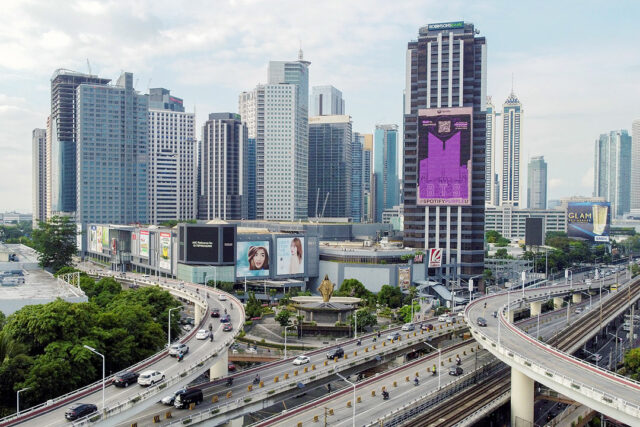
AN AERIAL VIEW shows the Ortigas business district in Pasig City, June 10, 2022. — REUTERS

THE PHILIPPINE central bank delayed the release of its updated Residential Real Estate Price Index (RREPI) and the launch of its first Commercial Property Price Index (CPPI) after recommendations made by the International Monetary Fund (IMF).

In a report released on Tuesday, the IMF said it recommended further improvements to the methods used for the property price indices, after it conducted a technical assistance mission between May 16 and June 17 last year.

“Some further improvements to the methods should be implemented, including amending the level at which the weights are applied in the aggregation process. The BSP decided to delay the launch of the updated RREPI and new CPPI to implement these changes,” it said, adding that changes should be “fully tested.”

The BSP had planned to release its first CPPI in 2021, as it broadens its watch on the commercial property sector.

It currently releases quarterly reports on RREPI, which monitors the changes in the prices of residential properties in the country. This gives the BSP insights into the property market where bank exposure is regulated.   

The IMF noted that reliable property price indices and other indicators of real estate markets are “critical ingredients” for financial stability policy analysis. Policy makers can use these indices to design macroprudential policies, and to inform monetary policy and inflation targeting.

“In the medium term, the BSP should continue to develop the statistical methodology by introducing hedonic regression for quality adjustment within the strata. The information to begin developing hedonic models are available as part of the existing data collection from the commercial banks,” the IMF said.   

The BSP should also expand the capacity of the team through training courses and further technical assistance, it added.

The IMF said the central bank also “committed to increasing the coverage of the statistics to include both cash purchases and other forms of nonbank lending.”

To access new data sources, the IMF said the central bank is also planning to convene an interagency working group on property price statistics, composed of members from the BSP, Philippine Statistics Authority, the Land Registry Authority and other agencies.   

At present, the BSP uses quarterly reports from the commercial banks for its property price statistics.

“The BSP are in the early stages of researching new data sources for their property price statistics. The recommended approach devised during the mission are only initial steps. It will take time and resources to realize the goal of moving to new administration data sources,” the IMF said.

Citing BSP estimates, the IMF said lending by the banking sector accounts for about 48% of residential property transactions.     

Cash purchases or direct lending by property developers account for 23% of transactions while government-backed lending for social housing purposes, mainly by the Home Development Mutual Fund, account for 29%.    

“In the short term, the BSP could consider collecting information on residential property advertisements from real estate websites. Some examples of websites in the Philippines are Lamudi, Zipmatch, Dot Property, Craigslist and Carousell,” the IMF said, adding this can provide additional data to support the statistics.

Based on the latest data from the central bank, the RREPI rose by 6.5% year on year in the third quarter last year. This is faster than the 2.6% growth in the second quarter, and the 6.3% expansion in July-to-September period in 2021. — Keisha B. Ta-asan

Policy makers, public need to be educated on building ‘liveable’ cities

Pedestrians along the Estrella-Pantaleon Bridge are dwarfed by the towering buildings in Makati City, Dec. 5, 2022. — PHILIPPINE STAR/MIGUEL DE GUZMAN

By Arjay L. Balinbin, Senior Reporter

THE PHILIPPINES needs a multi-sectoral approach to developing smarter or more liveable cities, starting with educating policy makers and the public on the concept’s importance and complexities, according to experts.

“Cities are complex systems and to properly understand them requires a complex systems perspective,” Erika Fille T. Legara, senior scientist and associate professor at the Asian Institute of Management (AIM), said at the BusinessWorld Insights online forum on Wednesday. 

“We cannot manage and understand megacities like Metro Manila by isolating individual cities that comprise it. We have to understand it as a whole. Everything is linked, interconnected, and interdependent,” added Ms. Legara, who also serves as Aboitiz chair in Data Science at the AIM.

The Philippines lags behind other countries in developing smart cities. In 2022, Manila ranked 176th out of 183 cities in the eighth edition of Cities in Motion Index (CIMI) by Spain-based University of Navarra’s IESE Business School. The index ranked cities in terms of sustainability, fairness, and livability.

“We are not lacking in planning. It’s just a lack of implementation,” said Felino A. Palafox, Jr., principal and founder of Palafox Associates and Palafox Architecture Group, Inc.

Mr. Palafox, an urban planner who was part of the team that developed Dubai, said the success of the largest city in the United Arab Emirates was due to “visionary leadership, strong political will, a good appreciation of urban planning, good design, architecture and engineering, and competence.”

“In our country, it’s always short term and opportunistic. Long-term and visionary thinking appears to be lacking,” he added.

He also pointed out that many urban planning decisions made by local policy makers were mostly political decisions.

To make Metro Manila smarter and more livable, he said that there is a need to build more cities outside the already congested capital region.

AIM’s Ms. Legara noted that the whole point of the smart or livable cities concept is to “improve the well-being or the quality of life of citizens.”

“We have to start thinking in systems and consider interconnectedness, components, and factors,” she said.

“Individuals and even cities, we all follow our what we call ‘natural tendencies.’ Sure, we can be engineered but the engineering and management must be well thought-out, considering human tendencies or human behavior. Why do, for example, people want to move to cities? Because people want to go where the action is, where the economic activities are, where the opportunities are, and where there is a dynamic lifestyle,” she added.

For his part, Steven T. Tan, president of SM Supermalls, there is also a need to educate the public.

“If you coordinate with schools to show what the private sector is doing in contributing to the well-being of our environment, that’s already psyching up our children about what they should be doing in the future or in their own small ways,” he said.

“You can have very big projects and all, but if these are not going to benefit everyone, they are no use. Working with the government is important,” he added.

Mr. Tan encouraged the private sector to build low-cost housing or socialized housing for the informal settlers as “they are the number one polluters in our river ways.”

“At SM Supermalls, we believe that sustainable property development is the key. We make every effort to future-proof our country through the practice of disaster resilience that addresses the increasing demand for urban areas and the threat of climate change,” he added.

The previous administration had identified six smart city projects in the country as part of its commitment to the ASEAN Smart Cities Network, which facilitates cooperation on smart cities development in the region.

Such projects are a command center upgrade and e-government services in Metro Manila, digital traffic systems and a bus rapid transit system in Cebu City, and the convergence of command and control, intelligent transport, traffic systems, and security in Davao City.

“Even if you have the right data, the science and technology, all of these approaches, and plans, if there’s no political will to implement these plans, that would be a big problem,” AIM’s Ms. Legara said.

PSA keeps Q3 GDP growth unchanged

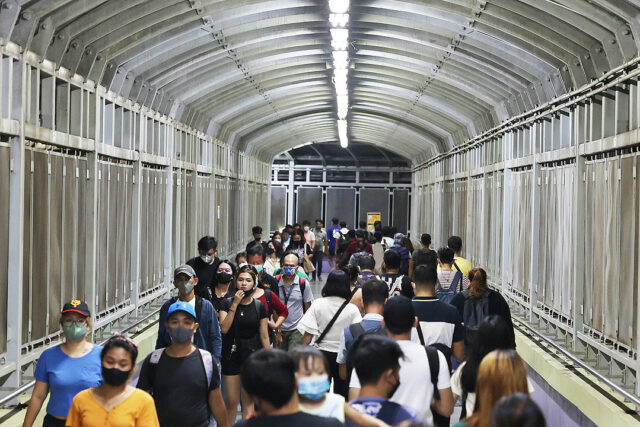
Commuters pass through a walkway connecting the Light Rail Transit Line 1 and 2 in Recto, Manila, Aug. 25, 2022. — PHILIPPINE STAR/MIGUEL DE GUZMAN

THE PHILIPPINE Statistics Authority (PSA) said on Wednesday it revised the annual growth figures for nearly all industries for the third quarter of 2022, but kept the gross domestic product (GDP) growth print unchanged.

PSA data showed GDP — the value of all finished goods and services produced in the country at a given period — grew by 7.6% in the July-to-September period, as previously reported on Nov. 10, 2022. This was faster than the previous quarter’s 7.5% and 7% in the third quarter of 2021. 

Out of the three major sectors, the PSA only revised the services sector growth. Services grew by 9.2% in the third quarter, from the 9.1% previously reported by the PSA.

The PSA said it revised all industry growth figures for the third quarter, except for the services subsector public administration and defense, compulsory social activities which maintained annual growth of 0.7% in the third quarter. 

Industries that expanded faster than previously reported were real estate and ownership dwellings (3.6% from 3.1% previously), financial and insurance activities (7.9% from 7.7%), education (5.7% from 5.2%), transportation and storage (24.6% from 24.3%), accommodation and food service activities (41.6% from 40.6%), and other services (39% from 38.3%). 

Meanwhile, the following services subsectors recorded slower expansion during the July-to-September period: wholesale and retail trade (9% from 9.1% previously), professional and business services (8.9% from 9.3%), information and communication (7.7% from 7.8%), and human health and social work activities (5.1% from 5.9%).      

Only the industry sector was unchanged with 5.8% third-quarter growth. Notably, three of its subsectors saw upward revisions: manufacturing (3.8% from 3.6%); electricity, steam, water, and waste management (4.2% from 3.9%); and mining and quarrying (10% from 9.1%). 

On the other hand, the construction subsector’s growth was downwardly revised to 11.7% from 12.2%, as previously reported by the PSA.

Likewise, the agriculture, forestry and fishing sector was revised downward to 2.1%, from 2.2%.

Net primary income from the rest of the world was upwardly revised to 95.1%, from the 94.6% initially reported.

On the other hand, the third-quarter gross national income — the sum of the nation’s GDP and net primary income from the rest of the world — remained at 10.5%. 

On the expenditure side, growth in household and government spending was unchanged at 8% and 0.8%, accordingly.

Meanwhile, gross capital formation — the investment component of the economy — inched up to 21.8% from 21.7%. 

Growth of trade in goods and services was also tweaked, with exports (13.4% from 13.1%) and imports (17.8% from 17.3%) expanding more than initially reported.

The revisions come ahead of the release of PSA’s national accounts for fourth-quarter 2022 today (Jan. 26).

The fourth-quarter GDP is expected to post a 6.8% expansion, based on a poll of 23 economists conducted last week by BusinessWorld.

On an annual basis, the country’s output could have grown by 7.5% in 2022, median forecasts of the economists showed. This meant the country’s output hit the upper end of the Development Budget Coordination Committee’s 6.5%-7.5% target.

According to the PSA, revisions on the estimates are based on updated data submissions by data source agencies, in line with international standard practices. — Ana Olivia A. Tirona

Chef passes it forward

CHEF Cyrus Todiwala

Hard work and good luck are the secrets of  Cyrus Todiwala’s success

CHEF Cyrus Todiwala

FROM a foreigner once threatened with deportation, to an Officer of The Most Excellent Order of the British Empire (OBE) and a Deputy Lieutenant, Cyrus Todiwala has come a long way.

On Jan. 14, Mr. Todiwala was in the Philippines for Don Papa’s 10th anniversary dinner (see related story), which he prepared in collaboration with Patrick Go of Your Local. Mr. Todiwala was in the country to supervise the culinary immersion of culinary school students who won his Zest Quest Asia competition, which included a trip to an Asian country. For this year’s winners, Don Papa in the UK sponsored their trip and culinary immersion in the Philippines.

“I wanted to start teaching young British people about Asian food, to raise the profile. The profile is very poor,” he told BusinessWorld in an interview.

ON PARSI CUISINE AND SPICES
As a person of Parsi descent, Mr. Todiwala pronounces Parsi cuisine an obvious favorite — which would mean something to us if we knew what it meant. Mr. Todiwala was keen to explain: “Indian cuisine has maybe 30 different cuisines. Within that are more subdivisions.” The Parsi people, to whom Mr. Todiwala belongs, are people in India who claim descent from people who fled Persia in the medieval period. “There are still elements in our food which still take you to modern-day Iran,” he said.

“That has been very much an inspiration for me, because you learn your cooking from your mother. No man can say that anybody else’s cooking is better than his mother’s cooking,” he said.

Mr. Todiwala, in going back to his roots in India, also believes in the healing power of spices, in line with ancient Ayurvedic beliefs. “It works in very different ways. Spices are there for flavor, for color, for excitement: not for heat. People misunderstand that spices create heat. They don’t create heat — they create warmth in the body,” he said.

“Warmth in the body creates happiness, better appetite, but more than that, creates better digestion,” he said, citing for example, the presence of nutmeg and cardamom in desserts. These apparently act as blood thinners, which lead the body to create more bile, thus digesting food more efficiently.

“Spices have always been in existence to help man to have a better life. Modern life makes us forget all of that. We need to rekindle that.”

His favorite spice is cardamom, and his favorite condiment is cumin: both come from seeds, which lead us to ask the difference. While we thought that as long as something comes from a seed, it is immediately considered a spice, Mr. Todiwala said, “The Indians don’t look at it that way.” Spices come from seeds with a lot of volatile oils, which means they are to be used sparingly for their strong flavor. Something like cumin has a gentler nature, and could thus be used more liberally.

COOKING FOR QUEEN ELIZABETH II
It seems that spices did help the chef man have a better life. Known for his restaurant Café Spice Namaste, one of the most famous in the UK, Mr. Todiwala has been seen on television, and was named in 2010 by the Evening Standard as one of London’s 1,000 Most Influential People. He was conferred his MBE (Member of the Order of the British Empire) by the late Queen Elizabeth II for education, and was conferred his OBE for raising the profile of the culinary industry.

Mr. Todiwala explains what being a Deputy Lieutenant (DL, one of his titles) meant: this makes him a Royal Representative reporting to a Lord Lieutenant. “If today, a member of the Royal Family was to visit, I would be the chief organizing the event, and I would have the seniority in this room.”

In 2012, for the Queen’s Diamond Jubilee Celebration, he even cooked for her.

“It scared me,” he said about the phone call from Buckingham Palace that gave him the task. “It’s a big responsibility, but it’s a big honor, so I’m not going to turn it down,” he recalled. He asked for three or four days to think about it.

For her and the late Prince Philip, Duke of Edinburgh, he prepared a Shepherd’s Pie (called Country Captain in India) that was quite mild, because the Queen wasn’t allowed to eat chilies. Some Hamburg parsley also appeared on the dish, picked from the Highgrove estate of now King Charles III. “Britain and India have an old relationship. If I don’t do a fusion, it’s pointless,” he said.


TOUGH START THEN A BIT OF LUCK
Born in India, Mr. Todiwala, OBE, DL, moved to Britain in 1991. But things were never easy. He doesn’t forget the old days: he remembers the early 1990s, where he saw financial difficulty and even the threat of deportation. “For a few days, I was without a house, without a job, on the road, and no residency in Britain status. All four things hit me in one time.”

With £1 in his pocket, he bought a raffle ticket, which eventually won him a car, which he sold for £10,000 — the exact amount he needed for his mortgage.

He talked about what his experiences could mean for people in the culinary industry — but especially in Britain, and perhaps for many culinary professionals who had moved to foreign countries. “A foreigner comes in, he’s not being appreciated, and then things start falling into place, and you get appreciation, and you get opportunity,” he said. “You grow up thinking, my God, everyone’s a racist. It’s not. You start to appreciate what’s going on outside of you,” he said.

“If you really work hard, and if you’re really good, and you really do a great job, the recognition does come.” — Joseph L. Garcia

Meralco to start sourcing 670 MW from spot market

MERALCO.COM.PH

ABOITIZ Power Corp. (AboitizPower) will no longer supply power to electricity distributor Manila Electric Co. (Meralco) as their emergency power supply agreement (EPSA) ended on Wednesday.

“We confirm the end of our 30-day emergency power supply agreement with Meralco which takes effect today, Jan. 25,” AboitizPower said in a statement.

Separately, Meralco said that starting Thursday, it would source its requirement of about 670 megawatts (MW) from the Wholesale Electricity Spot Market (WESM).

The capacity is supposed to be covered by its power supply agreement (PSA) with South Premiere Power Corp. (SPPC), but this was subjected to a temporary restraining order (TRO) issued by the Court of Appeals (CA).

“Meralco is closely working with the Department of Energy and all relevant industry players to ensure adequate supply and protect its customers from volatile and higher WESM prices, which is especially crucial with the scheduled shutdown of the Malampaya natural gas facility next month and the anticipated increase in demand during the summer months,” the company said.

The Malampaya gas field is expected to go under a maintenance shutdown from Feb. 4 to 18.

In December, Meralco secured a 300-MW EPSA with a unit of AboitizPower to partly replace the capacity that SPPC, a unit of SMC Global Power Holdings Corp., stopped supplying.

Meralco’s EPSA with AboitizPower is effective from Dec. 15, 2022 until Jan. 25, 2023 for a rate of P5.96 per kilowatt-hour (kWh). The power was sourced from AboitizPower’s GNPower Dinginin Ltd. Co.

Meralco sought the EPSA after SPPC, the administrator of the natural gas-fired power plant in Ilijan, Batangas, stopped supplying power to Meralco effective Dec. 7 last year.

SPPC’s PSA with Meralco was agreed upon in 2019 for a period of 10 years. It covers about 670 MW of capacity and is priced at only P4.2455 per kWh.

Last year, SMC Global Power sought a temporary rate increase, jointly filed with Meralco, saying that SPPC and another unit San Miguel Energy Corp. (SMEC) incurred a combined loss of P15 billion. The rate increase was meant to recover part or P5 billion of the units’ losses.

The company cited a “change in circumstance” when surging fuel costs breached the price range contemplated during the execution of the contracts with Meralco. However, the Energy Regulatory Commission (ERC) denied the petition, saying it had no basis as their PSA is a fixed-rate contract.

SPPC’s parent firm SMC Global Power then sought the TRO to halt the implementation of the PSA between SPPC and Meralco. The CA issued the order on Nov. 23, 2022, and will be effective for 60 days.

On Wednesday, ERC Chairperson and Chief Executive Officer Monalisa C. Dimalanta said in a Viber message to BusinessWorld that the CA agreed to extend the effectivity of the TRO until the end of this month.

“The Court of Appeals conducted a hearing about two weeks ago on the SPPC petition for writ of preliminary injunction basically, an extended TRO,” she said. “I believe [the extension is] until the end of the month.”

Ms. Dimalanta added that the effect of the Aboitiz-Meralco EPSA was yet to be seen. “[W]e have no basis yet to ascertain rate impact from it or its expiration.”

The impact of sourcing more power from WESM, which is volatile and typically costs more, was seen in the January power bill of consumers.

Meralco announced earlier this month that it will increase the overall rate due to an increase in the power generation charge and the completion of refunds to consumers.

Meralco has assured its customers that it will again exhaust all measures to continue supplying “stable and reliable electricity at the least cost under the current circumstances.”

Meralco said that it requested AboitizPower to extend the term of its ESPA.

“We remain grateful for the opportunity to contribute to the delivery of a much-needed energy supply covering the Meralco franchise. In the event that Meralco launches another competitive selection process (CSP), where the terms of reference will be reasonable, AboitizPower will certainly participate,” AboitizPower said.

Meralco’s controlling stakeholder, Beacon Electric Asset Holdings, Inc., is partly owned by PLDT Inc. Hastings Holdings, Inc., a unit of PLDT Beneficial Trust Fund subsidiary MediaQuest Holdings, Inc., has an interest in BusinessWorld through the Philippine Star Group, which it controls. — Ashley Erika O. Jose