Home Blog Page 5321

Think tank says PHL may benefit from wealth fund, but flags political risks

A Philippines peso note is seen in this picture illustration on June 2, 2017. — REUTERS

THE PHILIPPINES could benefit from the proposed Maharlika Investment Fund (MIF) as long as the government can ensure that its first sovereign wealth fund (SWF) is independent and efficient, according to a report by the Milken Institute.   

However, the think tank also warned of political risks arising from the use of existing government funds for the MIF.

“(SWFs) have been drivers that enabled a number of emerging economies to achieve national development milestones and become players in the global economy. The Philippines could similarly benefit,” the Milken Institute said in its report titled “Best Practices of Sovereign Wealth Funds: The Case for the Philippines.”

It noted the Philippines should look at other SWF examples on “how to structure the MIF into a robust, independent, efficient and effective national treasure.”

“The Philippines could use its SWF to attract foreign direct investment, reducing the state’s burden to finance infrastructure through taxes and debt,” the Milken Institute said, citing Indonesia’s SWF that raised over $20 billion.

President Ferdinand R. Marcos, Jr. earlier this month pitched still-unapproved MIF to business leaders at the World Economic Forum in Davos, Switzerland. 

The Milken Institute said the Philippine government should first determine the SWF’s goals and the strategies for achieving it, as well as establish appropriate and realistic funding sources. 

“Political risks accompany the use of existing government revenue funds, especially from national savings programs and pension funds,” it said.

Under the latest version, the proposed MIF will secure funds from government-owned and -controlled corporations (GOCCs), and will require a lower initial capital of P110 billion from P250 billion previously. An earlier version of the bill drew criticism for proposing to secure funding from pension funds.

The Milken Institute said the Philippine government may not be able to tap into foreign reserves due to International Monetary Fund (IMF) accounting rules that prevent their domestic use.

Instead, it noted the Philippines may consider other funding options such as bond issuances or one-time budgetary allocations from a national surplus.

“These funding options are helpful, but are also much more vulnerable to political interference and potential conflict of interest,” it said.

The think tank also recommended monetizing sources of capital through the privatization of GOCCs, similar to the approach used by Singapore’s Temasek Holdings in 1974. 

“In the Philippines’ case, of 108 GOCCs, from insurance and financing to charity work and gaming, the top 31 GOCCs hold assets worth $323 billion, representing half of gross domestic product,” the Milken Institute said.

The Philippines could also use “less tangible” assets as a funding source for the MIF, such as resource exploration rights and use of assets in telecommunications or tourism sectors. 

“Any legislation for the new SWF should disclose how it will ‘ring fence’ or protect the funding, both to minimize the risk of political conflict of interest and to allow flexibility for the inclusion of new revenue sources,” the institute said.

It also emphasized that governance is key to ensuring the success of the Philippines’ first SWF, which is why “disclosure, transparency, and clarity of ownership and oversight are important.”

“Any government fund is at risk of political interference, as well as the temptation to withdraw from the fund in tougher economic times — both of which jeopardize the health and longevity of the SWF,” it said.

The Milken Institute noted that the MIF must design its operations and management systems to minimize risks of mishandling and lessen political influence.   

The Philippine government should also determine its long-term investment strategy for the wealth fund, as well as specific asset allocation, it said.

For instance, it should decide if the MIF will invest locally or internationally, noting that most SWFs pick overseas investments “as these generally perform better in terms of maximizing returns for future generations or smoothing revenue from traditional industries,” the think tank said.

“Ultimately, a well-structured SWF attracts foreign investment, increases the return on investment in national savings, and promotes growth and social development,” the Milken Institute said. — L.M.J.C.Jocson


Congress urged to reconsider bill on transport safety board

PASSENGERS queue before the check-in counters at the Ninoy Aquino International Airport (NAIA) Terminal 3 after flights were canceled due to technical issues on Jan. 1, 2023. — PHILIPPINE STAR/EDD GUMBAN

CONGRESS is being urged to approve a bill creating the Philippine Transportation Safety Board (PTSB), especially after technical glitches in the country’s air traffic system led to the shutdown of Philippine airspace earlier this month.

In a joint statement, seven members of the Joint Foreign Chambers (JFC), as well as the Safe Travel Alliance (STA) and the International Air Transport Association (IATA) said the 19th Congress should reconsider the PTSB bill.

“The recent incident involving the Ninoy Aquino International Airport (NAIA) and the alleged faulty air traffic management system has brought air transportation safety — and transportation safety, in general — in the spotlight. It was a strong reminder of the need to pass legislation creating the PTSB,” they said.

The JFC members, STA and IATA recently sent a letter expressing support for the PTSB bill to the Senate Public Services and House Transportation committees. The committees are currently holding hearings on the NAIA incident which led to the cancellation and delays of hundreds of flights on Jan. 1.

The bill seeks to create an independent and impartial transport safety body that will address the regulatory gaps in the transport safety bureaucracy. The proposed PTSB will facilitate the enhancement of transportation safety measures and standards.

“Currently, all investigations on transportation accidents are undertaken by the government agencies that have regulatory powers over the respective sector of the transportation industry. Because most of these agencies are also tasked to regulate and/or operate the sector, there is an inherent conflict of interest in the performance of their duties as investigating bodies,” the JFC members said.

While the 18th Congress approved the bill creating the PTSB, this was vetoed by President Ferdinand R. Marcos, Jr. last year.

In his veto message, Mr. Marcos had said the creation of the PTSB “is likely to create functional duplication, confusion as to authority, ineffectiveness, and deficiency in the performance of the responsibilities.” He noted the board will have the same functions as existing agencies under the Department of Transportation, Philippine National Police and the National Bureau of Investigation.

“The stakeholders expressed optimism that the current Congress can refine the bill so that the reasons cited for the veto can be addressed,” the foreign chambers, STA and IATA said.

If enacted into law, they said the PTSB can implement programs to prevent major transportation accidents.

The statement was signed by IATA, STA and seven JFC members — the American Chamber of Commerce of the Philippines, Australian-New Zealand Chamber of Commerce of the Philippines, Canadian Chamber of Commerce of the Philippines, European Chamber of Commerce of the Philippines, Japanese Chamber of Commerce and Industry of the Philippines, Inc., Korean Chamber of Commerce of the Philippines, Inc., and the Philippine Association of Multinational Companies Regional Headquarters, Inc. — JIDT

MPIC targets P500-M revenue from dairy business by 2025

By Arjay L. Balinbin, Senior Reporter

METRO PACIFIC Investment Corp. (MPIC) expects to generate P500 million in revenue from its dairy business by 2025, according to the president of its agriculture unit Metro Pacific Agro Ventures (MPAV).

“When [MPIC] invested in Carmen’s Best, we wanted it to become a half-a-billion business by 2027, and now we are cutting that shorter,” MPAV President Jovy I. Hernandez told BusinessWorld in a recent interview.

“By 2025, we will reach that, and that’s not yet with LR,” he added, referring to MPAV’s partnership with Israel’s LR Group to expand MPIC’s existing dairy business.

“If we add on the other subsectors, especially the LR, we are seeing a much bigger revenue that we’ll be contributing to the group,” Mr. Hernandez said.

MPAV and LR Group are investing P2 billion in the partnership, which aims to build a dairy facility in Bay, Laguna. They aim to produce at least six million liters of milk every year. The operation is expected to begin in late 2025 or early 2026.

The construction of the facility will start this year.

MPIC previously entered into a partnership with Carmen’s Best Group, which consists of Carmen’s Best Dairy Products, Inc., Carmen’s Best International Dairy Co., Inc., Real Fresh Dairy Farms, Inc., and The Laguna Creamery, Inc.

“I think the long-term aspiration is for MPAV, at a certain point in time, to become as big as the others. Maybe not as big as PLDT, but based on what we see today, the opportunities in terms of investing in agri subsectors, we think that it’s pretty sizable, and there is a chance that it will become a good revenue driver for the group,” Mr. Hernandez said.

He said the MPIC is also eyeing getting into the coconut production business.

“We want to invest in subsectors where we think the Philippines should be number one, and that is coconut. We used to be number one in coconut,” Mr. Hernandez said.

MPAV was set up by MPIC to be the arm that will drive all agricultural endeavors and the ambition to develop the food sufficiency of the Philippines’ agricultural sector, starting with the growth of Philippine dairy as an industry, according to the company.

MPAV noted that the Philippines imports a little over 2.8 million metric tons or 99% of its milk and milk by-products due to poor feed and management practices, high production costs, and the lack of adequate dairy infrastructure.

“MPAV’s mission to expand dairy farming allows over 10,000 Filipino farmers to have a better livelihood. Beyond that, the conglomerate can also help the Philippines become a more self-sufficient dairy-producing nation,” the company said.

MPIC is one of three key Philippine units of First Pacific, the others being Philex Mining Corp. and PLDT Inc. Hastings Holdings, Inc., a unit of PLDT Beneficial Trust Fund subsidiary MediaQuest Holdings, Inc., has a majority stake in BusinessWorld through the Philippine Star Group, which it controls.

Raslag to acquire 42-hectare Tarlac land for new solar farm

STOCK PHOTO | Image from Pixabay

RASLAG Corp. said on Monday that it plans to acquire about 42 hectares of land in Tarlac province’s Gerona town for around P273 million to serve as the site of a proposed solar power plant.

In a disclosure to the stock exchange on Monday, the company said it intends to purchase the property in barangays Plastado and Carino for its Raslag-6 project at P650 per square meter.

The acquisition price is exclusive of capital gains taxes, documentary stamp taxes, land reclassification and conversion fees, and other miscellaneous fees and expenses, it said.

Raslag said the transaction involves a downpayment of P61.43 million, apart from P27.30 million in earnest money to be paid upon the acquisition agreement. The balance is to be paid in nine monthly payments of approximately P 20.48 million.

Raslag-6 will be connected to the 69-kilovolt (kV) transmission line of the National Grid Corp. of the Philippines. Raslag said the additional operating solar plant would increase its income in the coming years.

The company said it would buy the property from “multiple sellers” at a price determined by the parties after negotiations. The acquisition will be financed by Internally generated funds but may also be aided by a bank loan or loans, “as may be necessary,” it added.

In a separate disclosure on Monday, Raslag said it tapped Solenergy Systems Inc. as the onshore engineering procurement and construction (EPC) contractor for Raslag-4 at P204 million. Pure & Pam, Inc. will install the 69-kV transmission line for the project at P35.09 million.

Pure & Pam will also construct the switching station for Raslag-4 at P26.90 million.

At the local bourse on Monday, shares in the company closed three centavos lower or 1.7% to end at P1.73 apiece. — Ashley Erika O. Jose

Gov’t fully awards T-bill offer as rates drop across all tenors

BW FILE PHOTO

THE GOVERNMENT fully awarded the Treasury bills (T-bills) it auctioned off on Monday as rates went down across all tenors amid strong demand from the market.

The Bureau of the Treasury (BTr) raised P15 billion as planned from the T-bills it auctioned off on Monday as bids reached P62.12 billion, more than four times the amount on offer.

Broken down, the Treasury borrowed P5 billion as programmed via the 91-day T-bills, with tenders reaching P16.58 billion. The average rate of the three-month papers dropped by 8.1 basis points (bps) to 4.152% from the 4.211% quoted for the tenor last week, with accepted rates ranging from 4.13% to 4.163%.

The government also made a full P5-billion award of the 182-day securities as bids reached P17 billion. The six-month tenor was quoted at an average rate of 4.875%, declining by 3.7 bps from the 4.912% seen the previous week, with accepted rates from 4.858% to 4.888%.

Lastly, the BTr raised P5 billion as planned from the 364-day debt papers as demand for the tenor reached P28.27 billion. The average rate of the one-year T-bill stood at 5.354%, 7.4 bps lower than the 5.428% fetched for the tenor last week. Accepted yields were from 5.33% to 5.367%.

At the secondary market before Monday’s auction, the 91-, 182- and 364-day T-bills were quoted at 4.3757%, 4.9535%, and 5.3947%, respectively, based on PHP Bloomberg Valuation Service (BVAL) Reference Rates data provided by the Treasury.

“Strong demand lowered rates, resulting in a full award across all tenors for the T-bill offering today,” National Treasurer Rosalia V. de Leon said in a Viber message to reporters after Monday’s auction.

Meanwhile, a trader said in a Viber message that T-bill yields followed “the general downtrend of bonds as of late.”

Rizal Commercial Banking Corp. Chief Economist Michael L. Ricafort also said that T-bill rates dropped “similar to the recent downward correction in the comparable short-term PHP BVAL yields.”

Mr. Ricafort added that the market also priced in expectations of a 25-bp rate hike from the US Federal Reserve at its Jan. 31 to Feb. 1 meeting amid easing inflation, which could be matched by the Bangko Sentral ng Pilipinas (BSP) in its own review on Feb. 16.

Data on Friday showed that US consumer spending fell in December, while inflation continued to subside, which could give the Fed room to further slow the pace of its rate hikes, Reuters reported.

Consumer spending, which accounts for more than two-thirds of US economic activity, dropped 0.2% last month. Data for November was revised lower to show spending slipping 0.1% instead of gaining 0.1% as previously reported.

Meanwhile, the personal consumption expenditures (PCE) price index edged up 0.1% last month after rising by the same margin in November. In the 12 months through December, the PCE price index increased 5%.

The US central bank raised its fed funds rate by 50 bps in December to a 4.25%-4.5% range following four straight 75-bp increases, bringing total hikes for 2022 to 425 bps.

Meanwhile, the BSP hiked borrowing costs by 350 bps in 2022 to bring down rising prices, with its key rate now at 5.5%.

BSP Governor Felipe M. Medalla said earlier this month that the central bank is likely to raise benchmark rates by 25 or 50 bps at its meeting as it still needs to anchor inflation expectations.

Mr. Medalla has also said the BSP will likely end its tightening cycle with one or two more increases this quarter, which will bring its key rate to around 6%.

On Tuesday, the government will offer P35 billion in reissued 25-year Treasury bonds (T-bonds) with a remaining life of 12 years and eight months.

The BTr wants to raise P200 billion from the domestic market this month, or P60 billion via T-bills and P140 billion via T-bonds.

The government borrows from domestic and external sources to fund its budget deficit, which is capped at 6.1% of gross domestic product this year. — Aaron Michael C. Sy with Reuters

SIM registration hits nearly 27 million a month after rollout, says DICT

PHILIPPINE STAR/EDD GUMBAN

THE Department of Information and Communications Technology (DICT) said 26.64 million subscriber identity module (SIM) cards have been registered as of Jan. 28, or a month after the registration law was rolled out.

“Based on records provided by the public telecommunication entities, the total number is 15.76% of the 168,977,773 million subscribers nationwide,” the DICT said in its latest report.

PLDT Inc.’s Smart Communications, Inc. reported a total of 13,632,034 SIM cards registered, accounting for 20.05% of its 67,995,734 users.

Globe Telecom, Inc., on the other hand, reported 10,883,887 registered users, or 12.39% of its 87,873,936 subscribers.

Meanwhile, third telco player DITO Telecommunity Corp. reported a total of 2,121,594 SIM cards registered, or 16.19% of its 13,108,103 subscribers.

The telcos are “continuously improving the process to ensure a smooth registration experience for end-users,” DICT Spokesperson and Undersecretary Anna Mae Y. Lamentillo said.

“As the deadline is set on the 26th of April 2023, we assure the public that SIM Registration will reach even the remote areas of the country,” she added.

Smart said its customers may go to SM Supermalls across the country to register their SIM cards.

“As of Jan. 30, Smart booths and touch points offering assisted SIM Registration services for prepaid and postpaid subscribers have been deployed in 36 SM establishments from Cauayan, Isabela in North Luzon, all the way to General Santos, South Cotabato in Mindanao,” the telco said in an e-mailed statement on Monday.

It said that eight more SM establishments will host Smart and TNT-assisted SIM registration booths in the next few days, bringing to 44 the total count of covered SM Supermalls.

Meanwhile, Globe said it has registered more than 11 million active prepaid SIM cards as of Jan. 30.

“We understand the importance of addressing the proliferation of scam and spam messages and have made it our priority to provide our customers with a seamless registration process. We are committed to meeting the deadline and continuing our efforts to protect our customers from scammers and fraudsters,” Globe said in a separate statement.

Hastings Holdings, Inc., a unit of PLDT Beneficial Trust Fund subsidiary MediaQuest Holdings, Inc., has a majority stake in BusinessWorld through the Philippine Star Group, which it controls. — Arjay L. Balinbin

BPI looking to issue dollar bonds next quarter

BW FILE PHOTO

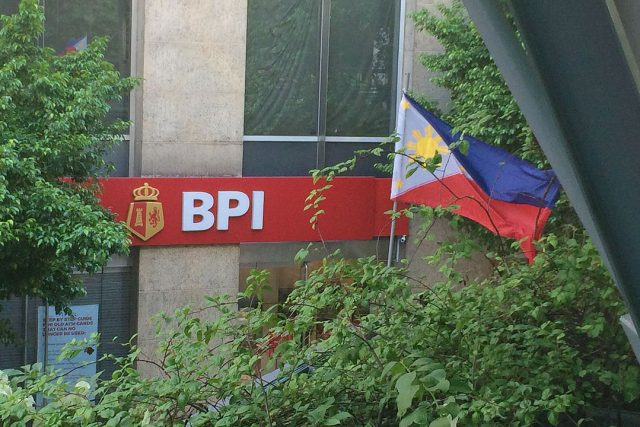
BANK of the Philippine Islands (BPI) is looking to issue dollar bonds in the second quarter to help refinance $600 million in debt papers maturing this year.

“I think we’re done on the peso side. We are looking at possibly doing a dollar bond sometime later this year as we have a dollar bond that’s maturing. So, we’ll be just refinancing that,” BPI President and Chief Executive Officer Jose Teodoro “TG” K. Limcaoco said in an interview with ANC on Monday.

Mr. Limcaoco said the size of the dollar bond offer has yet to be decided.

“Currently, we’re looking at all our options because we could do it via club loan or we could do it via another bond issuance,” BPI Treasurer and Global Markets Head Dino R. Gasmen told reporters on the sidelines of the listing event for its recent peso bond issuance on Monday.

“We’re still deciding whether we will go with a fixed or a floater, or a mix of the two. We’re also deciding what the tenor will be. Nothing has been decided yet, but we are sure that we are going to refinance maybe a portion of it, maybe the whole thing,” Mr. Gasmen added.

He said the offering could be done in the second quarter.

“Last offshore [issuance] was 2019 when we issued the Swiss bonds, which has since matured. So, after the $600 million, there’s another $300-million bond maturing next year, also in September,” he said.

The bank on Monday listed on the Philippine Dealing and Exchange Corp. its latest issuance of BPI Reinforcing Inclusive Support for Micro, Small, and Medium enterprises or RISE Bonds due in 2024.

BPI raised P20.3 billion through the offering of peso fixed-rate bonds, more than four times the original P5-billion issue size.

The papers, which have an interest rate of 5.75% per annum, were offered from Jan. 9 to 13. The offer period was initially set to end on Jan. 20, but the lender closed it early amid strong demand.

BPI booked a net income of P10.1 billion in the third quarter of 2022. This brought the bank’s bottom line for the first nine months of 2022 to P30.5 billion, backed by higher revenues and lower provisions for loan losses.

Its shares fell by 10 centavos or 0.09% to end at P110 apiece on Monday. — A.M.C. Sy

CREIT receives permit to sell P4.5-B green bonds

THE Securities and Exchange Commission (SEC) issued a permit to sell to Citicore Energy REIT Corp. (CREIT) for its maiden P4.5 billion ASEAN Green Bond offering.

The offer will consist of a base principal amount of P3 billion with an oversubscription option of up to P1.5 billion.

“We are hopeful that the offer’s objective of funding green projects will translate to a favorable reception from the market,” Oliver Y. Tan, president and chief executive officer of CREIT, said in a press release on Monday.

The fixed-rate bonds are scheduled to be listed with the Philippine Dealing & Exchange Corp. on Feb. 10, 2023 with a coupon rate of 7.0543% due in February 2028.

The offer period will run from Jan. 30 to Feb. 3. It will have SB Capital and Investment Corp. and PNB Capital and Investment Corp. as its joint local underwriters, issue managers and selling agents.

ASEAN green bonds’ proceeds are meant to be exclusively used to finance or refinance, in part or in full, new or existing eligible green projects that comply with regulatory standards.

“We constantly explore and prioritize investment alternatives that would allow us to accelerate CREIT’s growth trajectory and green asset portfolio, to enable us to reward our shareholders with greater value,” Mr. Tan said.

Proceeds of the offering will be used for the development of a solar rooftop system project and the acquisition of 5 million square-meter land parcels in Batangas.

CREIT aims to lease out the land parcels it will be able to purchase to solar power generators and operators affiliated with its sponsor, Citicore Renewable Energy Corp. (CREC).

“These units have secured Solar Energy Service Contracts from the Department of Energy to construct three utility-scale solar plants, with a total projected generation capacity of 269 megawatts direct current and form part of CREC’s expansion pipeline,” the company said.

On the stock market on Monday, shares in CREIT closed unchanged at P2.46 apiece. — Justine Irish D. Tabile

Fund transfers via InstaPay, PESONet increase in 2022

THE VALUE and volume of fund transfers coursed through InstaPay and PESONet and rose in 2022 compared to a year ago as more Filipinos use digital platforms for their transactions, data from the Bangko Sentral ng Pilipinas (BSP) showed.

The combined value of transactions done via the BSP’s automated clearing houses InstaPay and PESONet grew by 37.3% to P9.94 trillion in 2022 from the P7.24 trillion in 2021.   

In terms of volume, transactions coursed through InstaPay and PESONet increased by 21% to 633.47 million last year from 523.61 million in 2021.

Rizal Commercial Banking Corp. Chief Economist Michael L. Ricafort attributed the rise in transactions to the increased digitalization of banking services, with the coronavirus pandemic being a reason for the shift.

“The further reopening of the economy into greater normalcy also led to continued growth in electronic fund transfers, consistent with the growth in online businesses over the years,” Mr. Ricafort said in a Viber message. 

Broken down, the value of PESONet transactions surged by 41.2% to P6.41 trillion in 2022 from P4.54 trillion a year prior.

The volume of transactions coursed through the payment gateway stood at 84.812 million, 17.9% higher from the 71.934 million seen in 2021.

Meanwhile, the value of transactions done through InstaPay climbed by 31.1% year on year to P3.54 trillion in 2022 from P2.7 trillion.

The volume of InstaPay transactions went up by 21.5% to 548.66 million from 451.68 million in 2021.

PESONet and InstaPay are automated clearing houses launched in December 2015 under the central bank’s National Retail Payment System.

PESONet caters to high-value transactions and may be considered as an electronic alternative to the paper-based check system.

On the other hand, InstaPay is a real-time, low-value electronic fund transfer facility for transactions up to P50,000 and is most useful for remittances and e-commerce.

The BSP wants 50% of total retail transactions done digitally and to bring at least 70% of Filipino adults into the financial system by this year under its Digital Payment Transformation Roadmap.

The share of digital payments in the total volume of retail transactions in the country rose to 30.3% in 2021 from 20.1% in 2020 as consumers and businesses used more online channels amid mobility restrictions due to the pandemic.

Meanwhile, the value of payments done online represented 44.1% of total retail transactions in 2021, higher than the 26.8% share a year prior. — Keisha B. Ta-asan

Over P3.6B worth of PHL properties sold through app

By Brontë H. Lacsamana, Reporter

MORE THAN P3.6 billion worth of Philippine properties were sold through the prop-tech listing platform PropertyAccess over the last seven years, according to its Chief Operating Officer Andy Roberts.

“We’ve worked very hard on building our websites to have a dashboard of listings to push to any market that we wish, including the Japanese market and more recently the South Korean market,” said Mr. Roberts at a Jan. 24 press briefing.

In line with its goal to help investors find properties faster and make smarter and bigger investments, the prop-tech company registered approximately $90 million worth of properties in Southeast Asia and partnered with over 70 companies around the world.

Mr. Roberts also noted key differences between its two main markets: around 90% of Japanese clients are property investors who look into yield and return of investment, while South Korean clients are either retirees, second home seekers, or investors.

“This means Japanese clients are more conservative and can take four to six months to conclude a Philippine property transaction. Accessibility to transport is a large element for them,” he explained. “Meanwhile, South Korean clients are looking for golf, beach, sun, holidays, and relaxation.”

For both markets, Metro Manila and Cebu are the main areas of interest.

PropertyAccess has been listing Philippine properties for Japan since 2016 and only started doing so for South Korea in the last 18 months. It aims to keep a foothold as one of the top overseas real estate companies in both markets.

In the future, the company will be expanding to Thailand, Vietnam, Indonesia, and Australia, Mr. Roberts said.

He also emphasized the role of technology in real estate, with prop-tech likely pushing property securitization and property virtualization through technologies like Al, machine learning, blockchain, and 3D visualization over the next decade.

“Smart contracts, for example, can facilitate between a buyer and seller without a middleman. It allows tokenization of a property, or dividing shares among many shareholders,” he said.

For the short term, Mr. Roberts said his outlook for the Philippine real estate market is largely positive.

“This year there will be a number of property launches from a number of large developers, so we feel the next 2 years will be quite good for Philippine properties.”

What makes an effective pitch

FOR serial entrepreneur and business reality show host John Aguilar, making a compelling business pitch that can win big-ticket investors is something that can be learned with much study and practice.

His latest book, The Art and Science of the Pitch: The Ultimate Playbook for Pitching to Partners, Investors, and Reality TV Shows, distills tips and techniques from founders who have pitched their way to million-dollar valuations.

“I wanted this book to be a way that my readers can pitch effectively — with whoever they are pitching to, for whatever purpose or whatever stage of an idea or business,” said Mr. Aguilar in a speech at the Jan. 25 book launch at Shangri-La Plaza mall in Mandaluyong.

Its goal is to provide insights for Filipino startup entrepreneurs with big ideas who want to make an impact by getting the funding they need, he explained.

The book features interviews with over 40 investors, venture capitalists, and startup founders. These include Mario Berta, founder and CEO of tech start-up FlySpaces, and Steve Sy, founder and CEO of e-commerce firm Great Deals, both of whom said during the launch that they identified the components of a great pitch in each interview.

Mr. Berta advised to match the English-speaking capabilities of the people being pitched to, either relying on immersive storytelling and narrative for proficient speakers or concise bullet points for those with a limited English vocabulary.

Mr. Sy, on the other hand, reminded e-commerce startup leaders that you can negotiate for what you want “if you know your business like the back of your hand, and how exactly it can scale with the right investments.”

Such tips and tricks can go a long way for anyone who is seeking a lifeline for how to pitch, according to Mr. Aguilar. He added that the book is a natural extension of his work as CEO of Manila-based startup venture builder Dragon’s Nest and as host of his CNN Philippines reality TV show, The Final Pitch.

Both projects have funneled millions of dollars to Filipino entrepreneurs and the local startup ecosystem, which he describes as young but rapidly growing.

“I’m also preparing to give an important pitch to strategic investors so that we can expand and grow the TV show’s impact exponentially,” he said.

Monica Hipolito-Aguilar, chief operating officer of Dragon’s Nest and executive producer of The Final Pitch, told BusinessWorld following the launch that he was referring to bringing the show to other Southeast Asian countries through AXN by end of year.

Meanwhile, the bestselling book (at least in Kinokuniya in Singapore and in Fully Booked in the Philippines) is set to be followed by another soon.

“There’s another book coming out, maybe within the quarter — Methods to Greatness with John Aguilar — in which he also interviewed iconic personalities here and around the world. It’s a handbook on how to live your life better,” Ms. Hipolito-Aguilar said.

She added that publishing company Penguin Random House has approved three of Mr. Aguilar’s book ideas, so there will be a third one coming up in the future.

The Art and Science of the Pitch is available globally through Amazon and Kindle, and in the Philippines through Fully Booked, National Book Store, Shopee, and Lazada. — Brontë H. Lacsamana

Holcim turns million-ton waste into alternative fuels, cement materials

HOLCIM PHILIPPINES FACEBOOK PAGE

HOLCIM Philippines, Inc. has converted about a million tons of waste into alternative fuels and cement raw materials through its waste management unit, the listed cement manufacturer and distributor announced on Monday.

“Our success in reusing discarded materials is further reducing our consumption of natural resources and carbon footprints. This also enables us to help industries and communities achieve their zero waste objectives,” Horia-Ciprian Adrian, president and chief executive officer of Holcim Philippines, said in a statement.

Through cement kiln co-processing, a waste management technology, the company said it was able to remove discarded materials away from landfills and helped 35 municipalities and cities across the country.

Its project unit, Geocycle, contributed to conserving virgin natural resources and avoiding high-carbon traditional fuels such as coal.

The company aimed to accelerate “circular construction” and help its industrial partners to reduce carbon emissions and manage wastes including non-recyclable plastics.

“We are excited to continue growing our co-processing operations to further contribute to building progress in the country,” Mr. Adrian added.

Aside from the project, Geocycle also conducted lectures on proper waste management for local governments and schools and participated in public forums to highlight the importance of conservation. — Sheldeen Joy Talavera

ADVERTISEMENT
ADVERTISEMENT