Home Blog Page 5310

Bill eyes free board exams for poor 

PHILIPPINE STAR/EDD GUMBAN

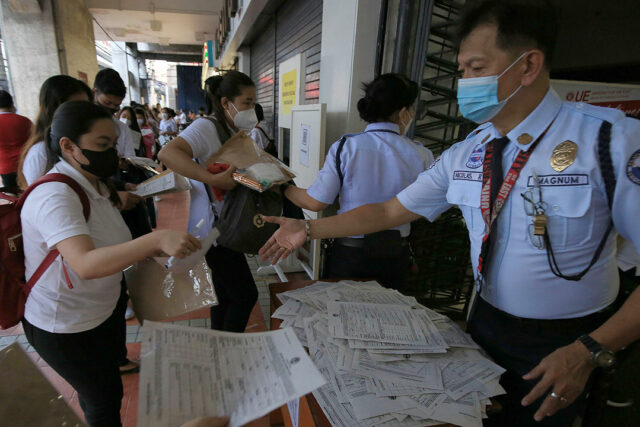
A BILL that seeks to waive fees for civil service and professional licensure examinations for poor Filipinos has been filed at the Senate. 

Senate Bill 1323 or the Free Professional Examinations Act aims to help poor Filipinos find jobs and improve employment in the country, according to a copy of the measure. 

“It saddens me to think that some of our graduates will not be able to apply what they studied for just because they cannot afford to pay for the examination fee to get their professional license or civil service eligibility,” Senator Emmanuel Joel J. Villanueva, the bill’s author, said in a statement on Thursday. 

The bill will only provide the exemption to people who have no visible means of income or support, or whose income is not enough. This is the Social Welfare department’s definition of a poor Filipino. 

Professional Regulations Commission (PRC) licensure exam fees range from P400 to P1,300 depending on the type of test. 

A total of 633,551 examinees took board exams last year, 311,381 of whom were first-time takers, according to PRC. 

The Philippine jobless rate eased to 4.2% in November, the lowest in 17 years. 

“We are determined to look for solutions in fighting unemployment woes in the country, which is why we are pushing for measures such as this to help ensure that every Filipino will not only have a job but a quality job which fits their qualifications,” Mr. Villanueva said. 

Access of minors to contraceptives pushed 

PHILIPPINE STAR/ WALTER BOLLOZOS

Congressmen who filed separate bills seeking to prevent teenage pregnancy on Thursday pushed access of teenagers at least 16 years old to contraceptives without parental consent. 

“If we treat them as beings who can decide [for themselves], then they can better take care of their reproductive health,” Party-list Rep. Raoul Danniel A. Manuel told a House of Representatives hearing. 

Mr. Manuel said the learning environment of adolescents extends beyond the household. 

“In this age, they spend a significant amount of time with their friends, in school, and in their communities,” he said. “Teaching young people how to be good citizens, which includes the proper practices in caring for their reproductive health, is also taught and molded outside their houses.” 

Albay Rep. Edcel C. Lagman, also one of the authors of the teenage pregnancy bill, said sex remains a taboo topic in Philippine families. 

“Parental consent is not necessary for adolescents, particularly those who are 16 years old and above to access contraceptives because the state policy upholding the constitutional right of privacy of minors is superior to parental authority,” Mr. Lagman said. 

Undersecretary Lisa Grace S. Bersales of the Commission for Population and Development said 32% of Filipino males and 27% of females aged 15 to 19 years are sexually active, based on a 2021 survey. 

She also said 4,500 mothers aged 10 to 17 years get pregnant repeatedly, based on 2018 government data. 

“If minors at 16 can help decide the fate of this nation… then they should be given the access to contraceptives to decide on their future,” Mr. Lagman said. — Beatriz Marie D. Cruz 

Davao de Oro suspends classes, gov’t work after quake 

DAVAO DE ORO PIO

THE DAVAO de Oro provincial government suspended classes at all levels and work at nonessential local offices on Thursday to give way to building inspections after a magnitude 6 earthquake shook the province on Wednesday night. 

Other national agencies in the province could heed the suspension to ensure the safety of their workers, Governor Dorothy Montejo-Gonzaga said in a memo dated Feb. 1. They may also do structural integrity checks in coordination with local government units. 

No major damage was reported as of Thursday morning. The Philippine Institute of Volcanology and Seismology (Phivolcs) said in a bulletin damage and aftershocks were expected. 

Phivolcs said the epicenter of the quake that occurred at 6:44 p.m. on Feb. 1 was in the town of Compostela. Intensity 5 was reported in surrounding provinces, including Bukidnon, South Cotabato, Surigao del Sur and Samal Island. 

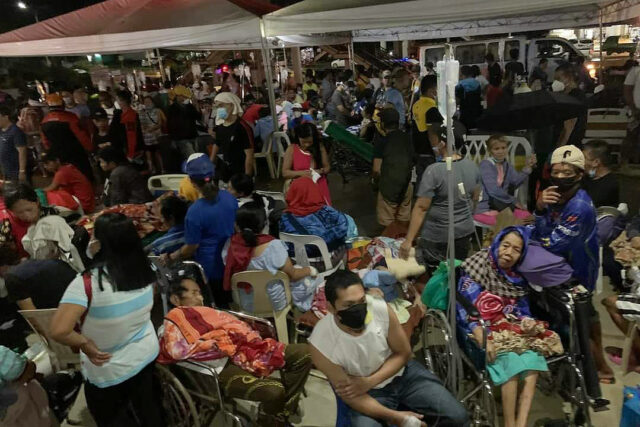
Ms. Gonzaga, who heads the provincial disaster management council, ordered the evacuation of all patients at the Davao de Oro Provincial Hospital to the Montevista Sports Complex. 

Phivolcs has recorded at least 30 aftershocks, with magnitudes ranging from 1.8 to 3.6. — Marifi S. Jara 

Cebu City beer sales up five-fold — Packworks 

CEBU PROVINCIAL GOVT. SUGBO NEWS

PHILIPPINE startup Packworks on Thursday said beer sales in Cebu City rose five-fold amid a liquor ban during the Sinulog Festival. 

In a statement, the firm said the increase was determined using data from its Sari IQ market intelligence platform. About two million people attended the festival. 

“The total gross merchandise value of beer products from sari-sari stores within the Sinulog Festival vicinity was recorded on Jan. 15, the day of the main festivity, which outperformed brandy and gin compared with the previous day,” Packworks said. 

It attributed higher beer sales during the period to stricter enforcement of the liquor ban at larger retail establishments that caused people to buy from mom-and-pop stores, which are more lenient. 

Filipinos tend to defy liquor bans during festivals since drinking is linked with socializing, as shown by the blood compact between Filipino natives and Spanish colonizers in the 1600, said Packworks research partner Fourth Wall. 

“During the pre-Hispanic era, two parties would wound themselves with a dagger and drip their blood into a cup of wine, where they would then drink from the same cup to mark their bond of friendship,” Fourth Wall Research Director John Brylle L. Bae said. “This symbolized that they are close as blood brothers.” — Revin Mikhael D. Ochave  

Soccsksargen signs deals vs wildlife trafficking 

PASU-SBPS

THE DEPARTMENT of Environment and Natural Resources (DENR) Soccsksargen regional office has signed agreements with air and sea port authorities to beef up border checks against wildlife trafficking. 

The Mindanao State University (MSU), meanwhile, has launched its Center for Biodiversity Studies in General Santos City, which will do research on the region’s three protected areas. 

Soccsksargen in southern Philippines covers the provinces of South Cotabato, Cotabato, Sultan Kudarat and Sarangani, and General Santos City. Its protected areas are Mt. Matutum, Allah Valley Watershed Forest Reserve and Sarangani Bay.  

Under the DENR partnership with the Philippine Ports Authority and Civil Aviation Authority of the Philippines, wildlife traffic monitoring units will be stationed at ports to enforce the Wildlife Resources Conservation and Protection Act of 2002. 

Reactivating these monitoring units particularly in General Santos City’s sea and air ports is expected to boost wildlife protection, South Cotabato Provincial Environment Officer Radzak B. Sinarimbo said. 

Under the law, only legally acquired and documented wild animals can enter and leave the country. 

The Environment department also said the MSU would identify and protect critically endangered plant and animal species and conserve terrestrial and aquatic ecosystems. 

The center will also look into issues affecting Soccsksargens’ indigenous flora and fauna, especially those in protected areas. — MSJ 

DENR budget, manpower not enough to save environment

SCREENGRAB FROM DENR LIVESTREAM

By Revin Mikhael D. Ochave, Reporter

THE head of the Department of Environment and Natural Resources (DENR) on Thursday said the agency lacks the budget and manpower needed to mitigate the impact of climate change and boost environmental protection efforts across the country.

“Unfortunately, the way we are set up is that the fiscal space is very tight… The DENR is in charge of 15 million hectares of classified forest lands. We are also in charge of so many thousands of hectares of coastal areas,” Environment Secretary Maria Antonia Y. Loyzaga said in a press conference during the Mindanao leg of the DENR’s 2023 multi-stakeholder forum in Cagayan de Oro City.

“We cannot, at the level of budget at this point and the human resources available, do an adequate job of protecting all of our ecosystems,” she said in mixed English and Filipino.

“The reality is that there is inadequate resources to finance what are the impacts already known to the Philippines in terms of climate change,” she added.

The DENR has a budget of P23.29 billion this year, based on the 2023 General Appropriations Act signed by President Ferdinand R. Marcos, Jr. on Dec. 16. The department’s 2023 budget is lower than the P25.4 billion allocated in 2022.

Nonetheless, Ms. Loyzaga said she is banking on collaboration with the private sector, civic groups, and international partners to address the myriad and persistent issues relating to environmental protection and the climate crisis.    

“It is a combination of legislation, some budgeting innovation in terms of the government and bringing in the different stakeholders to do their share in working with us in terms of the preservation, conservation, restoration, and regeneration,” Ms. Loyzaga said. 

BALANCE
During the forum, Ateneo de Davao University President Joel E. Tabora underscored the role of the DENR in balancing environmental protection with economic development through resource management.

“The DENR cannot just be a government agency to exploit the natural resources of the Philippines in favor of the economy and of the private interests that drive this. The DENR must be the protector of the environment,” said Mr. Tabora, who lamented the seeming failure of government to listen to the public’s voice.

“They should make sure that society and the planet are not killed by the vicious technocratic paradigm driving the economy. They must be guided by voices of people on the ground, in local government units or in the regions,” he added.

Miguel A. Dominguez, Alsons Aquaculture Corp. director, urged the National Government to boost efforts in promoting food self-sufficiency and to evaluate coastal resources to further develop the local aquaculture industry.

“We must stop relying on imports. There has to be co-management between the local governments and the community themselves. The government must get out of their silos and start looking at these resources to encourage more self-sufficiency and food production that would enable the Filipino to have better food security,” Mr. Dominguez said.

Ian Valentin U. Sermonia, Siargao Tourist Operators Association president, pressed the DENR to beef up its waste management awareness campaigns and promote ecotourism for a more sustainable industry.

“Increase in tourism also means an increase in waste,” said Mr. Sermonia.

Ms. Loyzaga said the DENR is bent on adopting a multi-stakeholder approach to the sector’s concerns.

“We at the DENR firmly believe that addressing issues pertaining to the environment and our country’s natural resources needs a comprehensive approach and multi-stakeholder partnerships for evidence-informed, inclusive, and adaptive leadership,” she added.

The Mindanao forum follows similar multi-stakeholder discussions held in Luzon and the Visayas.

P29B needed for total electrification target

JANA LEU-UNSPLASH

A P29-billion budget is needed to deliver electricity in all households nationwide in the next five years, the National Electrification Administration (NEA) said on Thursday.

NEA Administrator Antonio Mariano C. Almeda said in a media briefing that to date, 600,000 households in the main grid are still without power supply and another 23,000 households in off-grid areas.

The breakdown of the budget, according to Mr. Almeda, is P20 billion for the complete electrification of on-grid areas, and about P9 billion for those off-grid.

Based on NEA’s total electrification masterplan as of Dec. 2022, a total of 10,212 sitios or small communities are still without power supply.

“If we can present to Congress, to the Department of Energy, that we have streamlined the monitoring and implementation of the Sitio Electrification Plan, that we have set the target, at that I think Congress would be mindful to support this program, that we have to reach 100% electrification,” Mr. Almeda said.

In a separate statement, NEA said it aims to achieve its full electrification target by 2028 by ensuring that Sitio Electrification Program funds are well-utilized.

“The remaining 10,212 unenergized sitios will be implemented for 2023 to 2028,” it said.

Republic Act 9136 or the Electric Power Industry Reform Act of 2001 tasks the NEA with overseeing missionary electrification and providing financial, institutional and technical assistance to electric cooperatives.

NEA will also assist with the implementing rules and regulations of the Microgrid Systems Act, which aims to accelerate total electrification in unserved and underserved areas.

In its report, NEA said the biggest challenge to achieve 100% rural electrification is the “inadequate government’s subsidy to finance the energization of the remaining unenergized areas.”

Mr. Almeda said they are also addressing issues on transparency and accountability, particularly with the electric cooperatives.

“If you look back taking into consideration the process of the past, the accountability have to be transparent, the accountability has to be data driven, the electric cooperatives should realize that this is public money, because in my experience, I have seen the implementation could be… there have been a lot of loopholes in terms of liquidation,” he said.

Cooperatives with pending liquidation requirements are unable to secure funding under the Sitio Electrification Program, he said. — Ashley Erika O. Jose

ADB, gov’t give training grants to 66 enterprises

THE Asian Development Bank (ADB) and the National Government on Thursday awarded service-training grants to five networks of enterprises through the SkillsUpNet Philippines (SUNPh) program.

A total of 66 enterprises and 600 workers in the Bicol and Davao regions and Cebu province will benefit from the SUNPh program, which aims to enhance skills and competitiveness, ADB said in a press release.

The grants range from $20,000 to $80,000.

The five network recipients of the grant under the first phase of the program are Dagos Tabi Albay Micro and Small Accommodation Enterprises Network for the tourism sector, Cebu Constructors’ Network for construction, Cebuanimation Network for information technology-animation, Kapehan Sa Davao for agribusiness, and Sulong Davao Business Owned by Women for women-led enterprises.

“The rationale of the program is to help address the new challenges of the scarring effects of the COVID-19 pandemic on employment, as well as the emerging impact of new technologies and shaping the future of work,” ADB Vice-President Ahmed M. Saeed said in a speech at the awarding ceremony.

The press release said the SUNPh program is an innovative skills-delivery scheme led by employers in which they apply for grants on a competitive basis to finance short-term skills training for their workers and managers.

The program is part of the government’s National Employment Recovery Strategy 2021–2022 aimed at improving workers’ access to jobs, livelihoods, and training.

“We all know that the COVID-19 pandemic caused major disruptions to employment and widened the skills–jobs mismatch in the Philippines. Through SkillsUpNet Philippines, we are helping the government with one innovative solution to addressing skills–jobs mismatches in the labor market, retooling and reskilling Filipino workers to raise productivity, and improving employees’ prospects for better opportunities and higher incomes,” Mr. Saeed said in the press release.

The ADB, along with representatives from the departments of Trade and Industry, Tourism, and Labor and Employment, held consultations and orientation workshops starting in the last quarter of 2021 to introduce the program to enterprises across the country, the press release said.

“We hope that with a successful first batch of awardees we can then roll this out as a larger program nationwide,” Mr. Saeed said. — Aaron Michael C. Sy

MUFG expects stronger peso through 2023

MUFG Global Markets Research expects the peso to continue strengthening against the dollar throughout the year with import bills less likely to weigh it down and a reduction in commodity prices.

“Our constructive view on the PHP against the USD is premised on the theme of normalization, after previous imbalances the previous year,” MUFG Global Markets Research said in a report on Thursday.

It also cited the expected revival of Chinese tourist arrivals as a positive factor for the peso.

It sees the peso ending the first quarter at P54.75 a dollar, slightly weaker than its January close of P54.63.

This could rise to P54.50 against the greenback at the end of the second quarter and then P54.25 in the third. After which the peso will reach P53.50 in the final quarter.

The research firm previously saw the local currency continuing to weaken before it rebounds in the second half at P55.50.

“Despite continued demand for investment-related imports, net exports are likely to be less of a drag going forward, helped by lower import bills and the expected recovery in Chinese tourist arrivals,” MUFG Global Markets Research said.

The report said easing lower commodity prices will likely moderate the elevated levels of trade deficits seen in the second and third quarters last year.

“The economy already saw net goods exports contribute 2.3 ppt to gross domestic product (GDP) growth in Q4, the first quarterly positive addition since March 2021,” it added.

MUFG Global Markets Research said the lower commodity prices have been supportive of the current account and positive for gains in the local currency in the near-term.

It added that it expects the current account deficit to narrow on remittance inflows and receipts from the business process outsourcing industry.

“We forecast the current account deficit to narrow to 4.8% of GDP in 2023, after a 5.6% deficit in 2022,” the report said.

It added that it sees the central bank raising the rates by 75 basis points (bps) early in the year, bringing the rate to 6.25%.

The Bangko Sentral ng Pilipinas (BSP) hiked benchmark interest rates by 350 bps in 2022, bringing its policy rate to 5.5% to temper inflation.

Meanwhile the report added that it sees headline inflation at 4.3% in 2023, higher than the BSP’s 2-4% forecast due to persisting imported price pressures.

“Food and energy inflation may remain elevated at least in the first half of the year before moderating thereafter. Pressures caused by weather may taper off in the coming months,” the report said.

According to data from the Philippine Statistics Authority, inflation was at a 14-year high of 8.1% in December 2022, which brought the full-year print to 5.8%. — Aaron Michael C. Sy

ARTA to help ease permit procedures for export, import of processed food

BW FILE PHOTO

THE Anti-Red Tape Authority (ARTA) will help streamline the processing of permits required to export and import processed food, addressing concerns raised by a public-private trade council.

In a statement on Thursday, the ARTA said among the issues that will have to be resolved are overlapping mandates of different agencies. 

“The concerns and issues raised and brought to ARTA’s attention will be addressed by the authority’s streamlining programs, as well as its digitalization initiatives in collaboration with the Department of Information and Communications Technology,” ARTA Director General Ernesto V. Perez said.

He said ARTA, along with the Better Regulations Office (BRO) and Compliance Monitoring and Evaluation Office (CMEO), met on Jan. 25 with the Export Development Council’s (EDC) Networking Committee on Agriculture Policy Chairperson Philip C. Young to discuss regulatory constraints.

The EDC, formed in 1994 under Republic Act 7844 or the Export Development Act and composed of government and private sector representatives, aims to determine the bottlenecks hampering the country’s export industry.

According to the ARTA, the BRO will spearhead the review of relevant regulations while the CMEO will lead in monitoring compliance of concerned agencies based on the Ease of Doing Business and Efficient Government Service Delivery Act.

Mr. Perez said regulatory agencies will eventually be integrated into the TradeNet platform to provide an end-to-end processing of licenses and permits via a single online portal. 

“As for concerns regarding the overlapping mandates in the regulatory agencies, it will be addressed through a joint administrative order after a thorough consultation with the agencies,” Mr. Perez said. — Revin Mikhael D. Ochave

P2.6M worth of onions sold directly to consumers and institutions — DA

DA.GOV.PH

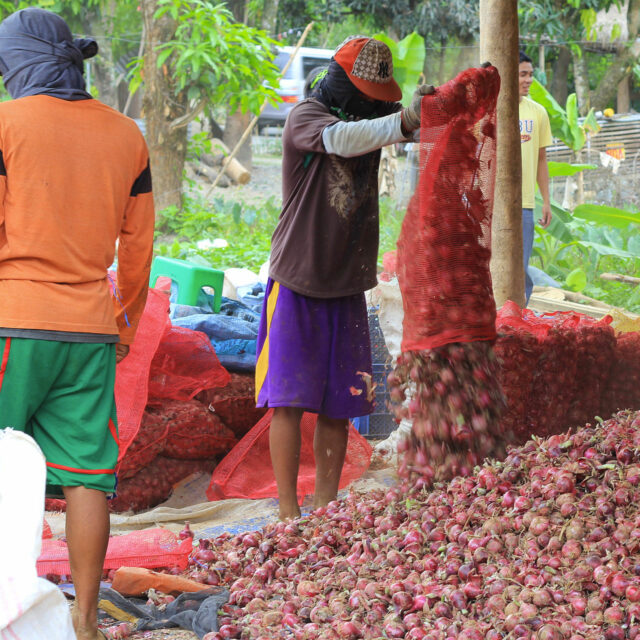
ONION farmers were able to directly sell about P2.589 million worth of their harvests to consumers and institutional buyers through with assistance from government, the Department of Agriculture (DA) said on Thursday.

In a statement, the DA said farmer cooperatives and associations were able to market 3,478 kilograms of red onions worth P755,455 and 5,106.38 kilograms of white onions worth P1.833 million from Sept. 2022 to Jan. 24, 2023.

The DA said their intervention helped the farmers earn more as there were no middle men involved.

Onion prices shot up to as much as P700 per kilo in recent months, prompting congressional investigations where some farmers said traders actually bought their supply at farm gate prices of P8 to P15.

The onion controversy has also raised issues on importation and smuggling.

Meanwhile, the DA said trucks and vans under the Kadiwa program helped farmers in “hauling and delivery to markets and big buyers.”

The government’s Kadiwa program involves linking farmers directly to consumers through pop-up markets in different parts of the country.

“Logistics is actually a big help, the Kadiwa [trucks] helped in logistics,” Elvin Jerome A. Laceda, founder of RiceUp and chief operating officer of Sakahon farmer’s enterprises, is quoted in the statement.

The Agriculture department awarded a P1.325-million four-wheel truck to RiceUp in Pampanga in 2022.

Through agritech solutions company Sakahon, Mr. Laceda and his team aim to establish a system where farmers get information on market demand before planting.

Mr. Laceda added that giving farmers access to capital and storage facilities will help boost the agriculture sector. — Sheldeen Joy Talavera

Special rice prices fall in Metro Manila and three other areas

DA.GOV.PH

THE AVERAGE retail price of the different kinds of special rice decreased in the capital region Metro Manila and three cities, but went up in three other areas in mid-January, according to the Philippine Statistics Authority (PSA).

Based on preliminary data for the Jan. 15-17 period, the PSA reported that average price dropped by P1.52 per kilo to P56.58 in Iloilo City compared with Jan. 1-5 rates.

It was also down by P1.25 to P42.25 in Tuguegarao City, 25 centavos to P53.05 in the National Capital Region, and down seven centavos to P54.84 in Kidapawan City.

On the other hand, price rose P1.56 to P57.99 in Batangas City, 50 centavos to P59.13 in Calapan City, and two centavos to P48.49 in Legazpi City.

Special rice, as defined by the Department of Agriculture, includes organic brown rice, upland rice, red and black rice, Dinorado, Milagrosa, Hinumay, Kamaros, Malagkit and other indigenous or heirloom rice varieties.

For brown sugar, the average retail price fell by P1.50 to P78.50 in Digos City and 10 centavos to P86.10 in the capital region.

Prices of the commodity increased by P2.50 to P83 in San Fernando City, P1.25 to P87.75 in Baguio City, and P1.02 to P82.95 in Kidapawan City.

ONIONS
Meanwhile, the average retail price for red onions decreased in nine trading centers during the period in review.

Retail price dropped by P125 to P375 in Cabanatuan City, P110 to P490 in Cebu City, P100 to P524.50 in Legazpi City, P65 to P475 in Calapan City, and P35 to P330 in Tuguegarao City.

Prices also contracted by P50 in trading centers in the cities of Digos, Kidapawan, and Butuan, all in southern Philippines.

An increase was reported in five cities: P97.50 to P722.50 in Pagadian City, P47 to P524 in Iloilo City, P13.50 to P401 in Cagayan De Oro City, P2.50 to 627.50 in Batangas City, and P1 to P625 in Tacloban City. — Sheldeen Joy Talavera

ADVERTISEMENT
ADVERTISEMENT