Home Blog Page 5247

Avian flu spreads to new countries, threatens non-stop ‘war’ on poultry

CHICAGO — Avian flu has reached new corners of the globe and become endemic for the first time in some wild birds that transmit the virus to poultry, according to veterinarians and disease experts, who warn it is now a year-round problem.

Reuters spoke to more than 20 experts and farmers on four continents who said the prevalence of the virus in the wild signals that record outbreaks will not abate soon on poultry farms, ramping up threats to the world’s food supply. They warned that farmers must view the disease as a serious risk all year, instead of focusing prevention efforts during spring migration seasons for wild birds.

Outbreaks of the virus have widened in North and South America, Europe, Asia and Africa, undefeated by summer heat or winter cold snaps, since a strain arrived in the United States in early 2022 that was genetically similar to cases in Europe and Asia.

On Wednesday, Argentina and Uruguay each declared national sanitary emergencies after officials confirmed the countries’ first infections. Argentina found the virus in wild birds, while dead swans in Uruguay tested positive.

Egg prices set records after the disease last year wiped out tens of millions of laying hens, putting a staple source of cheap protein out of reach to some of the world’s poorest at a time the global economy is reeling from high inflation.

Wild birds are primarily responsible for spreading the virus, according to experts. Waterfowl like ducks can carry the disease without dying and introduce it to poultry through contaminated feces, saliva and other means.

Farmers’ best efforts to protect flocks are falling short.

In the United States, Rose Acre Farms, the country’s second-largest egg producer, lost about 1.5 million hens at a Guthrie County, Iowa, production site last year, even though anyone who entered barns was required to shower first to remove any trace of the virus, Chief Executive Marcus Rust said.

A company farm in Weld County, Colorado, was infected twice within about six months, killing more than three million chickens, Mr. Rust said. He thinks wind blew the virus in from nearby fields where geese defecated. “We got nailed,” Mr. Rust said. “You just pull your hair out.”

The United States, Britain, France and Japan are among countries that have suffered record losses of poultry over the past year, leaving some farmers feeling helpless.

“Avian flu is occurring even in a new poultry farm with modern equipment and no windows, so all we could do now is ask God to avoid an outbreak,” said Shigeo Inaba, who raises chickens for meat in Ibaraki prefecture near Tokyo.

Poultry in the Northern Hemisphere were previously considered to be most at risk when wild birds are active during spring migration. Soaring levels of the virus in a broad range of waterfowl and other wild birds mean poultry now face high risks year round, experts said.

“It’s a new war,” said Bret Marsh, the state veterinarian in the US state of Indiana. “It’s basically a 12-month vigil.”

In a sign the threat is expected to persist, Mr. Marsh is seeking funds from Indiana’s lawmakers to hire an additional poultry veterinarian and poultry health-specialist. Indiana lost more than 200,000 turkeys and other birds over the past year, while total US deaths top 58 million birds, according to US government data, surpassing the previous 2015 record.

The virus is usually deadly to poultry, and entire flocks are culled when even one bird tests positive.

Vaccinations are not a simple solution: they may reduce but not eliminate the threat from the virus, making it harder to detect its presence among a flock. Still, Mexico and the EU are among those vaccinating or considering shots.

GLOBAL PROBLEM
Wild birds have spread the disease farther and wider around the world than ever before, likely carrying record amounts of the virus, said Gregorio Torres, the head of the science department at the Paris-based World Organization for Animal Health, an intergovernmental group and global authority on animal diseases. The virus changed from previous outbreaks to a form that is probably more transmissible, he told Reuters.

“The disease is here to stay at least in the short term,” Mr. Torres said.

Mr. Torres could not confirm the virus is endemic in wild birds worldwide, though other experts said it is endemic in certain birds in places like the United States.

While the virus can infect people, usually those who have contact with infected birds, the World Health Organization says the risk to humans is low.

The form of the virus circulating is infecting a broader range of wild birds than previous versions, including those that do not migrate long distances, said David Suarez, acting laboratory director of the US government’s Southeast Poultry Research Laboratory in Georgia.

Such infections of “resident” birds are helping the virus to persist throughout the year when it didn’t previously, he said.

Black vultures, which inhabit the southern United States and previously avoided infections, are now among the species suffering, said David Stallknecht, director of the Southeastern Cooperative Wildlife Disease Study at the University of Georgia.

The virus has also infected mammals like foxes, bears and seals.

“We all have to believe in miracles,” Mr. Stallknecht said, “but I really can’t see a scenario where it’s going to disappear.”

CROSSING BORDERS
High virus levels in birds like blue-winged teal, ducks that migrate long distances, helped spread the virus to new parts of South America, Mr. Stallknecht said.

Countries including Peru, Ecuador and Bolivia in recent months reported their first cases.

Ecuador imposed a three-month animal-health emergency on Nov. 29, two days after its first case was detected, the country’s Ministry of Agriculture and Livestock said. So far, more than 1.1 million birds have died, the ministry said.

Infections in Uruguay and Bolivia put the disease close to top global chicken exporter Brazil, which has never confirmed a case. Brazilian Agriculture Minister Carlos Favaro said on Wednesday the country investigated three suspected cases, but test results came back negative.

“Everyone is focused on preventing the flu from reaching our country,” said Gian Carlos Zacchi, who raises chickens for processor Aurora in Chapecó in Brazil’s Santa Catarina state.

Some experts suspect climate change may be contributing to the global spread by altering wild birds’ habitats and migratory paths.

“The wild bird dynamics have shifted, and that’s allowed the viruses that live in them to shift as well,” said Carol Cardona, an avian flu expert and professor at the University of Minnesota.

Farmers are trying unusual tactics to protect poultry, with some using machines that make loud noises to scare off wild birds, experts said.

In Rhode Island, Eli Berkowitz, an egg producer and chief executive of Little Rhody Foods, sprayed the disinfectant Lysol on goose poop on a walkway of his farm in case it contained the virus. He also limits visitors to the farm, a more traditional precaution.

Mr. Berkowitz said he is bracing for March and April when migration season will pose an even greater risk to poultry.

“You’d better buckle up and hold on for your dear life,” he said. — Reuters

High cost to women as African apps spread gospel of gig work

STOCK PHOTO | Image by Pexels from Pixabay

 – Women who mop, sweep and clean homes across Africa are riding a new wave of digital platforms that promise flexible work and fresh opportunity – but critics say the fast-growing apps only expose the gig workers to age-old abuse and exploitation.

They say the women – many of them vulnerable migrants – run a gamut of risks by signing up for gig work on the new apps, from underpay to assault, injury to debt, reputational damage as well as scant benefits and zero trade union representation.

“The narrative of the gig economy is that domestic workers have flexibility, but in reality they have less autonomy, they feel subordinated to both the platform and the clients,” said Kelle Howson, a researcher who is an expert on gig work in South Africa.

Exact figures on domestic gig work in Africa are hard to pin down – in part due to the digitization of an often informal, unprotected sector.

Some 81% of the world’s domestic workers are employed informally with no access to labor protection, according to the International Labour Organization (ILO). And critics say gig platforms could only perpetuate this.

Some half a dozen platforms have sprung up in the last decade across the continent, connecting tens of thousands of unemployed women to clients and drawing in venture capital of roughly US$20 million.

The sector’s rapid growth and its risky nature are raising red flags for human rights watchdogs, who point to mounting worker unrest in Latin America and Asia against a business model they say is unfair.

“Domestic work happens behind closed doors so there is less visibility and, partly as a result of this, domestic workers are more vulnerable to exploitation,” said Howson, who works with Fairwork, a gig research project at Britain’s Oxford Internet Institute.

The platforms say they create much needed jobs, but act only as mediators, not actual employers, a scenario that can expose domestic workers to psychological pressure, financial exploitation and physical risk. And can let bad employers or arms-length platforms evade responsibility when things go wrong.

Take Fiona, a 36-year-old domestic worker who mopped floors, scrubbed toilets and wiped countertops in tens of South African homes for almost six months and did it all, essentially, for free.

This was because her travel and mobile phone data costs surpassed what little she earned in the 400-hour probation period she said was mandatory for her to register on a local gig platform.

“When you are desperate for a job, you just take it,” said Fiona, who survived the probation period by borrowing from friends to top up her initial earnings of about $130 a month.

Her platform of choice was Sweep South – the country’s biggest app for gig work – which was launched in 2014 by local entrepreneurs.

Gig workers on sites such as Sweep South say they fear being kicked off the apps if they dare to speak out against practices that are intrinsic to the platforms and which they say can be exploitative.

Inadequate safety protocols, penalties for sick days, low pay, and denial of lunch and bathroom breaks are just some of the concerns shared with the Thomson Reuters Foundation by more than a dozen app-based cleaners, former employees and customers.

Interviewed in three countries across the continent, all asked to use pseudonyms for fear of being barred from their apps after speaking out.

“We worry that these apps are undoing all the progress we fought so hard for,” said Gloria Kente, a former domestic worker turned organizer in the South African Domestic and Service Allied Workers Union.

“Just because it is digital, it doesn’t mean the battle for our rights has changed,” said Kente, 59, who has spent the last decade fighting for worker rights.


BACKBONE OF THE ECONOMY

Globally, domestic workers represent 2.3% of the world’s workforce – some 76 million people – and the majority of them work informally, without proper contracts or benefits.

More than three in four are women.

And the women of sub-Saharan Africa are especially vulnerable, according to UN Women, which says 63% of the world’s women who live in extreme poverty are found in that region.

Supporters of the sector say the platforms open doors for people who would not otherwise find paid work, and that the workers like the new regime of flexible, on-demand jobs.

Among the biggest platforms are South Africa’s Sweep South, Nigeria’s Eden Life and Egypt’s Filkhedma, promising a lifeline to desperate job seekers in regions with few other openings.

Critics say that migrants are among the most vulnerable.

From Sudanese women mopping Egyptian floors to Zimbabweans washing the clothes of South Africans, many on the app are far from home, without family and cannot find any other work.

“I thank them for creating these jobs,” said Naledi, a 33-year-old Zimbabwean cleaner in South Africa, home to an estimated 1 million domestic workers.

“But we are afraid to complain in case we lose the work.”

Venture capitalists backed Sweep South, which now has 30,000 registered workers and was expanding into new markets, before cost concerns put an expansion into Kenya and Nigeria on hold.

Egypt’s Filkhedma – born in 2014 – was bought by Sweep South a year ago as part of a grand plan to fan out across the continent. It now has 300 registered domestic workers.

About one third of domestic workers are already hired through agencies or platforms, according to the informal worker charity WIEGO, a figure that gig economy experts say is likely to grow as both unemployment and tech access expands across the continent.

Already, at least 365 digital platforms are found in eight African countries alone, connecting some 4.8 million workers to an average 92,000 users each month, according to South African think tank Cenfri.


‘RED DEVIL’

The complaints levelled at the apps mostly center on their imbalance of power.

Sick leave is a case in point.

When Nancy woke with flu one winter day last year – a day she was meant to clean a client’s house – she was forced to cancel on the Sweep South South Africa app, only to spot what some workers call the “red devil emoji” next to her name.

The emoji stayed for 30 days, long after her flu had left.

“I was so ashamed, and worried it would impact me getting work,” said Nancy, who felt nervous to challenge a rating that tracks her reliability and her average customer rating in case it fell still further.

Sweep South said the red unhappy face – the firm stressed this was not a devil icon – appears if a cleaner’s rating falls below average. It stays up for 30 days – absent any “SweepStar” appeal – and is not visible to customers, Sweep South added.

“The constant tacit threat of deactivation … reduces those workers’ power and agency,” said Howson of Fairwork.

“They don’t know if they might wake up tomorrow and have lost their livelihoods.”

Allegations of wrongdoing can also put a worker on the back foot.

A former Sweep South senior employee said that when domestic workers were accused of stealing, external arbitrations were held by an ex-police detective. The source said the detective would sometimes base his verdict solely on reading a worker’s body language in a video interview.

“The customer was always right,” he said, requesting anonymity for fear of reprisal.

Sweep South said that while accusations of theft are very rare, guilt was determined “based on a balance of probabilities and extensive interviews of both the client, any witnesses, and the SweepStar” herself.

The SweepStar is permanently deactivated from the platform if she is found guilty.

If deemed innocent, the SweepStar will be reactivated and the client may face deactivation or could be reported to the relevant authorities.

Sweep South did not give figures on how many clients or cleaners had been barred from the app.


FAIR COMMISSION

The biggest bugbear for most gig workers is fair pay – or the lack of it.

Sweep South stipulates on its site that SweepStars get between 80% and 96% of the total booking fee based on their experience, and 65% during the first “2 to 3 months trial period to recoup costs”.

But domestic workers interviewed by the Thomson Reuters Foundation said even after the 400-hour trial period, their payments fluctuated from area to area, making budgeting near impossible.

Cleaners from all three apps said they could spend up to 65% of their daily earnings on data and public transport to get to work. Sub-Saharan Africa has some of the world’s highest data costs.

Sweep South said its earnings model took into account a host of factors from supply and demand, location, the cleaner’s performance rating, and the date and length of any job.

In Nigeria, 22-year-old Dare has worked for both local cleaning app Eden Life and Sweep South, which launched in Nigeria in July 2022. Eden Life was founded in 2019 with 70+ domestic workers.

SweepSouth paid him N7,000 ($11) for half a day scraping paint and cement stains off floors, windows and toilets of a newly-built three-bedroom apartment in Lagos.

The worker said he received no extra compensation despite logging a complaint about a job he called far more strenuous than the simple task outlined on the app.

“I had to make a video to let them know what I did was different from what they told me about the job. They said I was complaining too much – I just has to clean it,” the 22-year-old recalled.

Further north of the continent, domestic gig workers voice similar challenges.

Mona El Sayed, a 36-year-old Sudanese cleaner cum English teacher who is based in Cairo, joined Filkhedma in September to feed her three children as the cost of living spiked.

But her share of the earnings, she said, felt unfair after the platform kept a quarter for itself.

“The price of one order is 295 Egyptian pounds ($12), I take 218 Egyptian pounds ($9) from that figure…it’s pennies,” she said.

Moataz Dinana, co-founder of Filkhedma, said there was a “bonus model” that offers financial rewards to those who have higher ratings every month to supplement their income.


WHAT WORKER RIGHTS?

Regulating domestic work is a challenge largely because it goes unseen, behind closed doors, says the ILO.

More than a third of the world’s domestic workers are not entitled to maternity leave.

But the apps are quick to distance themselves from labor rights issues.

“We are just a marketplace,” said Dinana of Filkhedma, explaining why employees who find work through the platform get no benefits such as maternity or sick leave.

In Nigeria, 22-year-old Adam is still waiting to hear back from Eden Life after he broke his arm when he fell down a flight of stairs mopping a client’s floor last year.

While Eden Life said it does not have a medical plan for its cleaners, it does reimburse them for any treatment if they provide photographic proof of an injury or an invoice from a hospital.

Despite sending a photo of his injured arm to his line manager on WhatsApp, and several attempts to follow up his request, Adam did not hear back and had to pay for the treatment himself.

Eden Life said it hoped to add a feedback section to the site so workers like Adam can make seek redress. However, it gave no timeline for launching the new feature.


MIDDLE MAN

A former executive at one of the biggest gig worker sites said the platforms relied on their status as middle man in the triangle to shun certain responsibilities for the job-seekers it connected to vacancies.

Take the insurance scheme that operates in South Africa, where an employee can be registered with the Unemployment Insurance Fund (UIF) through the Department of Employment and Labour.

Should the worker then become unemployed or unable to work, short-term relief is provided to the worker through the department.

A total of 2% of the employee’s salary must be paid into the UIF each month – half paid by the employer, and the other half can be deducted from the worker’s wages.

But that depends on everyone paying into the insurance pot.

“The client and the platform don’t pay UIF – even if they are hired five days a week by the same person – because workers are not actually considered employees,” said the former Sweep South employee.

“The workers just fall between the cracks,” they said.


WORK WITH US’

The very nature of the virtual registration to find work on these platforms make it hard for cleaners to share their grievances in-person and push for benefits, said Howson from Fairwork.

In countries such as India, Brazil and Mexico, gig domestic workers are pushing back against online exploitation through protests, and even designing their own worker-led apps.

Kente said the way forward was for platforms to consult the gig workers who power their profits and create a more ethical model for flexible business.

“These apps are growing around the world, but there must be a conversation with us, the unions, who have been working at the forefront of domestic worker rights for so many years,” she said.

“My message to these apps is work with us, don’t leave us behind.” – Reuters

In South Korea, free subway rides for the elderly become a political headache

STOCK PHOTO | Image by Jang Hwan Cho from Pixabay

 – Every day, 71-year-old Park Gyung-sun delivers flowers, documents and other packages around Seoul – a job popular among senior citizens who are entitled to ride the city’s subways for free.

The work, dubbed “silver delivery” in South Korea, earns Park, a former market stall owner, up to 700,000 won ($550) a month. The company he works for is just one of two dozen in the capital.

“It’s fun and good for my health,” Park told Reuters. “But honestly, I wouldn’t be doing it if subway rides weren’t free because there wouldn’t be much left over for me.”

Free rides have been a perk enjoyed nationally by those 65 and older for four decades and are credited with keeping senior citizens active. They have, however, become a thorny political issue as South Korea‘s population rapidly ages and subway operating costs soar.

There is no talk of doing away with the benefit altogether but some cities that operate subways are threatening steep fare hikes or a lifting of the eligible age unless the national government shoulders some of the cost. The finance ministry is staunchly opposed.

The dispute is part of broader challenges for Asia’s fourth-largest economy where the cost of senior welfare is surging and comes amid debate on raising the retirement age from 60 and how to ensure a sustainable national pension scheme.

It’s also left President Yoon Suk-yeol in a quandary. He promised fiscal consolidation upon taking office in May but also counts elderly voters as a key support base.

Consumers are already unhappy with inflation at 24-year highs, steep utility price hikes and an economy that in the last quarter posted its first contraction in more than two years.

Some members of his ruling People Power party have warned that any scaling back of subway perks for the elderly will not help their chances in next year’s parliamentary election – one where the party is seeking to retake a majority so Yoon can push forward with his reform agenda.

The free ride problem is set to only get worse over time.

More than 18% of South Korea‘s population of 51 million is aged 65 or older. That proportion is projected to hit 30% in 2035 and 40% in 2050, according to the country’s statistics agency.

In the greater Seoul area, where almost 3.7 million people are 65 or older, more than 233 million free rides were taken last year. That cost Seoul Metro some 315 billion won ($250 million), equivalent to 30% of its debt.

To cope, Seoul unveiled plans in December to hike subway fares for the first time since 2015, by as much as 30%, although free rides for the elderly will remain in place.

Planned fare hikes could only be minimized if “there is at least some state assistance,” Mayor Oh Se-hoon told a news conference last week, noting the free ride policy had been imposed on cities by former military dictator Chun Doo-hwan in the early 1980s.

For its part, the finance ministry says it has funded building and improving subway systems, and the cities should handle operating costs.

“In the case of Seoul, they are in fact in a far more solid financial position than the country, and given that situation, I think it is a bit too much to ask the state to take responsibility for this,” Vice Finance Minister Bang Ki-sun told Reuters.

Daegu, a large city in South Korea‘s southeast, said recently it will consider increasing the minimum eligible age in gradual stages to 70. Another city, Daejeon, is looking at a similar policy.

Sixty percent of Koreans support raising the minimum age for senior citizen benefits including free subway rides to 70, according to a Gallup poll released last week. Thirty-four percent were opposed.

The welfare ministry will review whether local governments are entitled to change minimum age eligibility levels, Yoon’s office said in response to a Reuters request for comment on the matter. – Reuters

Petronas units in Luxembourg seized again in $15 bln arbitration dispute

source: https://www.petronas.com/

 – Luxembourg court bailiffs issued fresh seizure orders for two units of Malaysian state oil firm Petronas this week, following a bid by descendants of a former sultanate to enforce a $15-billion award they had won against Malaysia, according to the heirs’ lawyer and court documents seen by Reuters.

The Filipino heirs of the last Sultan of Sulu are seeking to enforce a $14.9-billion award granted to them by a French arbitration court last year, amid a long-running dispute with the Malaysian government over a colonial-era land deal.

Malaysia, which did not participate in the arbitration, maintains the process is illegal. It obtained a stay on the award in France but the ruling remains enforceable overseas under a United Nations treaty on arbitration.

Petronas has said it will contest any claims made on its assets and Malaysia has vowed to use all legal measures to prevent its assets, including state-linked companies, from being seized overseas.

The Petronas Azerbaijan (Shah Deniz) and Petronas South Caucasus units were first seized in July 2022, but the Malaysian government said last month that the order had been set aside by a Luxembourg district court.

On Tuesday, Luxembourg court bailiffs issued a second seizure order on the units and related bank accounts, court documents shared by the heirs’ lawyer, Paul Cohen, showed.

Cohen, of British law firm 4-5 Gray’s Inn Square, told Reuters the Luxembourg district court had indeed lifted the first seizure order on a minor issue that has since been addressed, but had not made a judgment on the merits of the arbitration.

“There was a technical ruling that has now been effectively dealt with, and the freezing orders are once more in place on the Petronas assets in Luxembourg,” he said via email.

The Luxembourg court could not be immediately reached for comment. Petronas and Malaysia’s law minister did not respond to requests for comment.

The dispute stems from a deal signed in 1878 between two European colonists and the Sultan of Sulu for use of his territory in present-day Malaysia – an agreement that independent Malaysia honored until 2013, paying the monarch’s descendants a token sum annually.

Kuala Lumpur stopped the payments after a bloody incursion by supporters of the former sultanate who wanted to reclaim land from Malaysia. The heirs say they were not involved in the incursion and sought arbitration over the suspension of payments. – Reuters

ECB 50-basis-point hike in March a done deal, May and June undecided

 – The European Central Bank will raise its deposit rate at least twice more, taking the terminal rate to 3.25% in the second quarter, with a vast majority of economists polled by Reuters saying the greater risk is it goes even higher.

ECB President Christine Lagarde said at a news conference this month that the euro zone’s central bank would add 50 basis points to the deposit rate. Economists took her at her word, with all 57 of them polled in the Feb. 10-15 period expecting a deposit rate hike to 3.00% at the March 16 meeting.

The ECB will follow up on March‘s move with a further 25-basispoint lift next quarter, medians showed, giving a terminal deposit rate of 3.25% and a refinancing rate of 3.75%. The US Federal Reserve and the Bank of England are also nearing the end of their tightening cycles.

But there was no clear consensus in the poll.

Twenty-six of 56 respondents expected a hike of 25 basis points next quarter, 19 expected a 50basispoint move, while nine said no move and a further two said the ECB would accelerate its pace of tightening and deliver a 75-basispoint increase.

In response to an additional question, an overwhelming majority – 26 of 28 – said the risk was the terminal deposit rate ends higher than they expect, rather than lower.

“Given the persistently high underlying inflation pressures, the risk for our ECB call is skewed to the upside,” analysts at DWS Group said.

As well as raising the deposit rate by 50 basis points, the ECB will do the same with the refinancing rate next month, taking it from 3.00% to 3.50%, the poll showed.

March is more or less basically a done deal. There will now be a lot of competing about what happens in May,” said Melanie Debono at Pantheon Macroeconomics.

Pierre Wunsch, head of the National Bank of Belgium and a member of the ECB Governing Council, said earlier this month that rate hikes could exceed market expectations. Markets are currently pricing in a terminal deposit rate of 3.50%.

Inflation in the 20 countries using the euro fell to an annual rate of 8.5% last month from 9.2% in December, official data showed. While the poll suggested it would continue to fall, it was not expected to reach the ECB‘s 2.0% target until 2025 at least.

Given a host of positive developments in recent months, inflation could fall faster than earlier thought, ECB policymaker and Bank of Spain Governor Pablo Hernandez de Cos said on Wednesday.

Still, none of the 22 respondents to another question said the ECB would cut rates this year.

Despite soaring costs consumers have continued spending and the economy expanded 0.1% last quarter. While the poll said it would contract 0.2% this quarter, it was expected to eke out 0.1% growth in the second quarter, dodging the technical definition of recession.

The first-quarter prediction was a slight upgrade from a January poll. The third- and fourth-quarter forecasts were for 0.2% and 0.3% growth, respectively.

Gross domestic product was predicted to expand 0.4% this year before growth accelerates to 1.2% in 2024. – Reuters

Tesla to open US charging network to rivals in $7.5 bln federal program

STOCK PHOTO | Image by ElasticComputeFarm from Pixabay

 – Tesla Inc. will open part of its US charging network to electric vehicles (EVs) made by rivals as part of a $7.5 billion federal program to expand the use of EVs and cut carbon emissions.

The move could help turn Tesla into the universal “filling station” of the EV era – and risk eroding a competitive edge for vehicles made by the company, which has exclusive access to the biggest network of high-speed Superchargers in the United States.

By late 2024, Tesla would open 3,500 new and existing Superchargers along highway corridors to non-Tesla customers, the Biden administration said. It would also offer 4,000 slower chargers at locations like hotels and restaurants.

Biden wrote on Twitter that the plan to open a “big part” of Tesla‘s network to all drivers was a “big deal” and would “make a big difference.”

In response, Tesla Chief Executive Musk said, “Thank you, Tesla is happy to support other EVs via our Supercharger network.”

A White House official said at a briefing that Tesla would be eligible for a subsidy – including retrofitting its existing fleet – as long as its chargers allowed other vehicles with a federally backed charging standard called CCS to charge.

The administration said Tesla had not committed to adopting CCS as its standard, but it must comply with the requirements to qualify for federal funds.

Tesla has 17,711 Superchargers, accounting for about 60% of total US fast chargers, which can add hundreds of miles of driving range in an hour or less. There are also nearly 10,000 “destination” chargers with Tesla plugs that can recharge a vehicle overnight.

Opening up access to Tesla‘s network would be a quick win for an ambitious federal program to build 500,000 EV chargers by 2030, up from 130,000 currently.

“Select Tesla Superchargers across the US will soon be open to all EVs,” Tesla wrote on Twitter, without elaborating on when, where and how it would open its chargers. It had already planned to more than double its U.S. Supercharger network by the end of 2024, it said.


PLUG AND PAY

Companies that hoped to tap the federal funding for this network must also use standardized payment options that require a single method of identification that works across all chargers, the administration said.

All EV drivers would be able to access these stations using the Tesla app or website, it said.

Adding non-Tesla owners may require a different plug and payment method.

Tesla does have a hardware and a software solution” to allow for CCS, the White House official said.

Investors and U.S. EV enthusiasts have been waiting for action on chargers from Musk, who said in 2021 that the point of his charging network was “not to create a walled garden and use that to bludgeon our competitors.” The company has opened some Superchargers in Europe and Australia to non-Tesla owners since 2021.

Analysts said the amount of federal funds at stake meant Musk had to either act on the plan or risk other charging companies, such as EVgo Inc. and ChargePoint Holdings Inc., taking the market.

“The amount of money involved in the National Electric Vehicle Infrastructure Formula Program provides a strong incentive for Tesla to adapt its strategy to include the installation of CCS ports,” said Sam Houston, senior vehicles analyst at the Union of Concerned Scientists.

Chris Harto, a senior policy analyst at Consumer Reports, said, “There is no doubt the $7.5 billion in federal charging investment threatens Tesla‘s competitive advantage. That is actually the entire point of the program.”

Opening up its networks could expand funding and revenue for Tesla, but could also erode the brand’s exclusivity and make it challenging for the automaker to manage the network, analysts said.

“There is a strong likelihood that if they open the Supercharger network to other vehicles, their current excellent reliability rate will decline significantly,” said Guidehouse Insights analyst Sam Abuelsamid. – Reuters

US says all countries should warn China against Taiwan conflict

 – The United States hopes China will not use any visits by US lawmakers to Taiwan as an excuse for military action, a senior US diplomat said on Wednesday, adding that all countries should warn Beijing against conflict over the island.

US-China relations were rocked last August by a visit by Nancy Pelosi, then speaker of the US House of Representatives, to democratically governed Taiwan, which Beijing claims as its territory.

Since then a wave of US lawmakers has visited Taiwan, and speculation has swirled that Republican Representative Kevin McCarthy, who took over as House speaker in January, could soon visit the island, possibly in the spring or summer.

US Deputy Secretary of State Wendy Sherman told an event at the Brookings Institution think tank that the United States was committed to support Taiwan and its ability to defend itself under its one-China policy.

“And we hope that the PRC (People’s Republic of China) does not use a visit by a member of Congress to Taiwan as a pretext for military action,” Ms. Sherman said.

China stepped up military drills around Taiwan as a result of Pelosi’s visit. Strained relations between Washington and Beijing deteriorated further this month after the U.S. military shot down what it said was a Chinese spy balloon that flew across U.S. territory.

Ms. Sherman, the State Department’s second-ranked diplomat, drew on Russia’s invasion of Ukraine as a lesson for China against any moves in the Taiwan Strait, saying the war had increased energy and food insecurity for the whole world, as well as inflationary pressures.

“The same would be true of a conflict in the Taiwan Strait,” Sherman said. “And so, I urge all countries to tell the PRC this affects me. This affects my people, my country. This is not a good idea.”

Ms. Sherman said Washington had “growing concern” about China‘s “no limits” partnership with Russia and its support for Moscow’s Ukraine invasion, even as it was attempting to increase its global standing by saying it would help mediate an end to the conflict. She said China couldn’t have it both ways.

“But what I would say to all of those who are supporting Russia, you’re going to end up with an albatross around your neck,” Ms. Sherman said, adding that the Ukrainians would deliver a strategic failure for Russian President Vladimir Putin.

“That’s going to create a lot of problems for those who are supporting this unholy invasion going forward,” she said. – Reuters

Philippine National Cancer Summit 2023 set this Feb. 23-24

Philippine College of Surgeons Cancer Commission Foundation to lead the first and biggest gathering of experts, stakeholders in commemoration of World Cancer Awareness Day

In commemoration of World Cancer Awareness Day, the Philippine College of Surgeons Cancer Commission (PCS Can Com) Foundation is spearheading the country’s biggest convention aimed to bring the spotlight for a more united and collective action against the growing threat of cancer among Filipinos.

Held together with the Cancer Coalition of the Philippines and the Philippine Cancer Society, the Philippine National Cancer Summit 2023 gathers and brings together diverse stakeholders from the national and international cancer community for the first time.

With the theme “Bridging Gaps in Cancer through 3Cs (Communication, Collaboration, Complementation), the summit is set on Feb. 23-24 at the Crowne Plaza Galleria Manila and is expected to draw advocates and prime-movers in the medical community, patient and survivor groups, academic and research institutions, industry partners, private sector, local government units and key national stakeholders including Department of Health Undersecretary and OIC Dr. Maria Rosario Vergeire.

Returning face to face for the first time after a two-year hiatus due to the global pandemic, the Philippine National Cancer Summit 2023 offers a platform for sharing knowledge, expertise, experiences and best practices with the main goal of promoting and advancing multidisciplinary, patient-focused and quality cancer care.

It also aims to provide a forum for cancer survivors to share their cancer journeys, and enable healthcare professionals, and other stakeholders to learn from their experiences, while encouraging strategic discussions among healthcare professionals, cancer advocates, program managers and decision-makers on how to reinforce and build capacities for cancer care through digital innovation and data science.

“The summit brings together all the stakeholders in the battle against cancer; for dialogue, understanding and concerted action; in a whole-of-society approach, under the NICCA and its successful implementation. At the center of all these efforts are the patients and their loved ones, whose voices must be trumpeted and listened to,” says Manuel Francisco Roxas, MD, chairman of PCS Cancer Commission Foundation.

The Philippine National Cancer Summit 2023 is supported by the World Health Organization, Department of Health, Union International Cancer Control, AC Health, Metro Pacific Health, Unilab, Pfizer, MSD, Roche, AstraZeneca, BPI, Novartis, Viatris, Cathay Drug, UV Care & Globe.

Official media partners: ABS-CBN News Channel, The Philippine Star, Philippine Daily Inquirer, The Manila Times, Manila Bulletin, BusinessWorld and Business Mirror.

For more information, please contact PCS Can Com Foundation Secretariat at 0917-700-7500 or send email inquiries to secretariat@pcscancom.org or support@pcscancom.org.


Spotlight is BusinessWorld’s sponsored section that allows advertisers to amplify their brand and connect with BusinessWorld’s audience by enabling them to publish their stories directly on the BusinessWorld Web site. For more information, send an email to online@bworldonline.com.

Join us on Viber at https://bit.ly/3hv6bLA to get more updates and subscribe to BusinessWorld’s titles and get exclusive content through www.bworld-x.com.

BW Insights – Strategies for Stronger Business Growth in 2023

As businesses face 2023 with uncertainties brought by geopolitical tensions and rising inflation, as well as the possibility of another global economic recession, among others, what kinds of strategies can bring the best potential to drive businesses towards growth in the months to come?

Watch experts as they discuss about “Strategies for Stronger Business Growth in 2023” on #BUSINESSWORLDINSIGHTS

This session of #BUSINESSWORLDINSIGHTS is sponsored by Integrated Computer System, Inc. and supported by the Asia Society-Philippines, British Chamber of Commerce of the Philippines, French Chamber of Commerce and Industry in the Philippines, Management Association of the Philippines, Philippine Franchise Association, People Management Association of the Philippines, Philippine Retailers Association, and The Philippine STAR.

Recycling Business Waste

To help build a circular economy, a recycling facility in Santa Maria, Bulacan, is turning used beverage cartons into useful products — from paper reams that can be used for books and news prints to polyethylene aluminum boards used as materials for construction and even home or office furniture.

Remittances hit record high in 2022

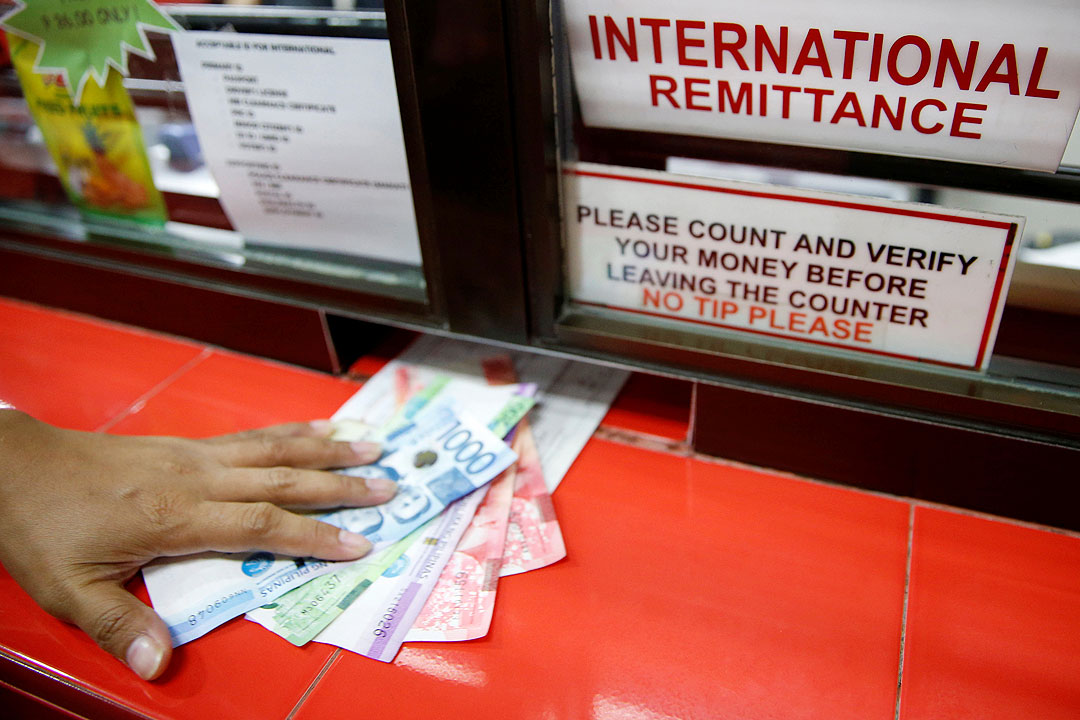
A man accepts Philippine peso bills at a money remittance center in Makati City, Metro Manila, Philippines, Sept. 19, 2018. — REUTERS/ELOISA LOPEZ
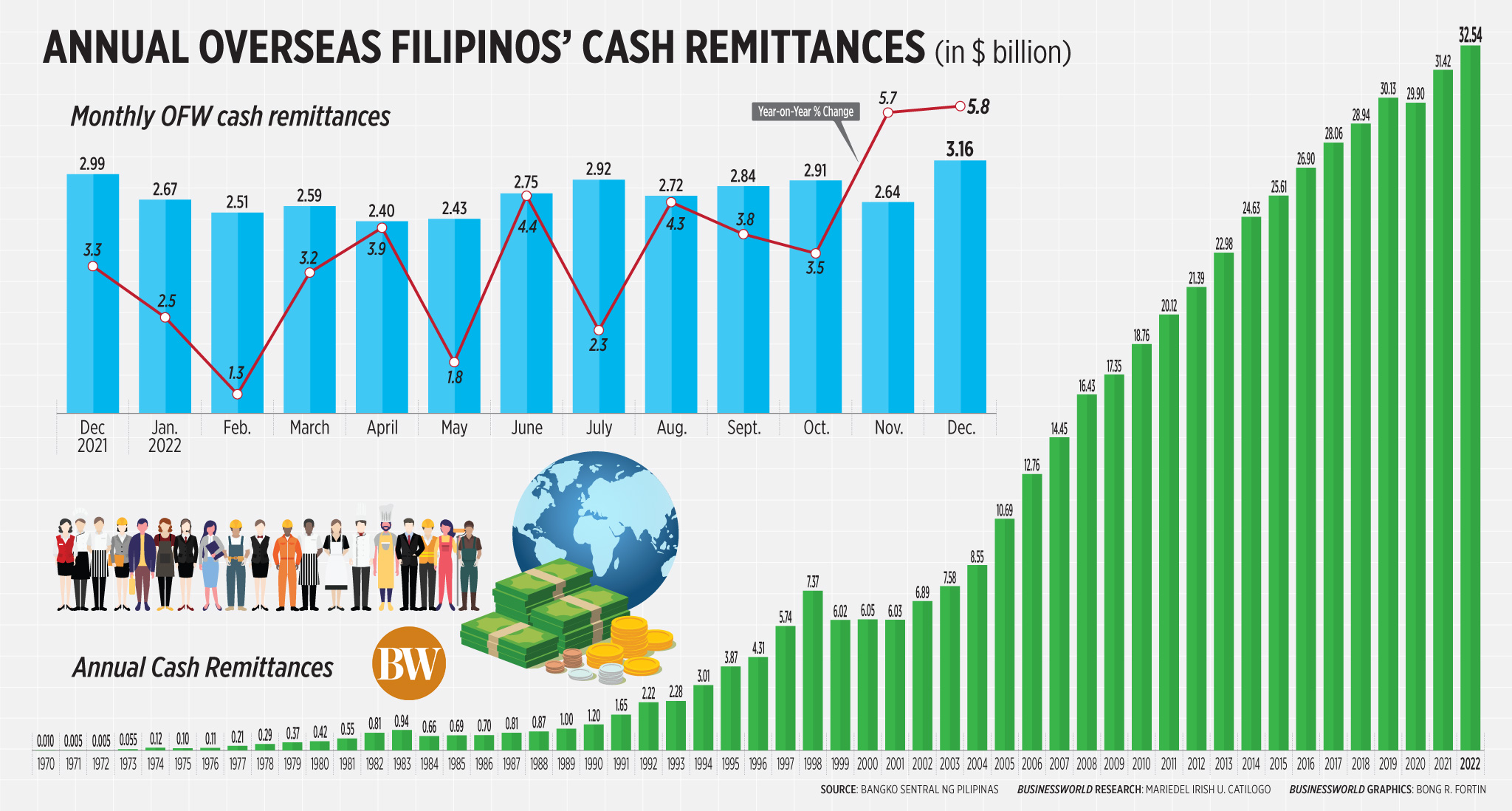
Cash remittances jumped by 3.6% to $32.54 billion last year, according to data released by the Bangko Sentral ng Pilipinas (BSP) on Wednesday. — REUTERS

CASH REMITTANCES hit a record high in 2022, as overseas Filipino workers (OFWs) sent more money to their families who are struggling with soaring prices.

Money sent by OFWs through banks jumped by 3.6% to $32.54 billion last year, according to data released by the Bangko Sentral ng Pilipinas (BSP) on Wednesday. It exceeded the previous record of $31.42 billion in 2021.

However, the 3.6% annual remittance increase fell short of the BSP’s 4% projection. It was also slower than the 5.1% expansion in 2021.

Annual Overseas Filipinos’ cash remittances (August 2022)

In December alone, cash remittances jumped by 5.8% to a record $3.16 billion, from $2.99 billion a year earlier. The growth in remittances for December was also the fastest since the 7% seen in June 2021.

“The expansion in cash remittances in December 2022 was due to the growth in receipts from land- and sea-based workers,” the BSP said.

Land-based OFWs sent $2.514 billion in December, up by 5.8% in the same month last year. Remittances from sea-based workers grew by 5.6% to $644.91 million from a year ago.   

Remittances usually surge in December as OFWs typically send more money to their relatives during the holidays, Union Bank of the Philippines, Inc. (UnionBank) Chief Economist Ruben Carlo O. Asuncion said in a Viber message.

“(This was) Christmas exuberance… Our OFWs were probably just in the mood to spend and spend so much. This December has been the most ‘open’ one in the last three years,” Mr. Asuncion said.

The Philippine economy grew by 7.2% in the fourth quarter, as household consumption rose amid Filipinos’ “revenge spending” during the holidays. This brought full-year economic growth to 7.6% in 2022, the fastest since 1976.

China Banking Corp. Chief Economist Domini S. Velasquez said elevated inflation may have also prompted OFWs to send more money to help their families.

“Pull factors such as high inflation and greater mobility in the home country (Philippines) encouraged more remittances,” Ms. Velasquez said.

Inflation accelerated to a 14-year high of 8.1% in December, bringing full-year inflation to 5.8% in 2022 amid soaring food prices.

Ms. Velasquez said the weaker peso in the last few months of 2022 “could have also helped” boost remittances.

The peso closed at P55.755 on Dec. 29, 2022, down 8.5% or P4.755 from its P51-per-dollar close on Dec. 31, 2021.

“Better economic performance in host economies led to jobs and income for overseas Filipinos — notably the US, Asia, and Middle East continue to post brisk economic activities,” Ms. Velasquez said.

According to the BSP, growth in inflows from economies such as the United States (US), Saudi Arabia, Singapore, Qatar, and United Kingdom (UK) contributed largely to the increase in remittances in 2022.

The US (41.2%) was the biggest source of remittances in 2022, followed by Singapore (7%), Saudi Arabia (6%), Japan (5.1%), the UK (4.7%), the United Arab Emirates (4.2%), Canada (3.6%), Qatar (2.8%), Taiwan (2.7%), and Republic of Korea (2.5%).

These countries altogether account for more than three-fourths (79.8%) of cash remittances during the year.

Meanwhile, personal remittances that include inflows in kind grew 5.7% to $3.49 billion in December from $3.30 billion in the year prior. This brought the full-year figure 3.6% higher to a record $36.14 billion.

“The robust inward remittances reflected the increasing demand for foreign workers amid the reopening of economies. The full-year 2022 level accounted for 8.9% and 8.4% of the country’s gross domestic product (GDP) and gross national income (GNI), respectively,” the BSP said.

UnionBank’s Mr. Asuncion expects remittance growth to slow this year due to the looming global economic slowdown.

“Our forecast for this year is a growth of 2.6%. It will be softer but still respectable,” he said.

Meanwhile, China Bank’s Ms. Velasquez is hopeful remittances will remain robust despite a global recession.

“Next year, we think that despite a global slowdown, remittances will remain robust with soft landing/only a shallow recession is expected from the US — the biggest sending country; better outlook for Asia, with China’s reopening; and continued deployment to the Middle East, Asia, and some European countries,” she said.

The BSP expects remittances to grow by 4% this year. — Keisha B. Ta-asan

BSP set to hike 2023 inflation forecast

Eggs are sold in a public market in this undated file photo. — PHILIPPINE STAR/WALTER BOLLOZOS

THE BANGKO SENTRAL ng Pilipinas (BSP) will likely raise its average inflation forecast for this year after the faster-than-expected headline print in January.

During a Senate hearing on Wednesday, BSP Deputy Governor Francisco G. Dakila, Jr. said that the Monetary Board “will take the January inflation into account” as they hold a policy meeting today (Feb. 16).

“The January inflation was higher than what we had projected. The BSP’s projection for January was only up to 8.3%, but inflation rose to 8.7%, so it was above our projected range,” Mr. Dakila said in mixed English and Filipino. 

Asked if the 4.5% inflation forecast for 2023 will be increased, Mr. Dakila said: “Most likely.”

Headline inflation quickened to 8.7% in January from the 8.1% in December, marking the highest in 14 years or since the 9.1% in November 2008.   

It was above the BSP’s forecast range of 7.5-8.3% and marked the 10th consecutive month inflation was above the central bank’s 2-4% target.

The BSP is widely expected to hike borrowing costs today. In a BusinessWorld poll conducted last week, nine analysts said they expect a 50-basis-point (bp) rate increase, while eight analysts anticipate a 25-bp increase.

“By next year, our projection is that inflation would be within target because our sources of inflation are driven by supply, but we still see some spillovers to the demand (side),” Mr. Dakila added.

At the last Monetary Board meeting in December 2022, the BSP said it expects inflation to ease to 2.8% in 2024.

The BSP raised interest rates by 350 bps since May 2022, bringing the overnight repurchase rate to a 14-year high of 5.5% last year.

The central bank is also ready to adjust policy stance as necessary “to keep further second-round effects at bay and prevent inflation expectations from becoming disanchored,” BSP Governor Felipe M. Medalla said earlier.

THREAT TO RECOVERY
Meanwhile, the government should manage inflation before it threatens economic recovery, Philippine Chamber of Commerce and Industry (PCCI) President George T. Barcelon said.

“We cannot allow the 8.7% inflation rate to increase any further, with the help of the combination of monetary tools and addressing supply problems, especially agricultural products,” he said during a BusinessWorld Insights webinar on Wednesday.

“If unattended, this will really be a big threat to our country’s economic recovery. Not to mention that it would worsen the plight of the poor sector of our country,” he added.

In January, inflation for the bottom 30% income households quickened to 9.7%, from the 9.4% print in December and 4% last year.

The Philippine economy this year faces heightened risks from elevated inflation, tighter policy, a looming global recession and geopolitical uncertainties. Economic managers are targeting 6-7% gross domestic product (GDP) growth this year, slower than the 7.6% GDP expansion in 2022.

Mr. Barcelon also said the government should continue to ramp up infrastructure projects under its “Build, Better, More” program.

The government should also become aggressive in attracting more foreign investments following the passage of key reform measures such as the amendments to the Foreign Investment Act, Retail Trade Liberalization Act, and Public Service Act.

“What needs to be highlighted is that the centerpiece of our country’s economic program really depends on the well-being of the micro, small, and medium enterprises (MSMEs),” Mr. Barcelon said.

MSMEs account for 99% of businesses in the country.

Jose Antonio S. Vilar, Sage Solutions Philippines, Inc. chief marketing office, urged the government to address high power costs in the country.

“One of the biggest problems here is power. It is costly compared to other parts of the world. There is a huge shortfall, which hopefully, the government, the Senate and the House could come up with laws that will be easier for companies set up power plants, allowing healthy competition,” he said. — Keisha B. Ta-asan and Revin Mikhael D. Ochave

ADVERTISEMENT
ADVERTISEMENT