Home Blog Page 5244

Film academy response to Will Smith slap was ‘inadequate,’ group’s president says

REUTERS
REUTERS

BEVERLY HILLS, Calif. — Hollywood’s film academy did not adequately respond to Will Smith’s slap of Chris Rock at the Academy Awards last March, the organization’s president said on Monday at a gathering of this year’s Oscar nominees.

The Academy of Motion Picture Arts and Sciences was criticized for allowing Mr. Smith to remain in his seat, and accept the best actor trophy, after he assaulted Mr. Rock on stage.

“What happened on stage was totally unacceptable,” academy president Janet Yang said at the annual Oscar nominees’ luncheon in Beverly Hills. “And the response from the organization was inadequate.

“We learned from this that the academy must be fully transparent and accountable in our actions, and particularly in times of crisis,” she added.

Mr. Smith resigned from the academy after the incident, and the academy banned him from attending the Oscars for 10 years. He remains eligible to be nominated for and win Academy Awards.

At Tuesday’s lunch, nominees including Tom Cruise, Steven Spielberg, Michelle Yeoh and Angela Bassett schmoozed and posed for a group photo.

Winners will be announced at a ceremony televised live on Walt Disney Co.’s ABC on March 12. — Reuters

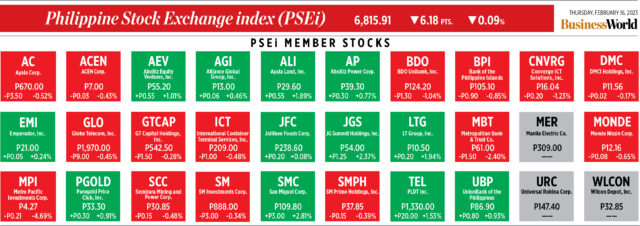
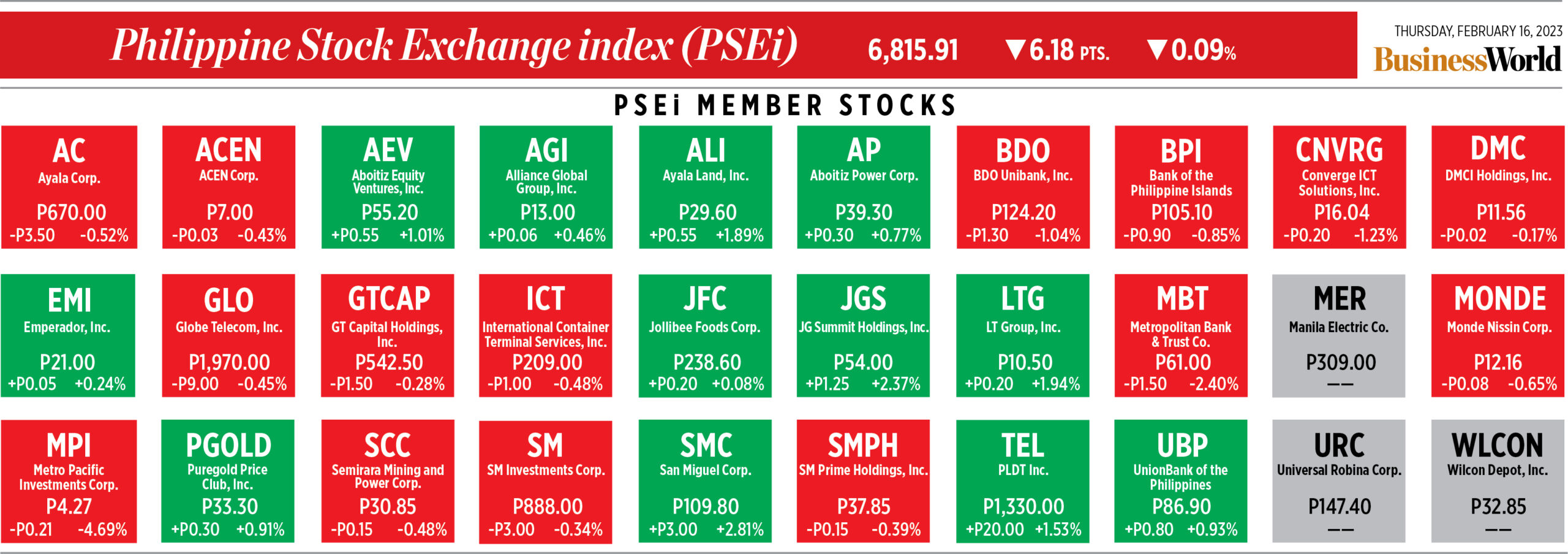
How PSEi member stocks performed — February 16, 2023

Here’s a quick glance at how PSEi stocks fared on Thursday, February 16, 2023.


Fujifilm PHL plans to introduce more healthcare solutions

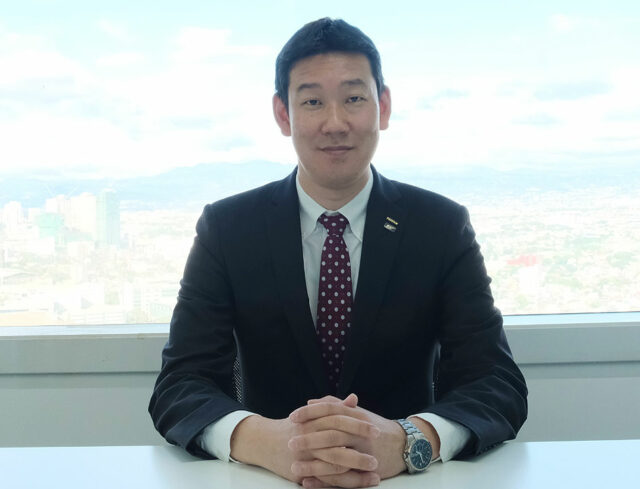
Fujifilm Philippines President Masahiro Uehara

Fujifilm Philippines plans to introduce more healthcare solutions in response to rising local demand, its newly appointed president announced on Thursday.

“Fujifilm will continue to provide a range of products and services that address the needs of healthcare personnel, helping to improve medical care and supporting the well-being of people,” Fujifilm Philippines President Masahiro Uehara said during a briefing.

The Japanese brand, which has been operating in the Philippines since 2012, is working to increase its presence in the healthcare and graphic sectors, he noted.

According to the company, it began offering healthcare solutions to the local market in 2021, when its parent company, Fujifilm Corp., acquired the diagnostic imaging-related business of Hitachi, Ltd. 

“It covers computed tomography (CT) and magnetic resonance imaging (MRI), X-ray, ultrasound systems, endoscopy, in-vitro diagnostic systems, and picture archiving and communications systems (PACS),” Fujifilm Philippines said in a statement.

According to Mr. Uehara, Fujifilm Philippines is now focusing on the “health and well-being of the Filipino people.”

“At the height of the pandemic, Fujifilm Philippines installed FDR Go PLUS, a digital mobile X-ray, in various hospitals across the country to help frontliners do chest X-rays and determine patients with COVID-19 symptoms,” the company noted.

Fujifilm Philippines, which has expanded far beyond its roots in photography, has become known for its technology-driven solutions.

“In 2019, the company established its first outlet in Cebu to address the increasing demand and make sure that the quality of its products and services in the Visayas and adjacent places in Mindanao are maintained,” the company noted.

Mr. Uehara also vowed to make the company’s products more accessible to local businesses.

“We are confident that we can help the local businesses in the Philippines to reach their goals and grow their businesses even further,” he said. — Arjay L. Balinbin

Peso rebounds vs dollar as BSP delivers large interest rate hike

BW FILE PHOTO

THE PESO strengthened against the dollar on Thursday after the Bangko Sentral ng Pilipinas (BSP) delivered another large increase in benchmark interest rates.

The local currency closed at P55.12 versus the greenback on Thursday, climbing by five centavos from Wednesday’s P55.17 finish, Bankers Association of the Philippines data showed.

The peso opened Thursday’s trading session weaker at P55.35 per dollar. Its intraday best was at P55.02, while its worst showing was at P55.39 against the greenback.

Dollars traded rose to $1.14 billion on Thursday from $1.072 billion on Wednesday.

“The peso appreciated amid expectations of a strong BSP policy rate hike today,” a trader said in a Viber message on Thursday.

The peso strengthened “after the larger local policy rate hike of 50 basis points (bps) to 6%… that could support the peso with higher interest differential versus the dollar,” Rizal Commercial Banking Corp. Chief Economist Michael L. Ricafort likewise said in a Viber message.

The BSP on Thursday hiked benchmark interest rates by 50 bps for a second straight meeting, bringing its policy rate to 6%, amid higher prices and rising inflation expectations.

The rates on the central bank’s overnight deposit and lending facilities were also increased to 5.5% and 6.5%, respectively.

The BSP has now hiked borrowing costs by 400 bps since May 2022.

Headline inflation rose by 8.7% year on year in January, faster than 8.1% in December 2022 and marking the 10th straight month that it exceeded the central bank’s 2-4% target for the year.

Meanwhile, the US Federal Reserve earlier this month raised its target interest rate by 25 bps to a range between 4.5% and 4.75%, bringing cumulative hikes since March 2022 to 450 bps.

Stronger foreign investments data for 2022 and the government’s recently concluded retail Treasury bond (RTB) offer also supported the peso, Mr. Ricafort added.

Approved foreign investment pledges rose by 25.6% last year, preliminary data from the Philippine Statistics Authority showed.

Total approved foreign investments stood at P241.89 billion last year, higher than the P192.55 billion in 2021 and more than double the P112.12 billion recorded in 2020.

Foreign investments jumped by 30.1% year on year to P173.61 billion in the fourth quarter of 2022. The growth was slower than the 265.8% seen in the final three months of 2021 but was a turnaround from the 22.4% decline in the third quarter last year.

Last quarter’s foreign investment haul was the largest in 13 straight quarters or since the P182.44 billion seen in the third quarter of 2019.

Meanwhile, the government raised P283.711 billion from its offering of 5.5-year RTBs that ended two days ahead of schedule, National Treasurer Rosalia V. de Leon told reporters on Wednesday.

Of this total, the government raised P31.671 billion from the bond exchange offer program.

The 5.5-year retail bonds carry a coupon rate of 6.125%.

For Friday, the trader said the peso may strengthen further against the dollar following the BSP’s latest policy move.

“The 25-bp differential from the Fed’s adjustment will be beneficial in favor of the peso relative to the greenback,” the trader added.

The trader sees the peso moving between P54.95 and P55.20 versus the greenback on Friday, while Mr. Ricafort gave a forecast range of P55 to P55.20. — AMCS

Stocks slip on last-minute selling after BSP move

STOCKS dropped on Thursday on last-minute profit taking amid the Bangko Sentral ng Pilipinas’ (BSP) decision to hike borrowing costs anew.

The benchmark Philippine Stock Exchange index (PSEi) dropped by 6.18 points or 0.09% to close at 6,815.91 on Thursday, while the broader all shares index gained 2.90 points or 0.08 % to end at 3,639.08.

“The local market declined due to last-minute profit taking. Investors secured gains ahead of the Bangko Sentral ng Pilipinas’ monetary policy decision to avoid losses in case there will be hawkish statements from the central bank,” Philstocks Financial, Inc. Research and Engagement Officer Mikhail Philippe Q. Plopenio said in a Viber message.

“The local bourse ended relatively flat as last-minute selling erased most of its early gains following the news of the BSP hiking rates by 50 basis points (bps),” AP Securities, Inc. Equity Research Analyst Carlos Angelo O. Temporal said in a Viber message.

The BSP’s policy-setting Monetary Board on Thursday raised benchmark interest rates by 50 bps for a second straight meeting after headline inflation surprised to the upside last month, indicating widening price pressures.

The latest increase brought the policy rate to 6%, the highest since August 2008. The BSP has now hiked borrowing costs by 400 bps since May 2022.

Inflation climbed 8.7% year on year in January, faster than 8.1% in December 2022. It was the 10th consecutive month that it exceeded the central bank’s 2-4% target range for the year.

“Philippine shares closed slightly lower even after a stronger-than-expected January retail sales report was released, which suggested that the Federal Reserve may have further to go in its efforts to tame inflation,” Regina Capital Development Corp. Head of Sales Luis A. Limlingan added in a Viber message.

US retail sales improved to 3% in January driven by motor vehicle sales and other goods.

The US central bank raised the fed funds rate by 25 bps earlier this month to a range between 4.5% and 4.75%, bringing cumulative hikes since March 2022 to 450 bps.

Back home, sectoral indices were split on Thursday. Mining and oil declined by 126.22 points or 1.11% to 11,222.48; financials went down by 16.95 points or 0.92% to 1,819.19; and services lost 0.22 point or 0.01% to end at 1,689.74.

Meanwhile, property went up by 9.53 points or 0.31% to 3,011.85; holding firms added 9.27 points or 0.14% to close at 6,539.44; and industrials gained 4.50 points or 0.04% to 9,879.04.

Value turnover went up to P12.23 billion on Thursday with 1.2 billion shares changing hands from the P5.26 billion with 1.09 billion issues traded on Wednesday.

Decliners outnumbered advancers, 102 versus 80, while 54 names closed unchanged.

Net foreign selling stood at P421.32 million on Thursday versus the P143.88 million in net foreign buying seen on Wednesday.

AP Securities’ Mr. Temporal placed the PSEi’s immediate support at 6,700 and resistance at 7,000. — Ashley Erika O. Jose

MRT-3, LRT Line 2 could be bundled for privatization

PHILIPPINE STAR/ MICHAEL VARCAS

By Justine Irish D. Tabile, Reporter

THE Department of Transportation (DoTr) is considering offering Metro Rail Transit Line 3 (MRT-3) with Light Rail Transit Line 2 (LRT Line 2) as a bundle when the commuter transport services are privatized.

Transportation Undersecretary for Railways Cesar B. Chavez said in an interview that the DoTr has created a task force to plan out the privatization of MRT-3, which traverses the main Metro Manila artery, Epifanio de los Santos Avenue, and LRT Line 2, which links the City of Manila to eastern Metro Manila.

Wala pang final (decision) pero in principle approved na ni Secretary Jaime J. Bautista ang bundling (Nothing is final yet, but Secretary Bautista has approved in principle the bundling for privatization),” Mr. Chavez said.

The DoTr is planning ahead for the expiry of the MRT-3 operator Metro Rail Transit Corp.’s build, lease, and transfer agreement in 2025.

A separate company, Light Rail Manila Corp. (LRMC), operates LRT Line 2.

Ang daming options either independent operation and maintenance under LRMC or i-bundle namin ’yung MRT-3 sa LRT Line 2 (There are many options: either independent operation and maintenance under LRMC or bundle MRT-3 with LRT Line 2),” Mr. Chavez said.

Mr. Chavez also said that the department is considering variations to its plan of privatizing the operations and maintenance (O&M) of MRT-3 and LRT Line 2.

The options the DoTr is considering are: O&M of both railway systems with the LRT Line 2 extension to Tutuban, Divisoria and Pier 4; O&M plus the rehabilitation of light rail vehicles; or O&M and the replacement of the light rail vehicles.

RCEP success seen depending on stronger smuggling controls

THE success of Philippine participation in the world’s largest trade deal will require adequate border inspections and quarantine controls to deter smuggling, Senate President Juan Miguel F. Zubiri said.

In a statement on Thursday, Mr. Zubiri said the upgrading of border controls on commodity imports will also need to be accompanied by capacity-building programs for the agriculture industry to allow it to survive in the face of import competition.

The Senate is currently debating Philippine accession to the Regional Comprehensive Economic Partnership (RCEP), a free trade agreement which has raised concerns mainly from farmers.

“Our attack is two-pronged to make agriculture competitive against imports:  strengthen border and quarantine controls against smuggling, and we will modernize and empower our own sector,” he said.

The Department of Agriculture is currently pursuing an Agriculture Modernization Plan, but Mr. Zubiri said other measures can be harnessed to support the industry like trade promotion, shared services facilities, the Philippine Export Competitiveness Program, and, indirectly, a revival in manufacturing.

A Senate Special Oversight Committee will be established to ensure proper implementation of the RCEP agreement, Mr. Zubiri said, adding that the committee may also generate legislative proposals to pursue the needed structural reforms and address implementation gaps.

“We will also have an advisory group of stakeholders to guide the committee in its functions, which will include our agriculture stakeholders,” he said.

“As an agriculturist, I understand the fears of farmers,” Mr. Zubiri said. “That’s why I want to assure the sector that RCEP will not step on our farmers, and it will not kill our agriculture.”

He said highly sensitive agricultural products such as rice, pork, poultry meat, potatoes, onions, garlic, cabbage, sugar, and carrots, will be excluded from tariff liberalization under RCEP.

“In RCEP, the Philippines merely gave additional preferential arrangements to 33 agricultural tariff lines, specifically for Australia, New Zealand, China, and South Korea, compared to the existing ASEAN (Association of Southeast Asian Nations) +1 FTAs (free trade agreement),” he said, “and these tariff lines are only equivalent to 15 products, most of which pose no threat to our local products.”

The products are fish fillets, frozen mackerel, celery, sausages, olives, spinach, olive oil, live swine, live chicken, black pepper, palm nuts and kernels, preserved sweet corn, chilis and other capers, preserved onions, corn starch, and feed for primates.

“Our trade in these products is very insignificant,” Mr. Zubiri said. “Compare it to the benefits we will get from RCEP. There is no doubt that the arrangement we got is better.”

Trade Secretary Alfredo E. Pascual, also on Thursday, assured that agriculture will not be negatively affected by the trade deal.

“They will not be affected by the reduction in tariff, which means that the concern of the country being flooded by imports of these farm produce is not correct because they will still be protected,” he told One News.

“We have existing agreements with ASEAN countries. The tariff there will be respected,” he added.

Nonetheless, Mr. Pascual said that “It doesn’t mean that after we sign the agreement, everything will fall into place,” he said. “We have to exert effort.”

“We still have to improve our farm productivity with or without RCEP, with or without WTO (World Trade Organization) to improve the economic condition of our farmers,” he added.

The issues, Mr. Pascual said, was that farmers were not directly connected with their markets.

“Their products have to go through a series of traders along the line,” he said. “The solution is, and this is where DTI (Department of Trade and Industry) comes in, is to improve the efficiency of our supply chains between the farm, the consumer and institutional users of farm products.”

“We already have an arrangement,” he added. “The idea is to connect the farmers to institutional buyers.”

There is also a plan to organize farmers because individual farmers, Mr. Pascual said, do not have the bargaining power against buyers of their produce.

The DTI will direct the Cooperative Development Authority to focus on organizing and promoting farming cooperatives so that farmers can work together.

This, Mr. Pascual said, will also facilitate their ability to make arrangements for cold storage for their produce.

The committee report on the trade deal, which had 16 signatories, was endorsed to the plenary session late Wednesday. — Alyssa Nicole O. Tan


DTI’s Pascual calls free trade agreement ‘essential’ to European Union relationship

REUTERS

TRADE Secretary Alfredo E. Pascual said a free trade agreement (FTA) with the European Union (EU) is “an essential mechanism in the Philippines’ relationship with the EU” and called for negotiations for an FTA to resume.

Speaking at a European Chamber of Commerce of the Philippines (ECCP) luncheon in Makati City on Thursday, Mr. Pascual pitched for FTA talks to resume, calling it a means of achieving the EU’s objective of diversifying its suppliers.

An FTA with the Philippines “is consistent with the EU’s Indo Pacific Strategy. And it supports the EU’s goal of diversifying suppliers and enhance its cooperation on supply chains in the ASEAN region,” Mr. Pascual said.

“A timely conclusion of the Philippines-EU FTA negotiations will further expand the scope of market access for goods, services, and investments. To be included are other fields that would facilitate trade between our economies. Most importantly, this will increase and facilitate commercial exchanges among our economies’ business sectors,” he added.

FTA negotiations commenced in 2016, with the last round of negotiations conducted in Cebu City in 2017.

Mr. Pascual told reporters that the relations between the Philippines and EU have improved compared to the previous administration, with President Ferdinand R. Marcos, Jr. having already visited Brussels during his term. He also attended the Davos conference in Switzerland, a non-EU member.

Mr. Pascual also sought the ECCP’s assistance in pushing for the conclusion of the FTA.

He added that 83% of German companies view the resumption of the FTA talks as important, citing the findings of a survey by the German-Philippine Chamber of Commerce in 2020.

“It can be argued that as the Philippines implements existing FTAs and concludes new agreements, products from Europe will be competitively disadvantaged as they enter the Philippine market,” Mr. Pascual said.

Meanwhile, Mr. Pascual said that the Philippines is also pushing for the renewal of the EU’s Generalised Scheme of Preferences Plus (GSP Plus) scheme.

“We at the DTI are dedicated to directly engaging the EU’s core institutions — the European Commission, European Council, and Members of the European Parliament — to ensure our GSP Plus status and to reapply in the next GSP scheme,” Mr. Pascual said.

“The Philippines has been the only ASEAN country to benefit from the EU-GSP Plus since 2014. Philippine exports to the EU rose from 5.3 billion euros in 2014 under the standard GSP to 7.8 billion euros in 2021. The current GSP scheme, set to expire in December 2023, benefits Philippine exporters and EU importers alike,” he added.

GSP Plus is structured as an incentive arrangement that grants the Philippines zero tariffs on 6,274 products or 66% of all EU tariff lines in exchange for complying with 27 international conventions on labor, human rights, governance, and the environment.

Some of the country’s top EU-GSP Plus exports include crude coconut oil, vacuum cleaners, prepared or preserved tuna, hairdressing equipment, and prepared or preserved pineapple.

The Philippines has been threatened with cancellation of GSP Plus privileges, most recently when the European Parliament in February 2022 approved a resolution urging the Duterte administration to address allegations of violence and human rights violations.

“Through the years, the Philippines has engaged the EU and completed four GSP Plus monitoring dialogue cycles that review the country’s compliance with the 27 conventions covered under GSP Plus,” Mr. Pascual said.

“Historically, the EU has been a significant trading partner of the Philippines and it is now ranked as the 4th largest trading partner of the country. The EU is also a major investment partner of the Philippines. Over the years, the EU has been one of the largest foreign investors to the Philippines, putting in over P102 billion or around 2 billion euros,” he added. — Revin Mikhael D. Ochave

Health-worker COVID compensation process streamlined

REUTERS

THE departments of Budget and Management (DBM) and Health (DoH) are streamlining the application process for public and private health workers seeking compensation for falling ill during the pandemic.

In a joint administrative order, the departments said revised implementing guidelines on the grant of COVID-19 compensation “removes ambiguities,” permits “innovative ways of accepting applications,” and “further streamlines the process for the evaluation and grant of compensation to public and private health workers who contract mild or severe COVID-19 while in the line of duty or who die while fighting the disease,” according to the order.

Compensation for healthcare workers who contract COVID-19 is authorized by Republic Act No. 11494 or the Bayanihan to Recover as One Act.

The order recognizes that the compensation program has “encountered unforeseen challenges that made the processing times longer and derailed its intended purpose of providing immediate compensation to healthcare workers.”

Under the program, health workers who contracted mild or moderate COVID-19 in the line of duty and have recovered are entitled to P15,000, while those who had severe or critical cases get P100,000.

The corresponding death benefit is P1 million.

The revised guidelines also outline the requirements for eligibility, claim evaluations, and payment processing.

The DoH also declared its intent to continue with the compensation program despite the expiry of the Bayanihan act.

“The DoH finds it imperative to continue the provision of compensation granted to health workers considering that the latter remain vulnerable to COVID-19 as they continue to serve… thus, the government commits to continue granting compensation to these eligible health workers,” it added. — Luisa Maria Jacinta C. Jocson

BPI reaffirms PHL 2023 growth forecast at 5-6%

PHILIPPINE STAR/ MICHAEL VARCAS

BANK of the Philippine Islands (BPI) has reaffirmed its Philippine gross domestic product (GDP) forecast for 2023 at 5% to 6%, while warning that economic managers need to tap more growth drivers to make the recovery more robust.

BPI Global Markets Economist Rafael Alfonso Q. Manalili said in a statement on Thursday that the GDP per capita has not returned to pre-pandemic levels, which might not have been the case if the growth drivers had been diversified.

BPI’s economic growth forecast for 2023 is lower than the government’s estimate of 6% to 7%.

Economic output grew 7.2% year on year in the three months to December, bringing full-year growth to 7.6%. This beat the 7.5% estimate given by economists in a BusinessWorld poll and exceeded the government’s 6.5% to 7.5% goal.

It was also the highest growth rate since the 8.8% posted in 1976.

The bank noted that the slower economic growth is due to high inflation, which it sees gradually declining to the 4.5% to 5.5% range this year amid persistent supply constraints in agriculture.

The central bank’s inflation target range is 2-4%.

Headline inflation rose to 8.7% in January, above the 8.1% posted in December, the highest since the 9.1% reading in November 2008.

January inflation was also above the Bangko Sentral ng Pilipinas’ forecast range of 7.5-8.3% and was the 10th consecutive month inflation exceeded the central bank’s target.

Mr. Manalili added that aggressive rate hikes by central banks could increase the cost of financing projects and investing in hard assets like equipment and factories.

“It might prevent the private sector from ramping up their capital expenditure,” he said.

BPI expects additional rate hikes throughout the first half of 2023 before a pause in the second half.

The Federal Reserve could also even cut rates if the US enters a recession, BPI added.

Mr. Manalili noted that the current state of the economy is vulnerable, despite encouraging progress in consumer spending, remittances, and business process outsourcing revenue.

“The Philippine economy is a consumer-driven economy, and we have a strong consumer base. It’s an asset that has allowed us to grow by at least 6% in the past decade, but this makes us vulnerable in the context of a pandemic,” he said.

The Philippines needs to look for other growth drivers beyond household consumption and services for cushion in case of future shocks, Mr. Manalili said.

He added that the government should fast-track infrastructure development to attract more investment.

“We need to reduce the cost of producing goods, and to do that, we need to improve infrastructure. We have the highest electricity rates and transport costs in the region. It’s feasible for us to improve on that,” he said.

Mr. Manalili also noted that the manufacturing sector has grown modestly by 3% relative to pre-pandemic levels despite the support provided by global demand.

The Philippine Statistics Authority’s Monthly Integrated Survey of Selected Industries indicates that manufacturing, as measured by the volume of production index, expanded by 4.8% year on year in December.

The government needs to diversify in favor of investment spending, manufacturing, and exports, Mr. Manalili said.

“This will allow us to grow faster and will protect us from external shocks like the COVID-19 (coronavirus disease 2019) pandemic,” he said.

BPI booked a net profit of P39.6 billion in 2022, up 66%, driven by strong loan growth, higher net interest margins, and lower provisions.

BPI shares fell 90 centavos or 0.85% to P105.10 on Thursday. — Aaron Michael C. Sy

Farm organization calls hybrid seed program unsustainable for raising productivity

NEDA

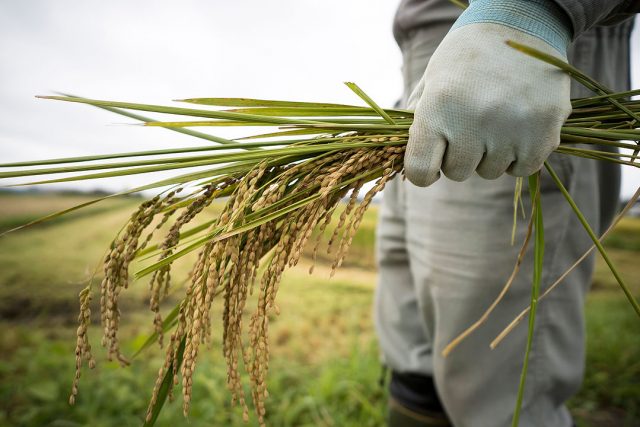
THE government’s approach of offering hybrid rice seed for raising productivity is unsustainable because farmers abandon hybrid once subsidies are withdrawn, a farm organization said.

“They should look into why hybrid seed usage has not expanded significantly despite the seed subsidies being given by the DA and why farmers revert to inbred seed when the subsidies are removed,” Federation of Free Farmers National President Raul Q. Montemayor said in a Viber message.

On Tuesday, President Ferdinand R. Marcos, Jr. announced the use of hybrid seed to increase production on the recommendation of hybrid seed supplier SL Agritech Corp.

Mr. Marcos also promised to support farmers with subsidies and loans.

According to Mr. Montemayor, hybrid seed varieties outperform inbred seed at yields of six tons per hectare compared to four tons per hectare respectively.

He said cost of production per hectare is higher for hybrid but cost per kilogram of rice output is usually lower because of the high yield.

Hybrid seed costs nearly 10 times the cost of inbred, so “distributing hybrid seed is not enough.”

He added that hybrid seed is not suitable for all areas and work best in the dry season, requiring more fertilizer, adequate irrigation, and proper application of technology.

Mr. Montemayor said that not all farmers can afford or are willing to risk spending more money on hybrid as these cannot be replanted, unlike inbred seed.

“Government should also develop publicly available hybrid varieties so that the farmers have a choice and are not dependent on only one or two private seed companies,” he said. — Sheldeen Joy Talavera

Vet visits remain low in PHL despite rise in pet adoption — Royal Canin

PHILIPPINE STAR/ MICHAEL VARCAS

INCREASED PET adoption in the Philippines is driving pet food sales, but there has been no corresponding increase in vet visits, according to Royal Canin Philippines.

“We grew close to 35-40% during those years of the pandemic (2020-2022); whereas, in the past, we would be growing a modest 15-20%,” said Gerard Y. Poa, market head of Royal Canin Philippines, the local arm of the French cat and dog food manufacturer.   

“Pets adopted in 2020 are still alive, so you continue to give them the right nutrition… It’s a big boost to exponentially grow the category,” he told BusinessWorld in a Zoom interview.

The Philippines has 26 million pet dogs and eight million pet cats, he noted. 

The country is “very much” a pet dog market, he also said, although cat adoption is increasing in many cities.

Short-form videos of animals and pets received the most engagement on Facebook and Instagram in the first three quarters of 2022, according to Meta, the company that owns the two social media platforms.    

Mr. Poa said that veterinary consultations are part of responsible pet ownership.  

“If you look at the numbers, ‘vetification’ is very, very small,” he said, noting that only 22% and 8% of pet dogs and cats, respectively, are taken to animal clinics for check-ups.

“Pet owners would only take their pets to the vet if there’s something visibly wrong,” he said. The numbers mean that “a lot of dogs we have are not even vaccinated. It’s as basic as that.” 

The vet-patient ratio in the Philippines is 1:21000, much below the ideal ratio of 1:3000. “We work with vet universities to encourage them to take up small animal practice. That way we can improve the ratio here in the Philippines,” Mr. Poa said. 

Total pet food sales in the Philippines is estimated to grow by 9% in 2023 to $434 million from last year’s $397 million, based on a report by the United States Department of Agriculture.  

Worldwide, the pet food market is anticipated to grow a compound annual growth rate of 4.6% between 2022-2027, according to Mordor Intelligence, a market intelligence and advisory firm. 

An increase in pet parenting, as well as a growing awareness of feeding pets with premium and packed pet food, were seen as growth drivers.

According to Mr. Poa, the majority of Royal Canin’s customers come from the upper C to A socioeconomic classes. 

“Human food is not designed for the system of cats and dogs,” he noted. “If you feed them typical food like adobo, which is very salty and full of soy sauce, it will damage their organs. It’s really about education, to make sure that pet owners understand the role of nutrition in making their pets live a longer life,” he added. — Patricia B. Mirasol

ADVERTISEMENT
ADVERTISEMENT