Home Blog Page 5211

Dow said it would recycle running shoes. We found them for sale in Indonesia
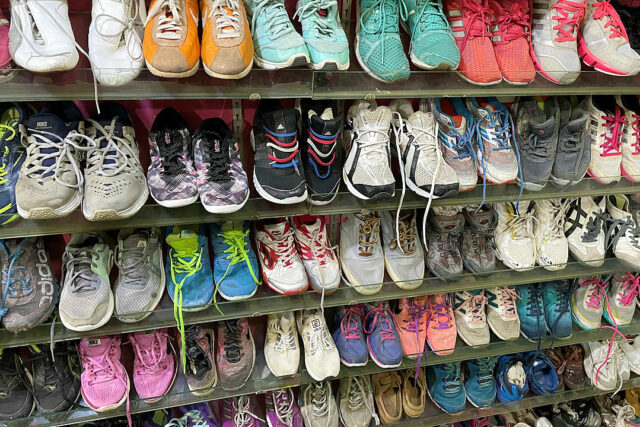
SECONDHAND shoes are displayed at a shoe shop in Batam, Indonesia, Aug. 4, 2022. — REUTERS

SINGAPORE — At a rundown market on the Indonesian island of Batam, a small location tracker was beeping from the back of a crumbling second-hand shoe store. A Reuters reporter followed the high-pitched ping to a mound of old sneakers and began digging through the pile.

There they were: a pair of blue Nike running shoes with a tracking device hidden in one of the soles.

These familiar shoes had traveled by land, then sea and crossed an international border to end up in this heap. They weren’t supposed to be here.

Five months earlier, in July 2022, Reuters had given the shoes to a recycling program spearheaded by the Singapore government and US petrochemicals giant Dow, Inc. In media releases and a promotional video posted online, that effort promised to harvest the rubberized soles and midsoles of donated shoes, then grind down the spongy material for use in building new playgrounds and running tracks in Singapore.

Dow, a major producer of chemicals used to make plastics and other synthetic materials, in the past has launched recycling efforts that have fallen short of their stated aims. Reuters wanted to follow a donated shoe from start to finish to see if it did, in fact, end up in new athletic surfaces in Singapore, or at least made it as far as a local recycling facility for shredding.

To that end, the news organization cut a shallow cavity into the interior sole of one of the blue Nikes, placed a Bluetooth tracker inside, then concealed the device by covering it with the insole. The tracker was synched to a smartphone app that showed where the shoe moved in real time.

Within weeks, the blue Nikes had left the prosperous city-state and were moving south by sea across the narrow Singapore Strait to Batam island, the app showed. Reuters decided to put trackers in an additional 10 pairs of donated shoes to see if wayward pair No. 1 had been a fluke.

It wasn’t.

None of the 11 pairs of footwear donated by Reuters were turned into exercise paths or kids’ parks in Singapore.

Instead, nearly all the tagged shoes ended up in the hands of Yok Impex Pte Ltd., a Singaporean second-hand goods exporter, according to the trackers and that exporter’s logistics manager. The manager said his firm had been hired by a waste management company involved in the recycling program to retrieve shoes from the donation bins for delivery to that company’s local warehouse.

But that’s not what happened to the shoes donated by Reuters. Ten pairs moved first from the donation bins to the exporter’s facility, then on to neighboring Indonesia, in some cases traveling hundreds of miles to different corners of the vast archipelago, the location trackers showed.

Using the smartphone app to trace the movement of each shoe, Reuters journalists later traveled by air, land and sea to recover three pairs — including the blue Nikes — from crowded bazaars in Indonesia’s capital Jakarta, and in Batam, which lies 12 miles (19.3 kilometers) south of Singapore. Four pairs ended up in locations in Indonesia that were too remote for Reuters to track down in person. In three other cases the trackers stopped sending a signal after they reached Indonesia.

The 11th pair remains in Singapore, but their fate is not what Dow and Sport Singapore had promised in media releases and a promotional video posted online. Those shoes — a pair of men’s white Reeboks — ended up in a public housing project about a mile (1.6 kilometers) from a community sports center where Reuters had dropped them into a donation bin on Sept. 8. Its tracker still blinks from that location, according to the app, an indication that they may have been taken from the donation bin. Reuters visited the housing project but wasn’t able to find the exact location of the shoes.

Presented with Reuters’ findings early this year, Dow said on Jan. 18 that it had opened an investigation along with Sport Singapore, a state agency, and other sponsors of the program: French-owned sporting goods retailer Decathlon S.A.; banking giant Standard Chartered plc; ALBA W&H Smart City Pte. Ltd (Alba-WH), a local waste management firm; and B.T. Sports Pte Ltd., a Singaporean firm responsible for shredding the donated footwear at a local facility.

On Feb. 22, Dow said in an emailed statement to Reuters that the investigation had concluded and, as a result, Yok Impex would be removed from the project, effective March 1. It did not explain why a used-clothing exporter had been involved in retrieving footwear from the donation bins, but said the program’s partners were now searching for another company to collect the shoes.

“The project partners do not condone any unauthorized removal or export of shoes collected through this program and remain committed to safeguarding the integrity of the collection and recycle process,” said the statement, which Dow issued on behalf of all the sponsors.

Reuters reporters visited the premises of Yok Impex on Feb. 23 to ask about whether it had been removed from the project. The trader’s accountant, June Peh, told Reuters the firm would be leaving the program when its one-year contract comes to an end, without giving a reason for its exit or an exact date.

In January, Decathlon sent Reuters a statement saying it had not authorized the export of any shoes from the program. Standard Chartered and B.T. Sports did not respond to requests for comment. Sport Singapore and Alba-WH referred questions to Dow. Alba-WH is a partnership between ALBA Group, a major German waste management company, and Wah & Hua Pte Ltd., a Singaporean waste disposal firm. The two companies did not respond to emailed requests for comment.

Reuters tracked the 11 pairs of shoes over a six-month period. All the footwear was placed in different donation barrels around Singapore between July 14 and Sept. 9 of last year. While the sample was small, the fact that none of these shoes made it to a Singapore recycling facility underscores weaknesses in the system.

The findings come as environmental groups say chemical companies like Dow are making exaggerated or false claims about recycling in order to burnish their green credentials, and to undermine proposed regulations to rein in the soaring production of plastics used in single-use packaging and fast fashion.

The donated shoes that ended up in Indonesia have added to a flood of illegal second-hand clothing pouring into that developing country, according to a senior government official there, who said such cast-offs pose a public health risk, undercut its local textile industry and often pile more waste into its already bulging landfills.

Dow told Reuters the Singapore shoe project was making progress. A sports facility under construction in Jurong, a district in western Singapore, will use recycled shoe material in its surfaces, Dow said in its January statement. The company also pointed to Kallang Football Hub, a new soccer complex whose running track purportedly was the first in Singapore to be made from recycled shoe granules. Dow said these builds will use the 10,000 kilograms (22,000 pounds) of recycled shoe material that have been produced through the Singapore recycling project so far.

Reuters was unable to verify if these sports surfaces had been built because both complexes are under construction and cordoned off from the public.

A pilot project in 2019 collected 21,000 pairs of shoes, Paul Fong, Dow’s Singapore manager, said in a promotional video posted on social media in July 2021 when the nationwide program was launched. Another pilot project in 2020 collected 75,000 pairs of shoes, Fong said in that video. Fong did not respond to emailed questions.

Dow and its partners declined to say how many of the shoes collected during the pilot phase had gone on to be recycled, nor would they provide those figures for the countrywide rollout. They did not explain what procedures were in place to ensure that donated shoes weren’t exported, diverted for resale or pilfered from bins.

HIDDEN TRACKERS
Dow manufactures silicone rubber and plastic used in soles and midsoles of sports shoes. The multinational and Sport Singapore said in their 2021 media releases that their “first of its kind” program would divert 170,000 pairs of shoes annually from the landfill. The program partners did not respond to questions about what would happen to these shoes or how many would be recycled to make sports surfaces.

Under the slogan “Others see an old shoe. We see the future,” they called on the public to donate used shoes with rubberized soles to help ease the burden on Singapore’s incinerators and its only landfill.

Dozens of wheelie bins for donations were placed across the city-state of 5.6 million people. These containers turned up in parks, community centers, schools and outlets of retail sponsor Decathlon. Singapore residents began depositing thousands of used sneakers, flip-flops and school shoes. In the promotional video, members of the public, including school children, talked enthusiastically about donating.

“I contributed 15 pairs of shoes,” student Zhang Youjia said in the video, which was produced by Dow.

The ten pairs donated by Reuters that were exported moved initially from the recycling drop-off bins to the warehouse of Yok Impex, situated in west Singapore close to the island’s biggest dockyard.

From there, the shoes traveled by sea to Batam, an entry point for goods entering Indonesia, which has a population of more than 270 million people, the fourth-largest in the world.

Guided by the smartphone app, Reuters in December followed two of the trackers to the same location in Batam: Pertokoan Cipta Prima, a sprawling flea market catering to low-income shoppers. There, dozens of vendors working out of rows of crumbling concrete shops patched with tarpaulin and metal sheets were selling everything from T-shirts and refrigerators to plastic toys.

The news agency spotted half a dozen stores selling used shoes, all clustered in the same area. At three of them, Reuters saw footwear stuffed into sacks emblazoned with the words “Yok Impex,” along with the Singapore company’s dolphin logo.

The first pair to be tracked down were the blue Nike running shoes. The app led to a gloomy, cluttered shoe store. But the sneakers weren’t on display. Using a function on the app to make the tracker start beeping, a reporter followed the sound to the back of the shop, finally locating those Nikes at the bottom of a mound of loose footwear. It had been five months since Reuters had deposited them into a donation barrel at a gleaming Decathlon store in Singapore. Reuters bought them back for 180,000 rupiah ($12).

The second tracker – tucked into a pair of women’s black Nikes – was located at a nearby shop. Reuters had dropped those shoes into a Dow recycling bin at a Singapore community center in September, three months earlier. They cost 120,000 rupiah ($8) to repurchase.

Other shoes went on a far longer voyage.

INCREDIBLE JOURNEY
A pair of pink and orange New Balance sneakers – donated by Reuters in Singapore on Sept. 7 – landed in the same Batam market a week later, the tracking app showed. By early October, they had moved to a nearby island called Bintan, before making a 400-mile journey to Medan, a city of 2.4 million people in northern Sumatra. On Oct. 10, the shoes traveled another 800 miles to Indonesia’s capital Jakarta, according to the app.

Indonesia’s second-hand clothing industry is made up of a complex network of traders, and they often exchange goods across different regions, two garment merchants told Reuters.

Three weeks later, on Nov. 1, two Reuters reporters searched a frenzied mall in Jakarta looking for the shoes, eventually discovering them in a cramped shop on the third floor. The sneakers, freshly cleaned and fitted with a new pair of laces, had crisscrossed Indonesia on a marathon eight-week journey. They cost Reuters 300,000 rupiah ($20) to buy back.

To learn more about Yok Impex’s role in the movement of these shoes, Reuters on Jan. 6, 2023, paid an unannounced visit to that used-clothing exporter, and was invited onto the premises. There reporters spotted wheelie bins from Dow’s shoe program stacked up in a backyard. Inside, women sorted through tables piled high with old shoes, carefully placing them into piles and then transferring them into sacks like the ones seen at the Batam flea market.

Yok Impex’s logistics manager, Tony Tan, told Reuters that waste handler Alba-WH was paying his company to collect the shoes from the donation bins around Singapore and then deliver the shoes back to Alba-WH.

Tan said Yok Impex did not export shoes it collected for the program. When informed that Reuters had found shoes it had donated being resold in Batam by merchants who had Yok Impex sacks in their shops, Tan said it was possible that shoes from the program got placed in error with other footwear it exports to Indonesia.

“Sometimes the workers mix it up. I’m not sure because we all collect from some other suppliers,” Tan said. “It’s a mistake. I think, some mistake.” Tan did not elaborate.

BANNED TRADE
In 2015, Indonesia’s Ministry of Trade introduced the Prohibition of the Import of Used Clothing regulation. The measure banned the import of used clothes and footwear over concerns about hygiene and the potential of these items to spread disease, as well as the need to protect the local textile industry.

Veri Anggrijono, Director General of Consumer Protection and Trade Control at the trade ministry, told Reuters that the illegal second-hand clothing import market in Indonesia is worth millions of dollars a year.

“It’s a well-organized activity because when we raid them in one place, then it will go quiet, then continue again,” Anggrijono told Reuters in an interview at his office in Jakarta. He said the importer is the party liable under the law, not the exporter or market seller.

Anggrijono said importers can be charged under trade and consumer protection laws, which carry penalties that can include imprisonment and fines. But he said so far the only action the trade ministry has taken is to revoke import licenses, as well as seizing and destroying used clothing.

A torrent of cheap, unregulated second-hand clothing flowing into Indonesia also adds to the country’s mounting garbage problem, said Dharmesh Shah, a policy advisor to the Global Alliance for Incinerator Alternatives, a nonprofit working on waste pollution. He said much of that merchandise is in such poor condition that vendors can’t resell it.

“They sort through it and a very small percentage is actually reusable,” Shah told Reuters. “It just gets burned in open dumps or goes into rivers or in landfills.”

Two market vendors in Batam, who asked not to be named, told Reuters they buy sacks of shoes of differing grades from used-clothing traders such as Yok Impex, but don’t know exactly what they’re getting until they open them up. They said it’s not uncommon to throw out half the shoes they receive because the footwear is not good enough to sell.

RECYCLING FLOPS
This is not the first novel recycling scheme launched by Dow that hasn’t lived up to its billing.

In 2021, a Reuters investigation found that a program in Idaho that the company said was using breakthrough technology to turn plastic waste into clean fuel was actually burning plastic trash to fuel a cement plant.

At the time, a Dow spokesperson said the Boise program was helping to “transform waste into valuable products.”

The same year, Reuters found that a Dow-backed project in India, which was supposed to collect plastic trash from the Ganges river and use high-tech machinery to transform the waste into clean fuel, had been shut down following regular equipment malfunctions.

The India project was run by The Alliance To End Plastic Waste (AEPW), a nonprofit group set up by big oil and chemical companies. At the time, a spokesperson for the AEPW confirmed that the project had ended, due in part to the COVID-19 pandemic.

Selling the promise of new recycling technologies, whether to turn shoes into playgrounds or plastic bags into clean fuel, is an attempt to lull the public into a false sense of security about the environmental impact of increased consumerism, environmental groups like Greenpeace and Break Free From Plastic say.

Dow declined further comment on those claims or its track record on recycling.

Jan Dell, founder of The Last Beach Cleanup, a US nonprofit focused on reducing plastic pollution, said large petrochemical companies should have to report on the results of their sustainability projects with the same transparency as the profit-making parts of the business.

“Dow promised to pick up these shoes and grind them into materials and make them into playgrounds, and instead they’re being found all over another country. They literally cannot be believed,” said Dell, after being given details of Reuters’ findings.

Promises about new recycling technologies also make good business sense for petrochemical companies, according to Dell, who said throw-away consumer culture is good for their profits. People are more likely to purchase more of a product when they are told it can be recycled into something useful, according to a 2013 study in the Journal of Consumer Psychology.

In its Jan. 18 statement, Dow said the shoe recycling partners are “energized by the common vision of sport championing a greener and more sustainable Singapore.” Dow did not comment on the Journal of Consumer Psychology study.

In July of last year, Dow launched a similar shoe recycling program in Malaysia, which has a population of 33 million people and neighbors Singapore to the north. In promoting that project, Dow’s Fong pointed to the Singapore shoe program as the blueprint for success. For its Malaysian initiative, Dow partnered with a local nonprofit and a textile firm. Neither responded to requests for comment.

Back in Singapore, Dow’s efforts are already winning accolades.

On the evening of Oct. 6, Fong and other partners in the Singapore shoe recycling program stepped onto the stage of an elegant ballroom at the Equarius Hotel beach resort on Sentosa Island, just off the mainland. There they were presented with the “Most Sustainable Collaboration” award at a glitzy event hosted by the Singapore International Chamber of Commerce, the city-state’s oldest business association. — Reuters

Dilbert cartoon dropped after racist rant by creator Scott Adams

THE CARTOON Dilbert has been dropped from numerous US newspapers in response to a racist rant by its creator on YouTube.

Scott Adams called Black Americans a “hate group” and suggested white Americans “get the hell away from Black people” in response to a conservative organization’s poll purporting to show that many African Americans do not think it’s OK to be white.

“If nearly half of all Blacks are not OK with white people … that’s a hate group,” Mr. Adams said on his YouTube channel on Wednesday. “And I don’t want to have anything to do with them.”

The comments ignited a furor on social media, along with calls for the conservative cartoonist’s work to be dropped from publishers’ rosters.

His once-popular comic strip, which lampoons corporate culture and was launched in 1989, will no longer be carried by the Los Angeles Times, the Washington Post, the USA Today-affiliated group of newspapers and others, the newspapers announced in statements on Friday and Saturday.

“This is not a difficult decision,” Chris Quinn, editor of the Plain Dealer in Cleveland said in a letter to readers posted on Friday. “We are not a home for those who espouse racism.”

The Los Angeles Times on Saturday said it too would drop the strip.

“Cartoonist Scott Adams made racist comments in a YouTube livestream Feb. 22, offensive remarks that The Times rejects,” the newspaper said on its website.

The Times said it had removed four Dilbert cartoons from its pages in recent months because they violated the newspaper’s standards.

Mr. Adams could not immediately be reached for comment by Reuters on Saturday. But on his YouTube channel, he confirmed his comic was being dropped — and said he had expected that to happen.

“By Monday, I should be mostly canceled. So most of my income will be gone by next week,” he said. “My reputation for the rest of my life is destroyed. You can’t come back from this.”

Mr. Adams’ initial remarks came in response to a conservative Rasmussen Poll that appeared to show that 26% of Black respondents said they disagreed with the statement “It’s okay to be white.” Another 21% said they were not sure.

However, Rasmussen also said the online and phone survey last week of 1,000 likely US voters showed that 72% of Americans overall agree it’s OK to be white, compared with 12% who disagree.

Mr. Adams said in his Wednesday rant that he had moved to a different location to get away from Black people, and urged other whites to do the same.

“I’m not saying start a war or anything like that,” he said. “I’m just saying get away.” — Reuters

1.3M births logged in 2021, deaths jumped by 43% 

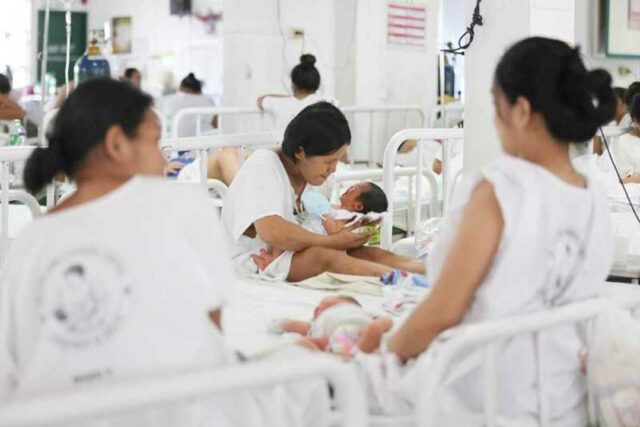
PHILIPPINE STAR/KRIZ JOHN ROSALES

By Bernadette Therese M. Gadon, Researcher

Live births registered in 2021 declined10.7% year on year, while births fell 23.8% in the past decade, according to data from the Philippine Statistics Authority (PSA) released on Friday.

A total of 1,364,739 live births were registered in 2021, the PSA said in its birth statistics. This is equivalent to a crude birth rate (CBR) of 12.4 or 12 births per thousand population.

In absolute figures, the number of births declined by 163,945 from 1,528,684 live births logged in 2020.

The decline in 2021 was also the highest drop recorded in the past decade. Births decreased by 425,628 from 1,790,367 live births registered back in 2012.

Reintegration for Care & Wholeness Foundation, Inc. Registered Guidance Counselor Ma. Rebecca D. Medez said that the declining number of births were due to Filipinos “getting educated on the factors of raising children.”

Either by experience or through information, young adults or couples are more “aware” on the costs and challenges of having children, Ms. Medez said in a Viber phone call interview.

She added that priorities have changed during the pandemic.

“During the pandemic, when everybody was quarantined, the reality of family concerns became greater,” she said, adding that family now may not be more on having children, but more or nurturing partnerships.

On average, 3,739 babies were born daily, which translates to 156 babies born per hour or around 3 babies per minute in 2021.

September had the most registered births in 2021, with 133,409 births, or 9.8% share of total births that year. It logged a daily average of 4,447 births.

This was followed by October (9.7% share) with 132,752 births, and November (9.2%) with 126,022 births.

By region, Calabarzon (Cavite, Laguna, Batangas, Rizal, Quezon) recorded the most births with 204,333. This is equivalent to 15% share of total number of live births that year.

This was followed by Metro Manila (11.8% share) with 160,946 live births, and Central Luzon (11.7%) with 159,984 live births.

Of the total registered births, 92% (or 1,251,818) of these were born in health facilities such as hospitals and clinics.

8% or 108,882 babies were born at home, while 0.3% or 4,039 babies were born elsewhere not stated by PSA.

Majority of births had parents aged 25-29 years old with 381,289 or 27.9% mothers and 352,406 or 25.8% fathers within that age group.

Mothers aged 20-24 followed with 331,913 logged or 24.3% of total.

Meanwhile, fathers aged 30-34, was the second age group with 310,881 or 22.8% of total.

According to PSA, the median age for mothers was 27 years old, while 30 years old for fathers.

“The generation now is more on establishing career, and the urgency to have children is not as much as before,” Ms. Medez said.

She also added that young adults, especially educated young adults, are more intentional in planning their family life, establishing priorities, and having a stabilized career first before getting married or having children.

Also included in the report was the number of births out of wedlock. The PSA reported 57.1% of births logged were born out of wedlock.

This amounts to 779,154 births in 2021.

Twelve regions reported over 50% of its births to be illegitimate led by the National Capital Region (NCR) with 69.2%, Eastern Visayas (67.6%), and Calabarzon (62.6%).

Almost 92% of total births were registered on time, the PSA said. 1,249,654 had timely registration, with 14.9% share coming from Calabarzon.

DEATHS SURGED IN 2021
In a separate release, PSA reported a total of 879,429 deaths in 2021, up 43.2% from 613,936 logged in 2020.

This is equivalent to a crude death rate of 8% or 8 deaths per thousand population.

It was the highest logged death in the past decade and up 70.8% from the 514,745 registered deaths in 2012.

An average of 2,409 deaths were recorded per day. Equivalent to 100 deaths per hour, or about 2 deaths per minute.

Calabarzon logged the most deaths with 15.7% share, or 138,298 deaths. Followed by Central Luzon (12.9%), and NCR (12%).

Likewise, September logged the most deaths, with 119,758 or 13.6% total share. September had an average of 3,992 deaths per day.

The Statistics authority also reported more deaths among males with 55.8%.

The sex ratio indicates that 126 male deaths happen for every 100 female deaths.

By age group, Filipinos aged 85 and over logged the highest deaths in 2021 with 103,575 or 11.8% share, followed by ages 70-74 (11.4%) and 65-69 years (11.1%).

Almost 60% of deaths were attended by either a physician, public health officer, hospital authority, or others. Meanwhile, 45.3% were unattended and 2.8% were not stated.

In absolute figures, 456,784 deaths were attended, while 397,994 were unattended, and 24,651 were not stated.

Most deaths in 2021 occurred in their homes (62.1%), while 37.2% at health facilities, and 0.7% in other places such as on the street, public places, in transit, etc.

Ischaemic heart diseases remained the leading cause of death in 2021 with 17.7% of total, followed by cerebrovascular diseases (9.8%), and COVID-19 virus identifies (9%).

RMN Marketing and Media Ventures Inc. opens the doors to RMN360X

RMN-MMV clients and partners can access the 360X Dashboard for free.

Coming from a successful metaverse inspired trade launch, RMN Networks’ Marketing and Media Ventures, Inc. (RMN-MMV), the sales and creative marketing arm of one of the largest radio networks in the country Radio Mindanao Network, launched 360X, the first in the radio ad serving industry.

With the ever changing media planning landscape in the advertising and media industry where Millennials and Gen-Zers now making up the majority of the networks media agency partners organizational structure, RMN-MMV believes in the need to develop innovative and more digitized media trading tools that will strategically appeal to them as they develop relevant media recommendations and solutions to their respective clients . 

According to Tristan Nacino, director of innovation and business development at RMN-MMV, “After all, our media agency partners are also consumers themselves so we should reach out to them just like how customers are served well by any company even if our dealings with them is more B2B. We see and treat them as our valued customers deserving of not just quality service but more importantly, that quality service should also be served to them in an effective and efficient platform where they’re more strategically accustomed with, both as media planners and as regular consumers, and that is, Digital.” 

May Digital Ba Kayo?

In this current era of digitization, a lot of media companies use social media to promote content and build an audience. In the case of RMN-MMV the approach is different, RMN – MMV pivot strategy is based on purposeful digital transformation: “For us in RMN-MMV, purposeful digital transformation is a process of Unlearning, Re-skilling, and Upskilling our people that should be in practice in order to create new products that will generate new businesses. It is a constant collaboration of various departments but most importantly we believe that our people should have fun doing it in order for this transformation to be successful.” added by Tristan.


Adapting to the changing media landscape, RMN360X MMverse is an interactive, meta verse-like social playground for brands. A media product that is customizable and can be white labeled, re-skinned and redesigned for RMN partners this was unveiled and used during the metaverse- inspired RMN-MMV trade launch.

RMN MMV Executive Vice President and COO Erika Canoy-Sanchez stated that products like the 360X is also a way for RMN to pave the way to the digital future of the network and continue to provide creative media services to all media agencies and brand partners.

“We have pretty much set the stage for all of [our media partners] to see and experience the overall digital transformation of the RMN Network,” Erika noted.

The RMN 360X Media Planning Dashboard, is a D.I.Y. multi-touch-point media planning tool showcasing RMN’s full network plans and media package, the 360X also unifies all of RMN’s media products from On-Air (radio), On-Ground (events and activations), Online (social and web), and On-Point (media research products). 


360X includes media products ranging from On-Air, Online, On-Point and On-Ground like RMN Biyahenihan, a customizable in-transit program activation by RMN.

By using the 360X, media planners and buyers can strategically Create, Customize, Add to Cart, Send and Negotiate an RMN network powered media plan according to the campaign objectives and media budget in real-time by adding products to their campaign cart and sending it to the network sales team for final negotiation on rates.

The 360X will serve more than just a media planning tool and platform; it is soft-launched through an electronic direct mail campaign across several media agencies. However, soon RMN-MMV will make the platform available to a wide range of brands, with a focus on small enterprises. The 360X Media Planning Dashboard will be amplified across RMN-MMV social media assets; the promotion will contain helpful consumer information, hyper-local trivia, and even promotion of local people, places, and undiscovered food spots in various regions, a testament on how well the company knows its hyper-local community.

Want to give people a personalized survey experience that stays true to your brand? RMN-MMV offers customized brand surveys that determine brand health.

Believing that technology should be an integral part of every business, RMN-MMV invested in launching 360X with the help of Ioki Digital as the tech developer of the 360X. Prior to this, Ioki Digital and RMN partnered in digitizing RMN Foundation by launching a website with a  full 360 virtual tour of the first RMN station in Cagayan De Oro.

The RMN 360Xperience

“The 360X is just one of RMN-MMV’s product innovations that is exclusively created and developed to cater to the planning needs of our business partners, the media agencies, and clients today, particularly digital solutions complementing our on-air product offerings.” Tristan added.

RMN-MMV clients can avail these network plans available in the 360X Dashboard. 360X will be made available soon to SMEs and MSMEs.

The RMN 360X will also serve as a tactile solution to locally iterate and complement the media planning approach of many brands today, known as ‘ALWAYS-ON.’ The 360X will carry the hyper-local articulation of what RMN calls as ‘ALWAYS-ON-TARGET,’ a planning discipline that agencies and brands can only get from RMN.

The “ALWAYS ON-TARGET” is more than just a media planning strategy in RMN, it’s a progressive and encompassing mindset that guides RMN-MMV’s creative and ideation processes to be more purposefully relevant to its client’s needs.

360X Planning in Easy Steps

Media planners and buyers may select any of the pre-configured 360X plans from the platform’s selection, which varies depending on their budget and specific KPIs. By using the “Basic 360X Plans” and picking their add-ons from the network’s collection of media products, they can also design and customize their own plan.

360X users can choose and check out the created network plan and immediately it will be sent to the RMN sales team. Clients and the RMN sales team can negotiate their package in real time within the dashboard, which is another feature of the 360X.

360X is now available and can be accessed via https://360x.mmv.ph.


Spotlight is BusinessWorld’s sponsored section that allows advertisers to amplify their brand and connect with BusinessWorld’s audience by enabling them to publish their stories directly on the BusinessWorld Web site. For more information, send an email to online@bworldonline.com.

Join us on Viber at https://bit.ly/3hv6bLA to get more updates and subscribe to BusinessWorld’s titles and get exclusive content through www.bworld-x.com.

New ‘Lord of the Rings’ films in the works at Warner Bros

STOCK PHOTO | Image by Pau Llopart Cervello from Pixabay

 – The Warner Bros movie studio is developing new installments in the blockbuster “The Lord of the Rings” and “The Hobbit” franchises based on the J.R.R. Tolkien novels set in the fictional world of Middle-earth, company executives announced on Thursday.

Warner Bros, owned by Warner Bros Discovery WBD.N, said it had reached a multi-year agreement to collaborate on new films with Middle-earth Enterprises, a unit of Embracer Group AB EMBRACb.ST.

“The Lord of the Rings” film trilogy, which began in 2001, won 17 Oscars. Three “Hobbit” films were released starting in 2012. The six films, directed by Peter Jackson, hauled in more than $6 billion at global box offices.

“For all the scope and detail lovingly packed into the two trilogies, the vast, complex and dazzling universe dreamed up by J.R.R. Tolkien remains largely unexplored on film,” Warner Bros. Pictures Group co-chairs Michael De Luca and Pam Abdy said in a statement. – Reuters

India urges focus on ‘most vulnerable’ at G20 meeting, avoids mention of war

 – Indian Prime Minister Narendra Modi urged global financial leaders to focus on the world’s “most vulnerable citizens” as he inaugurated a G20 meeting on Friday, the first anniversary of Russia’s invasion of Ukraine.

The Indian leader made direct no mention of the war in his address to G20 finance ministers and central bank governors at the Nandi Hills resort on the outskirts of Bengaluru, although the conflict and its effect on the world are likely to dominate the two-day meeting.

Mr. Modi said the COVID-19 pandemic and “rising geo-political tensions in different parts of the world” had led to unsustainable debt levels in several countries, disruptions to global supply chains and threats to food and energy security.

“I would urge that your discussions should focus on the most vulnerable citizens of the world,” he said, adding that stability, confidence and growth had to be brought back to the world economy.

Participants at the meeting, however, are likely to focus on the war in Ukraine. The G20 bloc includes the wealthy G7 democracies, as well as Russia, China, India, Brazil and Saudi Arabia.

French Finance Minister Bruno Le Maire told Reuters that G20 financial leaders must condemn Russia’s aggression against Ukraine and that Europe was working on new sanctions against Moscow.

US Treasury Secretary Janet Yellen and fellow G7 ministers called on Thursday for more financial support for Ukraine and vowed to maintain tough sanctions on Russia.

G7 chair Japan’s finance minister, Sunichi Suzuki, told reporters that the group would closely monitor the effectiveness of sanctions and “take further actions as needed”.

German Finance Minister Christian Lindner said the pressure on Russia must be kept high to “completely isolate” Russia’s economy.

India, which holds the current G20 presidency, does not want the bloc to discuss additional sanctions on Russia and is also pressing to avoid using the word “war” in G20 communique language to describe the conflict, G20 officials told Reuters.

New Delhi has maintained a neutral stance on the conflict, vastly increasing its purchases of cheaper Russian oil. Russia calls its actions in Ukraine a “special military operation”.

Yellen said the communique was still under discussion and she hoped to see a strong condemnation of Russia’s invasion and the damage it has caused Ukraine and the global economy.


GLOBAL ECONOMY IMPROVES

The meeting comes amid signs that the global outlook has improved from the last G20 summit in October, when a number of economies were teetering on the brink of recession amid energy and food price spikes caused by the war.

Ms. Yellen highlighted the improvement, saying the global economy “is in a better place today than many predicted just a few months ago”.

The International Monetary Fund has forecast global GDP growth for 2023 at 2.9%, up from a 2.7% forecast in October, but still well below the 3.4% achieved in 2022.

Ms. Yellen attributed the improvement in part to cooperation among G20 central banks and governments over the past year in taking strong action to quell inflation, even at the expense of growth.

Inflation in the United States and other countries has eased alongside lower energy prices, but Ms. Yellen added that such efforts needed to continue and more work was needed to mitigate spillovers from the war, such as easing food shortages and holding down energy prices and Russian revenues. – Reuters

Goldman Sachs CEO, after missteps, to take center stage at investor day

REUTERS

 – Goldman Sachs Group Inc’s Chief Executive David Solomon faces a reality check from investors on Tuesday as he presents plans to reach key financial goals.

At only the second investor day in Goldman‘s 154-year history, shareholders will gather in downtown Manhattan to assess the Wall Street giant’s roadmap after the high-profile flop of its consumer business, Marcus.

“It’s a pretty important investor day,” said Mike Cronin, investor director at fund manager abrdn, which owns a stake in the bank.

While Mr. Cronin said that the bank’s leadership could get the job done, “there’s definitely some debate about the path forward here, just given some of the missteps” and the gap between Goldman‘s promises and what it has delivered.

Investors will also judge whether the company can hit its target for return on tangible equity (ROTE), a measure of performance that compares profit versus shareholder equity.

Last year, its ROTE dropped to 11%, lagging peers and falling short of analysts expectations. That compares with 24.3% in 2021, a blockbuster year, reflecting how volatile Goldman‘s earnings can be.

The company needs to provide a “credible plan” to reach the medium-term target of 15% to 17%, Mr. Cronin said.

Mr. Solomon’s performance will also be scrutinized. The consumer business that he championed lost $3 billion in almost three years and its operations are being probed by regulators. Marcus’s woes also weighed on fourth-quarter earnings, which fell dramatically short of analyst expectations.

The results prompted investors and analysts to ask what comes next.

“We’ve set a clear strategic direction and we’re looking forward to sharing more on our plans to continue to deliver for shareholders at investor day,” said Tony Fratto, a company spokesman.

Mr. Solomon typically serves as Goldman‘s statesman, addressing conferences, speaking to media and posting a steady stream of photos to his LinkedIn page. But ahead of the Feb. 28 gathering, members of Goldman‘s top brass have joined in, granting rare press interviews to tout the company’s performance. It’s a big shift for a bank that has traditionally shunned attention.

In 2020, Solomon kicked off Goldman‘s inaugural investor day by telling participants they should feel free to “break into open applause.”

The tone may be more somber this year after the company laid off about 3,200 employees. The CEO‘s pay was reduced 29% to $25 million for 2022 amid a challenging operating environment.

Goldman‘s stock has outperformed most top U.S. banks since Solomon took the helm in 2018, but trailed rival Morgan Stanley MS.N.

Goldman trades at a price-to-book ratio, which measures the value of a company’s stock, of 1.19, less than Morgan Stanley’s 1.78 and JPMorgan Chase & Co’s 1.39.

The bank will probably miss its return target this year and next, said Mike Mayo, an analyst at Wells Fargo. Its headcount and compensation expenses should be reduced, given the worsening economic outlook and sluggish dealmaking, he said. Losses from the consumer business will also be a drag on earnings.


COST CUTS

Goldman will probably need to make deeper cost cuts “given the ongoing uncertain revenue environment,” Daniel Fannon, an analyst at Jefferies, wrote in a note.

The company needs to articulate a clearer path to profits for the newly-formed Platform Solutions unit, Mr. Fannon wrote. The division, which houses transaction banking, credit card and fintech operations, lost $1.67 billion in 2022.

David Fanger, analyst at Moody’s Investors Service, wants more details on Goldman‘s move to slim down alternative investments that weighed on earnings.

Some analysts have suggested Goldman Sachs should make a large acquisition in wealth management. That has been a winning strategy for rival Morgan Stanley, which benefited from more diverse revenue sources after buying brokerages Smith Barney and E*TRADE.

A deal could broaden Goldman‘s revenue beyond trading and investment banking, which can be buffeted by economic cycles. The two divisionswhich were merged last year, comprised 69% of the firm’s revenue in 2022.

Mr. Solomon has pushed back on deal talk, telling investors that there is a high bar for big transactions.

“This is certainly what the equity market wants them to do, but from a credit standpoint, it could be quite risky,” because it is easier to build a business in-house, said Fanger at Moody’s.

The investor day is also an opportunity for the company to address questions around Solomon’s leadership after bad press, Mr. Mayo said.

Veteran bankers at Goldman often cite their long tenures as marks of confidence and continuity. But several presenters from the 2020 investor day have since left.

Among them are former Chief Financial Officer Stephen Scherr, who left to become the CEO of Hertz last year, and Gregg Lemkau, the previous co-head of investment banking who now manages the assets of Dell founder, Michael Dell, at MSD Capital. Veteran partner Tim O’Neill retired as a partner.

Marcus has also had a wave of departures. Swati Bhatia, who led the direct-to-consumer unit, stepped down last month. Two former heads of the business — Omer Ismail and Harit Talwar — also moved on in recent years.

Mr. Solomon, however, is planning to stay.

Addressing investors as a Florida conference this month, he said: “I am delighted to be here, and I promise you, I am delighted to come back to Florida in February next year too.” – Reuters

Ex-producer Harvey Weinstein sentenced to 16 years on LA rape conviction

STOCK PHOTO | Image by Mihai Surdu from Pixabay

 – Harvey Weinstein, the onetime Hollywood titan who came to epitomize a culture of pervasive sexual misconduct by powerful men that ignited the #MeToo movement, was sentenced on Thursday to 16 years in prison for the 2013 rape of an actress in Los Angeles.

The sentence, to run consecutively to the 23-year prison term that Weinstein, 70, already is serving for a sexual misconduct conviction in New York, made it all the more likely the Oscar-winning exproducer will spend the rest of his life incarcerated.

Mr. Weinstein, seated in a wheelchair in brown jail garb, professed his innocence and implored the judge, “I beg your mercy,” moments before she pronounced his sentence. The two-hour proceeding unfolded in the same Los Angeles courtroom where a jury in December found Mr. Weinstein guilty of rape, forcible oral copulation and sexual penetration by a foreign object.

The charges stemmed from an assault on a former model and actress, identified in court as Jane Doe 1, at a Los Angeles hotel in February 2013.

Addressing the court through tears and a trembling voice near the end of Thursday’s hearing, the woman said she had been a “very happy and confident woman” until Weinstein raped her. Then, “I lost my identity. I thought for sure that no one could love me. I was heartbroken, empty and alone,” she added, choking back sobs.

The 16-year prison term handed down by Superior Court Judge Lisa Lench was more lenient than the maximum 24 years recommended by prosecutors but far more stiff than the sentence sought by Weinstein‘s lawyers.

Defense counsel Mark Werksman asked that Weinstein get no more than three years for each of the three counts on which he was convicted, to be served concurrent to one another, arguing the charges stemmed from “one continuing sexual assault” that occurred in “one frenzied 10- to 15-minute ordeal,” rather than as three separate criminal acts.

It was a rare courtroom admission of guilt by defense lawyers, even as Weinstein himself continued to deny any wrongdoing.

In his statement to the court, Mr. Weinstein insisted he did not know Jane Doe 1 and argued that she had fabricated her account for money.

“This is a made-up story. Jane Doe 1 is an actress. She can turn the tears on,” Mr. Weinstein told the judge. “Please don’t sentence me to life in prison.”

The defense also asked the judge to take into account Mr. Weinstein‘s age and deteriorating health, including coronary artery disease and severe spinal issues.


FALL FROM HOLLYWOOD GRACE

It marked the latest low point in a remarkable fall from grace for the co-founder of Miramax Films, the wildly successful US movie production and distribution house that produced such films as “Shakespeare in Love” and “Pulp Fiction.” Mr. Weinstein won an Oscar in 1999 as producer of “Shakespeare in Love,” that year’s Academy Award winner for best picture.

Mounting sexual misconduct allegations against Weinstein helped fuel the #MeToo movement, which has encouraged women to speak out about sexual harassment and abuse by powerful men in media, politics and other endeavors. The movement, which went viral on social media in 2017, seeks to break a culture of silence that has long allowed such conduct to go unchallenged.

Weinstein has said all of his sexual encounters were consensual.

Dave Ring, an attorney for Jane Doe 1, said Thursday’s sentencing provided his client “with closure and relief, knowing Weinstein will spend the rest of his life in prison where he belongs.”

The Los Angeles jury acquitted Mr. Weinstein of charges relating to a second alleged victim and failed to reach a unanimous verdict on charges arising from two other accusers.

One of them, documentary filmmaker Jennifer Siebel Newsom, now the wife of California Governor Gavin Newsom, had disclosed she was the alleged rape victim referred to in court records as Jane Doe 4.

Ms. Lench declared a mistrial on the deadlocked charges, and the Los Angeles County District Attorney’s Office has yet to decide whether to seek to retry Weinstein on those counts.

Defense attorneys argued that the women willingly had sex with Weinstein because they believed he would advance their careers, part of what they said was a widespread “casting couch” culture in the film industry. In two of the cases, they said the alleged sexual contact was fabricated.

Before pronouncing sentence, the judge denied a defense motion to throw out Mr. Weinstein‘s conviction and grant him a new trial.

Mr. Weinstein was found guilty of sexual misconduct in New York in February 2020, and is appealing the New York conviction and prison sentence. He was extradited from New York to California in July 2021 to face trial in Los Angeles. – Reuters

In Bangladesh, new school textbook features transgender people

STOCK PHOTO | Image by Pexels from Pixabay

 – Wearing bright saris and heavy make-up, many of Bangladesh’s transgenders, or hijras, spend their days begging from people stuck in traffic and shopkeepers who give them small change in exchange for lucky blessings.

The government recognized hijras as a third gender in 2013, but they remain marginalized in a country where sexual activity between people of the same sex is illegal. Many hijras live in abject poverty and have no opportunity for a proper education, much less a job. Many are forced to beg or engage in sex work to survive.

But on January 1, new textbooks were rolled out for millions of schoolchildren between the age of 11 and 13 featuring a segment on transgenders.

The textbook contains images of transgenders in respectable jobs, including a beautician, a development worker and an elected mayor, and the fictional story of a child who transitions, takes a female name and goes to live with a transgender community.

The creators of the book hope it will help nurture acceptance.

“We have piloted it in very small areas, and we got a very positive result, response from our students, because it was a completely unknown matter to them. It is new knowledge for them and they accepted it very well,” said Muhammad Moshiuzzaman, a member of the National Curriculum and Textbook Board.

“I think they are human beings just like us. We came to know about them by learning from the book, we think we should help them with their progress,” said Fatiah Alam, 12, a student at Gomail High school on the outskirts of the capital Dhaka, one of the schools that uses the new textbook.

Officials estimate there are about 10,000 hijras in Bangladesh but rights groups say the figure could be as high as 1.5 million in the country of 170 million people.

The textbook has not been welcomed by everyone. A large crowd of conservative Muslims angered by the inclusion of hijras recently held a protest at Dhaka’s main mosque calling for the textbook to be recalled.

Nevertheless, the transgender community and their supporters are hopeful that the textbooks will spread awareness and in turn help improve their status in society.

“If our story catches people’s attention and they keep our suffering in mind, that will be good for us. Those who learn more about us will hopefully understand and then work towards our development in the future,” transgender community leader Jonak told Reuters at her office in Dhaka. – Reuters

War in Ukraine drags into second year, Russia isolated in UN vote

Army soldier figurines are displayed in front of the Ukrainian and Russian flag colors background in this illustration taken, Feb. 13, 2022. — REUTERS/DADO RUVIC/ILLUSTRATION

 – The war in Ukraine entered its second year on Friday with no end in sight and Russia isolated at the United Nations in a vote demanding its forces withdraw, while G7 leaders are set to coordinate on more help for Ukraine.

As fighting raged on in Ukraine‘s east and south, its allies around the world showed their support on the first anniversary of Russia’s invasion.

Paris lit up the Eiffel Tower in the Ukrainian flag colors of blue and yellow and people draped in Ukrainian flags gathered at a vigil in London. In Brussels, European Union buildings were similarly lit up in the colors.

The UN General Assembly overwhelmingly adopted a resolution on Thursday marking the war’s anniversary and demanding Russia pull out and stop fighting.

There were 141 votes in favor and 32 abstentions. Six countries joined Russia to vote no – Belarus, North Korea, Eritrea, Mali, Nicaragua and Syria.

Russia’s ally China abstained on the U.N. vote.

Russia’s Deputy UN Ambassador Dmitry Polyanskiy dismissed the action at the United Nations as “useless”.

Ukrainian President Volodymyr Zelenskiy hailed the vote.

“This resolution is a powerful signal of unflagging global support for Ukraine,” he said in a post on Twitter.

On the battlefield, the Ukraine military reported increased Russian activity in the east and south as the anniversary approached, with at least 25 towns and villages in three northern regions along the Russian border under fire.

Reuters was not able to verify battlefield reports.

Russian President Vladimir Putin had ordered a full-scale invasion of Ukraine on Feb. 24 last year to seize Kyiv and topple the pro-European government, but those hopes were dashed by a fierce defense and military blunders that embarrassed Moscow.

Ukraine had success with counter-offensives in late 2022 to grab back much of the territory it had lost. Russia now controls around a fifth of Ukraine.


TRENCH WARFARE

The war, which Russia calls a “special military operation” to protect its sovereignty, has settled into attritional trench warfare, with rising losses on both sides, particularly this year in fighting in and around the eastern town of Bakhmut.

Some US and Western officials estimate Russia’s casualties at nearly 200,000 dead and wounded, while in November the top US general said more than 100,000 troops on each side had been killed or wounded.

It is impossible to independently verify casualties in what has become the worst conflict in Europe since World War Two.

Millions of Ukrainians have fled their country and tens of thousands of civilians have been killed.

The village of Bucha in the north near Kyiv, where mass graves were discovered, and the bombed out southern city of Mariupol became symbols of what Ukraine and its allies described as Russian brutality.

Ukraine and the West have accused Russia of war crimes, but it denies targeting civilians.

Far from the military campaigns, the war has damaged the world economy and a Cold War chill has set into international relations, with Putin raising the specter of nuclear weapons and signaling a desire to double down on a conflict that prompted tough Western sanctions.

With Mr. Zelenskiy insisting on his country’s sovereignty and Moscow’s withdrawal, the prospects of peace appear bleak.

“We don’t know when the war will end. But what we do know is that when the war ends, we need to ensure that history doesn’t repeat itself,” NATO Secretary-General Jens Stoltenberg told Reuters on Thursday.

“We need to ensure that we break the cycle of Russian aggression. We need to prevent Russia from chipping away at European security,” he said.


SUPPORT FOR UKRAINE

US President Joe Biden will meet virtually on Friday with G7 leaders and Mr. Zelenskiy to mark the anniversary and announce new sanctions against those aiding Russia’s war effort, the White House said.

White House National Security Adviser Jake Sullivan said the United States would provide an additional $2 billion in security assistance.

The United States has said China is considering providing weapons to Russia, which could intensify the conflict into a confrontation between Russia and China on one side and Ukraine and the US-led NATO on the other.

Beijing’s top diplomat visited Moscow this week and pledged a deeper relationship between the countries and Putin on Thursday hailed “new frontiers” in ties and signaled China’s leader Xi Jinping would visit.

Mr. Xi is expected to deliver a “peace speech” on Friday, though some analysts have cast doubt on whether China’s efforts to act as peacemaker will go beyond rhetoric.

The Chinese foreign ministry said in a position paper on Friday that dialogue and negotiation were the only viable ways to resolve the conflict.

“Conflict and war benefit no one. All parties must stay rational and exercise restraint, avoid fanning the flames and aggravating tensions, and prevent the crisis from deteriorating further or even spiraling out of control,” the ministry said.

Reflecting the Kremlin’s increasingly hawkish tone, Russian Defense Minister Sergei Shoigu on Thursday cast the war as an existential fight against a hostile West.

Ukraine and its allies say the invasion is an unjustified land grab aimed at subjugating a sovereign state.

Further ratcheting up tension, Mr. Putin announced plans on Thursday to deploy new Sarmat multi-warhead intercontinental ballistic missiles this year. This week, he suspended Russia’s participation with the United States in the New START, or Strategic Arms Reduction Treaty, on nuclear arms control.

Russia’s military focus is on seizing the eastern Ukrainian regions of Donetsk and Luhansk, which together form the industrial area known as the Donbas near the Russian border.

Close to a Ukrainian tank park near Bakhmut, which has become Russia’s main target, constant explosions could be heard on Thursday.

“If we give up Bakhmut, everything else will get even more complicated. We can’t give it up, under any circumstance. We will hold through,” Junior Sergeant Oleh Slavin, a tank operator, told Reuters. – Reuters

White supremacists behind over 80% of extremism-related US murders in 2022

STOCK PHOTO | Image by Rudy and Peter Skitterians from Pixabay

 – Mass shootings in the United States accounted for most extremism-related fatalities last year in the country with over 80% of those murders committed by white supremacists, data released by the Anti-Defamation League (ADL) showed on Thursday.

The advocacy group labeled 25 murders in 2022 as “extremist-related,” with 18 of those “committed in whole or part for ideological motives.”

Two mass shootings – one in May in Buffalo, New York, wherein an avowed white supremacist fatally shot 10 Black people, and another in November in Colorado Springs wherein five people were killed in an LGBTQ nightclub – accounted for most of the extremist-related murders of 2022, the ADL report showed.

White supremacists commit the highest number of domestic extremist-related murders in most years, but in 2022 the percentage was unusually high: 21 of the 25 murders were linked to white supremacists, according to the ADL report.

“All the extremist-related murders in 2022 were committed by right-wing extremists of various kinds,” the ADL report said.

ADL’s Center on Extremism reported an overall decrease from 2021 when 33 extremist-related killings were documented. ADL had documented 22 extremist-related killings in 2020.

Human rights groups have raised concerns over white supremacy in the United States in recent years.

President Joe Biden has labeled white supremacy as poison and called on Americans to reject it. In December, he established an inter-agency group to coordinate efforts to counter antisemitism, Islamophobia and related forms of bias and discrimination.

The issue of white supremacy came back into headlines late last year when former President Donald Trump hosted white supremacist Nick Fuentes at his private club in Florida. Trump said the encounter with Fuentes happened inadvertently while he was having dinner with Ye, the musician formerly known as Kanye West. – Reuters

Canadian privacy regulators launch joint investigation into TikTok

SOLEN FEYISSA-UNSPLASH

 – Canada is launching a joint federal and provincial investigation into short-video app TikTok over concerns about the Chinese-owned platform’s collection, use and disclosure of personal information, the Privacy Commissioner of Canada said on Thursday.

The federal privacy regulator, as well as provincial counterparts in Quebec, British Columbia and Alberta, will examine whether TikTok‘s practices are in compliance with Canadian privacy laws, the commissioner’s office said in a statement.

They will focus on examining “whether valid and meaningful consent is being obtained for the collection, use and disclosure of personal information,” according to the statement.

A spokesperson for TikTok said the privacy and safety of users “is always a top priority” and the probe was an opportunity to “set the record straight” on how the company protects the privacy of Canadians.

Canada joins governments and regulators from around the world that have been scrutinizing TikTok because of concerns China could use the app to harvest users’ data or advance its interests. TikTok is owned by Chinese company ByteDance Ltd.

The European Union’s two biggest policy-making institutions have banned TikTok from staff phones, while the US Senate in December passed a bill to bar federal employees from using the app on government-owned devices.

The investigation also adds another potential thorn in Sino-Canadian relations which have been tense for various reasons, including recent accusations by Ottawa that China has tried to influence its elections and that it has been running air and maritime surveillance activities.

Beijing denies those allegations and has urged Ottawa to stop unwarranted speculation and smearing. – Reuters

ADVERTISEMENT
ADVERTISEMENT