Home Blog Page 5146

Stocks to move sideways ahead of US CPI report

PHILIPPINE STOCKS are expected to move sideways this week as investors await the release of US consumer inflation data for February.

The Philippine Stock Exchange index (PSEi) went down by 19.39 points or 0.29% to close at 6,589.88 on Friday, while the broader all shares index declined by 8.80 points or 0.24% to 3,540.39.

Week on week, the PSEi dropped 65.49 points or 0.98% from its close of 6,655.37 on March 3.

“The market was down on growth slowdown fears given declines in quarter-on-quarter earnings for some PSEi companies, slower bank lending, local factory output decelerating and worries over faster US Federal Reserve hikes,” First Metro Investment Corp. Head of Research Cristina S. Ulang said in an e-mail.

Credit growth slowed to 10.4% in January from 13.7% in December, Bangko Sentral ng Pilipinas data showed.

Meanwhile, preliminary results of the Philippine Statistics Authority’s latest Monthly Integrated Survey of Selected Industries showed factory output, as measured by the volume of production index, expanded by 10.6% year on year in January.

This was faster than the revised 4.2% growth seen in December, but lower compared with the 10.9% in January 2022.

On the other hand, Fed Chair Jerome H. Powell told lawmakers last week that the US central bank will likely need to raise interest rates more than expected in response to recent strong data.

For this week, Philstocks Financial, Inc. Senior Research Analyst Japhet Louis O. Tantiangco said the main index could retest the 6,600 level, with investors likely to take their cue from February US inflation data.

“A strong inflation print, especially one that beats January’s 6.4%, may put downward pressure on both the Philippine peso and the local market as this would point to more rate hikes by the Fed,” Mr. Tantiangco said in a Viber message.

February US consumer price index (CPI) data will be released on March 14. In January, consumer inflation increased 0.5% after gaining 0.1% in December. In the 12 months through January, US January CPI increased to 6.4%.

“After a series of hawkish comments from no less than the Fed’s Powell [last] week, attention will turn to US CPI print for February [this] week — this is likely the final puzzle piece needed to gauge the next rate change,” online brokerage 2TradeAsia.com said in a note.

Rizal Commercial Banking Corp. (RCBC) Chief Economist Michael L. Ricafort said investors will remain cautious ahead of key data releases this week, including reports on trade and cash remittances.

“A wider balance of trade deficit and weak remittance data may also weigh on our local currency’s trading which in turn is seen to have negative spillovers on the market,” Mr. Tantiangco said.

2TradeAsia.com placed the PSEi’s immediate support at 6,400 and resistance at 6,700, while RCBC’s Mr. Ricafort put immediate support at 6,250 and resistance at 7,000-7,100. — Ashley Erika O. Jose

Metro Pacific begins initial work on Candaba Viaduct expansion

NLEX

By Justine Irish D. Tabile, Reporter

METRO PACIFIC Investments Corp.’s tollway unit said it has started preliminary work on the 5-kilometer Candaba Third Viaduct project worth P6.1 billion.

“We are already in the design stage,” Metro Pacific Tollways Corp. (MPTC) President and Chief Executive Officer Rodrigo E. Franco told BusinessWorld.

The project is being implemented by MPTC’s unit, NLEX Corp., with Hong Kong-based Leighton Asia the main contractor. The additional viaduct is covered by North Luzon Expressway Concession Agreement.  

The viaduct allows vehicles to traverse the Candaba Swamp, a major bottleneck to north-south travel in Central Luzon, between Pulilan, Bulacan and Apalit, Pampanga.

The third viaduct, to be built between the northbound and southbound portions, is set to be completed by the end of 2024, according to Mr. Franco.

Separately, MPTC is also targeting the completion of the entire length of the NLEX Connector Road between the Caloocan Interchange on C3 Road Dimasalang and Polytechnic University of the Philippines in Sta. Mesa, Manila by May.

The first segment of the NLEX Connector Road is set to open to the public March 27 with toll rates yet to be finalized by the Toll Regulatory Board (TRB). 

“There is a tollway application about to be submitted to the TRB. We anticipate that in the next two weeks, the TRB will set the toll fees at least for the first section to be opened,” Mr. Franco said.

MPTC is the tollways unit of Metro Pacific Investments Corp., one of three key Philippine units of Hong Kong-based First Pacific Co. Ltd., the others being Philex Mining Corp. and PLDT, Inc. 

Hastings Holdings, Inc., a unit of PLDT Beneficial Trust Fund subsidiary MediaQuest Holdings, Inc., has a majority stake in BusinessWorld through the Philippine Star Group, which it controls.

Interconnection last issue holding back two Cavite to Batangas toll roads — DPWH

The Cavite-Batangas Expressway — PIXABAY

THE Department of Public Works and Highways (DPWH) said the Cavite-Batangas Expressway (CBEX) and Cavite-Tagaytay-Batangas Expressway (CTBEX) projects will go ahead pending the resolution of interconnection issues.

“Both of the projects will continue as the two of them passed concession agreements. But we will have to iron out the pending issues so both of them can start,” DPWH Secretary Manuel M. Bonoan told reporters.

“I don’t think there will be a conflict in alignment because they have separate concessions,” he added.

On Feb. 7, San Miguel Holdings, Inc. and the Cavite province signed a joint venture and a 35-year tollway concession agreement which involves the construction, financing, operations, and maintenance of CBEX.

CBEX is a 27.06-kilometer toll road traversing Silang, Amadeo, Tagaytay, Indang, Mendez and Alfonso, Cavite, ending in Nasugbu, Batangas.

In a disclosure to the Philippine Stock Exchange, San Miguel Corp. said that the project aims to improve the connectivity between the National Capital Region and the Cavite, Laguna, Batangas, Rizal and Quezon region, enhance the mobility of people and goods, and mitigate road congestion in the area.

CTBEX is a project of Metro Pacific Tollways Corp. unit MPCALA Holdings, Inc., running through Silang, Tagaytay, Amadeo, Alfonso, and Magallanes, Cavite and Nasugbu. — Justine Irish D. Tabile

Health impact added to nuclear plant objections

REUTERS

HEALTH impacts have been added as another potential objection to nuclear power plants, with an Australian anti-nuclear advocate and doctor calling such facilities “cancer factories.”

“Nuclear power plants are cancer factories. Nuclear power plants (using) uranium produce over 200 radioactive elements, some which last seconds, and some which last millions of years,” according to Helen Mary Caldicott, founder of Physicians for Social Responsibility and Women’s Action for Nuclear Disarmament, speaking in a Zoom interview with BusinessWorld.

Ms. Caldicott, an Australian who has been nominated for the Nobel Peace Prize, added that radioactive waste, which needs to be isolated from the ecosphere for one million years, will also come up as an issue, she added.

Ms. Caldicott said that “as we put (radioactive waste) in the Earth,… the containers that hold radioactive elements will rust, break, and the radiation and elements will leak into the water supply,” thereby affecting the food chain.

“It only takes one beta particle, an electron or gamma radiation to kill you,” she added.

Genetic mutations also have the potential to affect reproduction, passing on mutations to future generations of humans, plants and animals.

A South Korean company has offered to rehabilitate the nuclear power plant in Bataan within five years for a cost of $1.19 billion, Philippine Nuclear Research Institute (PNRI) Director Carlo A. Arcilla said early in February.

The 621-megawatt Bataan Nuclear Power Plant was constructed as a response to the 1973 oil crisis. It was completed in 1984 at a cost of $1.9 billion but never loaded with fuel or operated due to financial issues and safety concerns.

“It’s never been operated, and it’s very old now in terms of technical (specifications). I would be very hesitant to open it up, and I would have to know everything about it from the structural capacity, the physics, are there any fuel rods there?” Ms. Caldicott said.

“But anyway, you don’t want a nuclear reactor because… studies have shown that children under the age of five living within five kilometers of nuclear power plants have doubled the incidence of leukemia.”

She said proximity to spent radioactive fuel rods for even a few seconds can be deadly.

“When they recharge the reactor and take out the spent fuel, there’s always a huge release of radioactive elements into the air and water. The water that is used to cool reactors goes back into the lake, the river, or the sea relatively radioactive, and as I’ve told you, it re-concentrates back in the food chain,” she said.

“You don’t want to increase the incidence of cancer in your country,” she added. “We’re talking about life and death now, and how sacred life is. Nuclear power plants are antithetical to the sanctity of life.”

The Catholic Church has posed its own objections, with Ruperto Cruz Santos, Bishop of Balanga, writing a pastoral letter calling the repurposing of the Bataan Nuclear Power Plant “neither right nor good.”

“We do not want to put life on the brink of danger, and we do not want a future without the certainty of goodness, safety and beauty,” he said. “We do not want our sea to be made uninhabitable for marine life, resulting in the destruction of our ecosystem.”

“We do not want our soil to be poisoned and no longer cultivable. We do not want our livelihoods destroyed,” he added.

The Department of Energy has estimated a timeline of 10 years before nuclear power can be integrated into the Philippine energy mix.

President Ferdinand R. Marcos, Jr. has expressed interest in exploring the feasibility of adding nuclear power to the grid.

“He’s wrong,” Ms. Caldicott said, saying that he needs to learn more about the impact of nuclear power.

She recommended that the Philippines focus on growing its renewable energy industry.

“You are one of the hottest countries in the world, so why don’t you cover all your buildings with solar panels and make solar farms so that huge areas of the country are covered with solar panels,” she said.

“You should have windmills everywhere,” she added.

She added that these two energy sources have become more affordable over the years, with the developing energy storage technology addressing the problem of intermittency plaguing solar and wind.

“The money that you put into a nuclear power plant could be billions and billions; it’s up to I think nearly $20 billion to build one,” she added.

These outlays, she said, “could be spent covering every single building in the Philippines with solar panels,” making the country self-sufficient in electricity production, she added. — Alyssa Nicole O. Tan

Doubt cast on PHL GDP target due to high interest rates

PHILIPPINE STAR/ MICHAEL VARCAS

THE government’s 6-7% gross domestic product (GDP) target will be difficult to hit this year due to rising interest rates amid inflationary pressure, a Refinitiv analyst said.

“It’s difficult to reach the 6-7% target this year, it’s more for next year. With a policy rate this high, when the sea doesn’t rise, the boat doesn’t rise as well. If everywhere around the world policy rates are high and economies aren’t doing well, the global economy won’t (do well either). Who will buy exports? Who will do business with you? You have to consider those,” Wilson Teo, Refinitiv senior customer learning manager for Investment Banking & Academia, said in a virtual briefing on Friday.

The Bangko Sentral ng Pilipinas (BSP) has increased borrowing costs by a total of 400 basis points since May 2022, bringing the key policy rate to a near 16-year high of 6% with the goal of taming inflation.

“It’s expected the central bank will hike rates fast and (keep them high) for longer. Hopefully it will not lead to a hot landing for the Philippines. The central bank will be able to skillfully revise down its policy when it feels like it’s time to do so,” he added.

Inflation slowed to 8.6% in February from 8.7% in January. It marked the 11th consecutive month inflation exceeded the central bank’s 2-4% target.

For the first two months of the year, inflation averaged 8.6%. The BSP expects inflation to average 6.1% this year.

“Next year, there will be growth. Inflation will come down by the end of this year so by the start of next year, the policy rate will be revised downwards in every country and this will enable growth when everything normalizes,” he added.

However, Mr. Teo said that a bright spot this year is China’s reopening.

“In a lot of research reports, they have all painted a bright spot in a gloomy landscape and that comes from China’s reopening. China’s economy can help support the gloomy outlook for the global economy. That comes with the (caveat) that it does not go back on its reopening,” he said.

“China is the world’s largest consumer of commodities. China is very important to developing countries. Developing countries have a close interconnection with China; they look to China in terms of exports. If exports to China were to slow down for whatever reason, you will feel the impact on developing countries,” he added.

China was the top export destination of the Philippines, accounting for 17.3% of total exports in December. — Luisa Maria Jacinta C. Jocson

Budget release rate hits 61.4% at end of Feb.

BW FILE PHOTO

THE Department of Budget and Management (DBM) said 61.4% of the 2023 national budget has been released as of the end of February.

In its Status of Allotment release report, the DBM said that P3.23 trillion of the budget has been released to national agencies and local government units.

This leaves P2.033 trillion remaining undistributed from the P5.268-trillion budget for the year.

The pace of releases was slightly ahead of the 60.8% rate posted a year earlier.

At the end of February, releases to government agencies and departments amounted to P2.7 trillion or 85.9% of the total.

Special Purpose funds released totaled P101.9 billion, a utilization rate of 19.8%.

Automatic Appropriation releases totaled P313.2 billion or 19.5% of the budgeted funds for the year.

These include the P80.64 million for retirement and life insurance premiums of various National Government agencies and P10 billion for the Rice Competitiveness Enhancement Fund. — Luisa Maria Jacinta C. Jocson

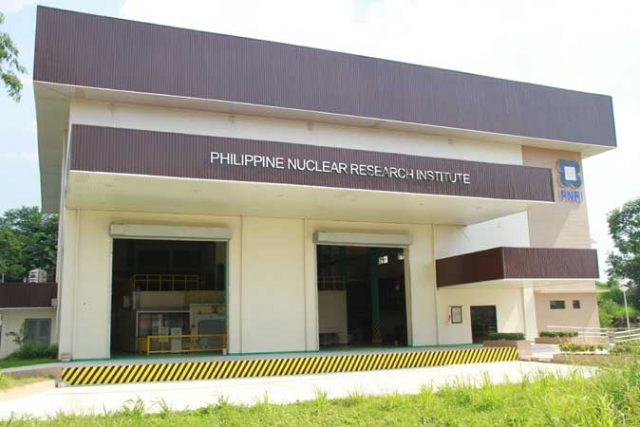
Nuclear research center reiterates need for separate regulatory body

PNRI.DOST.GOV.PH

THE creation of a new agency that will oversee nuclear power will assure objective regulation of the development of the industry, especially in the areas of safety and security, the head of a nuclear research institution said.

Responding to claims that a separate regulator is unnecessary, Carlo A. Arcilla, director of the Philippine Nuclear Research Institute (PNRI), told BusinessWorld by phone: “You don’t normally want to have a situation where a body will regulate itself.”

The PNRI is an arm of the Department of Science and Technology tasked with conducting research into the safe and peaceful use of nuclear energy in the Philippines. Mr. Arcilla said that transferring regulatory powers to a different agency would help avoid conflict of interest.

The House nuclear energy committee is currently discussing a bill proposing to create the Philippine Atomic Energy Regulatory Authority or PhilATOM, which will take on the regulatory functions that the PNRI currently holds.

A science advocacy organization has called the bill unnecessary, calling instead for the expansion of the PNRI’s powers.

Pedro H. Maniego, Jr., senior policy advisor of the Institute for Climate and Sustainable Cities, said in an e-mail, “If we are embarking on the peaceful use of nuclear power, such as power generation, a regulatory body is needed to ensure compliance with international and domestic standards and regulations.”

The proposed PhilATOM also calls for controls on radioactive materials and related equipment, which will be regulated under the guidance of the International Commission on Radiological Protection, subject to norms prescribed by the International Atomic Energy Authority.

The proposed agency will be headed by a director general and deputy director-general, who will be appointed by the President of the Philippines.

Advocates of Science and Technology for the People, the group that opposed the bill, also said that nuclear waste disposal could affect the safety of nearby communities.

Mr. Arcilla assured that nuclear waste “will be buffered or wrapped in a material called bentonite,” which traps nuclear waste material, and will be buried more than one kilometer deep on isolated islands. He added that the bill requires the creation of a viable disposal plan.

Mr. Arcilla reiterated the need for the Philippines to stay on track towards developing nuclear energy, which supplies 10% of the world’s electricity.

He noted that nuclear could be the solution to soaring electricity rates. He cited South Korea’s nuclear power plants, which started the same time as the Philippines’ nuclear energy program.

“(South Korea’s nuclear power plants) have been running for almost 40 years profitably and very safely. They recovered the investment in only six years… and the electricity rate is half that of ours, while their GDP (gross domestic product) is almost 10 times that of ours, because when you have cheap electricity, it helps in industry,” he said.

PNRI however noted that it still needs a larger budget as it looks to develop nuclear medicine and equipment, particularly for cancer diagnosis.

Narod Eco of the Advocates of Science and Technology for the People said in an email that “creating another agency, which will require additional taxpayer funding, is superfluous given the other numerous urgent issues the Filipino people are currently facing.” — Beatriz Marie D. Cruz

P500-M budget proposed for creative venture fund  

PHOTO COURTESY OF THE METROPOLITAN THEATER

THE Department of Trade and Industry is proposing a P500-million budget to seed a creative venture fund.

“The initial plan is to start with P500 million, but we don’t have the funding yet,” Trade Secretary Alfredo E. Pascual told reporters on the sidelines of the 2nd Philippine Creative Industries Summit in Pasay City last week.

The venture fund will co-finance the expansion of creative enterprises and individuals in support of Republic Act No. 11904 or the Philippine Creative Industries Development Act (PCIDA), which lapsed into law in July.

“We have an initial fund… if we need more, we will ask for additional funding,” Mr. Pascual said.

Asked to comment, Trade Undersecretary Rafaelita M. Aldaba said the initial budget is P20 million.

“Right now, we’re starting with the P20-million fund. This is just for the year and the plan is just to jumpstart the whole process,” Ms. Aldaba said.

“The fund is going to be dedicated to creative startups. It can either be a co-investment, partnership, and some other forms of collaboration with other partners from the startup community, with venture capital firms,” she added.

Ms. Aldaba disclosed that the first draft of the Philippine Creative Industries Development Plan is expected to be completed within the year.

The Philippine Creative Industries Development Plan, a requirement of the PCIDA, seeks to address issues hampering creatives related to infrastructure, research and development, innovation, digitalization, financing, investment, and education.

“The first draft definitely will have to be finished by the end of the year. Our timetable is one year. And we’re supposed to send it also to the Office of the President for approval,” Ms. Aldaba said.

“Right now, we’re in the process of forming the team that’s going to help us in coming up with the Philippine Creative Industry Development Plan that’s going to provide the policy direction along with the various activities, plans, and programs that we will be implementing over a period of 10 years,” she added.

The PCIDA aims to develop the creative industries by safeguarding and strengthening the rights and capacities of creative firms, artists, artisans, creators, creative workers, indigenous cultural communities, creative content providers, and other stakeholders. The Philippine Creative Industries Development Council, led by the Trade Secretary, will supervise the implementation of the PCIDA. — Revin Mikhael D. Ochave

Accelerating sustainability with emerging technology

(First of two parts)

With sustainability and digitalization increasingly becoming a business imperative, organizations are relying more and more on 5G, the Internet of Things (IoT), and emerging technologies to advance their sustainability initiatives. The advantages these technologies provide include improved measurement, increased efficiency, and the capacity to create virtual goods and processes.

These are some of the key findings of the most recent EY Reimagining Industry Futures Study, which examined executive attitudes and intentions toward 5G, IoT, and other emerging technologies from 1,325 global firms across a range of industries. The study offers Chief Information Officers (CIOs) crucial solutions and steps to help their organizations rethink their future, with findings demonstrating significant convergence between business technology and sustainability strategy.

EMERGING TECH AS SUSTAINABILITY DRIVERS
More than  half of surveyed businesses at 54% believe that emerging technology can significantly speed up their path toward sustainability, while 41% agree that new technologies play a mostly positive function but with some risks. This knowledge of potential drawbacks is in line with a 2021 study by Science Direct indicating that information and communication technology (ICT) as a whole accounts for 1.8% to 2.8% of greenhouse gas emissions and an even larger percentage of electricity usage.

Interestingly, organizations in Asia are more likely to emphasize the importance of new technology than businesses based in Europe (62% versus 49%, respectively). This regional variation may be a result of the historical attention paid by European governments to the potential energy consumption problems posed by data centers and cloud computing.

SUSTAINABILITY-RELATED BENEFITS OF EMERGING TECH
Respondents believed that emerging technologies such as AI, automation, 5G and IoT can provide a variety of beneficial contributions to long-term sustainability plans. Topping the list of these benefits are decreased energy use, improved measurement and planning, and decreased waste output. The use of virtual services and workforce tools is another significant trend.

Only around a quarter of respondents highlighted the advantages of adopting circular business models and renewable energy sources, suggesting that these might be areas that require more attention from the CIO community in the future. Nonetheless, the variety of positive results highlights the multifaceted potential of these technologies from a sustainability perspective.

ESG A KEY FACTOR IN EMERGING TECH INVESTMENT
When considering all emerging technologies, 35% of respondents identified environmental, social, and governance (ESG) as a leading factor in their decision-making, while 41% saw it as important. 5G investments were most likely to involve ESG as a key factor, with IoT close behind.

ENTERPRISE SUSTAINABILITY BENEFITING FROM 5G, IoT
Compared to other emerging technologies, the ESG implications of 5G and IoT tend to weigh more heavily on business investment decisions. Organizations investing in these two technologies are more likely to already see current benefits compared to other organizations who looked at a broader scope.

As a result, 5G and IoT are even more directly tied to many of the ESG advantages associated with emerging technologies as a whole, with 48% highlighting the increased productivity benefits from 5G and IoT, compared to just 22% for all developing technologies. More than half (55%) of those currently investing in 5G and IoT said that these investments assist in improving sustainability planning and forecasting compared to 39% of organizations who believed that the same could be said of emerging technologies in general.

SUSTAINABILITY IMPERATIVES CHANGING PERSPECTIVES
The qualities that businesses are looking for in their IT vendors are evolving as sustainability takes center stage in the technology strategy of many CIOs. More than 75% of businesses claimed to give priority to vendors who can explain how emerging technologies affect the environment. Companies also considered that suppliers need to do more to include sustainability into their service offerings.

These viewpoints are reflected in the qualities that businesses look for in their technology vendors, where respondents prioritized speed of deployment and execution, end-to-end solution capabilities and sustainability credentials and capabilities. However, corporations predict that sustainability credentials and competencies will be even more sought-after in the future.

Business ecosystem strategies that facilitate the acquisition of new skills and competencies through partnerships with vendors and other businesses will also be able to provide sustainability benefits. Eighty percent of businesses concurred that, over the next five years, working with other groups and sectors to develop circular business models will become significantly more crucial.

The second part of this article will discuss differing industry perspectives on emerging technology and sustainability, and considerations organizations can make to ensure expectations translate into long-term value creation.

This article is for general information only and is not a substitute for professional advice where the facts and circumstances warrant. The views and opinions expressed above are those of the author and do not necessarily represent the views of SGV & Co.


Joseph Ian M. Canlas is a consulting partner and part of the Climate Change and Sustainability Services team of SGV & Co.

Lady Falcons sweep Blue Eagles to keep second spot with NU

PHILIPPINE STAR/RUSSELL PALMA

Games On Wednesday
(Filoil EcoOil Center, San Juan)
9 a.m. — UE vs FEU (men’s)
11 a.m. — UE vs FEU (women’s)
3 p.m. — UST vs ADMU (women’s)
5 p.m. — UST vs ADMU (men’s)

REIGNING champion National University (NU) and surprise contender Adamson University (AdU) whipped their respective counterparts to stay in gridlock behind leader De La Salle University in the UAAP Season 85 women’s volleyball tournament on Sunday at the PhilSports Arena in Pasig City.

The Lady Bulldogs clobbered winless University of the East (UE), 25-23, 25-9, 25-12, while the Lady Falcons blanked the skidding Ateneo de Manila University, 25-18, 25-23, 25-19, to maintain a share of second spot with similar 4-1 cards.

De La Salle, last season’s runner-up, is comfortably ahead of the race at 5-0 with two games to go in the first elimination round. University of the East remained winless at 0-5 as Ateneo slumped to its third consecutive loss at 1-4.

The Lady Bulldogs, whose lone loss came against fourth-running University of Santo Tomas or UST (3-2), made sure to stay within striking distance from De La Salle behind a scattered attack led by Alyssa Solomon with 15 points on 14 hits and a block.

All 14 players saw action in NU’s dominant win that needed only 69 minutes with reigning MVP Mhicaela Belan and Erin May Pangilinan churning out 13 and 10 markers, respectively.

“We were able to execute more efficiently in the second and third sets after a slow start, leading to a better outcome for us,” said coach Karl Dimaculangan as NU notched its second straight win.

Adamson would not be left out of the airtight race with a convincing win of its own spearheaded by rookie Trisha Tubu’s 23 points on 22 attacks.

Kate Santiago added 11 points and nine digs while captain Louie Romero plotted the Lady Falcons’ offense with 20 sets and an ace, much to the delight of first-year mentor Jerry Yee.

Earlier, title holder and undefeated NU (5-0) clinched its 23rd straight win dating back to Season 81 after fending off UE (2-3), 22-25, 22-25, 25-14, 25-22. — John Bryan Ulanday

Perpetual outlasts Letran in thrilling, long four sets

NCAA/SYNERGY-GMA

Game Tuesday
(San Andres Sports Complex)
8:30 a.m. — SSC vs EAC (M/W)
2 p.m. — LPU vs Letran (W/M)

UNIVERSITY of Perpetual Help (UPHSD) drew strength from talented rookie Shaila Omipon as it survived a pesky Colegio San Juan de Letran, 25-23, 25-21, 30-32, 25-19, on Sunday and inched closer to the Final Four in NCAA Season 98 Volleyball at the San Andres Complex.

The 19-year-old Ms. Omipon unleashed a 24-point effort that she highlighted with 22 spikes to help power the Lady Altas to their sixth win in seven outings, or a win away from securing them a place in the semifinals.

It was also a win that sent them closer to the pace-setting College of St. Benilde Lady Blazers, who are unbeaten in seven games.

Mary Rhose Dapol was in attack mode too as she scattered 20 hits in helping boost UPHSD’s bid to reclaim the crown it last snared a decade ago when it essayed a three-peat feat.

The Lady Knights, however, went down fighting as they battled back from several match points in snaring the third set, averting a straight-set defeat and forcing an extra set.

But the Lady Altas said it’s enough as they controlled the pace in the fourth set before putting in the final nail in the coffin.

Letran stumbled to their third defeat against four triumphs and out of the magic four.

Earlier, Lyceum of the Philippines University (LPU) downed San Beda University, 25-20, 25-16, 28-26, to move up to a share of No. 3 with Mapua University with a 5-2 record apiece.

The Red Spikers slipped to 1-6. — Joey Villar

Letran High School shoots for its first crown in 22 years against De La Salle Greenhills

NCAA/SYNERGY-GMA

Game Today
(San Andres Sports Complex)
2:30 p.m. — Letran vs LSGH

COLEGIO San Juan De Letran eyes its first championship in 22 years while La Salle Greenhills (LSGHS) shoots for its first crown in five years as the two face off in Game One of their best-of-three NCAA Season 98 Junior Basketball title showdown today (March 13) at the San Andres Complex.

The Squires, the No. 1 seeds, took the shorter path in booking the first ticket to the Last Dance after they hurdled the Malayan Red Robins, 83-78, while the Greenies had to practically go through the wringer before claiming the other slot.

In a battle of the second seed and the twice-to-beat advantage that goes with it, LSGH fell to San Beda, 83-77, to fall to No. 3.

But the Ren Ren Ritualo-mentored band of La Salle brothers courageously fought back and beat the odds by trampling the once mighty Red Cubs two in a row — 92-79 and 89-85 — to arrange an intriguing title showdown with the boys from the Muralla, Intramuros hood.

And Mr. Ritualo knows they’re in for a grind.

“It’s going to be a tough series and whoever wants it more will win this,” said Mr. Ritualo, a former PBA star and San Beda and De La Salle alumnus seeking to steer his team to the Promised Land in his first season with the Greenies.

Interestingly, LSGHS owns the distinction as the only team that has beaten Letran this season — an 87-84 win last Feb. 10 at the Emilio Aguinaldo College Gym.

The Greenies will rely anew on its bulldozing pair of Luis Pablo and Seven Gagate as well as gritty skipper Santi Romero, CJ Mesias, Rod Alian and James Ison while expected to carry the fight for the Squires are Andy Gemao, Jonathan Manalili, George Diamante, Emman Anabo, June Silorio and Jovel Baliling. — Joey Villar

ADVERTISEMENT
ADVERTISEMENT