Home Blog Page 5101

NEDA ordered to conduct study on delayed devolution timeline

BUDGET SECRETARY AMENAH F. PANGANDAMAN — COURTESY OF DEPARTMENT OF BUDGET AND MANAGEMENT FACEBOOK PAGE

PRESIDENT Ferdinand R. Marcos, Jr. has tasked the Commission on Devolution with studying a delayed timeline for transferring National Government (NG) functions to local government units (LGUs), citing concerns about the LGUs’ ability to carry out these functions.

Budget Secretary Amenah F. Pangandaman made the announcement after a meeting with Mr. Marcos and members of the League of Municipalities of the Philippines, which had been lobbying for a longer devolution timeline.

“We were tasked again by the President to sit and study the projects and programs that should be left to the National Government…and the projects that should be devolved to LGUs,” Ms. Pangandaman said at a Palace briefing.

She said the study, which will be led by NEDA Secretary Arsenio M. Balisacan, will be the basis for any amendments to Executive Order (EO) No. 138, which gave LGUs a three-year transition period until 2024 to fully assume some NG functions.

In a separate statement, the Palace said the main concern was LGUs’ “absorptive capacity” for taking on major projects.

The order to devolve, which was issued by former President Rodrigo R. Duterte, was the government’s response to a Supreme Court ruling granting LGUs a larger share of the national taxes.

EO No. 138 also created a committee on devolution, to be chaired by the Budget Secretary and co-chaired by the Secretary of the Interior and Local Government.

The committee members include the secretaries of NEDA and Finance, and presidents of the Leagues of Provinces, Cities and Municipalities of the Philippines, the Liga ng mga Barangay ng Pilipinas, and the Union of Local Authorities of the Philippines. — Kyle Aristophere T. Atienza

House gives 3rd reading approval to REIT, crop insurance bills

BW FILE PHOTO

THE House of Representatives approved on third and final reading a bill requiring real estate investment trusts (REITs) to reinvest the proceeds of their fundraising activities in the Philippines.

Legislators also passed on third reading measures encouraging the private sector to invest in crop insurance and establishing a financing program for micro and small enterprises.

Sitting in plenary session on Tuesday, 283 legislators voted for House Bill No. 7525, with zero no votes and zero abstentions. The bill seeks to amend Republic Act No. 9856 or the Real Estate Investment Act.

According to the proposed amendment, a REIT sponsor or promoter is required to reinvest in the Philippines the proceeds of the issuance of REIT shares “within one year from receipt of proceeds realized by the sponsor or promoter.”

Also subject for reinvestment are “other securities issued in exchange for income-generating real estate transferred to the REIT, or any money raised by the sponsor or promoter from the sale of any of its income-generating real estate to the REIT.” This includes any redevelopment, and/or infrastructure projects in the Philippines.

REITs should also submit a reinvestment plan to the Philippine Stock Exchange and Securities and Exchange Commission upon registration and secure a certification annually to prove that it is compliant with its reinvestment plan.

Property consultants welcomed the bill but said that REITs may need more than a year to reinvest their proceeds.

House Economic Affairs Committee Chairman and Negros Occidental Rep. Gerardo P. Valmayor, Jr. told BusinessWorld that he will be waiting for the Senate’s version of the bill before considering whether to adjust the one-year reinvestment deadline.

“We will ask for the opinions of business groups and whatever happens after the Senate’s (deliberations), then (see if we can still work it out,” he said.

He said that a fixed timeline was initially to assure that REIT proceeds do not go elsewhere.

The REIT Act, which passed into law in 2009, resulted in zero REIT issuances, until the government relaxed some requirements in the implementing rules and regulations.

The Philippines currently has eight REITs: AREIT, Inc., Citicore Energy REIT Corp., DDMP REIT, Inc., Filinvest Reit Corp., MREIT, Inc., Premier Island Power REIT Corp., RL Commercial REIT, Inc., and VistaREIT, Inc.

Legislators also passed on third reading a bill seeking to encourage private sector participation, including cooperatives and farmers’ organizations, in investing in agricultural insurance. The bill passed with 268 votes, zero no votes, and zero abstentions.

House Bill No. 7387 seeks to expand the services of the Philippine Crop Insurance Corp. to include livestock, fisheries and aquaculture, agroforestry projects, and forest plantations and non-crop agricultural assets such as machinery, equipment, transport facilities, and infrastructure.

Legislators also approved on third reading House Bill No. 7363, proposing to establish a low-interest, collateral-free financing program for micro and small enterprises (MSEs). The vote was 278 for and zero against, with zero abstentions.

Under the proposed Pondo sa Pagbabago  at Pag-asenso Program (P3) Fund, the Small Business Corp., under the Trade and Industry department, will directly lend 40% of the P3 Fund; and accredited partner financial institutions (PFIs) the remaining 60%.

The P3 funding is expected to serve as an alternative to usurious lending schemes known as “5-6.” — Beatriz Marie D. Cruz

DoE has authority to accelerate charging station rollout — senator

Image via Ivan Radic/CC BY 2.0

THE Department of Energy (DoE) is empowered to accelerate the charging-station rollout beyond the legal minimum in order to hasten electric vehicle (EV) adoption, Senator Sherwin T. Gatchalian said.

“Under the law, (the DoE) can mandate the utilities to roll out a minimum number of charging stations and they can mandate the establishments to come up with dedicated (EV) parking slots,” Mr. Gatchalian told reporters on the sidelines of the Philippine Electric Power Industry Forum 2023 in Manila on Tuesday.

The DoE is currently pushing to ramp up the EV rollout to 10% of all vehicle fleets from the initial 5% as required by Republic Act No. 11697 or the Electric Vehicle Industry Development Act (EVIDA).

The revised implementing rules and regulations of EVIDA, which were signed last year, set a 5% minimum share for EVs in corporate and government vehicle fleets. It also requires that establishments set aside dedicated EV parking slots, the installation of charging stations in parking lots and fuel stations, the opening of green routes for EV users, and support for domestic EV manufacturing.

“You have to roll out the infrastructure before people are encouraged to buy EVs,” Mr. Gatchalian said.

The DoE said it is working on a comprehensive roadmap for the electric vehicle industry, which it expects to attract more investors to the industry.

The DoE said for 2023-2028, it is targeting an EV fleet of 2.45 million cars, tricycles, motorcycles, and buses, and 65,000 EV charging stations.

Between 2029 and 2034, the DoE said it will push for an additional 1.85 million EVs and 42,000 charging stations.

“These actions are consistent with EVIDA’s thrust of creating an enabling environment for the development of the EV industry. The shift to EVs is expected to reduce dependence on imported fuel,” the DoE said.

At the end of 2021, the DoE said it registered about 9,000 EVs, of which 378 were public utility vehicles, and tallied 327 charging stations. — Ashley Erika O. Jose

German solar, energy-efficiency firms seeking out PHL opportunities

REUTERS

GERMAN SOLAR and energy-efficiency companies are seeking out opportunities in the Philippines, according to the German-Philippine Chamber of Commerce and Industry (GPCCI).

The GPCCI said in a statement that five German companies participated in the Energy Efficiency and Solar for Buildings conference in Makati City on Tuesday.

These five German companies were SolarNext AG, MIG mbH, Hörmann KG, eeaser GmbH, and Ecoligo GmbH.

“These visiting German companies have the advanced technical know-how in the field of energy efficiency, and we are happy to provide the stage for them to connect with both key public and private stakeholders in the Philippines,” GPCCI Executive Director Christopher Zimmer said.

The conference was organized in collaboration with the Philippine Energy Efficiency Alliance (PE2) and Cold Chain Association of the Philippines.

“Several German companies are already involved in the industry of energy efficiency in the Philippines and this delegation signals an increased potential and investor interest. We are delighted to see more attention again from German companies,” GPCCI President Stefan Schmitz said.

PE2 President Alexander D. Ablaza said the potential for investment in the Philippines and the prospects for creating additional “green” jobs.

“Aside from its cost-saving benefits, energy efficiency is one of the most labor-intensive activities in the energy sector,” Mr. Ablaza said.

A delegation of German renewable and energy-efficiency businesses is currently in the Philippines until March 24.

“In the following days, the German delegation will further explore potential partnerships with Philippine counterparts through business to business meetings, project site visits, and other business networking activities,” the GPCCI said. — Revin Mikhael D. Ochave

Aquaculture industry bats for longer-term fishpond leases

BRUCE WARRINGTON-UNSPLASH

THE aquaculture industry said it needs longer leases to earn an adequate return for developing fishponds out of mangrove areas.

“One of the problems is that fishponds are still tenurial under the fishpond lease agreement (FLA). I think there are around 60,000 hectares of fishponds under the FLA that are about to expire,” according to David B. Villaluz, chairman of the Philippine Association of Fish Producers, Inc., who was speaking at a virtual forum.

An FLA is a 25-year contract issued by the Bureau of Fisheries and Aquatic Resources (BFAR), as authorized by Fisheries Administrative Order No. 197-1, to individuals or entities to use mangrove areas for fishpond development.

The agreement may be renewed for another 25 years. After, the site will revert to fisherfolk cooperatives or reverted back to its mangrove state.

According to Mr. Villaluz, the 50-year cap on FLAs does not allow fishpond operators adequate opportunity to earn back their investment.

“Our suggestion is if we can renew for another 25 years (beyond the 50th year) to redevelop fishponds,” he said.

Christopher Co, vice-president of Oversea Feeds Corp., said a more rational program was needed to harmonize hatchery output with aquaculture demand.

“They have to be more logical in their rules on the hatchery side because aquaculture requires a domestication program (that allows for) the time needed for growth,” he said.

“Let’s review all these rules (with the focus on the needs of) the farmer (and the) hatchery rather than the point of view of the politicians who crafted the law,” he added.

Dennis F. Calvan, representative of Pangingisda Natin Gawing Tama, urged the Department of Environment and Natural Resources (DENR) to release guidelines for the turnover of abandoned fishponds.

“We are (turning a blind eye to) what is happening to those fishponds that were turned over by the BFAR to DENR for mangrove reforestation,” he said.

In 2022, aquaculture accounted for 54.1% of fisheries output, according to the Philippine Statistics Authority. — Sheldeen Joy Talavera

Domestic trade in fourth quarter down 8.3%

REUTERS

THE domestic trade in goods fell 8.3% year on year by value in the fourth quarter, the Philippine Statistics Authority (PSA) reported on Monday.

According to preliminary data from the PSA’s Commodity Flow in the Philippines report, the value of goods traded in the three months to December fell to P162.74 billion.

A year earlier, domestic trade grew 6.6%. In the third quarter, growth was 51.5%.

Domestic trade in the regions: Which have (un)favorable trade balances?Domestic trade by value is the outflow value of commodities transported from the place of origin to the place of destination, the PSA said.

By volume, trade in the fourth quarter declined 23.8% to 4.29 million tons. The growth rate in the third quarter had been 19.6%.

In the third quarter, volume was a revised 6.10 million tons. The year-earlier tally was 5.63 million tons a year earlier.

Commodity flow includes goods transported by water, air, and rail, with waterborne goods the dominant segment.

Emilio S. Neri, Jr., chief economist at Bank of the Philippine Islands, said that weather disturbances coupled with economic developments in the last three months of 2022 could have been factors.

“We think a combination of bad weather, the peso’s rapid depreciation and resulting tightness in foreign exchange regulations in (October and November), combined with aggressive rate hikes were the key reasons for the decline in commodity flows in (the fourth quarter),” he said in an e-mail.

The central bank has hiked interest rates by a cumulative 400 basis points since May 2022, bringing the policy rate to a 16-year high of 6%. This was in response to inflation accelerating to 8.1% in December.

Of the 10 commodity groups monitored by the PSA, trade in seven commodities contracted by value.

These were miscellaneous manufactured articles (-78.5%); chemicals and related products (-56.1%); commodities and transactions not classified elsewhere in the PSCC (-49.6%); crude materials, inedible, except fuels (-39.8%); manufactured goods classified chiefly by material (-27.3%); food and live animals (-6.8%) and beverages and tobacco (-2.3%).

The three commodity groups posting growth were animal and vegetable oils (54.5%), machinery and transport equipment (31.9%) and mineral fuels, lubricants, and related materials (25.8%).

The machinery and transport equipment category accounted for the highest value of traded commodities at P64.44 billion, or a 39.6% share of the total. This was followed by food and live animals at P34.32 billion (21.1%) and manufactured goods classified chiefly by material at P27.21 billion (16.7%).

Central Visayas accounted for the most goods traded by value with outflows amounting to P40.49 billion and inflows of P34.10 billion, resulting in a surplus of P6.39 billion.

Caraga posted an inflow value of P34.77 billion or 21.4% of the total. The region also posted the biggest trade deficit of P29.46 billion.

Eastern Visayas registered the highest trade balance in the last three months of 2022 at P19.10 billion on outflows of P31.69 billion. This was followed by Northern Mindanao with a P13.69 billion trade balance on outflows of P25.76 billion.

Central Luzon’s trade balance was P11.88 billion on outflows of P13.23 billion.

“With relatively better weather conditions, lower global commodity prices, a more stable (peso) and slower increases in interest rate, we expect an improvement in flows in (the first quarter of 2023),” Mr. Neri said.

Higher transport costs and disrupted logistics likely remained a challenge during this quarter, he added. — Abigail Marie P. Yraola

BIR warns against accountants falsely certifying financial statements, use of fake receipts

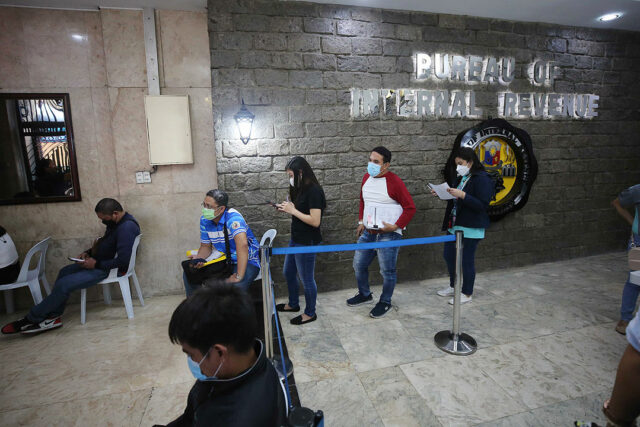
People line up to file their income tax returns at the Bureau of Internal Revenue office in Intramuros, Manila, April 18, 2022. — PHILIPPINE STAR/ RUSSELL A. PALMA

THE Bureau of Internal Revenue (BIR) said it will go after accountants that certify false financial statements as well as taxpayers using fake receipts to evade taxes.

“One of my major areas of concern in the BIR is aggressive and fearless enforcement activities. This includes filing of cases against accountants who have blatantly violated our laws and are intentionally examining, certifying, and signing fraudulent financial documents,” BIR Commissioner Romeo D. Lumagui, Jr. said.

On Tuesday, the BIR filed an administrative case against an accountant behind the four suspected “ghost” corporations selling fake receipts that cost the government around P25.5 billion in lost revenue. The accountant also faces criminal charges filed before the Department of Justice.

“We have a list of all the buyers and sellers of these ghost receipts, including the accountants that allowed the buyers and sellers to profit from these ghost receipts by evading taxes. Businesses and taxpayers who use these ghost receipts in their returns will not only be audited by the BIR, they will also be arrested and spend 6-10 years in prison,” Mr. Lumagui added.

Mr. Lumagui noted that there are “hundreds of thousands” of buyers of fake receipts.

“In our last case, which was only four companies, the estimated revenue loss was already at P25.5 billion. If we add up everything, losses to the government shouldn’t be lower than a hundred billion,” he added.

He said the agency will also eventually run after the buyers of fake receipts.

“We are just prioritizing the sellers first. The process (for filing) against buyers will be different. But all the taxes that they evaded, we will charge them for it,” he said.

“This is just the start of our campaign against fake transactions. We are losing so much (revenue) due to this,” he added. — Luisa Maria Jacinta C. Jocson

Cold storage raids in Navotas yield P120M in allegedly smuggled food

REUTERS

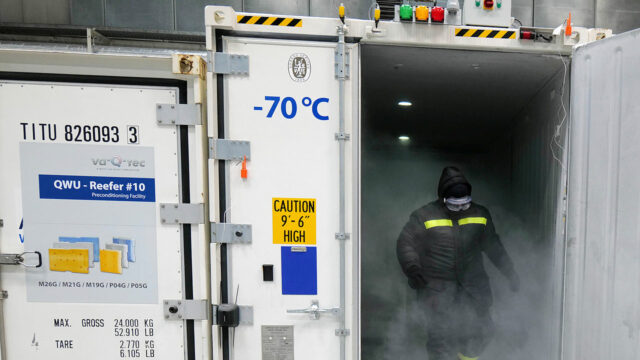
THE Department of Agriculture (DA) said on Tuesday that it has confiscated meat, poultry and fishery products worth P120 million on suspicion of smuggling, after inspections carried out at seven storage facilities in San Rafael Village, Navotas City.

In a joint operation led by the Bureau of Customs, the inspectors confiscated frozen agricultural products at a facility on Francisco Street.

More frozen agricultural products were seized from two facilities on Bernardo Street.

Two hidden cold storage facilities were found at a trucking services business on George Street, yielding meat products.

Subsequently, the team also seized other frozen products at a cold storage unit and two refrigerated vans along Simeon De Jesus Street and a warehouse on Escalada Street.

“The seized commodities lack the sanitary and phytosanitary clearances from the appropriate Food Safety Regulatory Agency (FSRA),” said Agriculture Assistant Secretary James I. Layug in a statement.

“Food safety remains one of the DA’s major concerns, and selling the meat and fishery products on the market could endanger public health,” he added.

The facilities will be shut down pending investigation of the owners for possible violations of Republic Act No. 10611 or the Food Safety Act of 2013 and Republic Act No. 10845, or the Anti-Agricultural Smuggling Act of 2016. — Sheldeen Joy Talavera

GDP downside risk warning issued if PHL joins CPTPP trade deal

PHILSTAR FILE PHOTO

PHILIPPINE participation in the Comprehensive and Progressive Agreement for Trans-Pacific Partnership (CPTPP) may result in a decline in gross domestic product (GDP), according to the Philippine Institute for Development Studies (PIDS).

“The decline in the GDP connected with the Philippines’ participation in the CPTPP can be seen in the deterioration of the country’s trade balance. The Philippines gains a positive trade balance when it does not join the CPTPP,” PIDS said in a study.

“This GDP decline will be greater if all other countries interested in the free trade agreement join the block,” the government think tank added.

Signed in 2018, the CPTPP is a free trade agreement involving Australia, Brunei, Canada, Chile, Japan, Malaysia, Mexico, New Zealand, Peru, Singapore, and Vietnam.

In 2021, the Philippines expressed interest in joining the trade deal.

“Since some CPTPP members are the Philippines’ top trading partners, the free trade agreement’s existence — even without the country’s participation — significantly affects the country’s trade,” PIDS said.

If the Philippines joins the trade deal, PIDS said that there is a likelihood of a wider trade deficit due to the accessibility of more imports.

“High value-added industries favored by the existing trade barriers will experience a loss, thus causing a decline in the country’s gross domestic product,” it added.

The Philippines is a net importer. Its trade balance has mainly been in deficit for more than two decades.

In January, the trade deficit widened to $5.74 billion, the highest single-month total since August 2022.

The Development Budget Coordination Committee set a 3% growth target for exports and a 4% growth target for imports for this year.

On the other hand, PIDS said that joining the CPTPP will boost employment of unskilled workers and improving earnings as exports diversify.

“The country can optimize the benefits of CPTPP if the government creates the necessary conditions to improve technology, minimize the costs of export diversification, and differentiate its exports from the rest of the world,” PIDS said.

“The gainers are sectors where the country seems to have a comparative advantage and where firms do not require relatively high skills. The losing sectors are those where labor appears to be more intensive but (whose products are) not highly valued abroad,” it added.

It said that the trade deal could increase employment in Luzon, particularly the National Capital Region and Central Luzon.

“An increase in employment is also (projected) for Western Visayas, Eastern Visayas, Zamboanga Peninsula, and the Bangsamoro Autonomous Region in Muslim Mindanao (BARMM). However, participating in the CPTPP reduces employment for the rest of the country,” it added.

If the Philippines joins the trade deal, the metal, apparel, vegetables and fruits, wool, and leather industries will see an increase in output.

“In agriculture, the rice sector may experience losses, but vegetables and fruits are seen to gain more. In industry, there appear to be substantial gains in metals and wearing apparel but possible losses in the motor vehicle sector,” it added.

PIDS said that the government can mitigate potential losses by increasing the differentiation of the country’s product offerings and producing them more efficiently.

“To increase the benefits from export diversification, the country can increase earnings by improving technology and moving toward more differentiated products. This does not require creating new products but simply indicates producing currently available goods with greater efficiency and lower costs,” it added. — Luisa Maria Jacinta C. Jocson

House panel asks cold storage officials to explain no-show at onion probe  

AUTHORITIES seized over 1,000 sacks of illegally imported white onions in Divisoria, Manila on Dec. 2 amid high retail prices of red onions nationwide. — PHILSTAR/MIGUEL DE GUZMAN

THE House agriculture and food committee has issued a show-cause order to executives of cold storage companies, asking them to explain why they should not be cited in contempt for failing to attend hearings investigating the alleged manipulation of onion prices.   

On Tuesday, legislators issued show-cause orders to Eric Fabilona and Sherman Chan of Tian Long Cold Storage of Bulacan, Mary Ann Lim and Grace Ann Ong of Super Five Cold Storage of Malabon, Marlene Lamata of Rivson Co-op Storage of Palayan City, Nueva Ecija; Vilma Camato, former operations manager of Argo Cold Storage, also of Palayan City, and Lilia Cruz of the Vegetable Importers, Exporters, and Vendors Association of the Philippines, Inc. (VIEVA). 

Legislators noted that many of the resource persons begged off from the hearings, claiming illness.  

“Even in absences, there is a cartel,” Marikina Rep. Stella Luz A. Quimbo told the panel. 

“It is important for us to hear what the biggest players in this industry have to say. Makes you wonder why they’re simultaneously absent,” Ms. Quimbo said.   

House agriculture and food committee chairman and Quezon Rep. Wilfrido Mark M. Enverga said that Ms. Lim provided the committee with a medical certificate because she is five months pregnant. Ms. Ong, who also submitted a medical certificate, has COVID-19 symptoms. Ms. Camato and Ms. Cruz also submitted medical certificates, but Mr. Fabilona did not.   

Mr. Fabilona is currently in Hong Kong for an eye operation, while Ms. Lamata has an upper respiratory tract infection. Ms. Cruz was hospitalized due to bleeding.   

“A lot of (our resource persons) are sick…being the chair, I don’t want to prejudge, we will afford them the chance to explain,” Mr. Enverga said.   

Meanwhile, the committee cited in contempt Michael Ang and George Ong of Super Five Cold Storage for allegedly lying to the panel over their onion trading activities. 

Quezon Rep. David C. Suarez said, “Congresswoman Stella (Quimbo) asked “Are you involved in trading?” and they said categorically no. And when the name of a company was mentioned, which was involved in trading, they admitted that they’re part of that company. They’re lying to the committee.” 

According to House rules, the two officials will be detained in Congress for 10 days.

Ms. Quimbo told the panel, “Citizens and policymakers have expressed concerns about the possibility of hoarding of onions and the allegations of an onion cartel. The DA (Department of Agriculture) is also suspecting this — that the high onion prices is due to price manipulation, hoarding, and smuggling — from the operations of syndicates.” — Beatriz Marie D. Cruz

US sends experts to help Manila contain spill from sunken tanker

PHILIPPINE COAST GUARD FACEBOOK PAGE

THE UNITED States has sent eight experts to help the Philippines contain the oil spill from a sunken fuel tanker that authorities said has affected as many as 20,000 hectares of coral reefs.

The American experts arrived in Pola, Oriental Mindoro on Tuesday to support the oil spill response operations of the Philippine Coast Guard (PCG), the US Embassy in Manila said in a statement.

“Five members from the US Coast Guard’s National Strike Force will provide subject matter expertise and assess the affected areas to determine the most effective method and equipment to contain and clean up the oil spill from the sunken tanker MT Princess Empress,” it added..

“Through funding from the US Agency for International Development, two members of the US National Oceanic and Atmospheric Administration will work closely with the Philippine Department of Environment and Natural Resources to conduct rapid environmental assessments of affected areas, identify priority areas at risk of environmental damage and assess needs for ecosystem restoration,” it added.

The embassy said its National Oceanic agency had provided the Philippine Coast Guard with satellite imagery to boost its assessment efforts.

It has also provided the University of the Philippines-Marine Sciences with support for scientific modeling to estimate the spill’s trajectory.

“Lastly, a US Navy supervisor of salvage and diving will evaluate the technical parameters required to support the possible deployment of a remotely operated vehicle.”

US Defense Secretary Lloyd James Austin III has vowed to deploy naval units to help in clean-up operations, the Presidential Communications Office said in a separate statement, citing a report from Defense Secretary Carlito G. Galvez, Jr.

“They are committed to help in coordination with Japan and other countries,” Mr. Galvez said in the statement, citing a phone call he had with Mr. Austin on Monday night.

The Philippine government last week said it was trying to fast-track the arrival of a remotely operated vehicle (ROV) from Japan that will locate the source of the oil leaking from the fuel tanker.

The Transportation department and Coast Guard were also looking for an alternative local ROV, the presidential palace said.

MT Princess Empress was carrying 800,000 liters of industrial fuel oil on Feb. 28 when it sank off the waters of Naujan, Oriental Mindoro, which surrounds the Verde Island Passage, one of the world’s most diverse marine habitats. 

Marine experts estimate that as many as 20,000 hectares of coral reefs, 9,900 hectares of mangroves and 6,000 hectares of seagrass have been affected by the spill.

Japan was the first country to help the Philippines in clean-up efforts, sending two teams of experts who have been tasked to coordinate with the Philippine Coast Guard. 

Mr. Galvez said Mr. Austin had assured him their Humanitarian Assistance and Disaster Response team was “on their way to help and provide assistance in managing the oil spill.”

The Philippines’ 2014 Enhanced Defense Cooperation Agreement (EDCA) with the US seeks to boost the two countries’ cooperation on humanitarian assistance and disaster relief.

EDCA also seeks to promote interoperability, address short term capability gaps, promote long term modernization and boost maritime security and domain awareness.

Some senators have said the US had not done enough to help the Philippines in disaster response.

‘CONTAMINANTS’
Mr. Galvez said he had proposed to include oil spill response in some of the “exercise scenarios” in the upcoming war games between the Philippines and US.

The Defense chief said the Philippine government would continue to seek the expertise and technical support of other countries such as France and the United Kingdom in containing the spill.

Meanwhile, the presidential palace said in a separate statement the government of President Ferdinand R. Marcos, Jr. would sustain the assistance program for families affected by the oil spill, which has affected coastal provinces in the Mimaropa and Western Visayas regions.

Affected families have increased to more than 32,000, the palace said, citing a regional task force report.

The National Government, local government units and nongovernment groups have provided P28.3 million worth of humanitarian assistance these families, it added.

Meanwhile, the Bureau of Fisheries and Aquatic Resources (BFAR) said it had found low-level contaminants in collected fish samples. 

Traces of petroleum products were detected in water samples, while low-level contaminants or polycyclic aromatic hydrocarbons (PAH) were found in the fish samples, the agency said, citing preliminary findings.

“The results of the analyses are not yet conclusive as far as food safety is concerned,” BFAR said in a statement.

“Further sampling and analyses are being conducted to establish time-series results on the effect of the oil spill on fish concerning food safety, taking into account the magnitude of the oil spill which has reached neighboring areas like Caluya, Antique and some municipalities of Palawan,” it added. — Kyle Aristophere T. Atienza and S.J.T.


Senator flags ‘super profits’ in ‘smuggled’ Philippine sugar

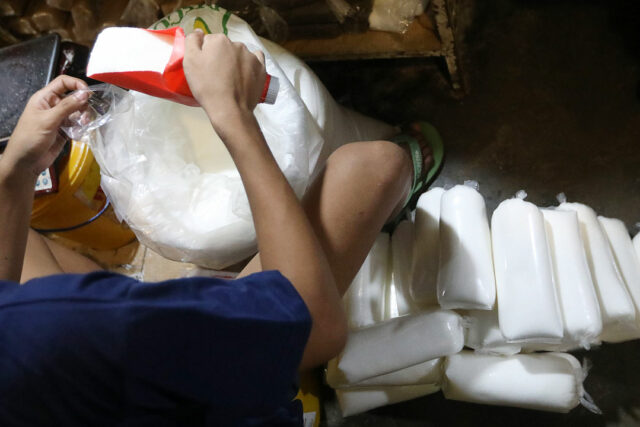
A vendor places sugar in plastic bags for sale. — PHILIPPINE STAR/EDD GUMBAN

By Alyssa Nicole O. Tan, Reporter

ONE of the traders handpicked by the government of Philippine President Ferdinand R. Marcos, Jr. in February to import sugar amid supply issues earned more than P10 billion amid overpricing, according to an opposition senator.

“This is not just a state-sponsored formation of a cartel,” Senator Ana Theresia “Risa” N. Hontiveros-Baraquel told a virtual news briefing on Tuesday. “It is a cartel that generates super profits, none of which will go to the national Treasury.”

All Asian Countertrade, Inc., one of the three traders chosen to import 440,000 metric tons of sugar ahead of a state go-signal, had an asking price of P85, P24 more than the price from a “trustworthy” importer, the senator said.

“The P85 asking price of All Asian imposed an additional P24 peso super profit for a total of P32 per kilo profit,” she said. “Multiplied by 440,000 metric tons, the profit goes beyond normal at P10.5 billion.”

“This is already huge since it’s only for three traders,” Ms. Hontiveros pointed out. “If normal profits are included, the total is P14 billion. With that kind of profit… it’s hard to imagine how much kickback there was.”

The lawmaker earlier filed Senate Resolution 497 seeking to probe the sugar imports.

On March 1, she questioned a Feb. 27 Agriculture department memo that cleared the release of 240,000 metric tons of imported sugar that she said entered the country without permits.

She called the imports “government-sponsored smuggling”.

In the memo, Agriculture Undersecretary Domingo F. Panganiban cleared for release imported sugar consigned to All Asian Countertrade.

The shipments entered the country without permits and before an import order was issued by the Sugar Regulatory Administration (SRA), Ms. Hontiveros said.

The release of the memo showed that authorities were aware that shipments of sugar arrived in the country way before March 1, the earliest date legally imported sugar could reach Philippine ports, she added.

Aside from All Asian, Sucden Philippines Inc., and Edison Lee Marketing Corp. were also handpicked to import the sugar. The imported sugar arrived in the country on Feb. 9.

‘HOLDING THE LINE’
Ms. Hontiveros noted that as of Friday, the Bureau of Customs (BoC) had yet to allow the release of the first shipment from Batangas port, and it continues to monitor the entry of incoming shipments.

“This means that the BoC still treats as illegal any shipments of sugar by All Asian Countertrade, Sucden Philippines and Edison Lee Marketing,” she said. “So far, they are holding the line.”

This also meant that the Sugar Regulatory Administration had yet to give the go-signal despite claims that the imports had been cleared. She added.

The SRA did not immediately reply to a Viber message seeking comment.

Ms. Hontiveros earlier sought the preventive suspension of the Agriculture official pending investigation of an alleged sugar cartel.

“No less than the Office of the Executive Secretary expressed doubts about the legality of the DA’s actions of choosing importers and allocating quantities to be imported before a sugar order could be signed by the SRA,” Ms. Hontiveros said.

The presidential palace did not immediately respond to separate text and Viber messages seeking comment.

“I continue to strongly demand an investigation,” the senator said. “If our blue ribbon committee will not open the investigation, talk to the planters and processors. They know what’s going on.”

“Talk to the industrialists. You will find that even their global head offices have been scandalized by what is happening here,” she added.

The sugar, which arrived in 260 20-foot containers, came on the strength of a memo issued by the Office of the Executive Secretary, Mr. Panganiban said on Feb. 22.

He added that he had asked the three traders since they had a proven track record to import the sugar and given the need to urgently address supply and price issues.

“In response to the directive of the president to address inflation and create a buffer stock and given that sugar is one of the components of most of commodities that drives the consistently high inflation rate, I acted with haste and interpreted the memorandum issued by the Office of the Executive Secretary as an approval to proceed with the imports,” Mr. Panganiban said.

ADVERTISEMENT
ADVERTISEMENT