Home Blog Page 510

RRR cut in 2026 seen to support growth
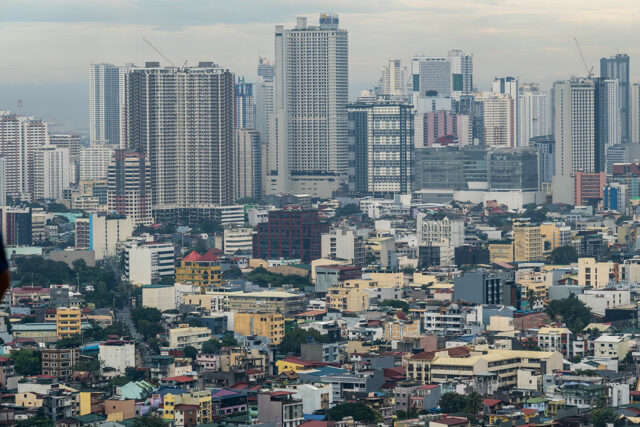
HIGH-RISE buildings dominate the skyline of Makati City’s central business district. — PHILIPPINE STAR/RYAN BALDEMOR

THE BANGKO SENTRAL ng Pilipinas (BSP) may cut large banks’ reserve requirement ratio (RRR) by up to 200 basis points (bps) next year to boost the economy’s weak growth, analysts said.

Analysts said lowering banks’ reserve requirements would add to the financial system’s liquidity, leaving more room for lending activity that could help spur the economy.

“We do expect another round of RRR cut in 2026, and we project a 200-basis-point reduction, which we think could occur sometime in the first quarter,” Security Bank Research Head and Chief Economist Angelo B. Taningco told BusinessWorld in an e-mail.

If realized, universal and commercial banks’ RRR will be down to 3% from the current 5%.

Digital banks’ RRR was likewise reduced by 150 bps to 2.5%, while thrift banks’ RRR was lowered by 100 bps to 0%. The cuts took effect in the week of March 28.

Under the current easing cycle, the central bank has delivered a total of 450 bps in cuts to big banks’ RRR since October 2024, 350 bps for digital banks, 200 bps for thrift banks, and 100 bps for rural and cooperative banks.

BSP Governor Eli M. Remolona, Jr. has said after the Monetary Board’s last policy meeting this year that although the current 5% is “already pretty good,” they are open to reducing banks’ RRR to 2% within the next year or so.

However, he noted that they are not rushing to bring down the said ratio as excessive liquidity remains in the financial system.

According to Rizal Commercial Banking Corp. Chief Economist Michael L. Ricafort, about P180 billion is injected into the financial system for every 100-bp cut in big banks’ RRR.

“This would reduce banks’ intermediation costs and overall lending rates,” he said in a Viber message. “Lower lending rates and more loanable funds by banks would increase demand for loans or credit, thereby would help boost economic activities and overall economic growth.”

Mr. Ricafort also noted that a lower RRR would boost lenders’ earnings.

Meanwhile, Jonathan L. Ravelas, a senior adviser at Reyes Tacandong & Co., said an RRR cut of 100 bps to 200 bps could come in the first half of 2026 as growth remains sluggish.

“An RRR cut in 2026 is likely, but timing is everything,” he told BusinessWorld via Viber message. “A phased reduction of 100-200 basis points in the first half of the year makes sense to support growth without stoking inflation.”

In the third quarter, the country’s gross domestic product (GDP) growth slumped to 4%, the weakest print seen in over four years or since the first quarter of 2021. This brought GDP growth to an average of 5% as of September, below the government’s 5.5-6.5% target.   

The BSP chief earlier said the economy might only start to recover by the latter half of next year, with growth expected to return within target by 2027.

“But let’s be clear: liquidity alone won’t fix structural issues,” Mr. Ravelas added. “If governance and accountability remain weak, extra money in the system will just leak through the cracks. The real challenge is sequencing reforms; monetary easing must go hand in hand with restoring trust and plugging the floodgates of inefficiency.”

INFLATIONARY IMPACT
Meanwhile, John Paolo R. Rivera, a senior research fellow at the Philippine Institute for Development Studies, said the BSP could deliver a cumulative 50-to-100-bp cut in RRR next year “when inflation is firmly contained and liquidity conditions allow.”

“An RRR cut would release liquidity, lower intermediation costs, and can support credit and growth, but it could add to inflation and forex pressures if timed poorly,” Mr. Rivera said in a Viber message.

However, Mr. Ricafort noted that inflation has been subdued even as the BSP slashed banks’ RRR by as much as 450 bps since October last year.

“It only has a minimal effect on inflation as other parts of its additional funds are not immediately used for lending purposes, which tend to spur demand-pull inflation,” Mr. Taningco added.

Philippine inflation eased to 1.5% in November from 1.7% in October and 2.5% in the same month last year, bringing the 11-month inflation average to match the central bank’s full-year forecast at 1.6%.

Inflation has likewise settled below the BSP’s 2-4% target for the ninth straight month. — K.K.Chan

PEZA eyes more investments from South Korea

STOCK PHOTO | Image by Vitamin from Pixabay

By Justine Irish D. Tabile, Reporter

THE PHILIPPINE Economic Zone Authority (PEZA) is seeing South Korea as among the potential sources of investments next year amid a free trade agreement (FTA) and the investments that will be attracted by Samsung Electro-Mechanics Philippines Corp.’s P51-billion expansion.

“For 2026, our best bets for foreign direct investments are Japan, South Korea, the US, China, and Singapore,” PEZA Director-General Tereso O. Panga told BusinessWorld.

“We anticipate Korea to still come in strong owing to the Philippines-South Korea FTA and the huge expansion of SEMPHIL, which should trigger more Korean investments,” he added.

The Philippines-South Korea FTA took effect on Dec. 31, 2024. This was the Philippines’ third bilateral FTA.

Meanwhile, SEMPHIL’s P50.7-billion investment marked the first project to be granted presidential incentives under the Corporate Recovery and Tax Incentives for Enterprises to Maximize Opportunities for Reinvigorating the Economy Act.

For next year, PEZA is expecting to approve P300 billion in investment pledges, after greenlighting P261 billion worth of projects this year.

This year’s approval surpassed the P250-billion target the agency set for the year, the highest since the P295.1 billion worth of investment pledges approved in 2015.

Japan came out as the top source of foreign investments in 2025, accounting for P29.169 billion of the total approvals.

“The Japanese consistently have always been our biggest foreign investor in PEZA. However, in 2024, Korea emerged as our biggest country source of economic zone (ecozone) investments due to the big-ticket and high-tech project of SEMPHIL,” Mr. Panga said.

“For 2025, Japan has regained its No. 1 spot, dislodging Korea at No. 3. Moreover, we saw a significant increase (in investments) from the Cayman Islands, Singapore, China, and the US,” he added.

Investments from Cayman Islands totaled P16.694 billion in 2025, while investments from South Korea reached P11.46 billion. Investments from Singapore, China, and the US reached, P11.186 billion, P6.788 billion, and P6.26 billion, respectively.

Completing the top 10 sources were Hong Kong (P5.112 billion), Germany (P4.456 billion), Australia (P3.718 billion), and the Netherlands (P2.674 billion).

In 2024, the top five sources were South Korea (P51.269 billion), Japan (P13.736 billion), the Cayman Islands (P9.116 billion), the Netherlands (P5.726 billion), and Malaysia (P4.555 billion).

On Dec. 22, the PEZA Board met to approve seven new projects with investment costs totaling P23.689 billion. These are expected to create 3,821 jobs and $1.302 billion in exports.

After the board meeting on Monday, the agency approved a total of 314 projects worth P260.89 billion this year.

These include manufacturing, information technology and business process management, logistics, utilities, facilities, domestic market enterprise, tourism, and ecozone development projects.

This year’s approvals are expected to generate 78,741 jobs and $11.522 billion in export revenues.

Next year, PEZA is hoping to create new types of ecozones that will cater to various industries, following the proclamation of 10 new ecozones this year.

These ecozones include the Tagbilaran Uptown IT Hub 2, two expansions at the Lima Technology Park, The Upper East, SM City Santa Rosa IT Center, and De La Salle University Innovation Hub.

The others were West Cebu Industrial Estate, 8912 Aseana Avenue, Allcoco Development Corp. Industrial Estate, and Filinvest Innovation Park.

“There are still 14 ecozones in the pipeline ready for proclamation. And as more ecozones are proclaimed by the president, like that of the first mega ecozone in Ihawig, Palawan, and a Pacific gateway in Pantao, Albay, we are confident that the influx of investments and expansion of projects at PEZA will continue,” said Mr. Panga.

“Locators are seeing the value of expanding and consolidating their supply chains in the Philippines,” he added.

John Paolo R. Rivera, a senior research fellow at the Philippine Institute for Development Studies, said that the realization of ecozone investments will partly depend on consistent incentives.

“Sustaining these inflows into 2026 will depend on consistent incentives, faster project execution, reliable infrastructure, and a predictable regulatory environment,” he said in a Viber message.

“Without these, even strong investor interest may not fully translate into realized investments,” he added.

Despite lackluster investor confidence in the Philippines due to corruption, Mr. Rivera said the increase in investments can be attributed to “trusted partners and technology-driven projects.”

“Japan’s return to the top reflects its long-term commitment to manufacturing and supply-chain integration in the country, while Korea’s surge highlights how big-ticket, high-tech investments and FTAs can quickly shift investment rankings,” he said.

“Policy stability, trade agreements, and the ability to host complex, high-value projects matter more than volume alone,” he added.

Why 2026 is poised to be another rocky year for global trade

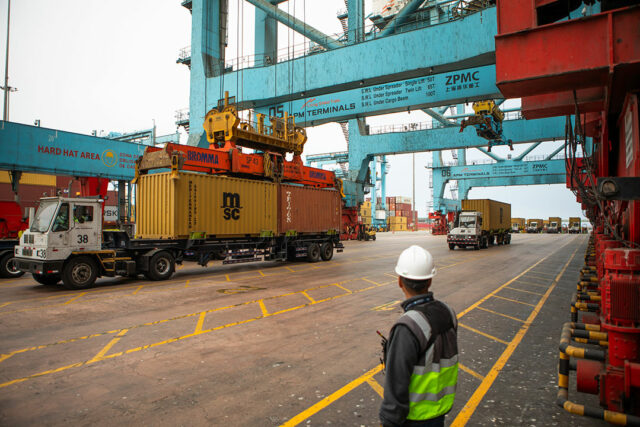
A gantry crane lifts shipping containers to be loaded onto a ship at the APM Terminals in the Port of Callao in Callao, Peru on Wednesday, Nov. 19. — BLOOMBERG/MARCO GARRO

THE global trading system, which is finishing up one of its most transformational years of the past century, heads into another facing more challenges to stability and growth.

Merchandise trade across the world held up relatively well through 2025, even as US President Donald J. Trump started erecting a tariff wall around the world’s largest economy. Data cited this week by shipping industry veteran John McCown show global container volumes grew 2.1% in October from a year earlier.

Yet beneath the overall resilience are shifting undercurrents: The US saw an 8% contraction in inbound volumes, while imports into Africa, the Middle East, Latin America and India all showed robust growth.

“World container supply chains have already begun to adapt and reconfigure trading patterns,” Mr. McCown wrote in a research note on Monday. After the US in 2024 saw a 15.2% gain in container imports for the full year, “to say that the annual total for 2025 will be in diametric contrast is an understatement.”

Mr. Trump’s trade threats were among the chief reasons for the rewiring of shipments, according to Mr. McCown. If 2025 was the year of the tariff, he wrote in a LinkedIn post, then 2026 will be the year of tariff consequences.

Other experts in recent weeks have said they anticipate more trade turmoil in the year ahead, with these four issues among the most widely discussed:

USMCA
The US, Canada and Mexico (USMCA) are about to start reviewing the North American free-trade deal that took effect in 2020. The negotiations will take the three nations into “new territory” given the novelty of the provision allowing for an update after just six years, according to comments by US Trade Representative Jamieson Greer to lawmakers this month.

Mr. Greer said the government received more than 1,500 responses during the public comment period ahead of the coming review.

“Many stakeholders expressed support for the USMCA and many explicitly called for the agreement to be extended,” Mr. Greer said. “At the same time, virtually all stakeholders also called for some sort of improvement to the agreement.”

But any “improvement” for one of the three members of the trade bloc risks coming at the expense of another. And that sets the stage for a tough round of talks for the largest US trading partners, whose industries are struggling amid American import taxes. Ties are already strained between the US and Canada, after Mr. Trump terminated trade talks with the northern neighbor in October — in response to anti-tariff ads featuring Ronald Reagan.

ROUGH SAILING
For container ships and other workhorses of global trade, the year ahead may bring two shocks that sound like welcome developments but could actually snarl global supply chains in ways seen during the COVID pandemic, according to experts including Lars Jensen, the chief executive officer of the consultancy Vespucci Maritime.

The first change would be a return of the world’s cargo fleet to using the Red Sea, rather than the longer route around southern Africa that vessels have had to resort to for the past two years. Houthi attacks in the Red Sea have largely subsided since the Gaza peace plan took effect in October, making the old route more appealing. Carriers including France’s CMA CGM SA and Denmark’s A.P. Moller-Maersk A/S are already sending a small number of ships through.

But a full return to the Red Sea and the Suez Canal shortcut between Asia and Europe will “flood the market with a lot more capacity” and create “massive port congestion issues in Europe,” Mr. Jensen said during a Flexport webinar in November.

The second blow could be more demand driven, according to Mr. Jensen. If the US economy accelerates as quickly in 2026 as Trump administration officials predict — fueled by an investment boom and lower interest rates — the resulting inventory restocking could swamp the shipping industry’s ability to cope.

SHAKY DEALS
High on the White House’s list of 2025 accomplishments are trade deals with several major economies, most of which bent to Mr. Trump’s demands ranging from investment pledges to better market access for US exports. In exchange for their submissiveness, their goods were smacked with a tariff rate that was lower than the duty they would’ve gotten if they retaliated.

But these aren’t traditional, binding trade deals with enforcement provisions and fine print spelling out the rules, and there’s only a one-year truce with China rather than a full agreement — leaving out the US’ most unbalanced trading relationship.

That’s left concern that pacts could yet come undone, especially given the potential for pressure from Beijing against any nation open to working with Washington at China’s expense.

Developments within the past month have showcased the risks. Since the White House announced its “landmark trade deal” in July, Indonesia has been resisting US trade demands that it feared would restrain its independence and now sees an agreement being signed in late January. China complained to Malaysia and Cambodia about the trade deals those two nations signed with Washington, warning them against measures that undermine Beijing’s interest.

Even the UK has seen fresh difficulties crop up.

Last week, Mr. Greer singled out the European Union and India, saying that contentious talks aimed their respective trade deals are set to spill into the new year. Mr. Greer’s office, in a social media post last week, threatened retaliation against the EU for what Washington considers to be excessive regulation of American tech companies.

SUPREME COURT
Among the biggest unknowns in trade circles heading into 2026 is a pending US Supreme Court ruling on the legality of Mr. Trump’s so-called reciprocal tariffs — the broad levies he imposed on most major trading partners.

If Mr. Trump does lose the case, one of the most consequential questions for the economy and the country’s fiscal outlook will be whether the government will have to refund the money that American importers paid in tariffs. It’s not clear cut that’ll happen in a timely or organized way.

Kevin Hassett, director of the National Economic Council, told CBS’s Face the Nation that even if the high court doesn’t rule in the administration’s favor, it would be “pretty unlikely that they’re going to call for widespread refunds, because it would be an administrative problem” to distribute those.

Betting markets have put about a 75% chance on a Mr. Trump loss, which means the administration will have to use other authorities at the president’s disposal to impose tariffs.

Asked at the Atlantic Council earlier this month whether 2026 will be quieter on the tariff front than this year, Mr. Greer declined to offer a forecast. “That’s a question for President Trump,” he said. — Bloomberg

Meralco to expand microgrid rollout, eyes full electrification of Isla Verde

BW FILE PHOTO

By Sheldeen Joy Talavera, Reporter

POWER DISTRIBUTOR Manila Electric Co. (Meralco) is preparing to scale up its portfolio of microgrid systems as it works toward fully energizing Isla Verde, a marine biodiversity hotspot, a top executive said.

“Beyond Cagbalete, we are also working on energizing the whole of Isla Verde — an isolated, environmentally sensitive area with its proximity to the Verde Island Passage, which is considered the center for marine biodiversity,” Meralco Executive Vice-President and Chief Operating Officer Ronnie L. Aperocho told BusinessWorld.

Mr. Aperocho said the company plans to deploy a sustainable microgrid solution to meet the island’s growing energy needs.

Isla Verde is located off Batangas Bay, south of Batangas City and north of Calapan, Oriental Mindoro. It sits within the Verde Island Passage, known as the “center of the center” of marine shorefish biodiversity.

Meralco’s expertise builds on pilot projects implemented in Cagbalete Island in 2018 and Isla Verde in 2019, Mr. Aperocho said.

“These pilot projects provided valuable lessons that now guide our plans to scale microgrid systems for entire island communities,” he added.

The distribution utility recently moved forward with a full-scale rollout of its microgrid system in Cagbalete Island, following approval from the Department of Energy (DoE).

The project will include a 2.8-megawatt-peak solar photovoltaic system, a 6.69-megawatt-hour battery energy storage system, and backup diesel generation over the next three years. The hybrid solution is expected to provide electricity to more than 1,000 residential and commercial customers, achieving 100% household electrification on the island.

Final electricity rates will be set by the Energy Regulatory Commission (ERC) to ensure affordability for residents and businesses.

Mr. Aperocho said Meralco’s microgrid initiative could serve as a scalable proof of concept for the DoE’s Total Electrification Program (TEP), which seeks to ensure all households and communities in the country have access to electricity, particularly those in unserved and underserved areas.

“Timely implementation of microgrid projects depends on strong regulatory support. Clear and enabling policies from the DoE and ERC are essential to attract investments and accelerate electrification,” he said.

Meralco’s franchise area covers Metro Manila, Bulacan, Cavite, Rizal, and parts of Batangas, Laguna, Pampanga, and Quezon, serving over eight million customers.

Banking system’s strength to support economy

BW FILE PHOTO

THE PHILIPPINE banking sector’s continued strength can provide a catalyst for economic activity, the Bangko Sentral ng Pilipinas (BSP) said.

This comes amid dismal growth prospects in the near term, as lingering governance concerns due to a corruption scandal involving state infrastructure projects have dragged both public and private investments.

Philippine banks’ assets and deposits have seen sustained growth, showing the industry’s resilience, the BSP said in a report. “The banking system remains strong to support economic activity.”

The latest data showed that as of October, the Philippine banking system’s combined assets grew by 7.13% year on year to P28.292 trillion amid stable loan growth and deposit inflows.

Banks’ assets are mainly supported by loans, deposits, and investments.

Central bank data also showed that deposits went up by 6.96% year on year to P20.82 trillion as of October from P19.465 trillion.

“The year-on-year expansion in banking assets largely reflects steady loan growth to households and businesses, improved deposit inflows as confidence normalized, and higher holdings of government securities that boosted balance sheets earlier in the year,” Robert Dan J. Roces, an economist at SM Investments Corp., said in a Viber message.

“Looking ahead, asset growth should remain positive but more measured, supported by easing inflation, gradual rate cuts, and continued credit demand, even as banks stay selective and manage duration and liquidity risks more conservatively,” he said.

The BSP added in the report that banks have stable asset quality and adequate capital buffers.

“Lending by U/KBs (universal and commercial banks) also increased further, providing necessary funding for the country’s expanding economic activity.”

Bank lending has posted double-digit growth since May 2024. However, the latest BSP data showed that big banks’ loans to businesses and individual consumers expanded at its slowest pace in 16 months in October, rising by 10.3%.

“Moreover, banking policies during the review quarter were implemented to strengthen the regulatory environment and enhance the operational resilience of the financial sector,” the BSP said.

These include amendments to director and officer disqualification rules, the adoption of the Global Master Repurchase Agreement (GMRA)-based repo and reverse repo agreements, as well as the policy on daily cash withdrawal limit further strengthened the banking sector.

In late 2024, the BSP implemented the GMRA, enabling it to supply bonds to banks during repo transactions as part of its monetary policy tools.

Meanwhile, it issued a circular in mid-September imposing a P500,000 daily ceiling on cash withdrawals as an anti-money laundering measure amid the recent corruption scandal.

The policy limits withdrawals by accountholders to a maximum of P500,000 or its equivalent in foreign currency at once or via multiple transactions within one banking day.

Economic managers have conceded that the 5.5%-6.5% target for the year is now unattainable after the third-quarter gross domestic product (GDP) print slumped to a four-year low of 4% amid the ongoing flood control controversy.

BSP Governor Eli M. Remolona, Jr. this month said GDP growth could slow further to 3.8% this quarter. This would bring the full-year average below 5% versus the government’s full-year goal.

The BSP chief said that they expect the economy to recover by the second half of 2026, with growth seen moving closer to the government’s 6-7% target only by 2027. — K.K. Chan

Timezone upbeat as PHL malls pivot to experience-led retail

SONAAL CHOPRA

By Beatriz Marie D. Cruz, Reporter

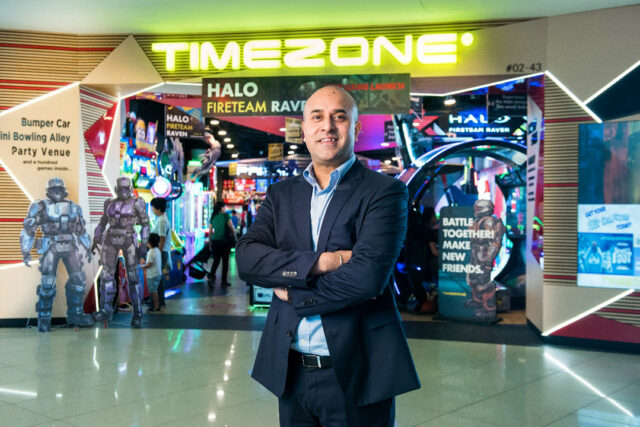
ENTERTAINMENT CHAIN Timezone is optimistic about further expanding its presence in the Philippines as retail and mall developers increasingly roll out experience-driven offerings, according to the chief executive officer (CEO) of its Australia-based parent company.

“There is a global shift that’s so profound in the Philippines where there’s more demand for experiences than products,” The Entertainment and Education Group (TEEG) CEO Sonaal Chopra said in an interview with BusinessWorld.

“As these malls transform themselves to lifestyle hubs, as the Ayalas, SMs and Robinsons malls do in the Philippines, we’re absolutely at the forefront of that,” he added.

Timezone is owned and operated by TEEG, an Australian family entertainment and edutainment group with operations across seven Asia-Pacific countries.

Since opening its first Philippine branch in 1998, Timezone has evolved from a small arcade into a multi-attraction entertainment hub located in malls and retail centers nationwide.

At present, Timezone Philippines operates 51 full-size venues and more than 50 smaller locations. More than two-thirds of its network in the country now consists of multi-attraction venues.

“After we transitioned into multifaceted formats, our visitation frequency in the Philippines is up 23% this year,” Mr. Chopra said.

As local property developers roll out more experience-driven mall concepts, TEEG aims to bring more immersive and world-class offerings to its Timezone branches, he added.

Philippine mall developers have been integrating experiential concepts and expanding their retail footprints to boost consumer traffic and spending.

This year, newly completed retail space tripled to 265,000 square meters (sq.m.) from 86,900 sq.m. a year earlier, according to property consultancy firm Colliers Philippines. The firm expects about 111,000 sq.m. of new retail supply to be completed through 2028.

To grow Timezone’s footprint, TEEG’s strategy is anchored on product innovation, network expansion, and guest engagement, Mr. Chopra said.

He added that about 25% to 30% of Timezone’s game offerings are refreshed annually to introduce variety and maintain customer interest.

The company is also expanding its karaoke offerings — among the most popular attractions in the Philippines — by adding more rooms of varying sizes and updating song selections.

“We’ll make sure to update the content and the songs regularly,” Mr. Chopra said.

Other popular attractions across Timezone’s Philippine branches include Street Fighter games, basketball zones, virtual reality experiences, photo booths, and social bowling.

Timezone also sees strong demand for its party rooms from corporate clients, particularly during the holiday season.

“I think what’s equally exciting is how we upsize or present ourselves in underrepresented communities where we can bring the Timezone experience to different parts of the Philippines,” Mr. Chopra said.

The company is also looking to further expand in regional cities, supported by the growth of estate and lifestyle hubs in provincial areas.

“We’ve got Bacolod coming up next year, we’ve got Solenad [in Laguna] coming up, so these represent the second part of our strategy, which is network growth,” Mr. Chopra said, citing Baguio and Pampanga as part of its expansion pipeline.

Timezone has also invested in digital tools to boost customer engagement and gain deeper insights into consumer behavior.

For instance, the Timezone Fun App allows users to reload power cards via mobile devices. Customers can also earn in-app vouchers, access exclusive promotions and discounts, and track their balances and rewards.

The app has recorded more than one million downloads from Philippine users alone, Mr. Chopra said.

Despite the rise of online and mobile gaming, Mr. Chopra said the coronavirus pandemic increased demand for shared, in-person experiences, creating opportunities for brands like Timezone.

“Shopping centers are spending that level of capital to reinvent themselves purely because of consumers’ demand for experiences. And that’s being driven by people valuing their time and relationships more after COVID,” he said.

Timezone Philippines operates under a joint venture between TEEG and Ayala Land, Inc.

The growing demand for social and experiential retail is also shaping TEEG’s broader expansion strategy across the Asia-Pacific region, Mr. Chopra said.

Timezone plans to open about 30 to 40 new venues annually across the Philippines, Indonesia, Singapore, Vietnam, India, Australia, and New Zealand.

“We have a striking chance of doubling the size of our network, even in our existing markets over the next five years,” he said.

When asked about his favorite Timezone attraction, Mr. Chopra cited social bowling and the company’s newest offering, ColourGrid.

“When I’m in the Philippines, I try the karaoke booths,” he said. “But I have to admit… Filipinos sing so well, I can’t compete.”

Metro Manila Film Festival 2025: A tragic, compelling slow burn

Movie Review
Manila’s Finest
Directed by Raymond Red
MTRCB rating: PG

By Brontë H. Lacsamana, Reporter

THIS HISTORICAL crime thriller revisits the sepia tones of a romanticized golden age in Philippine history with an all-star cast — and arrives at a powerfully bleak conclusion.

The picture of the late 1960s and early ’70s that we see in Manila’s Finest is what we get after Piolo Pascual’s protagonist, Capt. Homer Magtibay, peels away layers of grime and dust accumulated from years of secrecy and neglect. Ultimately, it traces the tragic downfall of those at the heart of a flawed system.

Manila’s Finest centers on Magtibay’s struggle to uphold the integrity of police work amid rapidly changing times, along with his colleagues Lt. Billy Ojeda (played by Enrique Gil), Officer Liwanag (Joey Marquez), and Officer Meneses (Romnick Sarmenta). The film opens with the four of them patrolling the streets of Manila in a squad car, listening to news of Gloria Diaz winning the Miss Universe pageant and the success of the moon landing over the car radio.

Tensions rise when they pick up a teenager coming home late from doing a school project. Though the four treat the boy well, they encounter a squad car driving in the opposite direction manned by PC MetroCom officers, which they remark would have spelled trouble for the kid.

For those who need to brush up on their history, PC MetroCom refers to the Metropolitan Command, a unit under the Philippine Constabulary created by then-president Ferdinand Marcos to supplement the local police and combat criminal activity. The film’s central conflict has these ruthless officers, led by Officer Danilo Abad (played with just enough sinister abrasiveness by Cedrick Juan), encroaching into local police operations.

Turmoil brews on both sides as they deal with growing discontent, from mediating the unstable Sputnik vs. Bahala Na gang war, to trying and failing to observe maximum tolerance during student protests at Mendiola.

To make matters worse, as Magtibay and friends dig their heels in, their level-headed station chief Major Conrado Belarmino (Ariel Rivera) exits the picture, giving way to a deplorable replacement, Epifanio Javier (played over-the-top by an almost-unrecognizable Rico Blanco).

It’s a surreal combination that brings this film to life. Raymond Red is a Cannes-winning alternative film director, and this marks his first time directing a studio film. His direction and cinematography push the story forward with a firm grasp of social realism, mixed with moody, turbulent framing and lighting choices that both convey melancholy and foretell darker times ahead. Written by Moira Lang, Michiko Yamamoto, and Sherad Sanchez, the script is imbued with hints of humor and heart, making the tragedy of the Manila police’s downfall all the more potent.

The all-star cast is what pulls audiences in, and I hope they come on board for their favorite stars but come out with a curiosity to dig deeper and reflect on this period of Philippine history.

At the special screening I was in, a big chunk of the audience was made up of fans of rising actress Ashtine Olviga, who plays Magtibay’s daughter and rebellious student activist with a compelling vitality. They would scream whenever she appeared, “awww” whenever she had a crying scene, and gasp at all the shocking moments in the film. It’s these young audience members I hope will come away most affected or at least intrigued by Manila’s Finest.

With that said, it really is a downer of a film, placing us squarely in a time period at the cusp of the point of no return. It comes at a time where revisiting history feels all the more essential, and yet seemingly nothing is learned from the lessons it offers up.

Pascual is, again, excellent in a lead role, and doubly so in this one because Magtibay is far from perfect. Though he stands for the integrity of the traditional police officer, the film does not shy away from his mistakes and flaws as the events unfold. His personal life also complicates things — and this is the part of the story that feels a bit one-note or half-baked — as he interacts with both his second wife Yolly (Rica Peralejo) and his secret lover Janette (Jasmine Curtis-Smith).

The supporting cast is solid as well. Gil as Lt. Ojeda, who wavers in loyalty as he toes the line between the Manila police and the MetroCom, holds your attention. Marquez and Sarmenta, who balance the main squad’s dynamic with witty remarks and natural exchanges, fill out the world of the police station. All of the groundwork here pays off later, when the so-called “Manila’s finest” comes to the brink of collapse.

Aside from a strong ensemble, this film is also elevated by the subtle details in production design. Each street, home, restaurant, or police station façade evokes not just fond nostalgia, but also meaningful points of evolution in the story. With a pace akin to a slow burn (at least, as far as crime thrillers go), the action feels more realistic than showy, while the music settles for kundimans played on the radio to blend with the minimal score. The costume design and hair and makeup delivered, too, with the characters definitely looking as they should for the time period.

Manila’s Finest is about a police officer investigating brutal killings and solving disappearances, yes, but it’s how his firm belief in his profession is tested as the city of Manila rapidly changes that may haunt you after the movie ends. It’s a human drama with a stellar cast that speaks to the complex identity of the Philippines — how it was back then, and how eerily similar it may be to today.

Peso may move sideways as market activity slows down

PHILIPPINE STAR/WALTER BOLLOZOS

THE PESO may continue to consolidate at the P58 level on Friday as trading activity winds down amid the holidays, with fiscal concerns and the future policy paths of both the Bangko Sentral ng Pilipinas (BSP) and the US Federal Reserve remaining in focus.

On Tuesday, the local unit closed at P58.85 per dollar, declining by 12 centavos from its P58.73 finish on Monday, Bankers Association of the Philippines data showed.

Philippine financial markets were closed on Dec. 24-25 for the Christmas holidays.

Analysts said the peso may be range-bound when trading resumes on Friday.

“It may continue to trade below the P59 handle, maybe due to lack of movement because of the holiday season,” a trader said in a phone interview, expecting the peso to move between P58.60 and P58.90 per dollar on Friday.

The local currency has closed at the P58 level for the last six trading days. It has been moving at the P58 to P59 range since October, even logging a fresh record low of P59.22 on Dec. 9.

The peso has been weak even as year-end remittance inflows have provided some support to the local unit, Jonathan L. Ravelas, a senior adviser at Reyes Tacandong & Co., said in a Viber message.

He said market sentiment, fiscal cues, and monetary policy expectations will continue to drive the peso’s movements in the last trading days of the year. He sees the local unit ending 2025 at P58.90 per dollar.

President Ferdinand R. Marcos, Jr. will sign the 2026 General Appropriations Act (GAA) on Jan. 5, 2026 as the administration will still need to review the spending plan, Executive Secretary Ralph G. Recto said on Tuesday.

Mr. Marcos was initially expected to sign the spending plan on Dec. 29, but there were delays in the bicameral conference committee’s proceedings as lawmakers needed more time to scrutinize the national budget for red flags.

The proposed 2026 GAA is facing heightened scrutiny after claims surfaced that this year’s national budget included billions of pesos in unprogrammed allocations.

Meanwhile, at its Dec. 11 meeting, the BSP slashed benchmark rates by 25 basis points (bps) for a fifth straight time to bring the policy rate to 4.5%. This brought total cuts since August 2024 to 200 bps.

BSP Governor Eli M. Remolona, Jr. has left the door open to a final 25-bp reduction next year to support the economy if needed as a wide-ranging corruption scandal involving the use of public funds for allegedly anomalous infrastructure projects has affected domestic demand.

For its part, the Fed this month cut its benchmark overnight interest rate by another 25 bps to the 3.5%-3.75% range, but signaled borrowing costs were unlikely to fall in the near term as policymakers await clarity on the direction of the labor market and inflation, Reuters reported.

Investors wagered the US Federal Reserve would have room to cut rates further next year even as some of its peers looked set to hike as a solid US gross domestic product (GDP) reading released on Tuesday failed to move the dial on the rate outlook.

The US economy grew at its fastest pace in two years in the third quarter, fueled by robust consumer spending and a sharp rebound in exports, though momentum appears to have faded amid the rising cost of living and recent government shutdown.

Gross domestic product increased at a 4.3% annualized rate last quarter, the fastest pace since the third quarter of 2023, the Commerce Department’s Bureau of Economic Analysis said in its initial estimate of third-quarter GDP. Economists polled by Reuters had forecast GDP would rise at a 3.3% pace. The economy grew at a 3.8% pace in the second quarter.

The report bolstered views that the Fed will hold off on cutting rates at its meeting in late January, with the odds currently at 87%, according to LSEG estimates. US rate futures now expect the US central bank’s next policy easing will occur in June, with two quarter-percentage-point cuts priced in for 2026. — K.K. Chan with Reuters

SMC Tollways’ P35-B bonds retain top credit rating

SMCTOLLWAYS.COM.PH

SMC TOLLWAYS CORP. has retained the highest credit rating for its P35-billion outstanding bonds from Philippine Rating Services (PhilRatings).

PhilRatings affirmed the PRS Aaa credit rating with a stable outlook for the company’s P35-billion bonds, reflecting the highest quality and minimal credit risk.

“The obligor’s capacity to meet its financial commitment on the obligation is extremely strong,” the agency said in a statement dated Dec. 23.

A stable outlook is assigned when the rating is expected to be maintained or remain unchanged over the next 12 months.

SMC Tollways is primarily responsible for the rehabilitation, construction, and development of the Skyway System, as well as overseeing its continuous maintenance and operations. The expressway network is a key arterial corridor connecting the northern and southern parts of Metro Manila.

The company operates under the infrastructure arm of San Miguel Corp. (SMC), which also runs the South Luzon Expressway, Southern Tagalog Arterial Road, Tarlac-Pangasinan-La Union Expressway, and the NAIA Expressway.

In issuing the rating, PhilRatings highlighted SMC Tollways as a major expressway operator under the San Miguel Group, noting its sustained growth in revenues and earnings supported by strong demand for services; a conservative capital structure despite the capital-intensive nature of its business; and ample liquidity backed by robust cash-flow generation.

For the nine months ending September, SMC Tollways reported a 1.5% increase in net income to P7.4 billion, while revenues rose 5.7% to P16.6 billion.

PhilRatings also noted that the company’s interest-bearing debt declined by 6.1% to P52.3 billion as of end-2024. Total equity increased by 19.6% to P51.3 billion, improving the debt-to-equity ratio from 1.3x at the end of 2023 to 1.0x at the end of 2024.

The local credit watchdog also cited the company’s strengthened liquidity position, supported by strong cash generation and healthy short-term finances. — Sheldeen Joy Talavera

Home Alone’s ‘Wet Bandits’ are medical miracles

JOE PESCI in a scene from 1990’s Home Alone.

THE festive movie season is upon us, and one of my perennial favorites is Home Alone 2: Lost in New York. I will die on this hill: it is better than the original. But rewatching it as an adult raises an awkward question. How on earth did the Wet Bandits survive the first film at all, let alone escape without lasting injuries?

Ten-year-old Kevin McCallister, the boy left home alone, sets up traps that are played for laughs, but many involve levels of force that would be catastrophic in real life. A 100-lb (45-kg) bag of cement to the head, bricks dropped from height, or heavy tools swung at the face are not things a human body can simply shrug off. High-impact trauma to the head and neck rarely ends well.

To understand why, it helps to know a little about skull anatomy. The skull has a protective “vault” that encases the brain, while the bones of the face contain hollow spaces called sinuses. These spaces reduce the weight of the skull but also act as a biological crumple zone, helping to absorb force and protect the brain during impacts. But that protection has limits.

A rough calculation of the forces involved when a 100-lb bag of cement strikes the head suggests instant fatal injury. The neck simply cannot absorb that level of force. To put that in perspective, research shows that the cervical spine suffers severe damage above about 1,000 newtons of force. A 100-lb cement bag already exerts roughly 440 newtons under its own weight, and when falling, it decelerates over a very short distance on impact.

While the exact force depends on the height of the fall and how quickly the bag comes to a stop, even conservative assumptions place the impact well above 1,000 newtons, easily exceeding thresholds for catastrophic neck injury.

Beyond that, there is a high risk of brain herniation, where swollen brain tissue is forced into spaces it does not belong. This can compress areas that control breathing and movement, often leading to coma and death.

Head injuries are only part of the problem. Many of Kevin’s traps would also place enormous stress on the chest and major blood vessels. Falling forward from a height, being crushed by heavy objects, or being struck in the torso can cause severe internal injuries. These forces are commonly seen in high-speed, head-on car crashes. In extreme cases, the impact can rupture the aorta, the body’s main artery, which is almost always fatal.

Crush injuries elsewhere in the body can have serious and life-changing consequences. Even if they are not immediately deadly, they can cause internal bleeding that worsens over hours or days. Broken ribs, for example, can puncture the liver, kidneys, or spleen, allowing blood to leak slowly into the abdomen. Damage to soft internal organs can also lead to infection, organ failure, or delayed death, depending on the severity.

Then there are the less obviously lethal moments. When Marv crashes into a shelf stacked with paint tins and the shelf falls on him, the impact alone could cause serious internal injury. And paint splashed into the eyes could cause chemical burns and blindness.

Simple slips and falls are not harmless either. The bones at the back of the skull are only about 6-7mm thick. A hard blow here can cause bleeding inside the skull. These brain bleeds do not always show symptoms immediately and may worsen over hours or days after what seemed like a minor bump.

Electricity is another recurring gag that would be anything but funny in reality. When Marv grabs the taps attached to an arc welder, he is exposed to electrical current that causes his muscles to contract uncontrollably. This is why people who touch live electrical sources often cannot let go. The current overrides the body’s normal nerve signals. Prolonged exposure increases the risk of disrupting the heart’s normal rhythm, potentially triggering cardiac arrest.

Despite what cartoons suggest, electricity does not make the skeleton visible — as we see happen to Marv. There is no X-ray radiation involved. To expose bone, you would need extremely high-voltage current, causing fourth-degree burns, which destroy skin, muscle, and bone.

Piercing injuries also feature heavily. A nail through the foot is not just painful. It can damage nerves and soft tissues, fracture bones, and introduce bacteria deep into the wound. This raises the risk of serious infection, including tetanus.

Finally, there is Harry’s infamous blowtorch scene. Being set alight for 22 seconds is more than enough time to cause permanent nerve damage, potentially destroying pain sensation altogether. While scalp skin is among the thickest on the body, it has relatively little cushioning underneath. This makes the underlying tissue and bone more vulnerable to deep burns, reaching third or even fourth degree severity, which can be lethal.

Add combustible kerosene to the mix and the risks escalate further. Exposure is linked to kidney damage, heart problems, central nervous system depression, and serious respiratory issues.

In short, Harry and Marv are walking medical impossibilities. Surviving a second round of Kevin McCallister’s festive booby traps would require extraordinary luck, immediate trauma care, and months of rehabilitation. Even if they appeared outwardly fine, the internal damage would probably be devastating. Perhaps those lingering injuries explain why the Wet Bandits never made it back for another sequel. — The Conversation via Reuters Connect


Adam Taylor is a Professor of Anatomy at Lancaster University.

IFC eyes $60-M loan to support women-led firms

A vendor sits in a stall selling products in sachet packaging at a public market in Manila, Philippines, Aug. 1, 2019. — REUTERS

THE INTERNATIONAL Finance Corp. (IFC) is eyeing a $60-million loan to CreditAccess Philippines Financing Co., Inc., which operates as OnePuhunan, to help expand lending to women-owned microenterprises in rural areas in the Philippines.

In a disclosure on Dec. 24, the private sector arm of the World Bank Group said the proceeds of the proposed investment will be deployed towards lending to women-owned micro-entrepreneurs in countryside areas.

“The Project will demonstrate the viability and business case for addressing these segments, and contribute towards extending financial access to underserved communities,” it said.

IFC said the proposed investment is a dollar-denominated three-year senior loan of up to $60 million that includes IFC’s own account of up to $20 million and the mobilization of an aggregated amount up to $40 million from B Loan and/or Parallel Loan.

OnePuhunan is a financing company that was established in 2014 and is owned by CreditAccess, SEA B.V. It has over 600,000 customers and 300 branches across 16 regions in the Philippines.

The company provides financial services focusing on low-income individuals and small businesses that are not served by traditional banking institutions. — Aubrey Rose A. Inosante

SEC shifts to platform-level action against online scams

STOCK PHOTO | Image by DC Studio from Freepik

THE Securities and Exchange Commission (SEC) said it is pursuing a strategy that targets platforms hosting or facilitating scams to remove fraudulent websites directly from services such as TikTok and Facebook.

“We’re trying to enlist the help of ByteDance, Facebook, all of them because our strategy now is to go directly to the platforms so that it will take down the websites themselves,” SEC Commissioner Rogelio V. Quevedo told reporters on the sidelines of an event.

He said challenges with SIM-card registration partly led the commission to adopt platform-level measures.

He noted that, in the past, the SEC relied on cellphones for enforcement. However, because SIM cards could be replaced quickly, a single person or entity could register multiple cards, limiting the measure’s effectiveness.

“So now, we are going directly [to the platform]. This is an example with TikTok. In the next few days, with Facebook, Viber, and Messenger, we aim to take down the websites themselves,” he said.

The commission earlier partnered with TikTok to produce #ThinkTwice videos to teach users how to spot scams, verify sources, and protect their finances.

Mr. Quevedo said the SEC plans to extend this initiative to other platforms by the end of the first quarter.

“You know it takes time. But hopefully, we can do it with all the other platforms by the end of the first quarter. We started with ByteDance, and we will be using the same scheme,” he said. — Alexandria Grace C. Magno

ADVERTISEMENT
ADVERTISEMENT