Home Blog Page 5029

Actor Jeremy Renner says horrific snowplow accident was ‘my mistake’

JEREMY Renner in a scene from the 2012 film The Avengers.

LOS ANGELES — Oscar-nominated actor Jeremy Renner said he was at fault in a New Year’s Day snowplow accident that left him close to death and that he apologized to his family for putting them through the ordeal.

Mr. Renner, in an interview that aired on Walt Disney Co.’s ABC network on Thursday, said he was driving the plow after using it to pull one of the family’s trucks out of the snow and onto pavement.

As the plow started to skid on ice, Mr. Renner said he became worried about the safety of his nephew, Alex, who had just unhooked the chains connecting the truck and the plow. Mr. Renner stuck one foot out of the plow to look back at Alex and did not set the parking brake.

The actor then lost his footing and fell out of the plow’s cab.

“You shouldn’t be outside the vehicle when you’re operating it, you know what I mean? It’s like driving a car with one foot out of the car,” Mr. Renner, seated in a wheelchair, told ABC News journalist Diane Sawyer.

“But it is what it was,” he added. “And it’s my mistake, and I paid for it.”

Mr. Renner, then worried that the snowplow would roll back and crush his nephew, said he tried to jump back into the vehicle to stop it. He stepped onto the plow’s moving wheel tracks, which threw him forward, and the vehicle ran over him, breaking more than 30 of his bones, collapsing a lung and piercing his liver.

Neighbors who tended to the 52-year-old actor, who is best known for playing Marvel superhero Hawkeye in the Avengers movies, said they found him with blood all around him, shallow breathing and a crack in his skull.

When he woke up in the hospital, Mr. Renner said, he gestured to his family with a sign language motion that means “I’m sorry.”

“It’s my responsibility,” Mr. Renner said. “I feel bad that my actions caused so much pain.”

Doctors used titanium rods and screws to repair broken ribs and also placed metal in his legs and in his face to rebuild an eye socket.

The actor was shown walking with the aid of a walker. He is still undergoing hours of daily therapy for his injuries.

Mr. Renner was nominated for an Academy Award for best actor for his work in 2008 film The Hurt Locker and for best supporting actor for his work in 2010 movie The Town.

He is slated to make his in-person return to Hollywood on Tuesday at a red-carpet event for his TV series Rennervations, in which he helps repurpose older vehicles such as buses and provide them to communities in need.

Mr. Renner credited the support of his family with helping him survive the snowplow accident.

“I’ve been refilled and refueled with love and titanium,” he said with a laugh. — Reuters

Asian lenders are luring investors who think they’re a safer bet amid turmoil

THE US-LED banking turmoil is driving money into Asian assets, with investors betting that China and the region’s emerging economies are in a better position to weather the fallout.

A Citibank analysis of global financial conditions shows Asian financial markets have tightened less than in the US and most Asian currencies have gained ground against the US dollar. An index of financial stocks in the region, excluding Japan, has risen since March 10 — the day Silicon Valley Bank collapsed — compared with an almost 10% drop in the American banking index over the same period.

“We think Asia still remains relatively well-insulated,” said Johanna Chua, managing director and head of Asia-Pacific economic and market analysis at Citi. “A US-centric slowdown means the US dollar will track lower, which is more supportive of capital flows in Asia.”

Economists say one factor working in favor of Asia-Pacific is a generally softer pivot in monetary policy, with central banks in Australia, South Korea, Indonesia and India among those pausing their tightening cycles. China, with its easing monetary policy and a belated reopening from COVID-19, is the top attraction for investors.

That’s reflected in the $5.5 billion of funds that flowed into emerging-market equity funds over the four weeks up to the end of March, led by Asia, according to figures from TD Securities, citing EPFR Global data. More than 70% of that money went to China. At the same time, developed-market equities suffered net outflows of $8.6 billion, with the US hardest hit.

“Investors are still looking at EM Asia as perhaps the most-favored region, followed by Europe and then perhaps by the US,” David Chao, global markets strategist for the Asia-Pacific at Invesco Asset Management told Bloomberg Radio on April 4. “If you think that the Fed is going to hit a pause button on interest-rate hikes, that would certainly drive capital flows back to EM Asia.”

An end to the cycle of Fed hikes, amid the financial stability risks and signs of cooling demand, could aid Asia by easing pressures from a strong dollar on external finances and reducing the appeal of the greenback as a safe haven.

The Asian Development Bank this week said that Asia’s developing economies, led by China, are on course for faster growth and slower inflation this year and next, while advanced economies are contributing to a darker global outlook.

China’s rebound is expected to percolate throughout the region, which also benefits from supply-chain diversification, booming commodities and a lack of excessive debt growth, said Frederic Neumann, chief Asia economist at HSBC Holdings Plc in Hong Kong.

Citi’s Ms. Chua reckons that Hong Kong and Thailand, which benefit from China’s reopening, and domestic services-led economies like India and the Philippines “look relatively more resilient” to a global growth shock. “Small, open economies” like Singapore, Vietnam, South Korea, Malaysia and Taiwan would likely be more vulnerable to those spillovers.

The banking turmoil may also mean that Asian tech money invested in the US could now begin to make its way back.

“Within Asia, I think Singapore will be the major beneficiary,” said Prashant Newnaha, macro strategist at TD Securities. “Singapore has strong legal and banking frameworks and is looking to establish itself as the leader in tech and crypto within the region.”

Still, there are risks. Recent gloomy factory data from China damped confidence about the speed of the nation’s rebound. And China’s worsening relationship with the US increases the potential risks of investing in places such as Hong Kong and Taiwan, Invesco’s Mr. Chao said.

Moreover, Asia isn’t totally immune to the financial instability that spread from the US.

“The outlook really depends on whether things stabilize in Europe and North America,” said Jonathan Kearns, chief economist at Sydney-based investment management firm Challenger Ltd. and a former Reserve Bank of Australia official. “If there is some degree of ongoing turmoil, it will spill to Asia as well.” — Bloomberg

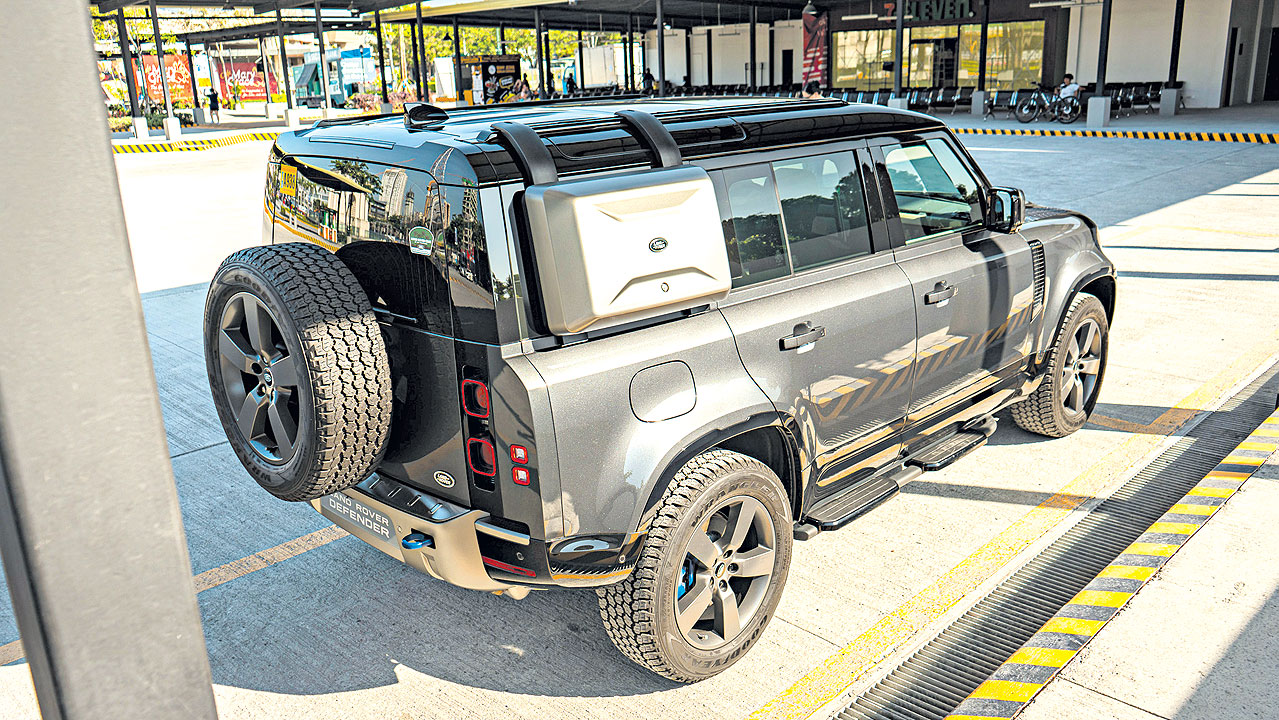
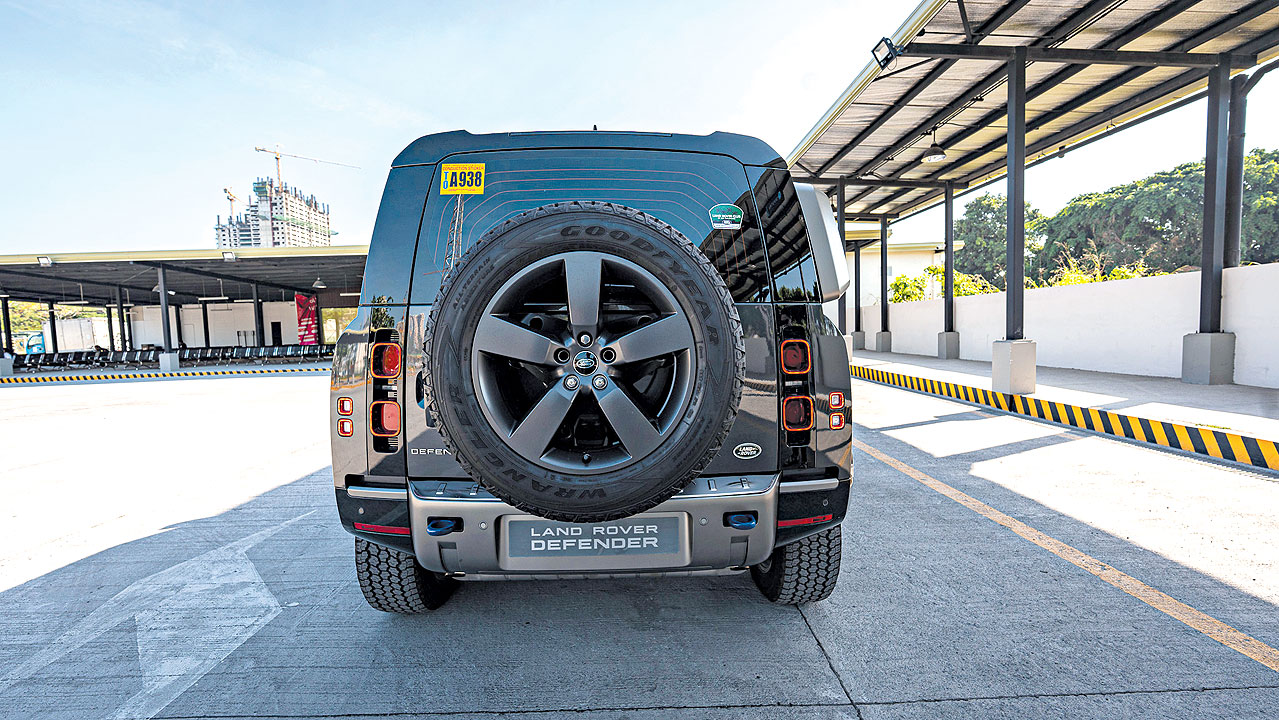
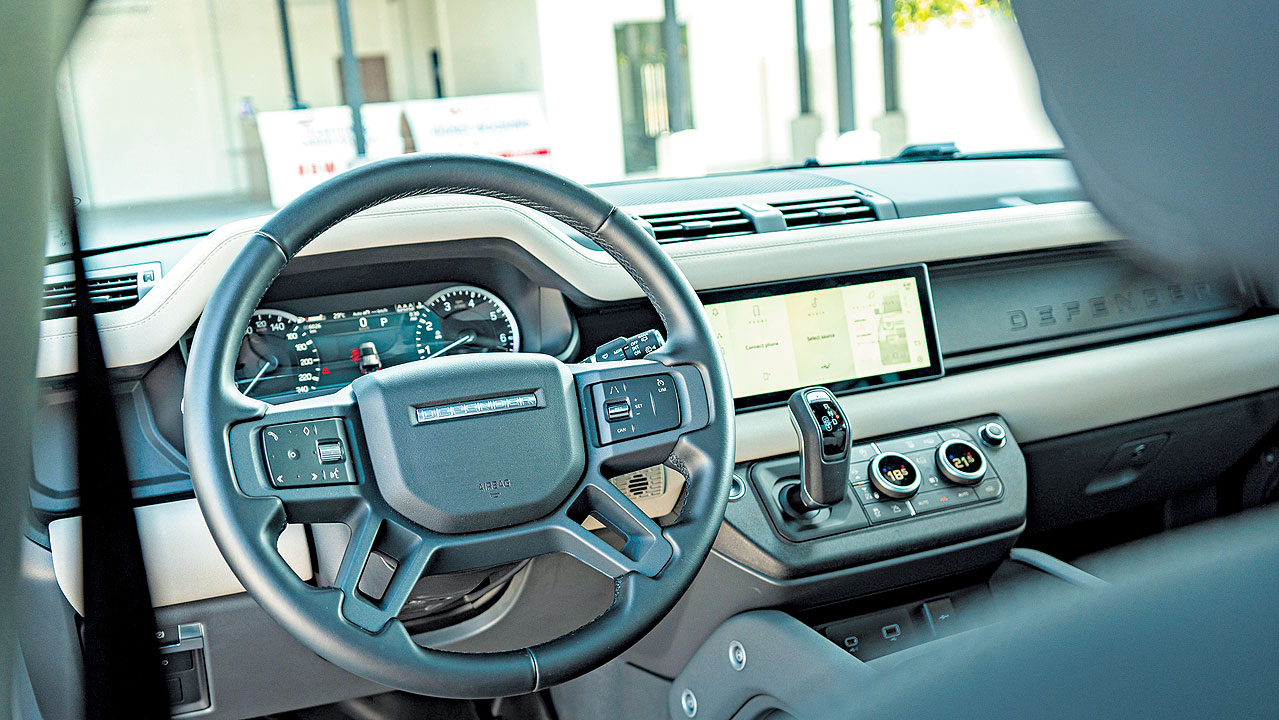
Land Rover Defender 110 X-Dynamic SE P400: Urban jungle conqueror

PHOTO BY KAP MACEDA AGUILA

This SUV is highly capable, luxurious, and fearless — just like you

By Kap Maceda Aguila

IT’S KIND of hard to, um, defend a car whose price tag breaches P11 million. That’s quite a hefty sum to splurge on a ride.

The key to understanding and appreciating the Land Rover Defender 110 X-Dynamic SE P400 (that’s quite a mouthful, yes) is to actually experience it — not over exotic locations and off-roading sites, but the everyday urban jungle replete with swerving motorcycles and public utility vehicles.

Over the course of several days, we had the pleasure of being ferried aboard this rather large five-seater SUV, with myself at the wheel. The high seating position and solid build seem to cocoon you and other occupants in an unmistakably luxe ride. Step on the accelerator and you are rewarded with impressive power — despite its heavyset build which tips the scales at 2,323kg. The motivation comes from a three-liter, inline six with common rail direct injection. The twin-turbocharged engine also boasts a belt integrated starter generator, making this Defender 110 a hybrid that’s exempt from coding.

Output numbers are a stout 400ps and 430Nm, which makes promises sprightly acceleration from standstill. Land Rover claims that the vehicle reaches 100kph in 6.1 seconds — on the way to a top speed of 191kph. Drivers can access the goodness via an eight-speed automatic transmission.

The Defender was christened such in late 1990 — ditching the simple Land Rover 90 or 110 appellation. The current generation stands almost two meters, stretches a shade over five, and has a wheelbase of 3,022mm. Short overhangs make it a joy to drive. It clears the ground 218mm on standard mode, but you can adjust this up to an off-roading-capable 291mm. Wading depth is an incredible 900mm.

When you push the start-stop button in the morning, the Defender automatically revs up to 1,500rpm to warm things up. After a few seconds, the needle goes down to 600rpm.

The price starts at P11.49 million, but our test unit was further equipped with niceties for an extra P300,000. These include an exterior side-mounted gear carrier, black wheel nuts, Union Jack style rubber mats, 110-specific deep-sided rubber mats, another loadspace rubber mat for the 110, and a bright rear scuff plate. Rounding it off is a frame protection bar worth P84,000.

Standard on the Defender 110 are premium LED headlights with Land Rover’s signature DRLs. There are front fog lights for enhanced visibility. The Defender rides on five-spoke 20-inch wheels in Satin Dark Grey.

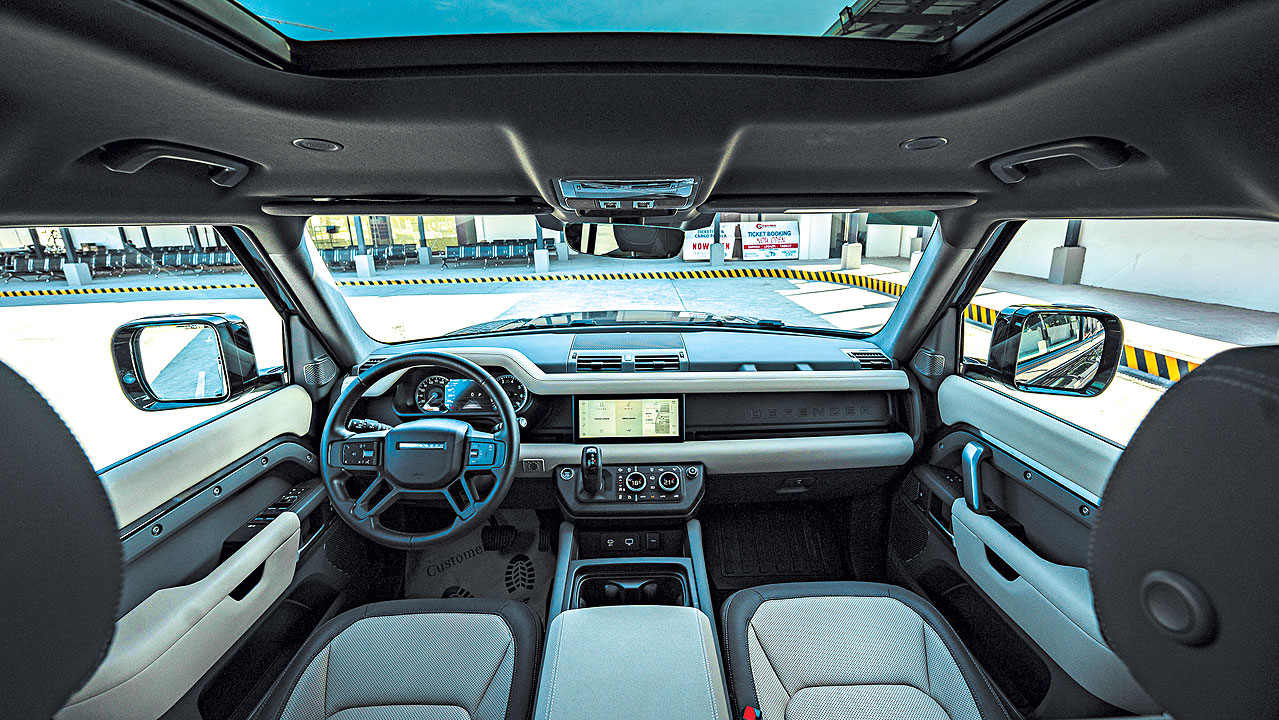
Inside, the vehicle channels some old-school ethos through analogue dials, which transition to a central TFT display which displays more information. As for the seats, you can power-adjust the front two seats in 12 ways.

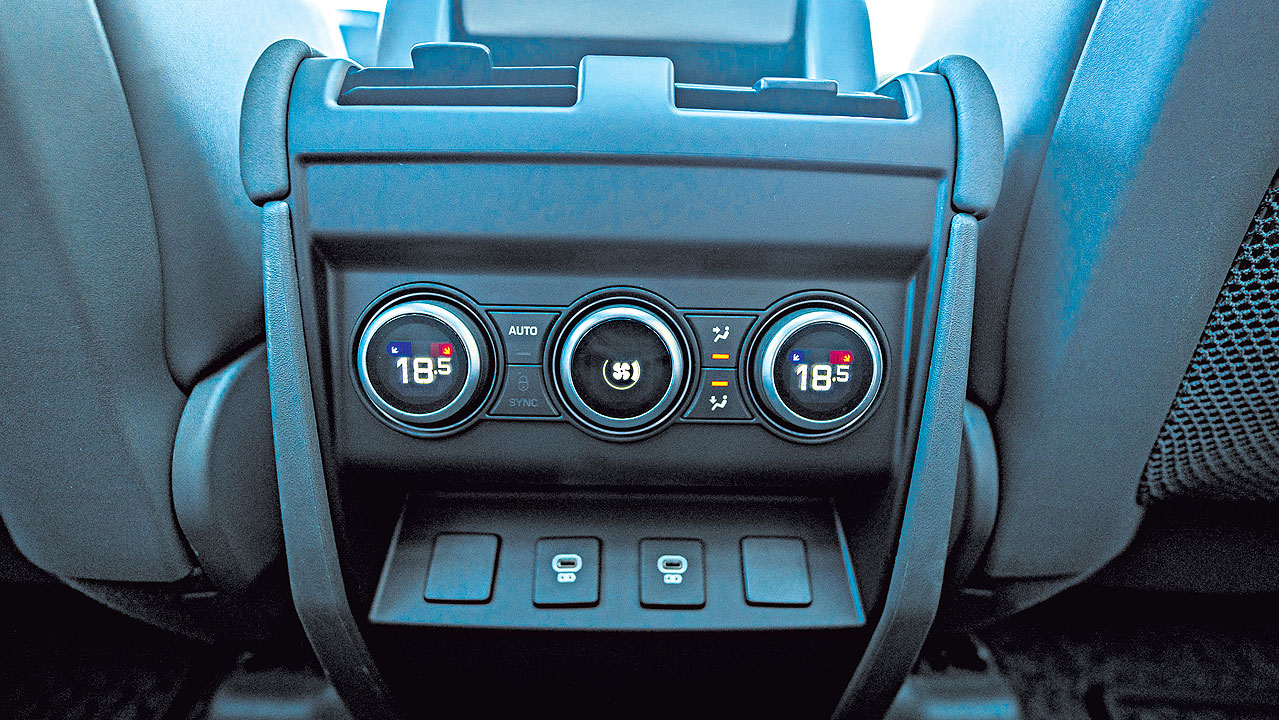
The 10-inch Pivi Pro infotainment system makes nice with both Android Auto and Apply CarPlay — hooked up to an 11-speaker Meridian sound system. A three-zone climate control with rear cooling assist makes everyone feel nice and cool — even that pet pooch or cat that you might bring with you.

As the Defender is one hulking vehicle, drivers will surely welcome a complement of aids such as blind spot assist, rear traffic monitor, rear collision monitor, 360-degree parking aid, and a 3D surround camera with ClearSight Groud View.

Meanwhile, if ever you need to take on flooded streets and such, the vehicle has Wade Sensing, which “calculates the depth of water adjacent to the vehicle. The touchscreen displays the results along with the maximum wading depth.”

So if you have some spare funds in the order of P11 million or so, the Defender should be an option — a looker that plays the part of the capable, capacious, and luxurious off-roader most nicely.

MPIC wins gold at Asia Integrated Reporting Awards

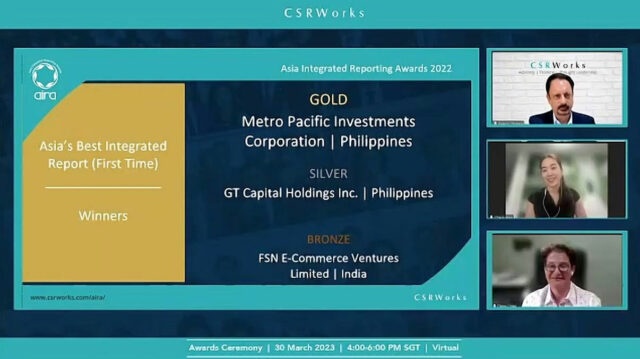
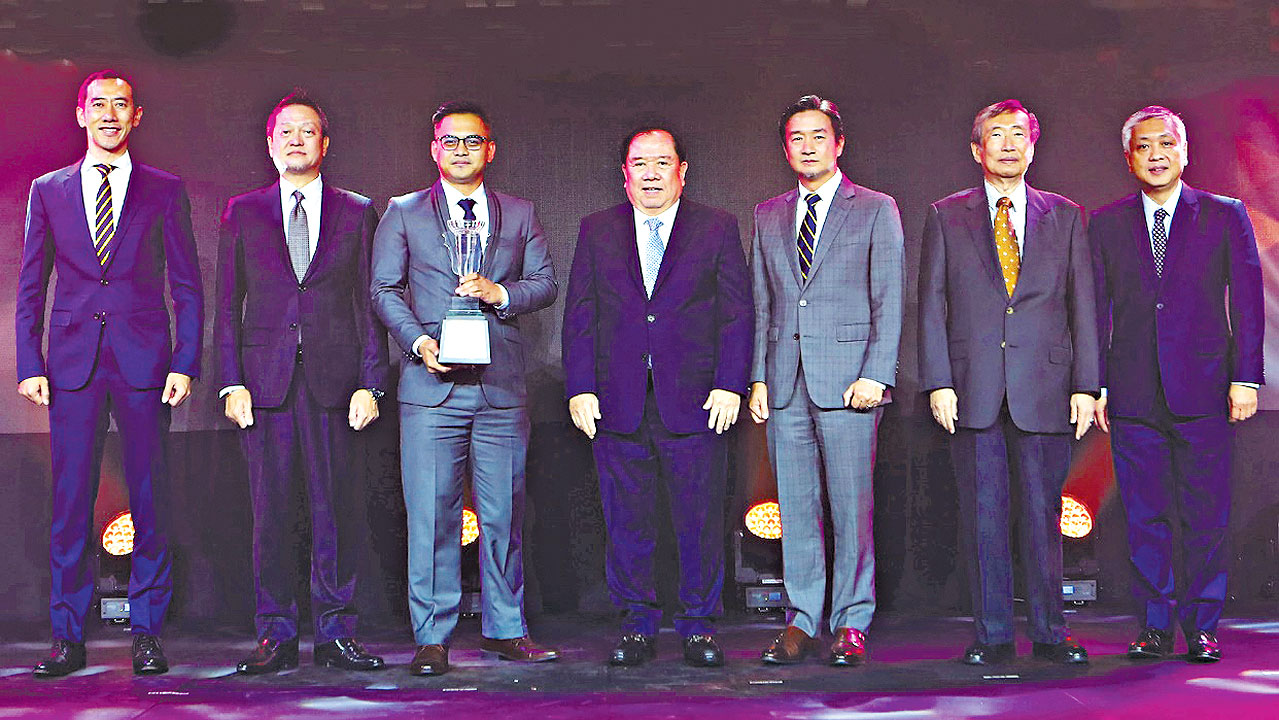
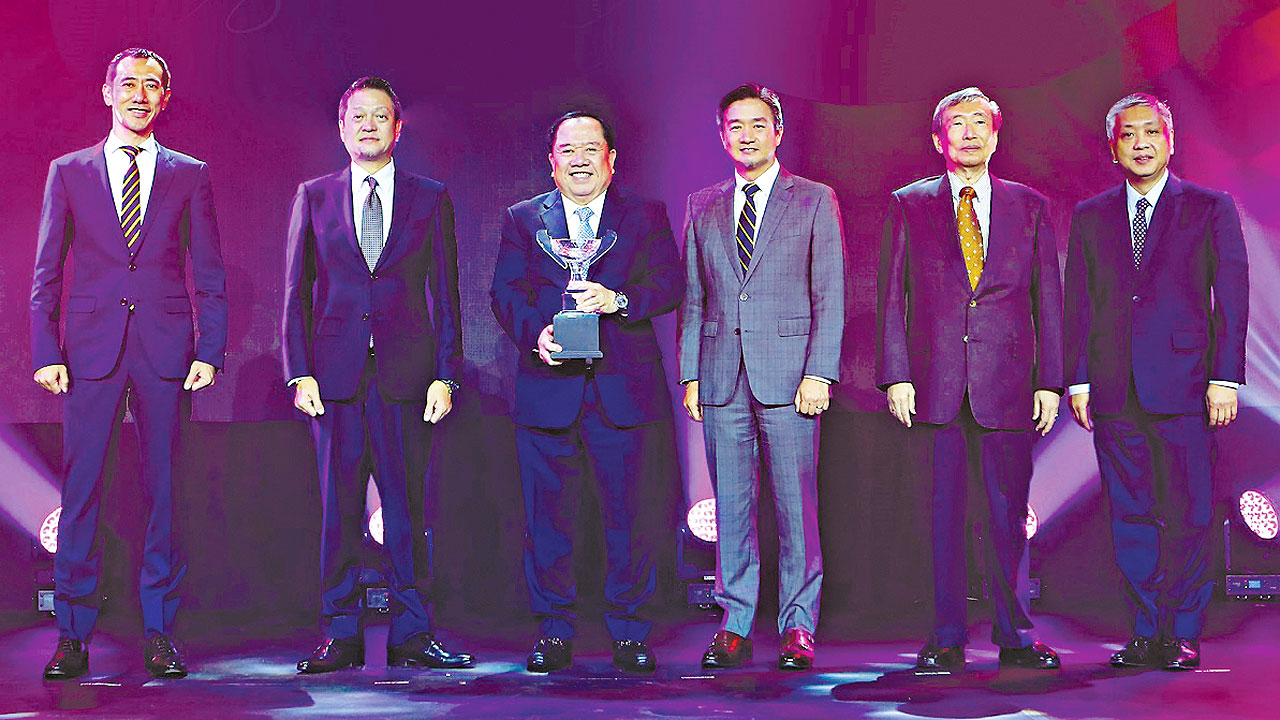
METRO PACIFIC Investments Corp. (MPIC), the country’s leading infrastructure investments company, was honored as Asia’s Best Integrated Report, bagging the gold award for First Time category at the 8th Asia Integrated Reporting Awards (AIRA), widely considered as the most distinguished accolade for integrated reporting in the region.

In a virtual awards ceremony held on March 30, MPIC was recognized alongside other integrated reporting leaders in Asia, celebrating best practices in integrated reporting and communications. Communicating MPIC’s value creation process through its maiden integrated report follows global frameworks and standards that cater to the needs of its investors and shareholders.

“This integrated annual report reflects our dedication to transparency, as well as our efforts to deliver long-term value to all our stakeholders,” said MPIC Chairman, President, and CEO Manuel V. Pangilinan. “This recognition from AIRA inspires us to do even more to elevate sustainability practices, which will not only benefit our immediate stakeholders, but also the country-at-large.”

Consolidation key for small farmers seeking to climb value chains

SMALL FARMS must overcome their disadvantages in terms of scale and access to specialized equipment by consolidating if they are to be competitive enough to supply large buyers of produce and even join international value chains, former Agriculture Secretary William D. Dar said.

“We have small landholdings that are one hectare or even less on average. Farming at that level would be at a subsistence,” Mr. Dar said in a Zoom call. “That’s why farmers are not becoming richer as we would like them to be.”

Organizing into “clustered farms” can result in cooperative access to farm equipment, while exacting specifications laid down by big buyers could open doors to farming techniques that result in better produce and more efficient cultivation, Mr. Dar said.

Mr. Dar is a senior adviser to Kapatid Angat Lahat for Agriculture Program (KALAP), which seeks to position large agribusiness companies in mentorship roles to smallholder farmers, thereby improving their competitiveness.

The public-private sector initiative works under the Go Negosyo framework of providing farmers and micro, small, and medium enterprises (MSMEs) access to the so-called 3 Ms — money, markets, and mentoring.

“There is a need to consolidate farming towards clustered or cooperative farming, so they will become part of the value chain of the big brothers,” Mr. Dar said.

The Philippines represents a significant opportunity for investment, according to Christian Eyde Moeller, president and co-founder of Lionheart Farms Philippines Corp., which is affiliated with KALAP.

Lionheart Farms’ operations in Palawan encompass 3,500 hectares of land planted to coconut, consisting of individually-owned farms and clustered partner farms.

“Integrated management and scale are needed to take on the challenges; leaving the small farmers alone will not work — I think this is very clear,” Mr. Moeller said in an e-mail.  

“The answer is cultivating together for better economies of scale and specialized skills to deal with the complexities,” he said. “It is a simple reality, why should farming be any different.”

Specialized skills like agricultural engineering, biology, chemistry, food technology, and software development can be more easily rolled out onto agglomerations of farms, he added.

“We have a partner farming program with coconut farmers, which creates livelihood for almost one thousand people, on top of the one thousand plus people that we employ directly from the community of the Indigenous Peoples,” he told BusinessWorld.

Among the other KALAP participants are Yovel East Research and Development, Inc., a biotechnology research company, Universal Leaf Philippines, Inc., a tobacco growing and processing company, and Nestlé Philippines, Inc.

“A farmer having a hectare or two hectares, how can he compete against the large farmers in Cambodia, Vietnam, Thailand, and all these other ASEAN (Association of Southeast Asian Nations) countries, because they have scale,” said Jose Ma. A. Concepcion III, who founded GoNegosyo.

“The advantage of a big brother (approach) is really in the shepherding of these farmers, because they provide mentorship,” he said in a Zoom call.

Mr. Concepcion told BusinessWorld that the concept was similar to franchising.

In the Philippine Franchising Association, he said, individuals who buy a franchise are provided mentorship. The franchise also advertises the brand, which then provides a market for the franchisee.

“Once you have both a mentor and a market, the banks will fund you,” Mr. Concepcion added.

On March 31, banks and financial institutions — including the Development Bank of the Philippines, Land Bank of the Philippines, and Philippine National Bank — met with Mr. Concepcion and other participants in KALAP to discuss how to open up access to capital for farmers.

The challenges are structural, Mr. Moeller said of the coconut industry, which is burdened by poor yields, smaller plots, and the changing nature of market demand.

“Subsidies can no longer save the coconut farmers and is obviously not a sustainable path for anyone,” he said.

“We have brought a new mindset, new skills, technology, digitalization, as well as management into farming. Bringing all the required elements together is justified by scale,” Mr. Moeller said. “… there is no quick fix.”

The commodities that KALAP wants to focus on are rice, coconut, tobacco, coffee, cacao, sugarcane, corn, other feed crops, and livestock.

Farmers intending to join KALAP will need to be part of a collective of clustered farms, Mr. Dar told BusinessWorld.

“Areas will have to be identified (by the Department of Agriculture) in tandem with the big businesses, so it’s a long process,” he said.

For the coconut industry, specifically, “we have agreed to finish the joint roadmap development by the end of May.”

“June will be the anniversary of the Philippine Coconut Authority… they are ready to implement thereafter,” Mr. Dar added.

The program’s memorandum of agreement was signed on March 6 at Malacañang. President Ferdinand R. Marcos, Jr., who witnessed the signing, said it will help farmers and MSMEs become “productive, profitable, sustainable, and globally competitive.” — Patricia B. Mirasol

Rapper Coolio died from fentanyl overdose, manager says

QUAVO of the band Migos sings during the in memoriam segment as an image of the late rapper Coolio is shown on screen at the 65th Annual Grammy Awards in Los Angeles, California, US, Feb. 5, 2023. — REUTERS

LOS ANGELES — Grammy-winning rapper Coolio died from a fentanyl overdose, his manager said on Thursday, six months after the musician was found dead at a friend’s home in Los Angeles at age 59.

Born Artis Leon Ivey, Jr., Coolio was best known for his 1995 single “Gangsta’s Paradise,” from an album of the same name.

That song, a massive hit featured in the film Dangerous Minds, won a Grammy Award for best rap solo performance the following year.

Coolio’s manager, Jarez Posey, said the rapper’s family had been informed on Thursday by the Los Angeles County Coroner’s Office that the singer had died from a fentanyl overdose.

The coroner’s office did not immediately respond to a request for comment from Reuters.

Posey said the rapper’s children planned to honor their father in future documentary and film projects.

Born in Pennsylvania in 1963, Coolio began performing as part of the West Coast hip-hop scene after moving to Compton, California.

He released his debut album, It Takes a Thief, in 1994, scoring a Top Ten hit with the single “Lakeside.” — Reuters

Yields on government debt edge lower on CPI data

YIELDS on government securities (GS) ended lower last week after a slower-than-expected March inflation print.

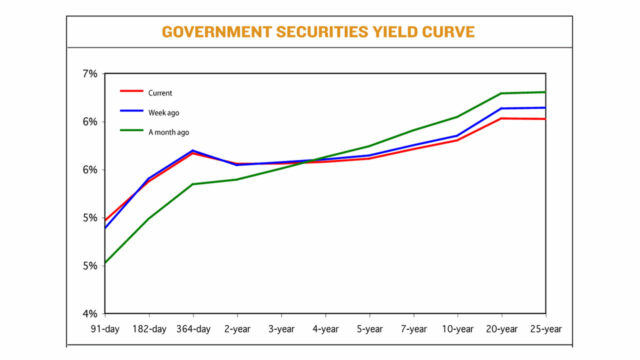
GS yields dropped by an average of 3.76 basis points (bps) week on week, based on PHP Bloomberg Valuation Service Reference Rates as of April 5 published on the Philippine Dealing System’s website.

Local financial markets were closed on April 8 and 9 in observance of Maundy Thursday and Good Friday.

At the secondary market on Wednesday, yields went down almost across the board except for the 91-day Treasury bill (T-bill), which increased by 9.78 bps to 5.1479%, and the two-year Treasury bond (T-bond), which rose by 1.49 bps to yield 5.8638%.

Meanwhile, the 182- and 364-day T-bills saw their rates decline by 3.60 bps and 3.43 bps to 5.6411% and 5.9944%, respectively,

Yields on the three-, four-, five-, and seven-year Treasury bonds also dropped by 1.41 bps (5.8671%), 3.02 bps (5.8884%), 3.97 bps (5.9283%), and 4.60 bps (6.048%), respectively.

At the long end, the 10-, 20- and 25-year debt papers dropped 6.05 bps, 12.66 bps, and 13.91 bps to fetch 6.155%, 6.429%, and 6.424%, respectively.

Total GS volume reached P12.40 billion on Wednesday, lower than the P20.14 billion recorded on March 31.

Security Bank Corp. Chief Investment Officer for Trust and Asset Management Group Noel S. Reyes attributed last week’s yield movements to slower March headline inflation.

“Buying picked up on this expectation and eventual confirmation, but volume was not aggressive as core CPI (consumer price index) was higher,” Mr. Reyes said in a Viber message.

“Nonetheless, the headline number provided added confidence that peak inflation could likely be behind us,” he added.

Union Bank of the Philippines, Inc. Chief Economist Ruben Carlo O. Asuncion in an e-mail that yield movements last week mostly already “reflected disinflation expectations.”

Philippine headline inflation in March eased to its slowest in six months amid lower prices of food and transport, the statistics agency said last week.

However, core inflation, which excludes volatile food and fuel prices, accelerated to the fastest since December 2000.

Preliminary data from the Philippine Statistics Authority (PSA) showed annual headline inflation eased to 7.6% from 8.6% in February. However, this was faster than the 4% print a year ago.

March inflation was the slowest since the 6.9% print in September 2022.

For the first quarter, the CPI averaged 8.3%, higher than the Bangko Sentral ng Pilipinas’ full-year forecast of 6% and the 2-4% target for the year.   

Core inflation, on the other hand, quickened to 8% in March, from 7.8% in February and 2.2% a year ago. This is its highest clip since the 8.2% seen in December 2000. 

For this week, Mr. Asuncion said the market will await the release of March US CPI data on Wednesday “as this could influence the US Federal Reserve’s next policy decision.”

This week’s T-bond auction could also be a trading driver, he added.

The Bureau of the Treasury will offer P25 billion in reissued 10-year bonds with a remaining life of nine years and five months on Wednesday.

The government borrows from local and foreign sources to help plug a budget deficit capped at 6.1% of gross domestic product this year. — Lourdes O. Pilar

Toyota annexes 21st straight ‘triple crown,’ names top-performing dealers

IMAGE FROM TOYOTA MOTOR PHILIPPINES

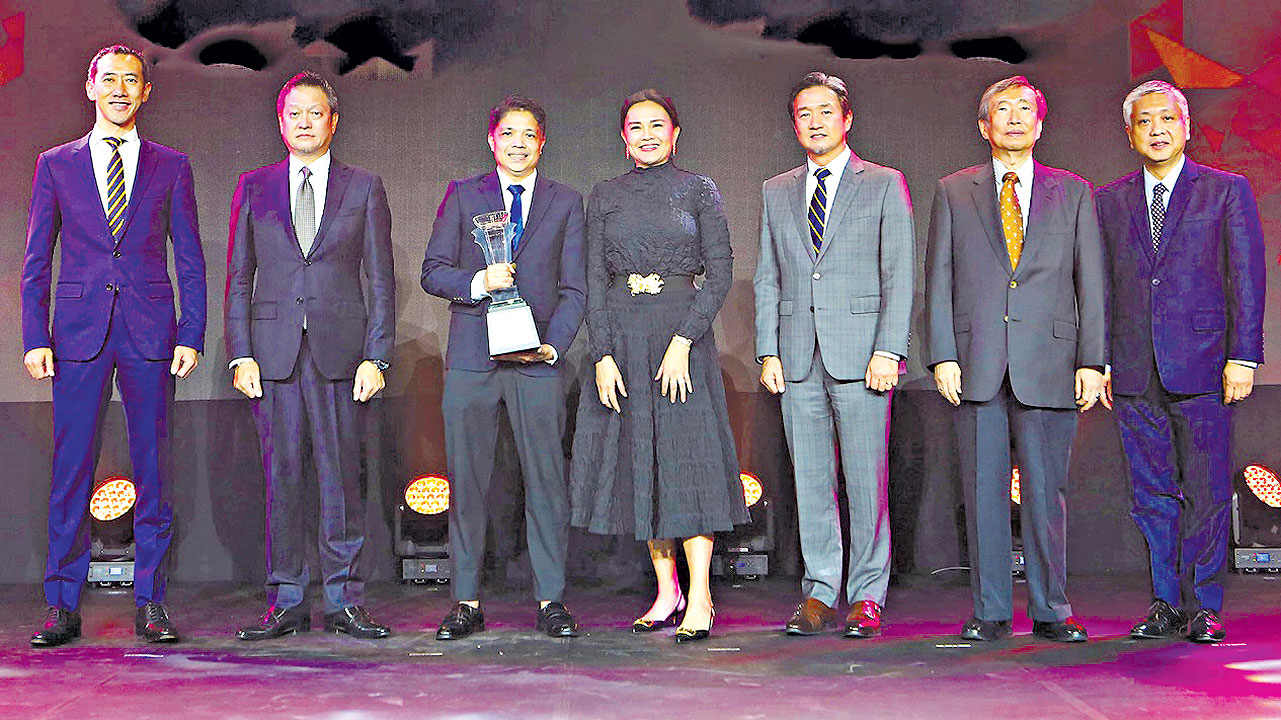
TOYOTA MOTOR PHILIPPINES (TMP) recently held its annual dealer conference for its nationwide dealership network — highlighted by an awarding ceremony to recognize the company’s top-performing dealers and dealer team members for 2022.

TMP also announced its feat of scoring 21 consecutive “triple crowns” — ending 2022 in leadership position in passenger car sales, commercial vehicle sales, and overall sales. Last year, the company additionally recorded “a historic 50% automotive industry market share,” a first for the brand since TMP started operations more than three decades ago.

“When it mattered the most, we came together as one team with one aim: To stand strong with each other so we could, most importantly, stand strong for our customers. As a result, we were awarded with their trust and by their smiles,” said TMP Chairman Alfred Ty in his congratulatory message to the dealers. “As we celebrate our 35th year in the Philippines armed with the time-honored values of our shareholders, Toyota is more dedicated to doing what we do best — to continue producing happiness.”

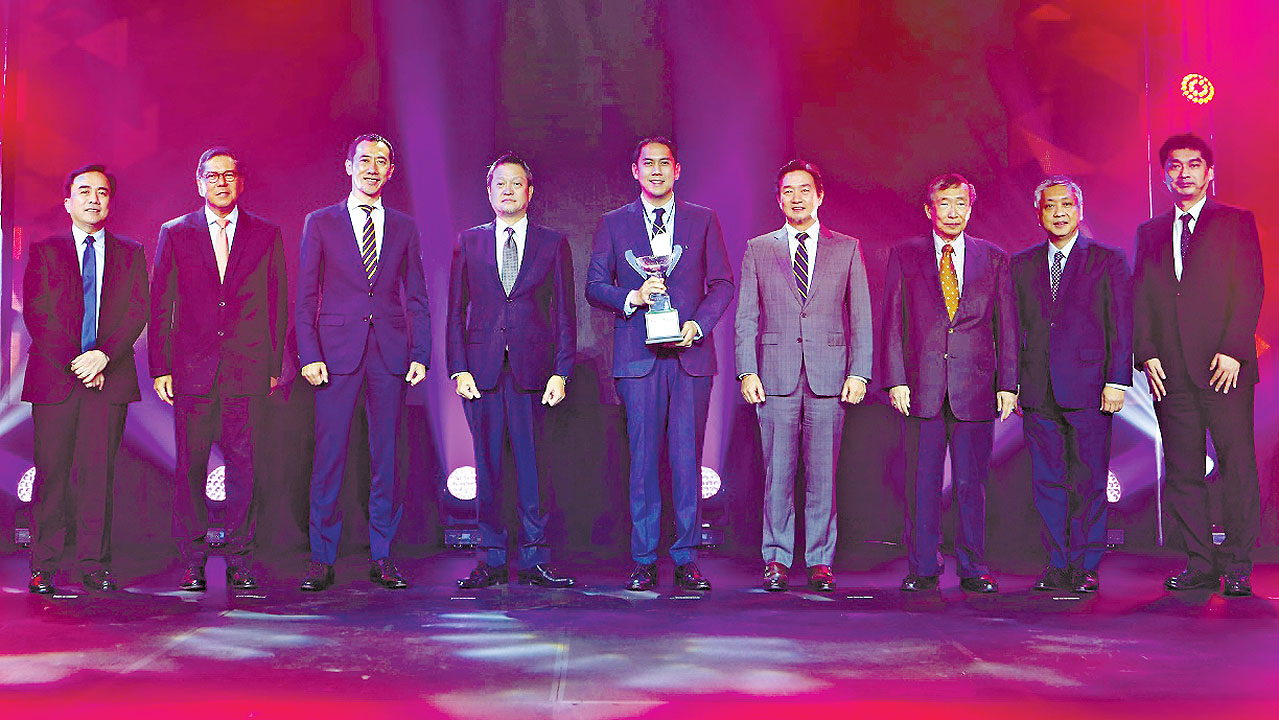
Leading the list of awardees are the following dealerships that have received the major awards for the year. President’s Award of Excellence: Large Business Division (Toyota Pasig); Medium Business Division (Toyota Marilao, Bulacan); Small Business Division (Toyota Tarlac City); President’s Customer Satisfaction Cup of Excellence: Toyota Batangas City, Toyota Nueva Ecija, Toyota Mandaue North; and President’s Value Chain Award of Excellence: Toyota Balintawak.

TMP also honored recipients of the Toyota Dealer Achievement Award for Overall Performance, Toyota Dealer Award of Excellence for Departmental Performance, and other Special Awards.

TMP President Atsuhiro Okamoto took the stage to thank and congratulate Team Toyota Philippines, not just for its outstanding sales performance, but also for its commitment to provide the best possible service and customer experience as the industry shifts to the “better normal.”

Said Mr. Okamoto, “Year 2023 promises to be more amazing. I am confident that with the strongest product lineup in the country, the strongest dealers and, most importantly, the strongest team members and Toyota professionals ever, we will strive to be the best friend of every Filipino. Their trust is the strongest foundation for our future.”

Italy to appoint drought special commissioner

REUTERS

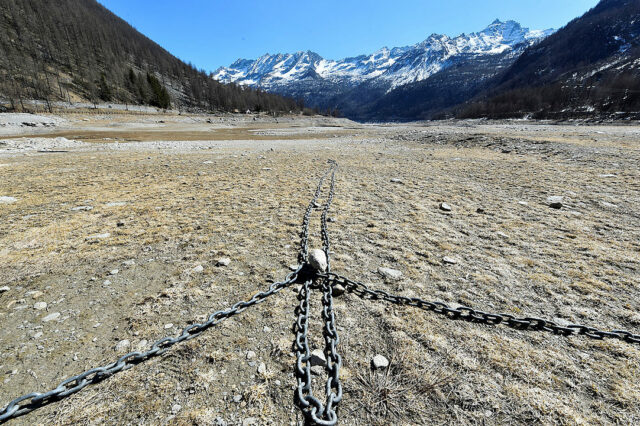
ROME — Italy’s government said on Thursday it will appoint a special commissioner to address the effect of a drought crisis, along with a task force made up of leading officials from various ministries.

Dry winter weather has stoked concerns that the country could face a second drought after a state of emergency was declared last summer for the highly productive northern agricultural areas surrounding the Po river.

Infrastructure Minister Matteo Salvini said in a statement that the Cabinet had approved a decree stipulating that the drought commissioner would take charge of all measures needed to tackle the drought problem.

The commissioner, whose mandate will expire at the end of December but can be extended for an extra year, will coordinate efforts to reduce water consumption across the country and maintain and improve water infrastructure, Mr. Salvini said.

There were no immediate details on an appointee or when the appointment will be made. The commissioner will have sweeping powers constrained only by criminal law, according to a draft of the decree seen by Reuters.

Mr. Salvini also said normal bureaucratic procedures would be simplified for work deemed urgent to cope with the drought crisis. Leaky pipes are a major problem. In a report published in March, national statistics bureau ISTAT said that in 2020, the most recent data available, Italy’s aqueducts had lost 42.2% of the water they carried, the highest proportion on record.

In 2008, water leakage was 10 percentage points lower. In February last year the Po had 61% less water than was normal for the time of year, according to environmentalist group Legambiente, after the area suffered its worst drought for 70 years.

Environment Minister Gilberto Pichetto Fratin said last month the government would invest almost 8 billion euros ($8.74 billion) in a package designed to tackle drought. — Reuters

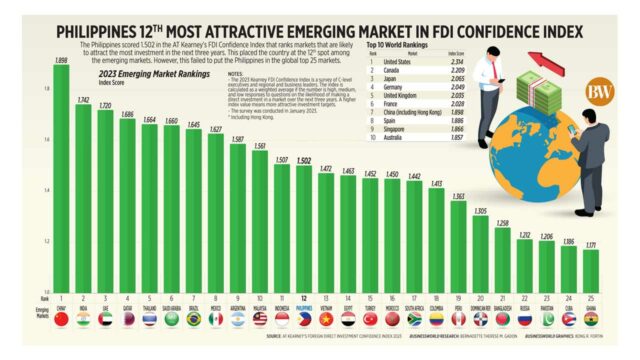
Philippines 12th most attractive emerging market in FDI Confidence Index

The Philippines scored 1.502 in the AT Kearney’s FDI Confidence Index that ranks markets that are likely to attract the most investment in the next three years. This placed the country at the 12th spot among the emerging markets. However, this failed to put the Philippines in the global top 25 markets.

Philippines 12<sup>th</sup> most attractive emerging market in FDI Confidence Index

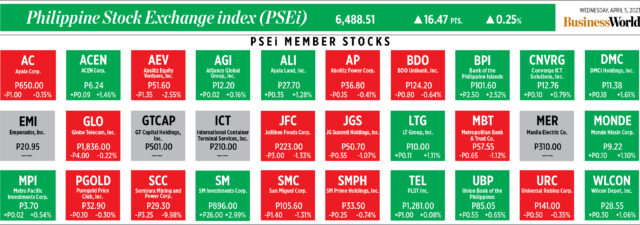
How PSEi member stocks performed — April 5, 2023

Here’s a quick glance at how PSEi stocks fared on Wednesday, April 5, 2023.


ADVERTISEMENT
ADVERTISEMENT