Home Blog Page 50

IATA warns replenishing jet fuel supplies could take months even if Hormuz reopened

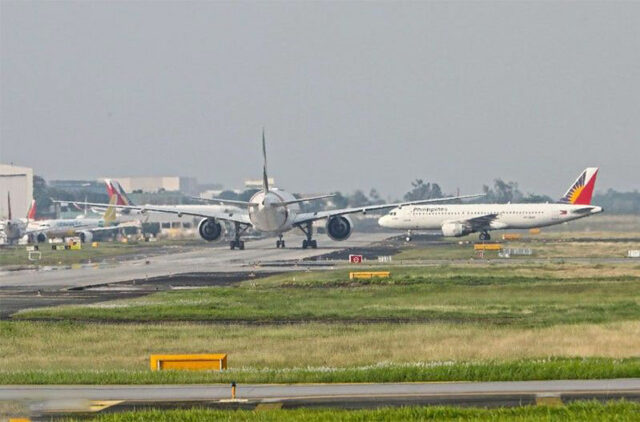
PHILIPPINE STAR/WALTER BOLLOZOS

SINGAPORE/HONG KONG — The head of a body representing global airlines warned on Wednesday it would take months for jet fuel supply to recover even if Iran reopened the Strait of Hormuz, given disruptions to Middle East refining capacity.

Fuel is the second-largest expense for air carriers after labor, typically accounting for about 27% of operating expenses, according to the International Air Transport Association (IATA).

Iran’s closure of the Strait of Hormuz as part of retaliatory moves in the war has choked supplies of jet fuel globally and news of a ceasefire and the possibility of safe passage through Hormuz sent airline stocks soaring.

Oil fell below $100 per barrel after US President Donald Trump said he had agreed to a two-week ceasefire with Iran that was subject to the immediate and safe reopening of the Strait of Hormuz.

Willie Walsh, director general of IATA, told reporters in Singapore that while he expected crude oil prices to fall, jet fuel costs were likely to remain slightly elevated due to the impact on refineries.

“If it were to reopen and remain open, I think it will still take a period of months to get back to where supply needs to be given the disruption to the refining capacity in the Middle East,” Mr. Walsh said.

He shrugged off comparisons to the COVID-19 pandemic, which crippled global travel.

“This is not similar to COVID. This is not a crisis anywhere close to what we experienced (in COVID),” he said. “In COVID, capacity reduced by 95% because borders closed. We’re nowhere near that.”

The situation was more comparable to other shocks such as the downturns of 2008-09 or the aftermath of the September 11 attacks, he added.

“Post-9/11, the recovery took about four months. In 2008-2009 it was probably 10 to 12 months,” he said.

AIRLINE SHARES SURGE
Airlines across Asia have been cutting flights, carrying extra fuel from home airports and adding refueling stops as the Middle East conflict squeezes jet fuel supply, piling pressure on an industry already hit by a doubling of jet fuel prices.

Jet fuel prices normally move in tandem with oil prices, but they have more than doubled since the Iran conflict, far outpacing a 50% rise in crude prices prior to the two-week ceasefire news.

The news and a possible safe passage through Hormuz lifted airline stocks across Asia. Shares of Australia’s Qantas Airways jumped more than 9%, Air New Zealand rose over 4%, Hong Kong’s Cathay Pacific climbed 5%, while India’s IndiGo soared as much as 10%.

Mr. Walsh said the hit to capacity for Gulf carriers, which last year accounted for 14.6% of international capacity, would be temporary.

“Some of that capacity will be replaced by airlines outside of the region … but there’s no way they can replace the (entire) capacity that was provided by the Gulf carriers,” he said, adding that data from April and May would provide a clearer picture of the scale of disruption.

“I fully expect the Gulf hubs to recover and recover quickly,” he said.

On refining capacity, Mr. Walsh said the reopening of the strait, if sustained, would be positive not just for crude flows but for refined products, including jet fuel.

“It will take some time for refineries outside of the region to adapt and increase,” he said, pointing to India and Nigeria as countries with capacity to increase refined product output in the interim.

Walsh added he “would like” to expect China and South Korea to resume exports of refined products once crude flows resumed.

“So there is (refining) capacity available once we get the crude oil flowing, but it’ll take a little bit of time, and with the crack spread elevated the way it is, I think that provides an incentive for refineries to increase the production of jet fuel,” Mr. Walsh said.

The crack spread refers to refinery margins. — Reuters

Gulf states eye cheap Ukrainian interceptor drone as Iranian attacks drain missile stocks

REUTERS

TOKYO — Gulf states including Saudi Arabia and the UAE are exploring a $2,500 Ukrainian-designed interceptor drone as a cheaper way to counter Iranian attacks that are depleting stockpiles of US-made missiles, a Japanese firm marketing the technology overseas told Reuters.

Since the start of the US-Israeli war with Iran, Tehran has launched waves of cheap mass‑produced drones, including Shaheds similar to those Russia uses in Ukraine.

Gulf states and US forces have largely relied on costly interceptor missiles to shoot them down, underscoring a broader shift in air combat in which cheaper systems deployed in volume can steadily erode stock of advanced air defense missiles.

“Everyone started doing the maths. It simply doesn’t make economic sense and people are finally waking up to that,” said Toru Tokushige the chief executive of Terra Drone. There has been a surge of inquiries from the Middle East since the war began, he added.

The price of each interceptor drone from Terra Drone is 400,000 yen ($2,526). By comparison, ground-launched Patriot interceptors missiles can cost around $4 million each, while a Shahed drone is estimated to cost as little as $20,000.

In the first week of the Middle East conflict, Iran launched more than 1,000 drones and it is estimated to have the capacity to produce around 10,000 per month.

The Saudi Arabian and UAE embassies in Tokyo did not immediately respond to requests for comment.

Terra Drone, known for commercial drones, announced its entry into military sales last month through a tie-up with a Ukraine start up, Amazing Drones. It has designed the Terra A1, an interceptor drone, to counter Shahed attacks launched at Ukraine by Moscow.

Under their agreement, the Japanese company will market the interceptor overseas while providing investment and manufacturing know-how.

The Terra A1 has yet to be battle tested and is expected to be handed over to Ukraine’s military in the coming months for trials, Mr. Tokushige said.

Terra Drone already supplies survey and inspection drones to Saudi Arabia’s state-owned oil company Aramco and could use its presence in the kingdom to help establish interceptor drone production in the Middle East, he added.

“This is an area where Japan’s manufacturing strengths can be fully utilized.” ($1 = 158.3200 yen) — Reuters

LPA spotted outside PAR; Likely to develop into storm – PAGASA

DOST-PAGASA FB

A low-pressure area (LPA) was spotted outside the Philippine Area of Responsibility (PAR) and is “highly likely” to develop into a tropical depression, according to the Philippine Atmospheric, Geophysical and Astronomical Services Administration on Wednesday.

The LPA was located 3,100 kilometers east of Northeastern Mindanao, PAGASA said in its 10:00 am advisory.

PAGASA has yet to provide the potential track of the LPA during the forecast period.

Meanwhile, weather conditions across the country on Wednesday are expected to be hot and humid, with isolated rain showers in parts of the Visayas, PAGASA said.

The heat index is expected to exceed 30 degrees Celsius nationwide, except in the Cordillera Administrative Region (CAR). The heat index refers to the temperature as experienced by the human body, taking into account air temperature and humidity.

PAGASA said in its heat index forecast that the highest possible reading is 42°C, which may be experienced in Cotabato City and Butuan City.

In key cities, a heat index of 37°C is projected in Metro Manila, 40°C in Iloilo City, 37°C at Mactan-Cebu International Airport, and 40°C in Davao City.

A heat index above 30°C is still expected across most of the country on Thursday, except in CAR.

The Department of Health earlier reminded the public to stay hydrated and avoid excessive sun exposure amid the dry season, when high heat index temperatures are expected. — Edg Adrian A. Eva

Iloilo City expects more tourists during Filipino Food Month

Iloilo City Mayor Raisa Treñas-Chu at the opening ceremony of Filipino Food Month 2026. — ALMIRA MARTINEZ

Iloilo City Mayor Raisa Treñas-Chu said Filipino Food Month (FFM) is expected to draw more tourists to the country’s only United Nations Educational, Scientific and Cultural Organization (UNESCO) Creative City of Gastronomy, despite rising airfares.

“The Filipino Food Month here in Iloilo, we get to highlight not just the food, but also the culture and heritage of Iloilo City,” the mayor told BusinessWorld on the sidelines of FFM’s launch on Monday.

She noted that amid the airfare hikes, tourists are still expected to visit the city for its “good and cheap” food. “Gastronomy tourism is a big help because we’re getting local tourists visiting here in Iloilo.”

The Civil Aeronautics Board (CAB) last month announced an increase in passenger fuel surcharge for domestic flights to Level 8 for the first half of April.

The adjustment, which ranges from P252 to P787, is due to the oil crisis caused by the worsening Middle East war.

Iloilo City, known for its unique and internationally-recognized cuisine, is the selected launch site for the month-long celebration of the country’s culinary heritage and culture.

It was officially designated as part of UNESCO’s Gastronomy Cities in 2023. Only 56 cities globally have received the title from the organization.

“This designation is both a brand and a mandate…It is a brand that puts Iloilo on par with global culinary capitals,” UNESCO National Commission of the Philippines (UNACOM) Secretary General Ivan Anthony S. Henares said at the opening ceremony of FFM.

“But more importantly, it is a reminder that we must use innovation and creativity to solve humanity’s perennial crises, from conflict to climate change,” he added.

The FFM is also projected to benefit small businesses and farmers, as more tourists join the festivities.

“We not only highlight the restaurants, but also the food stalls,” Ms. Treñas-Chu said.

“We get to highlight all in the food sector and also the farmers, because usually our restaurants link with farmers to get their produce directly from them,” she added.

In 2018, former President Rodrigo R. Duterte declared April as the Buwan ng Kalutong Pilipino under Proclamation No. 469, to “appreciate, preserve, and promote” Philippine culinary traditions and support local farmers.

FFM 2026 is a joint program led by the National Commission for Culture and the Arts (NCCA), in partnership with the Department of Agriculture (DA), the Department of Tourism (DoT), and the Philippine Culinary Heritage Movement (PCHM). — Almira Louise S. Martinez

Oil slides below $100, stocks soar as Trump agrees to two-week ceasefire

MODELS of oil barrels and a pump jack are displayed in this illustration photo taken on Feb. 24, 2022. — REUTERS

SINGAPORE – Oil prices dived, stocks surged and the dollar was knocked back on Wednesday as a two-week Middle East ceasefire sparked a relief rally, fuelled by hopes that oil and gas flows through the Strait of Hormuz could resume.

The news capped weeks of financial market volatility and geopolitical upheaval after US and Israeli strikes on Iran late February pushed tensions to the brink, with Tehran effectively choking off the strategic waterway that carries about 20% of the world’s oil and gas.

US President Donald Trump on Tuesday agreed to a ceasefire with Iran, less than two hours before his deadline for Tehran to reopen the strait or face devastating attacks on its civilian infrastructure.

Market reaction was swift and dramatic, with US crude futures down around 16% to $94.59 a barrel, while Brent futures also slid 15% to $92.35 per barrel.

S&P 500 futures leapt over 2%, while European futures jumped over 4%. The US dollar fell broadly, having been the haven of choice during the tumult.

In Asia, Japan’s Nikkei surged about 5% while South Korea’s Kospi rose 6%, triggering a halt in trading. That left the MSCI’s broadest index of Asia-Pacific shares outside Japan up 4%.

Beyond the immediate relief, investors remain keen to see whether the ceasefire leads to a broader resolution before placing major bets.

“Does it mean people are going to take new risks? No, it doesn’t,” said Martin Whetton, head of financial markets strategy at Westpac. “It would have to actually be a lasting peace (to change things). People aren’t actually taking risk.”

The six-week conflict has sent oil prices soaring, reignited inflation fears and thrown the global rates outlook into disarray, forcing governments and companies to scramble for cover against a sudden energy shock.

Trump’s social media announcement marked an abrupt reversal from hours earlier, when he issued an extraordinary warning that “a whole civilization will die tonight” unless his demands were met.

Charu Chanana, chief investment strategist at Saxo, said the pivotal test is whether negotiations keep progressing over the next two weeks – and whether insurers and tanker operators regain enough confidence for traffic through Hormuz to run normally again.

“That will determine whether this remains just a relief rally or starts to look more like a durable de-escalation.”

The yield on the benchmark US 10-year Treasury note fell 7.9 basis points to 4.261%, its lowest since mid-March. The yield on US 2-year Treasury note sank 10 bps to 3.727%.

Gold prices rose over 2% to $4,812 per ounce.

In currencies, the risk-sensitive Australian dollar rose 1.3% to above $0.7070 and the euro gained 0.76% to $1.1683. That left the dollar index at 99.047, hovering near a one month low.

Some analysts remain sceptical that the ceasefire will translate into lasting peace, warning of likely twists and turns ahead.

Carol Kong, a currency strategist at Commonwealth Bank of Australia, said the conflict’s root causes remain unresolved, keeping the risk of re‑escalation firmly on the table.

“We maintain our view that the war will run into June. The implication is dollar losses may prove short-lived.” — Reuters

Philippines slides in EIU democracy ranking

VARIOUS religious and civil society groups joined the second Trillion Peso March along Epifanio de los Santos Avenue (EDSA) in Quezon City, Nov. 30, 2025. — PHILIPPINE STAR/MIGUEL DE GUZMAN

By Erika Mae P. Sinaking, Reporter

The Philippines fell sharply in a global democracy ranking, signaling deeper institutional strain even as democratic conditions elsewhere show signs of leveling off, according to the 2025 Democracy Index by the Economist Intelligence Unit (EIU).

“Across South and Southeast Asia, we will be watching the juxtaposition of rising civic participation with declining government accountability and civil liberties,” the research group said in its latest annual assessment.

“This reflects the democratic stress in political systems that remain open enough to generate protests but too institutionally weak to translate mobilization into reform. How this tension evolves will determine the future democratic outlook for Asia,” it added.

The Philippines dropped 11 places to 62nd out of 167 countries in the 2025 index, reversing gains recorded a year earlier. The country was named among the five worst performers globally in terms of score deterioration, underscoring renewed concerns over democratic erosion in Southeast Asia.

The Philippines’ overall score fell to 6.31 in 2025 from 6.63 in 2024, marking its steepest decline in recent years. The 2024 reading had already been the lowest in three years, only marginally above the 6.62 posted in 2021. The latest score places the country’s democratic standing at its weakest level since at least that year.

The Philippines kept its classification as a “flawed democracy,” a category it has occupied for several straight years alongside countries such as India and Sri Lanka. The reversal follows a brief rebound in 2024, when the country climbed two places to 51st.

Regionally, Asia and Australasia recorded an average score of 5.27 in 2025, down from 5.31 a year earlier. The decline marked the sixth straight annual fall, among the longest sustained regional downturns tracked by the index. The EIU identified South and Southeast Asia as the main sources of democratic stress.

The firm said the region faces a structural imbalance, where rising political participation coincides with weakening checks on government power and reduced civil liberties. That tension, it said, would shape Asia’s democratic trajectory in the years ahead.

The EIU also cited the growing use of digital repression across Asia, with governments expanding controls over online speech and access to information as instruments of governance. Civil society groups in the Philippines have issued similar warnings in past years, raising concerns over press freedom and the application of online regulations to suppress dissent.

Globally, democracy indicators showed signs of stabilizing. The worldwide average score edged up to 5.19 in 2025 from 5.17 in 2024, suggesting a possible pause in a multi‑year global decline. Seven countries shifted regime classifications during the year, with five moving to higher democratic categories.

The US stood out from the broader pattern, with its score declining after the return of Donald J. Trump to the presidency in January 2025, driven by weaker government functioning and constraints on civil liberties, the EIU said.

Inflation risks rise after target breach in March — BSP

A gas attendant is at work at a gasoline station in Manila in this file photo. — PHILIPPINE STAR/NOEL PABALATE

The Bangko Sentral ng Pilipinas (BSP) said inflation risks have “significantly” grown after consumer prices rose faster than expected in March amid the oil crisis.

This came after soaring fuel prices pushed headline inflation to 4.1% last month, well-above than the central bank’s expected 3.1%-3.9% print.

It likewise marked a sharp pick up from the 2.4% in February and 1.8% a year ago, making it the fastest and the first time that it breached the BSP’s target since July 2024.

The central bank wants inflation to stay within 2%-4%, with 3% as its point target.

“The inflation risk environment has significantly shifted to the upside amid the ongoing conflict in the Middle East,” it said in a statement released late Tuesday.

The central bank noted that further escalation of oil shocks would later weigh on the prices of other commodities, which may disanchor its inflation expectation.

“A sharp and prolonged oil price shock could trigger spillover effects with the potential broadening of price pressures to the rest of the CPI basket,” the BSP said. “This could also disanchor inflation expectations and generate further second order impact.”

The BSP had expected inflation to accelerate past its target band by April, with its full-year forecast now at 5.1%.

For now, the central bank said it will continue to assess incoming economic data to determine if it has to take monetary policy action aligned with its price stability mandate.

The Monetary Board will hold its second policy review this year on April 23. — Katherine K. Chan

China and Russia veto UN resolution on protecting Hormuz shipping

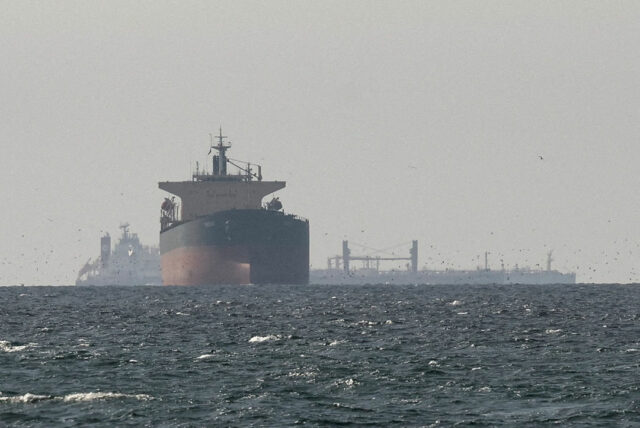
Tankers sail in the Gulf, near the Strait of Hormuz, as seen from northern Ras al-Khaimah, near the border with Oman’s Musandam governance, amid the US-Israeli conflict with Iran, in United Arab Emirates, March 11, 2026. — REUTERS

CHINA and Russia on Tuesday vetoed a UN resolution encouraging states to coordinate efforts to protect commercial shipping in the Strait of Hormuz, calling the measure biased against Iran, while Washington’s ambassador to the world body called on “responsible nations” to join the US in securing the waterway.

The 15-member Security Council voted 11 in favor of the resolution presented by Bahrain, with two against – China and Russia – and two abstentions.

US President Donald Trump threatened that “a whole civilization will die tonight” as Iran showed no sign of accepting his ultimatum to open the Strait of Hormuz by Tuesday evening, Washington time.

Oil prices have surged since the US and Israel struck Iran at the end of February, unleashing a conflict that has run for more than five weeks while Tehran has largely closed the strait that was previously the route for about a fifth of global oil and liquefied natural gas.

“The draft resolution has not been adopted, owing to the negative vote of a permanent member of the Council,” Bahrain’s Foreign Minister Abdullatif bin Rashid Al Zayani said.

US AMBASSADOR CONDEMNS THE VETOES
The US ambassador to the United Nations, Mike Waltz, condemned the Russian and Chinese vetoes, saying they marked “a new low” when Iran’s shutting of the strait was preventing medical aid and supplies reaching humanitarian crises in the Congo, Sudan, and Gaza.

“No one should tolerate that. They are holding the global economy at gunpoint. But today, Russia and China did tolerate it. They sided with a regime that seeks to intimidate the Gulf into submission, even as it brutalizes its own people.”

Mr. Waltz said Iran could choose “to reopen the strait, to seek peace and to make amends.”

He added, “But until then and afterwards, we call on responsible nations to join us in securing the Strait of Hormuz, protecting it, ensuring that it remains open to lawful commerce, to humanitarian goods, and the free movement of the world’s goods.”

France deplored the vetoes.

“The aim was to encourage strictly, purely defensive measures to provide the security and safety for the strait without spiraling towards escalation,” its UN ambassador, Jerome Bonnafont, said.

RUSSIANS AND CHINESE SAY TEXT WAS BIASED
Russia and China said the resolution was biased against Iran, and China’s UN envoy Fu Cong said adopting such a draft when the US was threatening the survival of a civilization would have sent the wrong message.

Russia’s UN Ambassador Vasily Nebenzya said Russia and China were proposing an alternative resolution on the situation in the Middle East, including maritime security.

A text of that resolution seen by Reuters urges “de-escalation of the ongoing hostilities” and “a return to the path of diplomacy.”

At a regular news briefing on Tuesday, China’s foreign ministry said that the Security Council should act to ease tensions, stop the conflict and resume talks.

“It should not be used to endorse illegal acts of war, let alone add fuel to the flame,” ministry spokesperson Mao Ning said when asked about the UN resolution.

Iran’s UN Ambassador Amir Saeid Iravani praised the Chinese and Russian moves, saying “their action today prevented the Security Council from being misused to legitimize aggression.”

Mr. Iravani added that the UN secretary-general’s personal envoy was en route to Tehran to pursue consultations. A UN source said the envoy, Jean Arnault, who left for the Middle East on Monday, intends to visit Iran as part of his efforts to encourage an end to the war, but his travel plans would depend on security and logistics.

China and Russia used their vetoes even though Bahrain had significantly weakened its draft after China opposed authorizing force.

The draft submitted to a vote dropped any authorization of the use of force. An explicit reference to binding enforcement, included in an earlier draft, was also left out.

Instead the text strongly encouraged states “to coordinate efforts, defensive in nature, commensurate to the circumstances, to contribute to ensuring the safety and security of navigation across the Strait of Hormuz.”

It also said such contributions could include “the escort of merchant and commercial vessels,” and endorsed efforts “to deter attempts to close, obstruct or otherwise interfere with international navigation through the Strait of Hormuz.” — Reuters

UN envoy plans to visit Iran as part of peace effort

REUTERS

WASHINGTON — A personal envoy of UN Secretary-General Antonio Guterres plans to visit Iran as part of his efforts to encourage an end to the Iran war, but his travel plans will depend on security and logistics, a UN source said.

Jean Arnault, a veteran UN diplomat Mr. Guterres named as his envoy on the conflict last month, headed to the Middle East on Monday, but the UN has not announced details of his itinerary.

Iran’s UN ambassador, Amir Saeid Iravani, told the UN Security Council on Tuesday the envoy was “currently en route to Tehran to pursue consultations.”

However, the UN source, who spoke on condition of anonymity, said Mr. Arnault’s travel plans would be “contingent on security and logistics.”

US President Donald Trump threatened a dramatic escalation of the US-Israeli war on Iran on Tuesday, saying that “a whole civilization will die tonight” as his deadline for Tehran to open the Strait of Hormuz neared.

With just hours to go before Trump’s 8 p.m. EDT (0000 GMT) deadline, a senior Iranian official told Reuters that Tehran was positively reviewing a request by Pakistan for a two-week ceasefire to give more time for diplomacy.

Mr. Iravani said Iran welcomed Mr. Guterres’ efforts, including the appointment of Mr. Arnault, to secure an immediate end to the war.

“Iran stands ready to engage constructively with all genuine diplomatic efforts, including through Pakistan, Turkey, and Egypt, as well as diplomatic efforts by China and Russia, and supports any credible initiative capable of bringing about a sustainable end to this unlawful and unwarranted war,” he said. — Reuters

Trump agrees to two-week ceasefire with Iran, dropping threat to destroy ‘whole civilization’

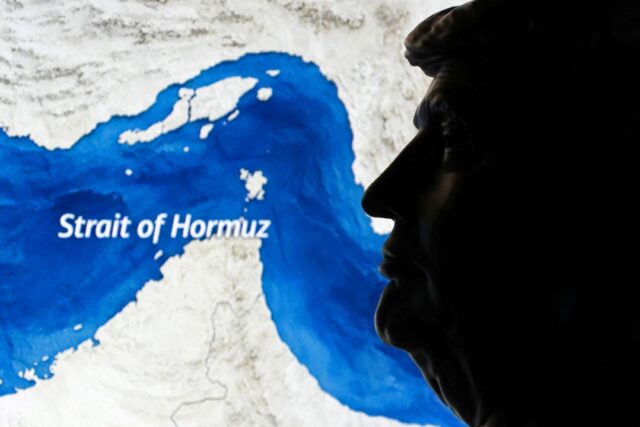
A map showing the Strait of Hormuz and a 3D-printed miniature model depicting U.S. President Donald Trump are seen in this illustration taken March 23, 2026. — REUTERS/DADO RUVIC/ILLUSTRATION

DUBAI/JERUSALEM/WASHINGTON – US President Donald Trump on Tuesday agreed to a two-week ceasefire with Iran, less than two hours before his deadline for Tehran to reopen the Strait of Hormuz or face devastating attacks on its civilian infrastructure.

Trump’s announcement on social media represented an abrupt turnaround from earlier in the day, when he issued an extraordinary warning that “a whole civilization will die tonight” if his demands were not met.

Iran said talks between the US and Iran would begin on Friday in Islamabad, Pakistan, whose prime minister helped mediate the ceasefire. Iranian state TV claimed Trump had accepted Iran’s terms for ending the war, describing it as a “humiliating retreat” by the US president.

Trump said the last-minute deal was subject to Iran’s agreement to pause its blockade of oil and gas supplies through the strait, which typically handles about one-fifth of global oil shipments. Iran’s foreign minister, Abbas Araqchi, said in a statement that Tehran would stop counter-attacks and provide safe passage through the Strait of Hormuz.

“This will be a double sided CEASEFIRE!” Trump wrote on his Truth Social platform. “The reason for doing so is that we have already met and exceeded all Military objectives, and are very far along with a definitive Agreement concerning Longterm PEACE with Iran, and PEACE in the Middle East.”

The war, now in its sixth week, has claimed more than 5,000 lives in nearly a dozen countries, including more than 1,600 civilians in Iran, according to tallies from government sources and human rights groups.

CONDITIONED ON STRAIT’S REOPENING
Two White House officials confirmed that Israel has also agreed to the two-week ceasefire and to suspend its bombing campaign on Iran. Israeli media reported that the cessation of hostilities would begin once Iran reopened the strait and that Israel expected Iranian attacks to continue in the interim.

A few minutes after Trump’s announcement, the Israeli military said it identified missiles launched from Iran towards Israel.

Trump, who has issued a series of threats in recent weeks only to back away, said progress between the two sides had prompted him to agree to the ceasefire. He said Iran had presented a 10-point proposal that was a “workable basis” for negotiations and that he expected an agreement to be “finalized and consummated” during the two-week window.

Markets breathed a sigh of relief, with US stock futures rising in the minutes following Trump’s message. Oil prices fell sharply, with US crude futures dropping more than 17% to just over $92 a barrel.

ABRUPT TURNAROUND
Trump’s announcement capped a whirlwind day that was dominated by his threat to destroy every bridge and power plant in Iran unless Tehran reopened the strait. That unnerved world leaders, rattled global financial and energy markets and drew widespread condemnation, including criticism from the head of the United Nations and Pope Leo.

Some international law experts have said attacking civilian infrastructure indiscriminately could constitute a war crime.

The closure of the strait, through which almost a fifth of the world’s oil supply typically travels, has sharply increased oil prices, escalating the chances of a global economic downturn or even recession. The US Energy Information Administration earlier on Tuesday warned that fuel prices could continue to rise for months even after the strait reopened.

With the US midterm election campaign ramping up, Trump’s approval ratings have hit their lowest level ever, leaving his Republican Party at risk of losing its grip on Congress. Polls show sizable majorities of Americans opposed to the war and frustrated by the rising cost of gasoline.

As the clock ticked down to Trump’s 8 p.m. EDT (0000 GMT) deadline, US and Israeli strikes on Iran had intensified, hitting railway and road bridges, an airport and a petrochemical plant. US forces attacked targets on Kharg Island, home to Iran’s main oil export terminal. — Reuters

Oil shock brings inflation to 4.1%

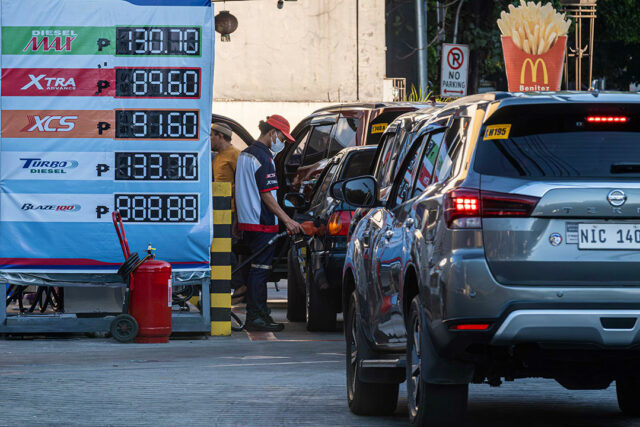
FUEL PRICES are displayed at a gas station in Paco, Manila, April 6, 2026. — PHILIPPINE STAR/RYAN BALDEMOR

By Katherine K. Chan, Reporter

FASTER PRICE INCREASES in fuel, electricity and food including rice, drove Philippine inflation past the Bangko Sentral ng Pilipinas’ (BSP) target for the first time in nearly two years, the Philippine Statistics Authority (PSA) reported.

The consumer price index accelerated to 4.1% in March from 2.4% in February and 1.8% in the same month last year.

This was the quickest pace in nearly two years or since the 4.4% in July 2024 and likewise marked the first time since then that the headline print breached the BSP’s 2%-4% target.

March inflation also came in above the 3.8% median forecast in a BusinessWorld poll of 18 analysts and the central bank’s 3.1%-3.9% estimate for the month.

In the three months to March, inflation averaged 2.8%.

The BSP in a statement said inflation accelerated in March as the Middle East conflict disrupted global oil trade, driving up prices of local fuel, electricity as well as rice.

“Looking ahead, mounting risks to the inflation outlook require sustained vigilance. The BSP will carefully consider incoming data at its upcoming monetary policy meeting to assess the need for action in keeping with its price stability mandate,” the central bank said.

National Statistician Claire Dennis S. Mapa attributed the pickup to faster price increases in the transport index, particularly in gasoline and diesel, which accounted for 54.8% of the overall inflation rate in March.

During the month, transport inflation stood at 9.9%, reversing from the -0.3% clip recorded in February.

This came as soaring pump prices pushed gasoline and diesel inflation to its fastest in over three years at 27.3% (from -5.7%) and 59.5% (from -1.3%), respectively.

Mr. Mapa said the faster transport and food inflation was “definitely” driven by the oil crisis caused by the Middle East conflict.

He noted there were already spillover effects seen in several commodity groups last month including food, housing, water, electricity, gas and other fuels.

“Based on previous years, when we also had spikes in fuel prices in the world market, the impact was quick on other commodity items. That’s why in the 13 commodity groups we track, almost 10 of them rose,” Mr. Mapa told a news briefing on Tuesday.

In March, fuel retailers increased pump prices by as much as P43.50 per liter for gasoline, P67.35 per liter for diesel and P70.90 per liter for kerosene.

Mr. Mapa said he hopes transport inflation in the coming months will not mirror the levels seen in 2022 or when oil markets faced supply and price shocks amid Russia’s Ukraine invasion.

However, he noted that April inflation is likely to accelerate as fuel prices are expected to continue rising this month, adding that some commodities may still reflect the lagged impact of earlier price hikes.

“Definitely we’re seeing higher numbers in April because we had a series of price increases during the first week and we’re not seeing any development that it might go down.”

Meanwhile, inflation for housing, water, electricity, gas and other fuels rose to 4.5% in March from 3.5% in February.

Electricity inflation was faster at 9.2% in March from 6.7% in February, while inflation for liquefied petroleum gas (LPG) quickened to 2.2% from -2.2% in February.

Manila Electric Co. raised electricity rates by 64.27 centavos per kilowatt-hour (kWh) to P13.8161 per kWh for its customers in the greater Metro Manila area. This meant households consuming 200 kWh monthly paid about P129 more in their electricity bill for March.

LPG prices were likewise higher in March, with the household-standard 11-kilogram (kg) LPG tank ranging between P818.62 and P1,128.62, based on data from the Department of Energy.   

According to the Department of Economy, Planning, and Development (DEPDev), the government has secured 165.6 million liters of diesel for April, which it said seeks to “stabilize domestic fuel supply and ease transport costs.”

RICE PRICES SPIKE
Meanwhile, rising transportation costs also sent food prices up in March, with the heavily weighted food and nonalcoholic beverage index heating up to 3% in March from 1.8% in the prior month.

On the other hand, rice prices continued to jump in March, bringing inflation for the staple grain to 3.6% from -3.4% in February.

This was the first time since December 2024 that rice inflation settled in the positive territory or when it stood at 0.8%.

Based on PSA data, the average cost of local regular milled rice climbed by 5.8% to P48.69 per kg in the second half of March from P46.02 per kg a year ago. The price of well-milled rice also went up by 8.02% annually to P56.68 per kg, while the price of special rice rose by 3.79% to P64.07 per kg.

Mr. Mapa said there is a risk that rice prices will go up further in the coming months as transport inflation continues to speed up. 

DEPDev said the government has enforced anti-hoarding for petroleum products and expanded the P20 rice program to ensure ample supply and help bring food prices down nationwide.

PURCHASING POWER FALLS
Meanwhile, core inflation, which excludes volatile food and fuel prices, picked up to 3.2% in March from 2.9% in February and 2.2% a year earlier. This was the fastest core print in two years or since the 3.4% in March 2024.

The peso’s purchasing power, or the value of each P1, also slid to its lowest ever at 75 centavos in March.

This means that the value of P100 in 2018 can now only buy goods and services worth P75.

PSA data also showed that inflation for the bottom 30% of income households quickened further to 4.2% from 2.5% in February and 1.1% last year.

In the National Capital Region (NCR), inflation also accelerated to 3.6% in March from 1.9% in February and 2.1% a year ago.

Outside NCR, consumer prices picked up to 4.2% in March from 2.5% in February and 1.8% last year.

With inflation picking up faster than anticipated, analysts said the case for the BSP’s monetary policy tightening may now have become stronger.

March was the first time in over a year or since February 2025 that the central bank’s forecast missed the actual inflation print.

For Aris D. Dacanay, ASEAN economist at HSBC Global Investment Research, last month’s target breach calls for a policy rate hike to 4.5% at the Monetary Board’s upcoming April 23 meeting.

He noted that they expect the central bank to execute its price stability mandate and address the potential spillover effects of oil shocks even as growth remains muted.

“Though uncertainty looms over the direction of global commodity prices, we think it is important to be ahead of the curve, most especially with the risk in oil prices tilted to the upside,” Mr. Dacanay said in a report on Tuesday.

“Yes, growth was already weak before the oil shock began, and the central bank might decide to ‘look past’ the supply shock. But given the BSP’s core mandate of price stability, we expect the BSP to, at the least, tamp down the potential spillover effects the oil shock may have on non-energy prices,” he added.

Last month, the central bank left its key rate unchanged at 4.25% in an off-cycle meeting, a move BSP Governor Eli M. Remolona, Jr. said aimed to calm markets jolted by the Middle East war.

Rizal Commercial Banking Corp. Chief Economist Michael L. Ricafort also sees the BSP raising rates within the year to drive inflation back to its target range as he expects consumer prices to rise further as the war drags on.

“(March inflation was) already above the BSP target range of 2%-4% that could lead to rate hike/s to bring inflation back to the said target range to fulfill the price stability mandate (and) to better manage both inflation and inflation expectations despite largely supply-side driven and external in nature that is beyond the country’s reasonable control,” he said in a Viber message.

Chinabank Research said inflationary pressures will likely persist through yearend but sees the central bank standing pat for now.

“Price pressures are likely to persist for the rest of the year, and second-round effects are expected in food and service activities,” it said in a separate note. “We expect the BSP to hold rates at the meeting this month as inflation remains largely supply-driven without evidence of excess demand.”


DoE: Oil prices unlikely to drop anytime soon

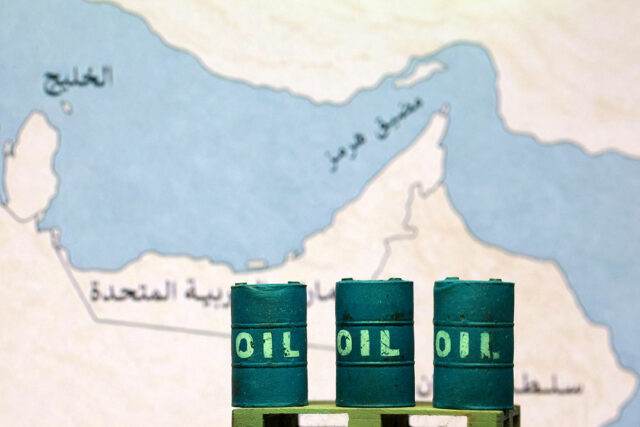
A map showing the Strait of Hormuz, also known as Madiq Hurmuz, and 3D printed oil barrels are seen in this illustration taken March 26, 2026. — REUTERS/DADO RUVIC/ILLUSTRATION

By Sheldeen Joy Talavera, Reporter

THE COUNTRY’S Energy chief does not expect oil prices to immediately rebound from recent sharp increases, citing extensive damage to energy infrastructure in the Middle East.

“This war has been ongoing for four weeks now. There is a permanent damage in the structure of the international oil community,” Department of Energy (DoE)Secretary Sharon S. Garin told a virtual press briefing on Tuesday.

Even if the Strait of Hormuz, one of the world’s most critical oil chokepoints, is cleared for hundreds of vessels to pass-through, Ms. Garin said energy infrastructure in some Middle East countries has been destroyed and could take about months or even years to rebuild.

“The speed of the increase in pump prices will not be the same as the drop in prices. In fact, it will be way, way slower because the damage caused goes beyond the war,” she said in mixed Filipino and English.

Since the outbreak of the US-Israel attack on Iran on Feb. 28, diesel prices have surged by a cumulative P100.05 per liter, while prices of gasoline and kerosene have gone up by about P52.30 and P82.40 per liter, respectively.

Ms. Garin said these are the “fastest and the highest increase of our oil prices,” which is due to the Middle East war.

Before the Iran war, domestic pump prices ranged from P49-P77.03 per liter for gasoline, P48-P73.61 per liter for diesel, and P77.40-P98.89 per liter.

To cushion the impact of oil prices on motorists, the Philippines has moved to allow the President to suspend or cut fuel excise.

In the Philippines, petroleum products are subject to both fuel excise tax and value-added tax (VAT).

Under Republic Act No. 10963 or the Tax Reform for Acceleration and Inclusion law, excise taxes are imposed at fixed rates per liter — P8 for gasoline, P6 for diesel, and P4 for kerosene.

On top of this, a 12% VAT is also applied to the total selling price, including the excise tax.

According to the Energy chief, the impact of potential reduction in excise taxes on fuel products may not be immediately felt by consumers as excise taxes have already been imposed on the country’s current fuel inventory.

“This is something that they (economic managers) are studying because even if you announce an excise tax suspension today, it will not be felt yet. The excise taxes were paid on purchases that have already been made. We’ve already stocked up. We were making sure that we have enough supply to maintain energy security,” Ms. Garin said.

At present, the Philippines has a supply of petroleum products that is good for 50.42 days.

As of April 3, the country’s inventory of gasoline could last 59.78 days, diesel for 46.93 days, and kerosene for 107.88 days. Meanwhile, jet fuel inventory is equivalent to 62.69 days, while liquefied petroleum gas or LPG is 34.02 days.

To boost the country’s oil buffer, the government has decided to procure two million barrels of diesel via state-run Philippine National Oil Co. (PNOC), with an allotted budget of P20 billion.

The first shipment containing 142,000 barrels of oil from Japan arrived on March 26.

Another shipment with 300,000 barrels from Malaysia will arrive by April 10, according to Energy Undersecretary Alessandro O. Sales. The remaining 600,000 barrels will reach the country’s shores later this month.

“PNOC is still working on it week on week to procure more and more. While we have ordered, we continue to consume. We continue to use our fuel and then so while we consume or we use our fuel, we need to replenish,” Ms. Garin said.

ADVERTISEMENT
ADVERTISEMENT