Home Blog Page 4996

Maguindanao del Norte’s fishing hub gets public infrastructure boost 

JOHN UNSON

THE BANGSAMORO regional government is rolling out public infrastructure projects in a coastal town in Maguindanao del Norte to enhance the investment climate in what is considered as the provinces fishing hub.   

The latest of these projects in the municipality of Datu Blah Sinsuat is a P7-million fire station, with groundbreaking ceremonies held last week. 

A firetruck will also be provided by the Bangsamoro Ministry of Interior Local Government (MILG) led by Minister Naguib A. Sinarimbo, who also oversees the regions disaster and calamity response unit Rapid Emergency Action on Disaster Incidence.  

Datu Blah Sinsuat, touted as Maguindano del Norte’s most peaceful town with a population of just over 28,000 composed of mixed Muslims and Christians, produces at least 10 tons of fish daily from its territorial waters.  

The MILG and the Blah Sinsuat local government had earlier built a police station in the 12-year-old town. Construction is underway for a municipal government operations office and five barangay halls.  

Let us work together for peace and sustainable development to spread around Datu Blah Sinsuat and in all other municipalities in Maguindanao del Norte,Maguindanao del Norte Gov. Abdulrauf A. Macacua told residents after the fire station launching event. 

Local officials have also confirmed that traders of petroleum products are eyeing to set up large fuel depots have expressed interest in the town as a site.   

Datu Blah Sinsuat is about 40 kilometers southwest of Cotabato City, the Bangsamoro regional capital. John M. Unson

Solon says strict implementation of bodycams will avert cover-up during buy-busts  

PNP.GOV.PH
PNP.GOV.PH

A LAWMAKER called for the mandatory use of body cameras during drug buy-busts, saying a video recording would be a hard to refute documentation of the operation and avert attempts at any cover-up.  

Whether the narcotics seized weigh one kilo or one ton, a video recording is the best receipt there is,Deputy Speaker and Batangas Rep. Ralph G. Recto said on Sunday.   

High-ranking police officers were recently linked in an alleged attempt to cover up their involvement in a buy-bust operation last year that yielded 990 kilograms of crystal methamphetamine, known in the Philippines as shabu.  

Mr. Recto said authorities should stop relying on lamppost closed-circuit television (CCTV) footage and should obtain footage from equipment they carry before, during and after the operation.  

The Philippine National Police issued in August 2021 operational guidelines and policies on the use of body-worn cameras during law enforcement activities.   

The police guidelines were released after the Supreme Court approved a resolution requiring law enforcers to use at least one body-worn camera and one alternative recording device when serving search and arrest warrants as well as during warrantless arrests. Beatriz Marie D. Cruz

SEAOIL cited as 2022 top importer by Customs-Zamboanga

FUEL provider Seaoil Philippines, Inc. was recognized as the top importer in 2022 by the Bureau of Customs in Zamboanga Peninsula, with an import revenue contribution of almost P10 billion.  

The independent fuel company said last years import revenue was nearly double from the previous years contribution. 

We are committed to supporting the needs of our stakeholders, which includes paying the right dues and taxes to the government,SEAOIL Chief Executive Officer Glenn L. Yu said in a statement on Friday. 

Seaoil said it is opening new stations in the Zamboanga Peninsula this year in addition to its existing network of 25 in the region. 

The company will also open a depot in the Zamboanga Economic Zone in Zamboanga City in the early part of 2024, with a storage capacity of 18 million liters of fuel. 

It will supply the Zamboanga region as well as the island provinces of Basilan, Sulu, and Tawi-Tawi. 

The opening of our Zamboanga terminal will enable us to make Seaoil quality products more accessible to our customers and commercial industries in southern Mindanao,Mr. Yu said. 

He also said the company has been introducing innovations like the PriceLOCQ mobile app, which lets customers lock fuel prices and buy bulk fuel for later use before the next price increase.

Fighting illicit trade

UNSPLASH

Surprisingly, I received invitations to attend events sponsored by top-tier global intellectual brands, namely Foreign Policy (FP) and Economist Impact (EI).

FP was co-founded by Samuel Huntington, a celebrated conservative academic known for writing the post-Cold War book The Clash of Civilizations. It mainly articulates different political and economic views on US foreign policy. Ultimately, the views found in FP are bound to define US interests.

EI is part of the Economist Group whose flagship is The Economist. The Economist, founded in 1843 to oppose British trade protectionism, describes itself as “radical center.” Which for some means being “neo-liberal.”

The letter from FP was a request for me to take part in an invitation-only, in-person roundtable titled “Creative Approaches to Raising Revenue and Balancing Budgets.” This event was held on April 13, during the Spring Meetings of the International Monetary Fund and World Bank in Washington DC.

The invitation letter said that the roundtable discussion would “bring together a curated group of 15-20 leaders from government, including Finance Ministers from around the world, as well as private sector leaders and civil society experts.”

The roundtable sought to “explore how countries can tailor their approaches to financing in ways that don’t discourage innovation, what novel approaches to raising revenues are proving effective around the world, and what long-term budgetary risks are posed by taxation structures that inadvertently discourage productivity and growth.” The concept for the roundtable was well thought out.

More recent is an official invitation, a “VIP invite event,” from EI. This is about its Global Anti-Illicit Trade Summit, South-East Asia, taking place on May 18 in Manila.

The invitation letter states that the event “will unite leaders from business, government, law-enforcement agencies and civil society to examine what actions can be taken to combat illicit trade in South-East Asia.” The topics cover the scale of illicit trade in the region, the effects of counterfeit trade, consumer awareness and protection, and cross-border, cross-sector solutions.

The events of FP and EI, though done separately, are intertwined. An approach to FP’s “raising revenue and balancing budgets” is through minimizing illicit trade, which in turn enhances revenue collection. Meantime, EI says in its note accompanying the invitation letter that to combat illicit trade, “revisions of tax and excise levels… will be essential.”

Despite the relevance and appeal of the topics offered by FP and EI, I sent my regrets to the organizers. The reason: the tobacco industry supports both events.

The letter that FP addressed to me said that the “intimate invitation-only roundtable discussion… is hosted by Foreign Policy and Philip Morris International (PMI).” The EI’s summit is “supported by Japan Tobacco International” or JTI.

I belong to Action for Economic Reforms (AER), which has championed higher taxes on manufactured tobacco and related products like electronic nicotine device systems. AER’s position on tobacco taxes obviously conflicts with the stance of the tobacco industry. PMI in the Philippines and elsewhere has consistently opposed higher tobacco taxes. In a similar vein, the concept for the summit being supported by JTI supports “revisions of tax and excise levels.” That is clever language, which means lowering the excise taxes of, say, tobacco products to fight illicit trade.

Declining the invitations from FP and EI to attend events supported by PMI and JTI is an expression of my and AER’s support to the WHO (World Health Organization) Framework Convention on Tobacco Control (FCTC). The Philippines is a signatory to the WHO FCTC.

Article 6 of the WHO FCTC is about the “price and tax measures to reduce the demand for tobacco.”

Further, Article 5.3 states: “In setting and implementing their public health policies with respect to tobacco control, Parties shall act to protect these policies from commercial and other vested interests of the tobacco industry in accordance with national law.” The guidelines for the implementation of Article 5.3 recommend measures that “limit interaction with the tobacco industry.”

Nonetheless, the legally established tobacco corporations are concerned over tobacco illicit trade. Illicit trade hurts their bottom line.

Still, we make an important caveat. Citing the literature, Norman Maldonado-Vargas writes that “there is a historical involvement of the tobacco industry in the illicit trade as well as ongoing complicity.” (See “Health Taxes and Illicit Trade: Evidence and Courses of Action” from Health Taxes: Policy and Practice, edited by Jeremy A. Lauer et al., 2023.)

In the Philippines, the case of Mighty Corp. exemplified illicit trade being committed by the tobacco industry. In 2017, Mighty Corp. was caught using fake tax stamps, which led to tax evasion charges filed against it. It ultimately closed and was sold to JTI.

The tobacco industry, whose market share and profits are threatened by illicit trade, is pushing a bill that amends the Anti-Agricultural Smuggling Act of 2016. This is House Bill (HB) No. 3917, which the House of Representatives passed in December 2022. The bill has been transmitted to the Senate.

This initiative of the local players to have a tougher anti-smuggling bill that covers tobacco products ties in neatly with the global tobacco industry’s thrust of supporting the activities of high-profile intellectual hubs like FP and EI on raising revenue and combatting illicit trade.

One can posit that a segment of the tobacco industry, the government, and even the tobacco-control advocates have a common ground, despite their fundamental contradictions. Combating illicit trade is good for everyone, regardless of intentions of the different actors.

We can grant that the House bill against tobacco smuggling has good intentions for society as well. Rampant smuggling of tobacco products results in reduced tax revenues. It means access to cheaper and unregulated cigarette brands, thus undermining the health of people.

It seems bizarre though that the tobacco industry has agreed to the passage of a weak House bill on illicit trade. One would think that with its huge resources, it could have produced a well-designed bill.

Here are the major weaknesses of the House Bill (HB) No. 3917.

First, HB No. 3917 treats large-scale smuggling of “tobacco, whether manufactured or unmanufactured, including finished products such as cigars, cigarettes, or heated tobacco products” as part of the Anti-Agricultural Smuggling Act. To make manufactured goods like cigarettes or electronic cigarettes become an agricultural product is unbelievable. Smart people are incredulous that politicians contort the definition of what constitutes an agricultural good. Defining the smuggling of manufactured goods as part of anti-agricultural smuggling is subject to a legal challenge.

Second, HB No. 3917 has a narrow scope. The smuggling of tobacco products is but a subset of illicit trade. Smuggling in criminal law pertains to the clandestine movement of goods and people in and out of the country that the law forbids, such as evading taxes, duties, or foreign trade restrictions. Illicit trade is broader because it covers the activities prohibited by law that are done within the country’s borders.

As pointed out by the study of Austria and Villanueva (2021): “The decline in cigarette smuggling in the country implies that illicit trade is domestic in nature or sourced from within the country.”

Third, HB No. 3917 punishes equally all offenders, regardless of the gravity of participation or level of complicity in the smuggling of tobacco products. The bill targets persons that are identified with ownership or lease of assets or instruments used to smuggle goods. But some of these offenders who enable the smuggling may not necessarily be the principal culprit or main beneficiary.

The correct approach is to marginally differentiate the punishment or fines based on the gravity of various types of offenses. Penalties must be proportionate in their severity. Accomplices are light offenders and need not be punished as heavily as the principal actor or mastermind behind the crime. The bill must distinguish between the principal and the agent. And not all agents have a substantial role in committing the crime.

This is a way of preventing further collusion among those caught for perpetrating the crime.

Fourth, HB No. 3917 limits itself to increasing the fines and punishment but is not attentive to the role of enforcement.

The bill is silent about how to treat government authorities and enforcers involved in the crime. Those enforcers demanding harassment bribes must be punished severely.

Moreover, the bill’s approach is confined to increasing the penalty of imprisonment and fine. This is inadequate especially in the Philippine context of a weak State, where the probability of an offender (or a smuggler) getting caught and punished is low.

The standard economic thinking to explain the above goes this way: So long as the gains are greater than the costs linked to illicit trade, the perpetration of the crime (smuggling) will continue.

This is expressed in this equation: G (gains from illicit trade) > p (probability of enforcing punishment) x P (punishment or penalty expressed in monetary terms).

What the government wants to happen is to increase p and P so that the costs from doing illicit trade will be greater than the gains. Thus: G < pP.

The conventional approach is to focus on increasing P, like what HB No. 3917 is proposing. Raising p, on the other hand, is about improving the quality of enforcement, governance, and institutions. It is more complex than the simple act of increasing P.

But note that if the probability of getting caught (p) is zero or close to zero, even an increase in the punishment (P) will not deter the acts of illicit trade.

Further, P has an upper limit. For instance, the upper legal limit can be capital punishment. But to quote the American Civil Liberties Union, among evidence-based sources, “the death penalty has no deterrent effect on crime.”

A P that is too excessive is non-enforceable, apart from the fact that the law provides limited liabilities. Further, an excessive, arbitrary P can have the perverse result of lowering p, for it makes bribery or corruption more tempting.

Thus, for the Philippines, even if there is room for P to increase, more attention must be given to increasing the probability of enforcing the punishment or fine.

The matter of enforcement is what our rules, including legislation, must focus on. The government has a grasp of the enforcement measures to combat illicit trade. The government agencies have a menu of instruments.

Further, the papers of Austria and Villanueva (2021) and Jo-Ann Diosana and Filomeno Sta. Ana III (The Philippines: Case Study in Illicit Trade, 2020), among others, can provide illumination.

The discussion here can also guide entities like FP and EI when tackling revenues and illicit trade. But a more enriching, more nuanced, and more inclusive discussion can happen if the likes of FP and EI would avoid conflict-of-interest issues. This means being more sensitive to the FCTC, including the protocols in dealing with tobacco industry interference.


Filomeno S. Sta. Ana III coordinates the Action for Economic Reforms.

www.aer.ph

Summer Cycles

ANDREY METELEV-UNSPLASH

Cyclical and counter cyclical patterns affecting energy supply and demand during the dry season in the Philippines

On March 21, PAGASA declared the official start of this year’s summer season. Almost immediately after, I recall feeling a drastic change in the temperature… and a bit of dread over possible summer power shortages.

During our hot season which runs from March until May, temperatures peak at above 37 degrees centigrade in many parts of the country. This naturally leads households and businesses to turn on their cooling appliances to help alleviate the discomfort of the extreme heat. Dedicated appliances involved in cooling such as refrigerators and freezers work harder to do their job of keeping their internal temperatures low since the external environment’s temperature is much higher.

Thus, power demand reaches peak levels in these summer months. For the Luzon-Visayas grid, peak demand last year was recorded in May at 14,380 MW, up 20% as compared to the peak demand during the cooler months of January and February of the same year. According to the Department of Energy (DoE), for every one-degree Celsius increase in temperature, demand also goes up by around 100 MW of additional power.

One could argue that we shouldn’t fret so much since summertime means it is the cyclical peak for solar farms power production. That is true. Longer days and more irradiation mean more clean power production from the sun’s rays. However, solar farms contribute around just 1% to 2% of the grid’s requirements since it is available only during the day; hence, this makes a very small impact against the backdrop of the demand needed at peak times. And while it may seem that a lot of sun means a lot of electrons generated, actually too much sun can cause the solar panels to heat up, which degrades their production efficiency by as much as 10-25%.

The summer season is also the country’s dry season. This is bad news for another form of renewable energy — hydroelectric power. During the rainy season, our rivers are flowing with surface water and our dams become filled with it, leading to peak power production for our hydro facilities, which comprise 13% of the country’s installed generation mix. Counter cyclical to solar farms, hydroelectric power plants have their lowest generation availability in the summer, simply because water flows from rivers are less and stored water in the dams are lowest.

An interesting case is that of Mindanao which sources 38% of its power requirements from hydroelectricity. During the rainy season, the region has excess generation capacity due to the supply coming from the combination of all their power generators, including hydroelectric facilities. This excess capacity would come in handy for the Luzon and Visayas grid, which experiences tightness in power supply during the summer. Unfortunately, surplus capacity is reduced significantly during summer due to the counter cyclical conditions I mentioned, wherein the output of Mindanao hydro plants is halved. Plus, the Mindanao-Visayas grid connection, a transmission line that connects the Mindanao grid to the Luzon and Visayas grid, is not yet operational; hence, there is no power export or import possible.

This leaves the Luzon and Visayas grid in a conundrum: how to bridge the supply-demand gap during the summer months?

Through collaboration with all sectors of the industry — regulators, generation, transmission, and distribution companies, and even large customers — there are several solutions available and are being readied again as the cycle repeats itself this year.

First is on the supply side. The industry works together to ensure that all generation and transmission facilities are up and running. Plant maintenance is done before or after summer, in accordance with a Grid Operations Maintenance Plan, to make sure that all plants are available during the peak months of the year. Fortunately, there are two pieces of good news. One, fresh new power generation is coming from the GNPower Dinginin power plant in Bataan which came on stream mid last year. At 1,336 MW, it is the largest power plant in the country today. Two, news reports say that the Ilijan power plant, the largest natural gas-powered generation facility in the country, is expected to receive its first LNG shipment in the next couple of months, which means it should resume operations soon after. The plant, which accounts for 10% of the installed capacity of Luzon, has not been operating since June 2022.

Second is on the demand side. Recently, Meralco announced that they signed up more participants to the Interruptible Load Program (ILP) wherein large power consumers like factories or shopping malls voluntarily disconnect themselves from the grid during scheduled peak periods, turn on their own power generators, and allow other consumers to partake of the limited power from the grid.

Third is building sufficient supply, transmission, and energy storage capacity to meet the cyclical fluctuations in demand. While this has no impact on our situation this year, I find it worthwhile to mention that there are promising developments here.

To be able to grow at around 5-6% annually, our country needs around 600 MW to 700 MW of new generation capacity per year. Many power generation projects are in the pipeline, per the DoE, but most of these are in the form of renewable energy. We need to be aware of the limitations of variable renewable energy like wind and solar. For example, using the rule of thumb that 1 MW of solar PV installed capacity requires one hectare of land, 700 MW will need a land area almost three times the size of Bonifacio Global City (BGC) in Taguig. What is more, solar PV plants have a capacity factor of around 17%, i.e., the installed capacity of 700 MW produces an output 83% less than its peak capacity due to the intermittency of solar irradiation. Hence, to approximate the output of a coal-fired base load plant, the scale of land use would have to be multiplied several times over, considering too that space would have to be set aside for energy storage facilities to enable the solar farms to discharge energy when there is no sun.

Given that, we will need a mix of all generation technologies that are available and reliable during the periods of cyclical shortness of supply. This is to ensure that there will be available and sufficient power for the months when the rivers are dry and the dam levels are low, as well as for the other months when it is raining and cloudy.

In the meantime, some to-dos to include:

1. Cut the delays and red tape associated with building new power plants, for all types of generation technologies.

2. Develop energy storage facilities. Along with fast ramping turbines powered by natural gas and even our legacy oil powered internal combustion engine coupled generation, energy storage needs to kick in when the sun does not shine or the wind stops blowing. Recently, San Miguel Corp. inaugurated their battery storage facility in Bataan which the company said functions like a huge power bank. I suppose this is true as a very simple analogy but just like any power bank that we have stashed in our bags or desk drawers, it will help deal with short duration troughs in power supply during the day but won’t do the trick when the troughs last over the summer months. Nonetheless, this is a welcome addition to our energy system especially if priced affordably as committed.

3. Accelerate investments in transmission and distribution. Blame is often laid on the generation sector for failing to supply power. However, much can also be said about the hundreds of MW of available capacity that remain stranded in various parts of the country as there are no transmission and/or distribution lines to bring them to the cities and the industries that need it badly. Investments have to be made in all three segments. Like a chain, for it to be strong, all links have to be equally strong.

4. And finally, as consumers, we are the fourth part of the power chain. Just like the large power users enrolled in the ILP, we can also do our part in conserving power this summer, and all year round. 


Romeo L. Bernardo is principal Philippine Adviser to GlobalSource Partners (globalsourcepartners.com). He serves as a board director in leading companies in banking and financial services, telecommunication, energy, food and beverage, education, real estate, and others. He has had a 20-year run in the public sector including stints in the Department of Finance (Undersecretary), the IMF, World Bank, and the ADB.

romeo.lopez.bernardo@gmail.com

Singapore sends up a flare on the global outlook

JOHN T-UNSPLASH

IT’S GETTING HARD to be an optimist about the world economy. China’s reopening is proving solid but unspectacular. Talk of a US recession has resurfaced with vigor. To this unsettling picture, Singapore added its own warning on Friday. It’s been a run of wins lately — for the bumpy-landing camp.

The Monetary Authority of Singapore (MAS) paused its tightening and gave a sobering commentary on global and domestic prospects. In a separate report, the government described a rough first quarter: Gross domestic product shrank 0.7% from the prior three months, a worse outcome than economists anticipated. Little wonder the MAS, which uses the exchange rate as its primary policy tool, was ready for a break. Inflation will end the year markedly lower.

The central bank’s commentary on conditions beyond the city-state is often useful reading, and it hasn’t disappointed this time. A hub for capital and talent, the tiny republic is shaped greatly by trends beyond its shores. The assessment is decidedly downbeat. “The drag on global investment and manufacturing from tighter financial conditions will intensify in the quarters ahead,” MAS said. “The boost to demand in most of the regional economies from their reopening last year will also fade over 2023.”

The agency also flagged the cumulative effects of efforts to combat inflation that have yet to fully work their way through the economy. These are the famous lags in policy impact that monetary chiefs everywhere are increasingly likely to cite.

A growing number of central banks are taking a breather after more than a year of rapid hikes. The break may become permanent. It’s too much to hope that’s reflected in rhetoric. Policymakers have to sound hawkish as long as inflation is above target or at the upper end of comfort ranges. Nevertheless, the message is clear: There’s a lot of tightening that has to weave its way through the economy. This month has seen pauses in India and Australia, and a second month of inaction from the Bank of Korea. Malaysia and Indonesia are done.

I’ve spent many years tracking central banks and the extent to which their actions reflect those of the Federal Reserve. Almost without exception they proclaim their autonomy from the US. This has been easier said than done, but it’s just possible that this time DC is the laggard. Fed officials are still signaling an inclination to lift rates in May despite a staff assessment that a mild recession will begin later this year. Inflation isn’t beaten, though it has likely peaked. The Fed risks overdoing it.

The downbeat vibe was underscored by the International Monetary Fund, which warned about the impact of financial-sector stress. The lender trimmed it’s global forecasts a bit. More significant was what the IMF didn’t say. When the Fund’s economic team visited Singapore in January and used the opportunity to publish upgraded numbers, its chief economist spoke of a “turning point” — for the better. That line was missing from new projections this week.

A big part of the comeback story was an anticipated tailwind from Beijing’s dismantling of COVID restrictions. China’s recovery has been solid, but isn’t winning awards. Disappointing numbers in the past week have people speculating on rate cuts. This is no boom. Anticipation ran ahead of reality. It makes things that much harder for everyone else.

The return of Chinese tourists has given Singapore a lift. The Cost of living is on everyone’s mind: From the price of steak to the explosion in rents. There’s little monetary policy can do to alter some of this. Longer-term factors are at work, such as the scarcity of property, building delays, and an influx of people from Hong Kong and China. The worst of all worlds may beckon: A pronounced slowdown combined with a long-term elevation in the price of basics.

Singapore was among the first countries to tighten in 2021 in response to rising inflation. It gave prescient warnings late last year of the prospect of recession. The “R” word was missing from Friday’s release, though it hovered over the outlook in all but name. Officials sent up a flare. Is Fed Chair Jay Powell watching?

One possible salvation: If things really go south in the major economies and easing is required, Singapore won’t be far behind. You may even hear about it first here.

BLOOMBERG OPINION

Sudan military rivals fight for power

KHARTOUM — Sudan’s military launched air strikes on a paramilitary force’s base near the capital in a bid to reassert control over the country on Sunday following clashes in which scores of combatants and at least 56 civilians were killed.

At the end of a day of heavy fighting, the army struck a base belonging to the government’s paramilitary Rapid Support Forces (RSF) in the city of Omdurman, which adjoins the capital Khartoum, eyewitnesses said late on Saturday.

The military and RSF, which analysts say is 100,000 strong, have been competing for power as political factions negotiate forming a transitional government after a 2021 military coup.

In the early hours of Sunday morning, eyewitness heard the sound of heavy artillery firing across Khartoum, Omdurman and nearby Bahri, and there was also gunfire heard in the Red Sea city of Port Sudan, where there had been no earlier reports of fighting.

The Sudanese Doctors’ Union reported at least 56 civilians had been killed and 595 people, including combatants, had been wounded since the fighting erupted on Saturday.

Scores of military personnel were also killed, it said without giving a specific number due to a lack of first hand information from many of the hospitals where those casualties were taken.

The group earlier said it recorded deaths at Khartoum’s airport and Omdurman, as well as west of Khartoum in the cities of Nyala, El Obeid and El Fasher.

The RSF claimed to have seized the presidential palace, army chief’s residence, state television station and airports in Khartoum, the northern city of Merowe, El Fasher and West Darfur state. The army rejected those assertions.

The Sudanese air force told people to stay indoors while it conducted what it called an aerial survey of RSF activity, and a holiday was declared in Khartoum state for Sunday, closing schools, banks and government offices.

Gunfire and explosions could be heard across the capital, where TV footage showed smoke rising from several districts and social media videos captured military jets flying low over the city, at least one appearing to fire a missile.

A Reuters journalist saw cannon and armored vehicles on the streets and heard heavy weapons fire near the headquarters of both the army and RSF.

Army chief General Abdel Fattah Al-Burhan told Al Jazeera TV the RSF should back down: “We think if they are wise they will turn back their troops that came into Khartoum. But if it continues, we will have to deploy troops into Khartoum from other areas.”

The armed forces said it would not negotiate with the RSF unless the force dissolved. The army told soldiers seconded to the RSF to report to nearby army units, which could deplete RSF ranks if they obey.

The RSF leader, General Mohamed Hamdan Dagalo, better known as Hemedti, called Burhan a “criminal” and a “liar”.

“We know where you are hiding and we will get to you and hand you over to justice, or you die just like any other dog,” Mr. Hemedti said.

A prolonged confrontation could plunge Sudan into widespread conflict as it struggles with economic breakdown and tribal violence, derailing efforts to move towards elections.

POLITICAL AGREEMENT AT RISK
The clashes follow rising tensions over the RSF’s integration into the military. The disagreement has delayed the signing of an internationally backed agreement with political parties on a transition to democracy.

A coalition of civilian groups that signed a draft of that agreement in December called on Saturday for an immediate halt to hostilities, to stop Sudan sliding towards “the precipice of total collapse”.

“This is a pivotal moment in the history of our country,” they said in a statement. “This is a war that no one will win, and that will destroy our country forever.”

The RSF accused the army of carrying out a plot by loyalists of former strongman President Omar Hassan al-Bashir — who was ousted in a coup in 2019 — and attempting a coup itself. The 2021 coup ousted the country’s civilian prime minister.

International powers — the United States, Russia, Egypt, Saudi Arabia, the United Nations, European Union and African Union — all appealed for an immediate end to the hostilities.

US Secretary of State Antony Blinken said on Saturday he had consulted with the foreign ministers of Saudi Arabia and United Arab Emirates and that they had agreed it was essential for the involved parties in Sudan to immediately end hostilities without any preconditions. — Reuters

Japan’s Kishida vows safety of G7 meetings after ‘smoke bomb’ attack

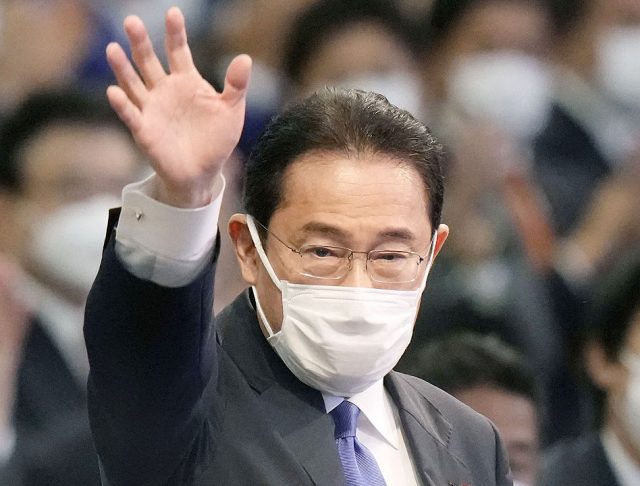
Japanese Prime Minister Fumio Kishida — KYODO/VIA REUTERS

TOKYO — Japan’s Prime Minister Fumio Kishida, a day after he was evacuated from an apparent attack, vowed on Sunday to do everything possible to ensure the safety of meetings of the Group of Seven (G7) industrial powers through next month.

Mr. Kishida escaped unhurt after a suspect threw what appeared to be a smoke bomb during an election campaign stop at a fishing port in western Japan.

The suspect, identified by police as 24-year-old Ryuji Kimura, was also carrying a knife when he was arrested, as well as a possible second explosive device he dropped at the scene after bystanders and police tackled him, Kyodo news agency reported.

No motive for the apparent attack, in which media said one police officer was slightly injured, has been announced.

Speaking to reporters, Mr. Kishida said Japan must not allow acts of violence that attack the foundation of democracy.

His bomb scare in Wakayama prefecture near Osaka was an eerie reminder of the assassination last July of former Prime Minister Shinzo Abe, who was shot with a homemade gun while campaigning for a parliamentary election.

Mr. Abe’s killing shocked Japan, where gun crimes are exceedingly rare, and prompted a review of security for politicians, who routinely mingle with the public.

Japanese politicians are campaigning for by-elections on April 23 for the lower house of parliament.

Chief Cabinet Secretary Hirokazu Matsuno said on Saturday that police have been instructed to boost security and the government would do what is necessary to ensure security when Mr. Kishida hosts the May G7 summit in Hiroshima.

G7 foreign ministers gather on Sunday for a meeting in the resort city of Karuizawa, while the group’s environment and energy ministers are meeting this weekend in Sapporo in northern Japan. — Reuters

China launches weather satellite, flights avoid no-fly zone to north of Taiwan

REUTERS

BEIJING/TAIPEI — China launched a weather satellite on Sunday as civilian flights altered their routes to avoid a Chinese-imposed no-fly zone to the north of Taiwan which Beijing put in place because of the possibility of falling rocket debris.

Taiwan’s transport ministry said Beijing had initially notified Taipei it would impose a no-fly zone from Sunday to Tuesday but later said that period had been reduced to 27 minutes on Sunday morning after Taiwan protested.

The no-fly announcement rattled regional nerves as it followed shortly after China staged new war games around Taiwan, which Beijing views as sovereign Chinese territory.

The China Aerospace Science and Technology Corporation, China’s main contractor for its space program, said the weather satellite Fengyun 3G had successfully launched from the northwestern province of Gansu at 9:36 a.m. (0136 GMT).

The satellite then entered its set orbit, the contractor said, describing the launch as a “complete success”. The Fengyun 3G is a low-earth orbit satellite designed to track rainfall.

It did not say what the flight path of the Long March 4B rocket carrying the satellite was, but the time coincides with China’s previous announcement about the no-fly zone.

China has said it is inaccurate to call it a no-fly zone, though Taiwan has issued a notice to airmen, or NOTAM, that uses the wording “airspace blocked due to aerospace flight activity”.

Taiwan’s defense ministry said some debris from the rocket launch had fallen into the “warning zone” off the island’s northern coast, but it did not affect Taiwan’s territorial safety.

Flights to and from Taiwan and China, Taiwan and South Korea and Taiwan and Japan were amongst those detouring around the zone on Sunday morning, according to routes tracked on Flightradar24.

Normal flight paths resumed shortly after 10 a.m. (0200 GMT).

The zone is in an area over the East China Sea slightly northeast of Taiwan that routinely sees heavy civilian flight traffic.

Taiwan’s Civil Aeronautics Administration said in a one-hour period starting from 9 a.m. (0100 GMT) 33 flights had to alter their routes, adding an extra five to 10 minutes of flying time.

China has denounced what it has called hype around China’s space activities and an attempt to escalate confrontation across the Taiwan Strait. — Reuters

Germany examining Chinese components in its 5G network, interior minister says

NORDWOOD THEMES-UNSPLASH

BERLIN — Germany’s Interior Ministry is examining all Chinese components that are already installed in the country’s 5G network, Minister Nancy Faeser was quoted as saying on Sunday, as Berlin re-evaluates its relationship with top trade partner China.

“We have to protect our communication networks,” Ms. Faeser told Bild am Sonntag newspaper, adding that the examination’s three priorities were identifying risks, averting dangers and avoiding dependencies.

“This is especially true for our critical infrastructure,” she said.

Germany has been considering banning certain components from Chinese companies Huawei and ZTE in its telecoms networks, a government source told Reuters last month, in a potentially significant move to address security concerns.

The German government has been wary of expressly singling out Huawei but there are concerns that such companies’ close links to Beijing’s security services mean that embedding them in the mobile networks of the future could give Chinese spies and even saboteurs access to essential infrastructure. — Reuters

After 18 years, Europe’s largest nuclear reactor starts regular output

A FINNISH flag flutters during the parliamentary election day, in Helsinki, Finland, April 2, 2023. — LEHTIKUVA/RONI REKOMAA VIA REUTERS

HELSINKI — Finland’s much-delayed Olkiluoto 3 (OL3) nuclear reactor, Europe’s largest, began regular output early on Sunday, its operator said, boosting energy security in a region to which Russia has cut gas and power supplies.

Nuclear power remains controversial in Europe, primarily due to safety concerns, and news of OL3’s start-up comes as Germany on Saturday switches off its last three remaining reactors, while Sweden, France, Britain and others plan new developments.

OL3’s operator Teollisuuden Voima (TVO), which is owned by Finnish utility Fortum FORTUM.HE and a consortium of energy and industrial companies, has said the unit is expected to meet around 14% of Finland’s electricity demand, reducing the need for imports from Sweden and Norway.

The new reactor is expected to produce for at least 60 years, TVO said in a statement on Sunday after completing the transition from testing to regular output.

“The production of Olkiluoto 3 stabilizes the price of electricity and plays an important role in the Finnish green transition,” TVO Chief Executive Jarmo Tanhua said in the statement.

Construction of the 1.6 gigawatt (GW) reactor, Finland’s first new nuclear plant in more than four decades and Europe’s first in 16 years, began in 2005. The plant was originally due to open four years later, but was plagued by technical issues.

OL3 first supplied test production to Finland’s national power grid in March last year and was expected at the time to begin regular output four months later, but instead suffered a string of breakdowns and outages that took months to fix.

Russia’s power exports to Finland ended last May when Russian utility Inter RAO said it had not been paid for the energy it sold, a consequence of the widening gulf between Moscow and Europe over the war in Ukraine.

Russian state export monopoly Gazprom shortly after ended shipments of natural gas to the Nordic nation. — Reuters

Bank giants ride rate rises, keep storm clouds at bay

NEW YORK — US banking heavyweights reaped windfalls from higher interest payments in the first quarter, brushing off a crisis prompted by the collapse of two regional lenders and setting aside billions of dollars in case loans turn sour as the economic outlook dims.

First-quarter 2023 earnings from JPMorgan Chase & Co., Citigroup, Inc. and Wells Fargo & Co. beat Wall Street expectations on Friday as consumer and corporate spending held up in the face of rate rises, although all three saw signs of a slowdown and made provisions accordingly.

“Goliath is Winning,” Wells Fargo analyst Mike Mayo said in a note citing a “uniquely strong quarter” for JPMorgan, calling it “a port in the storm” during recent banking sector tumult.

JPMorgan shares soared 7.6% in their biggest one-day percentage gain since November 2020.

Banks are building up rainy day funds as fears of an economic slowdown mount from the US Federal Reserve’s aggressive interest rate hikes to tame inflation as well as the recent turmoil fueled by the failures of two mid-sized banks.

JPMorgan CEO Jamie Dimon warned that while the US economy remains robust, last month’s banking crisis with the sudden collapse of Silicon Valley Bank (SVB) and Signature Bank could make lenders more conservative and hurt consumer spending.

“The storm clouds that we have been monitoring for the past year remain on the horizon, and the banking industry turmoil adds to these risks,” Mr. Dimon said.

Citigroup, which also beat Wall Street expectations as it earned more from borrowers paying higher interest on loans, said it was prepared for a mild recession in the US.

“It’s now more likely that the US will enter into a shallow recession later this year,” Citigroup CEO Jane Fraser told analysts on a conference call. “That could be exacerbated in depth and duration in a more severe credit crunch.”

Still, she said “the biggest unknown” was the impact of US interest rates and how talks in Washington on the US debt ceiling play out.

Shares of several banks surged after the results, and the S&P 500 bank index closed up 3.5%. Citigroup surged 4.8%. Wells Fargo investors were less impressed, pushing its shares down 0.05%.

Regional banks shares dragged on the index with its biggest losers, Zions Bancorp and First Republic Bank, both falling more than 3%. After falling sharply earlier in the day PNC Financial Services Group, which reported an 18.5% rise in first-quarter profit, managed to eke out a 0.36% gain.

The KBW regional bank index finished down 2.2%.

One area where it has proven harder for the big banks to profit in 2023 has been investment banking, which was reflected in JPMorgan’s business with a 24% fall in revenue at the unit as dealmaking dries up in the face of high interest rates, inflation and fears of a recession.

TROUBLE AHEAD?
JPMorgan beat market expectations with a 52% rise in profit to $12.62 billion, or $4.10 per share, in the three months to the end of March, while its loan loss provisions increased by 56% from last year to $2.3 billion. Net interest income, a measure of how much a bank earns from lending, surged 49%.

The bank also reported a surge in deposits in the first quarter, as fears over the health of regional lenders drove customers to move their money to bigger banks.

Citigroup set aside $241 million to cover potential loan losses compared to a reserve release of $138 million a year ago.

Wells Fargo set aside $1.21 billion in the quarter to cover potential loan losses, compared to a release of $787 million a year earlier.

Wells Fargo said its provision included a $643 million rise in the allowance for credit losses, reflecting an increase for commercial real estate lending, primarily office loans, as well as an increase for credit card and auto loans.

“While most consumers remain resilient, we’ve seen some consumer financial health trends gradually weakening from a year ago,” Mike Santomassimo, Wells Fargo finance chief, told analysts. The company is taking action “to position the portfolio for a slowing economy,” he said.

In another key part of the financial services sector, BlackRock IncBLK.N — the world’s largest asset manager — reported an 18% drop in first-quarter profit but beat analysts’ estimates as investors continued to pour money into its funds, cushioning the hit to fee income from the banking rout that rocked global markets.

More banking results are due over the coming week, including Bank of America BAC.N and Goldman Sachs GS.N on Tuesday and Morgan Stanley MS.N on Wednesday.

Investors are also anxiously awaiting reports from several regional banks — the hardest-hit group during the banking tumult last month — for more clarity on the outlook ahead for them.

Financial broker Charles Schwab is expected to report a rise in revenue when it announces results on Monday, followed by Western Alliance Bancorp on Tuesday.

Zions reports on Wednesday.

First Republic, which was shored up by a group of 11 lenders that injected $30 billion into it after its shares plunged during the crisis last month, is due to report results on April 24. — Reuters

ADVERTISEMENT
ADVERTISEMENT