Home Blog Page 4980

BDO books higher net profit in Q1
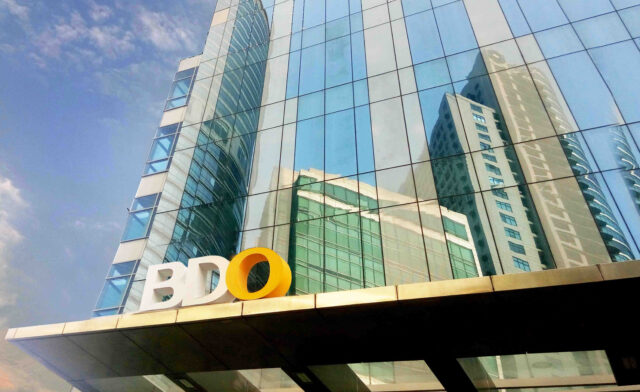
BW FILE PHOTO

BDO UNIBANK, Inc. (BDO) saw its net income grow by 40.44% year on year in the first quarter as it recorded “broad-based growth” across all its businesses.

BDO’s attributable net income stood at P16.528 billion in the January- to-March period, rising from P11.679 billion in the same quarter last year, based on its quarterly report disclosed to the local bourse on Tuesday.

This translated to a return on average common equity of 14.45%, up from 11.09% in the same period in 2022, and a return on average assets of 1.64%, also up from 1.29% a year prior.

Net interest income grew by 27.95% to P43.391 billion in the first quarter from P33.912 billion in the comparable year-ago period.

This came amid an increase in interest earnings from loans and trading and investment securities, which helped offset a rise in interest expense on deposits.

Net interest margin rose to 4.58% from 4.03% “following earning asset expansion in a rising interest rate environment.”

Meanwhile, other operating income likewise grew by 33.52% year on year to P18.919 billion on the back of an increase in earnings from service charges, fees and commissions and a higher net trading gain.

On the other hand, operating expenses (opex) climbed by 17.5% to P37.42 billion, which BDO said was due to volume-related costs, such as credit card interchange fees and documentary stamp and gross receipts taxes, “consistent with increased activity.”

“The bank also sustained its IT (information technology) investments and branch expansion, with 97 new branches opened since 1Q 2022,” BDO said in a statement.

“Revenue growth continued to outpace opex growth, resulting in pre-provision operating profit accelerating to P24.9 billion,” it added.

BDO said its gross customer loans increased by 8% to P2.6 trillion, while total deposits grew by 14% to P3.22 trillion.

Its nonperforming loan (NPL) ratio improved to 1.98% in the first quarter from 2.72% a year prior. NPL coverage increased to 170% from 120% “as the bank maintained its conservative credit and provisioning policies.”

“Given the uncertainty, the bank has maintained a healthy balance between loan growth and sufficient liquidity for unforeseen events, maintaining its liquidity ratio at 35%,” it said.

BDO’s capital base was at P475.9 billion in the first quarter. Its capital adequacy ratio stood at 14.81%, up from 14.64% a year prior, while its common equity Tier 1 ratio was at 13.7%.

Total assets stood at P4.087 trillion at end-March 2023.

“While macroeconomic challenges persist with still elevated inflation and interest rates, the bank believes it is in a good position to weather short-term volatility and capitalize on long-term growth opportunities given its sound balance sheet, established business franchise and strong and diversified earnings streams,” BDO said.

BDO shares fell by 40 centavos or 0.31% to close at P127.90 each on Tuesday.

Caveat emptor: a new book on the best lines in Latin misses the bigger picture

CAVE CANEM: mosaic at the House of the Tragic Poet. —WIKIMEDIA COMMONS

Book Review
Et tu, Brute? The Best Latin Lines Ever
By Harry Mount and John Davie
Bloomsbury

One of my favorite Roman artefacts to show visiting school groups or beginner’s Latin classes is a floor mosaic from the House of the Tragic Poet in Pompeii. The mosaic depicts a chained dog accompanied by the Latin words, CAVE CANEM (“beware of the dog”).

The cute familiarity of the image never fails to generate a chuckle or two. But importantly, it provides me with an opening to explore more important issues with the students, from Roman social history to the intricacies of the Latin imperative (used for commands and entreaties, like “beware”!)

Latin is perhaps most familiar today as the language of practical short-cuts (etc, e.g., i.e.) and quotable lines, beloved by creators of school mottos and political speechwriters alike.

Harry Mount and John Davie’s book, Et tu, Brute? The Best Latin Lines Ever, brings together many of Latin’s greatest hits, from “Fortune favors the brave” to “Who will guard the guards?” But collecting the lines is easy — the difficulty is trying to work out what they add up to.

Mr. Mount and Mr. Davie take the easy way out. “The fundamental reason for reading Latin is because it’s the language of Western civilization,” they write.

I couldn’t disagree more. We should read Latin because it is fun, challenging, amusing, and exciting, not because it forms part of any putative “inheritance” of the West.

But for these authors, Latin exists within a very limited thought-world. Yes, the book contains some funerary inscriptions and graffiti, and the occasional early modern philosopher, but again and again the authors return to the poetry and prose of the late Republic and early imperial period, which have long been the staple of English public (read: private) school and university (especially Oxbridge) curricula.

There is no doubt that within these traditional boundaries, Mr. Mount and Mr. Davie know their stuff. We are treated to the poetry of Catullus, Horace, and Propertius, the satires and epigrams of Juvenal and Martial, and the histories and biographies of Tacitus and Suetonius.

Cicero’s speeches are likewise combed for memorable lines, from the instantly recognizable Cui bono (“Who benefits?”) to his invectives against Mark Antony.

The translations themselves are witty and evocative, but the contextual material is often weak or lacking. Catullus Poem 16, which comes billed as “the rudest poem in Latin,” features raw, confronting sexually violent language. Yet there is no discussion of why Catullus uses such shocking obscenities or of the purposes of sexual invective in Latin.

The treatment of Ovid, most famous for his Art of Love, is little better. While the authors acknowledge that his sexual advice — that young men should take advantage of drunk women and rape them — is “evil” and “wicked,” they also state that Ovid “wouldn’t last a second these days,” as if modern cancel culture is the problem, rather than the poet’s own words.

I acknowledge that, as a university academic who thinks, writes, and teaches about the Romans on a daily basis, I am not the intended audience for this book. Instead, it is clearly aimed at the general reader with no prior knowledge of Latin and Roman history, or those with long-buried school Latin, eager to reacquaint themselves with the language. But I think these readers deserve better than what Mr. Mount and Ms. Davie have to offer.

Women, in particular, come off badly in this book. This is admittedly, partly the result of the fact that most surviving Latin literature was written by men. But there is something decidedly uncomfortable about the parade of female lovers, goddesses, and Pompeiian sex workers offered here, which is not really alleviated by the inclusion of the famous letter from Vindolanda in which an officer’s wife invites another woman to her birthday party.

I missed texts like The Passion of Perpetua, which contains the first-hand account of a young Christian woman from North Africa, written while awaiting execution at the imperial games in the early 3rd century AD. One cannot but helped be moved by Perpetua’s account of her separation from her baby, whom she was still breastfeeding.

After being granted permission to keep her child with her, Perpetua wrote: “prison was immediately transformed into a palace for me, so that I preferred to be there than anywhere else” (factus est mihi carcer subito praetorium, ut ibi mallem esse quam alicubi).

The resonance of these heartfelt words only increases when Perpetua abandons her child, and her life, for her Christian faith.

The rise of Christianity and the entire course of Roman history after the early 2nd century is not well treated by Mr. Mount and Mr. Davie. Their account of Roman emperors comes to a sputtering halt with the reign of Domitian, erroneously credited with fighting against the Sarmatians “in modern Iran” — actually eastern Europe. A famous (and misleading) quotation from Edward Gibbon about the age of the Antonines then suffices for the next hundred years or so.

The poetry, panegyric, and pilgrim’s tales of the vibrant world of Late Antiquity are all but absent. Had they been included we could have journeyed to Persia with the soldier-historian Ammianus Marcellinus or to the Holy Land with the Christian woman Egeria.

Most of Et tu, Brute? could have been written decades ago with nary a word being changed. Our understanding and appreciation of Latin and Roman culture has long moved on, for the better. Caveat emptor (“Let the buyer beware”).

Caillan Davenport is an Associate Professor of Classics and Head of the Centre for Classical Studies, Australian National University. He has received funding from the Australian Research Council and the Alexander von Humboldt Foundation.

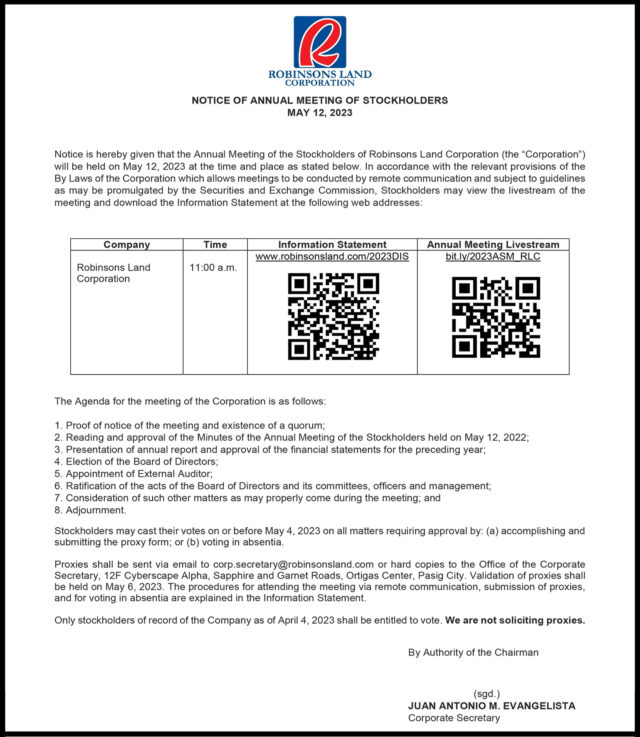
RL Commercial REIT, Inc. to conduct annual stockholders’ meeting on May 12


Spotlight is BusinessWorld’s sponsored section that allows advertisers to amplify their brand and connect with BusinessWorld’s audience by enabling them to publish their stories directly on the BusinessWorld Web site. For more information, send an email to online@bworldonline.com.

Join us on Viber at https://bit.ly/3hv6bLA to get more updates and subscribe to BusinessWorld’s titles and get exclusive content through www.bworld-x.com.

Robinsons Land Corp. to hold annual meeting of stockholders via remote communication on May 12


Spotlight is BusinessWorld’s sponsored section that allows advertisers to amplify their brand and connect with BusinessWorld’s audience by enabling them to publish their stories directly on the BusinessWorld Web site. For more information, send an email to online@bworldonline.com.

Join us on Viber at https://bit.ly/3hv6bLA to get more updates and subscribe to BusinessWorld’s titles and get exclusive content through www.bworld-x.com.

Holcim relaunches cement product

HOLCIM PHILIPPINES FACEBOOK PAGE

HOLCIM Philippines, Inc. has relaunched its top cement product as part of its sustainability efforts and product expansion in the country.

In a statement on Tuesday, Holcim said it rebranded its flagship blended cement to Excel ECOPlanet, which is more eco-friendly since it helps reduce the carbon footprint of construction projects.

“Through the company’s continuous improvement initiatives, the product’s carbon footprint is now at least 30% lower than ordinary portland cement qualifying it to bear the ECOPlanet mark, which is reserved for the Holcim Group’s line of high-performance and eco-friendly cement,” the company said.

“Excel ECOPlanet will continue to provide excellent performance for general construction applications, with concrete made durable due to its high resistance to sulfate and low porosity. Using Excel ECOPlanet will also improve workability and minimize shrinkage and cracks in concrete,” it added.

The Excel brand was launched over 20 years ago and is used for general construction.

“Introduced by the Holcim Group in 2021, ECOPlanet is the world’s broadest range of green cement with at least 30% lower emissions to help builders all over the world reduce the carbon footprint of construction,” the company said.

Meanwhile, Holcim Philippines President and Chief Executive Officer Horia Adrian said that Excel ECOPlanet is “an important milestone in our sustainability journey in the Philippines.”

“It combines the strong legacy of Excel in the country and the Group’s direction of accelerating innovation to decarbonize building. We are proud that Excel is classified as an ECOPlanet product and excited to see our customers continue using this in building progress in the country,” Mr. Adrian said.

Holcim Philippines, a member of the Holcim Group, has cement manufacturing facilities in La Union, Bulacan, Batangas, Misamis Oriental, and Davao. It also has aggregates and dry mix business and technical support facilities for building solutions.

On Tuesday, shares of Holcim Philippines at the local bourse rose one centavo or 0.26% to P3.87 per share. — Revin Mikhael D. Ochave

Security Bank targets to double MSME loans with Business Banking segment

BW FILE PHOTO

SECURITY BANK Corp. (Security Bank) aims to double its loans to micro, small, and medium enterprises (MSMEs) this year after the launch of its Business Banking segment.

Security Bank President and Chief Executive Officer Sanjiv Vohra said in a speech at the segment’s launch on Tuesday that the lender recognizes MSMEs’ importance to the Philippine economy and their “great potential for growth.”

“We realize, however, that MSMEs lack the support to thrive as the pandemic restrictions eased and economic recovery picked up,” he said.

“For the target volume for 2023, we’re looking to double what we did in 2022… Security Bank has been looking at MSMEs for some time. In the past, before the Business Banking segment was born, SMEs were served by various teams,” Security Bank Senior Vice-President and Micro and Medium Head John David G. Yap said at the same event.

He added that the new segment aims to raise the total outstanding loans from last year by 30% to 40%.

“Security Bank’s Business Banking Segment hopes to capture 20% of MSMEs in the next 3 to 5 years. This will be done through enhancements in various customer touch points such as branch banking, telesales, social media, client support, and business development,” the bank said in a statement.

The lender saw demand for financial services from the MSME sector increase after the reopening of the economy, Mr. Yap told BusinessWorld on the sidelines of the event.

“They have a growth mindset again while they’re still cautious of the inflation issues and other economic concerns at this time. We see a good return in terms of folks wanting to open up and grow their business. That’s what gives us confidence — especially in late 2022, as the pandemic dwindled down, we saw increased business activities,” he said.

“In 2023, that gives me the confidence to go out into the market and say that we have these offerings because of those successes that we observe in our sales activities,” Mr. Yap added.

He said credit demand from MSMEs is expected to increase as inflation is expected to ease, with Security Bank forecasting inflation to average 5.4% in 2023 and 3.5% in 2024, both within the central bank’s 2-4% target.

Headline inflation eased for a second consecutive month in March to 7.6% from 8.6% in February. For the first quarter, inflation averaged 8.3%, higher than the central bank’s 6% forecast and 2-4% target for the year.

The bank’s new Business Banking segment offers two key products, namely the Business Express Loan, which has an add-on rate of 1.2% for 12 months, and the Business Mortgage Loan, which has a fixed rate of 7.5%.

Mr. Yap said rates are subject to change depending on competition and the economic situation.

“We are not working on a full floating rate, but we do take into consideration how the market is pricing and how much margins we may be giving up should the cost of borrowing internally goes up,” he said.

Mr. Vohra said its Business Banking segment will also offer other services, such as cash management, insurance products, digital channels, and focused support.

“The new segment is powered by experienced business professionals knowledgeable and capable of customizing services for small businesses no matter where they are in their journey. They are equipped to provide valuable inputs and unique business insights at every stage of their growth,” he said.

Security Bank saw its net income increase by 53% year on year to P10.6 billion in 2022, driven by the growth of its core businesses.

The lender’s shares went down by 60 centavos or 0.65% to end at P91.40 each on Tuesday. — Aaron Michael C. Sy

Peruvian archaeologists unearth 500-year-old Inca ceremonial bath

THE REMAINS of an ancient ceremonial Inca bathroom, discovered in a sector known as Inkawasi (House of the Inca), at the archaeological site Huanuco Pampa, are pictured in Huanuco, Peru, April 5. —PERU CULTURE MINISTRY/HANDOUT VIA REUTERS

LIMA — Archaeologists in the Peruvian Andes have discovered an Inca bathing complex built half a millennia ago, which they believe may have served the elite of the sprawling empire than once dominated large swathes of South America.

Found near the “House of the Inca” in the Huanuco Pampa archaeological zone in central Peru, local archaeologists believe that the bath may have served a religious purpose for high-ranking members of the Inca empire, which 500 years ago extended from southern Ecuador to the center of Chile.

Luis Paredes Sanchez, project manager at Huanuco Pampa, said the structure was similar to “more hierarchical, restricted and sacred spaces within the Inca administrative centers, because rather than having a utilitarian or hygienic function, they also served for religious functions and worshiping ancestors.”

The “finely carved” bath averages some two meters in depth, with independent pools and spillways and a central passage taking water into a drainage duct that divides the room into two small platforms, or “benches” for the Inca, Peru’s culture ministry said in a statement.

The Huanuco Pampa archaeological site is part of the Qhapaq Nan project, a complex 25,000-kilometer-long road network that linked Ecuador, Colombia, Peru, Bolivia and Argentina. The road system was declared a World Heritage Site in 2014.

Peru is home to hundreds of archaeological sites across the country, including the Machu Picchu citadel in the Inca capital of Cusco, and the Nasca lines, massive designs drawn in Ica’s coastal desert region over 1,500 years ago. — Reuters

Philippine Genome Center tries to trace ‘aswang’ gene

PGHNEURO.COM

THE Philippine Genome Center is working to find out more about the gene that causes a progressive neurodegenerative disease that can only be traced to Filipino lineage.

This will provide a better understanding of the disease — called lubag among locals — and help determine the needed healthcare investments, according to project leader Eva Maria Cutiongco-de la Paz.

X-linked dystonia-parkinsonism (XDP) is a neurodegenerative disease that shows as a movement disorder and has no cure. It is inherited by adult males with maternal ancestry from people on Panay Island in central Philippines.

Patients become more disabled and immobile as the disease progresses. XDP is a recessive disorder affecting males almost exclusively.

The loss of bodily control of XDP patients has given a scientific explanation to the aswang of Filipino folklore, which is visualized as a shape-shifting creature, Ms. De la Paz said.

“Any male anywhere in the world who presents with a combination of dystonia and parkinsonism is for sure a Filipino and has maternal origins in the Panay group of islands,” she told a news briefing on April 14.

“It is a huge burden… also to the families because of the loss of quality of life and productivity, stigma, and genetic transmission,” she said.

The actual disease frequency of XDP remains unknown.

“Our goal is to provide a comprehensive picture of the prevalence of the genetic cause of XDP in the country,” Ms. De la Paz said. “With this project, Filipinos can contribute to the global research efforts on a uniquely Filipino disease.”

DNA FORENSICS
Meanwhile, a medical expert said the Philippines has yet to fully maximize deoxyribonucleic acid (DNA) forensics for use in criminal investigation.

About 96% of cases litigated in Philippine courts are judged based on testimonial evidence, according to Ma. Corazon A. de Ungria, who leads the DNA Analysis Laboratory of the University of the Philippines-Diliman’s Natural Sciences Research Institute.

“We help the Philippine Supreme Court come up with rules on DNA evidence, so it’s a judicial rule,” she told reporters on the sidelines of the Genome Center event. “We still haven’t passed a DNA law for forensics.”

“DNA can provide that particular voice to be able to tell the world ‘I am a child. I am a violated person. I need help,’” said Ms. De Ungria, who also heads a project within the Filipino Genome research program that helps resolve child sexual abuse cases.

More researchers are needed in this field “to help us develop the technology even further — such that it would be quicker, and there would be minimal requirement for testimonies from very young children,” she added.

Genomics is the study of an organism’s complete genome, which carries its complete genetic material. The Philippine Genome Center was launched on Nov. 28, 2011.

“Research and development is critical to our ability in addressing the challenges of today and the unknowns of tomorrow,” Science and Technology Undersecretary Leah J. Buendia said.

Science and Technology Secretary Renato U. Solidum in his keynote speech cited how research could drive economic growth.

“We are confident that we can continue transforming scientific ideas from the laboratory into tangible innovation and development that benefit the lives of Filipinos,” he said. — Patricia B. Mirasol

Smart Citi Teknologi to develop ‘smart island’ in Palawan

LOCAL IT company Smart Citi Teknologi plans to develop a “smart island” in Roxas, Palawan with Hong Kong-based partners as it aims to promote sustainable tourism.

The entities under Hong Kong’s Xtreme Business Enterprises Ltd. (XBE) that will be part of the partnership are Coinllectibles and Marvion, which are both digital ownership token firms.

“Through this island, we will introduce a blockchain-enabled membership program for sustainable tourism,” Marvion Corporate Finance Director Gerald Gn said in a press conference on Monday.

The project, called North Verde Island, is set to be inaugurated in September this year. It will integrate modern technology and high-tech systems, according to Smart Citi President and Chief and Executive Officer Mario P. Marcos said.

“Our target date for inauguration is September. We will try to expedite the process as soon as possible,” Mr. Marcos said.

The more than 500-hectare island will house a smart hotel, entertainment hall, convention center, air taxi airport, sports center, administration and control center buildings, yacht club, airport, village hotels, golf and country club, and golf hotels, among others.

The smart hotel will have five five-storey buildings with a total floor area of 17,640 square meters (sq.m.), while the three-storey entertainment hall will be housing a casino inside its 19,000-sq.m. area.

North Verde will have 70 units of village hotels, which will have a 326-sq.m. floor area and a 33-sq.m. pool per unit. Its golf hotels will have five three-storey buildings with a total floor area of 9,095 sq.m.

The convention center will have four floors and a total floor area of 10,871 sq.m., while the sports center will have 27,997-sq.m. area.

The island will have two airports: one for the air taxis that Smart Citi plans to develop and launch inside North Verde and a regular airport inside a 190,800-sq.m. area.

“These are world-class buildings because we will be using 3D printing to build this island. Using state-of-the-art 3D printing technology, instead of building the island in 10 years, we can do it in five years,” Mr. Marcos said. — Justine Irish D. Tabile

PBCom sees net income increase to P1.63 billion

PHILIPPINE BANK of Communications (PBCom) recorded a 3.7% rise in its net profit last year on the back of an increase in its net interest income and fees and commissions.

The bank’s attributable net income stood at P1.63 billion in 2022, higher than the P1.57 billion recorded in 2021, according to its annual report disclosed to the local bourse on Tuesday.

“The full-year result reflects the bank’s robust business model as growth in net interest income, fees and commissions and FX (foreign exchange) gains offset the impact of revenue headwinds from trading activities,” PBCom said in a statement.

This translated to a return on average equity to 10.97%, lower than the 11.78% in 2021, and a return on average assets of 1.39%, also down from 1.49% the year prior.

“Return on average equity decreased by 81 bps (basis points) from higher provision for income taxes and total operating expense from the results of the current operations,” PBCom said.

The bank’s net interest income grew by 13.3% to P4.81 billion from P4.245 billion the year prior “as interest earning asset grew 16.5% to P107.8 billion, largely funded by P58.2 billion in low-cost deposits, which comprises 58.5% of the bank’s total deposits.”

Net interest margin slipped to 4.8% last year from 4.83% in 2021.

Interest income from loans and receivables increased by 11.81% to P4.595 billion.

The lender also saw earnings from service charges, fees and commissions increase by 17.6% to P390.11 million last year.

Net foreign exchange gains jumped by 40.82% to P97.65 million last year from P56.83 million in 2021.

“These increases were partially offset by P124.73-million higher net trading losses, reflecting the adverse effects of a rising interest rate environment on the bank’s peso and dollar bond portfolios, and P85.23-million reduction in rental income due to pre-terminations and renegotiated contracts of tenants as a result of the COVID-19 (coronavirus disease 2019) crisis,” the bank said.

The bank saw its net trading and securities loss grow to P366.327 million last year from P241.598 million in 2021.

PBCom’s total operating income posted a 9.4% increase to P5.562 billion from P5.084 billion in 2021.

On the other hand, its operating expenses rose by 4.6% to P3.41 billion last year.

“The bank’s cost-to-income ratio improved to 56% from 57.7% despite additional spending on strategic initiatives in relation to business development and investments in information technology,” PBCom said.

The bank’s net loan portfolio grew by 18.74% to P76.92 billion.

Despite the increase in loans, the group’s gross nonperforming loan (NPL) ratio eased to 3.23% at end-2022 from 4.89% in 2021. NPL coverage improved to 110.7% last year from 80% in 2021.

Meanwhile, deposits increased by 14.37% to P99.44 billion.

The bank’s capital base grew by 9.8% to P15.57 billion. Its capital adequacy ratio dropped to 17.07% from 18.18% the year prior and its common equity Tier 1 ratio went down to 14.62% from 15.58%.

Total assets stood at P124.878 billion at end-2022, up by 14.3% year on year.

PBCom began operating as a universal bank on Dec. 1, 2022.

The bank had 91 branches and 4 branch-lites as of Dec. 31, 2022.

Its shares were last traded on April 13, closing at P15 apiece. — AMCS

Investing in health workers

Only about 10% of the country’s health workers serve in rural areas, leaving some municipalities without an acceptable number of health workforce.

As a result of these significant variations in access to and quality of health services, the Philippines faces a difficult path to eliminate tuberculosis (TB) and achieve their family planning goals.

TB affects about 2.5 million Filipinos and is the country’s sixth leading cause of death and illness, inflicting huge costs on the family household and the economy. Meanwhile, meeting the population’s reproductive health intentions is also a challenge in the country, where 49% of unmarried, sexually active women and 17% of married women have an unmet need for family planning.

A discussion on the needs of health workers is appropriate as the country celebrated World Health Worker Week in early April. With the theme “Invest in Health Workers,” it urges policymakers to allocate long-term funding and implement policies that protect and support health workers everywhere.

A program of the United States Agency for International Development (USAID) implemented in October 2017 to June 2020, the Human Resources for Health in 2030 in the Philippines final report detailed such findings to strengthen recruitment, deployment, development, retention and performance management of the health workforce. Its ultimate goal is to improve access to quality TB, family planning and maternal and child health services for vulnerable populations.

Health workers form the foundation of an efficient and resilient health system to address population health needs, according to the report. It acknowledged the Department of Health (DoH) for recognizing the need to increase investments in the health workforce to achieve national goals in TB, family planning and other disease burdens of concern.

It also noted how the passage of the Universal Health Care Act in 2019 opened up the opportunity to accelerate support for the National Government to develop a Human Resources for Health Master Plan (2020-2040), and to optimize the health workforce as the backbone of a healthcare system that is accessible, accountable, affordable and reliable.

Over the course of three years, the master plan has introduced evidence-based World Health Organization (WHO) workload indicators of staffing need method to help the DoH in determining optimal staffing number and distribution among health facilities and support the development of new national staffing standards for primary healthcare.

The DoH is now institutionalizing the methodology and cascading it to various levels of the health system to help guide local governments and partners on optimum numbers of health workers required per cadre and level of care. This will greatly support government efforts to revitalize primary level health facilities and provide universal healthcare.

The master plan has put in place a sustainability roadmap to help prepare for the transition of Global Fund-supported human resources for health for TB. The Global Fund TB grant supports the government to fill key gaps in the health workforce needed to achieve the country’s ambitious TB targets.

In partnership with the DoH and local stakeholders, Human Resources for Health 2030 also supported the creation of the national DoH Academy e-Learning portal and an efficient learning management platform that enables public and private sector health workers to access free of charge practical skill-building courses with continuing education accreditation, so they can deliver TB, family planning and other primary care services according to national standards of care.

Human Resources for Health 2030 supported the drafting of the 2020–2040 Human Resources for Health master plan of DoH that serves as the long-term strategic plan for the management and development of health workers in the country. Its guiding principle is to provide qualified health workers with rural background with scholarships in learning institutions near their places of origin; learning and development opportunities; and improved working conditions with their protection and well-being in mind.

Following the coronavirus disease 2019 (COVID-19) pandemic, one of the key lessons learned is the importance of a well-functioning and well-motivated health human resource that will be able to confront challenges of changing healthcare situations and a sudden spike in demand for quality healthcare.


Teodoro B. Padilla is the executive director of the Pharmaceutical and Healthcare Association of the Philippines, which represents the biopharmaceutical medicine and vaccine industry in the country. Its members are in the forefront of research and development efforts for COVID-19 and other diseases that affect Filipinos.

Hollywood writers approve strike if union talks break down

AHMET YALÇINKAYA-UNSPLASH

LOS ANGELES — Hollywood writers voted overwhelmingly in favor of giving union negotiators the power to call a strike, moving a step closer to a production shutdown that would hamper studios and disrupt what viewers see on television.

The Writers Guild of America (WGA) on Monday said 97.85% of members who voted supported letting negotiators order a work stoppage if they do not have a new contract by May 1. Nearly 80% of the group’s 11,500 members voted.

The WGA negotiating committee in a note to members said the group had expressed “collective strength, solidarity, and the demand for meaningful change in overwhelming numbers.”

Writers say they have suffered during the streaming TV boom, in part due to shorter seasons and smaller residuals, and they are seeking pay increases from Netflix, Inc., Walt Disney Co. and other studios.

Insecure writer Amy Aniobi said she supported the strike authorization because pay had slumped to a level where many low- and mid-level writers must work second jobs to support themselves, especially in expensive cities such as New York and Los Angeles.

“What I’d like to get to achieve is to return the act of writing to a career and not a gig for most writers,” she said.

The last WGA strike in 2007 and 2008 lasted 100 days. TV networks broadcast re-runs and more reality shows, while the cost to the California economy was estimated at $2.1 billion, according to the Milken Institute.

If a strike is called, audiences would first see the impact on late-night talk shows, which use teams of writers to pen topical jokes. Daytime soap operas would be next. Many comedies and dramas are filmed months in advance, giving them a longer lead time before fresh episodes would run out.

Studios do not want another disruption after the COVID-19 pandemic shut down production worldwide for months. But sources close to the studios say budgets are tight at a time when Wall Street wants profits from the billions of dollars they spend to make streaming TV shows.

The Alliance of Motion Picture and Television Producers (AMPTP), which represents Comcast Corp., Disney, Warner Bros Discovery, Netflix and others, said in a statement that its goal was “to reach a fair and reasonable agreement.”

“An agreement is only possible if the Guild is committed to turning its focus to serious bargaining by engaging in full discussions of the issues with the companies and searching for reasonable compromises,” the statement said. — Reuters

ADVERTISEMENT
ADVERTISEMENT