Home Blog Page 4960

Inflation makes us all want to dress like the 1%

GWYNETH PALTROW walks into the courtroom before the reading of the verdict during her trial over the 2016 ski collision with Terry Sanderson on March 30, in Park City, Utah, USA. — RICK BOWMER/POOL VIA REUTERS

By Andrea Felsted

INFLATION has come for dopamine dressing.

That’s the message from the catwalks to TikTok. While the “quiet luxury movement,” characterized by minimalism and understated elegance, is a good look for some high-end brands, it’s a trend many others could do without. For the broader fashion industry, a growing penchant for classic rather than cutting-edge means companies must work harder to attract customers, particularly as the economic backdrop darkens.

For a brief period last year, bright pink pantsuits were everywhere — flushing red-carpet celebs, TV news anchors, and wedding guests alike. It was the result of Valentino designer Pierpaolo Piccioli sending hot-pink creations down the catwalk a year ago.

The exuberance captured the consumer zeitgeist. Freed from pandemic restrictions, shoppers threw off their loungewear and embraced proper clothes once more. With people returning to offices and parties, fashion become fashionable again. Maximalism surged. “Dopamine dressing” — getting outfitted to feel as well as look good — took hold.

But with inflation returning, job losses plaguing tech, and turmoil roiling the banking industry, fashion is becoming passé.

Luca Solca, an analyst at Bernstein, examined the looks sent down the catwalks for the forthcoming autumn-winter season. While bold styles, sneakers, and streetwear dominated last year’s spring fashion month, this year saw the return of timeless dressing and more muted colors. Think well-cut basics, such as blazers, pencil skirts, and tailored pants. For men, sneakers are out. Loro Piana cashmere-trimmed desert boots are in.

The “quiet luxury” hashtag has racked up about 60 million view on TikTok. This coincides with the TV show Succession’s takedown of a large Burberry check handbag and Gwyneth Paltrow’s recent restrained courtroom wardrobe. Old-money chic has displaced opulence.

A more understated fashion cycle can be good for luxury because it encourages consumers to trade up and buy fewer, more expensive pieces, luxury adviser Mario Ortelli told me. But it favors some brands more than others.

Those that have long pursued a more refined aesthetic, such as Italy’s Brunello Cucinelli and LVMH Moet Hennessy Louis Vuitton SE’s Loro Piana, are best placed. Sister brand Loewe’s structured bags are lauded on TikTok, while Kering SA’s Saint Laurent is known for its elegant designs.

Other brands will find this era more challenging. Kering’s Gucci is already shifting from the bold maximalism of former creative director Alessandro Michele to a sleeker aesthetic. The rise of quiet luxury makes this transition — under new designer Sabato De Sarno — all the more pressing. Sister label Balenciaga has also ridden the streetwear wave.

Yet all luxury brands will need to pivot from logo-adorned clothing and accessories to new styles and shapes. Luckily, Burberry Group Plc’s new creative director Daniel Lee developed a raft of such hits while at Bottega Veneta. And the trench coat, Burberry’s signature product, has become emblematic of the new mood. Prada, meanwhile, is known for its elevated minimalism, but it has played on its triangle logo to win over Gen Z. It is already de-emphasizing this for fall.

LVMH’s Louis Vuitton and Dior have top-end positioning and stand a good chance of navigating the new reality. But they too must move away from items with their names emblazoned upon them. LVMH Chief Financial Officer Jean-Jacques Guiony said last week that quiet luxury came around from time to time. He was confident the world’s biggest luxury group had a broad enough portfolio of houses and products to accommodate every taste.

Similarly, Hermes International could emphasize its less obvious bags, which have won fans on TikTok. While Hermes’ Birkin and Kelly models have old-money price tags, they have become so well-known that they now risk looking more nouveau riche.

Limited-edition capsule collections, or collaborations, can inject excitement without deviating from the sparser design ethos, although streetwear tie-ups — including LVMH’s decision to appoint Pharrell Williams as Louis Vuitton’s top menswear designer — may now be less effective.

A minimalist cycle is much more difficult for main street retailers, whose cheaper products have a shorter lifespan. Even though it’s often the garish hues that are left on the sale rail at the end of the season, fashion needs a constant stream of new trends to encourage shoppers to buy. Just look at how it benefited from the post-pandemic shift from skinny jeans to wider-legged styles.

To continue to generate sales, retailers’ design teams must make small refinements to the classics. Yet the faster the fashion, the harder it is to accommodate a slower pace of style iterations.

That said, Inditex looks best placed. It owns the more formal Massimo Dutti. Its flagship Zara brand also operates at the more premium end of fast fashion, giving it credibility with fabric and fit, which become more important for plainer styles. It’s a similar picture at H&M Hennes & Mauritz AB’s COS and Arket brands.

In the US, quiet luxury could help to breathe fresh life into J Crew Group and Banana Republic, whose parent, The Gap Inc., is struggling on many fronts and searching for a new chief executive officer.

Of course, there are some dopamine dressing holdouts. Bright pink “Barbiecore” is still going strong, thanks to the forthcoming Margot Robbie film, although it has been eclipsed by quiet luxury over the past month. And much will depend on whether Chinese consumers use pent-up savings to buy logos or more rarefied wardrobes.

All in all, it’s time to consider the pencil skirt and blazer as alternative economic indicators, alongside surging lipstick sales and longer hemlines. In times of anxiety, everyone wants to look and feel like they have old money. — Bloomberg


Style (04/24/23)


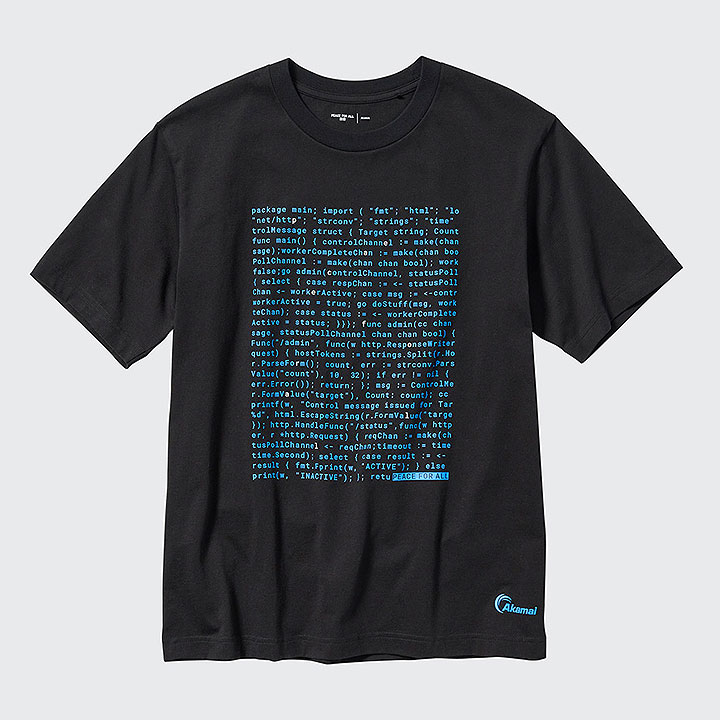
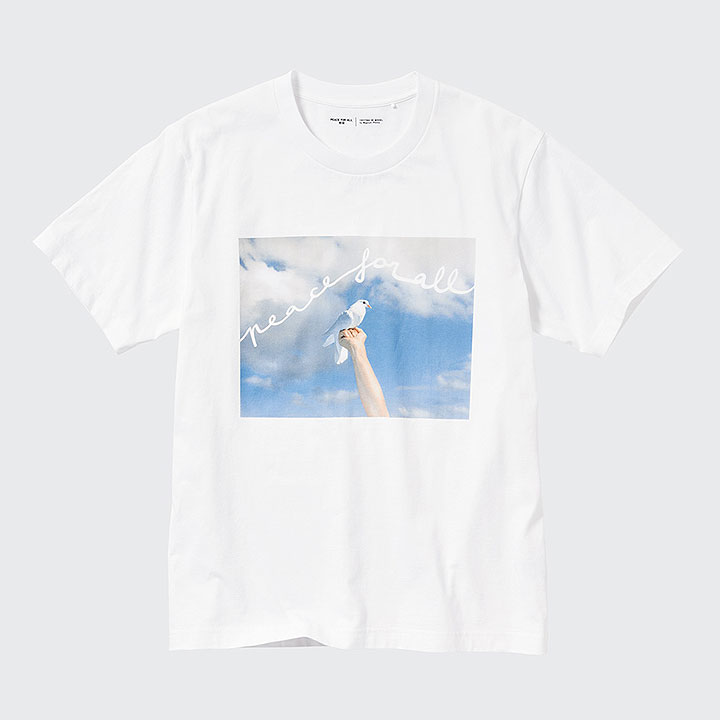
Uniqlo releases 5 Peace For All Charity T-Shirt designs

GLOBAL apparel retailer Uniqlo has announced the release of five new T-shirts for the ongoing Peace For All charity project. The latest collection features new graphics designed especially for this project by collaborators including tennis legend Roger Federer, as well as artwork from Miffy creator, the late Dick Bruna. Since the launch of the project in June 2022, a total of more than 1 million Peace For All T-shirts have been sold worldwide. A hundred percent of profits from the sale of these T-shirts are donated to international aid organizations that assist people impacted by poverty, discrimination, violence, and conflict around the world, including UNHCR (the UN refugee agency), Save the Children, and Plan International. So far, over 300 million yen (or more than $2.4 million) has been donated as part of the project. Activities supported by Peace For All donations include the self-reliance projects for Rohingya women refugees in Bangladesh, educational support for displaced Syrian children and vulnerable Lebanese children in North Lebanon, and a campaign to eliminate child early and forced marriage in Vietnam. The new Peace For All designs go for P790 and are available at Uniqlo stores and the online store’s special website  https://www.uniqlo.com/ph/en/contents/feature/peace-for-all/. The five new designs are by professional tennis player Roger Federer, picture book author and graphic designer Dick Bruna, Magnum Photos’ President Cristina de Middel, artist Jean-Michel Basquiat and photographer Christopher Makos, and cloud company Aakamai Technologies. To date the project has featured designs from 30 collaborators.


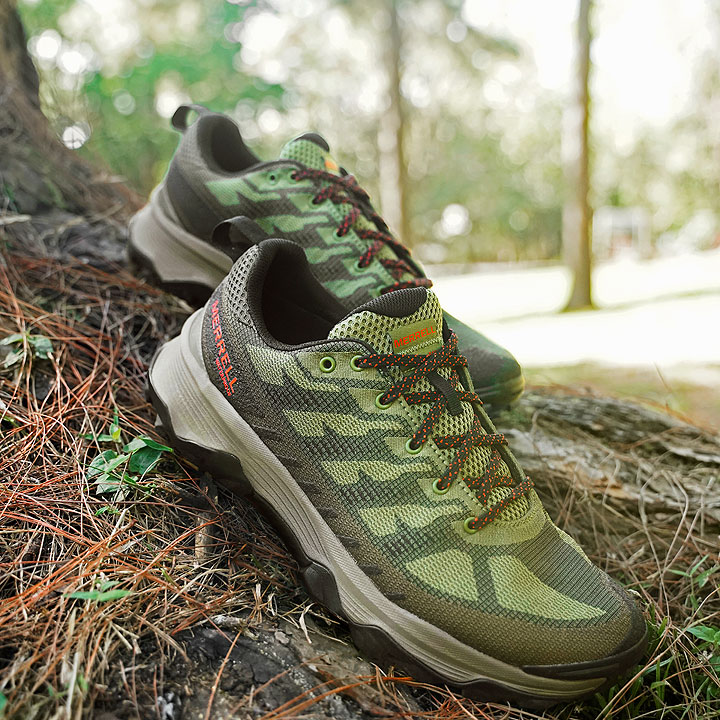
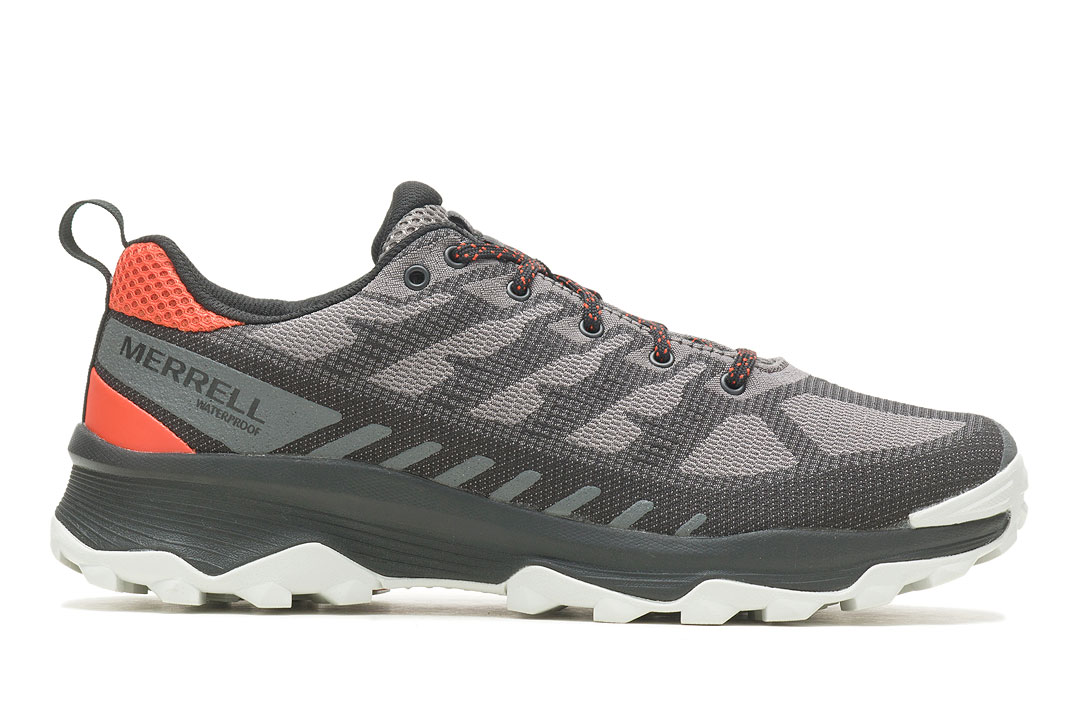
Merrell’s most sustainable hiking shoe

OUTDOOR lifestyle and footwear brand Merrell recently launched the Speed Eco, the most sustainable and eco-friendly hiking shoe the brand has ever released. It features 100% recycled laces and webbing, 100% recycled breathable mesh lining, 100% recycled mesh footbed cover, an upper made 77% from recycled Jacquard, a 50% recycled EVA footbed and recycled rubber outsole, making The Speed Eco Merrell’s most recycled shoe to date. Boasting a sleek and stylish silhouette, the Speed Eco combines the functionality of a traditional hiking boot and the ease and versatility of a sneaker. Available in three colorways — Avocado/Kangaroo, Charcoal/Tangerine, and Black/Asphalt, the Speed Eco redefines what a hiking shoe should look like. More than its aesthetics, the Speed Eco has a lightweight EVA foam midsole for stability and comfort. Moreover, the waterproof version features a membrane that seals out water and lets moisture escape for a worry-free trail experience. The Speed Eco collection in all Merrell concept stores and online at their official webstore www.merrell.com.ph, and through their official Viber community.


Paseo Outlet summer style

THE PASEO Outlets at Greenfield City carries a variety of brands for up to 80% off, offering everything needed for a summer getaway all in one place. At the American Eagle Outfitters Outlet are outfits perfect for a casual day out. At the Bench Depot, there are a variety of summer essentials including Kashieca pieces for feminine styles along with Cotton On’s more playful and colorful looks. Those looking for something more luxe can check out 158 Designer’s Blvd. and F&F for luxury brands at discounted prices. Brandsmart is a trove of trendy OOTDs from Zara, Pull&Bear, Massimo Dutti, and more. The Outlet is the go-to store for classic, timeless pieces that never go out of style from Gap, Banana Republic, and Old Navy. Get a denim fix from the Levi’s Factory Outlet and complete a summer look with the latest pairs from the Crocs outlet. Those looking to hit the beach can go to the only Speedo outlet in the country, while the Oakley Vault and Sunglass Have carry sunglasses from Ray-Ban, Oakley, Prada, Dolce & Gabbana, Dior, Carrera, Fendi, and Hugo Boss, to name a few. The adidas outlet, Nike Factory Store, Under Armour Outlet, and Park Outlet carry a wide selection of athletic wear, shoes, and accessories. Other outlet stores at The Paseo Outlets are Fusion Outlet (Sperry, Keds, Saucony, Merrell), Giordano Outlet, Marks & Spencer Outlet, Payless Shoesource, Timberland Outlet, west elm Outlet, the Pottery Barn Outlet, and the Samsonite Outlet. The Paseo Outlets is located along Tagaytay Balibago Road, Greenfield City, Sta. Rosa, Laguna. To learn more, visit its website, Facebook, Instagram, and Viber Community.


Montblanc presents Vincent van Gogh collection

MONTBLANC introduces a new collection dedicated to the artistry and skill of history’s great artists, with its first edition celebrating the unique genius of Vincent van Gogh. The new Montblanc Masters of Art Collection honors the contribution of great artists in their quest for perfection in art. This collection comes as the successor of the Montblanc Patron of Art collection, concluding after 30 years as Montblanc moves the focus from the patrons of art to the masters themselves. Montblanc is dedicating this series of limited editions to a variety of visual artists, whose work encompasses a broad range of disciplines, from painting and sculpture to design and architecture, covering different epochs like the Renaissance, the Baroque era, and beyond. The Montblanc Masters of Art collection’s first edition pays tribute to Dutch painter Vincent van Gogh through five limited edition writing instruments that pay homage to the various personal and artistic periods in the painter’s life, taking design inspiration from some of his most well-known works and idiosyncratic art style. Montblanc is cooperating with the Van Gogh Museum in Amsterdam to ensure that the Masters of Art Homage to Vincent van Gogh Limited Editions align with the museum’s insight into his work and life. Accompanying the Limited Editions writing instruments is a fine stationery that takes its outer design from the sun-filled landscape of Wheatfield with a Reaper which is created by a 3D print to recall Van Gogh’s impasto technique. A notebook’s cover is also adorned with Van Gogh’s signature. Meanwhile, the soothing turquoise of his work Almond Blossom has inspired the Montblanc ink in shade Turquoise. The collection is complete with the addition of cufflinks, crafted in stainless steel, blue lacquer and sapphire glass that reflects the skies often seen in Van Gogh’s work. Montblanc Masters of Art Homage to Vincent van Gogh Limited Edition, in collaboration with the Van Gogh Museum in Amsterdam, is available from April 2023 at Montblanc boutiques and online.


Muji Philippines turns six

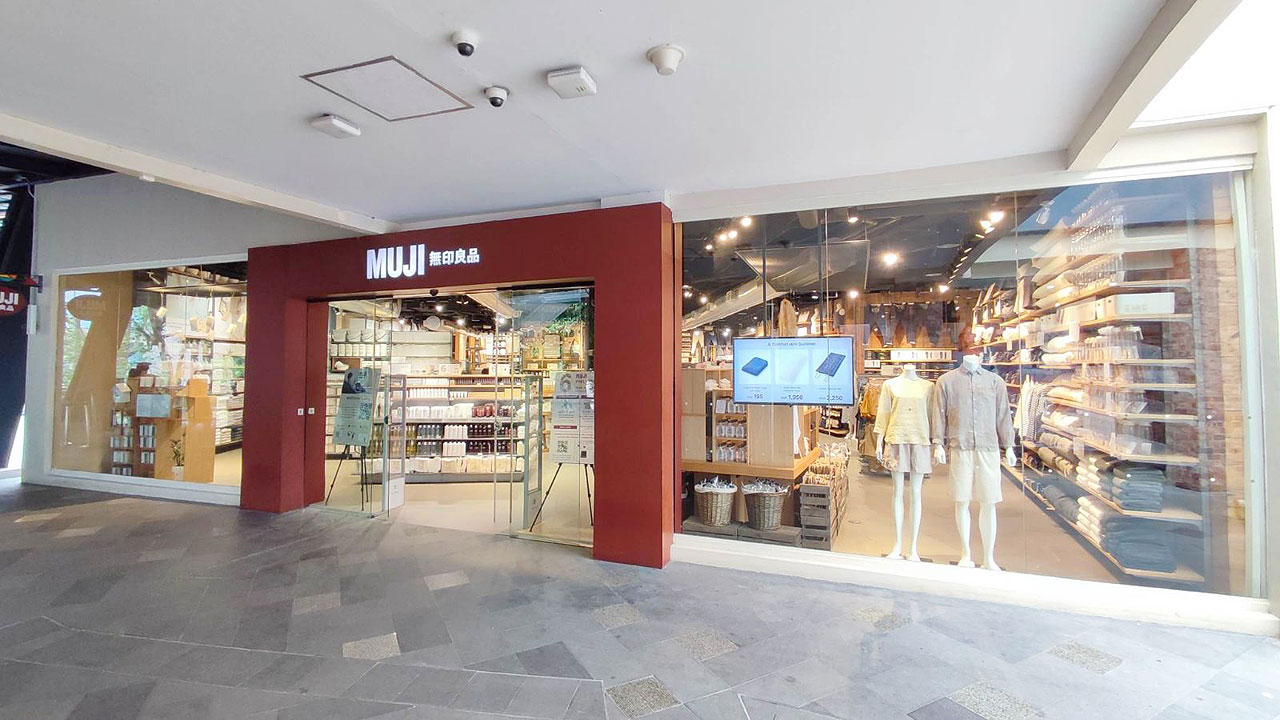
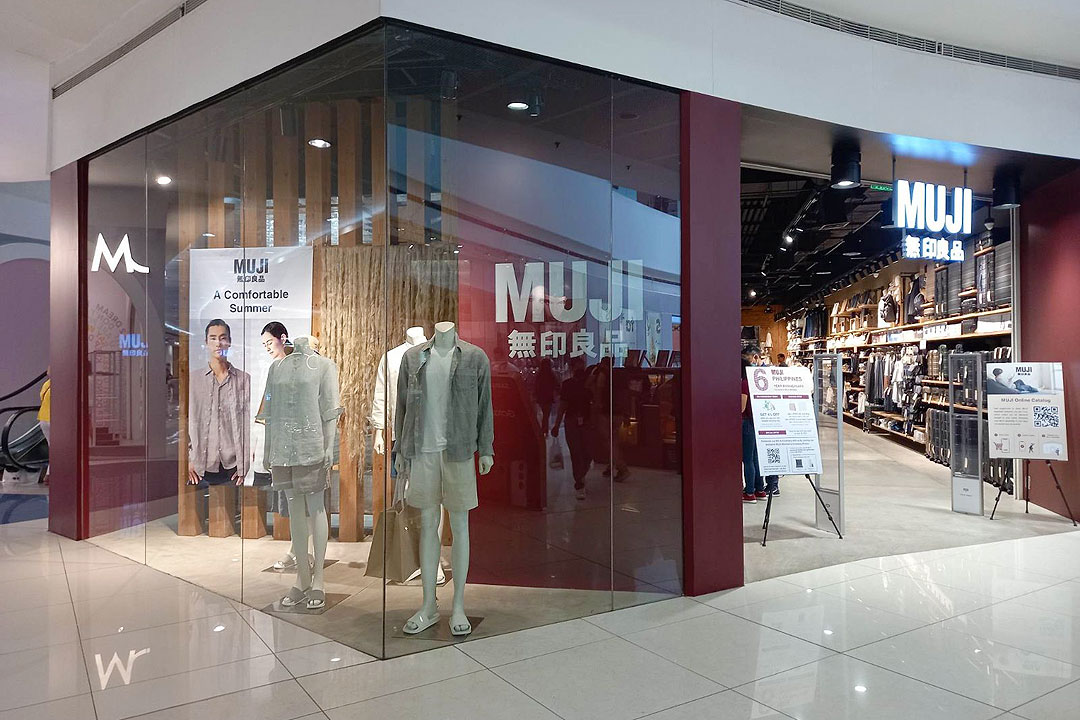
JAPANESE lifestyle brand Muji is celebrating its 6th anniversary with a series of activities and promotions during April. Muji is kicking off the celebration with a raffle. The brand will be giving away 60 Muji bundle sets and six grand prizes to existing and new Muji members through a raffle draw. Sixty-six winners will be given Muji daily essentials. Joining the raffle is free. Participants only need to be a Muji member and register at any time until April 30 at https://woobox.com/2omqp5 to get a chance to win. To become a Muji member, signing up is easy and free at https://woobox.com/vhqgji. Muji members get exclusive promotions and the latest updates. The announcement of weekly winners will be posted on Muji’s social media pages. Now ongoing, all Muji members can enjoy two new rewards when they shop in the store (terms and conditions apply): First, they get a 2% discount when they use their own reusable shopping bag. This special Muji member perk is valid in Muji stores only. For the anniversary, this special perk doubles up to 4% discount until April 30. Second, get free base shipping fee with a minimum purchase of P1,000 when shopping through the Online Catalog at mujiph.com. In the Philippines, Muji has branches at Greenbelt 3, Central Square in BGC, Power Plant Mall at Rockwell, Shangri-La Plaza East Wing, and SM Mall of Asia.


One-stop spa, beauty center, and party place

ALPINA Lounge and Wellness, a one-stop destination for beauty, well-being and refreshments at Uptown Parade in Taguig City, offers premium services of eyelash extensions, nail art and nail extensions, relaxing and therapeutic massages, and lasers for hair removal and whitening. It is also getting to be known for intimate spa parties with a house DJ. Alpina can hold parties till 2 a.m. While it has a license to offer alcohol and spirits, its unique proposition is the range of gourmet coffees prepared by the in-house barista. Alpina’s concept was developed by the owner, Kathryna Yu-Pimentel, who not only has background in hospitality but is also a spa aficionado. She enlisted the expertise of her sister and managing partner Stephanie Yu-Chua and Maria Zhukova, both of whom ran a popular salon for nails and eyebrows. The in-house physician, Dr. Sharae Chua, guides patients on proper nutrition based on blood tests and also performs aesthetic rocedures. Alpina’s lash technicians execute lash mapping, a visual guide to determining where to place the longest, thickest or curliest eyelash extensions on the eyes to produce a natural but dramatic effect.  The eyelash extensions last for three weeks. Women have been queuing up for their nail art, be they graphic designs or rhinestones and Swarovski crystals for bling. For the less adventurous, nail extensions are popular with clients with short or chipped nails who want long and sturdy tips. Alpina uses Polygel, a brand of nail extensions, and soft gel nail tips that don’t have to odor of their acrylic counterpart. Come May, Maria Zhukova, a Russian expert on eyebrows will be offering her services for semi-permanent makeup and making brows fuller and shapelier. Men can likewise avail of the services including traditional hilot, Ventosa cup, Swedish massage, deep tissue massage. For inquiries and bookings, contact 0917-800 0159.


Zalora slashes carbon footprint by one-third

ASIAN fashion and lifestyle e-commerce platform Zalora, and part of Global Fashion Group (GFG), announced a 33% reduction in its overall carbon footprint in 2022, relative to its 2019 baseline. This comes alongside a series of other achievements across key areas of impact: offset of Zalora’s electricity consumption for 2022 with renewable energy certificates; delivery of over 180,000 Zalora parcels across the region through low-carbon logistics, and expansion of low-emission methods to provide “Same Day Green Delivery”; 5,655 kilos of waste collected and donations sorted, and a total of 392 hours of community engagement across 100 employees in four Zalora markets for the Q1 of 2023 — contributing to GFG’s wider goal of spending 20,000 employee hours on community engagement by 2030. Zalora’s community partners include World Cleanup Day Indonesia, Save Philippine Seas, National Environment Agency (Singapore), and The Salvation Army (Malaysia). There has been 9% growth in assortment share of low impact products on Zalora’s platform in 2022 from the previous year. Currently, it carries over 160,000 items under its Earth Edit category. Over the last year, it has also made strides in transitioning to lower impact materials in its operations and packaging by using 80% recycled plastic in mailers, 100% FSC-certified boxes, and replacing bubble wrap with 100% FSC-certified honeycomb and paper fillers.  Zalora’s sustainability initiatives are part of GFG’s 2030 sustainability strategy, which works through three strategic pillars: Climate Action, Circularity & Conscious Consumption, and Fair & Ethical Sourcing. To learn more about GFG’s sustainability strategy and the full list of targets, and to view the full 2022 People & Planet Positive report, visit https://global-fashion-group.com/sustainability.

Secondhand fashion has a looming PFAS problem

SARAH BROWN-UNSPLASH

A GROWING number of US state bans are forcing clothing companies to find less toxic alternatives to per- or polyfluorinated substances — called PFAS for short — when making shirts, hats, and rain jackets that are water- and stain-resistant. California and New York have bans on PFAS in apparel that take effect in 2025, while Maine banned PFAS in consumer products, including apparel, starting in 2030.

The bans are focused on keeping this broad family of chemicals, which have been linked to cancer and other health impacts, out of new products. But that leaves a loophole for the continued sale and circulation of existing PFAS-made products in secondhand markets, at a time when buying used is only getting more popular. The used apparel industry surged to $177 billion in global sales in 2022, according to a recent report by the online resale retailer ThredUp, and sales are projected to double to $350 billion by 2027.

“Should we really continue reselling products that contain fundamentally hazardous chemicals?” says Mike Schade, director of the environmental group Toxic-Free Future’s Mind the Store program. “A circular economy is going to be an utter failure if we recirculate dangerous chemicals.”

The uptick in secondhand shopping is occurring in part because customers are looking for ways to save money amid rising inflation and also to make more sustainable shopping choices. Meanwhile, companies are embracing resale, renting and other circular business models as a way to cut environmental waste and boost their own sustainability credentials. In September, Swiss athletic brand On launched a resale site; a month later, Chinese fast fashion giant Shein did as well. The high-end outdoor clothing brand Canada Goose jumped into resale this past January, followed by Hennes & Mauritz AB announcing in March that it would team up with ThredUp to sell used clothing and accessories.

PFAS chemicals are used in a range of products, including textiles, cosmetics, and firefighting foam. From disposing of industrial waste to doing a load of laundry, there are a number of ways these substances find their way into the environment. And once they’re there, PFAS can persist in water and soil for long periods of time, earning them the nickname “forever chemicals.”

A wave of restrictions are coming online to limit PFAS in some or all applications, with a focus on getting forever chemicals out of industrial supply chains for good. The emphasis has been on “turning off the tap” of PFAS, says Yiliqi, a scientist and project manager at the environmental group Natural Resources Defense Council, who goes by one name.

Mr. Schade says he hopes there will be more attention on getting PFAS out of legacy products as well. But dealing with PFAS in existing products isn’t easy.

“Once it’s in the clothing, it’s really hard for us to tell or deal with it,” Ms. Yiliqi says. Her advice is for people to avoid, where possible, new and used products that are known to have PFAS. If there isn’t an explicit label that says “PFAS-free” or something similar, her rule of thumb is to assume that descriptions about water- and stain-resistance likely mean these chemicals were involved.

It’s unclear who in the fashion world, even among those companies promoting the circular economy, is thinking about PFAS and resale. Even companies leading the way in both clearing forever chemicals from their supply chain and offering secondhand offerings were silent on the overlap: Patagonia Inc. and North Face’s parent company VF Corp., both of which have taken steps to remove PFAS from their supply chains and both of which offer resale options, declined to comment. Canada Goose Holdings Inc., another retailer phasing out PFAS and new to resale, did not respond to repeated requests for comment.

When asked about PFAS chemicals, ThredUp co-founder and Chief Executive Officer James Reinhart said he wasn’t familiar. “I will look it up,” he told Bloomberg Green.

Maxine Bédat, founder and director of fashion-focused think tank the New Standard Institute, says the issue has yet to gain much traction within the circularity community. “As we attempt to transition into a better place, a just society, or whatever term we’re giving it, it’s not going to be a clean transition,” she says, noting the impracticality of suggesting everyone simply get rid of their clothes and start over. “There will be challenges along the way, and right now there’s no easy solution here.” — Bloomberg

Reforms, spending seen to lift construction firms 

PHILSTAR FILE PHOTO

AFTER their dismal showing last year, listed construction companies are expected to benefit from the economy’s further reopening, government reforms, and infrastructure spending.

“The delivery of more reform measures, especially fiscal reform measures and other economic reform measures that would help further ease limits on foreign ownership, would help attract the entry of more foreign investment,” Rizal Commercial Banking Corp. Chief Economist Michael L. Ricafort said in a Viber message.

Mr. Ricafort said that amendments to existing laws such as the Public Services Act, Retail Trade Liberalization Act, and Foreign Investment Act would help boost market confidence, creating economic opportunities and spur more construction activities.

“The further reopening of the local economy towards greater normalcy and continued increase in infrastructure spending would still be bright spots for the economy, thereby could still support further growth in the construction industry, going forward,” he added.

In a Viber message, Regina Capital Development Corp. Head of Sales Luis A. Limlingan said: “The local construction industry should remain robust, supported by the government’s efforts, despite rising inflationary pressures and the tightening of monetary policy.”

In 2022, most of the listed construction companies posted a decline in their attributable net income, with only Concrete Aggregates Corp. registering profit growth. Megawide Construction Corp. has yet to disclose its full-year results.

“Sudden margin pressures arising from Russia-Ukraine tensions possibly led to these [income decline],” Mr. Limlingan said.

Mr. Ricafort said higher prices and interest rates that led to higher financing costs could have dragged investments and the overall pace of construction activities.

Concrete Aggregates posted a 10% jump in its attributable net income to P23.15 million in 2022 from P21.05 million in 2021.

The growth came about after the company booked a 5.2% increase in its top line to P40.58 million last year from P38.59 million in the previous year. The company posted a 6.3% increase in its operating expenses to P17.06 million from P16.05 million.

EEI Corp. posted an attributable net income of P209.21 million in 2022, down 57.3% from P489.7 million in 2021.

The company registered a 9.3% decline in its revenues to P14.65 billion last year from P16.15 billion in the year prior. It incurred an equity loss amounting to P105.85 million and foreign exchange losses of P19.73 million.

Holcim Philippines, Inc.’s attributable net income declined by 63.3% to P941.78 million in 2022, from P2.56 billion in the previous year. The decline is on the back of a 1.3% decrease in its top line to P26.59 billion last year, from P26.95 billion in 2021.

Holcim also incurred additional expenses, including the P700 million paid to Seasia Nectar Port Services, Inc. to settle a case last year.

Cemex Holdings Philippines, Inc. suffered a net loss of P1.01 billion in 2022, a reversal of the P725.53-million net income in 2021.

Its revenues slipped by 1.5% to P20.57 billion last year from P20.89 billion in 2021, while it registered a 6.5% increase in its cost of sales amounting to P13.82 billion in 2022 from P12.98 billion in 2021.

In 2022, the company also incurred foreign exchange losses amounting to P934.08 million, more than twice higher than the P437.49 million in 2021. — Justine Irish D. Tabile

Barry Humphries, creator of Dame Edna, dies at 89

BARRY HUMPHRIES as his alter egos Dame Edna speaks to the media during a High Tea event at The Langham in Sydney, Wednesday, Sept. 11, 2019. — AAP IMAGE/BIANCA DE MARCHI VIA REUTERS

BARRY HUMPHRIES, the comedian best known for his character Dame Edna Everage who blossomed from an Australian suburban housewife into a self-described gigastar, died on Saturday. He was 89.

The Sydney Morning Herald said Mr. Humphries died at St. Vincent’s Hospital in Sydney, where he had been treated for various health issues.

“He was completely himself until the very end, never losing his brilliant mind, his unique wit and generosity of spirit,” his family said in a statement quoted by Australian media.

“His audiences were precious to him, and he never took them for granted. Although he may be best remembered for his work in theater, he was a painter, author, poet, and a collector and lover of art in all its forms.”

Australian Prime Minister Anthony Albanese paid tribute to Mr. Humphries in a tweet, calling him a “great wit, satirist, writer and an absolute one-of-kind.”

It was the character of Dame Edna who made Mr. Humphries famous. With coiffed lilac hair, oversized diamante glasses and an outlandish wardrobe, the instantly recognizable Edna would joyfully greet audiences with her trademark “Hello Possums!”

Describing her shows as a “monologue interrupted by strangers” and herself as blessed with “the ability to laugh at the misfortune of others,” Edna would warmly skewer celebrities and audience members alike.

“Tim, I could talk to you and about you and behind your back for ages,” the character once said in typical fashion as she was wrapping up a conversation with actor and comedian Tim Allen on one of her talk shows.

Edna’s life as she told it would often leave stars in hysterics. She taught Mel Gibson drama, Julio Iglesias’ father was her traveling gynecologist, and she spent the coronavirus pandemic hiding out with her new lover, the father of Meghan, the Duchess of Sussex, in Texas.

Born and raised in Melbourne, John Barry Humphries was the son of a well-to-do builder who persuaded his parents to buy him an assortment of theatrical costumes to play dress up in.

Sent to a conservative high school, he was described by a friend as a “spectacular misfit” who would turn his back on school football matches to knit.

The creation that would define his career came early: at 21, he was part of a traveling repertory company when he came up with a character of a snobbish, inadvertently offensive housewife. In 1955, he stepped onstage for the first time as “Mrs. Norm Everage” from Moonee Ponds, admitting only decades later that she was based on his mother.

He developed a host of other Australian caricatures including the repulsive drunk diplomat Les Patterson and the more subtle Sandy Stone, a decrepit rambling senior.

PRANKS
Mr. Humphries was also an actor, painter, author, and Dadaist performer of pranks.

In one such prank, he would sneak a can of Heinz Russian Salad on a plane, empty it into a passenger sick bag and pretend to vomit into the bag mid-flight before proceeding to eat the contents in front of bewildered passengers and crew.

Bored with his home city, Mr. Humphries moved to Britain in 1959, part of a wave of creative expatriates including humorist Clive James and artist Brett Whiteley, showcasing the Australian voice: earthy and irreverent but superficially polite.

“Edna has this way of doing things, it seems to take the curse off it,” Mr. Humphries told Reuters in 1998. “I get no complaints.”

Although a household name in Britain and Australia, the US market proved hard to crack despite several attempts. That changed in 2000, when he was 66, and his Dame Edna: The Royal Tour on Broadway earned him a Tony award and role in the sitcom Ally McBeal.

He also voiced the character of Bruce the Shark in Finding Nemo, wrote a satirical advice column, as Edna, for Vanity Fair, and curated a cabaret festival where he rejected acts that involved swearing — a decision he said would encourage creativity.

For years Mr. Humphries struggled with alcoholism that destroyed his first marriage and nearly his life, but he gave up drinking in the early 1970s.

His numerous honors included being awarded an Order of Australia in 1982, made a Commander of the British Empire in 2007 and featuring on Australian postage stamps.

But an outcry over a series of remarks that were widely seen as transphobic helped prompt the Melbourne International Comedy Festival to drop his name from its top award in 2019.

Humphries lived what he called a “checkered, dramatic” personal life, marrying four times. He is survived by his wife, the actress Lizzie Spender, and his four children. — Reuters

Supreme Court grants Petron’s P219-M refund claim

PHILSTAR FILE PHOTO

THE Supreme Court (SC) has granted Petron Corp.’s appeal to set aside and refund its refund claim worth P219.15 million representing its wrongly paid excise taxes.

In an 18-page decision on March 20 and made public on April 19, the tribunal agreed with the firm that no law imposes an excise tax on alkylate gas.

Petron sought to refund its excise tax for its importation of alkylate for the period covering July 22, 2012 to Nov. 6, 2012.

“It bears to point out that petitioner (Petron) does not seek to be exempt from excise taxes on its alkylate importations,” Associate Justice Ramon Paul L. Hernando said in the ruling.

“Instead, petitioner anchors its claim for a tax refund on the absence of a law that imposes an excise tax on alkylate.”

The High Court said the Court of Tax Appeals (CTA) incorrectly dismissed Petron’s refund claim on the basis of the gas firm seeking a tax exemption.

It agreed with Petron’s argument that not all tax refund claims seek tax exemptions, such as cases of erroneous payment due to an absence of a law imposing such taxes.

Citing the country’s revenue code, the tribunal said alkylate was not explicitly subject to excise tax and does not fall under the other raw material subject to the said tax.

It said the CTA should have provided more evidence for its conclusion that alkylate could be subjected to excise tax.

“Consequently, the payment of excise taxes by petitioner upon its importation of alkylate is deemed illegal and erroneous in the absence of a specific provision of law that distinctly and categorically imposes tax thereon,” according to the ruling.

“Given this, the CTA’s reliance on the CIR’s administrative interpretation on the matter is utterly misplaced.” — John Victor D. Ordoñez

French police working with EU on luxury antitrust probe

PARIS — French police are involved in an ongoing investigation relating to a probe by European Union (EU) antitrust regulators into possible violations by European luxury companies, a police spokesperson said on Friday.

The European Commission said on Tuesday that antitrust regulators had raided companies in the fashion sector in multiple EU countries, but did not name the companies involved or specify the potential breaches it was investigating.

Reuters reported on Wednesday that the Milan headquarters of Gucci, owned by Kering, had been inspected by Italian tax police and EU antitrust officials as part of the probe.

Kering confirmed the inspection and said it was fully cooperating with the European Commission.

Asked by Reuters if French companies had also been targeted by the EU inspections, which would be conducted in cooperation with local authorities, a police spokesperson said: “We’re in an ongoing investigation,” declining to elaborate.

The Justice Ministry declined to comment.

France is home to the world’s biggest luxury goods group, Louis Vuitton owner LVMH, and some of the best-known names in the industry, such as Kering, Hermes, and Chanel. — Reuters

UP school for agri/environment professionals to rise in Panabo

A DIGITAL RENDITION of the UP PSAE campus inside the Agriya township in Panabo City. — UPLB.EDU.PH

THE University of the Philippines Professional School for Agriculture and the Environment (PSAE) has broken ground on a  campus at the Agriya township in Panabo City, Davao del Norte.

“This has been a big dream from the start because we have       to consider the dynamics of Mindanao,” UP Los Baños (UPLB) Chancellor Jose V. Camacho, Jr. said during the groundbreaking ceremony Friday.

Mindanao, the southernmost of the main Philippine islands, is a major source of agricultural products and fisheries, producing high-value export commodities.

PSAE, a unit of UPLB, was established in 2016, offering graduate courses on agriculture and environmental science through online and physical classes at the Damosa complex in Davao City.

The Damosa complex and Agriya township are owned by Anflo Management and Investment Corp., one of the country’s biggest banana producers.

The PSAE’s postgraduate programs include entomology, soil science, rural sociology, animal nutrition, food engineering, and environmental planning.

Mr. Camacho said the upcoming campus complements that of UP Mindanao in Davao City.

“Essentially (the objective is) to bring quality education, not just graduate-quality education but to make education more inclusive,” he said.

UP has a network of 17 campuses.

UP President Angelo A. Jimenez, who was also at Friday’s event for the deed of land donation signing with the Anflo group, said the university wants to bring the latest technology and practices for a sustainable agriculture industry. 

“We are happy to be here and we are going to cooperate and are committed to making this a very successful partnership with Anflo and Damosa,” he said.

Damosa Land, Inc. President Ricardo F. Lagdameo said the campus, which is part of the Agriya township masterplan, will benefit the agriculture industry and add to the dynamism of the city and the province.

“It creates an ecosystem whenever a school is put up,” he said, citing the “vibrant lively community” in and around UPLB.

The 88-hectare Agriya complex is a mixed-use development with residential, commercial, and tourism clusters, including an agri-tourism area. — Maya M. Padillo

Companies to invest in more ESG, ‘green’ projects – ICCP

SEVERAL companies are expected to invest in more “green” projects and environmental, social and governance (ESG) programs, according to financial services entity Investment & Capital Corporation of the Philippines (ICCP).

“There is a desire for banks and funds to support projects that are ESG responsive and slowly a premium on these kinds of projects is emerging as the correlation between sustainable governance and risk mitigation becomes evident,” ICCP President and Chief Executive Officer Valentino S. Bagatsing said in a statement.

ESG practices have become more prevalent in recent years due to their medium- to long-term payoffs and risk management.

“The aspiration is for ESG practices to eventually be embedded into the corporate and societal DNA,” Mr. Bagatsing said.

“That way it evolves into the default standard of behavior where the stewardship aspect of any endeavor is considered,” he added.

ICCP expects more investments into these programs as it saw a large number of institutions wishing to invest in ESG projects as the country is vulnerable to impacts of climate change and “sub-optimal governance.”

The company has previously delved into green projects. It served as the sole issue coordinator, joint issue manager, and lead underwriter for the P1.61-billion initial public offering of Alternergy Holdings Corp.

It was also a participating underwriter for Citicore Energy REIT’s P6.4-billion offering and sole underwriter for Haus Talk, Inc.’s P750-million listing on the small, medium, and emerging board of the Philippine Stock Exchange.

“ICCP is focused on remaining responsive to the times and on gearing its financial expertise towards projects with a deeper development footprint,” the company said. — Adrian H. Halili

Upward tra-Jetour-y

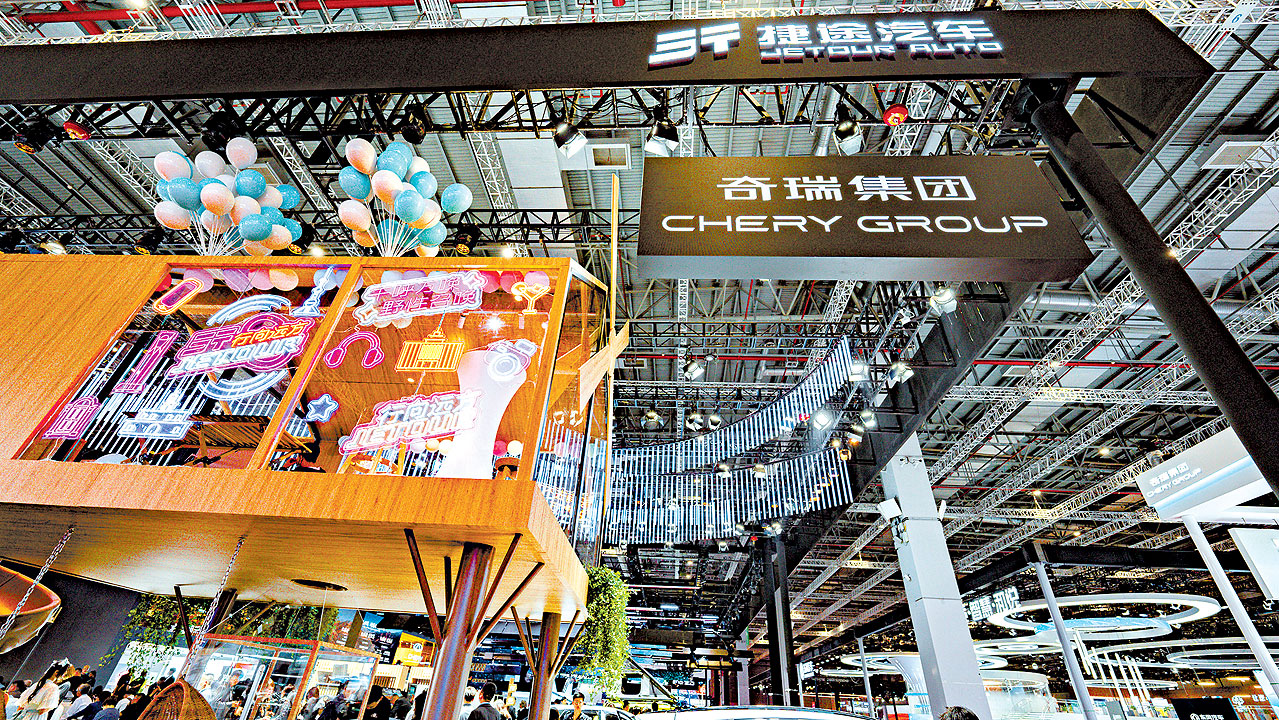
A section of the Jetour booth at the Shanghai Auto Show — PHOTO BY KAP MACEDA AGUILA

The Chinese automaker promises new models, supply, and support for the overseas market — including the Philippines

VERILY, it was a coming-out party for Jetour — particularly in the case of country distributor Jetour Auto Philippines, Inc. (JAPI), who flew its executives, bank guests, members of the media, and content creators to Shanghai for the Chinese automaker’s Shanghai Auto Show appearance.

The biennial mobility show at the sprawling National Exhibition and Convention Center draws a million visitors on average, and is a perfect platform for brands and companies to highlight their portfolio — as well as to outline their values, virtues, and vision.

Jetour executives certainly seized the opportunity to go back to fundamentals and do some grounding for the brand — even as the company already notched 700,000 units in sales over just 55 months. This is surely an impressive feat for what used to be merely a model line of SUVs tucked under the wing of Chery Holdings, one of the largest auto brands in China.

And as everyone knows, that country can move in big ways.

According to the China Association of Automobile Manufacturers (CAAM), the country exported 3.11 million vehicles in 2022, up 54% year-on-year. It surpassed Germany’s total figure for the first time, and now takes its place as the world’s second largest exporter of automobiles next to Japan.

As for Jetour, it started venturing beyond China’s borders in 2019, and today has established “over 400 sales and service locations in more than 35 countries and regions across the Middle East, Africa, Central and South America, Asia-Pacific, and the Commonwealth of Independent States (CIS).” The company claimed it is the “SUV brand with the most overseas sales, and (is) the second fastest-growing auto exporter in China.”

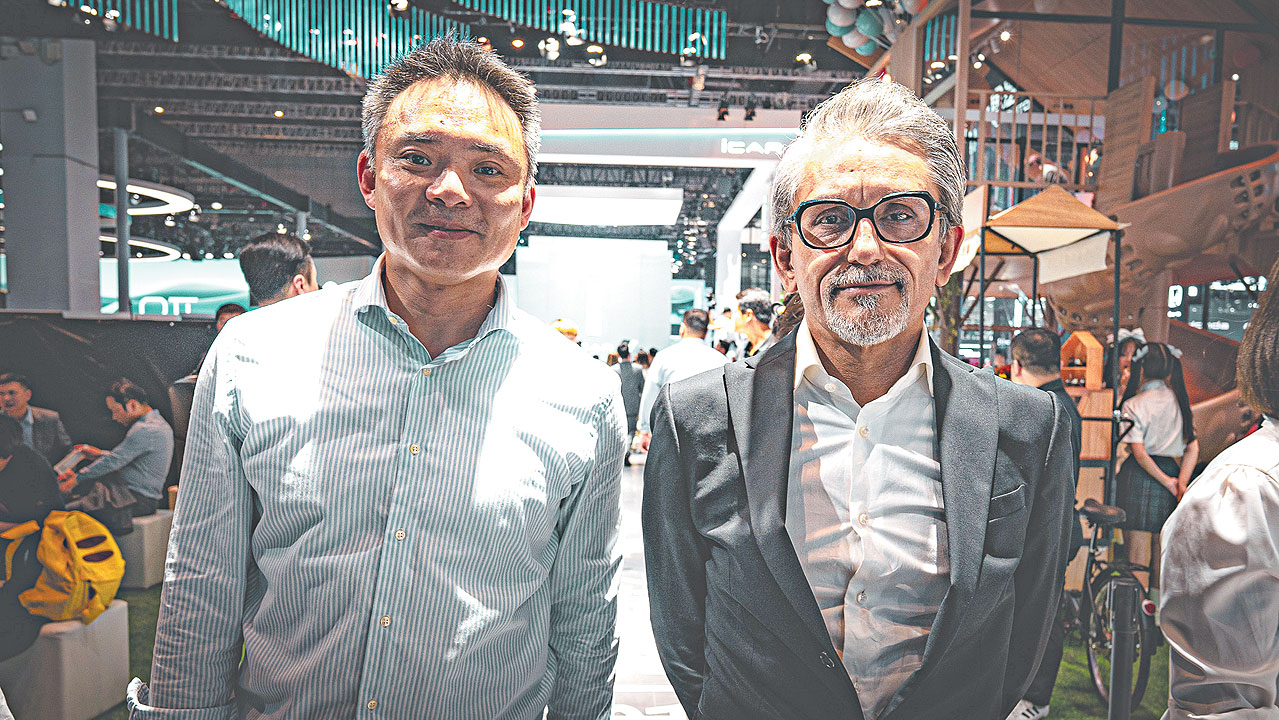
Following the company’s program at the auto show, several members of the media, including this writer, sat down with Jetour Auto Vice-General Manager Ke Chuandeng, Chery Commercial Vehicle International Marketing Company Deputy General Manager Bart Wang, and JAPI Managing Director Miguelito Jose for a short interview session.

Despite Jetour being a relative newcomer in the pantheon of auto brands, Mr. Chuandeng said that the marque has enjoyed success — due in no small part to its being part of the Chery group. “We operate independently, but we use the same technology platform. Chery has been around for 25 years, and we have a very solid technical foundation. Even if Jetour is a new brand, we use the same supply system and the same technical system.”

The brand also leverages the global popularity of automobiles coming from the country. “That gives Jetour a good opportunity outside of China. That is a good foundation, because if Chinese brands have a good reputation in the international market, that also benefits Jetour. We will apply what we did in China to the (global market)… The Chinese market is a tough market, so if a brand can survive in China, that means it has competitiveness,” asserted Mr. Chuandeng.

Joined Mr. Jose, “Chinese brands entered in the Philippines about 10 years ago. In five years, we saw the big difference, with two or three brands able to (succeed) in our country. When we introduced Jetour, we were amazed by the acceptance of the public.”

‘TRAVEL+’ POSITIONING
Part of the messaging Jetour wants to convey is comprised of qualities beyond the spec sheet of its vehicles — the company’s Travel+ concept. Explained Mr. Chuandeng, “If we talk only about cars, there’s no big difference. Quality, no problem. Specification, no problem. We have to create our own differentiators in our promotions, our relationship with users… We want people to think about Jetour. We want to create this image that our key competitiveness is Travel+.”

But what is “Travel+” anyway? Specifically, what does the plus sign denote? “Plus has two meanings,” began the executive. “First, in Chinese it means ‘home.’ So, in China, we promote the idea of ‘travel home,’ a mobile home that’s safe, intelligent, and comfortable… Secondly, plus means everything else — platform, product, benefits.”

In China, Jetour has rolled out a slew of benefits for its vehicle owners such as discounts on hotel stays and restaurant tabs. “In the international market, there are infinite possibilities for the Travel+ concept,” declared Mr. Chuandeng, who added that they will look at providing similar values for Filipino customers. “So, even if Chery and Jetour are from the same group, we don’t compete with each other. We only focus on the Travel+ segmentation.”

SUV FOCUS
Jetour is also embracing its reputation as a crossover specialist, as it maintains that SUVs are more suitable for, yes, travel. According to Mr. Chuandeng, the X70, X70 Plus, and X90 are geared for “family travel on urban roads;” the Dashing is “not only for families but especially for young people;” and the just-launched T2 boasts “necessary off-road performance” for adventures off the beaten path.

Long before JAPI officially launched the Jetour brand in the country last week via the Manila International Auto Show (MIAS), it had started rolling out a social media campaign to tease its vehicles. Jetour started making waves.

“In a month’s time after we started promoting it, we saw the market accept the style, the technology, and the design,” narrated Mr. Jose. “The Dashing, for example, has been accepted by the younger generation, young professionals. X70 inquiries have also has been encouraging, as the public sees the price point as an advantage.”

SUPPLY
One of the prevailing concerns in the auto industry is the lack of actual units, brought about by an ongoing (though improving) semiconductor and parts shortage. In many cases, this is leading to a dearth of inventory and a wait list for customers. “Velocity” asked if Jetour can assure the supply to fuel its growth trajectory in the Philippines (at the moment, 13 dealerships are awaiting construction/completion).

“There’s no doubt about the supply,” replied Mr. Chuandeng. “That is our main competitiveness.

We have more than 10 production bases in China in different cities, so we have enough capacity. We also update our factory technology. We have the best factories in the world: One minute, one car. We have also updated our production line capability.” He further boasted that Jetour has a “black factory,” meaning they don’t need illumination because robots are mainly conscripted for work in the assembly line.

As for spare parts, Jetour is said to have a “special section” that produces these. “We have a complete supply,” asserted the official. And because of China’s proximity to the Philippines, vehicles can be shipped in as little as three days.

SALES
By the end of the year, Jetour expects to have sold 2,000 vehicles here, and that’s where the expertise and girth of JAPI’s principals will come into play. The distributorship is backed by established major players in the local auto industry: the Gateway Group and the AutoSpeedyGo Group.

The Gateway Group was founded in 2004 by the Goho family, and is the largest dealer group in the Philippines. It has a considerable portfolio of established auto brands under its fold, namely (in alphabetical order): BMW, Changan, Chevrolet, Chery, Foton, Fuso, GAC, Geely, Honda, Hyundai, Kia, Maxus, Mitsubishi, MG, Nissan, Peugeot, Subaru, Suzuki, Volkswagen, and Volvo. Gateway operates in 53 major cities and provinces in the country.

For its part, AutoSpeedyGo Group was co-founded in 2016 by Vincent Licup, who has 30 years of experience in the automotive dealership business. AutoSpeedyGo has 14 establishments across six global brands, including Chery, Chevrolet, Foton, Geely, MG, and Nissan — located in the northern part of the National Capital Region and two major municipalities of Bulacan and Pasig City. JAPI’s management team is headed by its President Yves Licup, Vice-President Michael Goho, Mr. Jose, and Marketing Director May De Los Santos.

Perhaps cognizant of the fact that Jetour is a newer name, JAPI is assuring its customers by confidently extending warranties on its vehicles. The units are backed up with a six-year general warranty with unlimited mileage, and a 10-year engine warranty.

Jetour promises to roll out new models every six months, and by all indications, these units will more quickly be brought into the Philippine market. Of note, Jetour officials are declaring that, yes, electric vehicles are coming sooner than later.

“There is no doubt that the EV is the future, and Chinese EVs will (dominate) the world,” stated Mr. Wang. “Last year, in the Chinese market, (new energy or electrified vehicles) comprised 32% of total sales. Chinese companies sold 1.2 million units to the global market. This year, including Jetour, we are expecting to sell 2.5 million new energy cars.”

Mr. Chuandeng noted the more favorable conditions in the Philippines with regard to electric vehicle importation tariff, sales, and infrastructure, and expressed pleasure over the interest in the Jetour Ice Cream — a rebadged Chery battery electric vehicle priced at P699,000. He promised to bring in a hybrid version of the Dashing, and committed to offer three powertrains (internal combustion engine, hybrid electric, and battery electric), for every model the brand will launch by January.

JAPI reported that, at the MIAS, around 70 Jetour bookings — a majority for the Dashing — were recorded. This again is another metric that perhaps shows a promising future for the brand now set to wage war in an ever-growing automotive arena in the Philippines.

Ed Sheeran faces US copyright trial over Marvin Gaye’s ‘Let’s Get It On’

JURY selection is set to begin on Monday in Manhattan federal court for a trial over claims that British pop superstar Ed Sheeran owes a share of profits from his hit “Thinking Out Loud” for copying Marvin Gaye’s “Let’s Get It On.”

Heirs of songwriter Ed Townsend sued Mr. Sheeran, his label Warner Music Group, and music publisher Sony Music Publishing for allegedly ripping off Mr. Gaye’s classic, which Mr. Townsend co-wrote.

The trial is the first of three Mr. Sheeran could face from lawsuits over similarities between the two hits.

Warner Music Group, Sony Music Publishing, and attorneys for both sides did not immediately respond to requests for comment on the case.

Marvin Gaye collaborated with Mr. Townsend to write “Let’s Get It On,” which topped the Billboard charts in 1973. Mr. Sheeran’s “Thinking Out Loud” peaked at No. 2 on the Billboard Hot 100 in 2015.

Mr. Townsend’s heirs sued Mr. Sheeran for copyright infringement in 2017, claiming “Thinking Out Loud” copied the “heart” of Mr. Gaye’s song including its melody, harmony, and rhythm.

The lawsuit said Mr. Sheeran has performed the two songs live as a medley and transitioned “seamlessly” between them.

Mr. Sheeran has argued that any similarities between the songs involve basic musical “building blocks” that are ineligible for copyright protection.

If the jury finds Mr. Sheeran is liable for copyright infringement, the Manhattan court will hold another trial to determine how much he and his labels should pay. The first trial is expected to last about a week.

The heirs said in a court filing that they received 22% of the writer’s share of Mr. Gaye’s song from Mr. Townsend. Mr. Sheeran is facing two related lawsuits from investment banker and “Bowie Bonds” creator David Pullman’s Structured Asset Sales LLC, which owns a third of Townsend’s rights in the song. Mr. Sheeran won a trial in London last year in a separate copyright case over his hit “Shape of You.” Mr. Gaye’s heirs won a landmark verdict in 2015 over claims that the Robin Thicke and Pharrell Williams song “Blurred Lines” copied Mr. Gaye’s “Got to Give It Up.” — Reuters

Corn tariff lobbying intensifies as legislators prepare measure setting up competitiveness fund

DA.GOV.PH

TARIFFS have become a behind-the-scenes battleground for the corn industry, with farmers claiming they need protection from imports and the government seeking to use import tariffs to support an industry competitiveness fund.

“Prices should be more stable and predictable so farmers can be motivated in their planting intentions,” said Roger V. Navarro, president of farmers organization Philippine Maize Federation, Inc. (PhilMaize).

“Farmers… do not know if they will make money because of unstable policy direction,” he said in a Viber message.

Corn is a key commodity in the food value chain, supplying growers of livestock in the form of feed, which in turn affects the price paid by consumers for meat and eggs, showing up in inflation, which the government is currently struggling to control.

In July 2022, Senator Cynthia A. Villar filed the proposed Livestock, Poultry and Dairy Development and Competitiveness Act of 2022, as well as the proposed Yellow Corn Industry Development Act of 2022 (Senate Bill No. 120).

Senate Bill No. 120 also proposes the creation of a Corn Competitiveness Enhancement Fund, which will be funded from the tariff collections from corn and feed wheat imports.

“The bills are still in the technical working groups of the Senate Committee on Agriculture and Food. Looking forward to passing both bills before the end of the Congress this July,” Ms. Villar’s office said in a Viber message sent by her staff.

Weighing in on a Livestock Development Bill that reduces the tariff on corn imports is economist Calixto V. Chikiamco, a member of the board of the Institute for Development and Econometric Analysis.

“Our neighbor, Vietnam, imposes a 2% tariff on corn, while we insist on controlling imports of corn and a tariff of 15% for out-of-quota imports when our projected shortage is 2 million metric tons annually,” he said in an April 11 opinion column for BusinessWorld. High corn prices result in high cost of livestock, he added.

Mr. Chikiamco said pork and chicken prices rise in line with feed costs, “making them unaffordable to poor families suffering from protein malnutrition.”

The corn industry’s position is that it needs price predictability to ensure that farmers are encouraged to plant.

Mr. Navarro called for more investment in post-harvest facilities to store corn for release onto the market when needed to stabilize prices and supply, making farmer incomes predictable.

“We support the Livestock Development Bills of Senator Villar and (Rep. Jose Ma. Clemente S.) Salceda because of the earmarking of the tariff collection for the sector,” according to Elias Jose M. Inciong, president of the United Broiler Raisers Association, an industry that uses corn for feed.  “We have also asked for the deletion of certain provisions to which the sponsors and the DA (Department of Agriculture) have acceded.”

Mr. Inciong said that provision is Section 15, which sought to automatically review the most-favored-nation tariff rates of chicken, pork, and corn.

“Although it was not stated outright, we knew for a fact that NEDA (the National Economic and Development Authority) wanted to permanently reduce the rates to 5% based on their presentations before the Senate Agri Committee,” he said in a Viber message.

“It would have decimated the poultry and livestock industries and rendered the above-mentioned bills inutile,” he added.

Corn is 40-50% of the cost of production of the feed, Mr. Inciong said. 

“Tariff reduction for corn will not necessarily lead to lower pork and chicken retail prices. Importers are profit maximizers,” he added. “They will not pass on the savings as a matter of course.”

Tariffs are a form of protection for farmers, also pointed out Mr. Navarro, which if removed would be like exposing our farming to competition… without enough armor to protect themselves from the farmers (of other countries) who are highly subsidized by their governments,” he said.  — Patricia B. Mirasol

ADVERTISEMENT
ADVERTISEMENT