Home Blog Page 4959

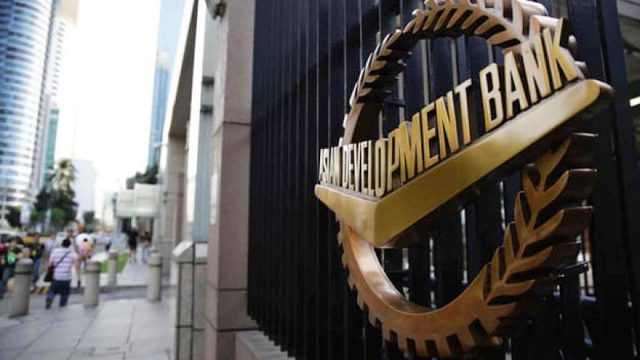
ADB financial assistance to PHL hits $3B in 2022

BW FILE PHOTO

THE ASIAN Development Bank (ADB) extended $3 billion in financial assistance to the Philippines in 2022, the fifth highest in the region.

The multilateral lender’s commitments to the Philippines, which consist of loans, grants, and co-financing programs, rose by 7.3% to $2.995 billion last year from $2.791 billion in 2021, according to the latest ADB annual report released on Monday.

Pakistan received the biggest financial assistance from the ADB with $5.58 billion, followed by Bangladesh ($3.93 billion), India ($3.12 billion) and Vietnam ($3.09 billion).

Low-interest loans approved for the Philippines reached $2.55 billion, the second highest in the region after Pakistan with $3.4 billion.

The ADB’s approved loans include the first tranche of the South Commuter Railway, support for subprogram 2 of the Capital Market-Generated Infrastructure Financing Program, support for the Philippine Technical and Vocational Education and Training System, and subprogram 1 of the Climate Change Action Program.

The Philippines received $423.9 million for co-financing projects and $9.9 million for technical assistance from the ADB last year.

The ADB said it is focusing on supporting climate action in the Philippines, which is one of the most climate-vulnerable countries in the world.

“Under the program, ADB is helping the Philippines develop, deliver, and finance a holistic approach to address climate change by transitioning to low-carbon pathways, strengthening the country’s ability to adapt to climate change, and increasing conservation of land and marine resources,” it said.

Last year, the ADB provided its first climate change policy-based loan to the Philippines.

“In 2022, ADB provided a $250-million loan, along with $171.7 million in co-financing, to support the Government of the Philippines in implementing its national climate policies, achieving its commitments under the Paris Agreement, and delivering on its broader climate ambitions,” it added.

This year, the ADB’s lending program for the Philippines is set at $4 billion, which consists of eight projects and programs.

“Our support in 2022 helped our developing member countries navigate the immediate impact of these crises while bolstering their longer-term resilience in critical areas such as climate change and food security,” ADB President Masatsugu Asakawa said in a statement. — Keisha B. Ta-asan

US firms interested in PHL but want more conducive environment — Romualdez

Philippine Ambassador to the US Jose Manuel Romualdez speaks at an event in Manila, Philippines, Aug. 6, 2022. — ANDREW HARNIK/POOL VIA REUTERS

US COMPANIES are now more interested in investing in the Philippines due to its stronger-than-expected economic growth but want a more conducive business environment, Philippine Ambassador to the United States Jose Manuel D. Romualdez said.

“US companies are now more than ever looking at the Philippines… The business community here said they didn’t realize how the economy has continued to grow despite the pandemic, while most countries have a downturn trend. So that’s very significant,” Mr. Romualdez said in an April 14 interview with BusinessWorld in Washington, D.C. 

The Marcos administration’s economic team touted the Philippine economy’s gains during an April 12 briefing attended by around 180 representatives from US companies and industry groups. 

The economy expanded by 7.6% last year, its fastest growth rate since 1976. It exceeded the government’s 6.5-7.5% goal and was better than the 5.7% growth a year earlier. This year, the government is targeting 6-7% gross domestic product growth. 

John F. Maisto, president of the US-Philippines Society and a former diplomat, said the Philippines is now sending a message that it is open for “serious” foreign investments.

“This forum has pointed out the fact that today’s reality is very positive for the Philippines in terms of attracting foreign investments. They laid out the policies, the geopolitical realities, the quality of the Philippine working population…, particularly young Filipinos who speak English and are educated well, are ready to be employed and trainable,” Mr. Maisto said on the sidelines of the April 12 Philippine economic briefing.

Asked if there are any concerns, Mr. Maisto said investors want to ensure there is the “best possible atmosphere” in the Philippines before making any commitments.

“They want the best possible legislation, the best possible guarantees, and this is the challenge for the Philippines. Happily, President (Ferdinand R.) Marcos (Jr.), from the very beginning of his administration, has emphasized publicly that the Philippines has to do much more than it has done in the past in terms of attracting foreign investments,” he said.

International Monetary Fund (IMF) Deputy Director of the Asia and Pacific Department Sanjaya Panth said in a separate interview that the Philippines should work on further easing some regulations and foreign investment limits.

“I think the Philippines has more room to go to make investment more attractive to foreign investors. [But] it seemed to me that the government was quite committed and very interested in attracting the necessary investment. I did see a pretty good reception,” Mr. Panth said.

Recent reforms include amendments to the Public Service Act, which allows full foreign ownership in telecommunications, domestic shipping, railways, subways, airlines, expressways, tollways, and airports.

For his part, Mr. Romualdez said the economic managers have vowed to make the business environment more conducive to foreign investments.

“The government is investing a lot in infrastructure, both digital and hard infrastructure… All that will translate into more interest. It’s now up to us to be able to catch that eh. This is an opportunity that happens not too very often and right now we’re right at that sweet spot,” he said.

The Philippine embassy is now looking to attract investments in key sectors such as energy, digital infrastructure and semiconductors.

Mr. Romualdez said there are also several US companies that are expanding in the Philippines.

“We’re happy to say that Moderna, for instance, they’ll start with a commercial office first in the Philippines. FedEx has moved their facilities, and they have a big facility now in Clark,” he said.

‘SAFE PLACE’
Many businesses consider the Philippines a “safe place” to invest amid tensions between the US and China, Mr. Romualdez said.

“Our relationship with the United States, it’s one of the best, obviously, because of the agreements that we’ve had on the defense side… Because of the current situation, the political situation in China. So, they will look at places where they feel it’s much safer and the Philippines is one of them,” he said.

The US and the Philippines recently expanded the Enhanced Defense Cooperation Agreement (EDCA). EDCA is a supplementary deal to the 1999 visiting forces agreement, which allows the US to rotate troops in the Philippines and build and operate facilities on agreed locations for both their military forces.

“This is another opportunity for us, because the publicity that we’ve been getting here in the United States has been positive, in terms of our defense ties, and that ties into what we want which is more economic activity,” Mr. Romualdez said.

Mr. Marcos is set to hold talks with US President Joseph “Joe” R. Biden, Jr. in Washington D.C. on May 1 to discuss areas of cooperation in defense and security, climate change and digitalization, among others. — Keisha B. Ta-asan

Meralco core profit up 41% as energy sales rise

MERALCO.COM.PH

MANILA Electric Co. (Meralco) registered a consolidated core net income of P9.05 billion in the first quarter, up by 40.5% from P6.44 billion a year ago, on sustained energy sales and revenue growth.

“First quarter is quite good, but I think 2023 is also looking quite good so we should be able to look at double-digit growth,” Meralco Chairman Manuel V. Pangilinan said in a virtual briefing on Monday.

Betty C. Siy-Yap, Meralco’s senior vice-president and chief finance officer, said energy sales went up 2% to 11,287 gigawatt-hours (GWh) in the first quarter from the 11,069 GWh a year ago.

“The results from our power generation business continue to improve and this represented 41% of our CCNI (consolidated core net income) as of the first quarter,” she said during the briefing, adding that the business segment contributed the bulk of the rise in core profit.

Ms. Siy-Yap said there continues to be an increase in the contribution from Meralco units PacificLight Power Pte. Ltd. and San Buenaventura Power Ltd. Co., while Global Business Power Corp. is a “turnaround story.”

Meralco’s reported net income, which factors in nonrecurring items, rose by 26.5% to P8.07 billion from P6.38 billion previously. The power distributor’s customer count reached 7.67 million as of the first quarter, up 2.8% from 7.46 million in the same period last year.

First-quarter gross revenues surged 23% to P105.64 billion from P85.91 billion in the corresponding period last year on higher fuel costs and volume growth.

Total costs and expenses increased by 23.4% to P98.38 billion versus P79.74 billion previously driven by higher cost of purchased power and elevated coal and fuel power plant costs.

Purchased power cost went up by 27.4% to P78.6 billion from P61.7 billion brought about by higher Malampaya gas prices, the depreciation of the peso, and an increase in purchases from the electricity spot market. The power utility giant sourced more from the spot market after the suspension of its power supply agreement with South Premiere Power Corp.

In the first quarter, Meralco placed its capital expenditure at around P5.1 billion, with P4.5 billion spent on network projects including new connections, asset renewals, and load growth projects.

Meralco said the sales mix continued to shift towards pre-pandemic levels as business operations started to recover.

The share of the commercial segment increased to 37% during the first quarter from 34% a year ago. In contrast, the share of the residential segment was down to 33% from 35%, along with the industrial segment at 30% from 31% previously.

At the local bourse on Monday, shares in the company gained 40 centavos or 0.12% to end at P321.40 apiece.

Meralco’s controlling stakeholder, Beacon Electric Asset Holdings, Inc., is partly owned by PLDT Inc. Hastings Holdings, Inc., a unit of PLDT Beneficial Trust Fund subsidiary MediaQuest Holdings, Inc., has an interest in BusinessWorld through the Philippine Star Group, which it controls. — Ashley Erika O. Jose

Confidence in childhood vaccines drops in Philippines — report

PHILIPPINE STAR/ BOY SANTOS

Confidence in childhood vaccines has decreased by 25% in the Philippines, putting children in the country at a higher risk of vaccine-preventable diseases, according to the United Nations Children’s Fund (UNICEF).

The Philippines has the second to the highest number of zero-dose children in East Asia and the Pacific region and the fifth highest worldwide, according to UNICEF’s “The State of the World’s Children 2023: For Every Child, Vaccination” report. Most of these children are in Calabarzon, Central Luzon, and Western Visayas.

Between Jan. 1 and March 11, moreover, a total of 208 measles cases were recorded. This is a 478% increase from the same period in 2022.  

Measles infections pose a high risk in all regions of the Philippines, according to the report.

“This data is a worrying warning signal. We cannot allow confidence in routine immunizations to become another victim of the pandemic. Otherwise, the next wave of deaths could be of more children with measles, diphtheria or other preventable diseases,” Catherine Russell, UNICEF executive director, said in a statement on April 19.

Vaccine hesitancy in the Philippines is attributed to cultural factors, distrust towards vaccination programs, and concerns on vaccine safety. Elsewhere, factors include uncertainty about the response to the pandemic, growing access to misleading information, declining trust in expertise, and political polarization.  

The global report for 2023 also said that 67 million kids did not receive vaccinations from 2019 to 2021, with vaccination coverage levels decreasing in 112 countries. Only China, India, and Mexico showed an increase or no change in how much people valued vaccines.

In the Philippines, the prevalence of children who did not receive any vaccinations was highest among children whose mothers did not receive any education. This situation worsens the existing inequalities. 

The UN agency suggested that governments should locate and provide vaccinations to all children, particularly those who missed them due to the pandemic. They should also focus on building trust in vaccines, prioritize funding for immunization and primary healthcare, and improve the resilience of healthcare systems.

It also recommended unlocking available resources, such as leftover COVID-19 funds, to implement catch-up vaccination campaigns.   

“Immunizations have saved millions of lives and protected communities from deadly disease outbreaks We know all too well that diseases do not respect borders,” Ms. Russell said. “Routine immunizations and strong health systems are our best shot at preventing future pandemics, unnecessary deaths, and suffering.” — Patricia B. Mirasol

Plaintiffs in US case versus PLDT count alleged losses

BW FILE PHOTO

PLDT Inc. said on Monday that two of its investors filed separate motions to the court on April 7 seeking to serve as the lead plaintiff for the US class action lawsuit against the telecommunications company.

One of the investors, Sophia Olsson, who claims to have two shares in the telco, was said to have reported an alleged loss of $22.69 after the listed disclosed its budget overrun.

Meanwhile, Kevin Douglas, a PLDT investor holding 35 shares in the company, reported an alleged loss amounting to $240.23.

In a disclosure to the Philippine Stock Exchange, PLDT said that Milbank LLP, on behalf of the telco giant, has entered its appearance in the US class action. It also filed a notice of interested persons or entities along with a corporate disclosure statement as well as a memorandum of points and authorities for consideration by the court on April 17.

The two plaintiffs, represented by different law firms — Ms. Olsson by the Rosen Law Firm and Mr. Douglas by Levi & Korsinsky, LLP — are said to have failed to establish that they are appropriate lead plaintiffs.

“Under the Private Securities Litigation Reform Act, lawsuits by shareholders with a small position in the security at issue are discouraged,” PLDT said.

“Consequently, the company argued that the de minimis purported losses alleged by the Movants in this case fall far short of the basic requirement that a lead plaintiff make prima facie showing that he or she is an adequate representative who will prosecute the action vigorously on behalf of the putative class,” it added.

The company said that the two investors’ nominal losses lack sufficient financial interest in the outcome of the US class action.

“Thus, the company argued in its Memorandum that the Movants’ motions for appointment as lead plaintiff should be denied,” PLDT said.

The company is set to have a hearing for the appointment of the lead plaintiff on May 8.

“The company shall provide further updates in compliance with Philippine and US laws on disclosures related to pending litigation as they arise,” it said.

In a disclosure on Feb. 14, the company said that it had learned of a securities class action lawsuit filed on Feb. 6 by Ms. Olsson in the district court in the Central District of California.

The lawsuit named PLDT and nine of its current and former employees as defendants for allegedly violating Federal Securities Laws and a jury trial was demanded.

The individual defendants in the case include PLDT Chairman Manuel V. Pangilinan; President and Chief Executive Officer Alfredo S. Panlilio; Chief Legal Counsel, Head of Legal and Regulatory Affairs, and Corporate Secretary Marilyn A. Victorio-Aquino; and Anabelle L. Chua, who was the chief financial officer and chief risk management officer during the filing.

The case came about after the Pangilinan-led PLDT disclosed a budget overrun amounting to P48 billion.

After the company disclosed the budget overrun, it saw a 19.35% decline in the price of its shares to P1,192 apiece on Dec. 19, 2022.

On Monday, PLDT shares closed lower by P35 or 2.76% to P1,234 apiece.

Hastings Holdings, Inc., a unit of PLDT Beneficial Trust Fund subsidiary MediaQuest Holdings, Inc., has a majority stake in BusinessWorld through the Philippine Star Group, which it controls. — Justine Irish D. Tabile

ACEN estimates P30-B debt for capital spending

AYALA-led ACEN Corp. is looking at an estimated P30 billion in new debts to fund its capital expenditures of about P50 billion to 70 billion this year, the company’s finance chief said.

“In terms of new debts, we are projecting to borrow an additional of P30 billion and we are also looking at equity offering by way of the preferred shares — not part of P30 billion,” Maria Corazon G. Dizon, treasurer, chief financial officer and compliance officer of ACEN, said in a briefing on Monday.

For 2023, ACEN has said that it has over 2,400 megawatts of projects under construction. It expects to spend up to P70 to expand its renewable energy portfolio.

Eric T. Francia, president and chief executive officer of ACEN, said during the company’s annual stockholders meeting that the amendment of article seven of the articles of incorporation to create preferred shares of 100-million unissued common shares into preferred shares had been approved.

“Issuing preferred shares allowed us to diversify our funding mix and also improved our capital structure and leverage ratios in preparation for future financing initiatives to meet our rapid growth trajectory. We’ve seen that Philippine investors both institutional and retail have an appetite for preferred shares investments so we’re tapping into this pool of liquidity to fund our growth,” Mr. Francia said.

In an earlier disclosure, ACEN announced that its board of directors had approved the reclassification of 100-million unissued common shares.

“We think now is the good time to offer preferred shares to give new investors steady, predictable and competitive returns versus other instruments in the market. These preferred shares are non-dilutive, so nonvoting,” Mr. Francia said.

At the local bourse on Monday, shares in the company gained four centavos or 0.66% to P6.10 apiece. — Ashley Erika O. Jose

Globe’s SIM registration boosted by its emergency cell broadcast

ANGELICA REYES-UNSPLASH

GLOBE Telecom, Inc. said it saw an increase in daily registrations, recording a million over the weekend after it used emergency cell broadcast (ECB).

The telco said it opted to take the step after it saw daily registrations at 200,000 in March.

“The impact of ECBs [has] been tremendous as daily registrations increased to 400,000 then 800,000 last week,” the company said in a press release.

Under Republic Act No. 10639 or The Free Mobile Disaster Alerts Act, telecommunications service providers are mandated to send free mobile alerts in the event of natural and man-made disasters.

“The alerts shall consist of up-to-date information from the relevant agencies and shall be directly sent to the mobile phone subscribers located near and within the affected areas,” the law read.

“We apologize to our registered customers who have received the emergency alerts and expressed their irritation online,” Globe Group Chief Sustainability and Corporate Communications Officer Yoly C. Crisanto said.

“We appeal for their understanding as these messages are geographically targeted for all. Globe sees the low registration numbers as needing urgent public service because the lack of mobile services is in itself an emergency, severely impacting daily life, from financial transactions and e-commerce to transport and education, among many others,” she added.

Data from the Department of Information and Communications Technology (DICT) showed that as of April 23, up to 82.85 million subscribers have already registered. This is 49.31% of the 168.98 million subscribers nationwide.

The total registered SIMs as of April 23 showed a 5% increase from the 7.86 million recorded on Friday.

Around 39.95 million of the registered SIMs as of April 23 are from Smart Communications, Inc., 37.1 million are from Globe, and 5.8 million are from DITO Telecommunity Corp.

Republic Act No. 11934 or the SIM Registration Act requires all SIM users to register their SIMs under their name until April 26, or risk SIM deactivation. It aims to help mitigate the proliferation of text scams and other mobile phone-aided criminal activities.

The DICT has the prerogative to extend the SIM Registration process for another 120 days.

In an interview with DZRH, DICT Secretary Ivan John E. Uy said that there is an above 50% chance that there will be an extension.

Nagpulong kami ng mga telcos at ng mga stakeholders at ang report ay may ilan pa na mga kababayan natin ang hindi nakarehistro dahil sa iba’t-ibang rason,” Mr. Uy said.

(We had a meeting with telcos and the stakeholders and the report showed that there are some Filipinos who are not able to register for different reasons.)

Kino-consolidate namin ang mga report. Bukas may final meeting kami at doon po kami magaanunsyo kung may extension at kung gaano kahaba ang extension na ibibigay,” he added.

(We are consolidating the reports. Tomorrow we will have a final meeting and that is where we will announce whether there will be an extension and how long the extension will be.)

Mr. Uy reiterated that the DICT does not expect all SIM cards to be registered and is only expecting 70%-80% registration from the total subscribers nationwide. — Justine Irish D. Tabile

AboitizPower studies LNG projects in Luzon

ABOITIZ Power Corp. is looking at liquefied natural gas (LNG) projects in Luzon, its top official said.

“We already articulated our plans for LNG and any LNG project that we will be doing in the future would be in the context of putting up a new baseload option compared to coal, when we can actually get a long-term contract that would allow us to also meet our risk thresholds,” Emmanuel V. Rubio, president and chief executive officer of AboitizPower, said in a media briefing on Monday.

He said AboitizPower is looking at LNG projects in Luzon.

“So yes, we are looking at Luzon, Visayas. If it’s us going in Luzon, we will be considering sites that are available for us now like Pagbilao. We are working with JERA [Co., Inc.] to have access to long-term competitive LNG contracts,” Mr. Rubio said.

To date, seven proponents of LNG terminal projects have been approved by the Department of Energy (DoE) for development, two of which are expected to come online in the first semester of 2023.

Linseed Field Power Corp. said that it had completed the conversion of a vessel into a floating storage unit for gas. The company is expected to start taking delivery of gas by March.

First Gen Corp., through its subsidiary FGEN LNG Corp., said its LNG terminal will also be completed by the first quarter. First Gen’s gas-fired power plants currently run on indigenous gas from the Malampaya-Camago reservoir, which is expected to start depleting next year.

At the local bourse on Monday, shares in the company shed 45 centavos or 1.2% to end at P37.05 each. — Ashley Erika O. Jose

AEV expects slowdown for some business sectors

ABOITIZ Equity Ventures, Inc. (AEV) expects a slowdown for some business sectors this year due to higher interest rates, a company official said on Monday.

“For 2023, we expect a slowdown as a result of higher interest rates and the inflationary pressures that we have been experiencing since last year,“ Jose Emmanuel U. Hilado, AEV’s senior vice president, said in a press briefing.

“Some sectors have slowed down like the real estate sector has been slowing down because of higher interest rates,” said Mr. Hilado, who is also the listed firm’s chief financial officer and corporate information officer.

As a result, there were lower construction activities and lower demand for personnel, he said.

“Despite the slowdown in [the] economy, we think that there are still a lot of investment opportunities in the country, and we will continue to invest in almost all of our current businesses,” he added.

The company recently disclosed its capital expenditures (capex) for the year at P78 billion to drive investments and innovations.

For the year, P32 billion will go to Aboitiz InfraCapital, Inc.; P5 billion to Union Bank of the Philippines; P5 billion will to its food and agribusiness; and P3 billion to property unit Aboitiz Land, Inc.

Mr. Hilado said that capex for its power unit Aboitiz Power Corp. would amount to about P30 billion as it develops its renewable energy business.

He said that while the country expects an economic slowdown during the year, the company remains to be on the lookout for possible opportunities and new investments.

AEV shares increased by 1.92% or P1 to close at P53 each on Monday. — Adrian H. Halili

South Park creators accuse HBO Max of stiffing them on fees

PARAMOUNT Global and the creators of South Park fired back at Warner Bros Discovery, Inc. in a legal dispute over streaming rights for the cartoon comedy series, saying Warner filed its breach-of-contract claim to avoid paying tens of millions of dollars in licensing fees it owes.

Warner sued in February, alleging Paramount conspired with South Park Studios, its joint venture with show creators Trey Parker and Matt Stone, along with MTV Entertainment Studios to keep South Park content out of a $500 million deal Warner’s HBO Max signed for exclusive streaming rights. Paramount sought to block the content to help support its own new streaming service, Warner claimed.

South Park Studios “held up its end of the bargain” and delivered its existing library of more than 300 episodes, a documentary, and three more seasons as well as other content including behind-the-scenes footage, according to the countersuit filed Wednesday last week in New York state court. But Warner “apparently began to regret the actual terms of the deal it made” and began demanding content not owed to it under the agreement, Paramount, MTV, and the show’s creators said in their complaint.

“When South Park Studios did not give in to the baseless demands that South Park Studios deliver new television episodes that did not even exist and made-for-streaming movies that WarnerMedia has no right to license, WarnerMedia decided to withhold payment of the license fees for the content it had actually licensed and was exploiting,” according to the countersuit.

Warner currently owes $52 million, and is obligated to pay $225 million over the rest of its existing deal, Paramount said.

In an e-mailed statement Thursday, HBO Max said “Paramount and South Park Digital Studios embarked on a multi-year scheme of unfair trade practices and deception, flagrantly and repeatedly breaching our contract, which clearly gave HBO Max exclusive streaming rights to the existing library and new content from the popular animated comedy South Park.”

HBO Max announced in October 2019 it had won the exclusive streaming rights to South Park, with all 23 seasons of the show available on the service and three new seasons to debut 24 hours after premiering on Comedy Central. HBO said the deal, which ran from June 2020 to June 2025, included payments of about $1.7 million for each of the 333 episodes.

But in August 2021, Paramount Global, formerly known as Viacom CBS, signed a $900-million deal with the show’s creators, in which they would produce a series of specials for its own streaming service, Paramount+. Two months later, Paramount+ and MTV announced the exclusive premier of two South Park Post-COVID “events,” which HBO alleges violated its contract.

South Park, which has aired for 26 years, is one of the longest-running shows in TV history. It has outlived every program on Comedy Central except for The Daily Show.

Earlier this month, Warner said it was renaming its streaming service to Max, dropping HBO from the brand. — Bloomberg

US cities keep building luxury condos almost no one can afford

The north view of the Manhattan skyline is seen from the 86th floor observation deck of the Empire State Building in midtown Manhattan, New York City, June 24, 2020. — REUTERS/MIKE SEGAR

EMILY YOUNG throws open the shades of the three-bedroom penthouse. “This is amazing,” she says, walking past the wine fridge and wet-dry bar. “Look at that fireplace.” Ms. Young, a real estate agent with a Marc Jacobs handbag on her hip, is giving a tour of one of the most luxurious apartment buildings in Austin.

At the Hanover Republic Square, there’s a “vinyl parlor” with a DJ-quality turntable; a movie theater; a dog–grooming spa; and a rooftop pool on the 44th floor. There, you can gaze at sunsets — and a neighboring skyscraper. Nearly complete, it rises 66 stories and will have a pool to rival the Hanover’s. Actually, that’s not quite right — it’s “pools,” plural. There will be three of them.

Austin is experiencing an unrivaled apartment boom. In 2021 the region including the Texas capital issued nearly 26,000 multifamily housing permits, about 11 units per 1,000 residents. That’s more per capita than any large US metro area since 1996, when Las Vegas OK’d new apartments at only a slightly higher level, according to rental marketing firm Apartment List. By the same measure, which is based on an analysis of US census data, Austin topped the 50 largest US metropolitan areas in 9 of the last 10 years.

Many, if not most, of these apartments are classified as luxury, depending on how you define it. (Some developments are likely using a bit of real estate puffery.) Buildings such as the Hanover have become a flashpoint in a fierce, often bitter debate raging in Texas, the US and around the world. It’s about the best way to shelter this generation and the next, particularly in the most sought-after and expensive cities.

Academics, developers and people in their 20s and 30s — particularly those most active on social media — have reached an unusual level of consensus. Their solution, supported by a wealth of scholarly research, is simple and elegant: Loosen regulations, such as zoning, and build more homes of any kind — cheap, modest and palatial.

YIMBY
The shorthand for the movement has become “Build, build, build” or “Yes, in my backyard” — Yimby, for short. It’s a rejoinder to the “Not in my backyard,” or Nimby, crowd, the hidebound folks who typically thwart construction.

Texas is famous for its business-friendly ways, and David Ott is one of many embracing the Yimby approach. He oversees the Texas projects of Houston-based Hanover Co., which developed the building Young was showing on a recent March afternoon. He says Austin is getting overbuilt, so rents will indeed come down, especially in the suburbs. “It’s simple supply and demand,” he says.

Inconveniently for the Yimbys, Austin, like other cities, is still way more expensive than it was years ago, even though it’s built so many apartments. As a result, a small group of academics is starting to question the free-market path. These critics note that the market leads developers to build luxury housing on scarce and sought-after property to maximize the return on their investment. “Yimbys say, ‘We have to let the market build,’” says Benjamin Teresa, an urban planning scholar at Virginia Commonwealth University. “But what kind of housing are you building, and for whom?”

Desirable cities around the world have all, one way or another, tried the Austin-style solution to their own housing crises. And they’ve all ended up in a similar bind: urban centers packed with luxury properties that regular folks can’t afford.

London has its Opportunity Areas, where eased red tape encourages development. They include the Nine Elms district, where 20,000 apartments are rising along what was once an industrial neighborhood on the south bank of the River Thames. While the development includes -affordable units, most are expensive and some truly grand. The Embassy Gardens residences feature a gawkworthy “sky pool,” which looks like a giant aquarium suspended between two buildings.

DENSITY
Back in the US, California, Massachusetts, New York and Washington are all trying to make it easier to develop apartments on land previously reserved for single-family homes or other uses. So have New Zealand and Sydney, Australia. A common change involves reducing the zoning restrictions near mass transit to encourage apartments, instead of -single-family homes.

The idea is to promote “density,” or more people living on prized real estate, which increases the supply of housing. There’s another potential benefit: promoting clusters of highly paid, educated workers in fields such as finance and tech, which can lead to outsize productivity gains, according to many economists.

But the very popularity of these places with the affluent drives up housing costs, making it harder for companies to find workers and pushing firms to relocate elsewhere. The Austin metro area, one of the fastest-growing in the US, with a population exceeding 2 million, has benefited from corporations fleeing the high cost of housing elsewhere, particularly on the east and west coasts of the US. Home of the University of Texas’ flagship campus, it’s lured Elon Musk’s Tesla, along with Oracle, from Silicon Valley. JPMorgan Chase and Charles Schwab are expanding there, too.

Now rising housing costs in Austin and other more affordable cities threaten them, as well. “Build, build, build” is supposed to help. Academics cite a process they call filtering; richer renters trade up into new luxe units, starting a chain of move-ins and move-outs that lower prices for modest homes. Think trickle-down economics but for apartments.

A growing body of research focusing on cities such as San Francisco and Helsinki has offered support for the filtering effect. Building more apartments, even luxury ones, does indeed moderate prices in surrounding neighborhoods. Older buildings become less attractive; other tenants move in and pay less. In 2019, Brian Asquith and Evan Mast, economists at the W.E. Upjohn Institute for Employment Research in Kalamazoo, Michigan, concluded that new buildings in low–income areas slow rent growth nearby.

RISING RENTS
Using similar methods, Anthony Damiano and Chris Frenier, Yimby-skeptical University of Minnesota researchers, also found that new construction reduces rents nearby — but only in upscale buildings and not in a significant way. More important, though, a gentrifying neighborhood drives up the prices of more ordinary units. Overall, they determined in their study of Minneapolis from 2000 to 2018, the new units actually pushed prices up, validating the displacement fears of low-income residents.

Frustration over rising rents has led cities to consider government interventions that were once deemed discredited. Boston, Orlando and Kingston, New York, have taken fresh looks at rent control, which had been blamed for distorting the market and raising the cost of other apartments.

Others, including Austin, are turning to publicly subsidized housing. Singapore, one of Asia’s most expensive housing markets, is one model. Half a century ago, the government started to build affordable apartments, where much of the population now lives.

In London, Mayor Sadiq Khan aims to make half of all new homes in the city “genuinely affordable” and is pushing for the construction of more “council” flats, the UK version of public housing. In Los Angeles, voters approved a $1.2-billion bond to build apartments for homeless people.

But critics in the UK and the US complain about the often glacial progress of such efforts as well as the costs. In Los Angeles, a government watchdog said the price of the apartments for homeless people is approaching $600,000 a unit.

These challenges help make Yimbyism attractive. In the US, advocates point out that zoning has long had the effect — and, historically, the explicit intention — of excluding poor and minority families from the best housing, while raising costs for everyone.

At times, the debate can inspire the ugliest rhetoric of US elections. On Twitter, people have called each other frauds, segregationists, even Nazis. “I’ve been told that I shouldn’t have been allowed to get a Ph.D., that I don’t know how to control for inflation, that I’m a moron,” says Mr. Damiano, the Yimby skeptic who’s been accused, he says, of “cooking the data to fit my anti-housing agenda.”

Rich Heyman, a geographer who teaches at the architecture school of the University of Texas at Austin, says the problem is wage inequality, not housing, and government intervention is needed to fix it. “Somehow, the real estate industry has gotten a lot of self-styled progressives to buy into the idea that deregulating land use is the one key to unlocking affordability in housing,” he says.

The debate over the impact of new housing hinges on obscure methods of analyzing imperfect rental data, so it isn’t settled. One possibility is that both sides are right, up to a point. Building more does lower prices, just not enough, at least in the short run. And everyone knows what the economist John Maynard Keynes said about the long run: We’re all dead.

OPPOSITION
The Yimby-oriented say it would have been far worse without the increased supply. In addition, an effort to promote density throughout the city is now tied up in court because of community opposition. If it had moved forward, Yimbys say, increases may have been more moderate.

João Paulo Connolly, organizing director for the Austin Justice Coalition, which advocates for racial equity, says zoning codes still make it difficult to build multifamily housing in much of the city. “For me, blocking or resisting market-rate units or constraining supply only makes things much, much worse,” says Mr. Connolly, 34, who’s on the Austin Planning Commission. “We could create housing in other ways, but we have a capitalist system so that’s how we do it.”

For now, downtown apartments can approach New York sizes as well as prices. At the Shoal, which offers “luxury living in a scaled-down footprint,” a seventh-floor studio with a Murphy bed rents for $1,895 a month. It measures all of 347 square feet, the size of two parking spaces.

Foundation Communities, a nonprofit developer of affordable housing, has a waitlist of more than 2,000 at two of its most recent projects. “We absolutely need more housing supply — people keep moving here, and we don’t want to stop that,” says Walter Moreau, its executive director. “The market left to its own devices will never build enough for folks at the lowest income level. Those folks are just priced out of town.”

Karen Reyes, an Austin elementary school teacher, paid $850 in monthly rent when she first moved from San Antonio in 2014. Last spring, her landlord raised the price by about $300, to $1,500 a month. She calculated that rent consumes more than 40% of her take-home pay. She’s looked at moving 22 miles away to rural Kyle, but it wasn’t much cheaper after commuting costs.

“I make good money and should be able to afford a one-bedroom apartment in the city I work in,” she says. “But, honestly, I’m barely making it — I also help out my mom with her rent, and we all have bills to pay.” She found a place last summer for $1,400 a month but worries that she’s one car repair away from not being able to afford it. — Bloomberg


Gopal, based in Boston, and Clark, in New York, cover real estate for Bloomberg News.

SC grants CBK’s appeal to review refund claim

PHILSTAR

THE Supreme Court (SC) has granted the appeal of CBK Power Co. Ltd. o review its tax liabilities worth P50.06 million representing its creditable input taxes for the calendar year 2012.

In a 19-page decision, the High Court remanded the case to the Court of Tax Appeals (CTA) Special First Division to reassess the firm’s entitlement to the tax refund.

“Given this, the court deems it more prudent to remand the case to the CTA Special First Division for the purpose of reviewing the evidence submitted by CBK to ascertain if it has adequately established the presence of the foregoing requisites,” Associate Justice Maria Filomena D. Singh said in the ruling.

CBK manages and operates the Kalayaan II pump storage hydroelectric power plant and the New Caliraya Spillway in the province of Laguna.

The CTA full court had ruled that CBK was not entitled to its refund claim since its sales of the electricity generated through hydropower were already subject to zero-rated value-added tax (VAT).

Under the Renewable Energy  Act of 2008, RE developers are entitled to a 0% VAT on purchases of domestic goods and services for the development and construction of plant facilities.

The High Court disagreed with the CTA, saying the power firm was not entitled to zero-rated sales since it had not shown that it was registered with the Department of Energy (DoE).

Citing the DoE’s implementing rules and regulations, it said RE developers with valid certificates of registration with the department can avail of fiscal incentives provided under the law.

“In fact, CBK has consistently stated in its pleadings both in the CTA and before the Court that it has not registered with the DoE and is thus not entitled to VAT at zero rate,” the high tribunal said.

“Thus, even as the Court reverses the CTA En Banc’s assailed decision and assailed resolution, it cannot make a factual and definitive finding as to whether CBK is entitled to a tax refund and if so, the amount of such refund.” — John Victor D. Ordoñez

ADVERTISEMENT
ADVERTISEMENT