Home Blog Page 4948

Dancing with the Stars and Strictly judge Len Goodman, 78

LEN GOODMAN (center) with his fellow Dancing with the Stars judges Carrie Ann Inaba and Bruno Tonioli in 2005.

LONDON — Len Goodman, the head judge on British television dancing competition Strictly Come Dancing and its US version Dancing with the Stars, died aged 78, the BBC said on Monday.

Mr. Goodman was a successful professional ballroom dancer, winning the British championships in his late twenties before retiring from the sport and opening a dance school.

Much later in life, he chaired the judging panel on Strictly from its launch in 2004 until 2016, and on its US counterpart for most of the period from 2005 until 2022.

He took a warm, supportive but critical approach as he watched celebrities taking on tangos and waltzes, adding a down-to-earth touch to the otherwise frequently flamboyant panel of judges.

“Len… appealed to all ages and felt like a member of everyone’s family. Len was at the very heart of Strictly’s success. He will be hugely missed by the public and his many friends and family,” BBC Director-General Tim Davie said.

Mr. Goodman was born and grew up in London, and said he only took up dancing reluctantly at the age of 19 after a doctor said it would help him recover from a foot injury.

As a teacher, he said his priority was to make ballroom dancing “enjoyable and sociable.”

Speaking in 2012, following treatment for prostate cancer, he said he most hoped to be remembered for being “genuinely nice.”

“I would like there to be people who can honestly say: ‘Len! Oh yeah, there was more good than bad in him.’,” he said.

Strictly was one of the BBC’s most popular entertainment shows, attracting an average of more than 11 million viewers at its peak in 2010. As many as 27 million viewers watched some episodes of Dancing with the Stars in its early seasons. — Reuters

SM Prime plans launch of $1-B mall REIT by second semester

SY-led SM Prime Holdings, Inc. is targeting to launch its first real estate investment trust (REIT) in the second half of the year from which it expects to raise $1 billion.

“We actually intend to raise about $1 billion,” SM Prime Jeffrey C. Lim said during a media and analysts briefing on Tuesday. “Total valuation [for the REIT] will be around $3.5 billion to $4 billion.”

Portfolio details for the REIT are ready and will initially be composed of 12 to 15 centers, he said, adding that around 30 to 35 of the company’s 82 malls nationwide are fully matured, making it possible for the company to initially transfer 12 to 15 of them to the REIT.

“We are still doing some evaluation with bankers. And we believe that the key really is the timing,” Mr. Lim said.

“We want to make sure that when we launch it, it will be something that is sustainable and we can deliver our commitments,” he added.

For 2023, the company is earmarking P80 billion for capital expenditure, SM Prime Chief Financial Officer John Nai Peng C. Ong said. The amount is about the same as what the company had allotted for its spending budget last year.

He said the allotted budget will “significantly” be spent on the malls and SM Prime’s residences, while around 10% will be for the firm’s leisure, commercials, hotels, and convention centers.

The year’s budget does not include the expenditure for the Pasay reclamation project, which will create a 360-hectare lot that will connect to the Mall of Asia Complex.

SM Prime intends to put in a $2-billion budget for the project, with the first $1 billion set to be used for 2023 and funded through the REIT.

“The proceeds of the REIT will be used for SM Prime’s expansion project,” Mr. Lim said. “Large chunk of the proceeds from the REIT will be for the reclamation project.”

In 2022, SM Prime reported a 38.1% growth in its consolidated net income to P30.1 billion from P21.8 billion a year earlier. The listed holding firm’s consolidated revenues increased by 28.6% to P105.8 billion last year from the P82.3 billion recorded in 2021.

For 2023, Mr. Lim said that he expects the company’s retail segment to drive revenue growth as the collection of full rental fees continues coupled with growing mall foot traffic.

On Tuesday, shares in SM Pride declined 25 centavos or 0.74% to P33.70 apiece. — Justine Irish D. Tabile

Under Lisbon’s streets, ancient Roman galleries tell story of the past

A PERSON crouches down in the Roman galleries under downtown Lisbon, Portugal, April 20. — REUTERS/PEDRO NUNES

LISBON — Twice a year, a hatch in a busy Lisbon street opens to reveal steps leading to one of the Portuguese capital’s most ancient sites: a 2,000-year-old Roman structure that still holds the buildings above it together.

Dating back to the first century AD, the “cryptoportico” subterranean maze of tunnels and passageways was built by the Romans, who occupied the city then known as Olissipo beginning around 200 BC. The city remained under Roman control for several centuries.

“This structure guaranteed and, 2,000 years later, continues to guarantee that the buildings above our heads are stable and safe for those who live, work and walk up there,” said Joana Sousa Monteiro, director of the Lisbon Museum, as she toured the site known as the Roman Galleries.

It opens up for only a few days in April and September each year. The space is usually flooded due to an aquifer running beneath the city. The water, which is essential for its preservation, must be pumped out to allow access.

The galleries were first discovered in 1771, when Lisbon was being rebuilt after the devastating Great Earthquake of 1755.
Tickets to visit the galleries usually sell out within 15 minutes. Among the lucky ones who managed to buy one was Gustavo Horta, a Brazilian who lives in Lisbon.

“It’s unmissable,” he said shortly after climbing up the steep stairs out of the underground galleries. “I’ve waited two years to go on this tour.” — Reuters

Meralco secures 1-year power supply deal with AboitizPower 

MANILA Electric Co. (Meralco) has secured another emergency power supply agreement (EPSA) for one year with a unit of Aboitiz Power Corp., an official of the electricity distributor said.

“This EPSA [is] intended to mitigate Meralco’s WESM (Wholesale Electricity Spot Market) exposure,” said Jose Ronald V. Valles, Meralco’s first vice-president and head of its regulatory management, in a virtual press briefing on Monday.

Meralco forged the power supply deal with AboitizPower’s Therma Luzon, Inc. for a 370-megawatt (MW) capacity at P8.14 per kilowatt-hour (kWh), Mr. Valles said.

He added that the company had requested for a certificate of exemption from the Department of Energy (DoE) to allow the immediate implementation of the EPSA.

The exemption from the competitive selection process was granted by the DoE and covers 670-MW for the period March 26, 2023 to March 25, 2024. The capacity includes Therma Luzon’s 370 MW and another EPSA being supplied by South Premiere Power Corp. (SPPC) at 300 MW.

Last month, Meralco announced that it had forged an EPSA for one year with SPPC.

Meralco’s EPSA will cover the 670-MW capacity it lost from SPPC, a unit of San Miguel Global Power Holdings Corp. The contract with SPPC was forged in 2019 at P4.2455 per kWh. It was subjected to a writ of preliminary injunction by the Court of Appeals, indefinitely suspending the power supply agreement.

Mr. Valles said Meralco’s EPSA with both parties will end earlier if the court injunction is lifted.

However, in a resolution promulgated on April 3, the appellate court upheld its decision granting an injunction in favor of SPPC, denying the motion for reconsideration filed by Meralco and the Energy Regulatory Commission.

This is not the first time that Meralco forged an EPSA with AboitizPower. Meralco previously signed an EPSA with the company’s GNPower Dinginin Ltd. Co. through a deal forged on Dec. 15, 2022 until Jan. 25, 2023 at a rate of P5.96 per kWh.

The contracting parties agreed on a second EPSA, which was secured on Feb. 3 to last until Feb. 25. The second deal has a full fuel pass-through structure with an implemented rate of P8.53 per kWh.

In 2022, San Miguel Global Power sought a temporary rate increase, jointly filed with Meralco, saying that SPPC and another unit San Miguel Energy Corp. incurred a combined loss of P15 billion. The rate increase was meant to recover part or P5 billion of the units’ losses.

The company cited a “change in circumstance” when surging fuel costs breached the price range contemplated during the execution of the contracts with Meralco. But the ERC denied the petition, saying this had no basis as the PSA is a fixed-rate contract.

Meralco’s controlling stakeholder, Beacon Electric Asset Holdings, Inc., is partly owned by PLDT Inc. Hastings Holdings, Inc., a unit of PLDT Beneficial Trust Fund subsidiary MediaQuest Holdings, Inc., has an interest in BusinessWorld through the Philippine Star Group, which it controls. — Ashley Erika O. Jose

Rare outing for six Shakespeare’s First Folio copies in London

COMMONS.WIKIMEDIA.ORG

LONDON — Six highly rare first edition collections of William Shakespeare’s plays will go on show in London next week in what auction house Christie’s says will be the largest display of the works in Britain.

The exhibition, which marks the 400th anniversary of the publication of Shakespeare’s First Folio in 1623, runs in Christie’s London showroom from May 2 until May 26. The copies will then go back to their owners.

The editions were compiled by Mr. Shakespeare’s friends and published seven years after his death. They contain 36 of the 37 plays he wrote, arranged for the first time as comedies, tragedies, and histories.

“If we didn’t have the publication of the First Folio, it is very likely that half of Shakespeare’s entire output, so 18 plays, would not exist and these include plays such as Macbeth, Julius Caesar, All’s Well That Ends Well,” Margaret Ford, Christie’s international head of books, told Reuters at a preview on Monday.

“We don’t know exactly how many copies were published, but the most likely guesstimate is 750 copies, and 235 copies survive in some form. The majority are imperfect, but there are some complete copies there as well.”

In 2020, a First Folio sold for a record $9.97 million at auction.
Five of the six copies come from private collections, and the sixth from the Senate House Library at the University of London.

“It’s the only time that the public can see six copies of the First Folio together exhibited,” Ms. Ford said.

“Six copies may not sound like a lot to the average person but… to put it in context, the last time that even four copies were exhibited was 100 years ago for the 300th anniversary when the British Library exhibited four of their copies.” — Reuters

Filipinos have grim health outlook — Manulife

FILIPINOS are becoming more worried about how long they will remain healthy, especially as they consider the costs of critical illnesses amid economic uncertainties, according to a study by Manulife.

While Filipinos on average expect to retire at 59 years, they expect to remain healthy for only three years post-retirement, the insurance company said in a statement, citing the results of its 2023 survey.

Filipino millennials aged 25 to 34 were the most pessimistic, thinking they would only remain healthy until they are 55, below the average perceived health longevity.

“Filipinos are realizing that personal health issues cannot be isolated from the financial implications of critical illness, along with wider economic uncertainties,” said Rahul Hora, president and chief executive officer at Manulife Philippines.

“While it is inevitable that our bodies change as we age and that the state of the global economy may be beyond our control, Filipinos can take proactive steps to strengthen their health and finances and have a more financially secure future.”

The financial risk posed by poor health lies in the cost of medical treatment, a significant concern for many Filipinos, Manulife said. Almost half or 49% of those surveyed said the expense of treatment was their No. 1 health concern.

Other concerns were loss of income or job because of illness (37%) and not knowing who will take care of them in case they got sick (26%). Almost all of those surveyed were worried about at least one illness, with heart disease, diabetes and cancer being their top three main fears.

The Manulife study also found that about a third of Filipinos thought they enjoy excellent physical and mental health.

With concerns about their health and health longevity, almost all Filipinos said they were taking actions to manage their well-being through exercise (65%), better diet (62%), regular body checks (52%) and closer self-monitoring (50%).

Despite their concerns about the future, especially about health, most of those surveyed (57%) felt confident about their finances, with 77% expecting their finances to improve in the coming 12 months.

Almost three-quarters expressed confidence in being able to achieve their financial goals (72%), such as saving for retirement (55%), paying for healthcare and medical treatment costs (43%) and emergencies (36%).

“This optimism, which may be reflective of a post-COVID euphoria and, to an extent, the mobility of the workforce, is tempered by the threat of inflation (75%), which emerged as the most prominent financial concern among Filipinos surveyed, more than in any of the other markets surveyed in the region,” Manulife said.

The other main threats cited were economic slowdown (56%) and rising healthcare costs (38%).

These concerns may have merit given that 81% of the respondents said cash and bank deposits were the primary ways they think they could achieve their goals.

“Cash is particularly exposed to inflation, which can see it quickly depreciate in real terms in a way that can be very costly to savers,” Mr. Hora said.

The Manulife study showed that 80% of Filipinos positively viewed retirement planning, well above the regional average (68%).

For many, it was their top personal finance goal (55%). But only 30% had such a plan in place. However, including those with plans already in place, 70% said they would have plans set up within three years. 

Most are looking at relying on their cash savings or deposits (46%), potential inheritance from family members (18%), government or state subsidy (18%) or support from their children (17%).

“While these sources of financial support may be available to some, they are not guaranteed and can only go so far.” Mr. Hora said. “They may exact a heavy toll on relationships, as expectations and burdens placed on supporting parties, especially if they are family members or loved ones, are often causes of conflict.”

Filipinos were interested in insurance (80%), the highest in the region (68%), mainly because of the protection it offers against financial risk (54%).

However, Filipino insurance ownership of 59% is the lowest in the region (70%). In the coming 12 months, 87% of those surveyed said they intended to buy insurance, with health (36%), life (34%) and hospitalization (33%) insurance topping the list.

“It’s reassuring that Filipinos recognize the value and protection that insurance offers. After all, the insurance premiums will be far less than the cost of critical illness treatment,” Mr. Hora said.

“The best first step for those unsure how to purchase the right insurance plan for their needs and budget would be to talk to their trusted financial advisor, who would lay out and explain the various options without any obligation.”

The Manulife survey was conducted via online questionnaires in seven markets — mainland China, Hong Kong, Indonesia, Malaysia, Philippines, Singapore, and Vietnam.

A total of 7,224 people aged 25 to 60 years were surveyed in December 2022 and early January 2023. In the Philippines, 1,004 people were surveyed. Each person surveyed either owned insurance or intended to buy insurance. — Norman P. Aquino


Ovialand launches P990-M housing project in Bulacan

RESIDENTIAL property developer Ovialand, Inc. has launched a P990-million housing development in Baliwag, Bulacan to mark its foray outside South Luzon, the company said on Tuesday.

“We have received very strong interest from residents in Baliwag regarding our developments. In addition, we are seeing potential clients for Seriya from people working and living in Northern Metro Manila,” Ovialand President and Chief Executive Officer Marie Leonore Fatima Olivares-Vital said in a statement.

“These give us more motivation to provide the Premier Family Living experience to our clients as they aspire to provide a better quality of life for themselves and their families,” Ms. Olivares-Vital added.

Ovialand plans to build a total of 536 house-and-lot units from duplexes to townhouses. Turnover of housing units will begin by September this year. The sale of units at the Seriya residential development is expected to generate about P2 billion in revenues, the company said.

Residential units will be built within an 8.9-hectare estate, which is planned for future expansion to 15 hectares. The project’s amenities include an air-conditioned clubhouse, a swimming pool, and a community chapel.

“In 2021, Ovialand embarked on its 10-year growth plans to have a nationwide presence by 2030,” Ms. Olivares-Vital said.

“We will do this by implementing a disciplined regional growth strategy, replicating our success and efficiency in South Luzon into new areas where Filipinos are seeking for the best value that their hard-earned money can buy,” she added.

The housing development in Baliwag is along the Candaba highway. It is 10 minutes away from the Pulilan exit of the North Luzon Expressway, which the company said makes it accessible to potential clients from Metro Manila and nearby provinces. — Adrian H. Halili

Fake ‘Hitler diaries,’ one of world’s biggest hoaxes, head for German archive

ADOLF HITLER — COMMONS.WIKIMEDIA.ORG

BERLIN — The forged diaries of Adolf Hitler, whose publication in the 1980s was one of the world’s greatest hoaxes, are to be handed over to Germany’s national archive, Bertelsmann media group said on Monday.

The diaries, first published by Stern magazine for 9.3 million Deutsche marks, are to be handed over to the archive this year following an inventory, Bertelsmann said.

Stern, whose publisher Gruner + Jahr belongs to Bertelsmann, published excerpts of the counterfeit series in 1983, even as doubts mounted over their authenticity. It sold serialization rights to newspapers including Britain’s Sunday Times.

The diaries were found to be fake following inspection of their content and the paper and ink used, prompting an embarrassing climb-down one week after Stern’s bombastic announcement of their discovery.

“The forged Hitler diaries are in good hands in the Federal Archives as peculiar testimonies to contemporary German history,” said Michael Hollmann, president of the archives, which first revealed the diaries to be fake 40 years ago.

“They show a brazen attempt to give the brutal crimes of National Socialism a human veneer,” Mr. Hollmann added.

Konrad Kujau was jailed for forging the diaries. His handwriting had a strong resemblance to Mr. Hitler’s but historical inaccuracies were among the clues that gave him away.

Bertelsmann has commissioned a review into Stern magazine under founder Henri Nannen from 1948 until his departure in 1983 by the Institute of Contemporary History.

It has extended the researchers’ mandate to include the Hitler diaries fiasco, in order to investigate “how and why it was possible for the fakes to be published,” the statement said. — Reuters

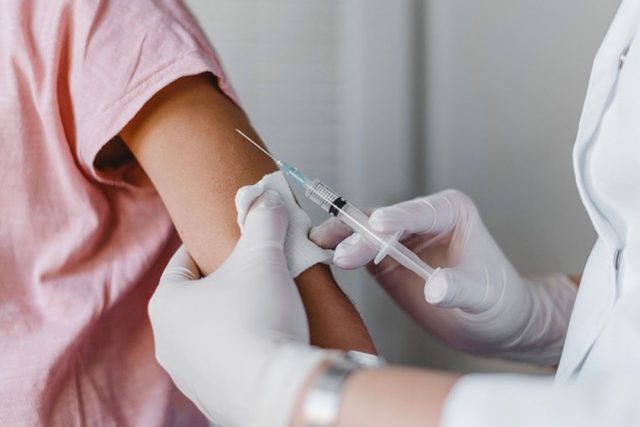
WHO, Gates Foundation seek to reverse falling childhood vaccination rates

FREEPIK

THE World Health Organization (WHO) is working with the Bill & Melinda Gates Foundation and other nonprofit organizations and agencies to reverse a pandemic-driven decline in routine childhood vaccinations.

The initiative was launched on Monday by the WHO, UNICEF, the GAVI vaccine alliance and the Bill & Melinda Gates Foundation among others, and seeks to protect countries from vaccine-preventable disease outbreaks such as measles and yellow fever.

The efforts will focus on boosting rates in 20 countries, which account for 75% of the children who missed vaccinations in 2021.

“WHO is supporting dozens of countries to restore immunization and other essential health services. Catching up is a top priority. No child should die of a vaccine-preventable disease,” WHO Director-General Dr. Tedros Adhanom Ghebreyesus said.

Vaccination rates in children during the pandemic took a hit due to overburdened clinics, lockdown restrictions and disruptions in transport of vials, syringes and other medical supplies.

Twenty-five million children under the age of a year did not receive basic vaccines in 2021 and global immunization coverage for children dropped to 81% that year from 86% in 2019, according to the WHO.

People all over the world lost confidence in the importance of routine childhood vaccines against killer diseases such as measles and polio during the COVID-19 pandemic, according to a report from UNICEF last week. — Reuters

PetroEnergy set to take EEI Power’s shares in renewable energy firms

PETROENERGY.COM.PH

YUCHENGCO-led PetroEnergy Resources Corp. has signed a share purchase agreement with EEI Power Corp. to acquire the latter’s share in three renewable energy subsidiaries.

In a stock exchange disclosure, PetroEnergy said it is acquiring EEI Power’s common shares in PetroGreen Energy Corp., PetroSolar Corp., and PetroWind Energy, Inc.

EEI Power is a wholly owned subsidiary of Yuchengco-led construction company EEI Corp.

“The move supports PERC’s plans to focus more on renewable energy and to increase its stake in existing and planned projects, taking advantage of the emerging opportunities in the industry,” PetroEnergy said. PERC is the company’s stock symbol.

PetroGreen is a joint venture corporation between EEI Power and PetroEnergy. PetroWind and PetroSolar are subsidiaries of PetroGreen.

PetroEnergy said it is set to acquire EEI Power’s 7.5% interest or 213.68-million common shares in PetroGreen, 44% interest or 6.99-million common shares in PetroSolar, and 20% interest or 2.87-million common shares in PetroWind upon fulfillment of all conditions for the sale.

“The transaction will monetize EPC’s (EEI Power) assets and the proceeds will be used to reduce EEI’s debt obligations and provide working capital as EEI gears up for additional construction business in the Philippines and abroad, further strengthening its balance sheet,” EEI told the stock exchange.

After the fulfillment of all conditions of the sale, EEI Power will no longer have any interest in PetroGreen, PetroWind, and PetroSolar.

At the local bourse on Tuesday, shares in PetroEnergy closed 1.25% lower to end at P4.86 apiece, while shares in EEI closed 10.45% higher at P4.86 each. — Ashley Erika O. Jose

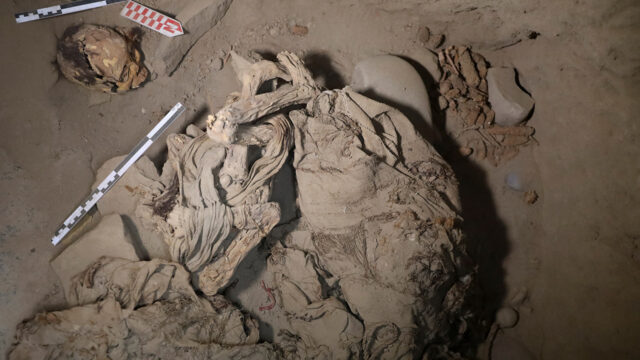
Archaeologists in Peru find adolescent mummy wrapped in bundle

SKELETAL remains and parts of the funerary bundle of a mummy found by Peruvian archaeologists are seen in the ruins of Cajarmarquilla, in the outskirts of Lima, Peru, April 24, 2023. — REUTERS/SEBASTIAN CASTANEDA

LIMA — Peruvian archaeologists unearthed a more than 1,000-year-old mummy on the outskirts of the modern capital on Monday, in the latest discovery dating back to pre-Inca times.

The mummy was probably an adolescent and found in an underground tomb wrapped in a funerary bundle, along with ceramics and rope and including bits of skin and hair.

The mummified adolescent was found in a “good state of conservation,” said archaeologist Yomira Huaman, in charge of the Cajamarquilla research project affiliated with the Universidad Nacional Mayor de San Marcos.

While best known for the mountain-top Inca royal retreat of Machu Picchu, Peru was home to various pre-Hispanic cultures that thrived in the centuries before the Inca empire rose to power, mainly along the country’s central coast and in the Andes.

The adolescent lived between 1,100 and 1,200 years ago and might have belonged to the Lima or Ichma cultures. The mummy was discovered about 200 meters from where the first mummy of Cajamarquilla was found, explained Huaman, referring to another mummy found nearby last year.

The archaeological site is also where the remains of eight children and 12 adults, who were apparently sacrificed around 800-1,200 years ago, were found.

The sprawling Cajamarquilla complex features the ruins of four pyramids and other constructions such as walls laid out like a maze. The complex is the second largest mud-brick city in Peru after Chan Chan in the north of the Andean country.

Cajamarquilla was possibly occupied by people from the coast and the Andean highlands, said Huaman. Located in a dusty area about 20 km from Lima, the site was believed to be a thriving trading center. — Reuters

Experts seek more skin training units in Philippine countryside

By Patricia B. Mirasol, Reporter

MORE training institutions in dermatology are needed outside the Philippine capital to meet the skin health concerns of Filipinos in the countryside, according to a skin expert.

There are 1,275 board-certified dermatologists serving 109 million Filipinos, according to the Philippine Dermatological Society (PDS). About 50% are in Metro Manila.

“We have few in the provinces, mostly affiliated with the Department of Health (DoH),” said Cynthia P. Ciriaco-Tan, a dermatologist and president of PDS.

“Trainees in the provinces have to be bound by a ‘return of service agreement,’ requiring them to serve in their region for at least one year after graduation to ensure a steady supply of certified dermatologists in the area,” she said in an April 16 e-mail.

PDS’s Board of Accreditation is looking closely at the agreement in coordination with DoH, she added.

“The DoH strongly encourages the establishment of training programs outside Metro Manila in preparation for universal health coverage,” she added.

Although the Philippines scores low in certain illnesses such as skin cancer, this lowered risk is offset by factors such as socioeconomic status and a low dermatologist-patient ratio.

Derma.Plus, a Germany-based medical research group, ranked the Philippines 55th out of 62 countries in skin cancer susceptibility. Its index “analyzes the ultraviolet factor, the skin tone by demographic percentages and rate of incidences from a range of countries to identify geographically where the highest rates of skin cancer are most likely to occur.”

The skin pigment melanin has been known to have a protective role against UV damage in human skin. A June 2022 publication, however, said the inherent photoprotection that lowers the risk for Asians is offset by other factors.

In the Philippines, more than 34% of Filipinos are in agriculture, forestry, fishing and construction, where outdoor labor is the norm, the JAAD International study pointed out. Because of the lack of skincare specialists outside Metro Manila, Filipinos with suspicious lesions end up having them checked at community health centers, increasing the risk for misdiagnosis.

About 2,700 Filipinos have had skin cancers since 2011, based on data from PDS.

UV radiation exposure from the sun plays a big role in the pathogenesis of the most common skin cancers, according to dermatologist Joshua A. Arcaira.

“Those with more frequent and longer exposures to the sun are most at risk — such as those in the agriculture industry,” he said in a Facebook Messenger chat.

Skin cancers are the “ugly ducklings” on your skin, said Mr. Arcaira.

“When you notice a bump that has been growing quite fast (weeks to months) or easily bleeds, a change in skin color (black, brown, blue, purple), a wound that doesn’t seem to heal, or a new mole that wasn’t there before, it is best to have it checked by your friendly board-certified dermatologist,” he said.

Ms. Tan said Filipinos are slowly getting aware of the signs of skin cancer.

“PDS is actively promoting public education. There is a National Skin Cancer Awareness Week that hospitals usually advocate,” she said.

The most common types of skin cancer in the country, which are also the most common types worldwide, are basal cell and squamous cell carcinomas.

The two are non-melanoma skin cancers, Ms. Tan said. They “present themselves as indolent papules (bumps on the skin) or plaques (lesions that may result from a combination of papules) which bleed easily or do not heal completely,” she said.

Because a skin cancer registry has not yet been established in the Philippines, there are no data on the exact numbers, Mr. Arcaira said.

“The real numbers are most likely underestimated, since not everyone has the means or opportunity to seek consultations with skin specialists,” he told BusinessWorld.

Preventive measures include daily use of a broad-spectrum sunscreen that’s at least SPF 30 and PA+++, avoidance of sun exposure from 10 a.m. to 2 p.m. and the use of protective clothing such as wide-brimmed hats, sunglasses and long-sleeved shirts.

“Most skin cancers can be treated completely especially if caught early, so please have suspicious bumps checked as soon as possible. Treatment becomes complicated if we wait too late and the tumor gets bigger,” he added.

ADVERTISEMENT
ADVERTISEMENT